
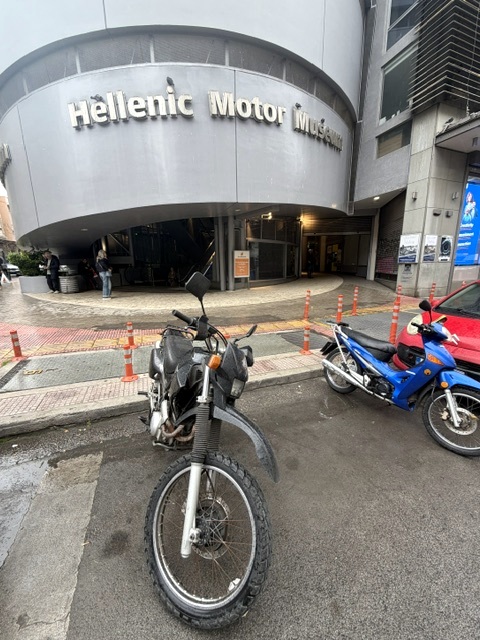
The Hellenic Motor Museum Athens, Greece
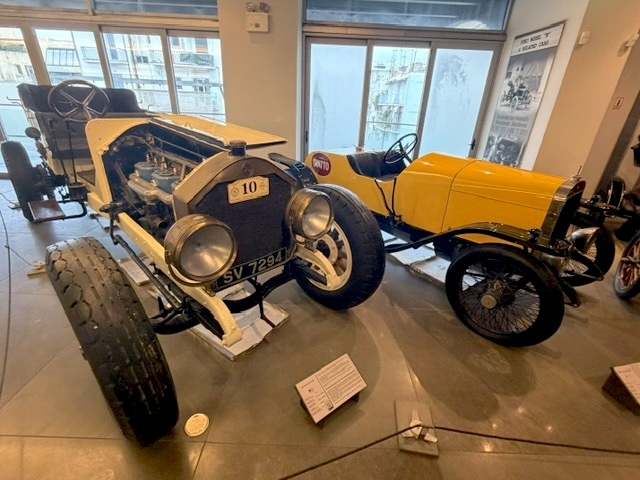
Old cars have the mysterious ability to transport us back to a different time. The very shape of cars is a powerful device we use to romanticize a past we may have never experienced: the surfaces, shapes, colors and materials contextualize a deep historical narrative.




- Annual Fatalities:Total fatalities hover between 600 and 650 per year (e.g., ~621 reported recently).
- Fatality Rate:About 50 to 60 deaths per million inhabitants, ranking in the top five worst in the EU.
- Demographics:Male drivers account for roughly 66% of all road fatalities, with young males (15–24 years old) and the elderly (over 65) being the most vulnerable groups.



Related Posts

Shooting ‘The Mule’
When 'Motorcycle Classics' wanted a…

Road Signs in Australia
This was the view from the 1965…

Legend of the Motorcycle Attire
It was an event that changed the…
Phew …. them statistics … who’d of thunk Greece of all places would have the worst drivers in the EU ? Word than those in Rome ? Looks like it . Worse than in former Soviet block EU countries where traffic lights and signs are taken as merely a suggestion ? Yup ! Worse than London’s traffic circle drive on the wrong side of the road chaos ? Eeeesh … sorry to say … yes .
So much for Greek … well … you know …. Greece being the birthplace of Democracy ….. but then again … they were the first to destroy it was well … so …. oh well …. guess I’ll pass on this museum .
Great essay and photos BTW … despite the disappointing reality of Greek automotive on the road culture …
Eeeeeesh …. worse than Rome … damn !
😎
mexico has over abundance of bad drivers too !
Reality is though ….. so do we here in the not so US of A !
Spend a little time in LA Denver NYC … KCMO .. hell .. any metropolis across this divided nation and you’ll see I’m right …
…. but wait wait … don’t tell me …. that aint all folks …. take a dive into the rural Not So US of A . where asininely huge gas sucking built in Mexico CDN China … hell … anywhere but here … pickups and SUVs are driven by drug and alcohol addled idiots at speeds well beyond the intelligent … never mind the legal limit .
And don’t even get me started about the brain dead morons rural and city dwellers thinking they’re NASCAR/ NHRA / FIM racers on public roads after consuming copious amounts of alcohol and / or drugs .
In other words … seriously bubba … get a freaking clue … your own back yard is as bad if not worse than anything found south or north of the border .. not to mention a multitude of other countries .
Proof positive you ask ? Taken a look at yer car insurance lately bubba ? Prices through the roof .. due in no small part to the idiots behind the wheel / handle bars here … who in reality shouldn’t be allowed anywhere near a motorized vehicle of any kind
Damn … ya jes gots ta love kicking the crap outta uninformed intellectually stunted prejudice based on nothing more than internet opinion !
Oh … and BTW … assuming thats you Splinky …. you Aussies aint exactly the cream of the crop when it comes to driving skills either !
😎