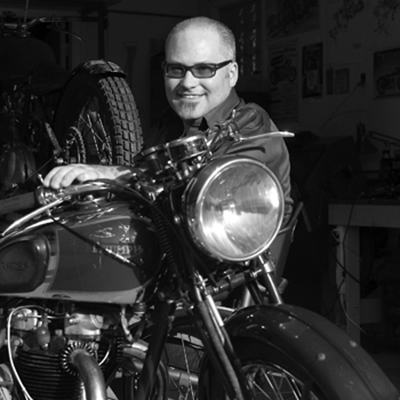
Time spent riding a 1978 Yamaha DT250 with his dad exploring the desert of Saddleback Valley was magical for Eric Hendrikx. Growing up in what was then rural Orange County, California, he remembers his father, Ralph, coming home from work ready to disappear into the hills. “He’d throw me on the tank of the bike, put one of his helmets on me—it was huge and would just bobble around on my head—and we’d take off and explore,” Hendrikx recalls during a recent conversation. “I can still smell the sage and picture the cactus, the roadrunners, jackrabbits and snakes along the trails. Those rides stayed with me. So much of my life since then has been driven by that same thing: curiosity, adventure and wanting to know what else is out there.”
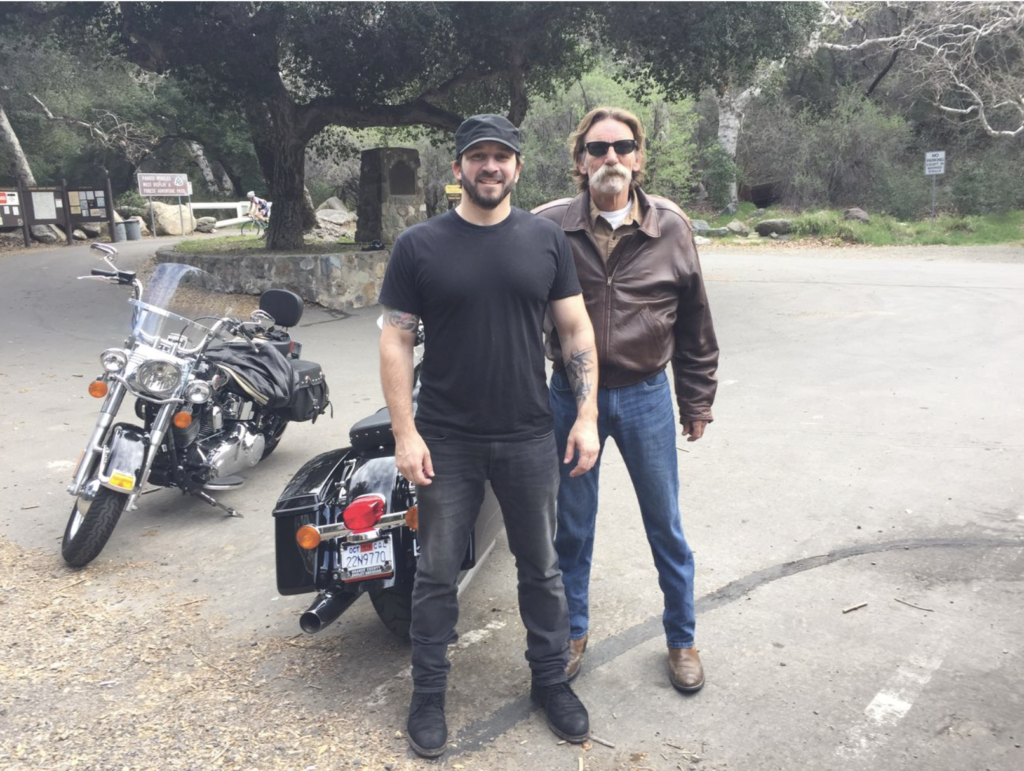
Eric Hendrikx with this father Ralph, out for a ride together. [Eric Hendrikx]
Decades later, Hendrikx began wondering about the formative motorcycle experiences of other riders; and, more importantly, what riding had ultimately meant in their lives. Beginning in late 2023, the longtime journalist and author set out to document the contemporary motorcycle world through the stories of 107 riders from around the globe. The result is Motorcycle Life: Stories, Wisdom, and Obsession from Riders Around the World. Due to release on September 29, 2026, the hardcover book is published by Artisan Books, an imprint of Hachette Book Group.  Chock-a-block with hundreds of photographs, a foreword by Norman Reedus and an introduction by Mike Wolfe, the book brings together an unusually broad cross-section of motorcycle culture, including Keanu Reeves, Jason Momoa, Tommy Flanagan, Charley Boorman, Steve Caballero, Maxwell Hazan, Walt Siegl, Chase McQueen, Mark Hoyer and The Vintagent’s own Paul d’Orléans.

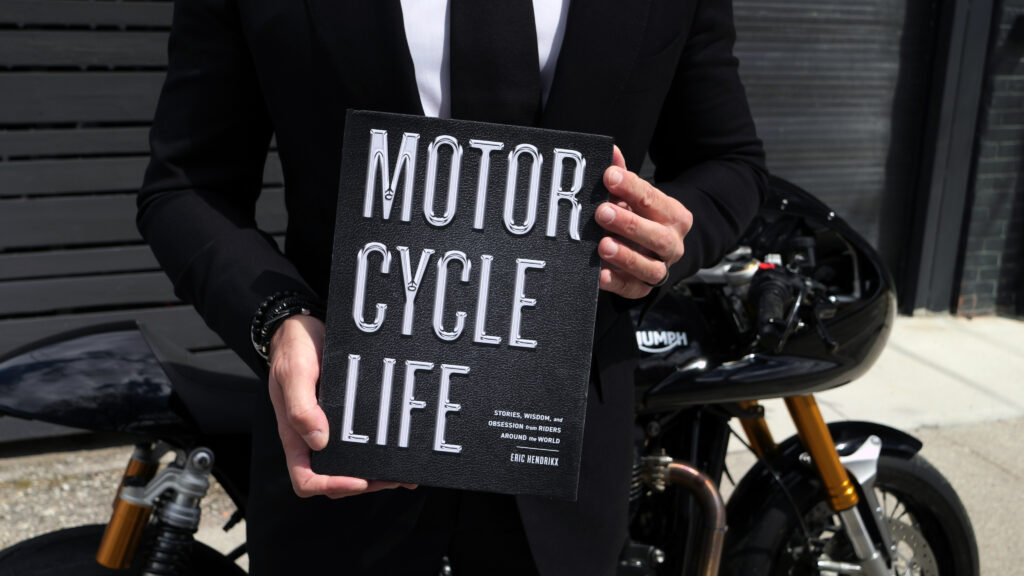
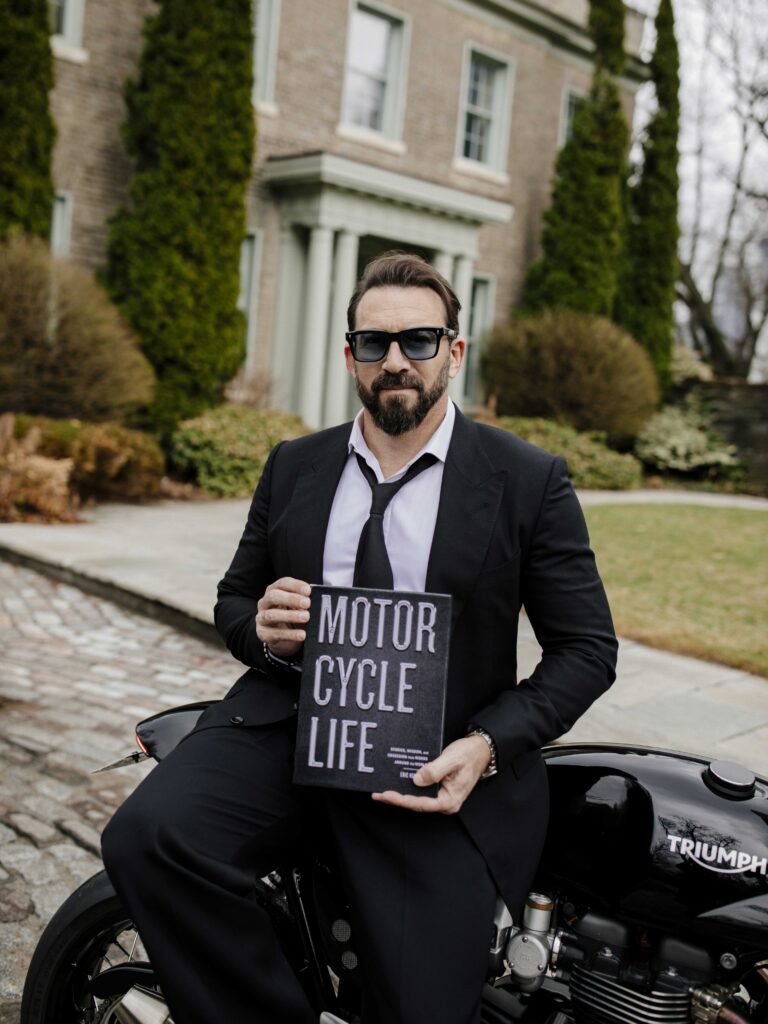
Eric Hendrikx with an advance copy of his new book Motor Cycle Life. [Renata Kaveh]
For Motorcycle Life, Eric wasn’t interested in producing another book focused solely on specifications, marques or a single motorcycle subculture. Drawing partly on his background in anthropology, and on more than two decades spent interviewing people for publications including Rolling Stone, Men’s Journal and Robb Report, he wanted to understand the people behind the machine. “I wanted Motorcycle Life to be a portrait of motorcycle culture as it actually exists today—not one tribe, one style of bike or one definition of what a motorcyclist is supposed to be. I wanted builders beside racers, choppers beside sport bikes, vintage machines beside electric motorcycles, famous people beside riders most readers have never heard of,” he says. “The anthropology part of my brain was definitely at work. I was interested in the rituals, the communities, the obsessions and the way people build identity around motorcycles. But the deeper I got into the project, the more I realized the machines were really connective tissue between much larger human stories. That became the revelation for me: the motorcycle might be the reason we started talking, but the person was always the story.”

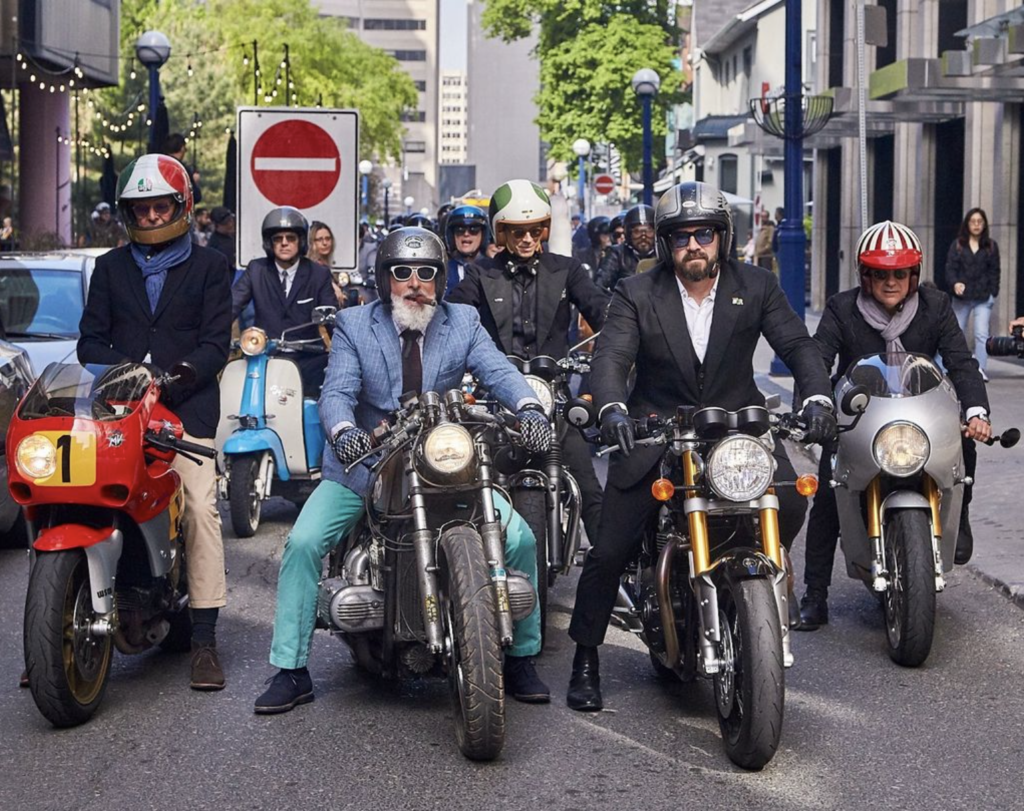
Eric Hendrikx as host of the Toronto Distinguished Gentleman’s Ride, to which he has contributed over $200k. [Eric Hendrikx]
After those initial forays with his dad into the desert, Eric began riding a used 1980 Honda CR125. He and his friends went into the hills to explore and build jumps and tracks, “just to have fun with motorcycles,” he adds. Born in 1972, Eric came from a family keen on motorcycle adventure. His father, Ralph, was born in The Netherlands and immigrated with the family to Santa Ana, California in 1956. Ralph was the only son, and he had seven sisters. “When he wasn’t helping support the family and working with my grandfather,” Eric explains, “he was kind of out on his own, and it was cars and motorcycles he was into. He’d spend time rebuilding and working on old cars and motorcycles and was always very handy.” Eric’s dad, a union butcher by trade who’s since retired, was still buying, fixing and selling motorcycles up until very recently. “He’d find old, broken-down bikes on Craigslist or places like that, and go pick them up for, you know, 300 bucks or 500 bucks. My dad would have this bike rebuilt and running in a week or two. He’d just go through the whole bike, top to bottom, ride it for a little while, and sell it to do it all again.” Seeing Ralph work with his hands, operating butcher saws by trade and wrenching on motorcycles at home, inspired Hendrikx to become mechanically independent, comfortable replacing a piston or tearing down a machine and putting it back together.

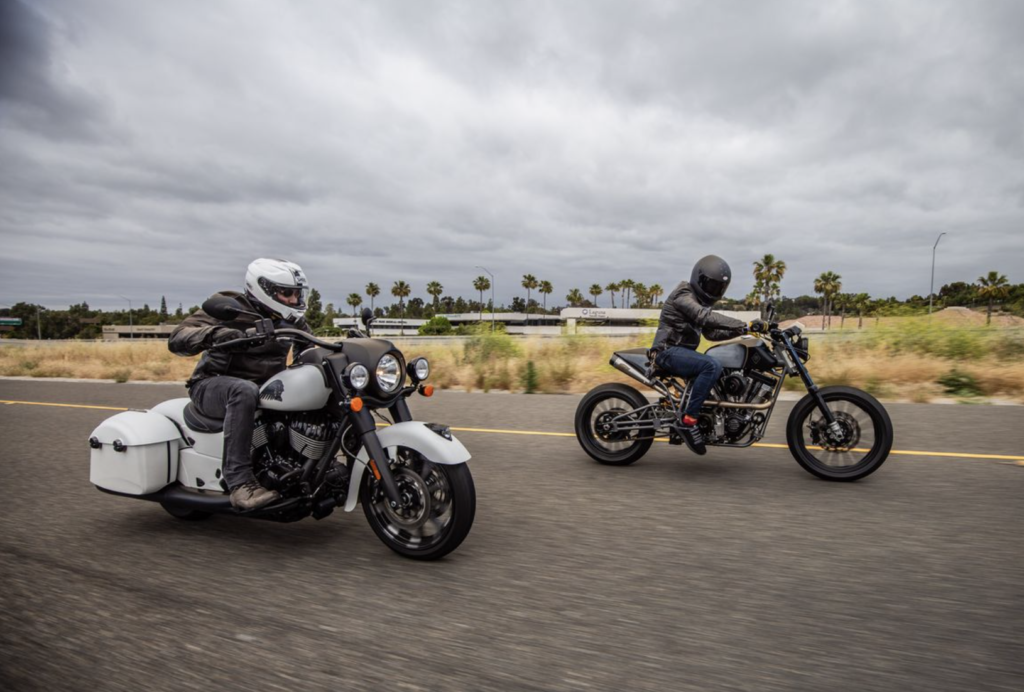
Riding with Roland Sands in Orange County. [Eric Hendrikx]
Looking to further his education after high school, Eric took survey courses at UC Santa Barbara. The one that resonated with him was Anthropology. He completed his bachelor’s degree there and followed it up in the master’s program at San Diego State University. However, he never actually worked in the field. Instead, he began working full-time in the construction industry and was considering returning to school to acquire his PhD to become a professor. Instead, and although he’d never taken a course in journalism, he began writing for magazines. “I picked up a magazine at a taco shop in San Diego,” Eric says. “It was a free action sports magazine and I’d read them regularly at this place. At some point, I sort of got the bug in me, and I wrote the publisher a letter and asked if I could take a shot at writing an article. They agreed.” Eric’s first piece was an interview with pro skateboarder Ryan Sheckler, who Eric says was, “A movie star of skateboarding. I sent it to the editor, and he called me and couldn’t believe I got Ryan Sheckler. That ended up being the cover of the magazine and so it kind of took off right away and that turned into a few more articles. I did that for a couple of years, but I was doing it for free while working construction.” Eric’s SoCal connections meant he knew many of the interesting action sports figures about whom he was writing, with a network of friends in that space from which he could draw support.

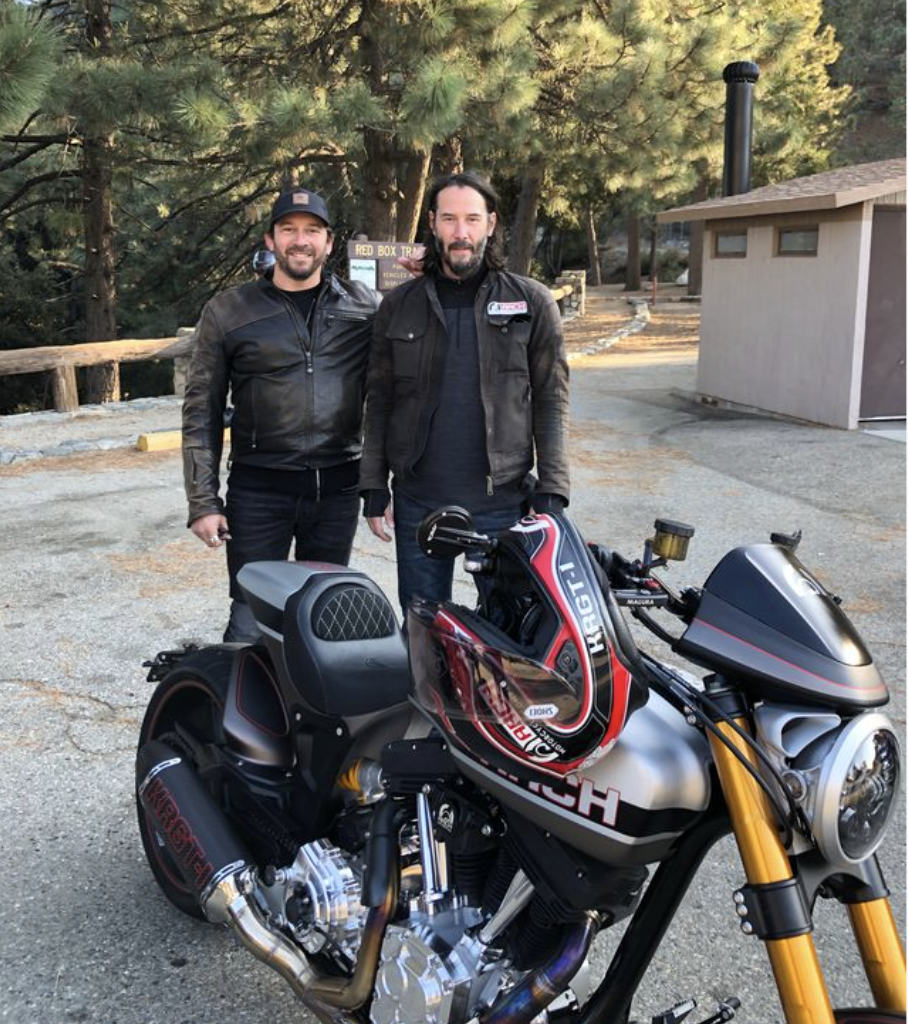
Riding with Keanu Reeves on his Arch motorcycle. [Eric Hendrikx]
Writing might have been a hobby for Eric, but after two years of it, he got a message from an editor at Rolling Stone. Looking to expand readership, editors at the prominent magazine had been passing around Eric’s articles covering skateboarding, MMA and other forms of extreme action sports. “’We’re having a meeting, and we’ve got a bunch of your articles here,’” Eric recalls the conversation going. “’And we thought we’d just give you a call and see if you might be interested in writing for Rolling Stone.’” Eric thought, “Oh, isn’t that fantastic. And so, I kind of had this crazy “Almost Famous” moment and started getting paychecks from Rolling Stone.” All the while, Eric was regularly riding motorcycles such as his 2004 Harley-Davidson Road King and posting on social media about his road adventures. At that point, “I was a known journalist, and I started getting phone calls with invitations from different motorcycle brands to review their bikes. It all kind of happened very organically, and I never really planned on any of that.”

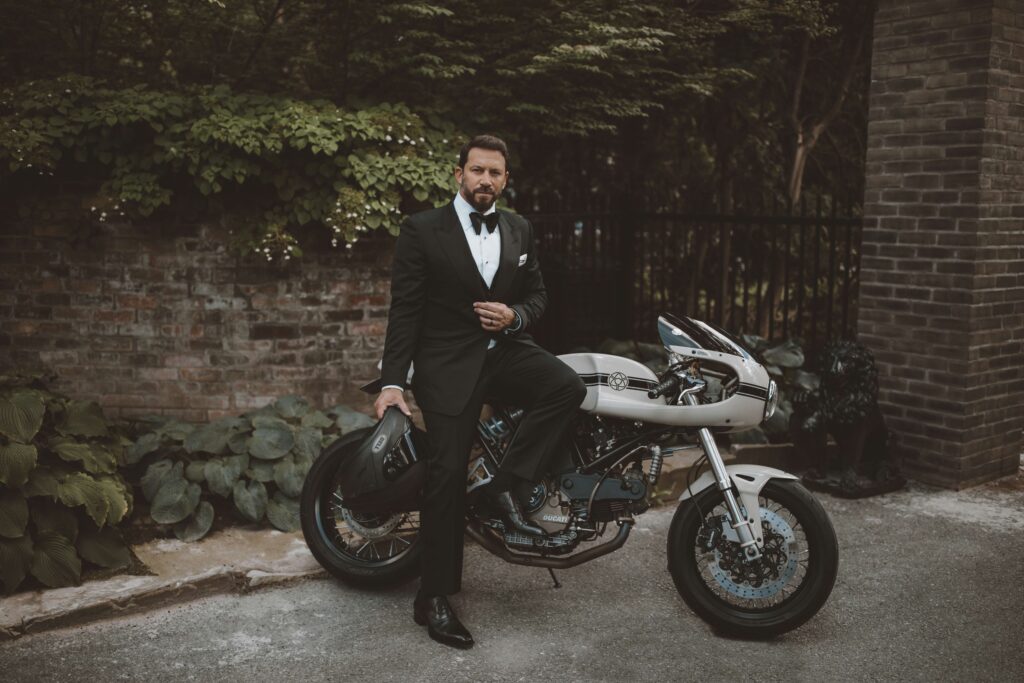
A suitably distinguished Walt Siegl Ducati for the DGR Toronto. [Eric Hendrikx]
In 2019, Eric met his future wife, Natasha Koifman, founder of Toronto-based NKPR. After moving between Newport Beach and Toronto, the couple settled permanently in Canada during the pandemic and later married. Hendrikx eventually brought his writing and creative background to NKPR as a creative director—a new role for him, while continuing his journalism and book work. About his writing, Eric had just wrapped up a book project on bodybuilding culture when his publishers asked what he planned to do next. His first choice, he replied, would be something to do with motorcycles. “I gave them a one-pager on this snapshot of what I wanted to do,” he says, “And I had a book offer the next day. They were all over it.”

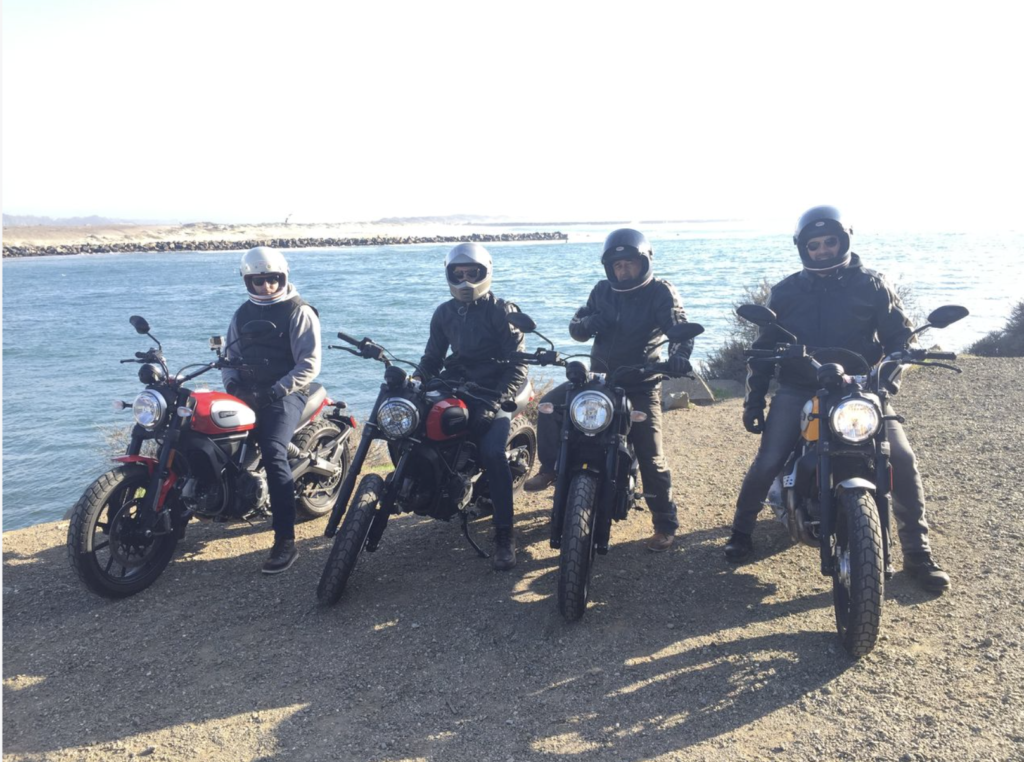
On a Scrambler ride with Steve Caballero and Elliot Sloan. [Eric Hendrikx]
By then, motorcycles had already become a significant part of Eric’s journalism, giving him years of relationships and reporting experience within the culture he now wanted to document on a global scale. From his years writing for Rolling Stone and other magazines such as Men’s Journal, Eric has interviewed many interesting people. “Guys like Jason Momoa, Keanu Reeves, Norman Reedus,” he says. “I’ve always approached interviews with genuine curiosity. I’m interested in what people do, but more than that, why they do it and what it means to them. If you approach someone that way instead of trying to extract something from them, conversations become relationships. A number of people I first interviewed years ago have since become friends.”

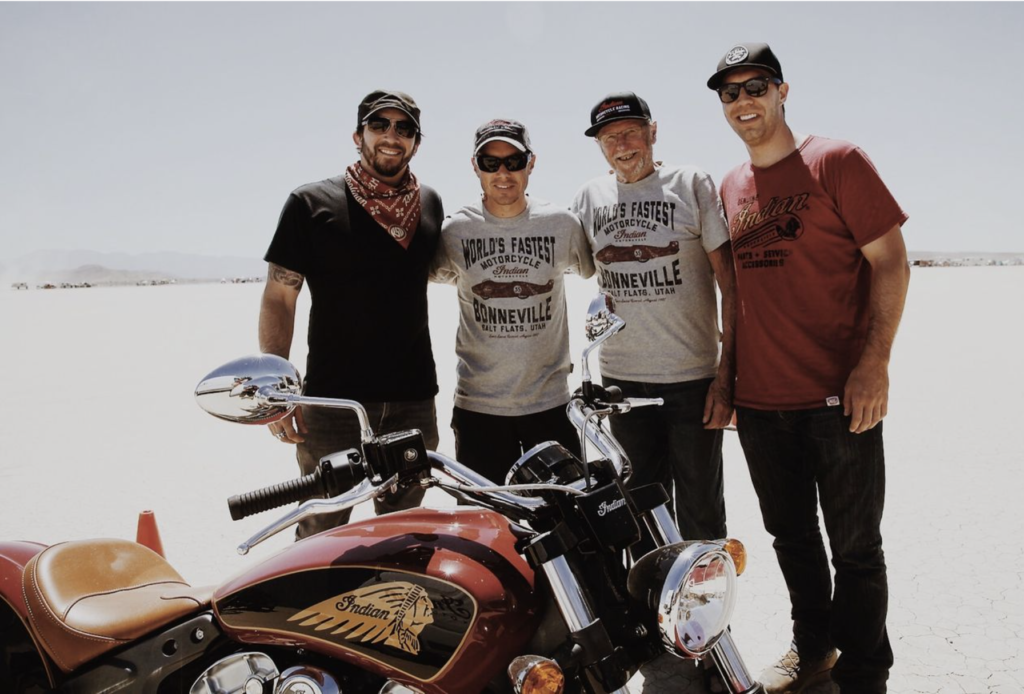
Eric with Lee Munro’s team at the Bonneville Salt Flats. [Eric Hendrikx]
For example, in Motorcycle Life, Eric asks builder and craftsman Walt Siegl, “What is your earliest memory of a motorcycle?” Siegl’s response, “Motorcycles were a part of my life from the very beginning. It started with my grandfather. Both he and my father were infatuated with motorcycles – not so much as transportation, but as objects of beauty.” Digging into Siegl’s stunning custom creations, Eric asks, “As a motorcycle designer and builder, what’s your guiding principle?” Siegl replies, “Responsibility. My background as a toolmaker taught me precision. Racing taught me performance. Art taught me emotion. Motorcycle building combines all of that. My obligation is to my clients: to create machines that justify their trust WSM build must work flawlessly, perform beautifully, and stir something in the soul.” Every interview concludes with the question, “What’s the greatest life lesson motorcycles have taught you?” To which Chase McQueen responds, “Motorcycling and McQueen Racing have taught me the importance of family and honoring where you come from. My grandfather raced because he loved it, my dad passed down that love to me, and now it’s my turn to carry it forward. It’s a reminder that legacy matters, that cool never expires when it’s built on passion and respect. Riding keeps me grounded, grateful, and aware that every mile is a gift.”

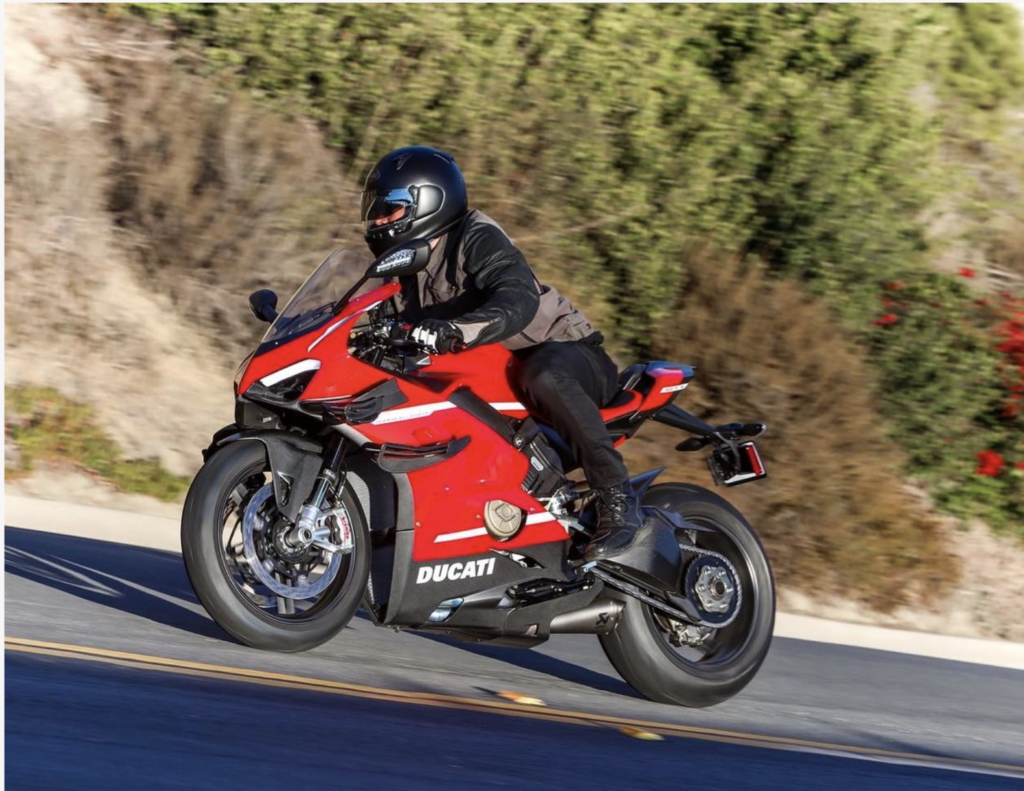
Eric aboard his Ducati Panigale. [Eric Hendrikx]
Gathering interviews and writing the text was not the most difficult part of the project. Instead, it was coordinating photography. “Tracking down photography for 107 people around the world was probably the hardest part. We had builders in Japan, riders in South Africa and people in Australia, Europe and across North America. I was working with photographers everywhere, chasing images and releases. That was the part that kept me up at night—thinking about who we were still missing and how we were going to get the right photographs.” Eric is donating 100 percent of his Motorcycle Life preorder royalties to the Distinguished Gentleman’s Ride and Movember to help support prostate cancer research programs and men’s mental health initiatives. Over the years, he has raised nearly $200,000 in support of men’s health and mental health programs and initiatives.

Motor Cycle Life is out now! Get your copy here. [Renata Kaveh]
Of all the questions Eric asked during his interviews, one became the thread running through the entire project: What’s the greatest life lesson motorcycles have taught you? The answers surprised him. “People talked about motorcycles helping them through grief, anxiety and really difficult moments in their lives. Others talked about adventure, friendship, creativity, freedom or simply being present. I started seeing the motorcycle as this extraordinary common denominator between people who, on the surface, might have almost nothing else in common.” For Eric, that ultimately became the point of Motorcycle Life “You can look at the book and fall in love with the motorcycles—and I hope people do. But that’s not really what I think the book is about. It’s about people trying to live interesting, meaningful lives and this machine that somehow keeps bringing us together.” In a way, Eric has spent much of his life trying to understand the feeling he first experienced as a kid on the tank of his father’s Yamaha, an oversized helmet bouncing on his head as the two of them disappeared into the California hills. “The motorcycle was the beginning,” he says. “Everything it opened up was the story.”


Greg Williams is Profiles Editor for The Vintagent. He’s a motorcycle writer and publisher based in Calgary who contributes the Pulp Non-Fiction column to The Antique Motorcycle and regular feature stories to Motorcycle Classics. He is proud to reprint the Second and Seventh Editions of J.B. Nicholson’s Modern Motorcycle Mechanics series. Follow him on Instagram, and explore all his articles for The Vintagent here.


Related Posts

The Vintagent Classics: Riding High

a bored young motorcycle messenger…
The Motorcycle Portraits: Max Hazan

Maxwell Hazan is a motorcycle artist…
Legend of the Motorcycle Attire

It was an event that changed the…


Subscribe to Our Weekly Newsletter