Eugene ‘Geno’ Zandomengo’s 1950 Ford is an ongoing Kustom Culture work in progress.  He began the project in Japan during the 1960s, and continues working today in Staten Island, New York. The pre-kustom, original styling line of the 1949 Ford Club Coup Tudor (two door) and Fordor (four door) models were the result of a major post-WWII head-turner styling re-think that changed automotive history, first at Ford (released in June 1948), followed six months later at Chevy, and nine months later at Chrysler. Independent front wheel fenders and side running boards (carryover features from the first cars) were totally eliminated and refashioned into a ‘modernist’ slab-sided, ‘pontoon’ look that was soon dubbed the Shoebox.[1]

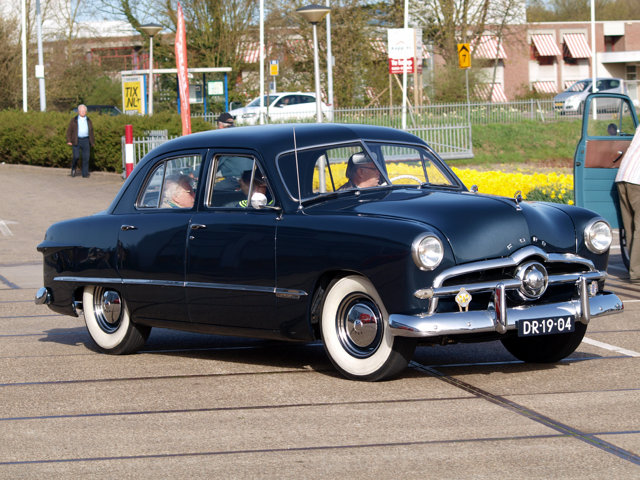
The 1949 Ford Club Coupe, the original Shoebox design with slab sides and no separate fenders. [The Vintagent Archive]
Ford’s post-war design revolution was enigmatic of things to come in America. The ending of WWII lifted a huge weight from the cultural shoulders of people, and their day to day life rebooted away from a preoccupation with scarcity and the rationing of daily commodities, towards the excitement of consumption. As never before, the American automobile industry and the newly redesigned cars came to symbolize dramatic social change. People could physically probe the metal and fabric of the different brands and models, actually sit inside and learn how to drive them.  The 1950s experienced an unprecedented 3.6% increase of drivers- by 1950, 57% of the driving age population had a driver’s license.[2]

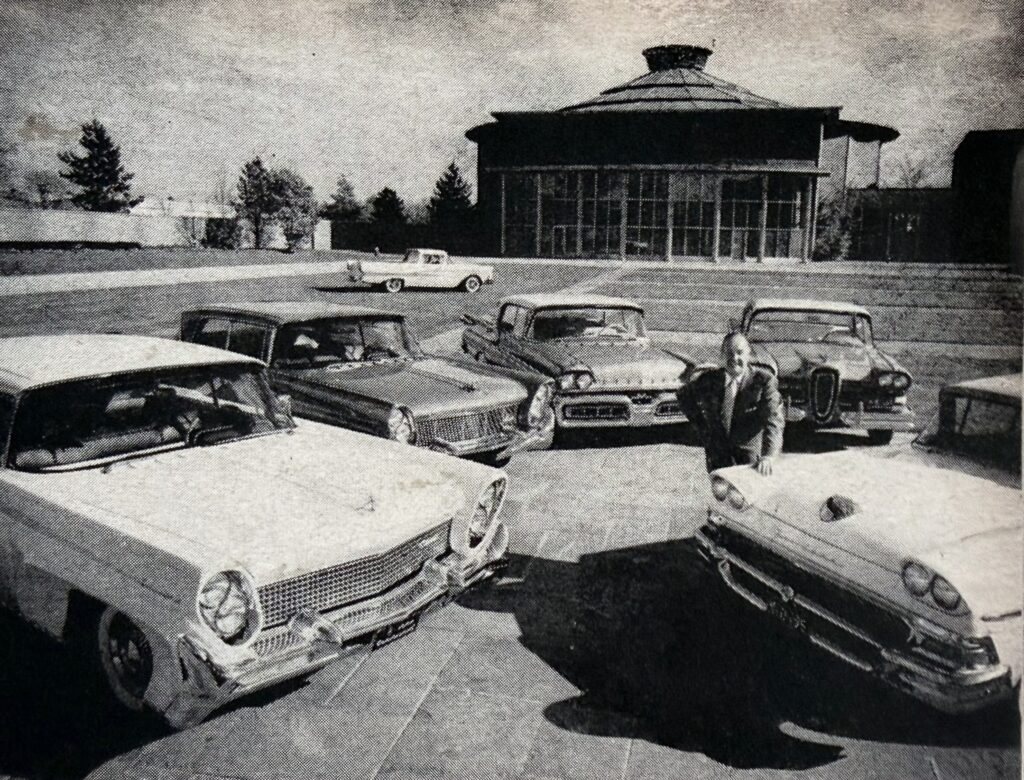
The Ford Shoebox line with executive George Walker. Note the Edsel behind Walker: a catastrophic design named for Henry Ford’s sone. [Ford Motor Co.]
Post-war economic prosperity, suburbanization, increased production of automobiles and infrastructure development combined to create a new sense of the American self. Owning a car embodied freedom, economic success and upward mobility. The newly designed 1949 Ford line – that included the Club Coup models – were a huge success, with more than one-million cars produced in the first months of 1949, and the company secured significant market share.[3] The designs of Ford cars eclipsed competing brands and came to represent the future texture of automobile culture. Ford’s 1950 advertising slogan summarized the zeitgeist of the brand── ‘The New Standard of the American Road’. In 1949, the U.S. automotive industry’s total civilian output was approximately 6 million vehicles, which included around 5 million passenger cars and 1 million other vehicles. This marked a significant breakthrough as postwar civilian production finally surpassed pre-war levels for the first time since 1941.[4]

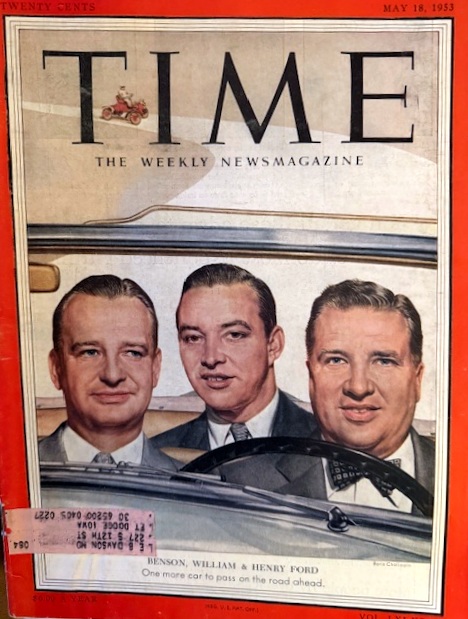
Benson, William, and Henry Ford Jr were the grandsons of Henry Ford and the sons of Edsel Ford, seen here on the cover of TIME magazine. [TIME magazine archives]
Car historians cite the 1949-1951 Ford Club Coup as the game-changer model that resurrected Ford during the post-war period. Civilian automobile manufacturing restarted after the war in 1946 but the big three (Ford, General Motors and Chrysler) depended on designs developed pre-war as late as the 1948 model year, until Ford shook things up in 1949 with its completely redesigned Club Coupe. The Ford design team was headed by the legendary heads of design, George Walker and Richard Caleal, who is credited for the actual design of the 1949-50 Club Coupe.[5] The car featured a new forward placement of the engine that created a roomier passenger cabin. The original torque shaft was replaced by a new drive shaft that transferred power more efficiently and the car’s handling and noise issues were resolved. The new Club Coupe offered two engine choices; a 226ci straight six with 95 horsepower and 180 lb-ft of torque with a top speed of 79mph or a bigger, 239ci flathead V8 with 100 horsepower and 181 lb-ft of torque with a top speed of 85mph. Transmission choices included either a three-speed manual or a four-speed manual with overdrive that delivered zero to sixty mph in 17 seconds.[6] The new body shape of the coupe was the head turner feature for the average consumer. Nothing like it had ever existed…. Where were the fenders? The car’s provocative new shape looked like a Shoebox and the nickname stuck.

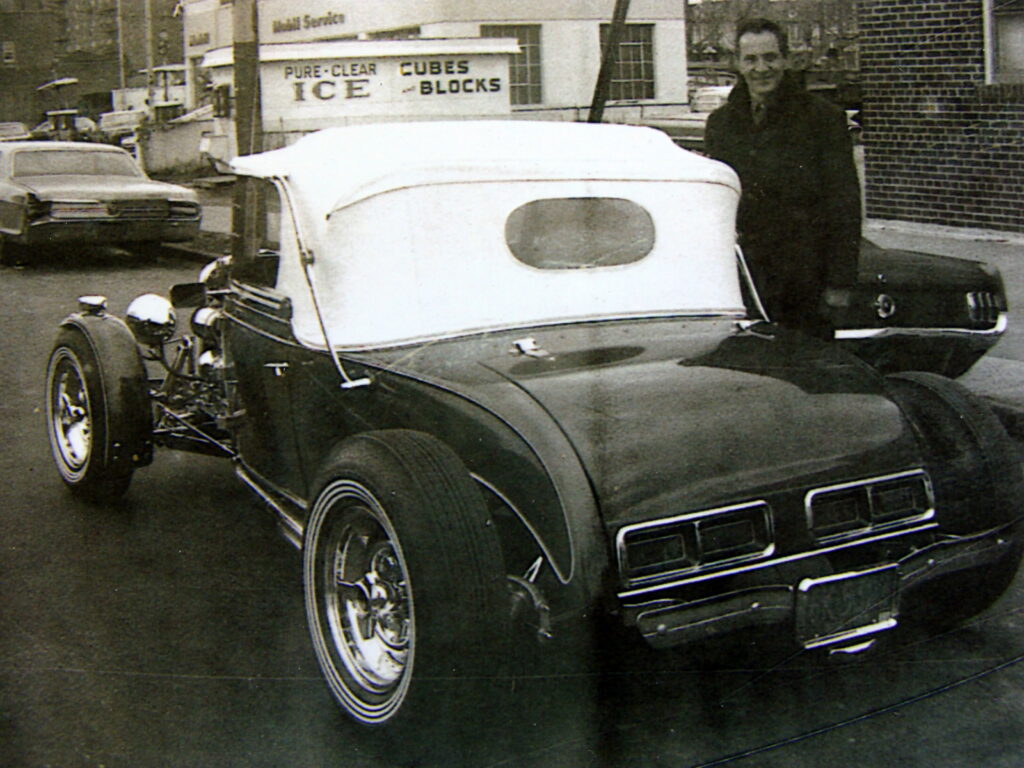
Geno Zandomenego in the early 1960s as a child, with his father’s Ford roadster hotrod. [Geno Zandomenego]
As cars worked their way into the American consciousness, their shapes, colors and brand associations served as concept maps for the general public. Stylish magazines and the revolutionary introduction of television advertising campaigns for car brands and individual models became educational tools for people as they made sense of the rapidly changing world around them. Purchasing a car reflected a complicated mix of eventualities. Next to a house, a car was the most expensive thing an American could buy, and advertising campaigns guided naïve car consumers to develop world views associated with different brands and models. Owning a car was incredible for the average American in 1950, and Ford’s Shoebox coupe reflected the depth of the experience.[7]

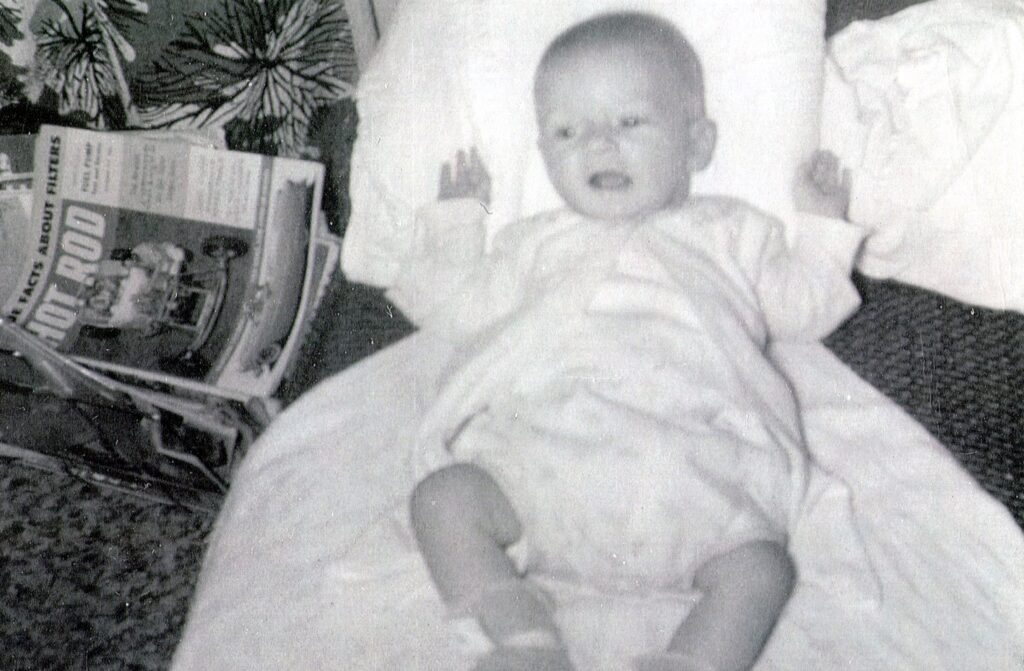
Geno as an infant, beside a copy of Hot Road magazine! His path was set before he was out of diapers… [Geno Zandomenego]
Early California Kustom Culture advocates – the Barris brothers, Ed Roth, Von Dutch and Dean Jeffries – soon realized there were consequential downsides to the industry standards of choice:  a new mass-produced monopoly on creative vision and creative life. In a revolutionary moment, early Kustom Culture builders started to deconstruct, saw up, reshape and recolor the existing forms of four-wheel and two-wheel moto culture and re-personalize them to a different set of private, non-industry aesthetic standards.

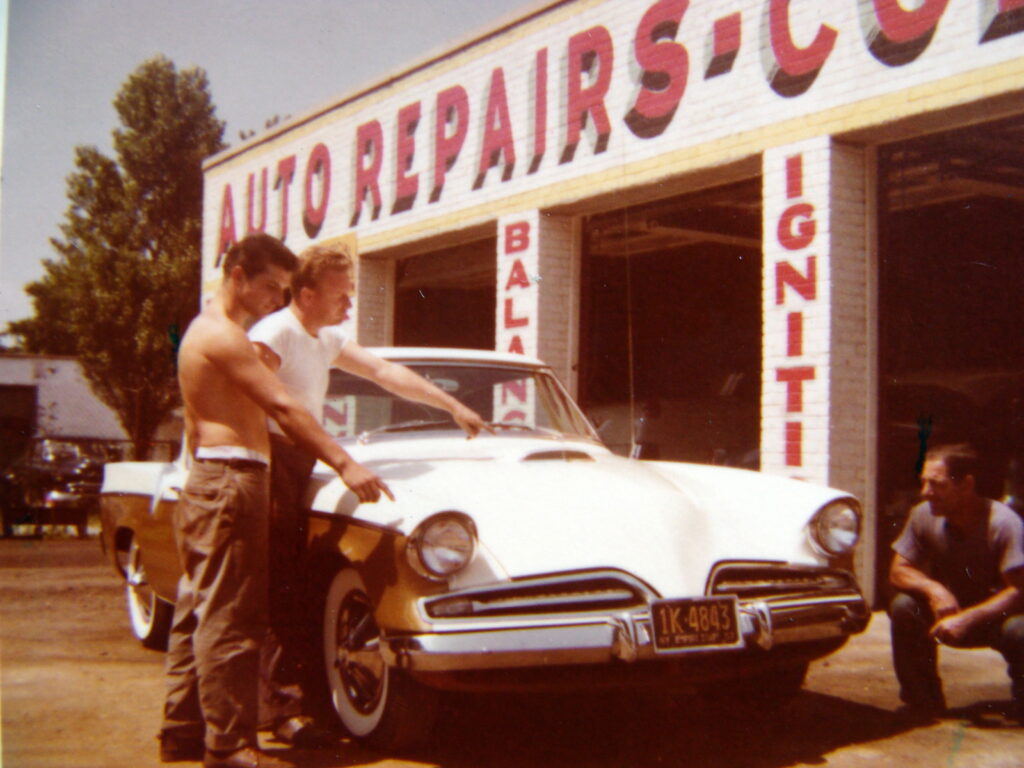
Geno’s father’s auto body shop, with a Raymond Loewy-designed Studebaker Hawk. [Geno Zandomenego]
Eugene ‘Geno’ Zandomengo reflects about the unique historical process of his car:

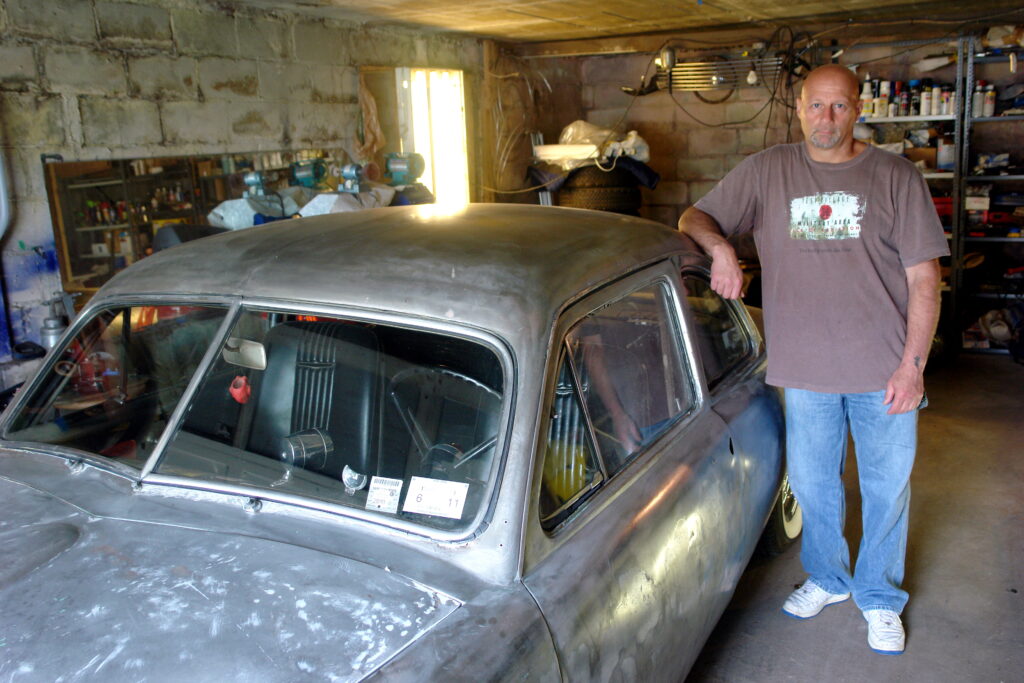
“1950, my car is 1950. That was the beginning of the slab-sided look. The Shoebox look. I sanded seven layers of paint off of it. The car was sectioned… The car was cut in half through the frame, through the body… through the doors, the fenders, the trunk, they cut the car six inches to shorten it down… It was always a Club Coupe that has the small side back window. There’s a couple different models… One has a bigger back window, one is a four door. Mine is a Club Coupe. When they sectioned the car, they didn’t cut anything from the top of the door up. They sectioned it from the middle of the door down… The fenders, the wheel wells… This was done in 1960 in Japan…
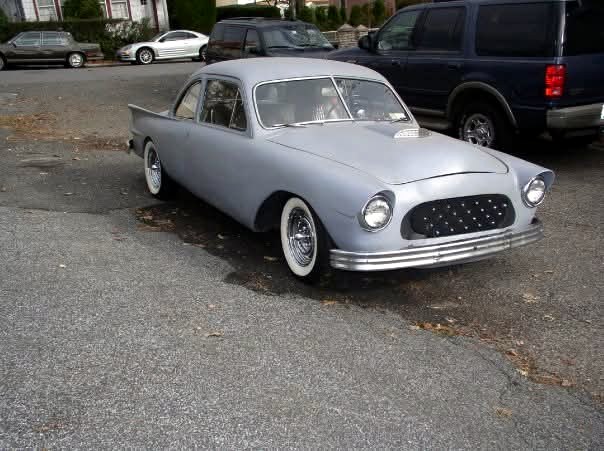
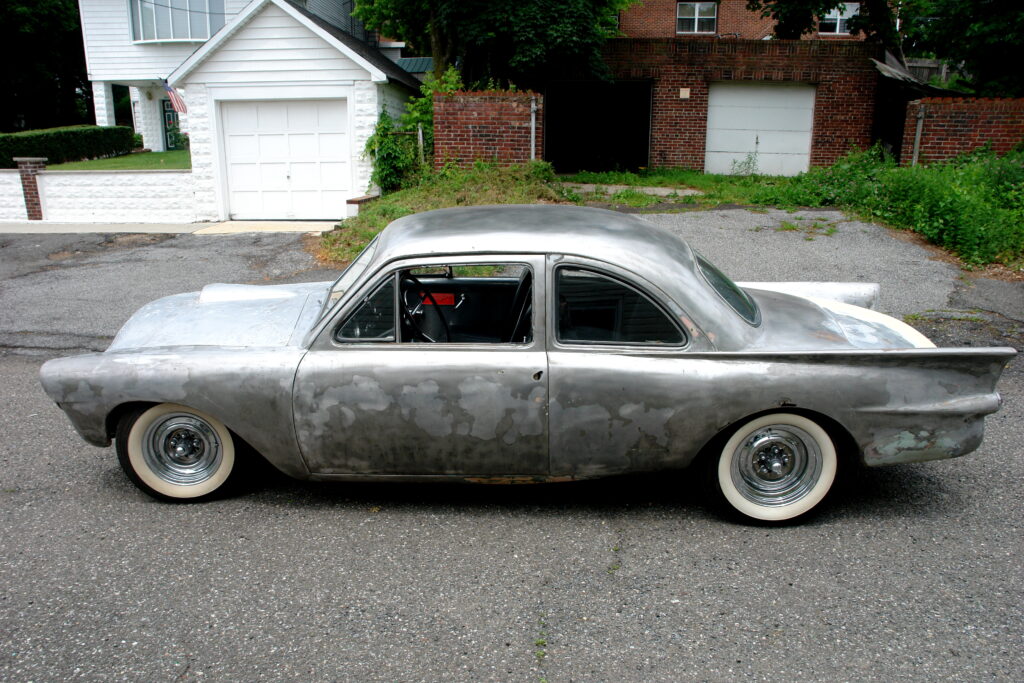
Geno’s shoebox customized roadster in primer, as purchased on eBay, looking more European than American. [‘Geno’ Zandomenego]
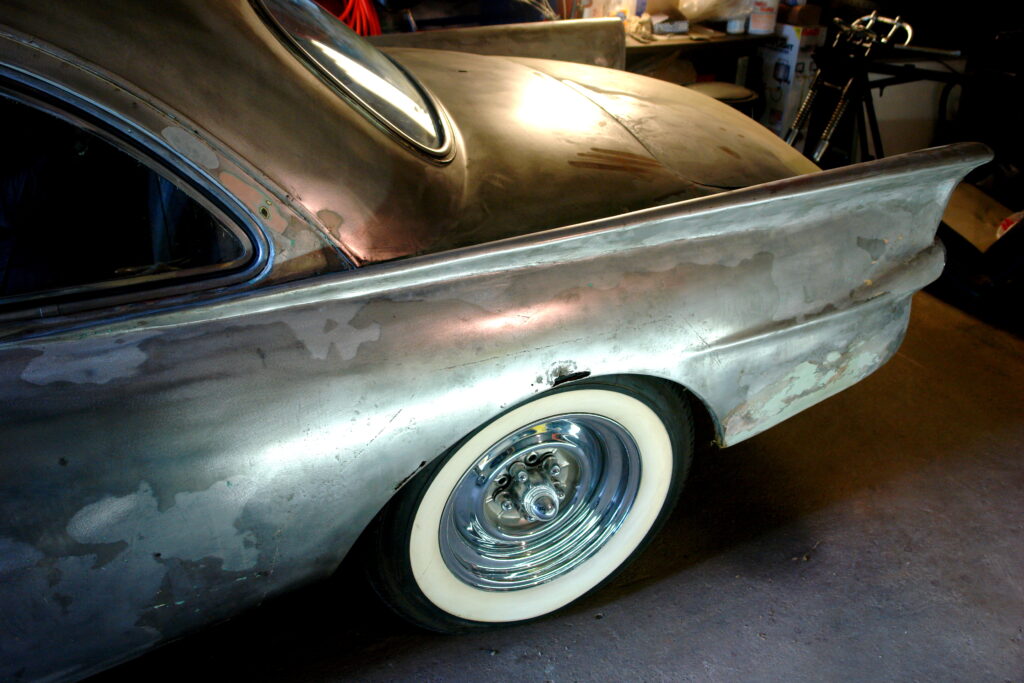
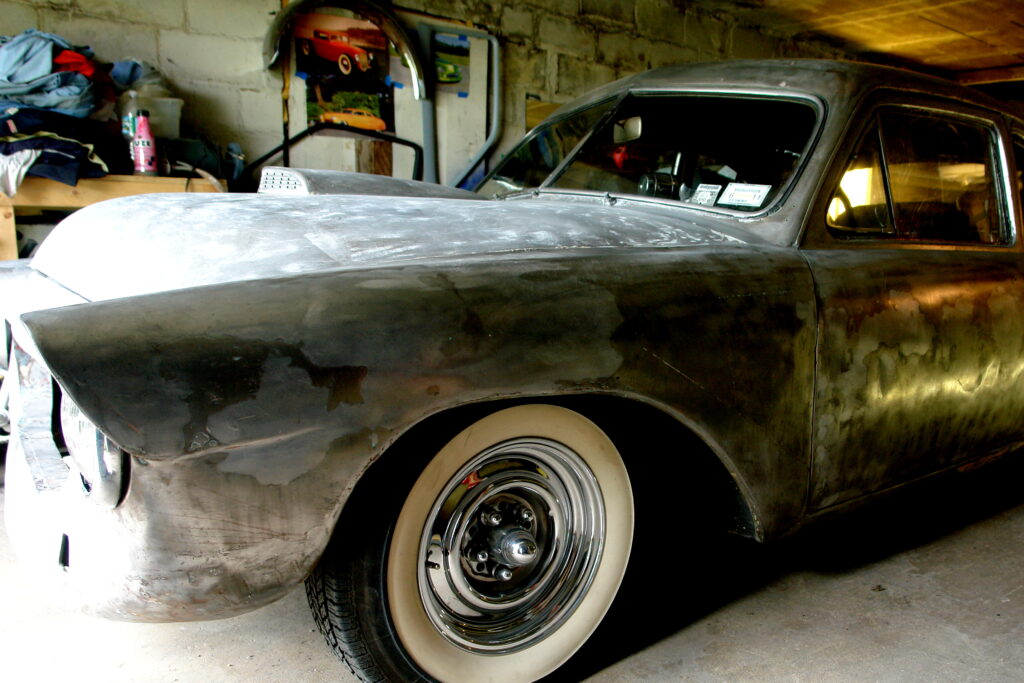
“The guy who did the car was a serviceman… He took the car to Japan and sectioned it in Japan. He did all the welding with coat hangers as brazng rods… that’s how they did the welding in those days. And the body work was done with lead… This was before Bondo. When I sanded it down, I had to see what was going on… what color I was going to paint it. When I saw the work, all the welds, where the lead was… I left it like that and I brought it to a couple of shows and people went wild. They saw it and were like Wow! So I said, you know what… I am leaving it like this. And I clear coated it. It shows all the welding, where the cuts were made to shorten it down and everything. The fins were hand-made.  The fins look actually came after this car was manufactured. It has ’55 Chevy headlights and rims, it has a T-Bird hood scoop, the grill… I could never figure out what he did with the grill. He pancaked the hood, he flattened the hood, he welded the whole front down, he put 1949 Plymouth bumpers on the front and back, hand-made fins, and he put 1950 Buick tail lights.

Paintless and irresistible, revealing all the cutting, hammering, welding, and lead filling done in the 1960s. [‘Geno’ Zandomenego]
“I found it on eBay. The car was brought back to the United States. It was brought back to Wisconsin. I always loved kustom cars and when I saw it on eBay, I was like Wow! Look at this car! I said, Let me try to bid on it. I ended up winning it. It’s actually featured in Mad Fabricators: they make DVDs. They had the whole story of this car in Mad Fabricators Volume 2. You’ll see the whole story of the car. Pictures of the car when it was red, when it was yellow, when it was black.”

Fins before fins! The Ford Club Coupe never had fins… [‘Geno’ Zandomenego]
“It took me a while to sand all that paint off. It was a simple gray primer. I was like, I am going to sand this down…. But as I sanded it down I saw a layer of black, a layer of yellow, a layer of red, a layer of like a greenish. Wow! I think it came down to like seven different colors. It had a 1954 bench seat. I took it out and I had 1954 T-Bird bucket seats. And I put the ‘54 T-Bird bucket seats in it. They were a little too high because the car was sectioned. I was in a junk yard in Pennsylvania and saw a 1960 Thunderbird with bucket seats so I bought those seats and put those seats in.

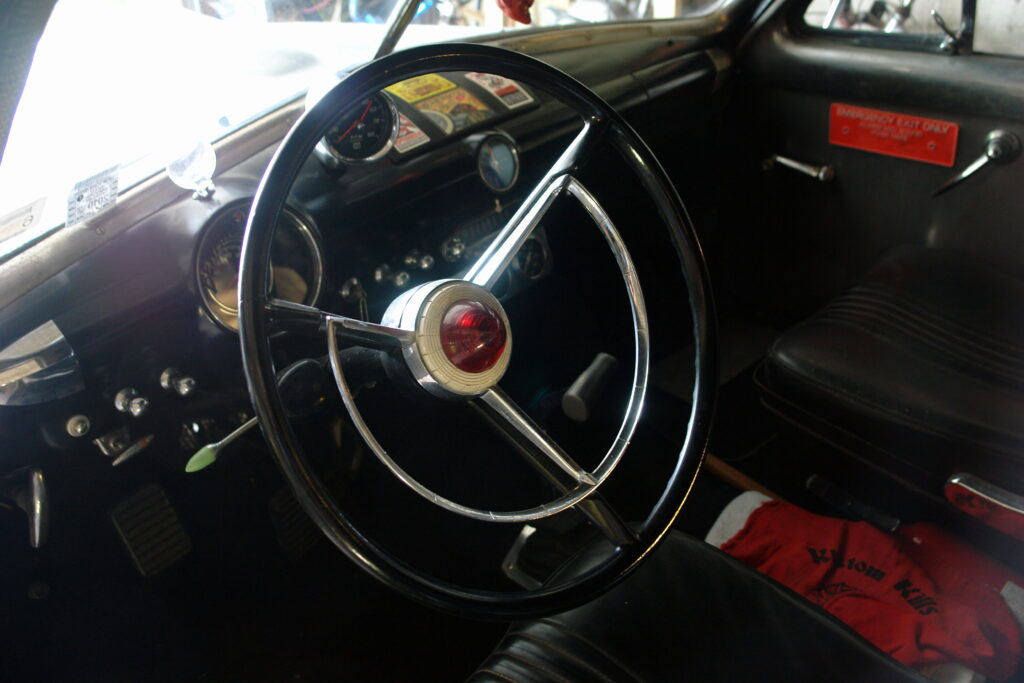
Steering wheel is classic and gigantic 1940s style. [‘Geno’ Zandomenego]
“Whoever customized the car took out the Ford engine and put a Buick 401 Nail Head engine in the car. It’s a high performance, high torque engine. I pulled it out and rebuilt the engine. I put a different transmission in the car. I haven’t had the car on the road in two or three years… the master cylinder went on it. I had no brakes… the master cylinder is under the driver’s side floorboard. I have to get under the car to do it.”

The sectioned and lowered car has a European look to it. The hood scoop is from a Ford Thunderbird. [‘Geno’ Zandomenego]
“I have been into the car thing ever since I was a kid. My father was a car guy. He had a body shop. He had a roadster with pin striping on the dash board. My Dad got into the kustomizing of cars probably in the early 1950s. This was in Brooklyn, Gravesend.”

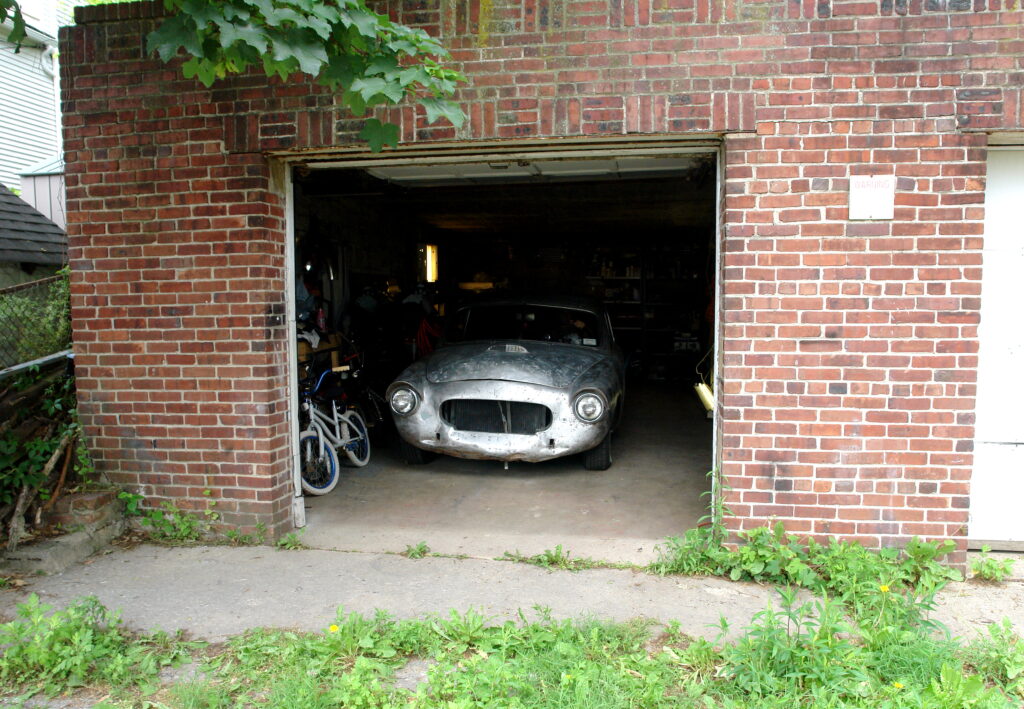
What’s in there, a Ferrari? [‘Geno’ Zandomenego]
“It’s funny… When I got the car and then sanded all the layers of paint off the body, my wife was, ‘When you gonna paint this car?’ Then we brought the car to a show at Lead East, and we had the car parked and as soon as we parked and got out of the car, it was like that movie, ‘Night of the Living Dead’, people started walking over to look at the car… Ya know? I said, Wow, I can’t believe they did that… You know what? I’m leaving the car bare metal. I am glad I did this. It shows the work that went into the car. The work is amazing.”

Geno with his clear-coated Ford custom. [‘Geno’ Zandomenego]
Eugene has loved cars since his youth. The day-to-day environment of his father’s body shop educated him about appreciating the process and diversity of car history. Cars are big objects that don’t disappear easily. Old cars are powerful… They become mnemonic devices that assist people to reconnect with abstract concepts and feelings that are not easily expressed. Kustom Culture creativity rewired the connections between stock history and a new personal history. After spending countless hours sanding away the multi layers of paint, Eugene then intentionally clear coated his Ford Club Coupe Shoebox in an effort to expose the historical process.

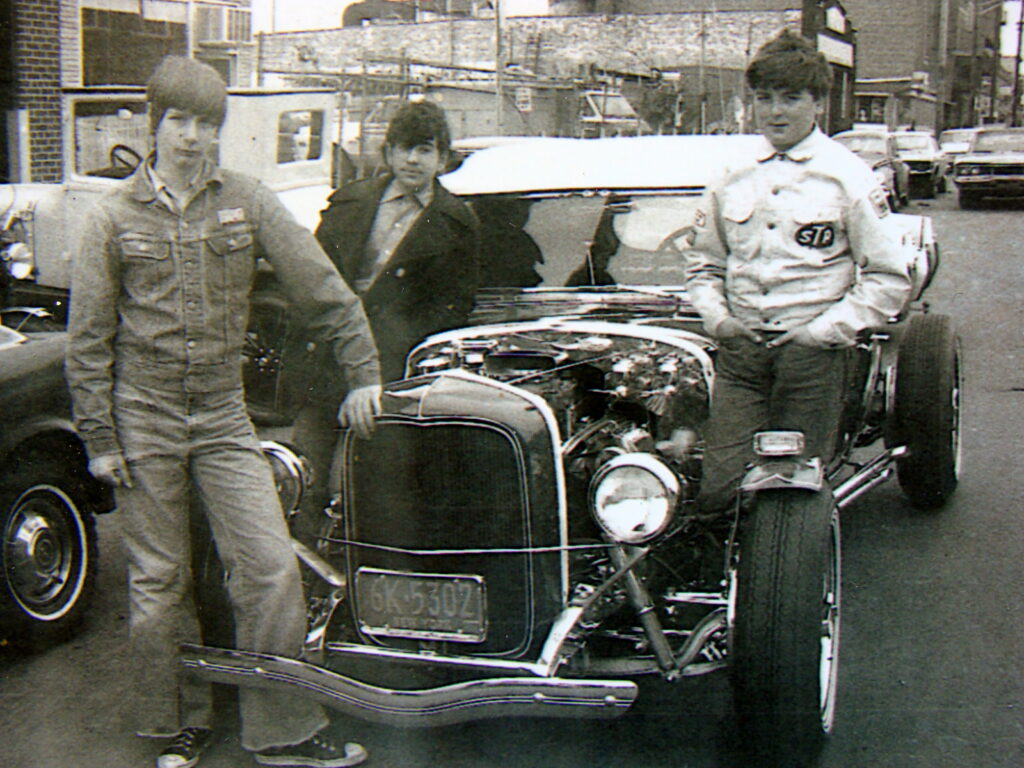
From an older generation of custom hotrods: Geno’s father with his Ford roadster. [‘Geno’ Zandomenego]
[1] Innovative cultural expression is usually spring loaded, disruptive and mysterious. In what seems like an unpredictable moment, status quo ideas and methods, lose their historical currency and are pushed aside.

[2] Federal Highway Administration.

[3] Ford produced 154,424 Club Coupes in 1949, with 4,170 of those featuring the 6-cylinder engine, making it a popular choice in the record-setting year where Ford sold over 1.1 million vehicles total that revitalized the company.

[4] U.S Department of Commerce.

[5] Women were integrated into the Ford design team- Helen Vincent and Sally Eaton were first hired in 1958 to work in the Advanced Styling Studio and focus on interior trim and color.

[6] From Blog/Cool Rides Online, Gold Eagle.

[7] When asked, Americans who were born in the 1920s and 30s will describe a world after WWII that was speeding up and had a new centrifugal force.

 

Michael McCabe is a New York City tattoo artist and cultural anthropologist. He is the author of New York City Horsepower, Kustom Japan, New York City Tattoo, Japanese Tattooing Now, Tattoos of Indochina, and Tattooing New York City. For New York City Horsepower, Mr. McCabe spent two years discovering and documenting underground custom motorcycle and car garages in the City, as rapid gentrification put their culture under tremendous pressure. He interviewed and photographed New York City customizers about their personal histories and creative sensibilities. More of Mike’s articles for The Vintagent can be found here.


Related Posts

The Vintagent Original: Custom Revolution

Custom Revolution is the first major…
San Francisco Art Deco Day, 2006

The Legion of Honor Museum of San…
Legend of the Motorcycle Attire

It was an event that changed the…


Subscribe to Our Weekly Newsletter