
Shige Suganuma, 1970s California Kustom Kulture and MOONEYES
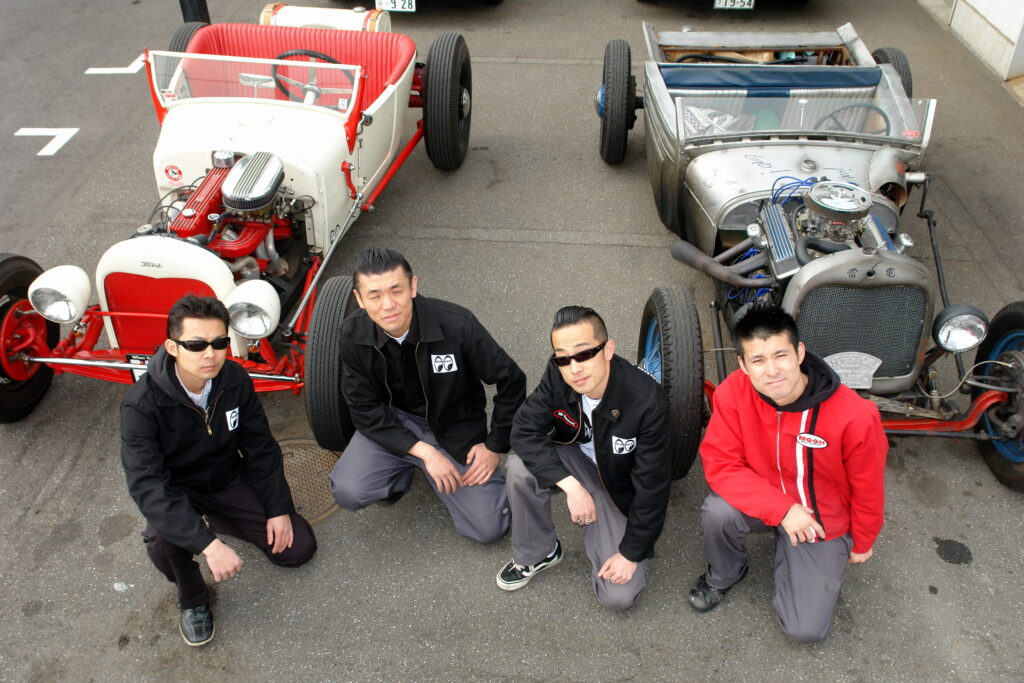
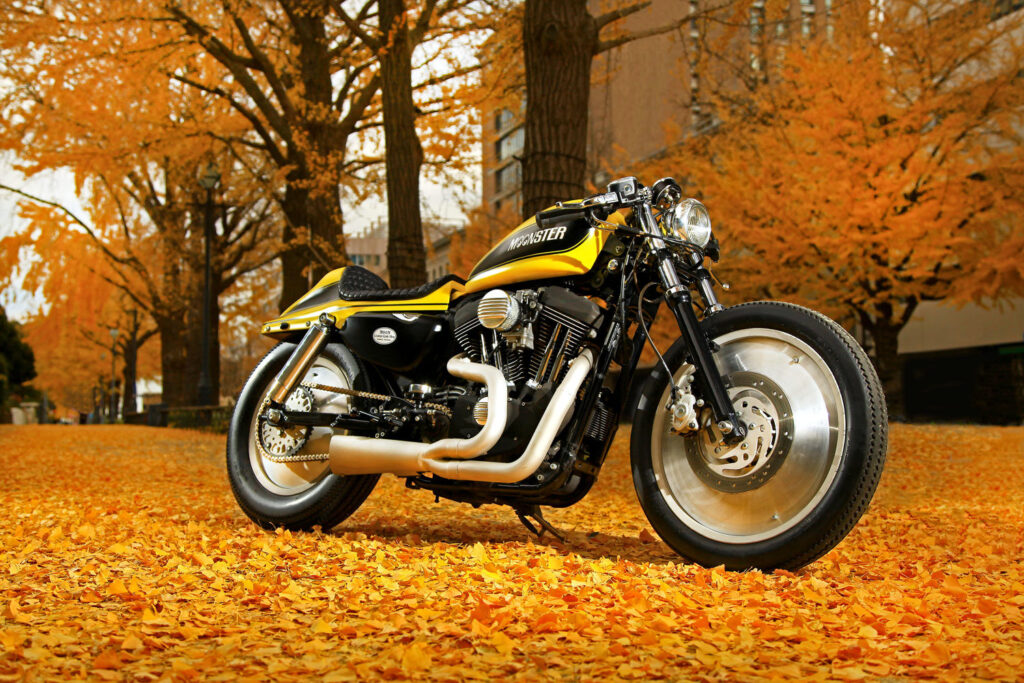
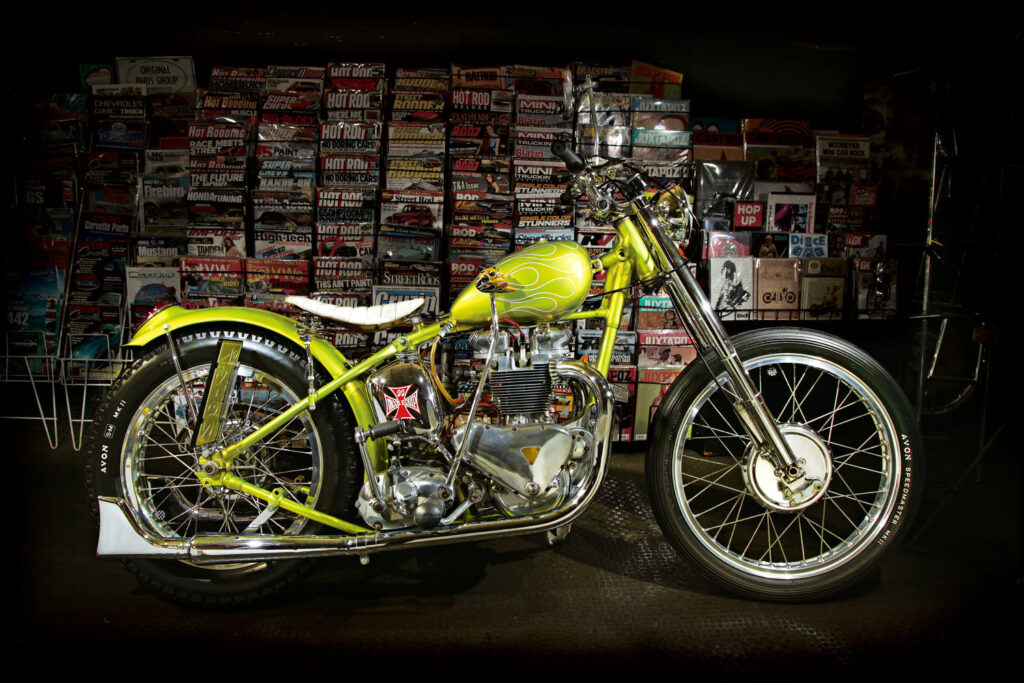
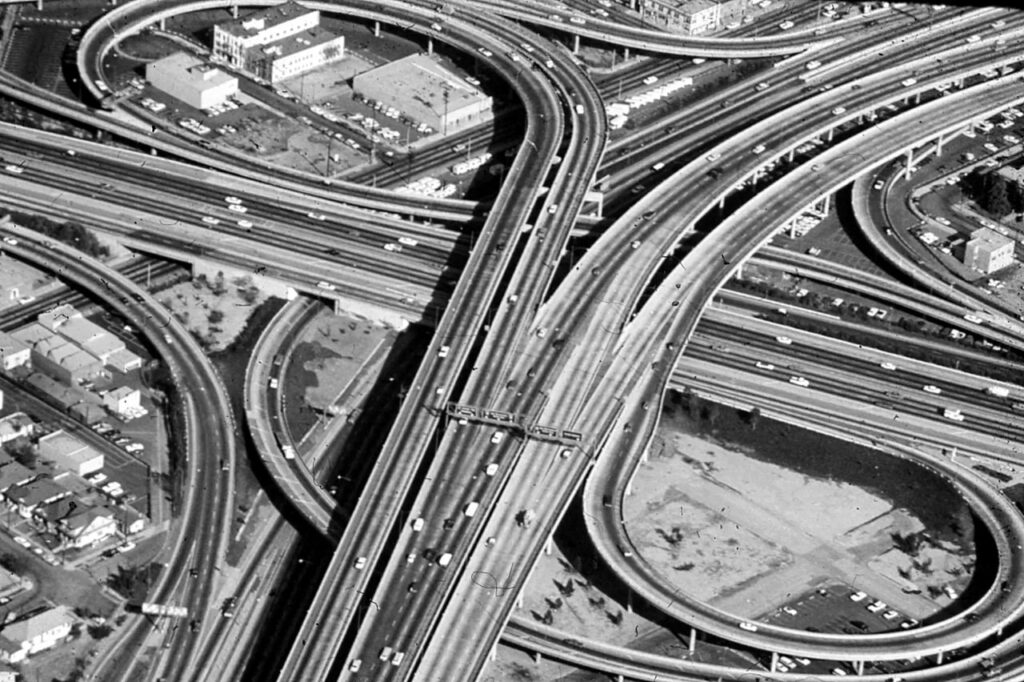
The MOONEYES brand of speed equipment and accessories has always been identified with a California vibe of possibility and mobility. From its earliest days, West Coast culture typified a powerful and magnetic dreamscape of fantasy new beginnings [1] [as far back as 1510!– ed.]. The expanse of Los Angeles is framed by the dynamism of wheeled culture and enabled by the incredible network of freeways that acted as both connections and boundaries between people and their cultures [2]. During the 1950s and 60s, as the rising post-war youth demographic merged with cars and motorcycles, the values of Golden State moto culture encouraged broader concepts of freedom, autonomy and independent mobility that permanently changed the expectations of young and old people everywhere around the world. SoCal youth based cruiser culture[3] birthed the revolutionary concept, Kustom Kulture and its key creative personalities: Dean Moon, the Barris brothers, Kenneth Howard (Von Dutch), Ed ‘Big Daddy’ Roth, Dean Jefferies and others, who merged krazy fabrication and paint ideas with lifestyle to form a new Hell on Wheels state of mind.[4]




Autopia-The Freeway Ecology- Banham defines the freeway system as a “complete way of life” and a “single comprehensible place” that represents a “coherent state of mind,” ranking it alongside the great urban achievements of history.
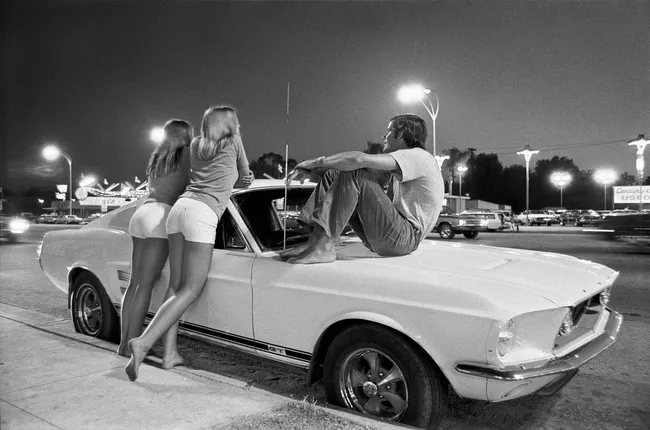
[4] Von Dutch famously painted over the Barris Brothers shop sign, switching the Custom ‘C’ to a Kustom ‘K’ and this youth inspired renaming prank came to symbolize the new ethos of a car and motorcycle customizing generation.

[6] From an outstanding article, “Seventy-Seven California” by Souichi Oikawa (Fly Wheels Magazine) in MOONEYES International Magazine, Vol. 22, Summer 2020.
[7] For more information a thorough article about Dean Moon’s history by Daniels Strohl in Muscle Machines (2009). Reprinted in Hemmings. Also a good article about Moon by Gary Medley in FUEL CURVE.
[8] Shige Suganuma, Kustom Japan, (Hardy Marks 2008).

Related Posts

The Vintagent Selects: Moto Guzzi 100 Years
Brilliant brains and greasy chains.
The Vintagent Original: Custom Revolution
Custom Revolution is the first major…
Legend of the Motorcycle Attire
It was an event that changed the…
MoonEyes …. Yup ! A blast from the past thats managed via Japanese ownership ( take that … well … you know ) to remain intact to the present day .
Bought their products …. wore their T shirts … displayed their Decal … and still follow the MoonEyes shows with great interest .
Suffice it to say … MoonEyes don’t make no crap … never did … and probably never will … and damn if their catalogue isn’t a hoot and a half to flip thru … even if you don’t ‘ think ‘ you need anything .
Nuff said
😎
in Jaypan the older the car the more its taxed so if you got a ’60 Ford like this guy had every year you’ll be paying registration fees out the wazooooo
Funny thing … what ya’s ‘ claiming has had exactly ZERO ( pun intended ) effect on individuals both young and old flocking towards CLASSIC cars … and M/C’s I might add .
Here’s a clue …. look at the price of new cars ( Kei cars excluded ) and the taxes , road license etc involved … then compare it to buying and owning a classic …. oops … there’s them damn facts gettin in the way .. again !
And ahh .. check the exchange rate … suffice it to say 100,000 yen aint nearly as bad as it appears
FYI .. Do yerself a favor son …. avoid Automated Cognition ( Ai ) like the plague … its total &$!#% …
And yeah … I know a helluva a lot more than the average person about Japan … Japanese culture … and especially Japanese automotive and M/C culture ( not to mention their underworld / Yakuza as well ) due in no small part to having a Matsushita ( Panasonic ) family member as a Uni roommate and a friend
Toodles
😎
Ed Roth on his shovelhead he named “Oink”.What a beautiful piece of sculpture are the ’36 to ’57 springer forks,though in this photo its the earlier “I-beam” type which I’ve never liked.The ’36-up ones look like they were modeled after the bones of a skeleton.One of the 4 Horsemen of the Apocalypse would definitely be running an oem springer on his bike.Robt. Williams did a neat drawing of them for Zap with a Nazi gorilla piloting a trike.Then Harley revived them in the 80s but it just wasnt the same.All the gnarly grotty character of the earlier ones was gone.They even stuck these gay yellow reflectors on the rear legs.I bet people just couldnt wait to tear them off as soon as they got the bikes home from the dealer.Whatever,people cant seem to get enough of the old ones.Theres at least 3 companies making accurate(fairly) reproductions of them now.And you dont want to know what the old ones are going for on ebay these days.
Hmmm … been trawling the hollowed out &$!#% grounds of Automated Cognition [ Ai ] once again I see .. which is to say .. check yer facts …
And ahh … by the way … there is such a thing in this country called copyright law … which you’ve done a good job circumventing here …. ( yup … found the exact article you cut&pasted this from … and yup … the article has its facts a lil off ) … seriously … if yer gonna do this … give credit where credit is due … cretin !
And EBay ???? …. Ta hell with EBay … try buying a genuine one from a collector and see what you’ll pay . And those repops .. some is good … a couple is ok … and a whole lot of em ( there’s a multitude of companies here and overseas making em ) are pure unadulterated …. crap !
A word to the wise …buyer beware on ALL things EBay .
But hey … y’all jes keep on trying … we’ll keep on laughing …
Toodles ! .
And ahhh … though no proof is to be found …. knowing Roth … and looking at the forks myself … I’d bet dollars to donuts them was one of the many quality springer repops available back in the day …
Uh-oh,looks like ol Hamburglar is back.Lawd,are we ever going to be rid of him.
OK,what is it this time?
WHAT article did I cop that from?I want names and dates.WHAT facts are off?
God,its like dealing with Huck Finn’s dad.
“Is there no END to your airs?”
The real question is .. is there any end to your relentless off topic BS , lies , fabrications , cut&paste and Ai enshitification ? If history is any judge …. nope ! Like a bad case of the runs it just goes on and on and on and…………..
BTW … whats really funny is every time you’ve been called out … your responses become more and more juvenile , disparate and confused ….
Oh … and BTW genius … I asked around about those forks on Roth’s OINK ( oh the joys of old friends and contacts who were there back in the day ) …. custom built little one …. not stock … not even close … one look and ya’d know that yerself … dipstick !
OK, google up a pic of some pre ’36 forks and then compare them to Oinks’ and tell me what you think.And WHO made exact repros of OEM forks in the 1960s? AEE Choppers I suppose? JC Whitney? Sears?
This is like the time you said there was no one named Spook in Last Exit to Bklyn just because you read the Cliff Notes.No you got to read the actual book,theyre two different things.Cliff Notes are what probably got you through high school
Ahhh … genius … once again ya sticks yer disgusting foot down yer throat up to yer knee cap . Idiot !
1) There was a multitude of manufactures and custom ( you do know what that word means or do you ) builders in the 50’s 60’s and 70’s …. some of whom built from scratch .. some who remanufactured stock forks with a multitude of after market parts new and used ( betcha ya don’t have a clue what they did with old Ford suspension parts ) and some who came up with some mighty wild variations on the theme .
And yeah dumb@$& .. why don’t ya try googling OINK’s and a set of stock pre 36 forks ? Cause if ya did wingnut … ya’d realize assuming yer not blind that OINK’s forks are longer … more robust … heavily chromed … raked … and a helluva lot more ‘ custom ‘ than anything remotely resembling stock . Rube !
2) As for your ongoing futile attempts to prove you know anything about that book/film … never mind read it/ seen it …. seriously MeatHead … give it up … YER WRONG … end of argument … period !
As for yer pathetic attempt at a Clif Note insult ( learn how to spell it afer trying to use it.. one F … not two ! ) seems to me yer trying to project your stupidity upon others in order to assuage your guilt and shame
Seriously Splinky … you make yourself out to be a bigger fool with each and every comment .. as you did on ES