When Paul d’Orléans described the International Journal of Motorcycle Studies (IJMS) conference as “motogeek summer camp,” he captured something difficult to explain to anyone who has not experienced it.  The IJMS conference is not a motorcycle rally, although everyone there loves motorcycles. It is not simply an academic conference, although the presentations are carefully researched and intellectually serious. It is a gathering of historians, anthropologists, philosophers, artists, filmmakers, and riders united by a fascination with motorcycles and a desire to understand why these machines matter.

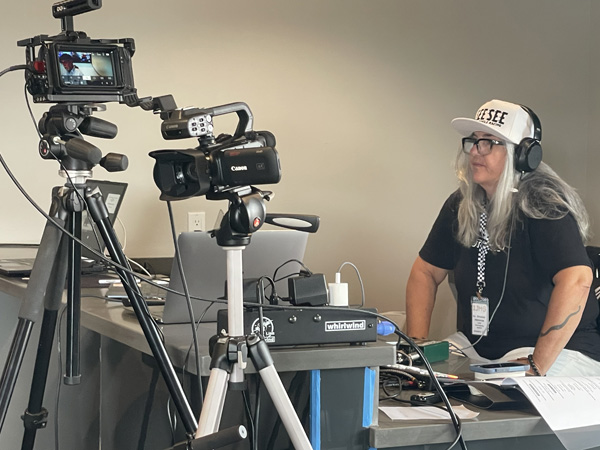
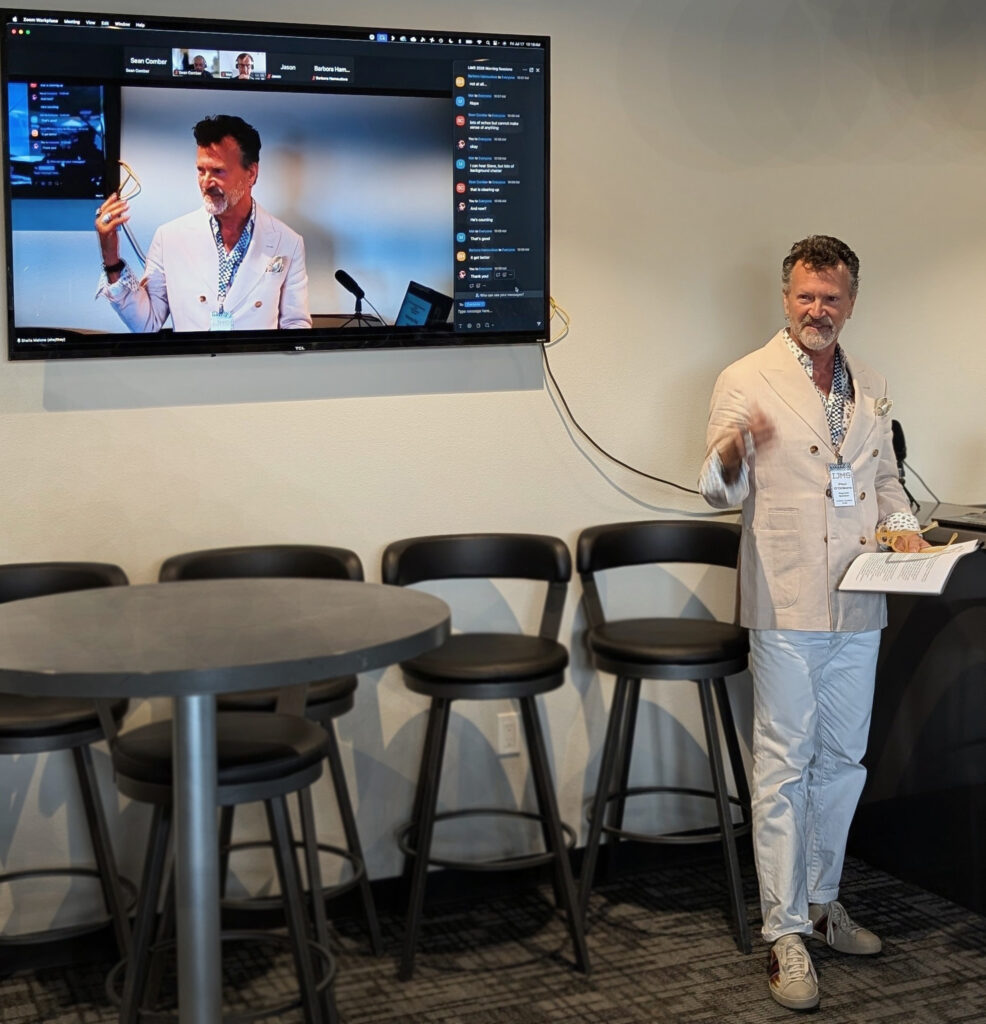
Seeing double! The 13th IJMS conference was the first to be livestreamed as well as in-person, as half of the presenters lived in other countries, and had issues with travel to the USA in the current immigration/visa climate. The internets are good for something! [Wendy Pojmann]
Paul’s keynote this year, “The Lover,” captured that idea beautifully. While many presentations approached motorcycles through research and analysis, Paul offered something deeply personal: a meditation on intimacy, vulnerability, and the emotional connection riders develop with motorcycles and with riding itself. His keynote recognized something every rider understands. A motorcycle exposes us. We are closer to the weather, the landscape, the machine, and our own limitations. Yet that vulnerability is part of the attraction. Riding demands attention. It requires presence. It reminds us that we are not simply moving through the world; we are experiencing it.

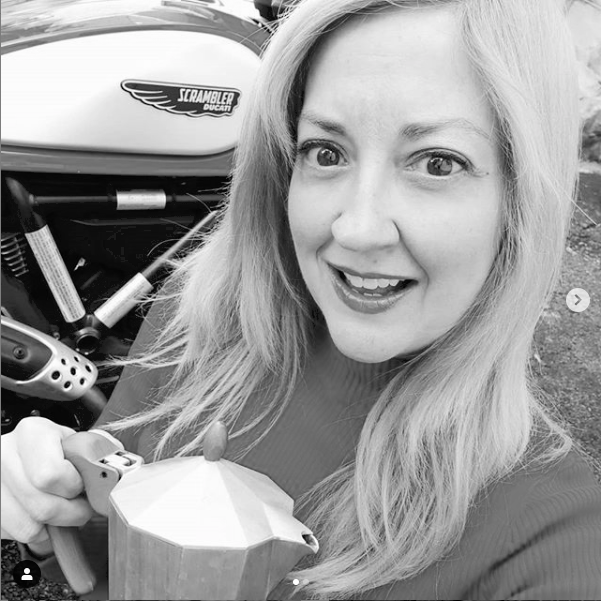
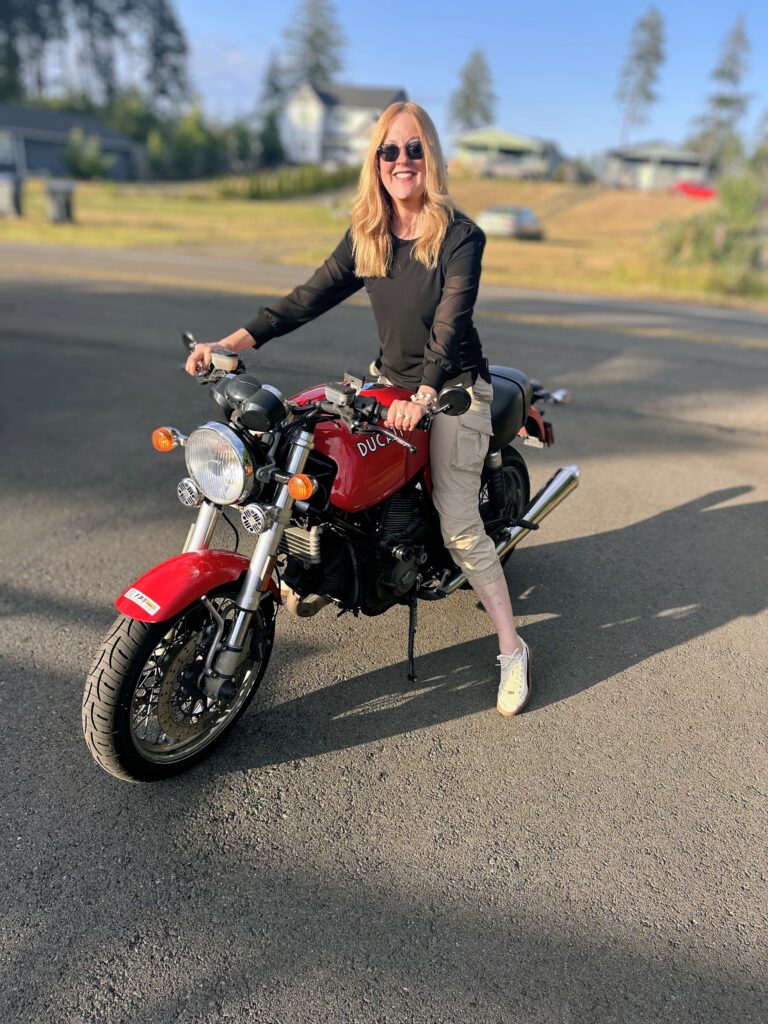
Side benefits of the motogeek summer camp: author Wendy Pojmann tries out Steve DelVecchio’s Ducati Sport Classic. [Kate St Vincent Vogl]
The presentations that followed explored that relationship from multiple perspectives. Again and again, the conference returned to a central question: What do motorcycles reveal about us?

Who Gets to Be a Motorcyclist?

One of the strongest themes throughout IJMS was the question of belonging. Motorcycling has long been represented through familiar images: the solitary male rider, the rebel, the risk-taker, the mechanical expert. These images remain powerful, but they tell only part of the story. Motorcycle culture has always been more diverse than its popular representations suggest.
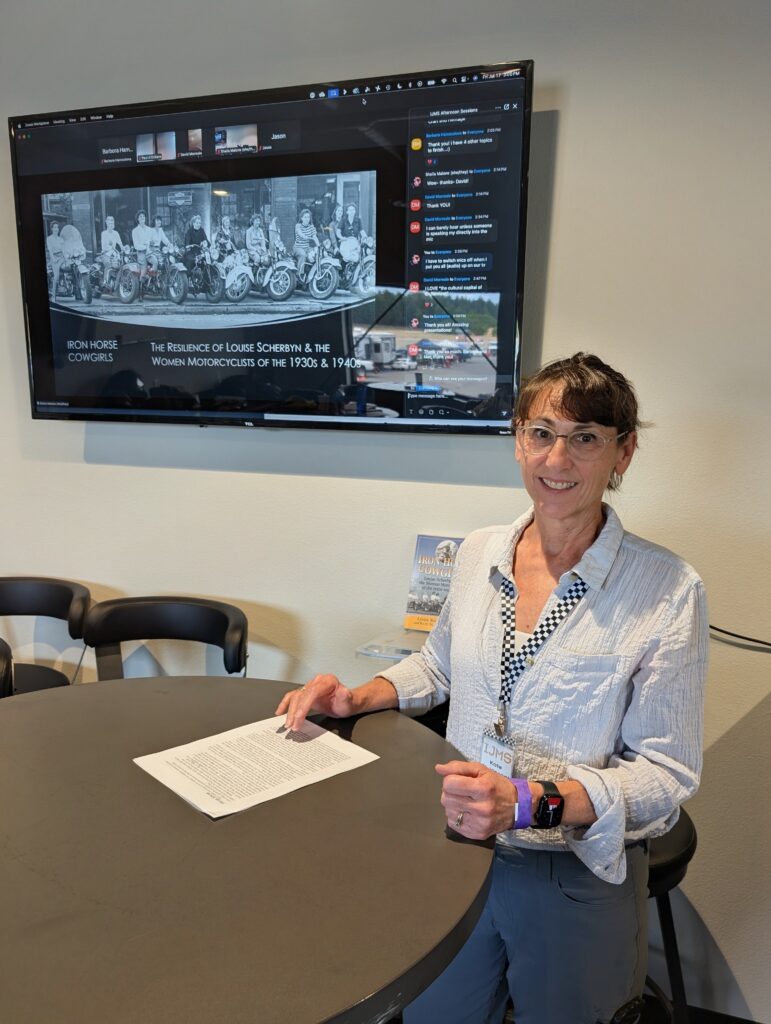
Kate St Vincent Vogl presenting on the life of Louise Scherbyn, founder of WIMA. [Wendy Pojmann]
Kate St. Vincent Vogl’s research on Louise Scherbyn and women motorcyclists of the 1930s / 40s demonstrates that women have never been absent from motorcycle history. Scherbyn’s journey from early solo riding, to founding the Women’s International Motorcycle Association (WIMA) revealed both the opportunities motorcycles offered women and the barriers they encountered. Her story was not simply about an exceptional woman rider; it was about creating community when existing motorcycle spaces did not fully recognize women’s place within them.

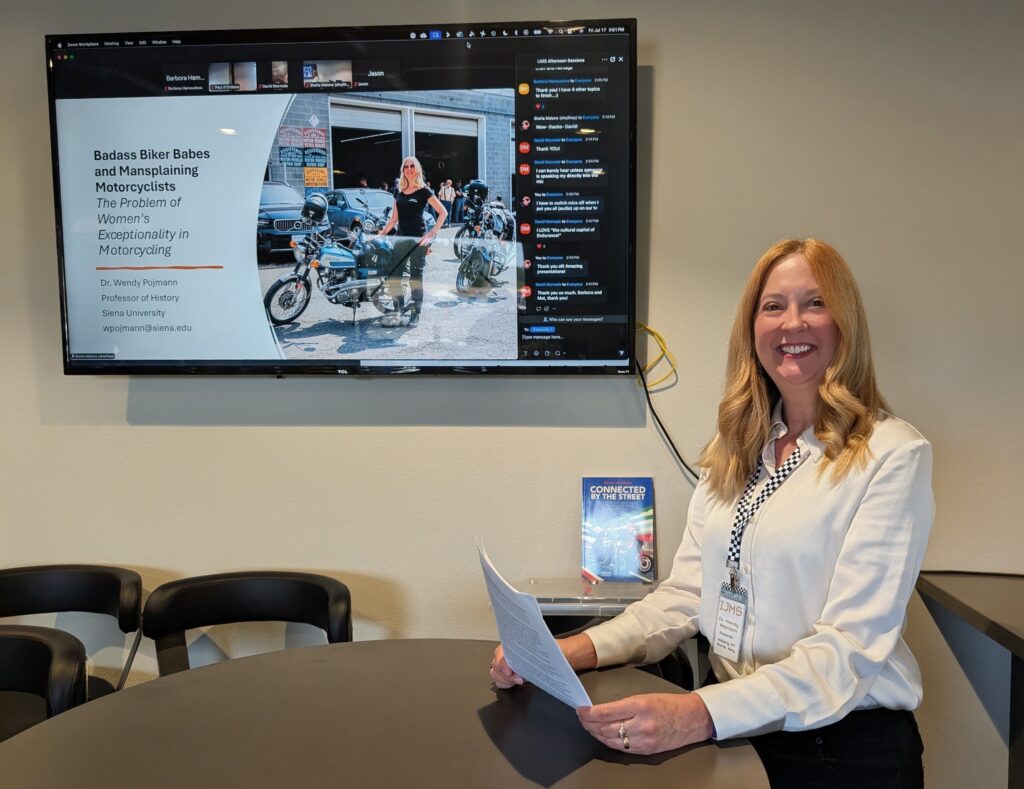
Wendy Pojmann explored why women are seen as the exception on motorcycles, and how women riders are approached differently in the USA than in other countries. [Kate St Vincent Vogl]
That history continues today. My own presentation, “Badass Biker Babes and Mansplaining Motorcyclists: The Problem of Women’s Exceptionality in Motorcycling,” examined why women riders are still so often treated as unusual rather than ordinary participants in motorcycle culture. Women have raced, toured, commuted, repaired motorcycles, and crossed continents since the earliest days of motorcycling. Yet their gender frequently remains central to how their stories are told. The challenge is not only making women riders visible. It is asking whose knowledge and expertise are considered authoritative.

Sheila Malone, co-chair of this year’s IJMS conference, and archivist for Dykes on Bikes. [Paul d’Orléans]
IJMS co-managing editor Sheila Malone explored the history of San Francisco’s Dykes on Bikes extended this conversation by examining how queer riders have built community and visibility over five decades. The organization’s history demonstrates how motorcycles can become vehicles not only for mobility but also for identity, activism, and public presence. Other presentations broadened the discussion further by exploring how riders negotiate identity beyond traditional categories. Sarah Kahlbaum examined women riders’ negotiation of gendered identities through embodiment and lived experience, while Liliana Falcón Zertuche explored queer women motorcyclists in Mexico City and the challenges they face in claiming space within a culture historically associated with masculinity.

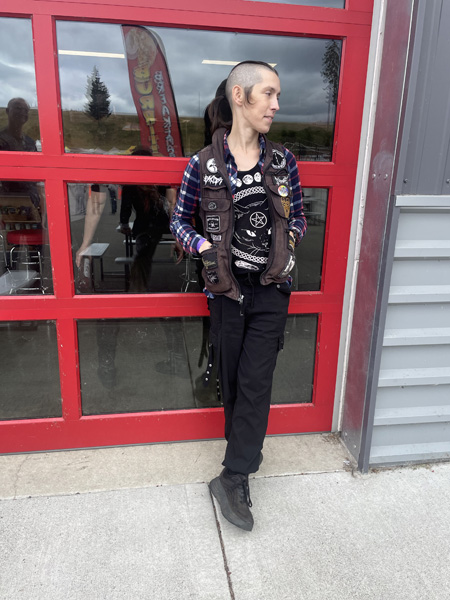
Cael Leigh Whalen rode to Shelton WA from their university digs in Davis. [Paul d’Orléans]
Cael Leigh Whalen’s research on queer bikepacking expanded the conversation beyond questions of representation and inclusion by examining motorcycles as tools for connection across cultures and communities. Drawing on ethnographic research and international motorcycle travel, Whalen showed how riding can create unexpected encounters and build relationships across differences in geography, language, politics, and identity. The motorcycle becomes not only a vehicle for personal freedom but also a means of approaching other people with curiosity and openness. Together, these presentations revealed that motorcycles may symbolize individual freedom, but riding is also about belonging. The question is not only who rides. It is who gets recognized as a rider.

Motorcycles as Memory Machines

Another recurring theme of the conference was the relationship between motorcycles, travel, and memory. Motorcycles do something unusual to geography. They transform places into experiences. A road is never simply a road once it has been ridden.
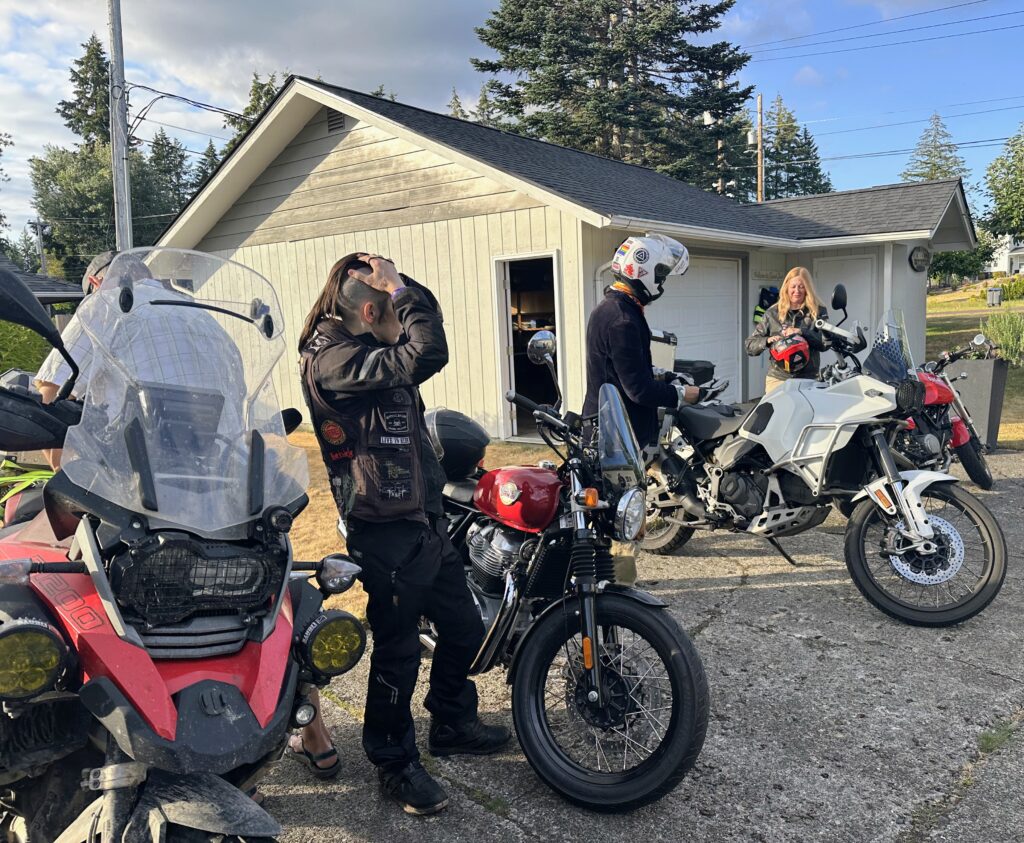
Ready to roll…several presenters rode to the IJMS conference, from Davis CA, Chicago, and Toronto! [Wendy Pojmann]
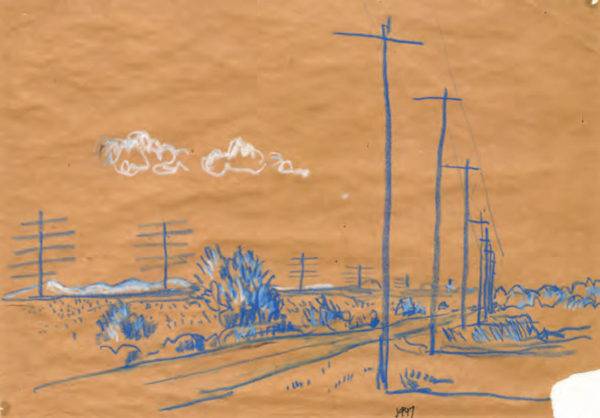
Barbora Hamoudová’s research on the Harley-Davidson Club Praha explored motorcycle travel as a form of heritage-making, showing how riders create connections among landscapes, historical events, and collective identity. Sean Michael examined the overlooked role of motorcycles in the life and work of landscape scholar J. B. Jackson, demonstrating how they shaped not only his travel but also his understanding of place.

JB Jackson sketched as he explored the American landscape for his academic work, often on a motorcycle. [SCA]
Mahdi Tourage connected motorcycle travel with historical memory through his journey from North Platte, Nebraska, to Tabriz, Iran, following the story of Howard Baskerville and reflecting on the ethics of witnessing history. Other presentations explored the relationship between motorcycles, tourism, and place: Knut Scherhag examined culinary experiences on motorcycle tours, Aarron Butterworth considered motorcycle heritage as a force for community regeneration in West Cumbria, and Simon Pruciak explored how virtual reality might recreate aspects of the motorcycle journey.

Mahdi Tourage spoke about combining motorcycle pilgrimage with his research. Mahdi rode from Toronto to attend the IJMS conference. [Paul d’Orléans]
Different methods, different disciplines, and different continents, but with the same conclusion: motorcycles help riders create relationships with landscapes, histories, and communities.

The Risk of Being Alive 

Several IJMS presentations challenged the assumption that risk is the defining feature of motorcycling. Instead, they explored a more complicated question: what if vulnerability is not simply a danger to overcome, but part of what makes riding meaningful?  Matthew Humphrey’s exploration of mortality and motorcycling approached this question through existential philosophy, asking how awareness of death shapes riders’ understanding of authenticity and a self-directed life. His argument resonated because riding heightens awareness of the present. The road requires attention. The environment demands engagement. The rider cannot simply disappear into the background of the experience.
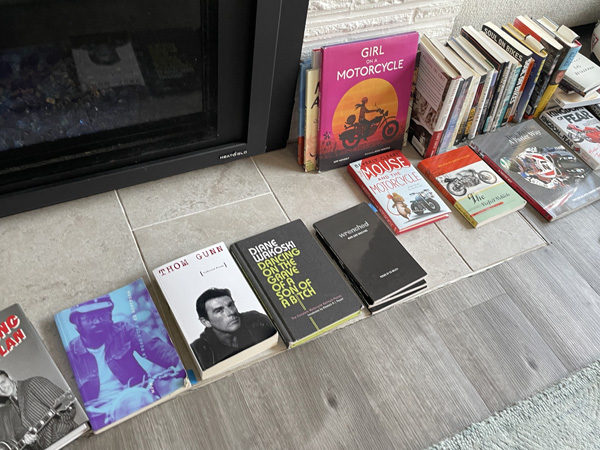
Summer camp bunkhouse on Island Lake WA: Steve Del Vecchio’s research pile for his current studies. [Paul d’Orléans]
Sean Comber approached the subject from another direction, examining the physical and mental health benefits of off-tarmac trail riding and challenging the assumption that motorcycles represent only danger. His research demonstrated how riding can provide exercise, connection with the outdoors, and psychological benefits that are often overlooked in public discussions of motorcycling. Jacob Stump and Jeff Burns pushed the conversation further by examining how motorcycle risk is not only experienced by riders but also interpreted by society. Stump’s analysis of the “evangelizing of fear” explored how warnings about motorcycles can become more than safety messages; they can serve to define who is responsible, who is reckless, and who belongs outside accepted social norms. Burns’s work on Manufactured Deviance Theory similarly examined how outlaw motorcycle identities are shaped through an ongoing interaction among riders, media narratives, law enforcement, and institutions. Rather than treating deviance as something inherent, his research asked how identities are produced and reinforced through social responses.

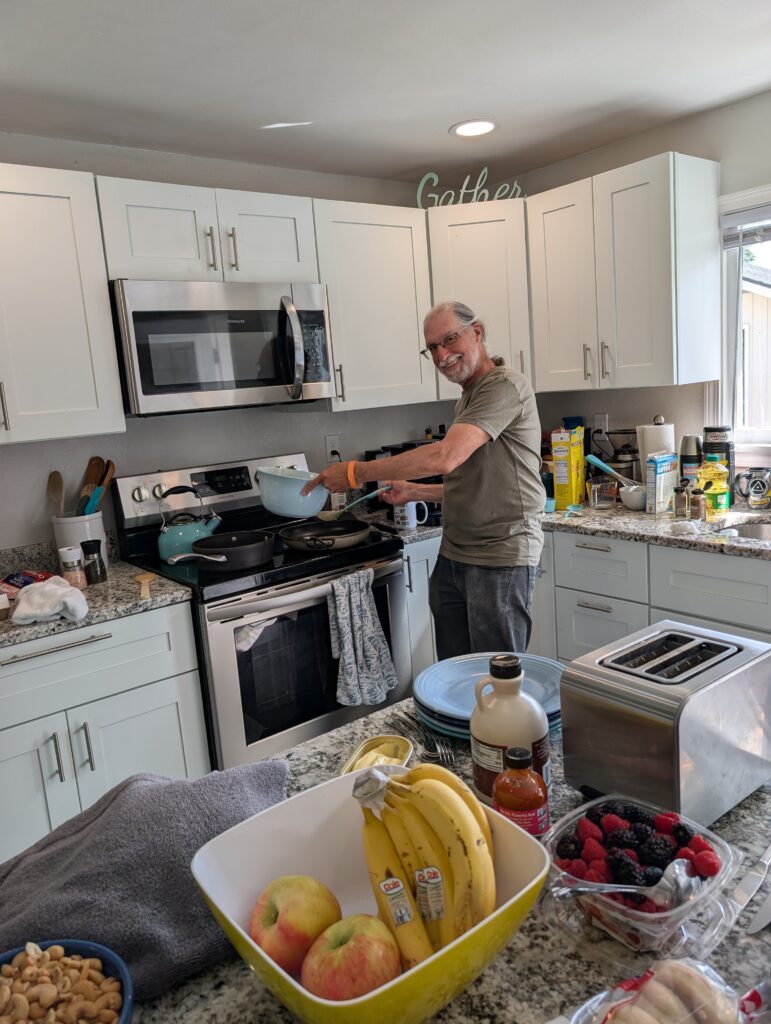
Summer camp vibes included a pancake breakfast cooked up by our host Steve Del Vecchio. [Wendy Pojmann]
Together, these presentations revealed that motorcycle risk is never only about physical danger. It is also about perception, identity, and power. The same qualities that make riding appear threatening from the outside, such as independence, intensity, and refusal to be entirely controlled, are often the qualities riders value most.

Motorcycles require awareness, responsibility, and engagement. They remind us of our vulnerability, but also that we are alive.

The Stories We Carry

Ultimately, motorcycles endure because they create stories. They appear in songs, films, comics, photographs, memoirs, and the stories riders tell each other. These representations do not simply reflect motorcycle culture; they also shape how the wider world imagines the motorcyclist.
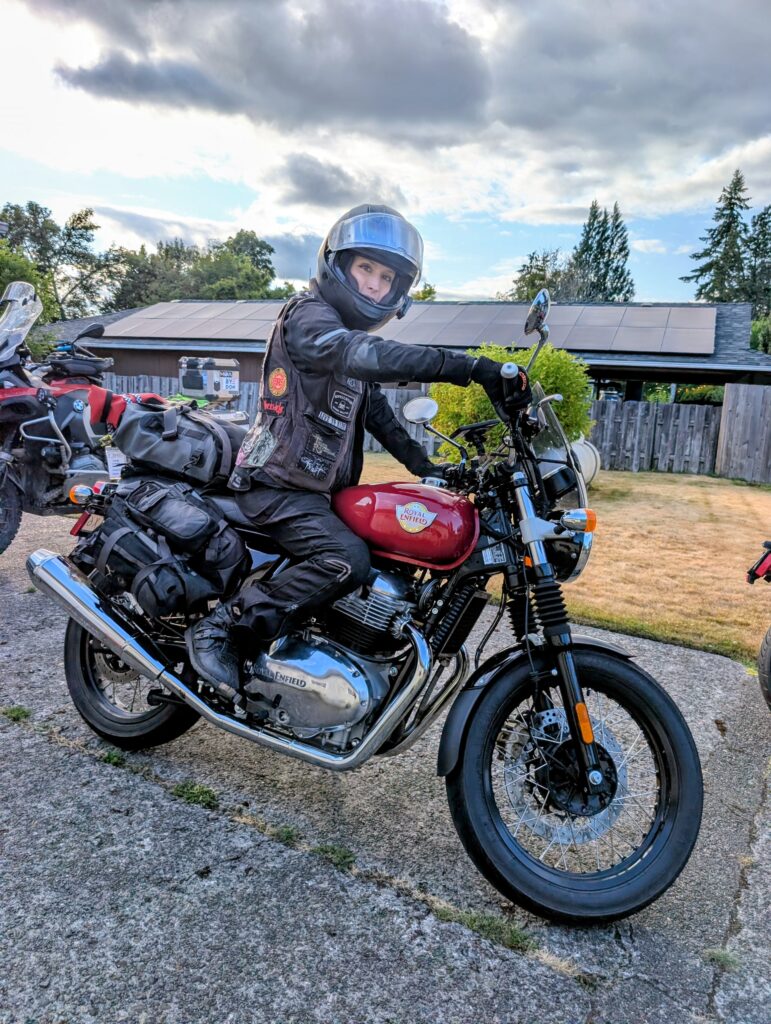
Cael rode their Royal Enfield 650 twin from Davis CA to attend the IJMS conference. Cael is a big fan of the brand! [Wendy Pojmann]
Co-managing editor Jason Wragg’s examination of Marvel’s short-lived Team America comic series offered a fascinating example of how popular culture transforms riding into mythology. Created in the post-Evel Knievel era and shaped by commercial interests, the series presented a particular vision of the motorcycle hero: solitary, patriotic, masculine, and larger-than-life. Yet that image also revealed what gets lost when motorcycling is reduced to spectacle. The rider becomes a symbol of freedom and power, while the complexity of actual motorcycle communities disappears.

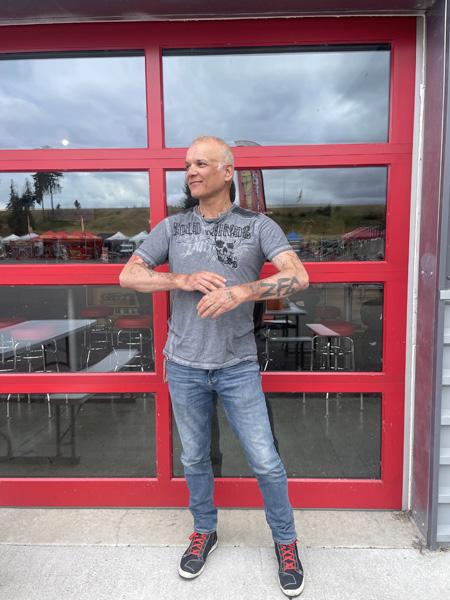
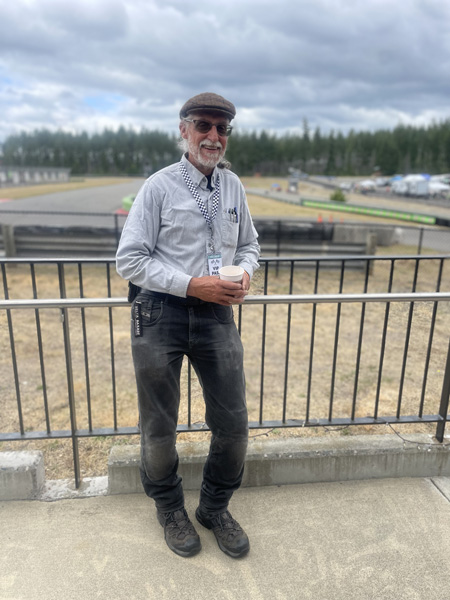
IJMS co-chair Steve Del Vecchio at his local racetrack in Shelton WA. [Paul d’Orléans]
The local IJMS conference organizer Steve Del Vecchio explored another form of motorcycle storytelling through his research on motorcycle songs and his own poetry about riding. His wide-ranging study of motorcycle music across languages and cultures, examines how themes of freedom, rebellion, movement, and identity have been expressed through song. He also shared his own poems, reminding the audience that motorcycling is not only something we study. Riding is something we feel, remember, and try to capture in words. Like comics and film, music and poetry do more than describe motorcycles; they help create the emotional language riders use to understand their connection to two wheels.

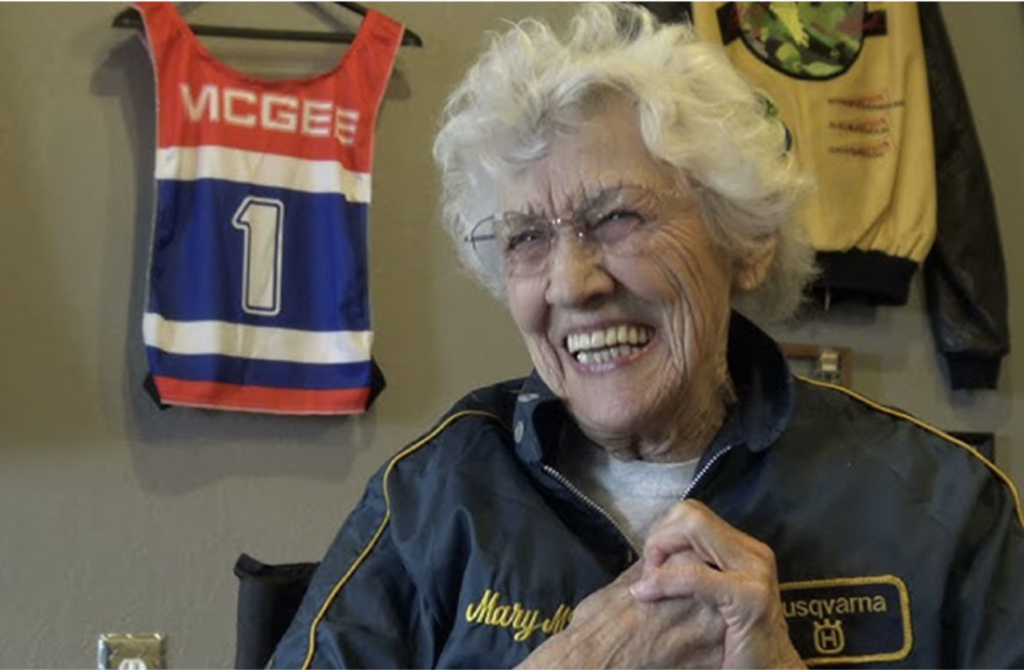
Mary McGee, star of ‘Motorcycle Mary‘, an extraordinary short film about her racing life. [The Vintagent Selects]
The conference concluded with the screening of Motorcycle Mary, the story of Mary McGee, whose racing career challenged assumptions about who could compete and what women riders could accomplish. Her life brought together many of the themes that ran throughout IJMS: courage, creativity, persistence, and the desire to experience the world on two wheels.

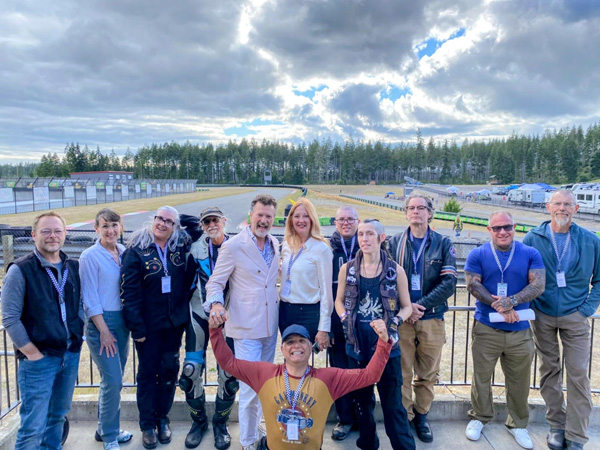
2026 IJMS conference presenters Jacob Stump, Kate St Vincent Vogl, Sheila Malone, Steve Del Vecchio, Paul d’Orléans, Mahdi Tourage (kneeling), Wendy Pojmann, Cael Whalen, Jeff Burns, and Sean Michael.  Behind the speakers are conference visitors Sean X and Dennis Bratland. [Wendy Pojmann]
IJMS revealed that motorcycles endure not simply because they are machines, but because they illuminate something about ourselves, whether it’s our desire for connection, our search for freedom, our willingness to embrace vulnerability, or our need to tell stories about the journeys we take. Finally, as at the best motorcycle gatherings, many meaningful IJMS conversations unfolded between presentations over coffee or while exploring Ridge Motorsports Park, in Shelton, Washington, the location of this year’s conference. At the nearby lake house where several presenters stayed, the boundaries between conference and motorcycle gathering disappeared. Discussions about favorite bikes and memorable roads quickly became conversations about the journeys we had taken, the machines we loved, and the experiences that shaped us as riders.


Dr. Wendy Pojmann, Ph.D., is Professor of History at Siena University in Albany, New York. Her latest book is Connected by the Street: The Myths and Realities of Motorcyclists in the USA and Italy, available at www.parigibooks.com. She splits her time between Rome, Italy, and upstate New York. Follow her on Instagram @wendysespressolife. See her other articles for The Vintagent here.