
[Traveling by Batavus Bilonet G 50 Sport in 1957, as recounted in a period article by Hugo de Wijs]
“Why on earth did you choose Mexico for the most intense part of your trip?” Hugo de Wijs asks himself, highly surprised by his own choice, every time he reflects on it. It is perhaps missing the point: he goes on a journey to look at the United States. And since riding the same stretch twice is less than half the fun, you choose the outbound route through the South, because ‘poor America’ is endlessly more interesting than the well-polished northern part of the route.
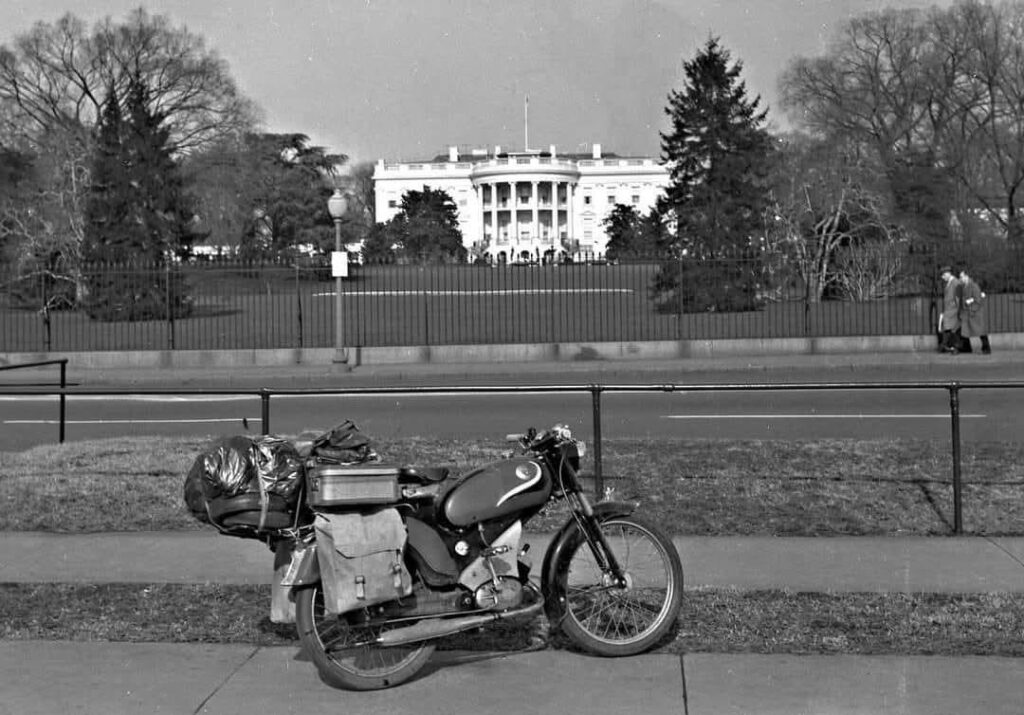
It is all difficult to establish. Hugo de Wijs wants to know for sure. Driven by a desire for discovery, he crossed Mexico in a short time on a Batavus moped to investigate all the wonders on his own.
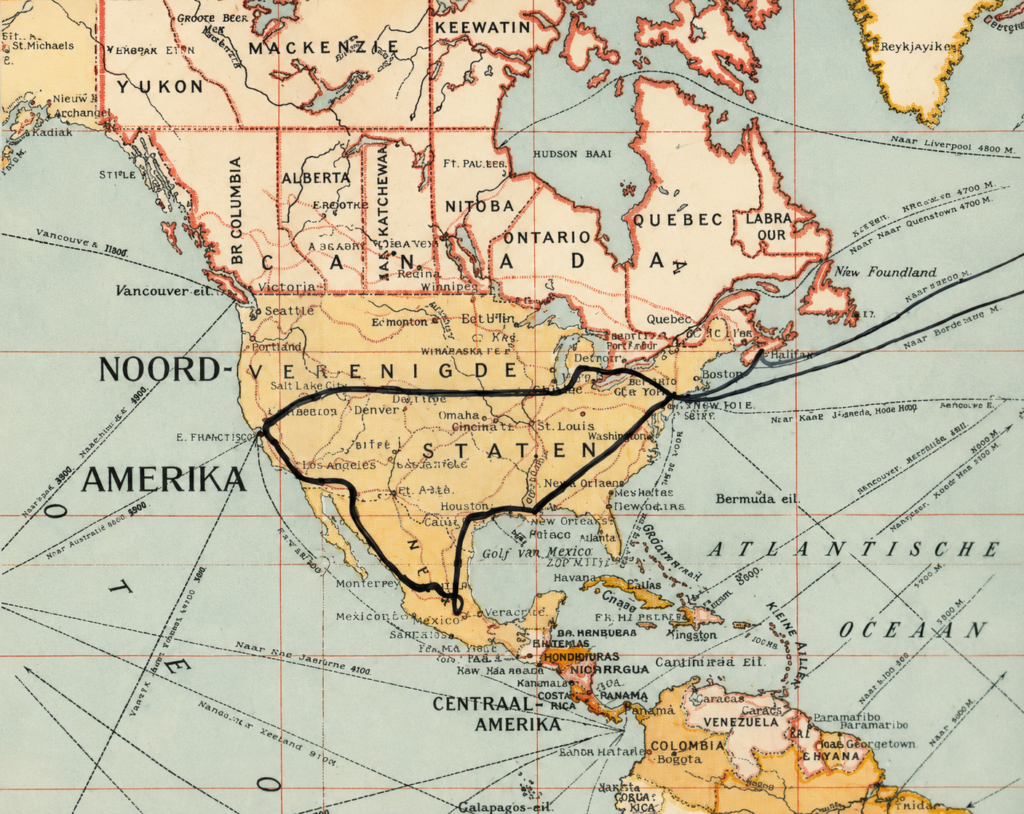
End of the Swamps
“The trip began right at the border between the United States and Mexico, which I crossed at the border town of Laredo. I arrived in a beautiful twilight, the last one I would see for a long time; the sky is usually clear, and because of all the stories from Americans, I didn’t entirely trust the darkness. For safety reasons, I stopped at the first village I encountered. I wanted to pass through the cities without much delay.
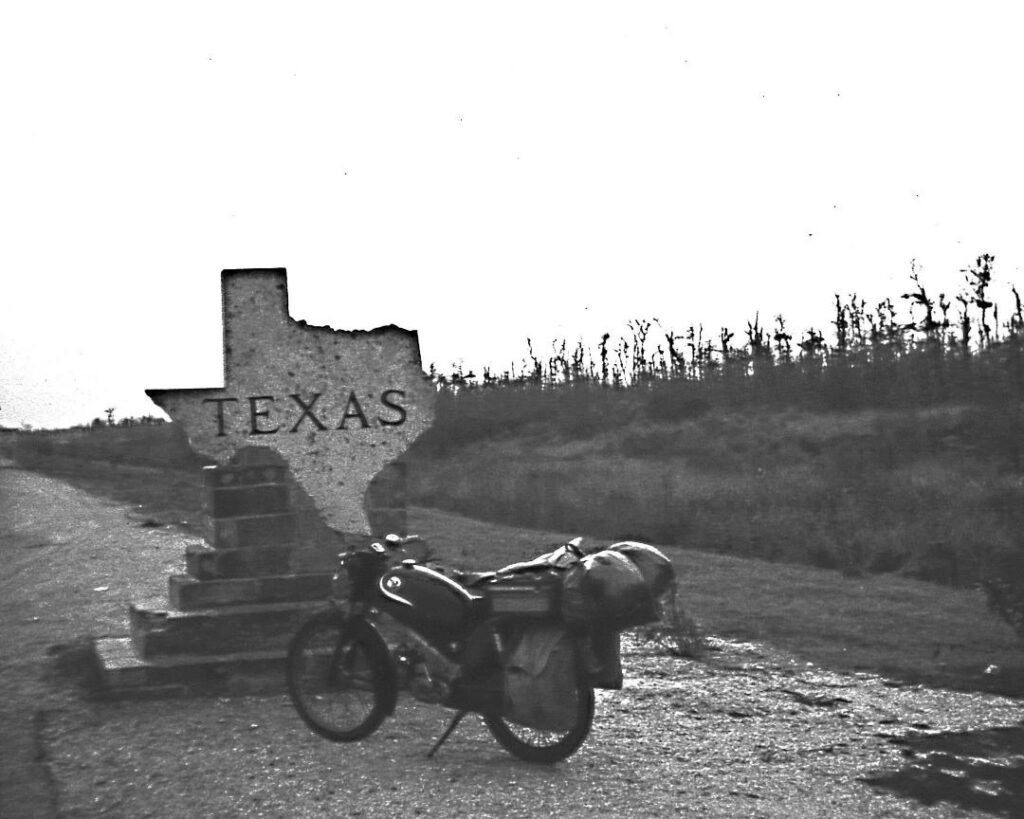
I was soon deep in a village, found a path, and went to sleep in my plastic tent, surrounded by the usual jungle that is so typical of the low-lying parts of a new country. That is a bad habit of mine, that it always gives me the feeling of a desolate desert. It was very quiet. I slept wonderfully.
Until one o’clock in the morning. Then I woke up suddenly. There was something that made me aware that I had heard something, but I didn’t know what. Suddenly, I heard the sound of wolves howling—not direct threatening, but rather a warning.
Even worse than the wolves was the weather. It seemed like a sort of storm broke out. Shivering, I heard the dogs barking. I had some small weapons with me, which in the wild desert can provide a safe feeling, but the beasts were closer than in a zoo. They looked dangerous.
I must honestly admit that I was terrified. I decided to stay awake to protect the tent if they returned, but I realized that I could do very little against a pack of wolves. I had nothing but a small knife with me to defend myself against a pack of wolves—not a pleasant realization.
The rest of the night I stayed awake out of fear, and I didn’t do anything else but wait. The next morning I saw that they had been quite close. Total panic had kept me awake, and then at last I fell into a deep sleep.
Mexico Was the Most Beautiful
The village where I stayed was a safe haven. It was a wonderful feeling to open my tent in the morning sun.
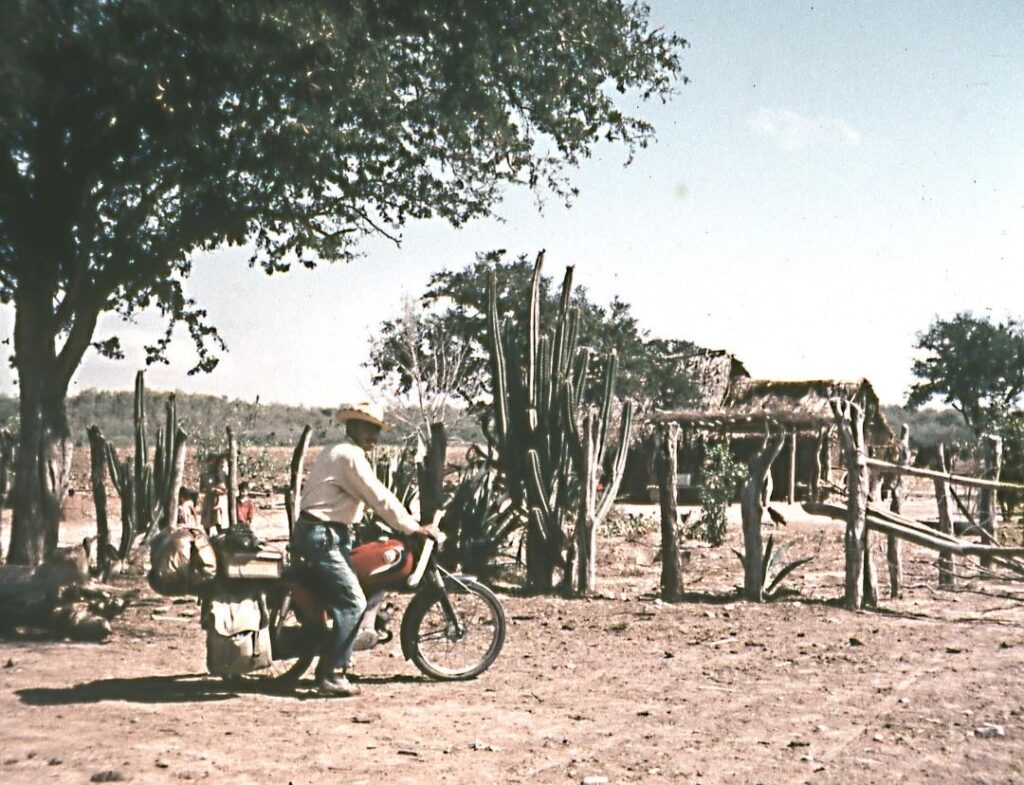
A friendly Mexican, who could speak remarkably good English (which is a rare exception there), told me that these were ‘kayuka’ wolves.
They are a sort of prairie wolf that, as long as they haven’t eaten for a long time, can attack a human, but usually they target smaller children. The people in the area are terribly afraid of them. For a pack of wolves, the kayukas are not dangerous, but they are annoying. For safety, the man at the gas station advised me to sleep in populated areas from now on, as it had been a long time since the beasts had come so close to villages during this period. I finally felt a bit relieved.
Back to Riding
Now that is naturally very pleasant, but villages mean that I can do nothing on the road except sleep during my journey. And if you still want to travel through beautiful Mexico on a moped, then you can’t just stick to a thirty-kilometer-per-hour limit. I rode for three days through an endless landscape, and realized that my adventure in the desert was starting to slide into the background. My focus was purely on survival.
Arm Land
Mexico is a remarkably poor country. It looks like Turkey. The people are poor. The roads are full of holes; the scenery is monotonous and bad. The population consists clearly of Indian types.
The clothing of the people is poor. Some people have holes in their pants. The houses are built in a long row. De kleding is arm. (Clothing is poor). In the desert, you find stretched-out flat land, almost always containing a small piece of soil with some corn, water, and rice, and a few small huts where people live from their fuel and cattle. They burn dried cacti or dry wood.
Transportation is done by buses; old vehicles that look like they could break down at any moment. Every time the bus rattles over the bumpy roads, a huge cloud of dust rises behind it. The open engine compartments, with a loose cover held down by thorns, look like they’ve been custom-made for the latest versions of the American “glamour” magazines.
Yet, despite the lack of care that characterizes the population, there is an incredibly friendly atmosphere that makes one feel instantly welcome. It is rare to find someone who doesn’t smile or greet you warmly. In the evening, the villages come alive with music and children playing in the streets, creating a sense of “cosiness” (gezelligheid) that is completely foreign to our Dutch way of life. The poverty is forgotten in the warmth of human connection, which sometimes works miracles.
Hospitality
I remember very vividly an event that happened to me. It was my habit to look for a place to put my tent in the afternoon, in the villages or on pieces of land where the population (often small villages) gave me permission.
They immediately invited me to join them. With a friendly gesture, a woman offered me a plate containing a piece of chicken, beans, and rice. It looked delicious, and because I had eaten very little in the desert, I accepted it gratefully.
The fat lady, who formed the center of the family, nodded kindly at me to eat; bystanders, beggars, and anyone who walked past received a share from her bounty. It was a truly wonderful experience.
When it was over and we had eaten enough, I packed my things, thanked them in the few Spanish words I managed to scrape together, and said goodbye. Later that day, I saw the family riding by in an old car. They honked and waved until they were out of sight.
The people are poor. But in a certain sense, they are rich. And when I look back on my trip…
Summary of the Bike
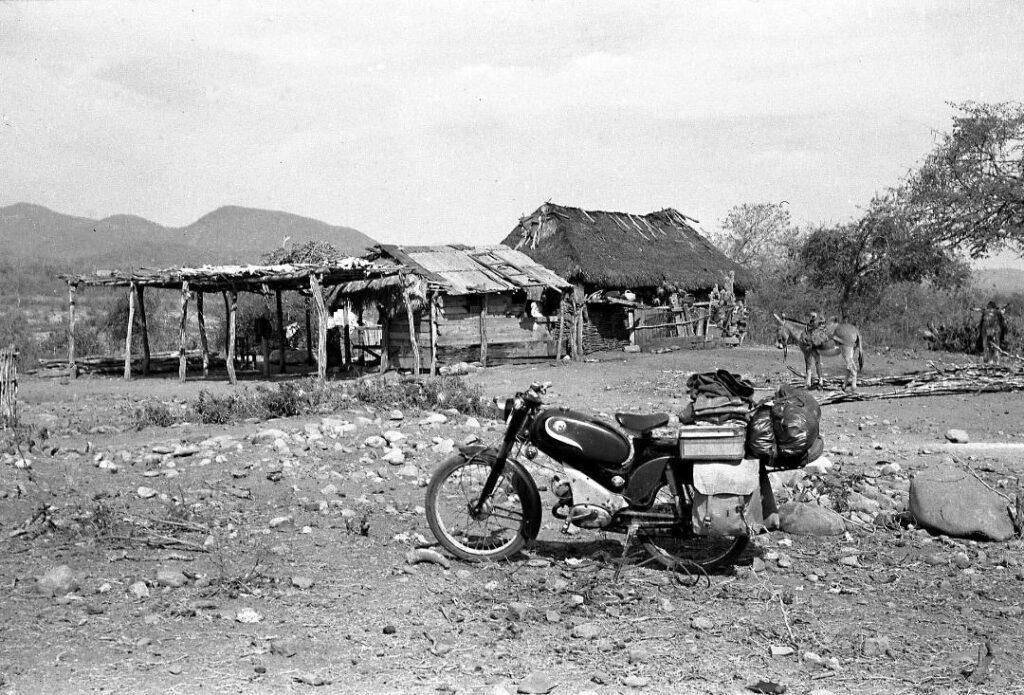
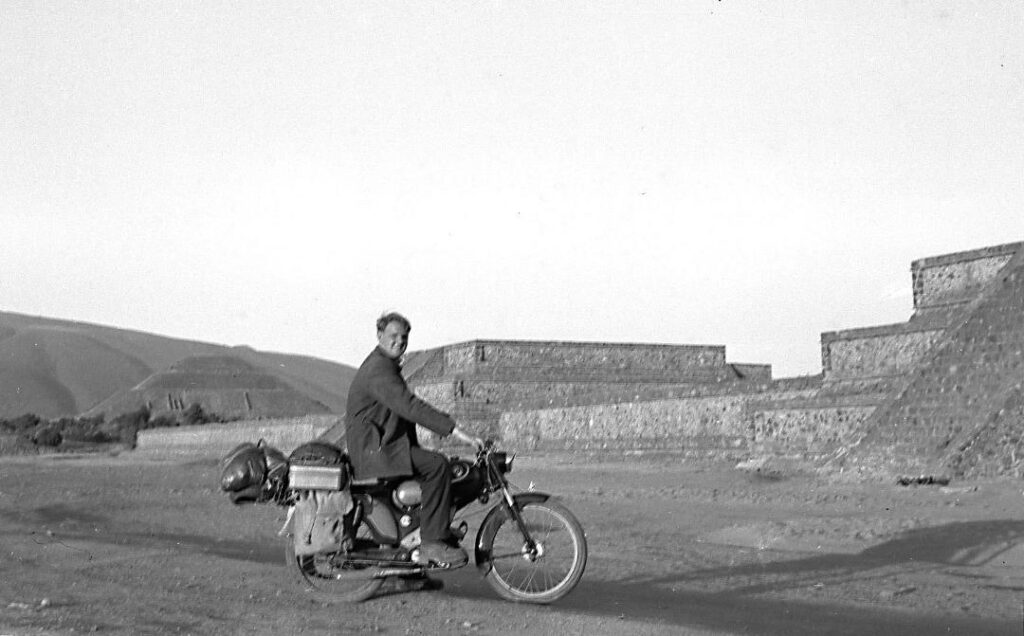
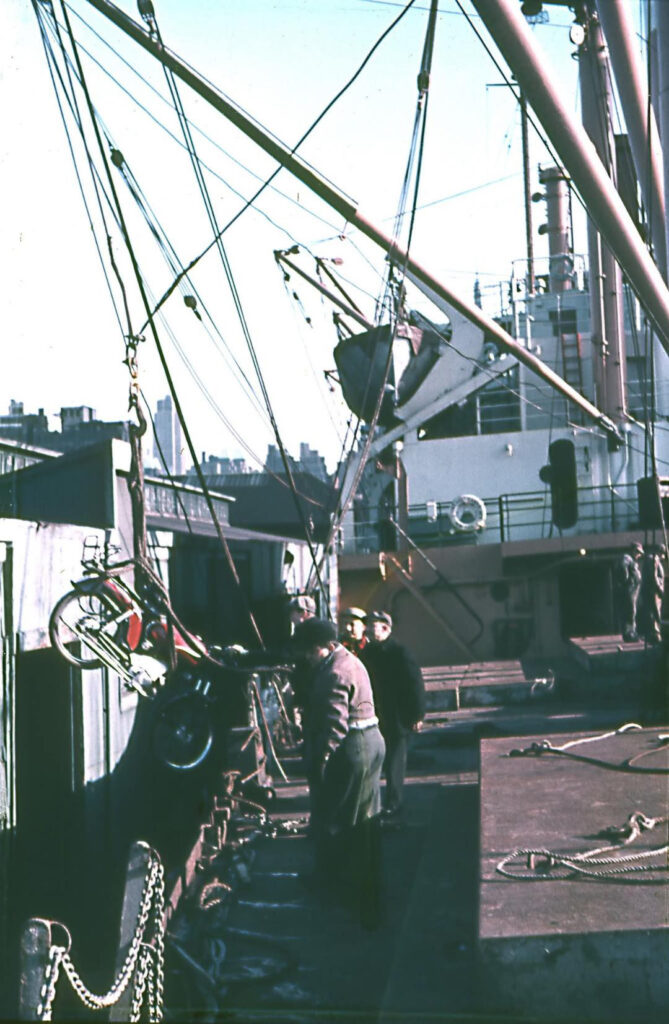
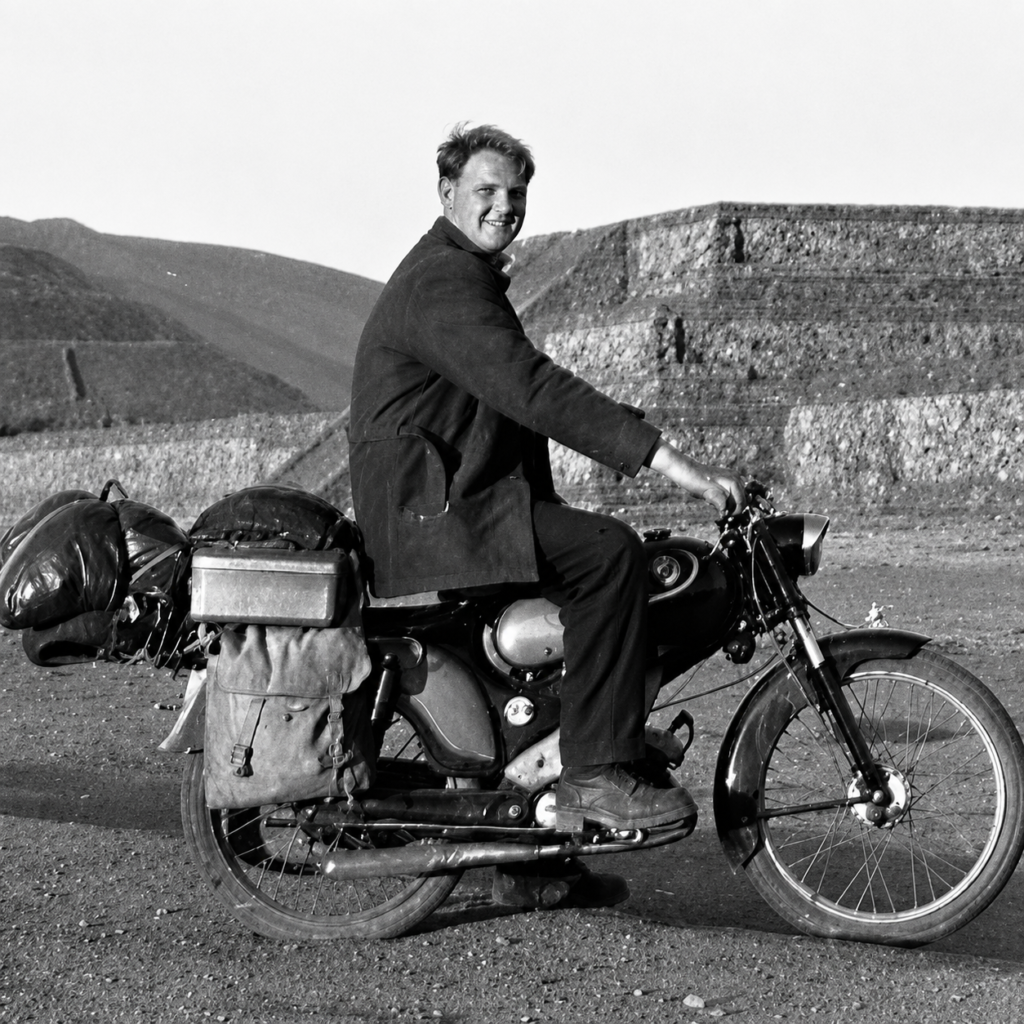
There are factories that make mopeds, but they are not very successful, although the land at the end of the modern agricultural areas is full of them. I was riding with my red BATAVUS BILONET G 50 SPORT, and it was a top product from modern industry, standing out sharply against the background of a poor Mexican village.
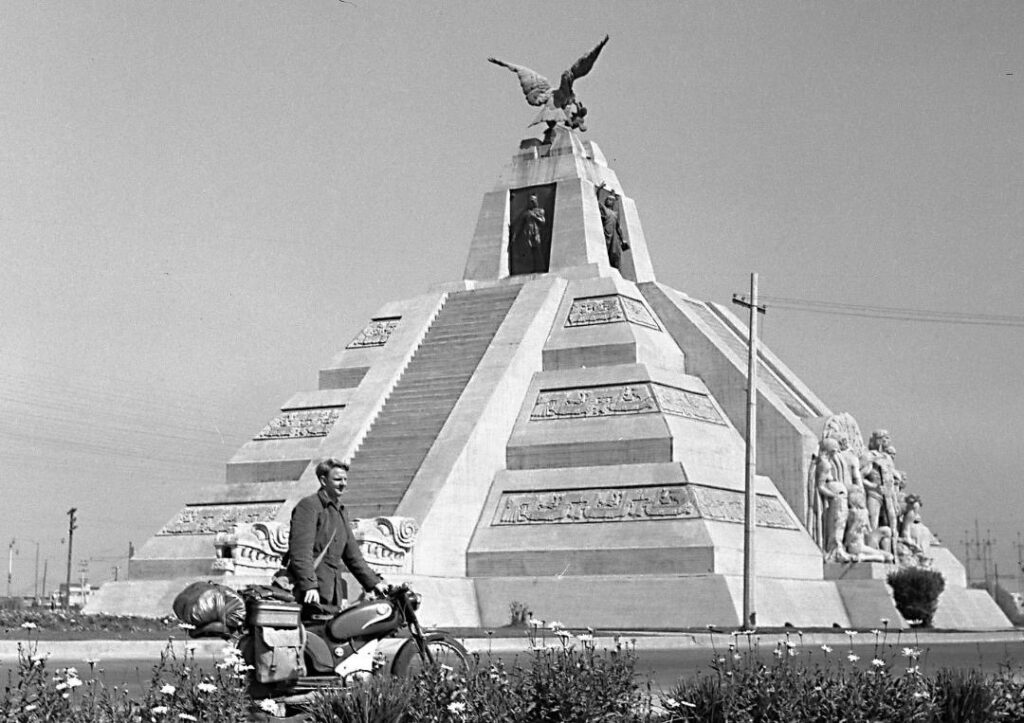
But that didn’t matter. A man approached me who spoke English and said he was from the local municipality. He told me that I had to stop taking photos of everything. There was a bad light on Mexico, he said, if I only took pictures of the old, broken buildings.
Related Posts
There’s Always A Motorcycle: The Bad News Bears
I got a Harley-Davidson. Does that turn…
The Vintagent Trailers: Motorcycle Man
Racing legend Dave Roper is hardly an…
Vintage Triumph Wins Mexican 1000
It's the first time a vintage Triumph…
Moped ? OK … technically I’m sure it was classified as a moped … but it sure as hell looks a lot more like a small displacement motorcycle thats been deemed a moped for what would of been Dutch import , tax and licensing fees .
As far a choice of where to go ? I mean … I get it … as I’ve dais previously … I’m not a big fan of south of the border ( or the tropics ) other than Brazil ( its the music and the food stupid ) .. but I get it … so why the hell not ?I mean he’d of been in very good company what with the multitude of small displacement motorcycles , scooters and mopeds that fill the streets of Mexico to this day … so yeah … wouldn’t do it myself … but I get it
Good one PdO !
Just stay away from the border towns like Nogales,Ciudad Juarez,Matamoros(Kill Moors)Man made hells that you should walk through instead of run because if you panic and start to run they’ll be upon you before you know it