
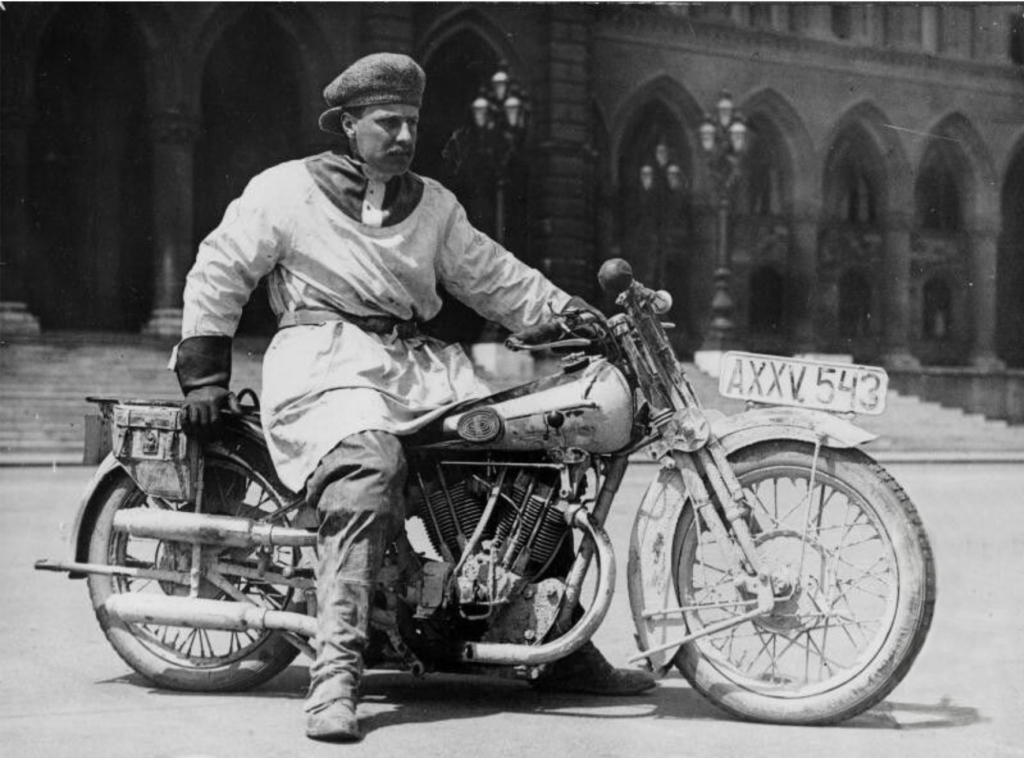
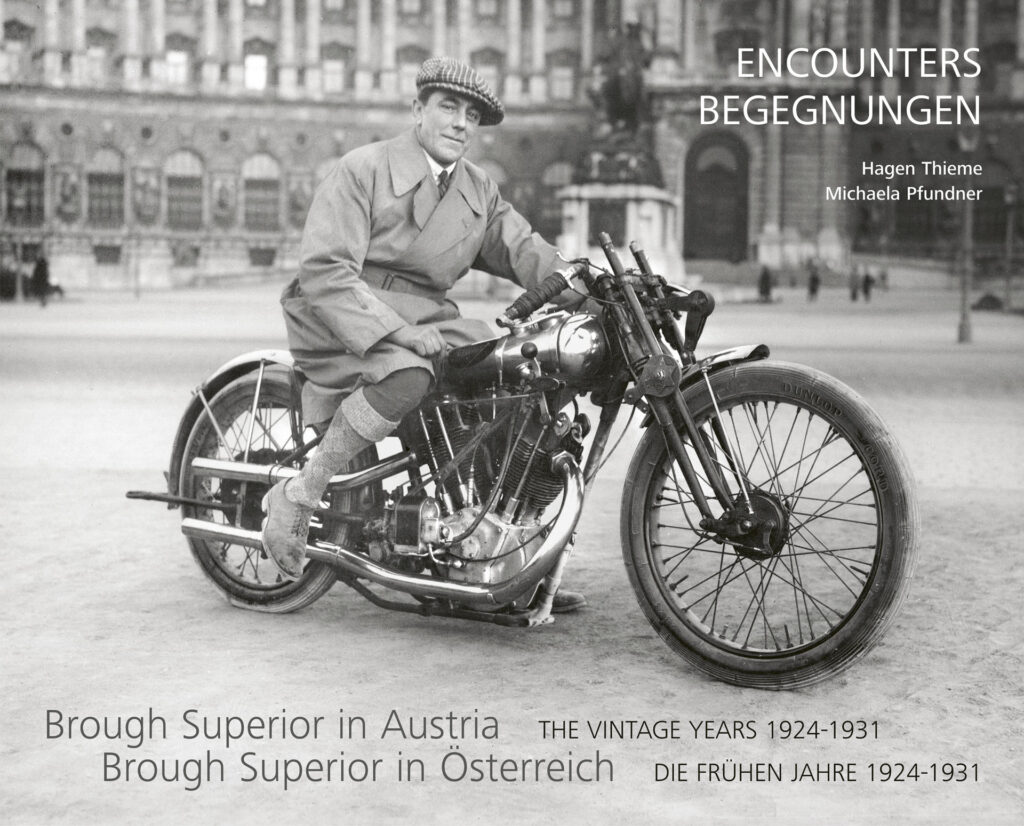
The telling of history is never over: there are always discoveries to be made, even of subjects thought sufficiently covered in books and magazines. A wonderful case in point is a new book exploring a very specific subject and period: the archive of a photographer in Vienna named Lothar Rübelt, whom you’ve never heard of. But you’ll remember him because of the book ‘Encounters: Brough Superior in Austria. The Vintage Years 1924-31’ (JKK 2026) It turns out Lothar was such an enthusiast of George Brough’s handiwork, he became a de facto agent and advertiser for Brough Superiors in Austria, where a considerable percentage of the factory’s output landed: nearly 200 motorcycles from a total production of around 3000 machines.
Paul d’Orléans (PDO): Tell me the story of your relationship to Brough Superiors?
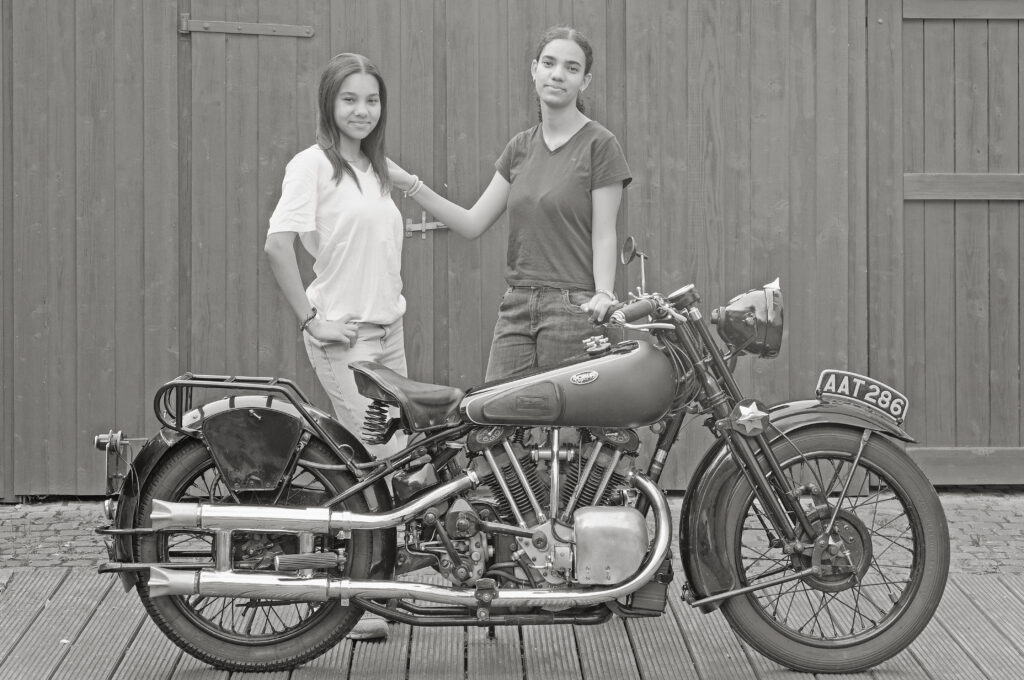
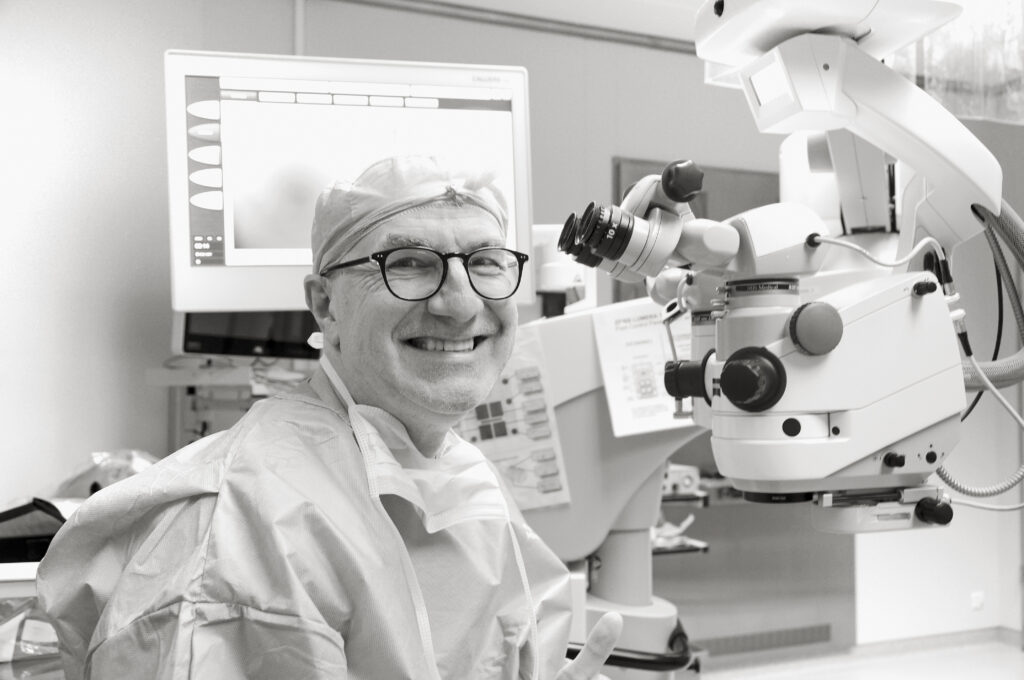
Hagen Thieme (HT): I became a BS Club Member in 2012 having bought my first Brough in Germany (an SS80 project). For me the main reason was their beauty, they are works of art and they stimulate a feeling of passion. Later I learned that the personal encounters I had riding and restoring these bikes were more meaningful than any other. Then in 2016 I bought my dream bike, a 680 OHV from New Zealand (AAT286): both bikes I had restored to road-going condition, meaning distance riding. I rode my SS80 from Germany to UK on the road last year.
PDO: Are you a lifelong motorcyclist?
HT: I picked up biking at the age of 25 with an old 1964 BSA my first (I am now 62), after that I collected BSAs, (mostly Gold Stars). At the age of 17/18 my father forbid biking, telling me I was to weak to handle heavy machines!
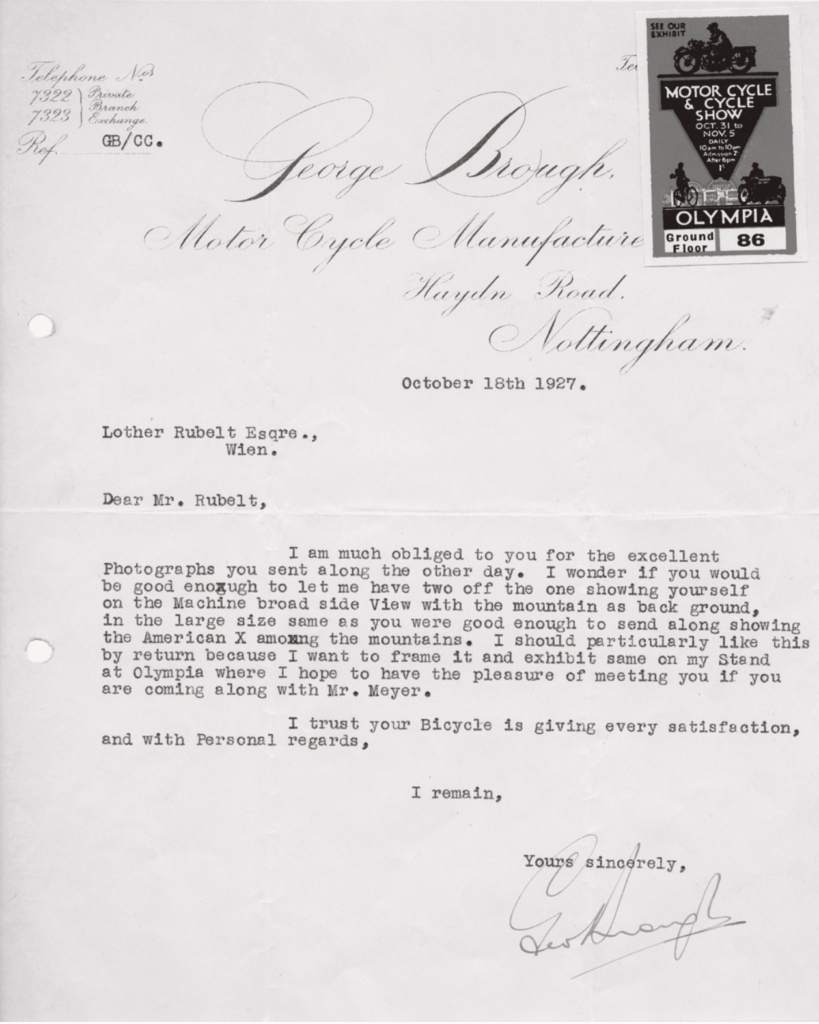
HT: I knew he was having good contacts (Encounters!) with his customers, and he was also a loving family man. I found so many letters between George (in fact also his wife Constance) and Rübelt. They exchanged thoughts for holiday trips etc. Rübelt also tried to promote the bikes he bought from George. There was a very close relationship between the maker and biker. I also learned that Rübelt asked George for help finding him a 4-speed gearbox for his bike in order perform better at a rally (his second 680 OHV only had a 3-speed box as standard).
PDO: What was/were your most exciting discovery(s)?
HT: Paul, there were lots. Michaela watched me in the archive, when I pulled the glass plate negatives out of their protective envelopes. I was the first to do so since 1990! When I placed them on the illumination table she watched my face! She described me having the ‘Howard Carter Look’ (he discovered Tutankhamun) many times. Finding the cover picture previously unpublished was one of those moments. The complete negative folder with the 47 negatives in them containing the Kilometer Lancé 1929 race, and really the top: a small folder written NOTTINGHAM across the top, containing the Rübelt trip negatives from August 1931. Those are the very private George Brough pictures with Peggy and her white rabbit etc. I KNEW Rübelt had done the journey, because I had seen letters suggesting it. So I looked for the Nottingham pictures and after finding some postcards Rübelt had printed of the trip, I knew they were there.
PDO: How many of the magnificent machines shown in Austria survived?
HT: Roughly 100 or so went to Austria (mostly SS80 and 680 and a few SS100) also about 90 of the cheap 5-15 model. Less than a handful survived plus a few components such as gearboxes and engine cases.
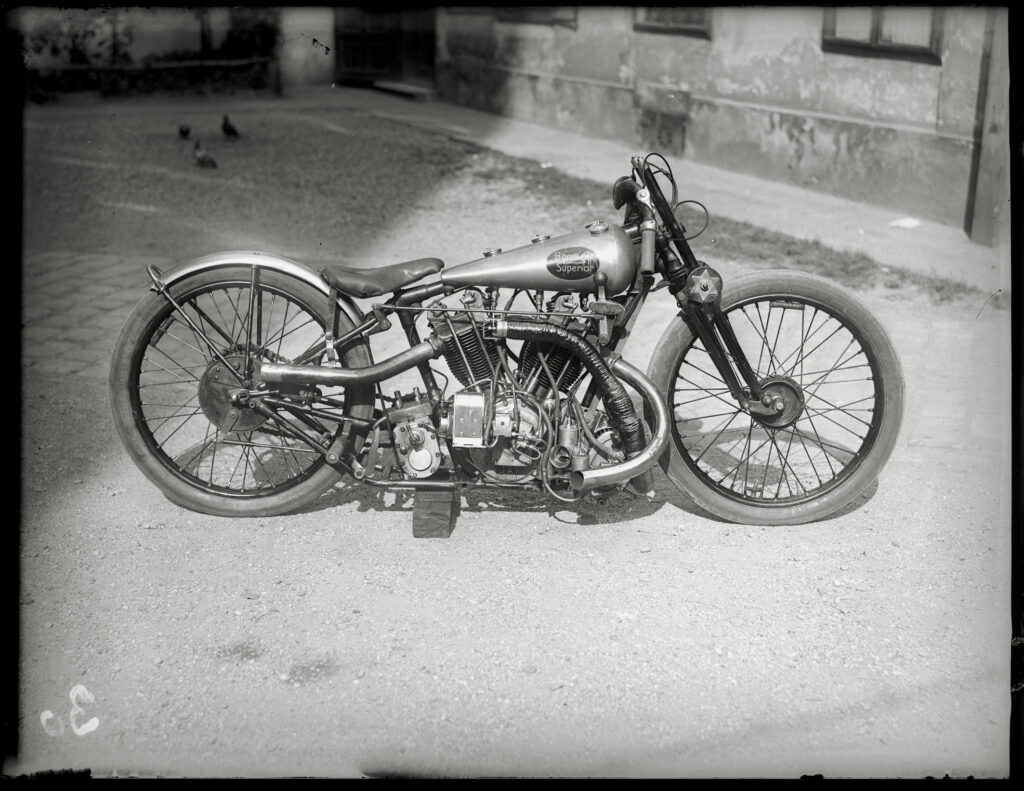
PDO: It think of that magnificent supercharged SS100 in the photos: do you know the story of who built it, raced it, how it did? [You might recall I discovered the supercharged 1700cc Zenith ‘Super Kim’ in Argentina – real 1920s supercharged motorcycles are extraordinarily rare].
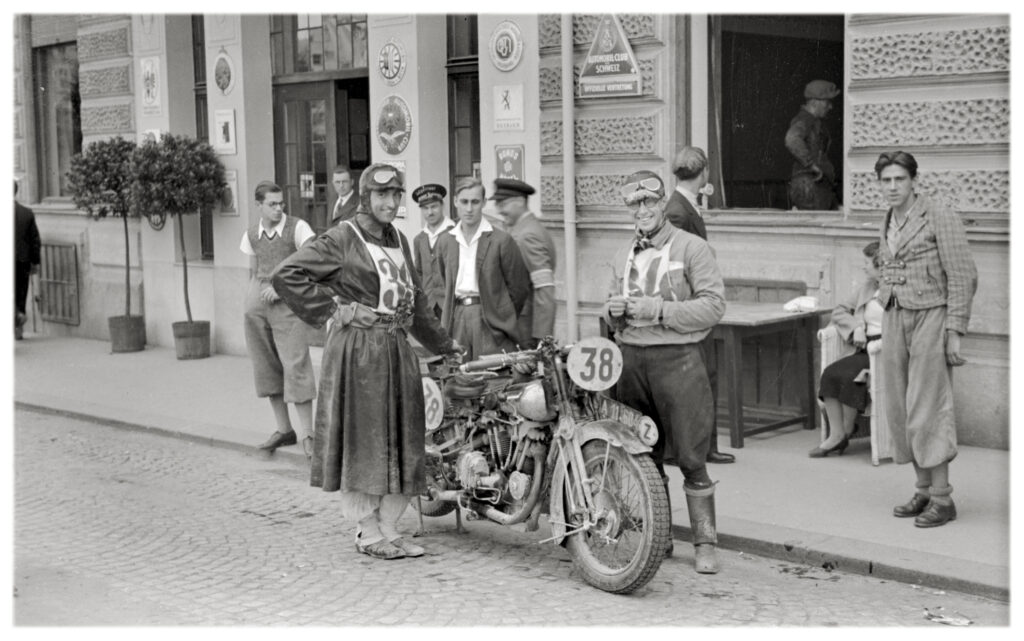
HT: The Supercharged SS100 was built by Eddy Meyer with the help of Austrian engineer Proschko 1930. It was about to be raced in France but the French did not allow Eddy into the country, him having had special fuel in his truck, which was prohibited! The bike was built from the Pendine SS100 Eddy Meyer bought in 1927. Rumors have it that this bike might have survived with an Austrian collector. It does not have any supercharger bits on it now.
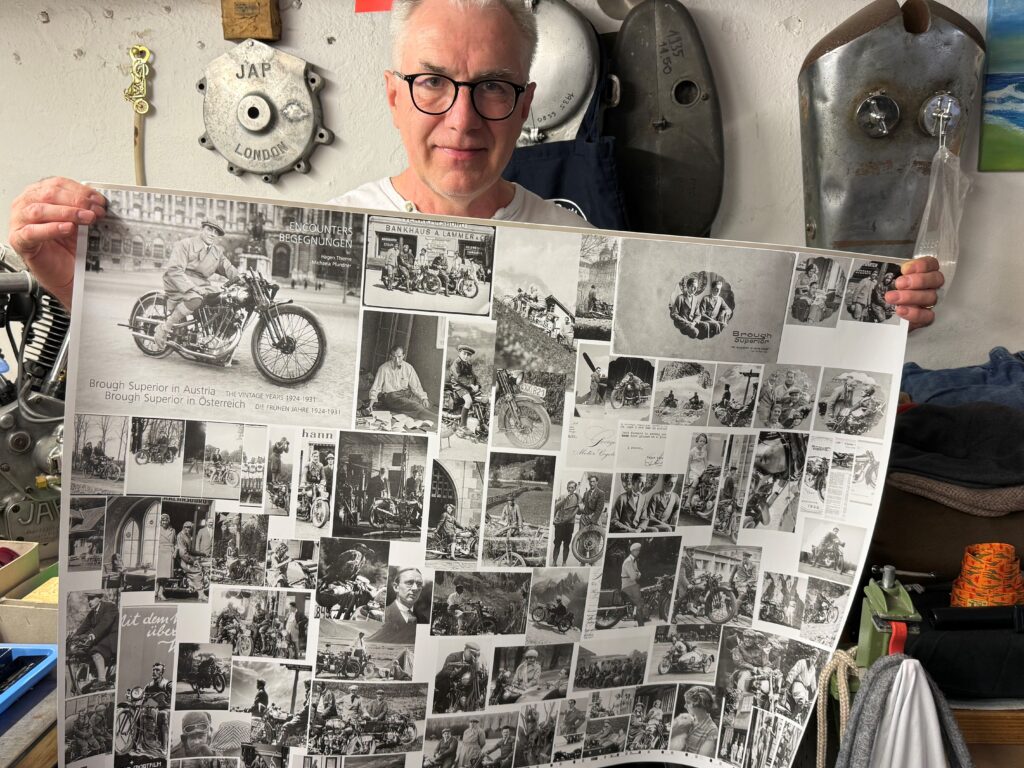
HT: I had 1000 copies made, for the 1000 extant Brough Superiors. It’s bilingual, in German and English. I approached publisher Jörg Krawczyk: he was recommended to me during a bike rally for pre-war machines. He already had produced “The Family of Rudge” and “Amongst Friends in the Eifel”. We took the overall layout from these books (size, printing quality etc) and my concept was brought in. I did the whole story, the chapters and most of the wording myself, and he made the book to what it is. It is selling constantly with 200 copies already gone. This is not bad for a book premiered on August 15th this year (without eBay and Amazon). I do not have an ISBN Number for it either!
I guess it is very important for you to receive the book, because the spirit and heart in it is best appreciated reading and most importantly seeing these beautiful pictures.
Preface from ‘Encounters’:
“George Brough was a gifted motorcycle designer who was also noted for his business acumen. His machines enjoyed a high reputation and were no less expensive. They weren’t produced on an industrial scale but custom-made with utmost attention to detail. They were admired for their high standard of workmanship and finish. George Brough set no store by mass production but was convinced that a first-class product at a correspondingly high price would attract a loyal clientele and he was proved right. Between 1919 and 1940 at a small plant in Nottingham a little over 3,000 motorcycles rolled off the assembly line and then production ceased as a consequence of the Second World War.
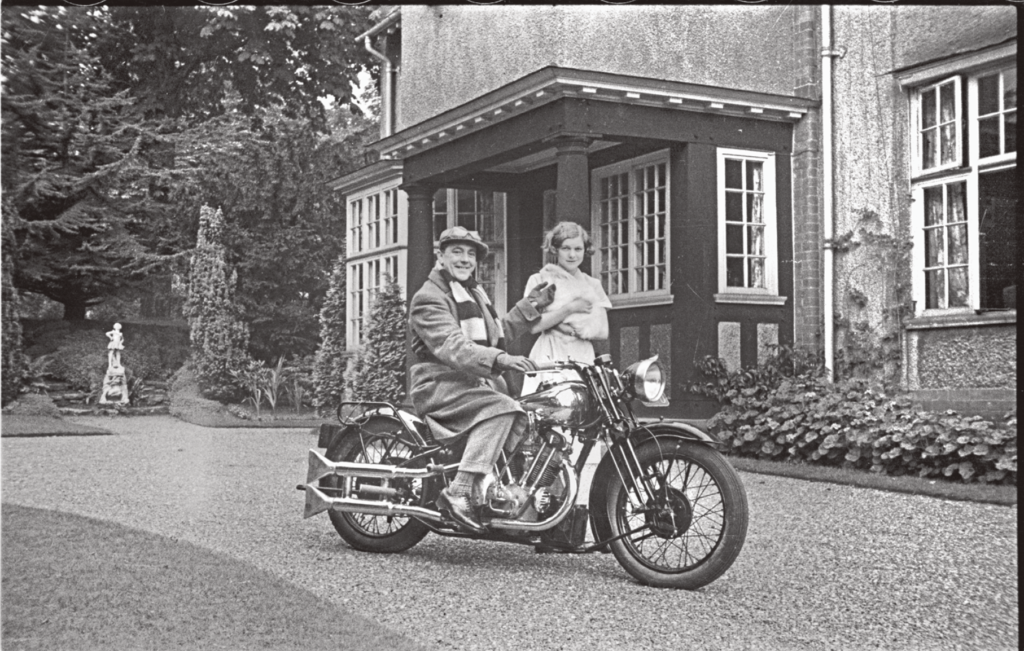
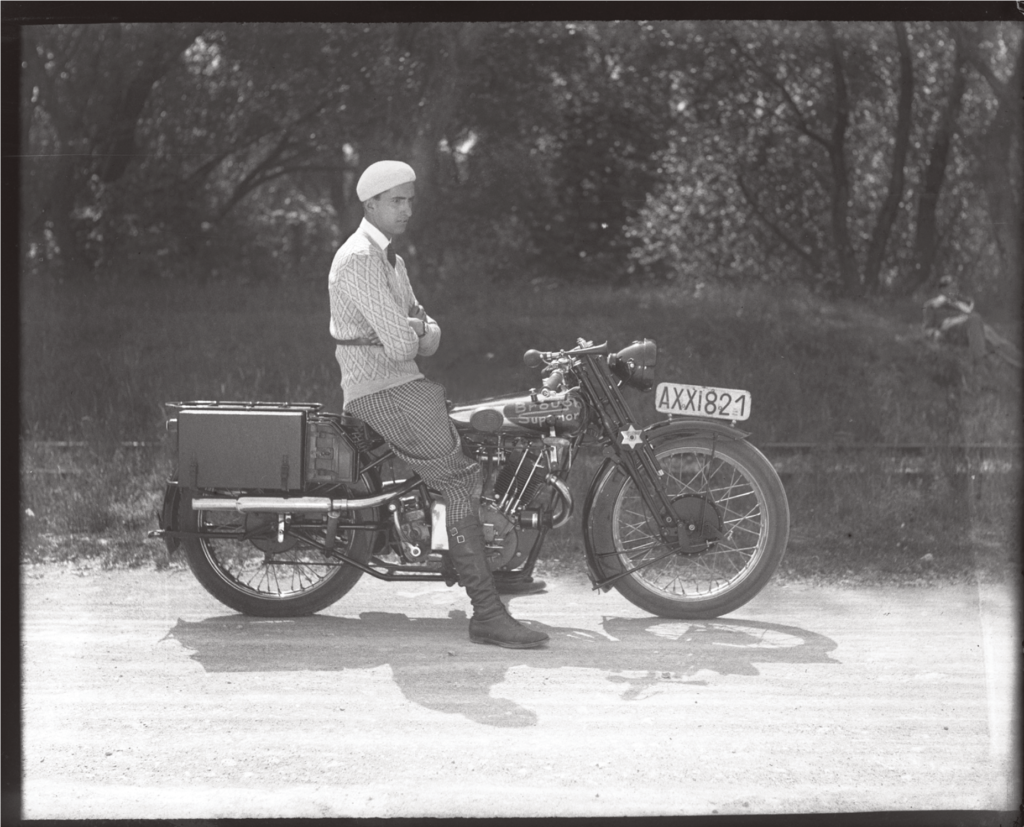
of his own Brough Superior.
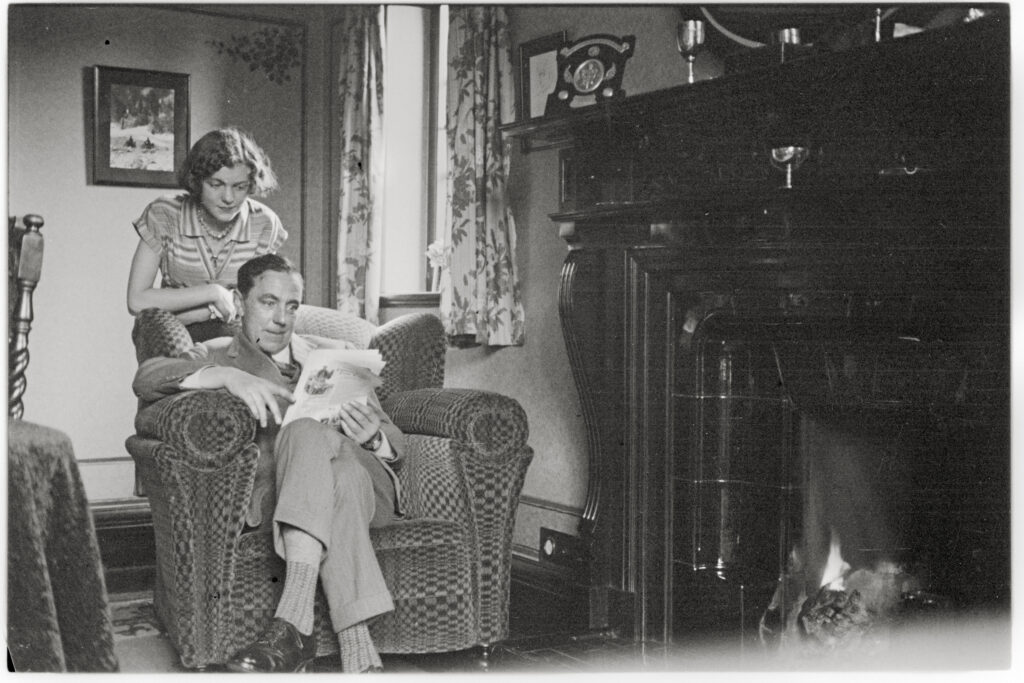
vist, Michaela Pfundner, that I could undertake a comprehensive study of this photo- graphic treasure trove. The originals of the photos and documents displayed in this volume can be traced to this extensive collection. On Rübelt’s death, Michaela Pfundner was granted permission to inspect and sort out this wealth of material.
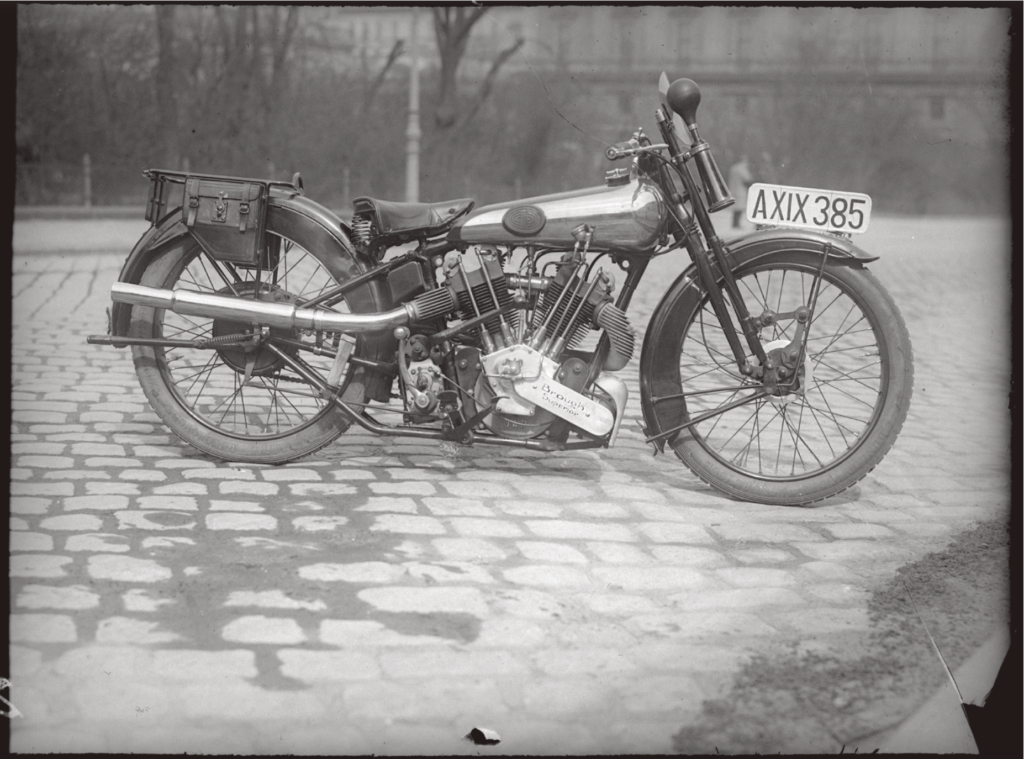
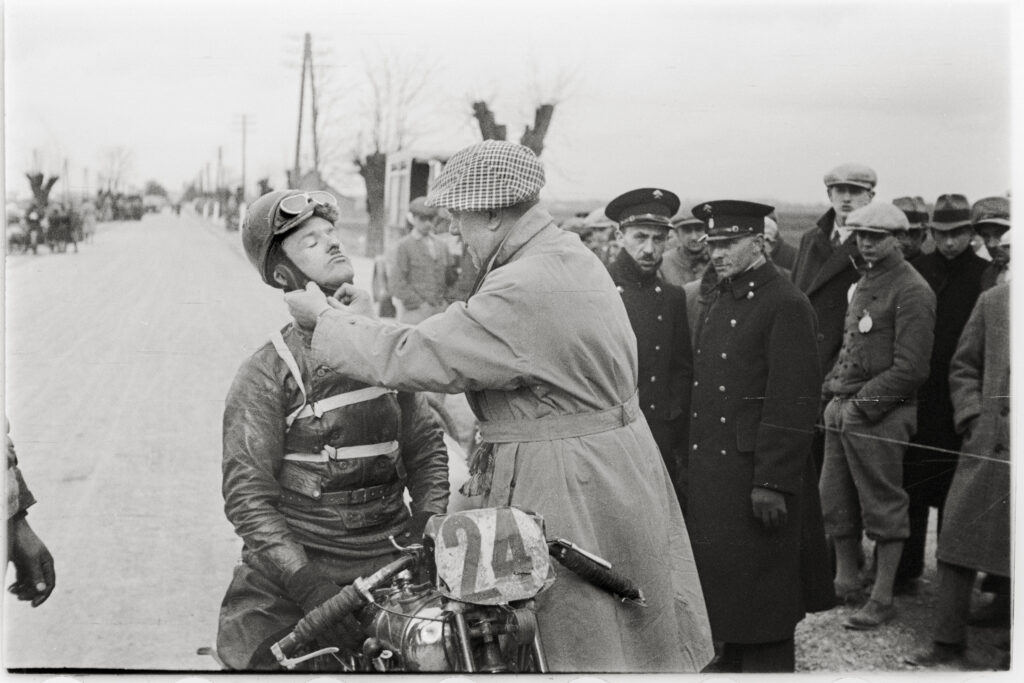
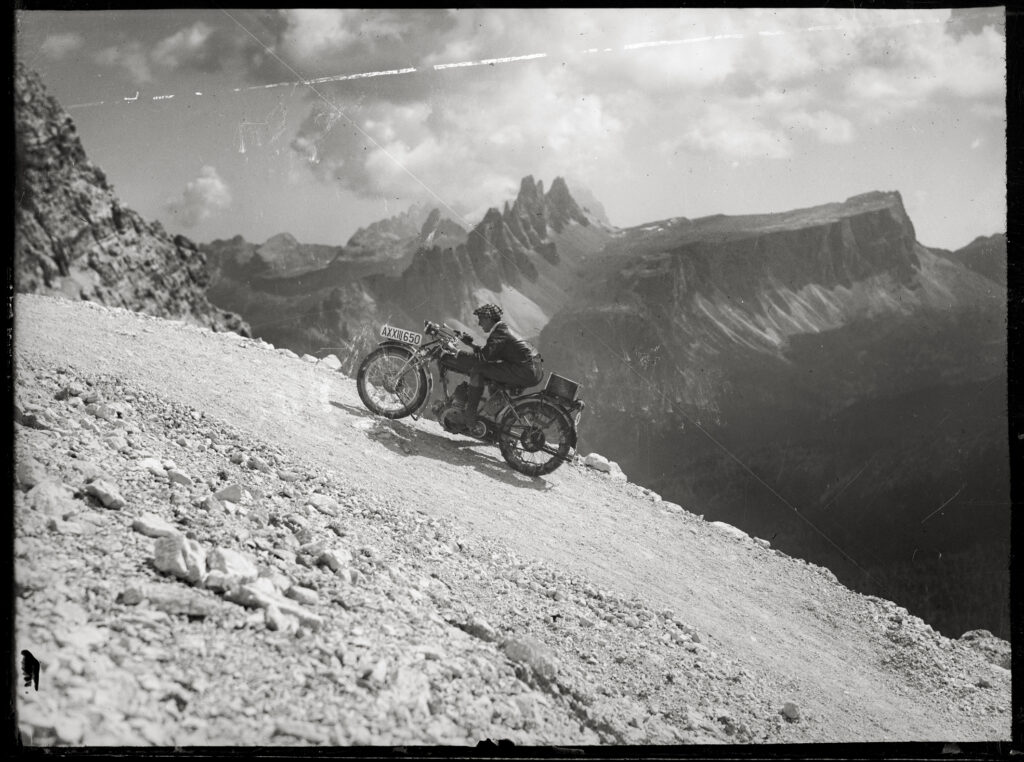
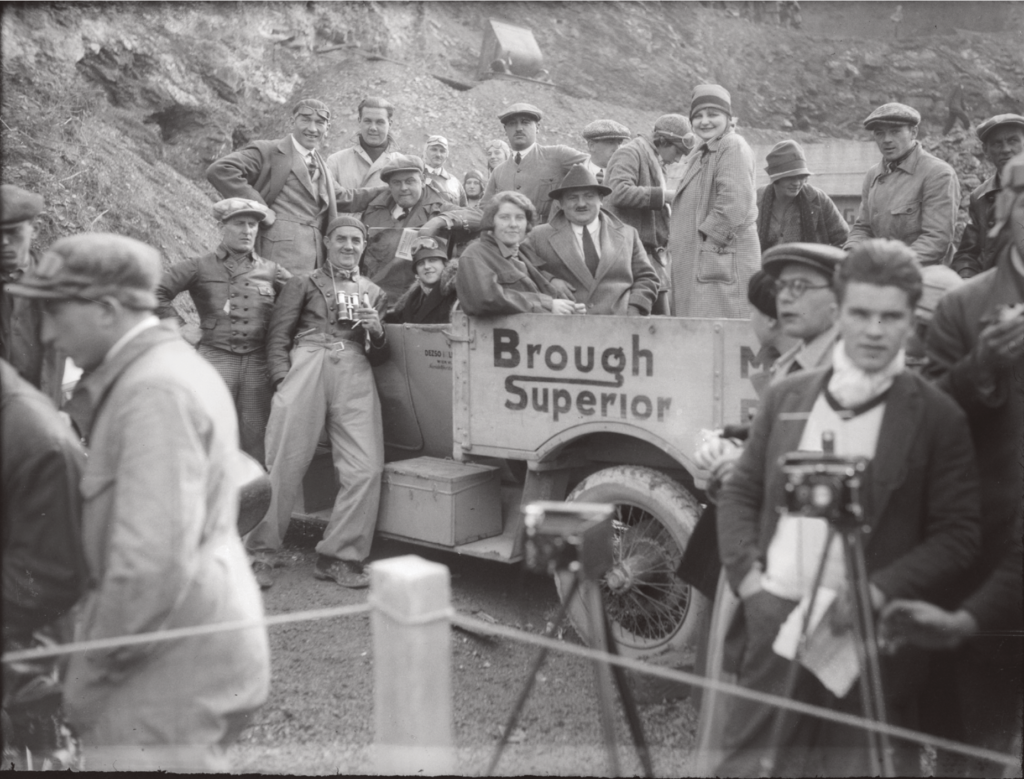
As a result of a painstaking search of the archive we came across hundreds of large and small glass plate negatives and prints featuring not only the Brough Superior machines. As well as the motorcycles themselves, we thought about the people sitting on and standing next to these machines. Our purpose in this book is to set out on an absorbing voyage into the past of the roaring twenties, at a time when the motorcycles were new and their owners ever so proud. Nowadays the English Brough Superior Club – founded in 1958 – acts as the custodian of these first-class machines, which are such a rarity on our roads. Of the approximately 3,000 manufactured, about a third still exist, spread throughout the world in museums and collections, with the odd one still to be spotted on the streets.”
For the USA / UK: contact Mike Smith at the Brough Superior Club here.
If you’re in Europe, the book can be ordered from Hagen Thieme directly here.
Related Posts

The Vintagent Selects: Hand Built – Brough Superior
Aesthetics crossing over with insane…
The Vintagent Selects: 1928 Brough Superior SS80 Deluxe: An Oily-Rag Survivor
Something is only ever original once.
National Emergency Library
The Internet Archive opens its digital…
Well well well … once again that timing thing comes into play … turns out the schedule didn’t allow for the Powells order last week …. so………
Assuming they got it next week …. SOLD … again
Damn PdO yer batting a 1000 on the books front
Oh well … direct purchase only … and I do mean direct …. oh well … one outta two aint bad though I’d of loved to add this to my shelves ( after a good read .. or three )
Hopefully some genius publisher [ are there any left or is that a dying breed as well ) down the road will put it out in a more pedestrian form in order to keep the original issue distinct
But you know … thinking about it .. its probably best I leave any remaining copies to find their way into the hands of the hard core Brough community … I mean … truth be known .. I love em …. but its not like I’ll ever own one … or at least not an original …. so…… with only 1000 being printed …. its all good …
😎