Still Split’n Lanes at Brooklyn Bowl

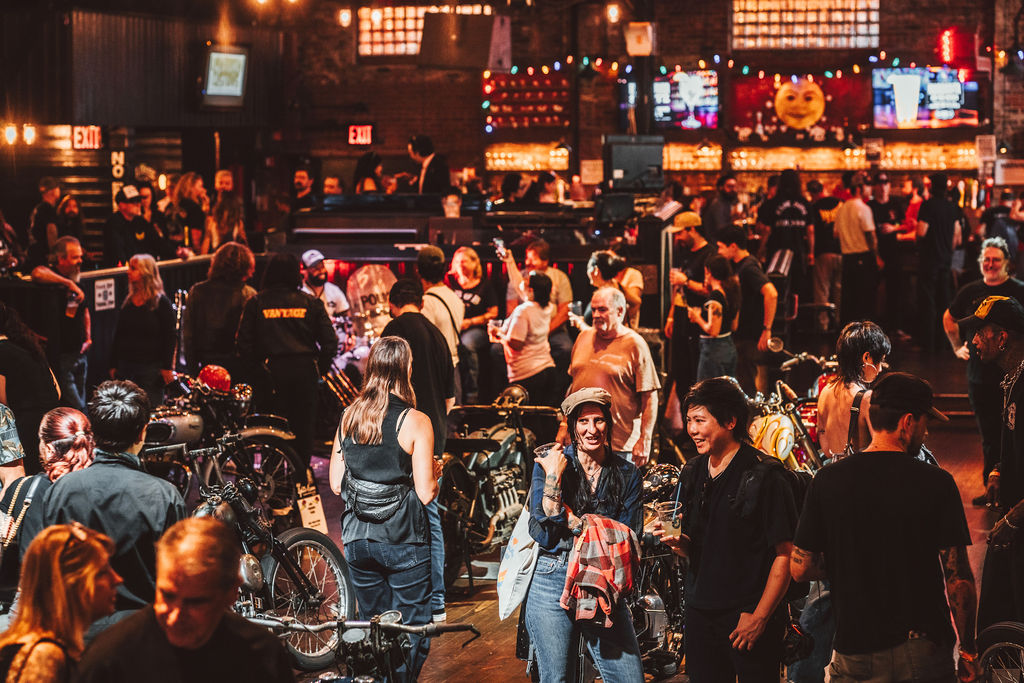
Formed in 1876 first as Poulsen & Eger and renamed in 1886 as Hecla Iron Works, some of the industrial buildings where architectural ironwork and ornamental bronze and iron pieces for many New York landmark structures, including The Dakota’s decorative fence, still stand. Located in Williamsburg, New York, the factory complex pre-dates the establishment of a formalized motorcycle industry, but it seems fitting that one of the renovated Hecla buildings would host Still Split’n Lanes: A Classic Motorcycle Show. The venue was Brooklyn Bowl, a now-legendary 23,000 square-foot event space featuring 16 lanes of traditional 10-pin bowling, food by Blue Ribbon, and a stage that’s hosted a myriad of diverse acts, from Guns N’ Roses to Questlove. Brooklyn Bowl owner Peter Shapiro, with Charley Ryan and brothers Alex and Arthur Cornfeld, opened the venue in 2009 utilizing reclaimed materials such as recycled truck tires in the stage and Portuguese cork flooring in the Bowler’s Lounge. Lights are kept on with wind generated power.
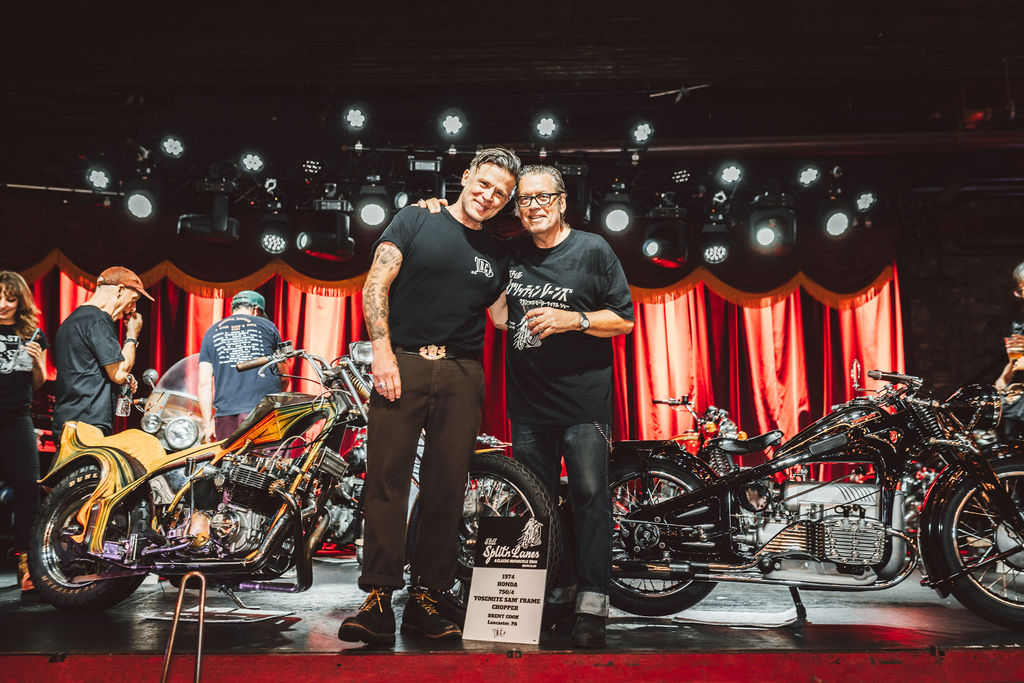
Tim Warner and Girard Fox of Basket Case Production, organizers of the Split’n Lanes motorcycle shows. [Zoltan Suhay]
Most importantly, it’s where Still Split’n Lanes producers Tim Warner and Girard Fox of Basket Case Productions first met as Brooklyn Bowl employees – Tim as Director of Operations and Girard as Chef. Noticing Girard pulling up to work on a 1946 Indian Chief, Tim says the two formed an instant connection. “I hadn’t had a bike for a while,” Tim tells us, and adds, “But seeing Girard pull up on a sweet old Indian got us talking. That was the beginning of our friendship and, eventually, our partnership.” More than a decade ago, Tim says it was Brooklyn Bowl’s Shapiro who initially planted a seed for a motorcycle show at the venue. “He approached Girard and asked when we were going to put one on at the Bowl. Our immediate reaction was, ‘Yeah! When ARE we going to do a show?’” Girard saw the opportunity to put an event together at Brooklyn Bowl as something of a risk for Shapiro. “To allow us to attempt a completely different kind of show, something totally outside of the normal scheduling of a well-respected music venue and bowling alley, was and still is a key factor in our ability to build a unique and ultimately very successful show over the years.”

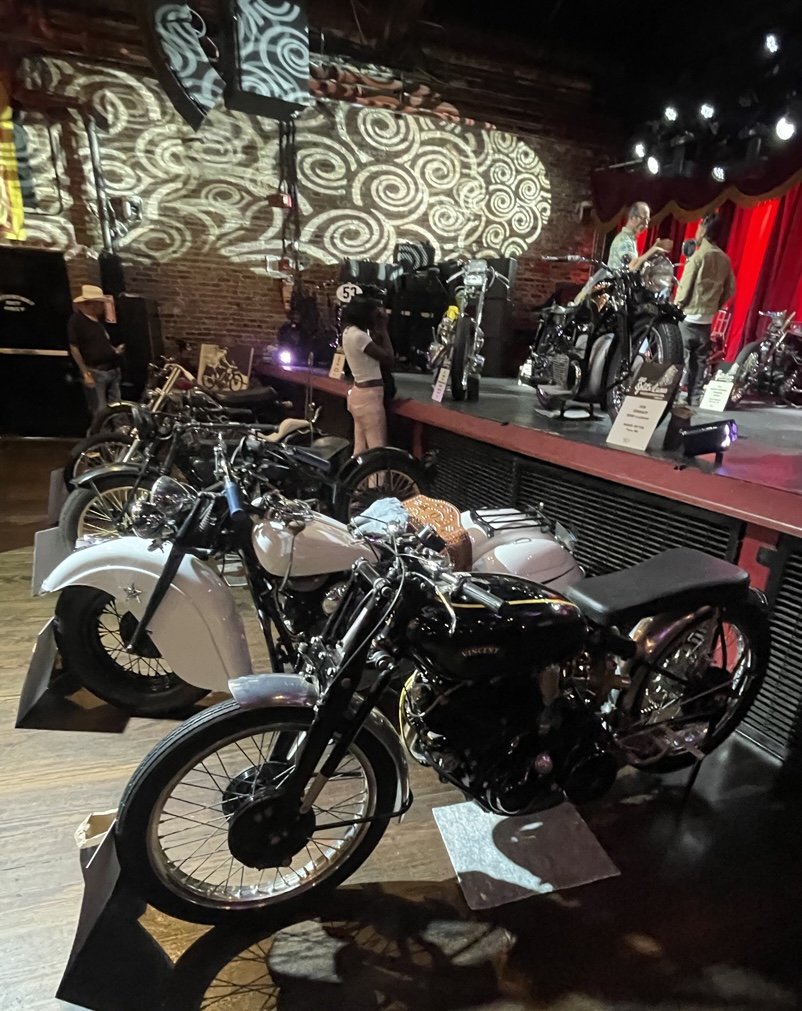
The crowd was hopping at the Brooklyn Bowl for the Still Split’n Lanes show. [Zoltan Suhay]
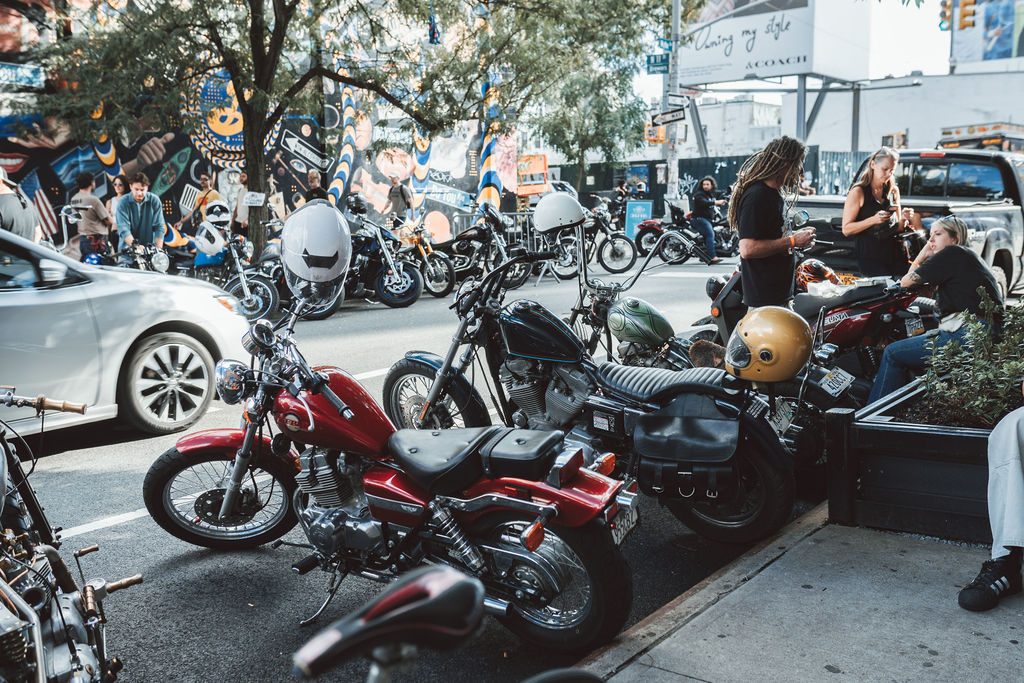
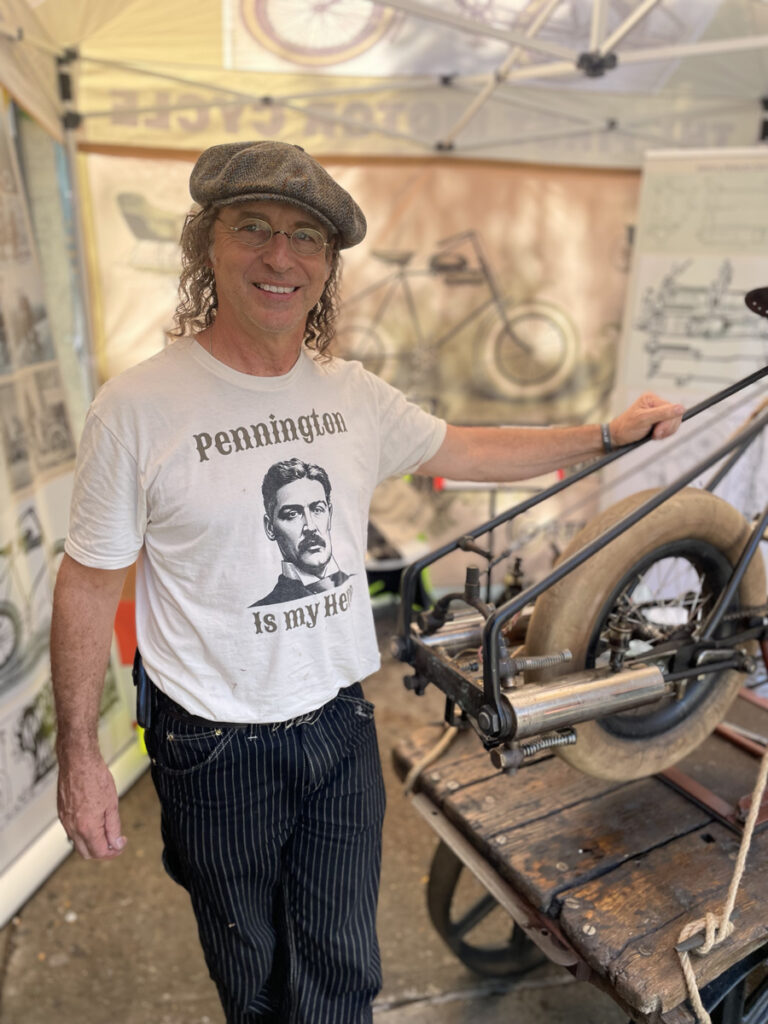
The vintage bike duo hosted the first show, then dubbed Split’n Lanes Dodgin’ Gutters, in 2014. They held it at The Bowl again in ’15 and ’16, and then hosted an outdoor event called The Lot in 2017. Split’n Lanes returned to The Bowl in ’18 and ’19 and was prepared to mount another event in 2021 only to cancel due to Covid restrictions. Then, there was a long wait, until September 16, 2026. Still Split’n Lanes: A Classic Motorcycle Show returned to The Bowl with a roar, literally, as a feature attraction outside the turn of the century Hecla building was a running re-creation of an 1895 Pennington. Girard says, “This year, we really pushed the envelope and had an outdoor display with an exact replica of ‘The Pennington’ first made in 1895 and not seen in NYC since the ‘International Bicycle Show’ of that same year at Madison Square Garden. Created by Historian and Master Machinist, Matt Thenen, we were able to fire-up the stunning contraption, the first ‘MotorCycle,’ as coined by E.J. Pennington, every half hour or so.” He adds, “It was another attempt by the Basket Case Production crew to ‘blow-up’ the static nature of a more traditional motorcycle show.” The entire street was reserved for riders to pull up their machines, and inside The Bowl, a total of 54 motorcycles, from rarities to custom choppers, were included in 2026.

The Vintagent’s Film Curator Corinna Mantlo and Publisher Paul d’Orléans. [Paul d’Orléans]
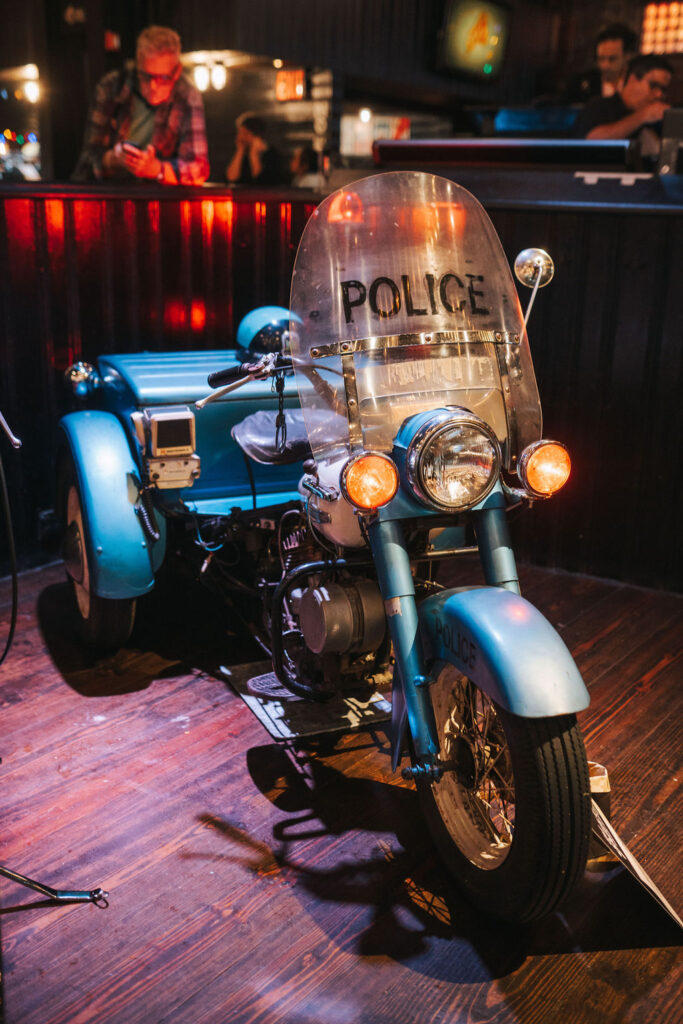
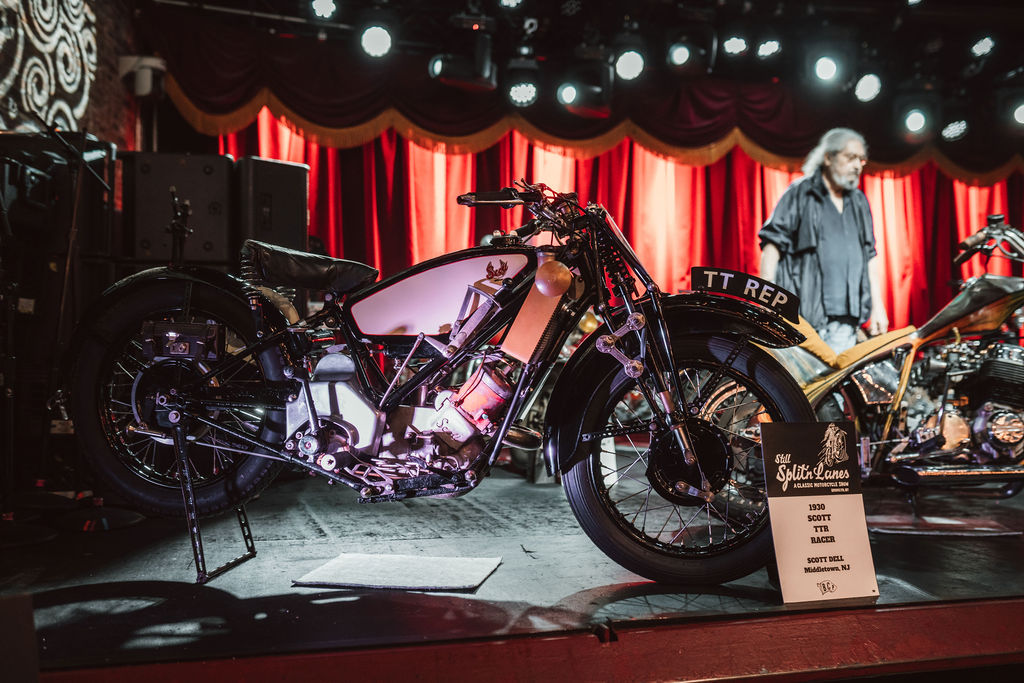
A few of the featured machines included an original-paint 1913 Flying Merkel twin, original-paint 1927 Ace Four, a restored 1932 BMW R4 and an immaculate 1938 Zundapp K800 flat-four. Survivor and restored custom choppers included two molded-frame ‘Yosemite Sam Radoff’ relics from the mid-seventies. Girard and Tim say they were thrilled to show their very first Brough-Superior, a 1929 680 OHV model [coincidentally, the engine was supplied by Paul d’Orléans in the 1990s – ed.]. Another rarity was a 1969 Honda CB750 with a serial number indicating it was from the first week of production: an early model with sandcast engine cases. Girard adds, “It was an absolute blast to display a ‘66 Harley-Davidson Model ‘U’ Police Trike, complete with flashing lights and working siren, next to a 1967 H-D Shovelhead long fork chopper with a psychedelic flame-paint gas tank. These same two machines may very well have spent some time next to each other on a roadway in the 60s for less happy reasons.” Smaller bikes were represented by a 1946 Husqvarna model 24, 120cc 2-stroke, as well as a humble but equally charming 1958 MZ RT 125cc. Racers included an immaculate 1926 Harley-Davidson Board Track Racer, 1930 Scott TT Replica, ‘28 Velocette KCR with Brooklands exhaust can, as well as a stunning 1959 Triton and a completely crazy looking 1979 Kawasaki Z1 Dragster with wheelie bar. “We had so many fabulous machines this year,” Tim says, but emphasizes, “ALL of them were our favorites!”

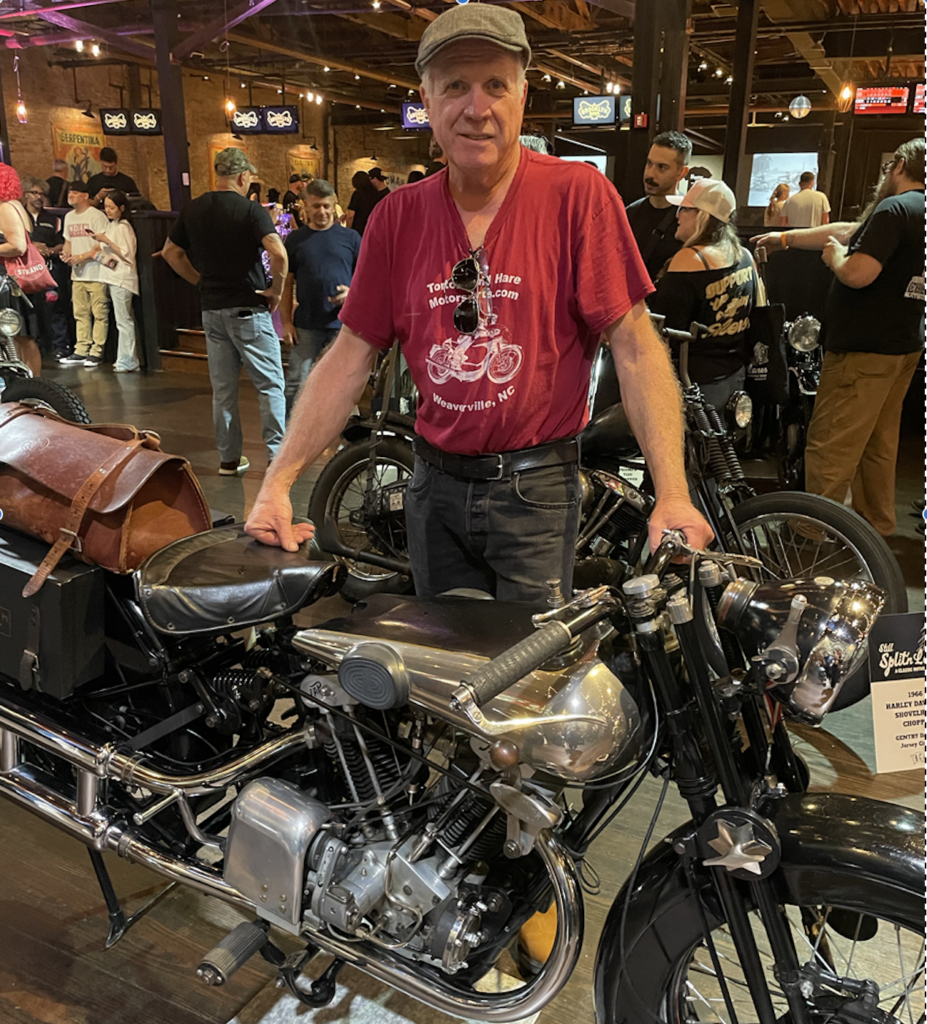
Scott Dell with his 1930 Brough Superior 680, for which Paul d’Orléans supplied the motor – sourced in Argentina – back in the 1990s. “It was restored so long ago, people think it’s original paint.” [Paul d’Orléans]
Of the venue, Tim opines, “Obviously, working there gave us a way in, but Brooklyn Bowl really checked all the boxes: concert sound and lighting, a killer stage, enough floor space to display the bikes, and room outside for people to ride in and hang out. The gathering out front has always been part of the experience, and the staff and management have had our backs from the beginning, especially this year as we came back after seven years away.” Just what to include in a Split’n Lanes event, he says, is part of the fun. He adds, “We’ve always liked bringing together machines you might not otherwise see in the same room—stock bikes, racers, customs, survivor choppers—and giving people a chance to meet the owners and hear their stories. There’s a lot of history there. You come to look at a bike and end up in a conversation you weren’t expecting.”

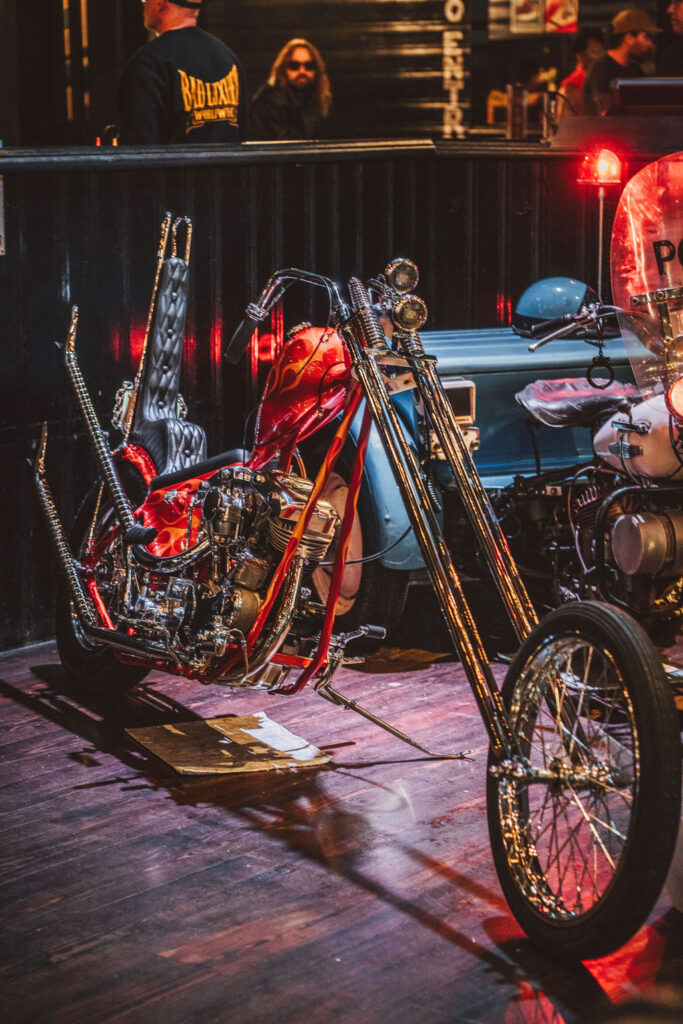
Among the historic choppers and new customs was this gorgeous ‘skinny’ Shovelhead chopper. [Zoltan Suhay]
And Girard told The Vintagent, even despite the show going on with the lanes active with bowlers, “Traditional motorcycle shows are static, but we attempt to liven things up with arresting visuals and live D.J. spinning cool old 45’s.” He expands on Tim’s comments about the motorcycles displayed, and says, “The dynamic nature of mashing-up machines that wouldn’t normally be displayed together also adds a unique ‘vibration’ to the whole affair. A long-fork, flame painted Harley chopper sitting next to an original-paint Ace four-cylinder motorcycle creates the kind of double-take viewing scenario that doesn’t always occur at some bike shows. Viewers that might be primarily interested in American made machines, for example, are literally forced to work their way past European race machines and other marques that demand attention, hopefully piercing through the tired repetition that is a byproduct of ‘tribalism’ in the motorbike world.”

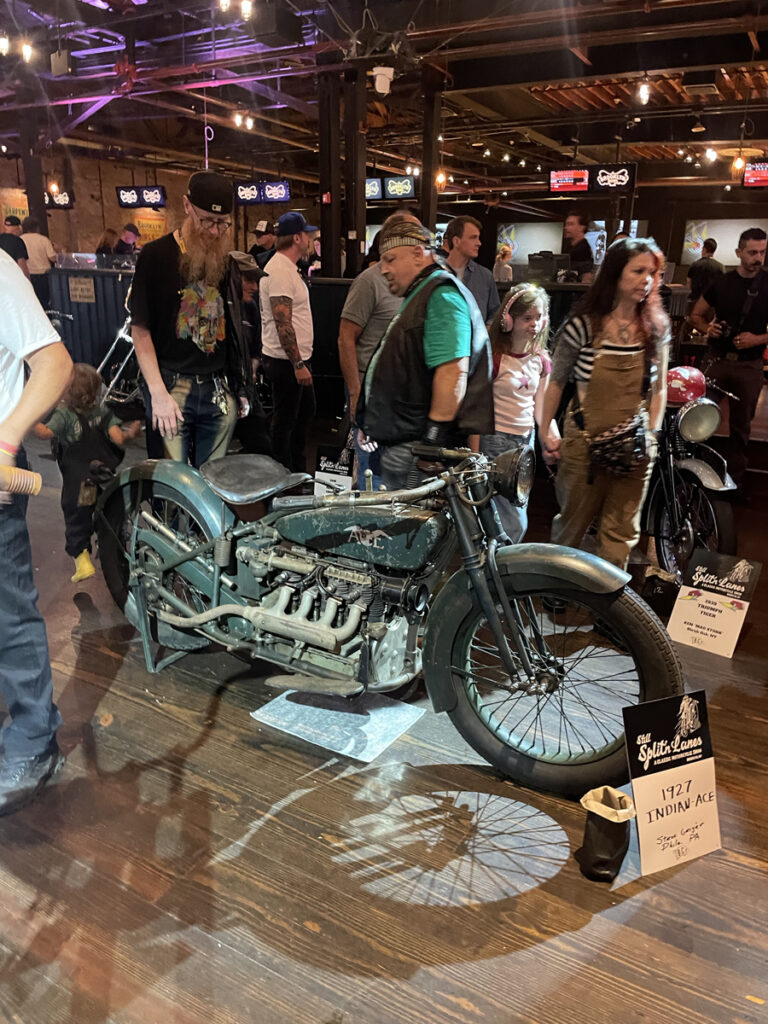
The original-paint 1927 Indian-Ace four-cylinder sat perfectly between more modern, less highbrow machines. [Paul d’Orléans]
Tim’s motorcycle story began at an early age, introduced as he was to powered two-wheelers with a minibike propelled by a lawnmower engine. He says the frame had been welded together by older kids in his Rhode Island neighborhood. “We called them ‘eggbeaters.’ My buddy Keith, who’s no longer with us, was a huge influence. His old man was a factory-trained Harley mechanic and an old club guy, and had a shop that Keith wrenched at. Keith only rode Triumphs to piss him off. Miss that guy. He was the real deal. My parents forbade motorcycles, but I rode whatever I could get my hands on. Kinda still holds true today. My first bike in NYC was a CB500, followed by the ’70 Bonneville I still have today.”

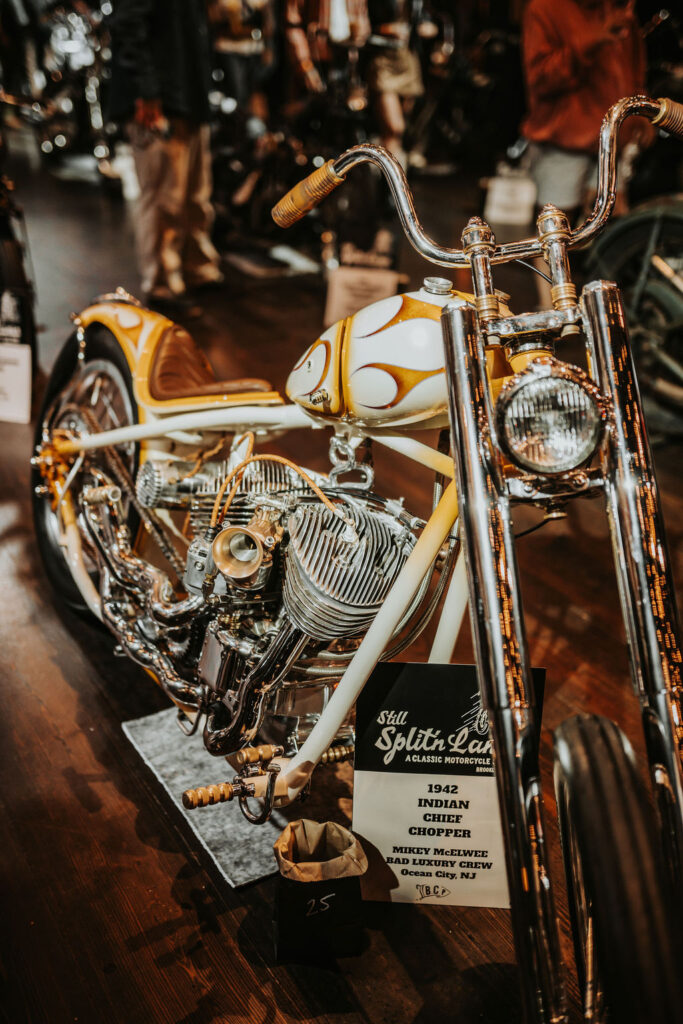
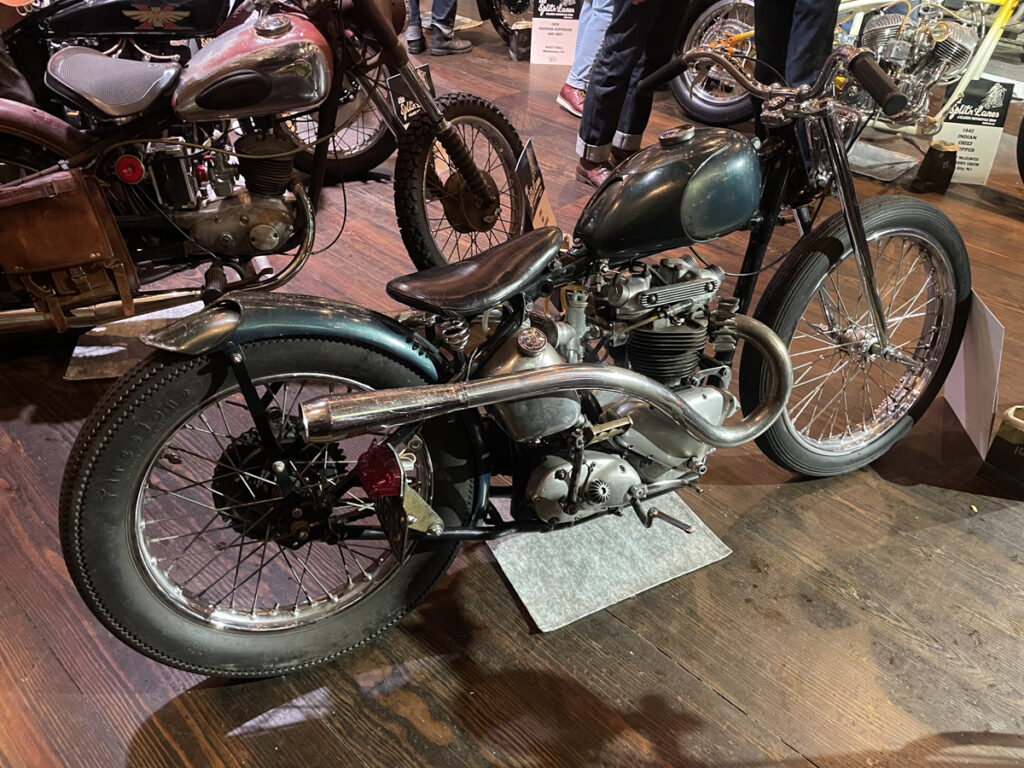
A rare 1942 Indian Chief chopper. [Zoltan Suhay]
For Girard, his mechanical interest was spurred at age seven by his grandfather Ray Fox. The wizened man put young Girard on the seat of an old tractor and turned him loose on 300 acres of his central Iowa property. Grandpa Fox then bought a Honda ATC 90 trike and let his five grandchildren race around the land. “From there the list of machines that I owned and rode from 1980 until today is seemingly endless,” Girard told us. “I’d often purchase a tired motorbike to get it going and then sell it towards something different. A 1972 Norton ‘Combat’ Commando was my first real motorcycle. I purchased it in San Francisco for $1,200 in ’81 and then sold it (still fully functioning) for $400 in ’83. Buy high, sell low being one of my inexplicable defects of character! Since then, it’s a list of marques as long as I could make it, from Triumphs, BSA’s, Matchless, Kawasaki, Benneli, Ducati, Moto Guzzi, BMW, Hercules, etc., culminating (one could say) in my 11-year build of a 1922 Henderson DeLuxe Four, that I raced gloriously from 2015 to 2020 at ‘The Race of Gentlemen’ in Wildwood, N.J.” Now, Girard says, “For reasons unknown, I am the owner of three Harley-Davidsons from the 1940s, deciding that a hardtail, sprung-clutch Knucklehead chopper was the way to go at age 60.  I feel like I’m just getting started.”

The fully functional Harley-Davidson Model U police trike. [Zoltan Suhay]
With bike shows such as Cheap Thrills, the Dinosaur Show and the Brooklyn Invitational passing in the rearview mirror, Tim says the absence of those events has been felt. “Putting these things on takes a ton of time and work, and bringing ours back after seven years reminded us how much depends on people giving their time and showing up for each other. At the same time, it’s encouraging to see a younger set getting completely hooked on old bikes, especially through the chopper scene. They’re just as hungry to learn, build, ride, and keep this stuff alive.” With Still Split’n Lanes, he adds, “We’re trying to pay respect to the culture of old bikes and the people who spend their time, money, and effort keeping these machines around. We’re doing our small part in a much larger, dedicated, and passionate community.” Girard completely agrees, and says, “I love what Tim just said about the importance of people giving their time and showing up for each other. Our insular little world of obsolete motorbikes truly depends on us looking out for and helping each other get to where we want to go. ‘No rider left behind’ is the prevailing sentiment, and that includes helping our younger friends out with advice, information, and most importantly, parts!”

A Scott TT Replica sat on the stage, beside Diggers and choppers. [Zoltan Suhay]
As more traditional clubs such as the Antique Motorcycle Club of America, founded in 1954, are aging out – the average age of a club member is 61 – the group is working hard to attract and retain younger enthusiasts. To help in this regard, at Still Split’n Lanes the AMCA had an active presence. Girard says, “We were very excited to have the AMCA onboard this year for the first time. Because the club is fully aware of the expenses involved in old bike ownership, they have been actively trying to maintain club membership numbers by reaching out to a younger audience. One of the AMCA’s more recent concessions is to fully embrace the impact and historical reality of Choppers, Customs, and Period Modified machines, often a (potentially) slightly less expensive path to the world of old bike ownership. The club presented us with 1,000 AMCA Virtual Membership cards for anyone entering the Brooklyn Bowl for the Still Split’n Lanes show.”

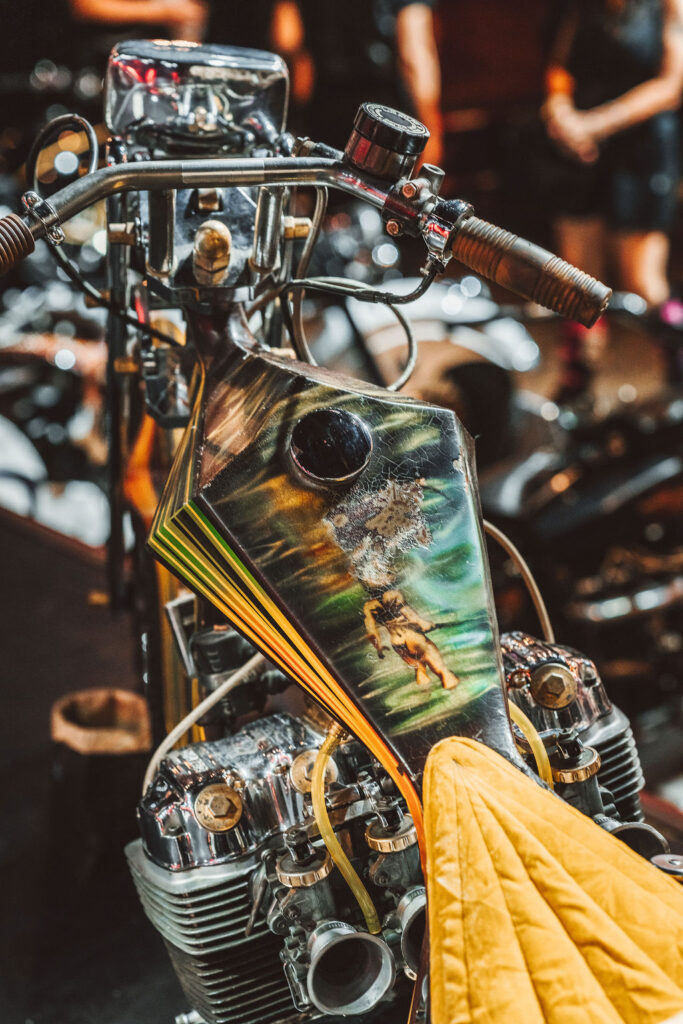
A survivor early 1970s Honda CB750 chopper featured a gently worn airbrush painting. [Zoltan Suhay]
With essentially having the Brooklyn Bowl, “‘Gifted’ to us,” Girard says the location is, “A no-brainer. Beyond the cost element, the Williamsburg location offers a complete infrastructure, including food, beverage, professional concert lighting and sound, with multiple digital screens for whatever we wanted to project. This year we were honored and excited to feature several vintage reels playing on endless loops, that were edited by Cine Meccanica and The Vintagent‘s own Curator for Film, Corinna Mantlo.” And Tim says the 2026 event was highly successful. “This year’s show couldn’t have gone better in our wildest imaginations. The morning rain was stressful as hell, but it cleared to hot, sunny skies as we opened. We had the 54 bikes inside — our biggest collection yet – and more than 100 outside, and over 500 people through the door. Our ‘volunteers’ Jack, Dave, and Nicky — they really didn’t have much of a choice — put in a heroic effort, along with countless friends and bike lenders who jumped in throughout the day. We’re still shaking our heads at the collection we had this year. Not sure how we top it, honestly.”

The scene outside the Brooklyn Bowl was hopping too. [Zoltan Suhay]
Girard adds, “We hope to continue with our Split’n Lanes shows as long as it feels fun and invigorating, and we are always looking for ways to make the event more exciting. Reach out to us at our website [www.basketcaseproductions.net] if you have something cool or unusual that you feel deserves some attention. We are pushing forward to make the show grow in scope and reach. We are aiming to include new machines from the West Coast/Midwest, Europe and Japan. Our expanding circle of machines, and even more importantly, friends, is at the heart of our desire to press on with the show.” And the Brooklyn Bowl venue, located in a building with its roots stretching back some 150 years as Hecla Iron Works, is important. As the factory once produced architectural features including cast-iron staircases and metal-skin facades in buildings that brimmed with foundries, blacksmithing and plating departments, it will always fit right in with the metal, aluminum and rubber that make up the motorcycles at a Still Split’n Lanes show. Stay tuned for news about 2027, and in the meantime, Girard suggests heading out on their Cannoli Run on New Year’s Day, when New York City vintage motorcyclists hunt for fresh espresso and pastry.

A Vincent Black Lightning replica with a 1946 Indian Chief. [Paul d’Orléans]
A classic early 1960s custom pre-unit Triumph with period patina. [Paul d’Orléans]
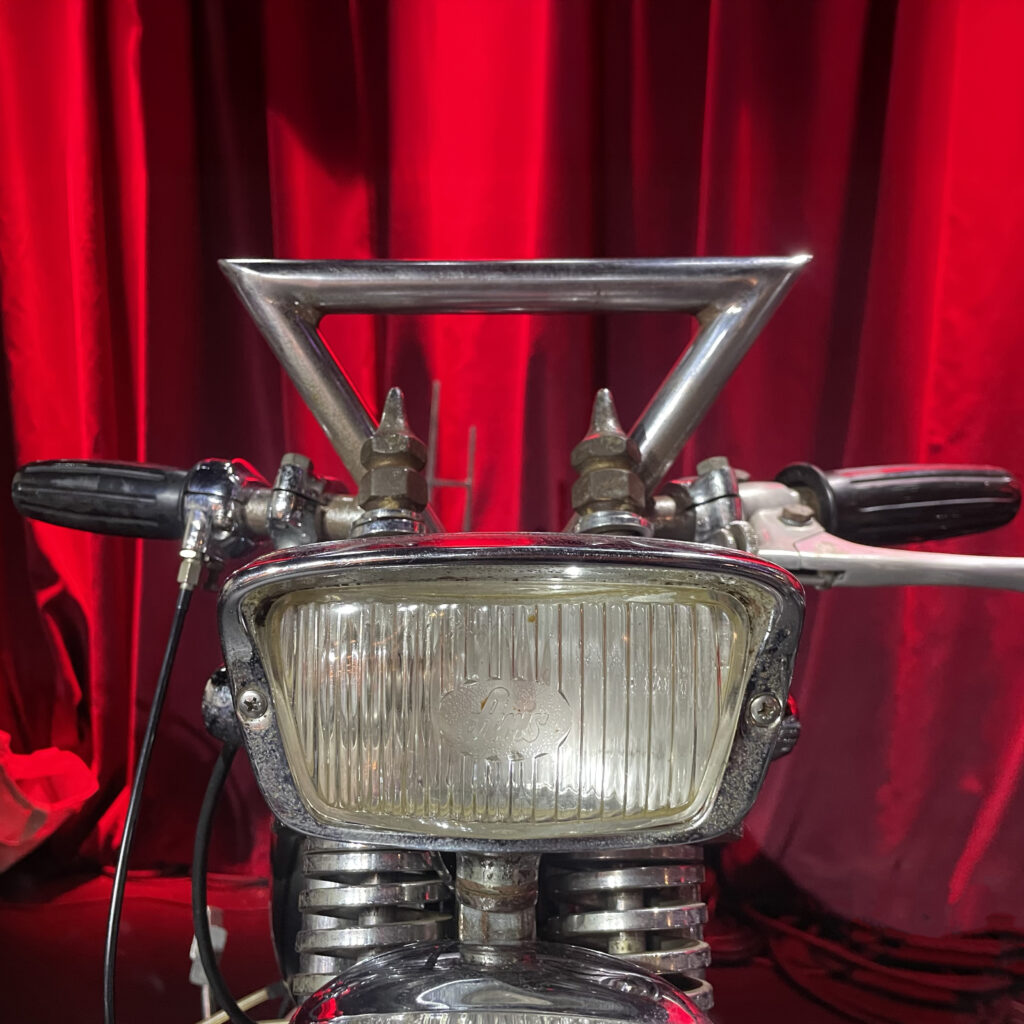
Z-bars on stage! [Paul d’Orléans]
A working replica of a Pennington motorcycle was fired up every hour, in a tent outside the venue. [Paul d’Orléans]
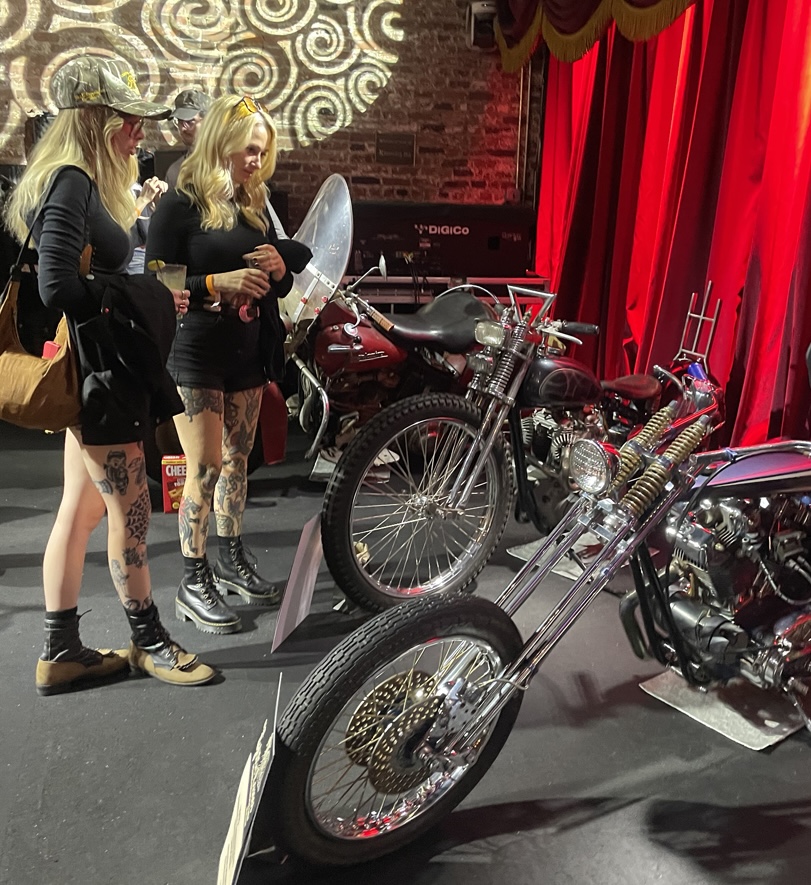
Ladies love choppers: examining a rare Harley-Davidson Sportster digger and another original-paint pre-unit Triumph custom. [Paul d’Orléans]
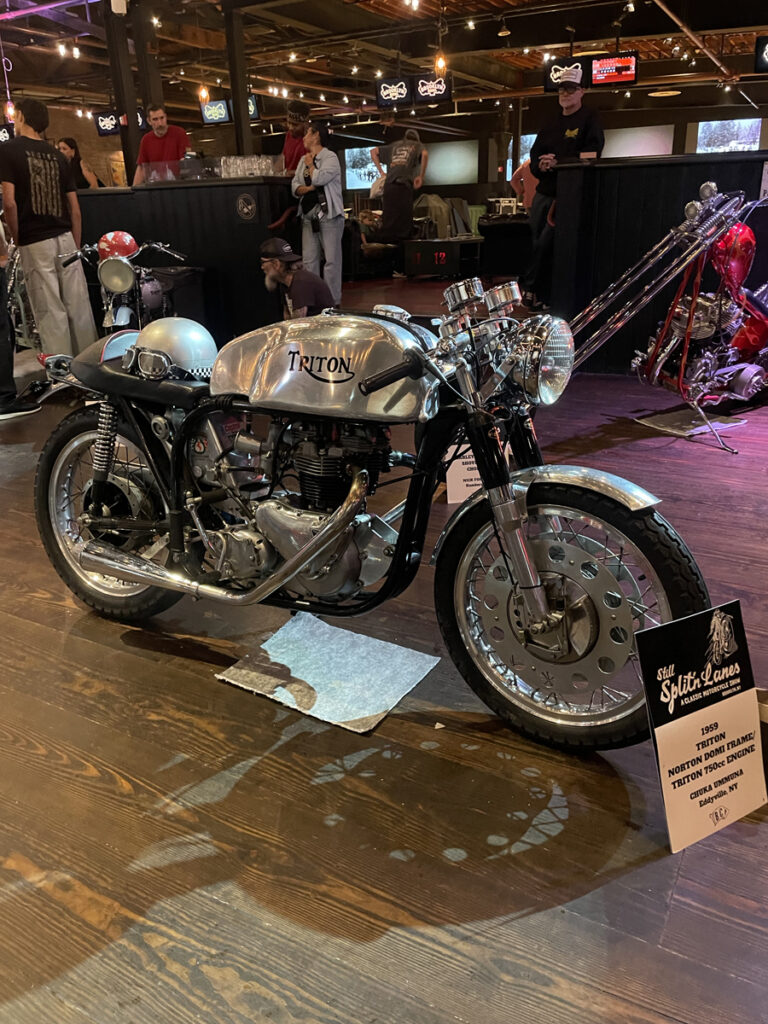
Chuka Ummuna’s 1958 Triton, a classic cafe racer. [Paul d’Orléans]
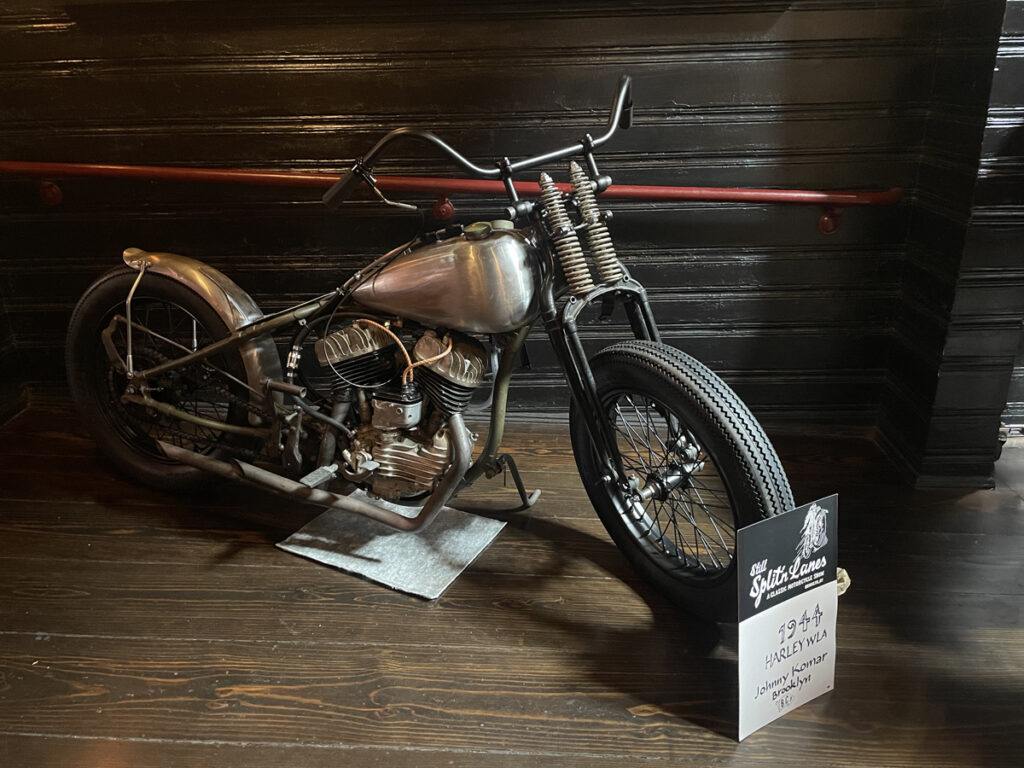
A 1944 Harley-Davidson WLA custom graced the entry to the venue. [Paul d’Orléans]
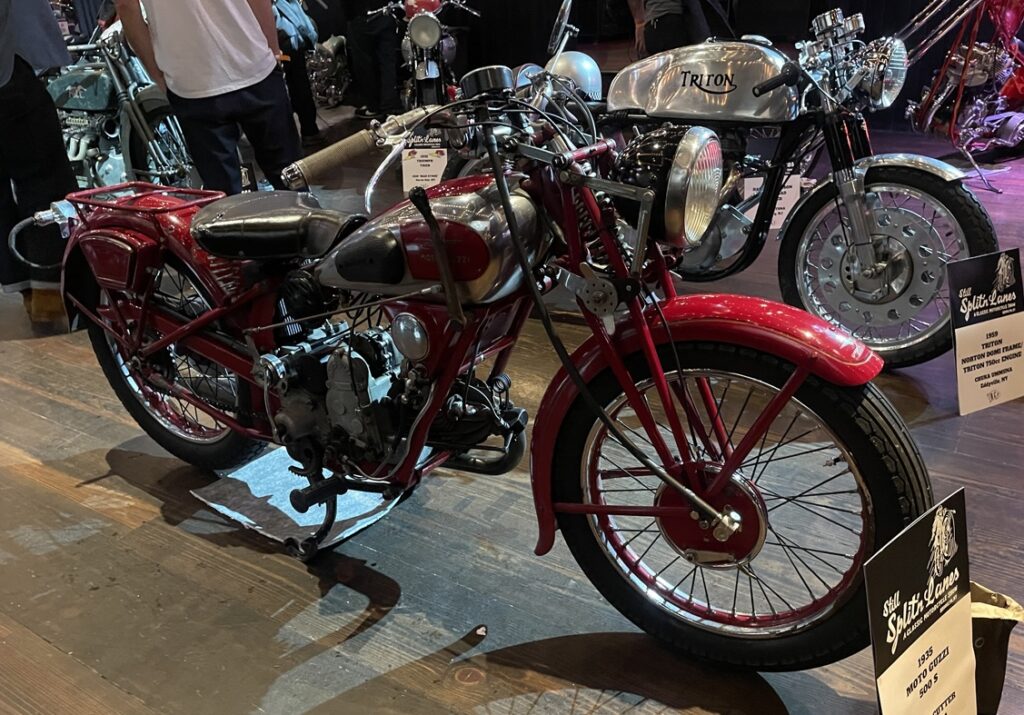
Strange bedfellows: a 1930s Moto Guzzi 500S sat beside a Triton. [Paul d’Orléans]


Greg Williams is Profiles Editor for The Vintagent. He’s a motorcycle writer and publisher based in Calgary who contributes the Pulp Non-Fiction column to The Antique Motorcycle and regular feature stories to Motorcycle Classics. He is proud to reprint the Second and Seventh Editions of J.B. Nicholson’s Modern Motorcycle Mechanics series. Follow him on Instagram, and explore all his articles for The Vintagent here.


Related Posts

Vintage Revival Montlhéry – 2015

The most intriguing vintage motorcycle…
Don’t Break Down!

Fass Mikey Vils repairs his 1915…
Legend of the Motorcycle Attire

It was an event that changed the…


Subscribe to Our Weekly Newsletter