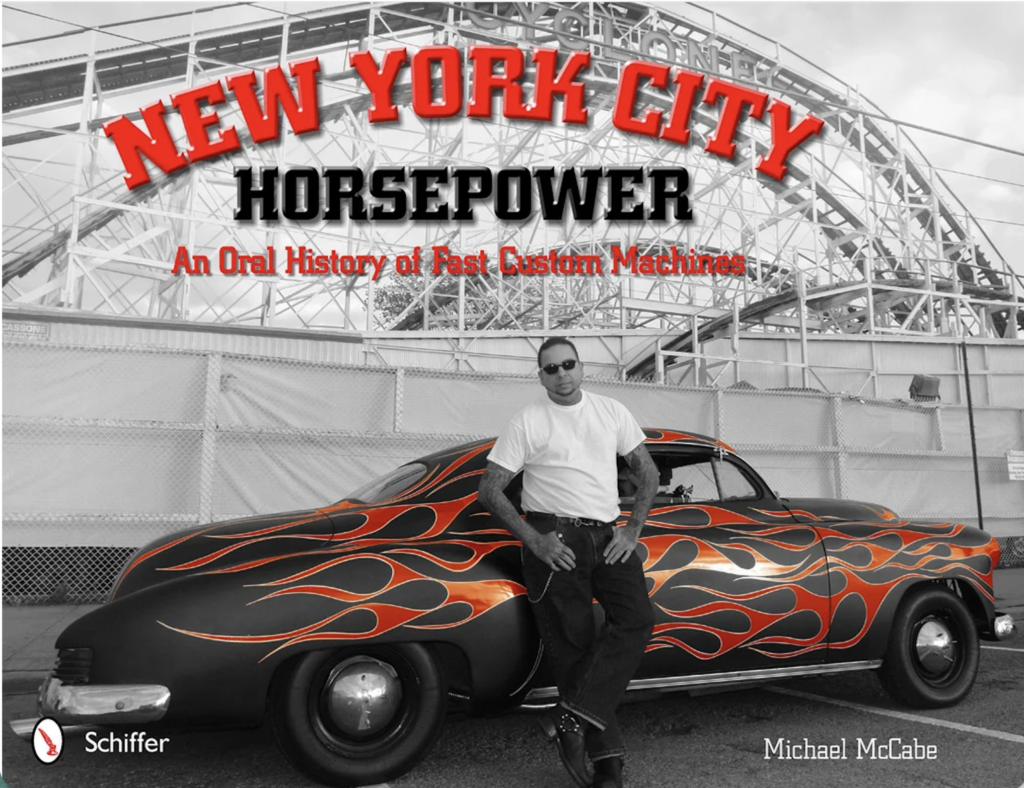
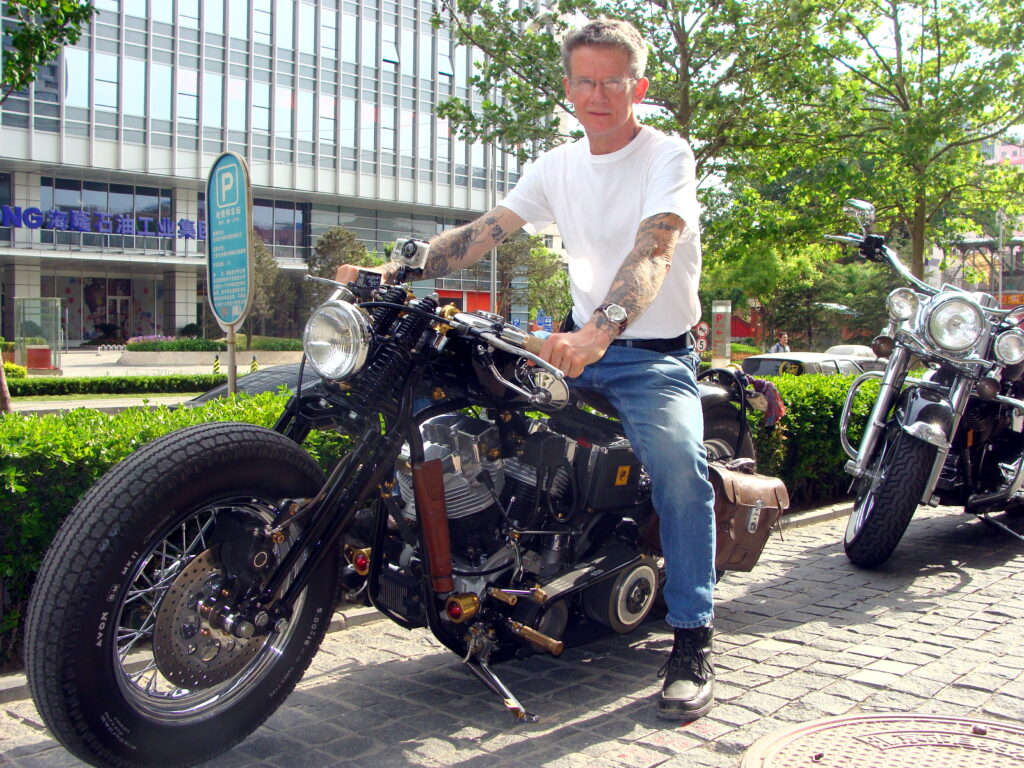
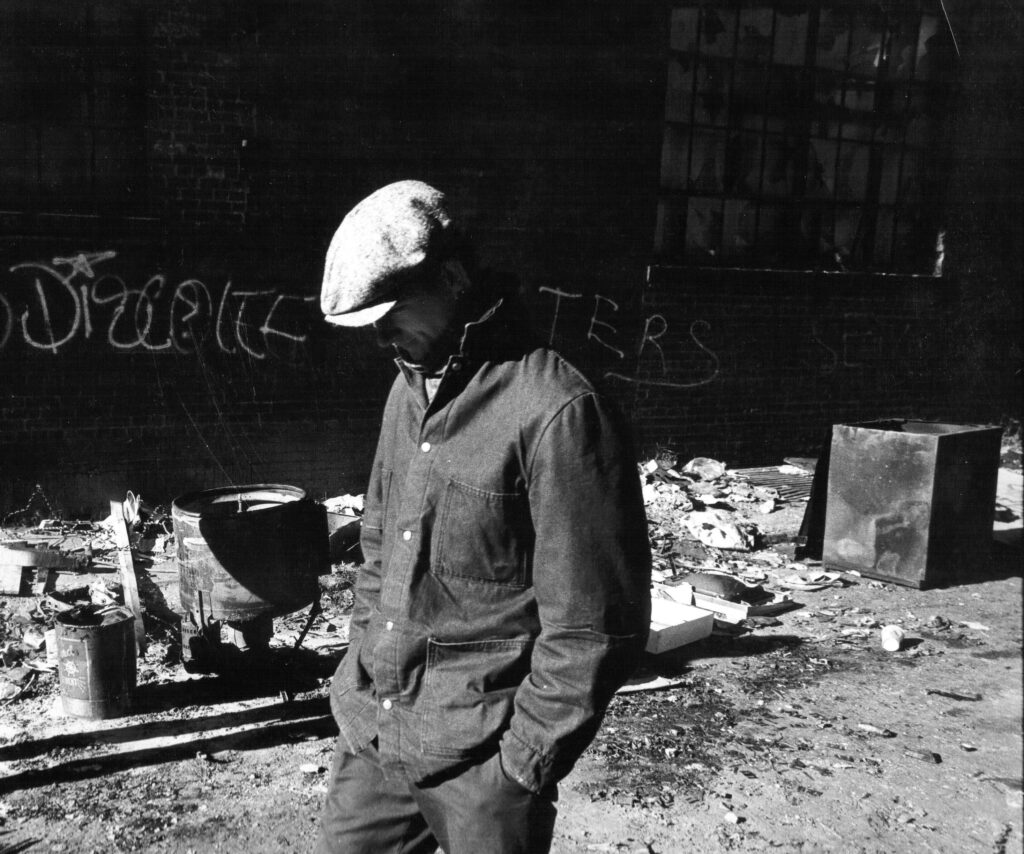
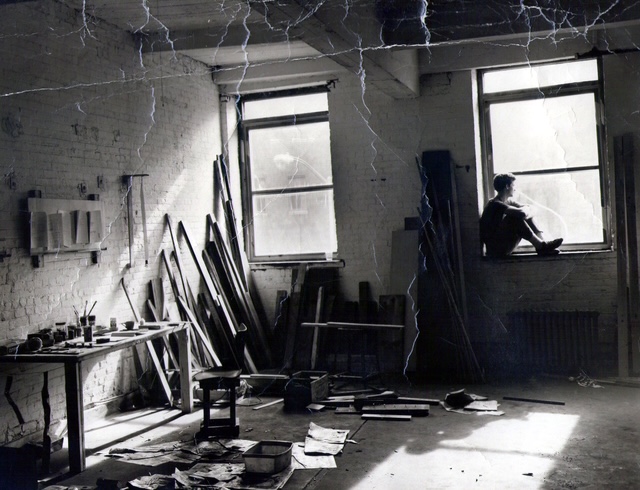
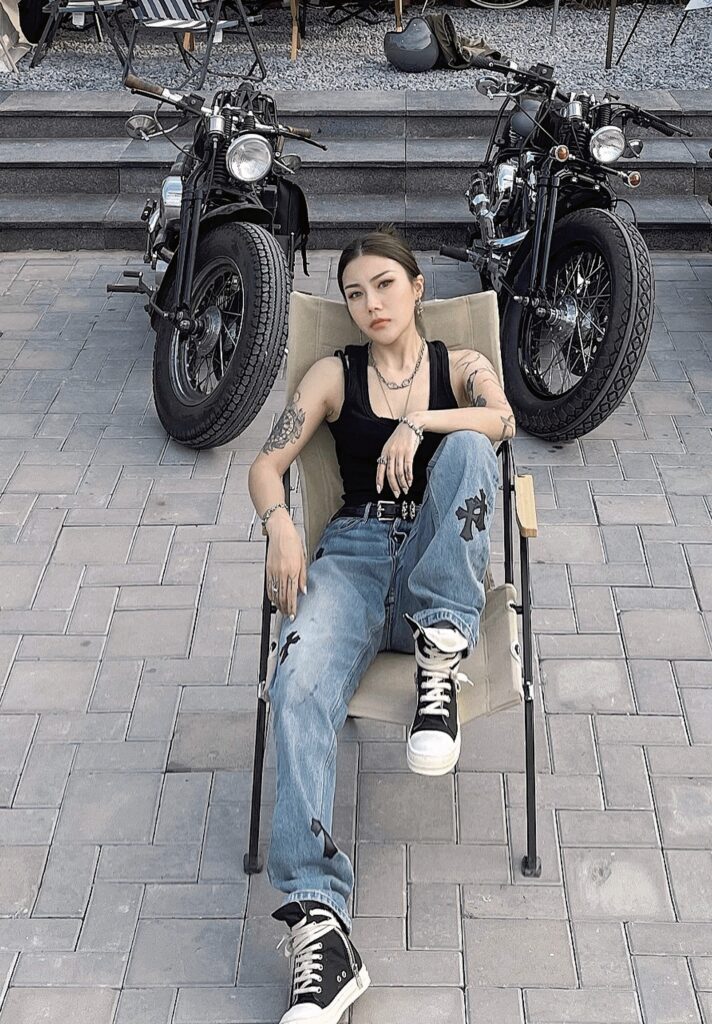
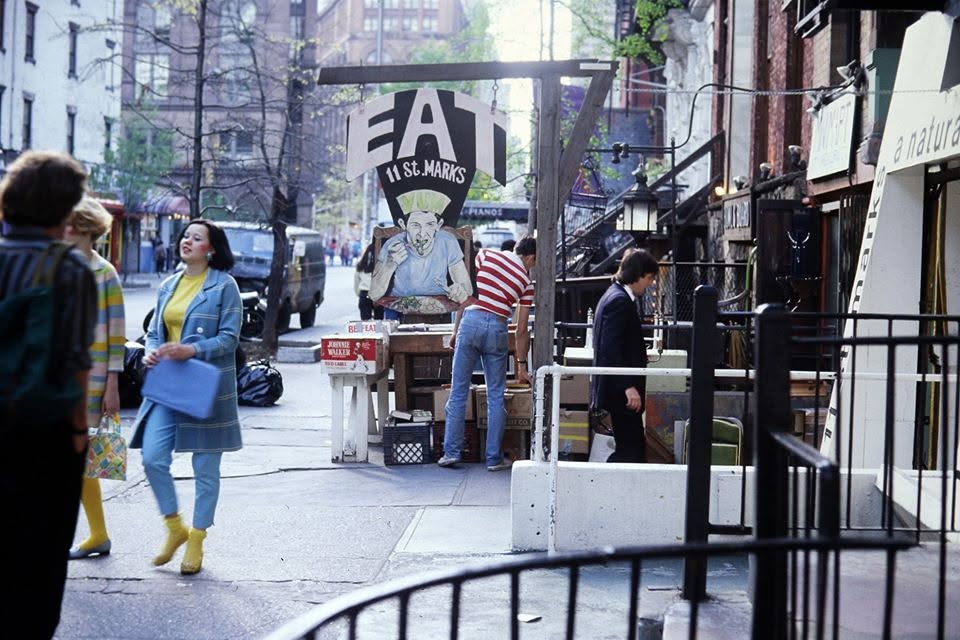
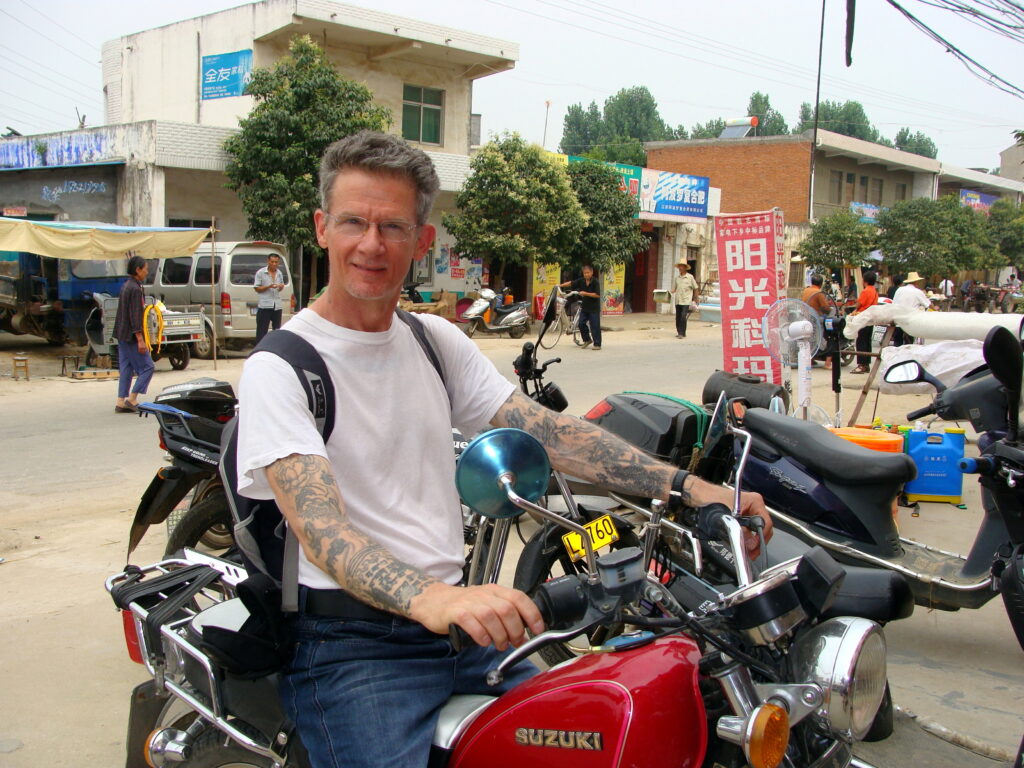
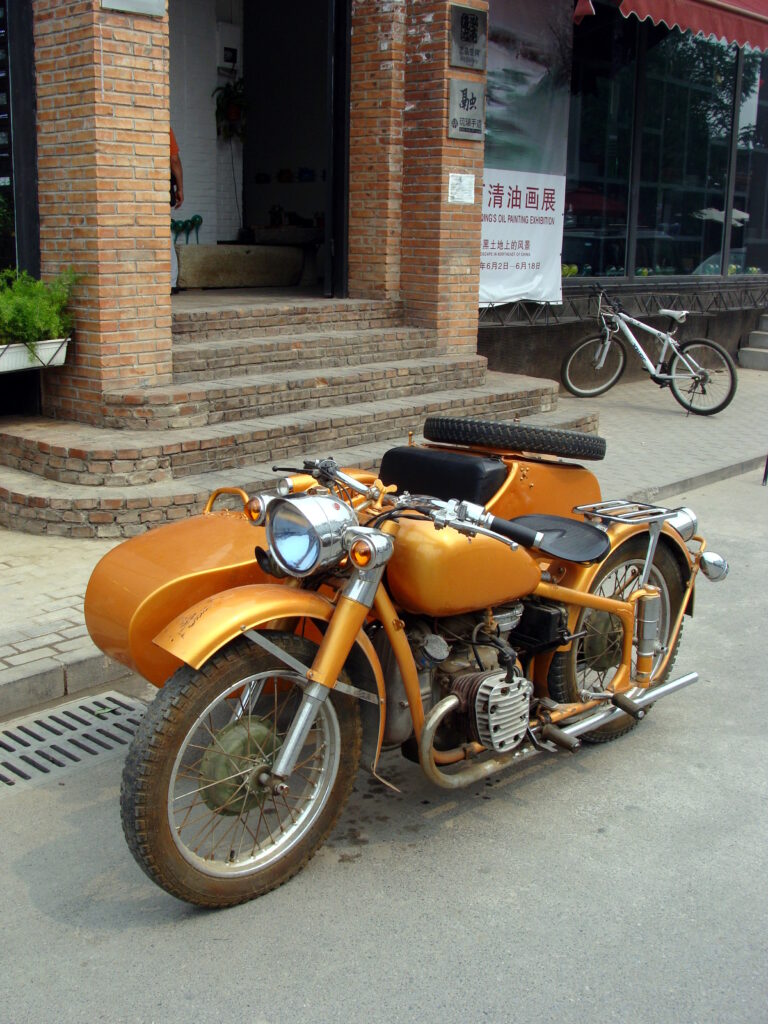
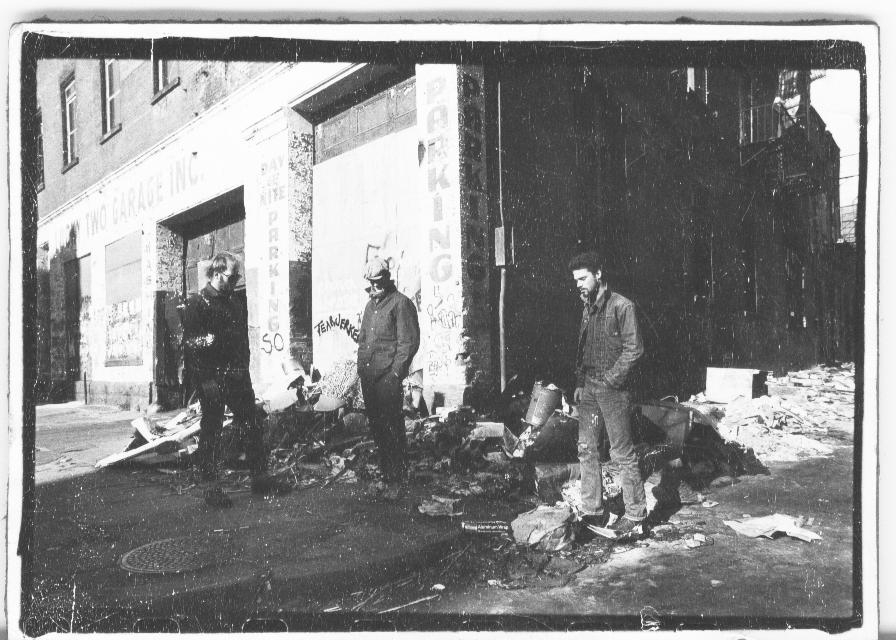
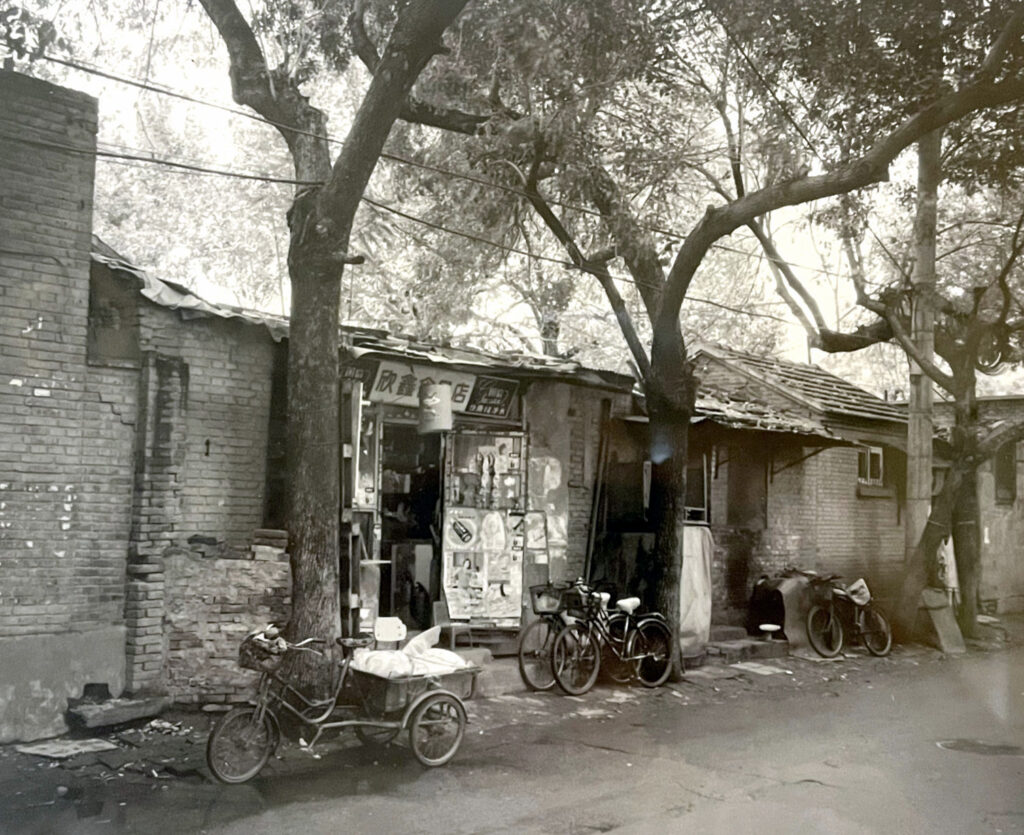
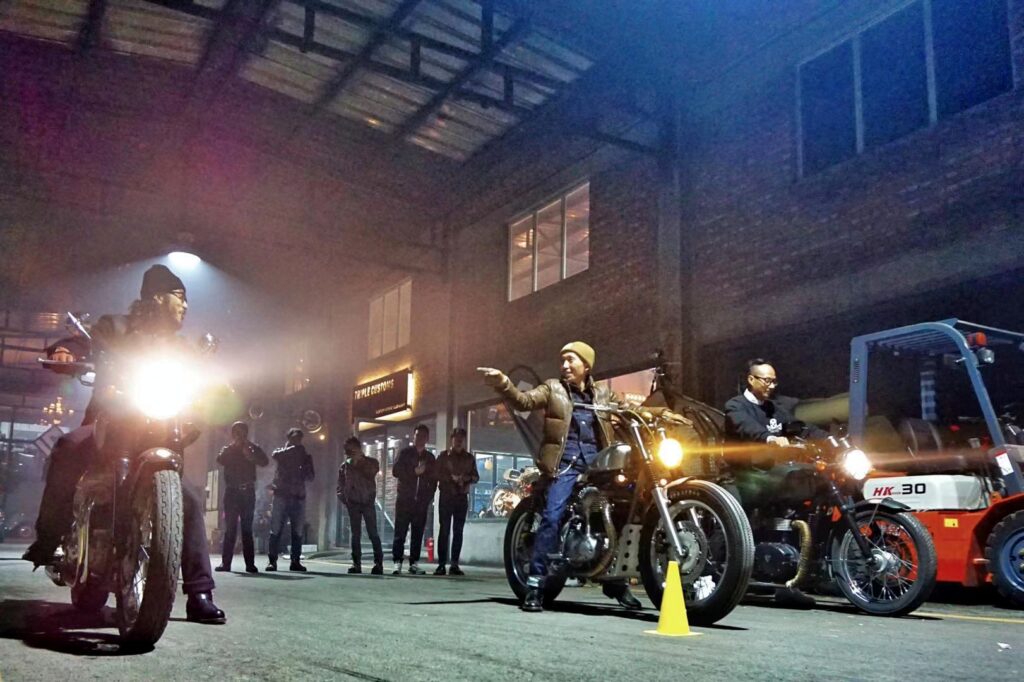
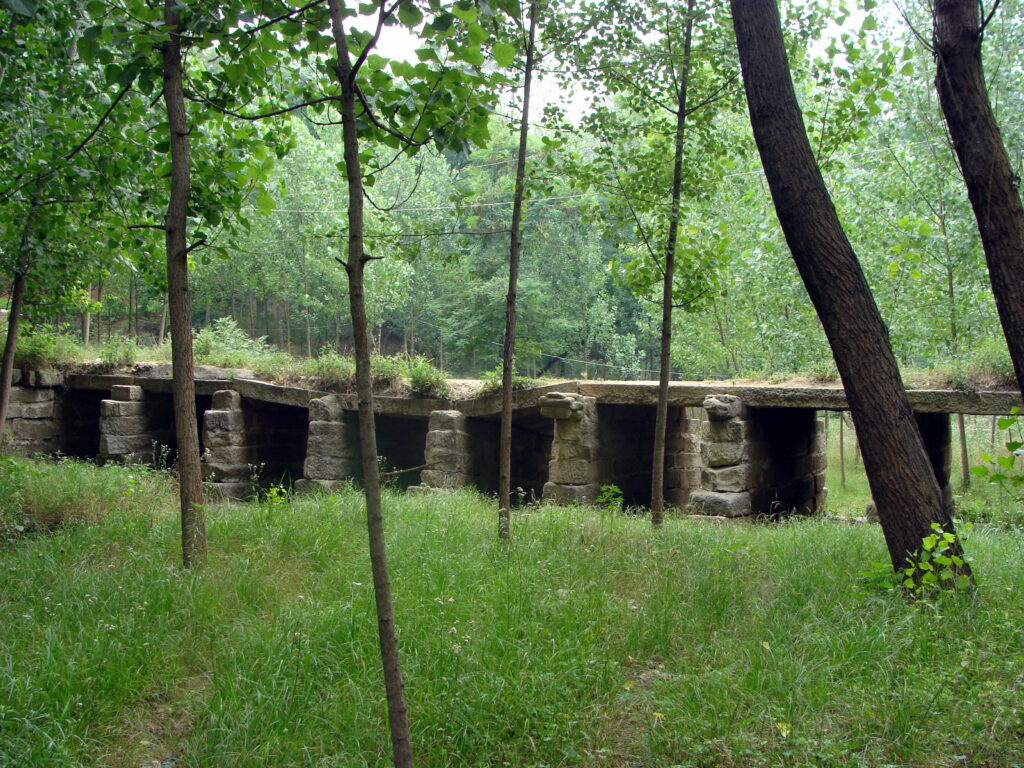
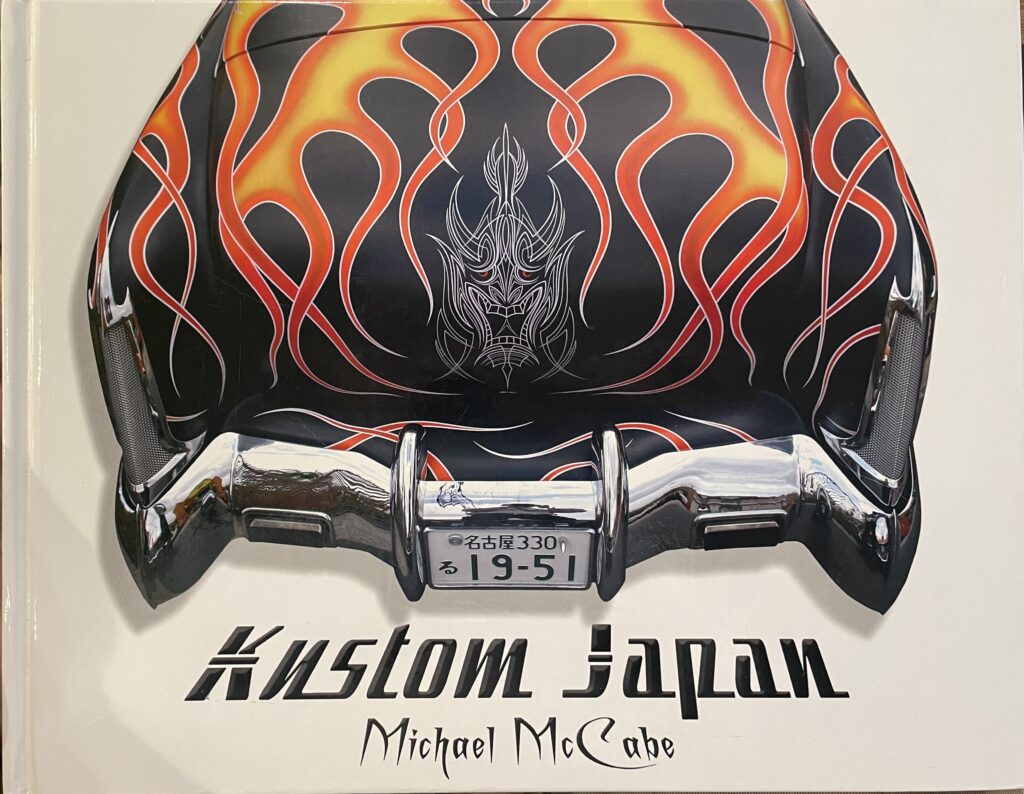
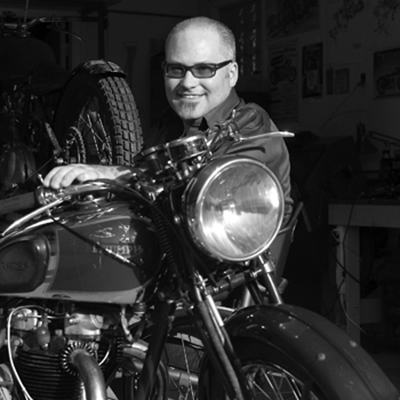
Always sensitive to the shifting currents of time through which he’s passed, Mike McCabe’s life has been one of discovery and documentation. Artist, author, anthropologist, mentor, motorcyclist, tattooist, teacher and photographer, Mike’s journey has segued from one unique opportunity to another. Before a microculture has completely disappeared, he’s had the good sense to capture the scene. He’s written several books on tattooing and motor culture, including New York City Horsepower. This tome freezes in time an era of urban custom culture focused on the lives of builders both young and old and the often-gritty workspaces where they wrench, and in the case of old factory buildings torn down for modern condominium projects, have wrenched on their rides.McCabe’s fascination with oral history and motoring subcultures is perfectly expressed in New York City Horsepower, a unique look at an unknown underground street scene. [Mike McCabe]Born in Boston but raised just west of the city in the suburbs near Natick and Wellesley, Mike says he was something of a poor student in school. To provide study motivation, Mike’s dad bought him a yellow Honda Z50 Mini Trail. “My dad was a really nice guy,” Mike explains from his New York City apartment during a recent telephone interview. “He coaxed me into trying to study harder at school because I was a pretty bad student. So, where I lived, it was suburbs that had not been built out yet. It was all still like virgin forest and stuff. It was beautiful. So, he bought me a Mini Trail and at the end of the street was this huge patch, probably hundreds of acres of woods, and that’s where I rode.” His dad had a couple of rules Mike had to follow, including pushing the Honda from his home far up the wooded trail before kicking it to life and never riding it on the street. Plus, Mike always had to wear a helmet. “I had hundreds of acres of tall, thick trees and narrow trails to myself that I rode through for hours,” Mike says, and adds, “It was incredible and life changing.”Mike McCabe’s life on wheels started on a humble Honda Z50 in the back woods near his home. Here he’s riding a customized Harley-Davidson in Beijing. [Mike McCabe]Mike had long been fascinated by motorcycles before he got the Z50. And the bribe did encourage him to study more keenly resulting in better grades but much of his education was gained first-hand and through a burning creative desire. “I learned how to draw because my mother’s brother, my Uncle Brad, was an accomplished artist who’d won awards for his drafting skills. As a young kid, I was like, ‘Wow. Brad can really draw,’ and he taught me a little bit, and I got good at it. Once you learn how to draw that opens a whole new world of creative skills.” At eight, he’d saved enough allowance to subscribe to a highbrow classic car quarterly filled with quality photography. He’d study the shapes, lines and forms and would draw his own cars. Uncle Brad, he says, was always encouraging. And, as a young kid in the late ’60s, Mike was also impressed by Ed Roth. He bought Roth magazines, and says, “His machines, the bikes and hot rods were very powerful youth-based signifiers. This was formative, first generation, raw culture. But it was West Coast. Very alluring for an East Coast kid. At that point in the ’60s, that was very original and unchartered, something that seemed ‘wide open.’”Mike McCabe in a Bowery ally in 1979, likely a fancy hotel now. [Mike McCabe]With his drawing skills, Mike went on to study art in upstate New York and became a stone lithographer. “It’s an amazingly beautiful process developed in the late 18th century by Alois Senefelder that involves a giant block of stone. I mean, it’s just this phenomenal, almost mystical process.” Remembering Roth and the seduction of West Coast culture, Mike then transferred to the California College of Arts and Crafts (CCA/C) in Oakland, California [sadly closed as of 2026, and its SF campus purchased by Vanderbilt University. My grandfather attended CCAC! – ed.] For 100 years, from 1922 to 2022, the Arts and Crafts Movement dedicated school was in Oakland before relocating to San Francisco. While in Oakland, Mike would borrow a friend’s Honda CB360 and ride the city’s streets.Mike in 1979, sitting in the window of his Bowery loft near Provenzano Lanza Funeral Home in New York City. [Mike McCabe]He also pumped gas at a Mobile station, and although he had no experience, says he got the job because he wore a Mobile shirt when he applied, “and was hired on the spot.” Mike thought he should attend grad school and applied to the San Francisco Art Institute [also sadly closed – ed.] on the other side of the Bay. He was accepted but the print shop wasn’t what he expected compared to the one he’d left at CCA/C, so he stayed for only a semester. At that point, his younger brother called from New York. His brother’s girlfriend had found a 4,000 square-foot loft on Second Avenue and Houston Street in the East Village, but they needed another person to help pay $500 for a year’s rent. “That was cheap, and I was ready to come back East,” Mike says. In 1979, he moved to New York City searching for some creative companionship and inspiration.Mike’s friend Miki in Beijing, sitting with her Zero custom. Read Mike’s article about her here. [Mike McCabe]As an aside, Mike mentions the 2025 film “Late Fame” (2025) starring Willem Dafoe (whose first film The Loveless is reviewed here), who portrays fictional New York poet Ed Saxberger. “Coincidentally, the film is set at the same time I was in New York, and it’s like 1978 or ’79 in some of the scenes,” he says. “It’s a pretty accurate portrayal of the downtown New York vibe in the late 1970s, and like me, (Dafoe’s character) was searching for some artistic camaraderie as a young artist.” Mike got a job working as a cook at Eat restaurant on the lively and historic St. Mark’s Place. “It was in a basement and was run by a guy named Barry and it was all this post hippie culture vegetarian food. Barry was a musician, so he hired musicians or artists to be the cooks and the dishwashers. It was a really very positive and creative environment, and all the waitresses were singers and dancers.”The legendary vegetarian restaurant EAT on 11 St Marks Place in Greenwich Village. [Facebook]Just a couple of months after moving into the loft, which was situated next door to Provenzano Funeral Home, Mike says he witnessed another eye-opening event; the funeral of East Village Hells Angels member Vincent “Big Vinny” Girolamo. “I didn’t know anything about the club or anything,” Mike explains. “And, downtown New York had this kind of rough-and-tumble reputation, and there’s a wide-open attitude, like a ‘you can do whatever you want’ reputation. I mean, there was there was no police presence in downtown New York. You never saw any cops, and then that huge event with Big Vinny’s funeral went on for like four of five days. I’d never seen anything like that with literally hundreds of guys on motorcycles parked all the way up Second Avenue from Houston Street to St. Mark’s Place, with bikes racing up and down the streets. I was like ‘Jesus Christ. This is totally lawless, but it’s also really inspiring.’ Culturally, this was impressive. Like, ‘what’s going on’?”Mike McCabe borrowing his cousin’s Suzuki to go riding in the woods in China, 2013. [Mike McCabe]Looking to segue from art into anthropology, Mike says he chose this direction due to living in New York and witnessing the ethnic diversity in which he was surrounded. He’d been reading numerous anthropological texts and wanted to explore the field. “It was creative and very multicultural,” Mike says of his New York community. “There’s a huge Hispanic population there, and many languages on the street.” Prior to applying to Columbia, Mike says he’d been documenting life in the neighborhood on 8mm film. He didn’t consider himself a straight A student, and before applying, he called Columbia and made an appointment to meet the chairman of the anthropology program. Mike showed up wearing a shirt and tie and dress slacks with his hair neatly combed and a couple of his films and an 8mm projector in a bicycle messenger’s bag. “I’m in the department chairman’s office and he’s like, ‘Mike, what have you got in the bag?’ I told him I make ethnographic films and that I have been studying on my own. I asked if I could show him one of my films and he looks at me and goes, ‘No, Mike, but I trust that that’s probably a good film,’ and then says, ‘I’m into ethnographic films as well.’ So, that was a good coincidence, right? So, when I later wrote my application I mentioned speaking with the chairman about film, and when I got this letter welcoming me to join the program, I almost fainted.”Classic lightly customized Chang Jiang flat twin in China, based on the BMW R71. [Mike McCabe]While studying anthropology, Mike also became interested in tattooing as a result of moving with his brother from the Second Avenue loft to a two-bedroom apartment on Avenue C. That was a tough piece of real estate in the early 1980s, Mike says, with an active drug trade. But the apartment was $200 a month, and that was within his budget. “It needed a coat of paint, and a change of locks on the door, but that’s about it,” he says. It took Mike and his brother a week to clean and paint the apartment, and he says, “So, here’s another strange coincidence. As I’m walking by with paint and rollers preparing the apartment to move in, there were always these two older guys sitting on the front steps of those two brownstones next to my apartment building. And they were totally, completely, tattooed.”Mike with friends in 1979 beside an East Village garage on East 1st St. [Mike McCabe]Mike continues, “The guy from the building on the left was tattooed with all these Tibetan mantras all over his arms and then the other guy was tattooed with American traditional and folk-art stuff. I didn’t have the balls to talk to these guys as the neighborhood was really rough, and you wouldn’t talk to somebody unless you were asked to talk to them. But finally, because I’m going back and forth with the paint and rollers for like a week, they said, ‘Kid, kid come over here.’ They say, ‘Who are you? Where’d you come from?’ Because there were very few white people down there then, it was all Hispanic people and African American people. I’m like, ‘hey, my name is Mike McCabe. This is my brother Jonathan and we’re moving into this building’. And they said, ‘Do you understand what goes on down here?’” Indeed, Mike did, but shortly after moving in, he says he became friends with Thom deVita and Richard Tyler. “I got to know Richard, went into his building and met his wife. He asked if I was an artist, you know, and then he asked if I wanted to learn how to tattoo. And I’m like, yeah, that makes sense. You know, it’s kind of like an outsider art form, and so I apprenticed with him for a couple years to learn how to tattoo.”Probably gone now: much like older buildings in downtown NYC, the old town in the center of Hutong – the Dong Cheng neighborhood – are typically being razed for develpment. [Mike McCabe]Tyler, Mike explains, was originally from Detroit and fought in World War II in the Pacific theater. When he came back on the GI bill, he obtained a degree from the Chicago Art Institute and was also a printmaker. The two shared the printmaking connection, and their conversations covered topics wide and diverse. Apprenticing under Tyler, Mike eventually began tattooing out of his apartment and built up a solid reputation to the point where he was soon sharing a basement studio on Fifth Street. “I was always working sterile, I never fucked around with that,” Mike says. “We were always very strict with that in the studio. The pigments, I had to learn all about, and it was very secretive back then. It’s very mystical. Just like lithography, too, and that inspired me.” Through Tyler, Mike met Ed Hardy, the West Coast tattooist widely recognized as a highly influential artist who revolutionized the art form. “I became friends with Ed, and I still am,” Mike says.With tattoo legend Ed Hardy under a historic aqueduct in Kyoto. [Mike MccCabe]It was, in fact, Hardy who backed Mike’s first book, New York city Tattoo: The Oral History of an Urban Art. “I just happened to get into tattooing in 1980 when there were a lot of these older tattoo artists who were still around who weren’t necessarily tattooing anymore,” Mike recalls. “And, because of my anthropology background, again, I sensed this whole issue of like a fading culture, and I said I gotta get these guys oral history. New York has this kind of interesting identity or connection to tattoo culture with the industrial revolution and then tattooing shifts away from a hand poke method to a mechanized method with the invention of the tattoo machine. The machine was invented in New York, too, in 1891, by Samuel O’Reilly. So, I found all these guys who were very generous with their time and their stories. They didn’t know who I was. And thank God, I got their oral histories and took photographs of them and their old designs and their old machines. Hardy, and his Hardy Marks Publications company, agreed to publish that book, and it was first printed in 1997.” After long being out of print, New York City Tattoowas recently reissued with a third printing.Mike’s friend Dong Dong in Beijing at an impromptu custom motorcycle meetup. [Mike McCabe]In 2003, Mike went to China to research an article for Skin & Ink magazine about the early days of youth-based tattoo culture in the communist nation. After writing the story, in 2004, he was hired to teach English in Wuhan, China at the Huazhong Agricultural University. The students, he says, “Were all really nice, coming from humble farming backgrounds.” Mike holds a license to teach ESL, and with his master’s degree in Anthropology, the university in Wuhan was happy to hire him. With his ever-present interest in motorcycles, although not owning or riding one while living in New York, he discovered an underground culture in China dedicated to older Chang Jiang sidecar machines. “There’re 12 million people there in Wuhan, but people were not recreational about having motorcycles. They put the motorcycles to work, and the Chang Jiang sidecars were all full of tools or they had some kind of weird thing to replace the sidecar, and these were working, utilitarian motorcycles.” But when Mike and his now-wife, whom he met in Wuhan, moved to Beijing around 2006, the situation changed. “There, you would see these young kids,” Mike says, and continues, “Mostly young guys who look like ones you would see in the East village with the crazy hair, and they all had Chang Jiangs. They’re all flying around the town on them, and I met this guy (www.beijing-sidecar.com) who was doing a really nice job tricking out these Chang Jiangs with reupholstered seats, and all cleaned up and painted.” Mike was offered a Chang Jiang for about $800, and while sorely tempted, he had nowhere to store it and no way to legally obtain a license to ride. “So, I let the idea go.”A 900 year old aqueduct in the woods near Mike’s cousin Da Ges’ home in the Henan province of China. [Mike McCabe]Mike and his wife returned to New York City after two and a half years in Beijing, and he took up teaching full time once again. It was around this time Mike met Indian Larry. “He knew me because of the tattooing, but it wouldn’t be accurate to say that we were friends or anything, we just knew each other. He was working in a side show on Coney Island, he was a crazy guy. And I knew the guy who ran the side show, Dick Zigun. So, it’s like this small kind of community. And because of my art background, I met artist John Copeland and motorcycle builder Keino Sasaki. And Paul Cox. I met them when they were putting together the Brooklyn Invitational custom motorcycle show.” First held in 2009, the show was an invite-only affair, with 20 to 30 custom machines on display in a gallery setting, with the final event taking place in 2018. “And I was interested in documenting this, as I would visit these guys at their workshops,” Mike says.2012: John Copeland, Keino Sasaki, and Jeffrey Shad meeting before that year’s Brooklyn Invitational. [Mike McCabe]“Brooklyn, particularly Northwest Brooklyn in Williamsburg, was still pretty rough. You could say it was dangerous and it wasn’t gentrified with little coffee shops, all that shit. It was old factory buildings that were basically just abandoned and so artists, people that I knew, could rent a big giant studio space. And that’s where Copeland and Jeffrey Schad and Keino and Paul, were all in old warehouse buildings where these guys were wrenching on their bikes. And I’m thinking to myself, you know, this is cool. This is like a whole creative motorcycle community that’s able to pull this off because they can find affordable working spaces.”The 2009 Brooklyn Invitational, with Rich Phillips’ custom. Note the spare lighting in the totally dark space. [Mike McCabe]Mike sought permission to document these artists and builders in their rough-and-tumble studios and was granted the right. “I didn’t know what the hell I was talking about,” Mike muses. “I’m not an expert about motorcycles, but I was sensitive to the creative culture in New York, which has this incredible legacy of youth, creativity, and wild culture. By 2009, that wild culture had moved out of downtown and moved to Williamsburg, Brooklyn. But now, it doesn’t exist in Williamsburg anymore. It’s gone. It’s been gentrified out, and you can’t get an apartment in Williamsburg for less than $4,000 a month, and those old factory and warehouse spaces have been razed and redeveloped.” Mike’s documentation became, as earlier mentioned, his book New York City Horsepower. Since his first book in 1997, Mike has also written Tattoos of Indochina, Tattooing New York City: Style and Continuity in a Changing Art Form, Kustom Japan, and Japanese Tattooing Now: Memory and Tradition.Kustom Japan documents the Kustom Kulture scene in Japan – cars, motorcycles, tattoos, art, clothing. [Mike McCabe]Now retired from teaching, Mike contributes freelance articles to magazines and sites including The Vintagent about motorcycle culture. And he does put together annual presentations for young New York City tattooists interested in the background and history of the art form. “The young kids really appreciate it,” he says. “They’re all very sweet, really nice kids.” With distinctive perception and an innate curiosity to document culture, Mike’s devoted his life to education; we could all take a page from his book and pay attention to the world through which we pass.
Greg Williams is Profiles Editor for The Vintagent. He’s a motorcycle writer and publisher based in Calgary who contributes the Pulp Non-Fiction column to The Antique Motorcycle and regular feature stories to Motorcycle Classics. He is proud to reprint the Second and Seventh Editions of J.B. Nicholson’s Modern Motorcycle Mechanics series. Follow him on Instagram, and explore all his articles for The Vintagent here.


What a life …. gonna have ta poke around to see if there’s any videos available on the man .
But on the downside … what with the CCA/C closing its doors ? Thats got to be the last of the genuine art college’s left in the US based on ART … not profiting from art gone under …. most of which were legacies of the end of WWII …..Sigh …. if only I’d been born ten years earlier …
And tattooing in Japan ? Seems at least monthly a story comes across on NHK on yet another Japanese government attempt to shut down tattooing once and for all …seriously … when are governments gonna realize they cannot legislate aesthetics and morality … cause truth be know … we’ll ( artistes in general ) always find a way around their BS … be it religious … moral … aesthetics based etc ….. what ever !
Commit Random Acts of Defiance ! .
😎
Sigh .. couldn’t find any videos on the man …. but thanks for the mention of the film ” Late Fame ” … been on the fence whether to watch it or not … with Mike’s comments pushing me over to the WATCH IT DAMN IT side ….
So .. guess I still came out ahead ..
😎
I remember that funeral,it was across the street from my high school.Of course,they have to make a BIG DEAL about it like they do everything..The Provenzano funeral home had a Chevy station wagon hearse for cheap econo funerals which I always thought was funny.Imagine the pain and embarassment of going to the cemetery in that!
Funeral ? What Funeral ???? .. Mike McCabe’s still alive and kicking … not doubt still taking names … probably still kicking a bit of @$& .. and errr …. writing for the Vintagent ! Hmmmm …..
😉
Got a tattoo by Mike at his NYC 5th street basement studio. Illegal then and had to be introduced by someone he already knew. A guy called “Eggs” was my introduction through a local ABCnoRio/Rivington School/Gas Station connection that he’d done an arm band of toilet plungers for. Toilet plungers were this guys graffiti tag and it was done with a sort of Celtic/Book of Kells flavor. It was so beautifully done and fortuitous because I’d finally found someone that could do a sort of half belt of this grouping of images I’d found in the Book of Kells. Some curved, sweeping images of dogs fighting/intertwined on either side of two warriors. Jonathan Shaw was around but he seemed like kind of a blowhard to me.
This was maybe 86-87? I was living in a basement on Rivington and had become friends with Ray Abeyta, a gifted painter and burgeoning tattoo enthusiast from Albuquerque round the same time. Met an underage Alyssa maybe a year earlier, Ray’s soon to be wife, playing pool at Sofies. She was quite the shark. They’d become a huge part of my life down the line but that’s a whole different story that quite possibly merits a major chapter or though line of a book. Eli, Ray and Alyssa’s son, is now an incredibly good tattooist in Brooklyn and Iz is a remarkably gifted and driven artist in they’re own right.
Mike wanted to go over my idea before punching in the ink. When we first met in his shop, I immediately sensed a real grounded dedication to his work and its history. He shared some personal details, moving stories and the reasoning behind some of his own tattoos. An especially vivid one was about a sanskrit necklace he’d had done in honor of his tattooing mentor. His choices in the ink concoction for that tattoo were beautiful. His little basement shop was very tidy with one window up to the street. Vintage white autoclaves to sterilize needles, etc. We went over the Book of Kells images I’d photocopied and discussed placement so the images would line up with my bodies anatomy. This was a meaningful choice to me and he gave me his patience and suggestions that he could sense I needed to do this right. This would be my first tattoo. It was a pretty big one and when we met to actually do it, I embarrassingly asked him what it might feel like. After what felt like some serious deliberation he said, “Well, it feels like being drawn on by a lit cigarette.” I think I tried to laugh at that but it was a very apt description as he started to lay down the lines.
Some years later I saw his book on the history of NY tattooing and bought it at the same basement counter culture bookstore where I discovered “You Can’t Win” by Jack Black. Cover done by Joe Coleman, another local guy around the ‘hood. In the parlance of the turn of the century hobos and thieves, Mike McCabe is a Johnson. Some time later I was proud to find out that he chose to include the tattoo in a magazine profile on him in Outlaw Biker magazine. I mentioned it to my younger sister in Utah and she had to go to a local porno shop to find a copy.
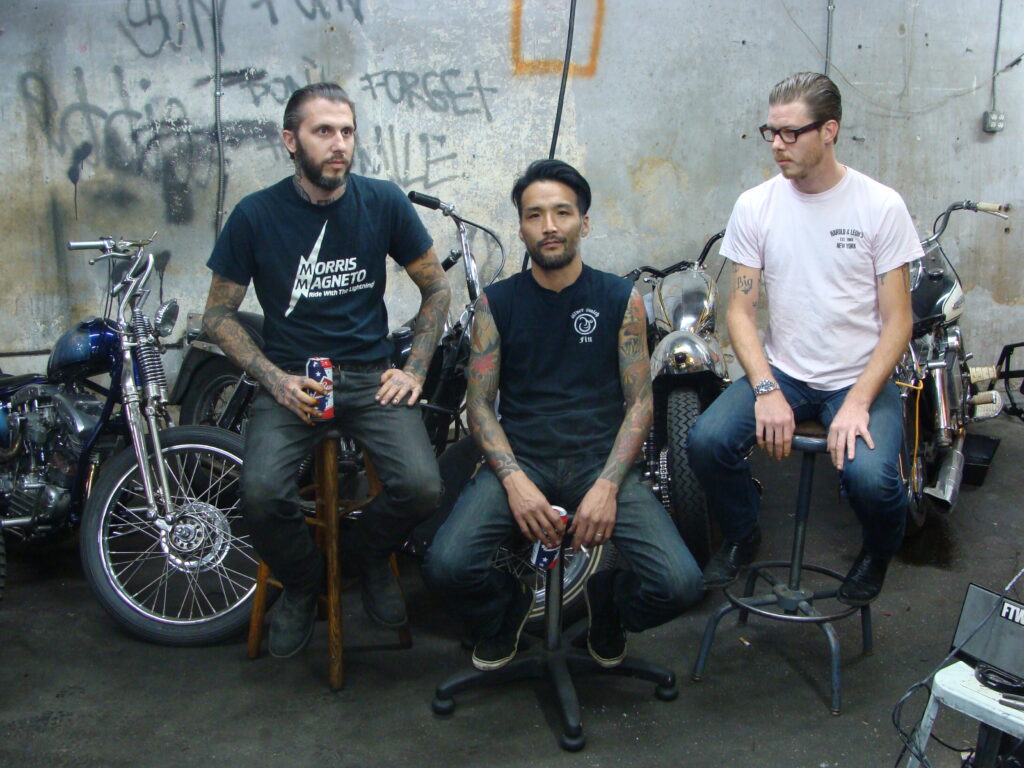
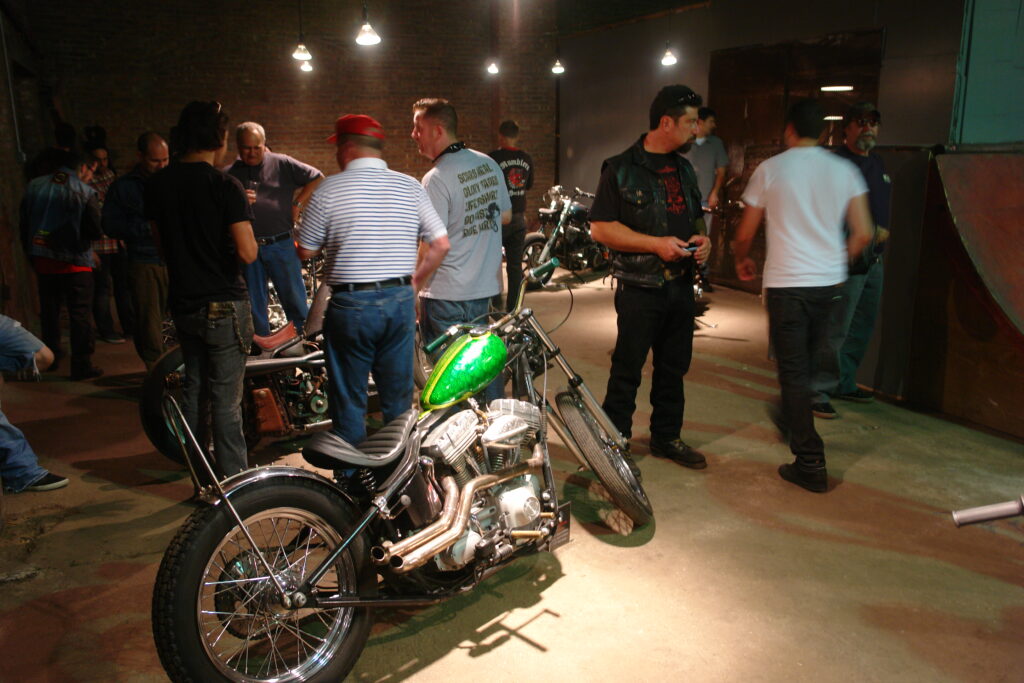
Only time and life choices know why and we didn’t cross paths much again but certainly traveled in the same circles. I moved from the LES to Williamsburg in 89 and began to customize my own bikes, first was a Suzuki water buffalo rocket ship and after that, mostly Guzzi’s. Went to all the grassroots custom and vintage bike shows/gatherings as well as the first and all subsequent Brooklyn Invitational shows. I met Indian Larry as he had a shop on the way to my walk to mine. One of the Gasoline Alley shows was particularly funny when a guy that brought a jet powered behemoth proceeded to literally melt the pavement all the way down N14th street shortly before the cops and fire department showed up. They didn’t shut it down but lingered just to hang and, well, just in case. The melted strip that ran for a few blocks was there for a solid decade.
Paul, Keino, John, Jeff, Erik, Hugh, Dimitri. Aquaintences more than friends but good people all. Also met this websites founder, Paul O at Max Hazan’s first showing of one of his first spectacular customs. A fantastic time to be in NY when art, writing, music, film, motorcycles, surfing, etc. were cross pollinating without much prejudice among the practitioners. This all may be true as memory does believe before knowing remembers. I hope Mike sees this and, if so, I want to wish you all my best. I wear your work with the deepest respect. Thank you.
Hey Jeff, thanks for that memory painting – wonderful stuff, really adds color and context to the story. NYC was indeed a different place even recently, or it seems recent to me. Hugh at 6th St Specials was the last holdout, and Paul Cox lasted longer than most. When I took an apt in the West Village in 2011, first person Suzie and I visited was Bill Phelps at his amazing Dumbo studio, which features prominently in many of his photos of the period. He was out within the year; everybody was out of Williamsburg within 6 years. Still, Corinna managed to pull off the Motorcycle Film Festival in BK for three years, till the partners at Indian Larry invested in then fired her, and let it die. Why?
Amazingly, after 32 articles, I have yet to meet Mike! Our travel schedules have been misaligned. Hope to correct that very soon…
yours, Paul
Thanks very much for reading the article. I appreciate your feedback. As you know, we are fortunate to have experienced that time.
Hey Mike! We worked together on Tattoo Ink magazine, about a million years ago. Would be fun to catch up sometime. Didn’t know how to reach you directly, but you can send your info to me via our site: https://www.rayogram.com/contact-us or my IG: @craigwink
I assumed that because it is the only funeral mentioned in the article that people would know what I’m talking about.I even mentioned the provenzano funeral home and further assumed people would put 2 and 2 together but a big fat obese NO.
Oh gee….. mea culpa … that minuscule mention of Big Vinnie .. formerly of the who gives a damn ” Soprano’s ” TV travesty’s funeral … golly … is it any wonder anyone with a midicm of intelligence passed right over it … not to mention not giving a rats posterior about the event or the facility ? Yeah …. 2 + 2 .. which in this case = a great big fat ZERO !
And by the way …. you’ve never been within 10,000 miles of the place ….
Now Bon Jovi Funeral homes ( yep …. that Bon Jovi family ) now there’s a class act
So here’s a llil wisdom coming from age in relation to yer fear of embarrassment should yer final ride be in a less than luxurious vehicle
YOU’RE DEAD … GONE … NADA … NOTHING … JUST A HOLLOW SHELL waiting to fertilize the ground … and the reality is … you won’t know the difference should yer final ride be in a local garbage truck …. cause you …. won’t know the difference .. 😉
Fact is guaranteed when yer family takes a look at funeral costs today after y’all dead and gone …. they’ll be damned tempted to throw you in a dishwasher box … toss you into the back of the family pickup … and drop you off at the local dump ….and ya know what ? It won’t matter one damn bit to you … cause yer dead ….
Lordy,you got it all ass backward.The Big Vinnie wasn’t the one from the sopranos.You didn’t bother to read the article.Either that or you’re severely dyslexic.
I wasn’t within a thousand miles huh?My high school had an annex on the corner of 2nd st and 2nd ave so we had a ringside seat,LaSalle, class of ’75.
Good God,where do these people come from–New Jersey?
In other news Zero Engineering was supposed to be selling these reproduction Springer forks that were made in Japan so everyone assumed they were of good quality,not China shit.Then suddenly,without any warning,they disappeared off the face of the earth.What gives?Did they figure it wasn’t really worth it?Competition from W&W with their Polish made forks?Did they even sell any at all?A lot of people had high hopes with the ZE ones
Gee,I thought comments were posted in the order they were received but hey–thats Showbiz!
And since this show is now about tattooing,I’ll put my 2cents.
I guess it was inevitable.Like all children I liked to draw skulls and daggers on me with magic markers,pens etc. so in 74 I go to David Slacks on 73rd st. and get one for $15.Then later I was in the Navy and still later the merchant marine so a double whammy.One day I was home on leave and so and so says he’s going to “cut out the middle man” and “pass the savings on to you(him).” so we go to Kohnstamms on 6th Ave. and check them out.As we all know tattoo colors are food and cosmetic colors that come in powdered form and are sold in 100 lb bags.Spaulding and Rogers bought their colors from Kohnstamm(Fezzandie and Sperle)I think the price was $100-150 and up per bag.We also went to their factory in Bklyn which was like out of Dickens.Kohnstamms was nice and gave us some free samples.Dupont also had a line of food colors but we found out they were pretty pricey so we didn’t go to them.So so and so thinks he’s going to save money on tattooing buy buying wholesale.The trouble is it would take him a lifetime to go thru a 100 lb bag and the stuff must have a shelf life.So he just bought a bag of red,a color he figured he would use the most of.He’s dead now and I wonder just how much of that bag he ended up using that he bought back in 77.Probably not even a tenth of it.Big savings
Hi again Paul. been awhile. Thanks for the kind words. You and I exchanged a few words at the show with Max’s Enfield bike. The one with the, I think, mahogany seat and that very distinctive slash cut pipe hugging right below. When I say slash cut, I mean really slashed. You know the one. I think it was that bike that sent him to the stratosphere. N10th street warehouse that was a combo show of a few customs and some denim company carpetbagging on the burgeoning custom scene. 😉 Lotsa thug chic slithering around. Ha.
Before heading upstate, Paul Cox, along with a number of other local fabricators, made the urn for Rays ashes after his collision on Flatbush Ave near the old strip joint by the navy yard. I gave him one of my pieces he liked as sort of an unspoken thank you for that. Don’t know him well but yeah, he’s a really good one.
Down the line, Alyssa and I got together and we used to drive across country nearly every summer, zigzagging on as many back roads as possible with our two bikes in the back of the van. The van was big enough to fit a queen size mattress, two bikes and surfboards hung from the ceiling. Heaven. Sleeping wherever sparked our fancy. On one of these trips, we popped into Walt S’s shop after he moved to New Hampshire. Alyssa new him better than me. I think through Works Engineering. Good one that shared his knowledge/skills with zero hesitation.
I know Bill Phelps as well. One of the first times we met was at a bar on Berry and N8th street. Kitty corner from Teddy’s. Pool table in the back. Hanging by the table until our quarters came up, I noticed he was wearing a Vincent t-shirt and, a few beers in, I kinda smirked and asked him, “ah, you ride a Vincent?” Halfway expecting a “what’s that? I got this t-shirt at RRL,” or had a lucky find at a thrift store or something similar. Dead pan look at me when he said, “Yes…I do” I gulped and thought, “woah, ok then.” We became passing friends with a bit of shared history. Used to see him around the neighborhood a lot. Another good one with a great eye.
Not sure if you know this but one of the premier Guzzi race mechanics had a building on Kent/South 3rd. Manfed Hecht. Right under the bridge. He had a sizable and very jaw dropping collection of old race bikes of every stripe in the entryway to his large and spotless shop. Had to make an appointment and he”d always answer the diamond plate door with a 1911 in his hand and two dobermans absolutely ready go. All of his various bench top tools and machines, aside from the Bridgeport, lathe, and drill presses, were linked up with thick leather belts that he could engage by pulling a lever and snugging up a particular belt to that specific machine. Incredible. He and Dr. John built that championship Guzzi that is legendary in in the Guzzi and BOTT world.
Last side note for now, one of my freelance gigs was art moving. Rockefeller’s Asian art collection at the Asia Society, loading in the Sigmar Polke show at the Brooklyn Museum. That kind of thing. One of my coworkers was a curly haired red head named Michael. Became work friends. I used to ride my Guzzi to work and over lunch one day and conversation turned to bikes. He said he rode and it turns out he lived in north Brooklyn too. I ask where he parks his bike. Says he has a garage on Berry/N9th. Just 3 blocks from my apartment. I was looking for indoor parking and he said to swing by as there was room for two bikes in there. Perfect, I didn’t care if it might be a dump, it would be indoors. We meet up a few days later and he rolls up the garage door. A brand new full dresser Harley. Now I thought this guy Mike was like me, a broke ass dirtbag art mover mule that did all types of freelance gigs to support their art habit. When that garage door opened, it dawned on me. “oooh yeah, his whole name is Michael DAVIDSON. Shared that garage for a good while, until he moved. He NEVER played up his lineage and I didn’t try to pull anything out of him. We mostly just talked art and life. As I write this, makes me think I should say hi somehow. He was another good one.
Really the last side note- Some years later, my gal Alyssa opened up a corner bar that used that same garage as storage for booze and bar provisions. Nutty.
Sorry to hear about the Motorcycle Film Festival situation. I know the Indian Larry Legacy outfit a bit and have no answers to that. Bummer indeed. People can be official weird. I went to a number of those. If memory serves, the first one was held at Erik’s bar, Matchless? before moving to the theater in the Wythe? Regardless, what a time to be in the middle of that amazingly fervent, feral and fruitful couple of decades in one of the most culturally diverse boroughs on the planet. Pretty small community too, when you had to interact with real people to discover what was going on and where.
Regards,
Jeff