The Rømø Motor Festival 2026

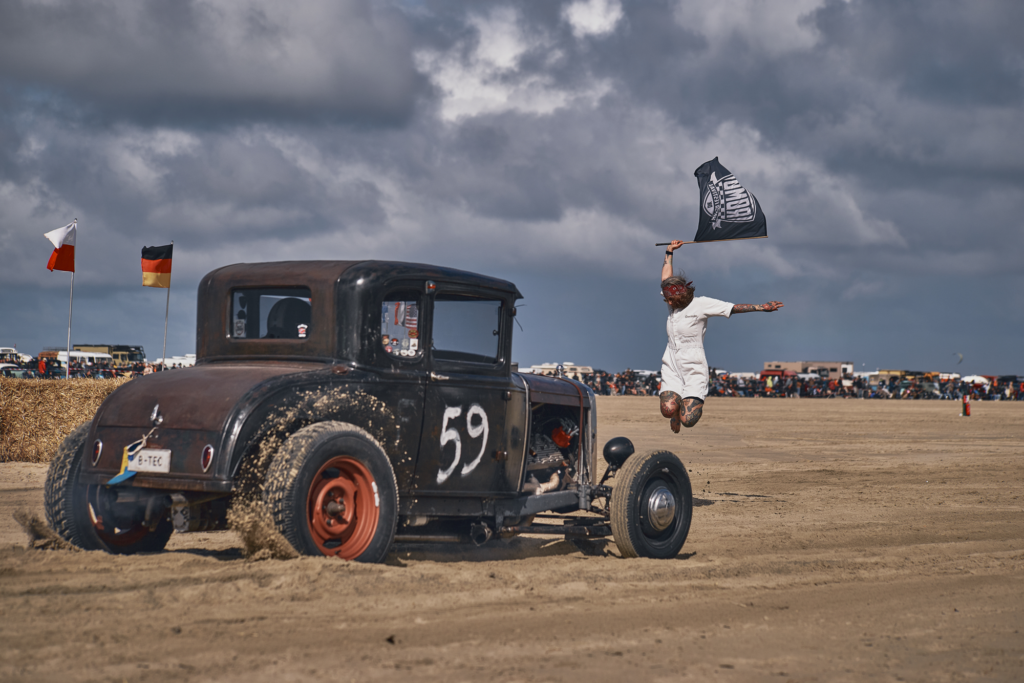
Roffe’s Ford Coupe – RMF 59 – launches away from the flag girl. [Yiğit Günel]
Leaving Hamburg behind, we were still somewhere in Germany when a petrol station gave us our first hint of what was waiting further north. Several old cars were parked outside, clearly traveling in the same direction as us. Some of the competitors had driven all the way from England. Among them was Professor Peter Stevens, the infamous British automotive designer, who drove his 1932 Ford Roadster. There was something pleasingly consistent about meeting a man who had spent his life designing some of the world’s most recognisable cars standing beside an old Ford at a petrol station. His clothes were simple. His manner quieter than his résumé. Like the machinery around us, nothing needed explaining very loudly. A little later we crossed the German border into Denmark in a brand-new car, which suddenly felt slightly wrong considering where we were heading.

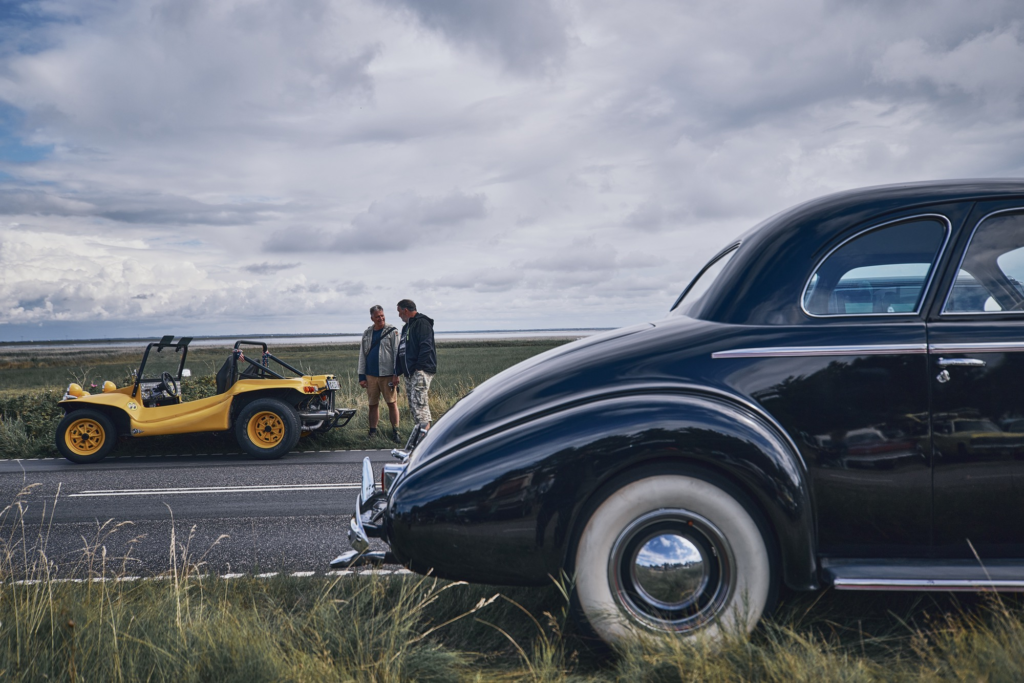
Old and new sharing the roadside on the way to Romo. [Yiğit Günel]
A few hours later we reached the causeway to Rømø. The road seemed to float across the shallow sea, with land stretching almost as far as the eye could follow. Horses moved freely in the distance. Everything was flat and strangely peaceful, like the beginning of a dream before the dream had decided what it was about. The wind was already there. On Rømø, I would soon discover, the wind was always there. It pushed the clouds gently across the sky, painting and repainting the landscape before we could properly look at it. Eventually the island appeared. I say eventually only because I was impatient.

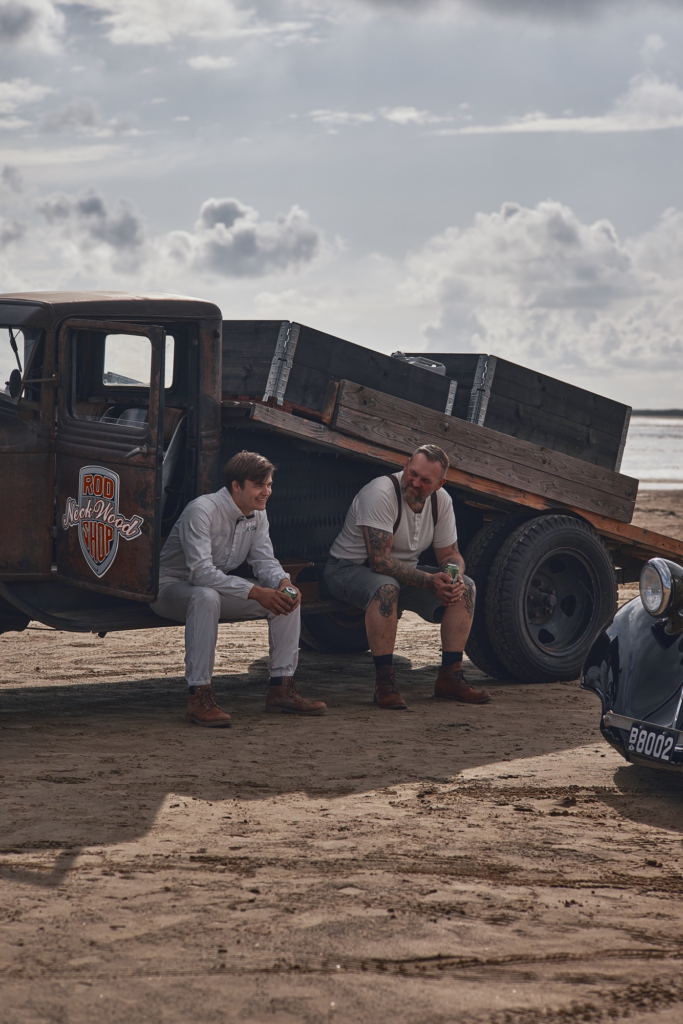
A quiet pause beside a custom truck on the beach. [Yiğit Günel]
For the last ten years, Rømø had become known for one day of controlled madness on its enormous beach. But the race itself was only part of it. That was why we had arrived early. The first old engine greeted me before anything else could. A Chevrolet somewhere nearby produced a slow, bass-heavy rumble. Then another machine answered from further away. I had the strange sensation of arriving somewhere in the future. Slowly, the present began losing its grip.

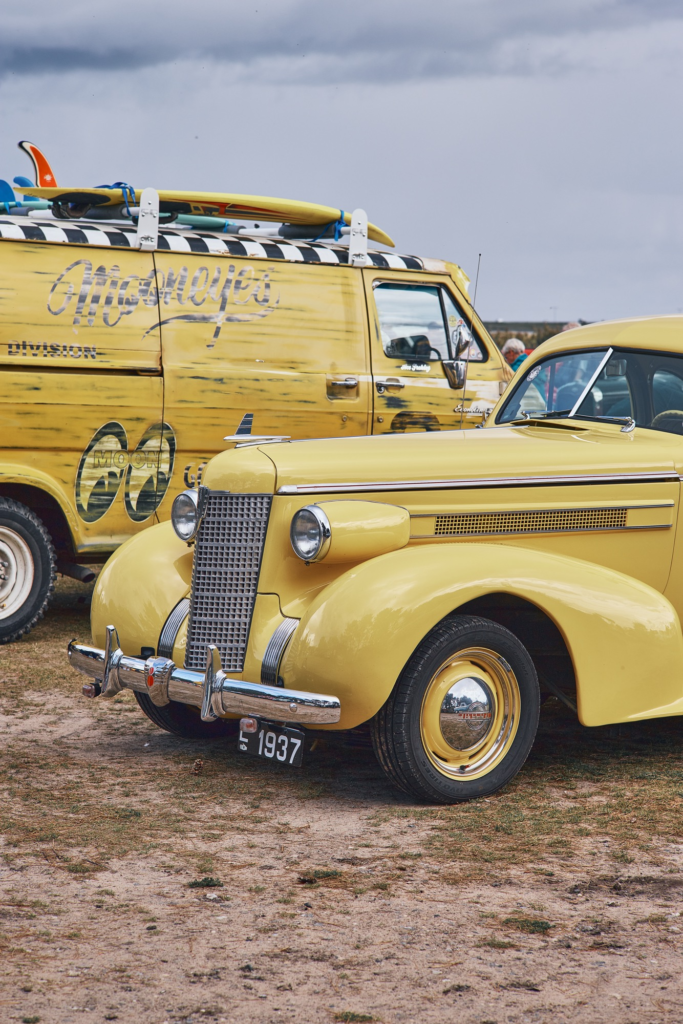
A 1937 Chevrolet and a surf van among the first-day arrivals. [Yiğit Günel]
There was leather, fabric, steel and paint made when objects were expected to stay around for a while. Cars had shapes that seemed drawn by people rather than software. Clothes had buttons for reasons. Engines had personalities and occasionally refused to cooperate with their owners.

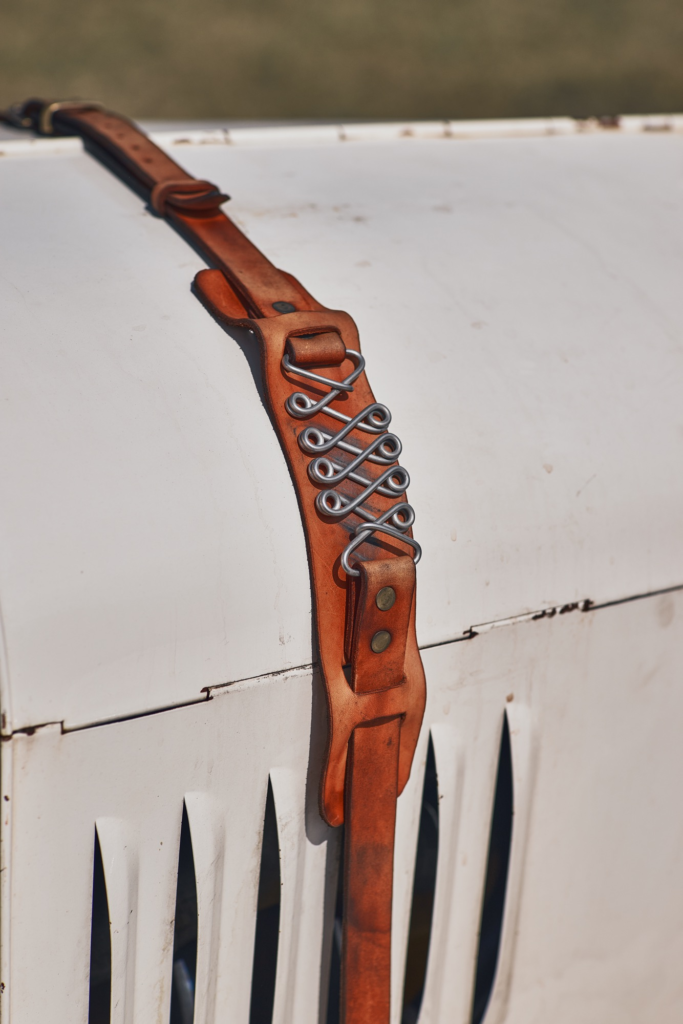
An elegant hand-made leather bonnet strap with period-correct springing. Small details carried the period as much as the machines. [Yiğit Günel]
I had never lived in this period, yet somehow I missed it. Perhaps we can miss places in time as easily as places on a map. I was lucky enough to stay at a house rented by one of the racers for his crew and friends. Before our host even arrived, the first good news travelled through the house. There was a barbecue at another racer’s summer house. We went there in a 1970 Dodge A108 van with an old Ural riding on the back. The smell of Danish sausages and meat reached us before the house did. The fire was already going. There was a short welcome from the hosts. One by one, cars arrived.

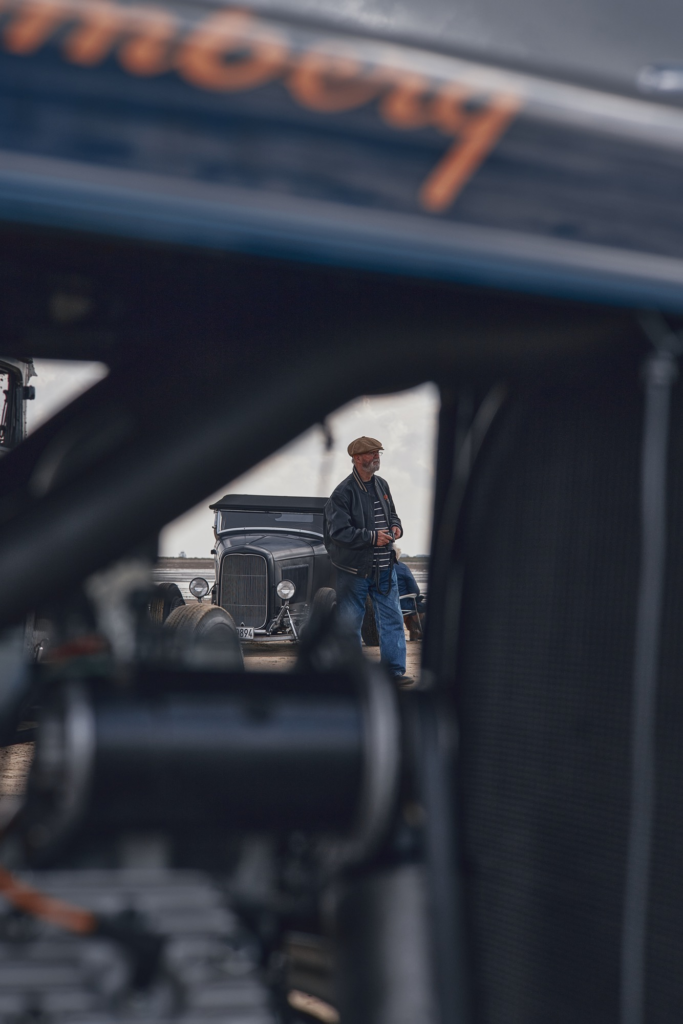
Professor Peter Stevens spotted through an engine bay. [Yiğit Günel]
Everything racing at Rømø had to belong, technically and visually, to a world no newer than 1947. The modern festival was created to honour Denmark’s original beach races on Fanø, which ran from 1919 until 1924. Rømø brought that idea back in 2016, beginning with a small group of friends and their machines. That first evening, there were perhaps a dozen machines manoeuvring around the garden and car park.

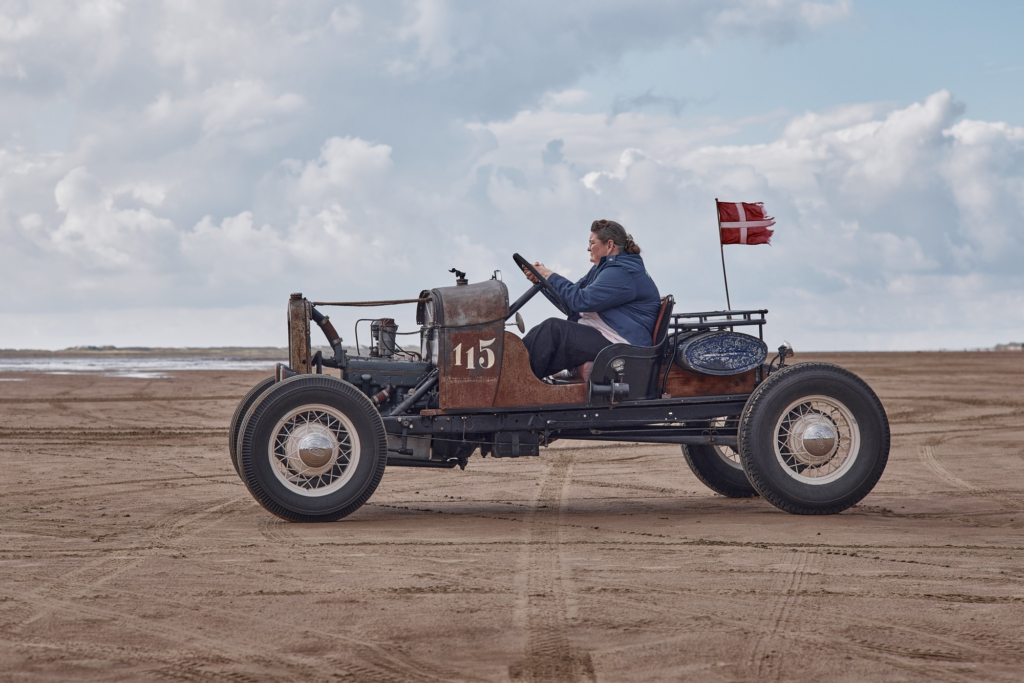
Stendrup’s 1929 Ford Model A special – RMF 115. [Yiğit Günel]
They squeezed themselves beside one another and settled down for the evening. Some were quiet. Some were impossible to ignore. After a year apart, they seemed happy to be together again, sharing oil smells, exhaust pops and the occasional mechanical complaint.

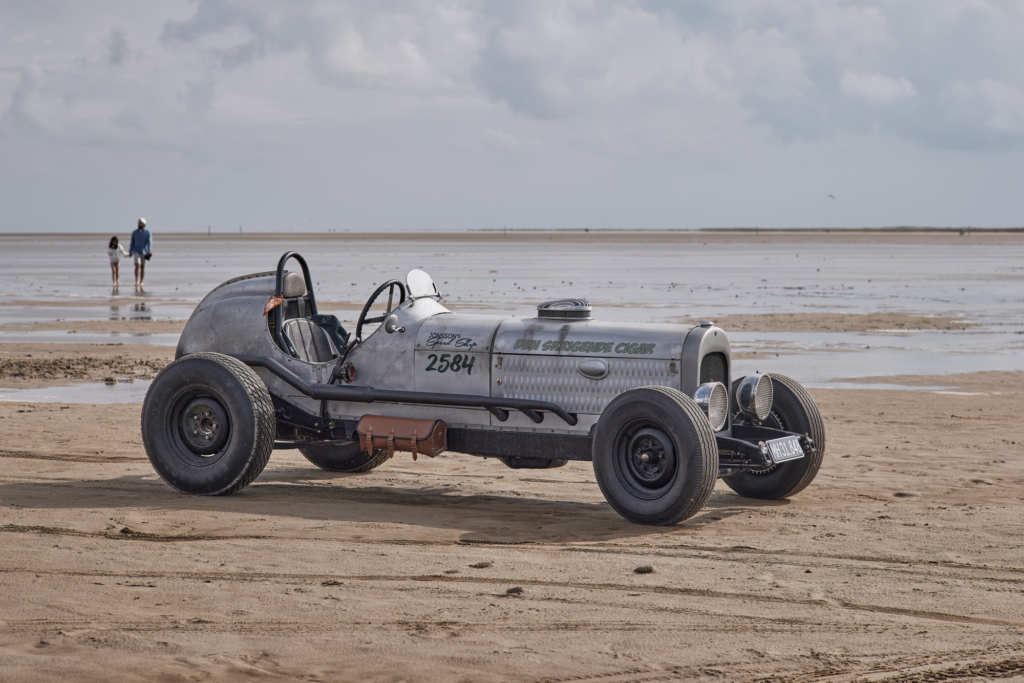
Morton Modelbanker’s 1935 Centio Special – RMF 2584. [Yiğit Günel]
One little red hot rod sat towards the back. It even had a child. A Hot Wheels version of itself was sitting on its rear deck. Red and rebellious. Parent and child. Night arrived slowly. One by one, the engines disappeared down the forest road until only the smell of the fire remained.

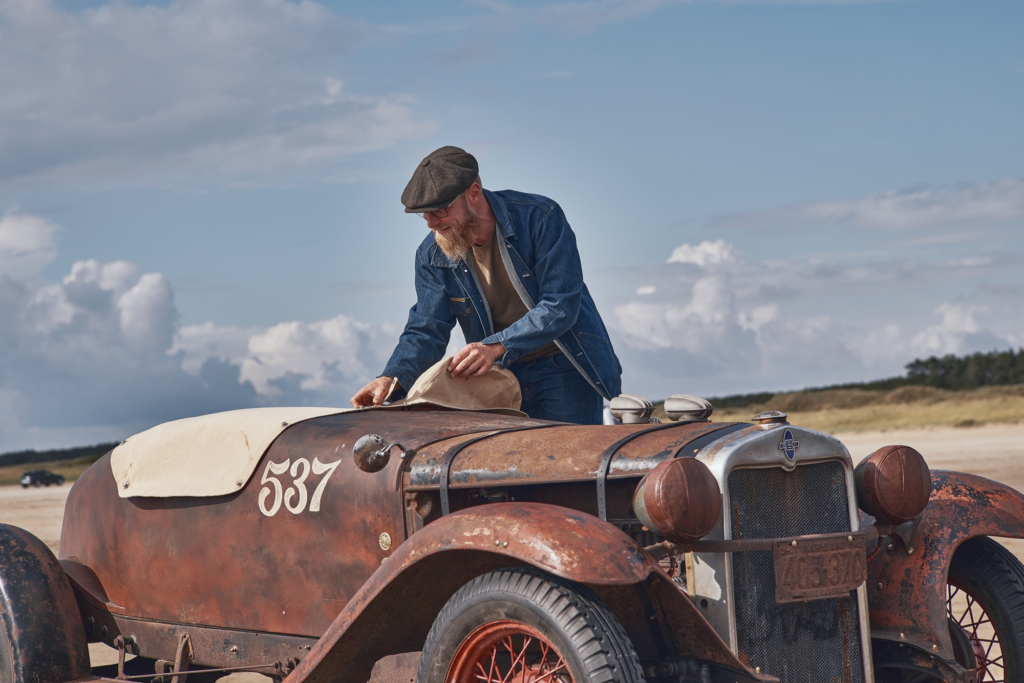
Roadsters and coupes settling onto the sand on day one of the Romo Motor Festival. [Yiğit Günel]Jess Lovsegl’s 1929 Chevrolet Boattail – RMF 537. [Yiğit Günel]

The Gathering

Jess Løvsegl’s 1929 Chevrolet Boattail, RMF#537. [Yiğit Günel]
Two mornings before the race, waking early was no longer a choice. Cars and motorcycles had begun arriving like migrating birds, except migrating birds rarely travelled with spare gearboxes. People arrived with them already dressed for another period. That attention to clothing brought back a memory of my grandfather. On Sunday mornings he would wake at seven, shave perfectly and dress for breakfast. Tie, suspenders, pressed trousers, everything sharp enough to cut paper. As a child, I thought he was an astronaut. The same care was slowly surrounding us on Rømø.

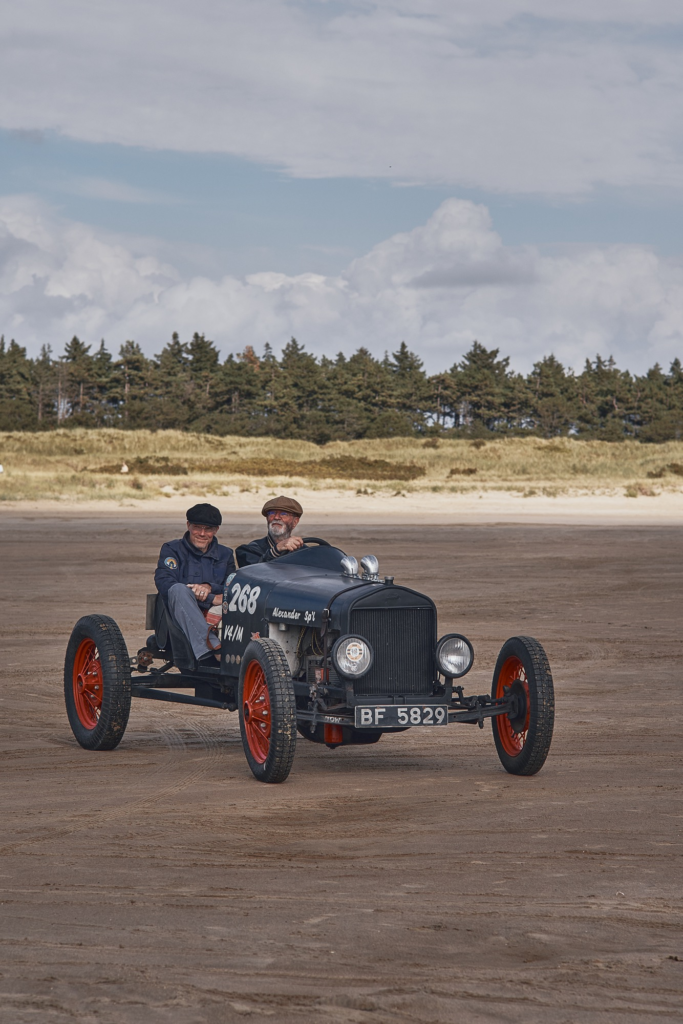
Stefan Marjoram and Professor Peter Stevens in his 1932 Ford Roadster/ Alexander Special, RMF#268. [Yiğit Günel]
Our host finally arrived carrying presents from America. Not the sort normally found in airport duty-free bags. Starters, chains, old number plates, rare wheel covers, large racing sprockets and various pieces of metal whose importance I was expected to understand immediately.

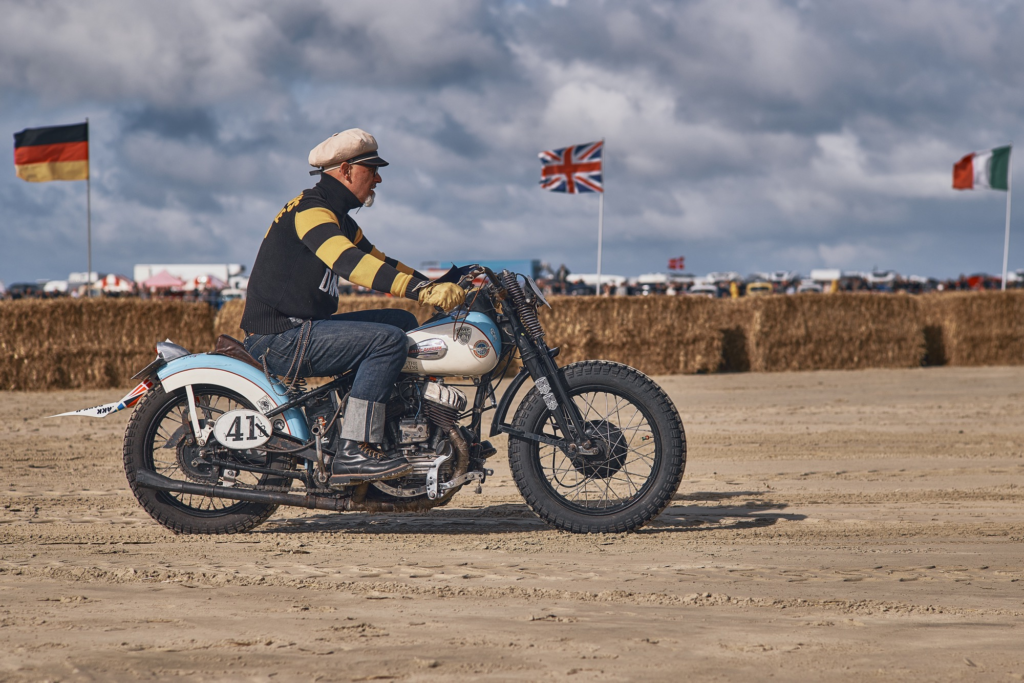
Martin Tump on a 1942 Harley-Davidson WLC, RMF #41. [Yiğit Günel]
A 1942 Harley-Davidson WLA was waiting too. The WLA belonged very much to its year. After America entered the Second World War, Harley-Davidson’s attention turned heavily towards military motorcycles, and tens of thousands of WL-based machines were produced for service. Our particular one, however, had escaped military responsibility and was about to face another enemy: its owner, who enjoyed testing how far an old motorcycle could be persuaded to go. There was talk of replacing parts during the weekend. There was also a reasonable chance the owner would break something first. Both possibilities seemed equally accepted.

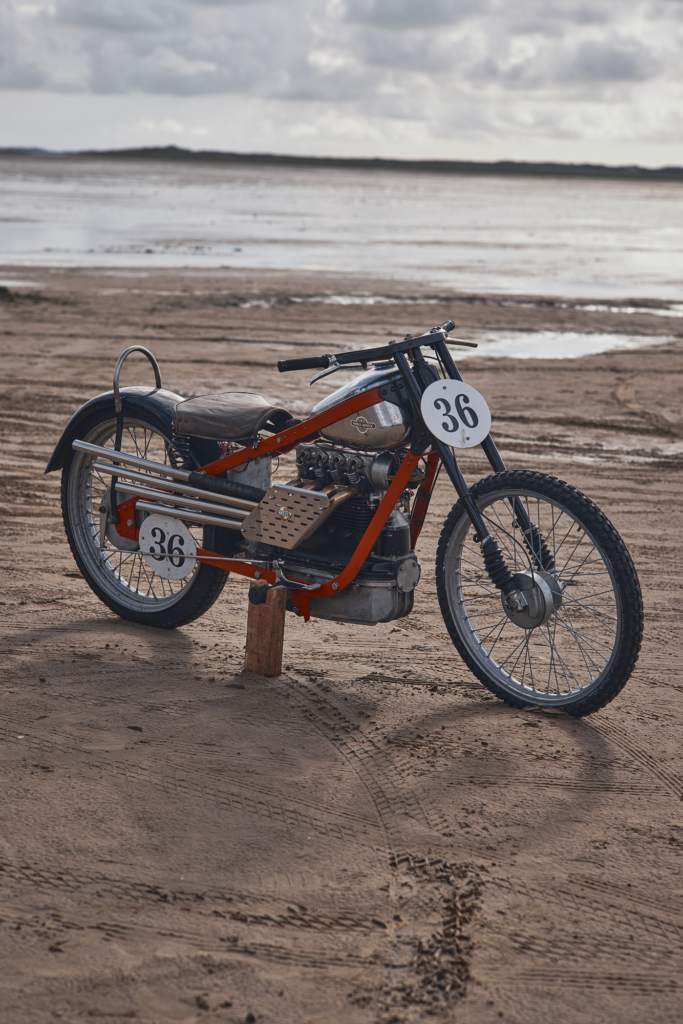
Freya Heinrich’s 1936 Nimbus Model C Sport, RMF#36. [Yiğit Günel]
Later that day came the first official gathering of the cars and motorcycles entered for the race and show. Chrome met sunlight. Curious people moved between the machines. Bonnets opened. Engines appeared. It reminded me slightly of a car boot sale, except nobody seemed interested in selling anything and the boots were mostly open to reveal beautifully kept mechanical organs. I naturally drifted towards the motorcycles. A 1925 Brough Superior SS80 was among them. The motorcycle already had a curious recent life. Mats Olofsson had previously taken a 1925 SS80 to Sweden’s Custom Bike Show in Norrtälje and won the Classics category with it. Now a machine worthy of standing polished in front of judges had come to Denmark to have sand thrown at it. I liked that. Perhaps racing was a healthier retirement than becoming furniture.

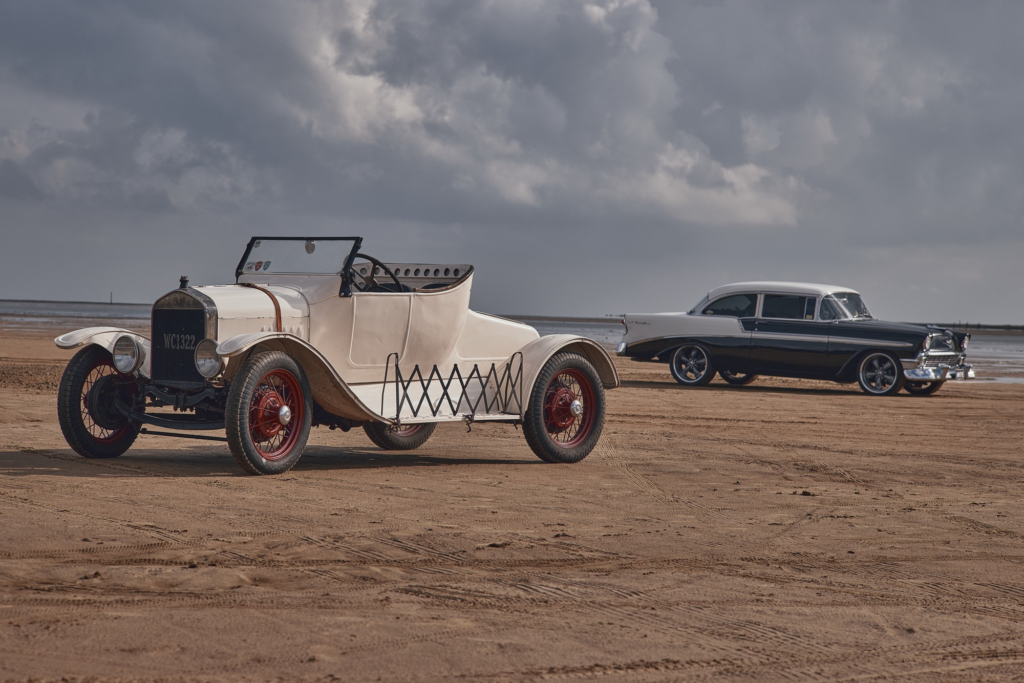
Hotrodfil’s 1924 Ford Model T and restomod 1955 Chevy Bel Air…and the air was beautiful. [Yiğit Günel]
Nearby was a 1938 BSA Gold Star. The name sounds almost too perfect now, as though somebody in an advertising department invented it. But the Gold Star had to be earned first. In 1937, Wal Handley came out of motorcycle-racing retirement, rode a specially prepared BSA Empire Star around Brooklands at more than 100 mph and received one of the circuit’s Gold Star awards. BSA borrowed the honour for the motorcycle that followed. Some names are designed.

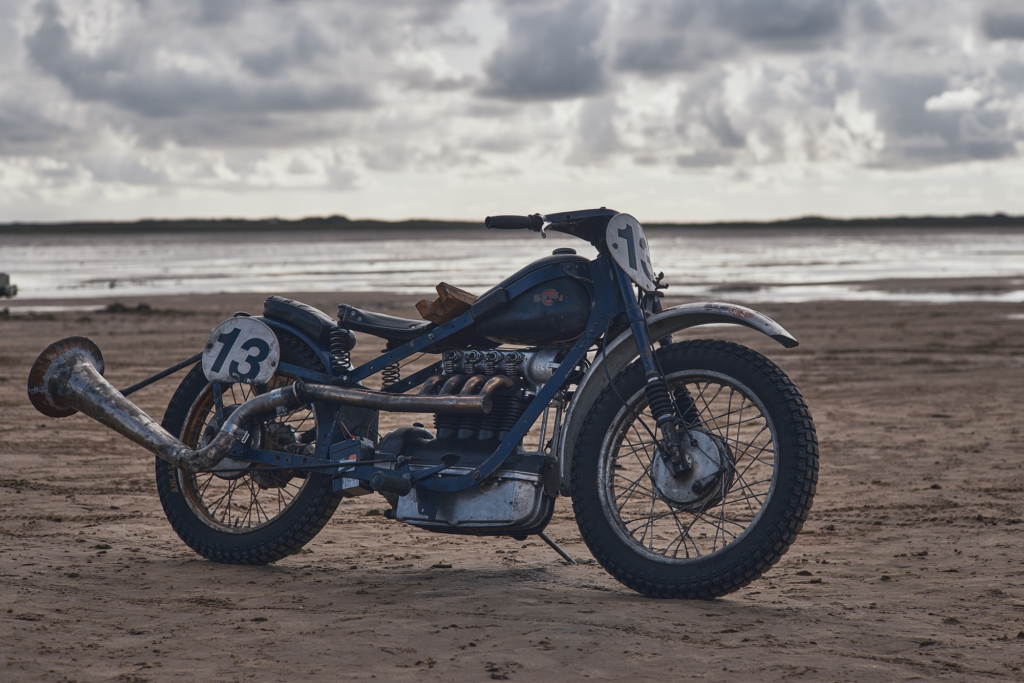
Carsten Grønquist Knudsen’s 1938 Nimbus Model C Sport, RMF#13, with its outrageous ‘megaphone’. [Yiğit Günel]
Others have to be ridden into existence. Walking between all these machines, I started wondering what exactly we were looking for. Was it nostalgia? Or something else? Perhaps the word ‘old’ was wrong. Timeless felt closer. Maybe we were tired of things designed to become obsolete. Tired of plastic that could not be repaired, products waiting to be replaced, marketing telling us what our next desire should be, and lives moving faster while somehow getting nowhere. These machines had survived long enough to escape fashion. Their scratches belonged to somebody. Their repairs had memories. They were not perfect because they had already lived.

Making last adjustments before the technical inspection begins. [Yiğit Günel]
That evening everyone returned to the beach. Cars were parked across the sand as the sun began dropping towards the sea. Some people tested their machines. Others opened beers. Couples sat in old cars and watched the horizon. Dogs seemed convinced that the entire festival had been organised for them. Three Nimbus motorcycles appeared. Danish machines on Danish sand. Their four-cylinder engines and shaft drives looked wonderfully sensible until you noticed what their owners had done to them. One had a clarinet incorporated into the intake and found employment for a trumpet. There is engineering, and then there is jazz. Hot rods sat quietly nearby, pretending they had not come to race. Chrome reflected the last light. Rust did the same job in a different way.

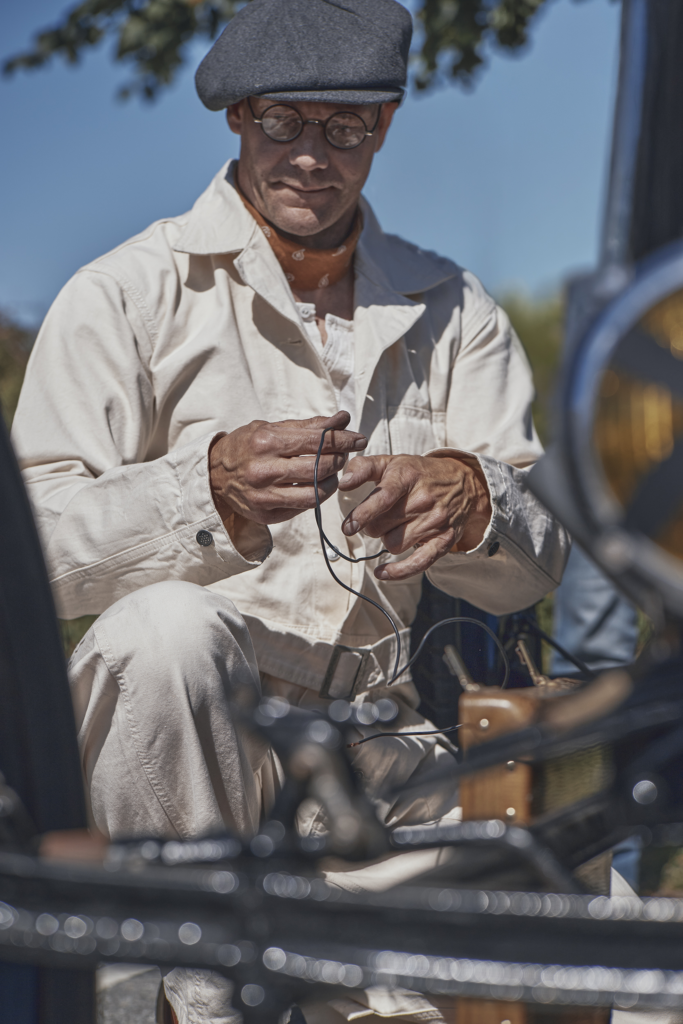
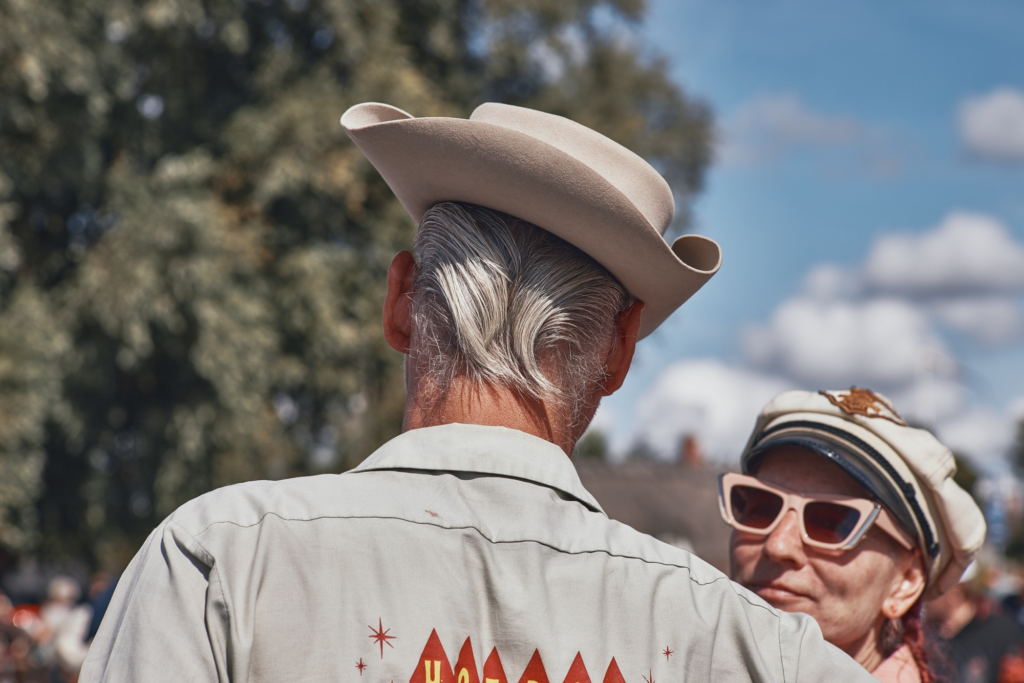
Period dress – or a contemporary take on vintage style – was as much a part of inspection day as the cars and motorcycles. [Yiğit Günel]

Cleared To Race

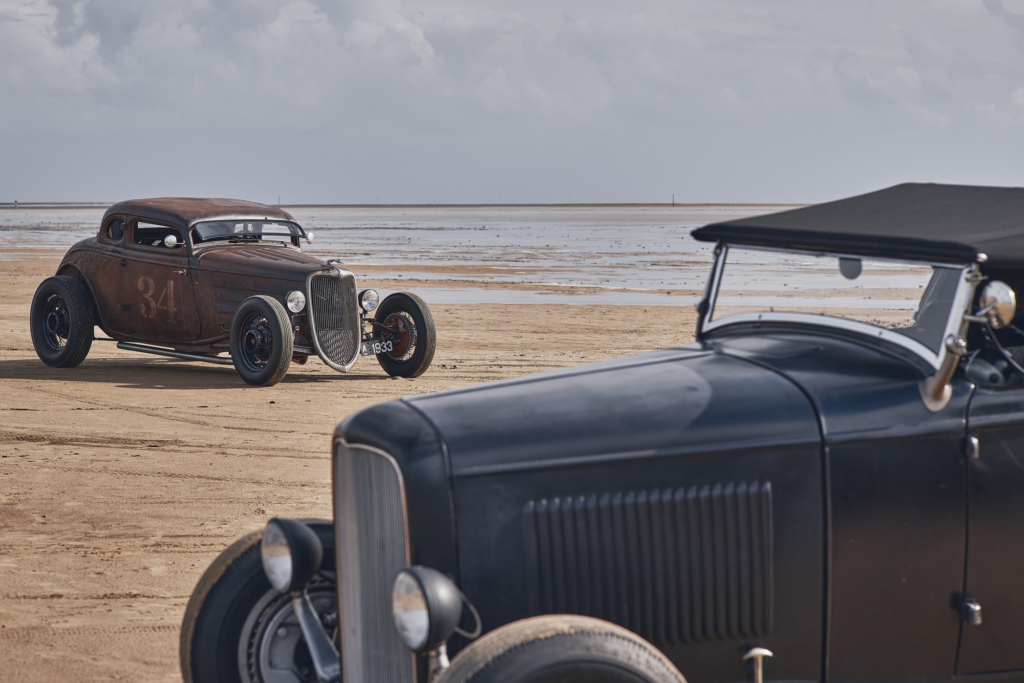
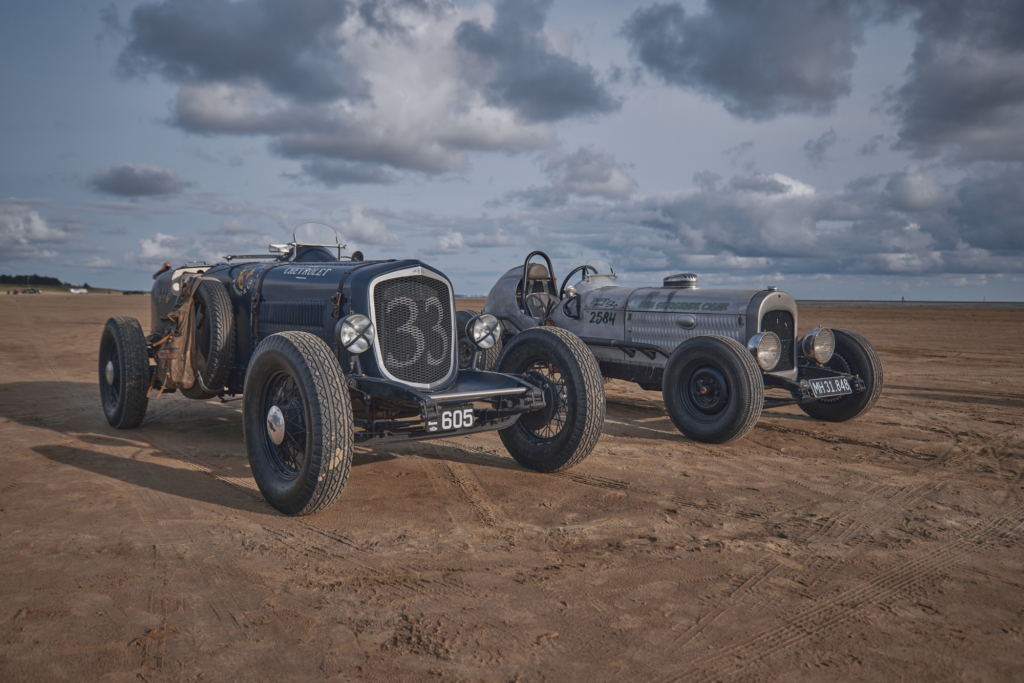
Left: Henrik Fasmer and Carl M. Fasmer’s 1933 Chevrolet Special, RMF #33. Right: Morten Mobelbanker’s 1935 Centio Special, RMF#2584. [Yiğit Günel]
The following afternoon was inspection. Rømø is romantic from a distance, but underneath the romance sits an enormous amount of organisation. The technical inspection took place in a designated area. Drivers, riders, mechanics and teams followed the period dress code. Officials moved from machine to machine, checking the things that mattered. Brakes, controls, safety equipment, leaks and all the other details that separate an entertaining historical fantasy from a very modern accident.

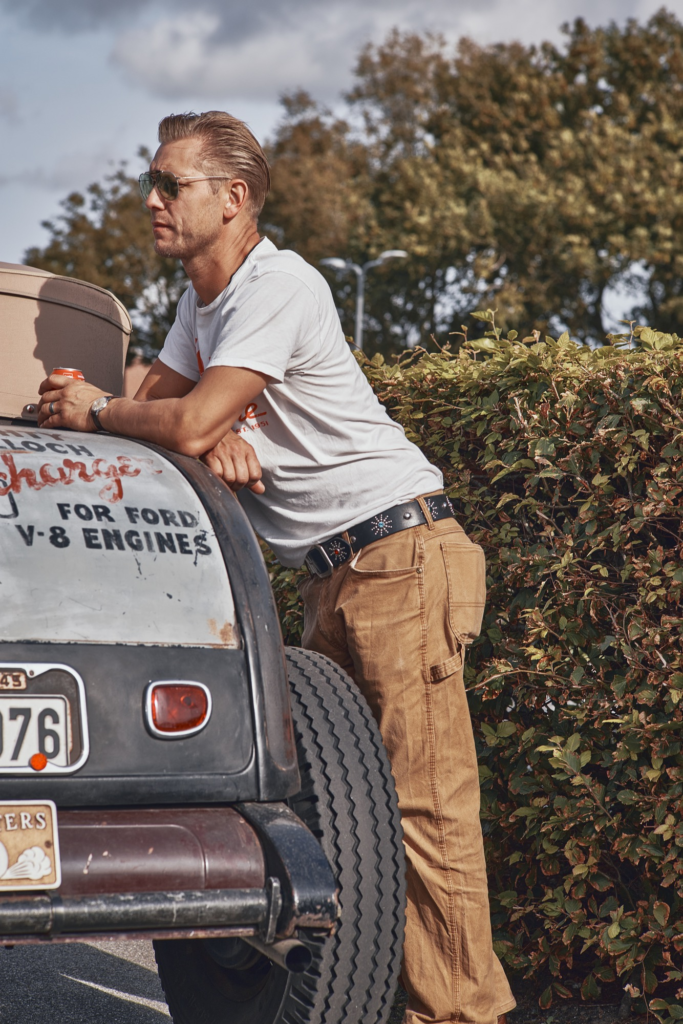
A quiet pause: Flathead Ron beside his 1932 Ford Roadster during the checks. [Yiğit Günel]
The rules existed because the history behind this place had already demonstrated what happened when speed outran safety. The story began not on Rømø, but on the neighbouring island of Fanø. In 1919, the first beach races were organised there. Some of Europe’s fastest drivers and riders followed. Fanø became a place where people came not simply to race each other, but to chase records. Sir Malcolm Campbell was among them. In 1923, he exceeded 240 km/h on the beach. A year later, while attempting another record, his car lost a tyre. It struck and killed a 15-year-old spectator. The beach races ended. For more than ninety years, that part of Danish racing history remained silent.

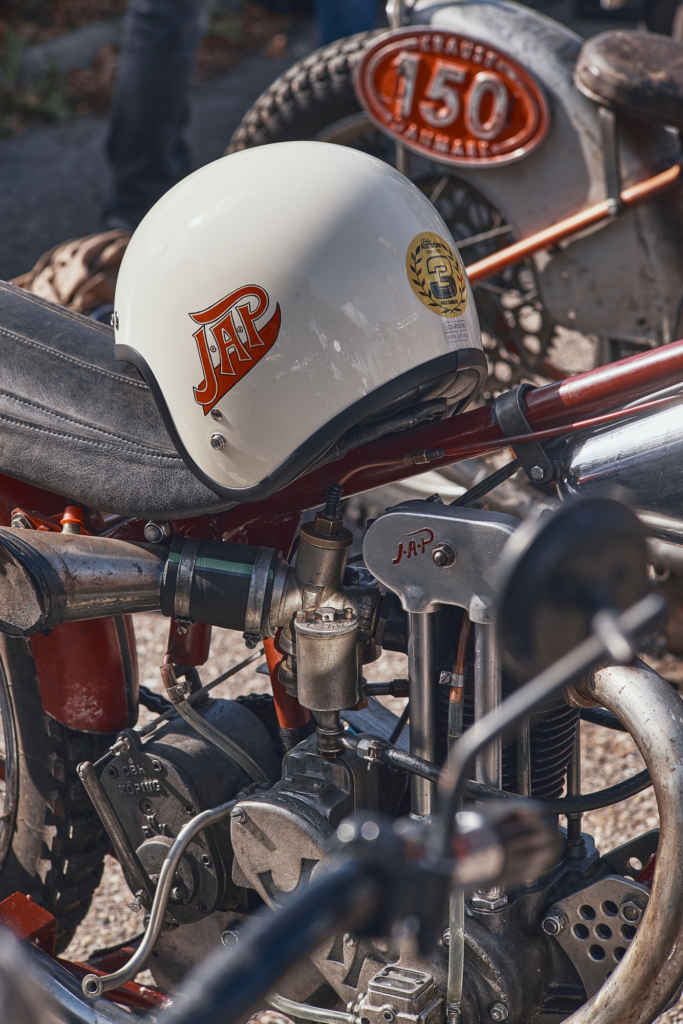
J.A.P. speedway engine detail during inspection: ready for cinders and sand. [Yiğit Günel]
Then Rømø brought the idea back, not to recreate the danger, but to remember the people, machines and peculiar courage of the period. One of the cars waiting for its turn at Rømø made that circle feel even stranger. A 1929 Auburn Speedster. Early Auburn Speedsters were raced on both sides of the Atlantic, and Malcolm Campbell himself drove one as a road car. Nearly a century after Campbell’s Blue Bird helped close the first era of Danish beach racing, an Auburn Speedster had somehow found its way back onto Danish sand. Not the same car. Not the same beach. History rarely repeats itself that neatly. It usually changes its clothes first.

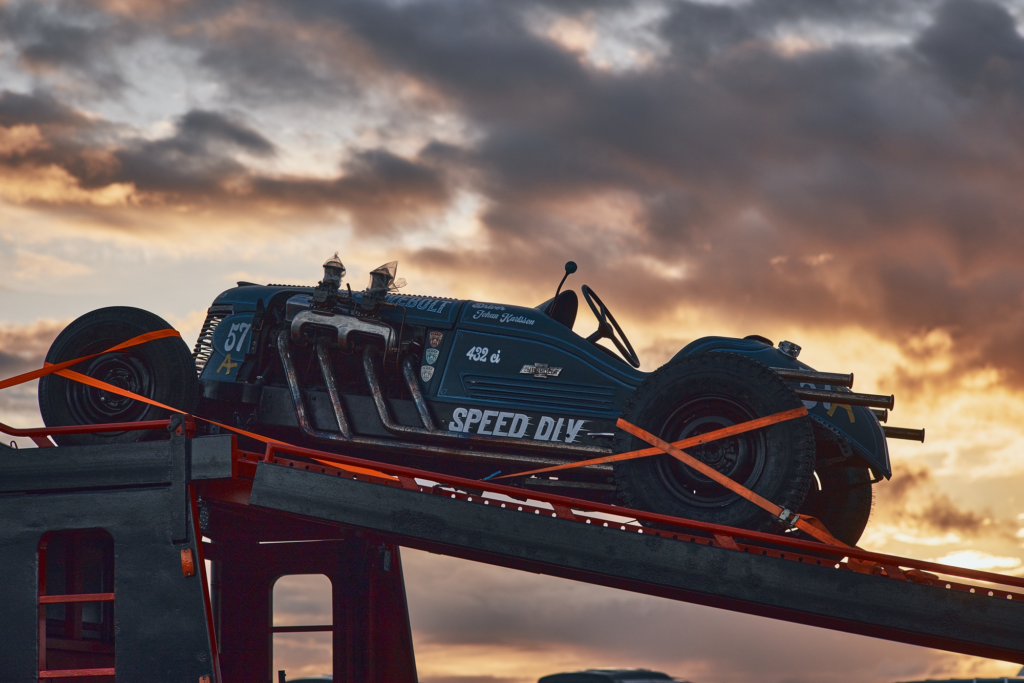
Johan and Peter’s 1938 Chevrolet Roadster, RMF #57A, arrives on the beach at first light. [Yiğit Günel]
Elsewhere was a 1936 Bentley Open Tourer. The Derby-era Bentleys had become known as the Silent Sports Cars under Rolls-Royce ownership, sophisticated machines created for fast travel without unnecessary drama. Apparently nobody told Eddie Hall. He took a Derby Bentley racing throughout the 1930s. At the 1934 Ulster TT he recorded the fastest race time, only losing the overall result because of the handicap system, and returned in 1935 and 1936. Calling something a Silent Sports Car was evidently not enough to stop people making noise with it. That seemed appropriate here. The inspection continued around us.

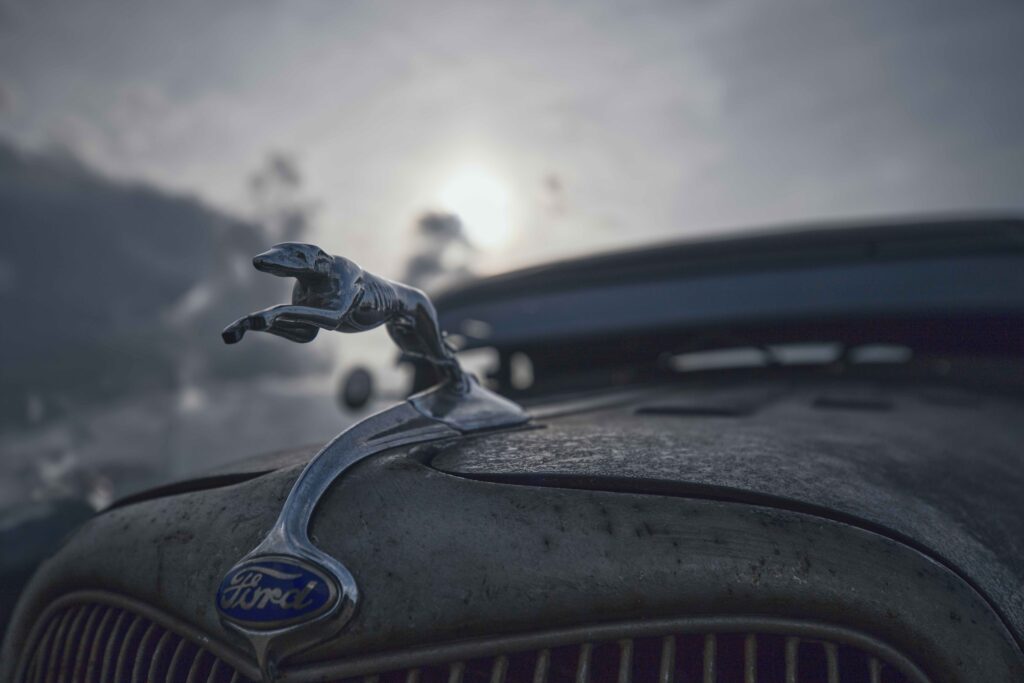
A Ford greyhound hood ornament catching the last light after inspection. [Yiğit Günel]
Music played. Barbecues smoked. People unfolded camping chairs beside supermarket car parks and watched extraordinary cars use completely ordinary roads. Motorcycles were pushed towards officials. Last adjustments were made. Somebody always needed one more spanner.

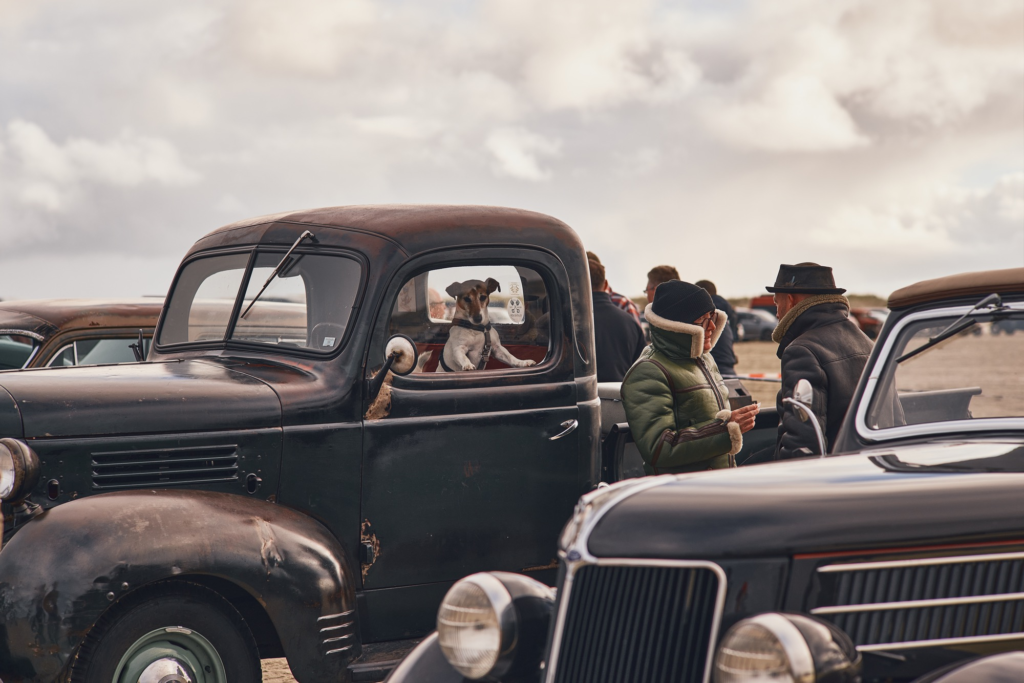
A small co-driver watches the paddock wake up from an old pickup. [Yiğit Günel]
This year marked the festival’s tenth anniversary, with 124 racers arriving from around the world. A small temporary shop opened near the entrance. A queue appeared almost immediately. Everyone knew that limited meant limited. By sunset, people were tired. One final drink on the beach. Tomorrow started at 5:30.

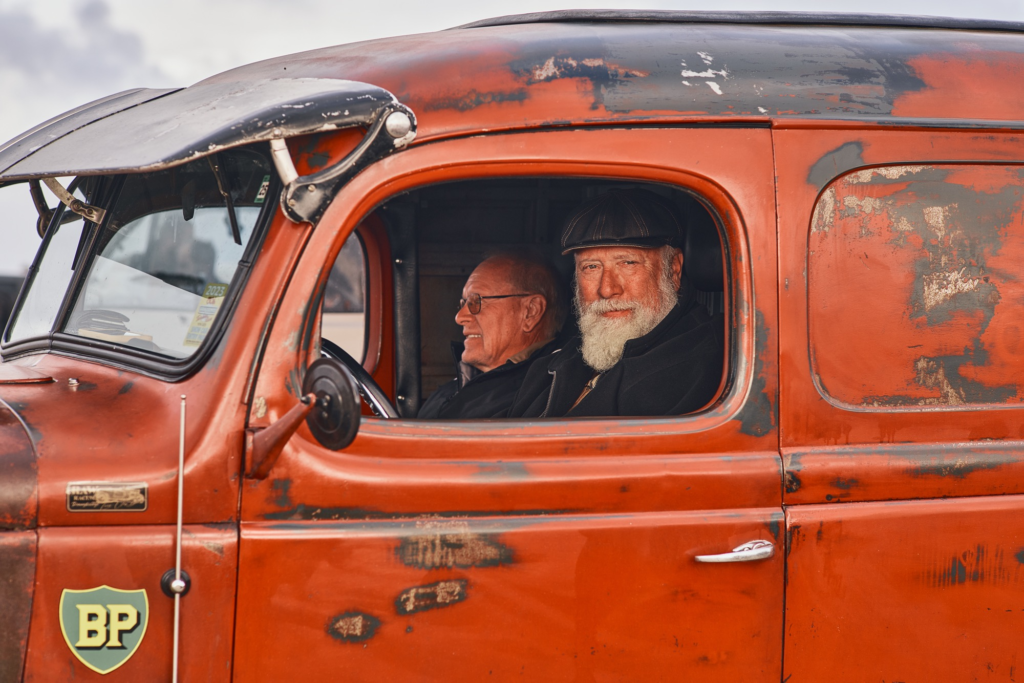
Two early arrivals settle into the beach before the crowds. [Yiğit Günel]

When the Beach Wakes
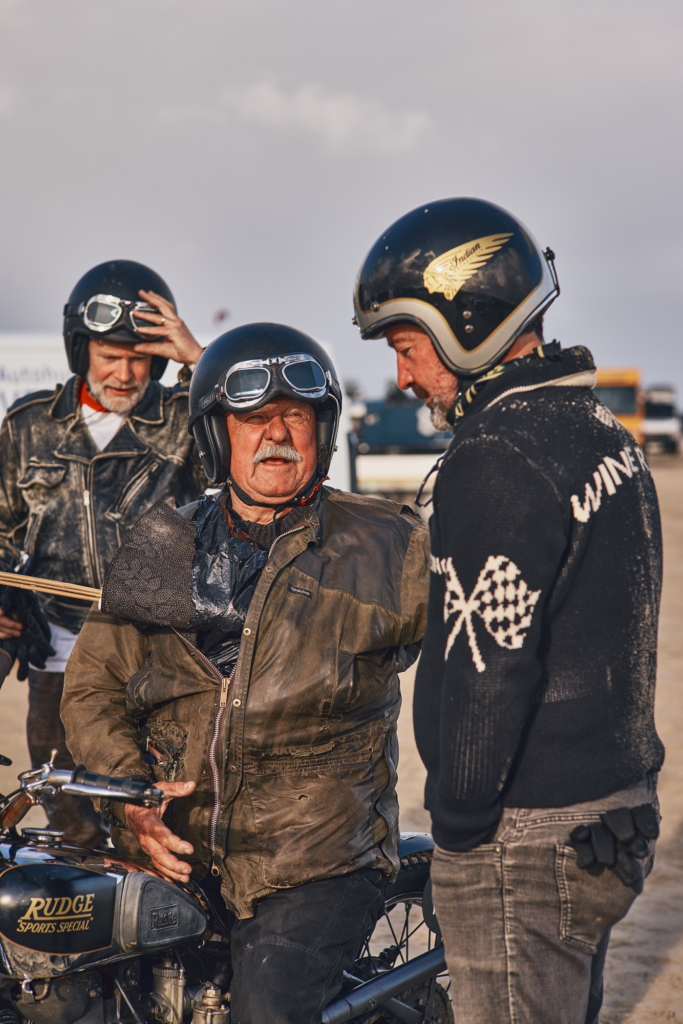
Riders gather around a Rudge Sports Special before the first runs. [Yiğit Günel]
Before the sun had properly opened the gates of light, we were awake. At 6:30, we were already on Lakolk Beach. Camper vans and trailers had been positioned there since the previous day. I arrived with my dear friend Ivo Ivanov, who had spent the previous six months performing a very effective form of brainwashing. ‘You have to see Rømø.’ ‘You have to go.’ ‘You’ll regret it if you don’t.’ He was right, which was slightly annoying. Ivo has photographed beach racing around the world and seemed to know everybody; in better words, everybody seemed to know him. “Ivo! All the way to the left, towards the competitors’ area,” said the Marshall and shouted, “All other cars to the right!” The public had not arrived yet. The racers had.

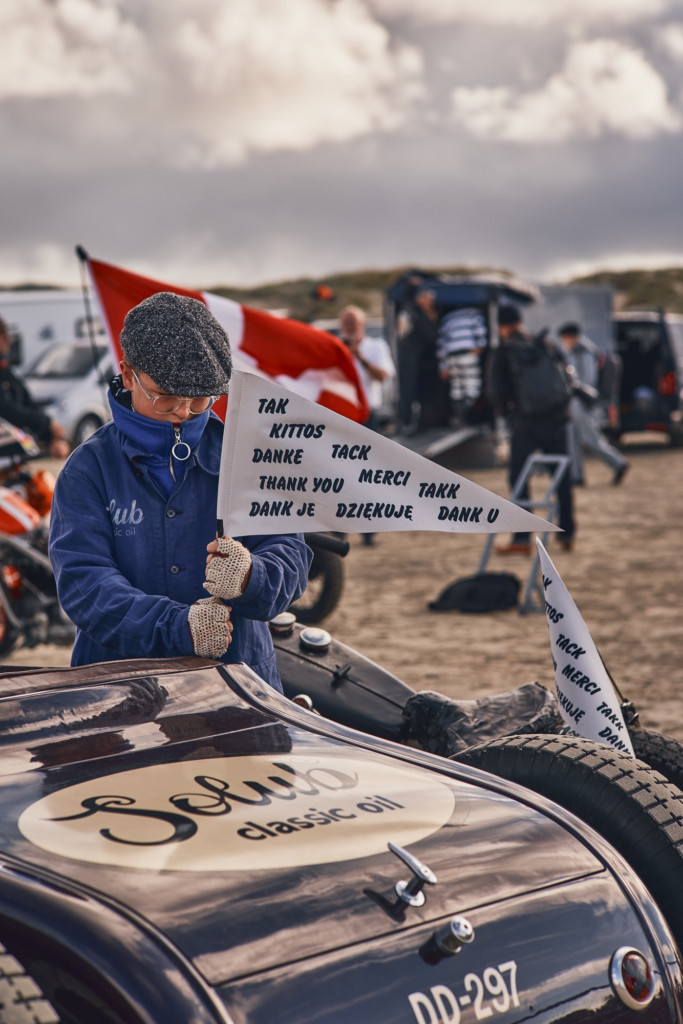
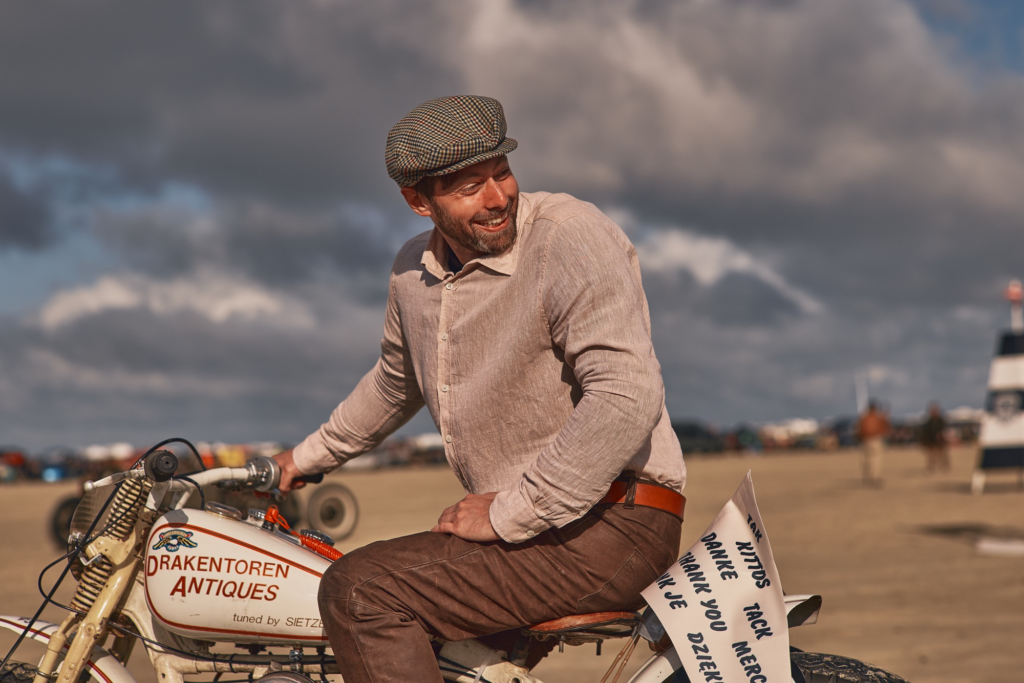
A multilingual thank-you flag appears in the pits before the racing begins. [Yiğit Günel]
A long line formed along the pits. Cars came off trailers. Others simply drove onto the sand. Wind attacked everything. Sand entered places that had probably never previously considered sand as a possibility. Without glasses, opening your eyes became an unnecessary luxury. And then, standing there before the crowds arrived, I noticed something simple. We were all here. As one enormous body of people obsessed with machines. For a few hours, nobody needed to explain why. No judgement. No hesitation. No loneliness.

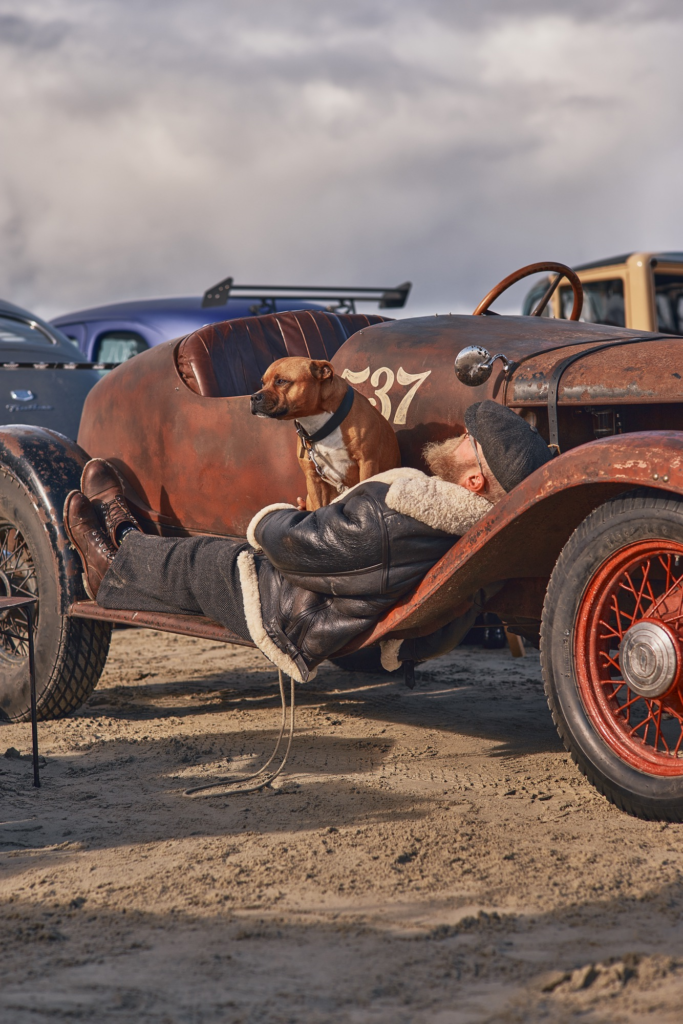
Jess Lovsegls 1929 Chevrolet Boattail RMF 537 doubles as a place to rest with Rusty. [Yiğit Günel]
The teams slowly unloaded. Tents rose from the sand. Everyone inside the racing area wore period clothing, so as the morning light appeared, the beach began looking less like an event and more like an enormous film set that had somehow forgotten the cameras. Except this was not a film. Everything worked.

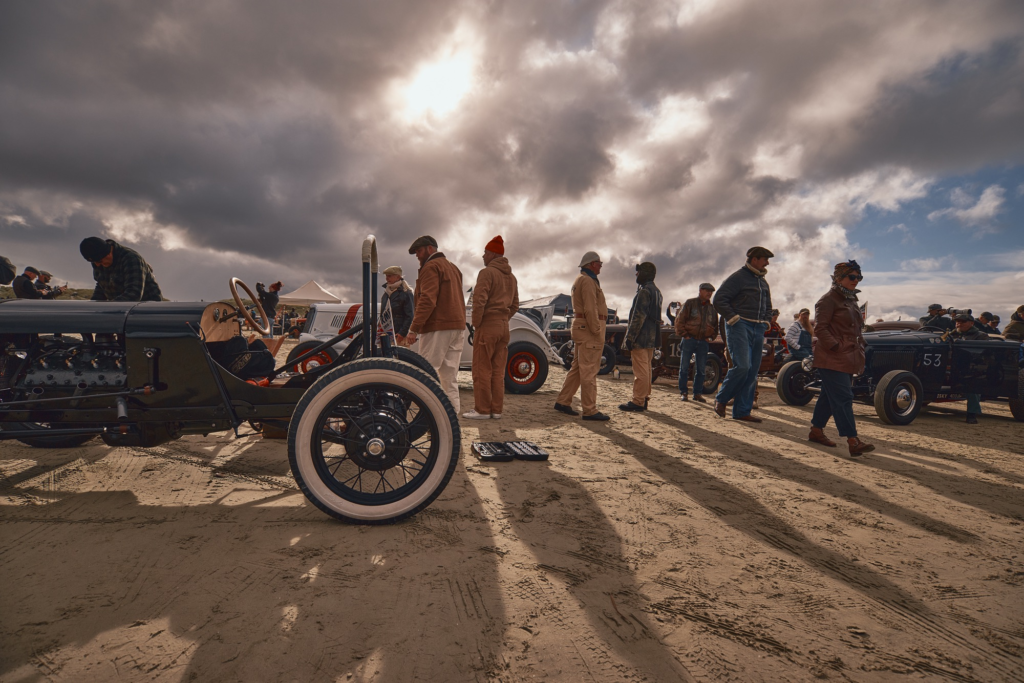
The pits before the start part workshop and part meeting place. [Yiğit Günel]
That was the strange part. These were not props. The engines were cold only because they had not started yet. Warm sunlight moved across sand, rubber, steel, aluminium, chrome, canvas and leather. Exactly in that order.

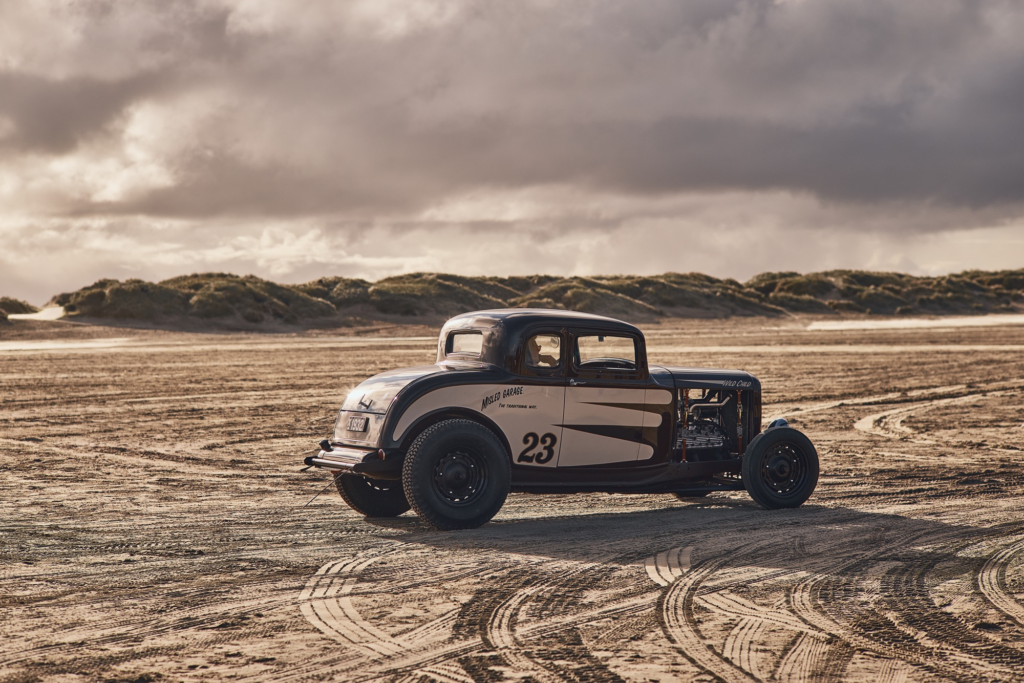
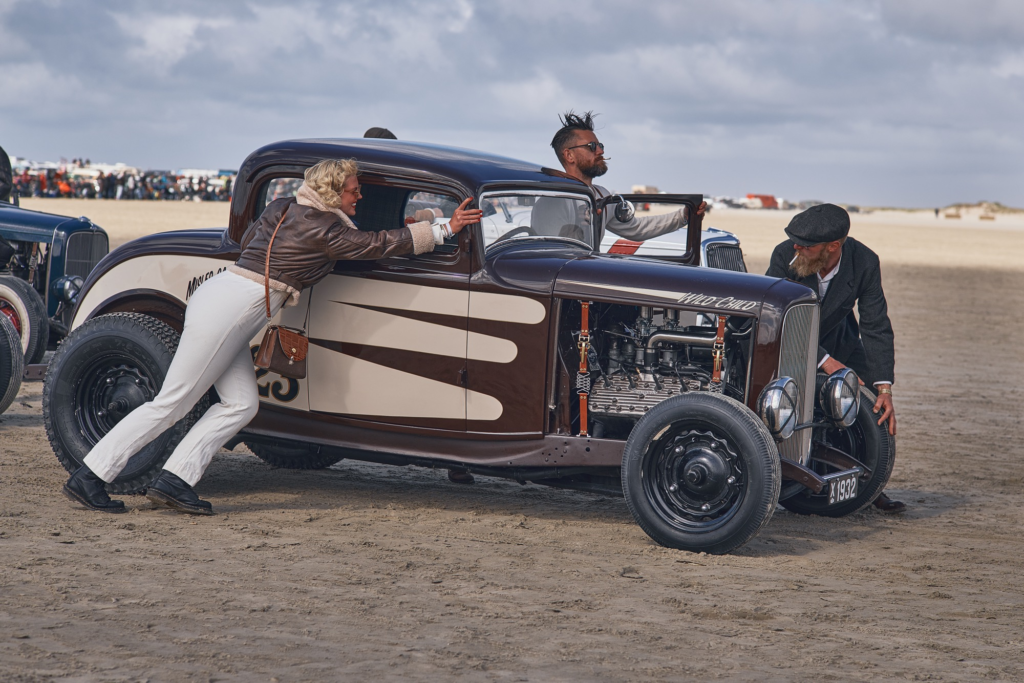
N.Sthaalros’s 1932 Ford 5-window Coupe ‘Wild Child’, RMF #23, on the sand before the race. [Yiğit Günel]
The pits sat immediately before the start line. ‘That is where they should be,’ Steffen, one of the mechanics in our group, told me. ‘Most failures happen at the start.’ A reassuring thought. The drivers’ briefing took place near the line. One final explanation. One final check.

A rider waits on his machine as the course begins to come alive. [Yiğit Günel]
Then the flag girls moved into position. The competitors’ parade began. And suddenly the beach was loud. Petrol, oil and salt air mixed. Engines that had spent the previous days sitting politely in gardens and parking spaces stopped pretending to be civilised.

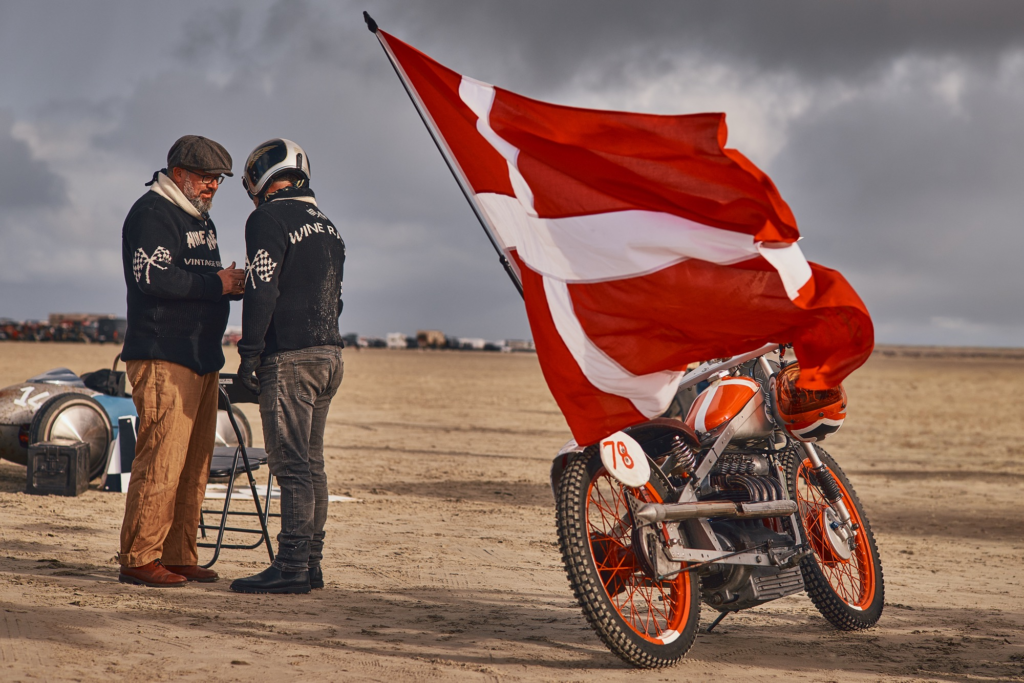
The Danish flag fills the frame beside a Nimbus. [Yiğit Günel]
The flag dropped. They became animals. Auburns, Fords, Bentleys, specials and motorcycles leapt forward into the sand. Elegant machines I had watched standing quietly the previous afternoon became a herd released through an open gate. There was a Hotchkiss 413 Special among them. Hotchkiss has almost disappeared from everyday memory, yet the name once belonged comfortably to serious European rallying. In the 1934 Monte Carlo Rally, one Hotchkiss crew even began its journey from Stavanger in Norway, while another Hotchkiss won the event outright. Long before modern rally stages, simply reaching Monte Carlo could mean crossing half a continent first. Seeing one racing on Rømø felt less like discovering an old car and more like finding an old passport.

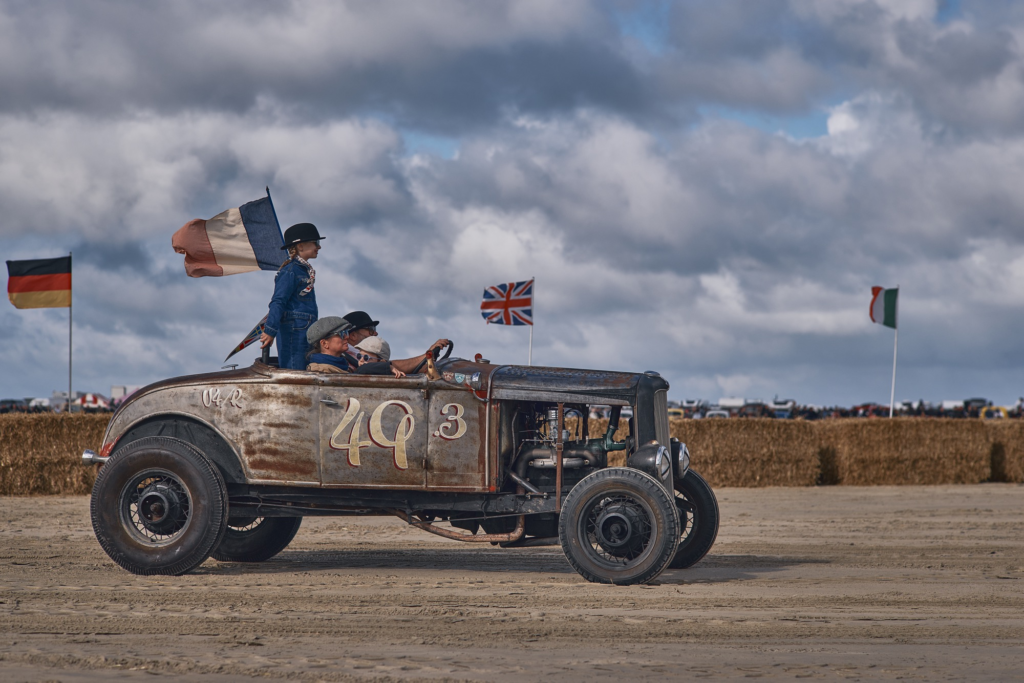
Boubos 1931 Ford Model A Roadster RMF 49.3 joins the parade. [Yiğit Günel]
A Lagonda waited nearby. The exact model mattered less to me than the strange thread connecting the name to this coastline. Malcolm Campbell was also a Lagonda owner in the 1930s, after his Fanø years. The M45 in particular became one of the great sporting Lagondas, and a related competition car won Le Mans in 1935. The motorcycles carried their own ghosts.

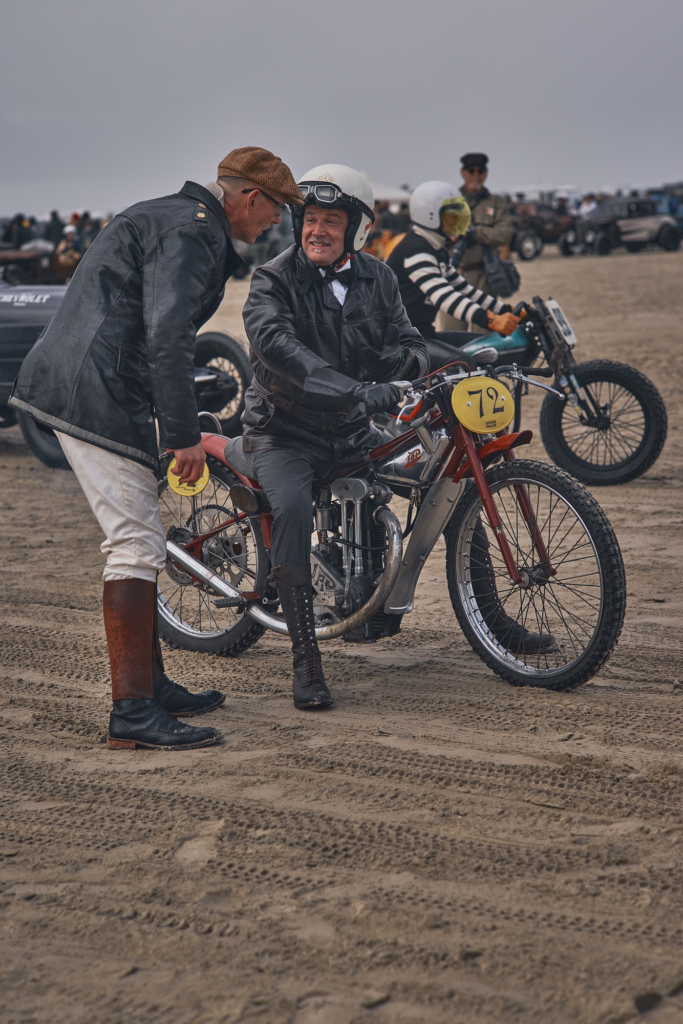
Magnus Jönsson’s 1946 JAP Longtrack, RMF #72. [Yiğit Günel]
The Suecia 600 SS looked obscure even among obscure machines. Suecia was Swedish, and during the 1930s the factory worked in the world of Scandinavian speedway and ice racing. Torsten Sjöberg became one of the central figures in the development of Swedish ice racing, experimenting with long spikes and a riding style that allowed motorcycles to lean dramatically into frozen corners. Somewhere in that history were motorcycles attacking frozen Scandinavian lakes.

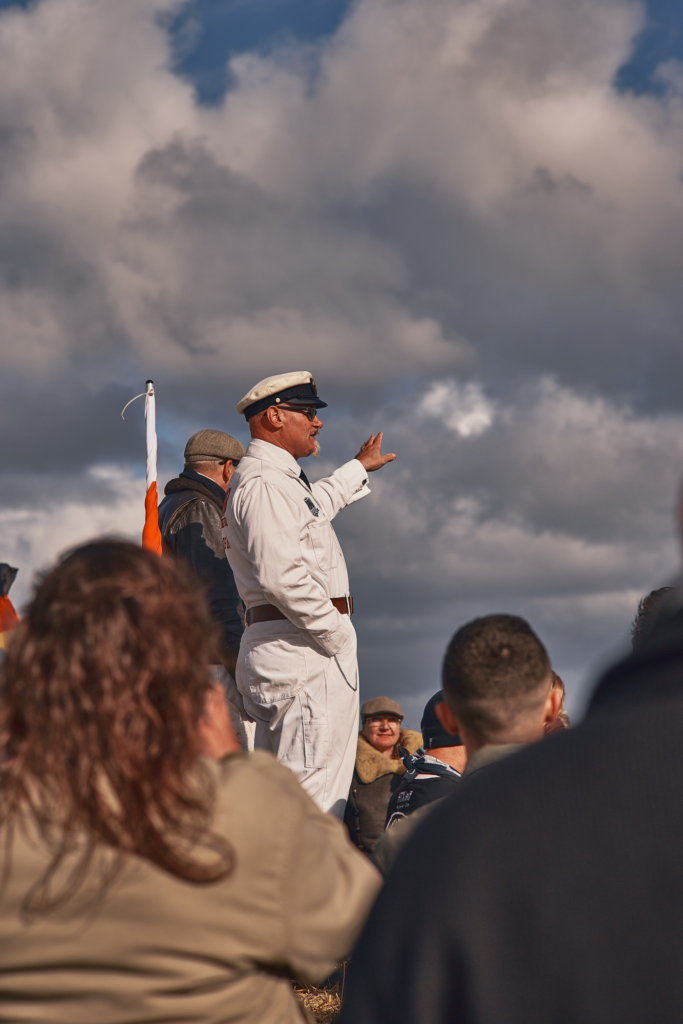
The final drivers’ briefing beside the start line. [Yiğit Günel]
Here the ice had become sand. The basic idea remained unchanged. Find an inappropriate surface and ride across it as quickly as possible.

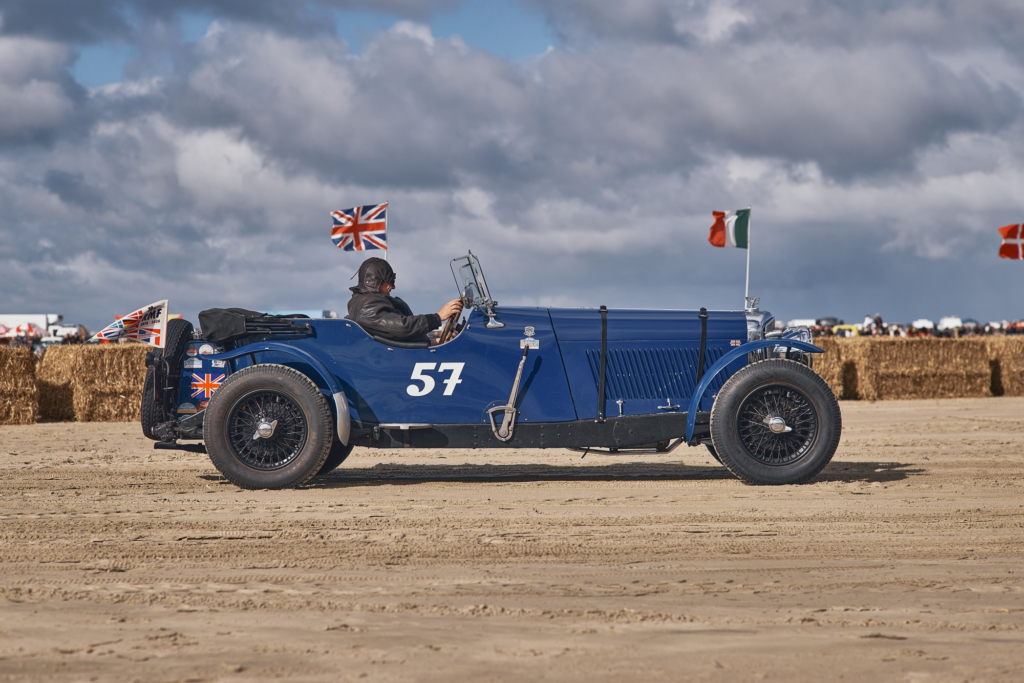
Jo’s 1936 Bentley Open Tourer, RMF #57. [Yiğit Günel]
The Brough Superior appeared too. So did the Gold Star. All day the racers returned to the start and went out for another run.

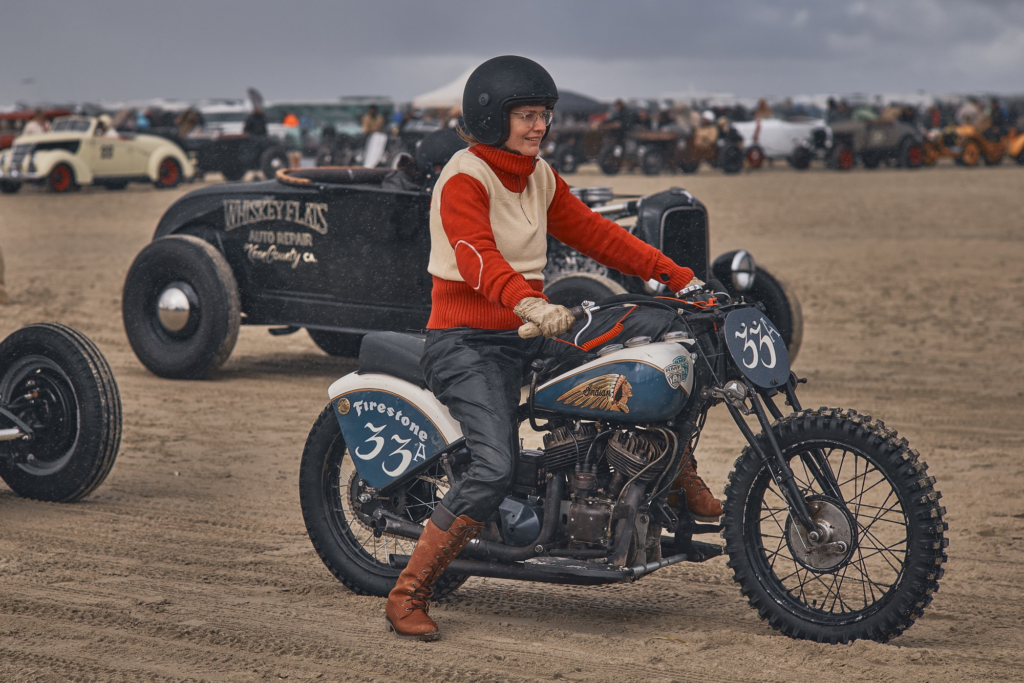
Karelien on the 1937 Indian Sport Scout RMF 33A. [Yiğit Günel]
They reminded me of children on a merry-go-round, except nobody’s parent was calling their name and there was no attendant saying the ride was over. As much as you could take. That was the ticket.

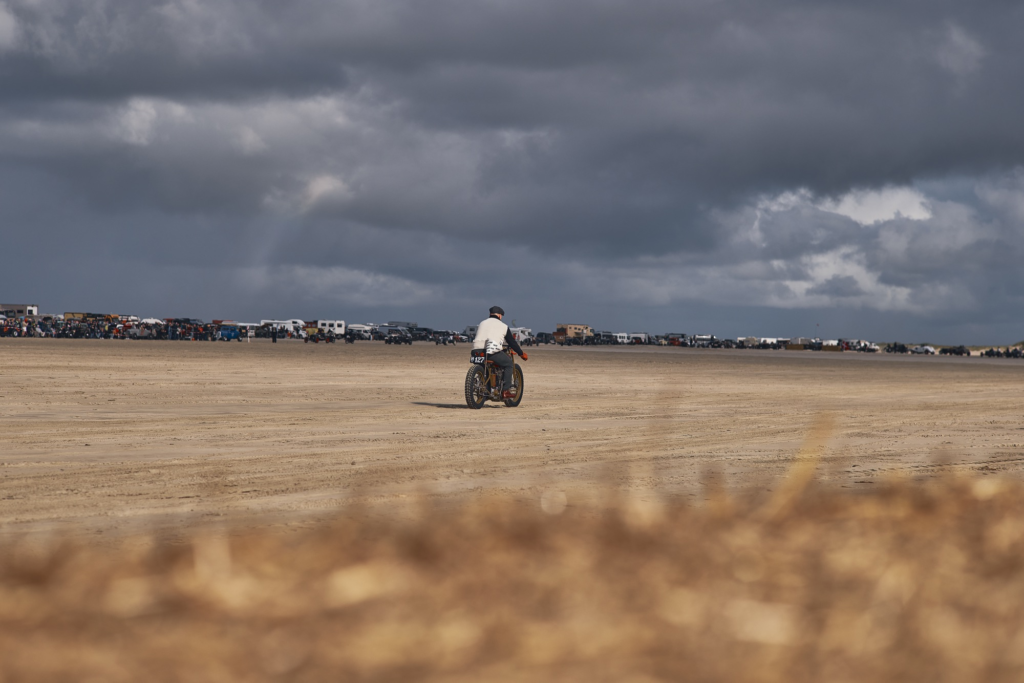
A lone rider crosses the beach towards the start. [Yiğit Günel]
Spectators lined the right side of the course, spreading across the dunes and beach. Some arrived with folding chairs. A few had somehow transformed watching vintage machinery being violently accelerated across sand into an elegant picnic, complete with wine and carefully prepared cheese. The festival is free to watch, part of the organisers’ intention to keep Danish beach-racing history open to anybody interested enough to make the journey. Between the engines there were quieter moments. In the pits, somebody adjusted a motorcycle. Another mechanic disappeared beneath a bonnet. A rider waited.

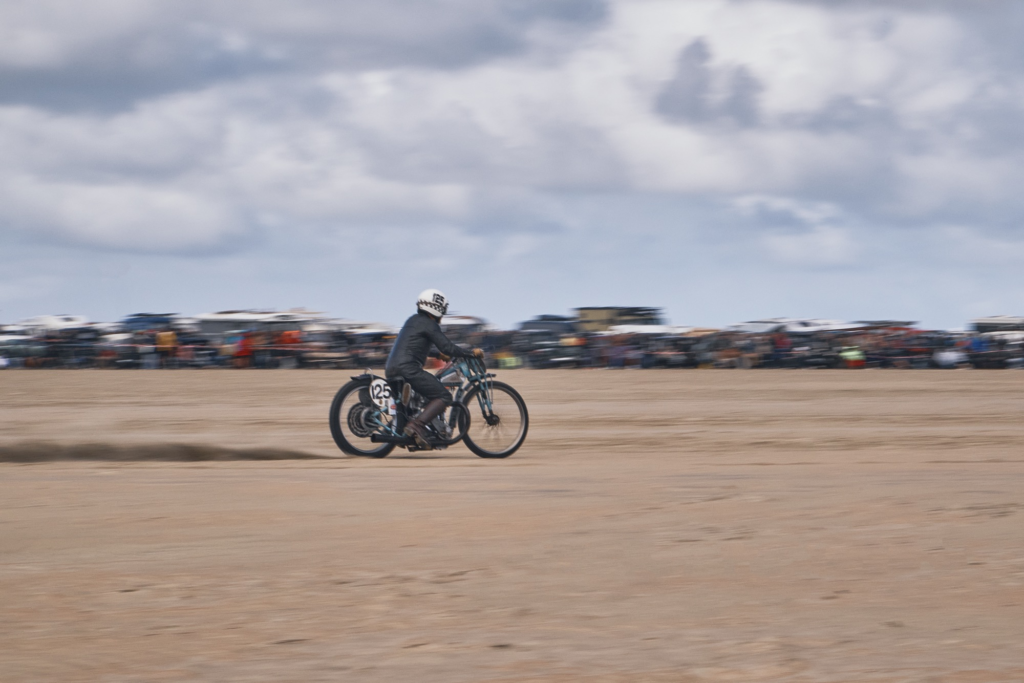
Johan Lundgren on the 1937 REX Dirt Track RMF 125. [Yiğit Günel]
Then, for a second or two, people simply stopped. Nothing needed fixing. Nobody needed to move. They just looked around. Perhaps that was when the whole thing made the most sense to me. These machines were rare enough that we had learned to expect them behind glass, in books or frozen inside old photographs. Yet here they were. Running. Breaking. Being repaired. Running again.

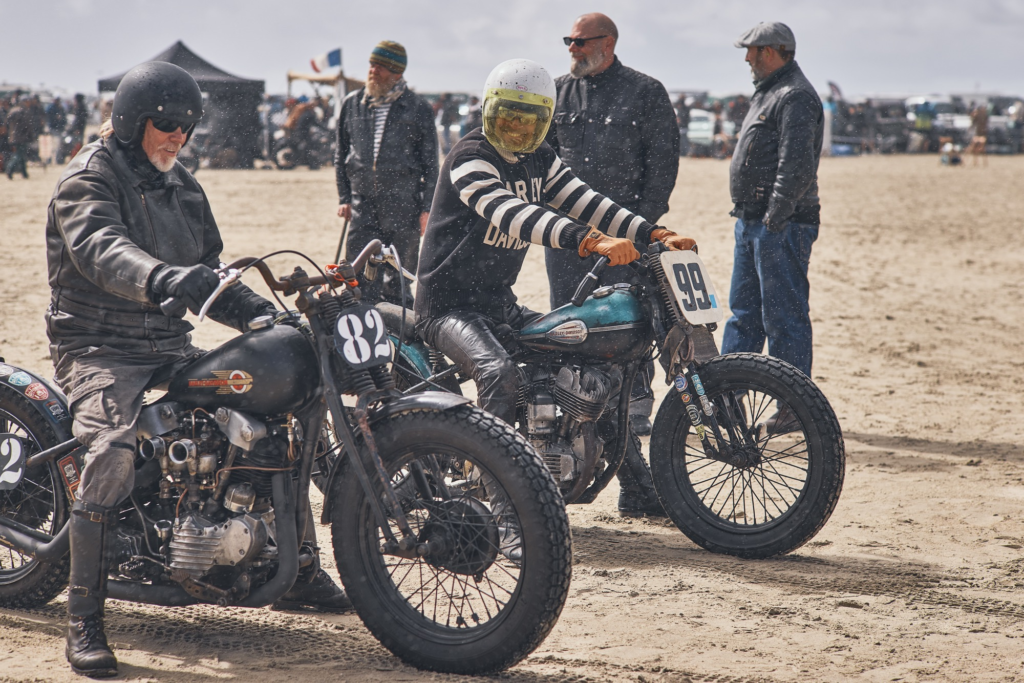
Andreas Röhrs on the 1942 Harley-Davidson Knucklehead, RMF #82, beside Frank Souren on the 1941 Harley-Davidson WLDR, RMF #99. [Yiğit Günel]
There is a strange idea that preserving history means preventing anything from happening to it. Maybe it is the opposite. Putting them somewhere safe forever might preserve the metal, but perhaps something else would disappear. On Rømø, history was not being protected from the present. It was being allowed to enter it. Near the end of race day, in a quiet corner of the beach, I saw a familiar face. Stefan Majoram, a perfect gentleman I had met only the day before, was sitting quietly on the sand drawing another masterpiece. The engines seemed very far away for a moment. ‘So you found a warm place in the end,’ I said. During inspection the previous day, he had been talking about how cold his fingers were. Now he smiled and showed me the drawing. I had my film camera with me. A Nikon F3 that came from my father, loaded with Kodak Tmax film. Eleven shots were left.

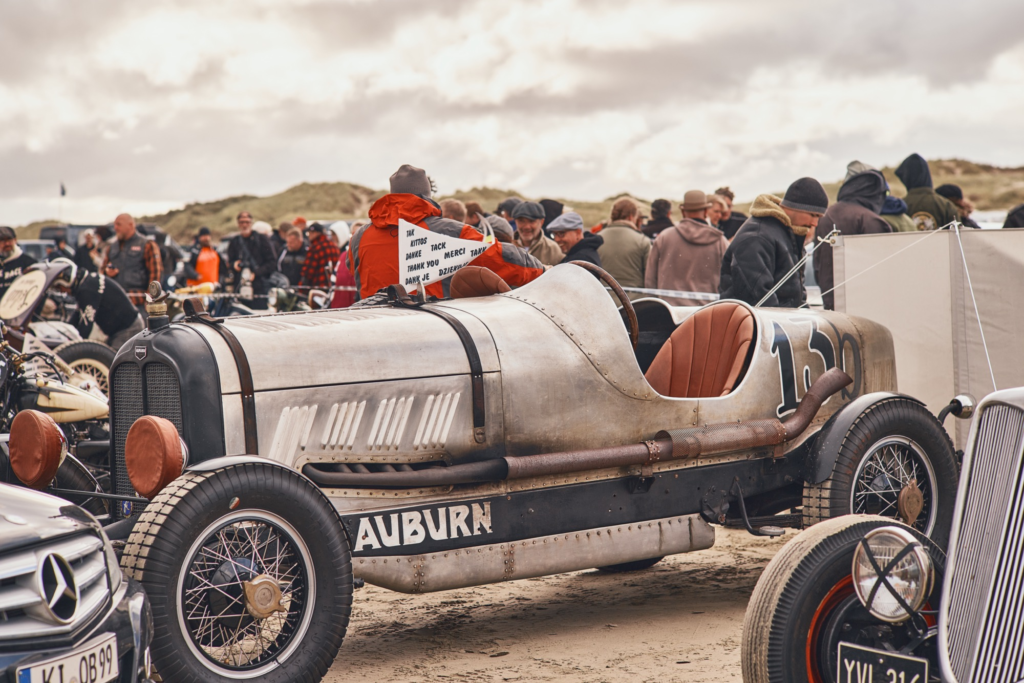
A 1929 Auburn Speedster waits in the paddock, RMF #150. [Yiğit Günel]
The camera was not particularly old compared with most things surrounding us on the beach, but it was roughly as old as me. Somehow that felt old enough. I needed to photograph him, so all of those eleven shots disappeared. Perhaps some moments deserve to wait inside a camera for a little while before you see them again. The engines started again. Sand lifted behind the tyres. Another flag dropped. For a few seconds, an old photograph continued beyond the edge of its frame. Until next year, time stops. History does not.

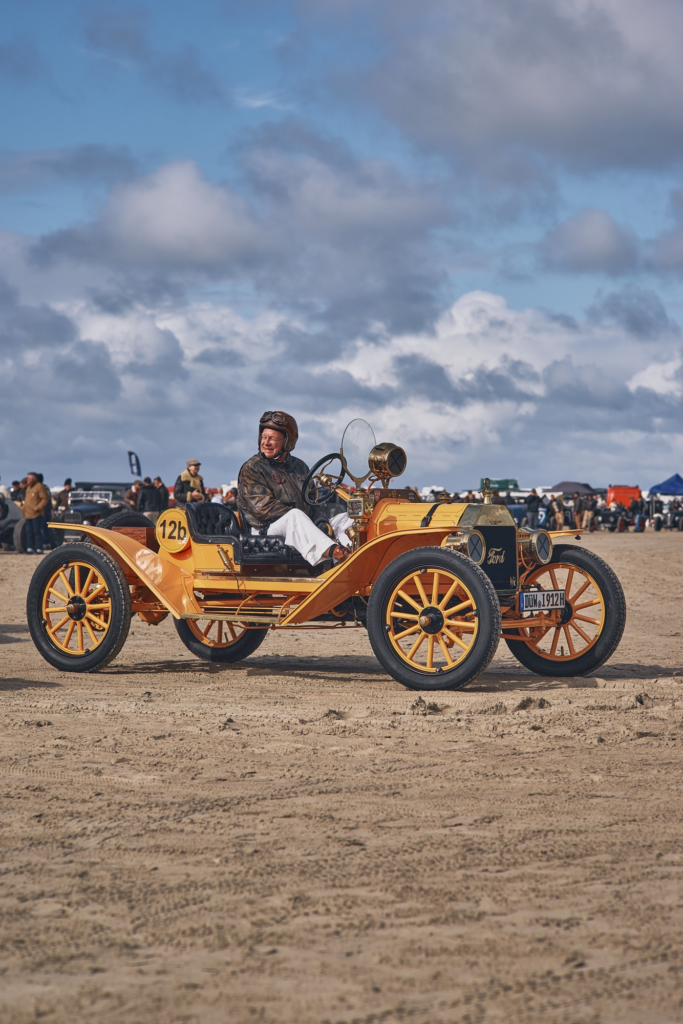
Christian Mehl on his 1912 Ford Model T Speedster, RMF #12B. [Yiğit Günel]
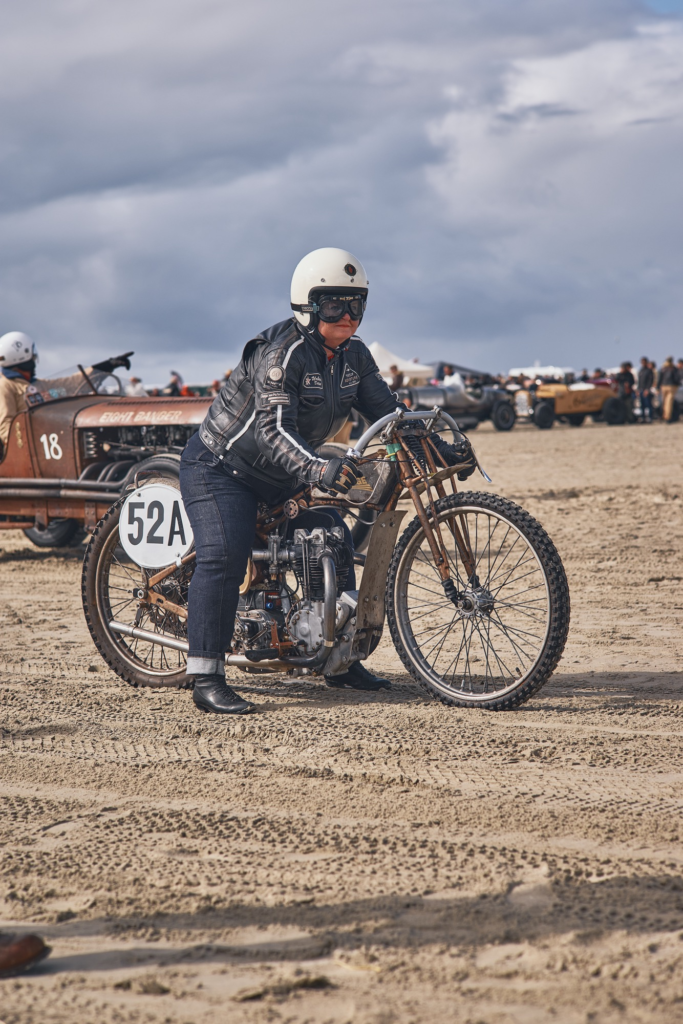
Always good to see women racers on bikes. Thomas Kühl-Rasmussen’s 1929 Rudge Whitworth Speedway, RMF #52A. [Yiğit Günel]
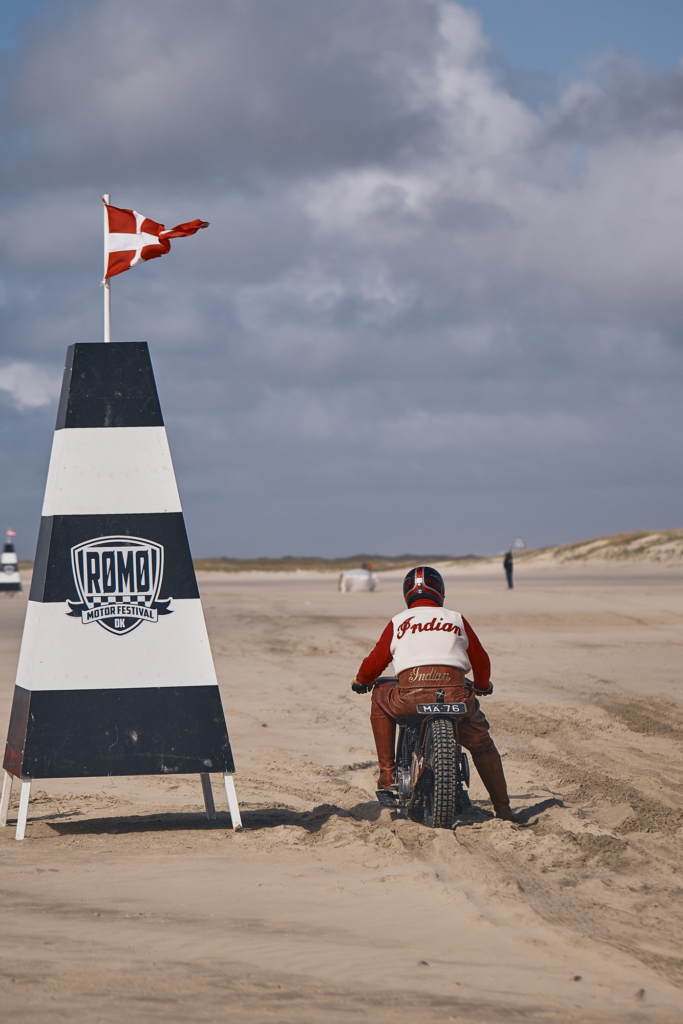
1931 Indian Scout at the starting line. [Yiğit Günel]
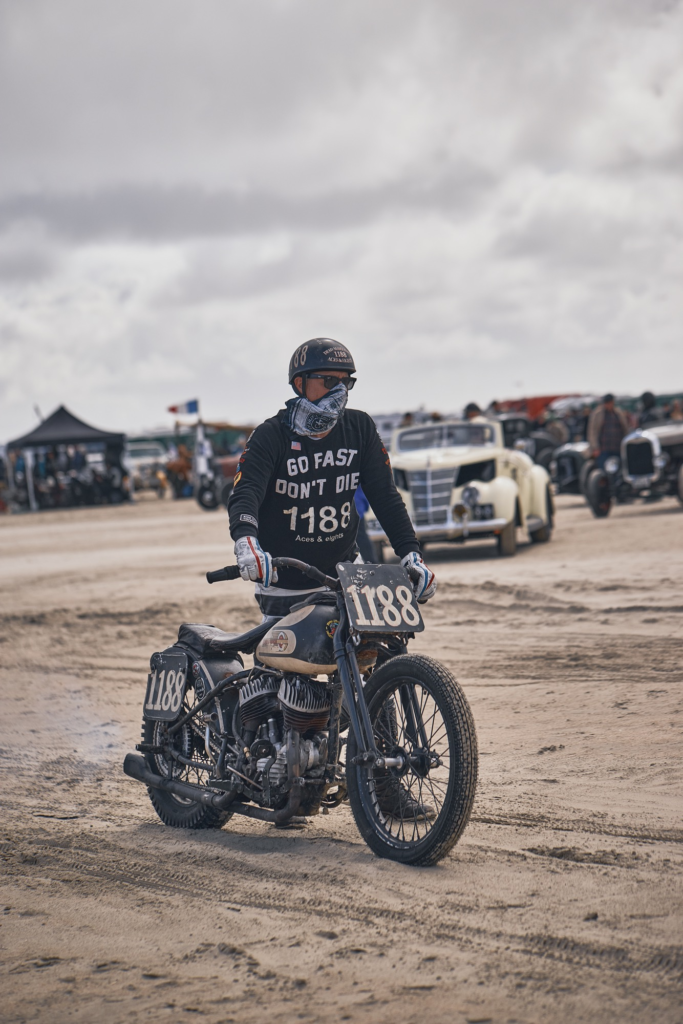
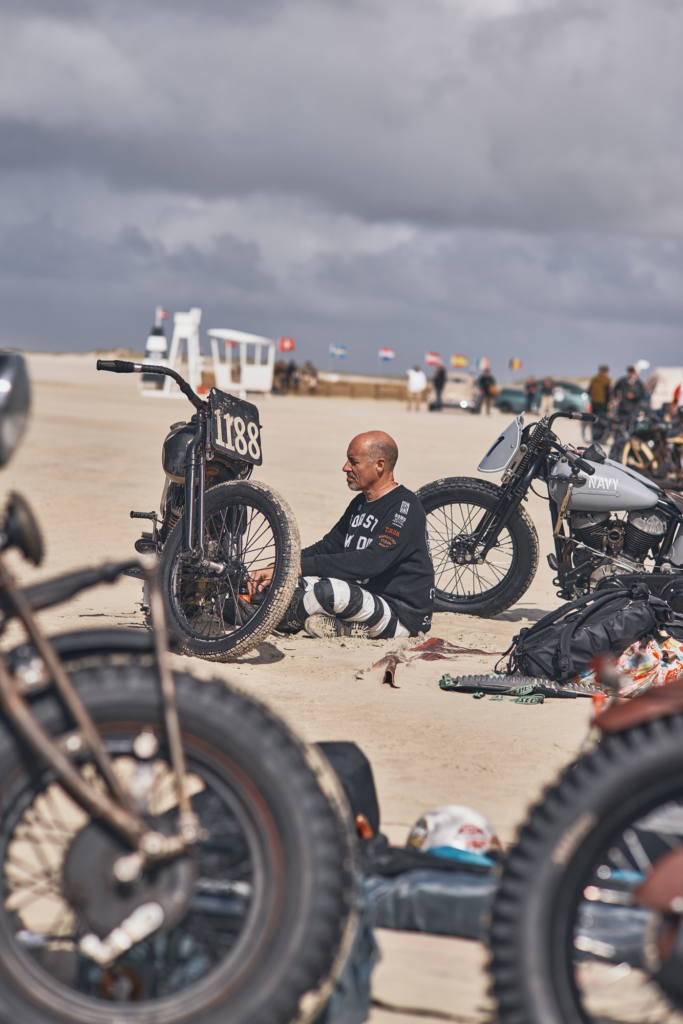
Chris McGregor on the 1942 Harley-Davidson WLA RMF 1188. [Yiğit Günel]
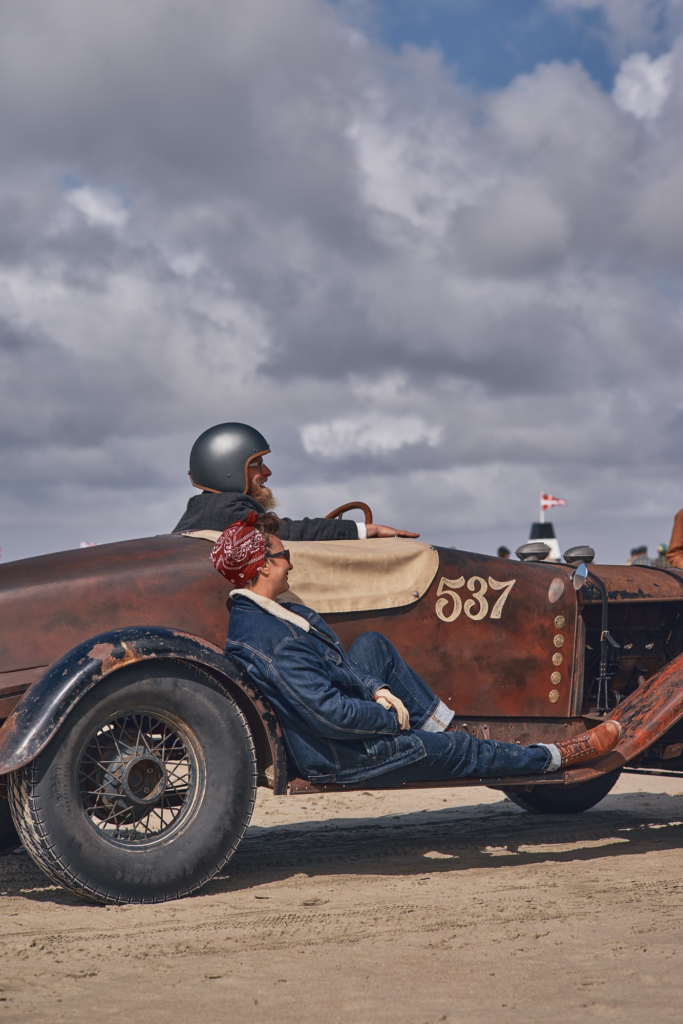
Jess Løvsegl’s 1929 Chevrolet Boattail, RMF #537, becomes a front-row seat between runs. [Yiğit Günel]
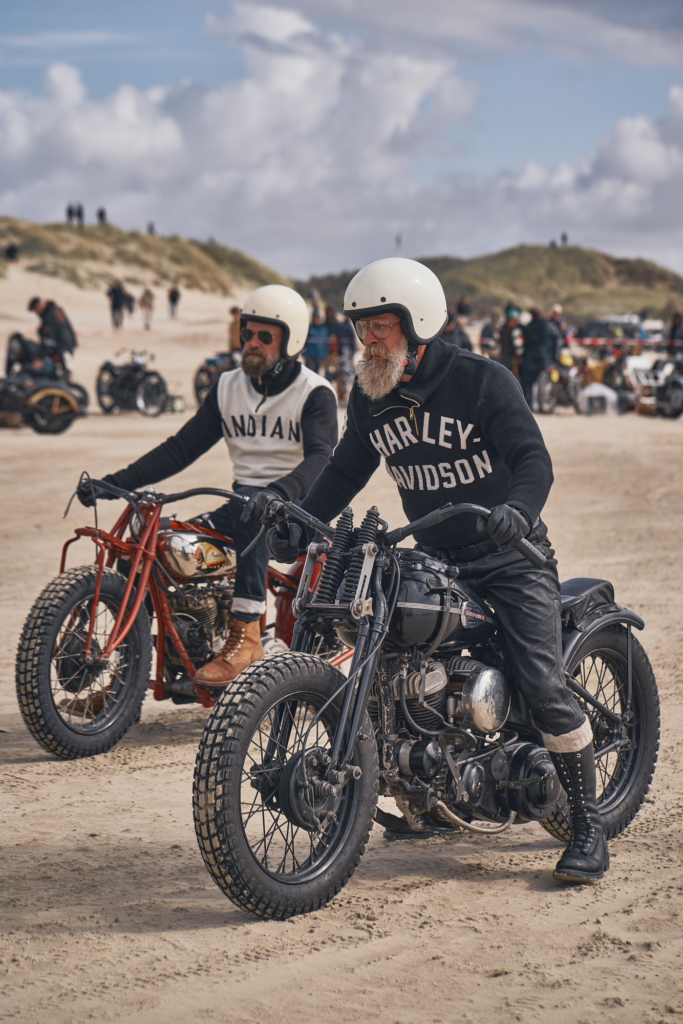
The Harley-Davidson and Indian wars are over (sort of), but racers still line up together. Indian 101 Scout and Harley-Davidson WR. [Yiğit Günel]
A rider takes a quiet moment among the motorcycles in the pits. [Yiğit Günel]
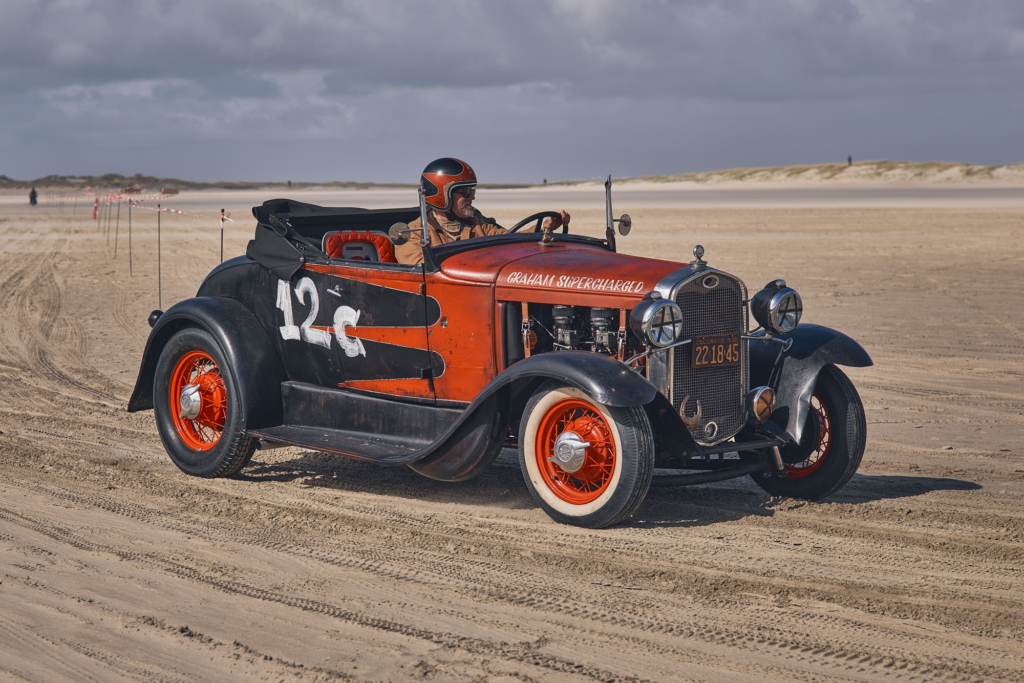
Jakub Kostrzewski in the 1930 Ford Model A Roadster, RMF #12C. [Yiğit Günel]
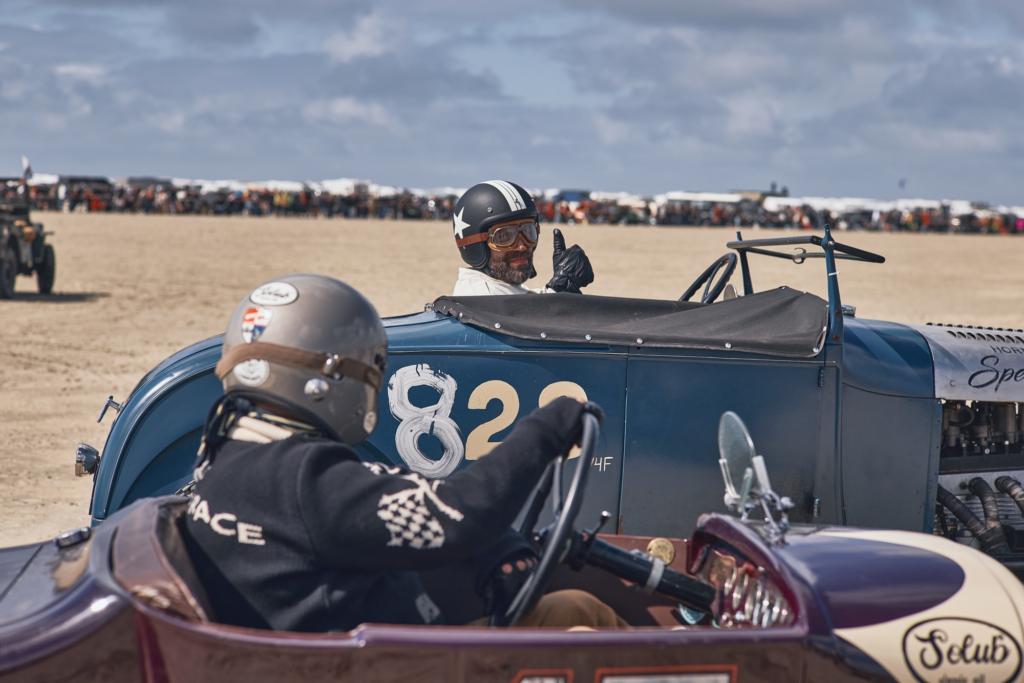
A paddock greeting sums up a driver’s feel for the day. [Yiğit Günel]
Nicolai Sthaalros’s 1932 Ford 5-window Coupe ‘Wild Child’, RMF #23, gets a push across the sand. [Yiğit Günel]


Yiğit Günel is a London-based photographer and journalist. His website is here, his Cult branding studio is here. Follow him on Instagram. Follow his work on The Vintagent here.


Related Posts

The Vintagent Selects: Ice Road Riders

Catch the chill.

The Vintagent Trailers: Somewhere Else Tomorrow

A day-dreamer rides around the world on…
Legend of the Motorcycle Attire

It was an event that changed the…


Subscribe to Our Weekly Newsletter