
Seeing the Light: Vintage Motorcycling on Electric’s Horizon
The steady drone of summer rain on the Sprinter van roof was not soothing. An hour earlier, race officials at Mid-Ohio had called us off the starting line as an approaching storm suddenly cascaded into a thunderous downpour. The longer this weather went on, the less likely we were to get back on-track. So I laid on the van floor… and waited.Conditions did finally clear and it was soon time to re-light the fire inside of the 1974 Maico 250 GP. Unbeknownst until that moment, water ingress behind the flywheel cover – despite generous blobs of silicone sealant – was causing electrical cut-outs at high RPMs. No amount of quick-thinking fixes were making matters better as the minutes until my second moto ticked away. The gate dropped into deep mud while I was still fiddling in the pits and just like that, in a disappointing decrescendo, my race day was over before it even began.
‘It’s Just Nuts and Bolts’
I was not around for Maico’s short-travel glory days atop natural terrain motocross tracks. I was just a kid watching from the sidelines when those same motorcycles turned 20 years old and were competing in vintage events. When it was my turn to try riding a dozen years later, it seemed important to first grasp the basics of mechanical functionality. That’s because just getting these things up the driveway under their own power was often left to a coin flip. “It’s just nuts and bolts,” one former Maico racer and European car mechanic offered as he tried to assuage my mechanical hesitancy. Yeah, easy for him to say.

Different Strokes
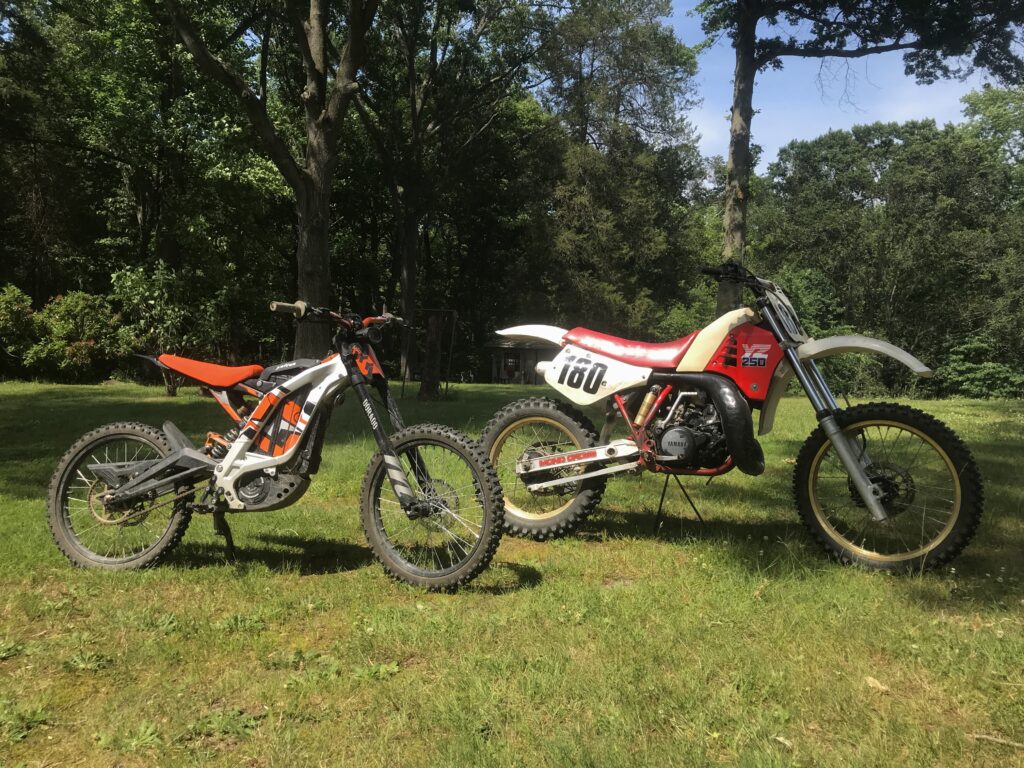
Twenty years ago, my elders bent an olive branch off the shade tree: shadow them now, or pay somebody else later. Over timing belts and under jacked-up hand-me-down cars, the question that reverberated in my head was this: “Could I have done the job on my own?” When the answer was “no chance” with a gallows humor laugh at the sheer thought of it, the titular twilight in my book became two-fold: an aging-out population of motorcyclists hailing from the 1970s “bike boom” glory days and the impending replacement of their snarling two-strokes with snappy cordless power drills on wheels.
The thing is, electric vehicles break, too. Social media groups dedicated to the Vargs and Storm Bees of the world are loaded with many familiar troubleshooting questions. The difference here is that the power plant is so far removed from a cam chain that ate the insides of the motor or an out-of-round bore skillfully measured in increments thinner than a strand of human hair. The stakes are high; the stress of repair higher yet. Where can the collective go from here?
- “I never liked working on motorcycles. I fix my own car and can spend days at a time working on an airplane, but with motorcycles I just want it to turn on and off without having to think about it.”
- “My Zero shares the garage with a Triumph Scrambler 900, and I love them both, but honestly, only the Zero gets ridden these days as it’s just so much more practical. But living a life with a sense of nostalgia and purpose is good for the soul. Shifting gears, listening to vinyl, manual espresso coffee; there is still something noble and almost romantic about doing things the hard way.”
- “I bought an EV to commute to work on – a job it’s great at. The lack of maintenance is good, as it lets me spend time on my other bikes that need more time spent on them.”
- “Haven’t needed gas in nearly 10 years, will not be going back until I inherit my dad’s motorcycle, and then that will likely sit for a very long time.”
A Deal with the Gods
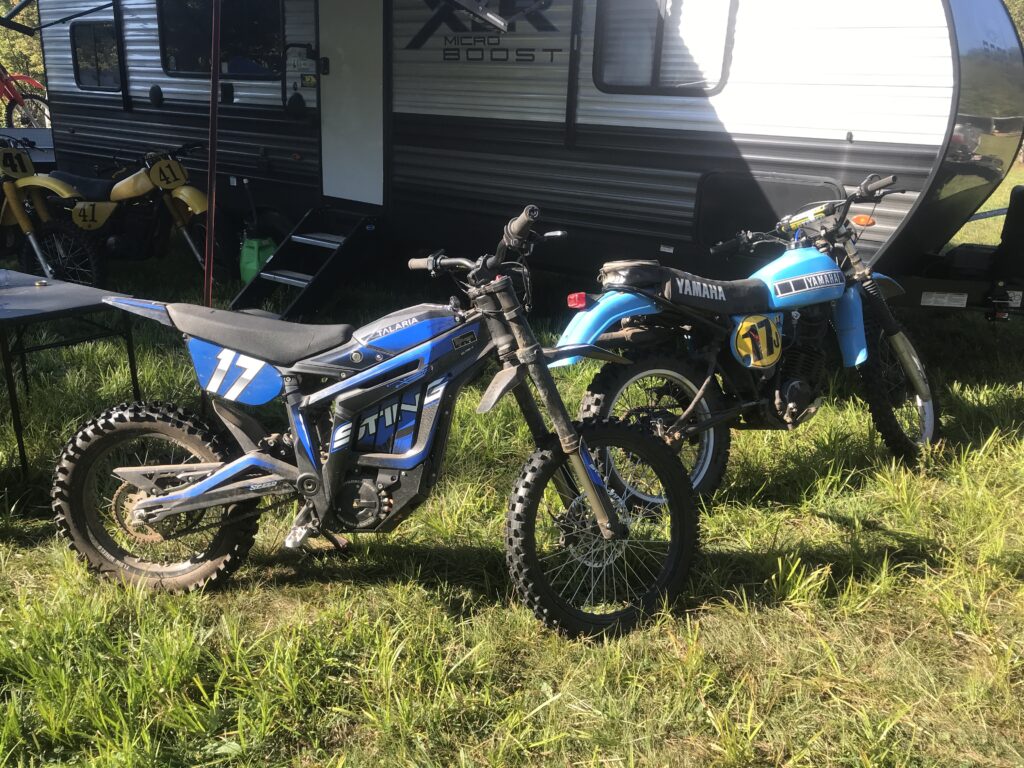
Electric two-wheel proliferation isn’t a prediction – it’s already plain to see. City and suburban streets across the U.S. are loaded with “micro-mobility” devices that are showing people – some of them quite young and early on in their riding careers – what the wind in their ears sounds like at 20mph. If just enough of these curious onlookers consider objectively “cooler” full-size EV bikes, there’s a chance to spark the second “bike boom” in the same vein as the early 1970s market explosion. Hell, even the vintage races I attend are now dotted with Talarias and Surrons (with the latter selling some 120,000 units globally between 2017 and 2023, per Motocross Action Magazine) as pit bike transportation.
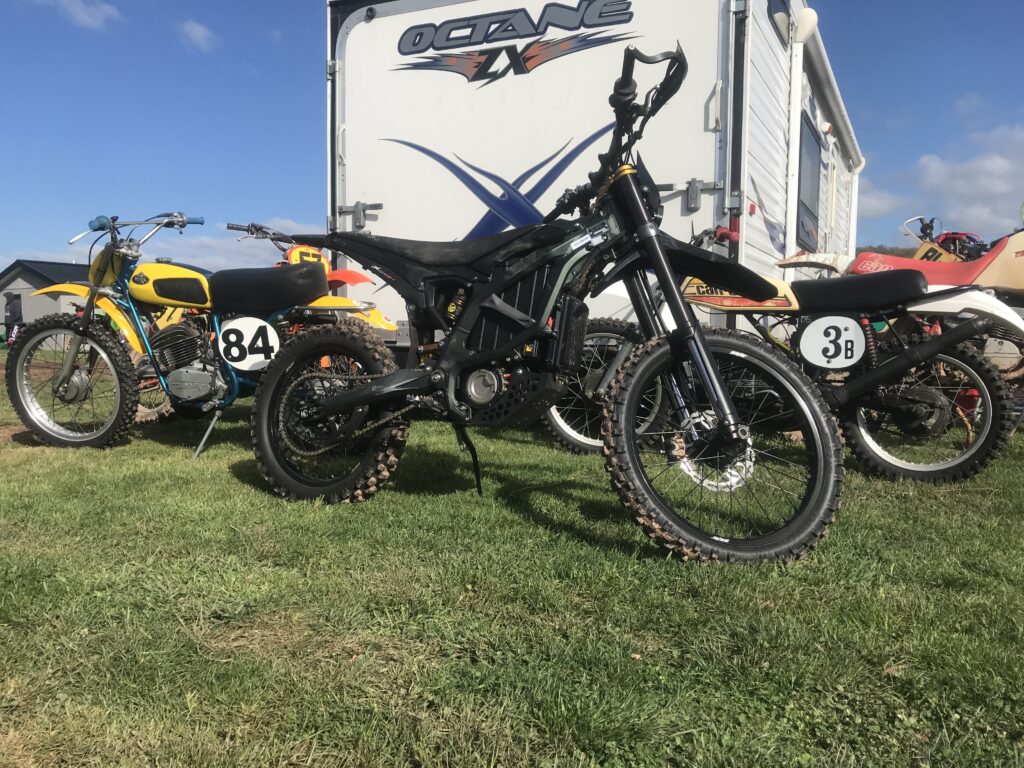
This is the critical moment of plurality that U.S. motorcycling hasn’t seen in 50 years. Those UJMs and primitive road-going dual-sports of yesteryear – part of the three million motorcycles registered in the U.S. in 1972, up from 500,000 in 1957 – have been replaced by cheap electric hacks that’ll help claw back some of the ground lost long ago. The end result is the same: surging numbers of people on two wheels who are learning to enjoy the basic facts around the acts of riding, repairing, racing and repeating. In the end, vintage and everything the sector celebrates is a “moving target.” The definition adjusts depending on your age, the executive director of America’s largest vintage racing league told me earlier this year, but it isn’t going away.
True, you could just buy something new and skip the either/or catastrophic comparison I just blew 1,500 words on. Still, the benefits of a running start from the bottom of the hill are such that you’ll learn so much more on the way to reaping the rewards at the top. Just don’t ask Sisyphus about this same struggle, though. He’s still a bit jaded from all those huffing-and-puffing pop starts up the driveway.

Related Posts

AMA Vintage Motorcycle Days
Friends had told me about it, but…
The Vintagent Classics: Riding High
a bored young motorcycle messenger…

The Current: Egads! An Electric Surfboard?
Electric surfboards are the next big…
I’ll be blunt … at least here in the US ?
Bull**** ! Plain and simple .. unless … unlike the US M/C industry you’re willing to include all those ****ing electric bikes clogging up the bike and hiking trials .. causing more pedestrian accidents than all the cars on the road combined .. etc .
Toss in the cost ( excessive ) the lack of range ( pathetic ) the weight ( ludicrous … a more efficient vehicle that weighs more ? Stupidity at its finest ) … the complexity ( keeping them Li batteries healthy takes a lot of complex machinery which errr … sucks up a boat load of electricity … once again the epitome of stupidity ) …
… not to mention … I’ve yet to see a single EV M/C anywhere I’ve been in the last five years …. not one !
And I reiterate …. Bull**** … pie in the sky wishful thinking on behalf of the NIMBY crowd
And don’t even get me started on the mining / refining of all the minerals etc needed to make an E/V … not to mention battery disposal … toxic waste … …and then …. and then ….. there’s the durability issue … suffice it to say an EV of any kind has a projected lifespan of 7 years or less ….. think about that Snowflake ! You jes keeps on dreaming while ya’s polluting and destroying the environment …. in EVERY BODY ELSE’S BACKYARD . !
Sigh …. critical thinking … a lill something todays youth is completely devoid of …. recent … well … you know … being case in point !
“Get off my lawn”
Thank God your closer to the end than the beginning.
Gee … that made about as much sense as nothing what so ever . Must be more of that AI enshitification …..
By the way genius … YOUR in this case should be spelt … YOU’RE … as in you are … ahhh … the joys of peanut gallery Ai hallucinatory comments .. can’t think … can’t spell … can’t make sense .. can’t do much of anything of substance or use what so ever .
And ahh …. wanna bet I’ll be around long after you’ve ( see how that works ? you’ve .. as in You Have ) disintegrated into the digital hell you arose from ?