
Greece has influenced Western civilization since 2000 BC.  The famous philosophers Socrates, Plato and Aristotle developed a system of logic that enabled a new way of thinking about how humans interacted with the natural world. This encouraged the interpretation of the phenomenon of daily existence through observable, fact-based outcomes. A new perspective pushed aside illogical, magical thinking superstition and this enabled the development of the ‘Scientific Method’ and the revolution of mathematics, engineering, physics and design. Greek philosopher Anaxagoras (c.500-428 BC) connected this logic to the making of things with the ‘intelligence’ of the human hand[1]. Centuries later, the machine age burst into being as an outcome of this process that resulted in the invention of the internal combustion engine, cars and motorcycles. This process can all be traced to the logic of the Greeks.

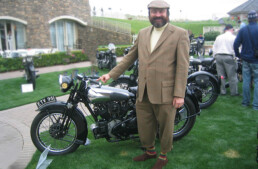
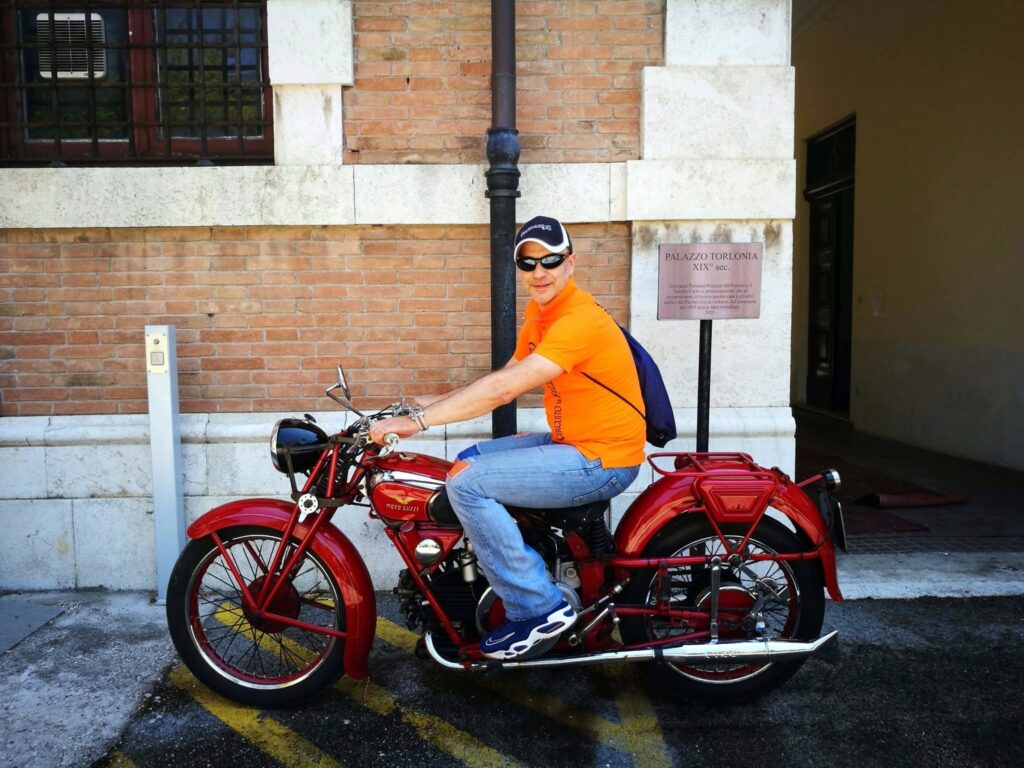
Vasileios on a friend’s c.1938 Moto Guzzi GTV 500 in Thessaloniki. [Mike McCabe]
Vasileios Papaidis lives in the second largest Greek city, Thessaloniki, 500km north of Athens. He and his friends actively create a vital moto-culture lifestyle that combines vintage motorcycles, cars and groundbreaking concept vehicles.  While he studied in the fields of Business and Economics, he pursues a creative life with cinematography, photography and the historical record of classic cars and automobile collections. He also works as a journalist, test driver and participant in legendary moto-culture, for example:  2008 Wikipedia editor for more than 10 years; 2013 Project Manager of Concours d’Elegance (Greece); 2013 Lifetime member of Circuito Di Avezzano – Abruzzo Gran Tour (Italy); 2019 FIVA Jury/Member at Retro Parade Stara Zagora (Bulgaria); 2025 FIVA Jury/Member at Valletta Concours d’ Elegance.

Vasileios Papaides at the track with something more modern…a Honda CBR 1100XX Super Blackbird. [Mike McCabe]
Vasileios also co-operates with foreign auction houses compiling ‘biographies’ for exceptionally rare classic car models. Aside from being freelance reporter for car museums and private collections, he takes part as a driver/co-driver in Greek and foreign Classic Regularity races. He works as a project manager on events and promotion video clips with classic cars themes. He has published several books about moto-culture and energetically advocates for the positive image of his community.

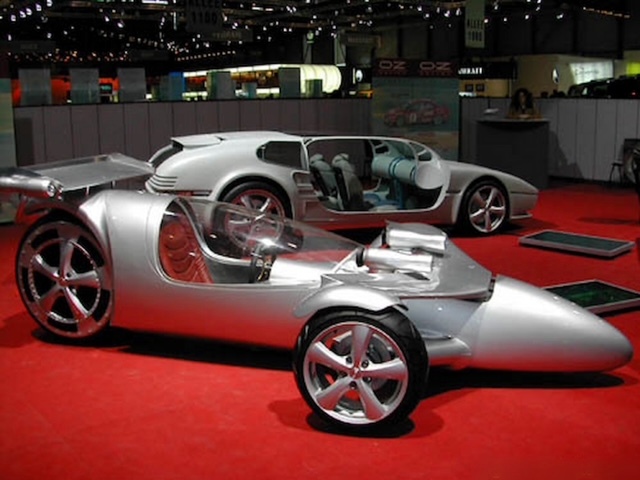
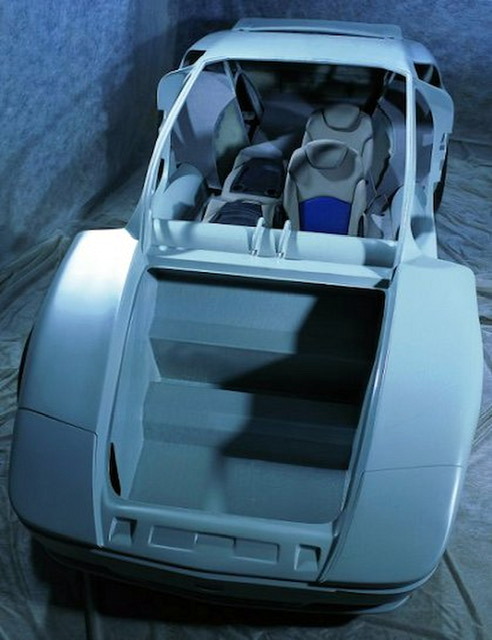
Franco Sbarro’s UMA 3 concept vehicle. [Vasileios Papaidis]
“From a very young age of 8 to 10 years old, I was attracted to extraordinary vehicles,” Vasileios said. “I’m addicted to speed, the smell of gasoline, and the adrenaline that comes from danger. My very first motorcycle was a US-spec Honda V45 (700cc) Magna 1985, in the early 90s. It’s all passion for my 30 year pursuit in the automotive world as a journalist and later as a test driver, photographer and book author. As a Honda fan I have my vintage 1985 Honda V45 Magna; the best bike in the world (in my humble opinion), and a 1999 Honda CBR 1100 XX Super Blackbird. For fun I have raced my XX on the SRC Race Track in the city of Serres, Macedonia, Greece. I am not a highly skilled mechanic but I know enough to work on my bikes to ensure a good run. My favorite ride is hill climbs in the Greek Mountains and the SRC Racing Circuit- the SRC Racing Circuit is a great racetrack and the best in Balkans & Southern Europe. Motorcycle riders must be careful in Greece. Riding and driving can be hazardous.  Most car drivers do not respect or care for the motorcycle riders. There is no proper driving education in Greece, it should be included in schools as a course, so that young people can learn proper road behavior from a young age.”

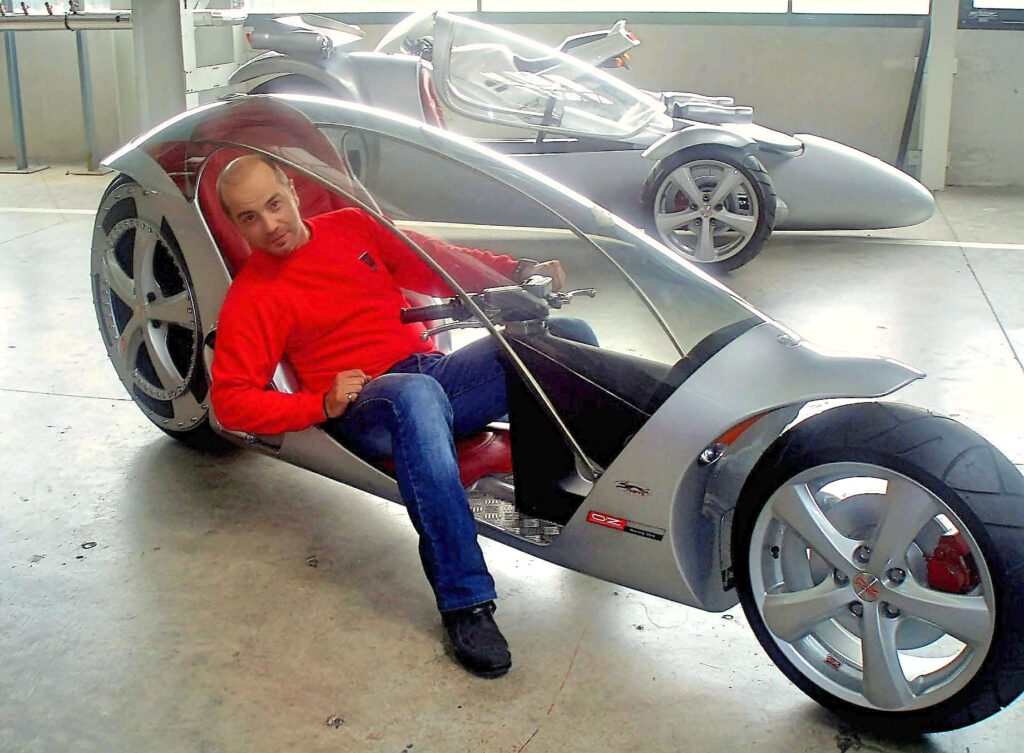
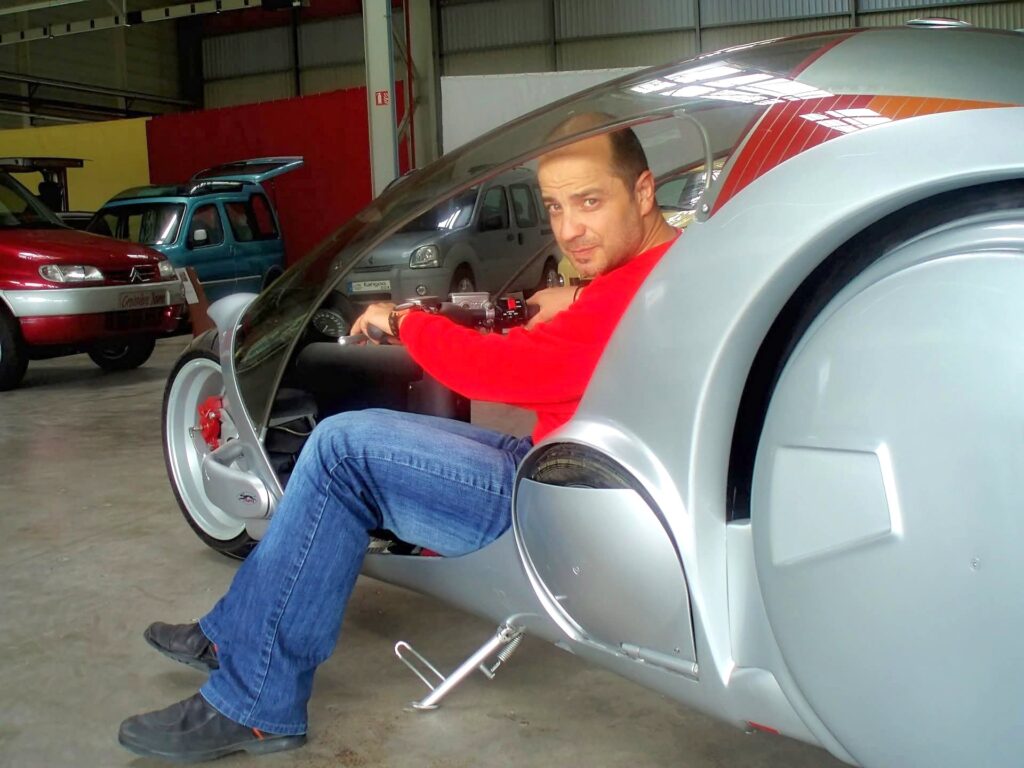
Vasileios Papaidis in Franco Sbarro’s feet-forward Monotrace or Sbarro Autonomous (Wheel) Motor Unit (2003) at Espera Sbarro France 2006. [Vasileios Papaidis]
Vasileios and his friends explore the intersection of materials, design and hand fabrication. He describes three concept vehicles developed by renowned Italian born, Swiss automotive designer and engineer Franco Sbarro he believes represent the ethos of this creative effort:

“The 2003 Sbarro Autonomous Motor Unit (UMA) was a radical concept created by Sbarro and OZ Wheels. It placed a 160-horsepower Yamaha YZF1000 engine, gearbox, cooling, and suspension entirely inside a massive 22-inch wheel. It was utilized in various vehicles, including a leaning recumbent “Monotrace”. Many years ago Sbarro produced the Roue Orbitale: a very clever hub-less wheel and he subsequently sold the patents. At the 2003 Geneva Motor Show, Sbarro reinvented the wheel for a second time, producing a self-propelled version which is called the Roue Autonome Motrice. The concept is simple: wheel sizes have been increasing for the last few years so why not use the space within the rim to install an engine and liberate the space that was previously required by the engine compartment. Transforming an idea into its concrete form is difficult- Sbarro and wheel manufacturer OZ have worked together on this concept and produced this prototype of the Autonomous Motor Unit. To illustrate a number of possible applications of this invention, three vehicles were shown at Geneva with two, three and four wheels:
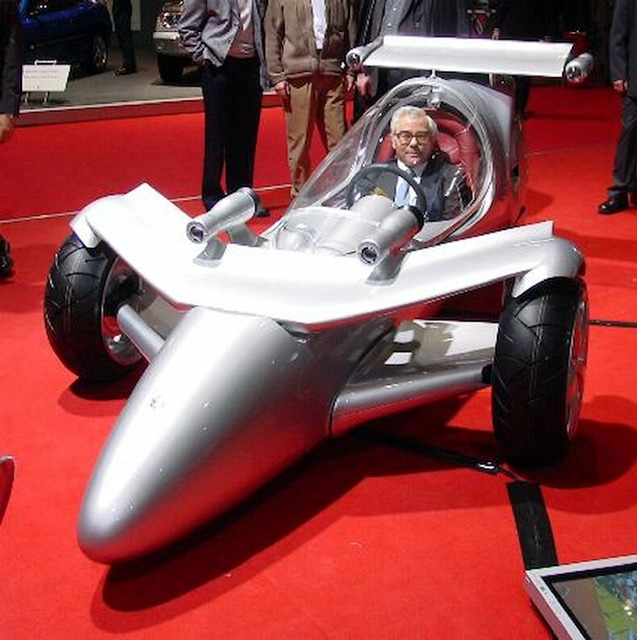
Franco Sbarro sitting in the UMA 2 concept trike. [Vasileios Papaidis]
“The two-wheeled prototype (UMA1) created the biggest impression with the visitors: Limited comfort with a riding position that doesn’t look very comfortable and a huge back wheel that cannot be very practical when cornering. But these aren’t faults because this is after all a concept vehicle and not something for daily use. Note the two little outrigger wheels that keep the machine upright when it comes to a standstill. Also the hub-center steering has only a single arm on the left side. There is a protective bubble over the rider and the exhaust comes out of the wheel! The feeling of speed sitting 15 cm above the ground is amazing as soon as one goes above 20 mph! The tricycle (UMA2) reminds me of General Motors concept cars from the fifties: looking like a rocket on wheels with wings and lights shaped like jet engines. This science-fiction machine is powered similarly to the motorcycle.”

Vasileios Papaidis in the Sbarro Monotrace concept motorcycle. [Vasileios Papaidis]
“Finally, the four-wheeled machine (UMA3) really allows one to see the space-saving achieved with the Sbarro wheel. The passenger compartment is freed from the restriction of an engine bay: this extra space can be used for example for luggage. The impression of space is enhanced by the lack of doors on the prototype. Franco Sbarro’s Autonomous Motor Unit allows designers to conceive of the passenger compartment completely differently. This type of new car architecture has already begun in the large car manufacturers with the advent of drive-by-wire[2] and the freedom of construction this gives. Sbarro’s prototypes however uses mechanical controls. In the not too distant future we will see some new forms of vehicles. These three prototypes sow the seeds of that future.”

The UMA 2 trike and four-wheeled UMA 3. [Vasileios Papaidis]
Vasileios explores Sbarro’s futuristic concept car and motorcycle designs that might seem super-realistic but they are actually grounded in a process of sequential experimentation. One design stage leads to the next in a logical progression of observable, fact based outcomes. A creative method first explored by ancient Greeks.

Notes:

[1] (As cited by Matthew B. Crawford in Shop Class as Soulcraft, 2009): The ancient Greek philosopher Anaxagoras (c. 500–428 BC) famously asserted, “It is by having hands that man is the most intelligent of animals”. This core concept posits that human intellect is inextricably linked to our physical anatomy and our capacity to manipulate the environment. Anaxagoras was a pivotal Pre-Socratic philosopher who introduced the concept of Nous (Cosmic Mind) as the driving force of the universe. Within his philosophy, the human hand is not just an appendage, but the primary instrument that allows the rational mind to interact with, shape, and understand the physical world.

His profound observation about embodiment can be broken down into two main ideas:

  • Embodied Intelligence:Anaxagoras believed that thought and physical action are not separate. The ability to grasp, build, and craft things directly stimulates cognitive development. By manipulating tools and materials, we build an understanding of cause, effect, and form.
  • Homo Faber (Man the Maker):The quote highlights the idea that human dominance and intelligence are a direct result of our capacity to alter our environment. Hands give us the ability to transcend our biological limitations, turning thought into physical reality. (Wikipedia)

[2] A drive-by-wire car uses electrical signals rather than mechanical cables to control the throttle, brakes, or steering. If the system detects a fault, your dashboard will display one of two specific signs:

  • Electronic Power Control (EPC) Light:Common in Volkswagen and Audi vehicles. It appears as the letters EPC in yellow.
  • Electronic Throttle Control (ETC) Light:Common in Chrysler, Dodge, and Jeep vehicles. It appears as a lightning bolt icon placed between two backwards C-shapes.

 

Michael McCabe is a New York City tattoo artist and cultural anthropologist. He is the author of New York City Horsepower, Kustom Japan, New York City Tattoo, Japanese Tattooing Now, Tattoos of Indochina, and Tattooing New York City. For New York City Horsepower, Mr. McCabe spent two years discovering and documenting underground custom motorcycle and car garages in the City, as rapid gentrification put their culture under tremendous pressure. He interviewed and photographed New York City customizers about their personal histories and creative sensibilities. More of Mike’s articles for The Vintagent can be found here.