[Written and researched by Riley Ward, edited by Paul d’Orléans]

Who Wore Leathertogs


Henry Shaw’s design approach was comprehensive, meticulous, and rider-focused. At the core of his philosophy was the need for a tight but comfortable fit—one that could shield motorcyclists from chafing, wind, rain, and the varied elements of the open road. His garments balanced form and function, rooted in real-world needs and shaped by a sharp eye for detail. Beyond his own riding requirements, Shaw likely drew inspiration from a variety of contemporary garment industries. Aviation, still a relatively new frontier in the early 20th century, appears to have been a key influence. Many of Shaw’s jackets featured double lapels, outer “map” pockets, and epaulets—stylistic and functional hallmarks of aviator attire. Breeches, too, echoed cavalry and horseback-riding gear, with wide peg-style hips narrowing to snug ankles, ideal for tucking into tall leather boots.
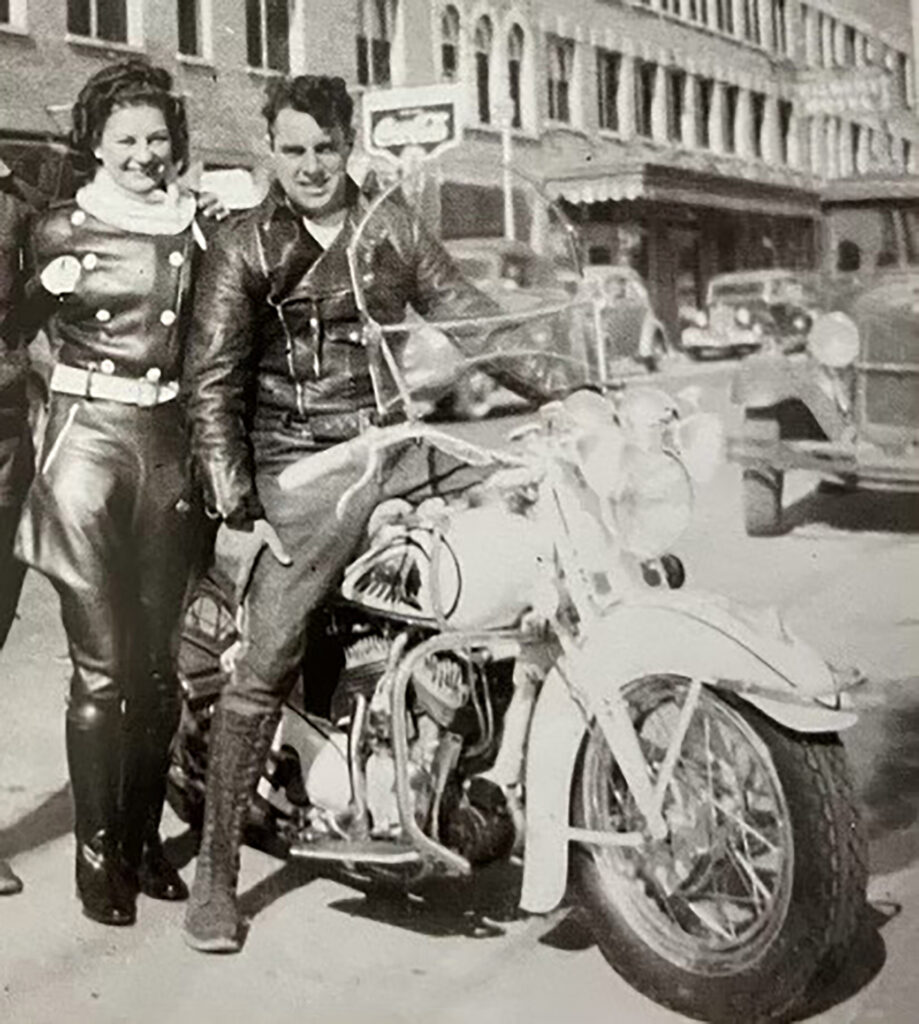
Helen Kiss and ‘Babe’ Tancrede with his gorgeous and heavily chromed, white c.1938 Indian Chief. [Buzzz magazine]
Regional motorcycle police units across the Northeast may also have shaped Shaw’s vision. Their long, double-breasted melton wool coats—often adorned with large circular metal embellishments—are echoed in several Leathertogs designs, such as the Isle of Man and Royal Flying Corps models. Shaw cropped this police style to waist-length, added a set-in belt, and translated the formal visual language into high-performance motorcycle wear.

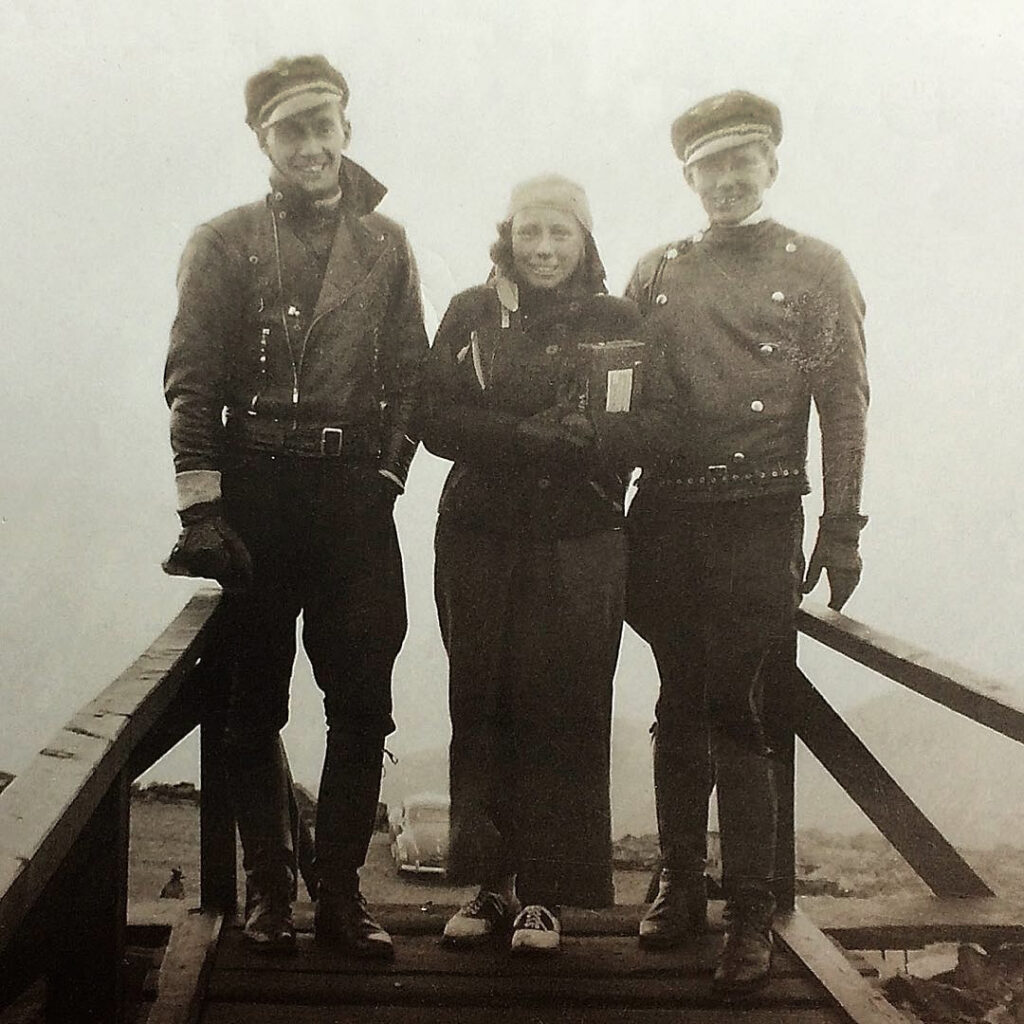
John Judge, Frank Craigie, and a friend in their Leathertogs c.1930s. [Riley Ward archive]
Military uniforms, both American and European, provided additional sources of inspiration. Many Leathertogs jackets incorporated epaulets, throat-latch closures, cropped silhouettes, patch pockets, and zippered fronts—design elements also found in early U.S. Army Air Forces flight jackets, such as the Type A-1 and the more iconic Type A-2 issued between the 1930s and early 1940s. These jackets were designed for pilots operating in open-cockpit aircraft, blending function, durability, and a sleek, simple military silhouette. In one notable instance, Shaw crafted a custom hybrid jacket that blended one of his motorcycle designs with Type A-2 specifications, made for a U.S. Army Air Forces private heading overseas circa 1942.

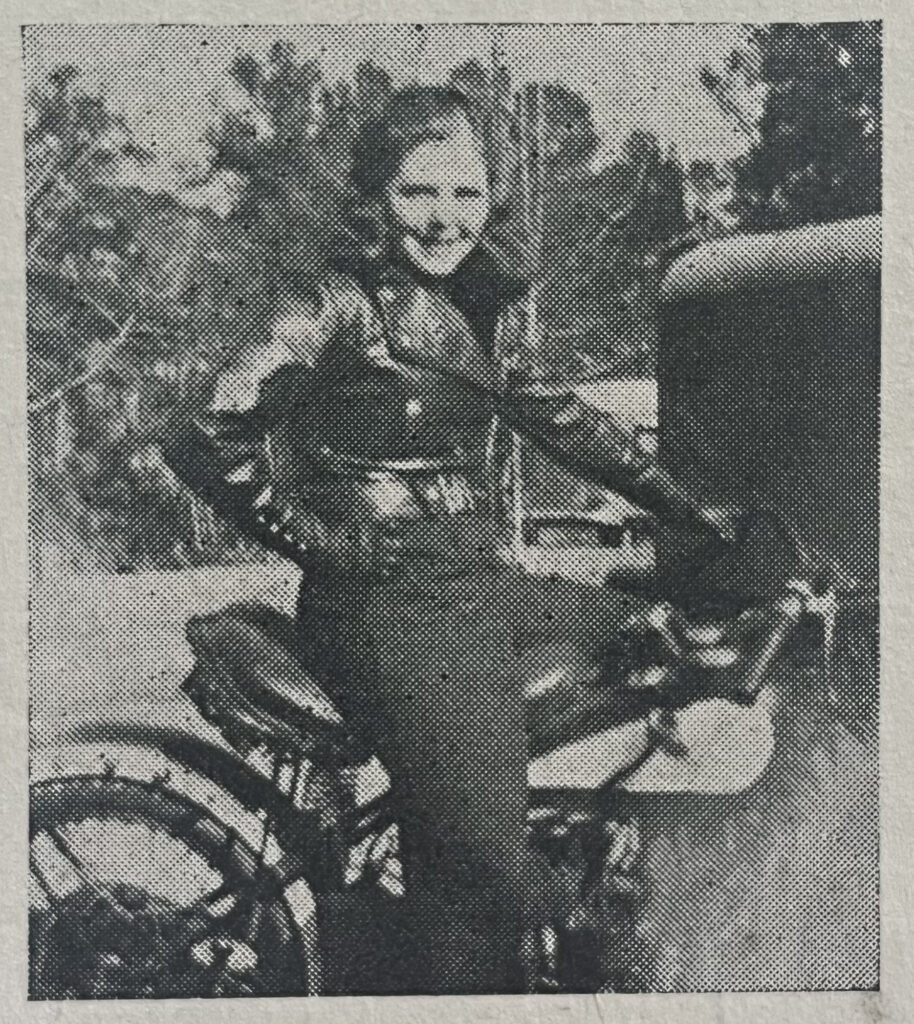
Vera MacLennan of Fayetteville NC in her Leathertogs zip jacket, aboard a mid-1930s Indian Junior Scout. [Riley Ward archive]
Zippers were a signature feature of Leathertogs gear, essential for quick ventilation, secure storage, weather protection, and emergency access. Zippered pockets allowed riders to stow maps, gloves, cigarettes, pocket watches, and other essentials. Shaw reinforced key stress points with tube-style rivets and employed double- and triple-stitching along major seams, ensuring his garments could endure years of rugged use.

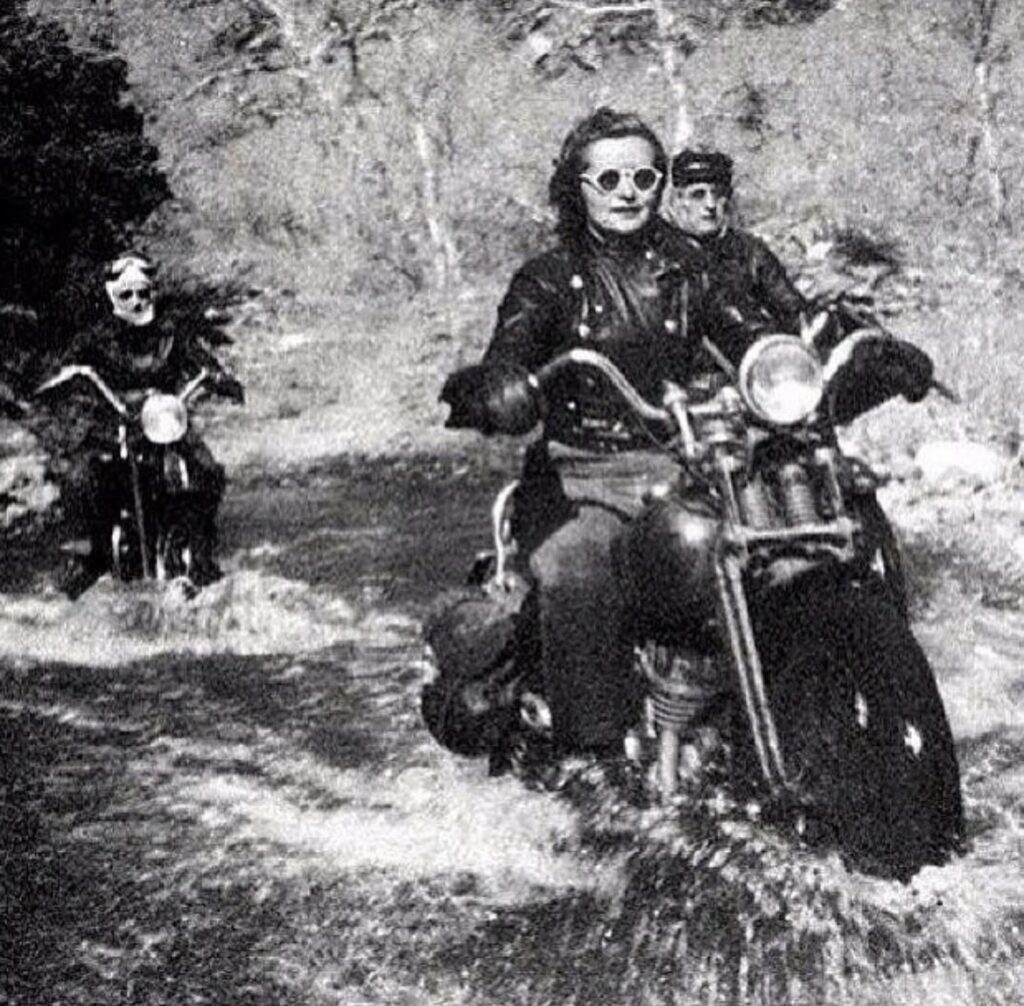
Linda Dugeau, a founder of the Motor Maids, leading the pack through a stream on an off-roading adventure. Linda is wearing her ‘Isle of Man’ women’s Leathertogs jacket. 1940s. [Riley Ward archive]
Henry was deeply engaged with his customers. Four of his jacket models were reportedly developed in response to specific feedback from motorcyclists nationwide. Riders could request upgrades—jackets featuring two-toned horsehide panels, extra zippered wrist pockets for coins or keepsakes, and even hand-painted emblems. Shaw welcomed these requests, approaching each one with craftsmanship and curiosity.

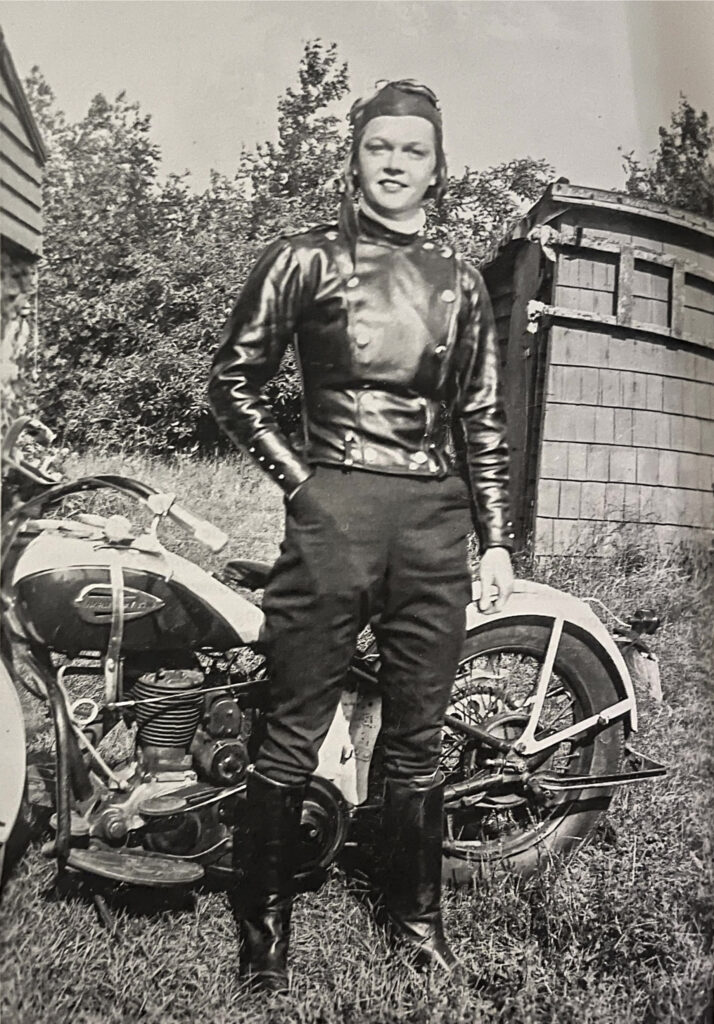
Linda Dugeau in Sept. 1941 with her Leathertogs ‘Isle of Man’ jacket and Harley-Davidson Model B single-cylinder. [Riley Ward archive]
Material selection was another area where Shaw excelled. The horsehide used by Leathertogs was top-tier—most likely chrome- or vegetable-tanned—available in deep black or rich mahogany brown, and typically around 3 oz. in weight. Surviving examples still show remarkable resilience and flexibility, a testament to Shaw’s commitment to quality. Decorative hardware was used not only for function but as an aesthetic signature. Small metal bars adorned pockets and sleeve zippers, while circular metal spots—often four in a row—were added to cuffs or sleeves. These spots, along with pocket reinforcements and epaulet detailing,
are now considered hallmarks of authentic Leathertogs pieces.

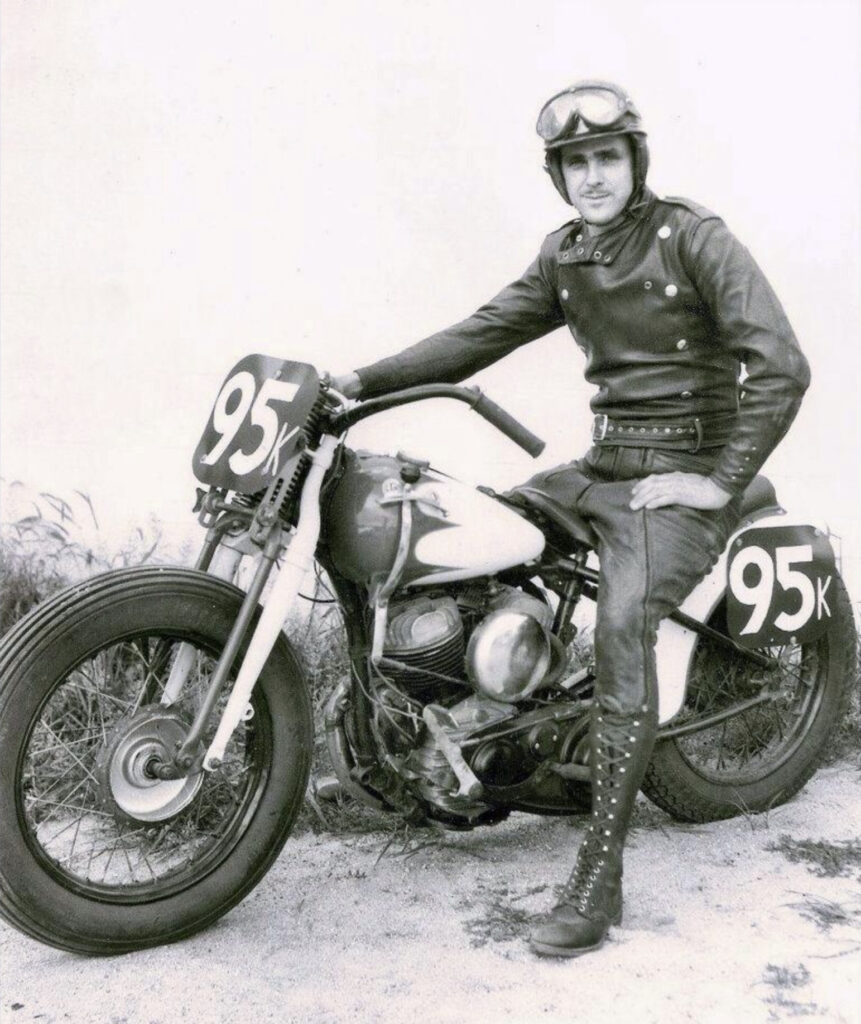
Racing rider in the late 1930s or early 1940s aboard a Harley-Davidson WR with scallop paint scheme. The rider wears full Leathertogs gear, with an Isle of Man double-breasted snap/zipper jacket and tight-fitting trousers for racing at Daytona. [Riley Ward archive]
Every jacket was finished with a distinctive satin-silk woven label, featuring the Leathertogs emblem—complete with motorcycle and airplane graphics. A typewriter was used to add the customer’s full name and home address to the label, making every piece uniquely personal and traceable. Through Leathertogs, Henry Shaw elevated motorcycle gear into a personalized art form.

Eric Shaw in his two-tone

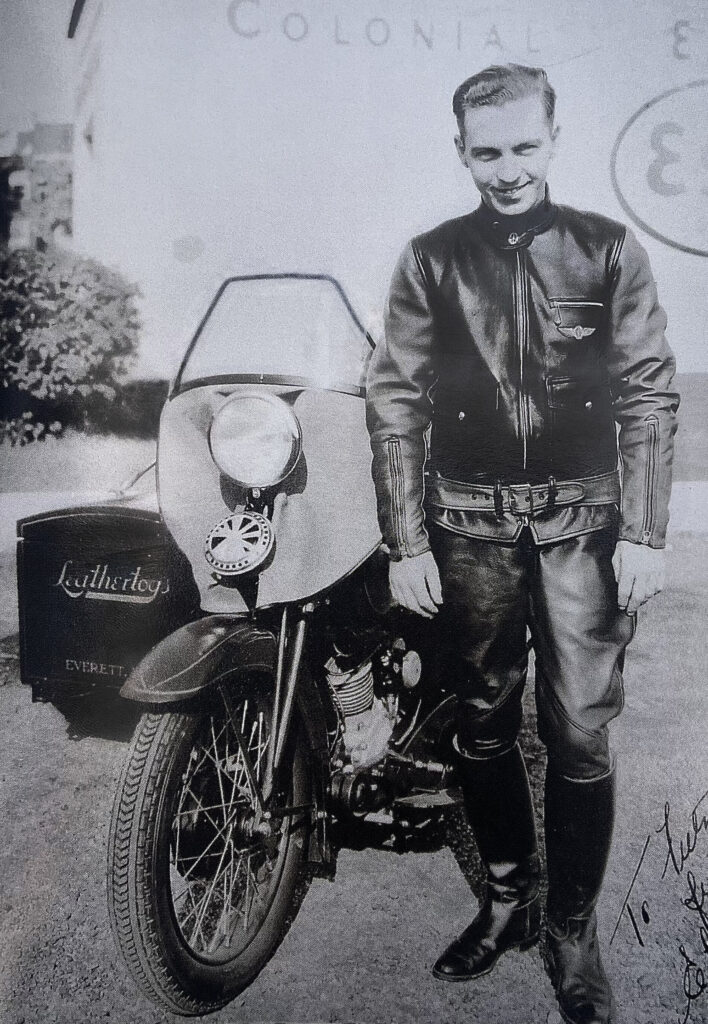
Many top motorcyclists, including Ben “Benny” Campanale (Daytona 200 winner, 1938 and 1939), Arthur “Babe” Tancrede (Daytona 200 winner, 1940), Rod Coates, Johnny Spiegelhoff, and Ray Janelle, wore custom Leathertogs gear. The Motor Maids, a prominent women’s motorcycling club, also favored Leathertogs, as seen in period photographs and in the book Iron Horse Cowgirls by Linda Back McKay and Kate St. Vincent Vogl.
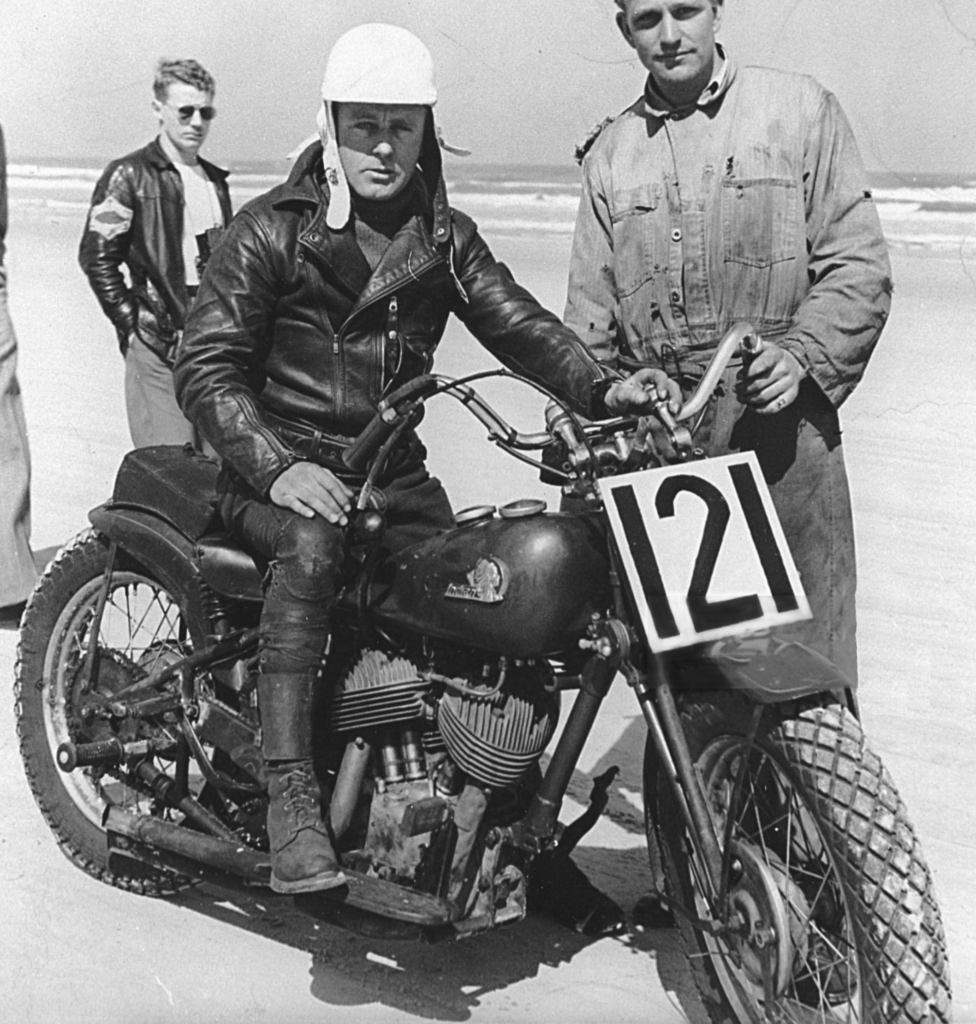
A full Leathertogs outfit on Ray Janelle, gearing up for a race on the beach at the Daytona 500. He looks sharp in his double lapel D-pocket Leathertogs jacket.[Riley Ward Archive]
Leathertogs’ reputation spread especially throughout the Northeast, and photographic and film documentation from that era reveals that several regional motorcycle clubs were frequent wearers of Leathertogs garments. Clubs such as the Tumbleweeds M.C. of Brockton, Massachusetts, and the Royal River Riders M.C. of Lewiston, Maine, had multiple members wearing Leathertogs jackets and breeches.

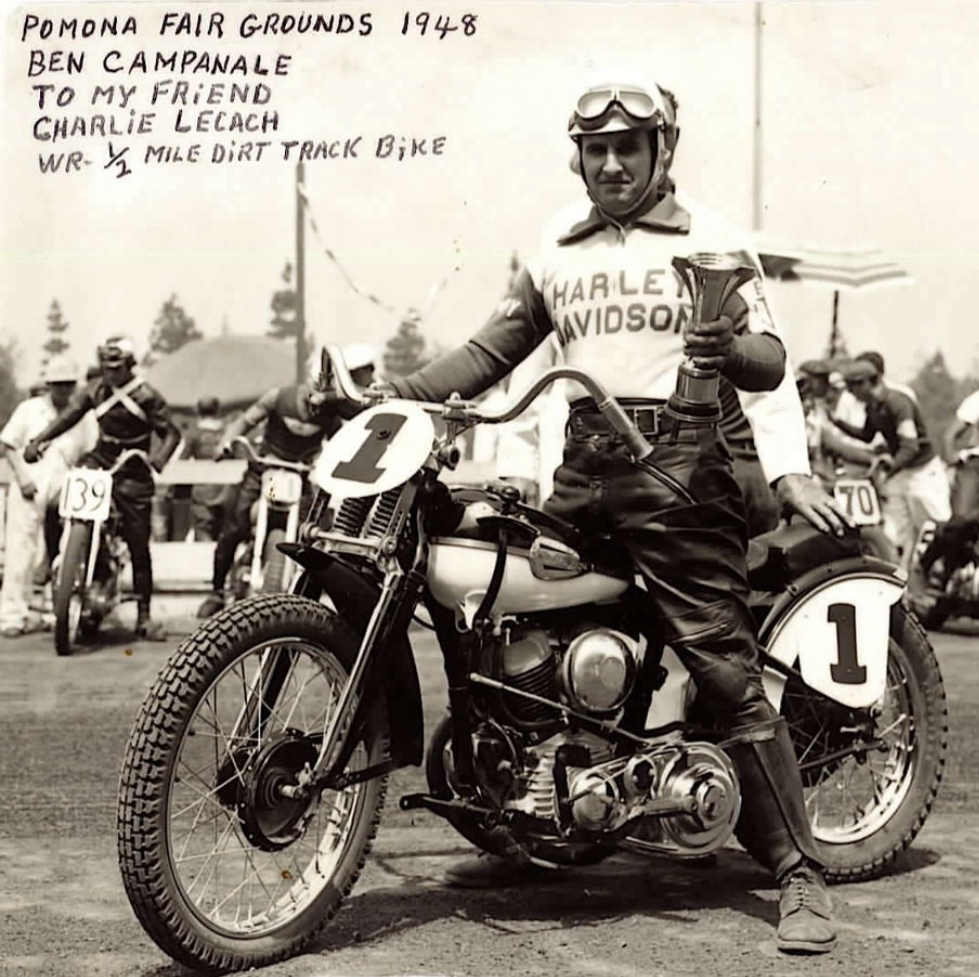
Ben Campanale posing with a trophy aboard his Harley-Davidson WR, with an unusual 21″ front wheel. He is wearing Leathertogs’ “Short Track” horsehide breeches, in 1948. [Riley Ward archive]
Given the relative proximity of these clubs to Everett, Massachusetts, it is likely that some members made the trip to the workshop themselves—possibly for custom fittings and special orders. These real-world riders became rolling advertisements for Henry Shaw’s craftsmanship, helping to cement Leathertogs as a premier outfitter during a golden era of American motorcycling.

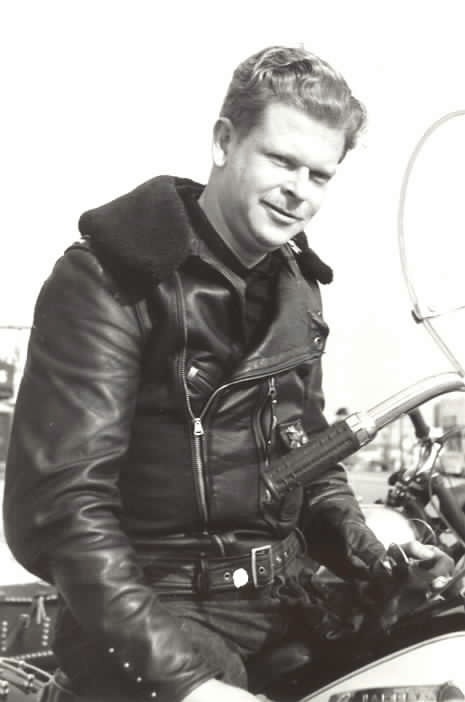
Here is a gentlemen posing on his bike in a rather rare for sight “deluxe” Leathertogs jacket with all the “fixings” and more. Notice the 4 small circular metal cuff studs, d-pocket and the the mouton collar…woweee! [Riley Ward archive]
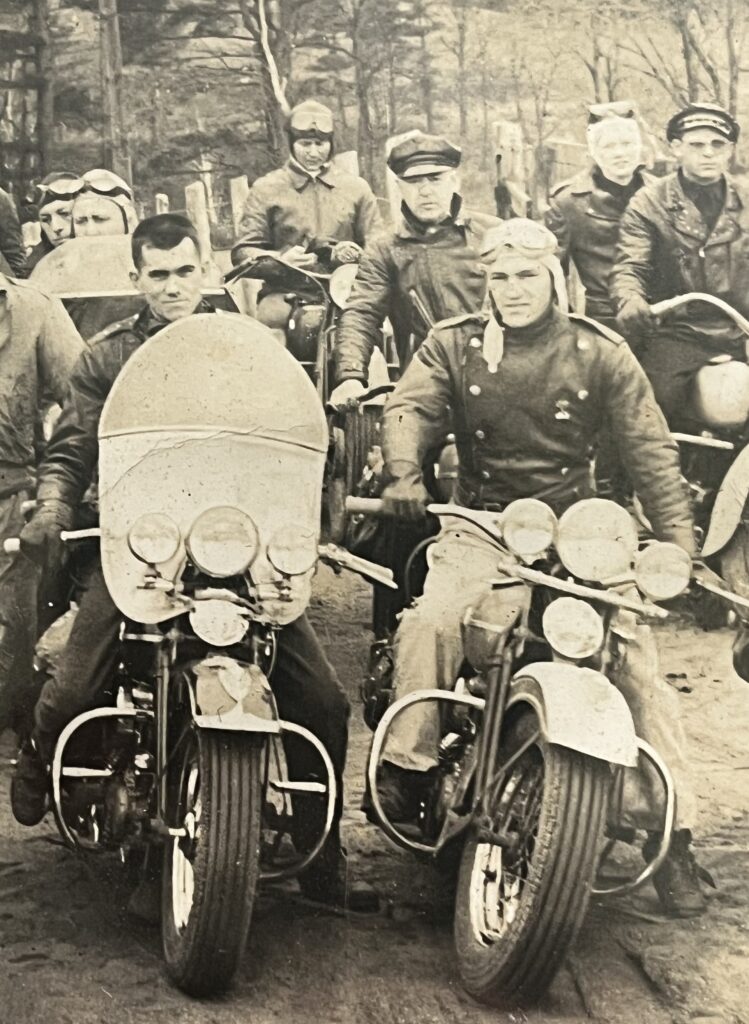
Two members of the Royal River Riders in Leathertogs jackets (although one is not as visible through because of the windshield), aboard a pair of Harley-Davidson ELs.  [Riley Ward archive]
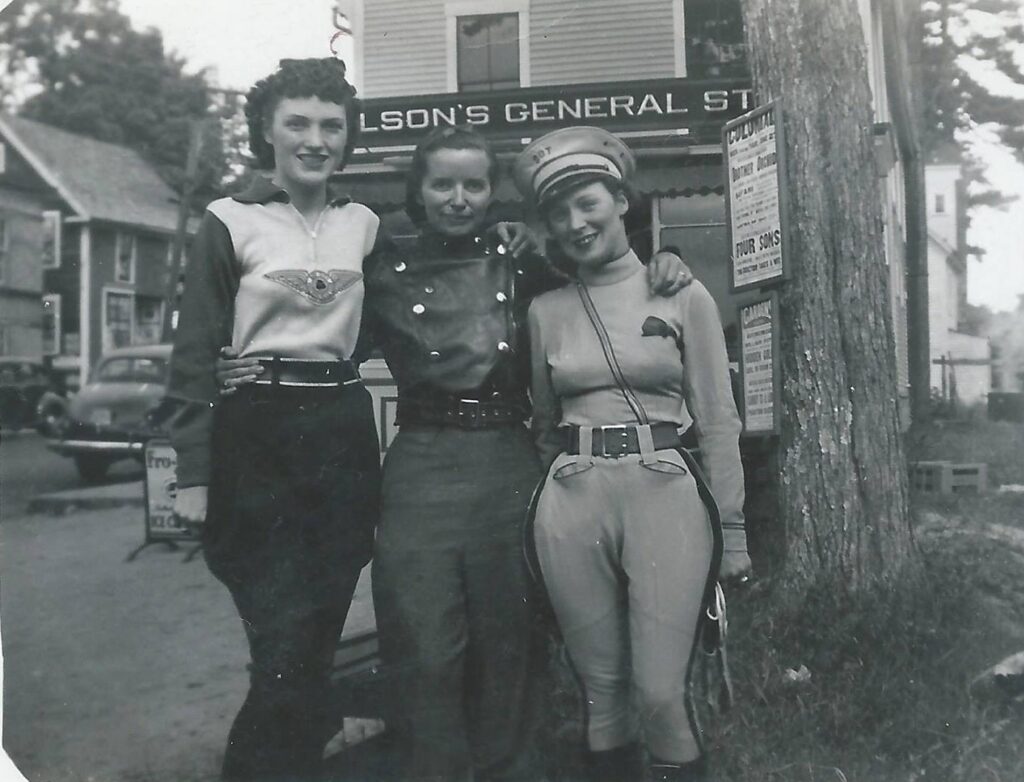
Linda Dugeau with two other Motor Maids – on the right is Dot Robinson – posing for a photo. Linda (in the middle) is wearing her Leathertogs ‘Isle of Man jacket, which compares well with Dot’s wool show outfit, or her friend’s Dehen sweater. [Riley Ward archive]
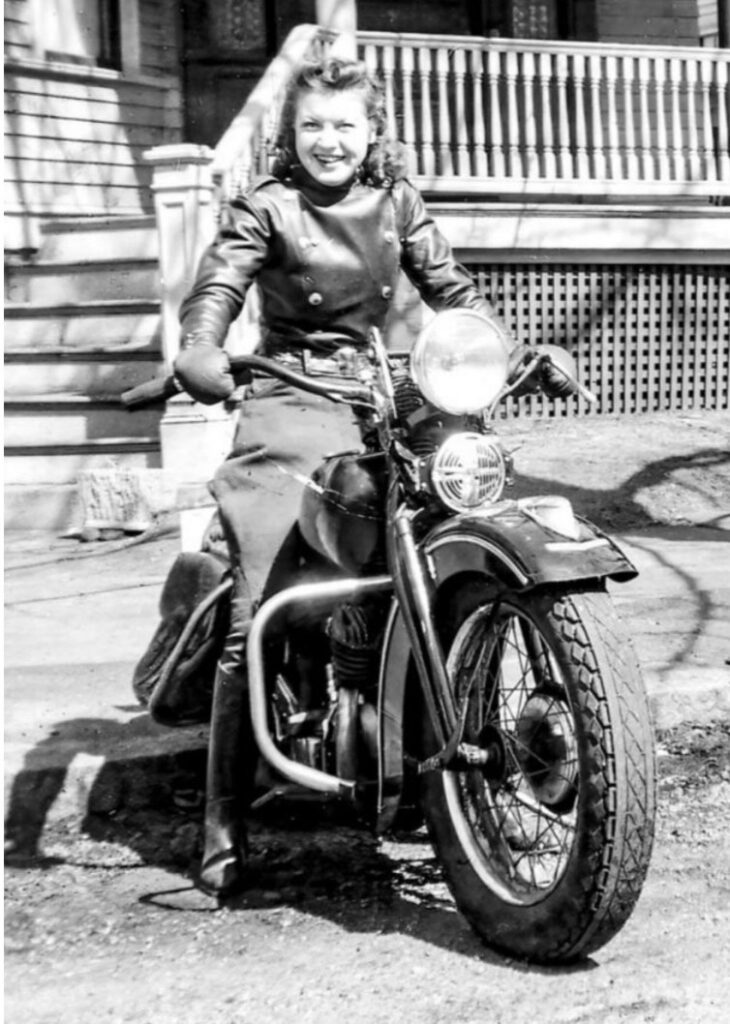
Hazel Duckworth of Valley Falls, Rhode Island, is an ardent motorcyclist who pilots her own iron horse to all the scenic parts of New England. She was also an Assistant Secretary to the Motor Maids. [Riley Ward archive]
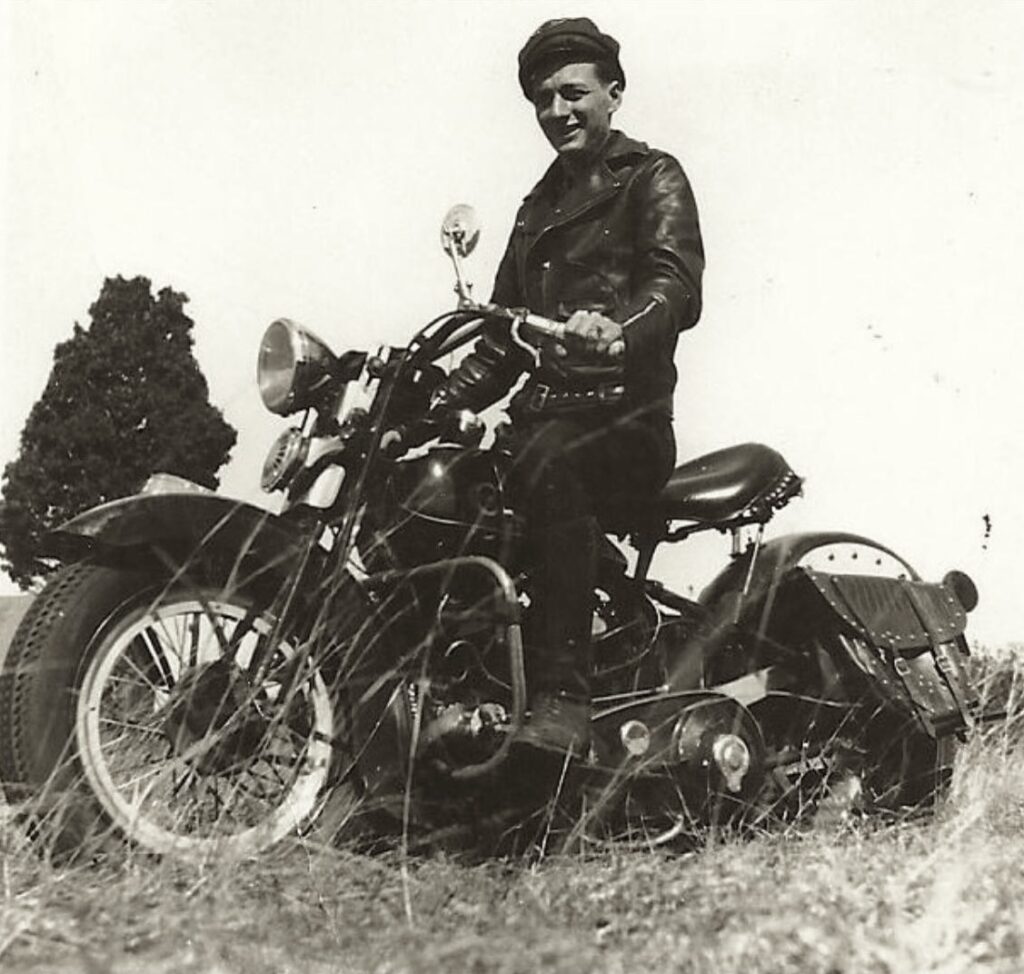
A motorcyclist posing for a snap shot on his Harley-Davidson. He is sporting a double lapel d-pocket leathertogs jacket, a riding cap, wool pants and tall leather boots.[Riley Ward archive]
 

Riley Ward is a vintage motorcycle jacket historian, as well as a collector / material sourcing / aspiring collaborative menswear designer. Check out his Instagram, and follow his history of Leathertogs here.


Related Posts

Inside Motorcycle Studies’ 2026 “Motogeek Summer Camp” 

Motorcycles endure because they…
The Lost Empire of Leathertogs, Part 2

Leathertogs reached its peak in the…
Legend of the Motorcycle Attire

It was an event that changed the…


Subscribe to Our Weekly Newsletter