
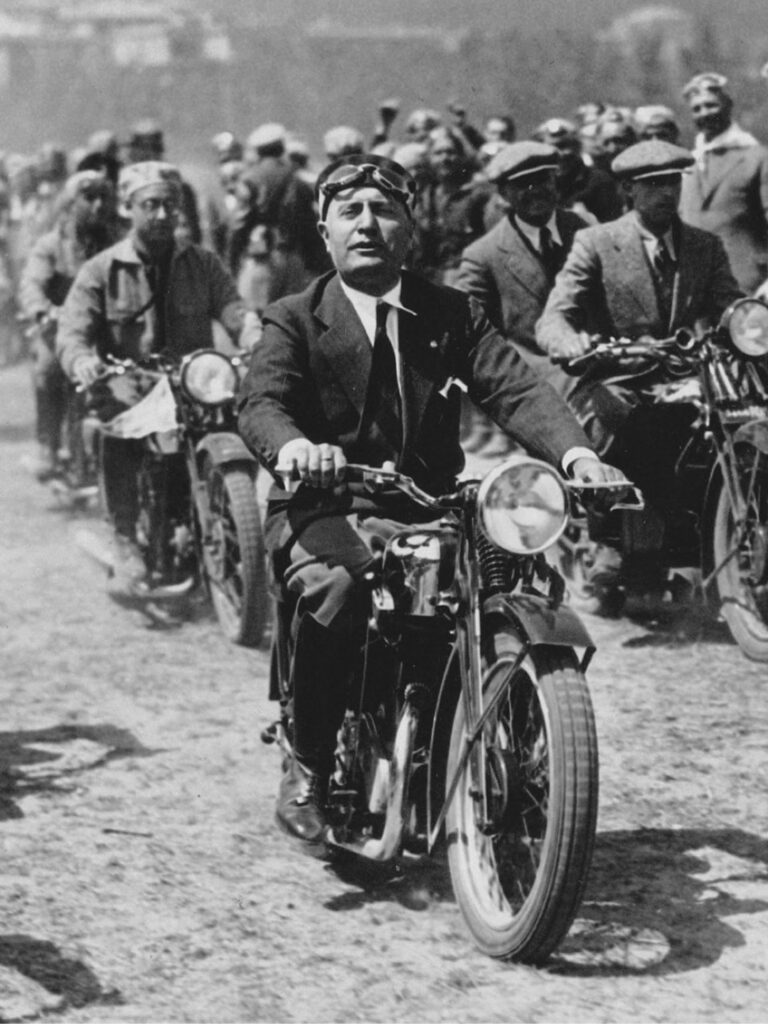
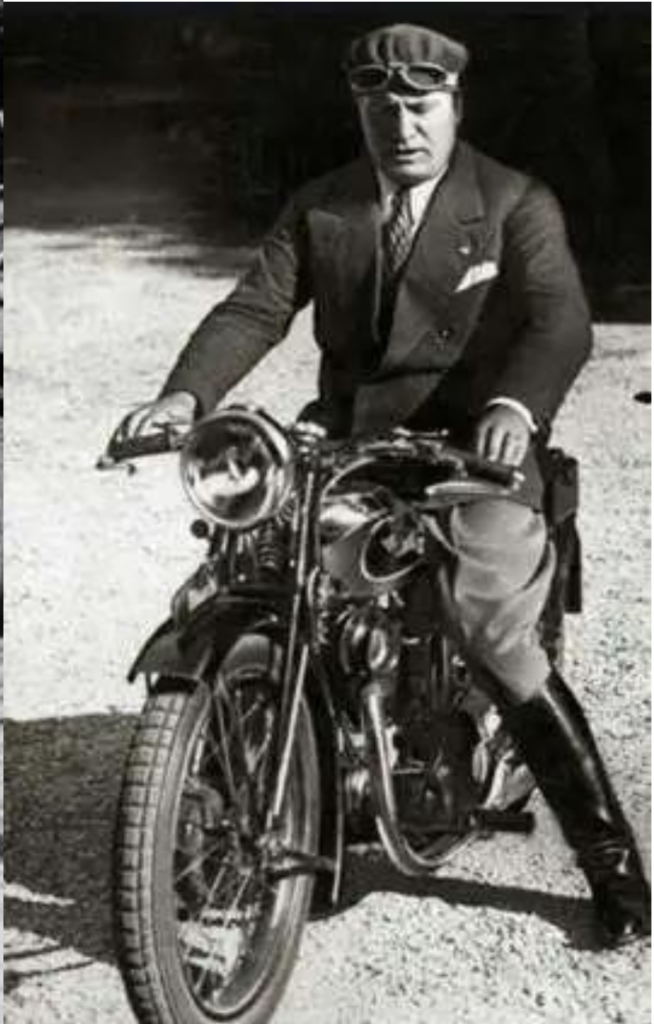
In 1933, Benito Mussolini posed astride a Bianchi motorcycle, embracing the rather grand title: Il Primo Motociclista d’Italia (the First Motorcyclist of Italy), a title he had claimed in 1931. It was a good photograph for a dictator: Mussolini sits squarely atop a powerful machine, looking every bit it’s master. The motorcycle offered him speed, strength, technology, and modernity in one convenient package. But Mussolini was hardly the first Italian to understand what a motorcycle could represent. By the time the Fascist regime made motorcycles part of its imagery, artists, engineers, manufacturers, racers, and advertisers had already spent two decades turning the machine into a symbol of modern life.
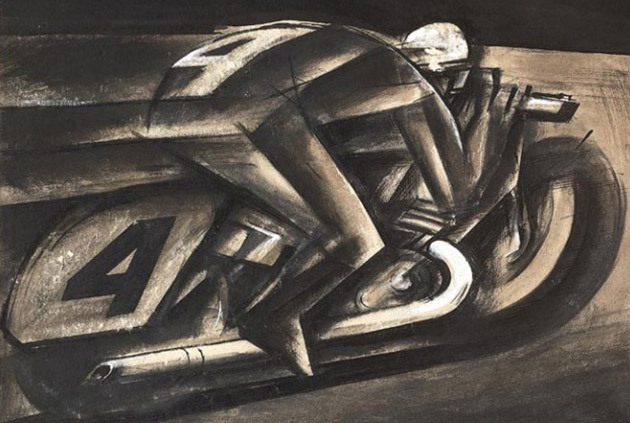
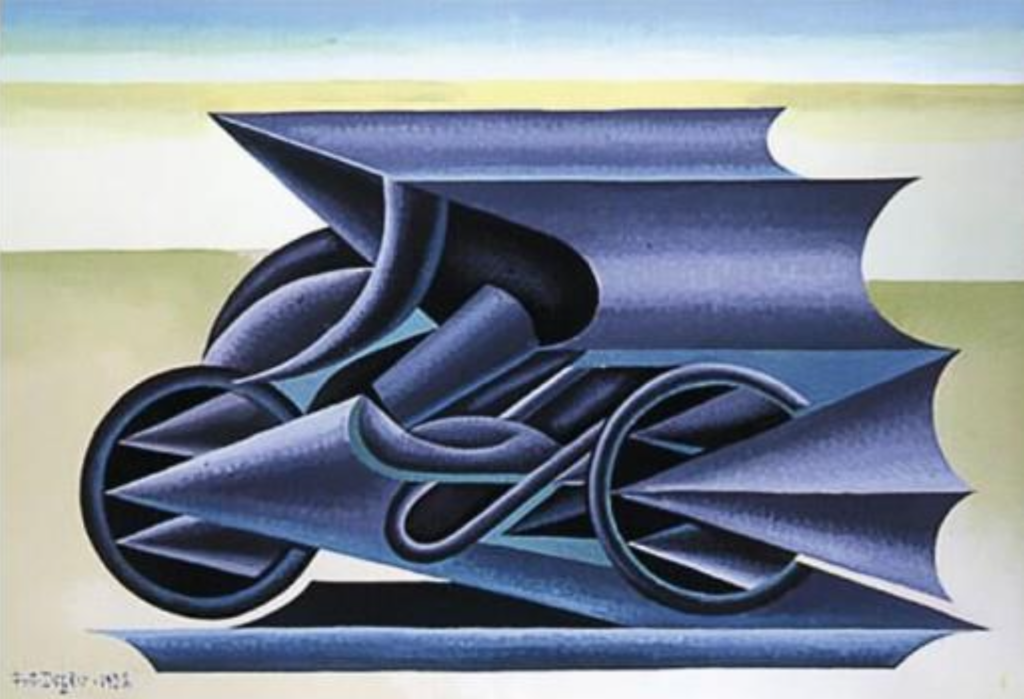
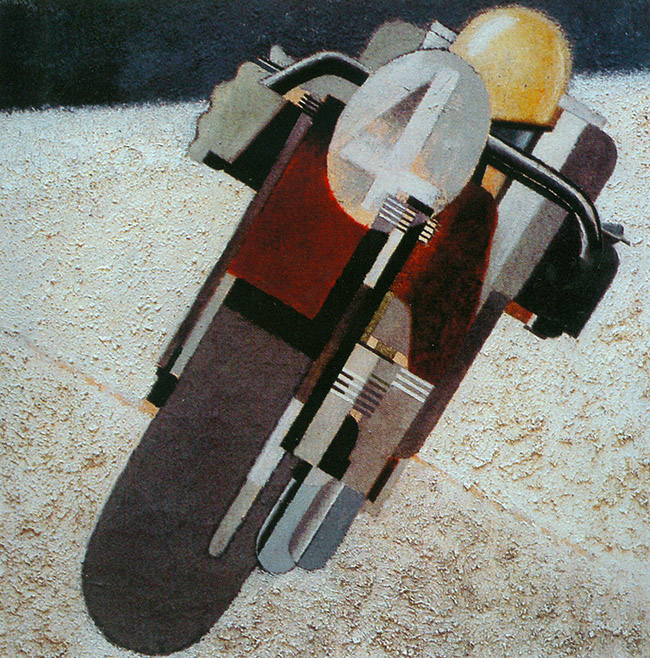
The story begins not in a motorcycle factory but in artists’ studios. The Futurist movement, founded by Filippo Marinetti in 1909 with the publication of the Futurist Manifesto, celebrated movement, machinery, youth, danger, and acceleration as defining features of the modern world. Futurist artists didn’t just want to paint new machines, they wanted to capture what it felt like to live in a world suddenly transformed by machinery. Speed became both an artistic subject and an ideal. The motorcycle was particularly useful to this project because it put the human body directly into the environment. An automobile enclosed its driver. A motorcycle left the rider exposed: to speed, noise, wind, danger, and movement. The rider sat on the motorcycle rather than inside it, becoming part of its motion. For the Futurists, that relationship suggested a new kind of human-machine hybrid: a mechanical “centaur,” part person and part machine.
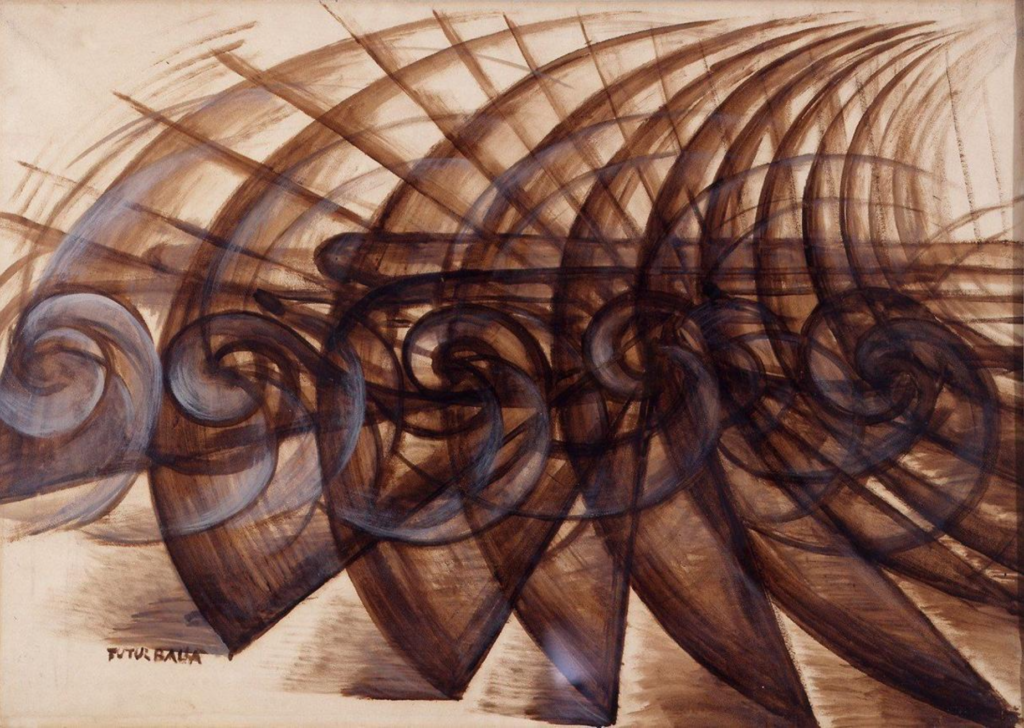
The question was not simply, What does a motorcycle look like? It was: What does it feel like to move through space on one?
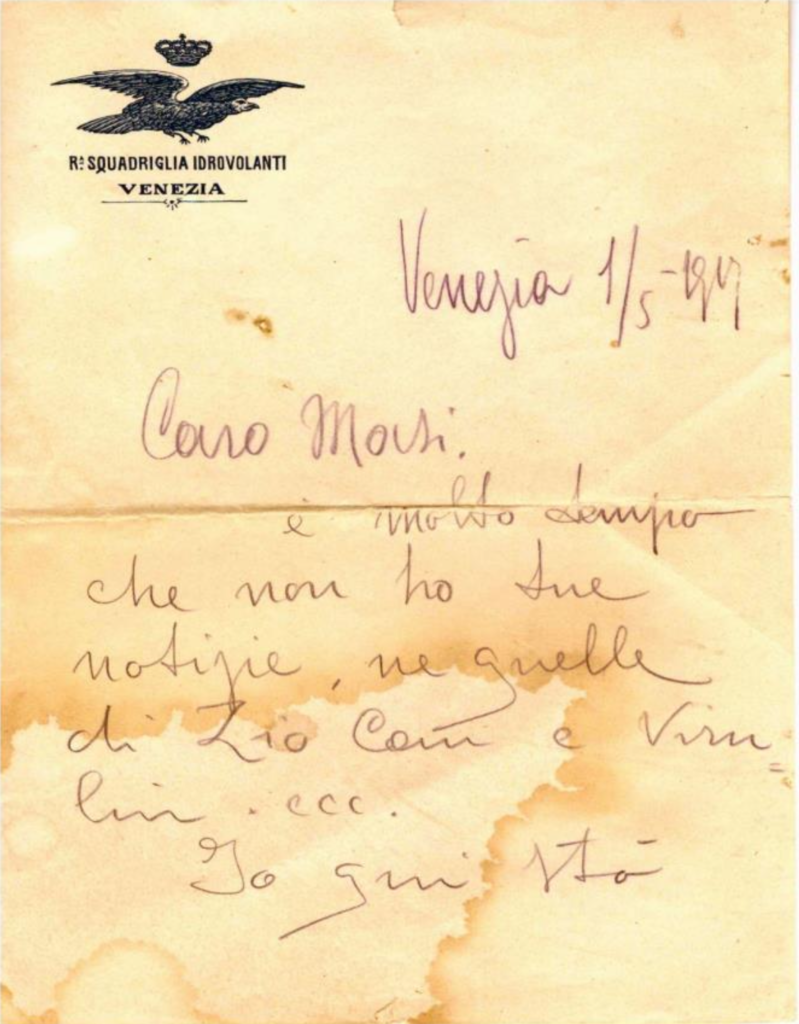
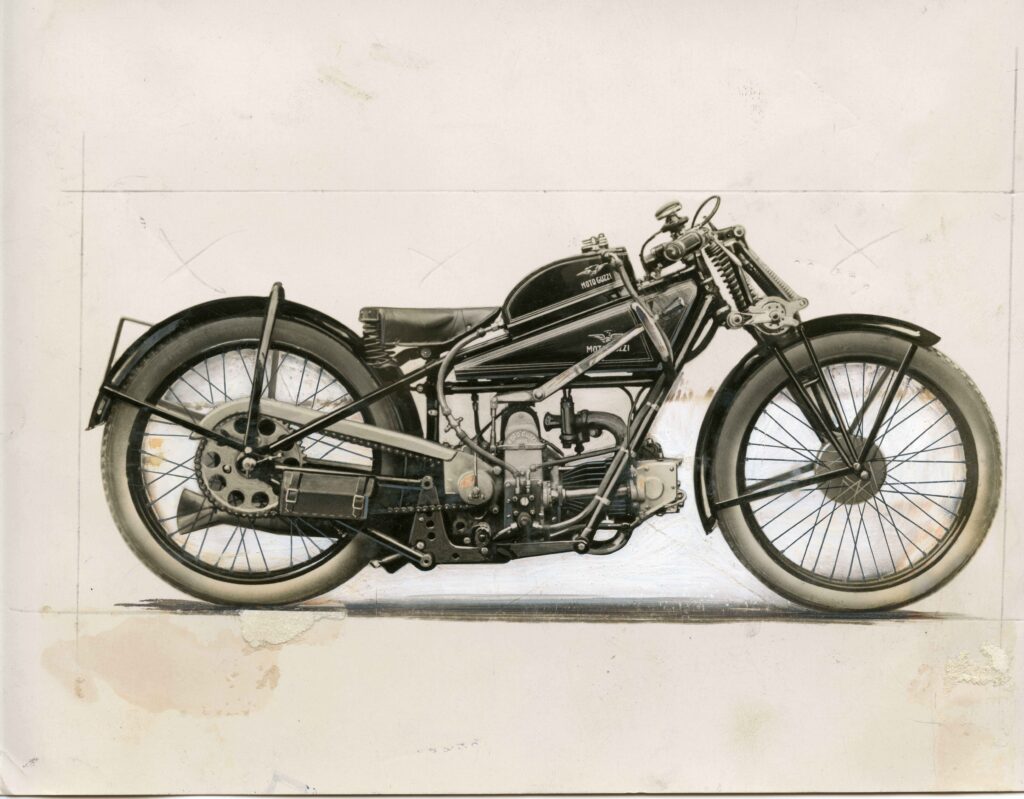
World War I gave some of the Futurist’s artistic fantasies a much more practical setting. Military aviation brought pilots, mechanics, engineers, and machines together in new ways. Aircraft engines, technical expertise, speed, and mechanical skill became matters of national importance. When the war ended, that technological culture did not simply disappear. It moved into civilian life. The Moto Guzzi brand emerged directly from this world. Carlo Guzzi and Giorgio Parodi both served in the Servizio Aeronautico della Regia Marina during the First World War alongside their friend Giovanni Ravelli. Guzzi worked as a mechanic responsible for aircraft engines. Parodi and Ravelli became military pilots. Ravelli was also an accomplished motorcycle racer, and Guzzi had already developed a deep interest in motorcycle design. During the war, the three men began discussing the motorcycle they hoped to build. Ravelli never saw the results of their discussions: he died in a test-flight accident on August 11, 1919. Two years later, on March 15 1921, Guzzi and Parodi formally founded the Società Anonima Moto Guzzi in Genoa. In Ravelli’s memory, they adopted the winged eagle used by the naval aviation service as the company emblem.
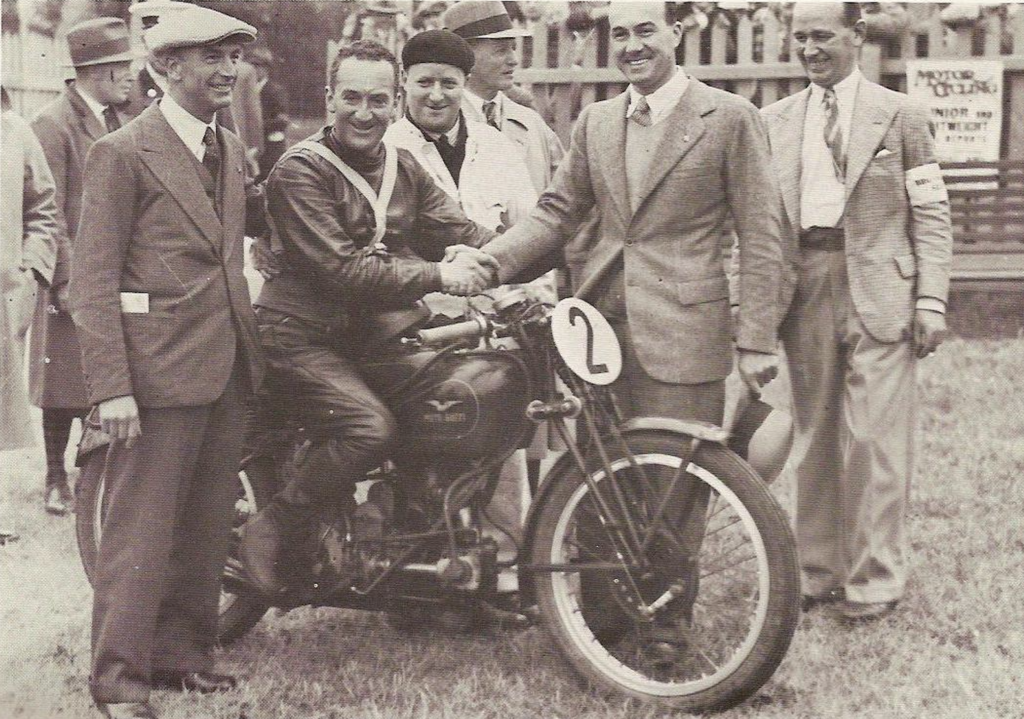
What had been developed for military aviation now helped create civilian mobility. This is where Futurist vision and the war’s technological culture began to converge. Artists had imagined a world in which humans, machines, and speed were increasingly inseparable. Moto Guzzi built motorcycles that made that relationship tangible.
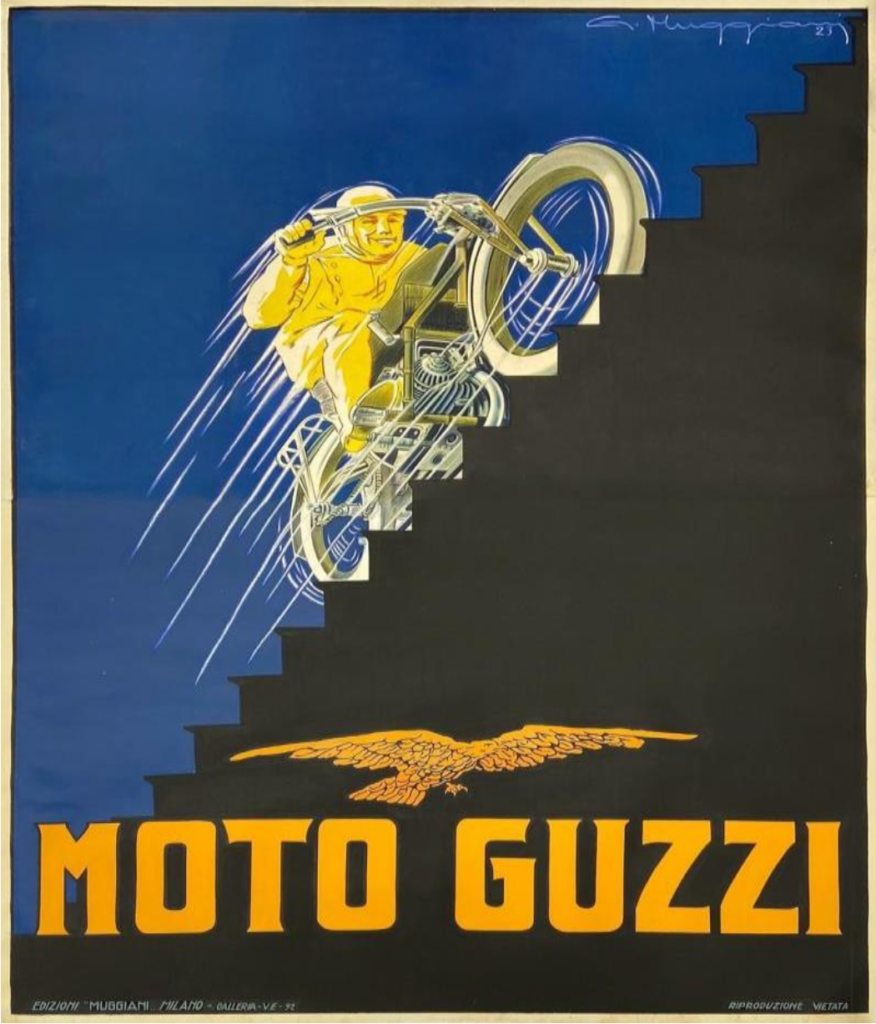
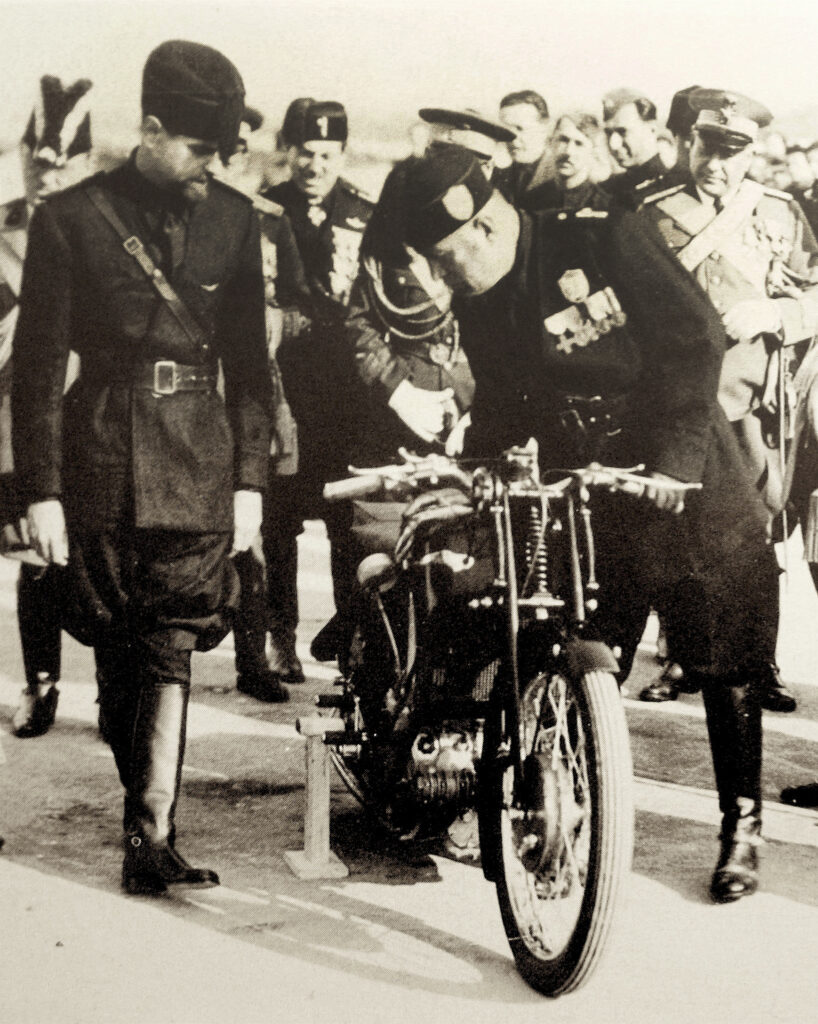
By the late 1920s and early 1930s, the Fascist regime was becoming increasingly interested in the political possibilities of mechanized modernity. The relationship between Futurism and Fascism was complicated: it would be misleading to draw a straight line from Futurist art to Fascist politics. Some Futurists, most notably its founder Filippo Tommaso Marinetti, embraced Fascism, but the movement also contained competing political and ideological currents. But the Fascists didn’t need to invent the cultural language of speed and machinery. It was already there. Speed. Youth. Physical strength. Technology. Machines. The Italian Fascist party appropriated those ideas and put them on display.
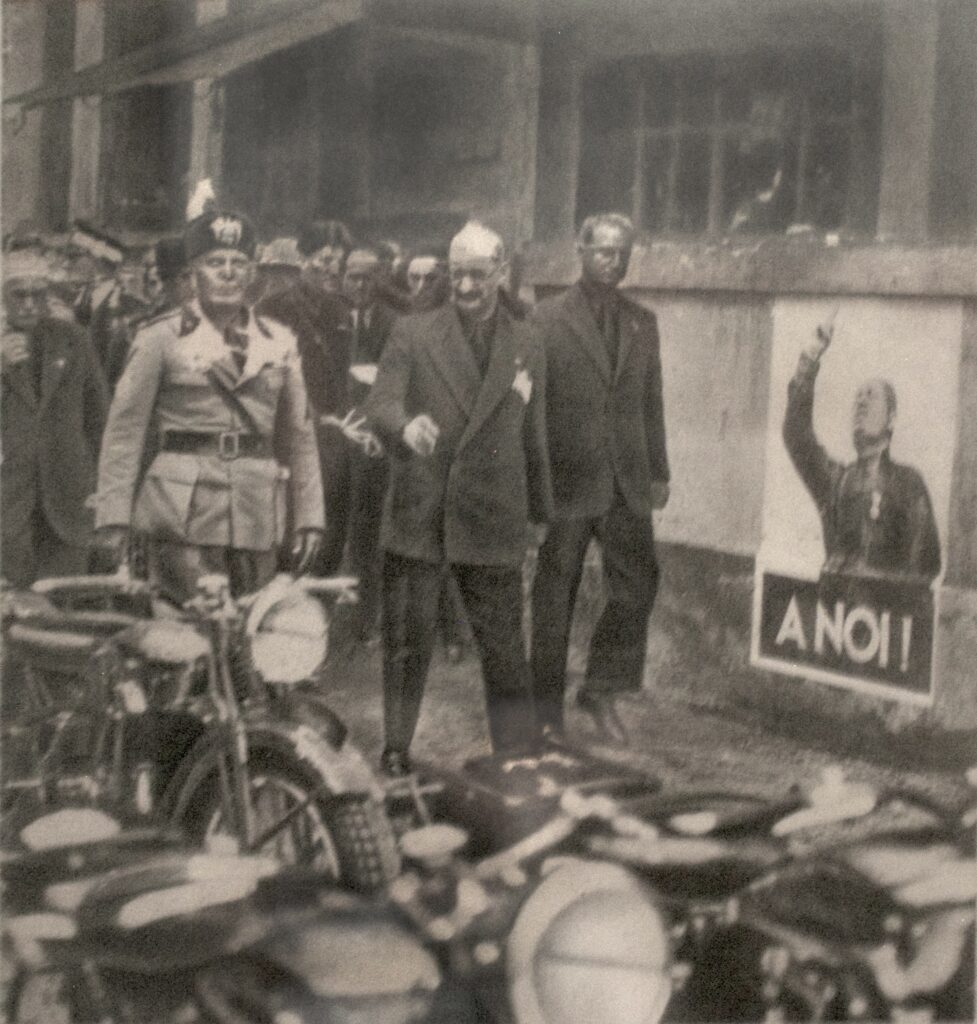
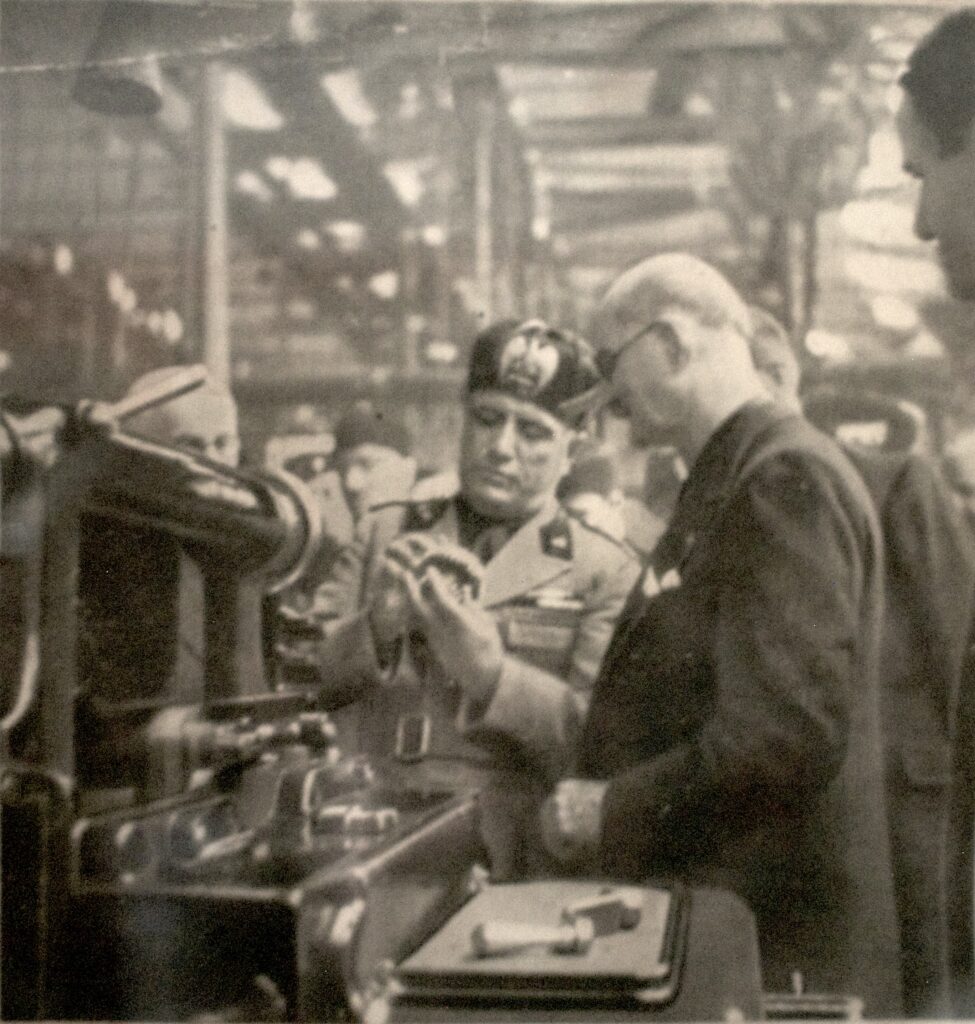
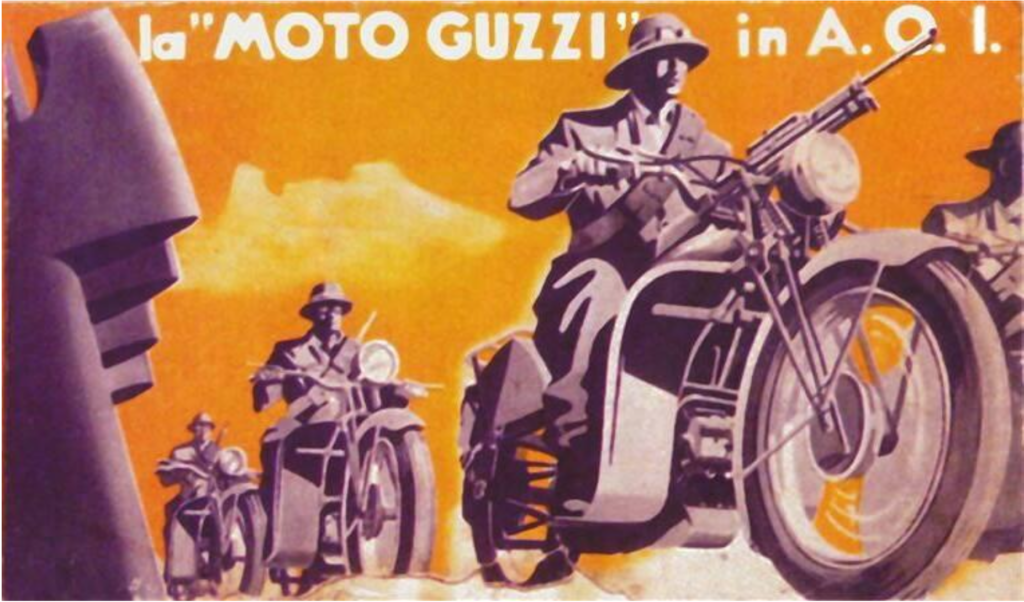
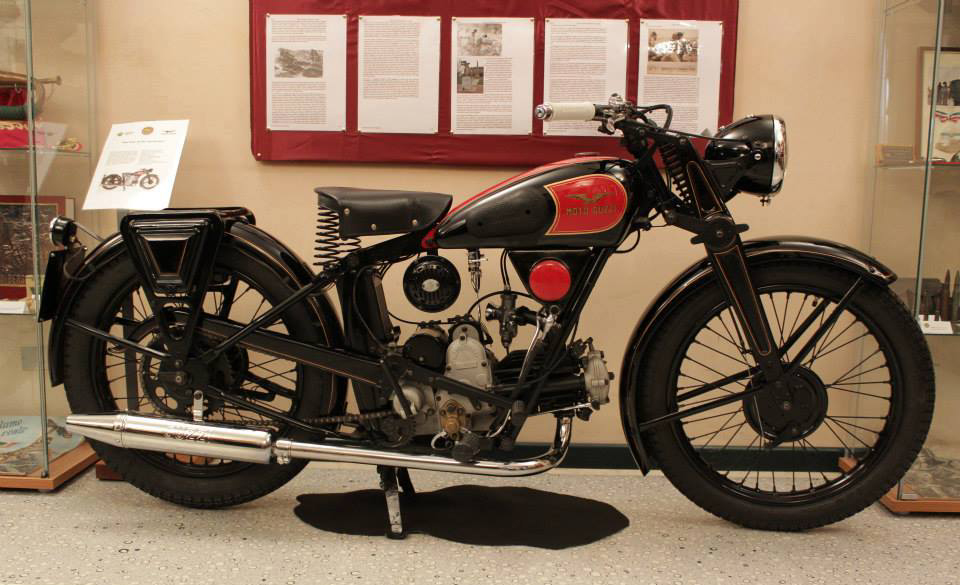
He did not have to invent those associations. He simply climbed onto the machine and wrapped them on the body of the nation’s leader.
Racing for Italy
Motorcycle racing tells a similar story. The Fascist regime did not invent this sporting culture. It gave it a new political vocabulary. Italian road racing was already well established before Fascism. The Coppa Regina Margherita, held in 1911 to mark the fiftieth anniversary of Italian unification, was among the country’s earliest long-distance motorcycle events. The 1914 Circuito d’Italia helped establish the tradition of long-distance road racing that later produced the Motogiro d’Italia, while the Raid Nord-Sud between Milan and Naples ran annually from 1919 through 1925. From 1932 to 1936, the revived race ran as the Milano-Napoli and was known as the Coppa Mussolini. In 1937, the course was extended south to Taranto, becoming the Milano-Roma-Taranto.
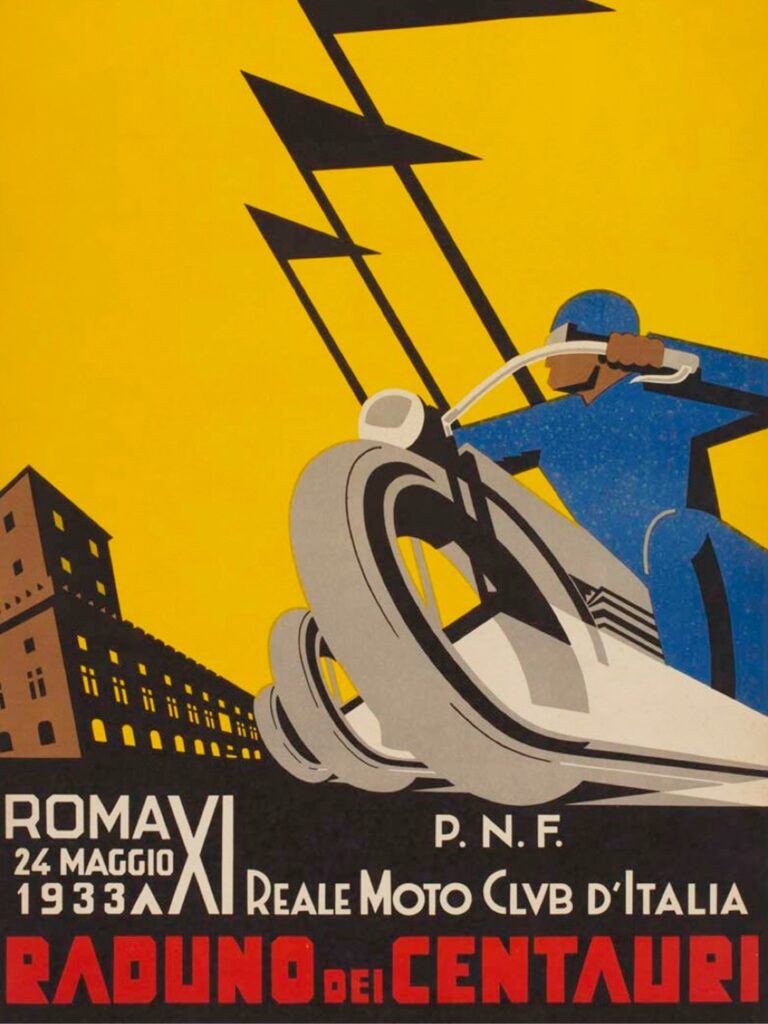
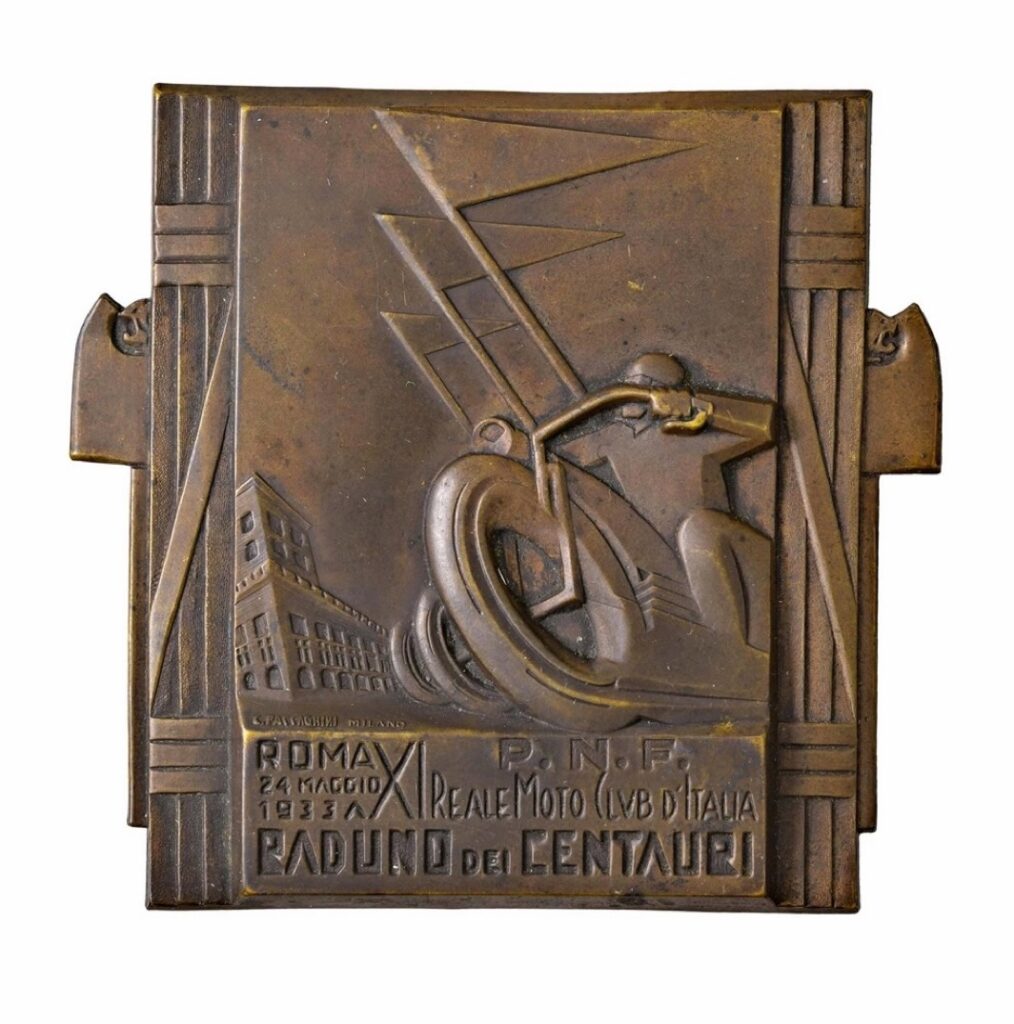
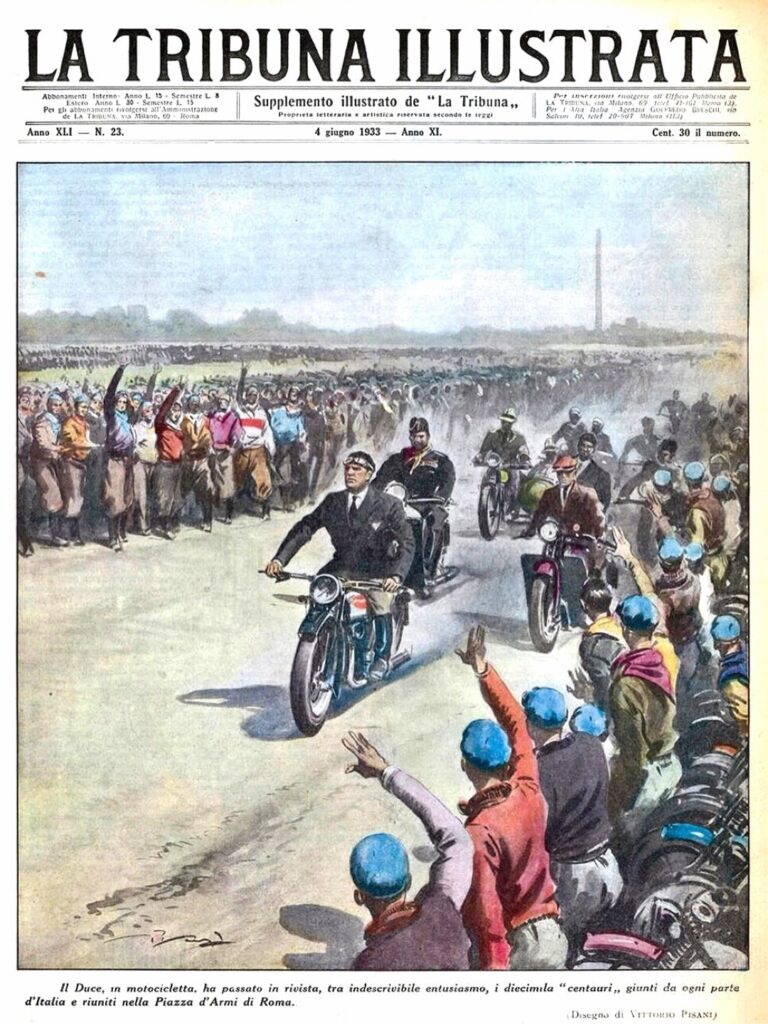
Mussolini’s claim to be Il Primo Motociclista d’Italia carries a certain irony. By 1933, there was nothing “first” about the motorcycle’s place in Italian modernity. For over two decades, artists had imagined its possibilities, engineers had built them, manufacturers had put them into production, advertisers had made them desirable, and racers had turned them into public spectacle. Fascism did not create those meanings: it inherited them and put them to political use.
*I presented a version of this paper, “The First Motorcyclist: Futurism, Fascism, and the Making of Italian Motorcycle Culture,” at the New York State Association of European Historians conference, SUNY Cortland, October 10, 2026.
Related Posts
The Vintagent Classics: The Italian Machine
I've just seen the greatest motorcycle…
The Universal Racing Motorcycle
Dimitri Coste attempts the impossible:…
Legend of the Motorcycle Attire
It was an event that changed the…
Ahhh the joys of revisiting Italy’s fascist past … thats corresponding so well to our AutoCratic enshitified present
Here’s a lil wisdom for y’all ;
” Technology … along with the supreme leader’s sole infallible wisdom and knowledge will solve all your problems ”
Sound familiar ? Wink wink 😉
That has been in its many forms the siren song of Fascism , Autocracy and Dictatorships from day one … and still is today ( re ; Automated Cognition and … well you know ) .
Problem is in each and every case ;
1) The technology is almost ALWAYS expensive therefore intended for the elites only … the working class and common man/woman be damned
2) 9 times out of 10 … the technology in question does not function as advertised …
3) RULE #1 ( philosophy and science / engineering 101 for dummies ) Technology cannot …and never will solve the problems technology has created
4) RULE # 2 … more often than not the consequences of any technology / sciences in question outweighs the benefits at a ration of 3 to 1
5) RULE #3 … technology and or science put forth in the quest for either control or profit … is 99,9999& of the time ..
….Utter BS … intended to solely benefit the creature / manufacture … not the end user
Yet over and over .. time and time again … like lemmings to a cliff … the majority of us fall for it hook line and sinker .. year after year … decade after decade … century after century .. since the dawn of modern civilization
And ahhh … as for the Italian M/C industry of the past ? Much as it pains me to say this as an Italian American … Oh yeah … they’ created some of the most beautiful motorcycles on the planet …. along with the most unreliable – rust faster than you can ride em – they’ll get ya there but don’t bet on em getting you back – and god forbid you need a spare part … almost …. and I emphasize … almost as bad as the Brits and their Lucas Prince of Darkness electronics etc
As for Italians M/C’s today ? Go ahead … find me one … just one that is MANUFACTURED in Italy … rather than manufactured in China India Viet Nam etc … then barely assembled in Italy … making em … well … still designed in Italy .. and a damn sight more reliable
But to end on a positive … damn fine article Dr Pojmann … damn fine indeed
Commit random acts of defiance
😎
And ahhh .. FYI … if anyone cares
Got the advanced degrees , studies and connections to back up the above …. not to mention …
My Italian extended family … great grandfather … aunts .. cousins etc … lived thru the joys of Fascist Italy … as well as being part of the resistance … not to mention the quasi communist Italy that followed … and I still live by my great grandfathers words to me before he passed ( at age 99 )
” The only thing I hate more than a communist … is a fascist ”
😎