The Sex Machine
Words: Paul d'Orléans / Photographs: Rita Minissi
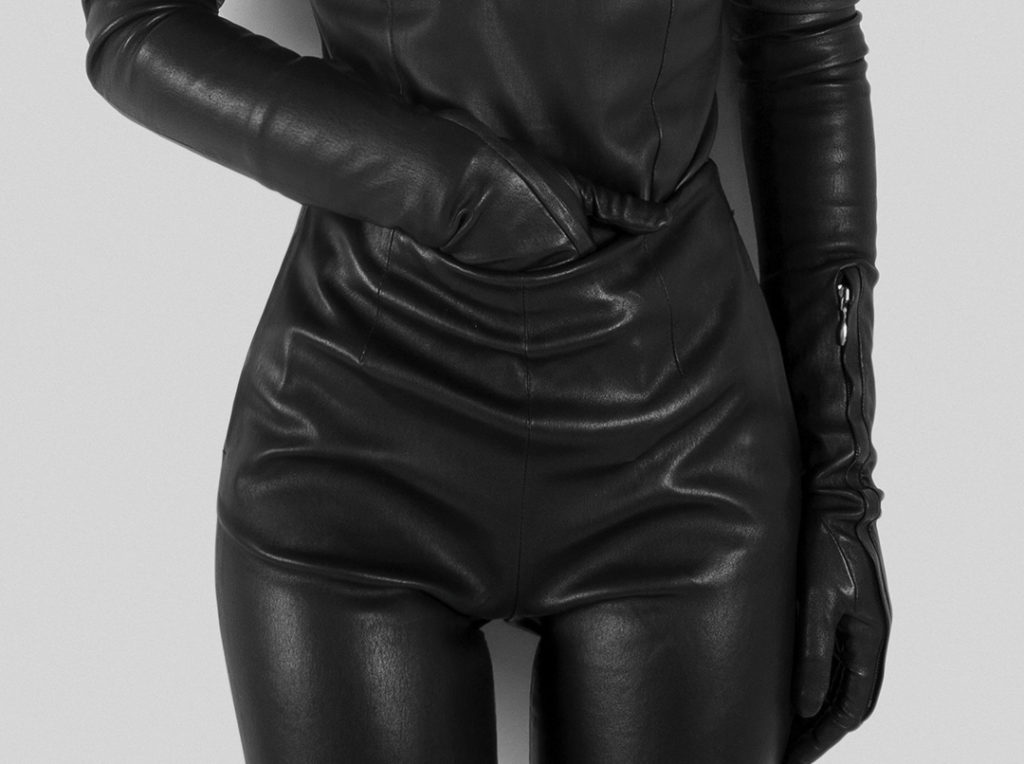
She squeezed me, shouting over the freeway wind-roar, “Guess what?” ‘That’ was the latest in a long string of confessions, at which I could marvel but sadly never share: she’d had an orgasm while riding pillion on my vintage Triumph Bonneville, buzzing at a steady 65mph. It’s a heady old cocktail, sex and motorcycles, stretching back to Art Nouveau posters with bloomer’d ladies astride crude motor-trikes: hardly rousing now, but straddling and riding was understood as the playground of Victorian sex bombs. Women are the fastest-growing segment of motorcycle sales today, and despite clichés of choppers draped with bikini babes, female riders imagine new scenarios of sexuality and power with bikes.
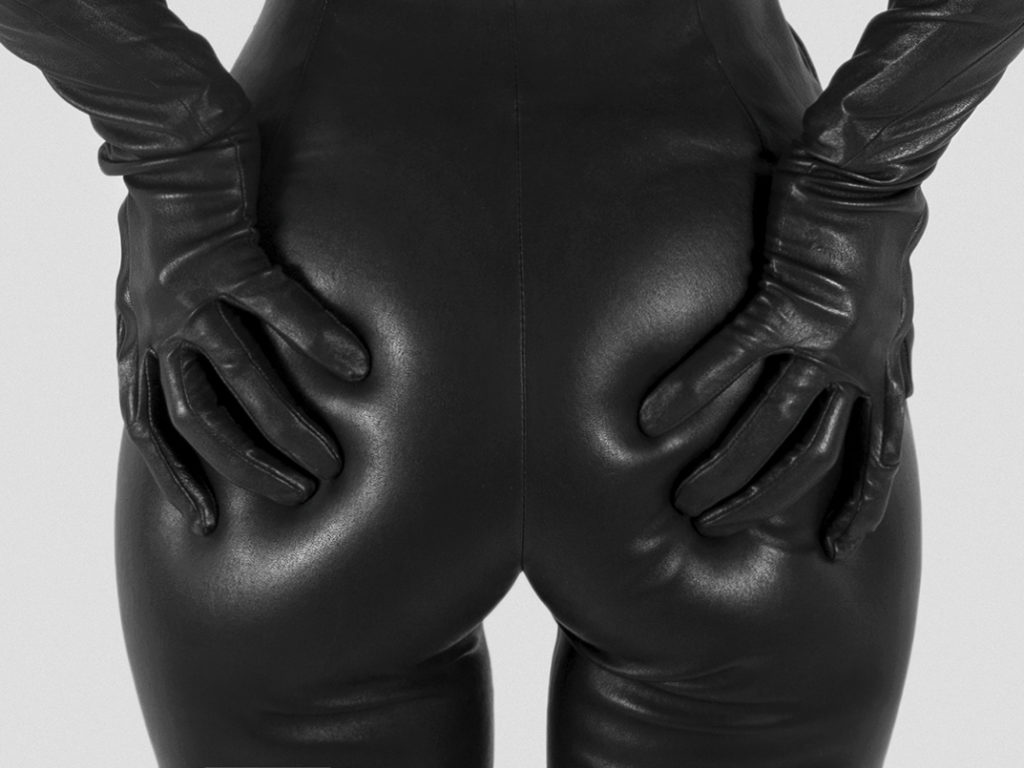
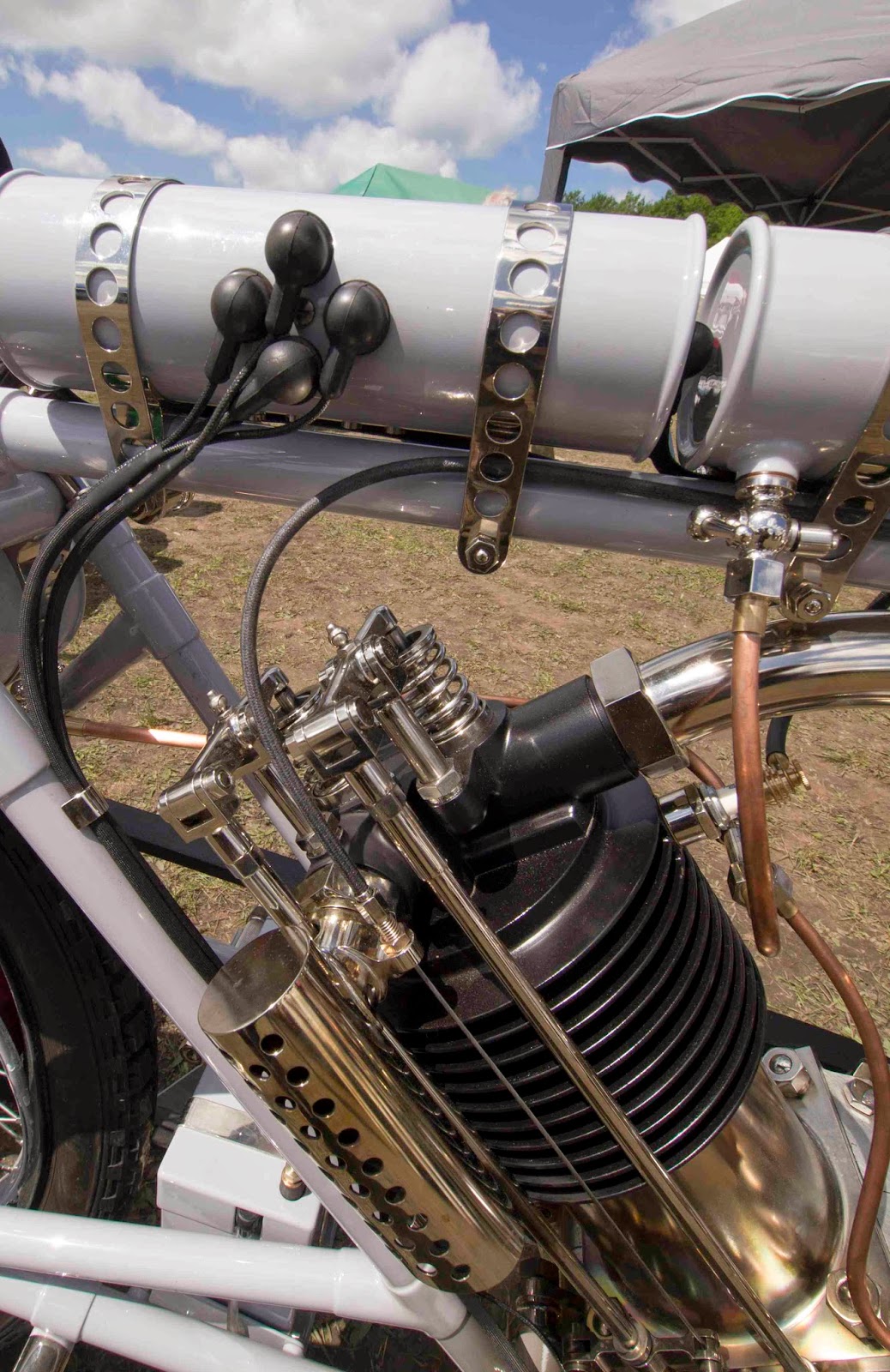
The motorcycle is the second most intimate of machines: the first being, of course, the vibrator. An older motorcycle combines these intimacies, because they too vibrate. Within the aluminum confines of an engine, hot steel shafts push oily pistons up tightly-bored holes, with explosions every four strokes. A motor is a natural sexual metaphor, but technical progress has engineered vibration out of new machines. Lovers of old bikes embrace vibes as one note in the symphony of flaws adding up to the near-human quality of ‘character’. Before advanced engine balancing systems in the ‘80s, designers could only choose the vibratory and smooth periods for each motor. For example, I own two Velocettes: the touring Venom is dead-smooth at 65mph, while the production-racer Thruxton is glass-table dreamy at 80mph; they’re the same motor, but tuned differently, like instruments. Music works as a metaphor for riding, as we conduct a song of combustion with the wrist, shifter, brakes, and clutch, finding emotional resonance in motion and the exhaust note.
"The motorcycle is the second most intimate of machines: the first being, of course, the vibrator."
I love this music, it transports me in every sense, and while sex frequently swirls inside my helmet on a ride, its my brain, not the bike switching on the juices. Tragic, compared to the ladies, who respond quite differently to their genitals pressing atop a pleasantly buzzing, 400lb machine. Many passengers in my 37 riding years have admitted unexpected pleasures aboard my various motorbikes, and this recent event inspired an email poll: 1. ‘Have you ever?’ 2. ‘Tell me more.’ A few responses: ‘HAHAHAHA never’; ‘I’ve always wanted to share this – yes I love it’; ‘One time, on the back, holding on tight, doing the ton down a California highway on a perfect day’; ‘No - I’m too busy riding’; ‘Once as a passenger, ’96 Sportster, magic hour, he broke my heart, don’t mention my name’; ‘Last time was on Park Ave in a traffic jam smiling at the cab driver next to me.’
The general trend: passengers have more orgasms, but do they have more fun? Given motorcycling’s eternal dance with lethality, a distracting orgasm at the helm of a fast machine binds eros too tightly with thanatos. But as research fodder, the unsung pleasures of the passenger has potential; the unfathomable variety of women’s sexual response clearly extends to motorcycles, as evidenced in my brief survey. We’ve reached Terra Incognita, a great undiscussed erotic secret, hiding in plain sight. More research is needed: stay tuned - we're on the case.

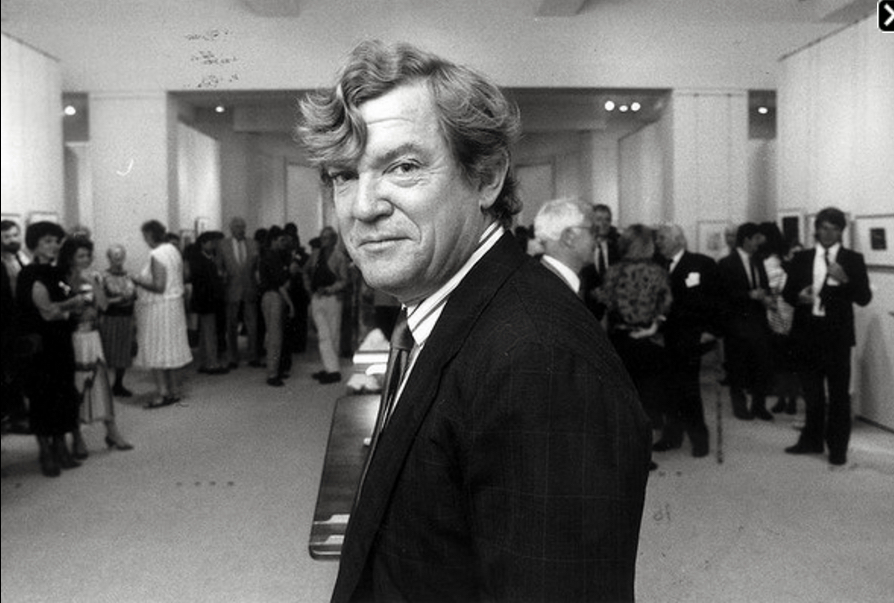
Robert Hughes: Art Critic, Motorcyclist
A champion of Motorcycling has died after a long illness; Robert Hughes, creator/host of the 'Shock of the New' television series and long-time art critic for Time magazine. While artists and public television watchers knew Hughes for his acerbic opinions on art and artists (he once described the work of Jeff Koons as "so overexposed it loses nothing in reproduction and gains nothing in the original"), he was also a motorcycle fan. More importantly, he was the most visible and well-known art critic to defend the inclusion of motorcycles in the Guggenheim Museum, at the 'Art of the Motorcycle' show.
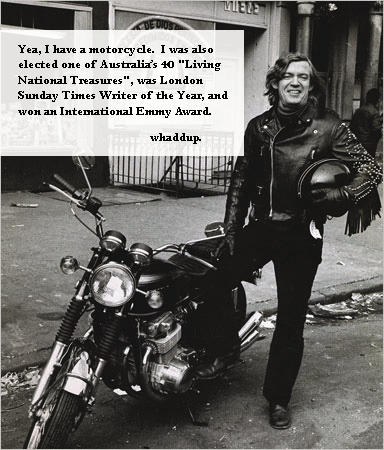
The most famous art critic in the world 'came out' as an avid motorcyclist in his Aug 18, 1998 column in Time magazine, 'Art: Going Out on the Edge': "The fact that the great spiral of New York City's Solomon R. Guggenheim Museum is at present full of motorcycles has annoyed some critics. Not this one. If the Museum of Modern Art can hang a helicopter from its ceiling, why can't the Guggenheim show bikes? "The Art of the Motorcycle" may seem an opportunistic title until you actually see the things. Design is design, a fit subject for museum consideration, and in any case I'd rather look at a rampful of glittering dream machines than any number of tasteful Scandinavian vases or floppy fiber art."
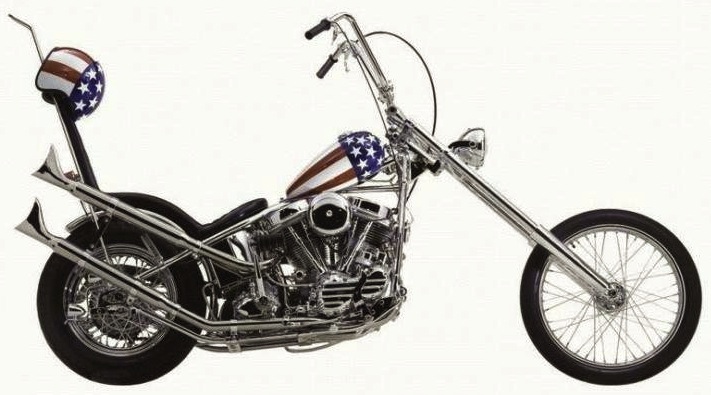
The article laments the inclusion of only a single 'custom' motorcycle in the 'Art of the Motorcycle' show; the 'Captain America' chopper designed by Cliff Vaughs for the film 'Easy Rider': "...everything in [the show] is stock, so that it ignores the creative ingenuity that has gone into making the custom bike one of the distinctive forms of American folk art." Of course, the international explosion of Custom motorcycles since this 1998 article has merely reinforced Hughes' opinion on their importance at the 'art' end of the motorcycle spectrum.
Hughes wrote of owning two Norton Commandos before moving on to Honda CB750s in the early 1970s, and to having a bad accident on a Kawasaki, which ended his biking career. A fascinating and controversial writer, he drew from a deep reservoir of historical knowledge to support his arguments, whether or not you agreed with them. More important to The Vintagent, that seminal Time article championing Motorcycles was read by millions, far more than than were able to attend the Guggenheim show itself, and helped usher a sea change in public opinion about bikes, as worthy subjects of study and exhibition.
For Hughes' obituary in the New York Times, click here.
For a selection of his scathing art criticism, click here.
Song of the Salt
In the last Ice Age, Lake Bonneville was a 20,000 square miles large and a thousand feet deep; abused by climate changes and the bursting of natural dams over the past 30,000 years, only a few actual lakes remain, remnants of this once-mighty inland sea. Ringed by high mountains and fished by locals ten thousand years ago, caves a hundred feet up the mountainsides, the former shoreline, are still being discovered with old fishhooks, woven sandals, and bones. Distill a lake that large into the atmosphere, and liquid memory becomes a thin, hard layer of salt, dead flat, but not smooth. Bonneville State Park is enormous, and entered from a 10-mile strip of asphalt called the ‘boat ramp’ - the lake’s memory hovering above.
Bonneville is still a lake at times, as every winter the 4000’ altitude brings rain enough to fill the shallow basin with a few inches, refreshing the surface as a season-long tide smoothing the surface. The alluvial deposits ringing the lake grow a salt-resistant scrub as they descend to the flat, dotting the now-dry waterline with tufts of soft green for a mile as packed silt gives way to a dusting of white, then a thin and soft crust, and finally, a mile and a half from the edge, an inch-thick, hard layer of million-year old salt.
The salt is a terrible place to go fast, and the worst possible place for machinery.
But the salt is disappearing, the hard center pan shrinking every year, as the winter lake is pumped away to extract valuable minerals. The mining companies are obligated to return the salty water and refill the basin, but this costs money, and their years of skimping leave less and less salt, and a grassroots movement to ‘save Bonneville’
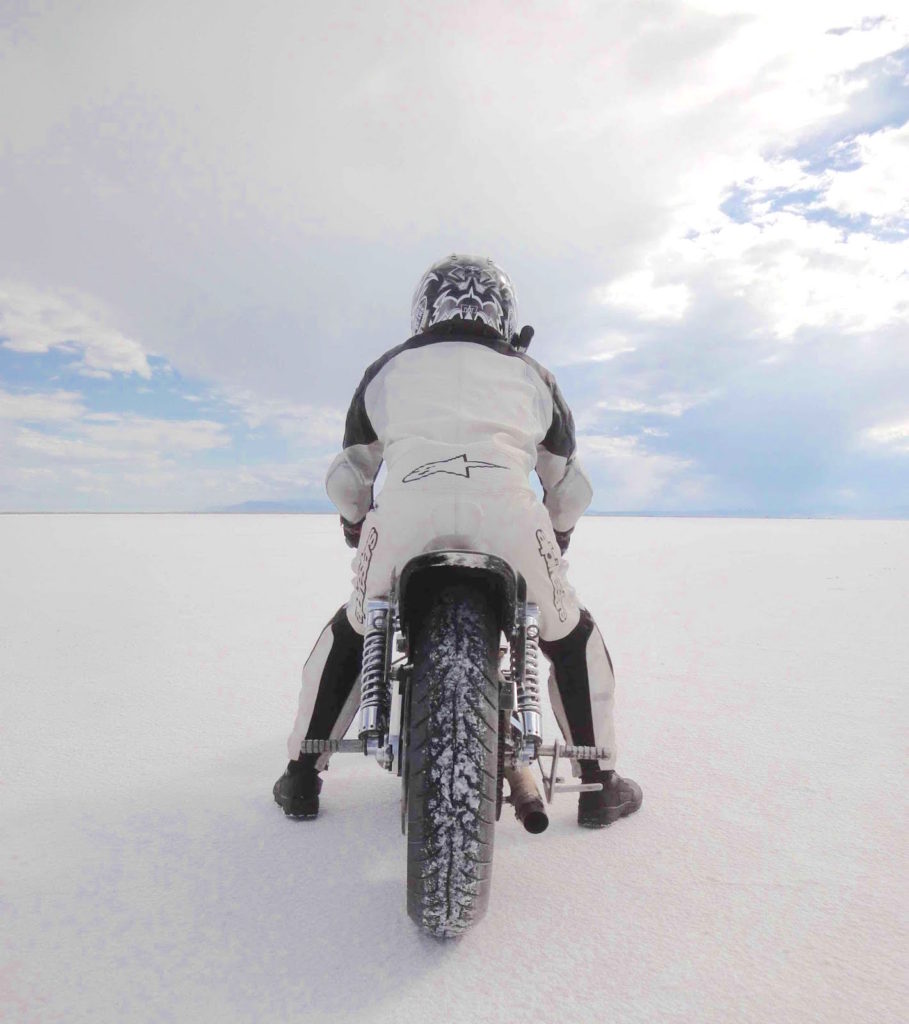
The center of the salt flats is no place for a human, utterly forbidding, with no water, no plants, no bugs, visually disorienting, and plenty hot. The nearby mountains are no guide to scale or distance, their bases floating on mirages, the dry clarity of the air bringing them close, but an exploratory hike in any direction will see you plodding for hours, overheated and dehydrated. For all its inhospitality, the salt remains a place of extreme beauty, a photographer’s paradise, a massive white canvas stretched horizon to horizon, making art of anything placed upon it. Every hour of the day, every mood of cloud, sun, or evaporating rain is simply stunning, the most so with a bright blue sky touching the white under your feet in every direction.
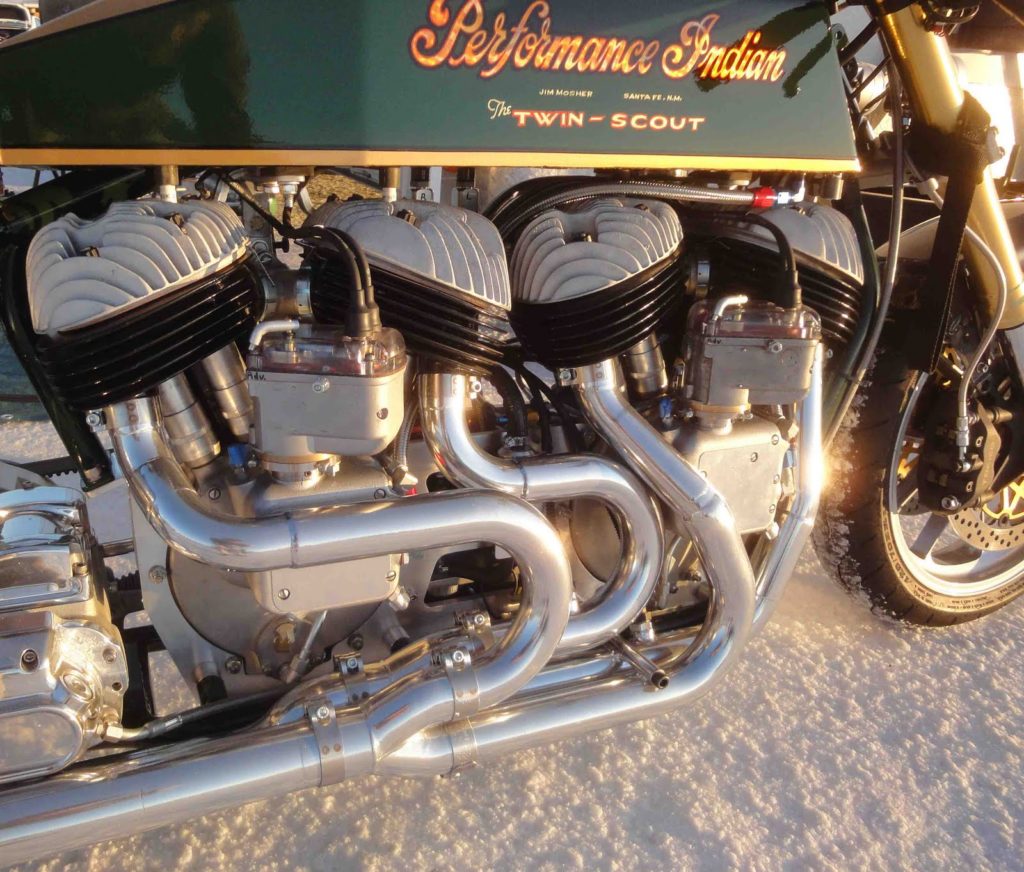
Bonneville is also the worst possible place for machinery. Corrosive salt cakes every crevice and cranny, refusing to leave, eating away at anything metal. Washing your machine, your car or motorcycle, is a good idea, and a joke. If you don’t strip your motorcycle down to the nuts, crankshaft, and spokes, you won’t have a motorcycle in a few months; certainly not a safe or rideable one. The salt will eat your chain first, then your steering head bearings and spoke nipples, and eventually start on your frame, because when you washed your machine, liquid salt went inside too. Rental car companies will charge $1000 if they find salt caked under your car, as you’ve effectively destroyed it (although they’ll just sell it to someone else).
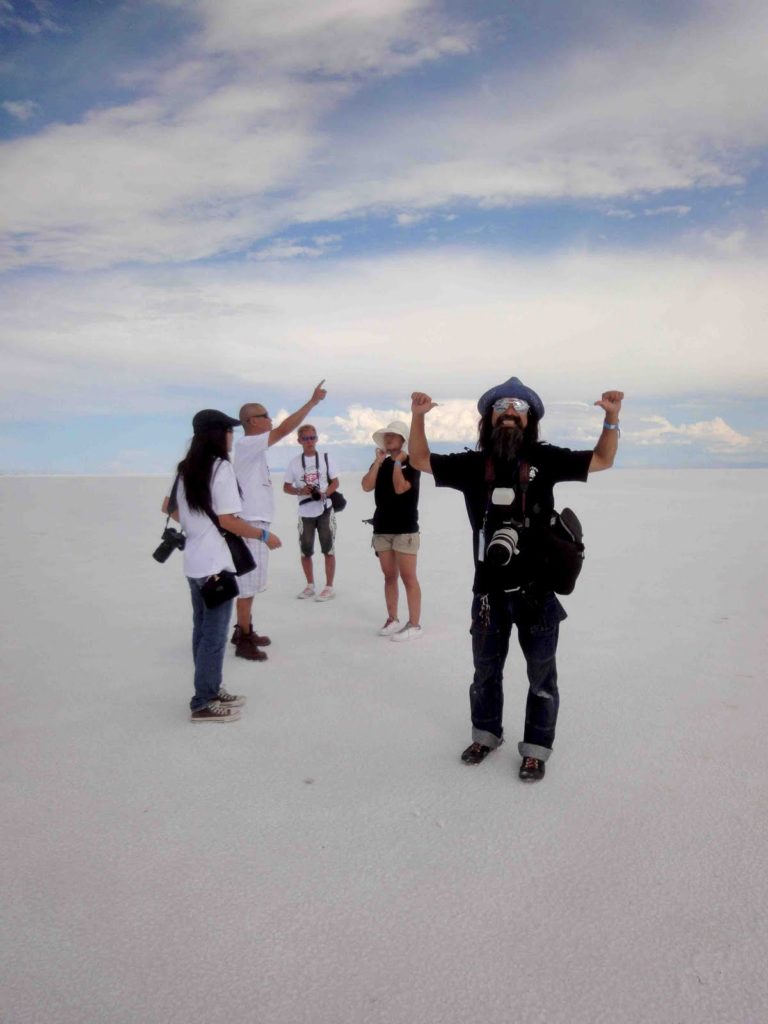
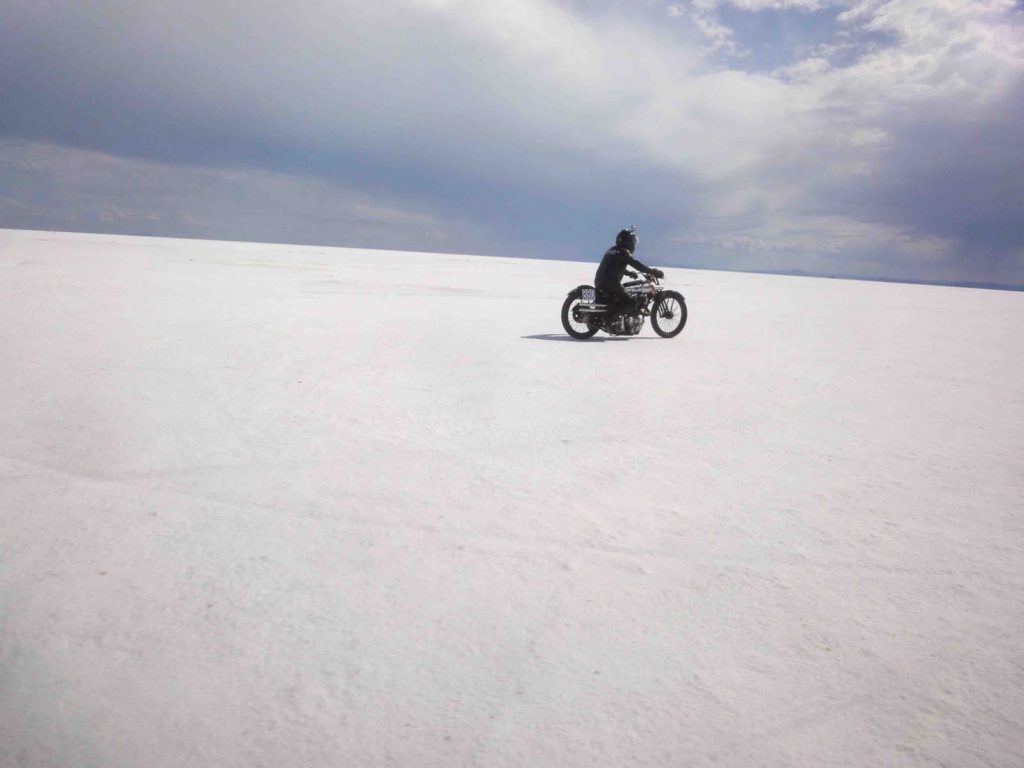
The salt is also terrible place to go fast. Yes it is generally packed firm, on a good year, although on a bad year even the scraped-smooth racing lines will have soft spots hungry for your speed. Packed salt gives poor traction, being greasy and slick, with loose bits scattered over the top, and applying power is a delicate business. Plenty of powerful machines simply cannot put all their horsepower through the wheels, and calculating wheelspin into rpm/speed readings is a fine art. Typically estimated at 10% of your wheel rotation, what this means is you’re doing a white burnout all the way down the line. A too-rapid course correction, say after a gust of wind, could well have you spinning off course, or far worse. Braking is a bad idea too, for the same reason; what you are riding on is best thought of as salted ice. Flat yes, fairly smooth (but pretty bumpy in the pilot’s seat), slippery and treacherous for the very people who cannot keep away; acolytes of the cult of Speed.
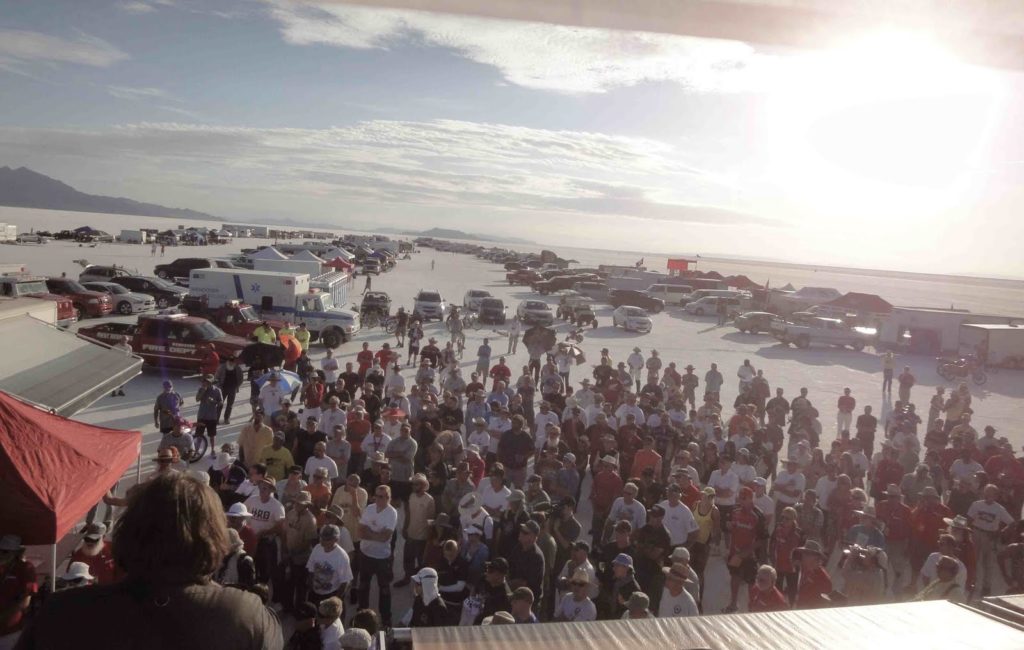
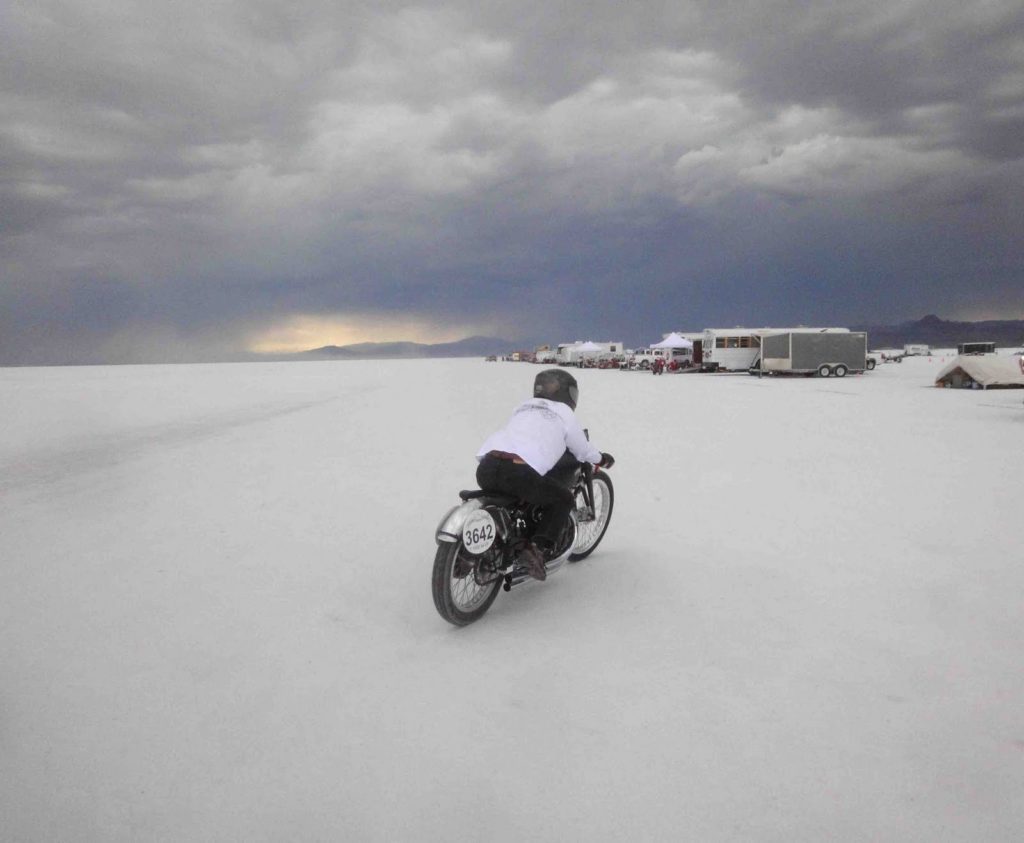
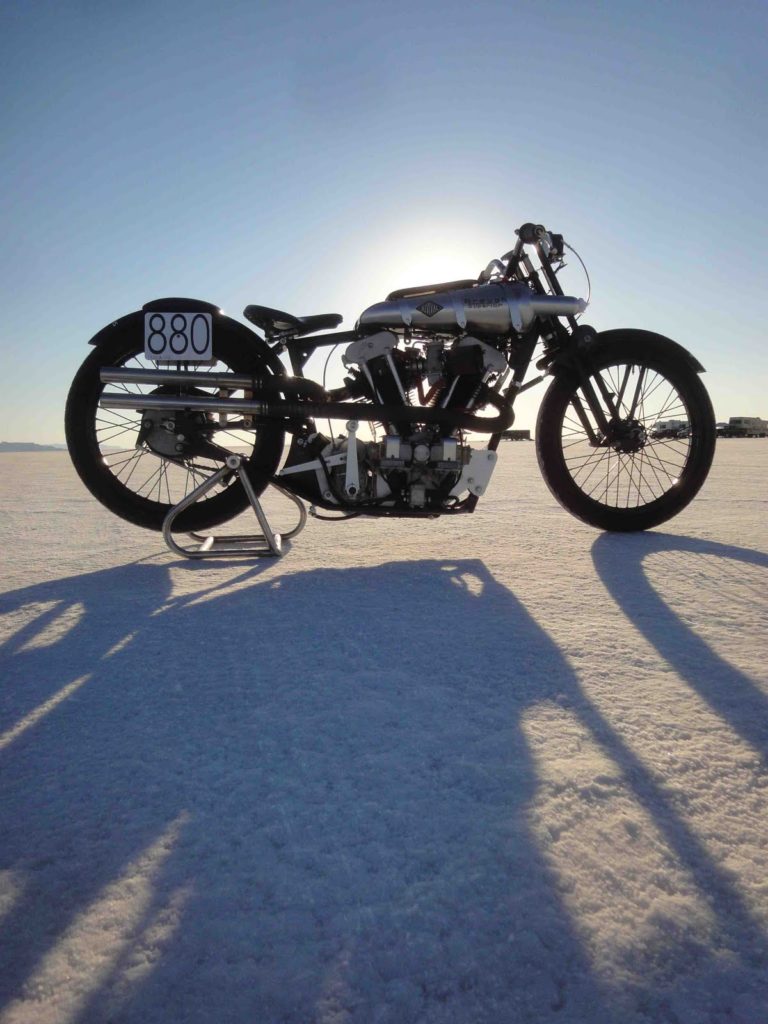
They come from all over the world. Denmark, Australia, Germany, England, Japan, Canada. It is the most truly international of all race meetings, all comers in a salty embrace. The racers are sometimes rivals, but to a man (and woman), their only true foe is Time, and against clocks they battle, any hundredth of a second shaved from a measured mile a victory. Time is not the enemy though - the salt is. Time will kill us all in the end, but the salt might get there first, or simply bedevil your years-long preparations with niggling little problems, or catastrophic ones. The beginning of a Speed Week at Bonneville creates a mechanical village in the center of nowhere, a 6 mile drive into white blankness, a huddle of trailers, canopies, big rigs and motorhomes huddled close in the vastness. By the third day, holes in the gypsy camp appear as dejected racers and destroyed machines skulk home, to try again next year, or not.
Every vehicle has a crew attached, sometimes just a patient wife providing water and company to a sweaty middle-aged man out for a little low-cost fun on a vintage Suzuki two-stroke. Sometimes the sheltering canopies host spreading mobs of interested semi-participants and hangers on, out to see what their favorite will do, eager to lend support and good cheer, even when magnetos go south or mysterious misfires have riders cursing the gremlins tormenting their labor, and their patience.
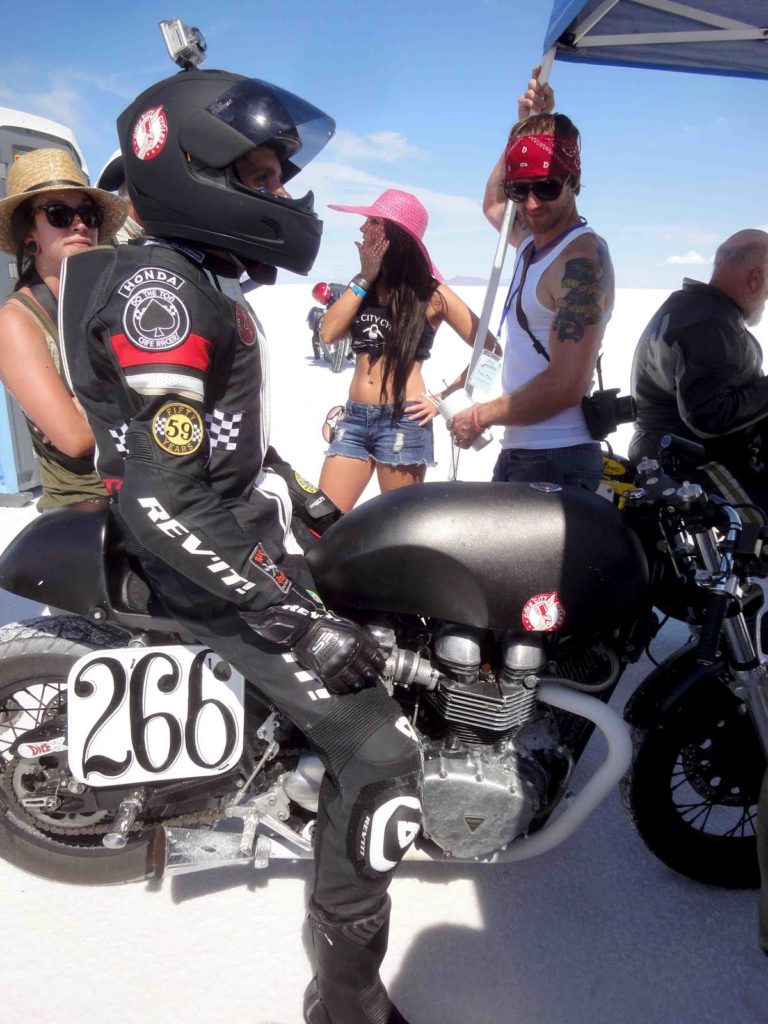
Some crews seem to hoard luck, making easy runs at eyebrow-arching speeds, with ratty looking contraptions or immaculate objects of beauty; there is no predicting who will do well by appearance, neither of machine, man, or crew. Every camp has a ‘vibe’ and a look about it; some clean and simple and Scandinavian, some scruffy and full of apparently unrelated metal objects in a good-humored jumble, some professional and cold. Again, no predictor. Some of the most impressive machinery, mighty and awesome in its supercharged, nitro-injected, double-engine streamlinitude, are utterly impotent, posting times bested by 40 year old mid-capacity road bikes. Gremlins; sometimes permanent ones. These sites you avoid, knowing the money and time invested, thinking ‘but for grace, there go I…”
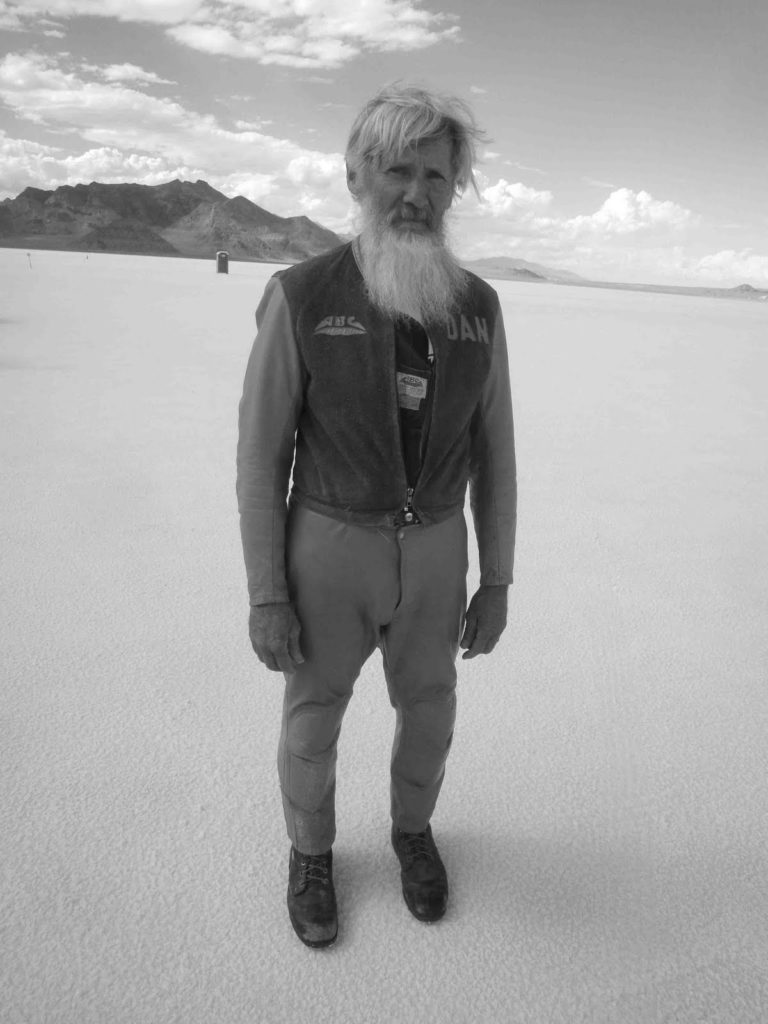
For all its difficulty, for all its harshness, Bonneville remains as romantic as a doe-eyed candlelit dinner with your true love, it is the ultimate temple of going fast for its own sake. There is no reward but a cheap slip of paper with numbers, but something about the history and energy of the place makes you want to Go, man, Go; get on your machine, and nail it. Even in the rental car you’ll have to spend two hours cleaning afterwards…
An Egli Reunion
Words: David Lancaster Photos: Dave NorvinBike, Sandra Gillard, Ahmed Sinno, David Lancaster
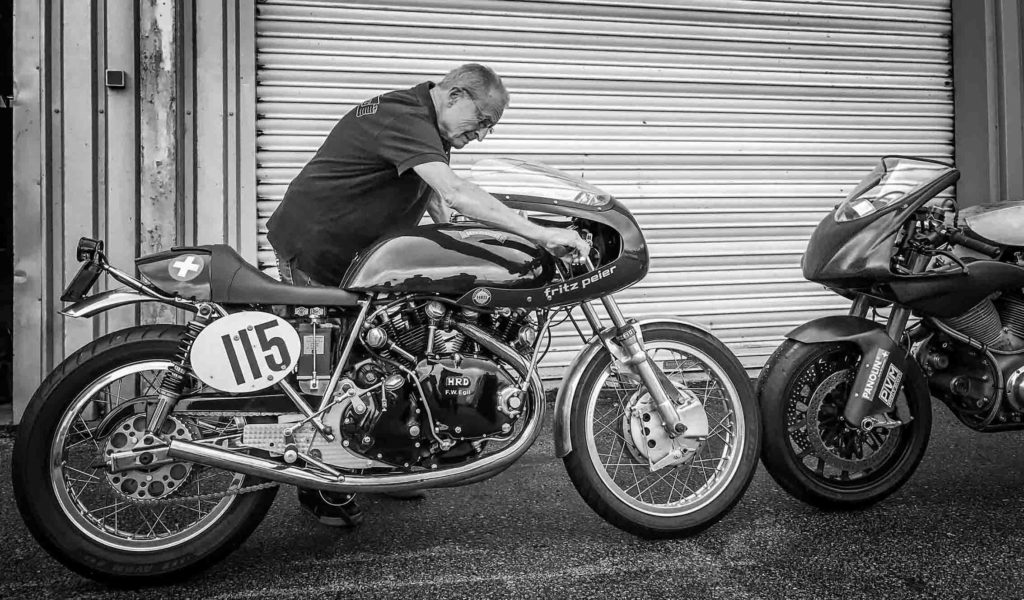
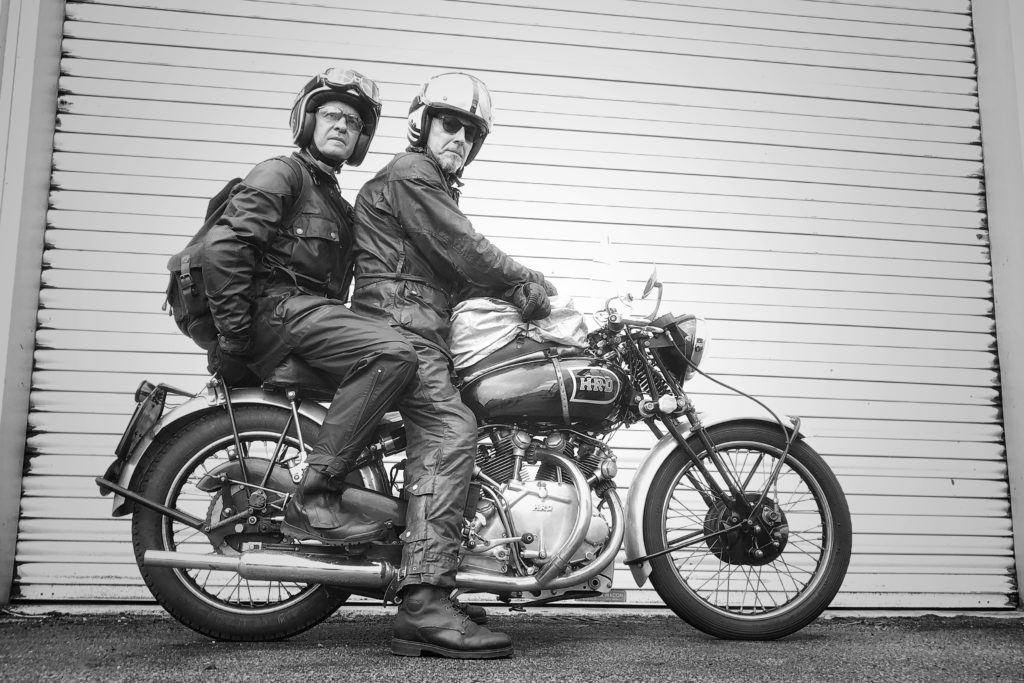
It’s 50 years since Fritz Egli debuted his Vincent-powered special at the Geneva Motorcycle Show. Moto Revue dubbed it the ‘Surprise à Zurich’, and a Lightning-spec Egli-Vincent glowered from their March 1967 cover. It was nearly the last time the British motorcycle industry could look down on the rest of the world – two years before the Honda CB750 – and Egli’s horny, hand-built special was a benchmark in performance and looks.
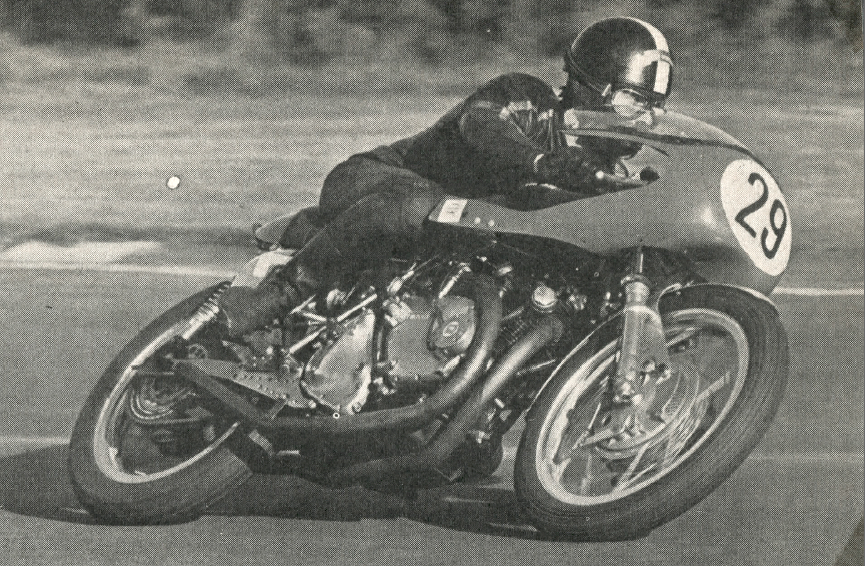
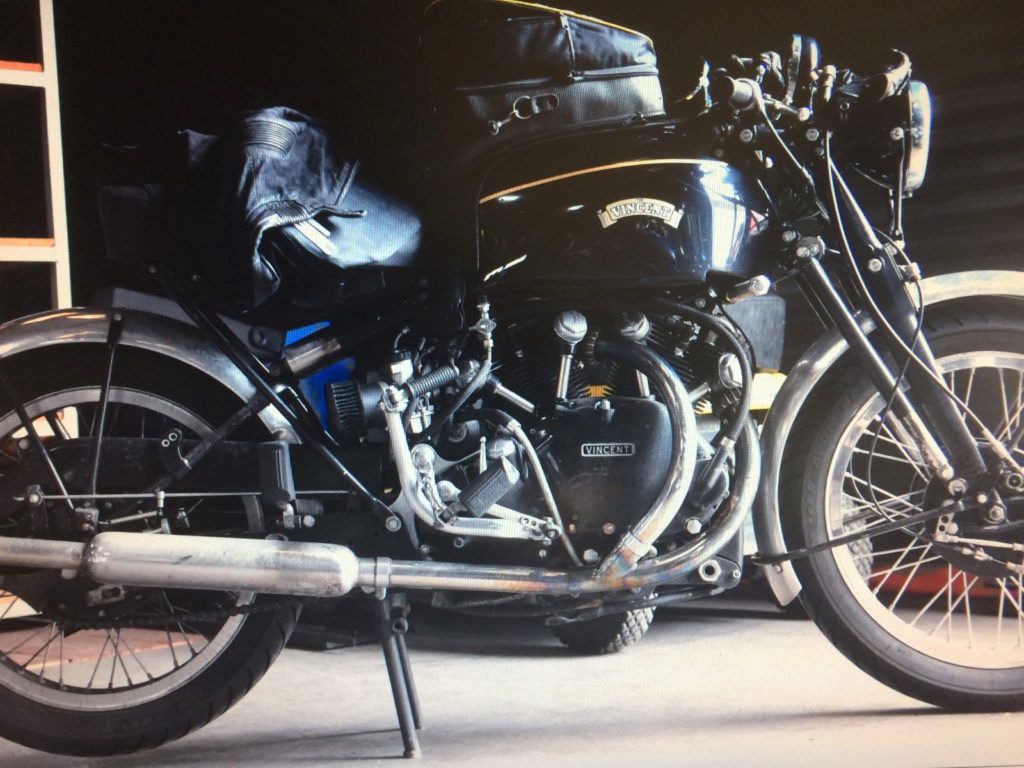
Fritz Egli’s genius was to rebuild and race-tune Vincent engines, and house them in a slim, light frame, supported by top-shelf cycle parts; Ceriani forks, cable operated Campagnolo disc brakes, plus the first oval swingarm, for rigidity. The 130+mph performance potential of a tuned Vincent motor finally had a chassis that could comfortably handle the 70+hp available. Egli’s creation was light, low and competitive. His famous aluminium ‘banana tank’ was a structural homage to the curve of twin exhausts, and a finishing touch to a bold, elegant motorcycle. Chassis and engine development were forged in the heat of battle, with Fritz himself winning the Swiss hill-climb championship in 1968. At an open-class meeting at Brands Hatch in 1969, Egli’s rider Fritz Peier battled for first place against Giacomo Agostini on his MV Agusta four, and Phil Read on the two-stroke Yamaha. That’s three very different motorcycles duking it out for top spot – until Peier took a fall, in close combat with Read. It had to be Read.
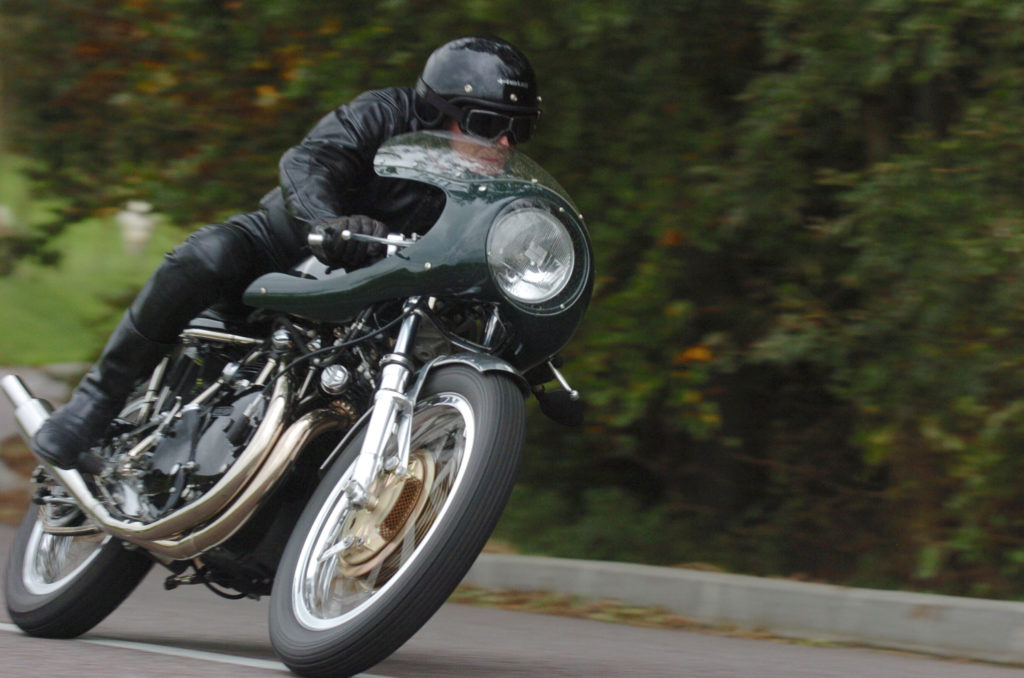
Since the 1960s, many copies of Egli’s oil-bearing frame were built by other shops - some good, some less so. Egli used his signature chassis with everything from Triumph and Ducati twins, to Yamaha two-strokes and Honda fours. In 1975, Fritz built and tuned an Egli-Kawasaki, which won the Bol d’Or 24 hours race with Georges Godier and Alain Genoud sharing the ride.
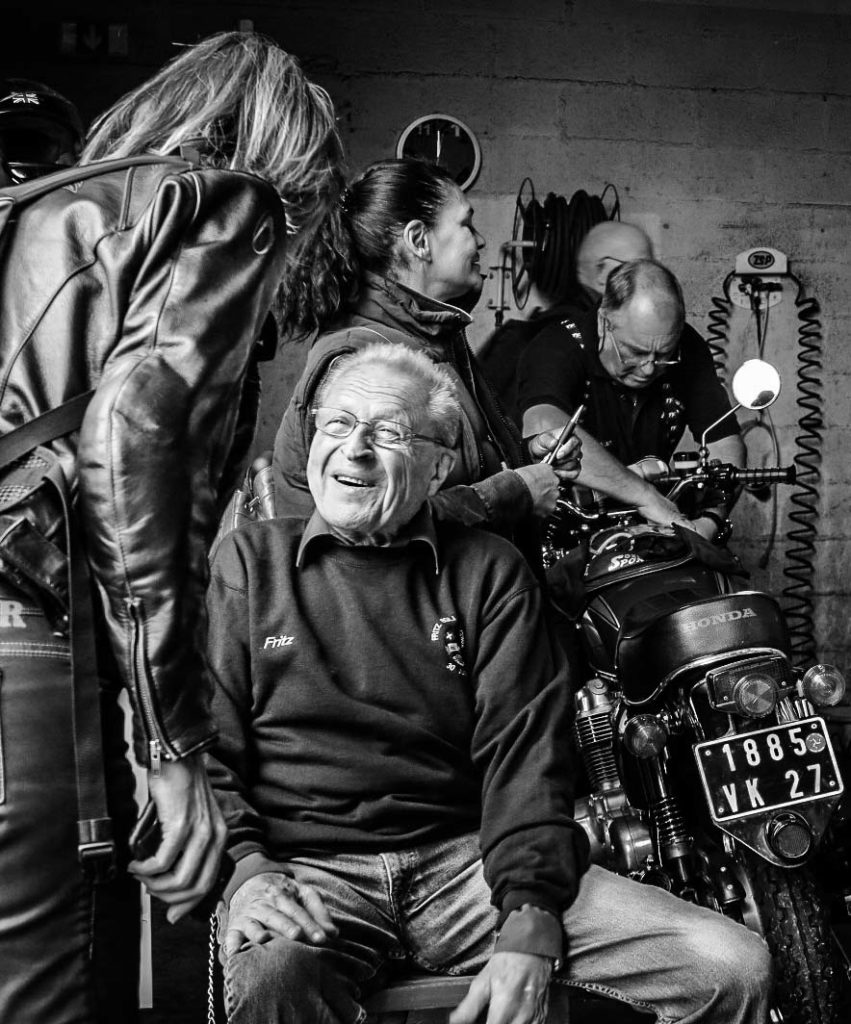
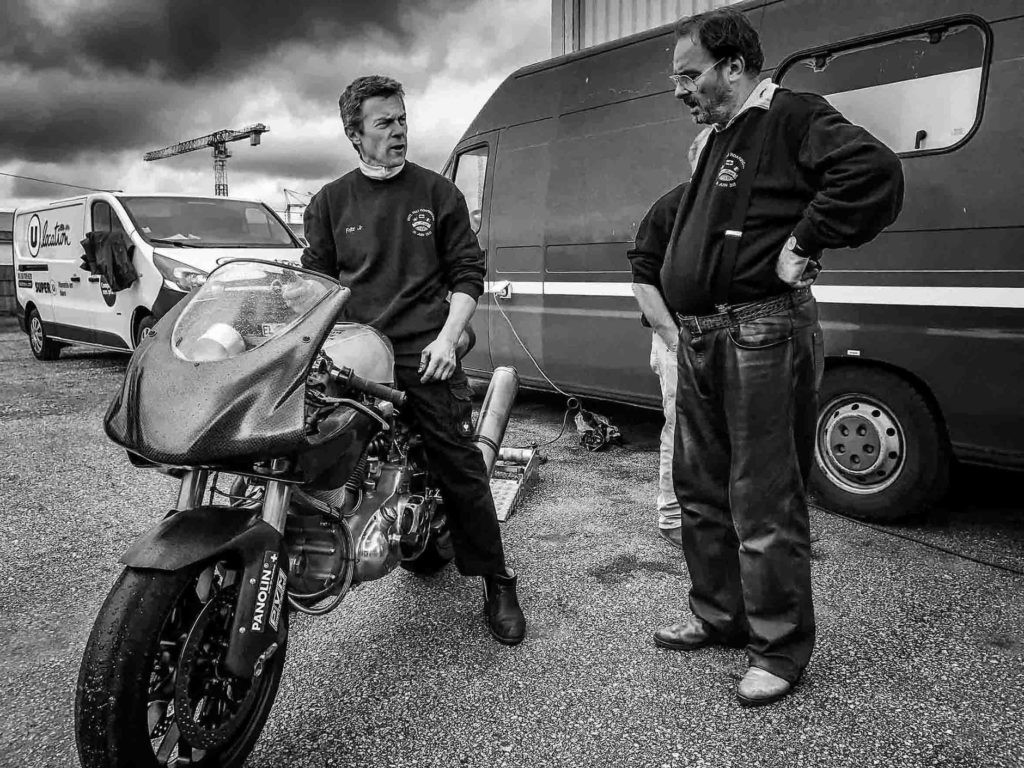
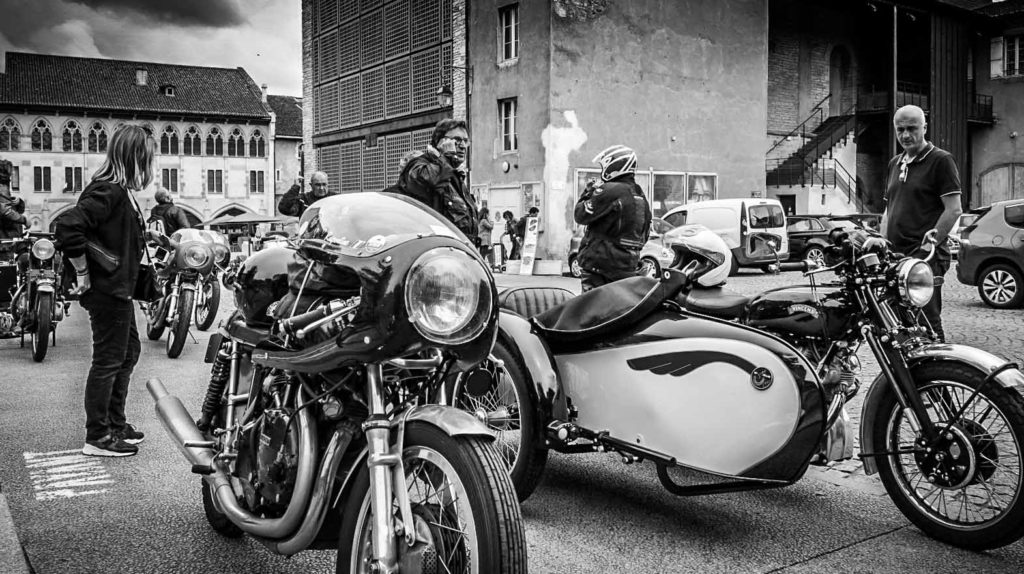
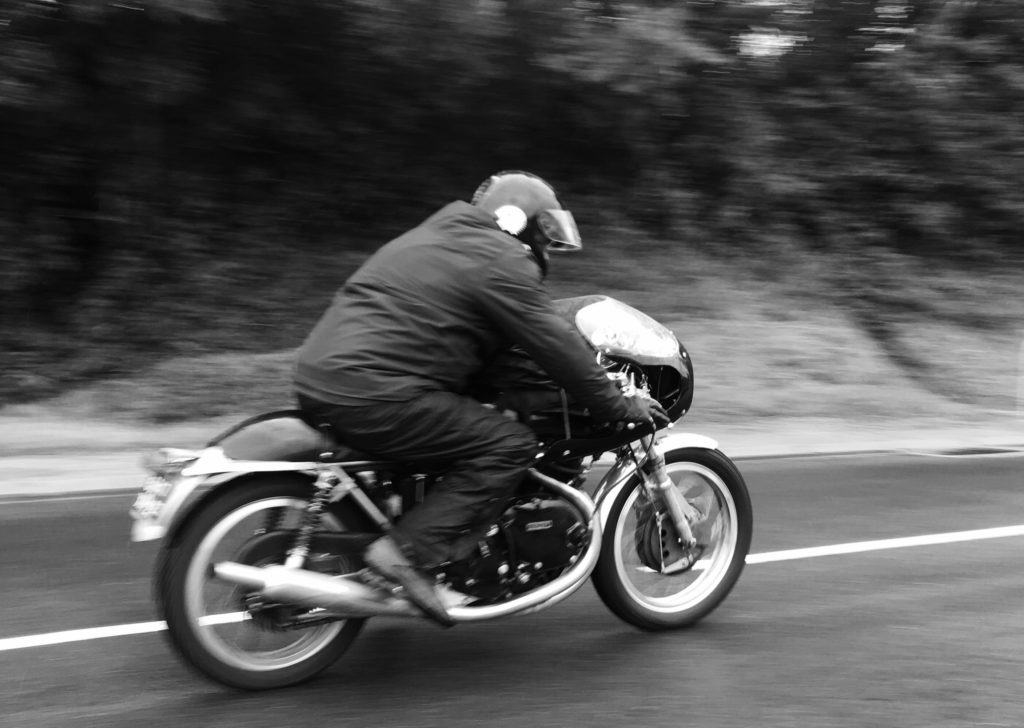
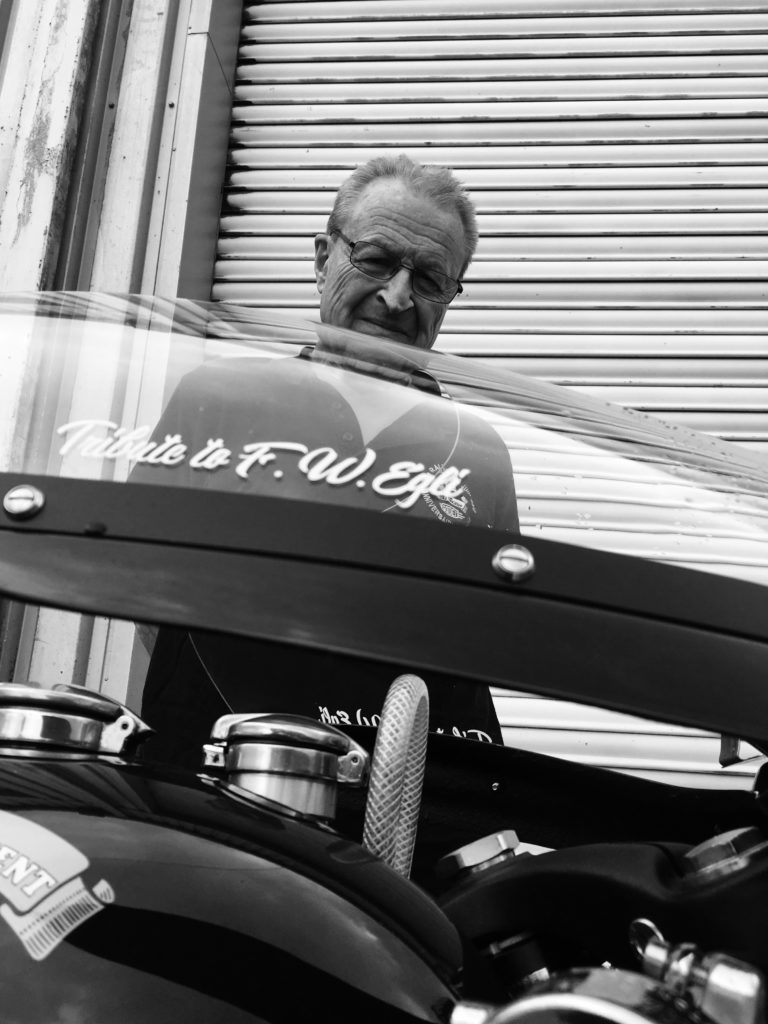
In June 2017, a devoted cadre met in Dijon to celebrate the Egli-Vincent, and Fritz Egli’s 80th birthday. Most riders at this 6th invitational Egli-Vincent meeting (organised with much charm by Guy Dano) were mounted on the Egli-sanctioned Patrick Godet bikes, usually with his highly developed 1330cc engine – the power plant Fritz himself uses in his neat, light outfit, which he’s ridden for many years. Two days of riding, eating and a little drinking were accompanied by a good deal of rain, but the assembled pressed on regardless.
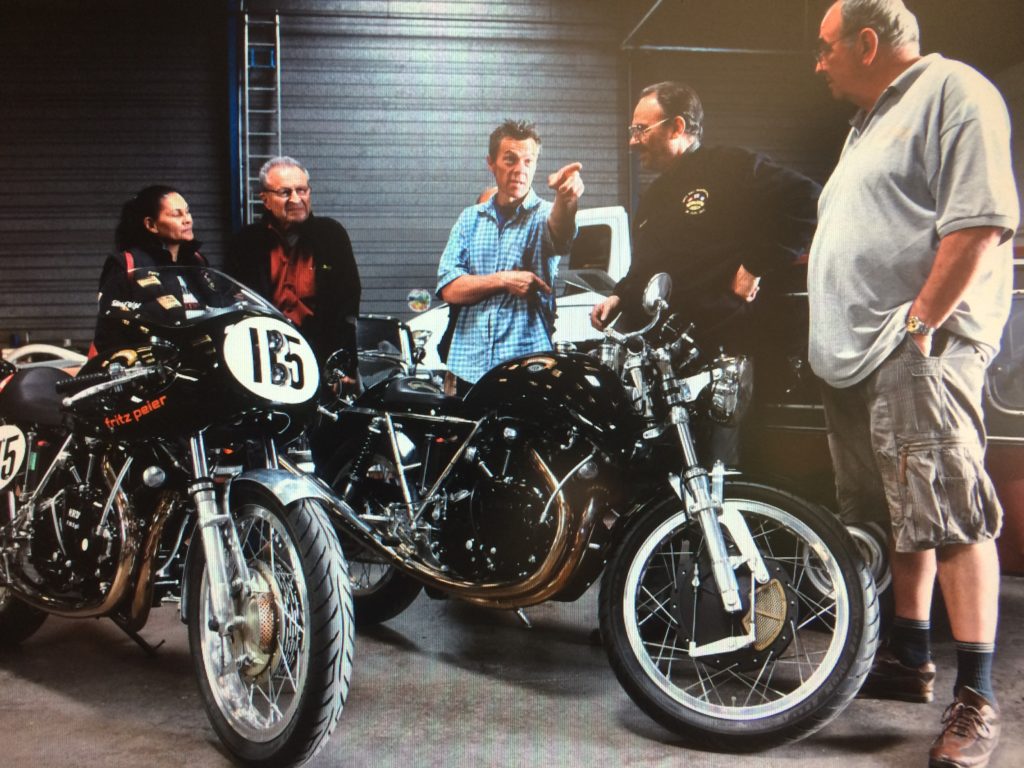
Godet and Egli have forged a long friendship based around these bikes. Godet’s enthusiasm for Vincents can be traced to the early 70s, when he owned Norvin in Rouen. Other models followed, until his own highly developed Black Lightning-spec Shadow took him to the win the French classic racing series (AFAMAC). He began building Egli-based bikes in the 1980s. Now – costly though they are – there is no other Egli-based Vincent that compares in attention to detail, development and performance…which is why the Godet bikes are the only ones with Fritz’s approval.
The pair speak in French when talking about life, and English when discussing technicalities. Attending the gathering with Fritz and his wife Patricia, was his son Fritz Junior who has developed a highly competitive version of the Vincent, using a Godet engine but with milled original Vincent style oil tank, worked up in cooperation with Terry Prince – the London-born former Egli collaborator in the mid 1960s, now resident in Australia.
Which kind of brings things full circle: it was in 1965 that Fritz, and his then wife Margrit, rode their Shadow and Comet specials over from Switzerland to compete in a sprint at Church Lawford in the UK. They ran into Philip Vincent. ‘I was nervous about meeting him,’ Fritz says. ‘He knew my plans – but it was an honour to meet him, and he was very interested in what we were doing.’ Theirs was an unusual meeting in many ways; Philip Vincent had not made a motorcycle for 10 years, as the factory had ceased production in 1955. Fritz, by contrast, was on the cusp of producing one of the most beautiful and most successful specials ever to issue from a boutique builder.
From a young age, Fritz Egli had looked beyond the confines of his native, land-locked Switzerland. As a phenomenally talented machinist, he’d won a scholarship to work in California in the early 1960s, and spent a year developing a love for early blues music while racing an Ariel in the desert on weekends. He took home a taste for American music, bikes and cars – which proved useful when he later began tuning and racing Corvettes.
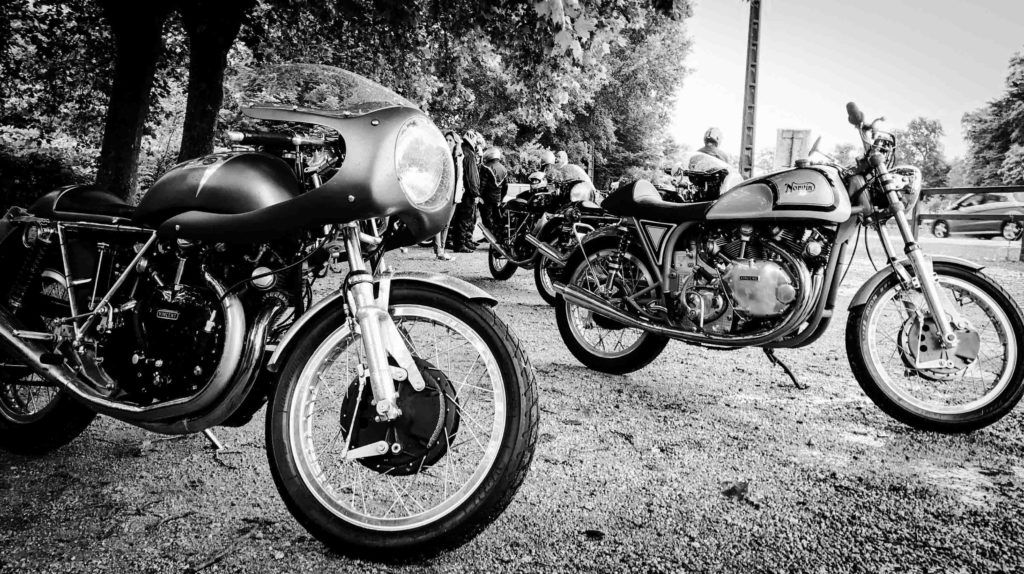
Egli has come a long way in 80 years. In 2009 he returned to the States, this time to the Bonneville Salt Flats, and at the age of 72 with a third wheel attached to his Swiss Performance Racing Hayabusa he took the class land speed record up to 209 mph. ‘Life is fun on a bike at over 300 kph,’ he recalls. These days his pace has slowed somewhat, but not his enthusiasm – especially for the Stevenage-built twins he’s so associated with. What’s so special about them? ‘So many intelligent, technical features first of all,’ he says. ‘The effortless acceleration. Yet, they are relaxing, comfortable. Testing or racing a four cylinder, you come back from a ride a little nervous, a little tense. With a Vincent you come back relaxed, with a big smile on your face. They are deep in my heart now.’
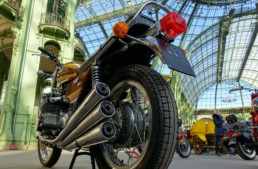
The Paris Scene
Guest Post by Francois-Marie Dumas
For its 40th birthday this year, Rétromobile, which has presented some fantastic exhibitions in the past, seems to have forgotten about motorcycles completely, with only a few examples hidden between the cars. As late as 2011, terrific motorcycle displays dotted this enormous show, and made the trip worthwhile for hardcore vintage riders. There are still a few bikes on display in the stalls, and plenty of moto-mobilia (posters, parts, etc), but don't come expecting much of a two-wheel show. The cars are, of course, fantastic.
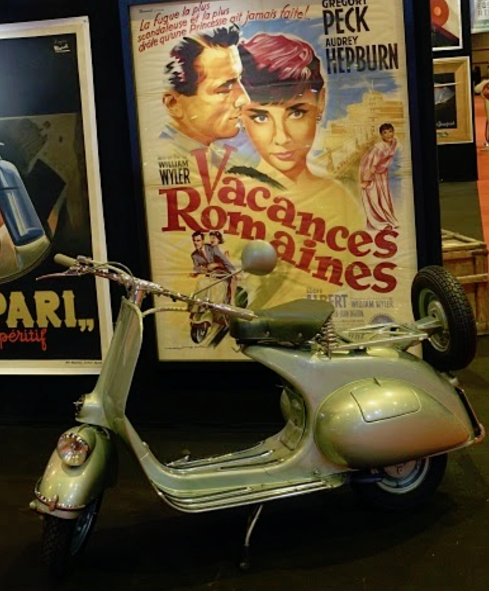
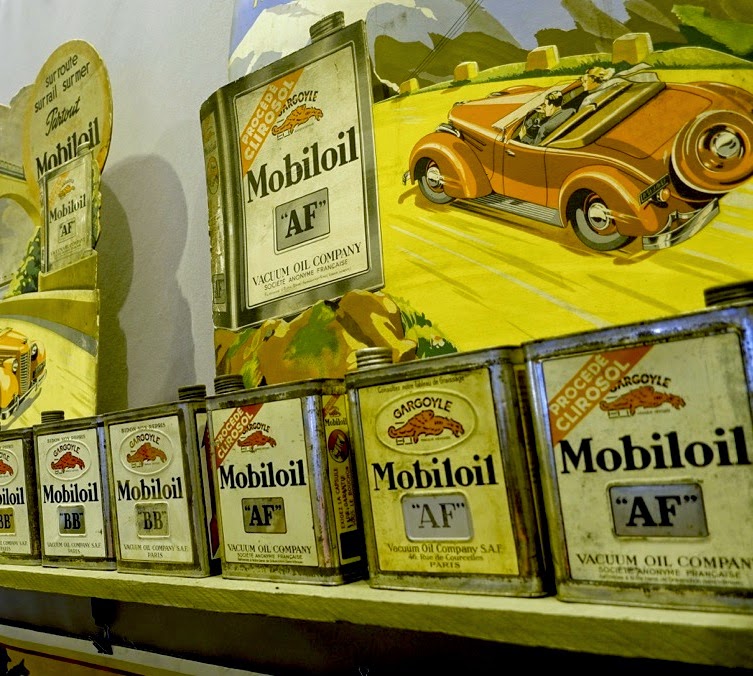
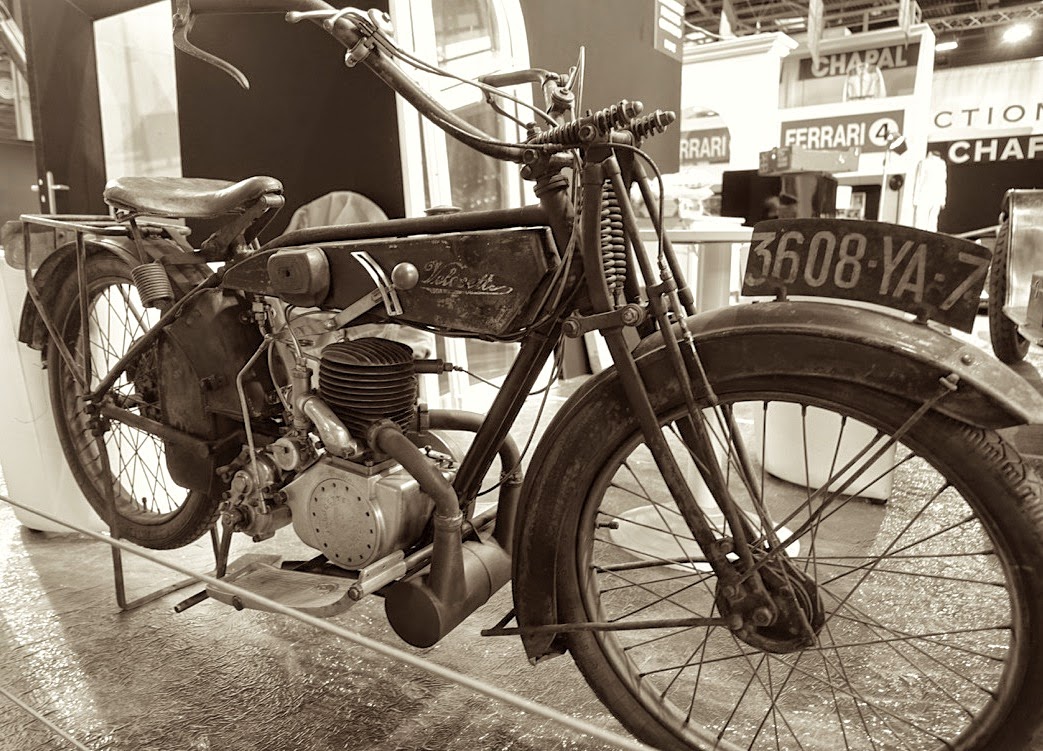


The contrast with Retromobile could not be more stark at the Bonhams Grand Palais sale; the motorcycle has returned to its origins! Among the first-ever exhibits at this magnificent Art Nouveau masterpiece was a car and motorcycle show back in 1901. There were actually two shows that first year, and the second one gathered 556 cars, 21 three-wheelers and 81 motorcycles, with 190,000 visitors passing under those glazed arches.
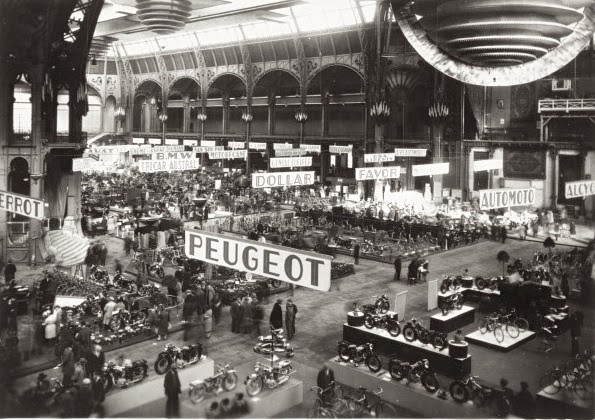
The big Paris Auto Show was held at the Grand Palais from 1901 until 1961, and until 1950 for the Motorcycle Show, followed by decades of little use for the building, as the car shows moved to the outskirts of town, into large purpose-built exhibition halls. Which are pretty uninspiring architecturally. Thanks to Bonhams, both cars and bikes are back at the Grand Palais for the past three years, under that astounding glass roof once again, for the annual Bonhams auction of exceptional cars, motorcycles and ephemera.
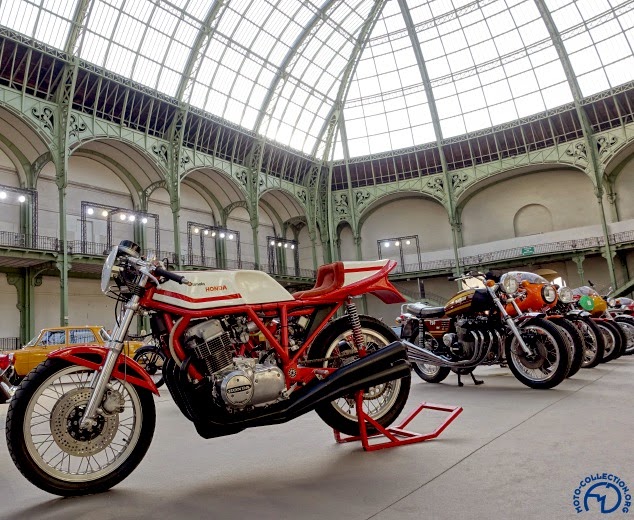
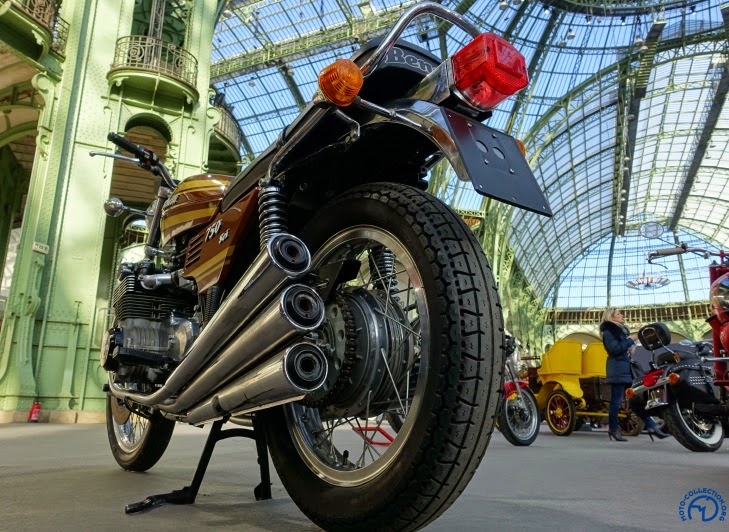
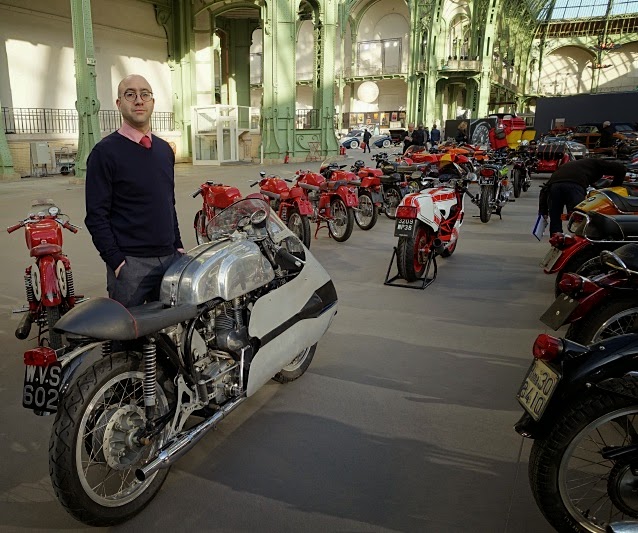
This year 48 motorcycles were presented, the oldest being a French Griffon 2hp from 1907, but the most interesting machines included the seriously exclusive 1974 Bimota 750 HB1 (serial #3), and the almost unique prototype of the Benelli 750 Sei, which was exhibited at the famous “Art of the motorcycle” exhibition at Bilbao Guggenheim museum.
Kenzo Tada
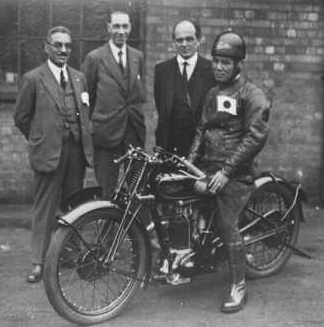
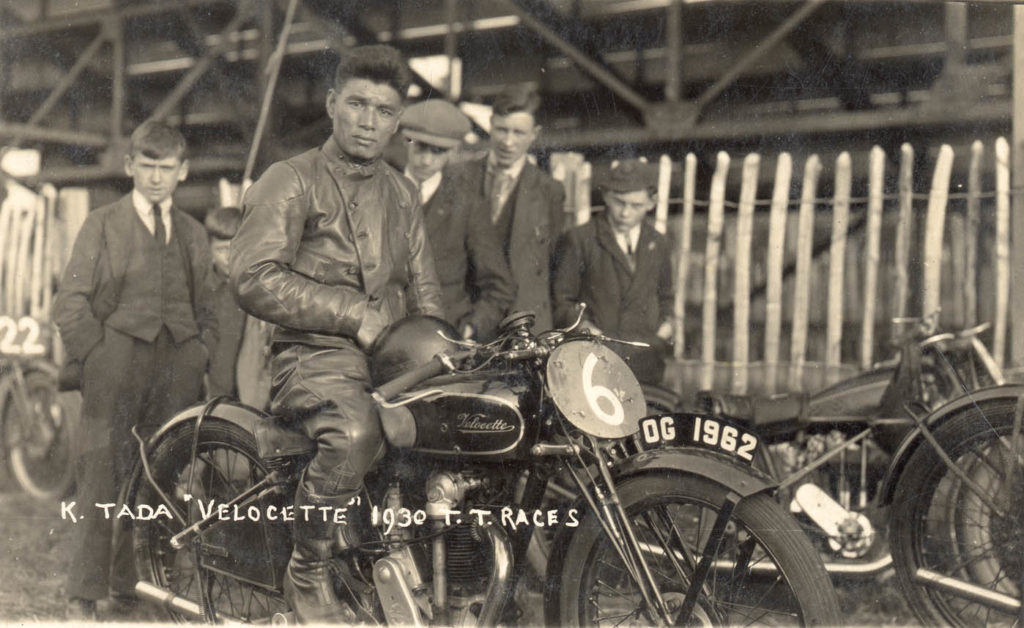
Kenzo Tada was a motorcycle racer in Japan who began his career, as so many early-century racers did, competing on bicycles at the dawn of the 20th Century. In the midst of a successful motorcycle racing career, he became the first Asian to compete in the Isle of Man TT, in 1930, making a daunting 40-day trip by sea and rail to reach an island half a world away, in the Irish Sea. His journey was remarkable; the next Japanese rider competed at the Isle of Man was in 1959! He was the Velocette agent for Japan (Tomeye Trading Co. in Tokyo), and the Japanese national racing champion in the 1920s and 30s, which must have endeared him to the Veloce factory, who sponsored his ride on the Island. In the photo above, he is pictured with a 1929 Mk1 KTT, after the TT prize-giving ceremony, in which he wore traditional clothing.
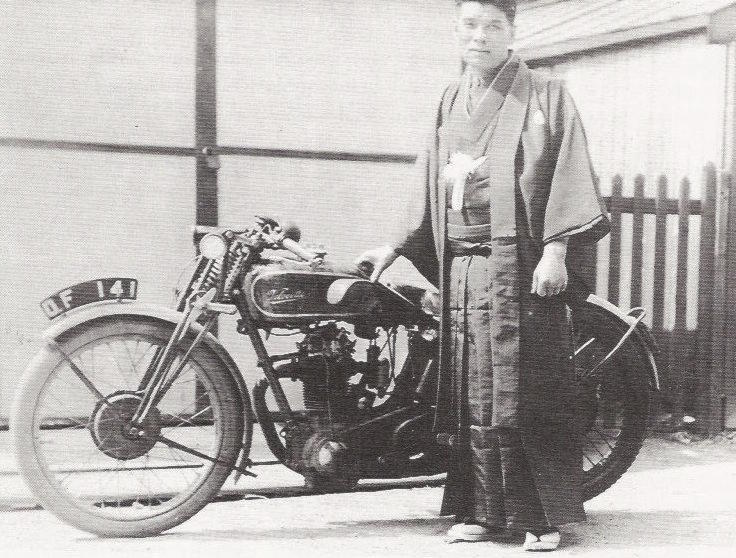
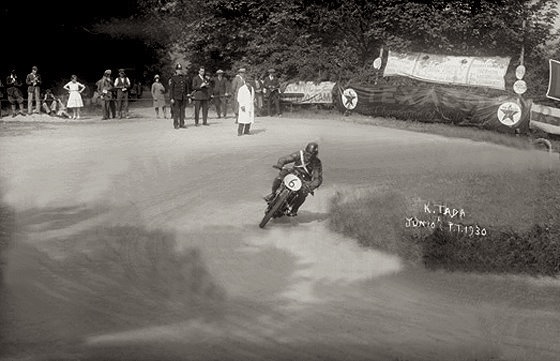
Invited to compete at the 1930 Junior TT by Veloce management as thanks for his efforts in Japan, Tada was loaned Alec Bennett's 1929 IoM third-place winning machine. This was quite a leap of faith for the company, for although he was an expert racer in Japan (which used mainly dirt tracks until the 1960's), Tada had never set eyes on the complex and demanding 37.5-mile Island circuit. He acquitted himself well, gaining 15th place, and the nickname 'the India Rubber Man', as he took numerous minor spills during the course of the race, yet always remounted, and completed the Junior TT in fine time. The below photo shows Tada astride the ex-Works 350cc ohc Velo, with Percy Goodman, Managing Director of Veloce Ltd, directly behind him. Note Tada's Japanese flag on his lapel.
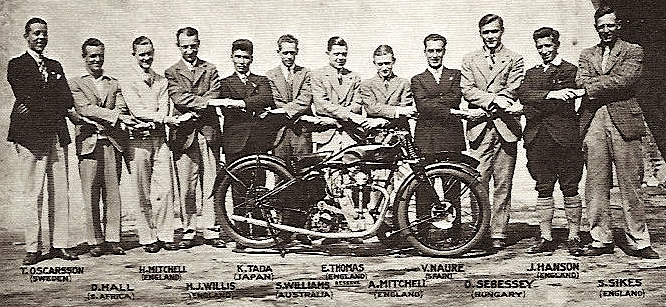
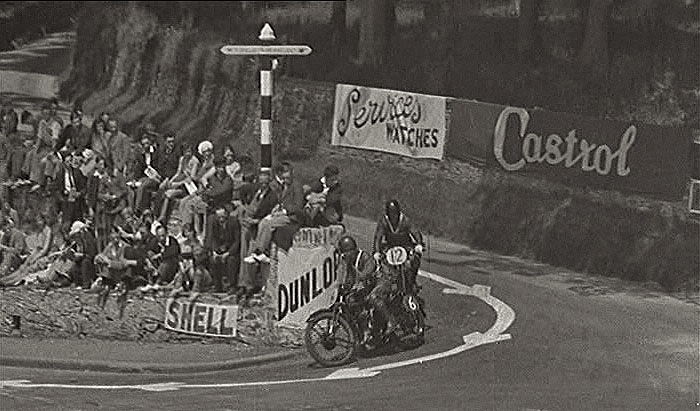
For the 1930 Isle of Man TT, Veloce management seems to have invited Velocette dealers from around the globe to race, as a celebration of the superiority of the KTT in worldwide racing, including at the Isle of Man, which which Velocettes won handily in the 350cc class in 1928 and '29. Bringing riders from far afield seems to have been unlucky though, as the best places for Velos in the 1930 Junior TT was 4th, ridden by David Hall of South Africa (2nd from the left in the photo above), and the 7th place of Englishman George Mitchell, behind the petrol tank, above. From its introduction (1929) the KTT was sold all over the world, in Japan (3) to New Zealand (5) and Australia (5), South Africa (9), India (1), the US (1) and Canada (1), and all over Europe - 180 sold in total from January to December of 1929.
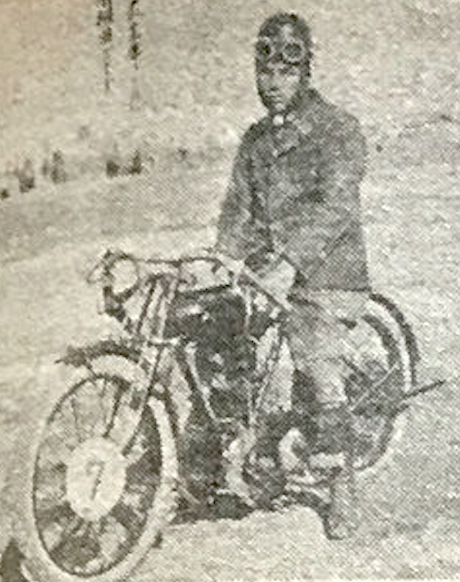
In the 1930 silent film 'Faster Than Ever: An All-British Victory!', which is a British Pathe property, has a nice (albeit silent) sequence showing the various racers on the grid for the '30 Isle of Man Senior and Junior TT... one of which is obviously Kenzo Tada himself smiling for the camera. Photographs of Tada are quite rare; I was thrilled to see this one. Below is a short preview of the film - the Tada sequence is just past the halfway point, right after Graham Walker smooches Tyrrel Smith!
Kenzo Tada's Tomeye Trading Co. was the Velocette agent for Tokyo, and ordered three of the earliest KTT models; KTTs #20, 22 and 28, all in February of 1929. We also have an interview conducted in 1972, recounted in the excellent book, 'Japan's Motorcycle Wars' (reviewed here in The Vintagent):
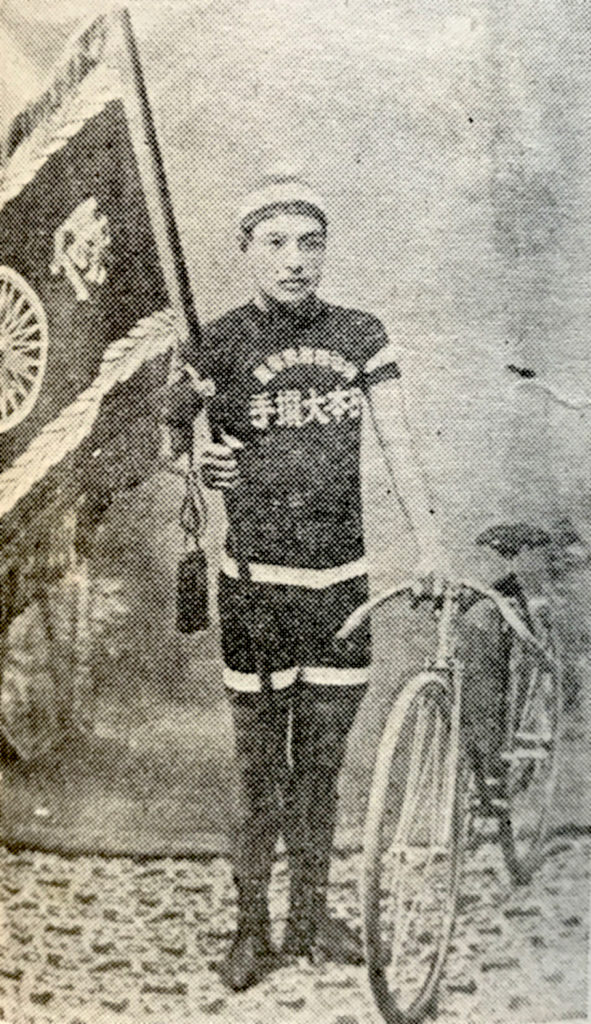
"I began as a bicycle racer, and started that at the end of the Russo-Japanese War, in 1905. That first race was once around Shinobazu pond in Ueno Park, Tokyo, which was a 3 mile course, as the pond was bigger at that time. I was 18 years old and the prize was half a dozen beer glasses... Afterwards I trained for the Komiyama race as an apprentice, like a young sumo wrestler. I rode bicycles imported from America by the Ishikawa company in Yokohama. I joined their racing team in 1907. The pace car at that race was a Triumph motorcycle."
"Most bicycles were imported then and the Ishikawa company brought in American Pierce and British Triumph bicycles... I rode in a 250 mile bicycle race on 30 June 1907 and I won... In those days various stages of the race were reported by telegram to the finish line. I won several races after that and was reported on widely in the press. I was paid 3 yen per month by the Ishikawa company and I raced 3, 5 and 10 mile races. 10 miles races were the main event and if I won I was paid 10 yen and 5 yen for shorter races."
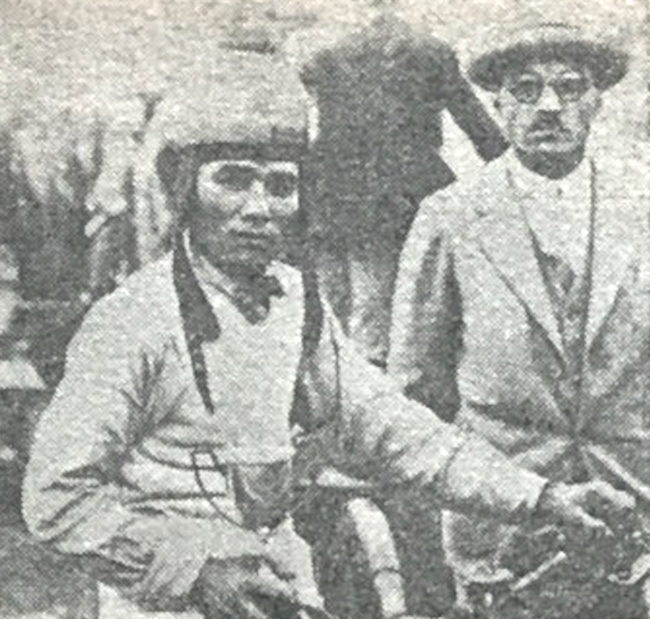
I read three British motorcycle magazines all the time, Motorcycle, Cycling and Motorcycling and therein learned about the Isle of Man TT (Tourist Trophy) race. That was the age of ships, not of airplanes so I went to Korea, Harbin and then travelled to Europe by rail in the spring of 1930. From Paris I went to Dover and it took about 40 days in all to reach Man in May. I practiced for a month for the race which was scheduled for June. I rode a British 350 Velocette motorcycle on the 420 km asphalt course. A racer on a Norton came in first place that year [actually it was Rudge 1st in both Junior and Senior TTs] while I finished 15th and received a trophy... I had some western clothes but at the prize reception photo shoot I wore a Japanese haori (half coat), hakama (traditional loose fitting trousers), white tabi (socks) and felt zori (sandals). I went home via the Mediterranean sea, through the Suez canal to Singapore and then to Hong Kong before arriving home in Japan after a 41 day trip. Mine was the first overseas racing expedition to be completed and it it linked the racing community of Japan with the rest of the racing world."
And Then Came Rudge...
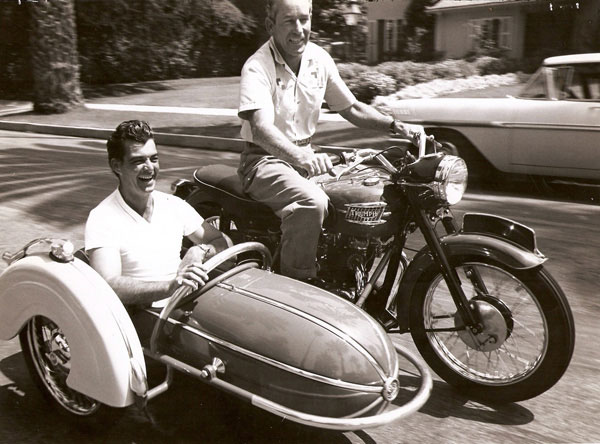
A friend forwarded an episode of the classic 1969 motorcycle TV show 'Then Came Bronson', in which James Bronson (Michael Parks) meets Alex (Keenan Wynn) in Sturgis. Alex has a 1937 Rudge Ulster hidden away in a friend's garage, and Bronson's presence reveals his secret, causing a bit of strife with his wife. The episode has great riding scenes towards the end, with the men off-roading their respective machines (Rudge Ulster and Harley-Davidson Sportster) in the green grass of the Black Hills, including a flying leap over a creek. Bronson learns a bit about the viability of vintage motorcycles in the process - undoubtedly you'll think the Ulster a far more suitable off-road machine than a '69 Sportster! Keenan Wynn was well known for his motorcycle enthusiasm, but the stunts look to be performed by Carey Loftin , who had quite a career.
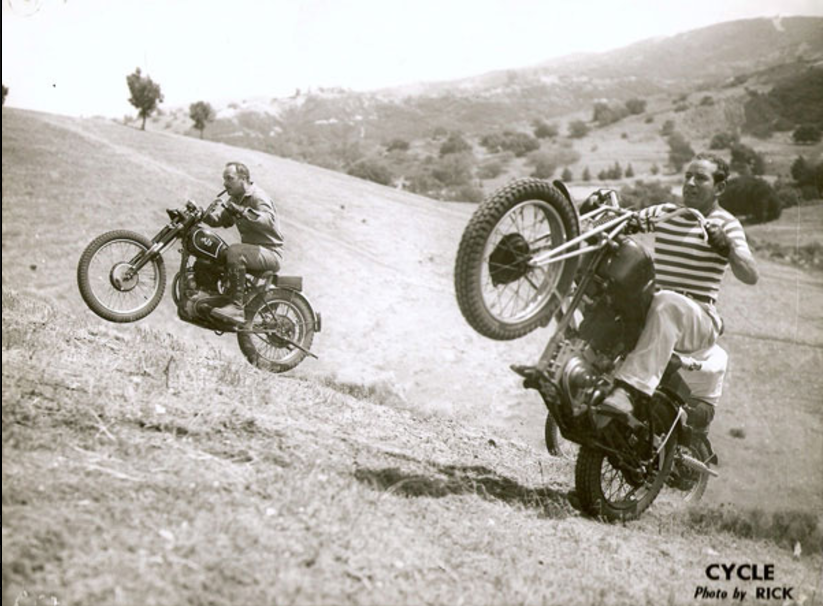
Carey Loftin is an AMA Hall of Fame inductee, and a legendary stuntman who taught himself trick riding skills as a very young man. At 19 he was hired in Skip Fordyce's traveling stunt-riding show after performing a back flip from the saddle, landing behind the bike and controlling it with the seat, before hopping back on and coming to a halt. Loftin earned his living via trick riding and mechanicking during the Depression, and after WW2 started work in Hollywood as a stuntman and character actor, with hundreds of film and TV credits over a 50-year career, riding motorcycles and driving cars, including hairy scenes in 'Bullitt', 'The French Connection', and 'Vanishing Point.' Loftin died in 1997 at the ripe age of 83 - who says stunt riding leads to an early grave?
The Big Wheel
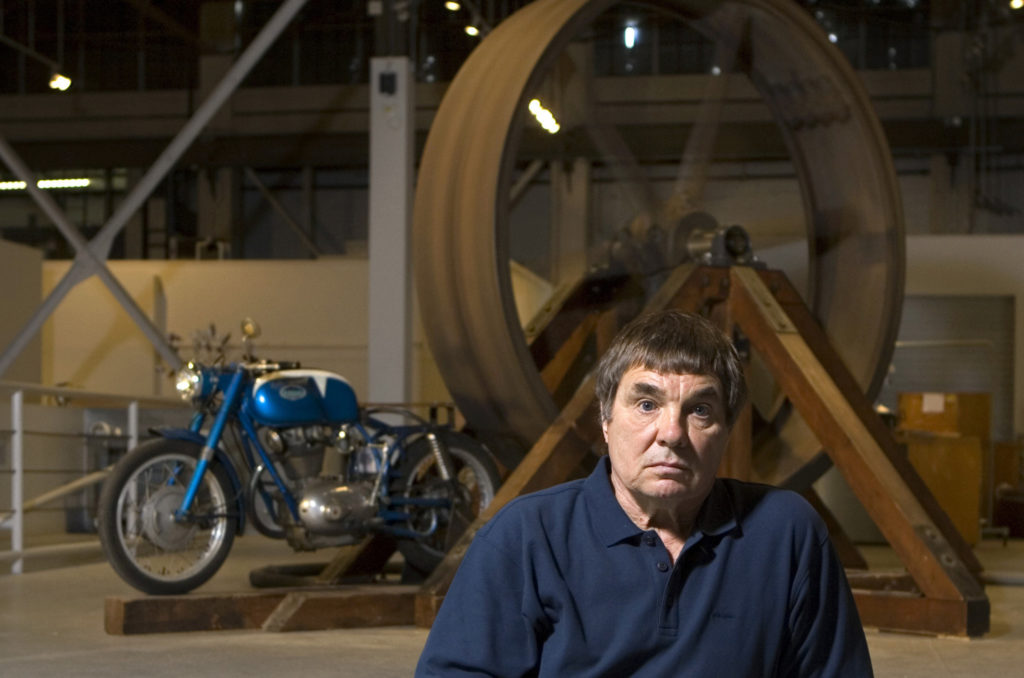
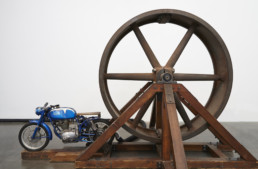
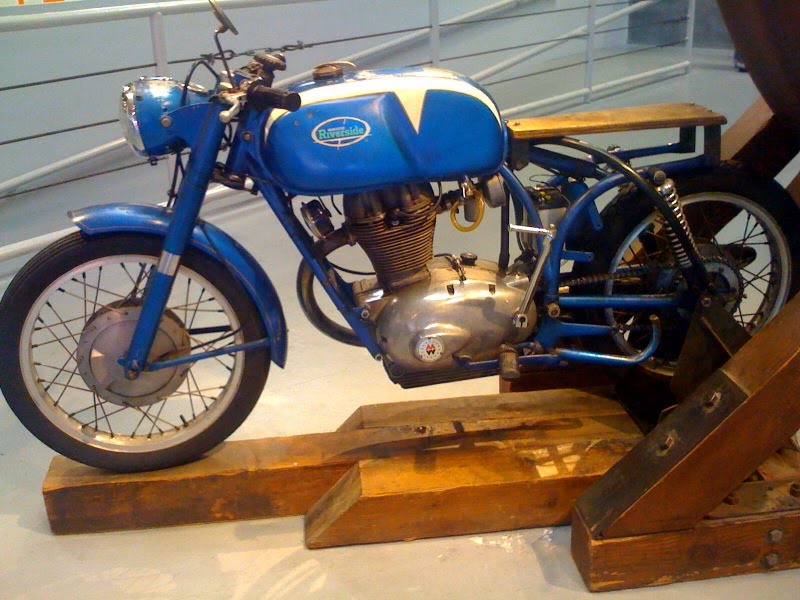
Chris Burden's 1970 sculpture 'The Big Wheel' is currently at the Little Tokyo branch ('the Geffen') of the Museum of Contemporary Art in Los Angeles. You can occasionally spot Stacie B. London (the exhibition production coordinator) firing up the work's Benelli single, and revving the daylights out of the bike to spin up the Big Wheel. Stacie also supervised the sculpture's mechanical renovation, as the Benelli needed a light top end overhaul - not the usual museum work! The piece consists of a huge cast iron flywheel from an 1800s coal mine, spun up to high speed by a motorcycle, in this case a 1968 Benelli 250cc, sold here in the US through the Montgomery Ward department store chain as the 'Riverside'. The Benelli was Burden's own motorcycle from the late 1960s, when he was beginning his art career.
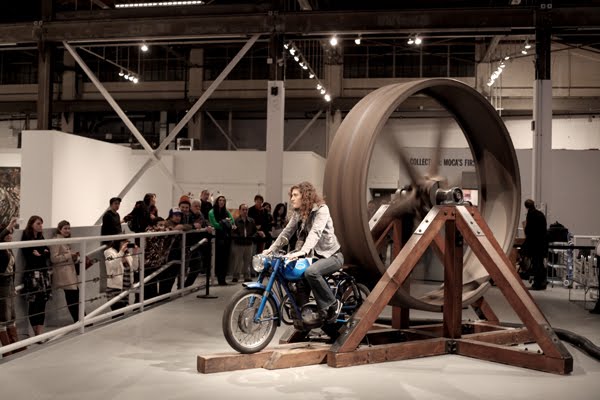
Stacie is a vintage motorcycle enthusiast (with a '69 BMW R60US), and enjoys giving the little bike some stick! Watch the video as she winds the little Benelli up to top gear/top revs, when over 70 mph reads on the speedo; that Big Wheel is moving pretty damn quick. Note its proximity to her back! After a noisy wind up, the motor is cut and the bike moved away from the madly spinning flywheel; the gigantic mass spins silently for hours...
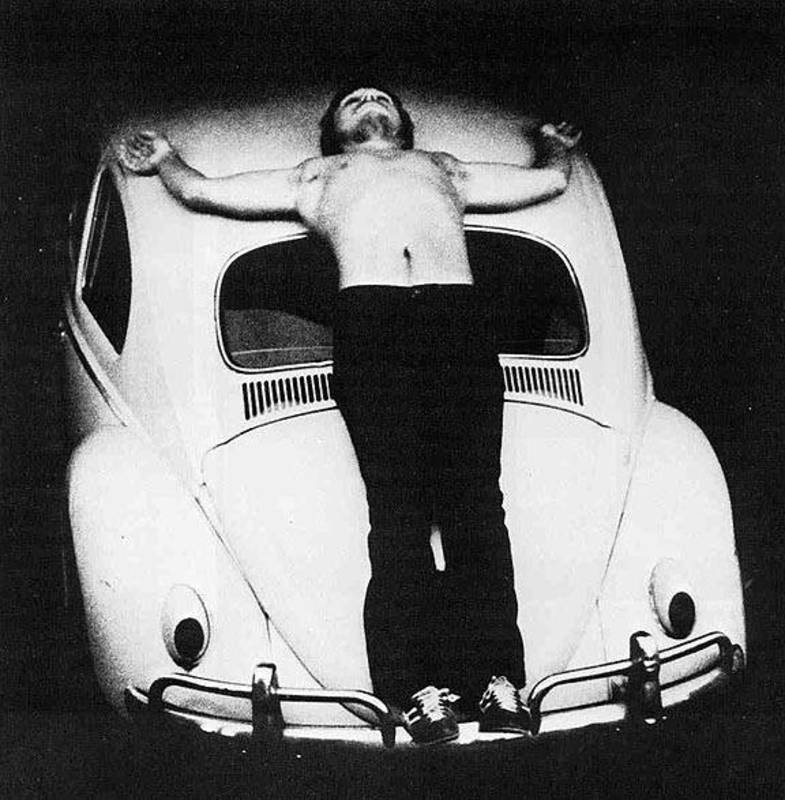
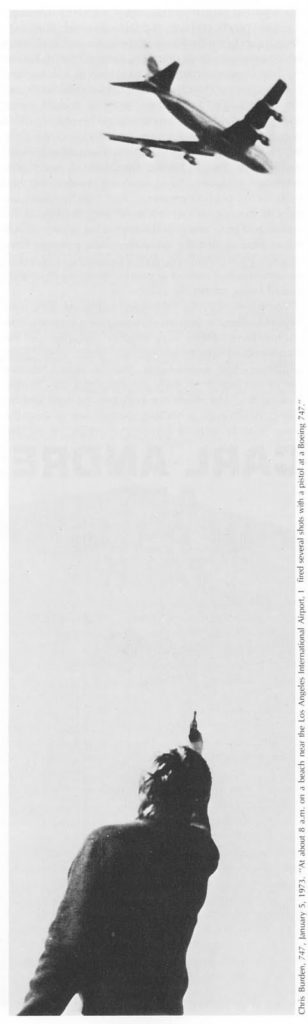
Chris Burden is a pioneering performance artist/sculptor/bodily harm artist, and probably best known for his shocking pieces of the early 1970s. In the notorious 'Shoot' from 1971, Burden had himself shot by an assistant with a rifle, at a distance of 15 feet. In 'Transfixed' from 1974, Burden was crucified onto a Volkswagen beetle (below), which was driven out of a garage on Speedway Avenue in Venice, CA, revved for two minutes, then driven back inside. His '747' (below) saw him shooting at an airliner near LAX - an act which drew the attention of the FBI.
My favorite and his most canny work by far is 'The Visitation' of 1974, in which it was announced that Burden would perform a piece at the opening of a large group show of California artists in New York. Anticipating danger and outrage, an excited crowd jammed the gallery space. Burden sat in the basement, with his wife guarding a locked door. Only one visitor was allowed inside at a time; when the viewer entered, the door was locked behind. The assembled spectators grew frenzied in their attempts to see what was happening, crowding at the locked door and breaking windows to the basement in an attempt to get inside. Of course, Burden sat calmly talking with the 15 or so who actually saw him, while the anticipated drama was provided... by the audience.
Here's a video of Stacie B London bringing the 'Big Wheel' to life:
Jean-Marie Guivarc'h
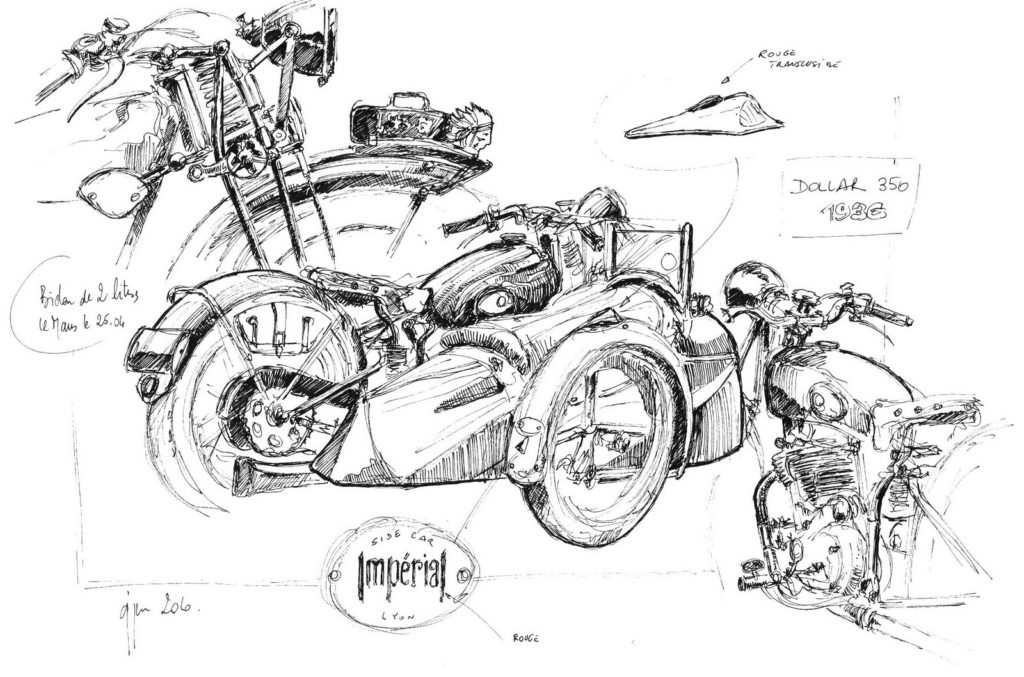
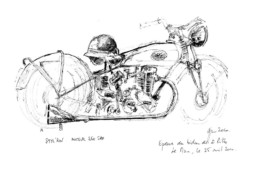
Jean-Marie Guivarc'h has been sending his sketches and watercolors to The Vintagent for a few years now, which are primarily automotive, but he's a man of broad tastes, and makes evocative sketches of motorcycles as well. These notebook pages were drawn at the LeMans race circuit last Sunday during the 'Bidon 2 Litres' event, which he explains below.
In the artist's words:
"I'm sending you three drawings of old French motorcycles.
The first is a Dollar 350cc ohv with an Imperial side-car...two famous names in France. [some Americans saw the Dollar 4-cylinder machine at the Art of the Motorcycle exhibit at the Guggenheim].
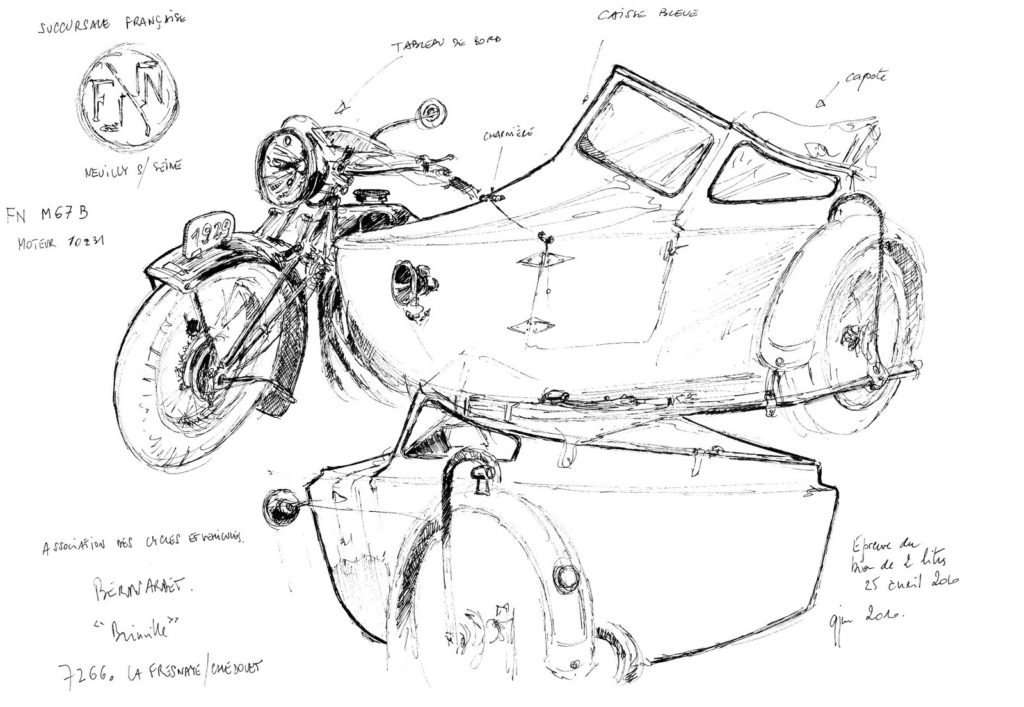
The second is an FN with a Bernardet side-car; perhaps it is the oldest Bernardet with a very rare body (1925 or 1926), with only two survivors and one in the USA! The first owner was a sailor...[I know the very sidecar; it was part of the Good Olde Days collection, where I found my 1965 Velocette Thruxton. We called the Bernardet the 'Captain Nemo' sidecar! I believe it was hitched to an FN as well?]
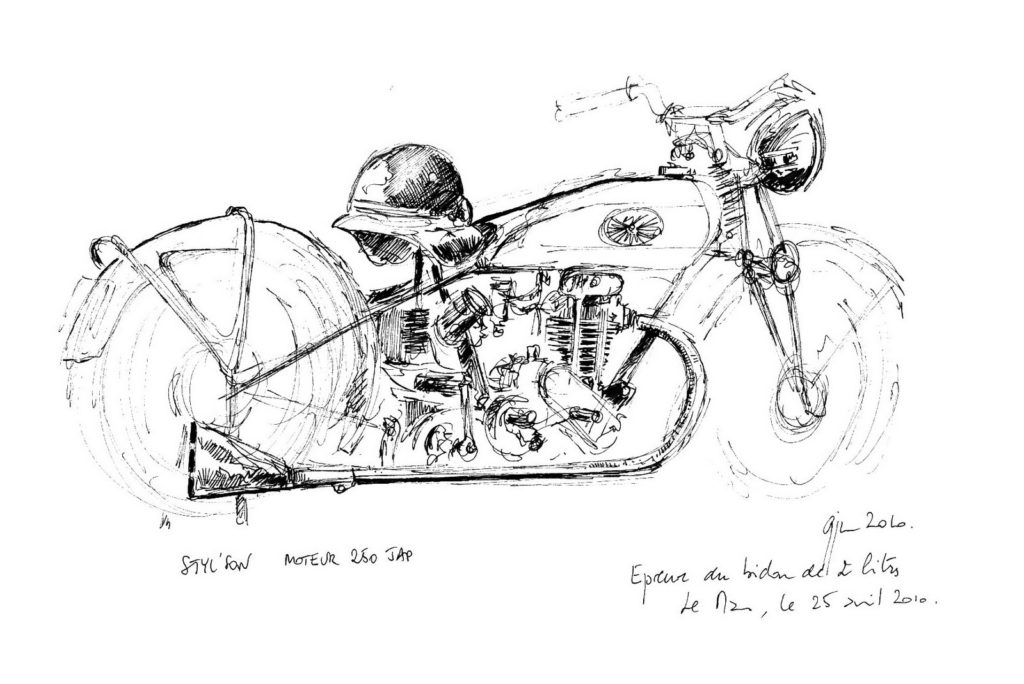
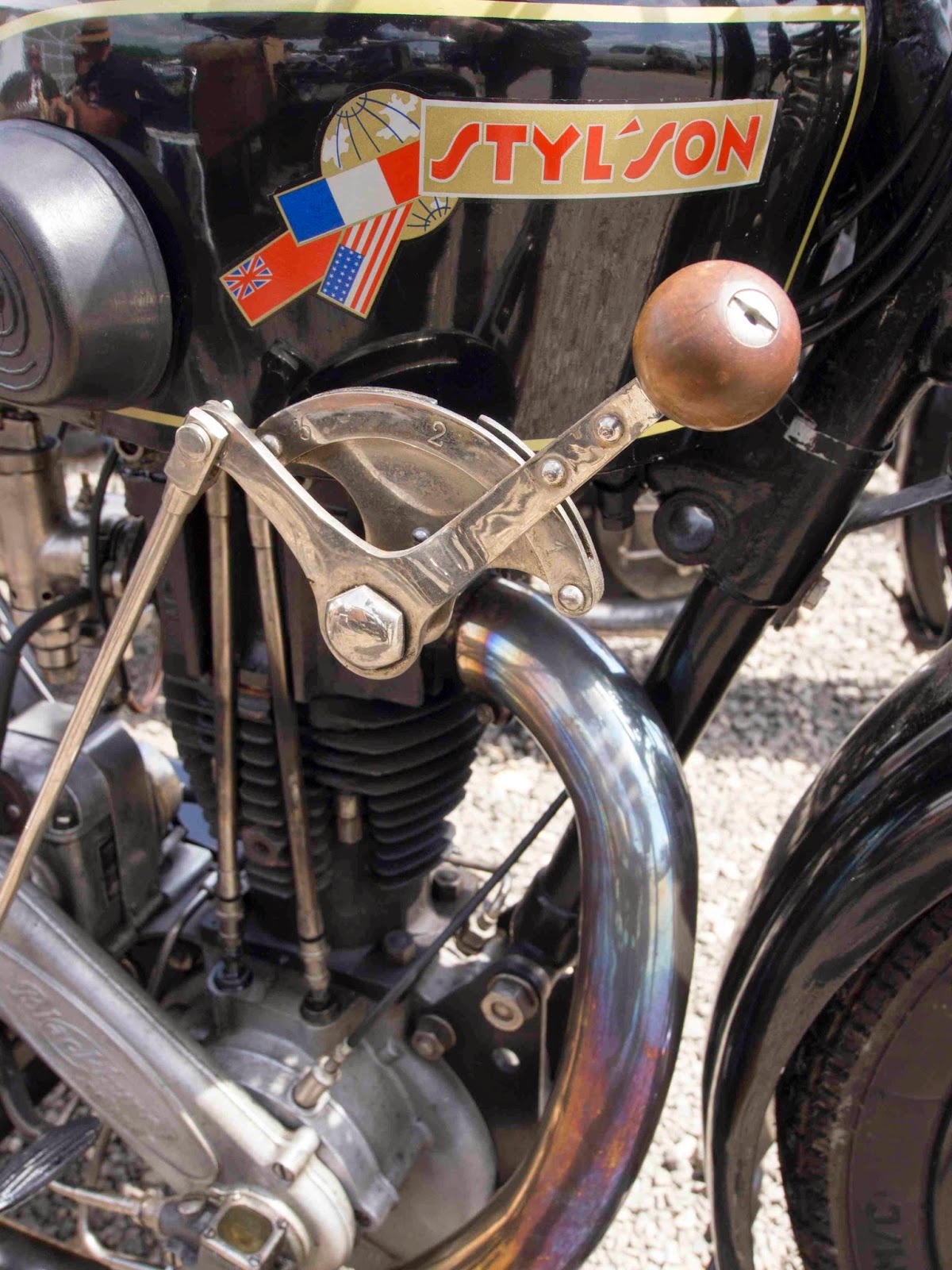
The last motorcycle is a Styl'son with a 250cc JAP engine; this bike was bought during the 1970's but was restored in 2000. The owner was in University originally and had no money to restore it back then. I have made these sketches during the 'Bidon 2 Litres' event, Sunday 25th of April at Le Mans. It is an economy run with only two liters of petrol; of course, the winner has the most economical engine! It was a great pleasure to meet the owners, to speak with them and to discover these wonderfull motorcycles.
Best regards,
Jean-Marie"
Book Review: 'The Chopper: the Real Story'
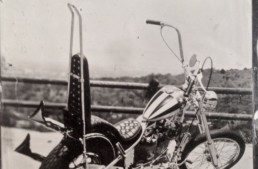
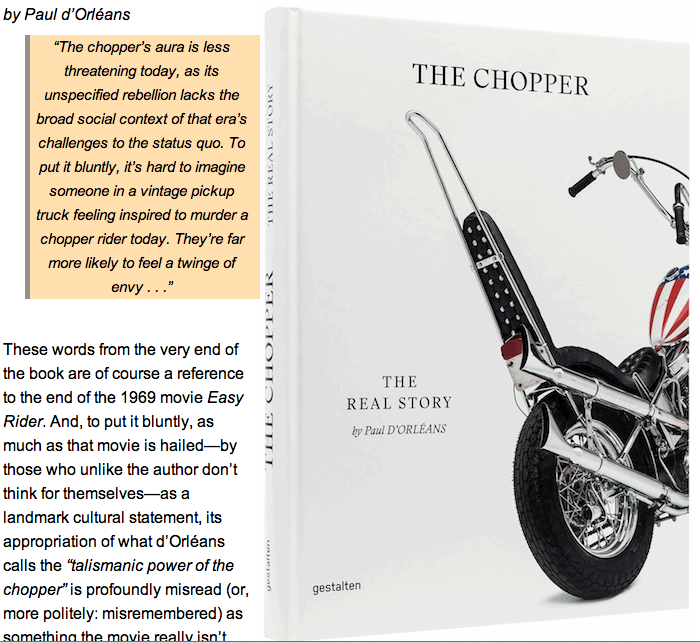
Speedreaders.info, which features 'authoritative reviews of transport books and media', has seen fit to review my most recent book 'The Chopper: The Real Story
Read the review on Speedreaders.info here!
Vintage Revival Montlhéry 2015 (Pt 2)
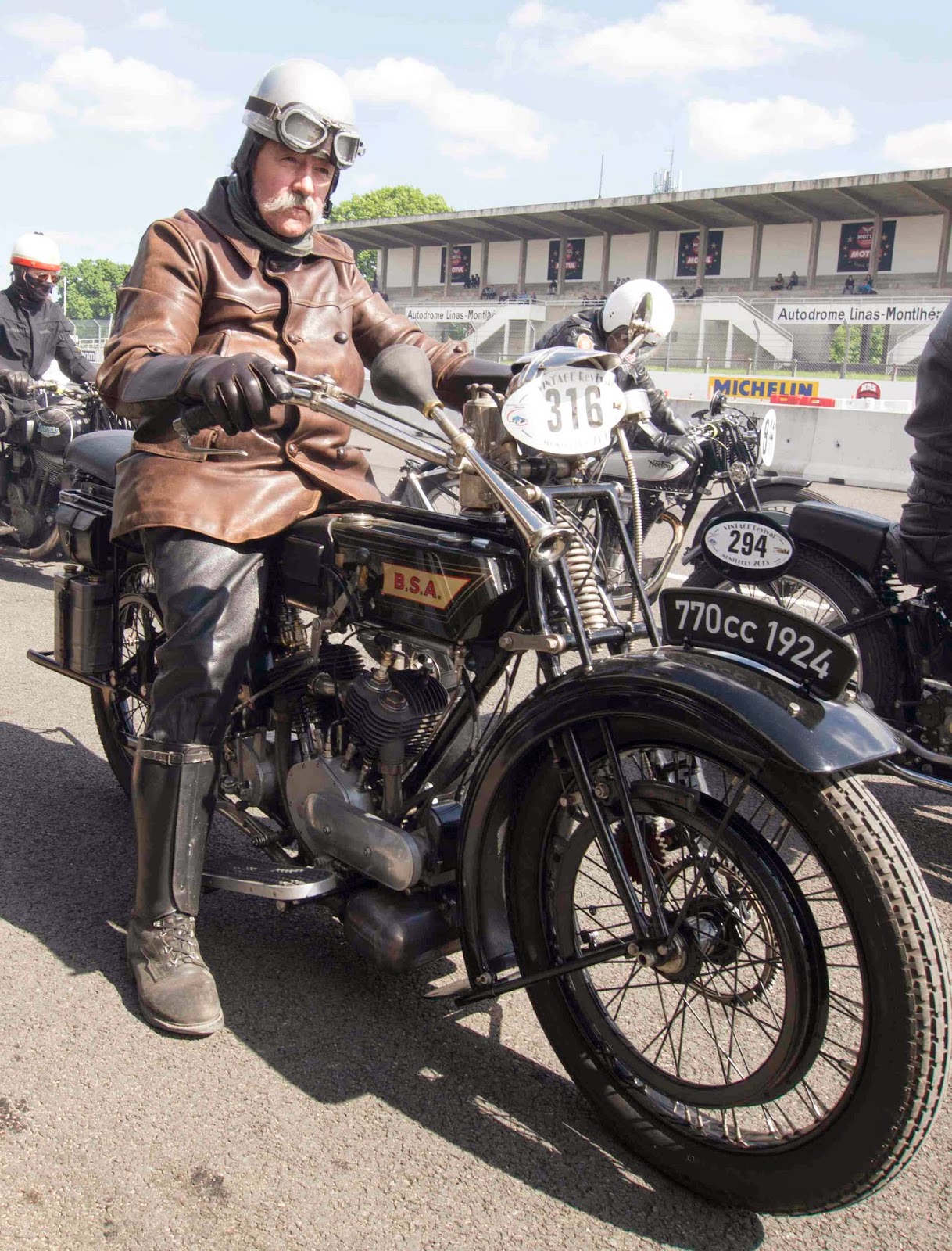
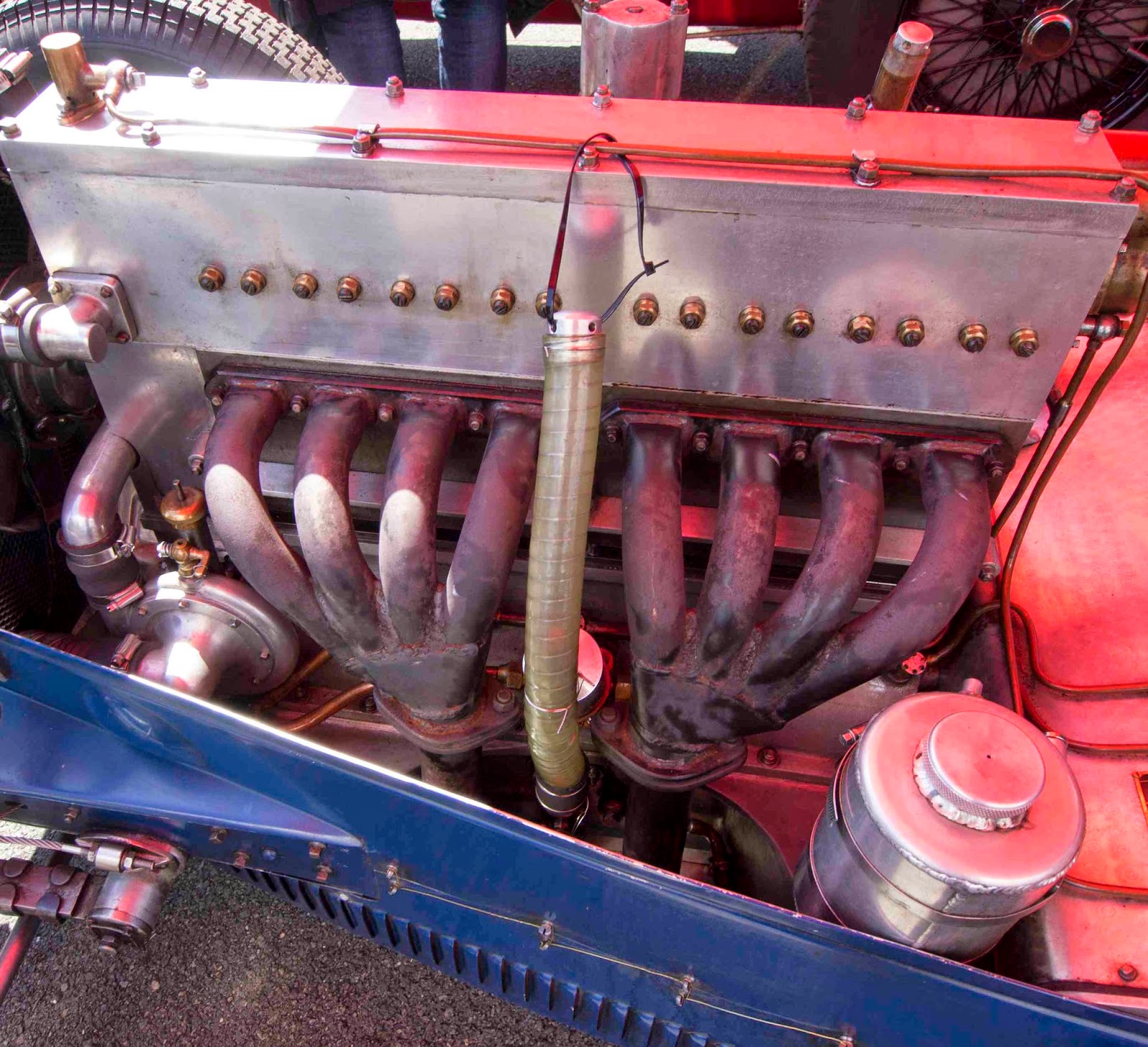
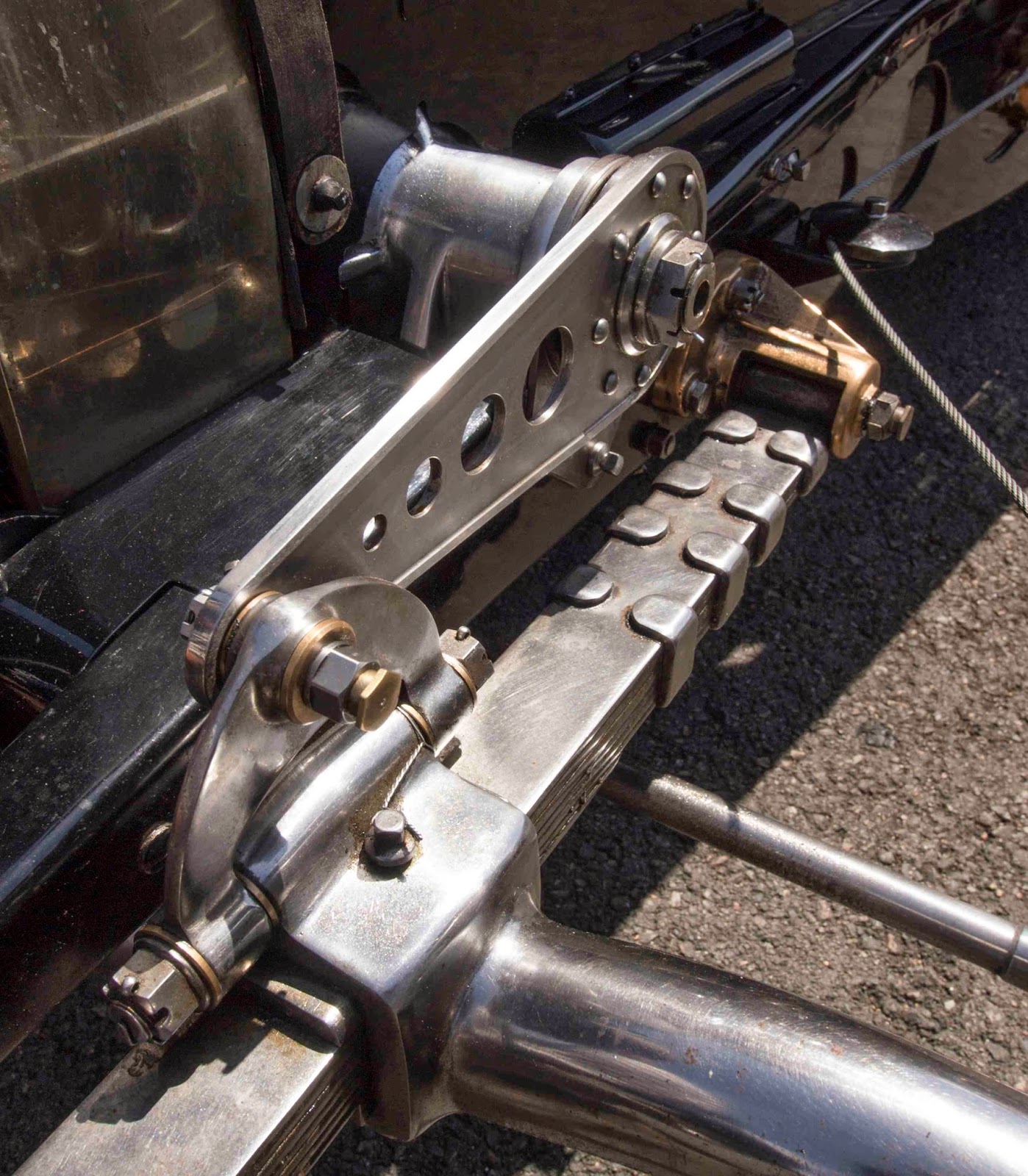
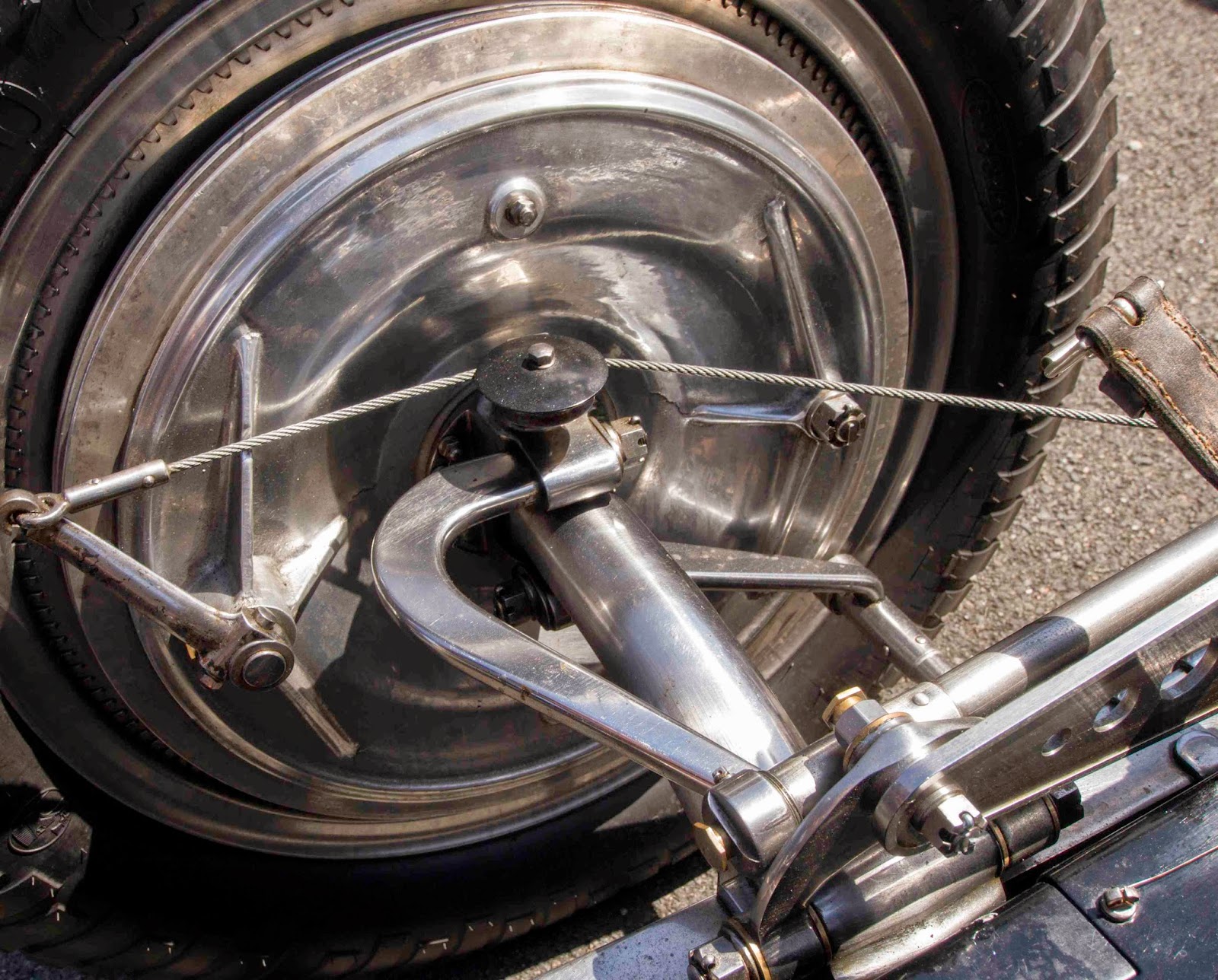
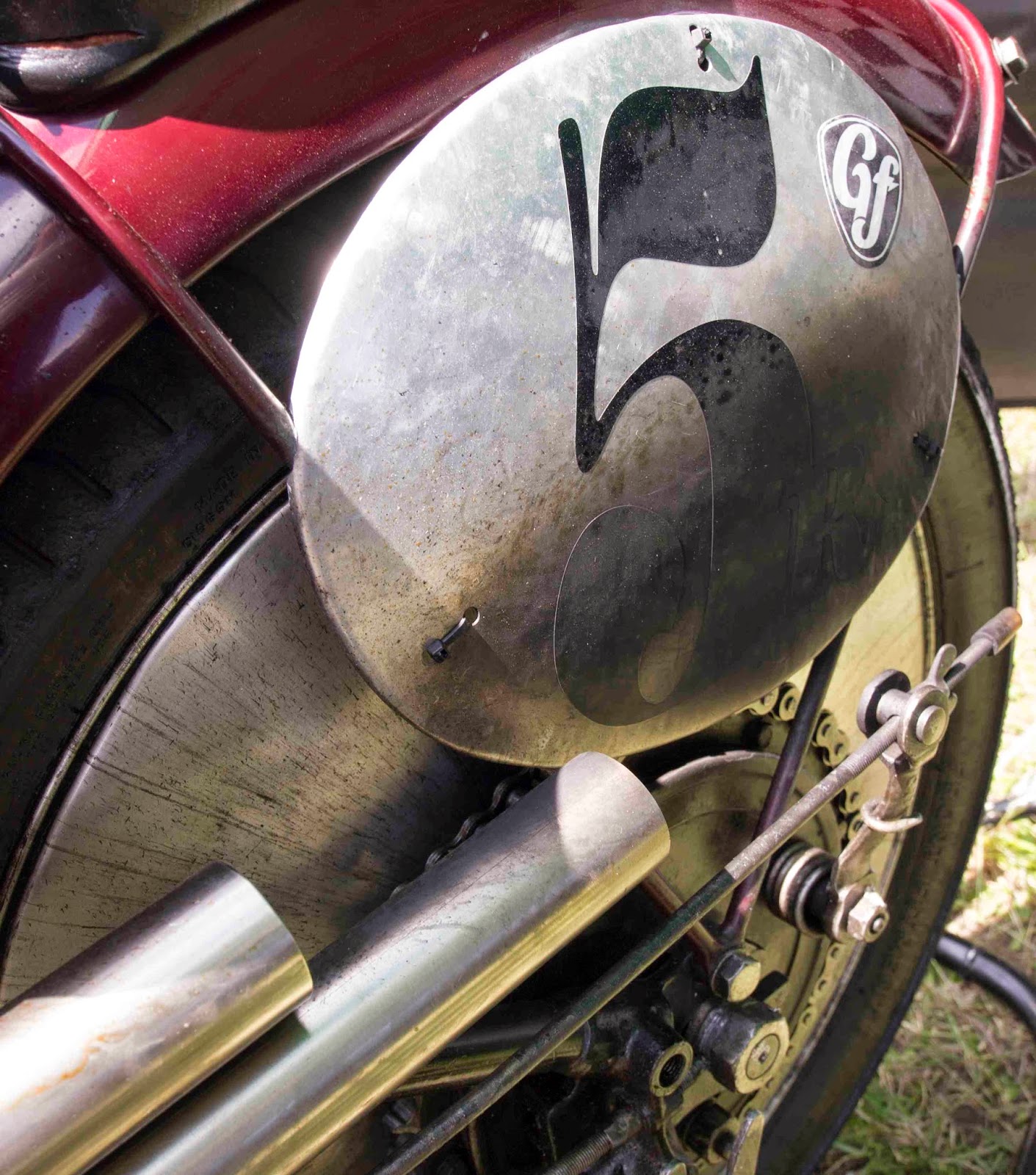
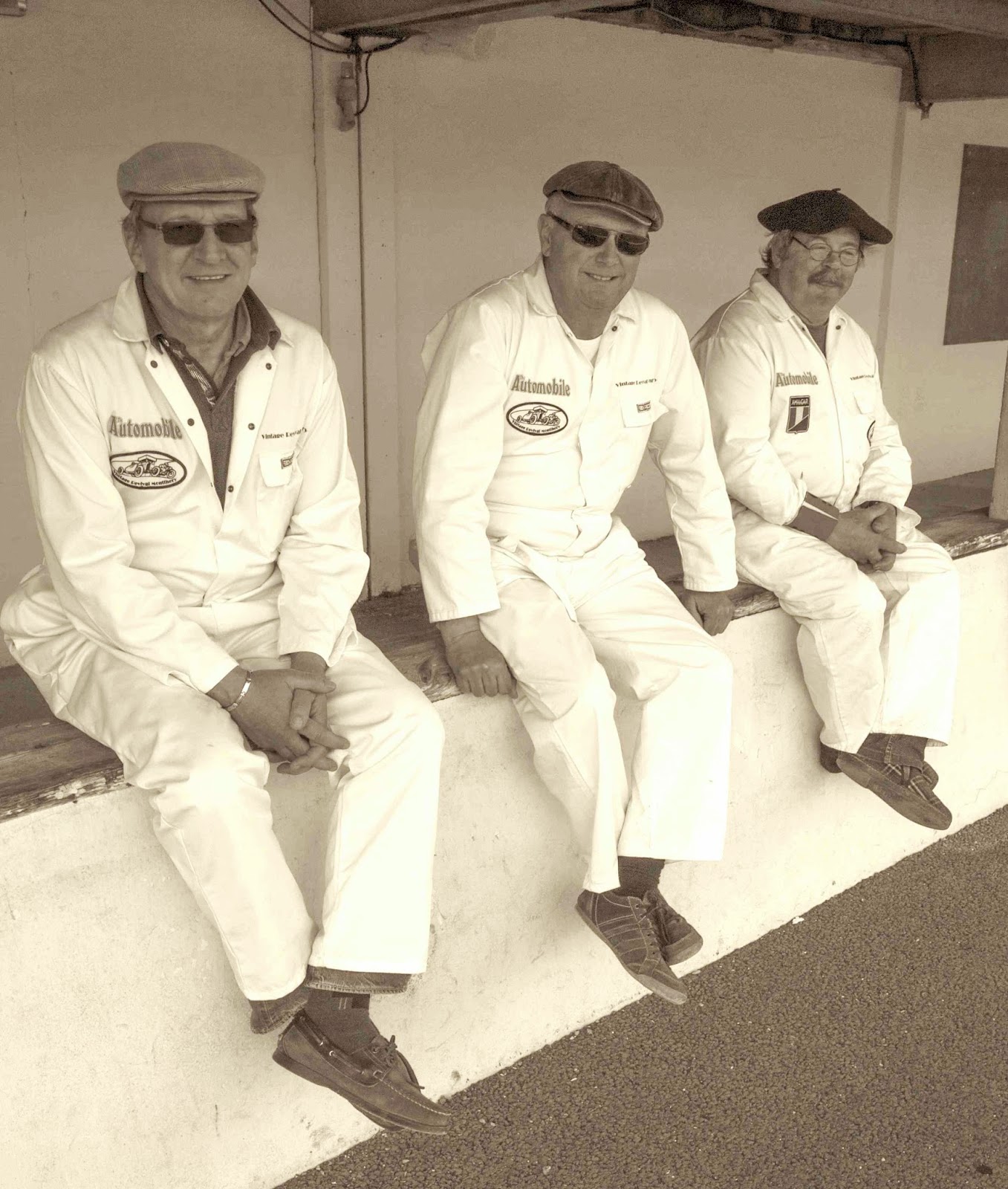
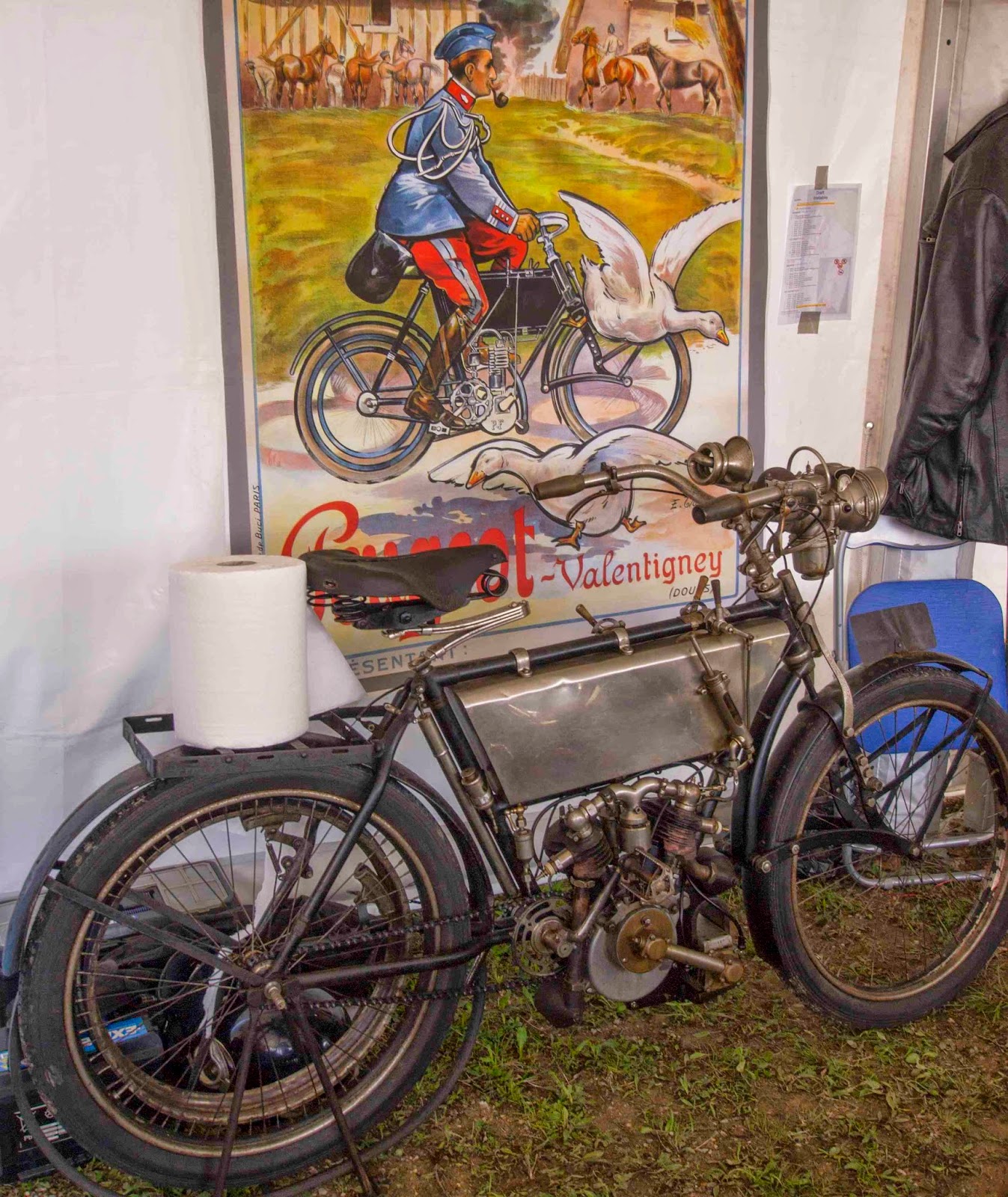
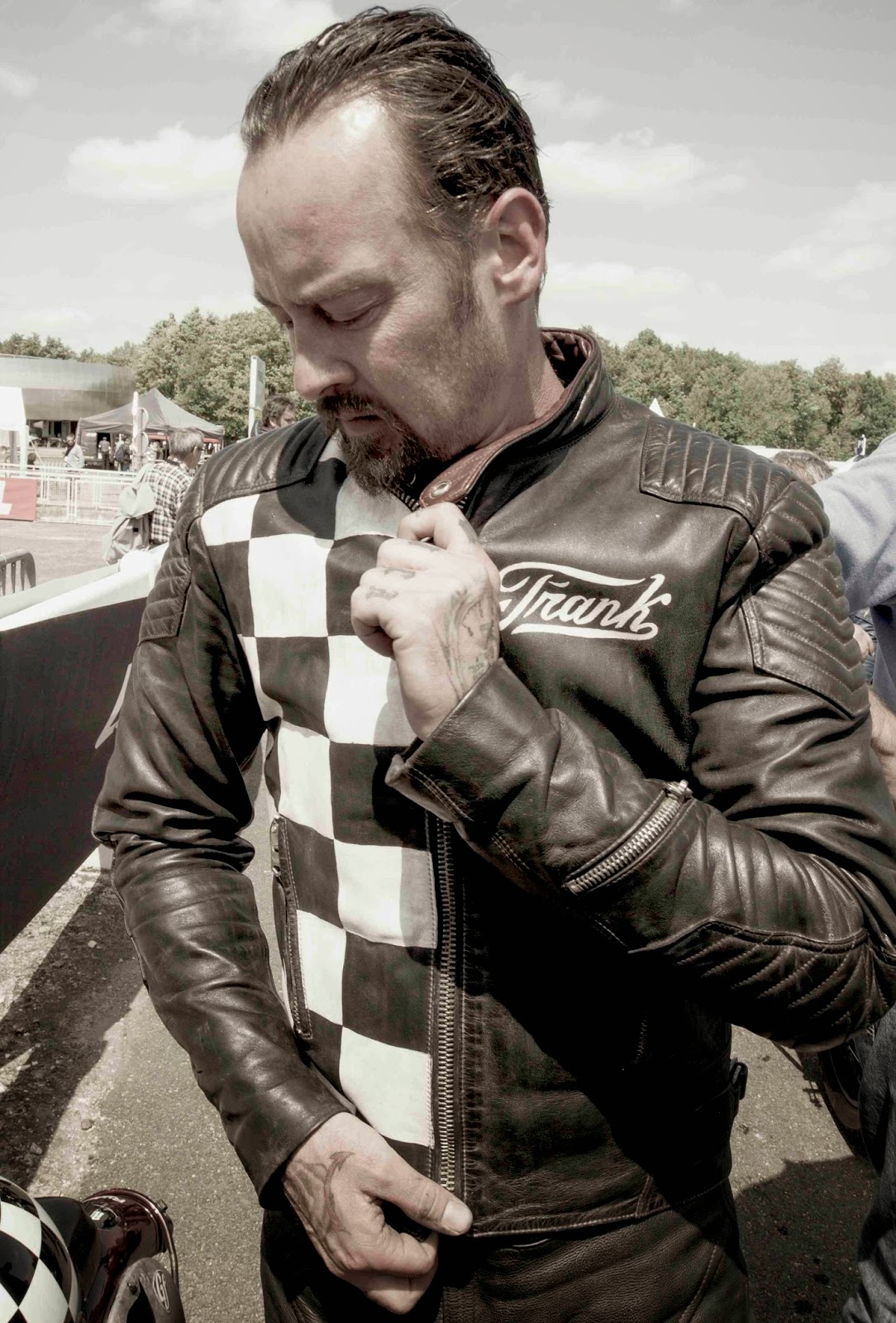
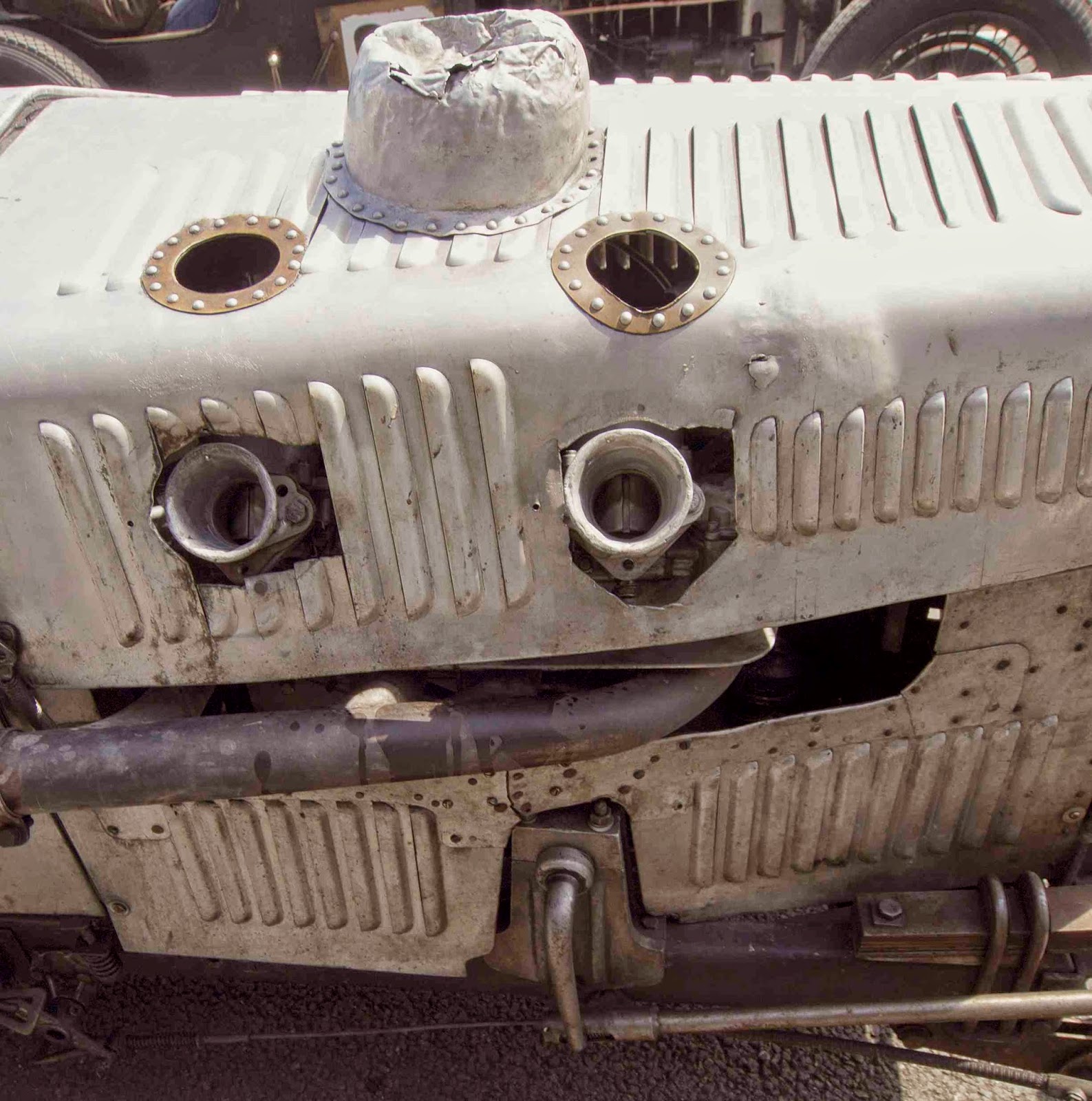
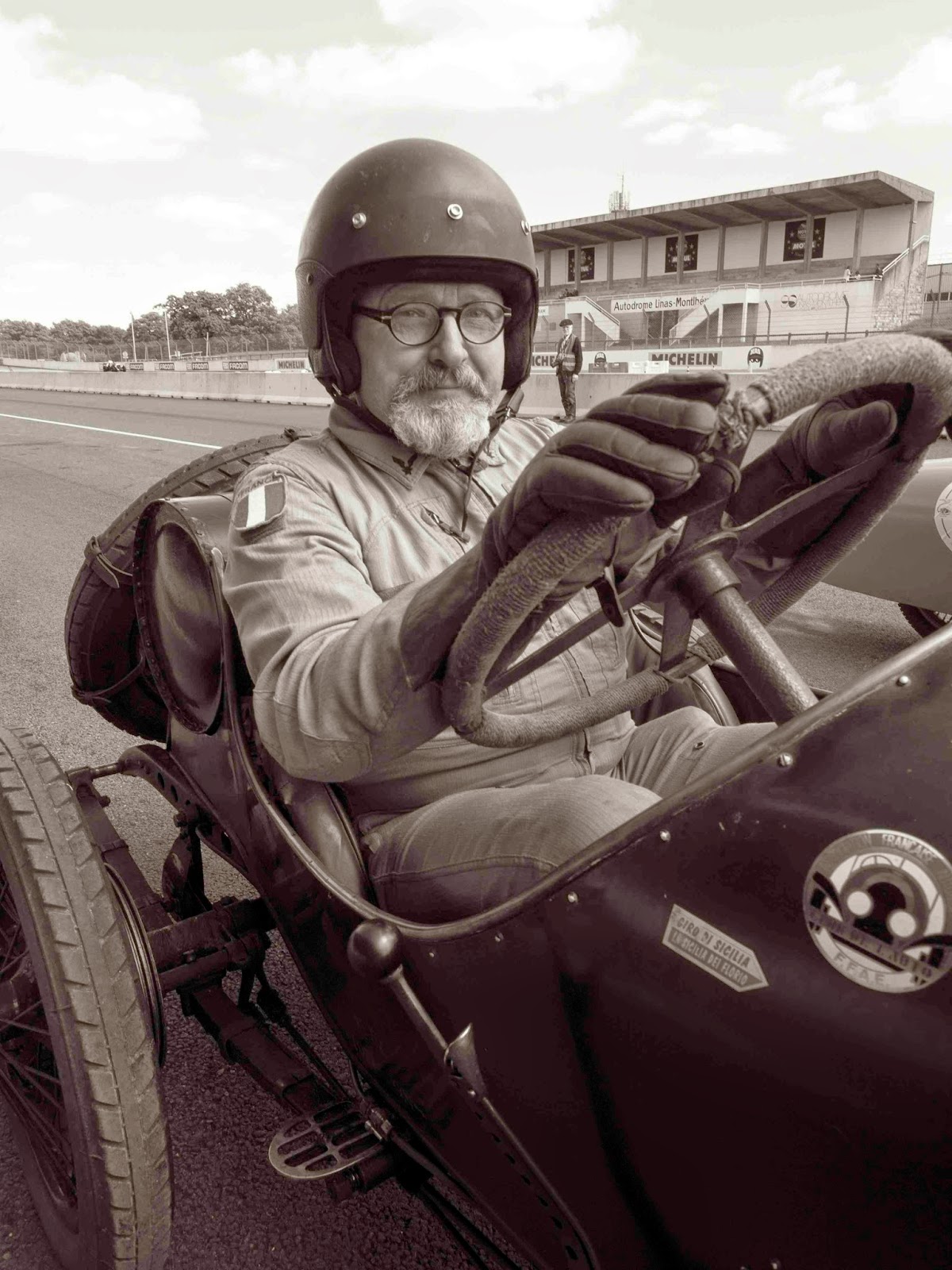
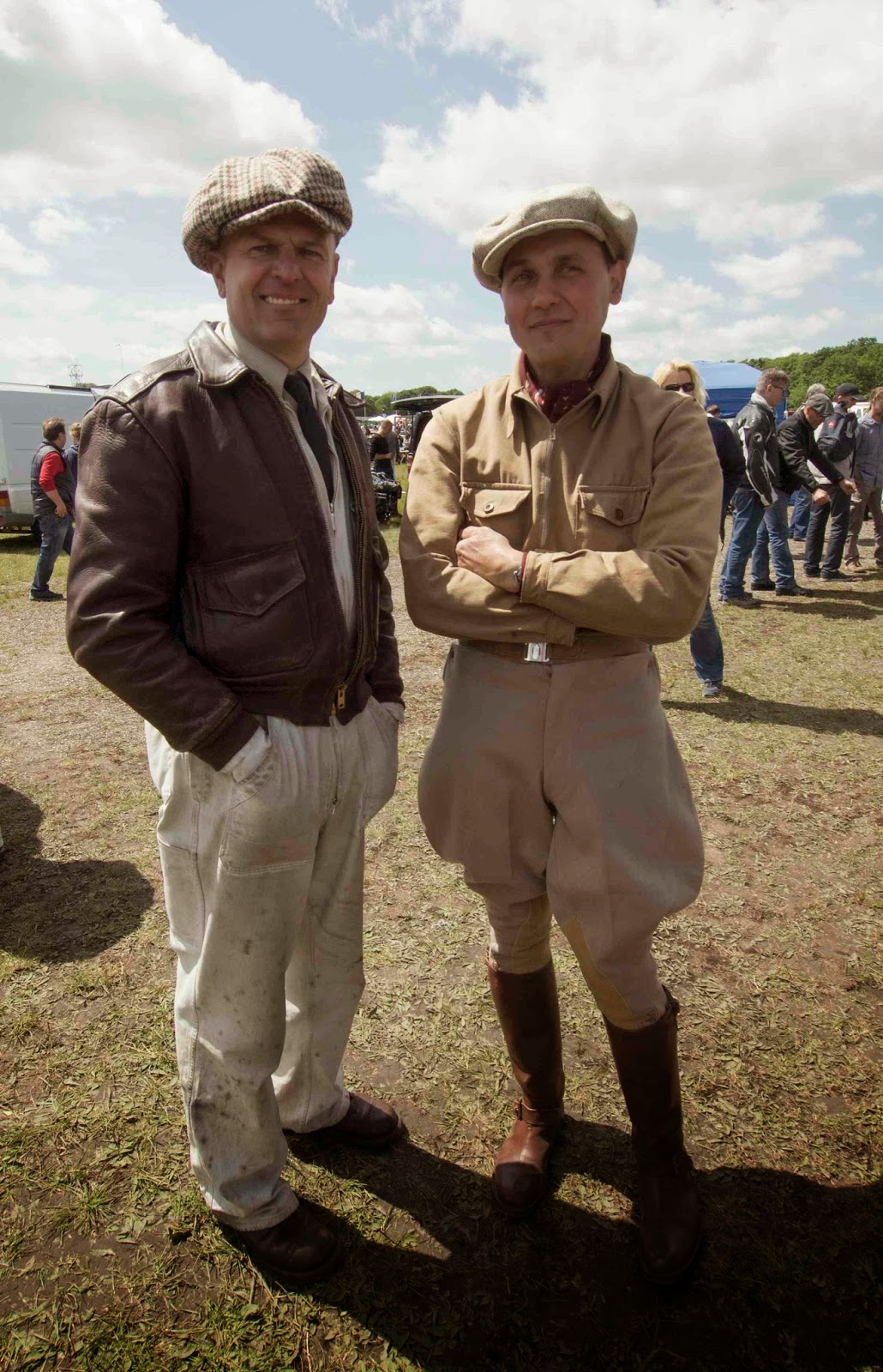
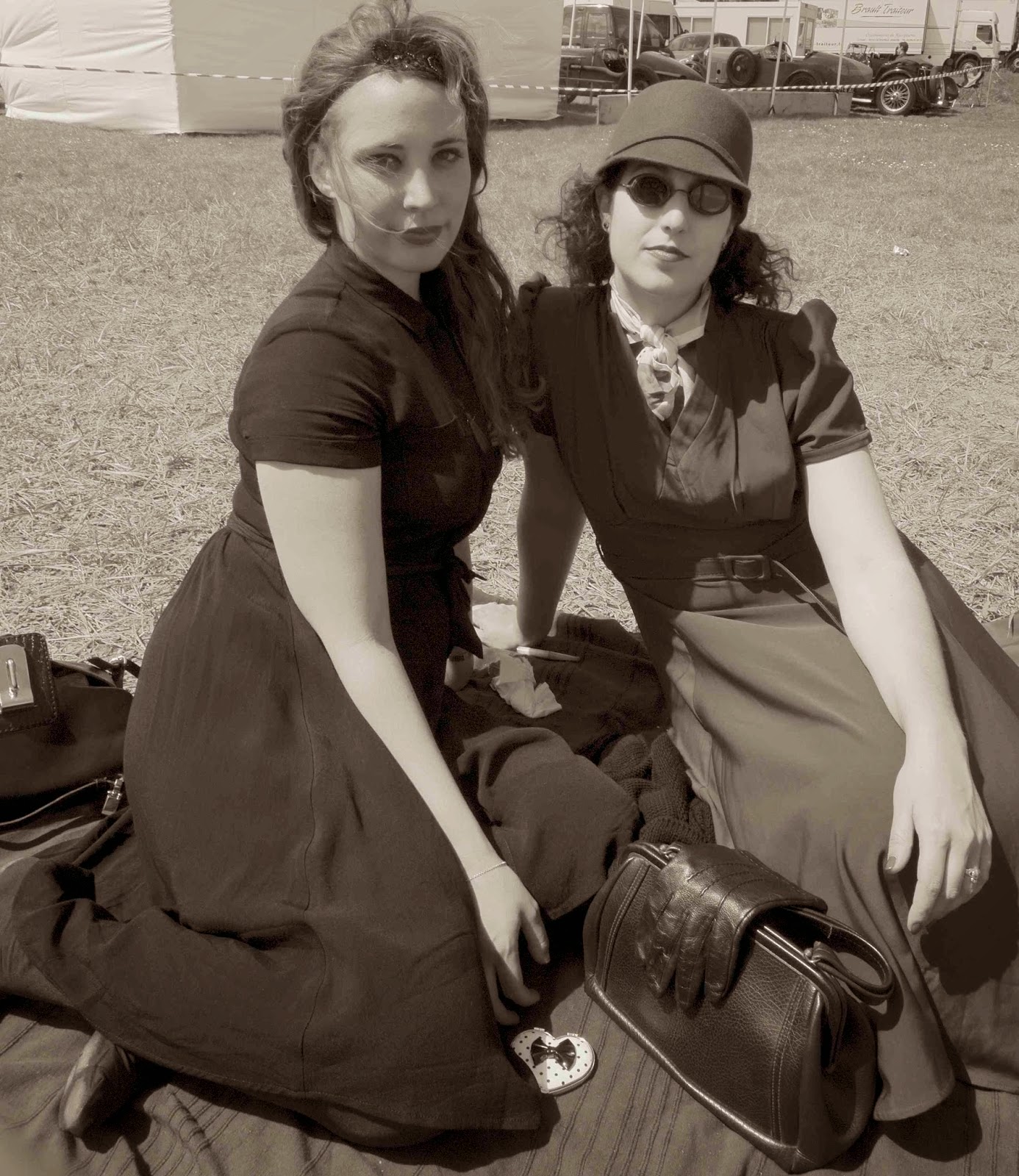
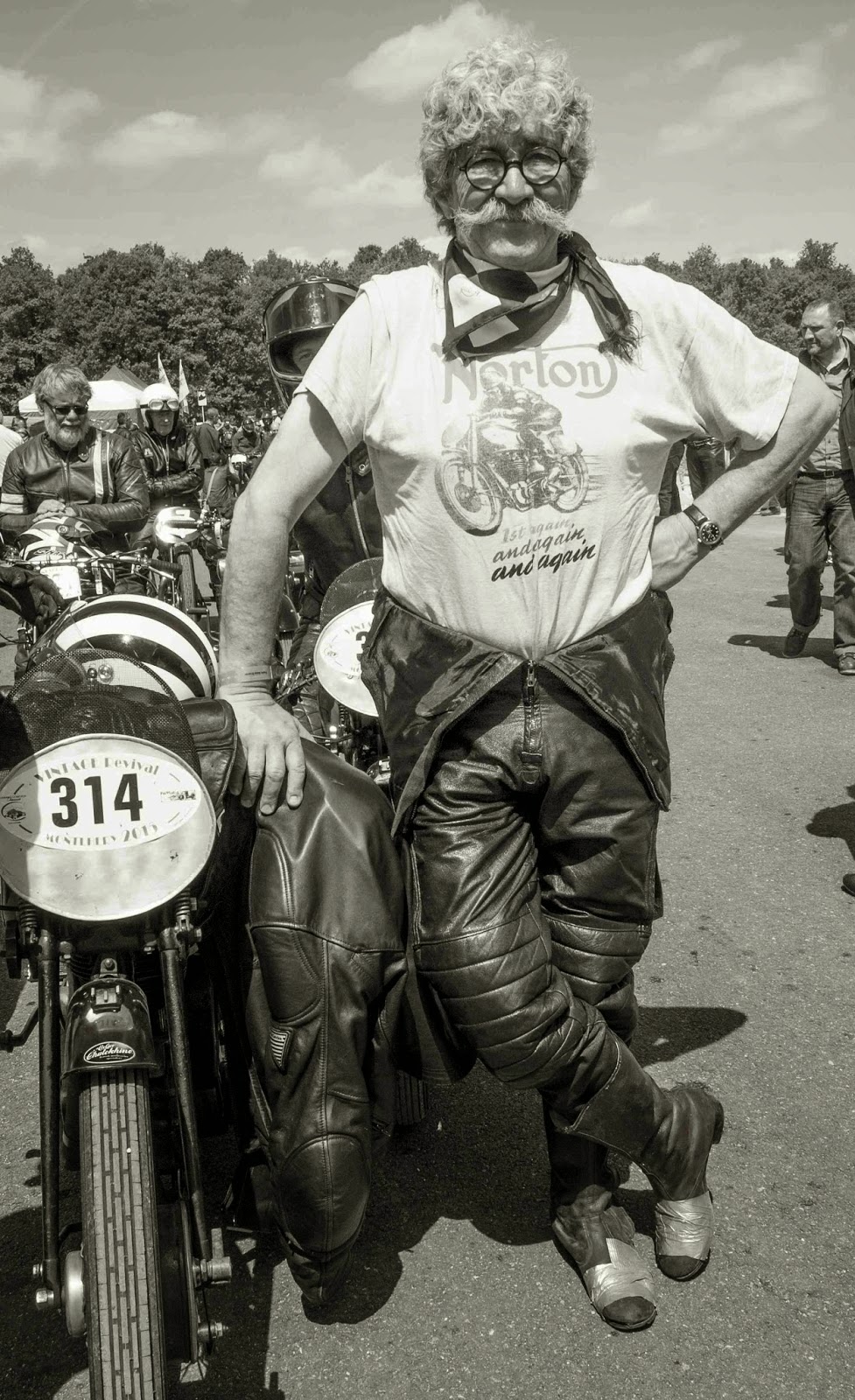
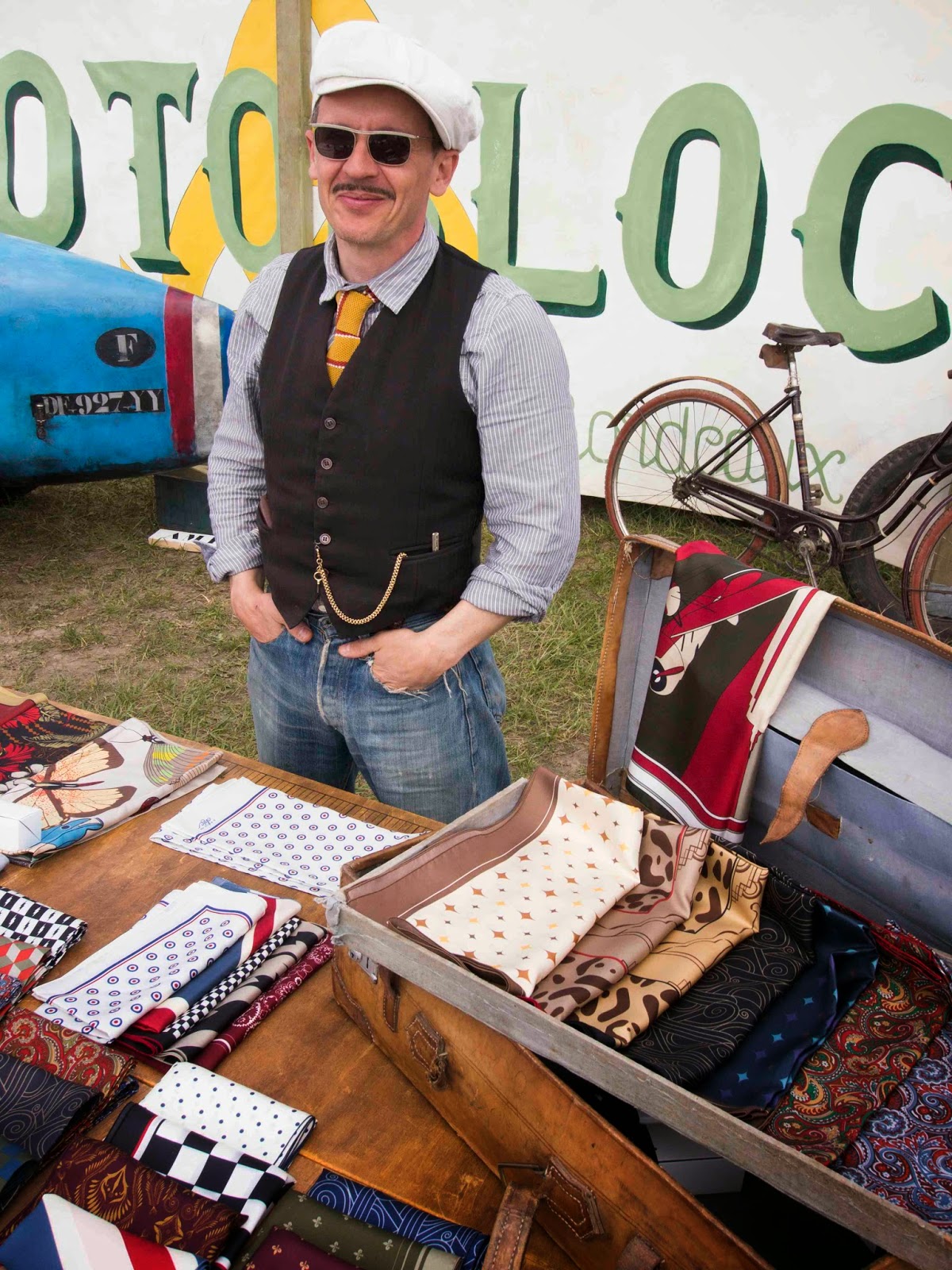
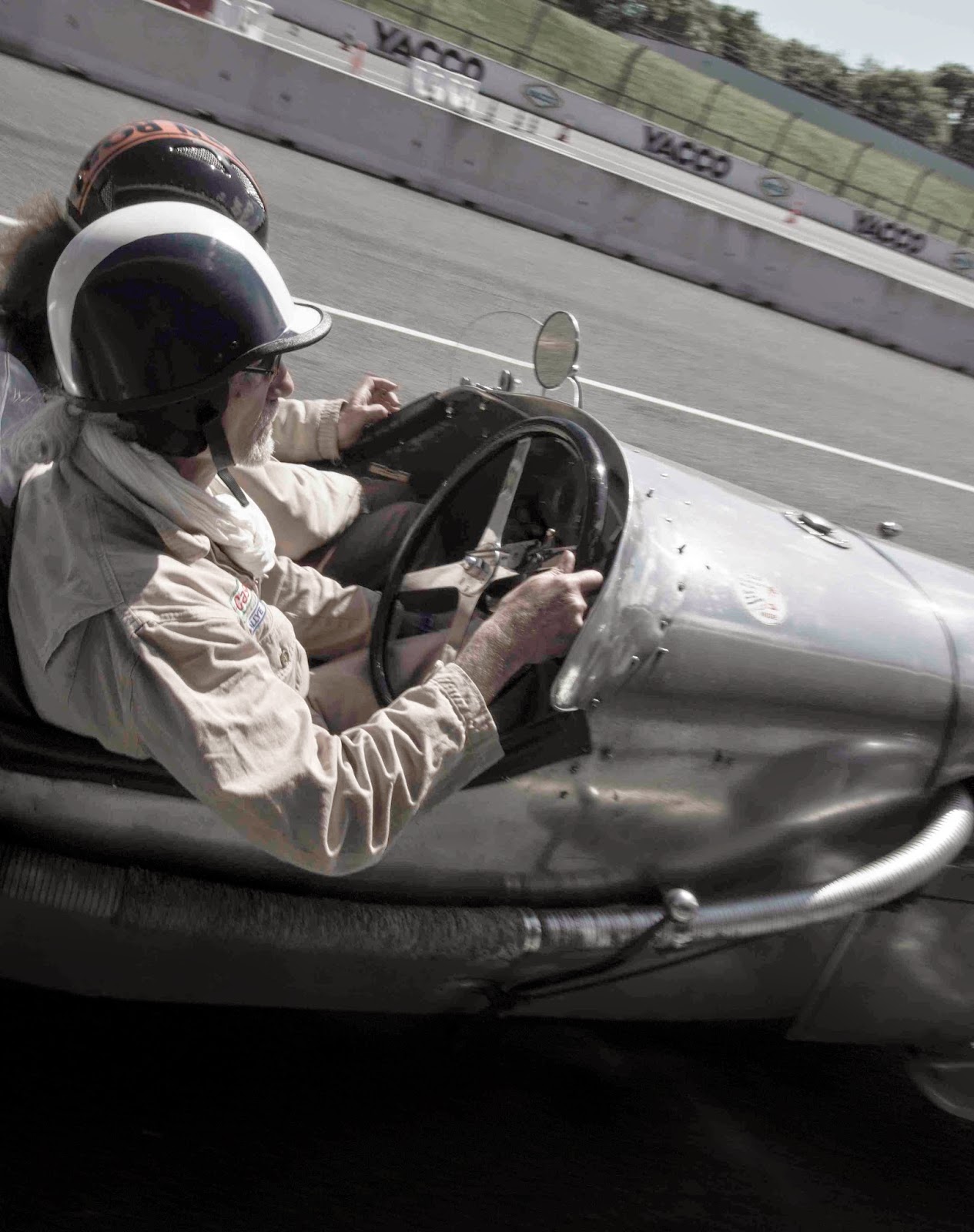
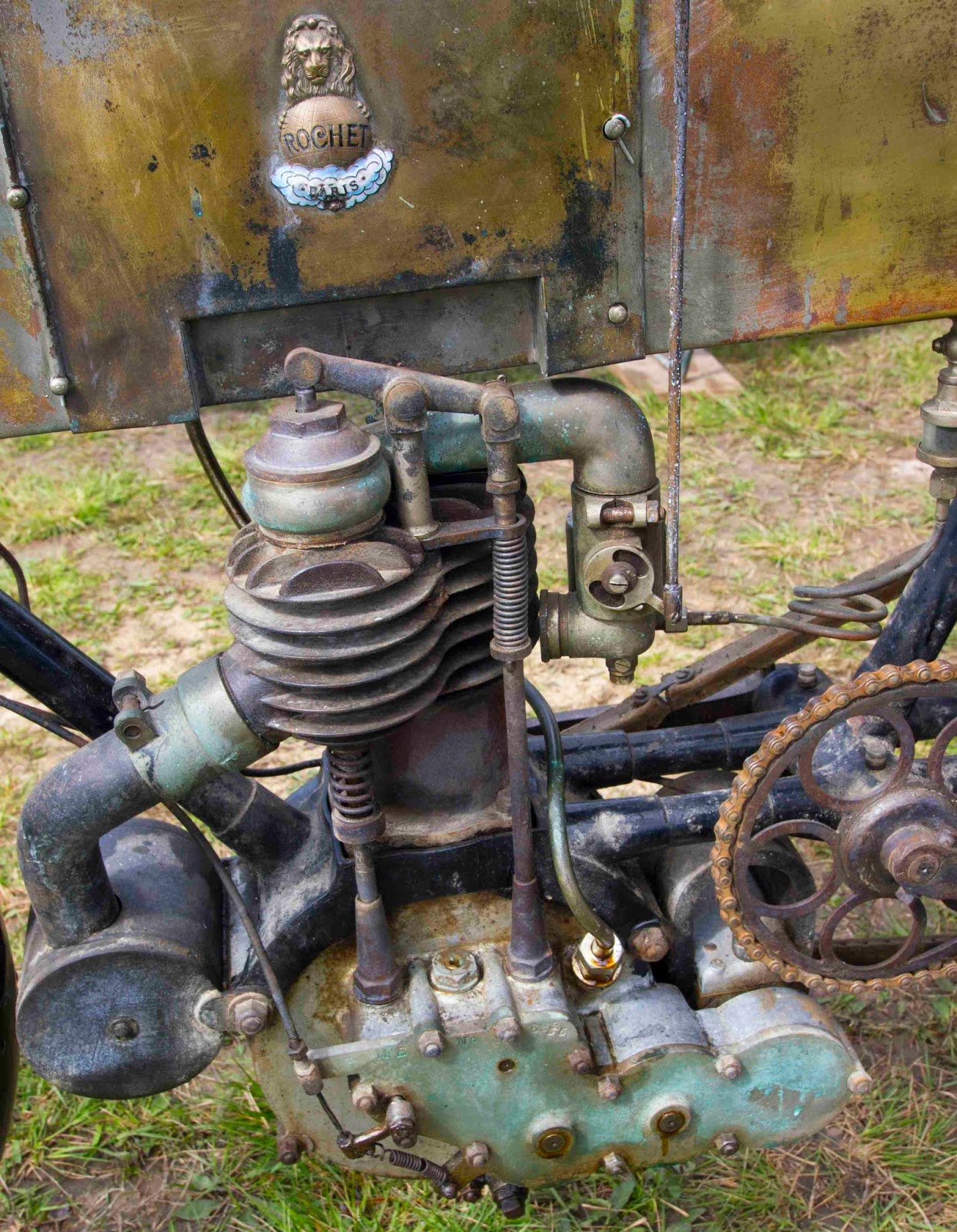
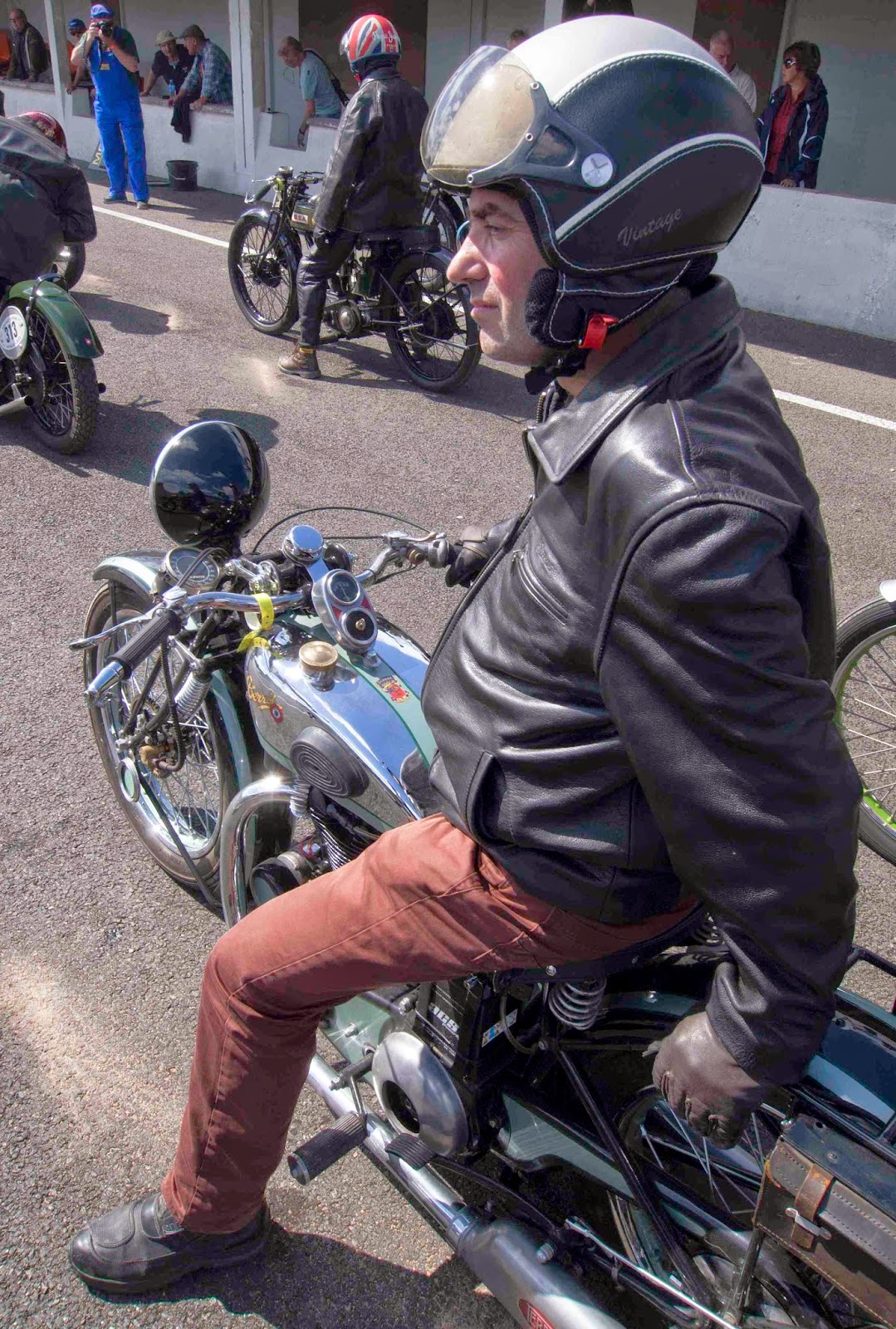
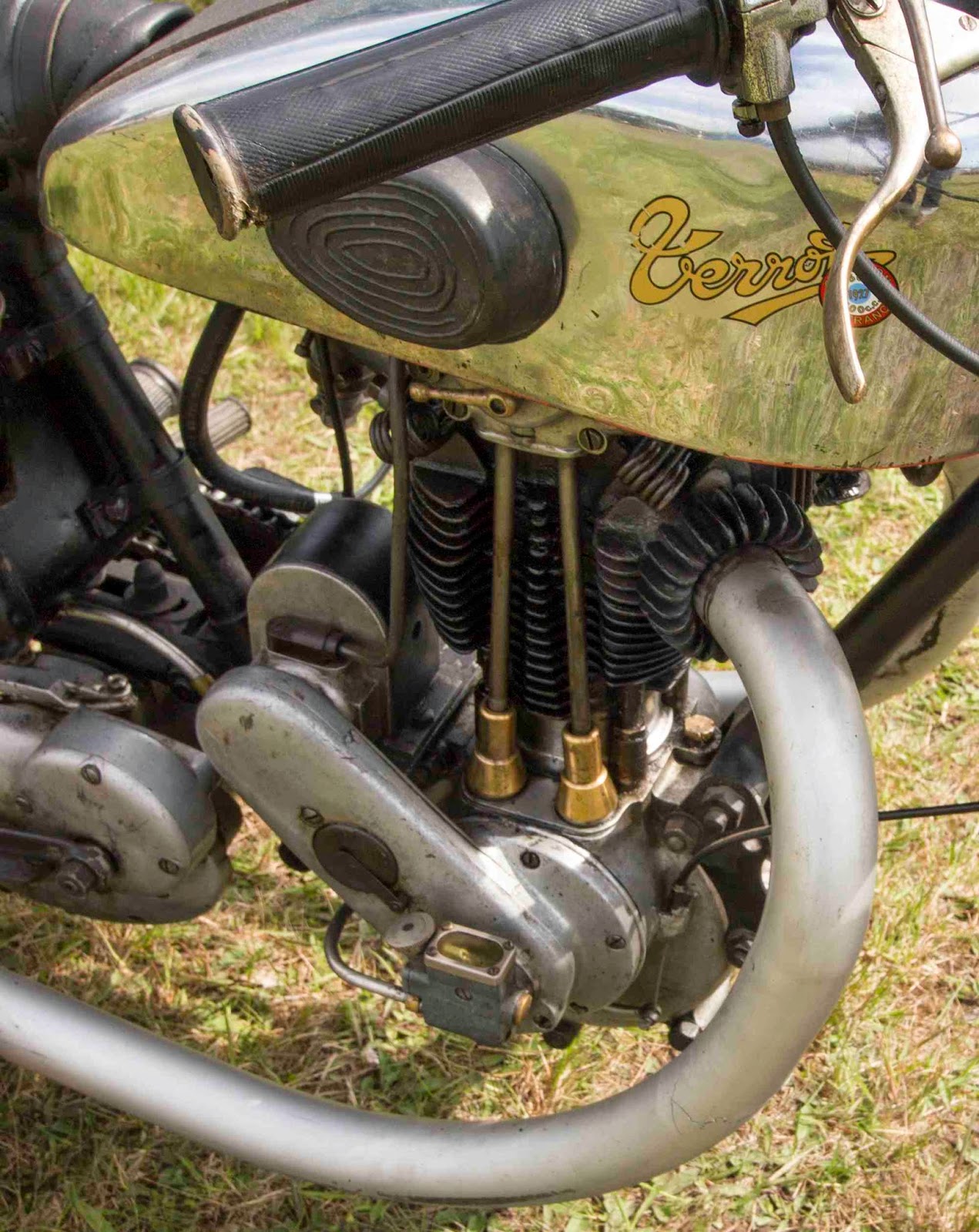
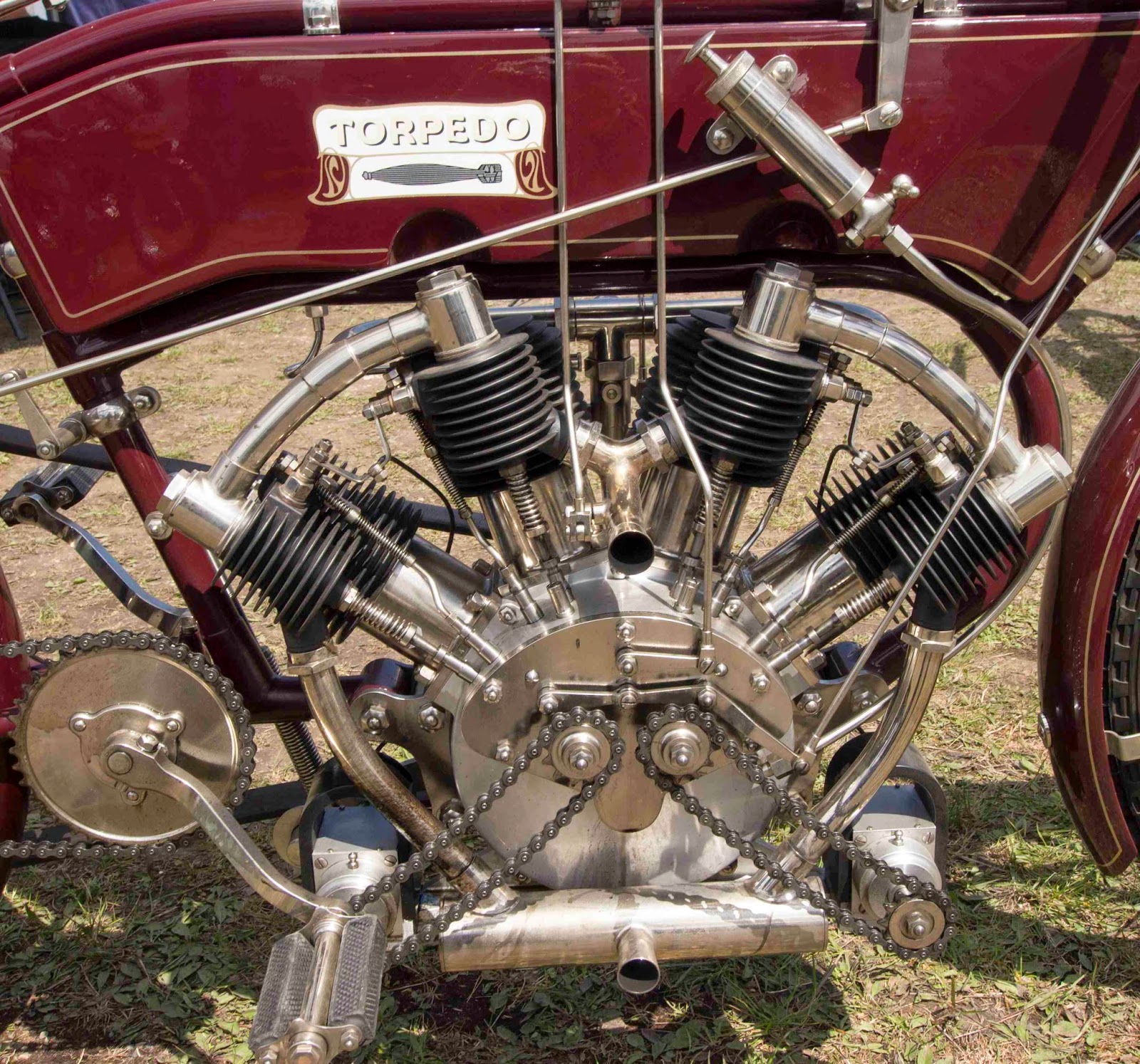
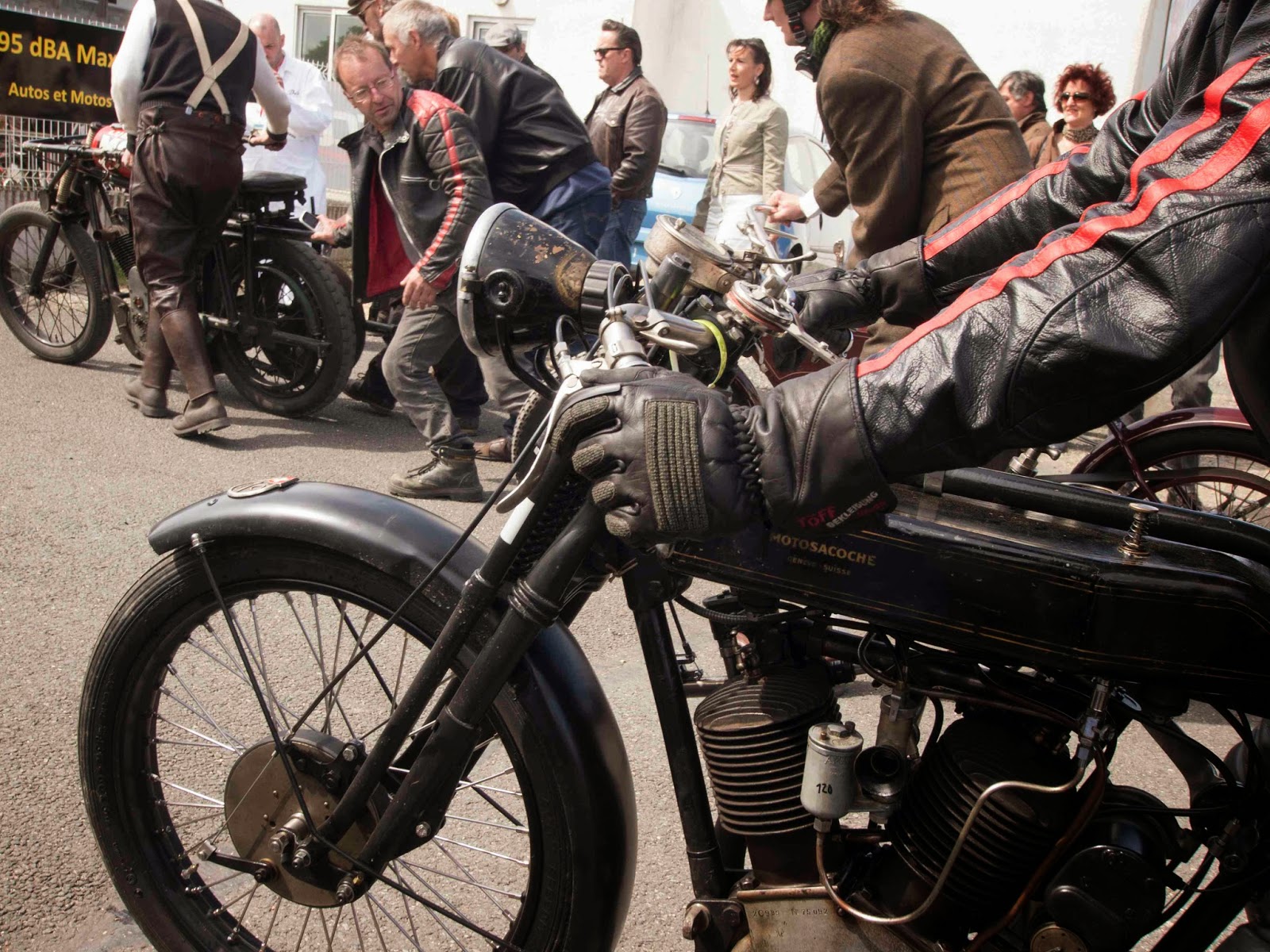
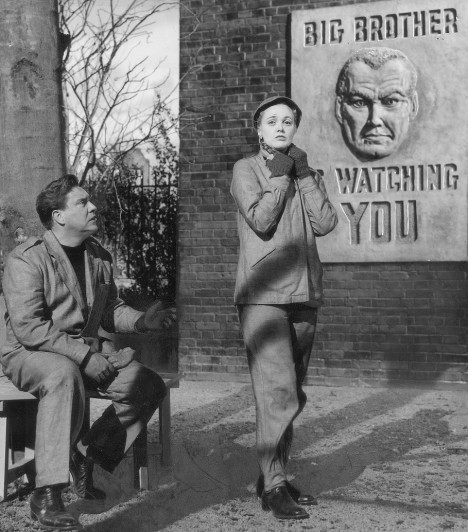
George Orwell's Motorcycles
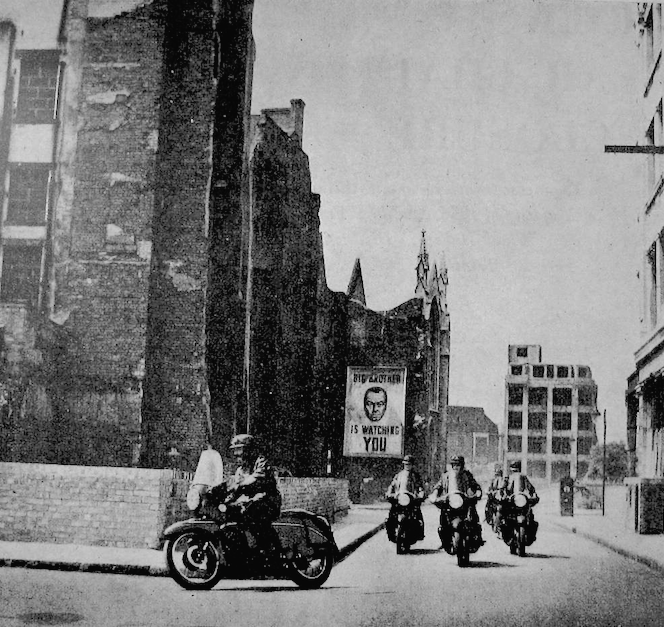
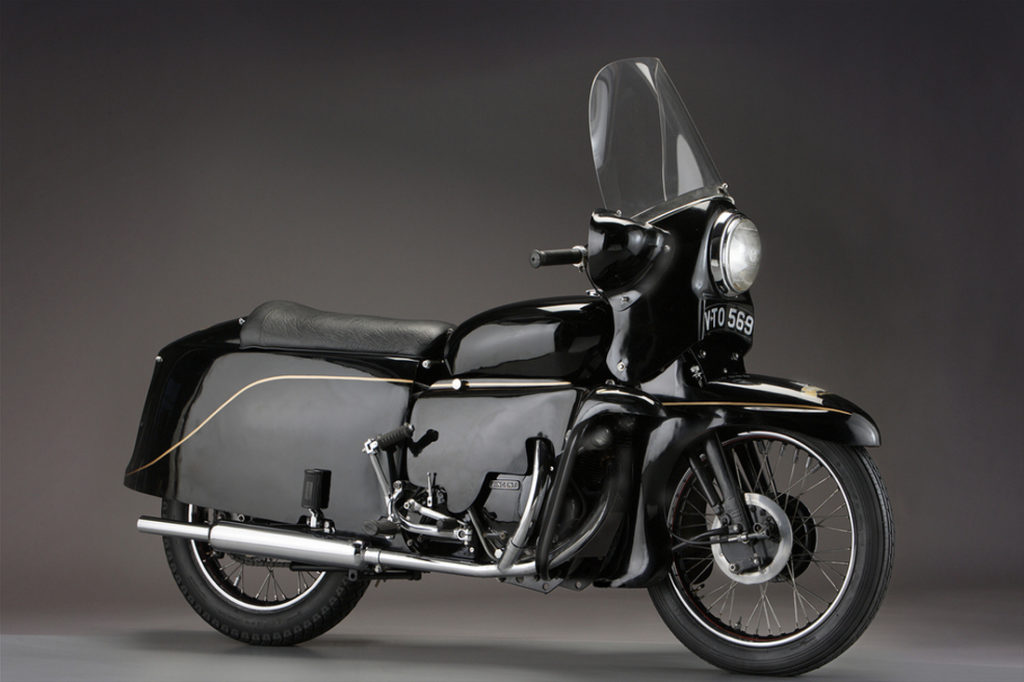
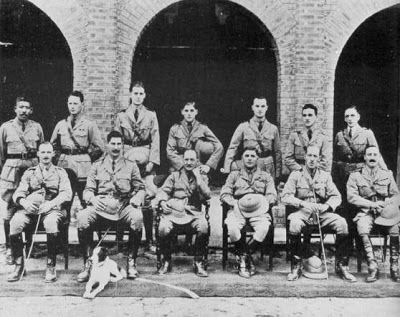
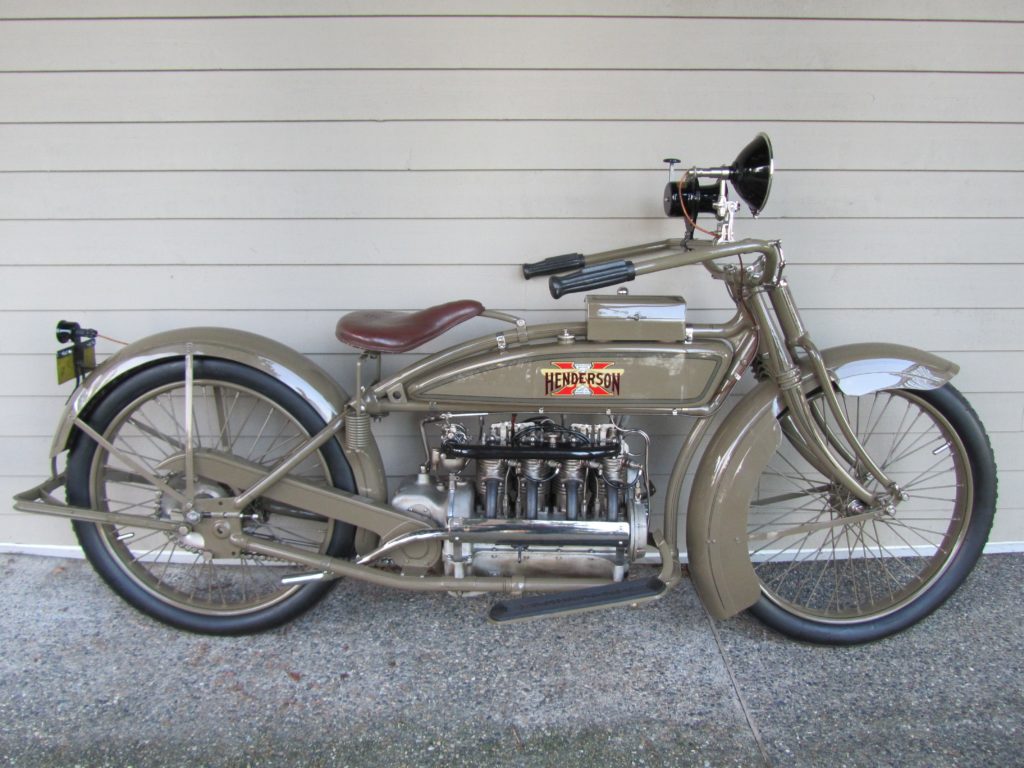
Vintage Revival Monthléry 2015 (Pt 1)
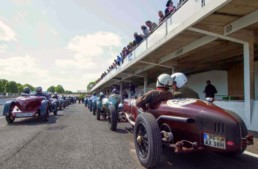
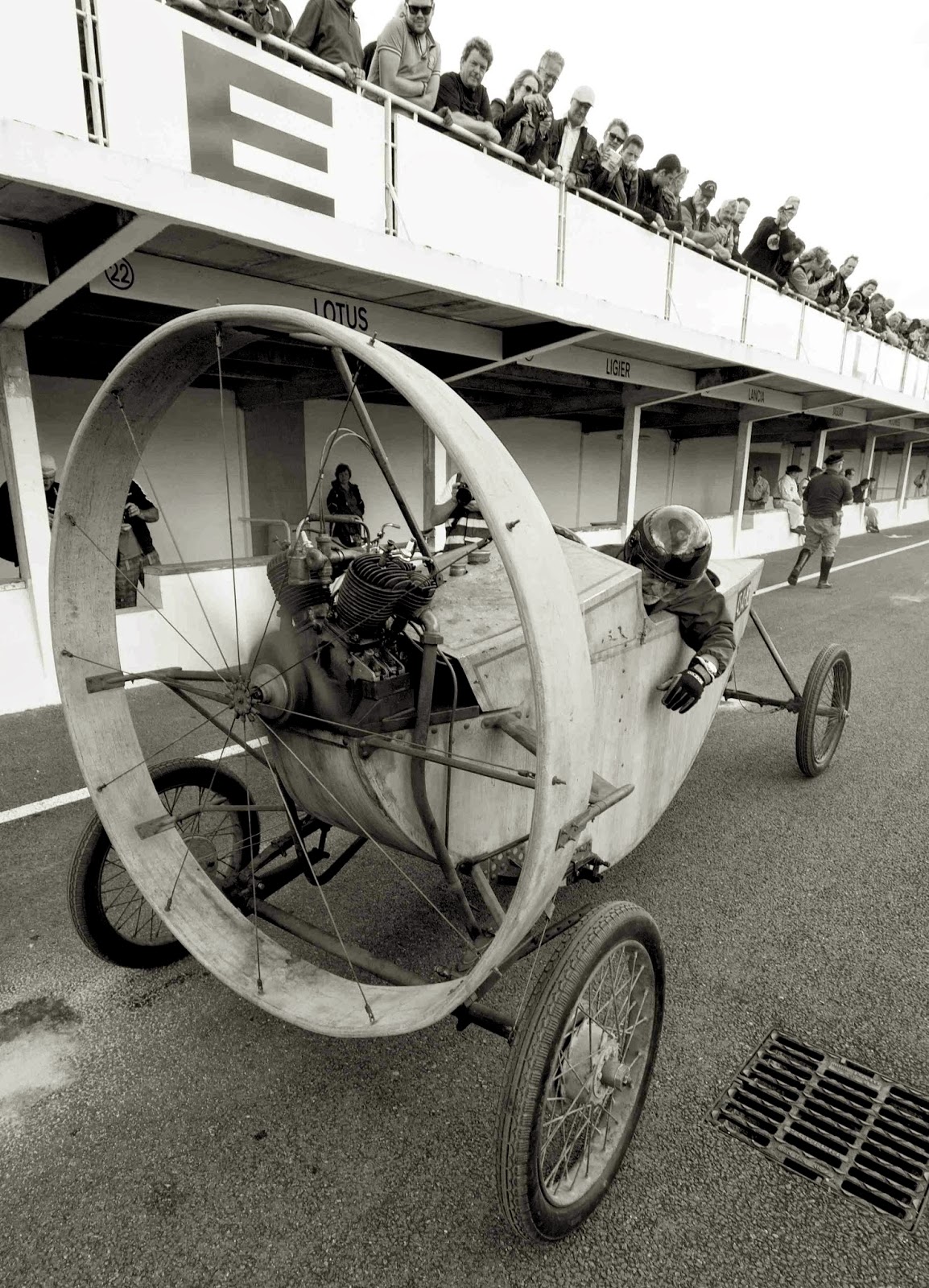
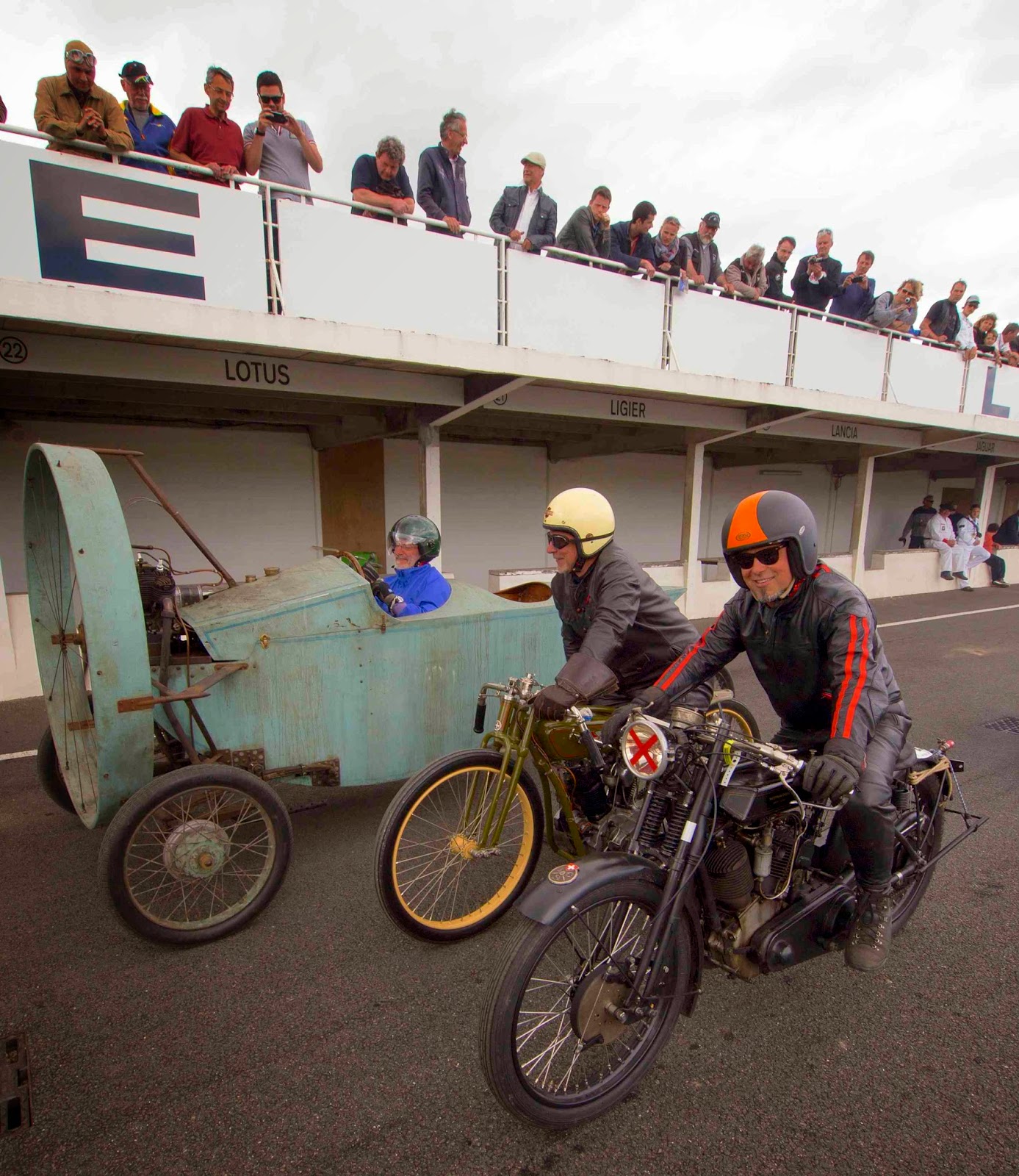
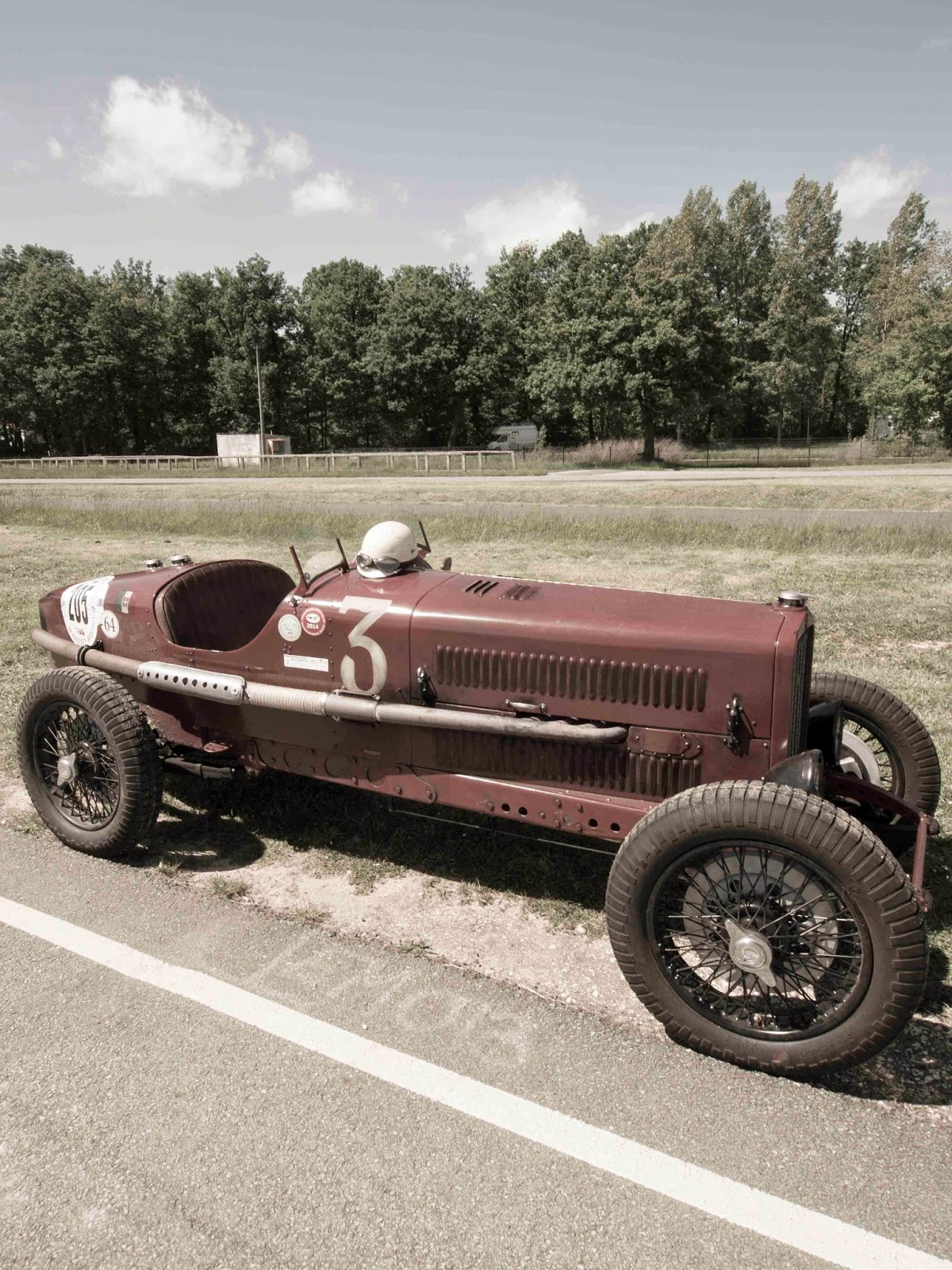
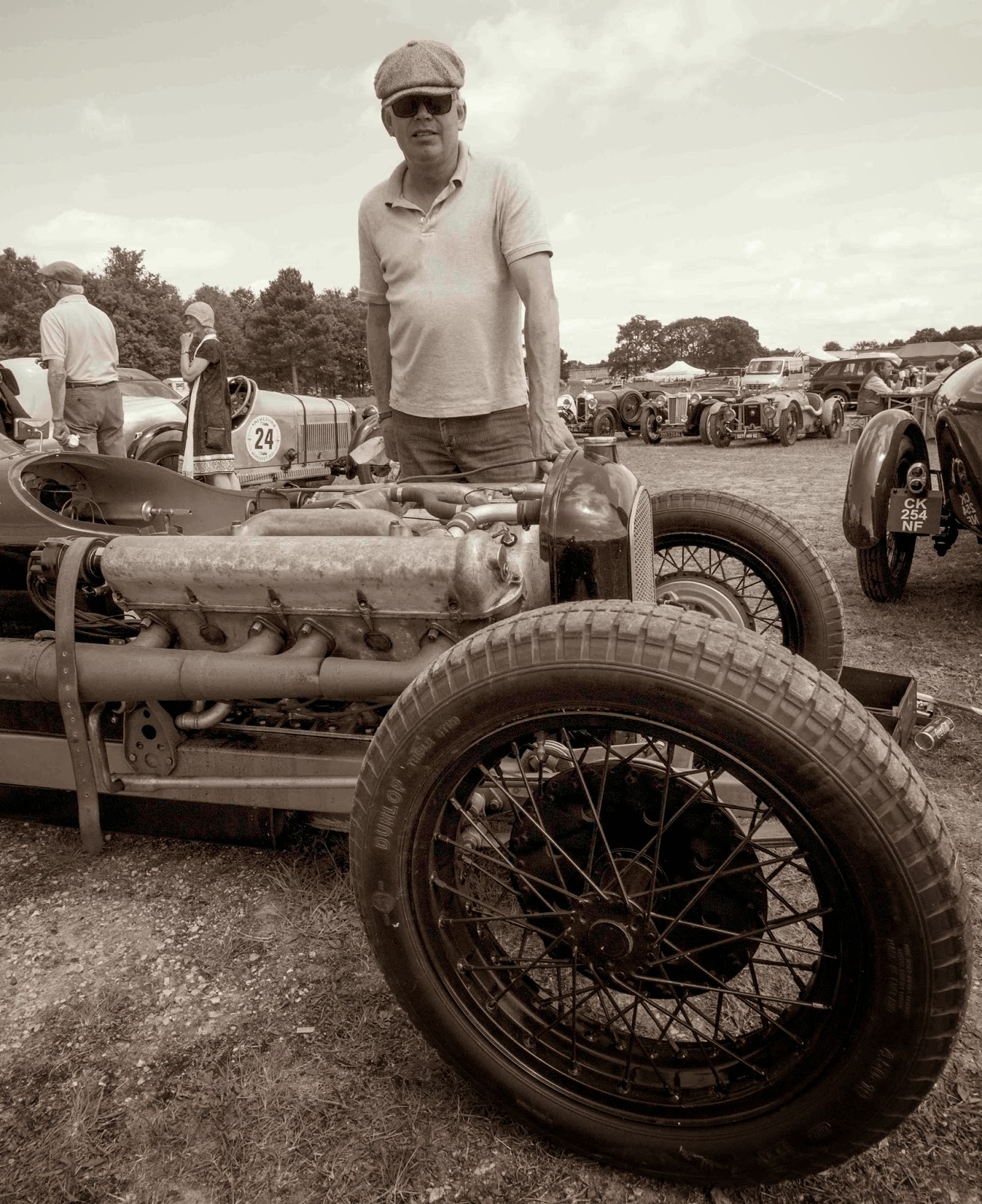
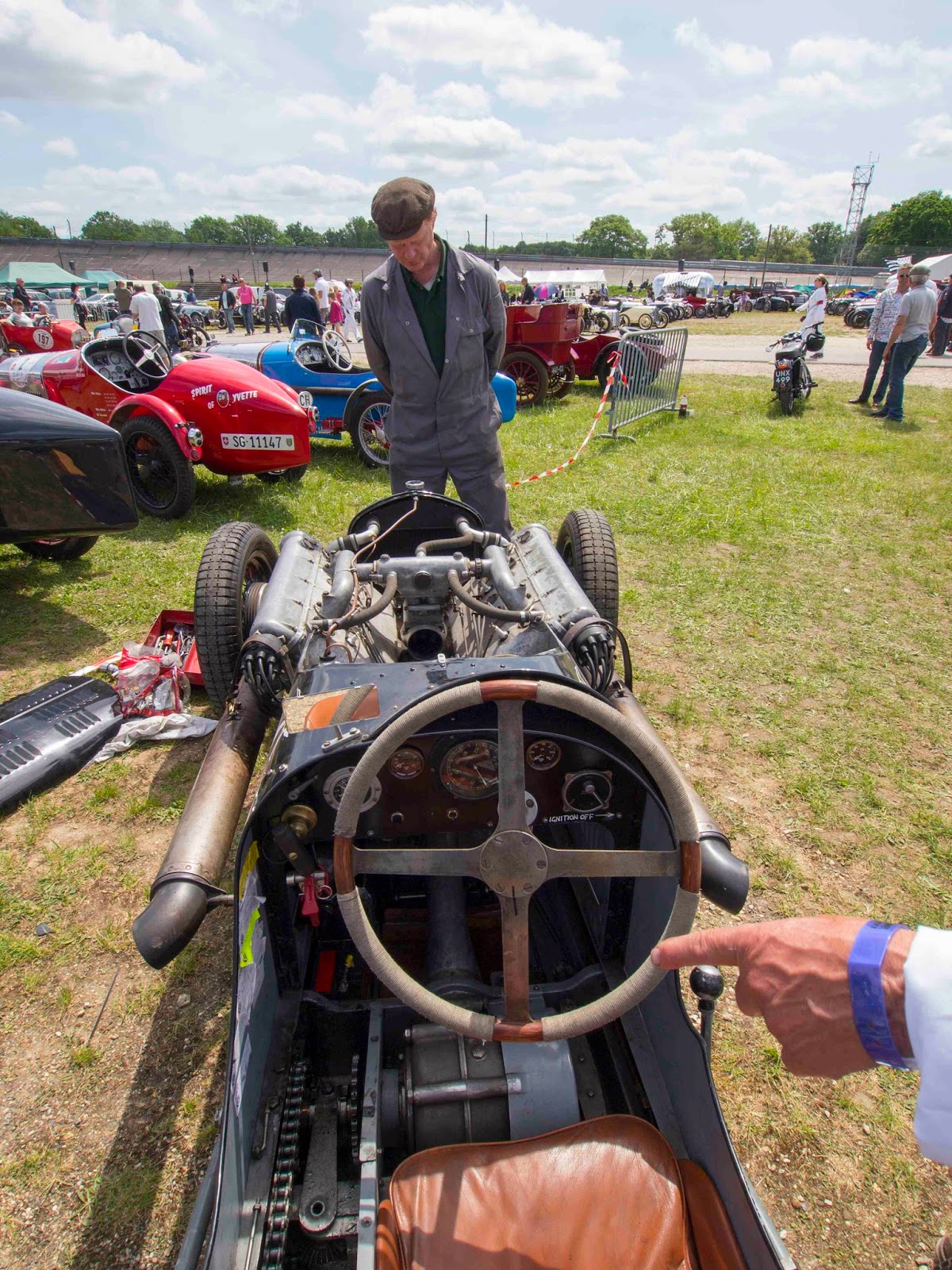
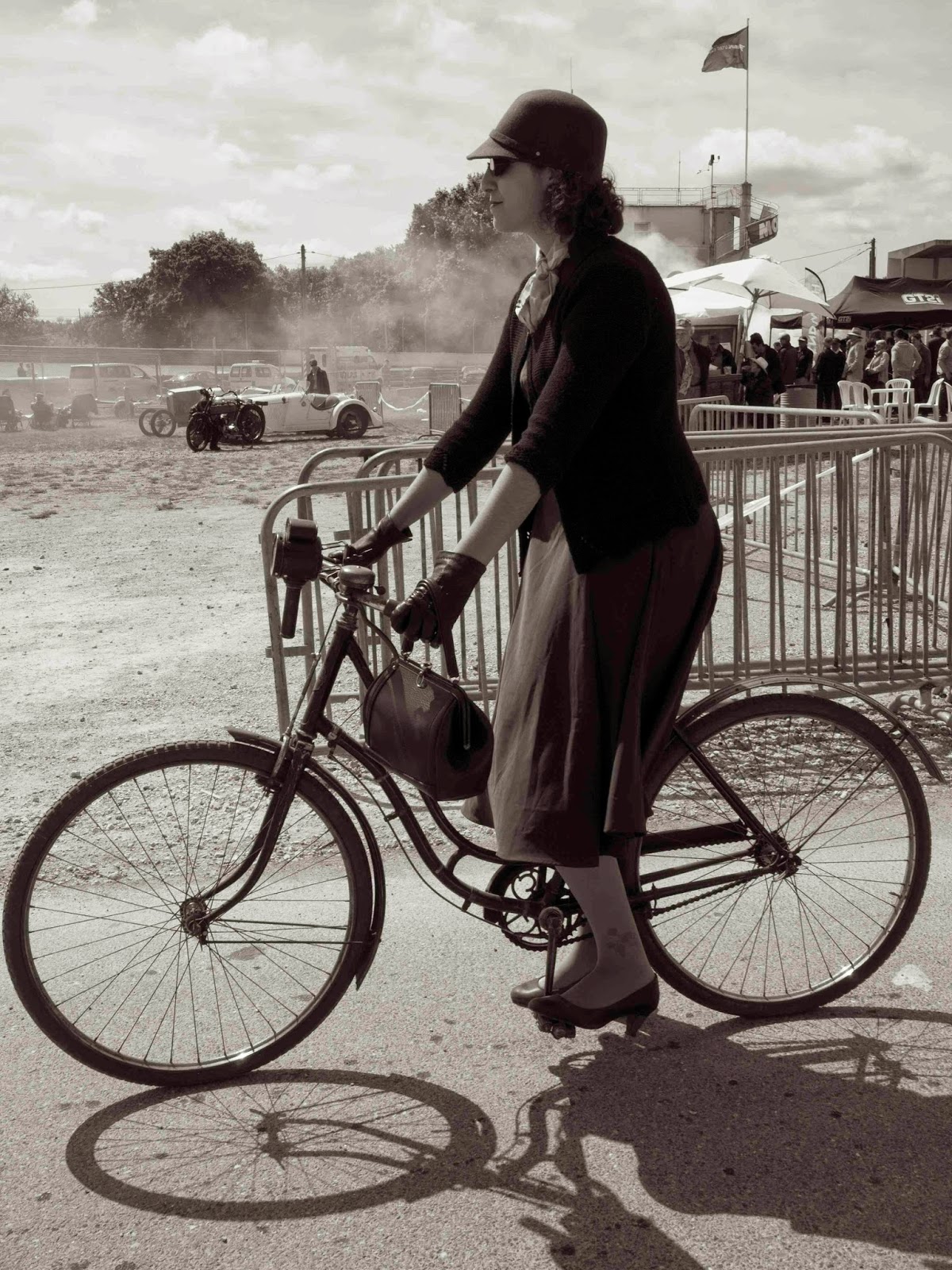
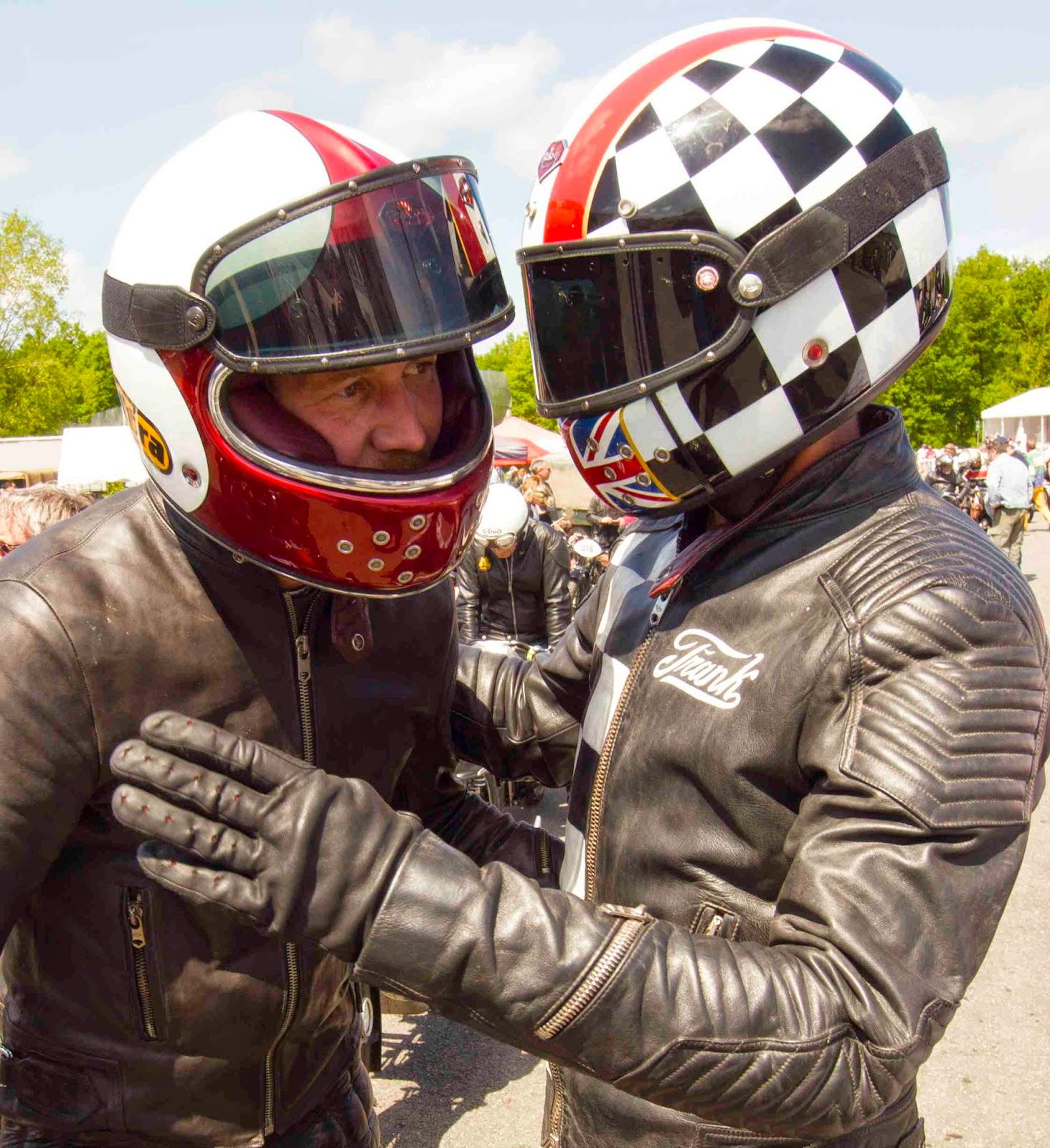
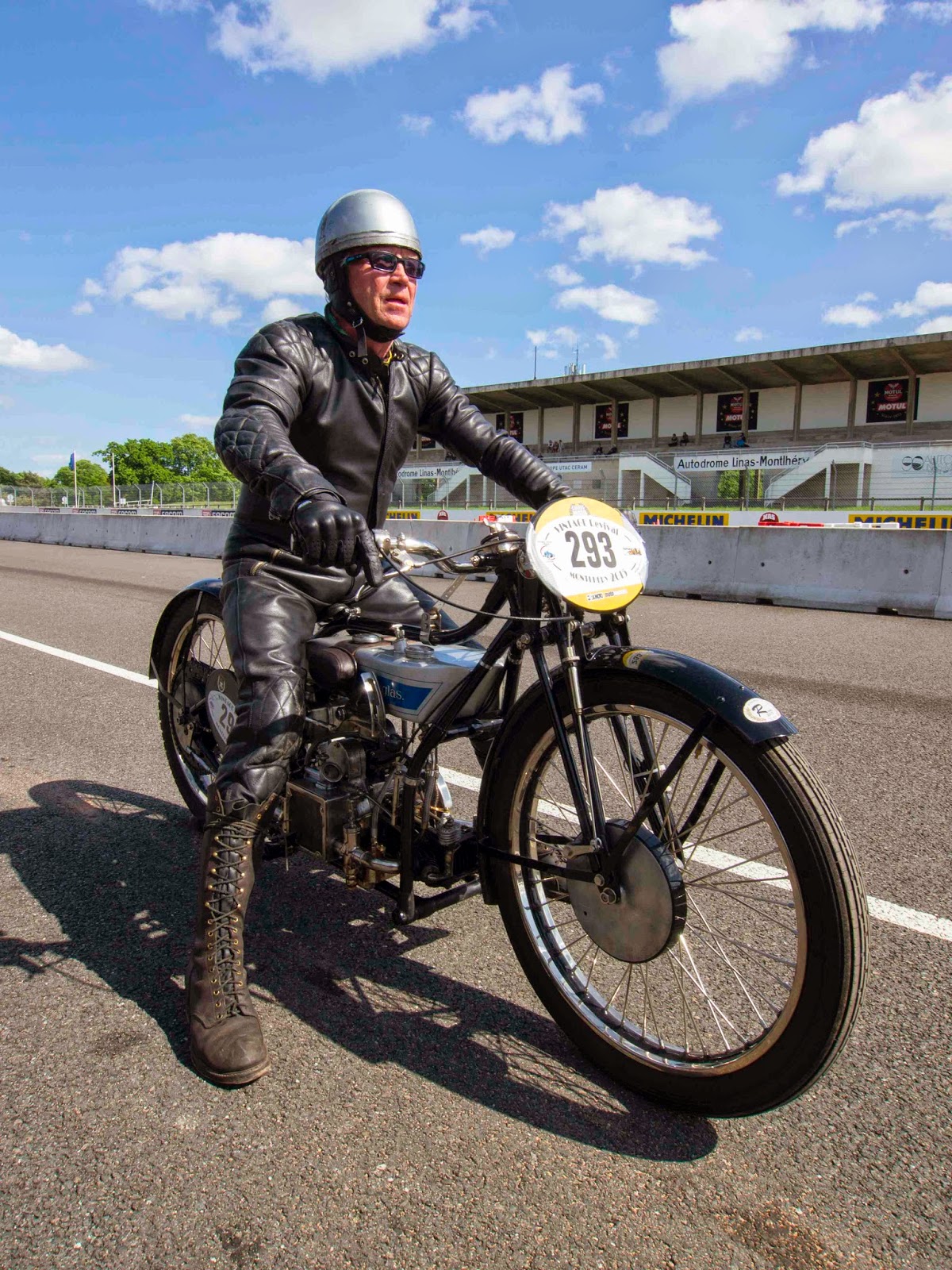
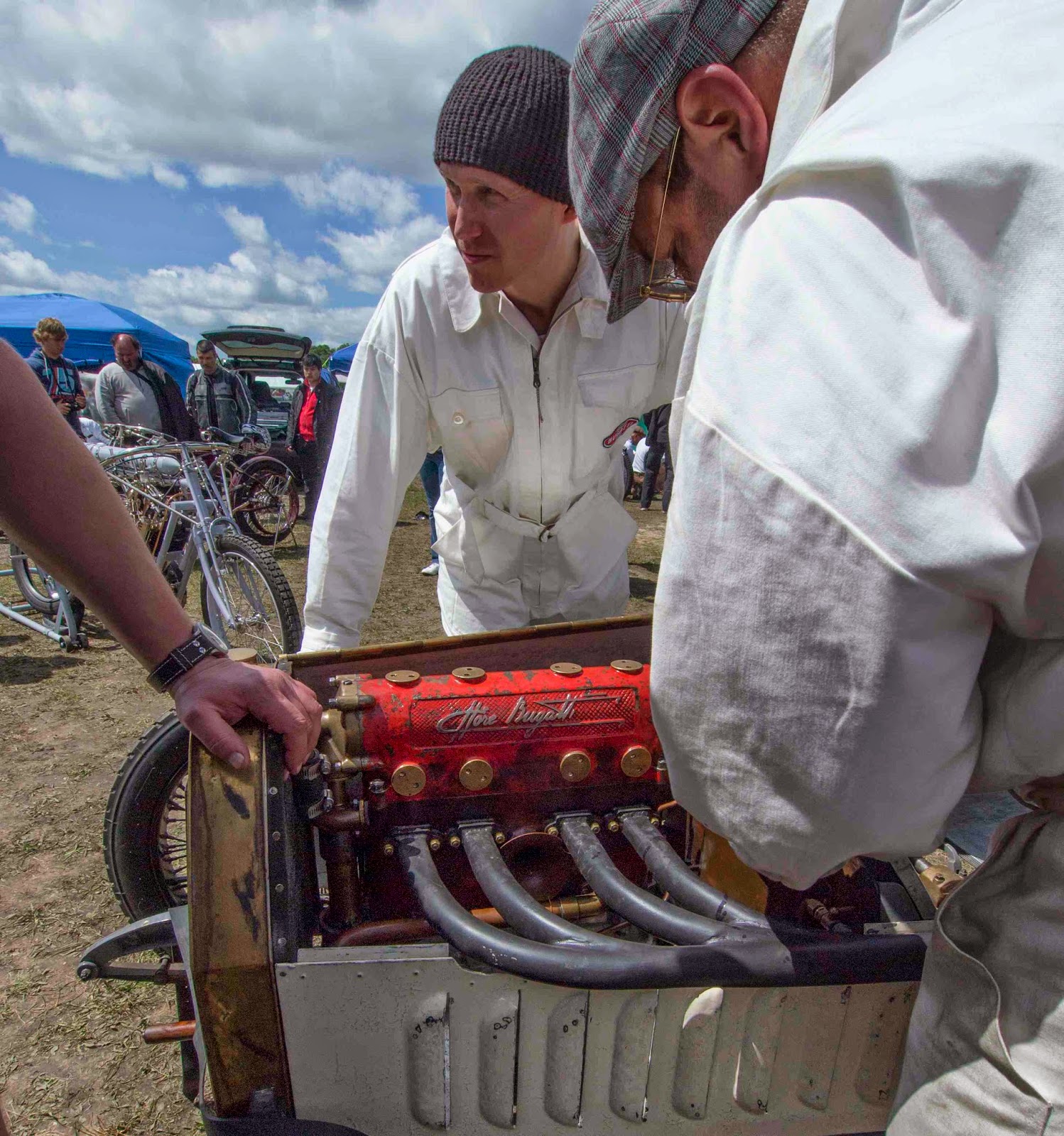
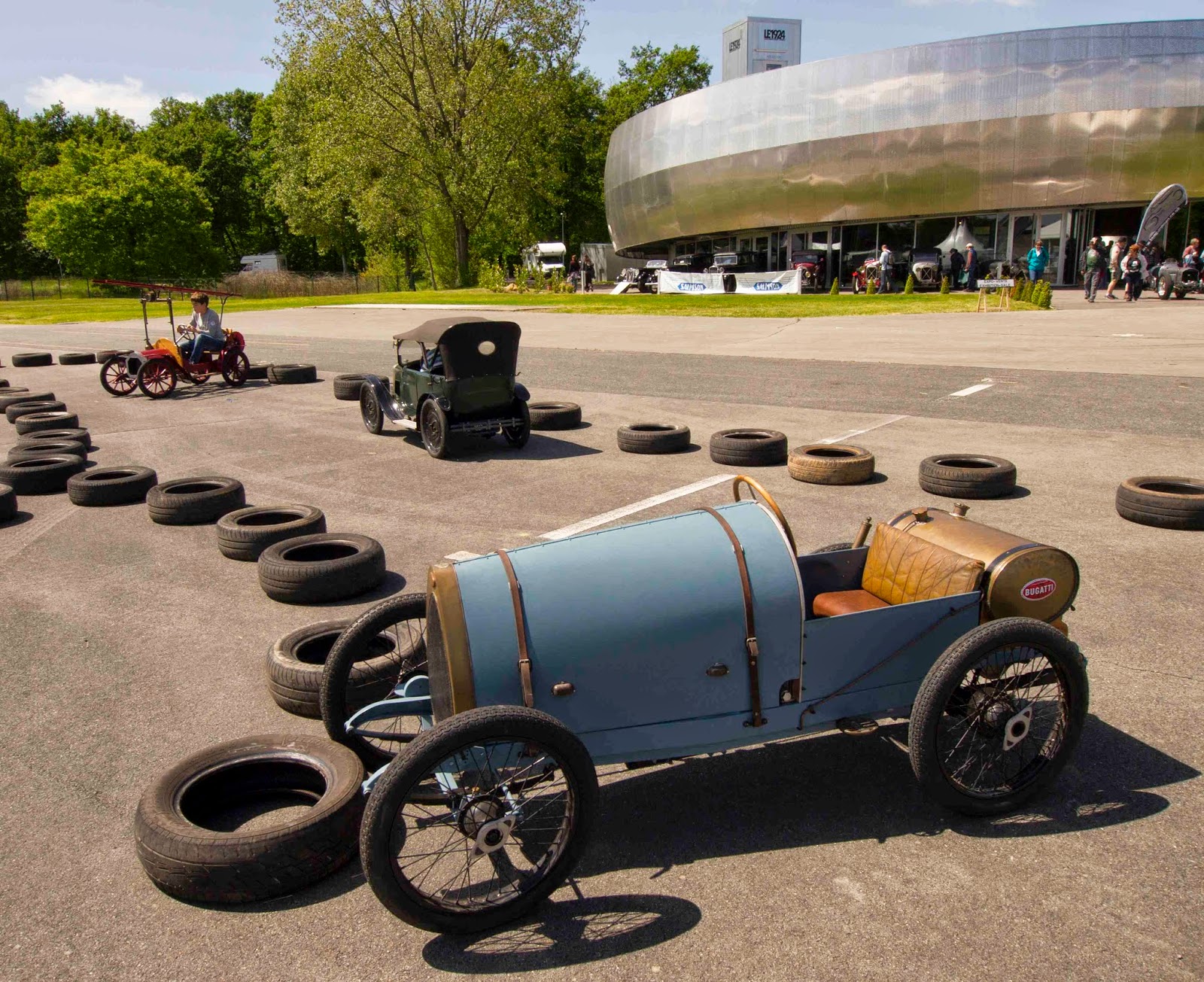
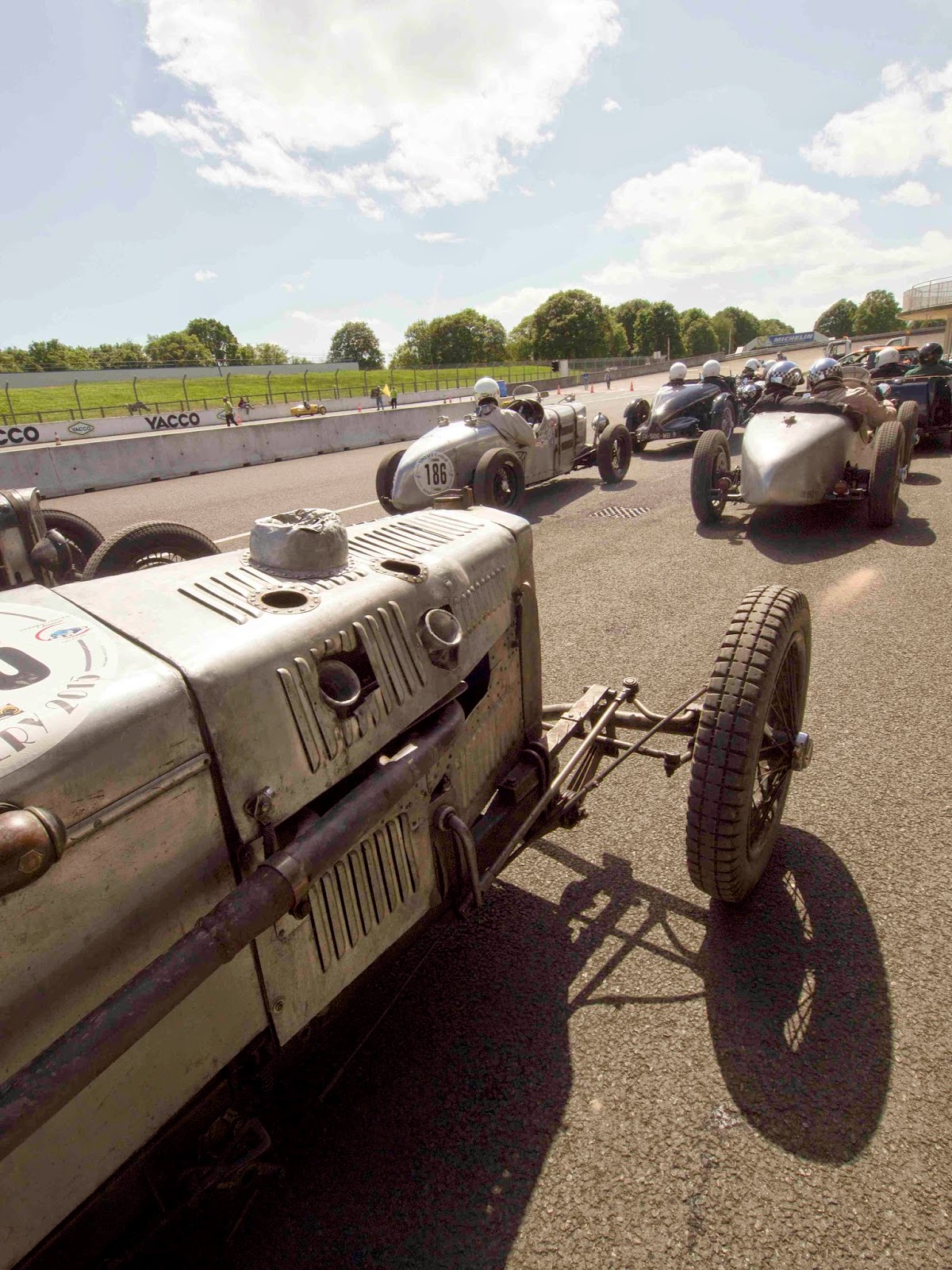
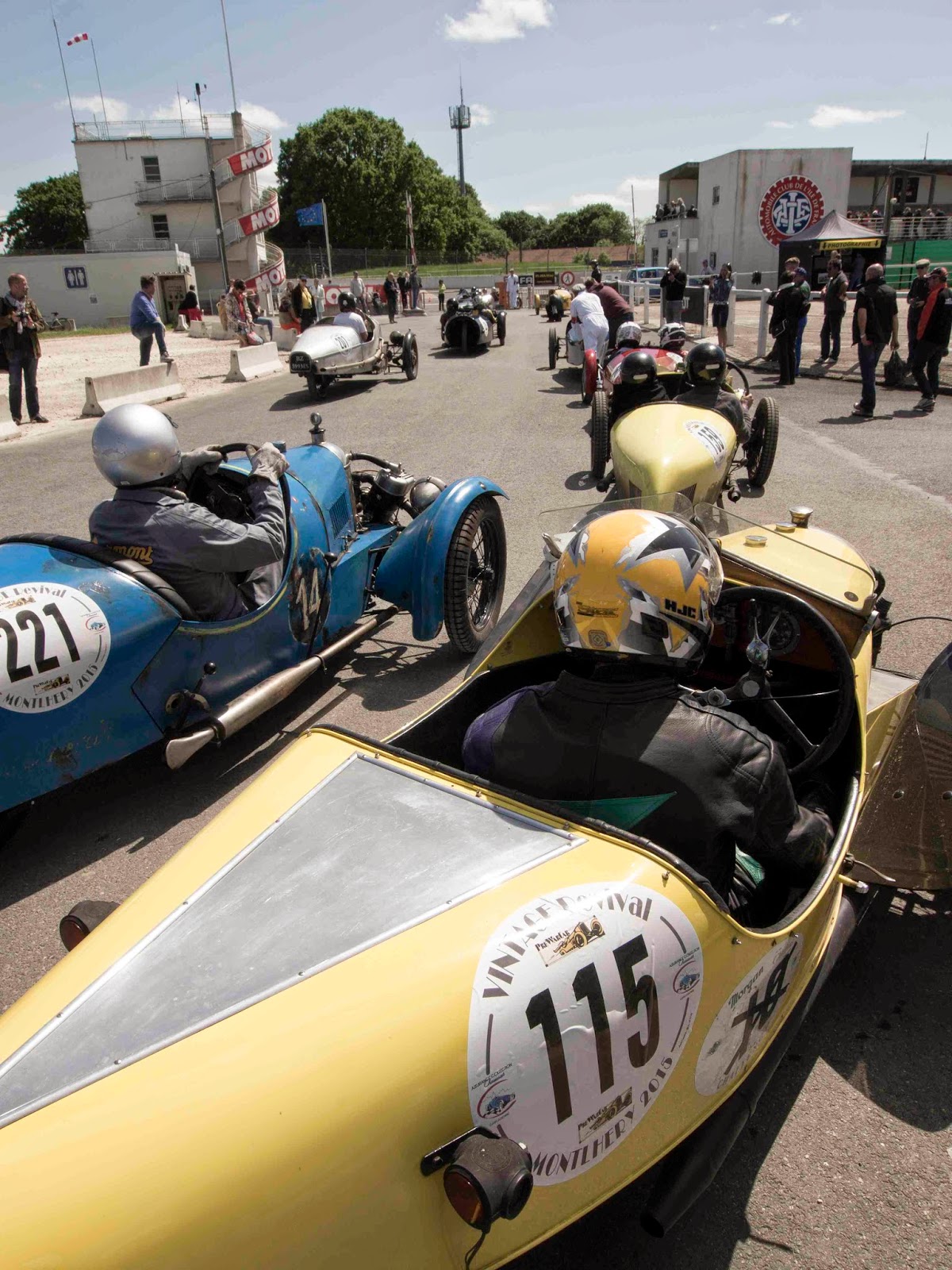
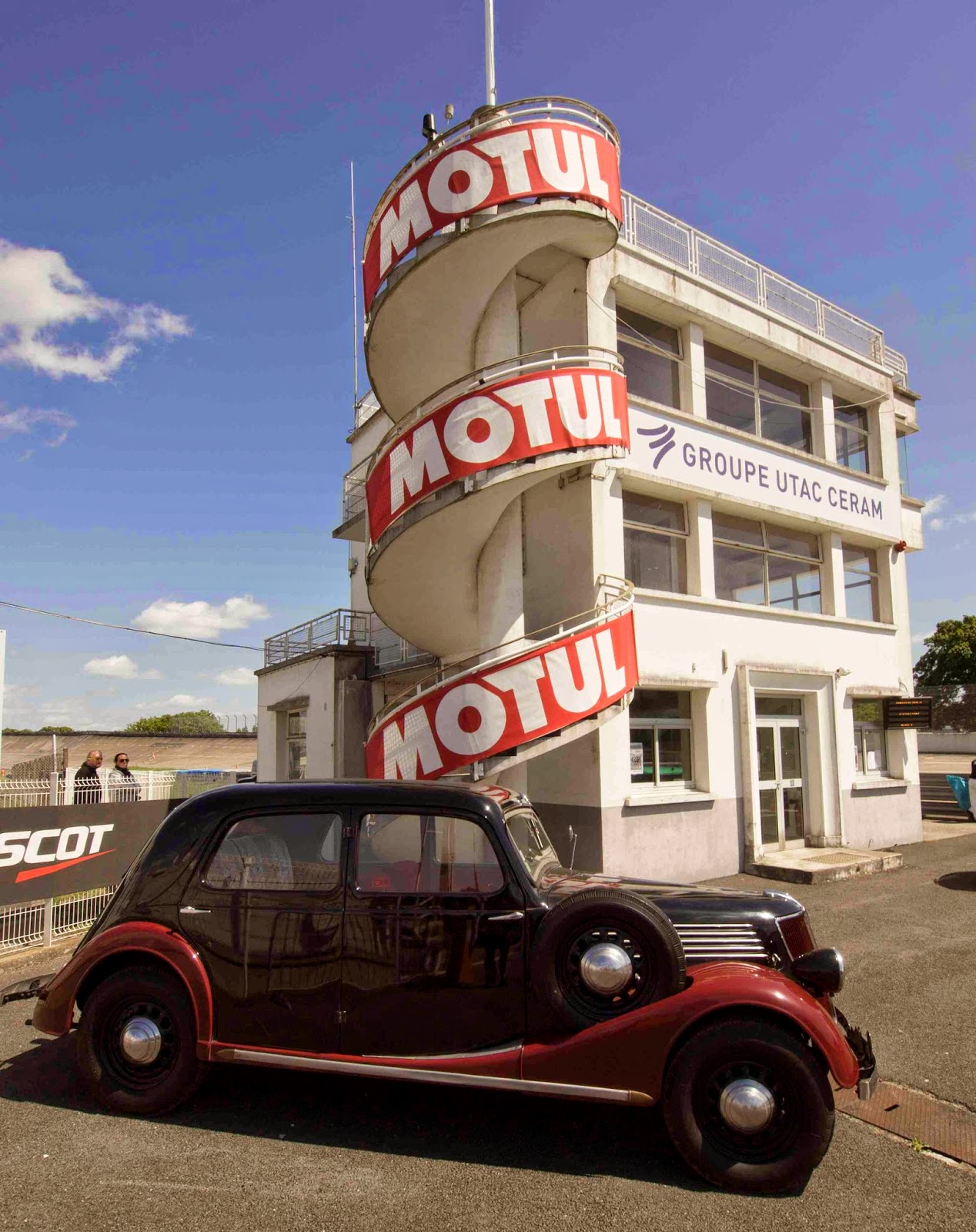
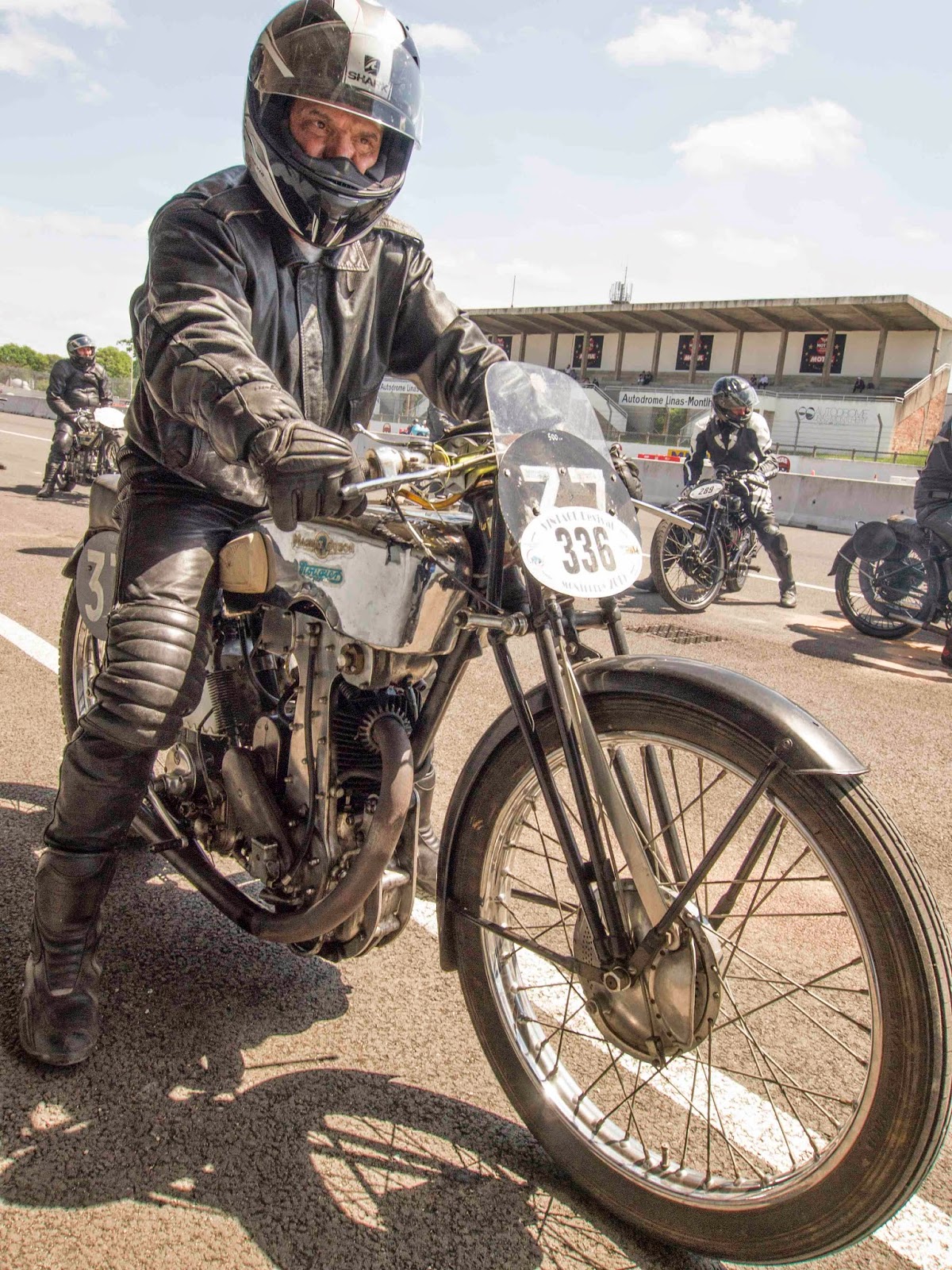
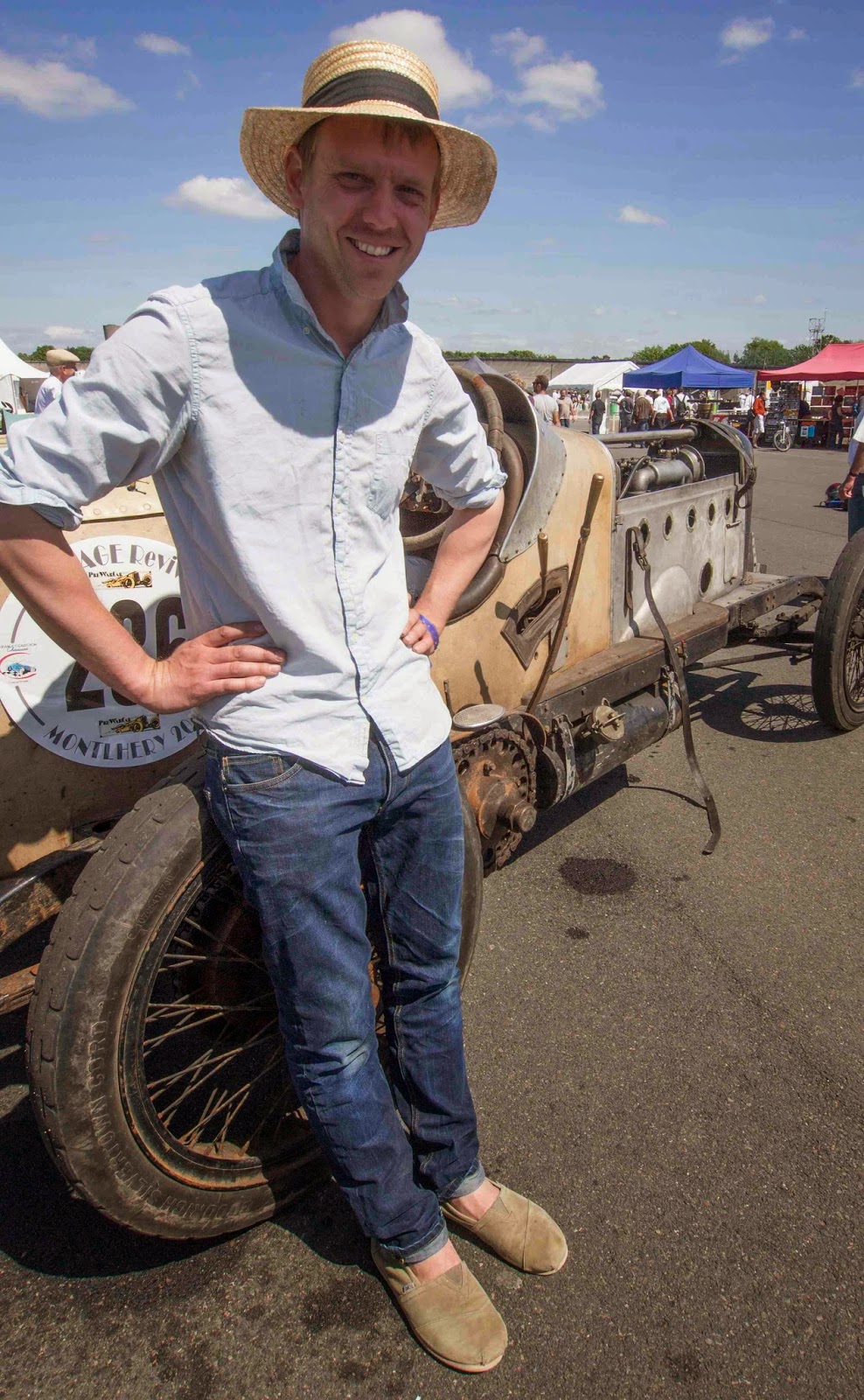
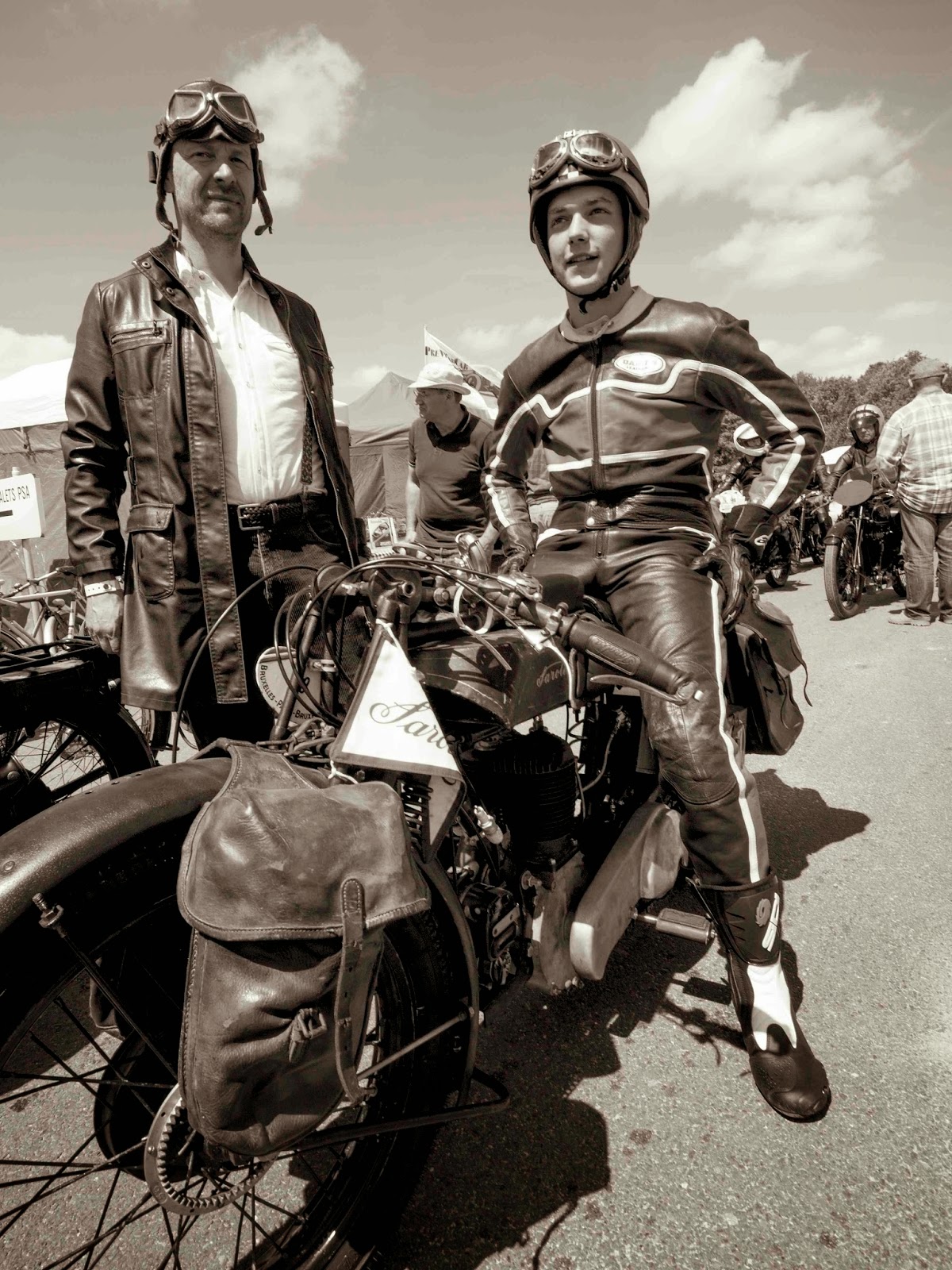
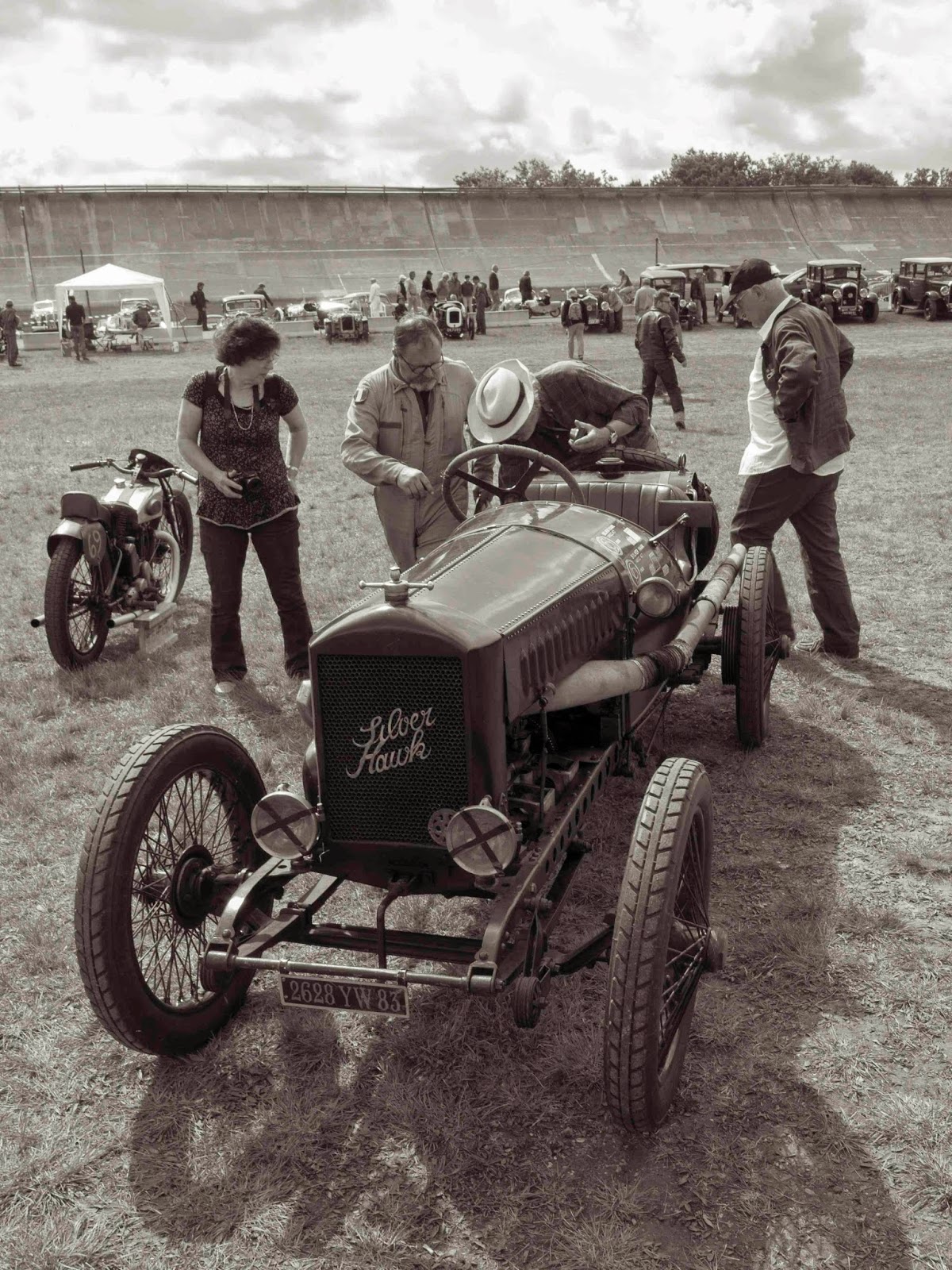
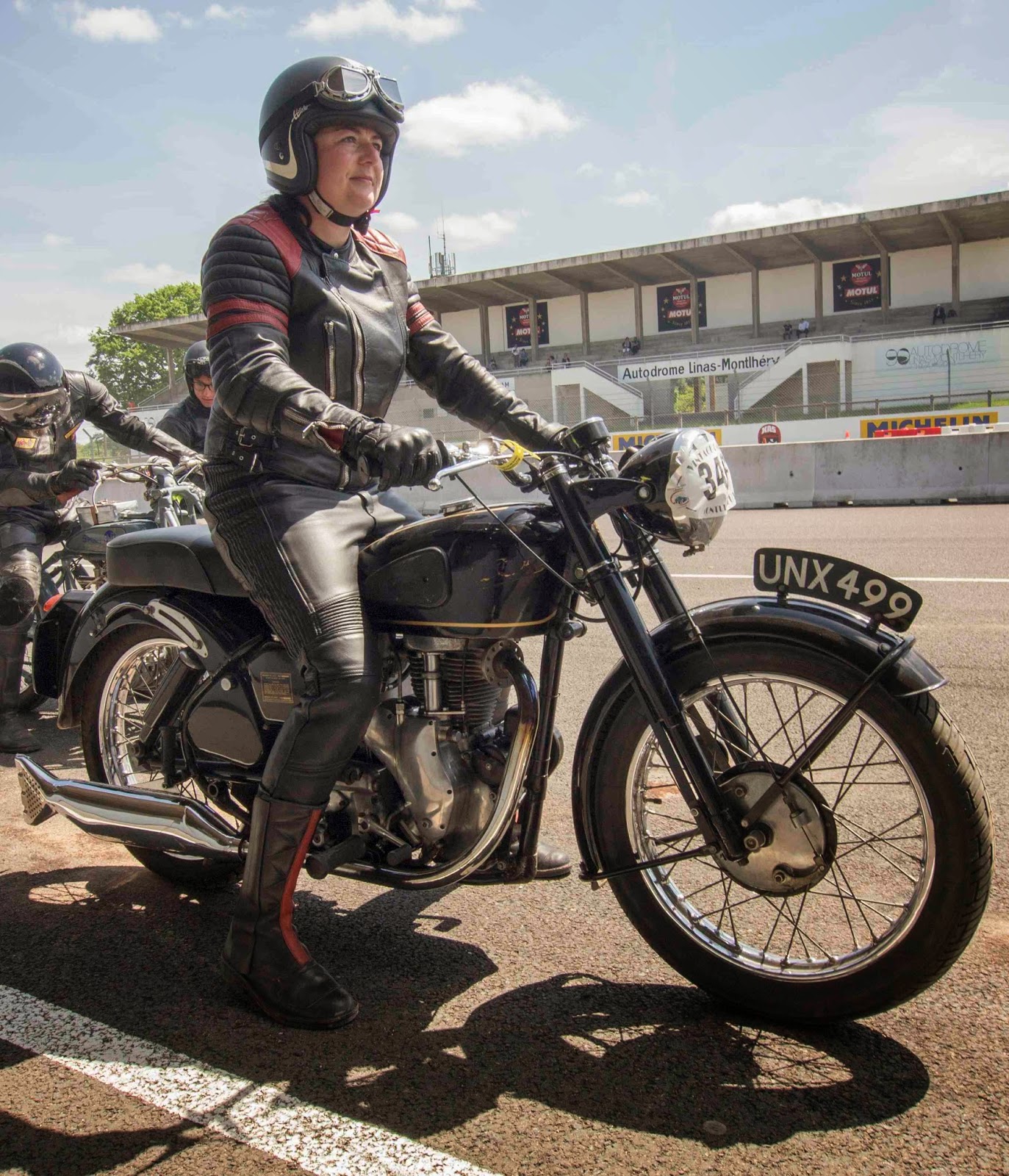
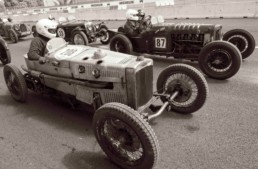
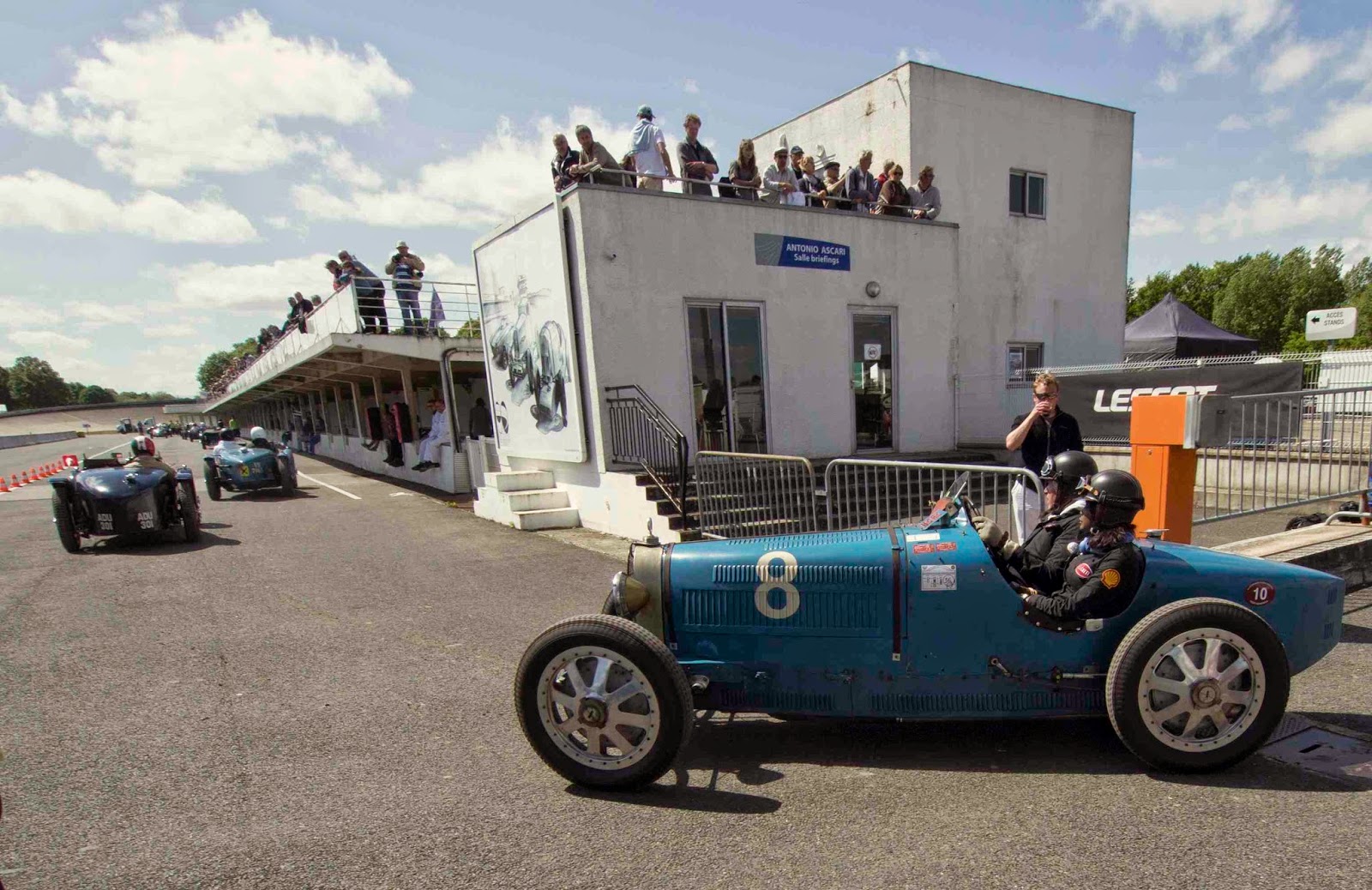
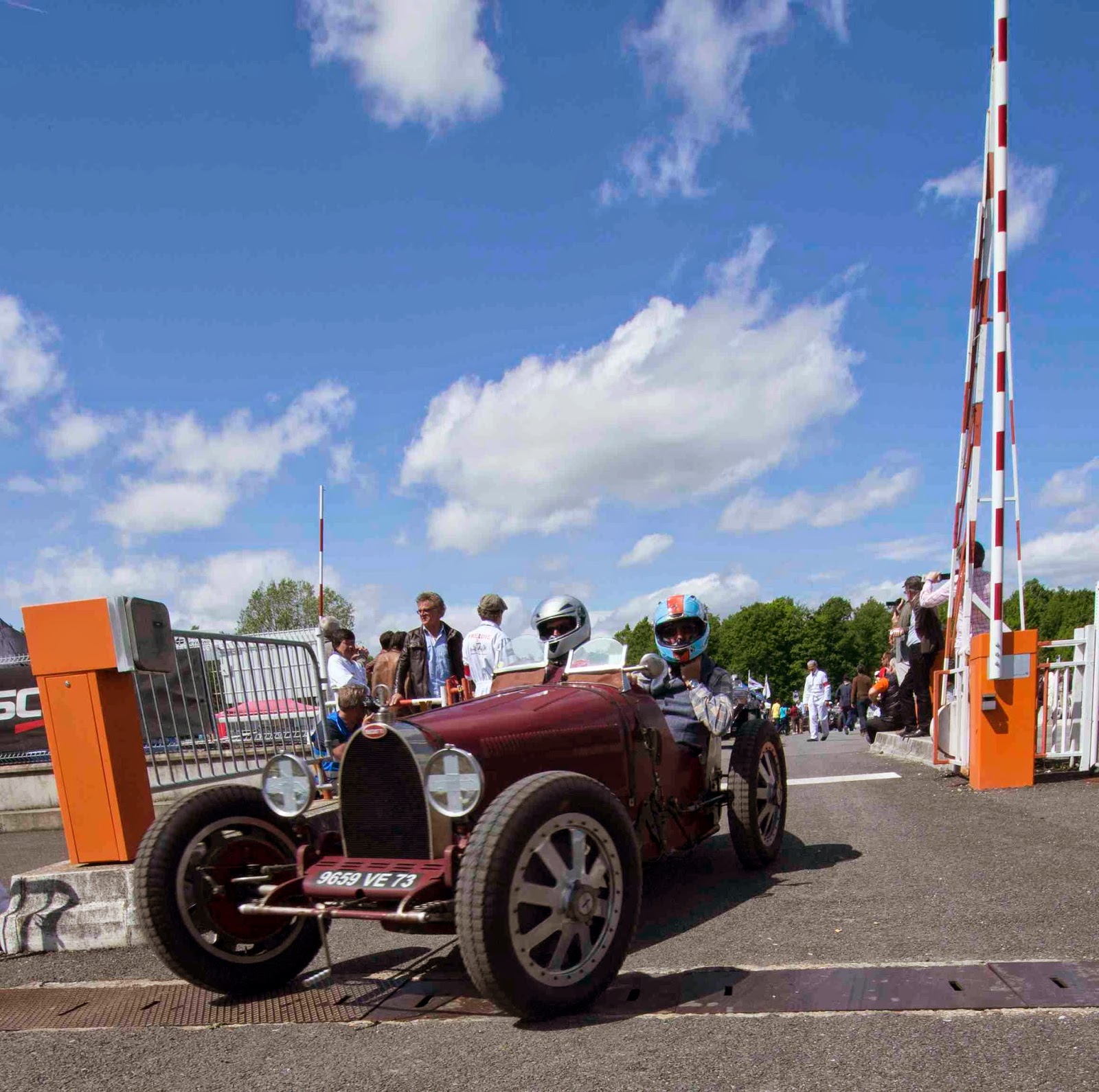
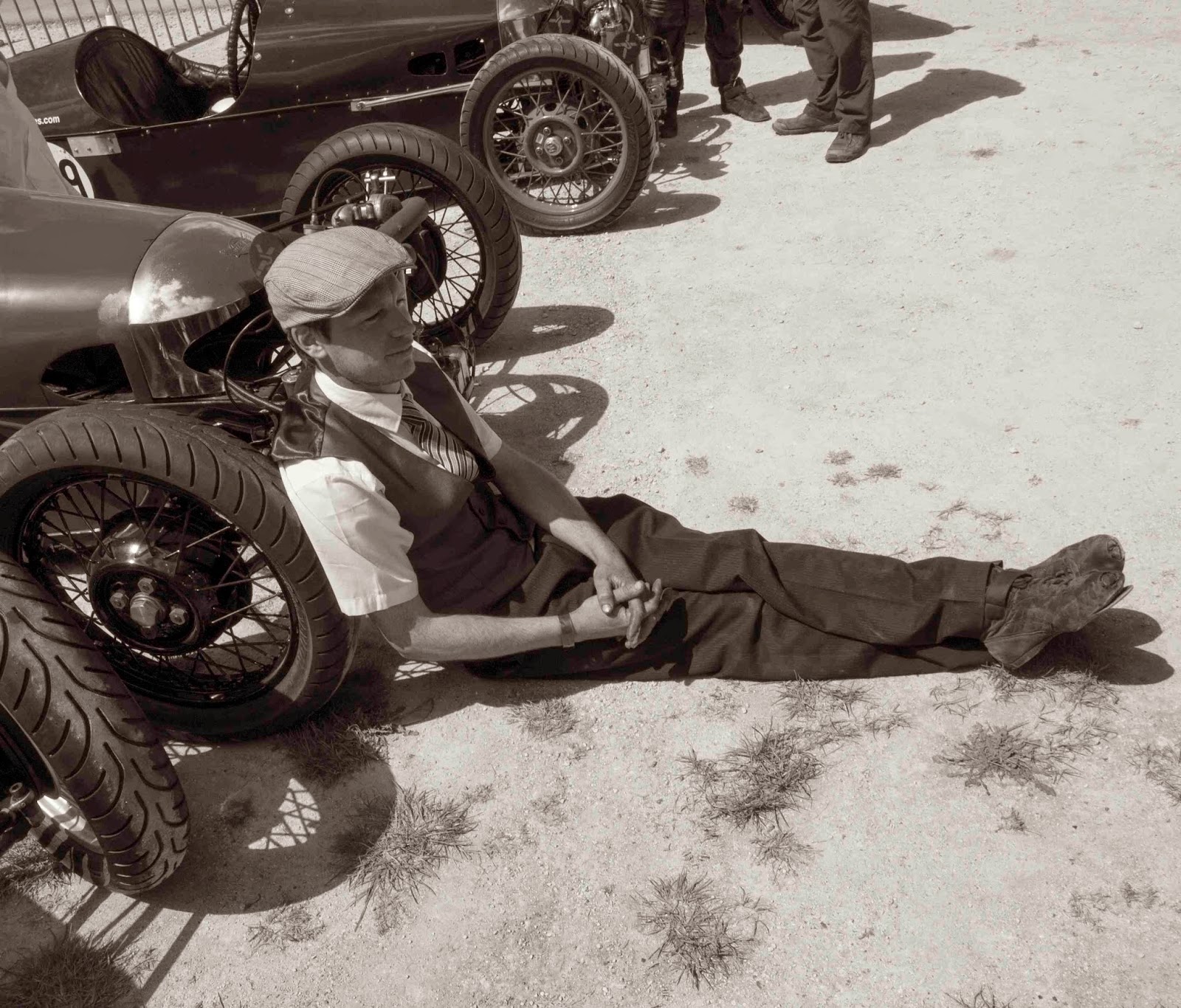
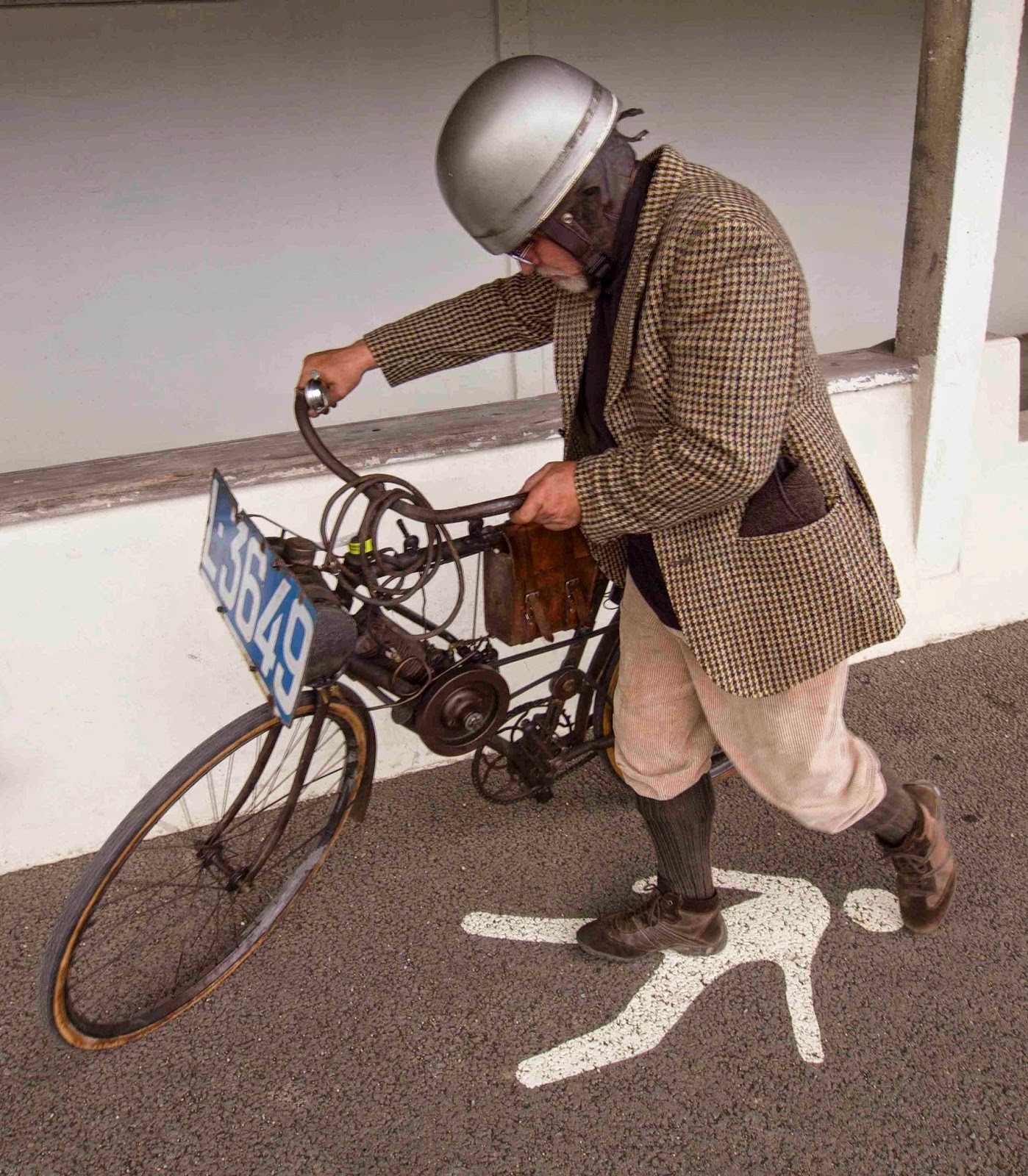
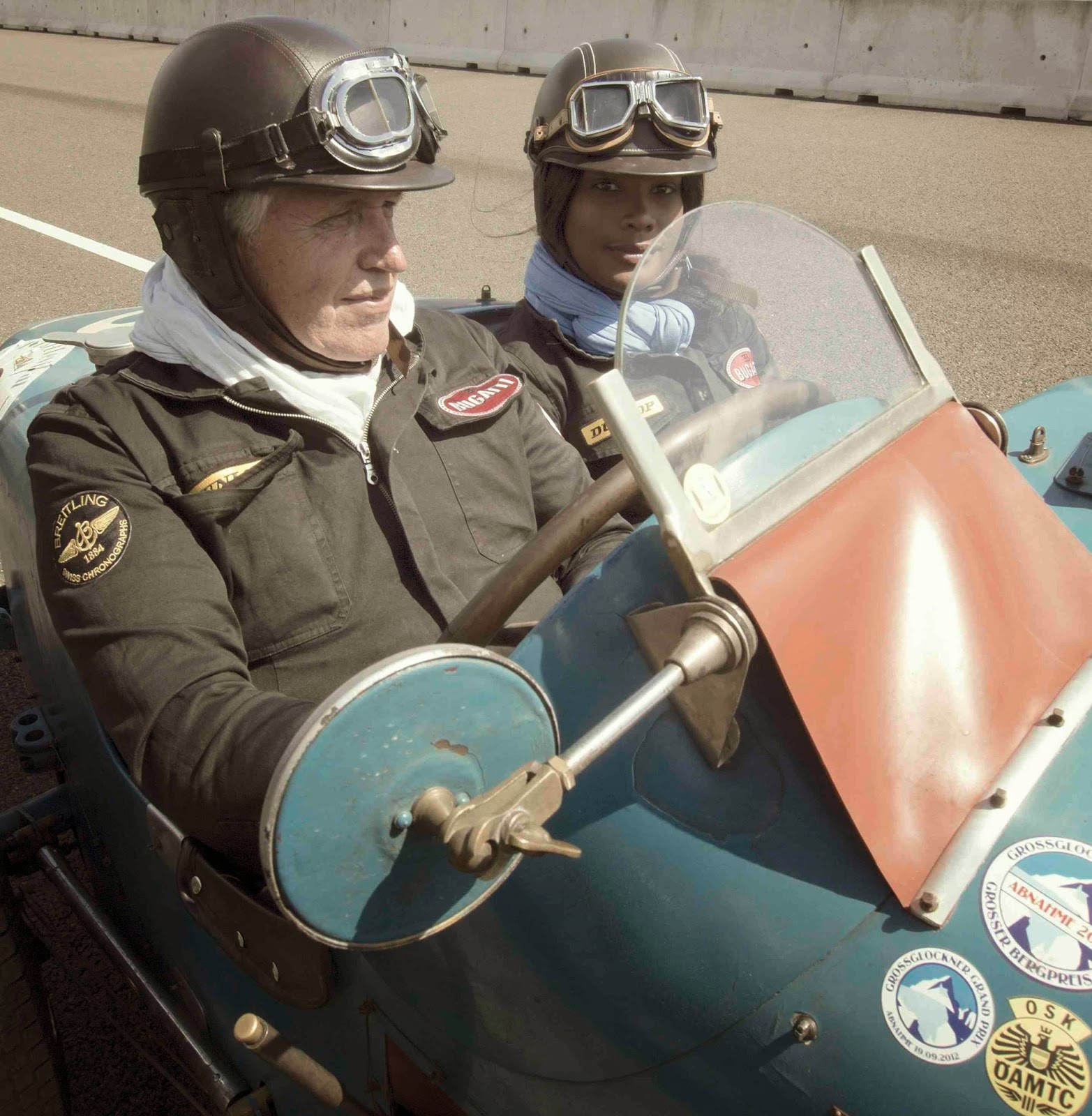
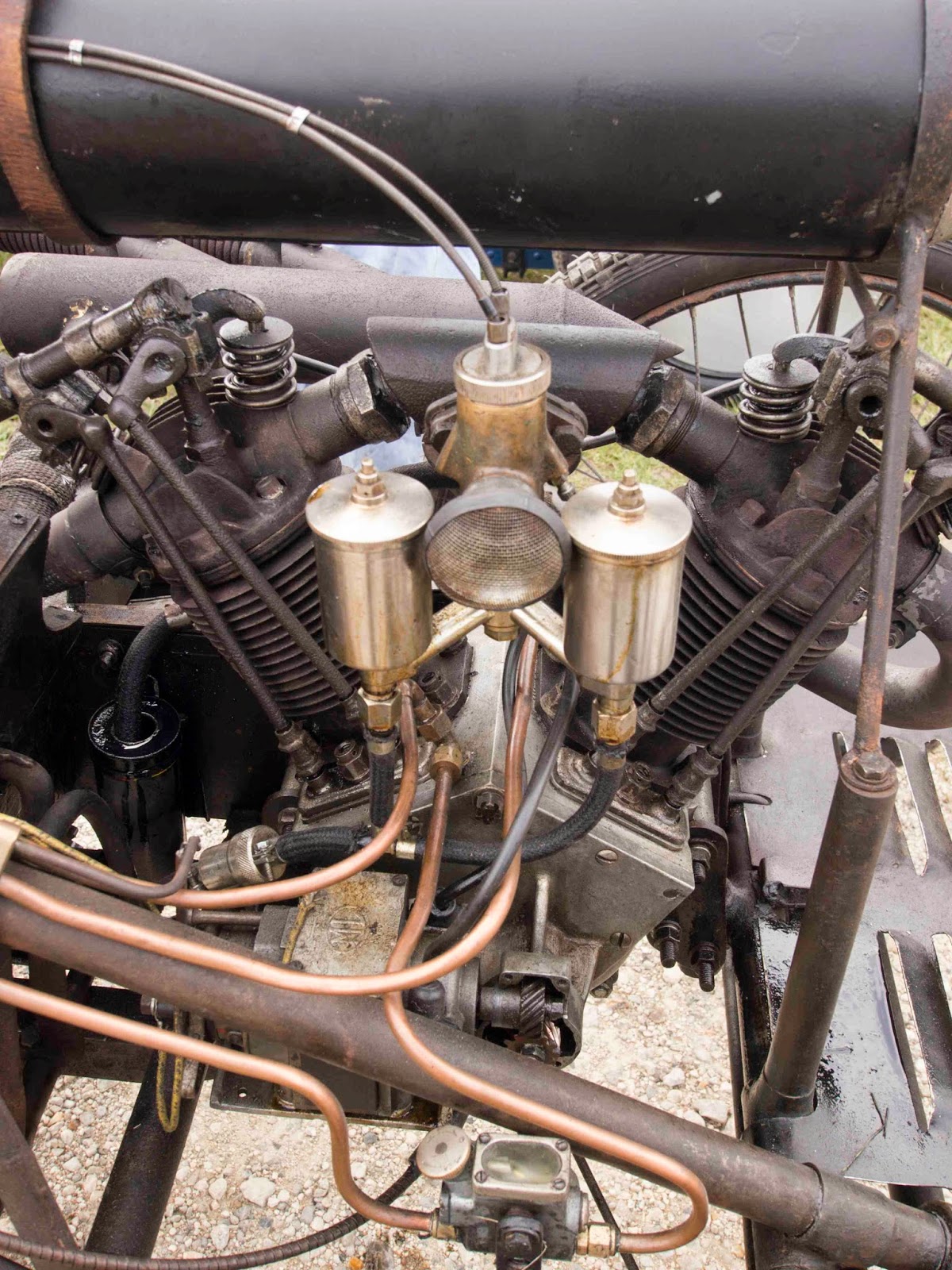
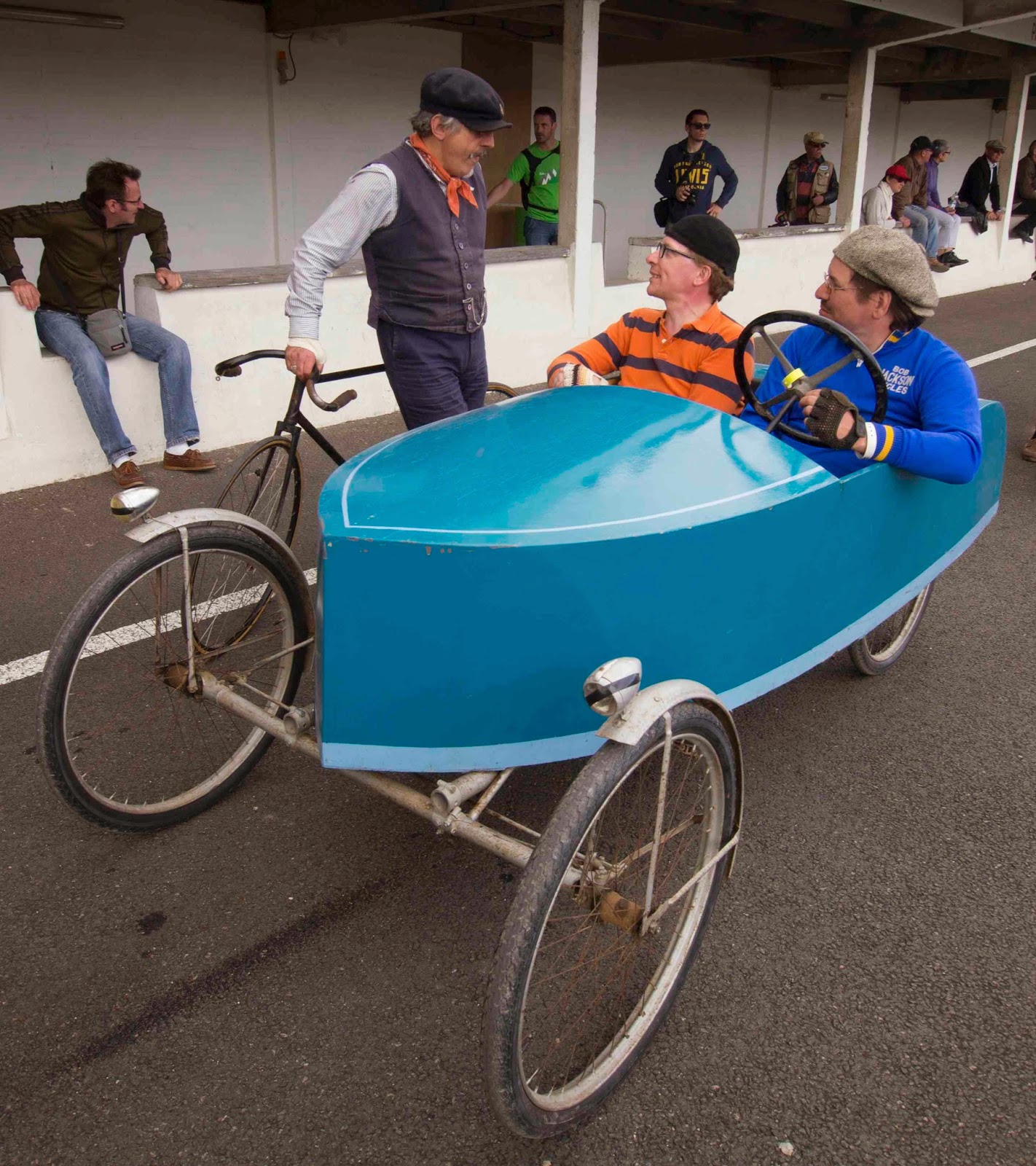
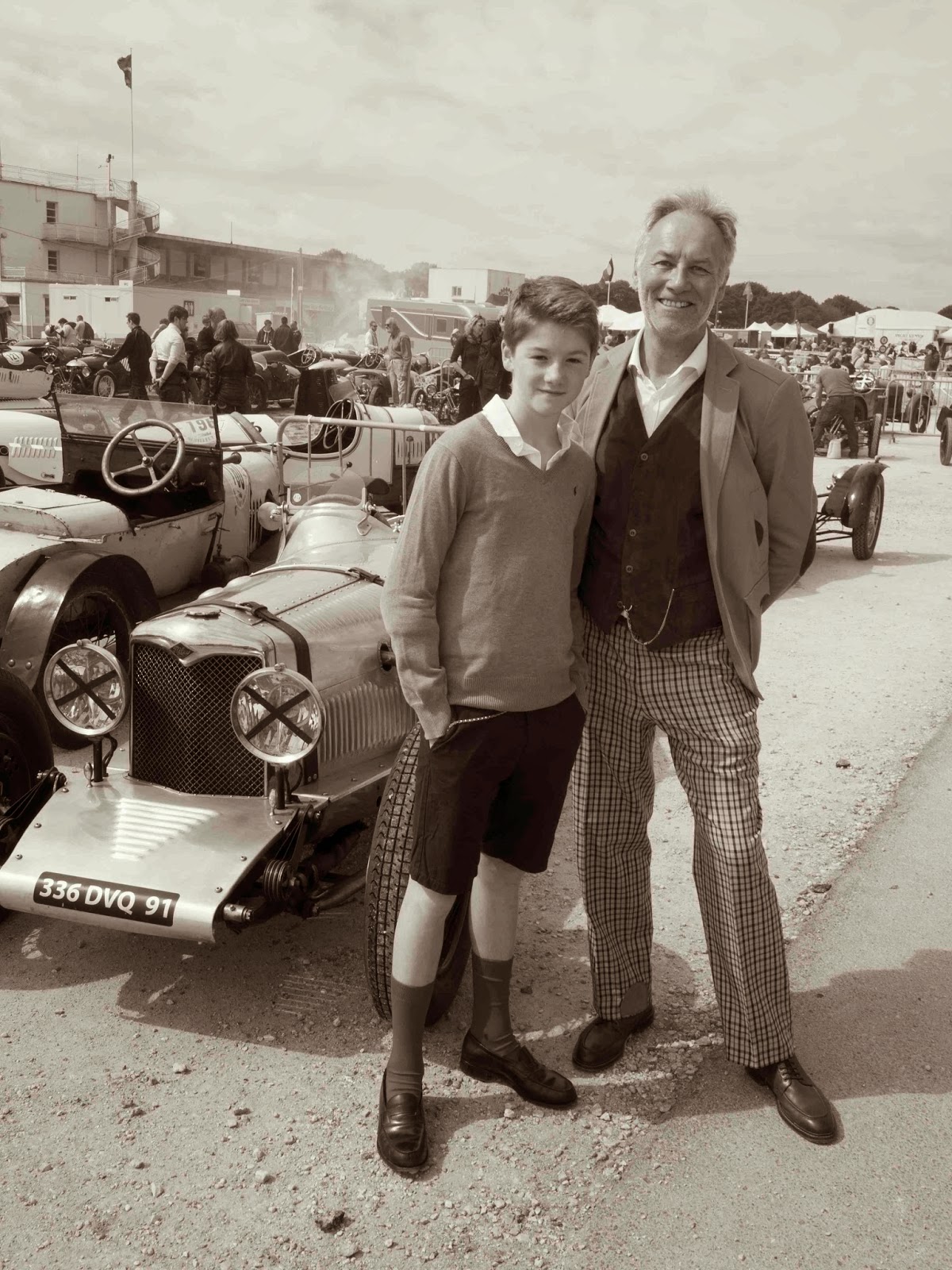
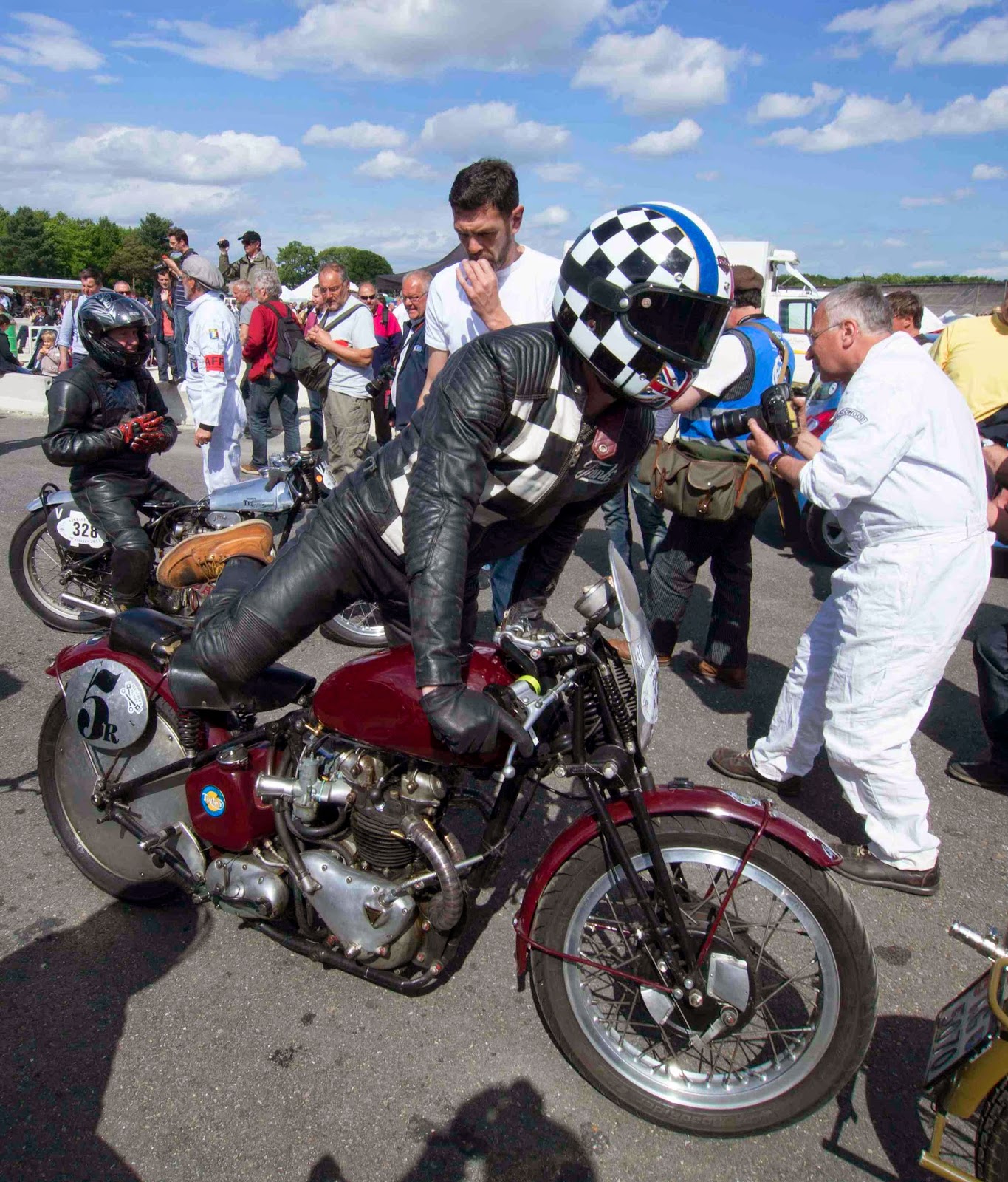
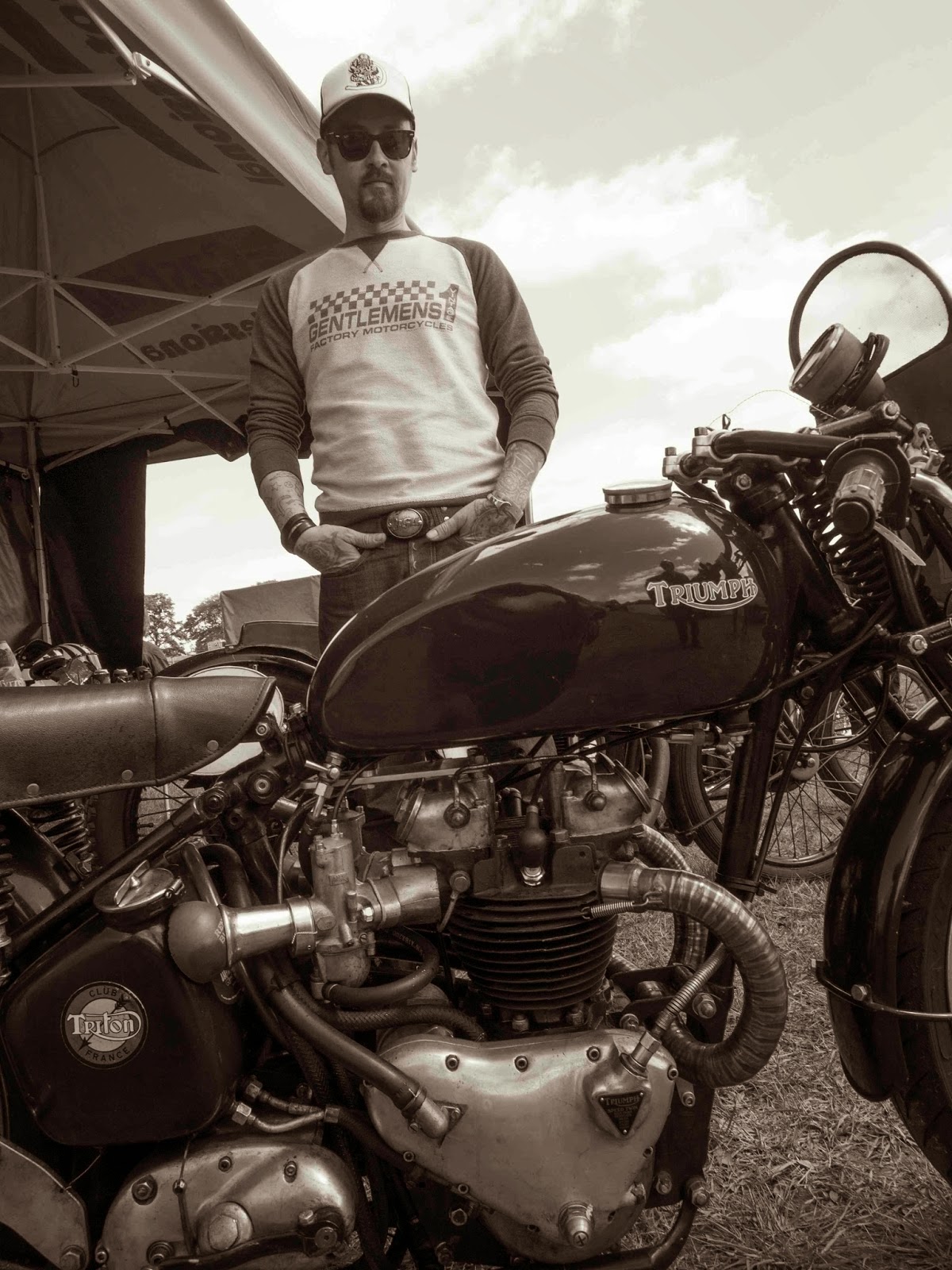
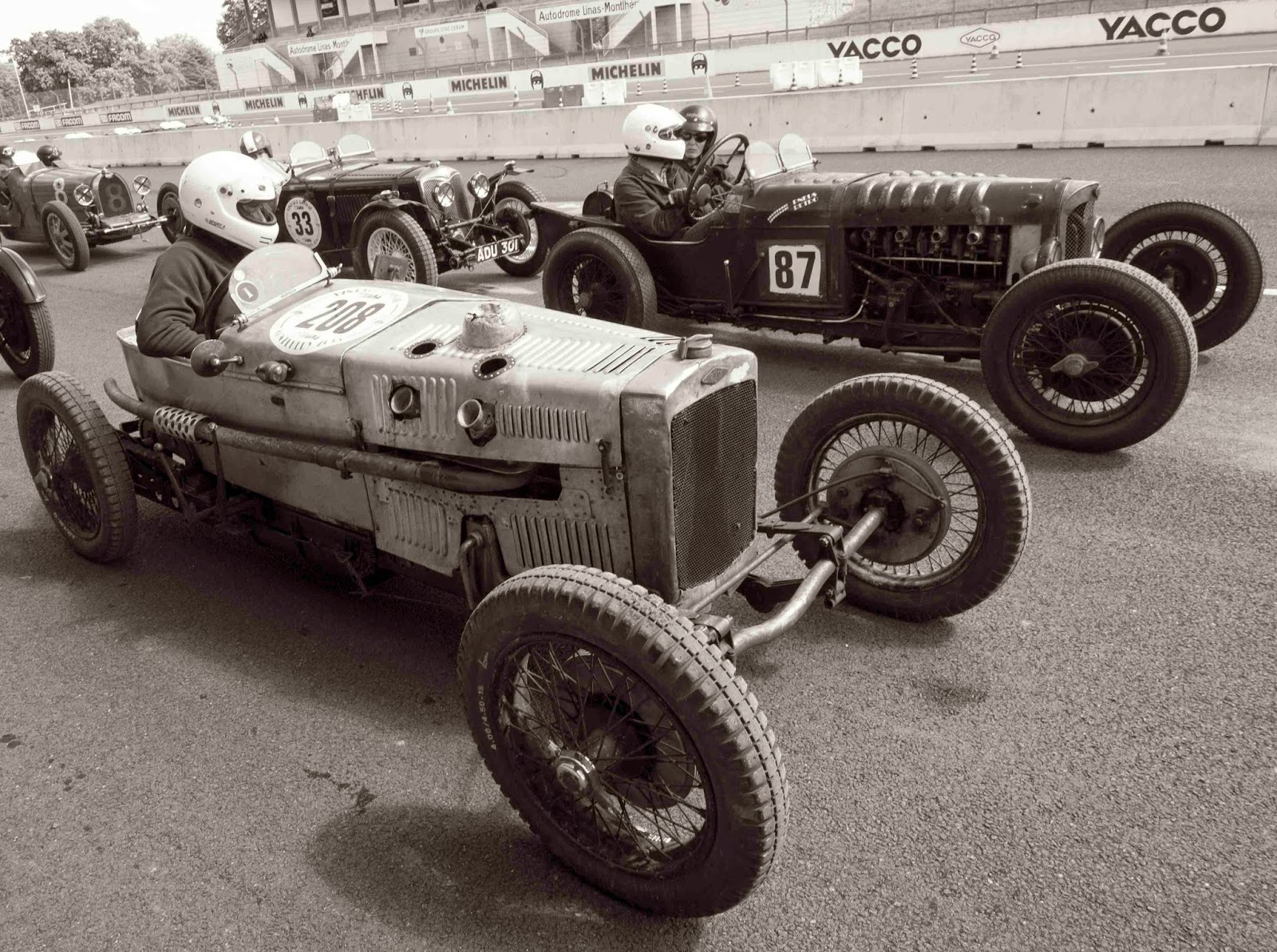
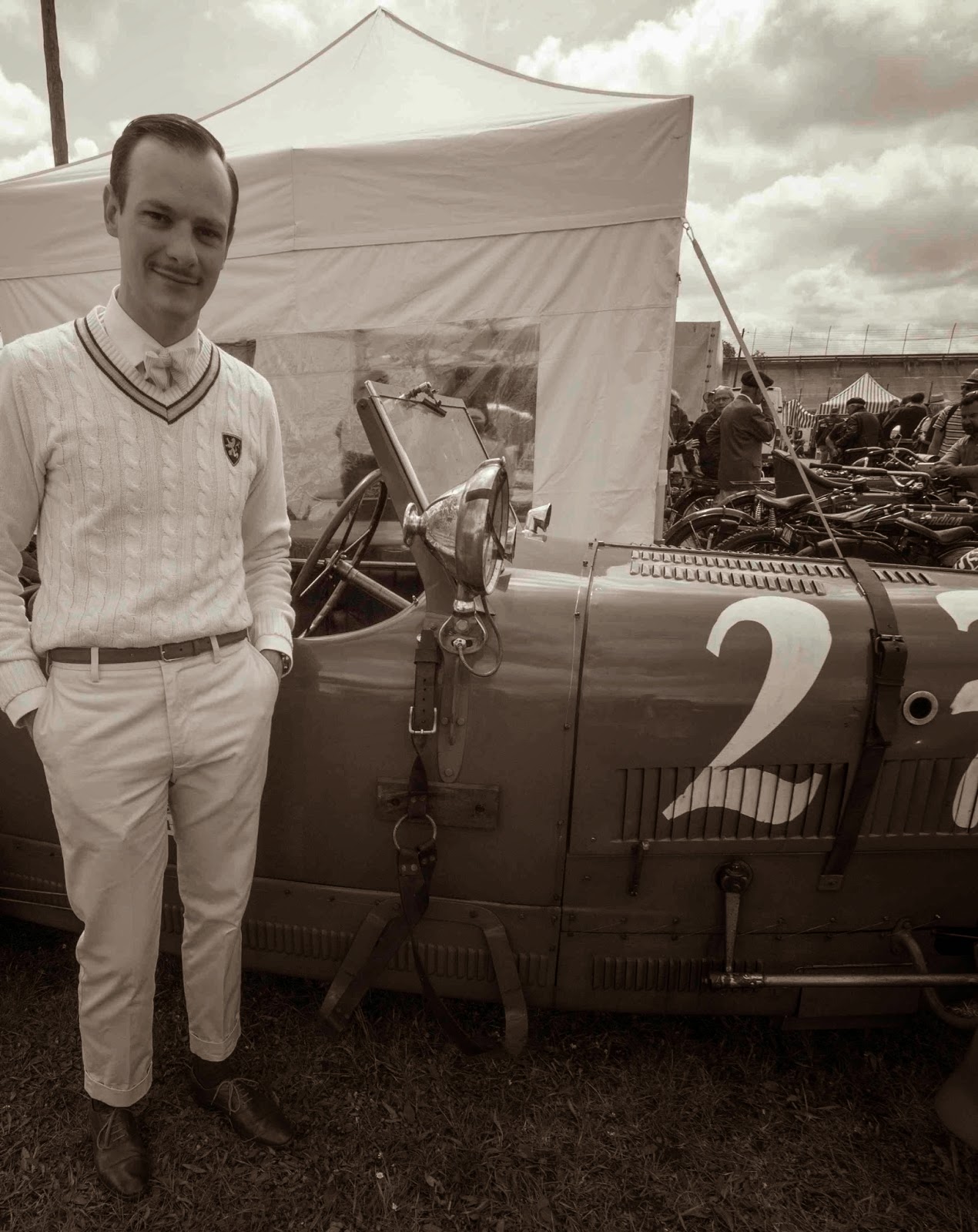
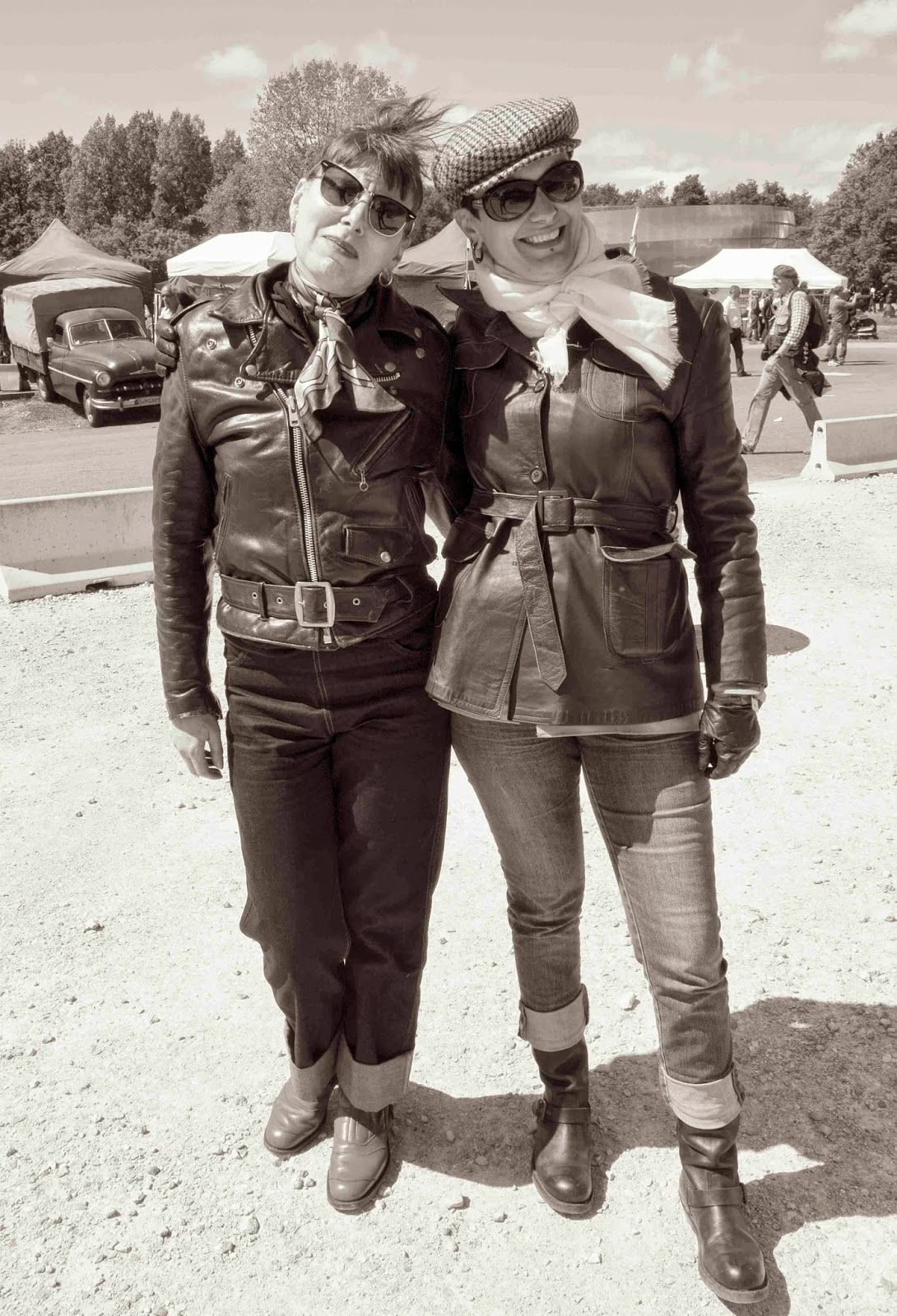
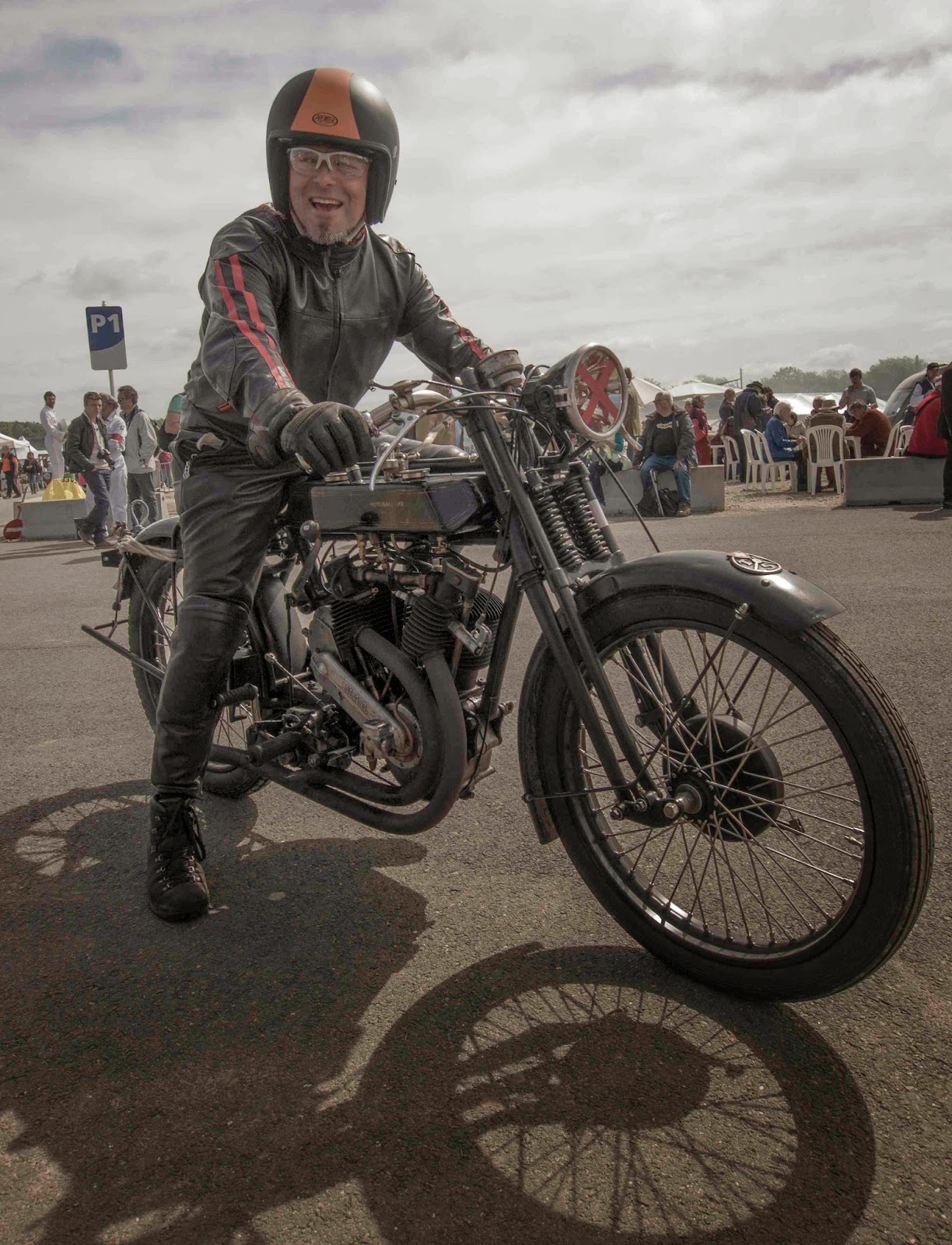
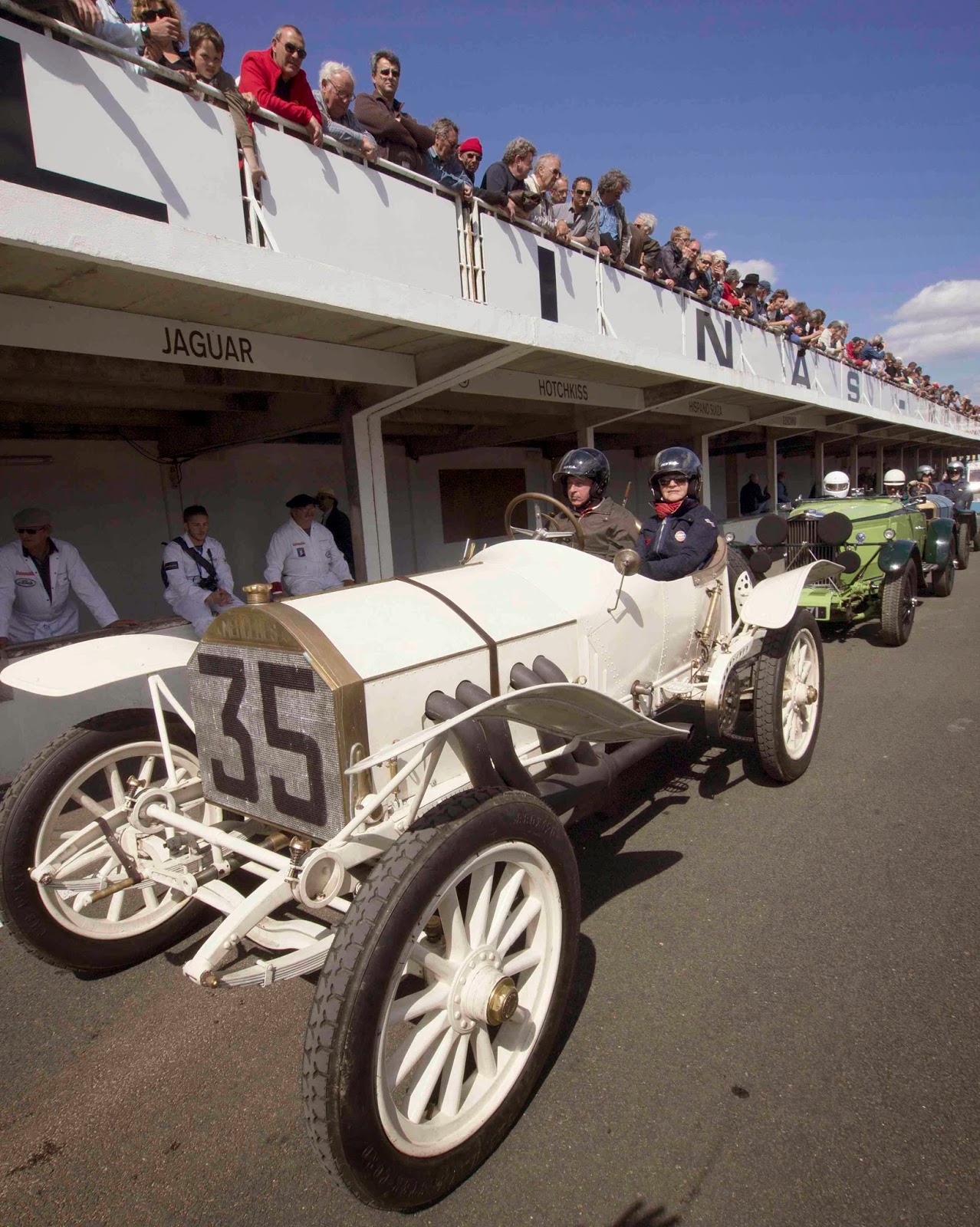
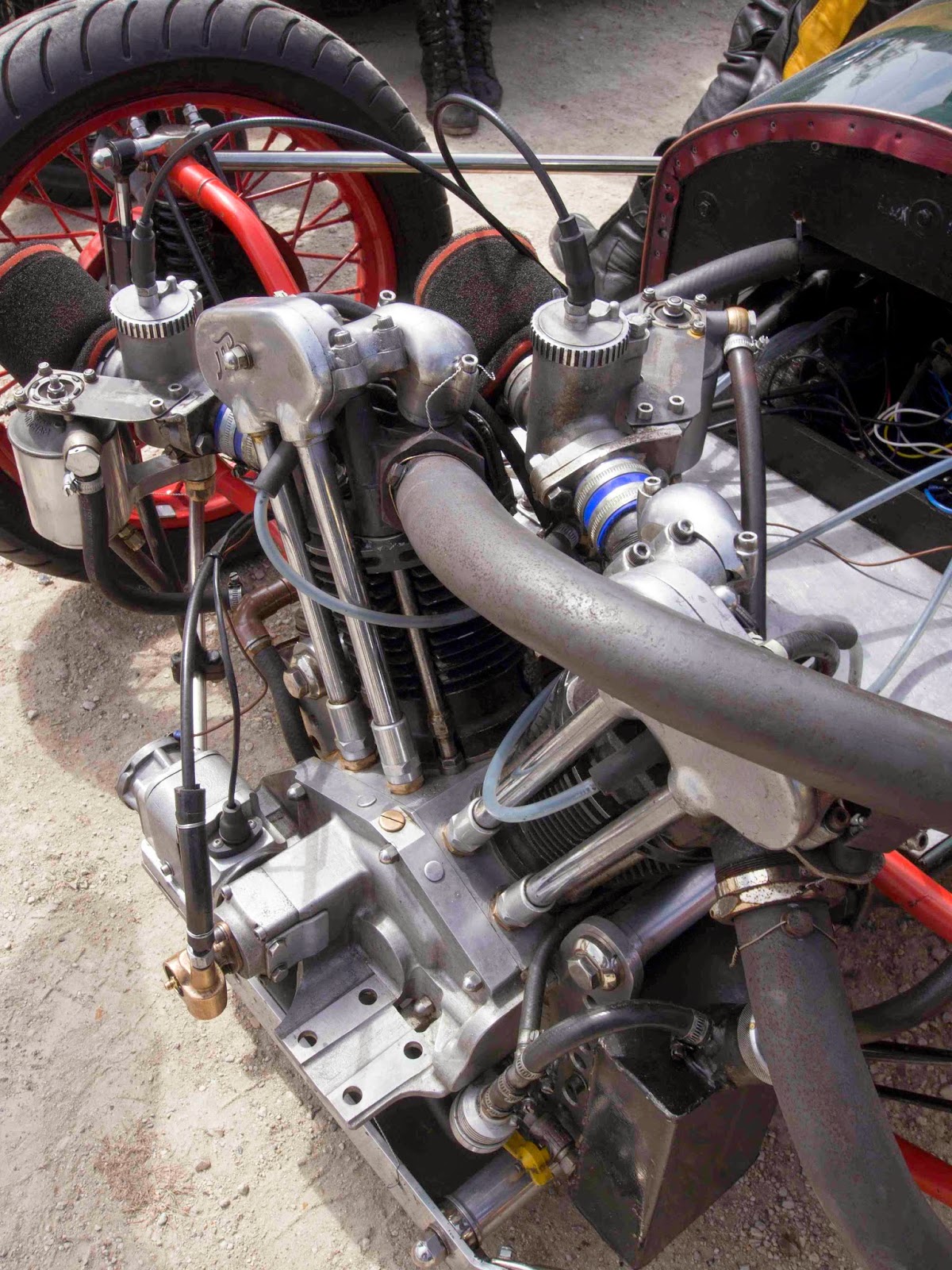
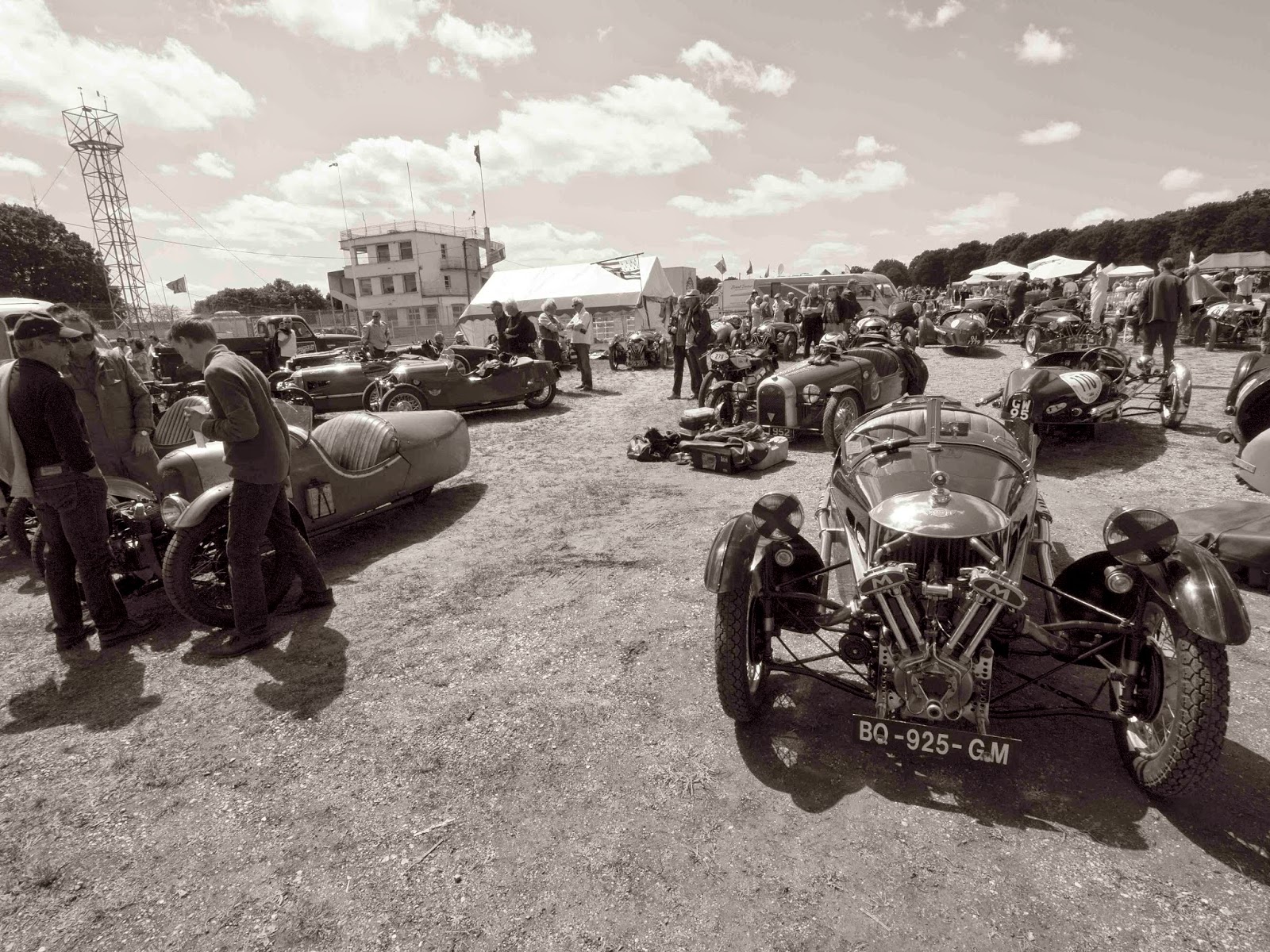
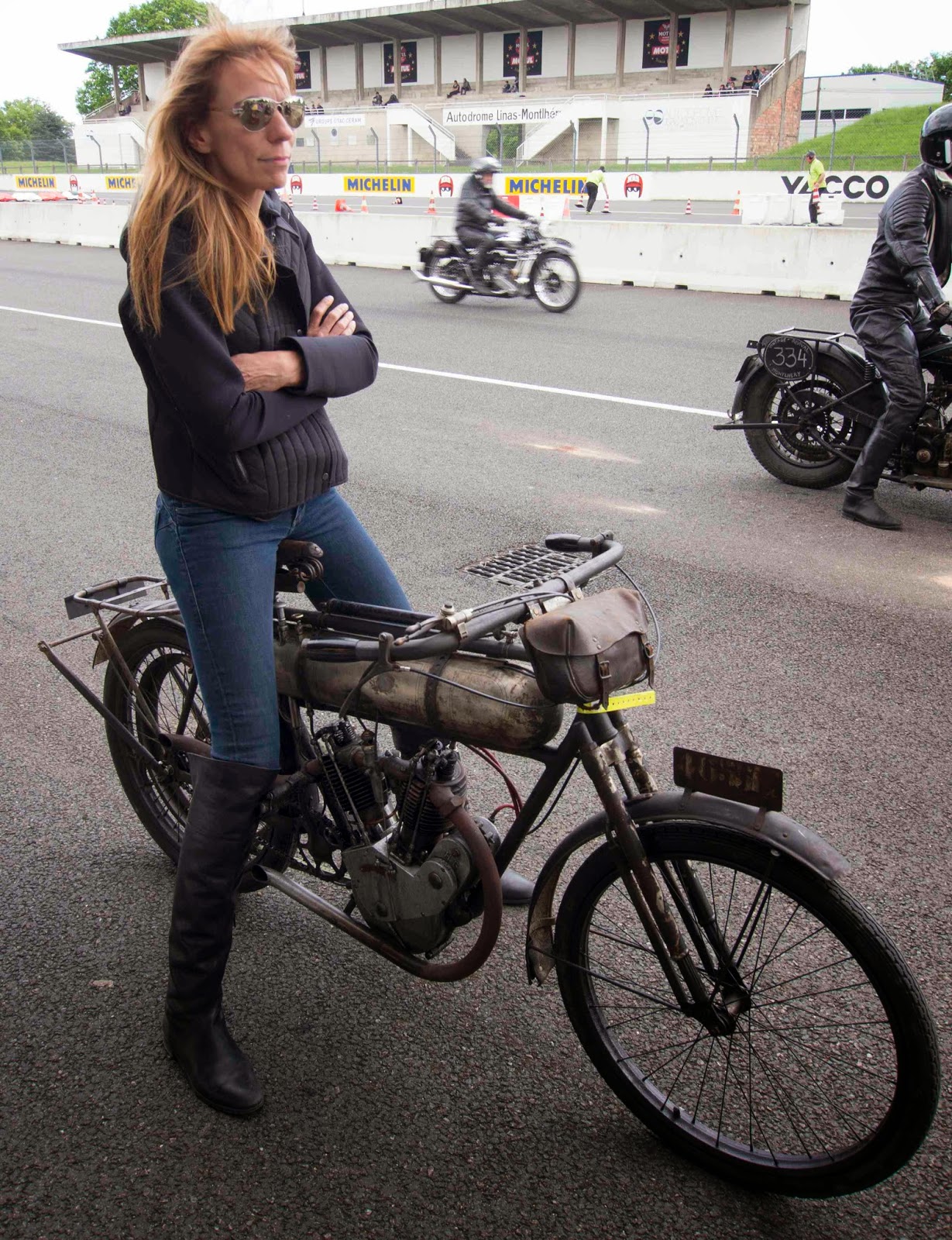
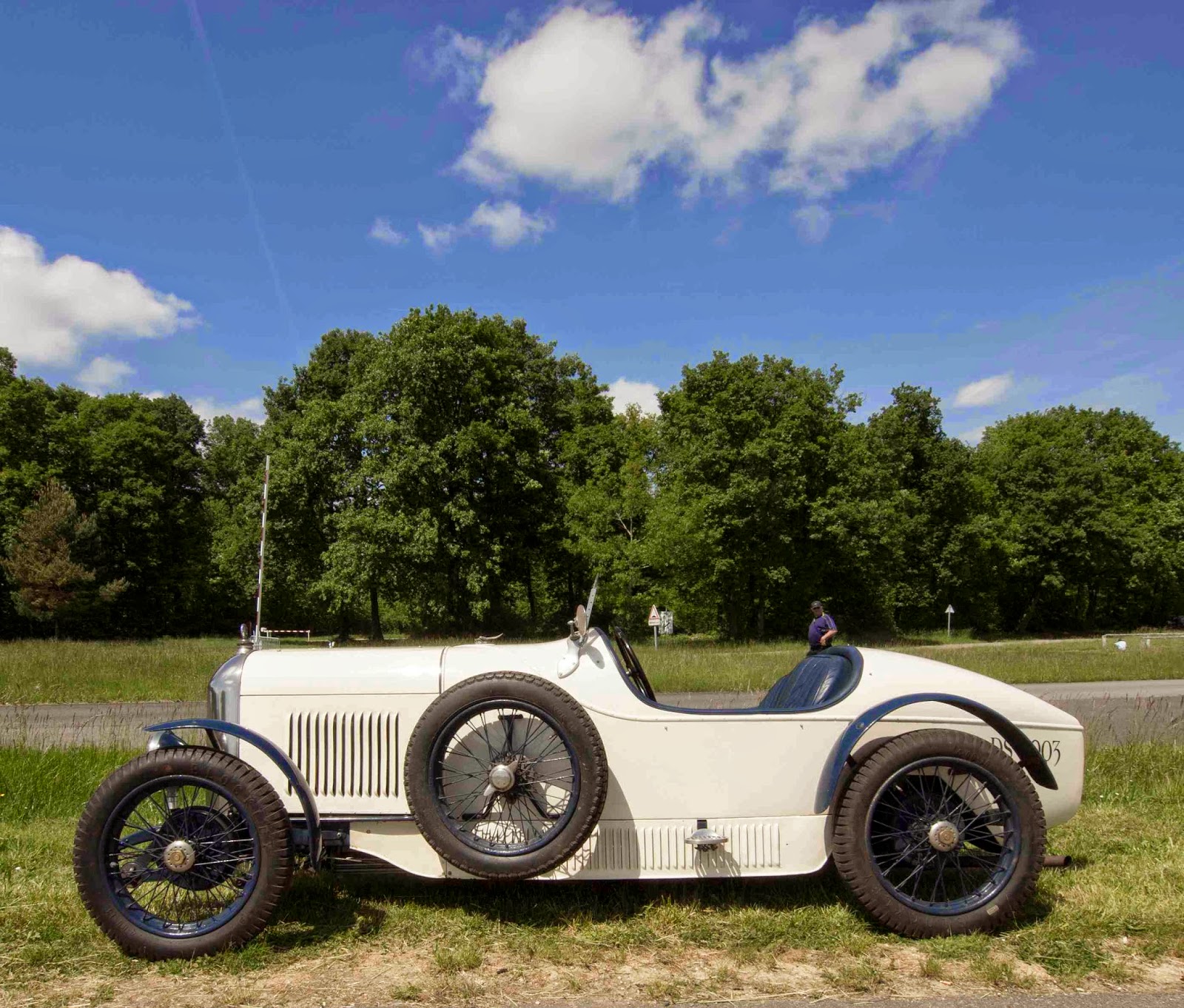
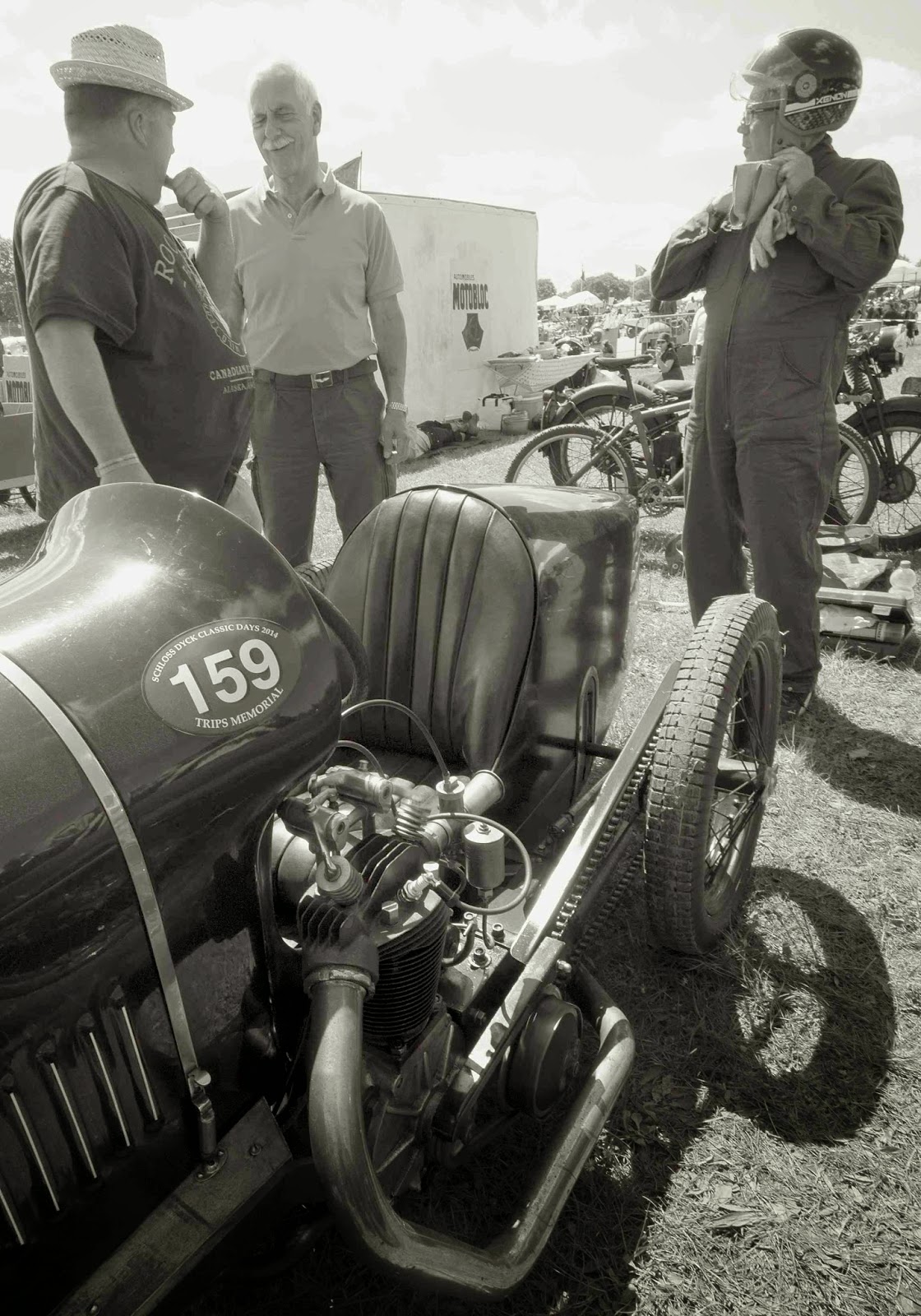
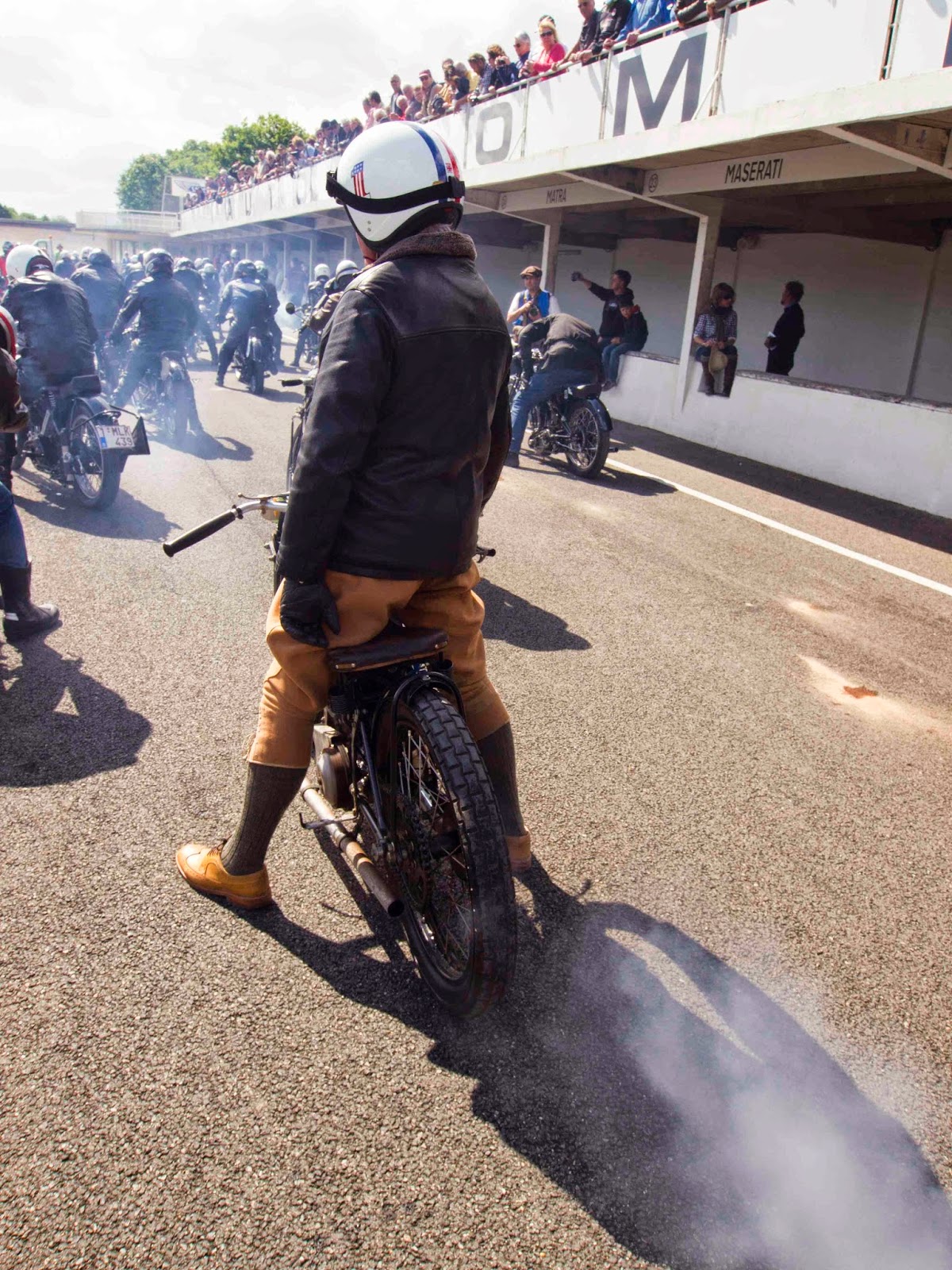
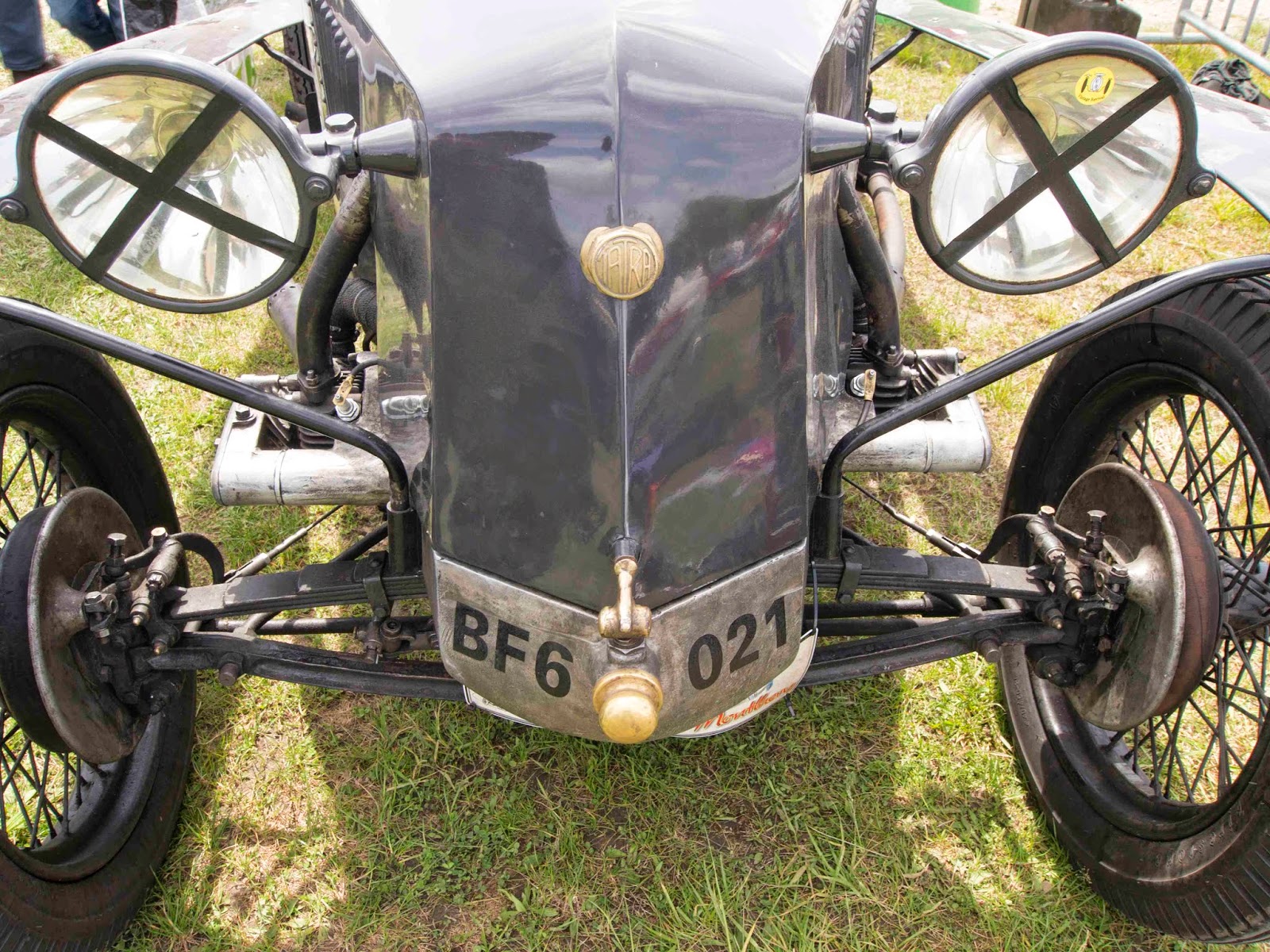
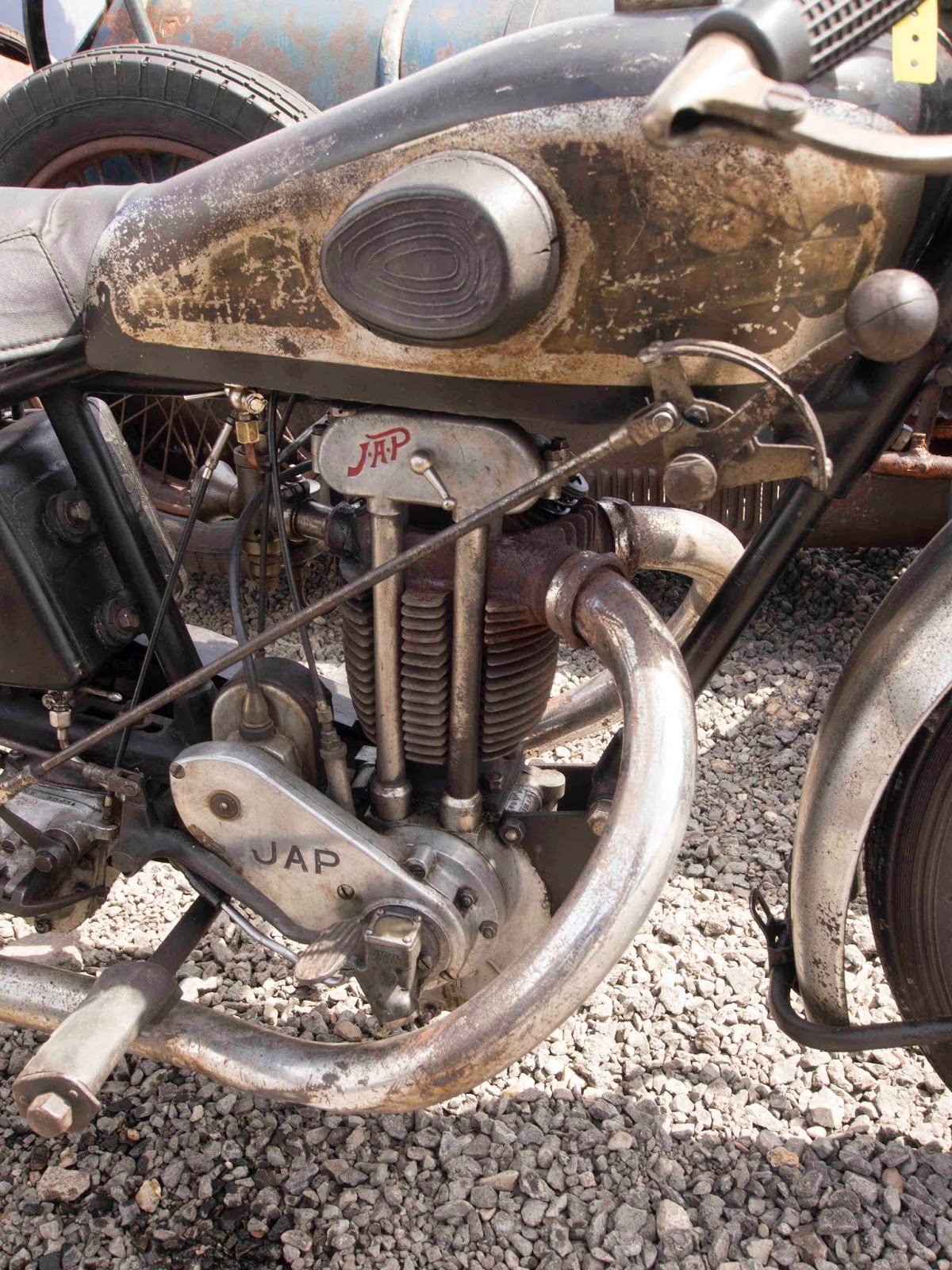
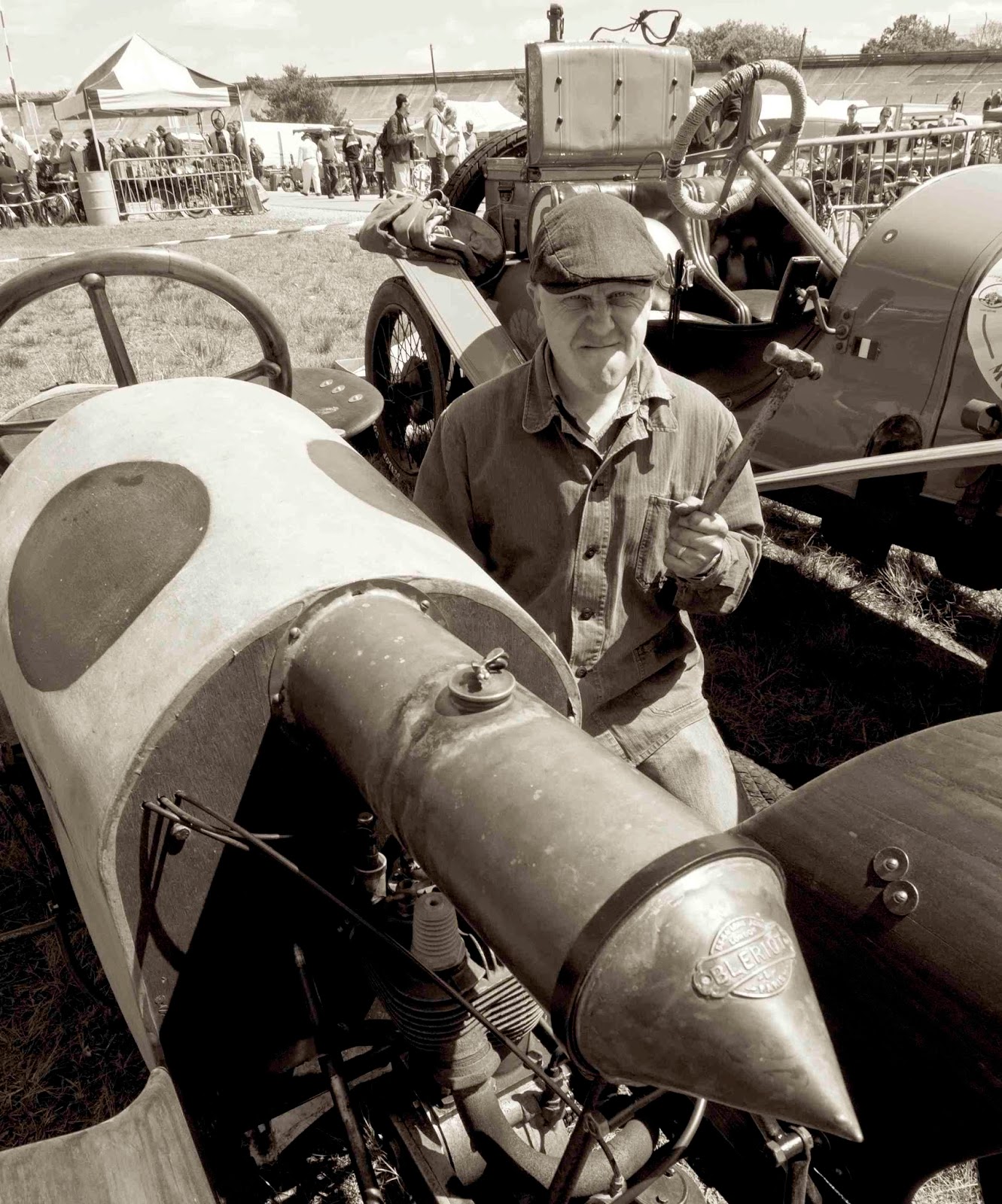
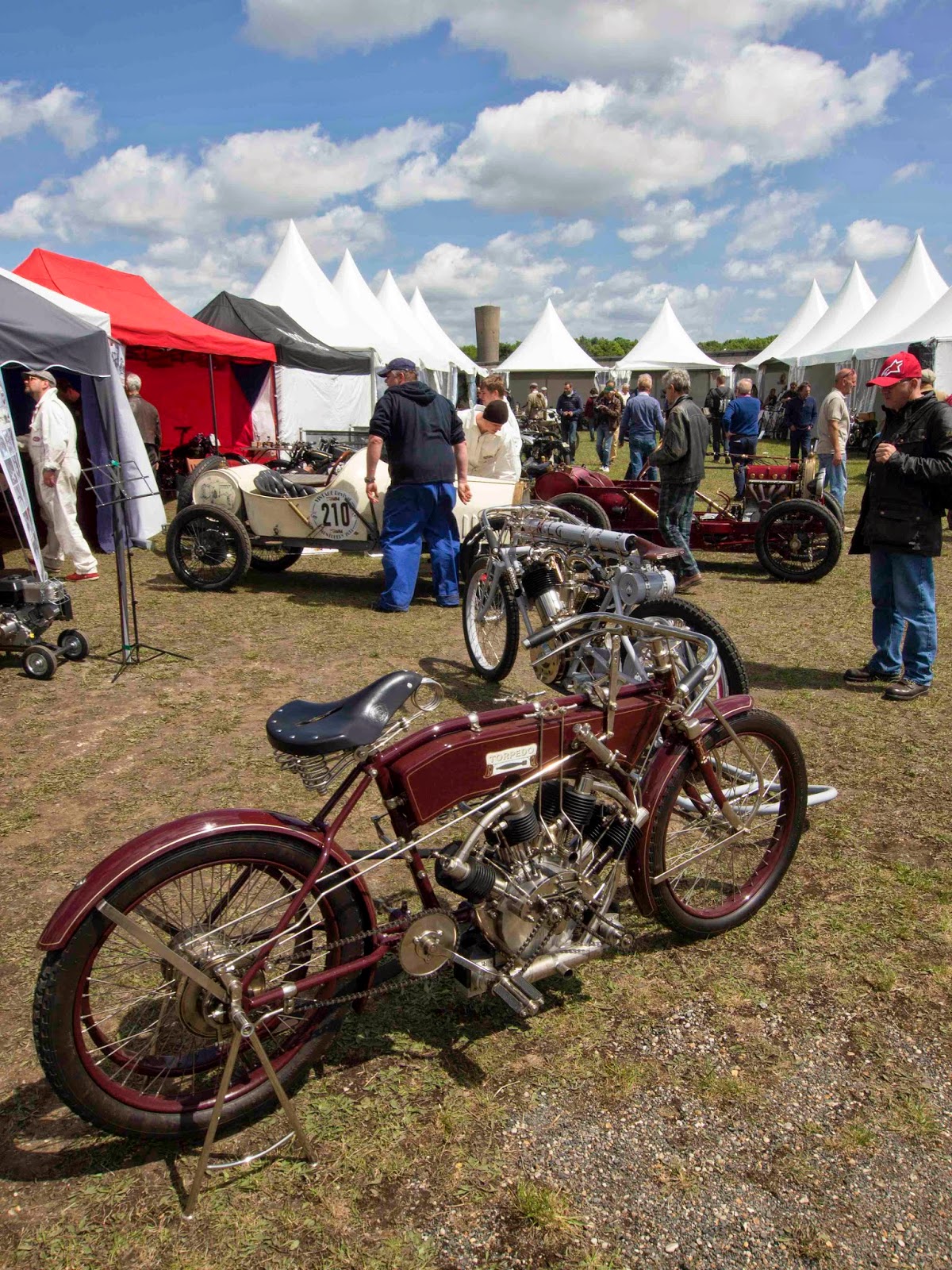
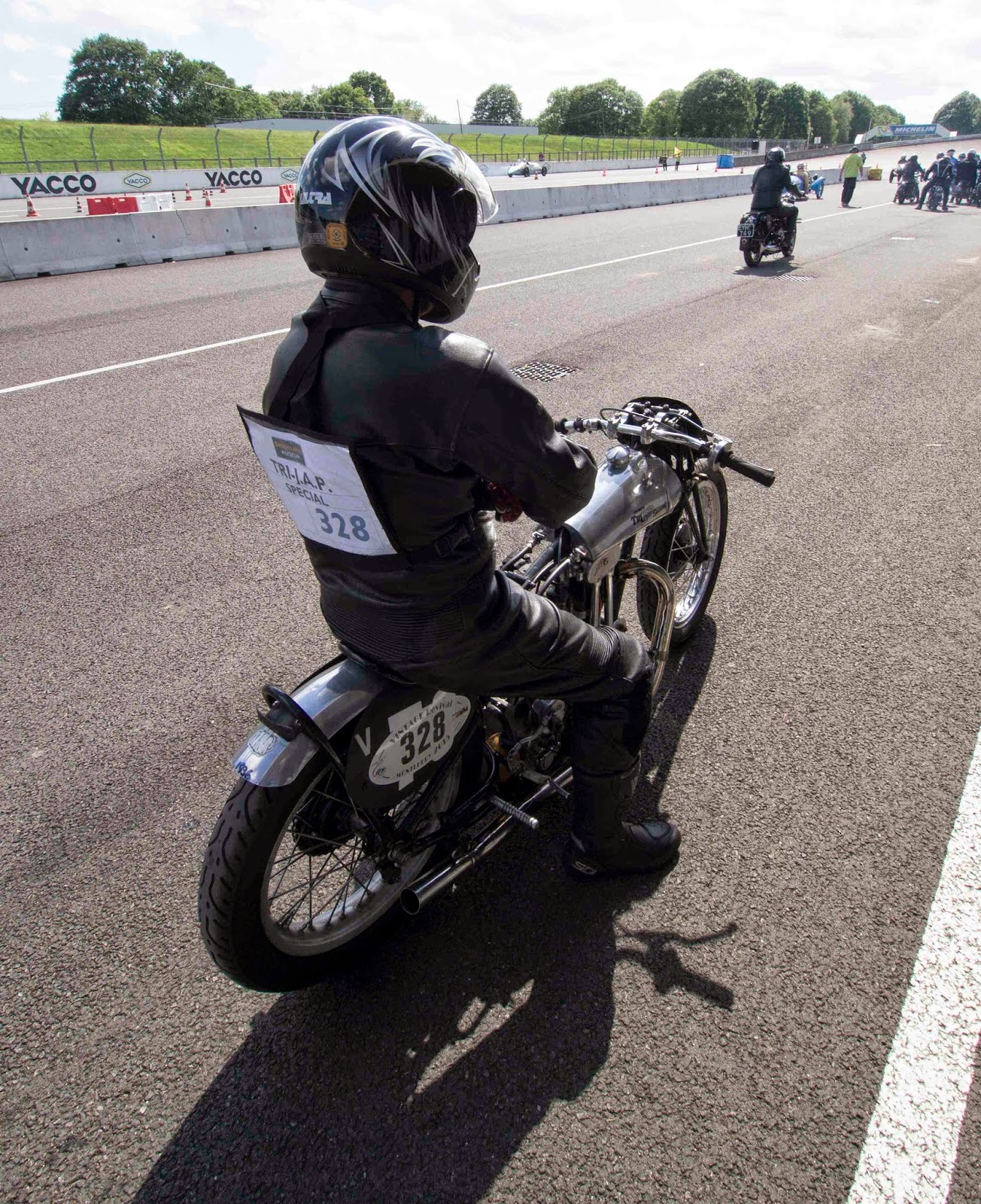
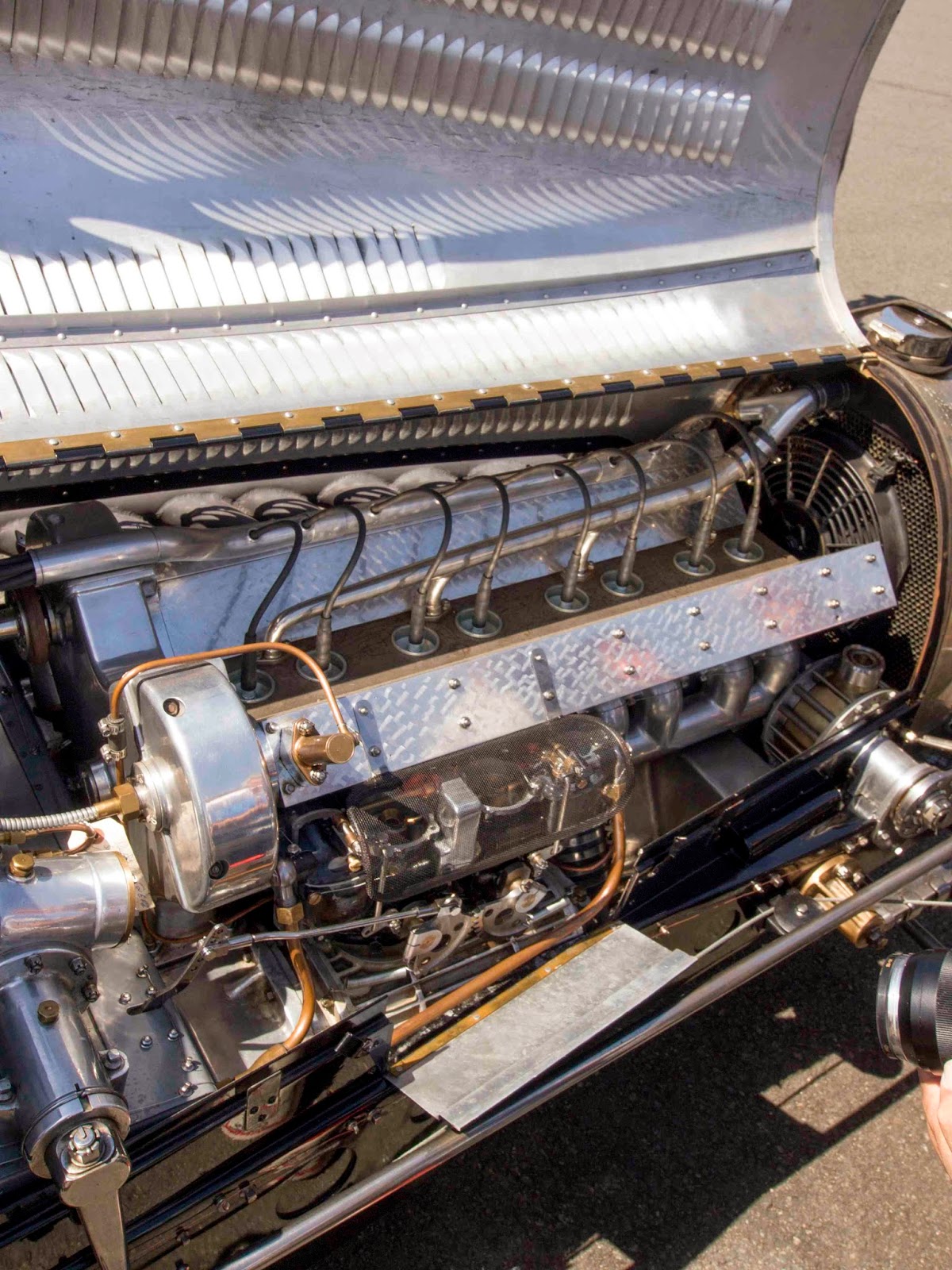
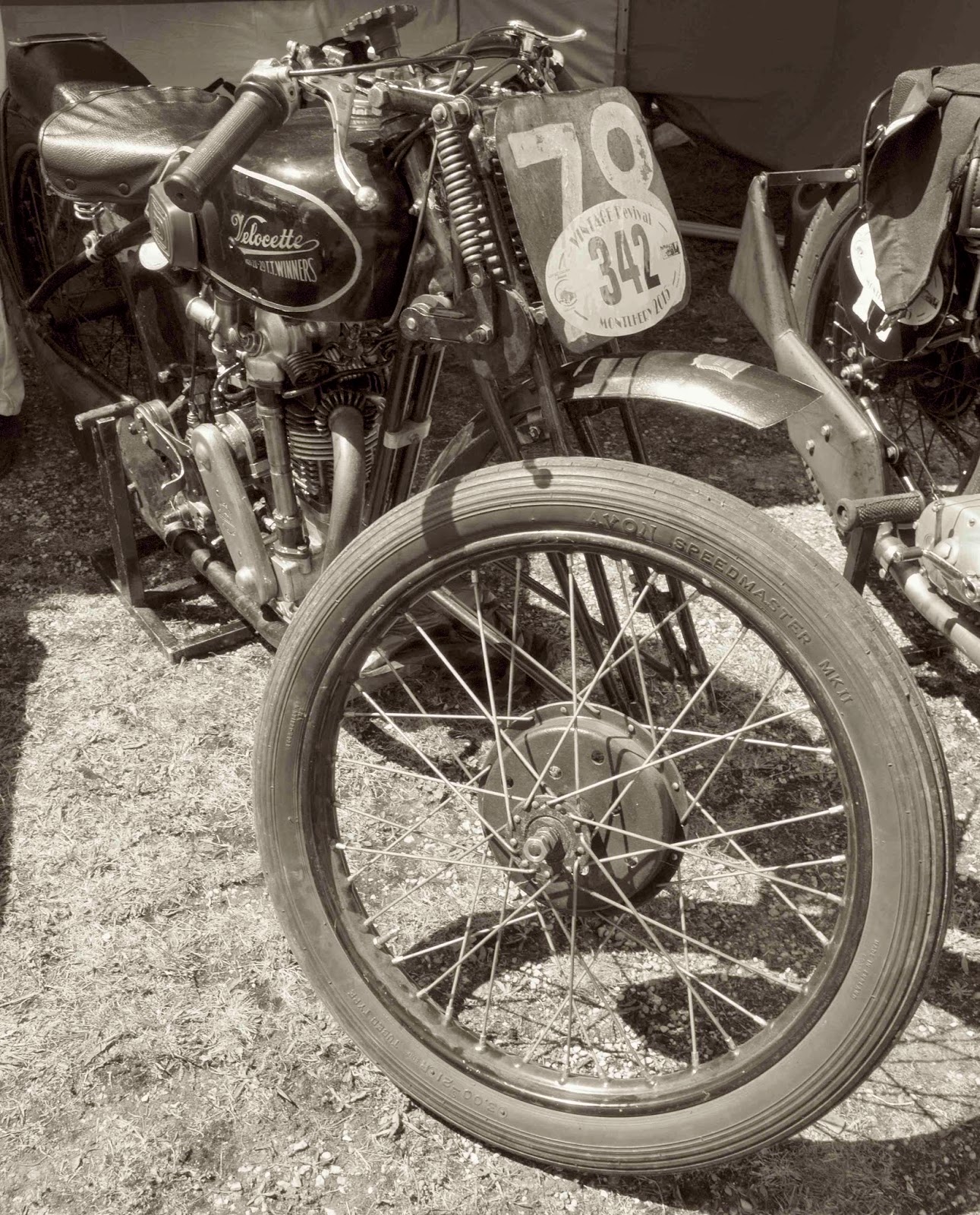
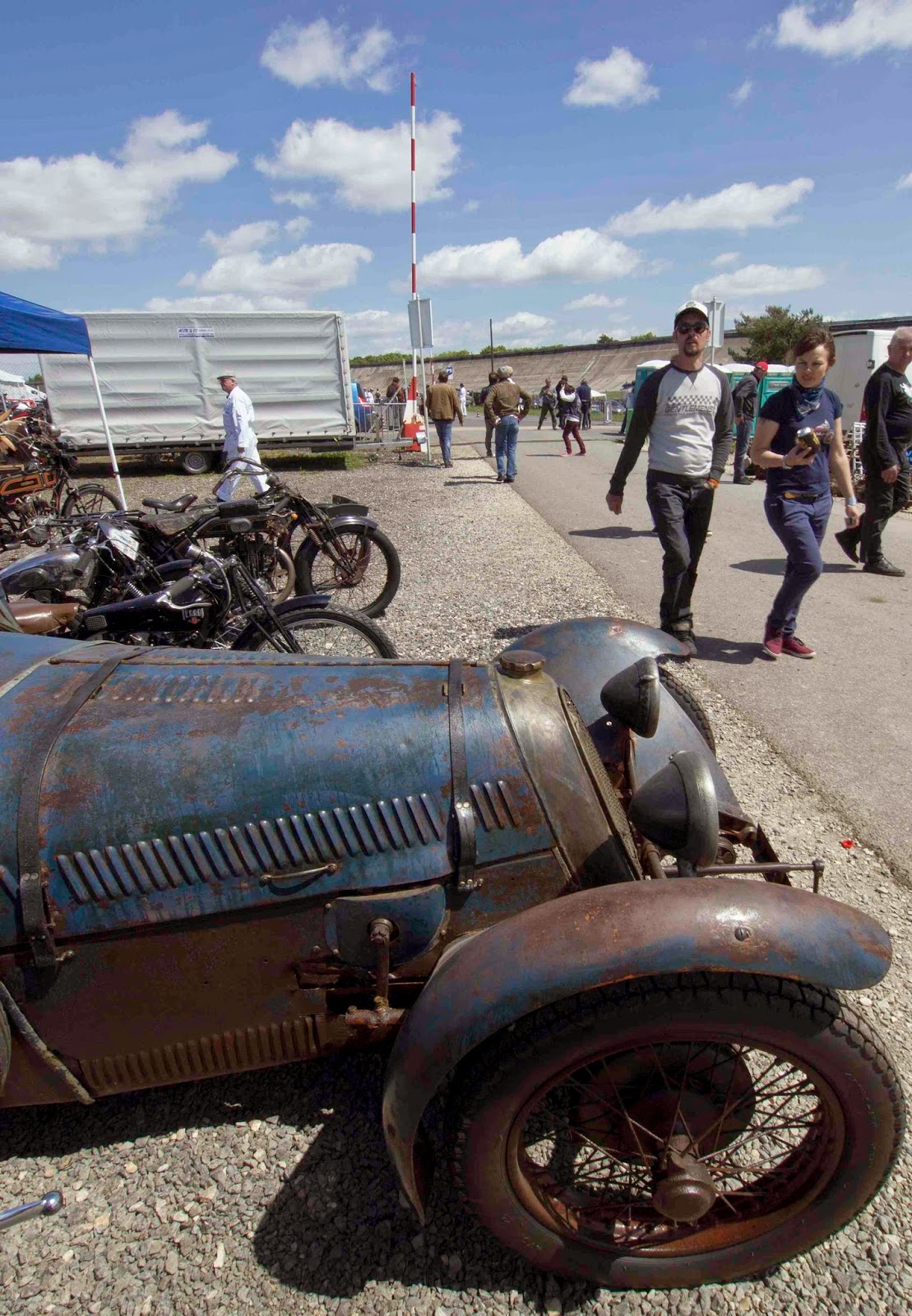
Why on earth, my friends ask, would I travel 20 hours on a round-trip plane to Paris, and spend a couple of grand of my own money to attend a weekend event at a suburban Parisian racetrack in lousy condition, with shabby amenities, mediocre food, which is a pain to reach unless you have a car? The reason is simple; it’s worth it. If you’re a fan of pre-1940 racing cars and motorcycles, there really isn’t a comparable event, anywhere. Vintage RevivalMontlhéry has become to my eyes the most authentic vintage motorsports event in the world. Not as in ‘period correct’ as per the Goodwood Revival, that glorious costume party of 50,000 people, who are not allowed access to the truly interesting stuff, like the pits. It may be the right crowd, but it’s Disneyland crowded, and shares a bit too much of that park’s gloss for my taste. I prefer a little grit, because pre-war racing wasn’t a theme park, it was dangerous and poorly-paid stuff, and the participants did it for the love of the sport.
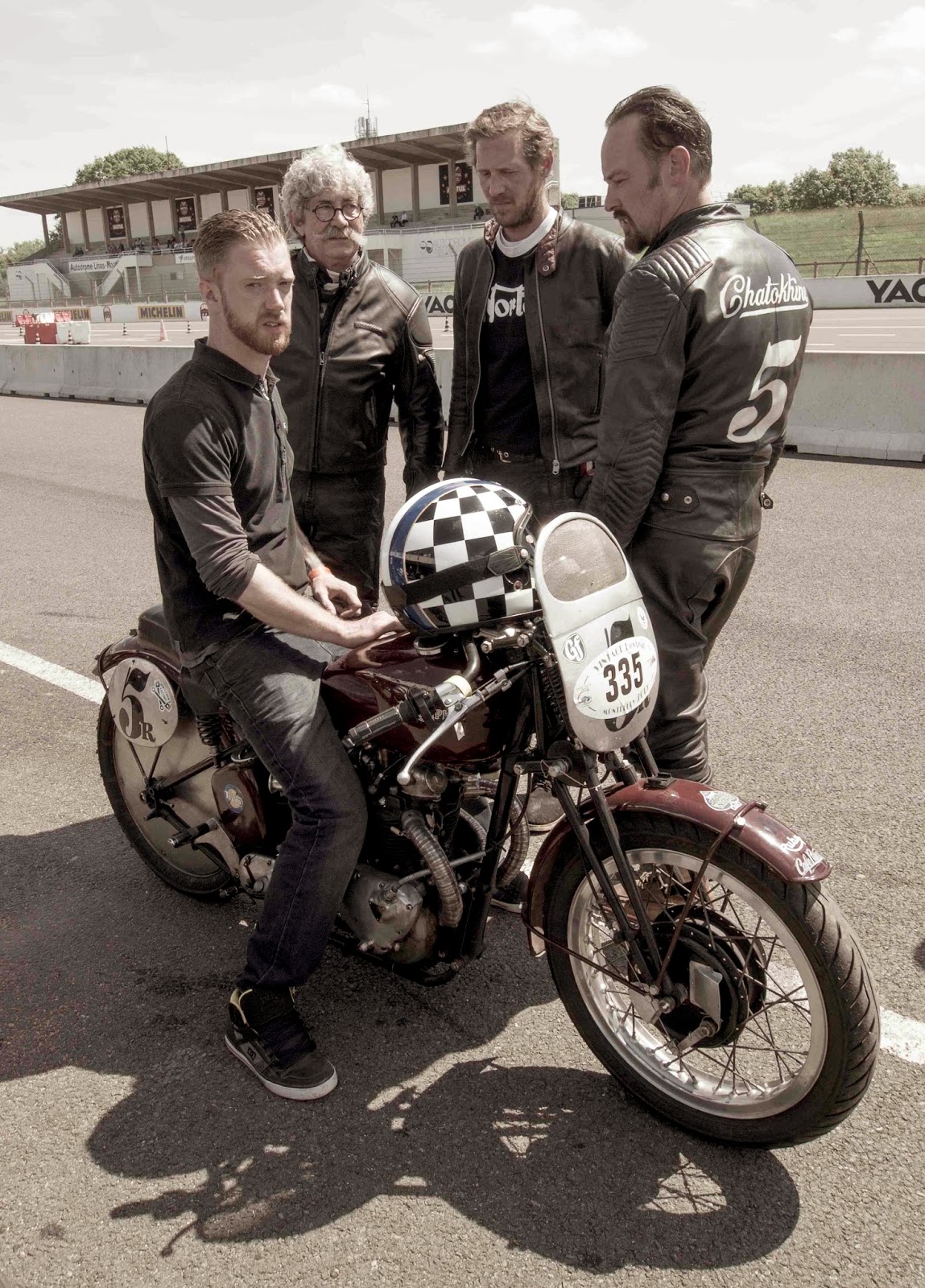
I suppose if that tens of thousands turned up at Montlhéry there would be tiered access as well, but as the crowd is still 4-figures small, with a very large playground, it feels very much in tune with the old Brooklands ad – the right crowd, and no crowding. VRM is the work of Vincent Chamon, who took on the mantle of the late lamented Jacques Potherat, the grandfather of vintage racing in France, who organized a ‘Vintage Montlhéry’ gathering for decades, before his untimely death 15 years ago. The track was without such a mixed-vehicle event for ten years, until Chamon decided to do something about it. This is the third of these bi-annual events, and it just seems to get better.
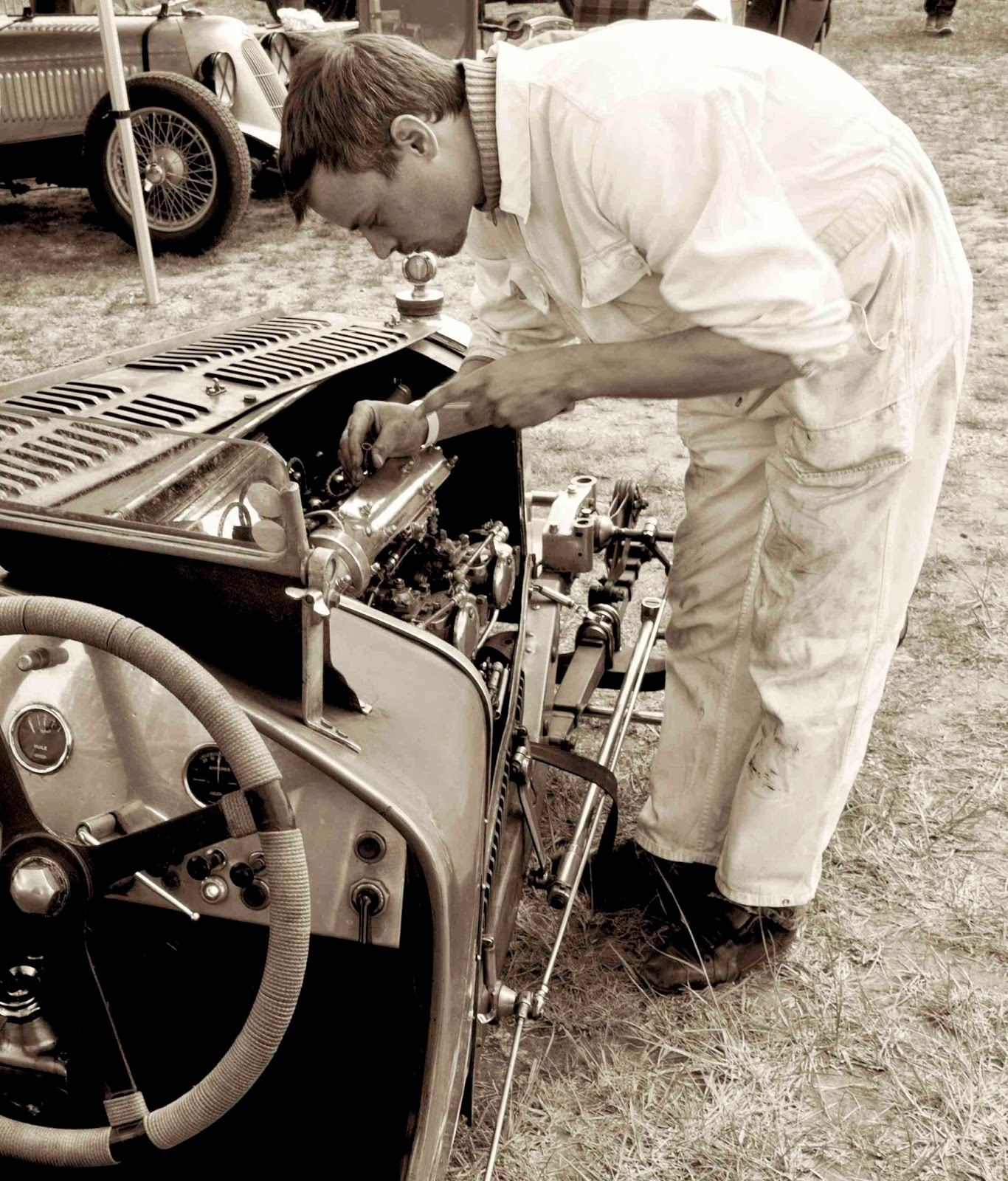
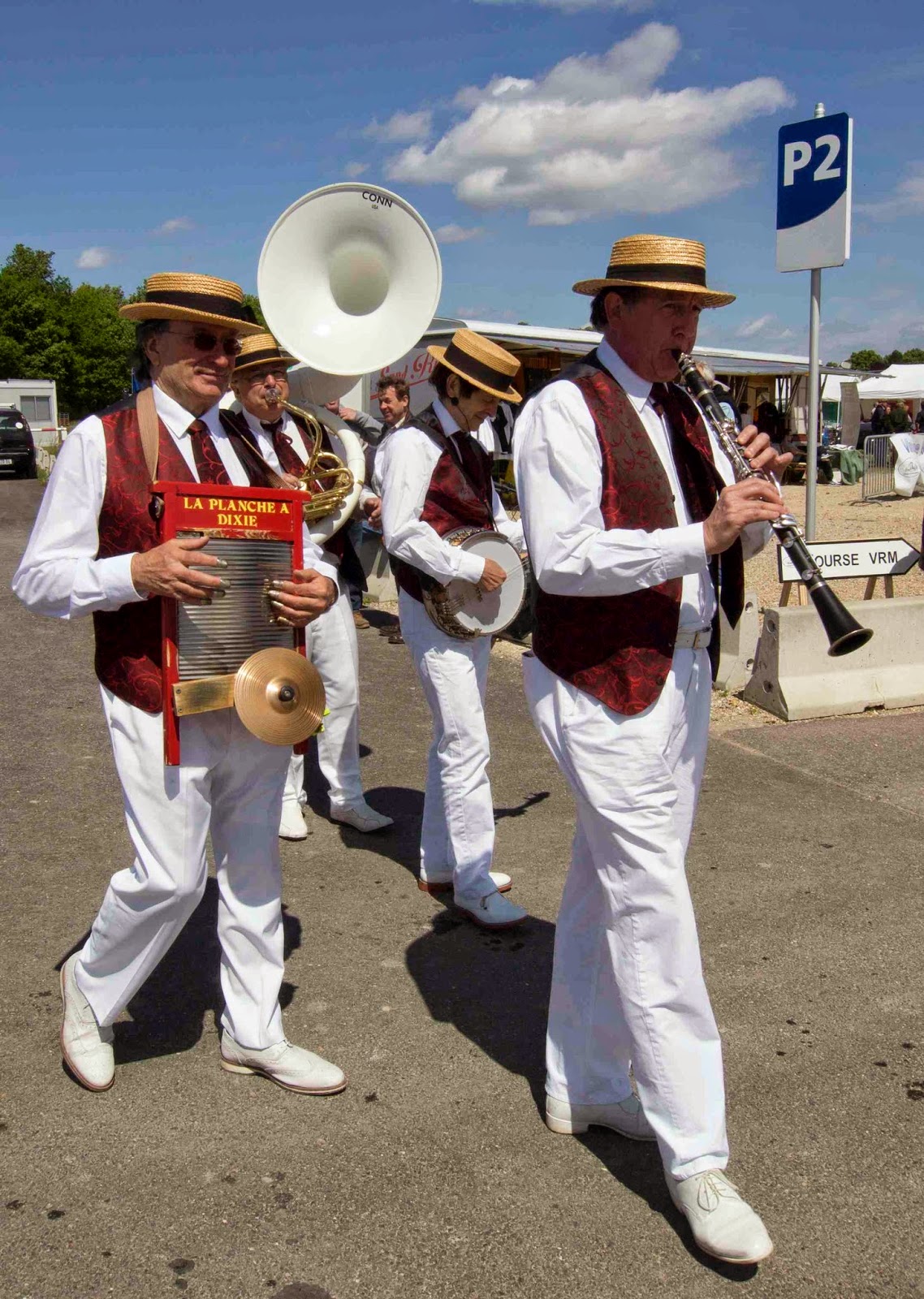
Unlike most motorsports events, the organization is almost invisible, with a very light touch. Gents and ladies in white boiler suits direct the action, and their attention is generally focused on getting vehicles onto the track in an orderly fashion. The glorious chaos of the scene, which actually has a fluid and orderly movement, includes a mix of pedestrians, bicyclists, children, and racing vehicles using the main throughfare/track access, which means there’s a constant mix of revving racers and ordinary folks milling along, with a kind of friendly acceptance of of each group’s needs. The frustration level looked very low, and I didn’t hear a voiced raised in anger amongst the scrum between pits and track, which considering the high temper of a rider or driver about to do hot laps, is really something.
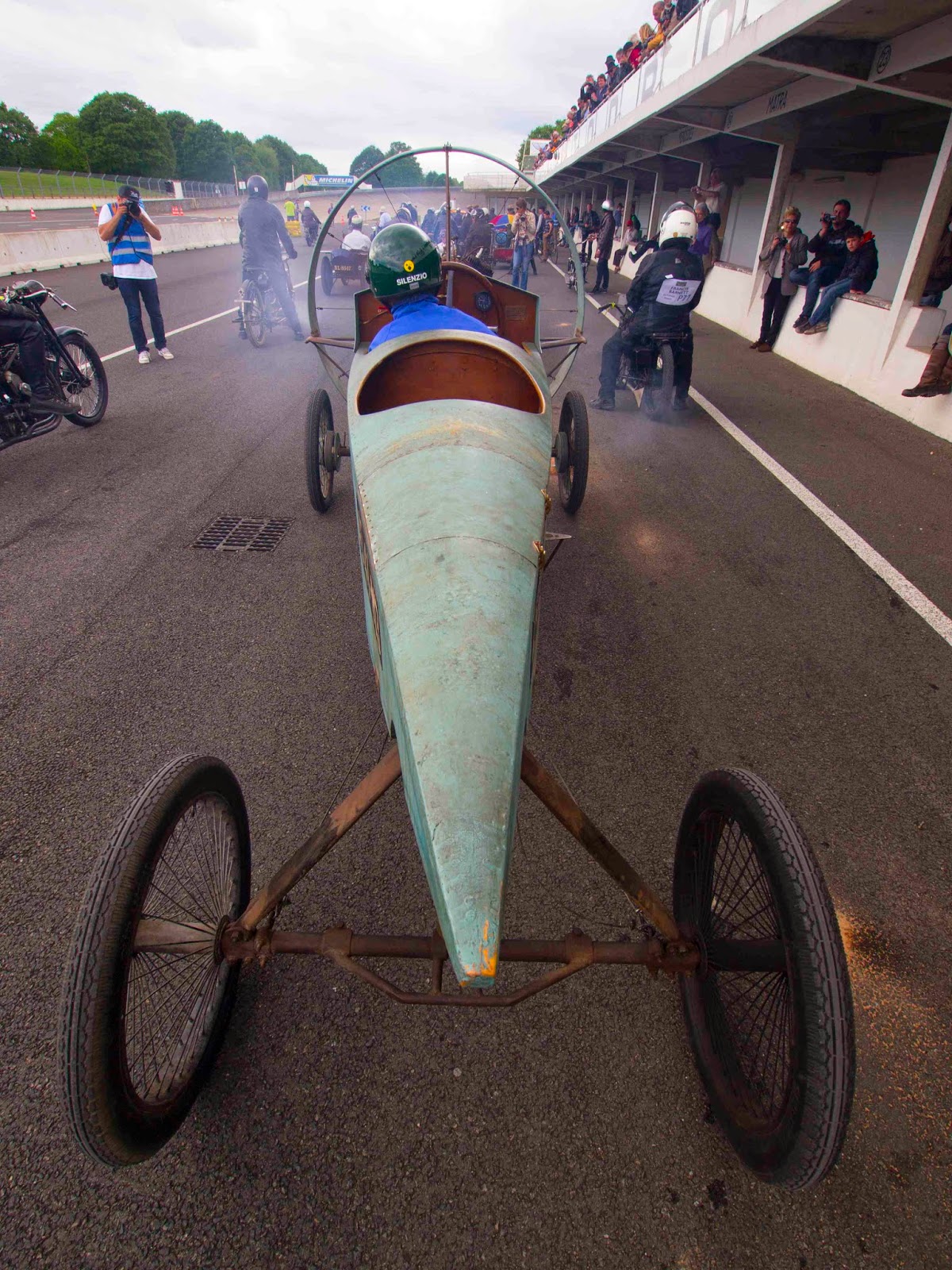
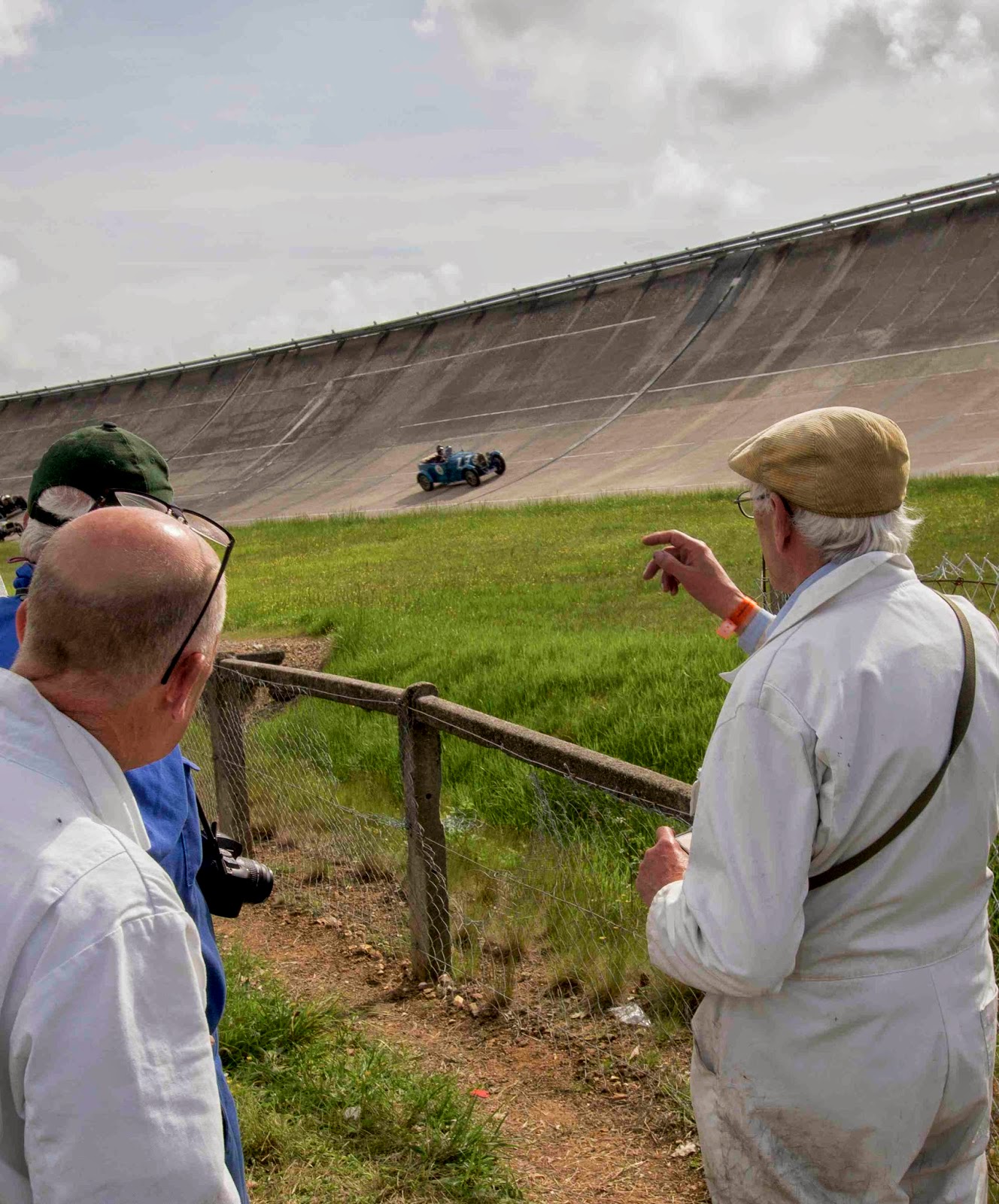
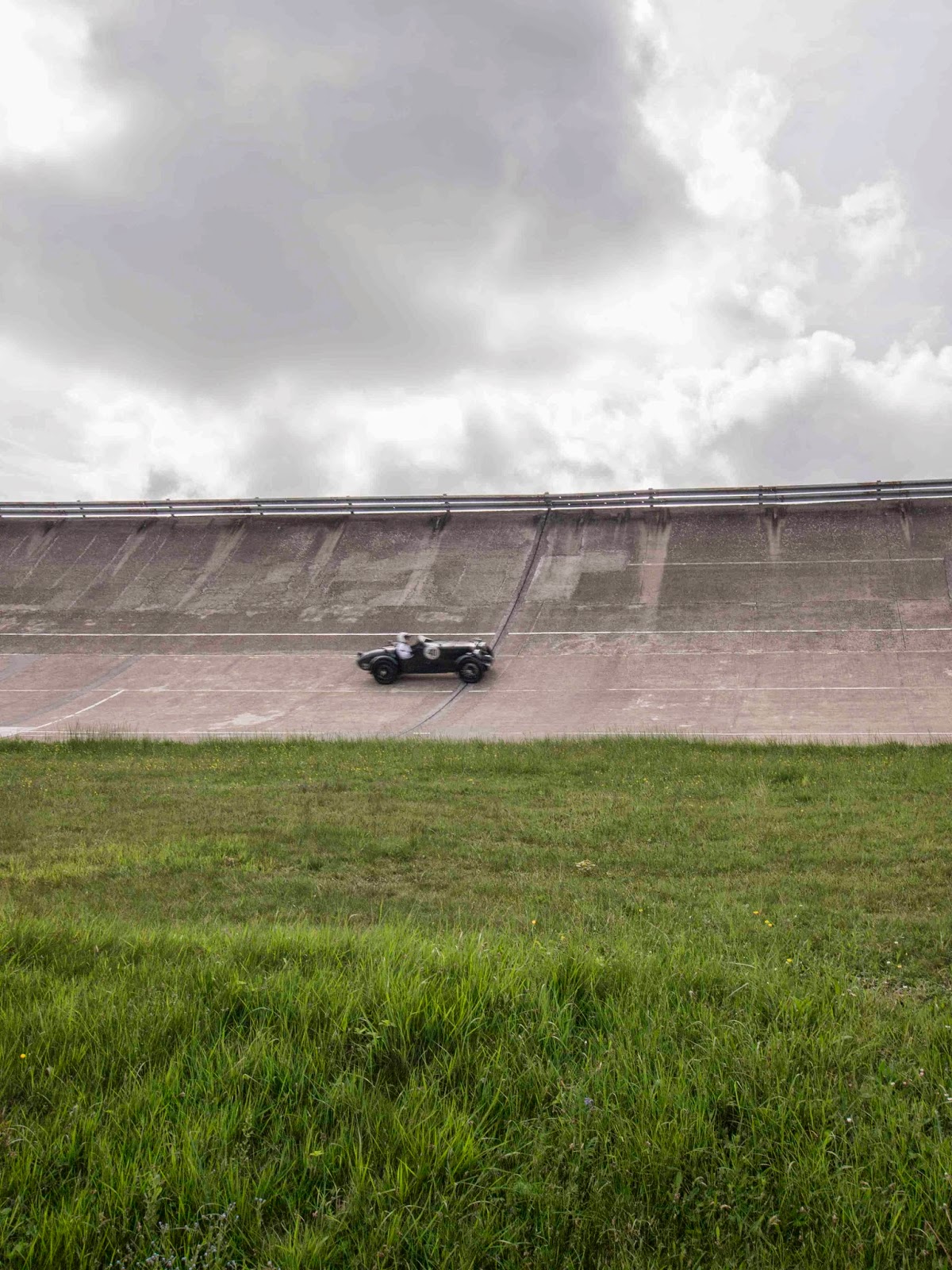
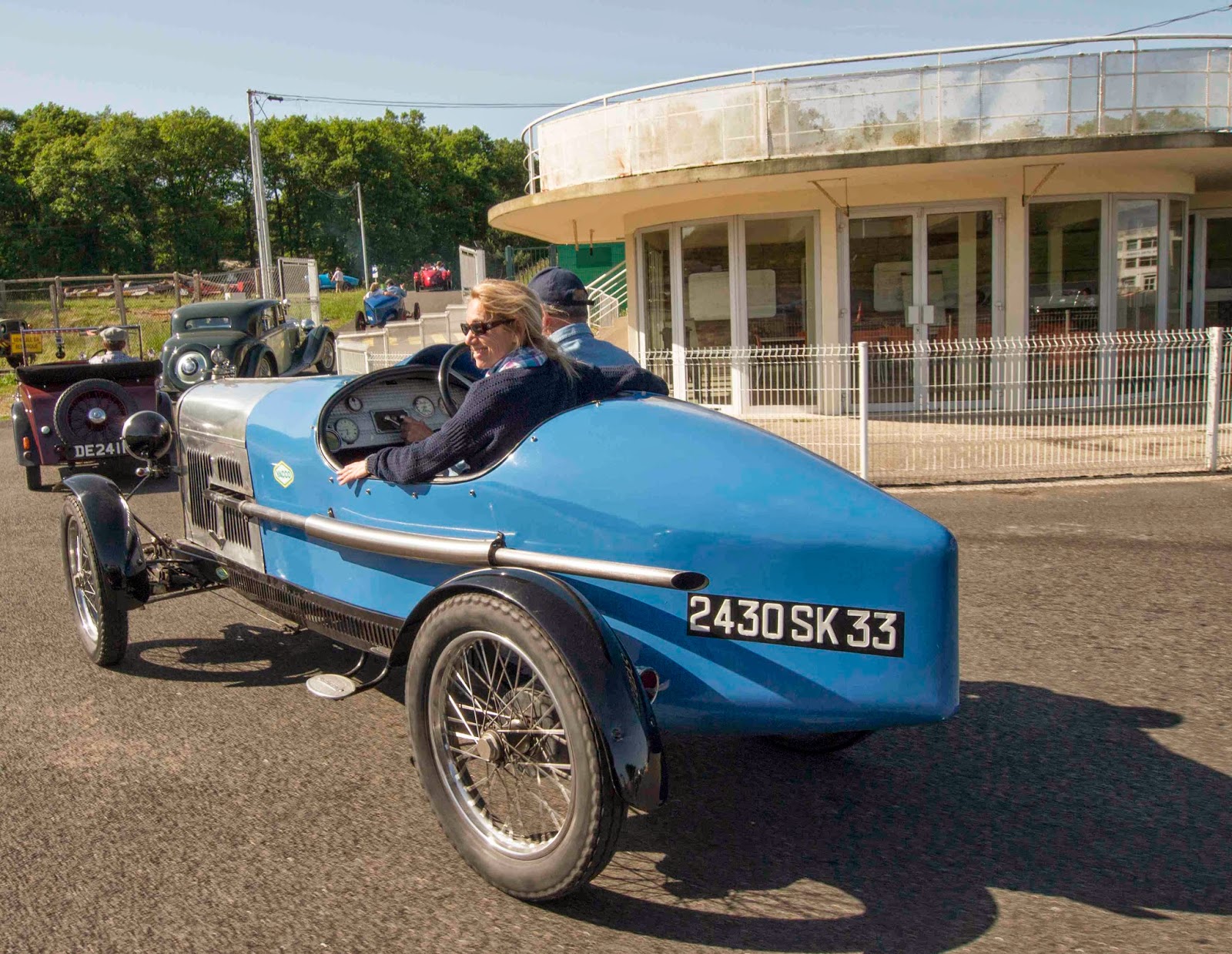
Perhaps it’s because there’s nothing to win; the track time is a ‘parade’, which means a few take full advantage of the fantastically historic track’s banking and chicanes, while most are content with a fast but not furious pace. Some even potter, and know well enough to stay out of the way, clinging to the very bottom of the banking, while the really fast ones sail up the top line, which feels awfully near vertical when you’re on it. It’s an eerie sensation to gaze at the top of another rider’s helmet as you pass by/over and they’re perpendicular to you. But it is bumpy on the crumbly old concrete. Riding the track is truly living the history of the place, as an awful lot of world speed/distance records were set there from its inception in 1924 through the 1960s. Unlike Brooklands, competing interests (like tanks) never sullied the architectural concrete track banking, and we can still enjoy the magnificence of the place today. I found it especially poignant to be back at Montlhery after visiting Daytona for the first time last September, during the Cannonball, and being sorely disappointed at the lack of romance about the place. The center of the Montlhéry track is a forest, with big swaths of green grass, flowers, and shade if you need it. The grandstands will hold a thousand people at most, all else is trees and sky in the environs; it’s simply gorgeous. Visit the place before something stupid happens.
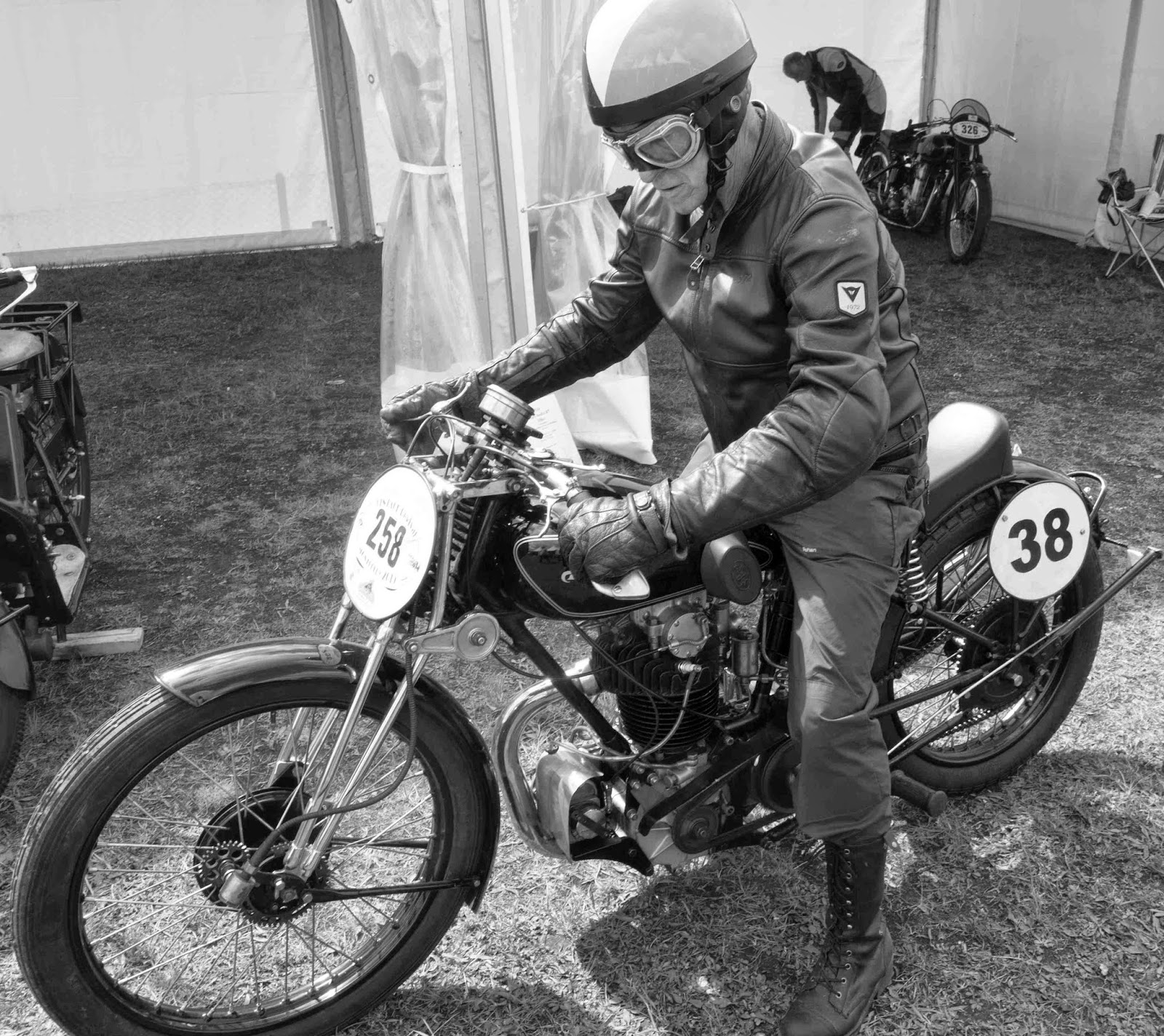
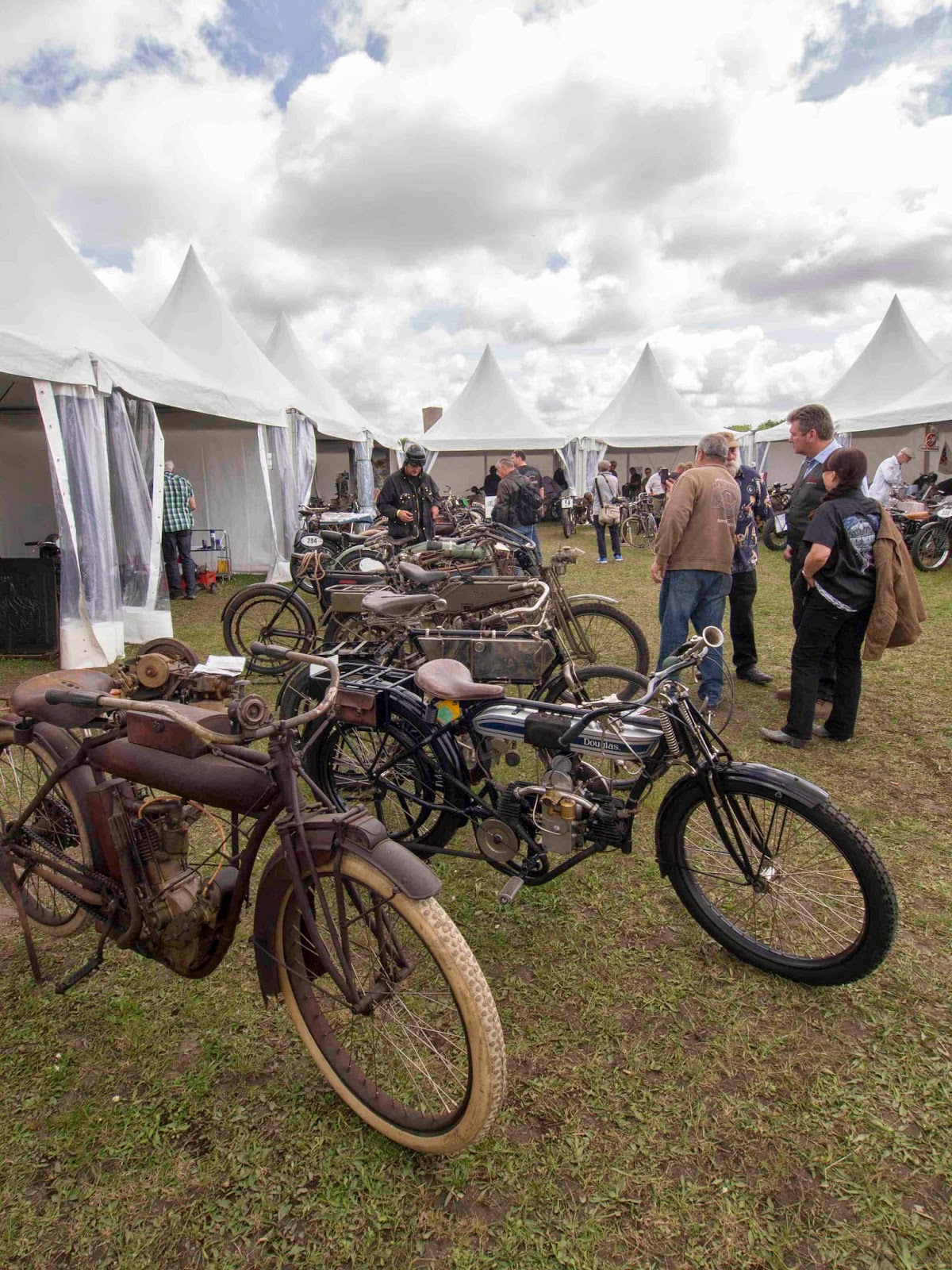
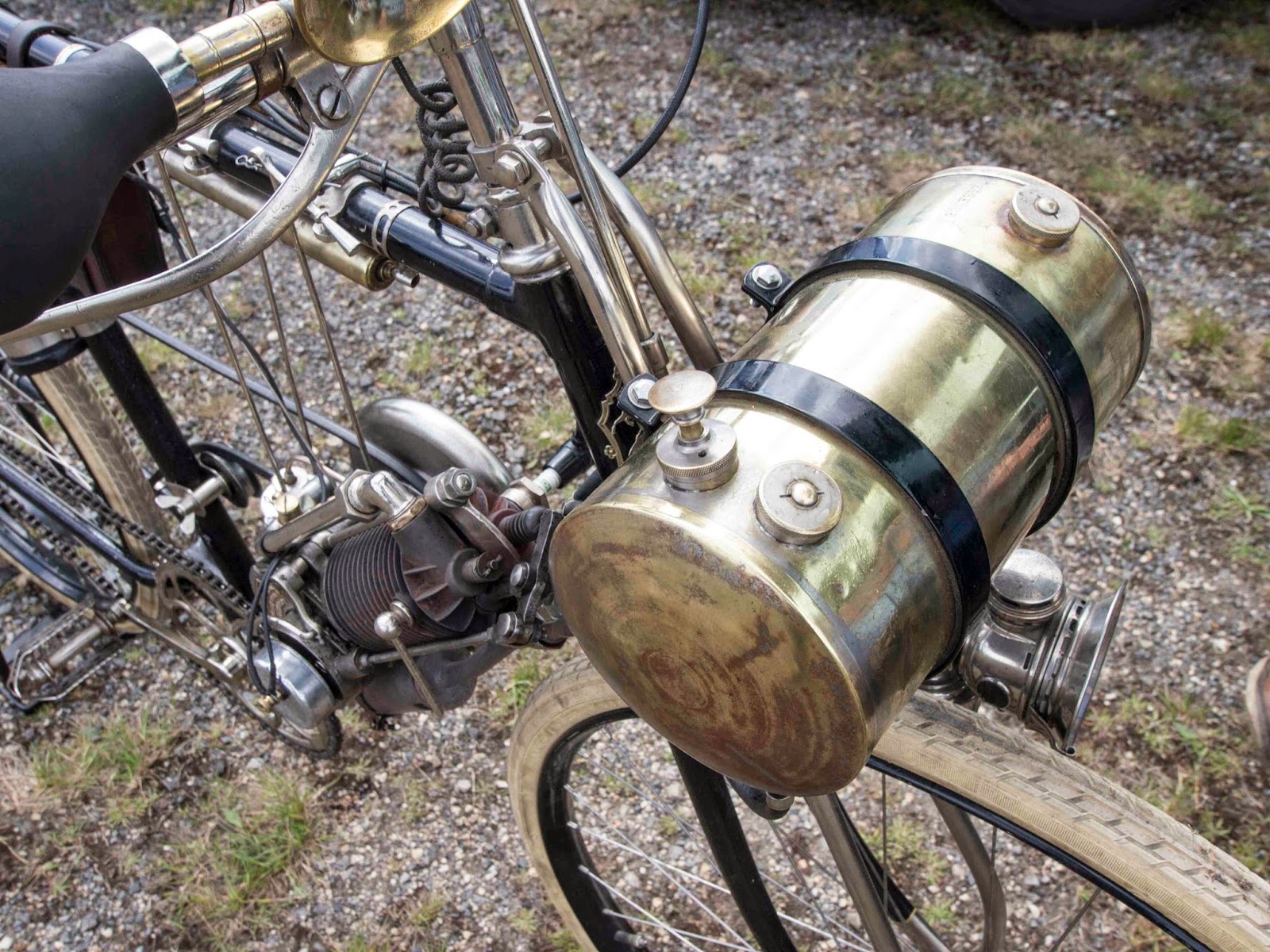
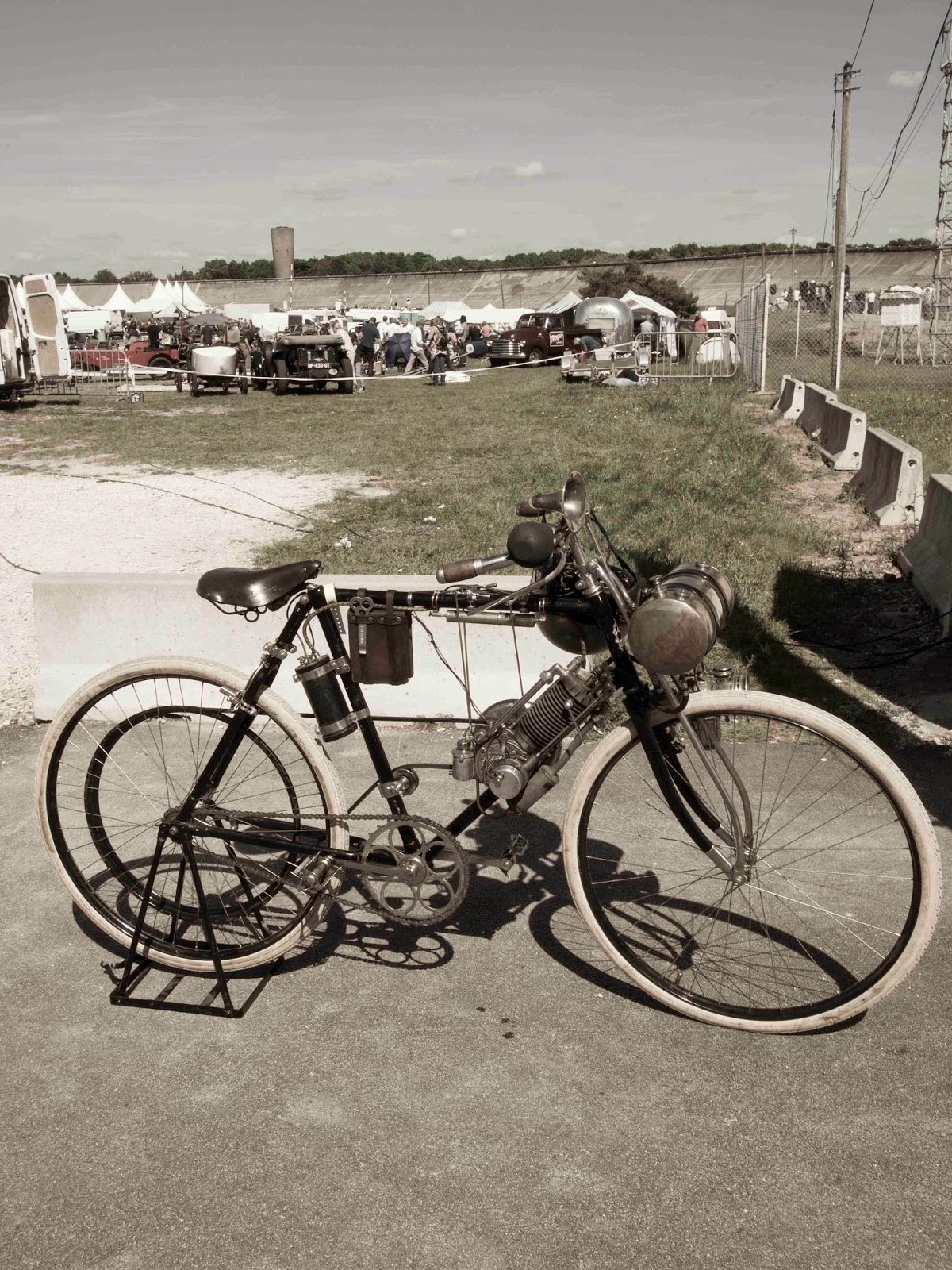
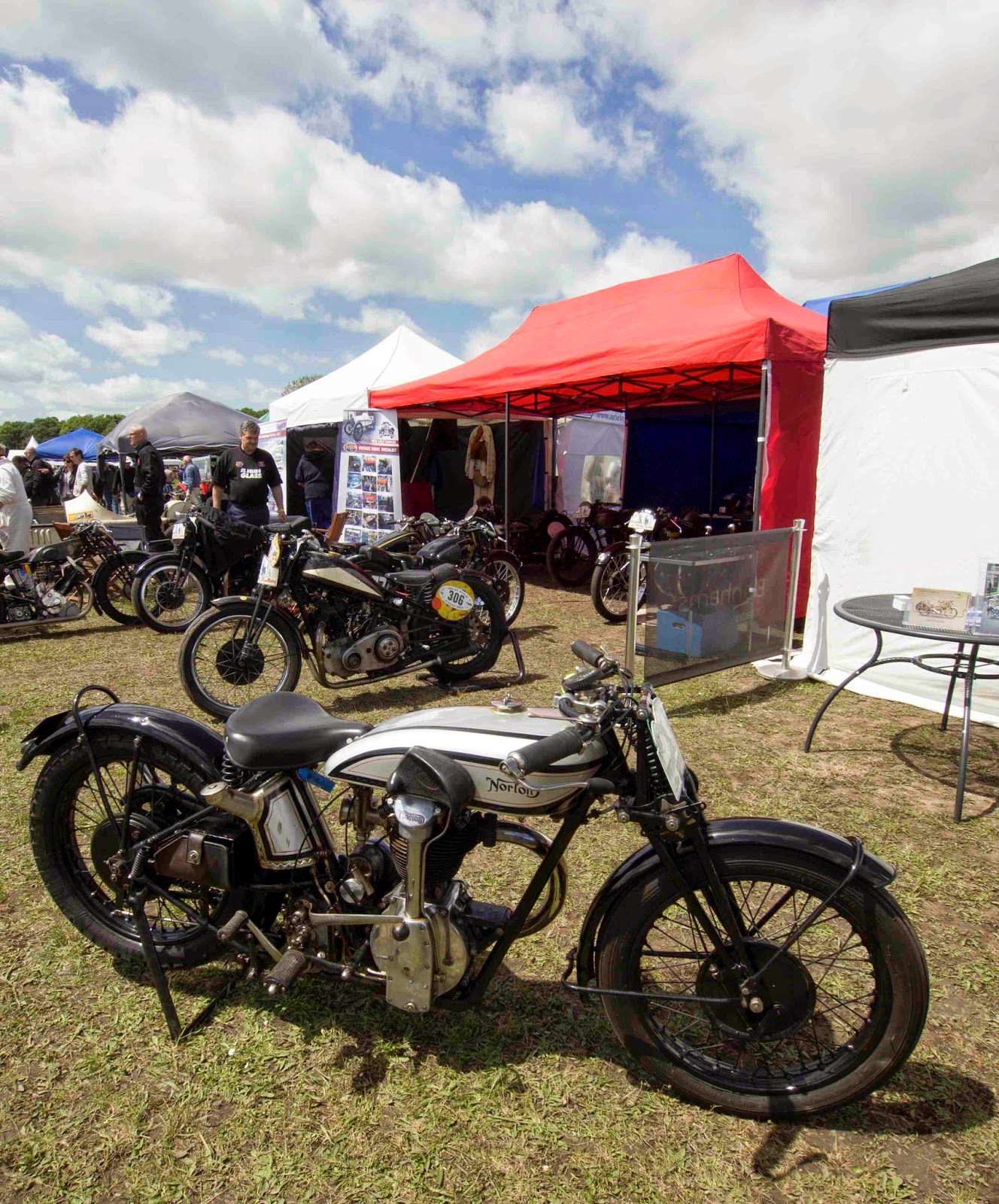
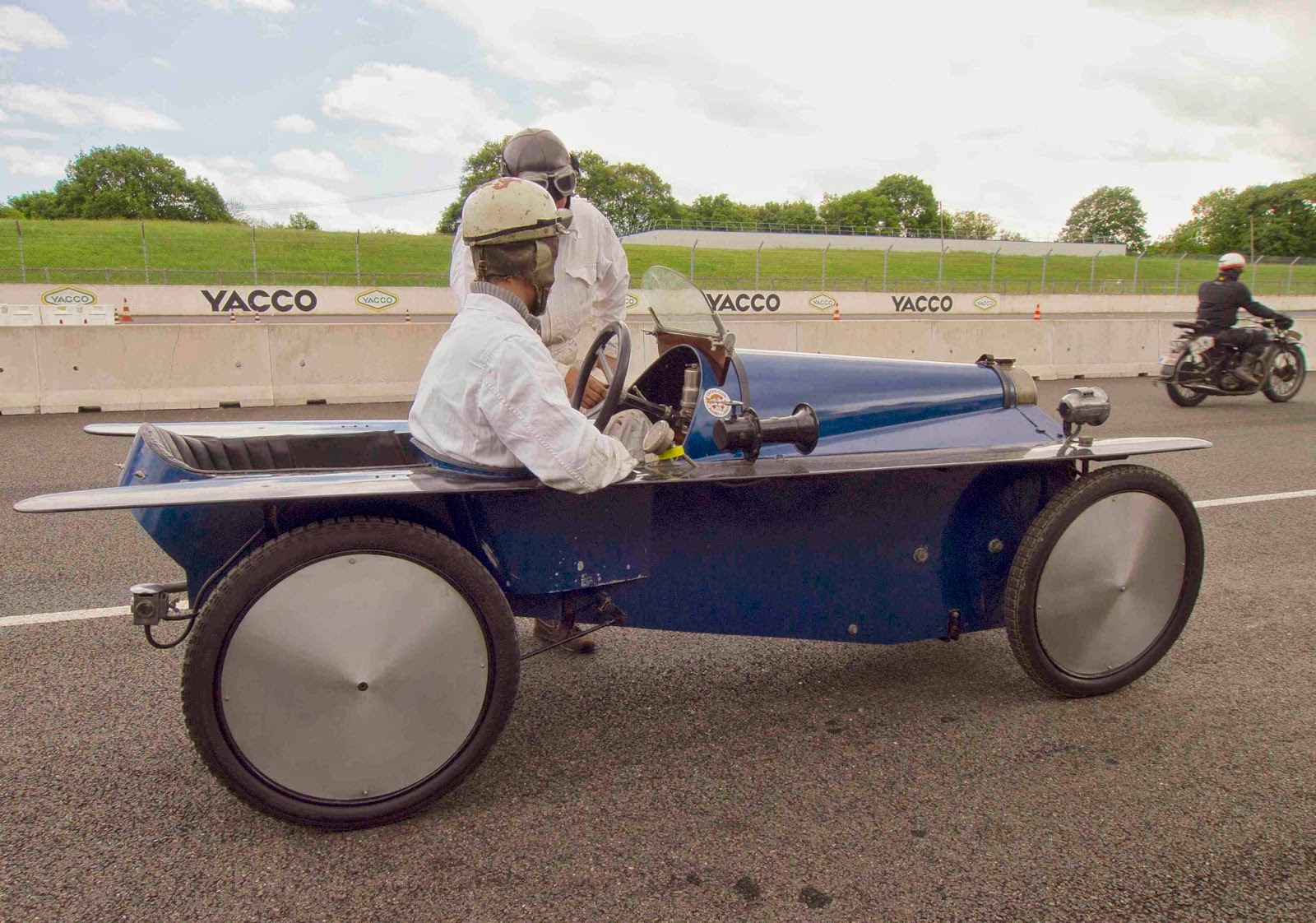
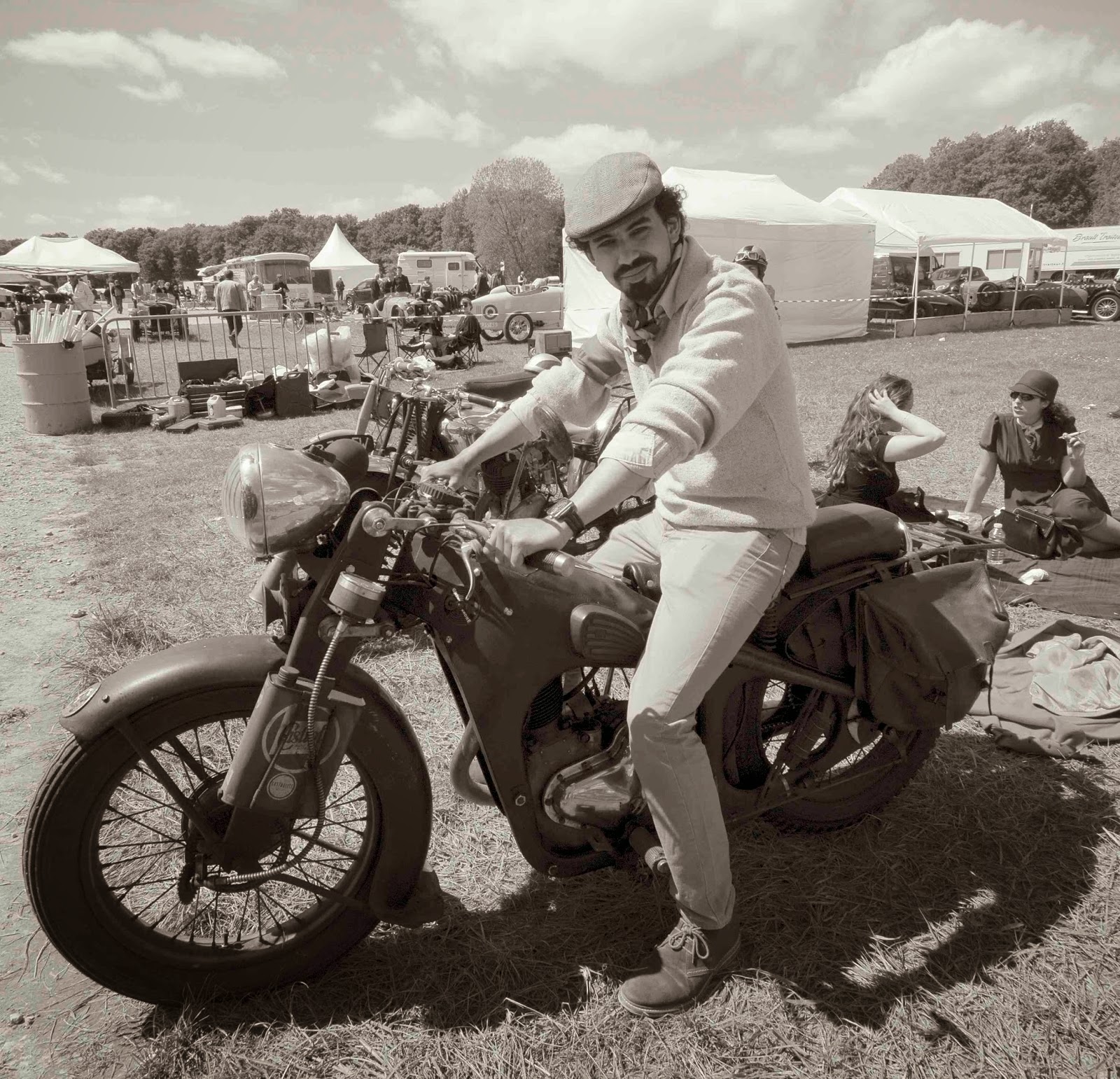
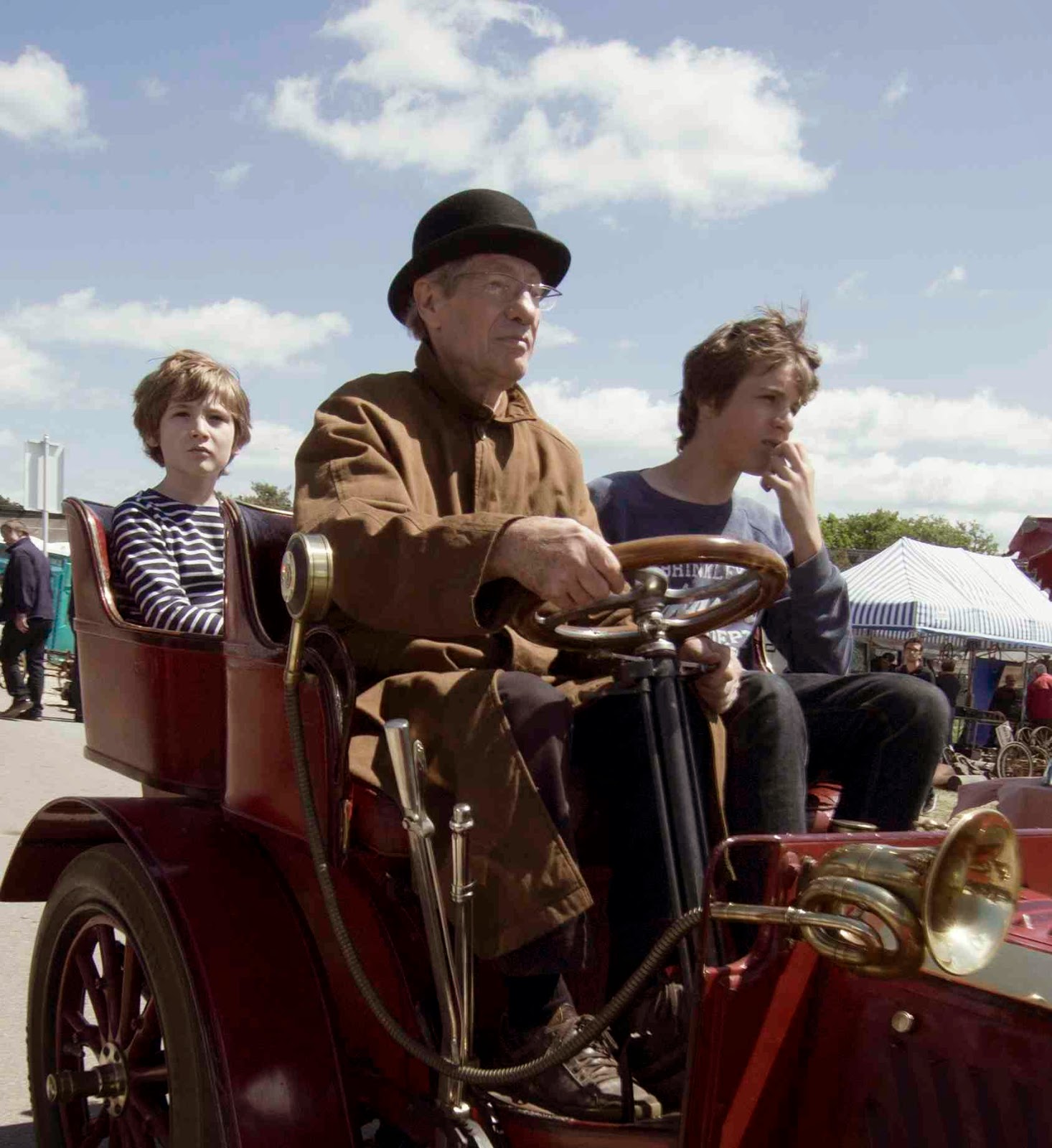
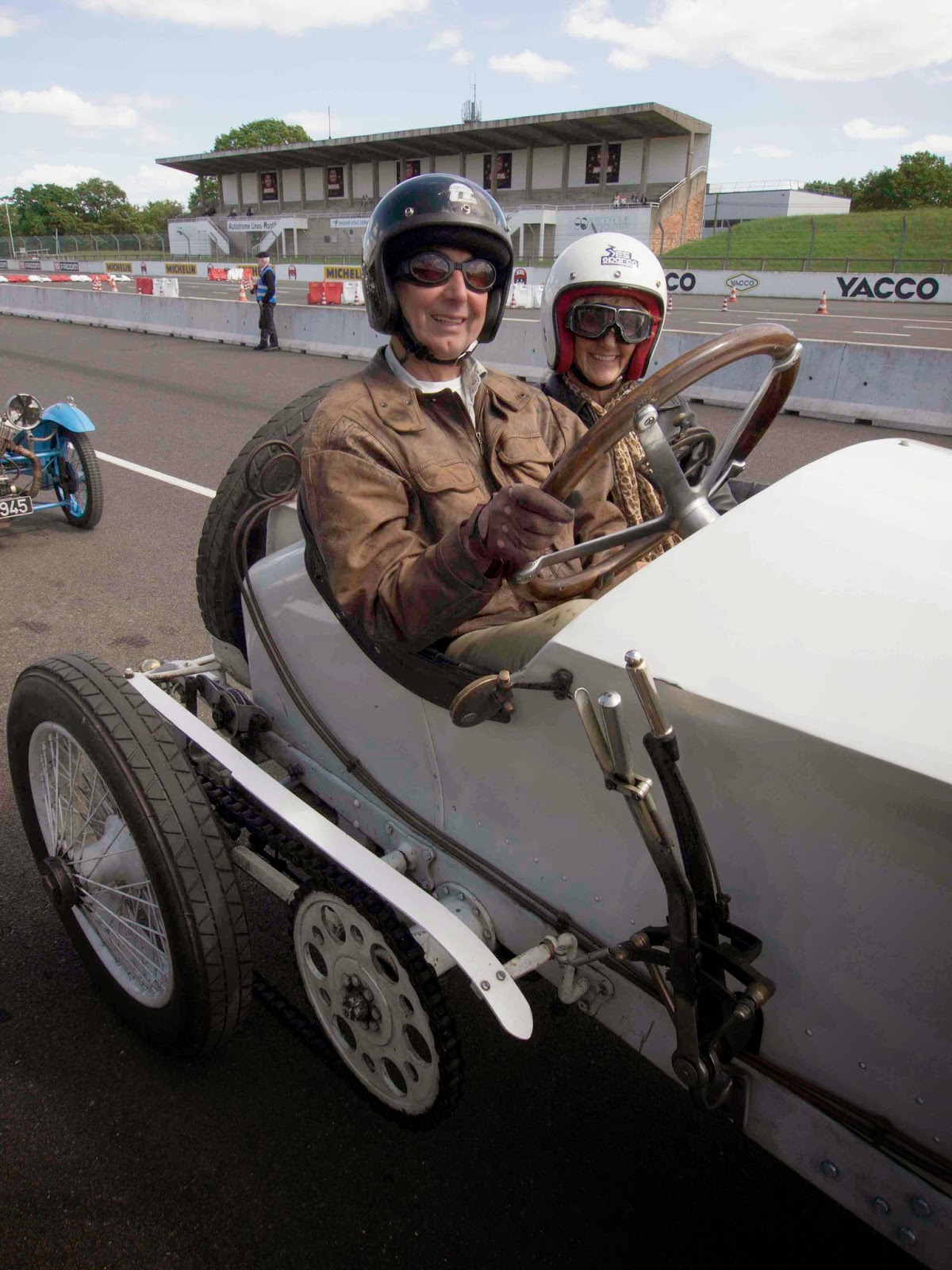
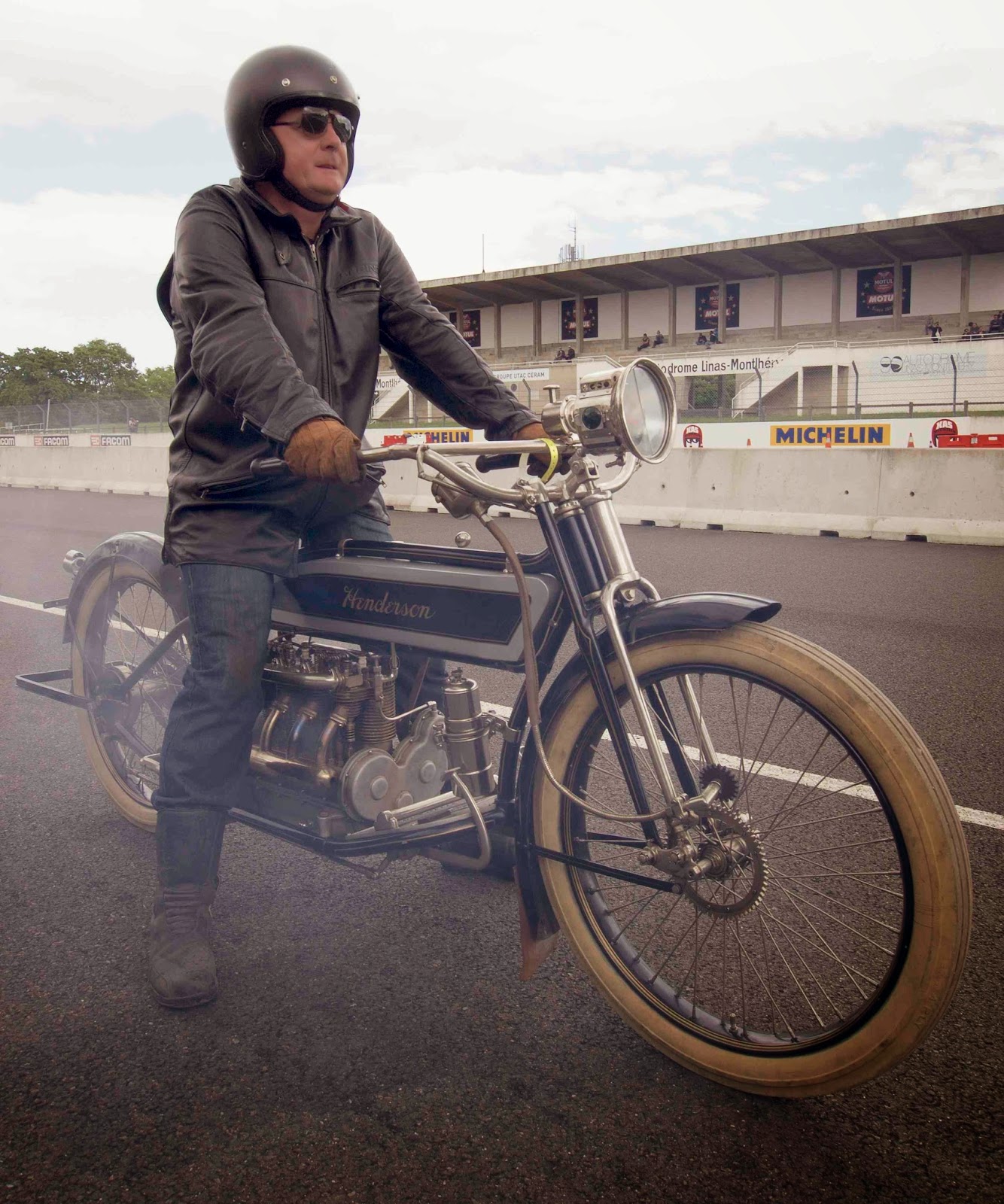
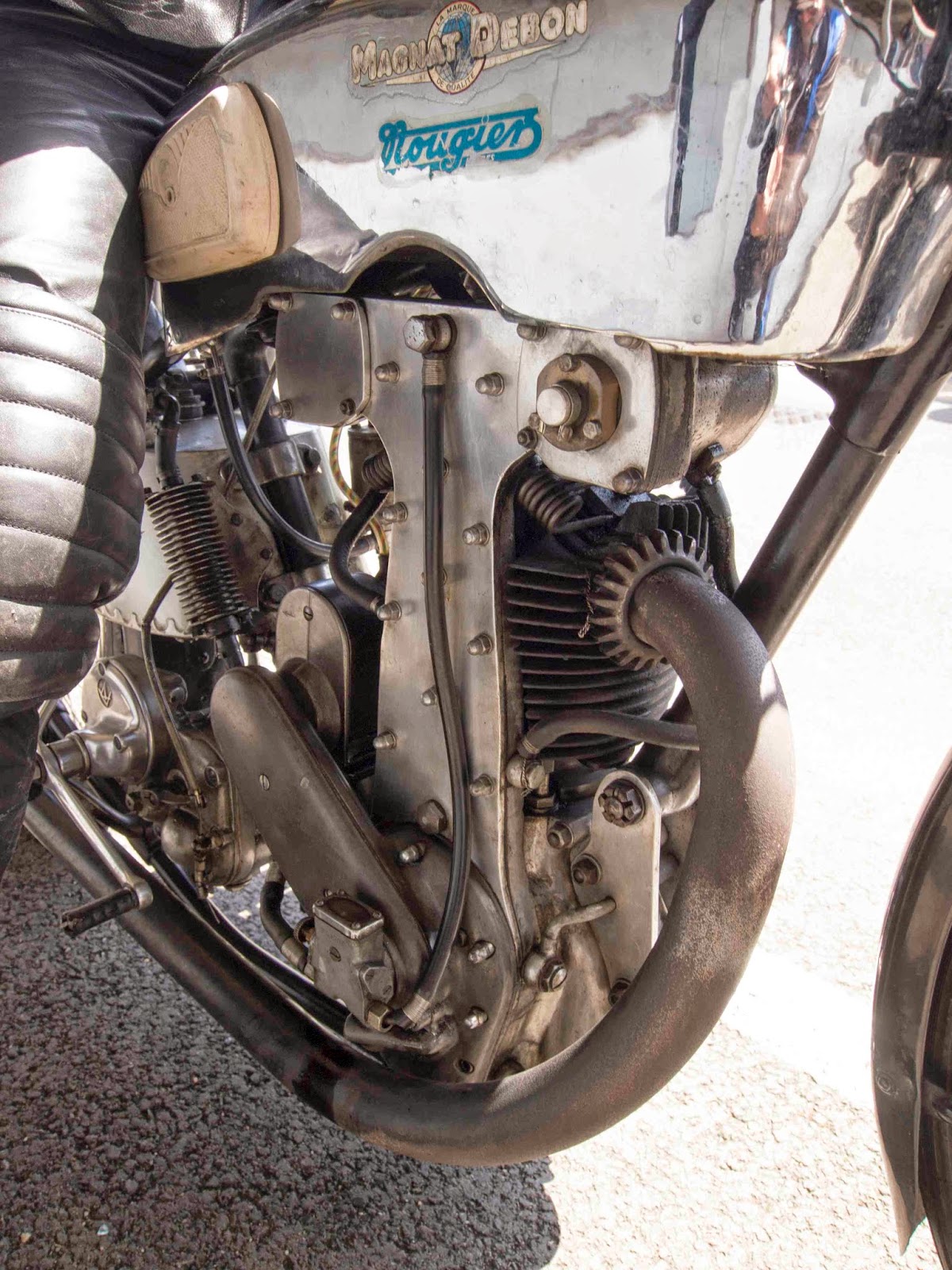
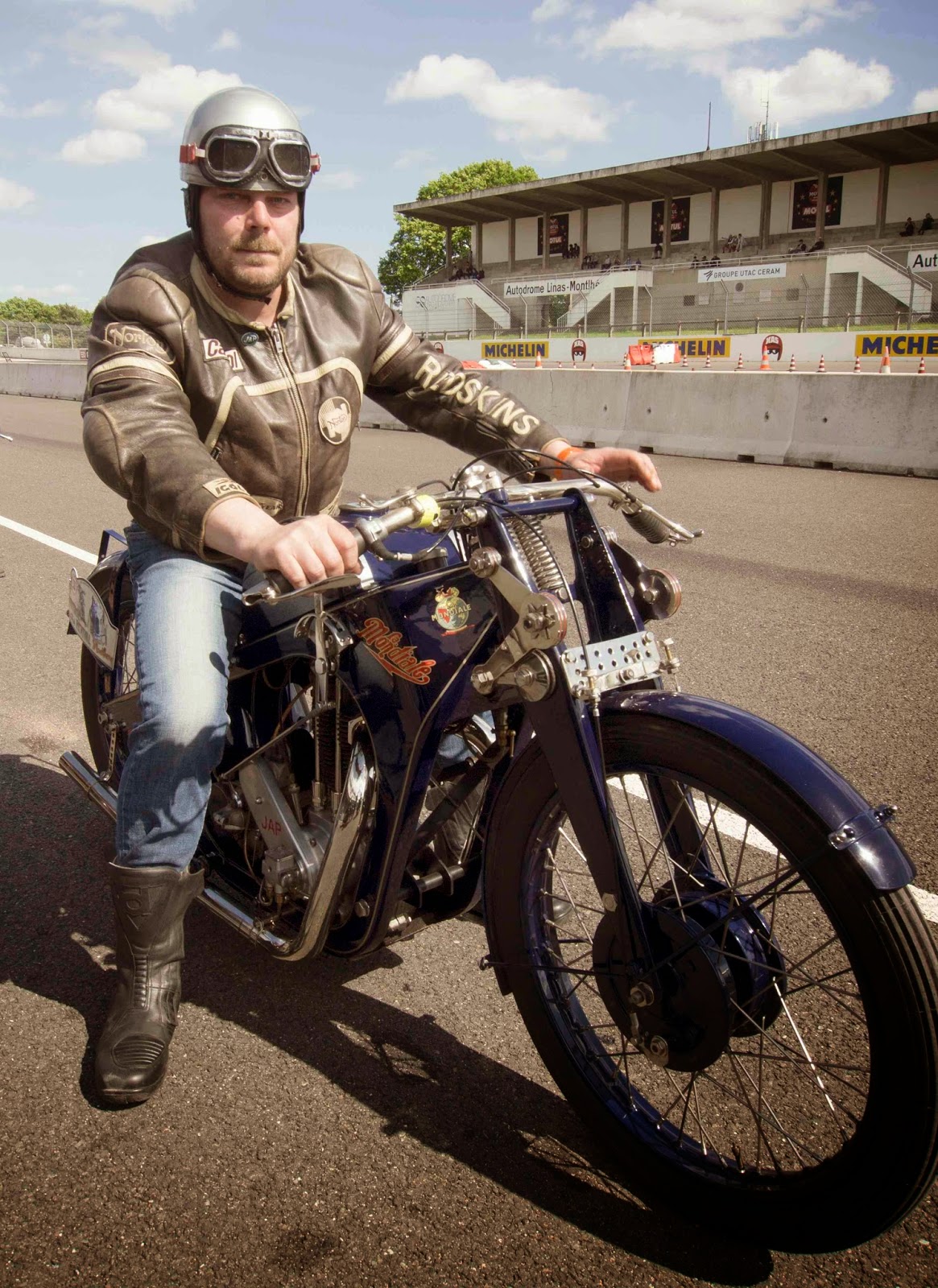
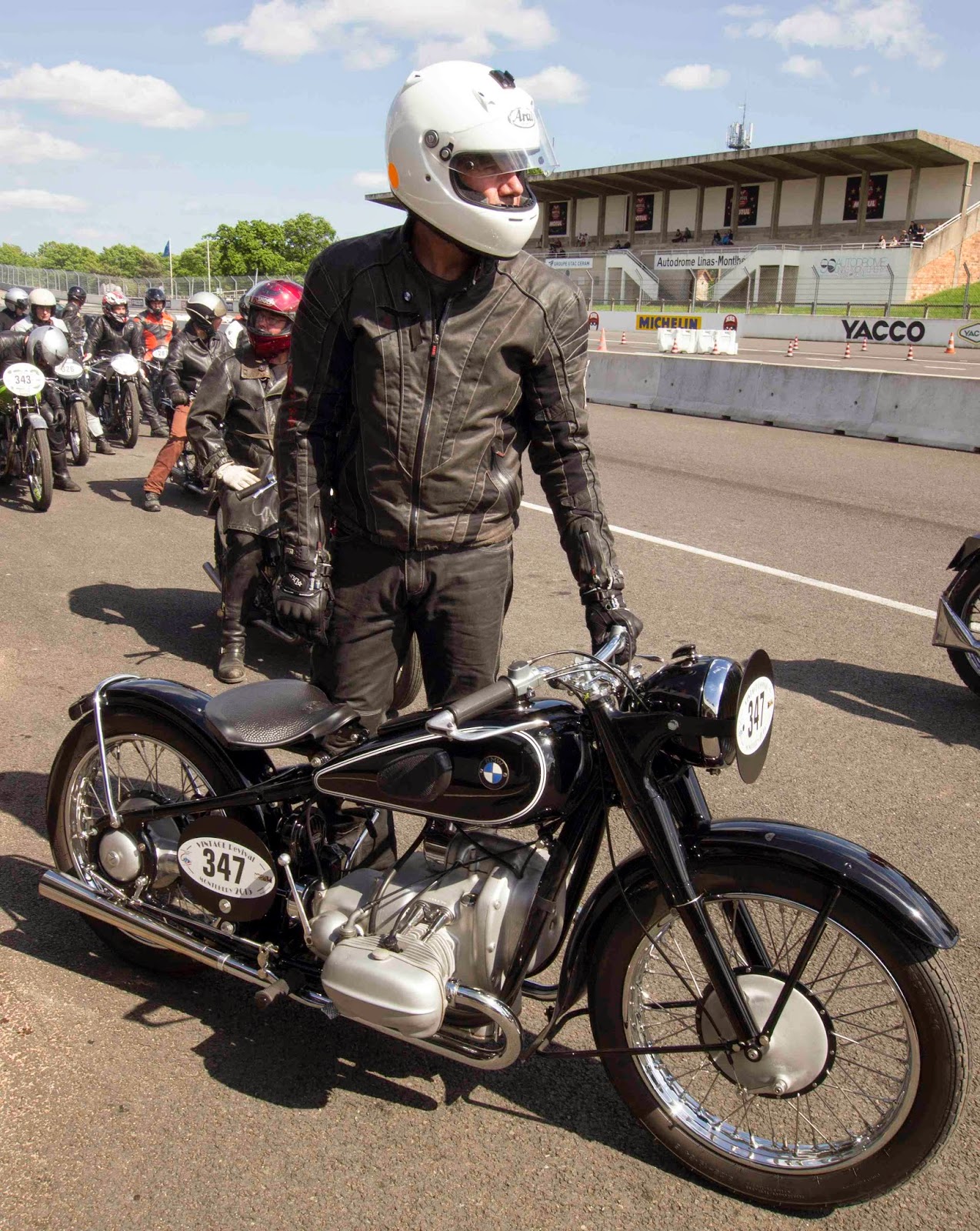
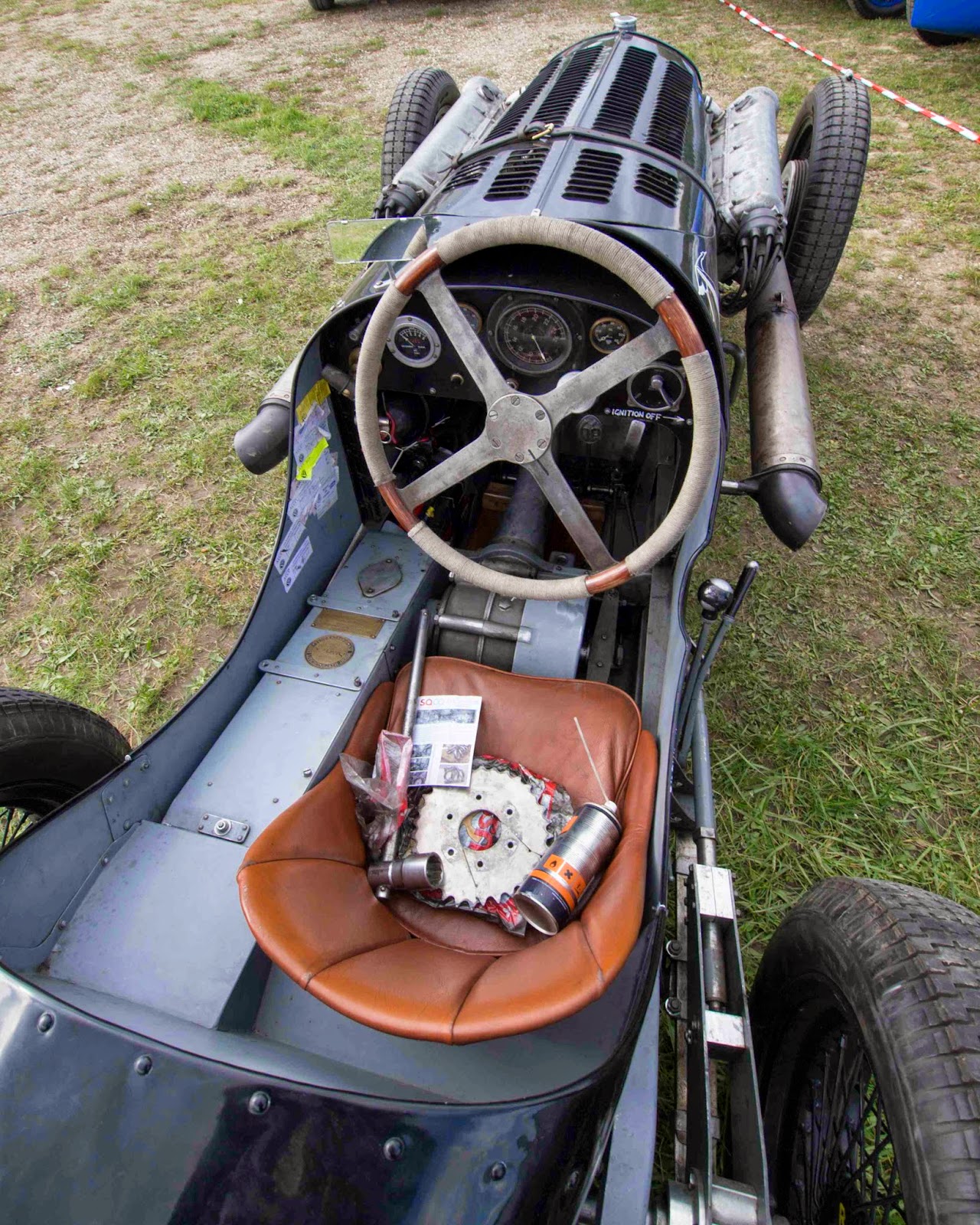
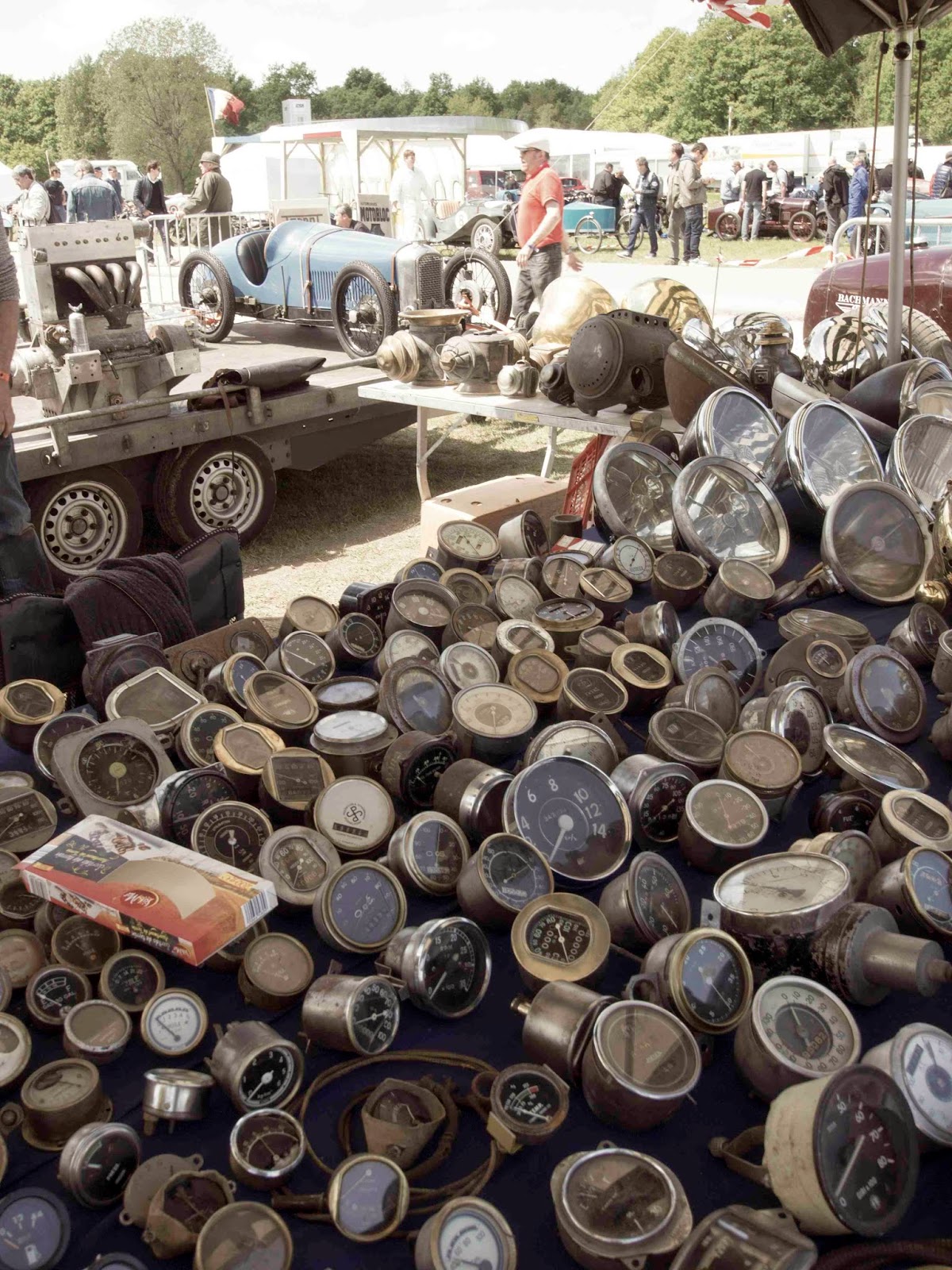
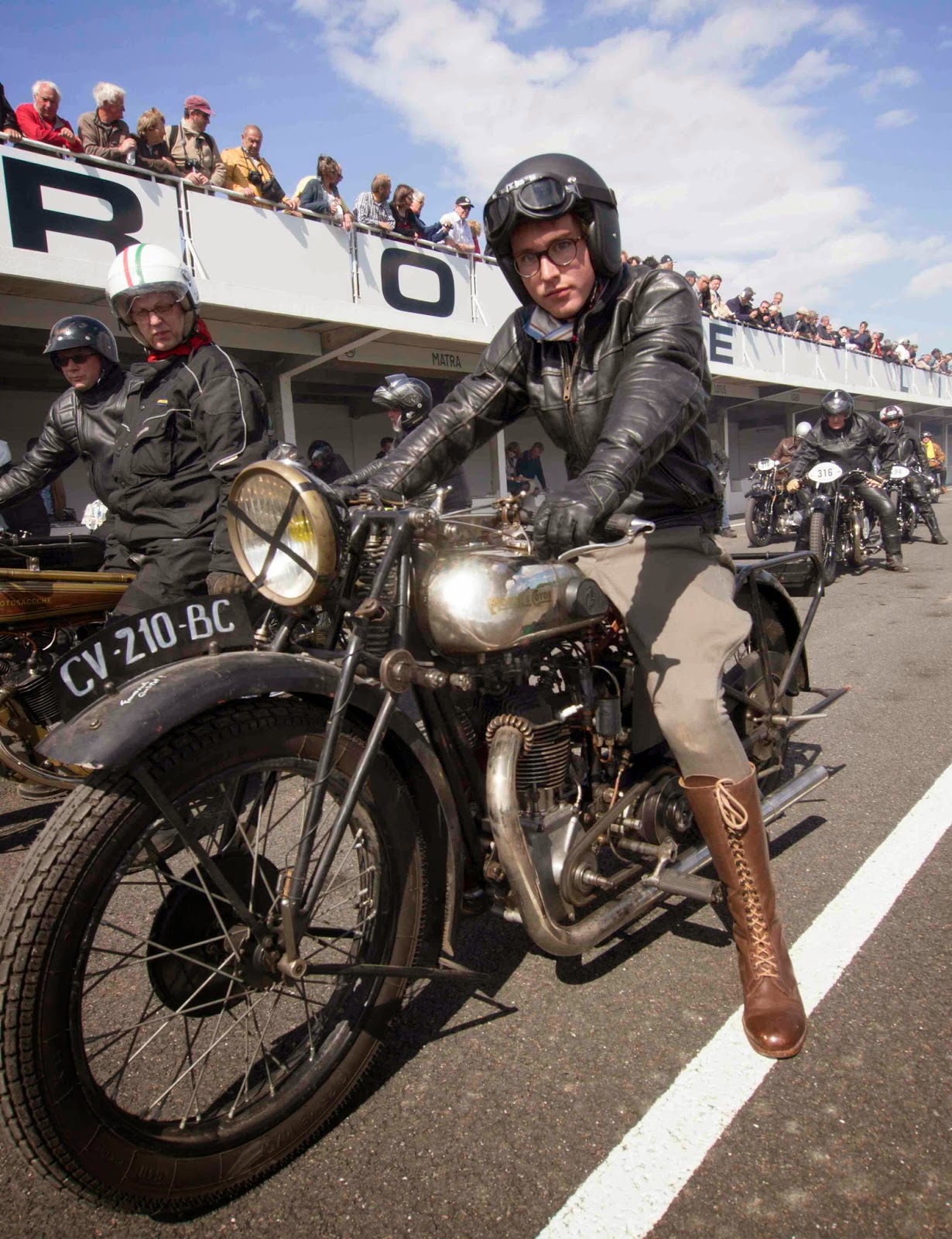
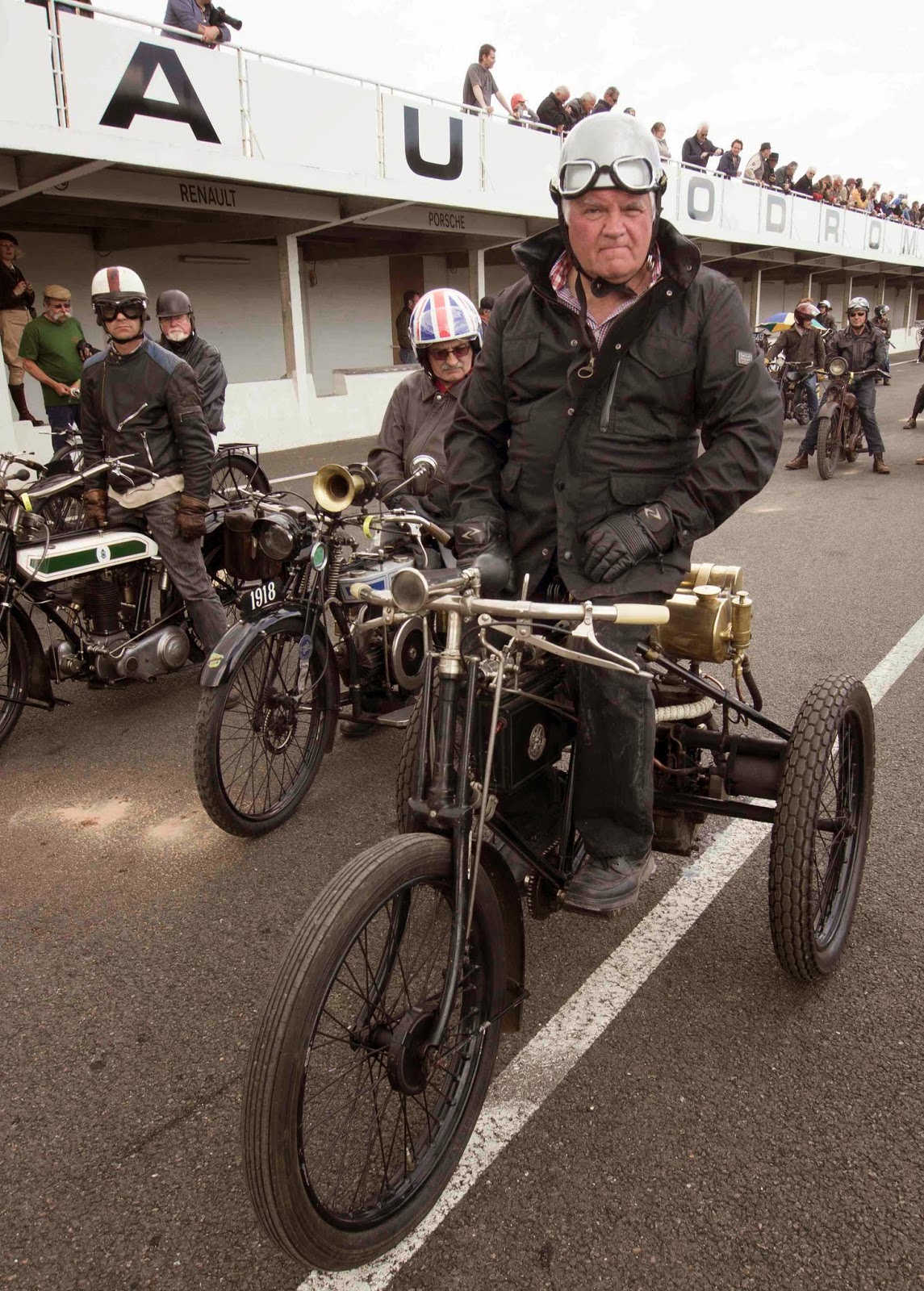
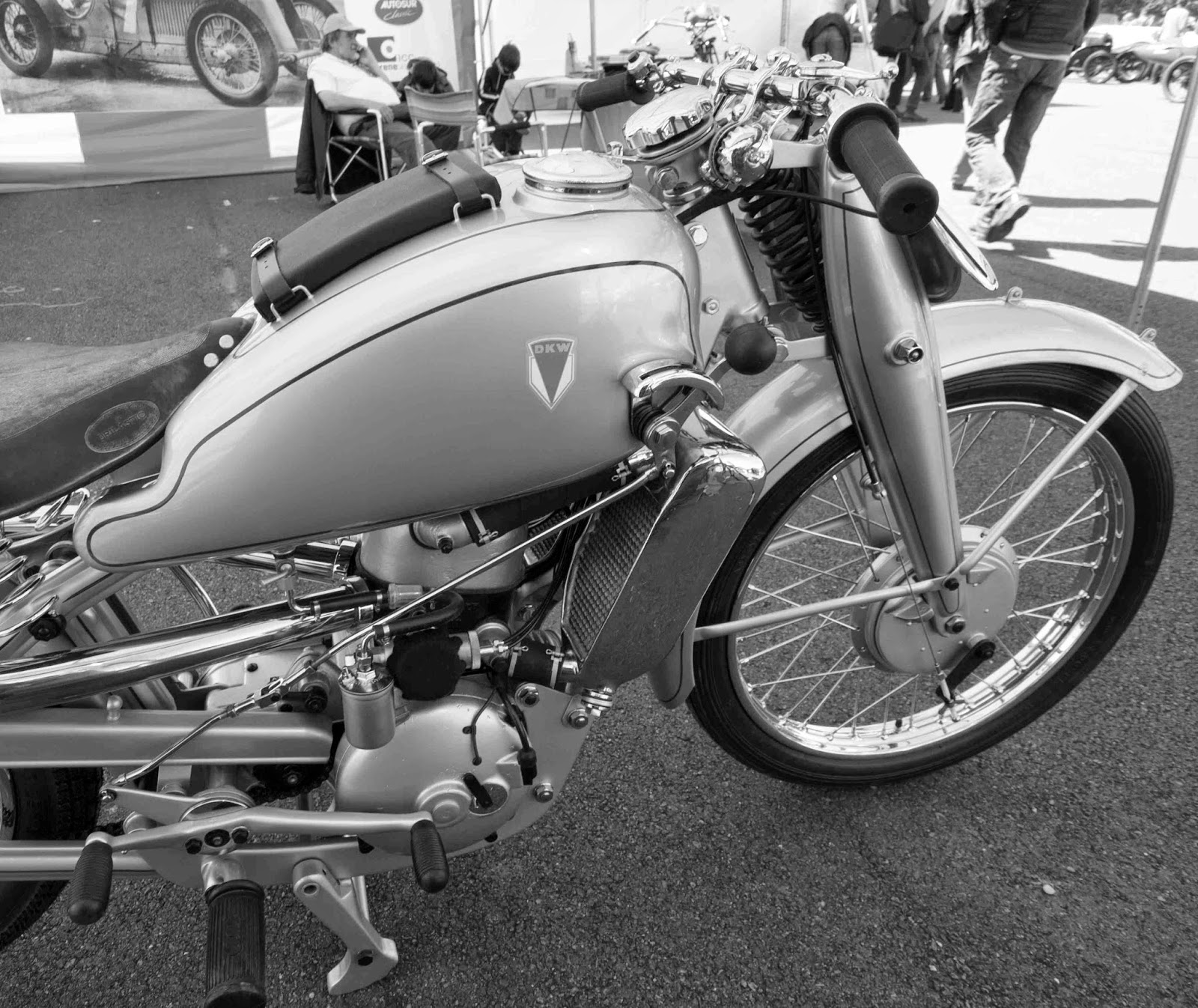
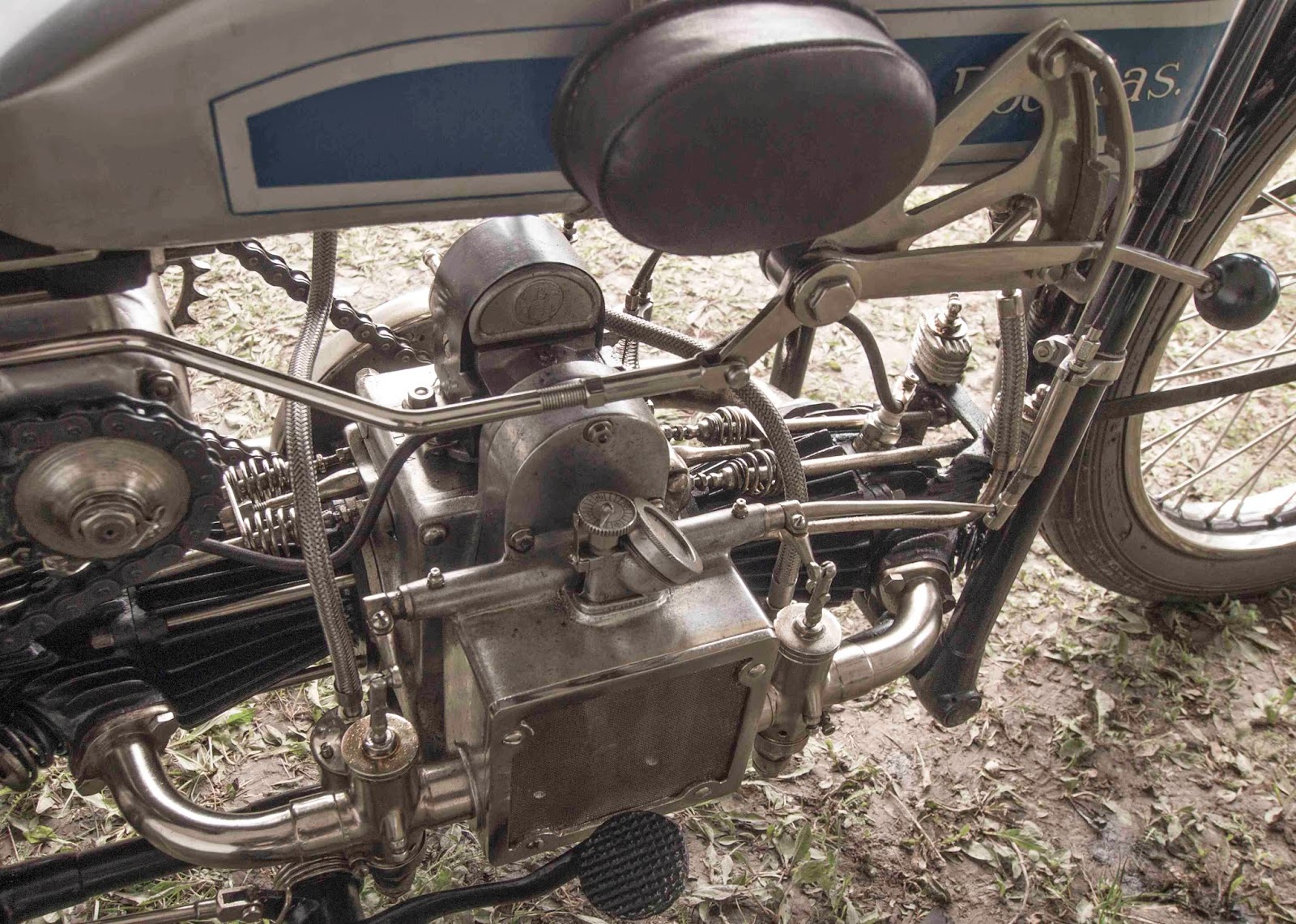
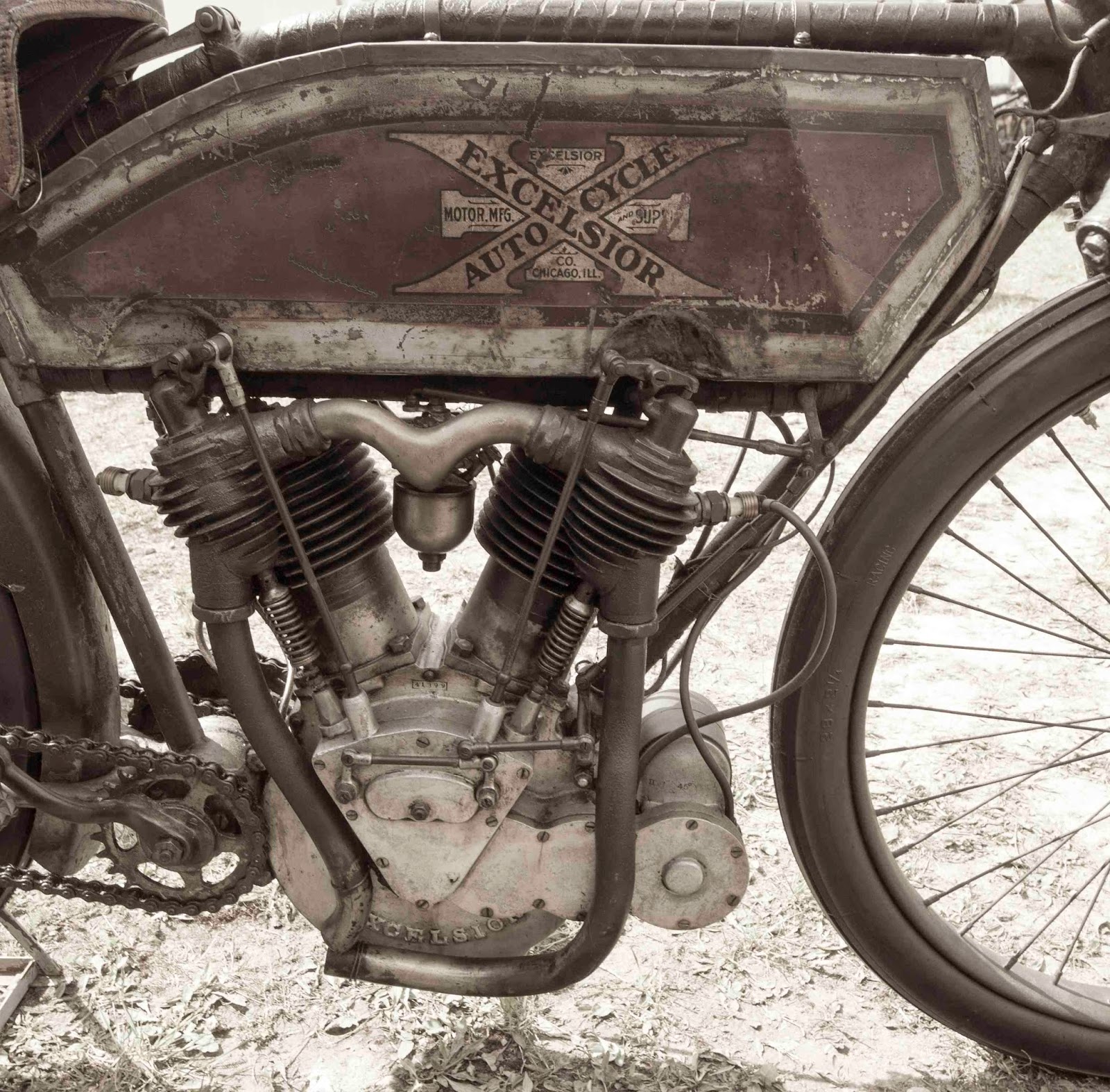
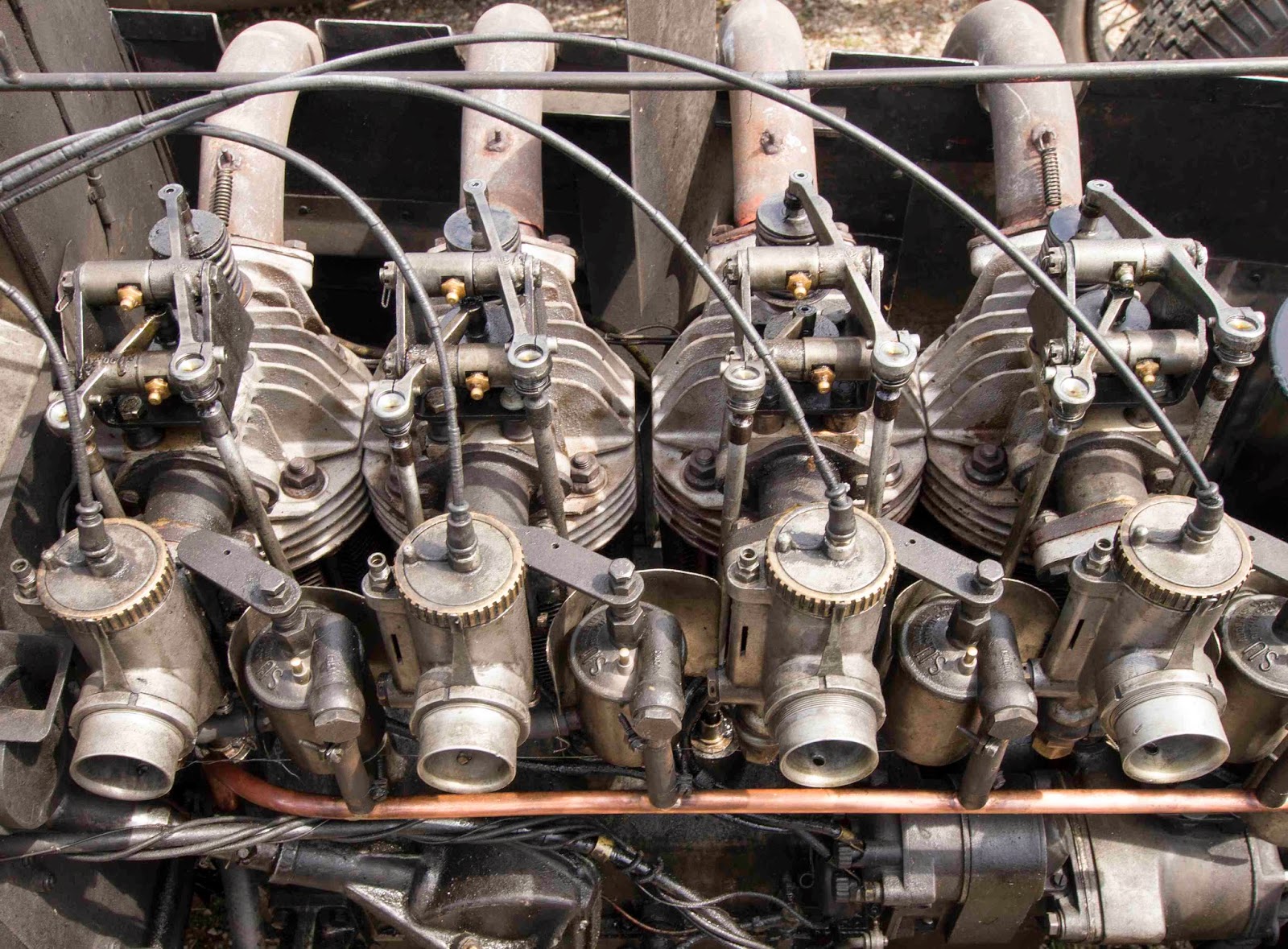
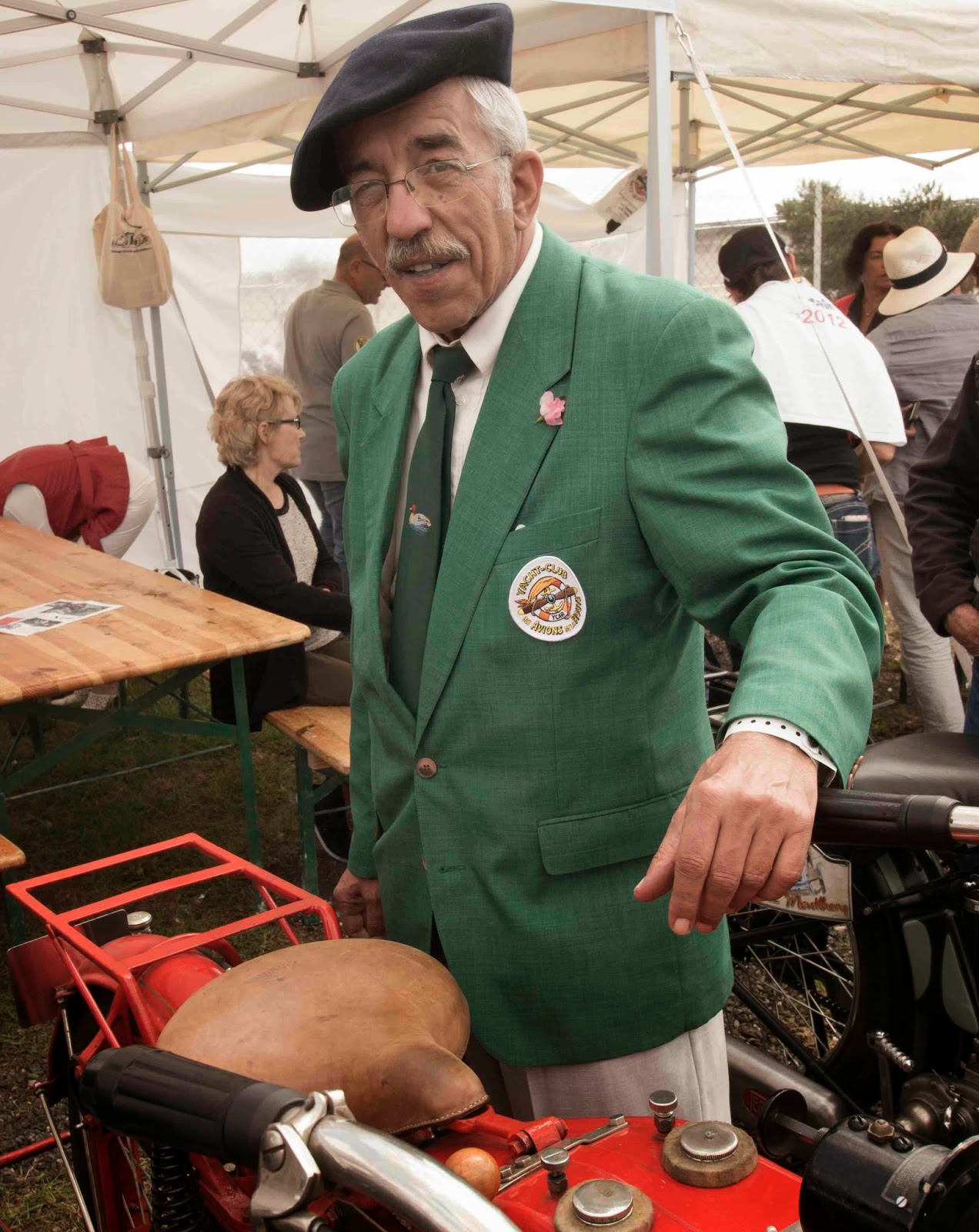
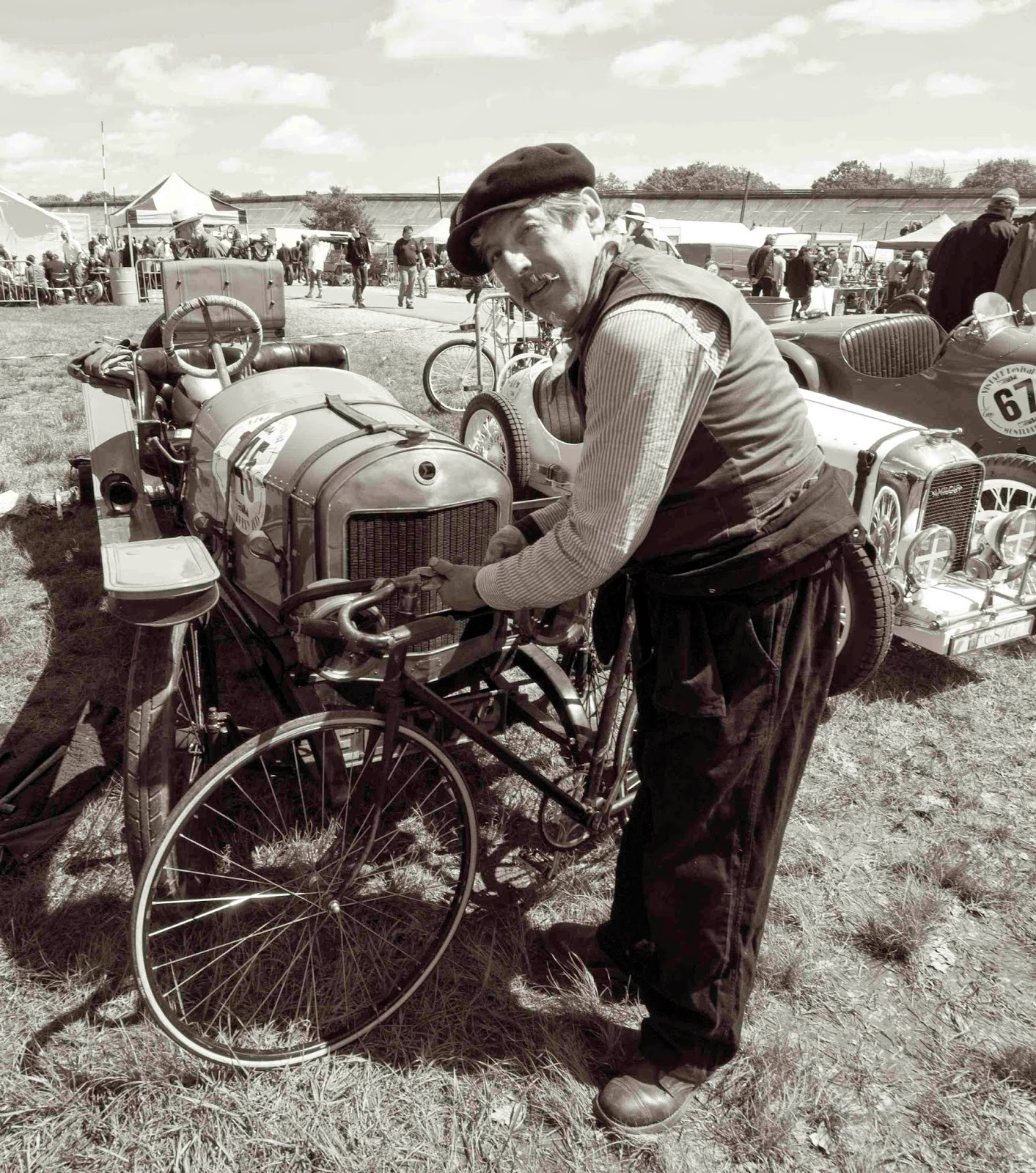
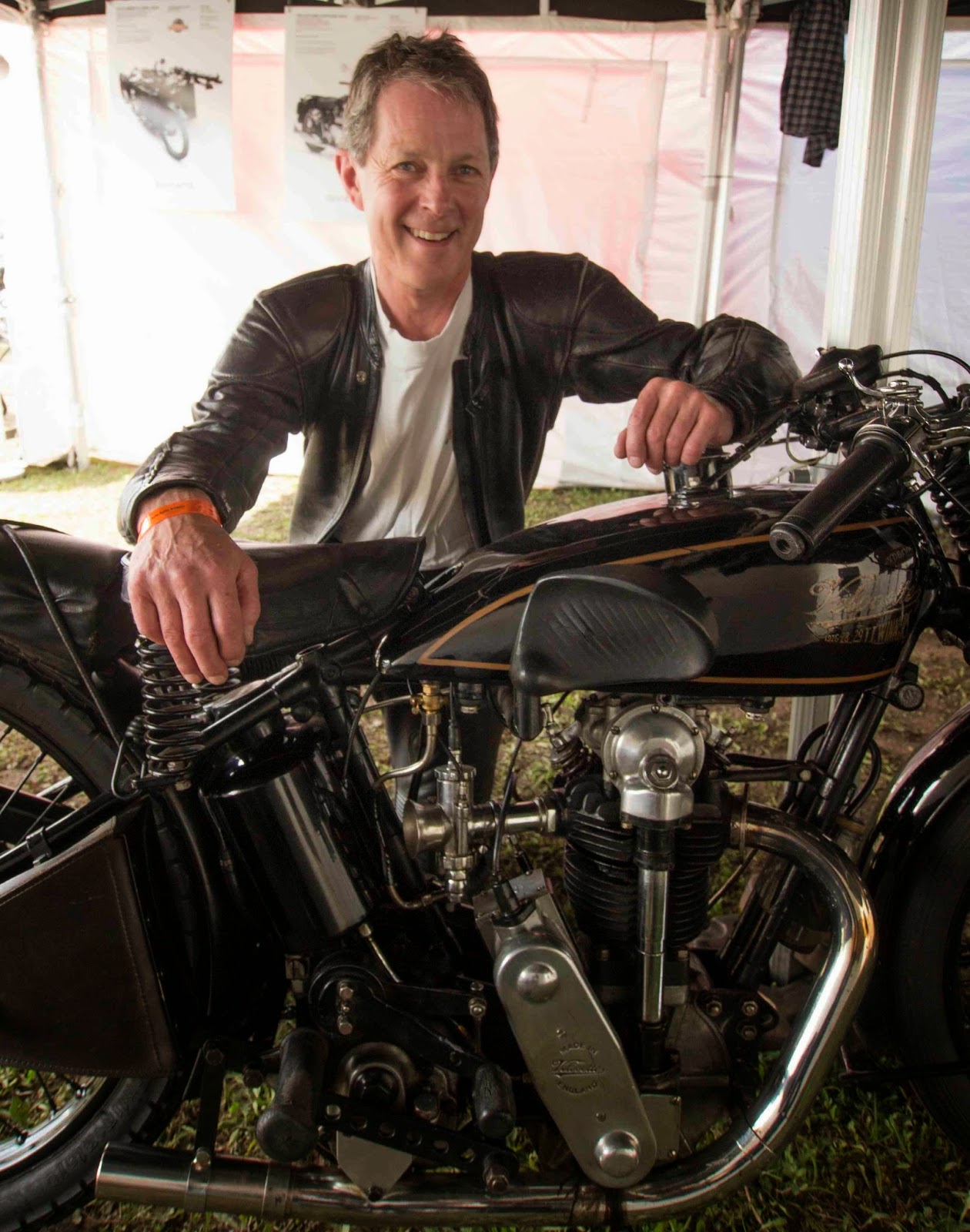
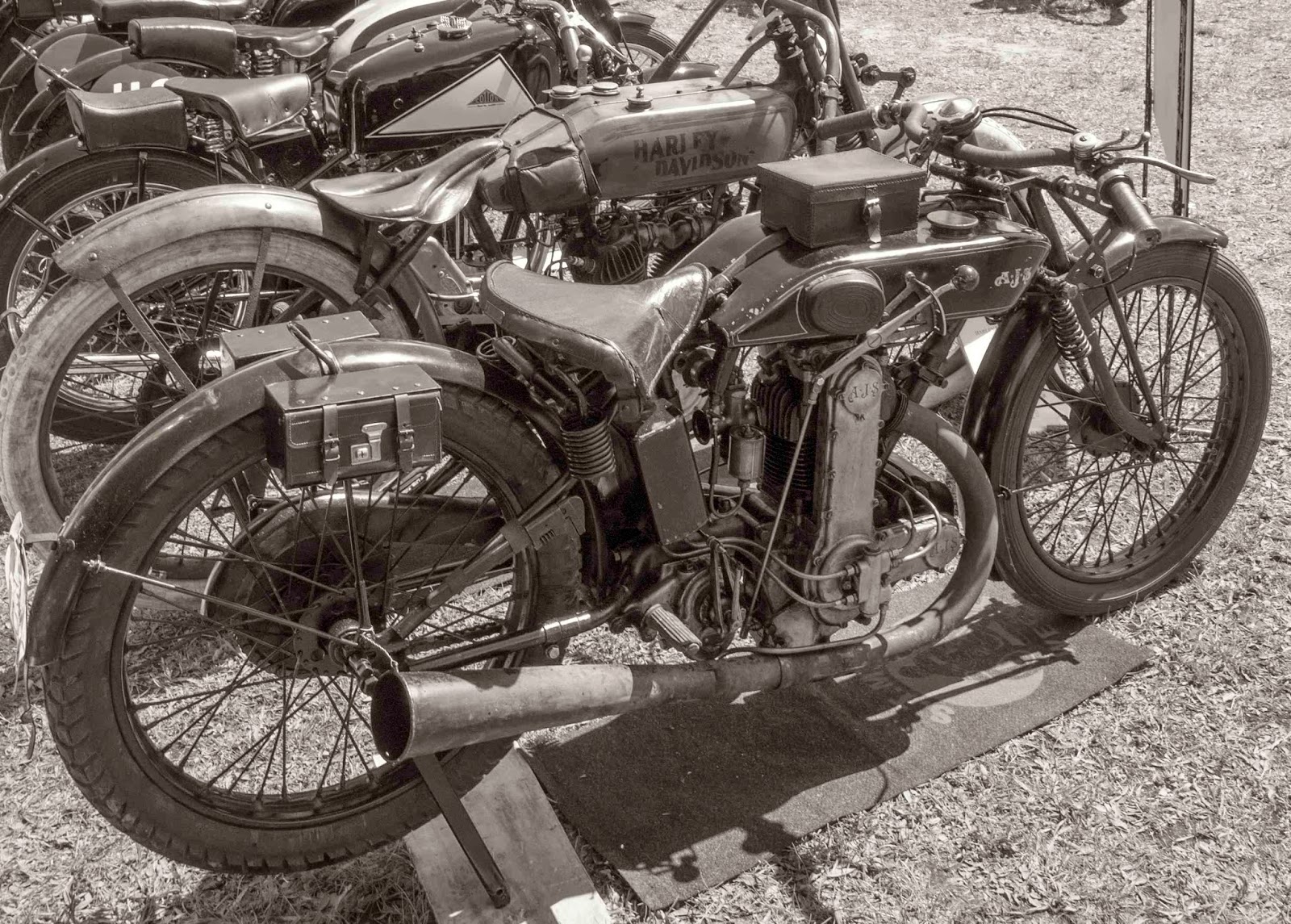
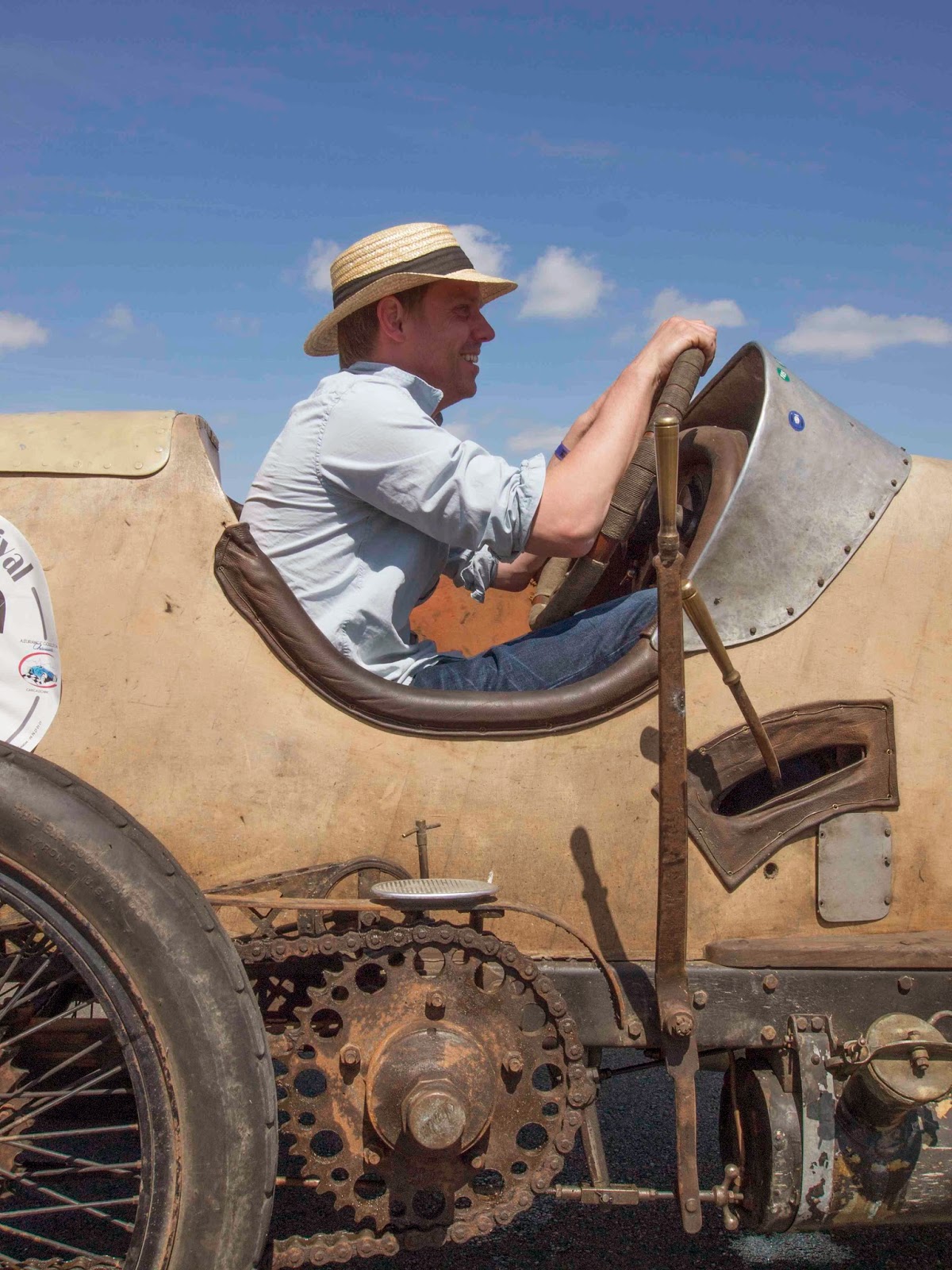
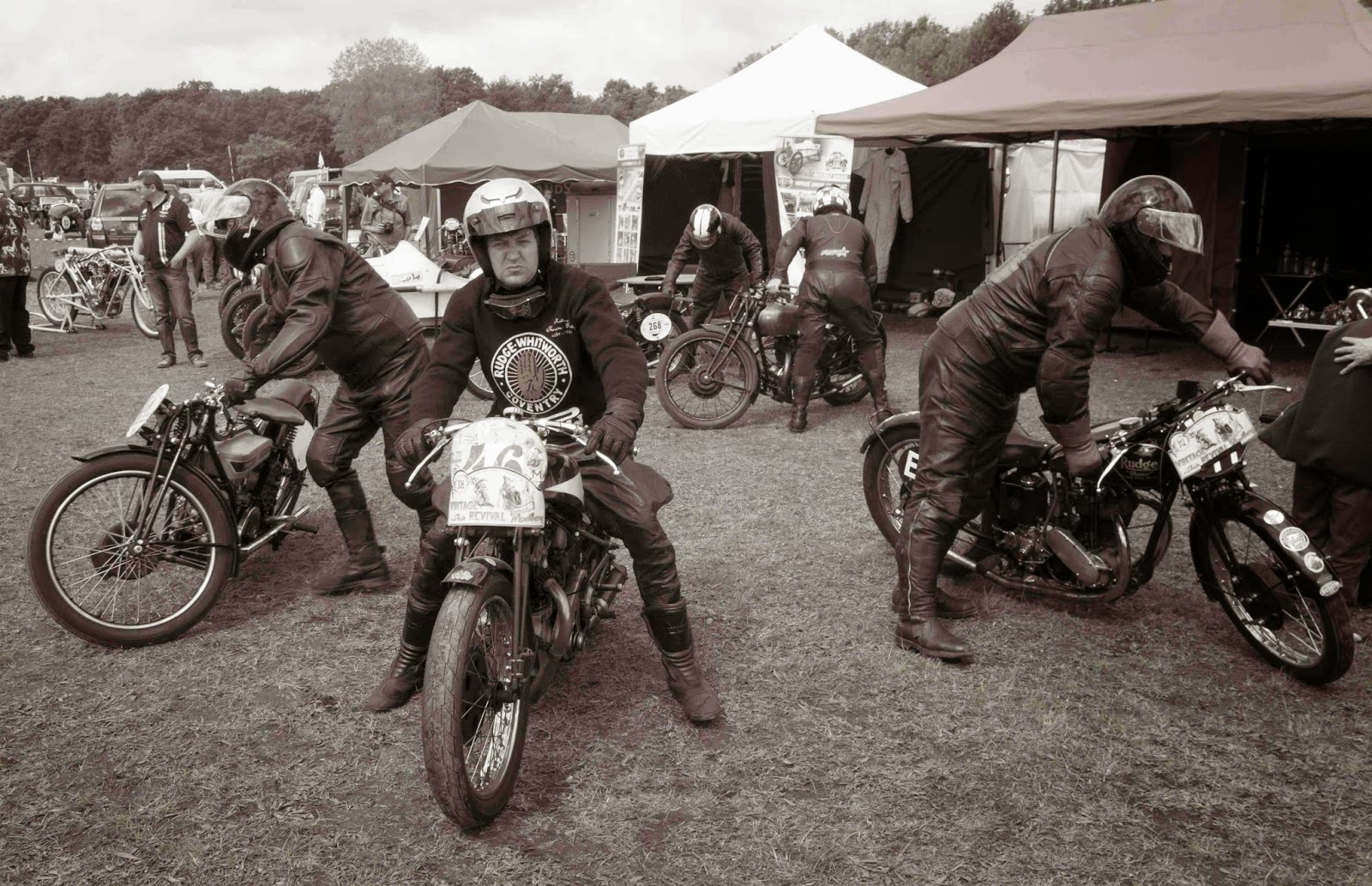
What appeared in 2015? Racers from collections all across Europe, from as far as the Czech Republic, with plenty from Germany, Holland, Italy, and England. To date, no motorcycles from US stables have appeared, a situation I’d love to rectify in 2017. There were American bikes certainly, Indian and Harley and Excelsior board trackers which seemed right at home on the banking – just about the only venue suitable for them actually. Mostly it’s what you would have seen on European Grand Prix circuits from the early 1900s through 1940, with plenty of ultra-rare machines you’ll see nowhere else, dragged from the depths of family collections far from the public (and the tax man’s) eye. The photographs here are a reasonable selection, but don’t encompass nearly everything – just the ones I managed in an attractive shot.
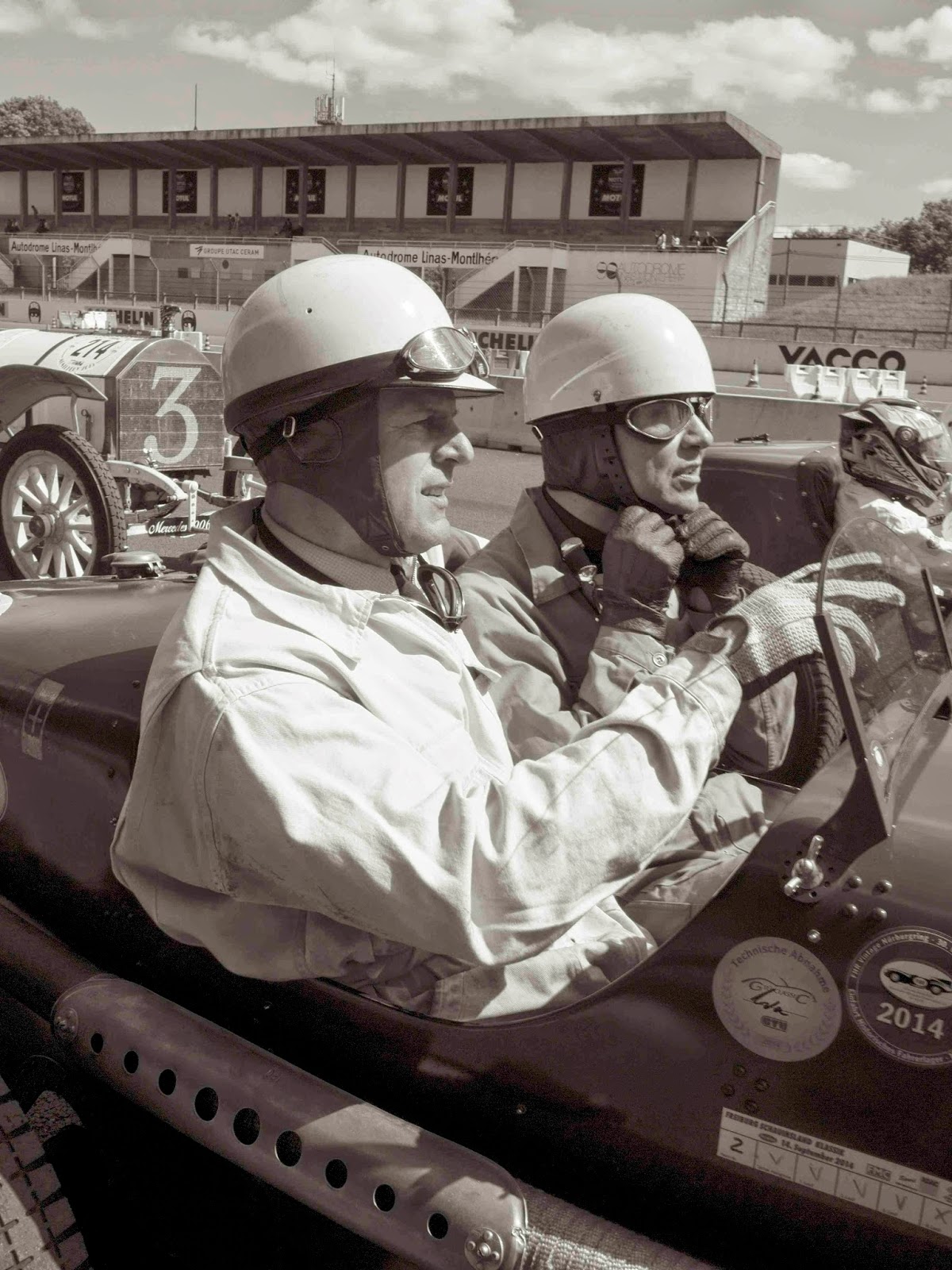
Here’s huge thanks to Vincent Chamon and his team for putting on an exceptional and beautifully run weekend event, and for arranging perfect weather too!

Book Review: 'Lewis Leathers'
If your library isn’t half full of Rin Tanaka’s books, it’s time to upgrade your bookshelves. He’s produced the My Freedamn! series since 2003, exploring the history of motorcycle, surf, and skate culture, mostly through the lens of clothing. His books are self-published, but you’d be very wrong thinking they’re anything but first rate, even when documenting the seemingly prosaic history of SoCal surf tee-shirts from the 1960s!
He’s also produced books in collaboration with Harley-Davidson (The Harley-Davidson Book of Fashions), Steve Mcqueen’s 1963 ISDT ride - Steve McQueen 40 Summers Ago....Hollywood Behind the Iron Curtain (Cycleman Books), a general history of leather jackets (Motorcycle Jackets: A Century of Leather Design

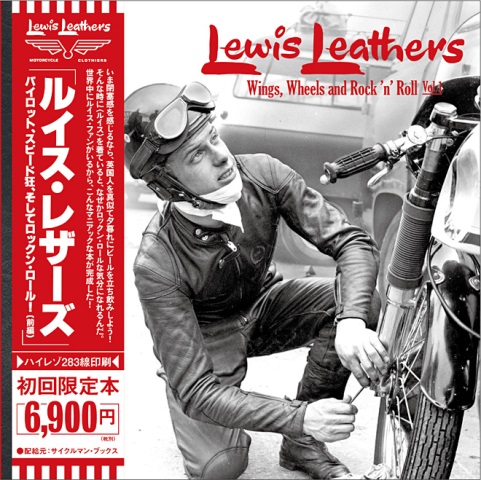
Tanaka’s latest history is Lewis Leathers Vol.1: Wings, Wheels and Rock 'n' Roll (English and Japanese Edition)
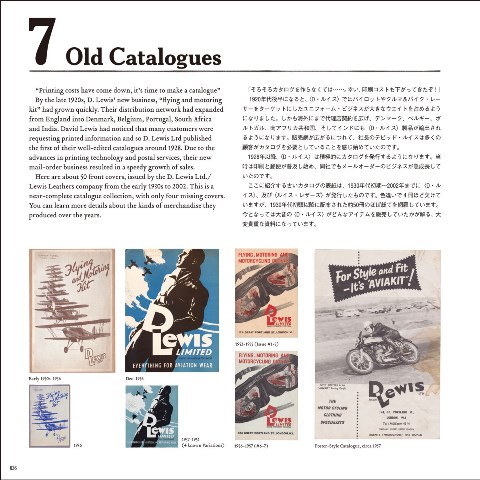
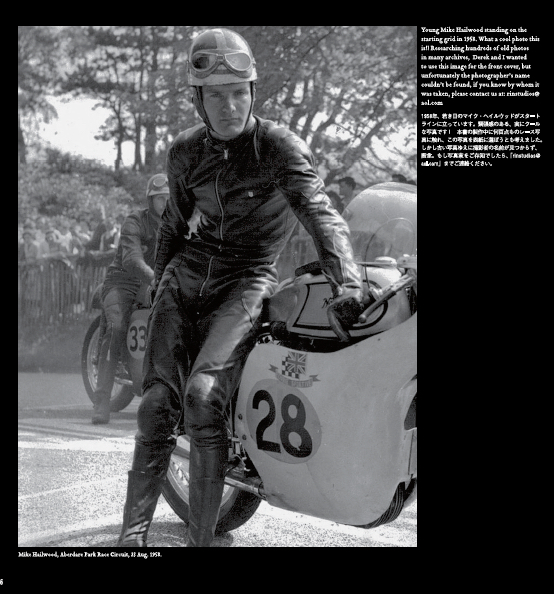
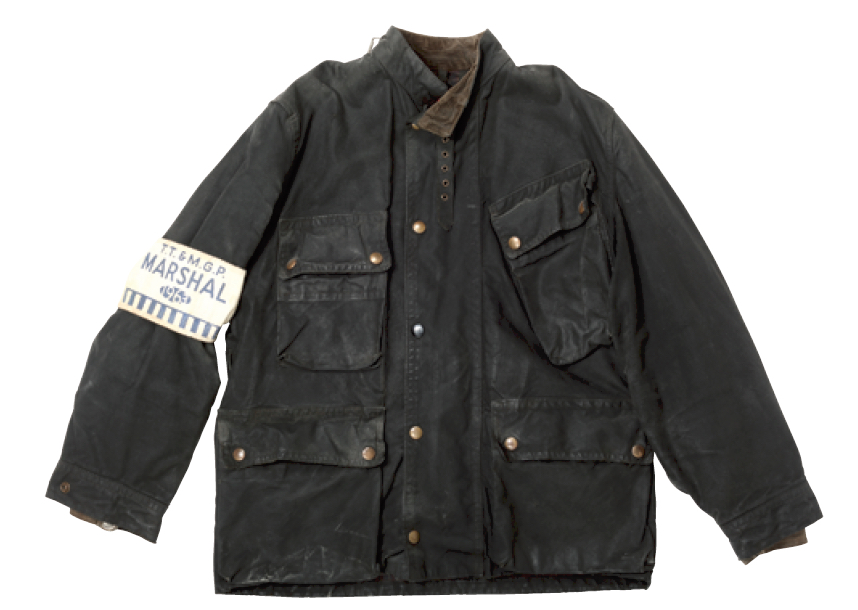
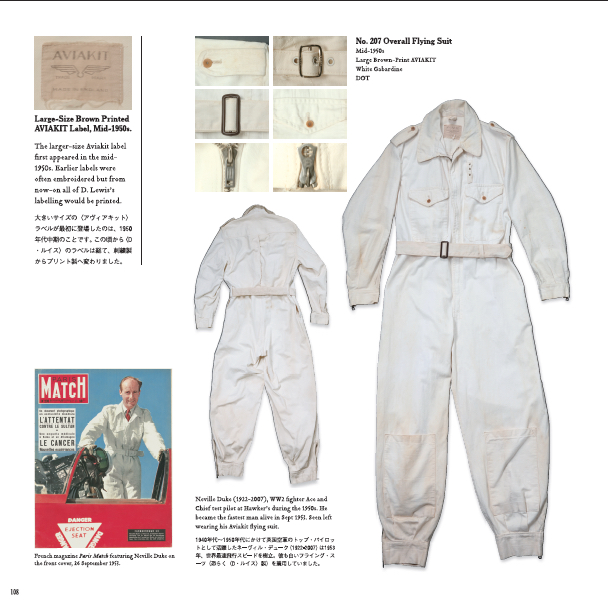
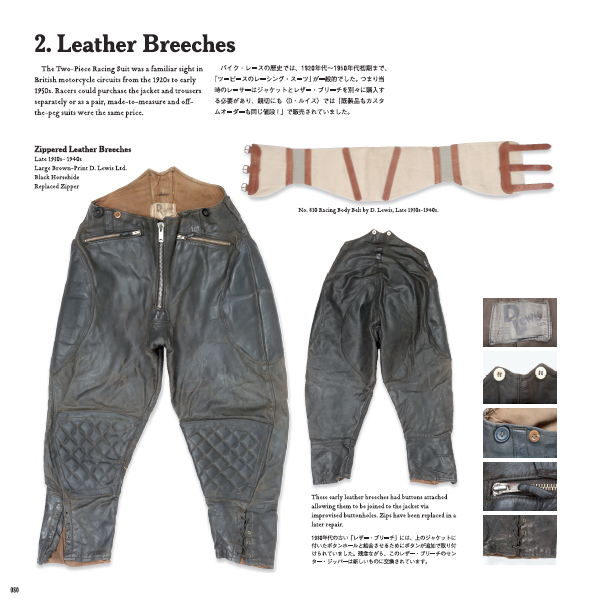
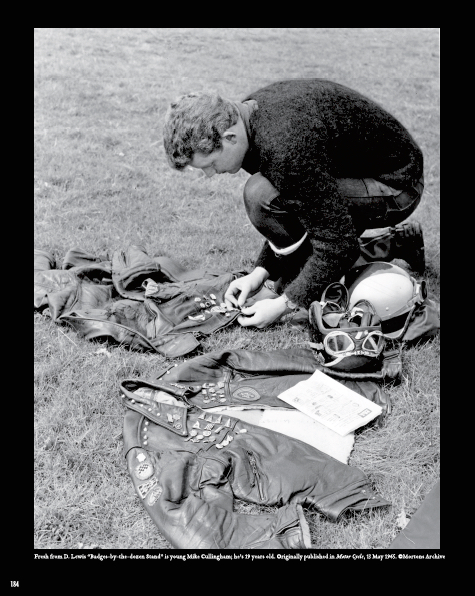
Lewis Leathers and its various side brands – D. Lewis, Aviakit, etc – have gone through countless cycles of popularity with different groups, from aviators, motorcycle racers, and in latter days to punks and fashionistas. Rin Tanaka’s new book, ‘Lewis Leathers: Wings, Wheels, and Rock&Roll! Vol. 1’ is an extraordinary compendium of the clothing, advertising materials, and period photographs documenting the early history of the company. With 1600 photographs, the book shows how Lewis Leathers became an absolute icon of racer/rocker/punk/fashion history.
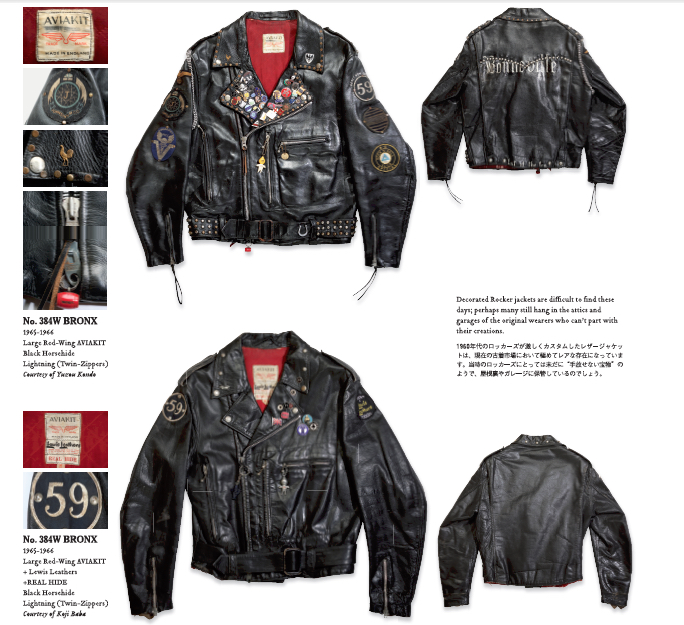
This book is a must-have! You’ll spend hours poring over the photos, which are really terrific. You can order Lewis Leathers Vol.1: Wings, Wheels and Rock 'n' Roll (English and Japanese Edition)
NLG: Brooklands' First Winner
This amazing NLG (North London Garages) won the very first official race at Brooklands 100 years ago, on Easter Monday, April 20th, 1908 (apparently there was one unofficial match race the previous year). The track itself opened in 1907, but this first 'Motor Cycle Scratch Race', as it was billed, took place the following year, and was described thus; "Over 2 laps, 5 1/2 miles, for machines not exceeding 80x96mm per cylinder. Long start and finish". One hopes that not too many races required a 'short finish' at Brooklands, as the typical track racer had no front brake at all!
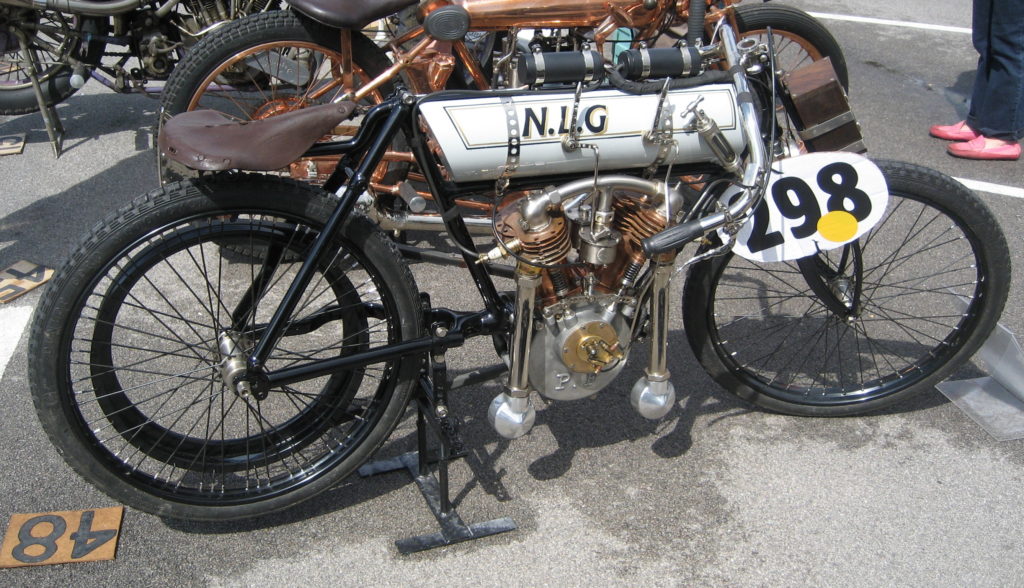
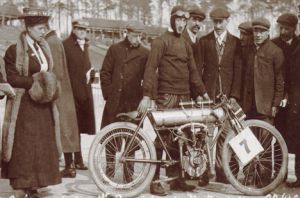
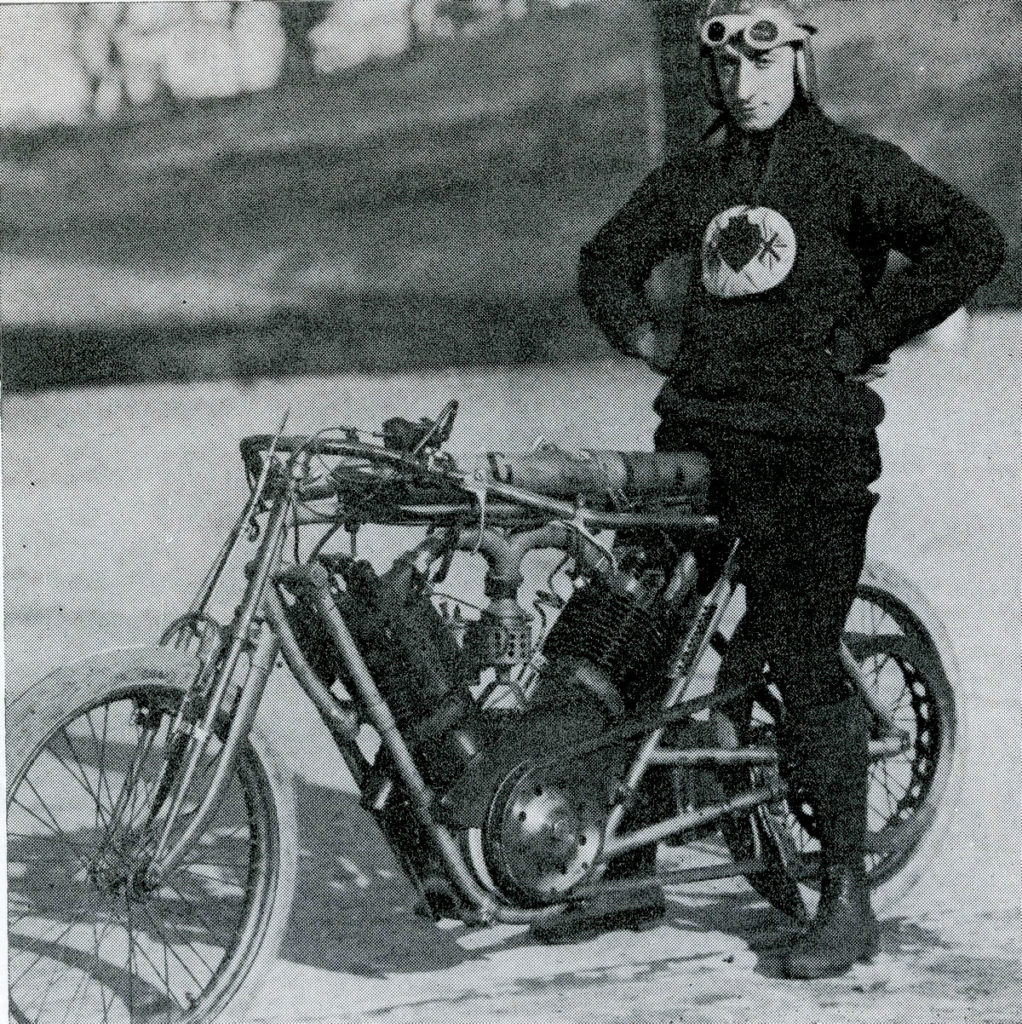
This NLG was raced by W.E. Cook (see photo below), but was owned by A.G. Forster, owner of North London Garage, the automobile repair works where Cook was employed. He competed against 20 other riders, including Charlie Collier, winner of the first Isle of Man TT the previous June (single-cylinder class) on the Matchless of his own make. Apparently though the Peugeot-engined NLG (shades of Norton's first TT winner - note the 'PF' cast in the crankcase - Peugeot Freres) walked away from the competition during the race, to win by over 5/8 of a mile; quite a distance for such a short event, with a speed of 63mph. The prize for the race was 20 Sovereigns - a fortune in those days (probably equivalent to $20k).
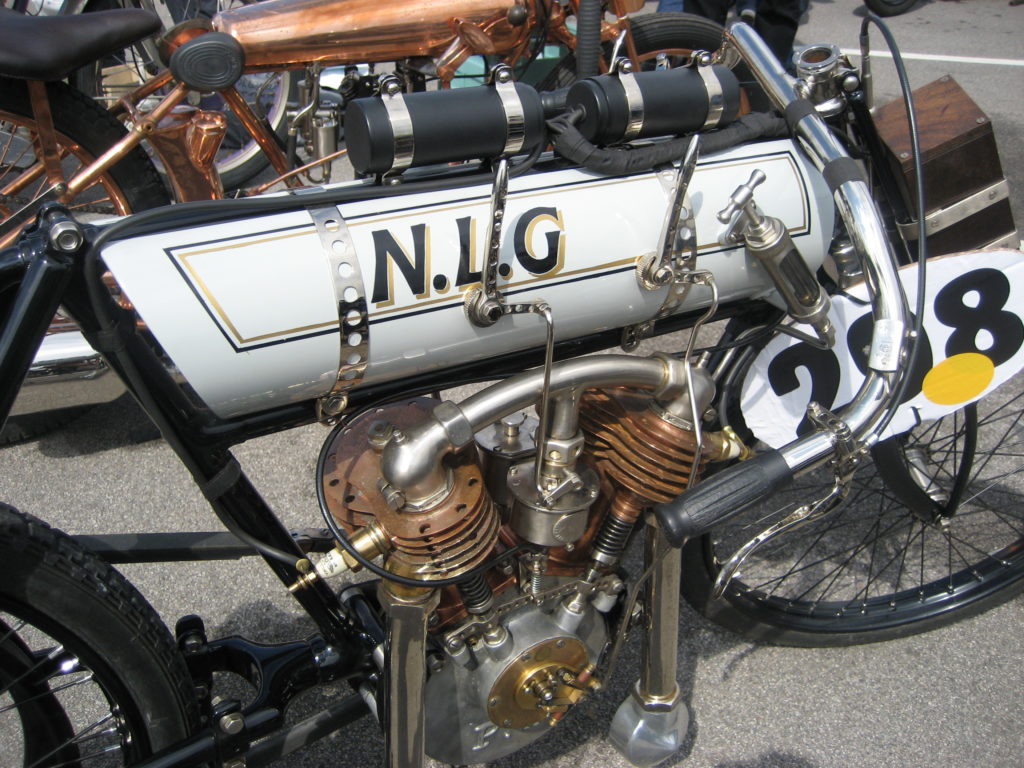
Another Peugeot-engined machine placed second in the race. The engine has a 80x94mm bore and stroke, giving a capacity of 944cc, using automatic inlet valves (ie opened by the suction of the piston in the bore), with cast iron pistons. The barrels have been copper plated, perhaps in hope of better cooling, and drilled through their fins. A French Longuemare carburetor is used, and below it can be seen the large brass contact breaker assembly for ignition timing, with the ignition coils mounted on top of the gas tank. The cycle parts are built from Chater-Lea castings, who supplied many in the motorcycle trade with their chassis fittings.
A look at the side of the tank shows the lever for the throttle, and in front of that a lever to control ignition timing, with finally the oil pump handle and tube. During the race on the notoriously bumpy Brooklands concrete track, the rider would probably have left the carb and ignition levers fully forward for flat-out running, but would have had to reach over from those wonderfully dropped handlebars to give the oil pump a press several times during the race. Interesting details abound on this machine, sorry I didn't get to take more detail pix (click on the photos for a better look), but note the individual cast aluminum 'mufflers' on the end of each exhaust pipe, the extensive drilling of all parts for lightness, and the big wooden battery case carried on the front forks. A truly elegant racer.
Anke Eve Goldmann: 'Soviet Racing Women'
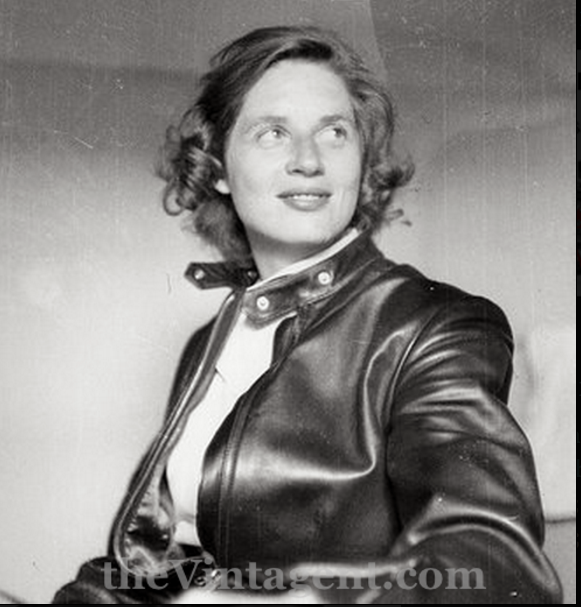
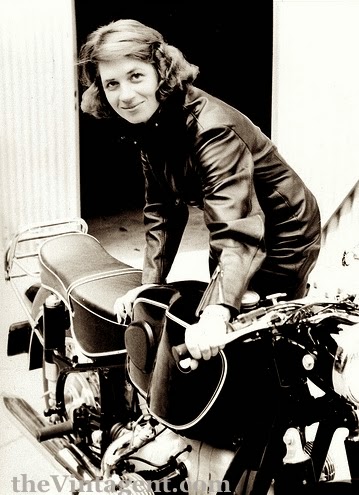
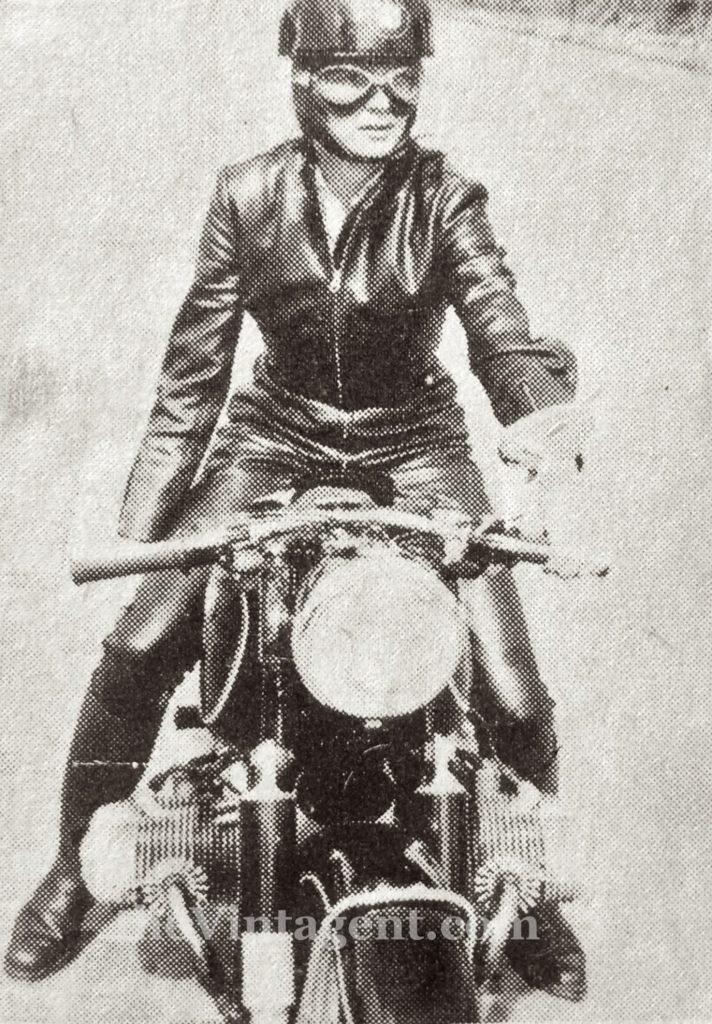
Everyone's favorite vintage moto-heroine, Anke-Eve Goldmann, is best known today for early 1960s images astride a BMW in her self-designed leather catsuit. Yes, she was stunning, and 2 meters tall (that's 6' 6"), and a very brave, independent woman, willing to bear the scorn of postwar German tongues, wagging at the scandal of merely being herself; enjoying motorcycles, wearing racing leather like the boys, and frequently beating them on the road and track. I've conducted interviews with people who knew her well in the 1950s and 60s, and gained a fuller picture of how this remarkable creature - still alive at 81 years old in Germany - came to prominence in a country deeply in shock from its experiences in the War. AEG, as she's affectionately known, prefers her privacy today, rebuffing all attempts at interviews or participation in a biography, but her story will inevitably be told...she's too bright a star to hide forever.
The tides of her acceptance in German society began to change when Goldmann started writing for motorcycle magazines around the world: Cycle World, Moto Revue, and Motorrad among others, documenting of her experience riding the Nurburgring, plus European race reports, etc. Her most intriguing article documents an all-but forgotten chapter in Soviet sports history: the Women's motorcycle racing circuit of the 1950s/60s. For a West German woman to document Soviet motorsport in 1962, while the Berlin Wall was being built, was a shockingly defiant act. As a result, this article never appeared in any European magazine, and only Cycle World in the USA published the story, as the bleak tensions of the Cold War ramped up dramatically, with Berlin as the focal point of a possible nuclear war between superpowers.
But Goldmann had no such political agenda; she wasn't a closet Socialist with Soviet sympathies, but was, rather, a feminist before that label was popularized. Her experience of being shut out of racing tracks because of her sex rankled as an injustice, as was the ridicule she experienced for daring to be a woman on a fast motorcycle, able to handle herself and her machine with 'masculine' aplomb. AEG, who helped found the Women's International Motorcyclists Association (WIMA) in Europe in the late 1950s, was the first and only Western journalist to document Soviet women's racing, with no need to comment on the irony of women being 'free' to race motorcycles in the Soviet Union, while she in the 'free' West was not.
Goldmann had arranged in 1961 to visit the Soviet Union as a journalist to document women's motorcycle racing, but a visit from the American CIA (an attempt to recruit her as a spy) horrified her, and she cancelled the trip. Instead, AEG built up a correspondence with the Soviet women she documented, and relied on them to supply photographs and race results, plus the names of the riders with a few details, like their hair color...the habits of a patriarchal viewpoint die hard, and while Goldmann never referred to Mike Hailwood as 'blonde' vs. a 'gorgeous' Giacomo Agostini, she includes such notes as a way of distinguishing the characters in her report, which must reflect on the extremely limited information available to her...although it does add charm to the story.
Sadly, her Soviet correspondence and all related photographs were collected in an album which disappeared from her family's Swiss summer chalet in the 1970s, and this article is what remains of this unique period in motorcycling history. Here's the article in its entirety, reprinted from the October 1962 edition of Cycle World magazine:
SOVIET ROAD RACING CHAMPIONSHIPS FOR WOMEN
By Anke-Eve Goldmann
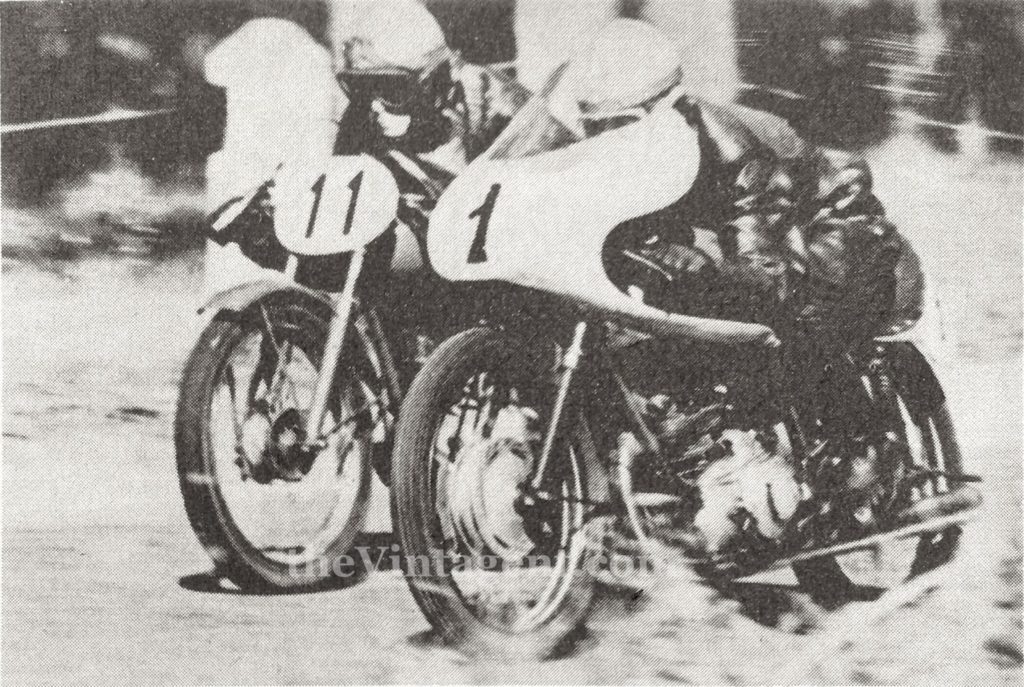
"How many motorcyclists in the Western world - male or female - are aware of the fact that in the Soviet Union women are enjoying their own road racing championships? While England is already exceptional in dauntless girls on short circuits, there are hundreds of female road racers competing regularly in Soviet Russia.
And the most enviable thing is that they have their own championship races. The first of them was held in 1949 on the lovely, 6.746km (4.189mile) road circuit at Pirita-Koze-Kloostrimetsa, near Tallinn, in Esthonia. For reasons unknown, that small country is the center of Soviet motorcycle racing. Naturally, no highly specialized racing mounts were ridden in that first meeting. The 125cc K-125, and the 350cc ISH-50 and IZH-54 two-strokes (very much DKW-looking), which developed about 7.5 and 14.5hp respectively, had solid frames and girder forks.Prytkova won the historical 125 races over 15 laps at a speed of 80.5kph (49.99mph), with veteran Lydia Jefremova second[was she a war or racing veteran? - pd'o]. Most girls lapped at below 70kph (43.47mph), and the best male rider at 86.76 (53.87mph). Irina Ozolina, of Moscow, won the 350 class at 89.76kph (55.74mph), ahead of Lydia Tratsevskaya.
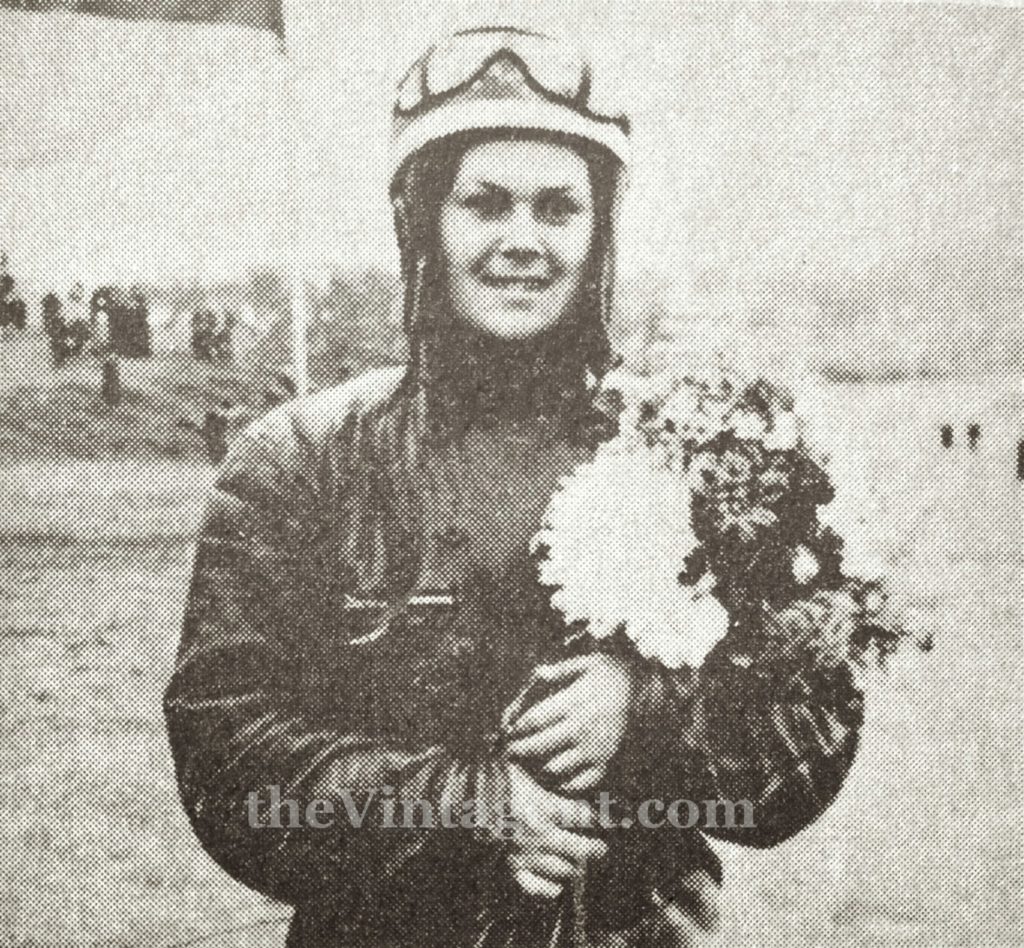
Next year's 125 winner, Nina Mikhejeva, was faster than the best male had been in 1949. That strong, blue-eyed girl who took 7th place in 1949, won both race and championship at a speed of 86.6kph (53.77mph) and a record lap of 91.2 (56.63mph). With Nina, the most prominent of Soviet girl racers had entered the scene. Indefatigable, of great physical strength, and entirely fearless, this woman conceals high personal charm under very determined looks. Second place went to Armenian Tumanjam at 84.84kph (52.68mph), who V.Morosova, T. Trossi and Esthonian N. Ratasepp filled the next places. Irina Ozolina again won the 350 event, this time at 91.62kph (56.89mph) with a fastest lap of 93.3 (57.93mph). Lydia Tratsevskaya finished second.
In 1951 Nina Mikhejeva (whose name was now Susova)[recently married? - pd'o] shattered all records, riding her 125 faster than the male winner of the year before. She averaged 90.46kph (56.17mph) and pushed the lap record to 93.41 (58mph) in the 125 division, out-racing V. Morosova and L. Sviridova. A lovely girl came in fourth - Virve Gustel, of a famous Esthonian racing dynasty [Estonian readers - please clarify? - pd'o]. Tumanjan and Ratasepp did not finish. The 350 event was won, not by Irina Ozolina, but by T. Trossi who, taking things easy, rode to a safe win at 89.29kph (55.46mph). That miss Trossi can ride is shown by her lap record of 93.77 (58.23mph) established when Irina was still in the race. N.Nosenko beat Virve's sister, Ylme Gustel, for second place.
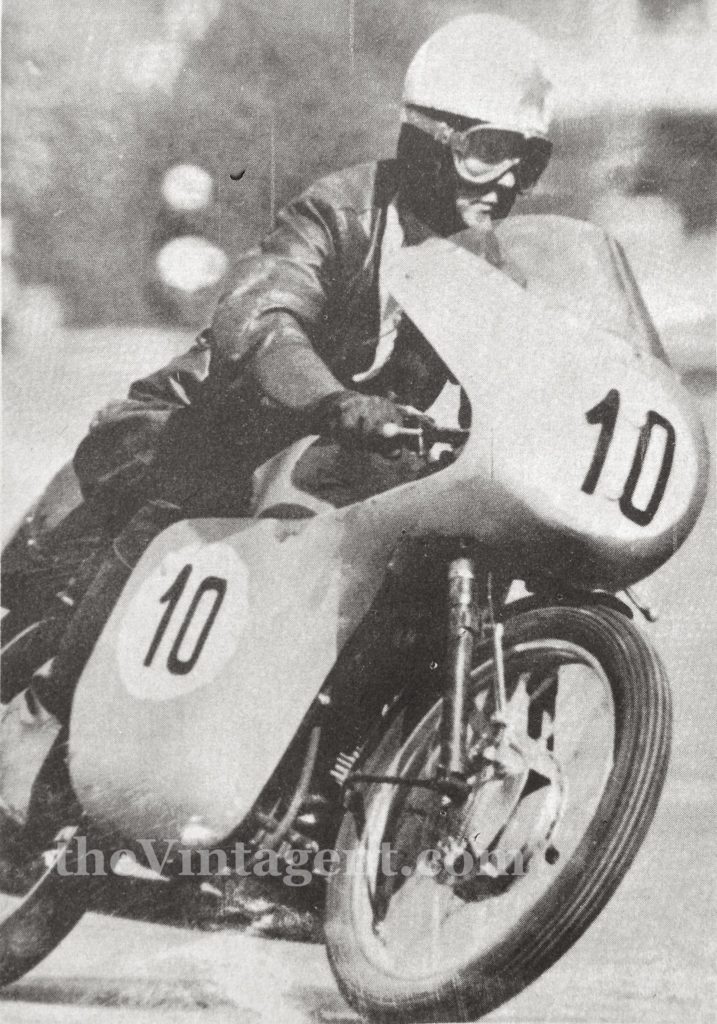
In 1952, both Nina Susova and Irina Ozolina returned to Moscow with their third championships secured. Nina, in top form, smashed all opposition. Though unchallenged, she took the checkered flag after 1 hour, 5 minutes, 2.3 seconds for a 93.35kph (57.97mph) average. A new lap record of 4.15minutes and 95.24kph (59.14mph) also went to her credit. Second place was taken by V. Morosova, who had been lapped by the dashing Nina. Mis Reichenbach finished third. The 350 race was won by Irina Ozolina at 96.01kph (60.62mph) and the lap record now stood at 98.72kph (61.30mph). Runner-up was Ylme Gustel; V. Petrova wound up third.
1953 became the year of the sisters Gustel. Nina Susova was out of the race on the first lap, and lovely Virve defended her first place successfully, averaging 89.02kph (52.28mph). Fastest lap in that race, at 93.18khp (57.86mph), was ridden by V. Morosova who, after a long stop in the third lap, hurtled through the whole field and finally beat Esthonian N. Ratasepp by a narrow margin for second place. Virve's sister Ylme was the winner of the 350cc class after Mrs. Ozolina had engine troubles. Ylme pushed the 350 record up to 97.56kph (60.58mph) and rode to a splendid 350 lap record of 99.67kph (61.89mph). Esthonian Tea Tahk grasped second place, in front o f N. Nosenko. Helju Kuunemae, bearer of a famous name in Soviet racing [more please! - pd'o], went out of the race with engine bothers for the fourth consecutive year.
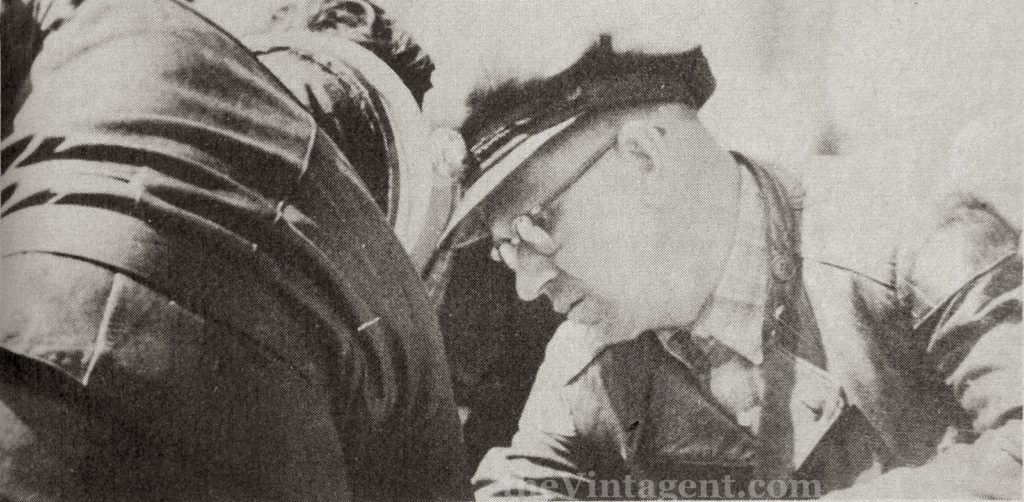
For 1954, the 350 class was abandoned. All girls now competed in the smaller class, and Irina Ozolina won the championship with a speed of 90.91kph (56.45mph) over Nina Susova and I. Tomin. In these years other changes also took place. Different road circuits had been prepared, and the best racers now made use of a new model, the S-157, a twin OHC single-cylinder affair, giving 14.5bhp and built on the lines of the Czech CZ racer. Fairing made their appearance, and the Russian girls met female road racers from other Communist countries, notably Hungary.
In 1955 Nina Susova struck back an won that year's championship, beating Irina Ozolina and Esthonian Evi Nugis, a beautiful fair-haired newcomer who was to become one of the most prominent racers of her country. After the 1956 championship had again been swept by Nina Susova, Evi obtained top honors in 1957, establishing a scintillating new record of 97.16kph (60.33mph) and also a lap record of 99.02 (61.49mph).
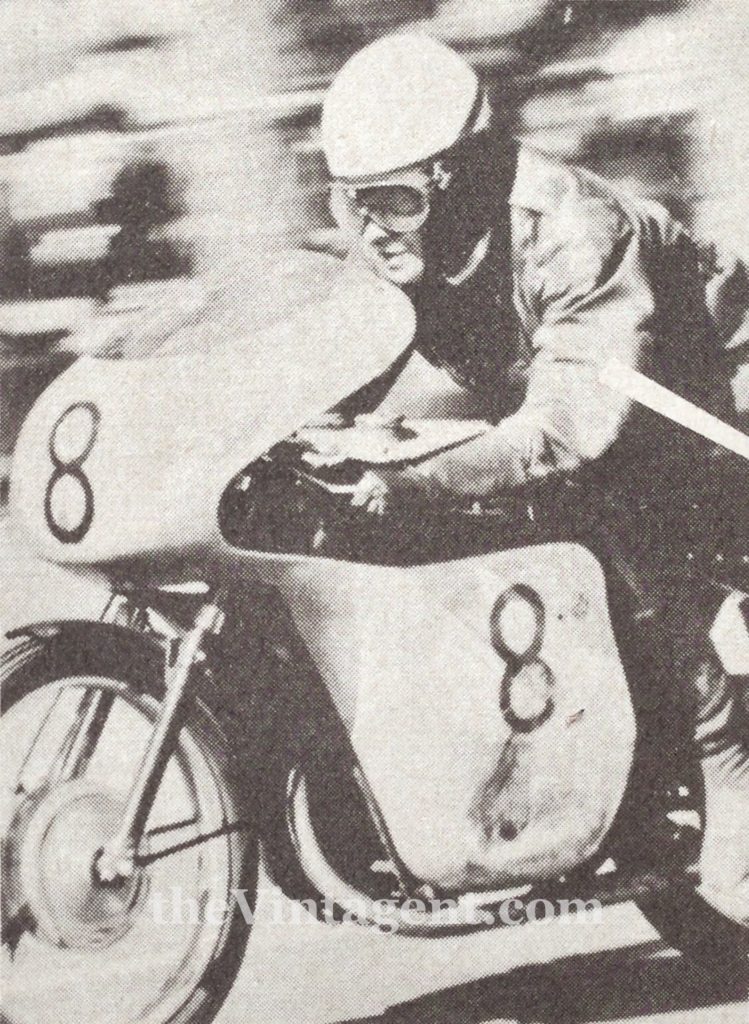
The championship was decided by two races for the first time in 1958 - at Leningrad an at Talllinn. The first heat was won by the indestrcutible Mrs Ozolina on her S-157 over blonde Evi Nugis and veteran Tratsevskaya. In the second race, Evi had trouble, so Irina was content to secure a second place behind Nina Susova which was all she needed to take the 1958 crown. Incidentally, no one knows for sure just how old Irina is, but she started motorcycling in 1939, and is now well over 40!
Three races counted for the 1959 championship - Riga, Tartu, and Tallinn. Nina had given up racing so it became a year for the 'old lady' again. At Riga, Irina managed to beat V. Petrova and local star Vilma Oshinja; at Tartu she was chased in determined manner by an unknown 20-year-old girl from Esthonia, Evi Freiwald, who also gave her a breathtaking fight in the third race, at Tallinn. Mrs. Ozolina won, but she had to try all she knew to keep Evi from winning - a girl who was born after Irina had already started to ride motorcycles!
The 1960 championship consisted of two heats: Tartu and Tallinn. The Tartu even was a terrific struggle. The winner was - well, who? - Irina Ozolina, who propelled her S-157 around the circuit at an average of 101.27kph (62.88mph). The lap record, however, was established by Visma Lapinja on an East German MZ at 109.57kph (68.04mph)! Visma took second place in the race at a speed of 100.15kph (62.19mph). Tea Tahk, on another S-157, was third. Evi Friewald had engine troubles. The Tallinn heat was won by Irina, too, at 93.97kph (59.88mph), while Latvian Erika Kiope beat Vilma Oshinja for their berth.
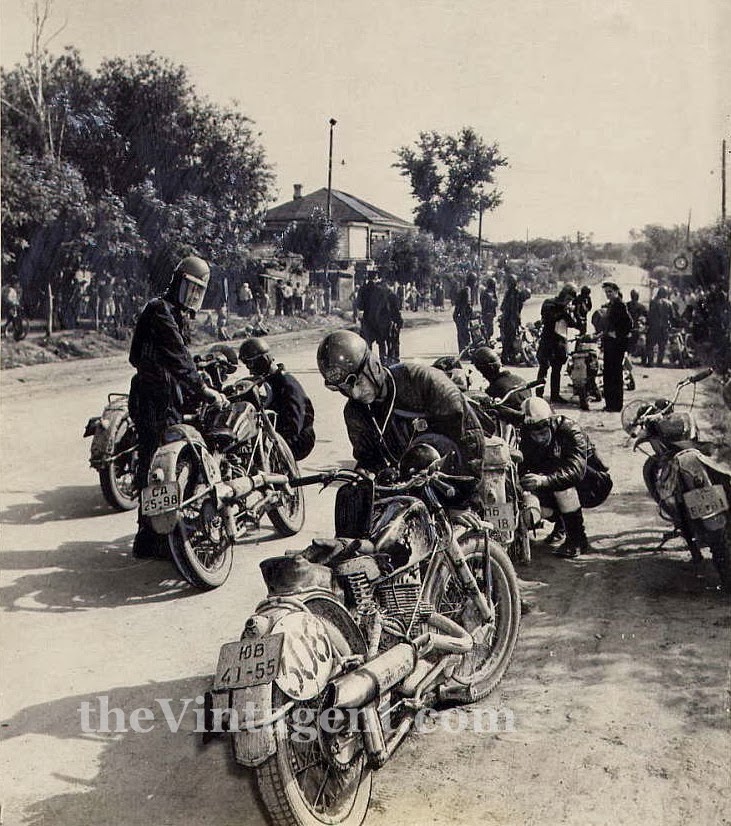
In 1961 several major changes were observed, the most notable being a ban on specialized racing mounts. This decision was taken to level the chances, and meant that star riders no longer were assured the fastest machines. 1961 was also notable in that it brought the 'Ozolina monopoly' to an end. Irina was defeated by Latvian racers. At Tartu, Vilma Oshinja seemed a safe winner when, in the last lap, Erika Kiope made a determined effort and won by a few yards. At Talinn, Irina tried to rescue her championship chances and gave Vilma a sparkling fight for victory, but Vilma won the race and the 1961 championship.
I do not know how the Soviet girls would look in races in Western countries. Without doubt their courage is comparable to the fearlessness displayed by Soviet International 6 Days Trial riders, but I think that their riding style and racing experience still lacks perfection. If given International racing experience the Soviet girls certainly could become racing competitors to be reckoned with, and I would give all the tea in China to see them race against this year's 50cc Isle of Man competitor Beryl Swain, and that dashing Californian, Mary McGee."
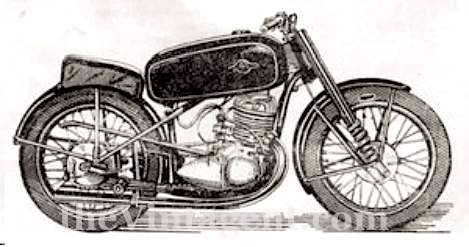
[Some notes on the machinery: The IZH 50 was introduced in 1950 as the latest iteration of, as AEG notes, the DKW-based two-stroke single-cylinder roadster, tuned for racing. The IZH 50 was built from 1950-56, and was a 346cc single with an aluminum cylinder and head, producing as she notes around 14.5bhp @4800rpm, with a 4spd gearbox and theoretical top speed of 115kmh (71.46mph). The IZH-54 was introduced in 1955 as a production road racer, with a lightweight rigid (tube) frame and teleforks and a tuned IZH-50 engine giving 18bhp. It was very light at 108kg (238lbs). There were few, if any, alternative road racers available in the 350cc class at that date
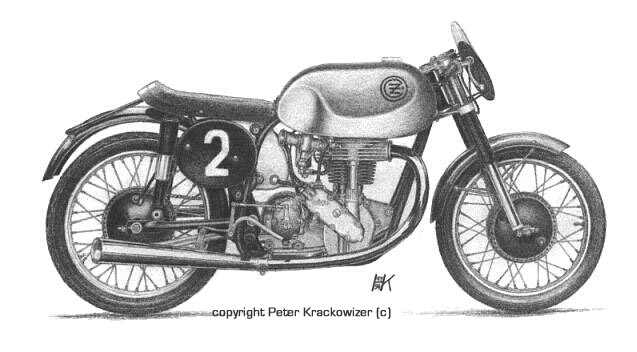
The S-157 racer was a DOHC single-cylinder based on the CZ. Here's what Mick Walker had to say in his 'European Racing Motorcycles' book: "The next Soviet racer was the S-157A, an interesting lightweight for the 125cc class. This was a dohc single with valves set at an angle of 50 degrees, measuring 28mm exhaust and 32mm inlet. The stroke was rather long at 58.5mm which with a 46mm bore gave a cylinder capacity of 123.6cc. When FIM President, Peit Nortier, visited the Central Automoclub headquarters in Moscow during 1959, the chief of the technical department told him that it was not intended to put the S-157-A up to the challenge the top Italian lightweights, rather to provide a production racer; and to this purpose a batch of 25 would be constructed toward the end of that year." Walker added he didn't think the S-157 was actually built, but he'd never read AEG's account from 1962!]

Instafamous / Instabroke

I've been writing a monthly column for Classic Bike Guide for over a year now, and I tend to focus my essays on motorcycle culture, when not simply poking fun. A few columns have hit a nerve, but none more so than my meditation on the Custom bike-building scene, and the struggles I've observed with my friends, trying to make a business of their craft, or art, or vision. The BikeExif post on the demise of Spain's Radical Ducati inspired my thoughts last March, when I wrote 'Instafamous/Instabroke', as did a conversation with David Borras, also of Spain, who's El Solitario is recognized globally, yet he and his crew daily confront the realities of running a business to support David's radical design sensibility. Chris Hunter of BikeExif asked to reproduce the essay, which I think is a first for his website; no motorcycle images! Not all my readers frequent BikeExif, but might enjoy the read. Thanks to Classic Bike Guide for ok'ing the BikeExif post, and this one too:
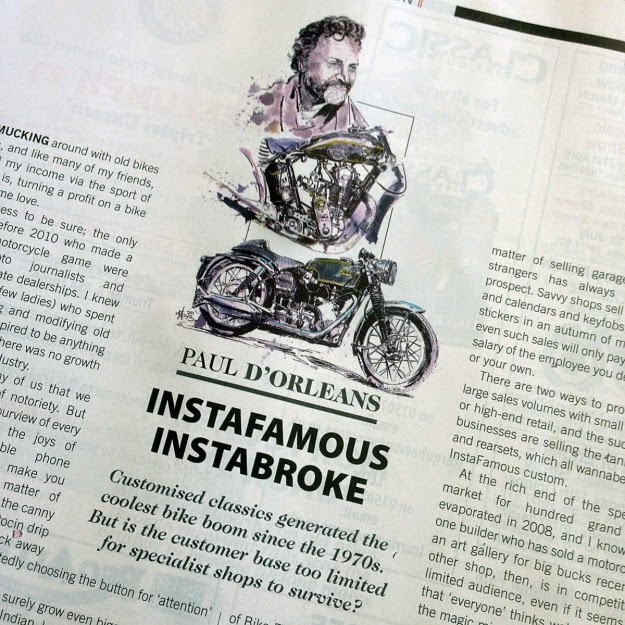
I’ve been mucking around with old motorcycles since the 1980s, and like many, financed my bike habit via the sport of Arbitrage. That is, turning a profit on a bike after giving it some love. It wasn’t an income; the only people living off the motorcycle game were (impoverished) moto-journalists and employees of legitimate dealerships. I knew lots of fellows, and a few ladies, who spent all their time repairing and modifying bikes, and none aspired to be anything but a garagiste. At the time, Von Dutch lived in a trailer, Ed Roth had long-ago lost his Revell contract, and only bands sold t-shirts. It never occurred to us that someday we’d be aglow with some sort of notoriety. But ‘some sort’ is now within the purview of every human on the planet, via the joys of InstaFame. A downloadable phone trick has the power to make us globally recognizable in weeks. Via the savvy curation of images, we trigger a mutual oxytocin drip in our fans and ourselves, liking and being liked, tapping away like starving lab monkeys, who’ve chosen the button for ‘attention’ over the one for ‘food’.
It’s fame, man, to the hungry end, and maybe even bigger when you’re dead; is that the ghost of TuPac or Indian Larry I hear laughing over posthumous sales? Don’t think I’m judging; I owe the mysterious gods of the Internet a debt of gratitude for my own lifestyle; let’s just hope I don’t owe them my soul. The shimmering dust of glamour has always coated parts of the motorcycle scene, and right now it’s falling on handsome, bearded guys wearing heritage work clothing and riding ’69-clone choppers or knobby-tyred customs, or girls doing seat-top acrobatics aboard same.
The original meaning of ‘glamour’ was the art of enchantment, a spell-caster’s ability to create an illusion around a person, place, or thing. And while the packs of self-paparazzing blogo-grammers crowding custom bike events are indeed beautiful and achingly cool, I fear our glamour is a spell cast in the mirror.
A mix of hopes and pleasures motivate today’s custom motorcycle builders; the joy of creativity mingled with glow of Web attention, and now there’s an established recipe for making a ‘cool’ bike, tested via the comments section on a hundred moto-blogs. It’s easy to mistake the whoosh of online chatter for a wind to fill your sails, and a virtual wind is exactly that, while selling garage-altered metal to strangers has always been difficult. Savvy shops sell logo’d up clothing and calendars and keyfobs, scattering brand stickers in an Autumn of moto-foliage… but even such sales will only pay the bills, not the salary of a desperately-needed employee – or your own.
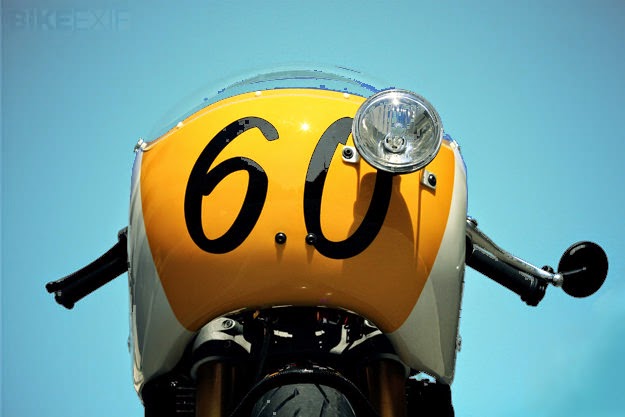
There are two ways to profit in business; large sales volumes with small profit margins, or high-end retail, and the successful moto-businesses sell the tanks and levers and rearsets the Wannabes need for an InstaFamous custom. At the rich end of the spectrum, the market for hundred grand choppers evaporated in 2008, and I know exactly one builder who’s sold an art-gallery motorcycle for big bucks. Every other shop, then, is in competition for a limited audience, even if it seems at times that ‘everyone’ thinks we’re cool and ‘everyone’ wants your bikes…but is that the magic mirror?
The first signs of iCustom casualties have recently appeared even in the luminous portal of Bike EXIF; shops going belly up, euphemistically ‘starting other projects’, i.e., jobs which pay. It hasn’t exactly been a Gold Rush (that’s happening in the App-creation world itself), and I know young bike builders don’t expect to get rich. Still, it seems the business of pushing aesthetic boundaries with a motorcycle is best trod with a trust fund springing your step, or proceeding with deep humility and little expectation of worldly increase; the hackneyed rule for artists. I’ve spoken with genius motorcycle builders whose controversial but gloriously innovative customs have netted them almost zero sales. A ‘like’ isn’t a dollar. But then again, as they slowly go broke or accustomed to reduced circumstances, the refrain is ‘there’s nothing I’d rather be doing’.
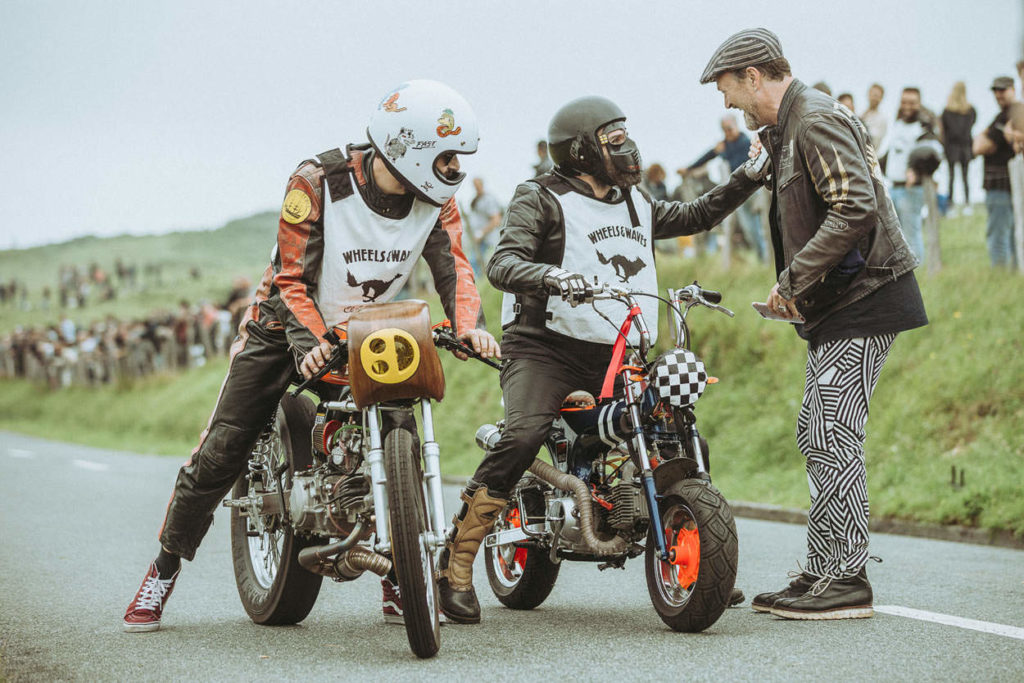
The coolest bike boom since the 1970s has kids buzzing like bees at Wheels + Waves, DirtQuake, and Born Free, and featured in popular books like the ‘The Ride’, to which I contributed. Riding bikes while young, beautiful and creative is a heady cocktail, as is the glamour of InstaFame. But let’s not confuse the rain of electrons, following our every move, for a rain of cash. Because in the end, bikes are just motorcycles, but business is business."
Wheels&Waves 2017: The Best Yet
Story by Paul d'Orléans - Originally published in BikeExif - Photos by Mihail Jershof
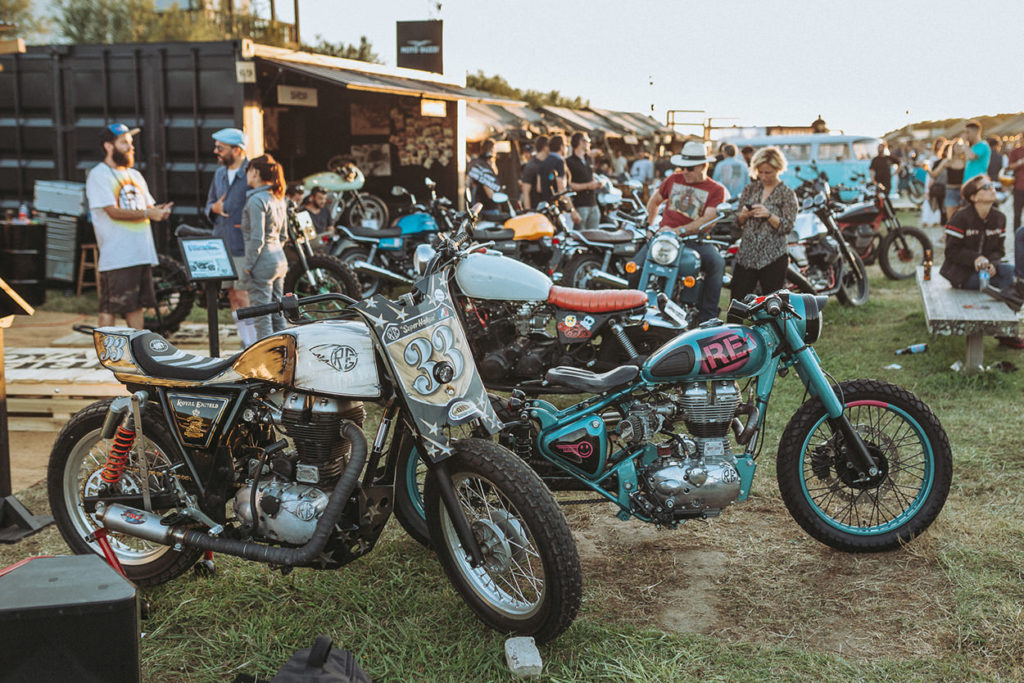
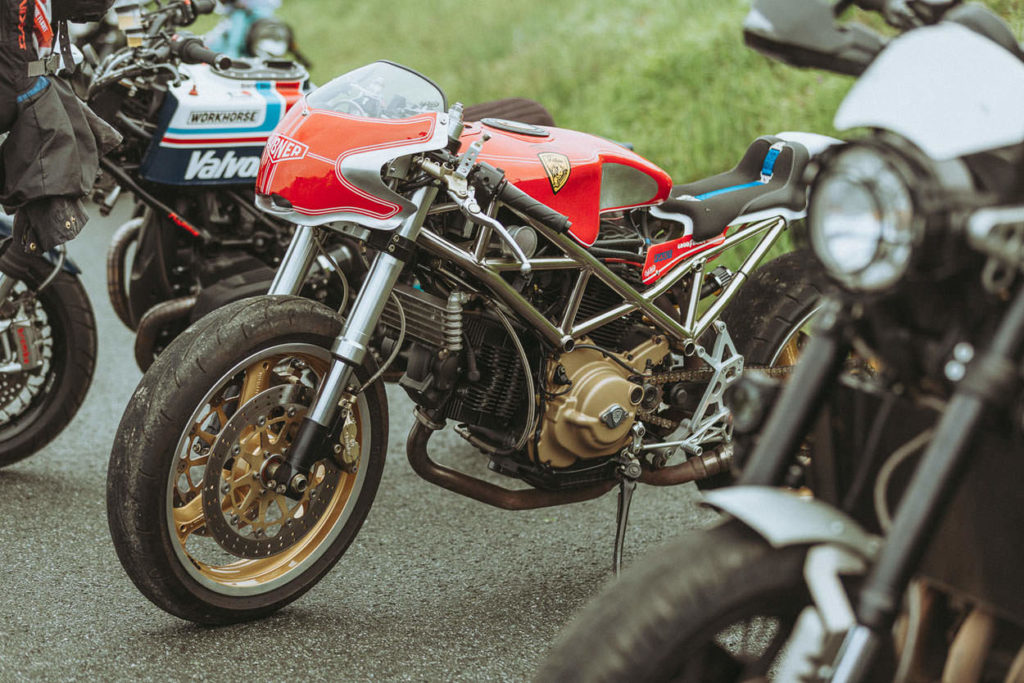
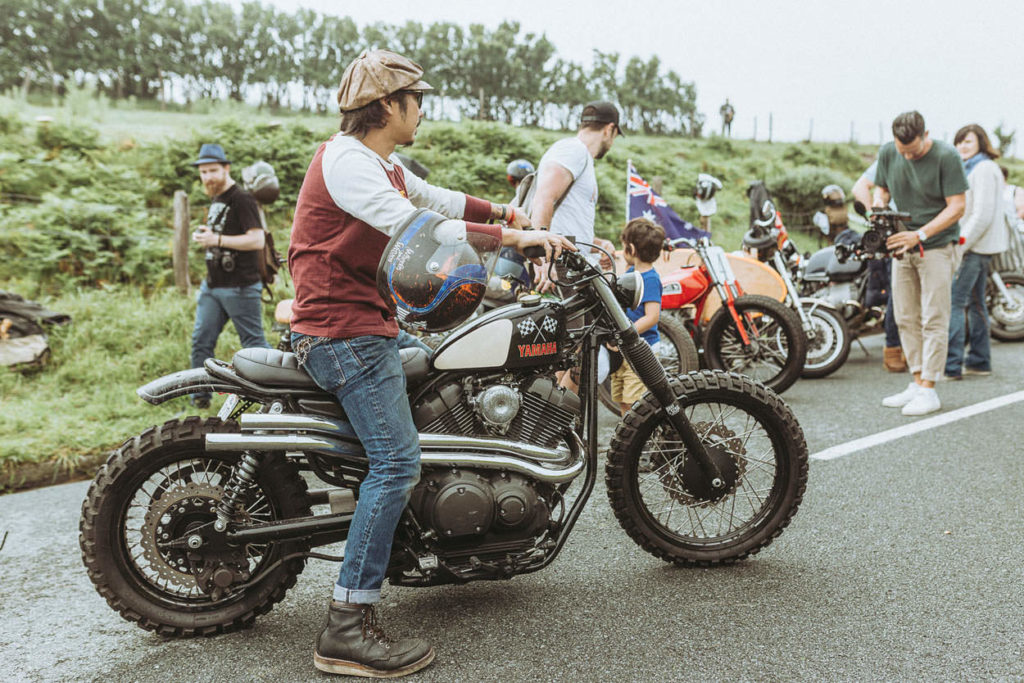
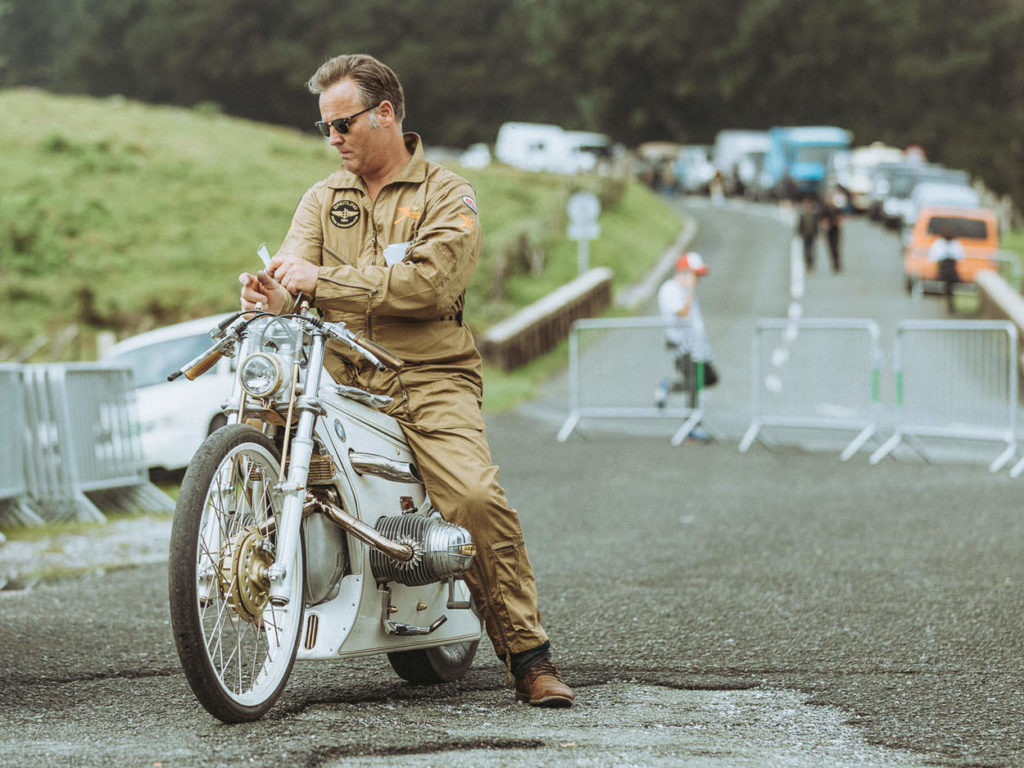
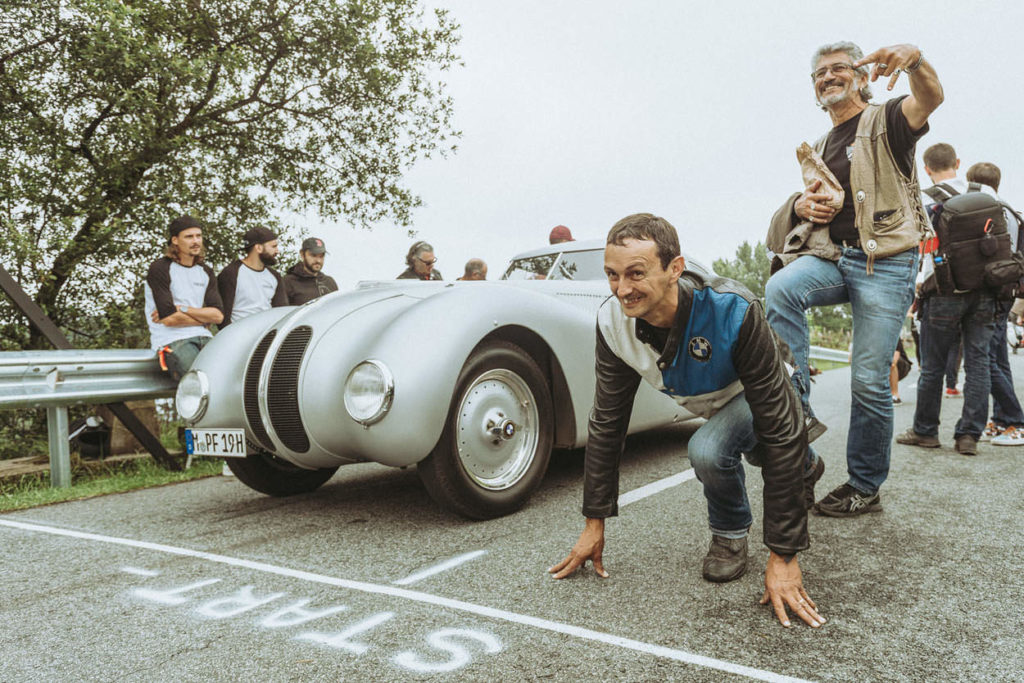
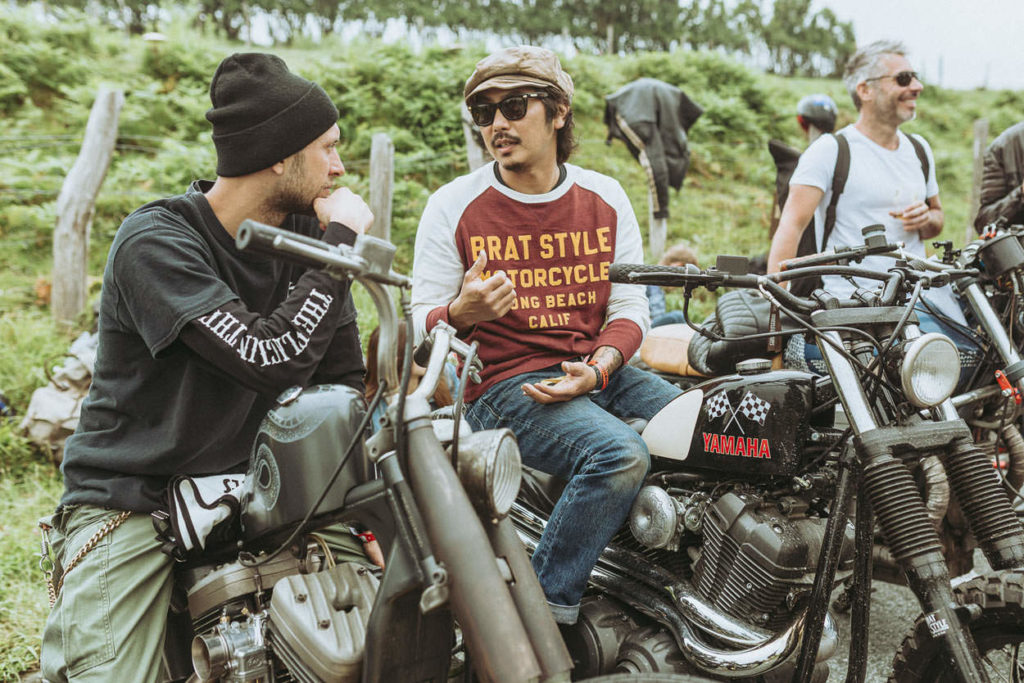
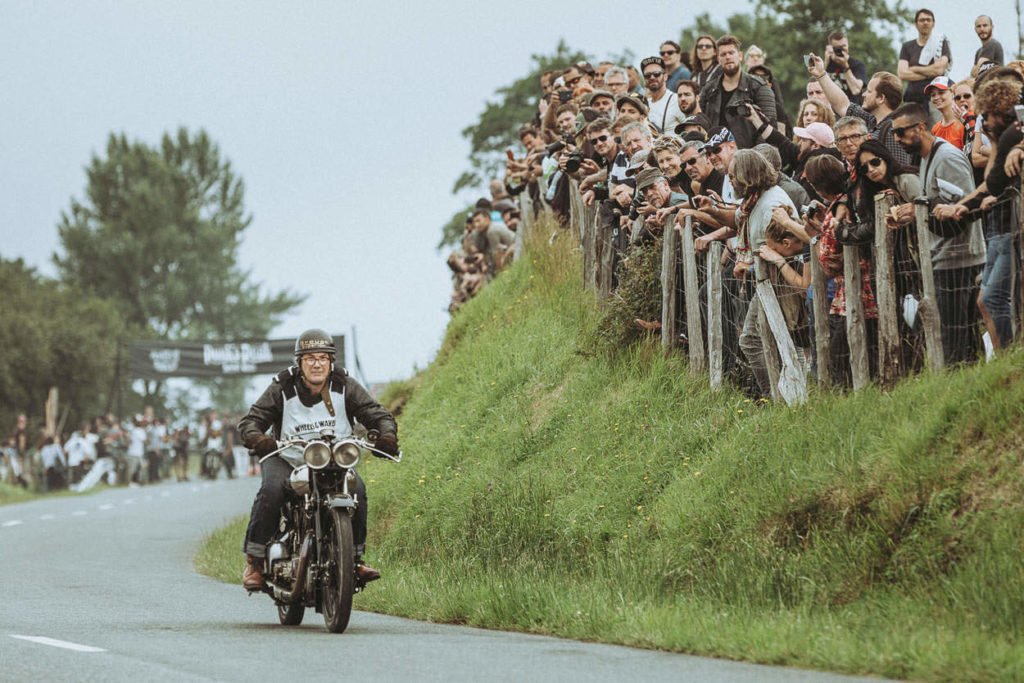
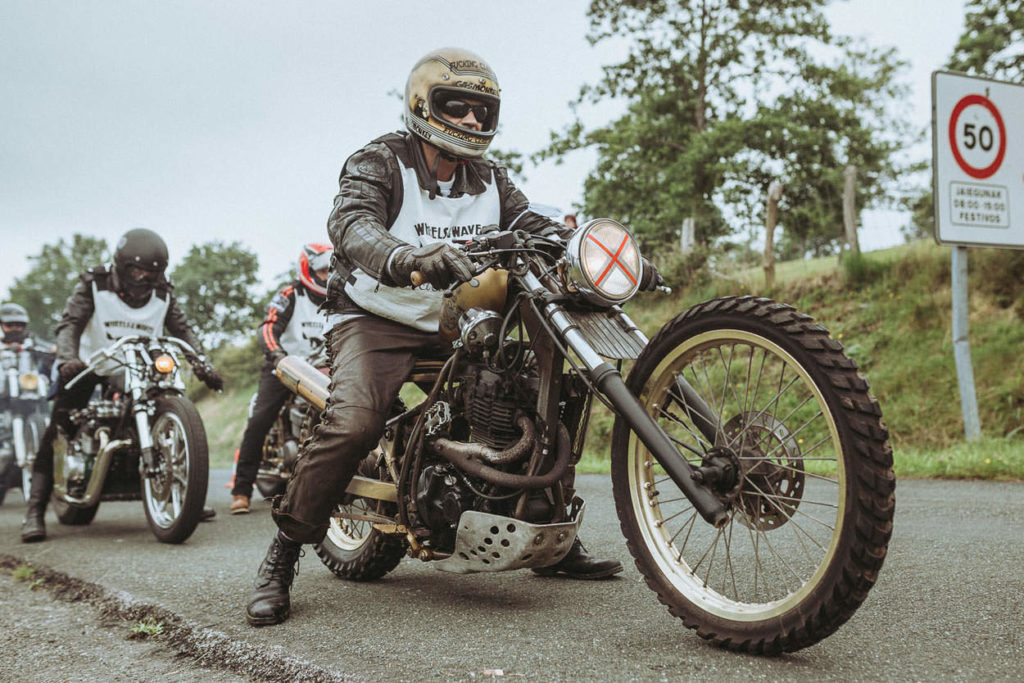
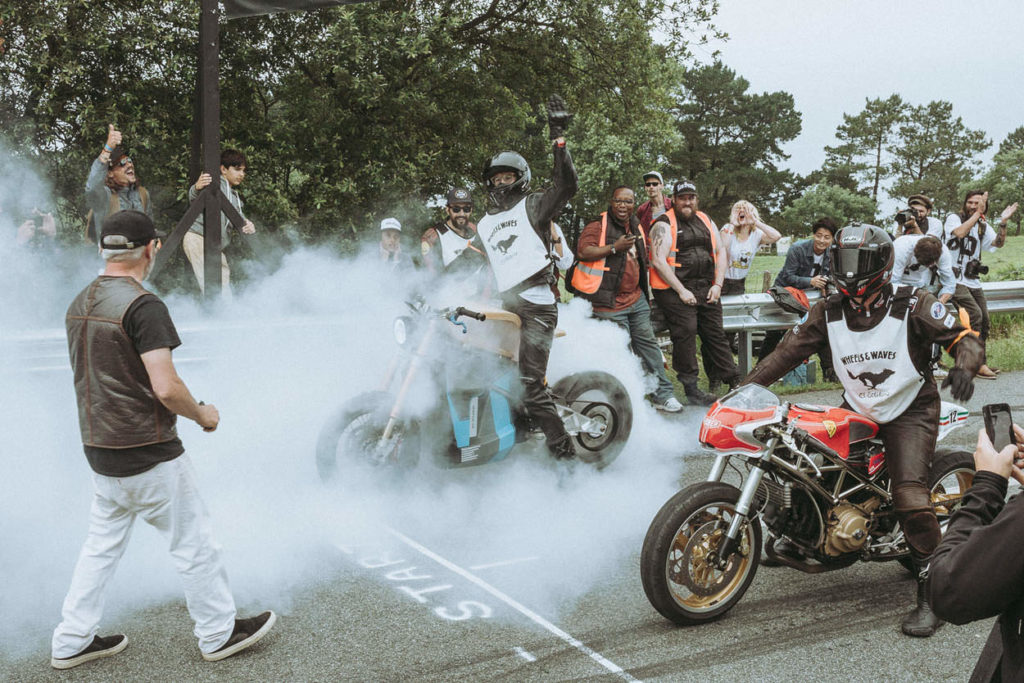
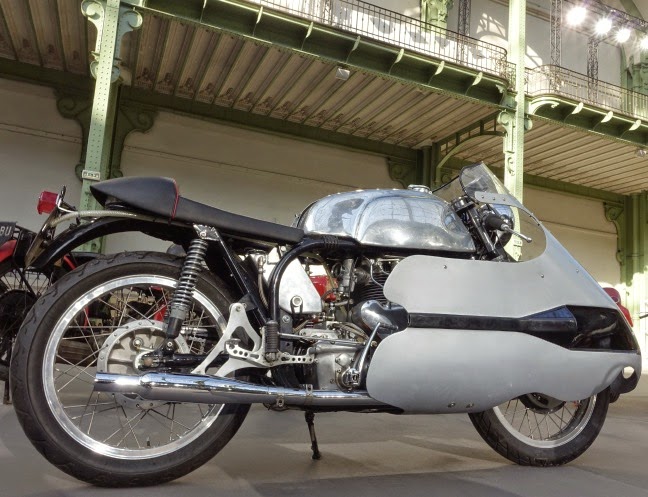
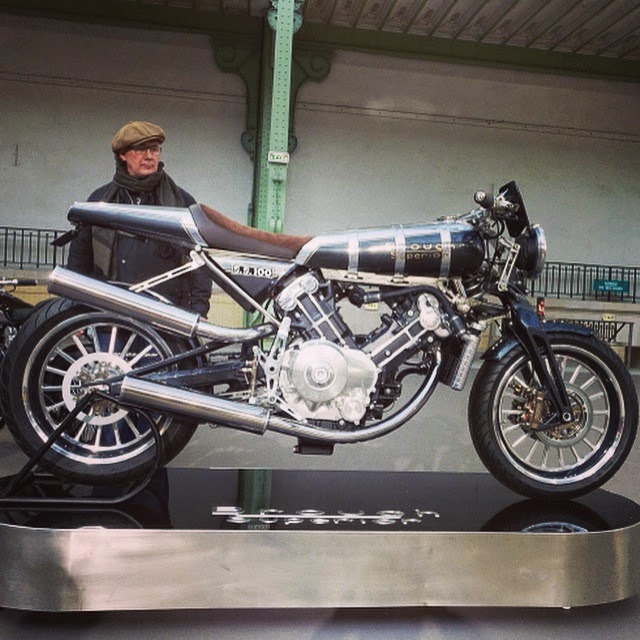
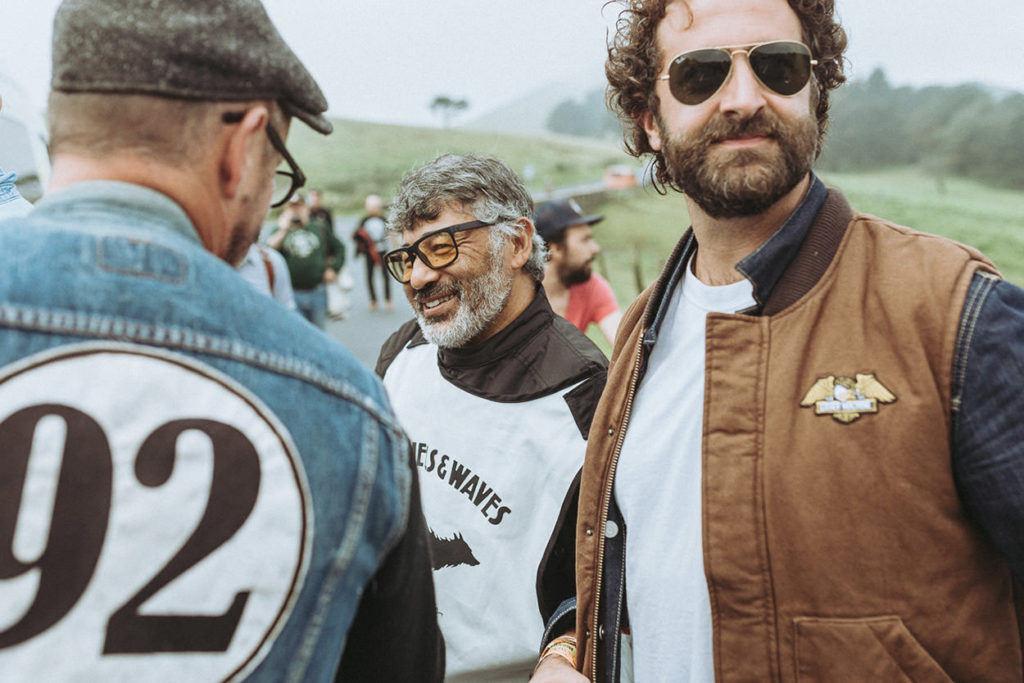
A banner hung outside the ArtRide exhibition stated, ‘You are not in France, you are not in Spain; welcome to Basque Country.’ At the 6th iteration of Wheels&Waves, the sign should read ‘Southsiders Country’, as 20,000 guests of this festival of surf/moto culture invade the sleepy town of Biarritz, filling all the hotel rooms, Airbnbs, and camping spots, plus every bar with a sidewalk. The Basque region isn’t a hotbed of alt.custom culture, and is a long way from Paris, Berlin, or Milan, where you’ll find the majority of European custom shops. But a surprising number of folks ride to the event, on everything from vintage Brough Superiors to the latest hyper-café custom Ducati. They come, I think, as much for what isn’t at W&W – no obnoxious branding, no OEM industry hard sell – as what is; a mellow, carefully curated series of exhibits, races, and rides.
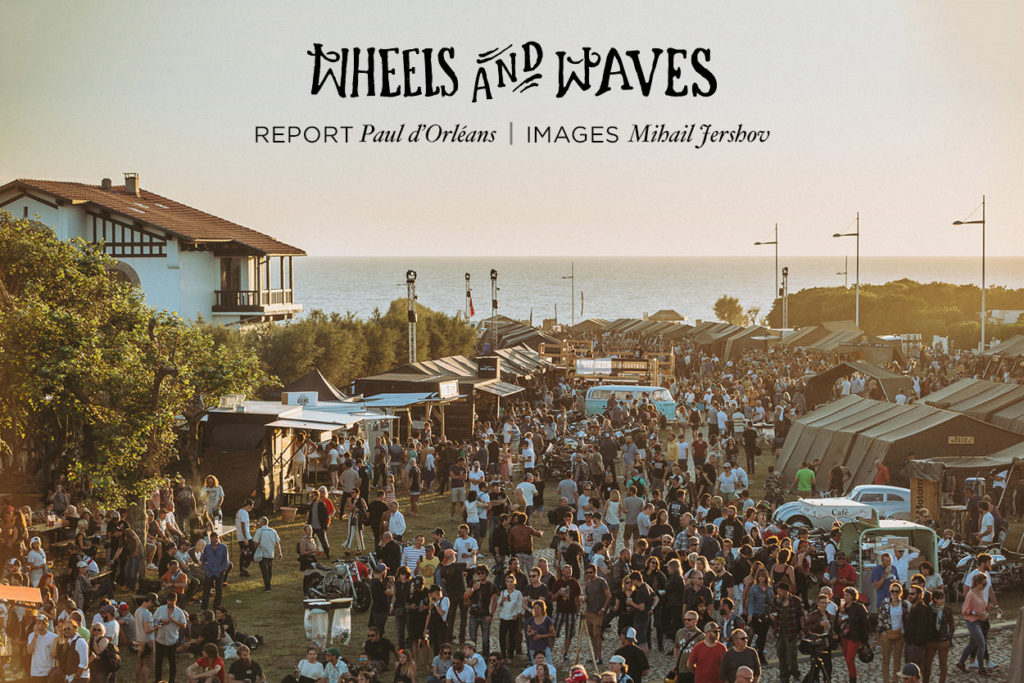
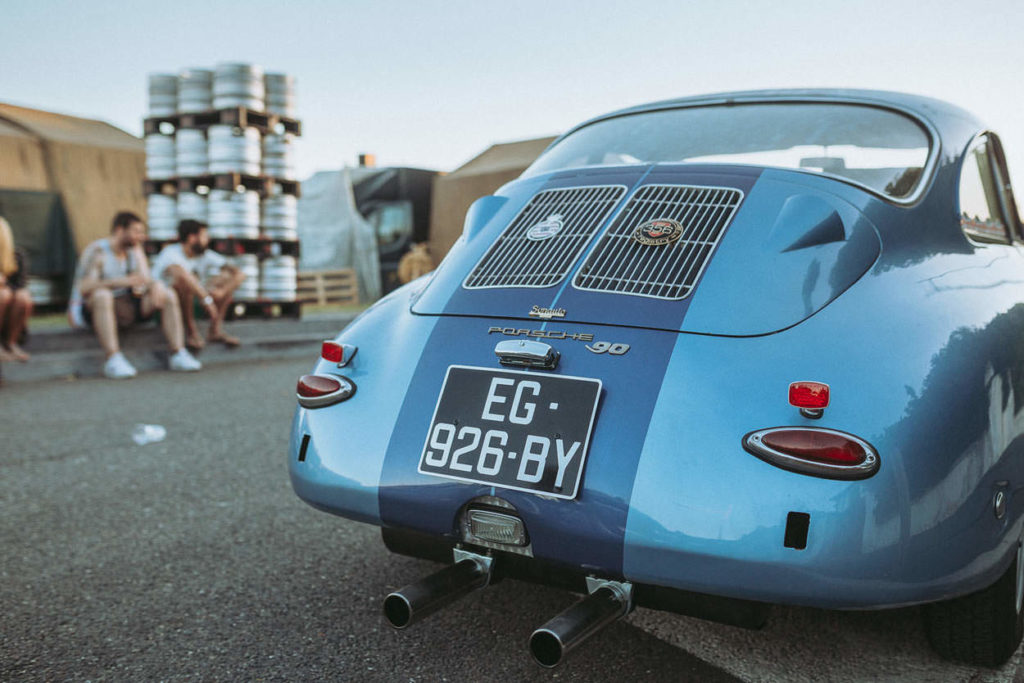
“Our event is about motion” is the mission statement of Southsiders MC founder Vincent Prat, chief of the triumverate (with Jerome Alle and Julien Aze) who organize this legendary surf/skate/moto festival. You’ll need motion to see it all; most of the highlights are an hour’s ride from Biarritz, except ‘the village’ at the Cité de l’Ocean, a series of military tents stretching from this wave-form cultural center to Milady beach. Prat cut back on stalls by 30% this year, to keep the quality high for clothing, scarf, bag, board, and bike vendors; there wasn’t much overlap in the offerings, and what was present was really nice stuff, if not cheap. A big stage held live music afternoons and evenings, the skate ramp was always busy (with legends like Steve Caballero dropping in at random), and the indoor cinema screened fresh material like ‘Sugar&Spade’, ‘The Ended Summer’, and ‘Crystal Voyager’ from 1972 - a legendary George Greenough film, the first shot inside a wave, with a full side of Pink Floyd’s ‘Meddle’ vinyl as soundtrack.
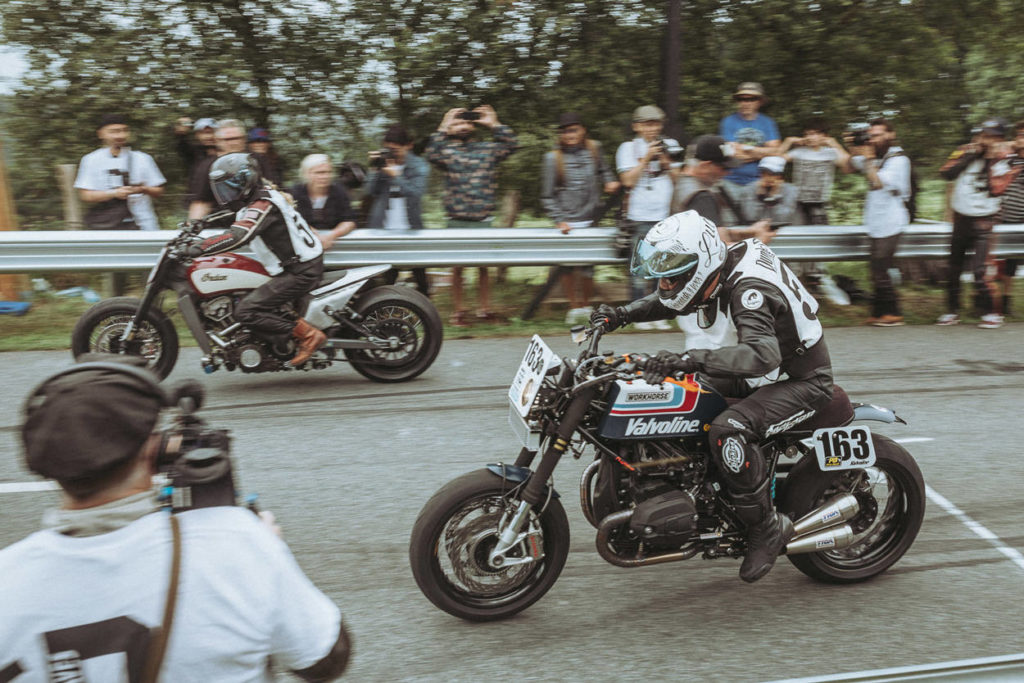
The second ‘El Rollo’ flat track race at San Sebastian’s hipodromo was quadruple the size of last year, with a mix of serious competitors and sloppy day-racers. The races were short enough that it wasn’t a mess, and the mix of machines ranged from the new Indian 750s (currently dominating professional races), to vintage Trackmaster specials with Triumph or BSA power. We must all bow towards Sideburn mag for defibrillating this sport; proof again the custom scene is the lifeblood of the motorcycle industry today. Also refreshing; the mix of age and sex of the competitors, from gnarled vets to fresh young things like Zoe David on her Trackmaster pre-unit Triumph T100.
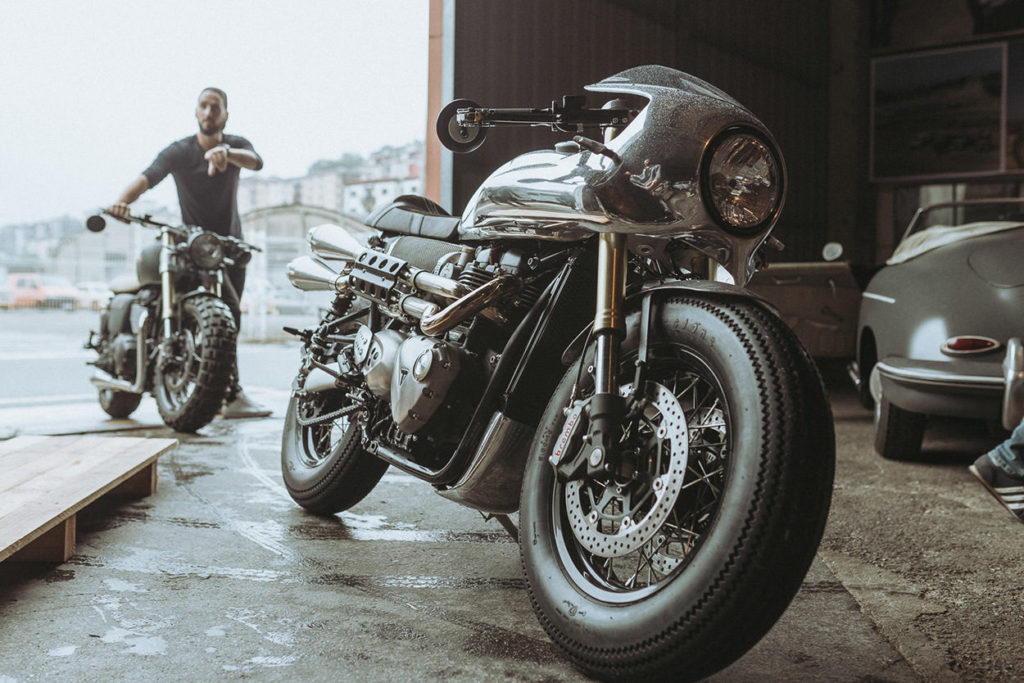
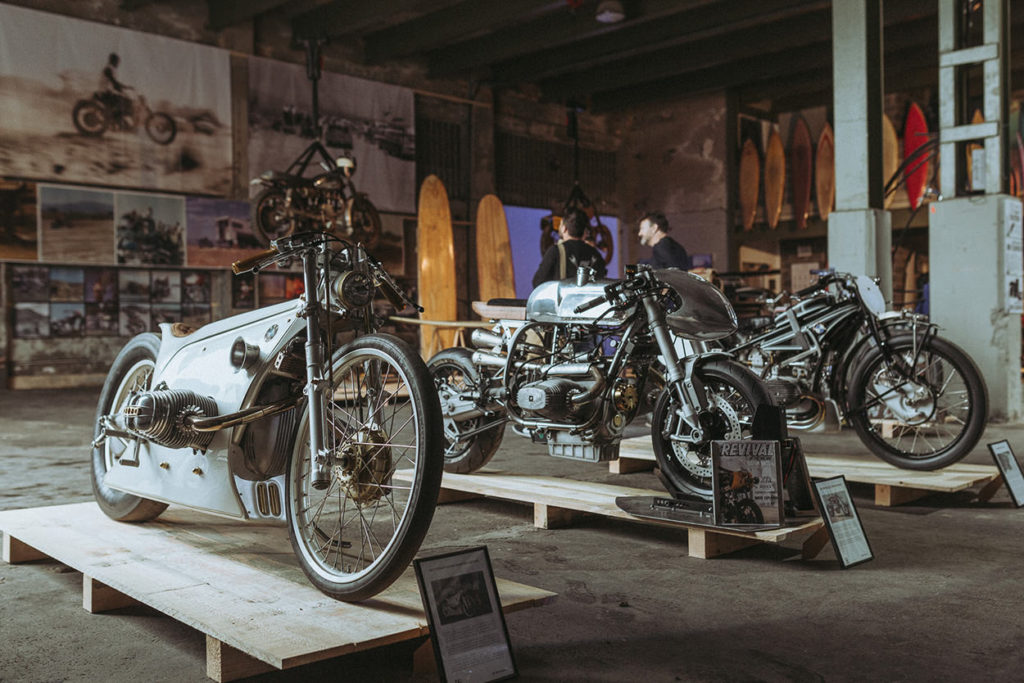
El Rollo is the first event of Wheels&Waves, and a great start to the week, on Wednesday. Thursday is the official opening day of the ‘village’, and in the evening another ride to San Sebastian is required for the ArtRide exhibition, held on 3 floors of an old fish-packing warehouse in Pasaia. It’s a mix of fresh custom and vintage bikes, photography and other art, and film/performance. A terrific, enormous montage of vintage MX and surf photos, plus surfboards and suspended racing Velocettes from the mid-1960s, were an homage to Richard Vincent, a surfer/racer from Santa Barbara, best friends with George Greenough, who filmed his racing, while Richard filmed him surfing. With professional equipment, Vincent documented an ideal SoCal life, which was dramatically halted by the draft. He was badly wounded in Vietnam, and his bikes, boards, photos and films sat for 50 years. Wheels&Waves was their first exposure since 1967; a short film about Richard Vincent was screened beside them, ‘The Ended Summer’ by David Martinez (full disclosure; exec produced by TheVintagent).
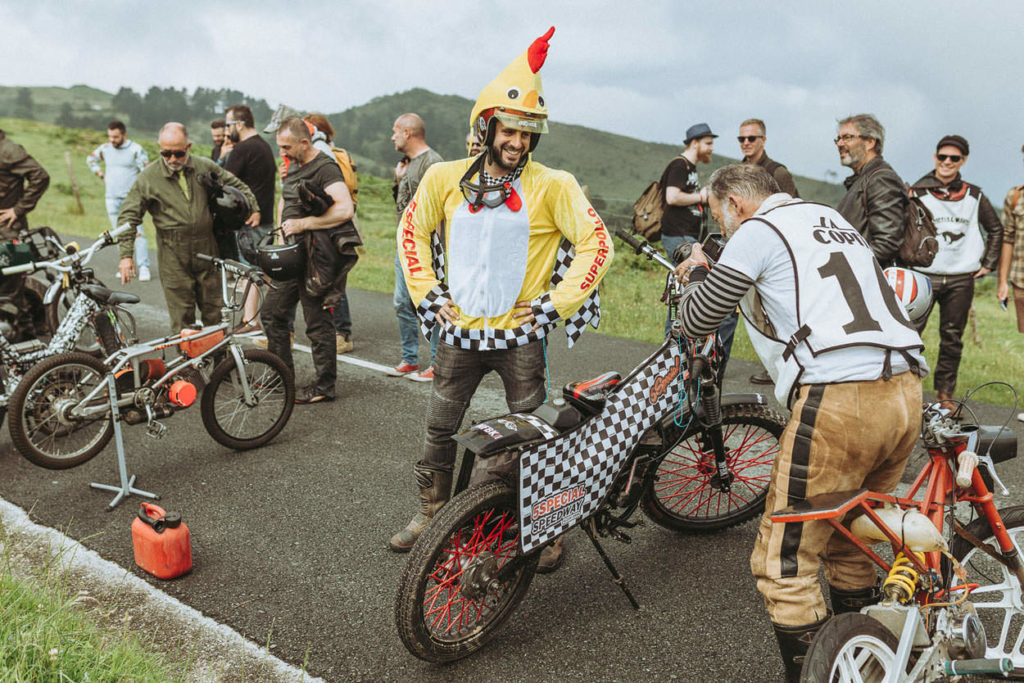
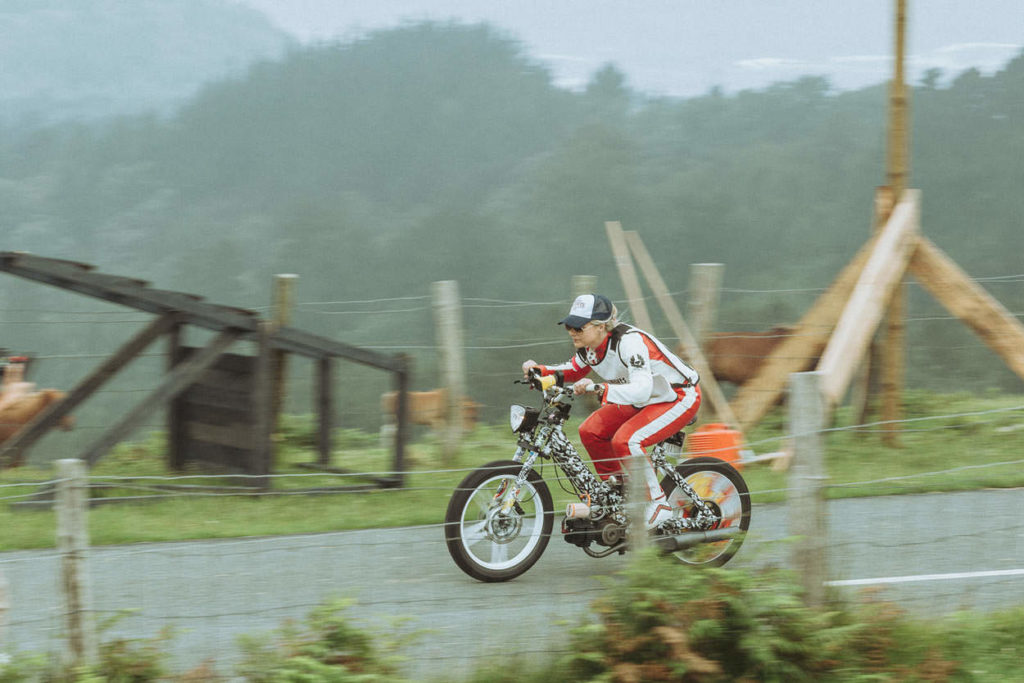
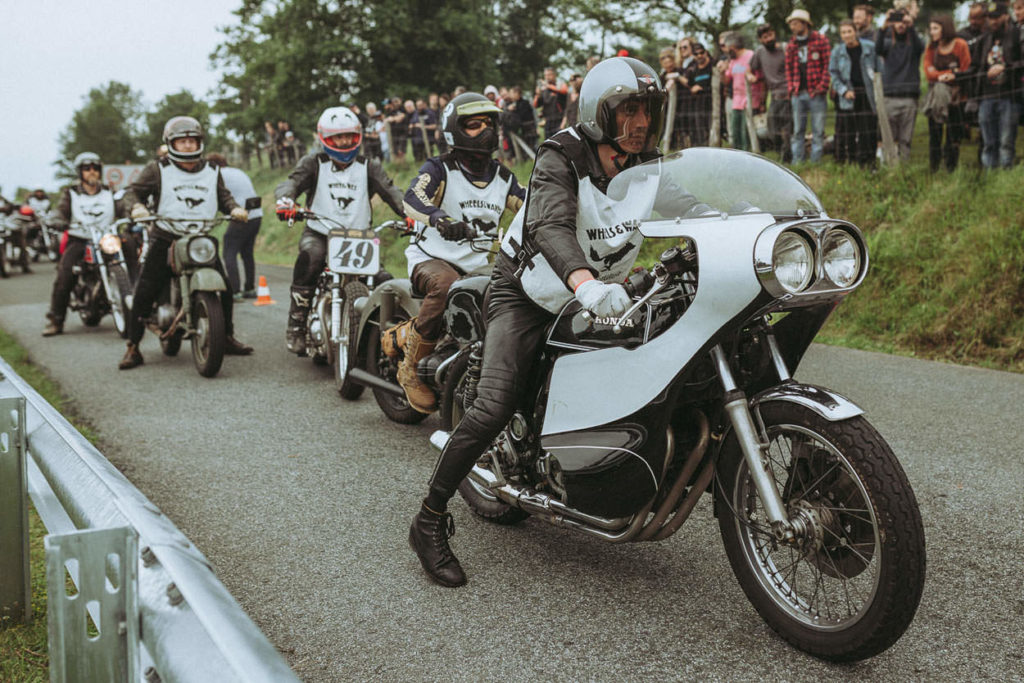
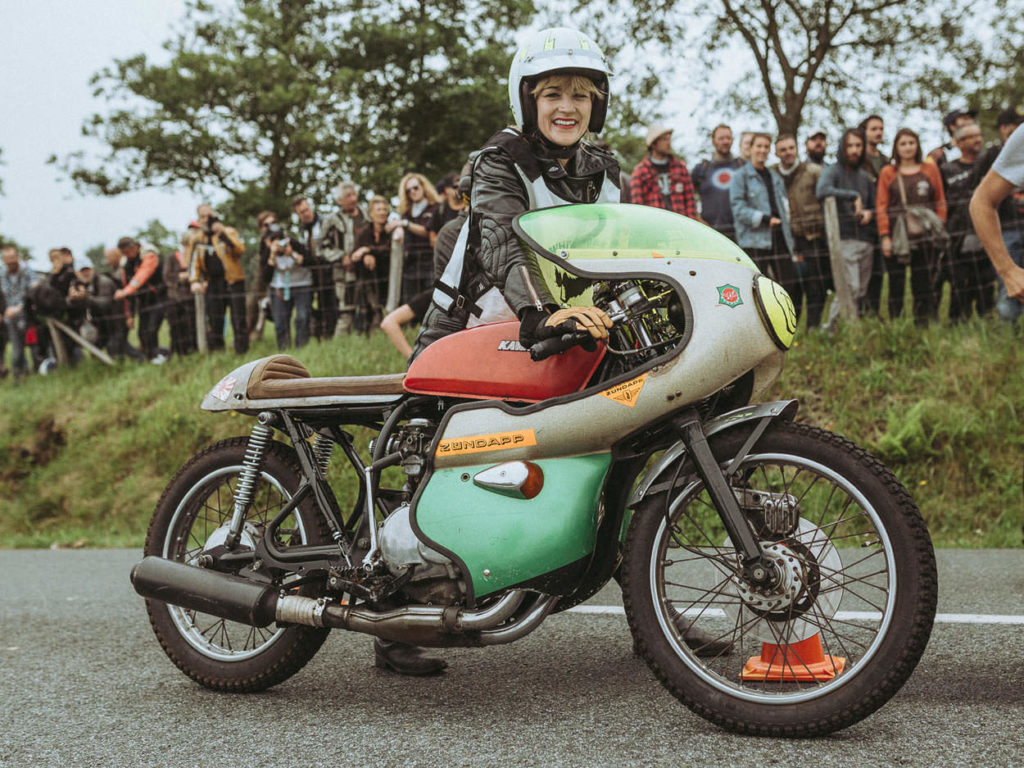
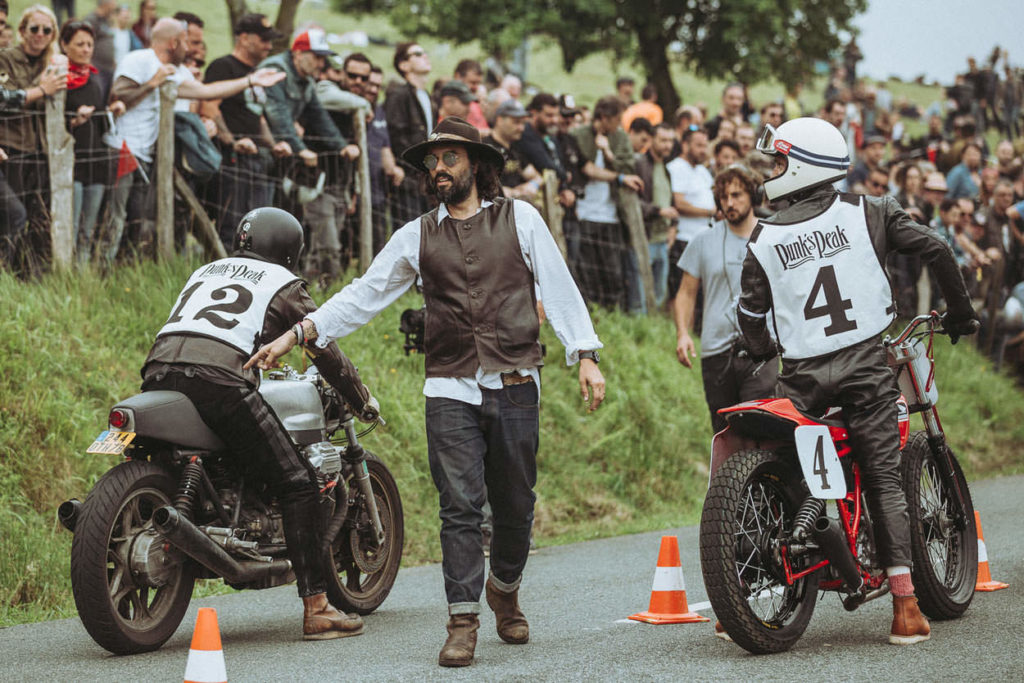
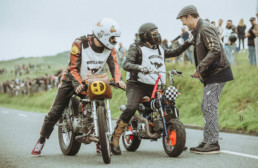
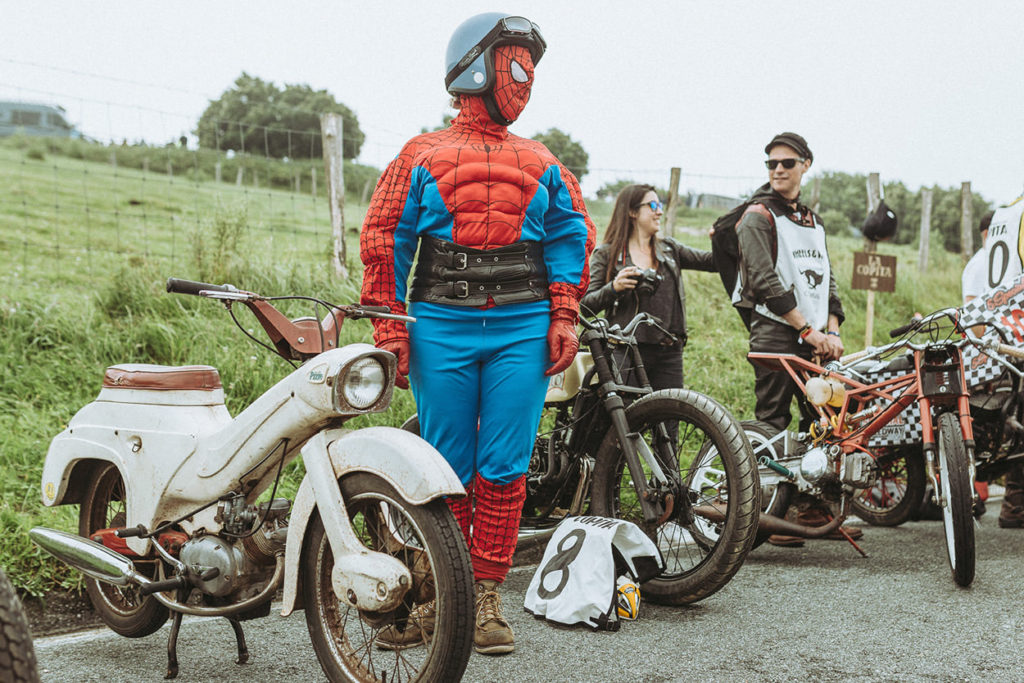
The Punks Peak hillclimb (an uphill sprint bent in the middle) has spawned a host of imitators, so the ‘El Chupito’ race spices up the pre-’50 to Powerbike mix of racers. Costumes are required to race your 50cc demon, and this year the theme was ‘Superheroes’. All sprints should be done in costume! Especially as sprints grow faster and more serious annually; a few dirty tricks were played, like loosening clutch lever pivots, and one rider seemed hell-bent on forcing his matches off the road – fine but for the barbed wire fencing. One walkaway crash and some hairy moments didn’t dampen things, and the premier event was won by Katja Poensgen – proving women riders rock hard.
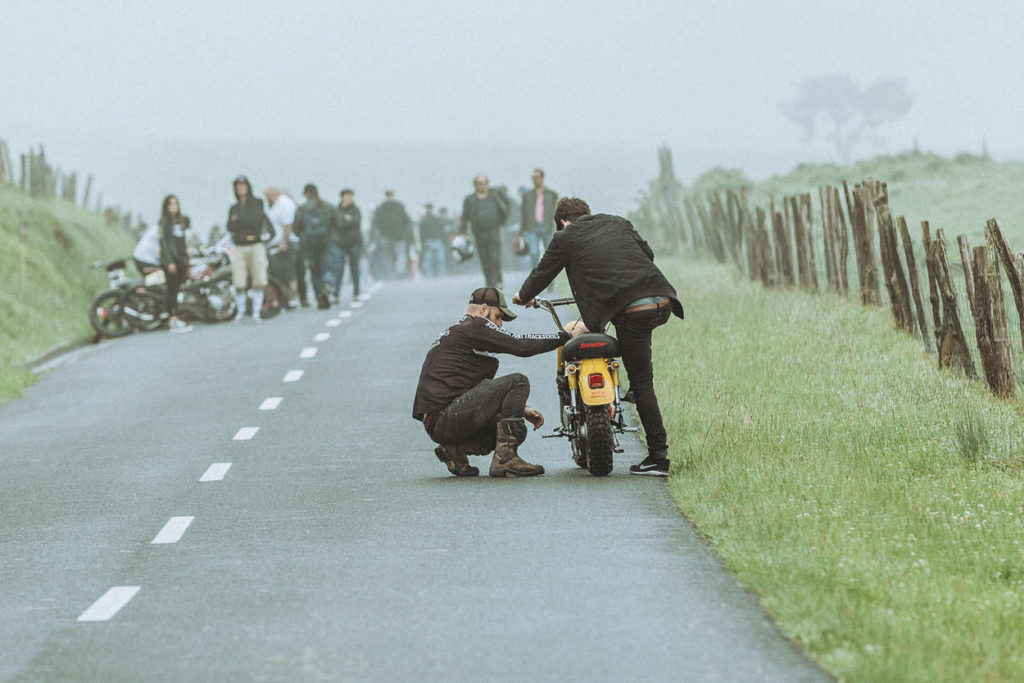
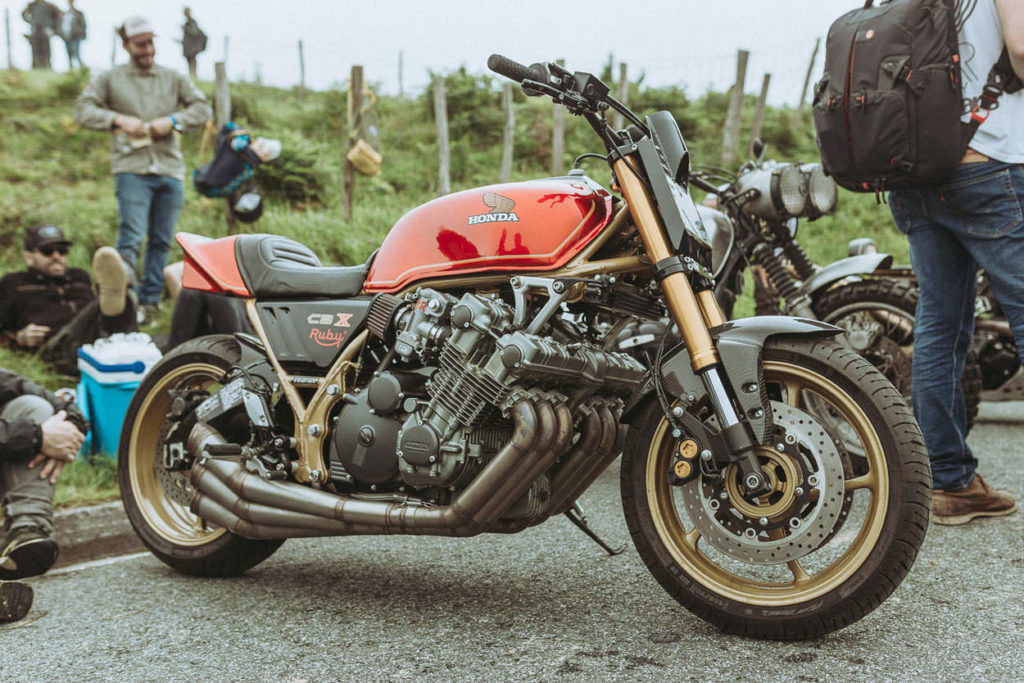
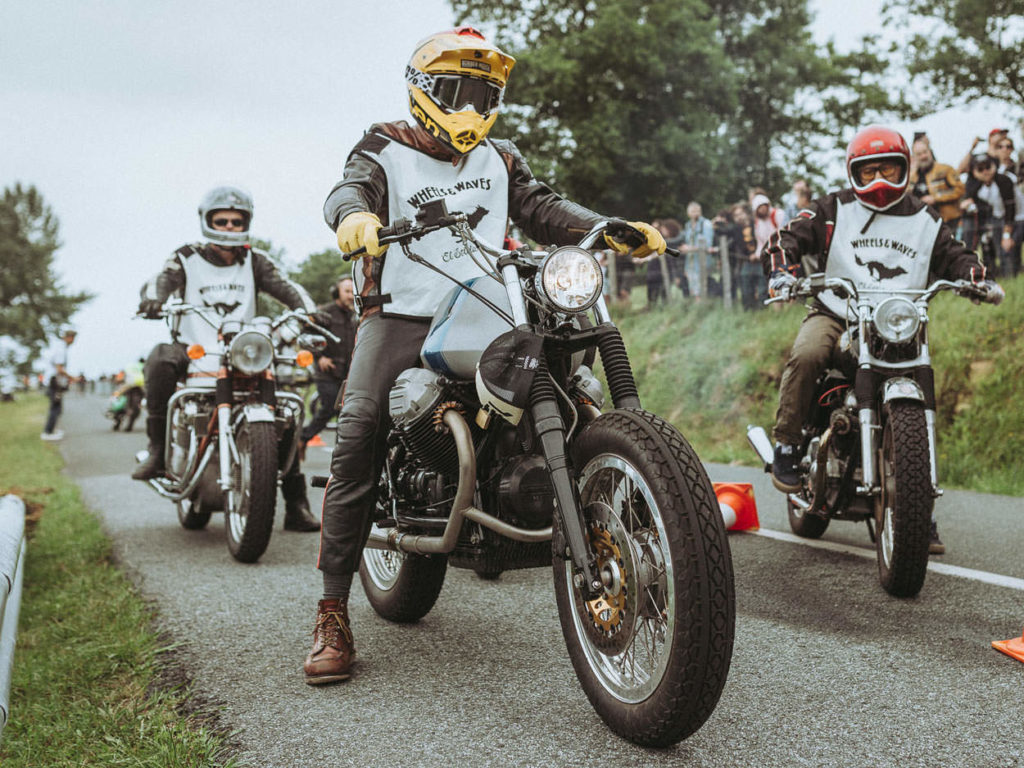
Saturday is the all-day DIY rideout into the Pyrenees, and clumps of riders criss-crossed the mountains all day, semi-lost, but with perfect weather this year nobody complained. The views and snaking roads through thousand-year old stone villages, plus the inevitability of a great Basque lunch, make this ride a highlight, and the reason many return to the area. Back at the village, a casual display of exceptional new customs dotted the field, parked without display cards, which made photo IDs difficult, but added to the casual feel, and implied they were actually ridden. Clearly, as Vincent Prat stated, Wheels&Waves isn’t about the show, it’s about the go.