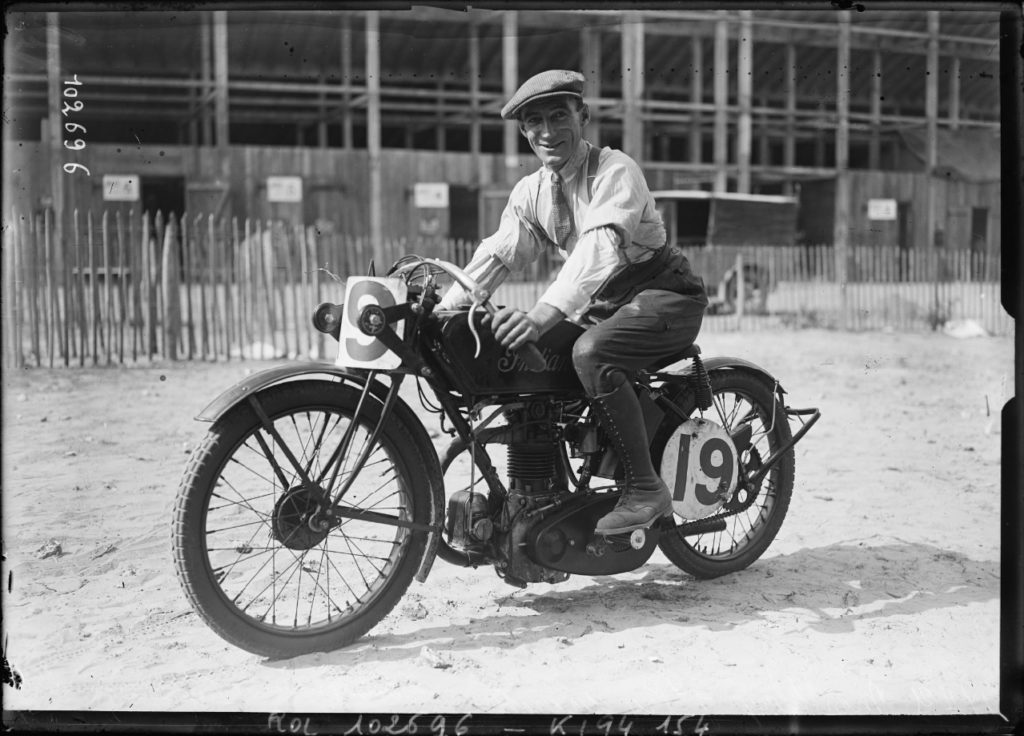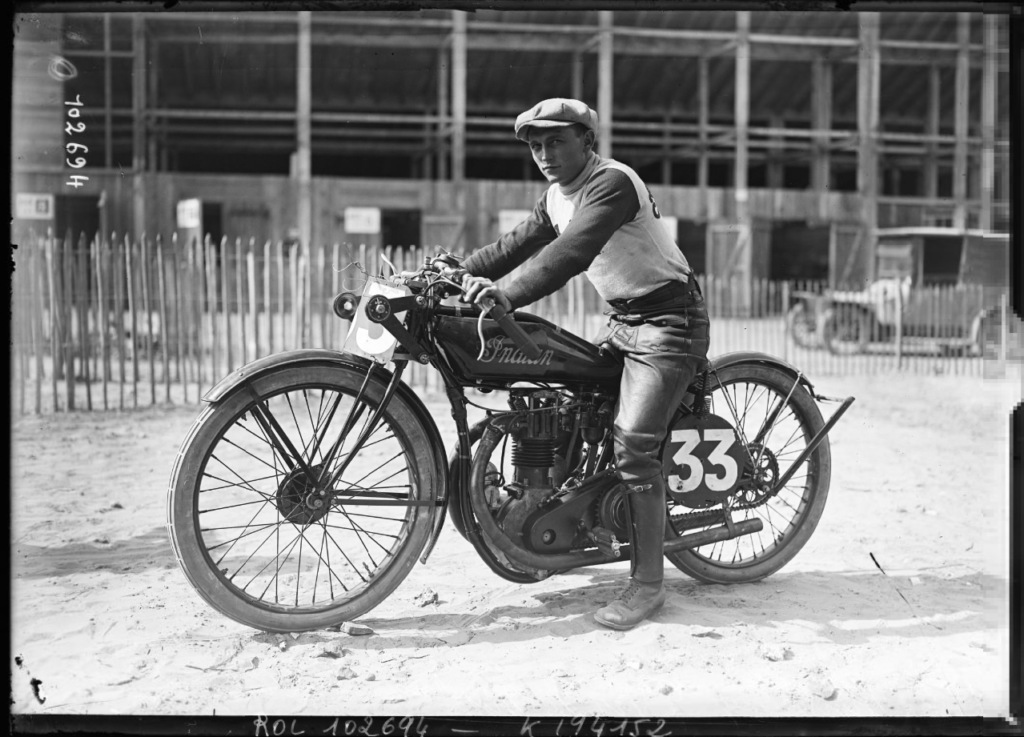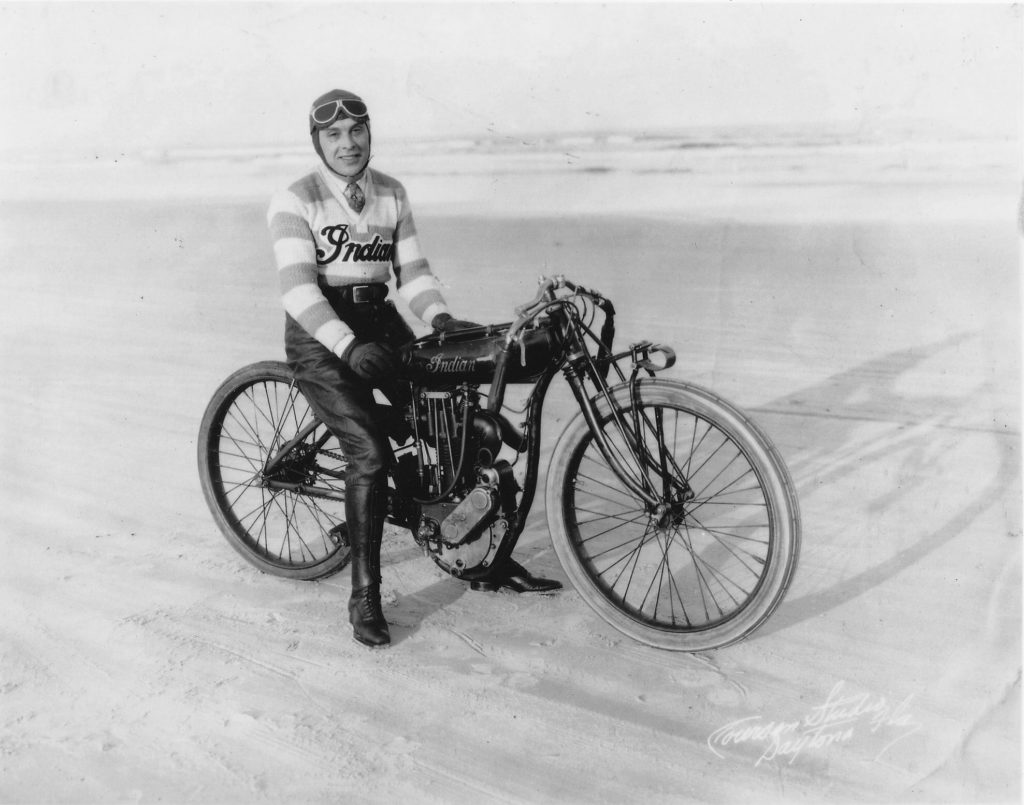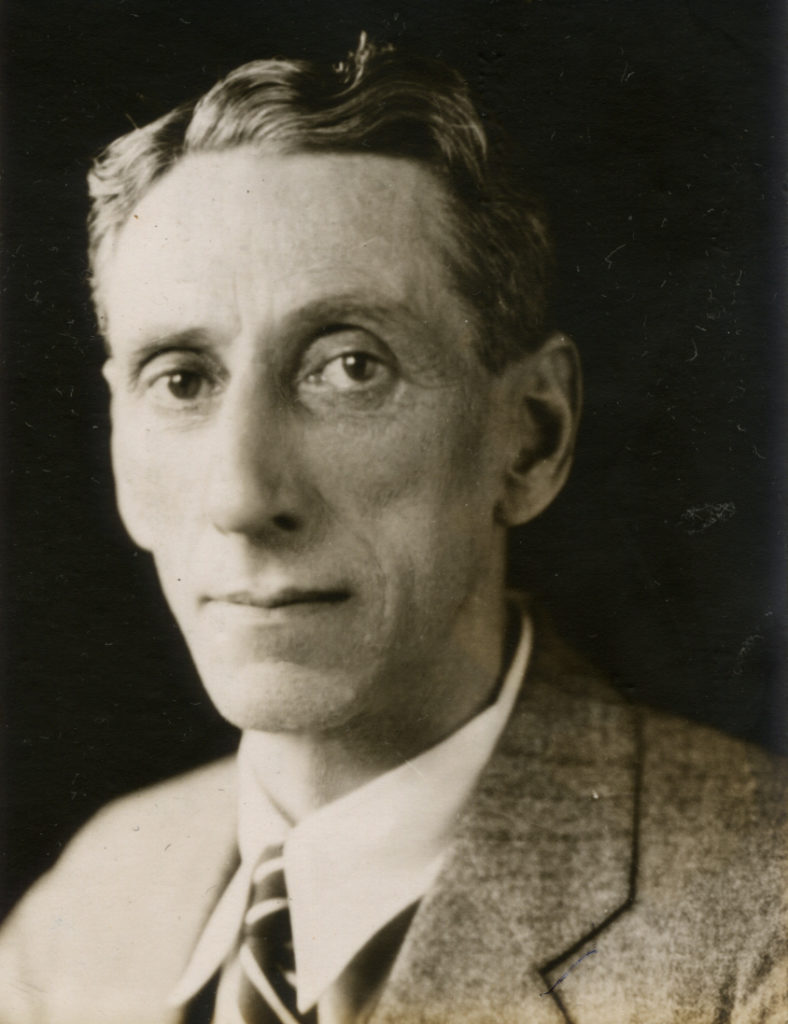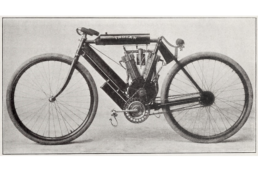
The Early History of Indian, Part 3: The Indian Motocycle Is Born
By Ken Aiken
The story that George Hendee first met Oscar Hedstrom in December 1899 during the races at Madison Square Garden is possible, but not likely, and it certainly wasn’t at the New York Cycle and Auto Show the following month. It remains pure speculation as to when and where they first met, but since both men were bicycle builders and racing champions working within the same regional network, it could have been almost anytime between 1895 and 1901. While they had that in common, Hendee’s focus was on business and Hedstrom’s on mechanics, and both were highly regarded for their skills. It was a partnership that would, within a decade, create the largest motorcycle manufacturer in the world.
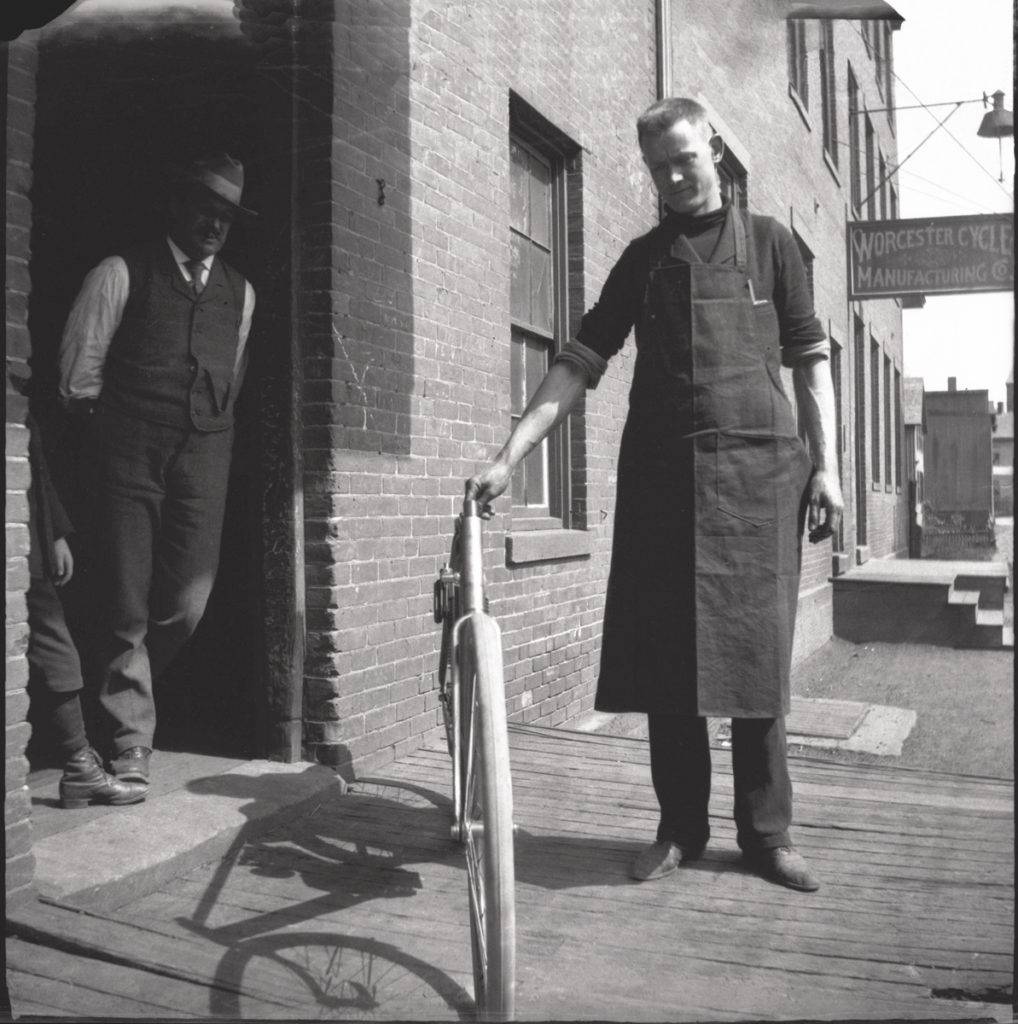
When Hendee decided to enter the motor bicycle market is also open to conjecture. What we do know is that George Hendee and Oscar Hedstrom signed a partnership agreement sometime early in 1901 and leased Hedstrom’s former shop, Worcester Cycle Mfg.—then in receivership—to create the prototype motor bicycle. By the end of April the press was reporting that Hedstrom was building a machine for the Hendee Mfg. Co. and that “hereafter he will be identified with that concern.” The curious thing is that the frame—designed specifically to fit Hendee and Hedstrom—was not built by Hedstrom.

The first tests were conducted in Middletown, Connecticut, and on May 25 Hedstrom and the motorcycle arrived in Springfield, Massachusetts, by train. The launch of the Hedstrom's motor bicycle took place on Saturday, June 1, at the Cross Street hill in Springfield where a reporter at the scene described a crowd of 400-500 people watching as Hedstrom rode his machine up the 19-percent grade of the loose-gravel street with power to spare.
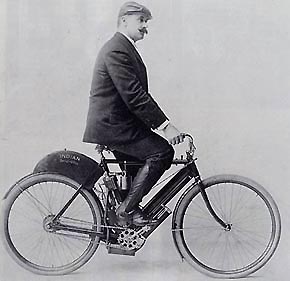
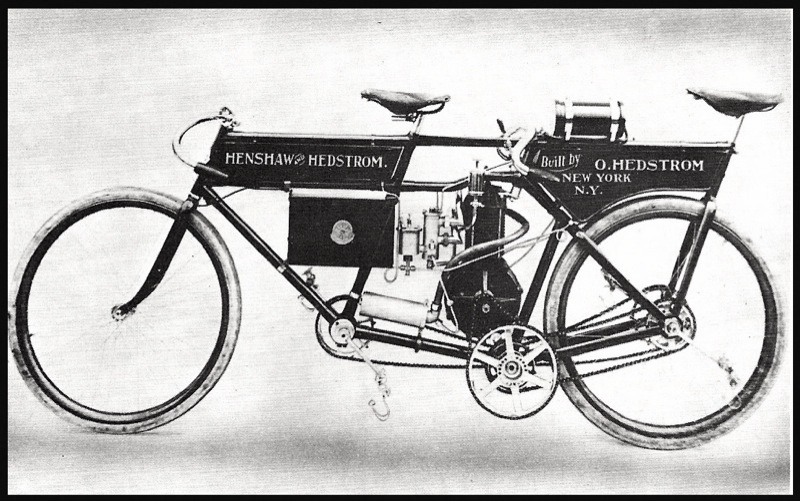
Indian motor bicycle production didn’t begin until the fall. The pacing team of Henshaw and Hedstrom was still in evidence and they gave a half-mile, motor tandem exhibition in Buffalo on August 7 in which they broke the world record with a time of 39.2 seconds. On August 12 they establish a new mile record for motor tandems and won the 10-mile motor tandem race. Even as late as August 15, it was reported that Hendee was still in the process of raising the necessary capital for the venture and that the Indian prototype was on display in a retail store in Springfield. It’s safe to assume that Oscar Hedstrom didn’t depart for Illinois to begin working with the Aurora Automated Machine Manufacturing Co. until at least late August.
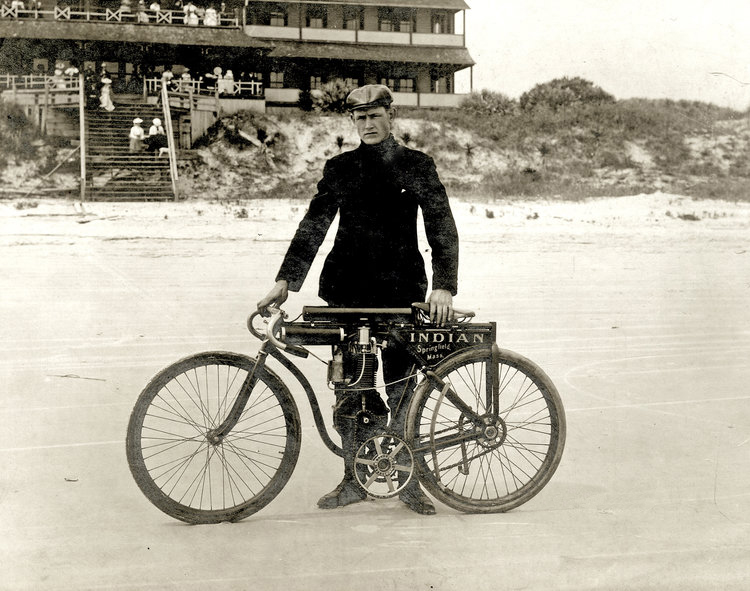
At the end of October, Oscar Hedstrom filed for several patents, including a chain adjuster, an engine valve, a control mechanism for engines, and the iconic camelback fuel and oil tank. Obviously the motorcycle was in production by this date, but the deal between Aurora and Hendee Mfg. wasn’t announced to the press until the beginning of November. The Bicycling World & Motocycle Review stated that Aurora had been testing the machine and that “motors are expected to be delivered by the end of the year.” On November 7, an Indian motor bicycle was displayed at the New York Auto Show and a week later George W. Sherman sailed for England on the Oceanic to attend the Stanley automotive show.

The first ads for the Indian motor bicycle appeared in November and Sherman returned from London with 150 orders and had acquired agents in England, Holland and Belgium. A letter from Hendee on February 13 informed a prospective agent that the “Indian Motocycle” —the earliest known use of the word “motocycle” for the Indian—would be demonstrated at the Boston Sportsman Show on February 23. By the first week in March 1902, Fred Randall, the Boston agent for Indian, had booked 37 motocycles for April delivery and George Sherman stated, “The motor bicycle has brought in so many new agents that it will be a task to meet the demand for push cycles.”

It has been reported that only 137 motorcycles (the Smithsonian claims it was 143) were produced in 1902, yet this year’s model in the Smithsonian Institution is serial number 150. Hedstrom didn’t file for a patent on his famous carburetor until May, which suggests he was still fine tuning it even during production. There were other issues. In March 1904, Alex Levedahl, president of Aurora Manufacturing, stated in a lecture to the Chicago Motor-Cycle Club that casting a cylinder was difficult and only about 40 percent were good. Also, every engine that arrived in Springfield was completely disassembled and reassembled, and every motor bicycle was tested on the Cross Street hill before shipment—if it didn’t pass, it went back to the shop and was adjusted or fitted with a new engine (hence the serial number discrepancy). This engine work was personally supervised and inspected by Hedstrom, plus he did the adjustments on the carburetors. It’s not surprising that deliveries couldn’t keep up with orders and this would remain a problem until 1904.

From the very beginning, advertising for the Indian was based on its superiority over the competition, and Hedstrom’s reputation as a mechanic. George Hendee winning the famous endurance races in 1902 and 1903, proved that the Indian could reliably carry a 243-pound man over the atrocious roads of that era and that mechanically it was superior to the other makes in these competitions. It is also important to note that in the 1902 endurance race Hendee’s bike was fitted with the prototype Indian twist grip, just one example of these competitions being used as real-world testing grounds for Hedstrom’s inventions. Advertising capitalized on these wins and the reputation of the two men, so a lost victory was taken personally.

Oscar Hedstrom was favored to win the New York Motor Cycle Club’s hill climb on May 30, 1903, but Glenn Curtiss showed up with his 5-hp v-twin Hercules and easily beat all 14 Indians entered in the event. In September Hedstrom arrived at the Rhode Island Automobile Club race meet “on an Indian without pedals and with a motor of greater power than on normal Indians.” [This may be the same machine he took to Ormond Beach - ed]. Four months later, at Ormond Beach, Hedstrom arrived on a parallel dual-engine, 5-hp Indian to go head-to-head against Curtiss and his v-twin, but to no avail. Then, on August 5, 1904, Hedstrom showed up at Newport Beach, Rhode Island, on the first Indian v-twin. The 3-hp v-twin was run in Orange, New Jersey, on November 26 and raced at Ormond Beach in January 1905. One might consider this to be the origin of factory race programs being used for retail product development since the new 2.25-hp single-cylinder engine, designed to power the new Indian Tri-Car, was in production by November 1905.

The early history of Indian motorcycles is based on isolated facts published in contemporary news accounts and surviving ephemera, but there are tremendous gaps in our knowledge. Descriptions of the State Street factory in 1906 make no mention of forging or casting capabilities. When did the forging factory in Hendeeville (West Springfield) begin operation? Exactly when were the Indian assembly plants established in other countries? What did the Indian pace machines built in 1904 look like? Why were competing motorcycle brands using Aurora-produced Hedstrom parts not as successful as the Indian? Even the answers to basic questions—when did Hendee and Hedstrom first meet, and how many Indians were made in 1901—remain to be answered. With the reintroduction of the Indian brand, interest in the true history of this iconic American motorcycle company has been resurrected. It promises to be a great story.
Read Part 1: 'George M Hendee, Race Legend' here.
Read Part 2: 'Hedstrom Sets the Pace' here.
Many thanks to Thunder Press for allowing TheVintagent.com to republish this article.

The Early History of Indian, Part 2: Hedstrom Sets the Pace
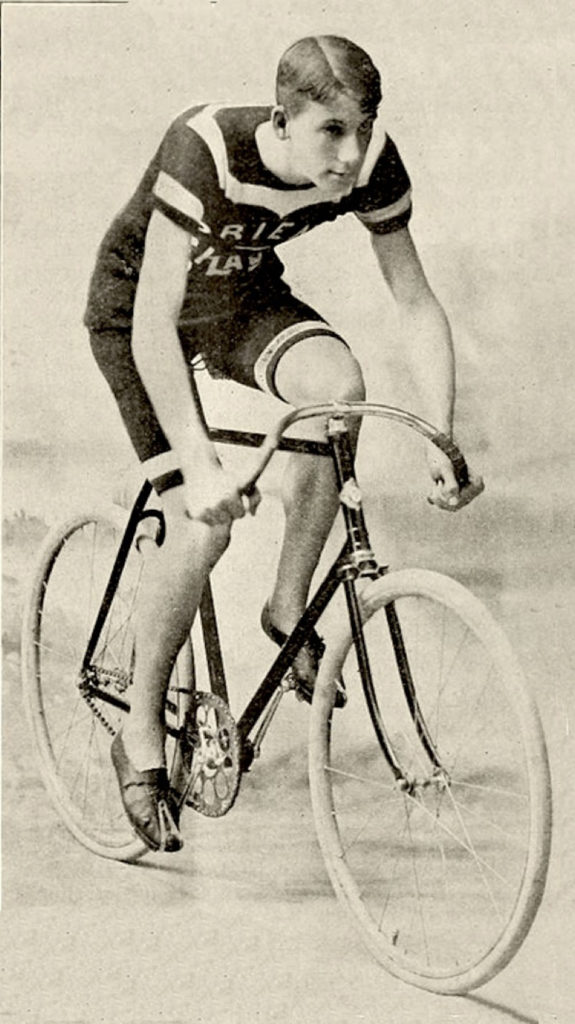
Popular history has George Hendee witnessing Oscar Hedstrom’s tandem pacer in action during the December 1900 races at Madison Square Garden, where he was so impressed that he offered Hedstrom a partnership. Another version dates their meeting a year earlier, and suggests Hendee booked the motor tandem team of Henshaw and Hedstrom to pace races at the Springfield Colosseum for the 1901 season. In Middletown, Connecticut, 42 miles from Springfield, Massachusetts, Oscar Hedstrom had, by 1895, established a reputation as a builder of custom racing bicycles. He worked at the Worcester Cycle Manufacturing Co, where he created the Birdie Special. In October 1895, Hedstrom changed his club affiliation to team up with another Worcester employee, Charles Henshaw, to create a professional tandem pacer team, and they quickly became known as one of the fastest tandem teams on the racing circuit.
Pacers were teams of men—usually two, but sometimes three or more—on multi-seat bicycles (tandems, triples, or quads) that would provide a high-speed pace for a racing bicyclist, and create a slipstream to reduce wind resistance. This allowed professional racers to increase their speed and endurance, recording higher top speeds for longer distances. Professional medium- and long-distance stars demanded unlimited pacer teams, and would often use 10 or 12 teams per race.
In France, Comte DeDion had designed a small internal combustion engine in 1896 and placed it in a tricycle, called the DeDion-Bouton. The following year they were producing and selling both the motor tricycles and individual engines, and they were popular, selling in the thousands (a racing series was even created for trikes). Kenneth Skinner of Boston acquired the sole U.S. distribution rights for the DeDion-Bouton in November 1897, and partnered with Charles Henshaw to open the Back Bay Cycle Company. Allegedly, Oscar Hedstrom learned to tune the engines of imported De Dion-Bouton tricycles and quadricycles the following year.

On December 26th 1898, a 20-mile race was held at Madison Square Garden: Fournier on his solo mechanical pacer led Jay Eaton and Teddy Goodman, while Harry Elkes was paced by a series of seven man-powered tandem teams working in sequence. The event was billed as man against machine, a popular subject in the age of John Henry, and the dawn of motorized transport. Unfortunately, the drive belt on Fournier’s machine parted during the third mile and took him out of the race. Oscar Hedstrom was present that day, and competed in the professional half-mile race (placing 1st) and the one-mile handicap (placing 2nd): it’s hard to imagine that he missed seeing Fournier’s pacer perform.
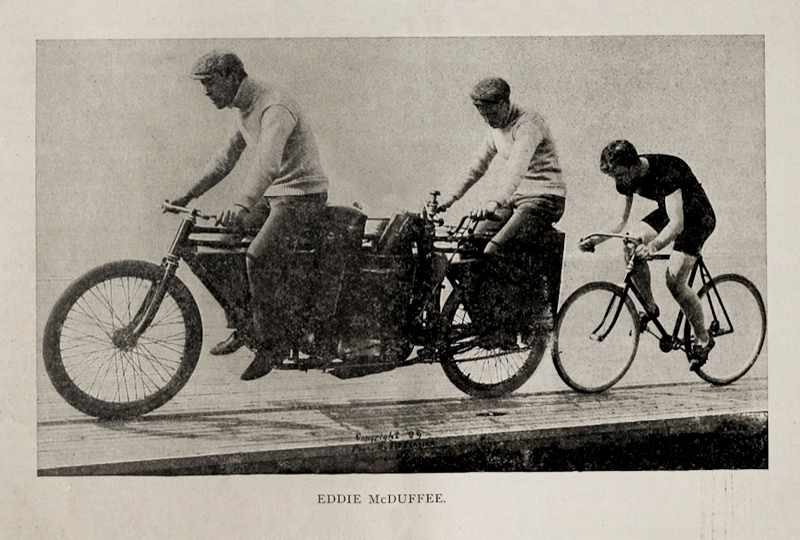
In March of 1899, Fournier built a motor tandem configured as a “bob tail.” This chassis design had been invented by Hedstrom the previous year, with the rear seat placed behind the axle to provide the racing bicyclist with a better slipstream; it would soon become an extremely popular pacer style. In May, Fournier began to import tandem motor pacers from France and first used them at Ambrose Park in Brooklyn. Demand was high, and that month the Fournier-Henshaw team also appeared at the Woodside track in Philadelphia and the Baltimore Colosseum. Although Charles Henshaw was involved with Fournier’s import business and pace team, he also organized his own professional motor-pacer teams and promoted races at Crystal Lake Park in Middletown, Connecticut.
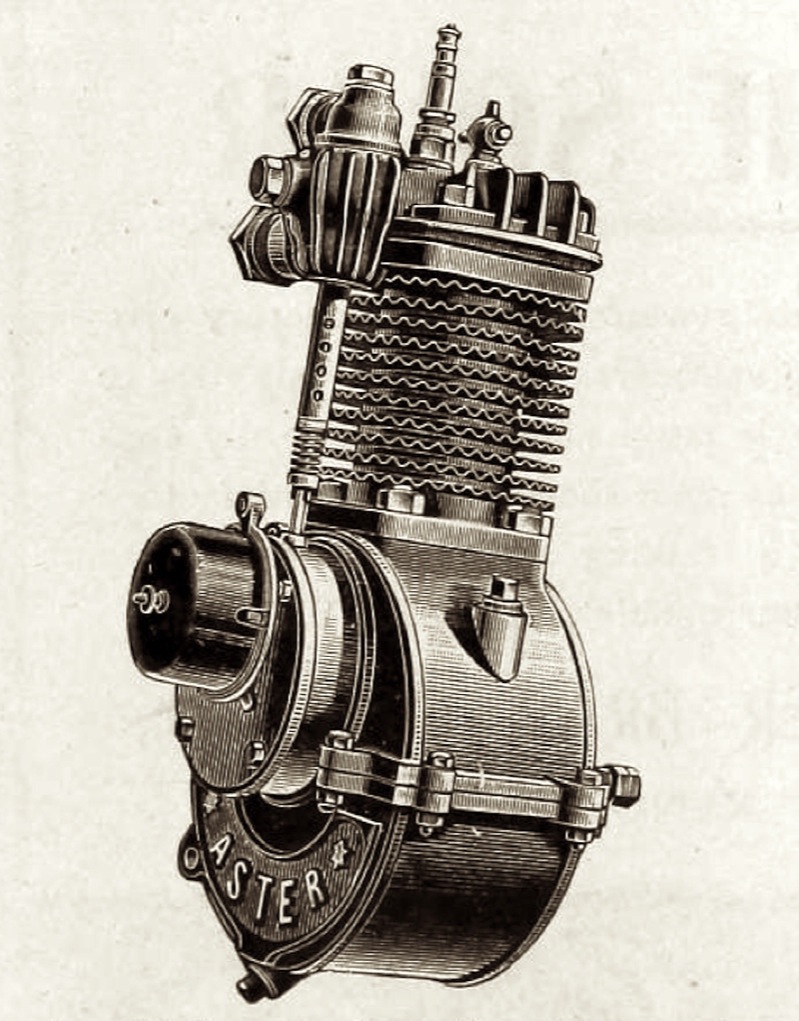
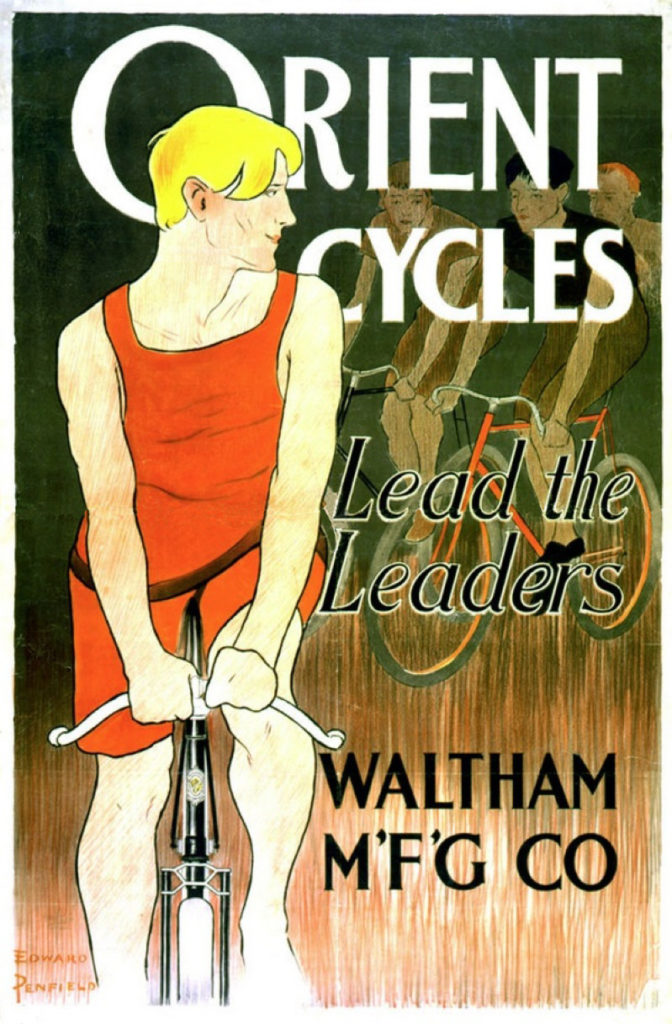
The Waltham Manufacturing Co. was producing the popular Orient bicycle, and developed an Orient motor pacer using an Aster engine. It was finished in time for a race meet on May 30, 1899, and early in June, Henshaw was riding it at the Waltham and Charles River tracks. On June 17 at the Waltham racetrack, Fournier and Henshaw riding a French pacer were beaten by the Orient machine. The same happened at the Manhattan Beach track on July 4, except this time Henshaw and Fred Kent partnered on the Orient. By the fall of 1899, the Orient pacers (not retail motor bicycles) were being advertised for sale, with 25 sold by the end of the year: almost no champion bicyclist was willing to compete without a motor cycle pacing him.
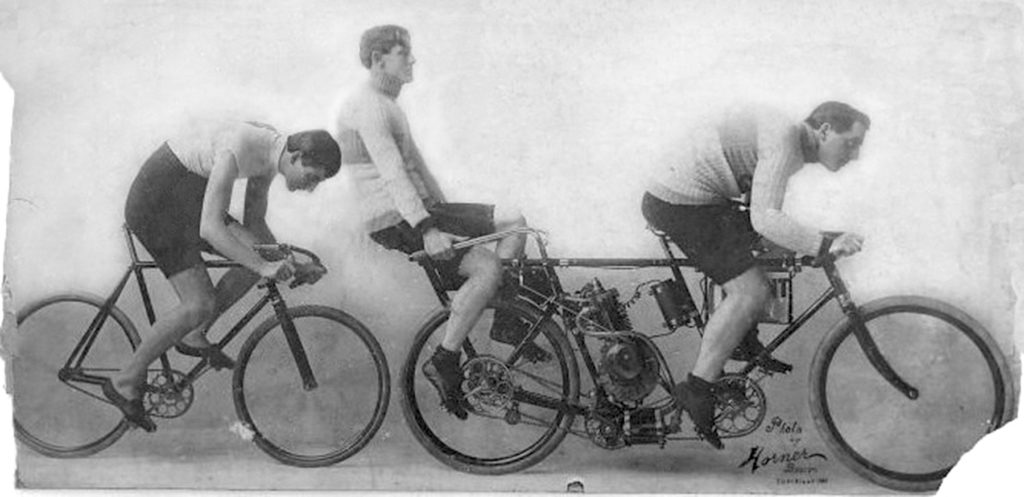
The evolution of and demand for motorized pacers was explosive. Promoters wanted them because they were less expensive than paying multiple teams of human pacers, and their novelty drew crowds [often these were the first motorized vehicles of any kind spectators had seen, and were certainly the first moto-cycles - ed.]. Racers wanted them because they attained faster times and thereby were able to establish new track records. In an October article in The Wheel & Cycling Review it was revealed that Frank Waller made $1,000 clear in one month while operating a motor pacer, and another champion racer made enough money to purchase a second pacer after only a month of operating his first. In one month during 1899, Fournier and Henshaw had 16 pacing engagements, and traveled over 10,000 miles to fulfill them. There was money to be made.
During this period, both Oscar Hedstrom and Charles Henshaw were also racing as professional bicyclists and, as a muscle-powered tandem team, held the national records for the unpaced half-mile and mile, and the mile and two-mile records for paced. As part of a quint (five-man tandem) team Hedstrom placed third at Ambrose Park in May, while Henshaw, paired with Kent, came in fourth. Unfortunately, on June 19th at Manhattan Beach in the fourth lap of the Great Atlantic Sweepstakes, Hedstom got tangled up in a spill with two other riders and dislocated his shoulder, which put him out of competition for the remainder of the season.
On September 18 1899, Hedstrom teamed up with pattern designer William Russell Frisbie, who did contract work for Worcester Cycle Mfg., Waltham Mfg., and Keating Wheel Co: their aim was to create a motorized pacer. Hedstrom built a tandem frame and modified—or, at the very least, converted from metric to SAE—a DeDion engine in the shop that he had been renting from Worcester Cycle since February 1898. This tandem motor pacer, nicknamed the Royal Blue Express because of its paint and nickel fixtures, was built under contract for racing star Charles Miller. Weighing only 130lbs, it was tested on November 24, 1899, in Middletown, and three days later at the Berkley Oval in New York. It would be used in the main event at Madison Square Garden on December 16 to successfully pace Harry Elkes in the one-hour race.
The partnership between Hedstrom and Frisbee was dissolved in January 1900 because Frisbie wanted to develop marine engines and automobiles. Hedstrom continued working on his own motorized pacers fitted with his modified DeDion “Typhoon” engines (tandem #2 was built in May with a 3.25 hp engine and #3 had a 5 hp), and producing his Hedstrom Special racing bicycles. Several of the motor tandems were sold to racers in the spring, but despite numerous requests he stopped producing them during the race season due to racing team commitments.

Read Part 1: 'George M Hendee, Race Legend' here.
Read Part 3: 'The Indian Motocycle is Born' here.
Special thanks to Thunder Press for allowing TheVintagent.com to reprint this important research.
The Vintagent Selects: The Sight
The Vintagent Selects: A collection of our favorite films by artists around the world.
The Sight (2018)
Run Time: 2:07
Director: Ilham Nuriadi
Music: Kimo Rizky
Motorcycle: Thrive 027
SUMMARY
When electronic music producer Kimo Rizky ordered a custom motorcycle from Indonesia's Thrive Motorcycle, he also chose to record the sounds of its construction: hammering, drilling, grinding, etc. Rizky then mixed these sounds with an electronic beat, making music from his Thrive 027 custom motorcycle, and Ilham Nuriadi directed this short film with Rizky's music and the motorcycle.
RELATED MEDIA
Thrive Motorcycle Website
Thrive MC T-005 Cross in our Custom Revolution exhibit at the Petersen Museum in LA.
Thrive's film 'Encounter' on TheVintagent.com
Candy Land in the Basque Country
By Bhuvan Chowdhary
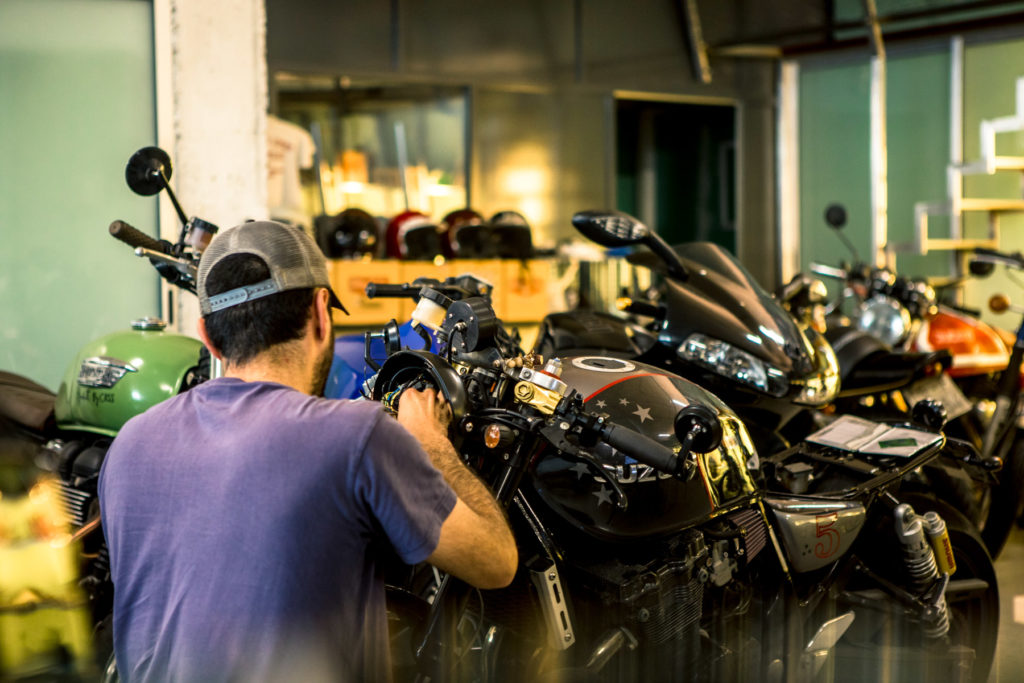
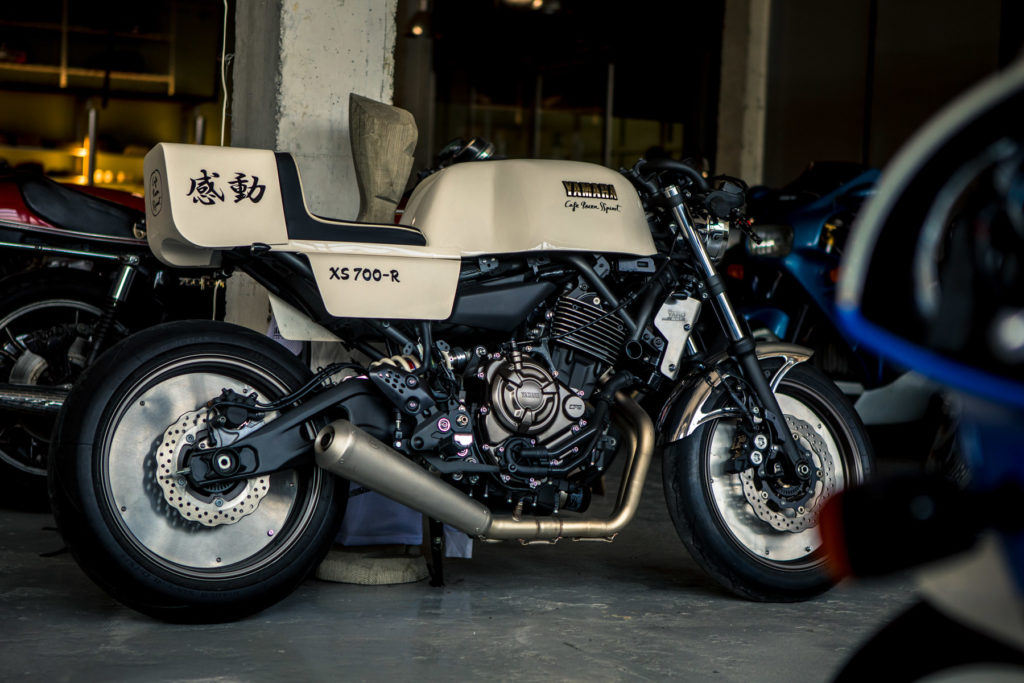
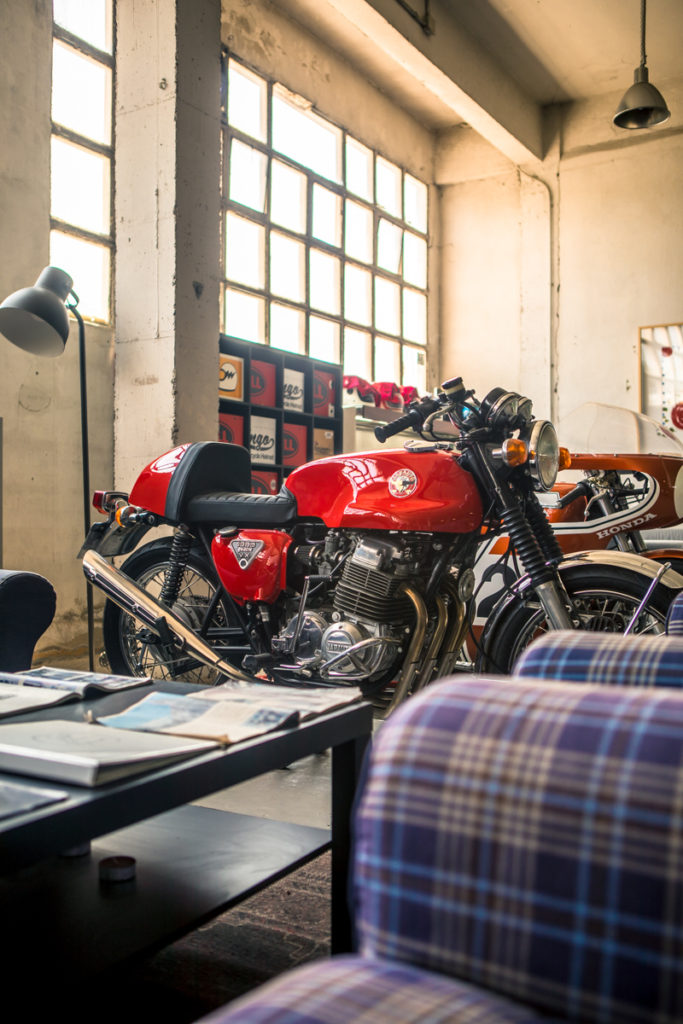
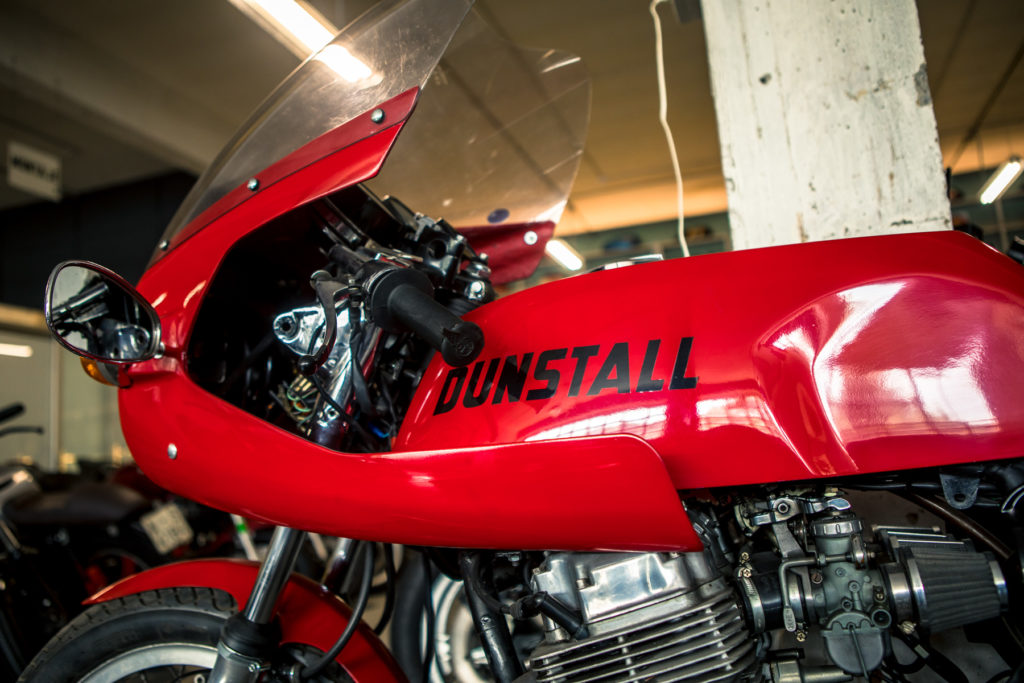
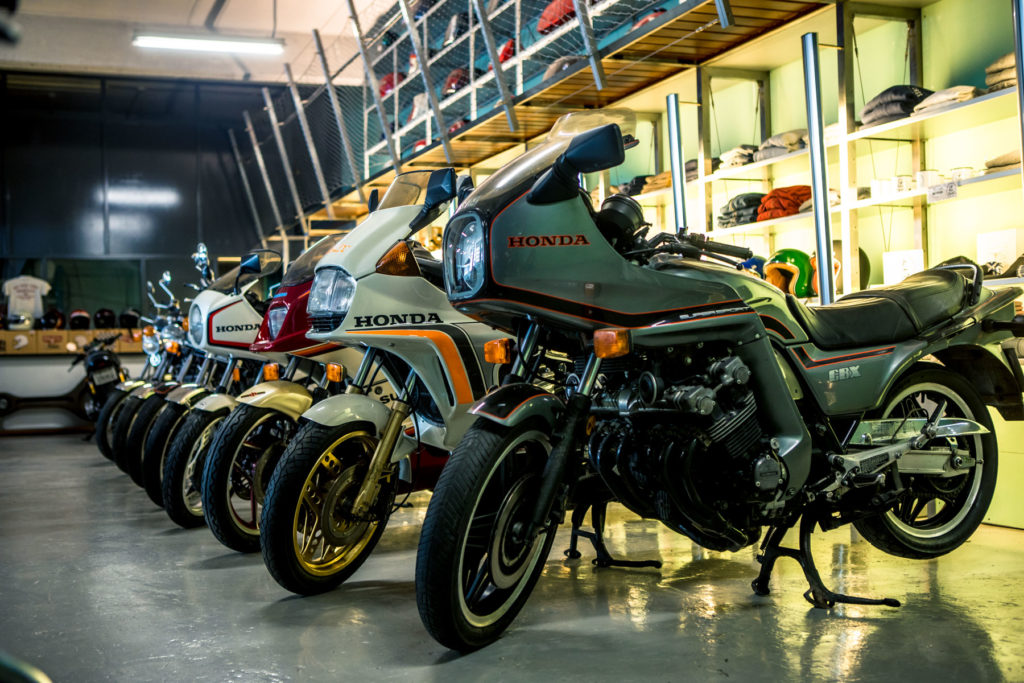
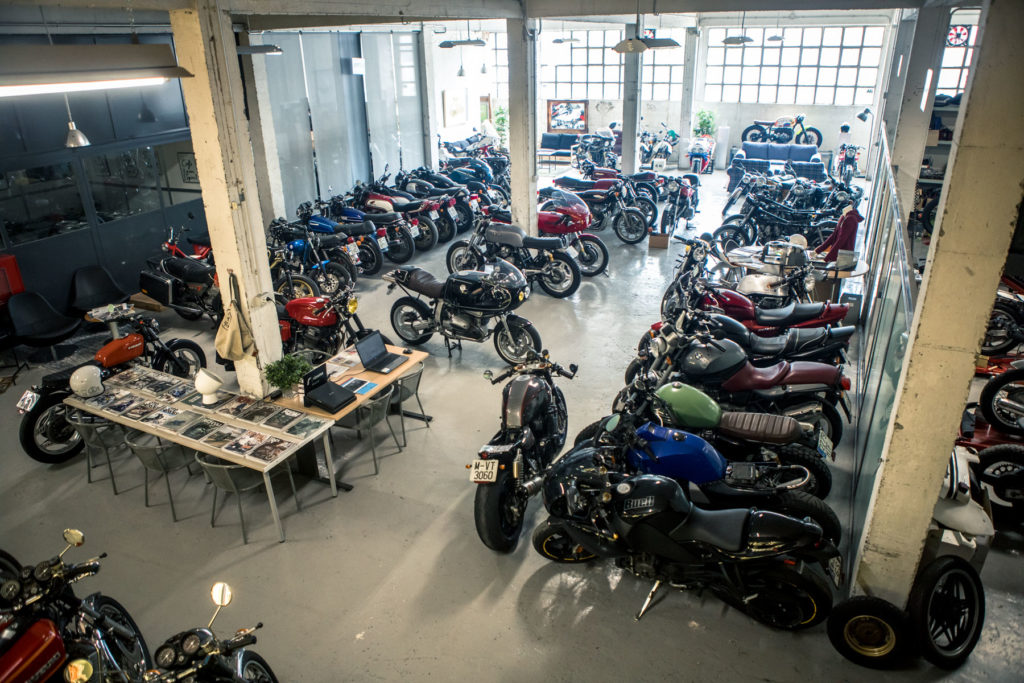
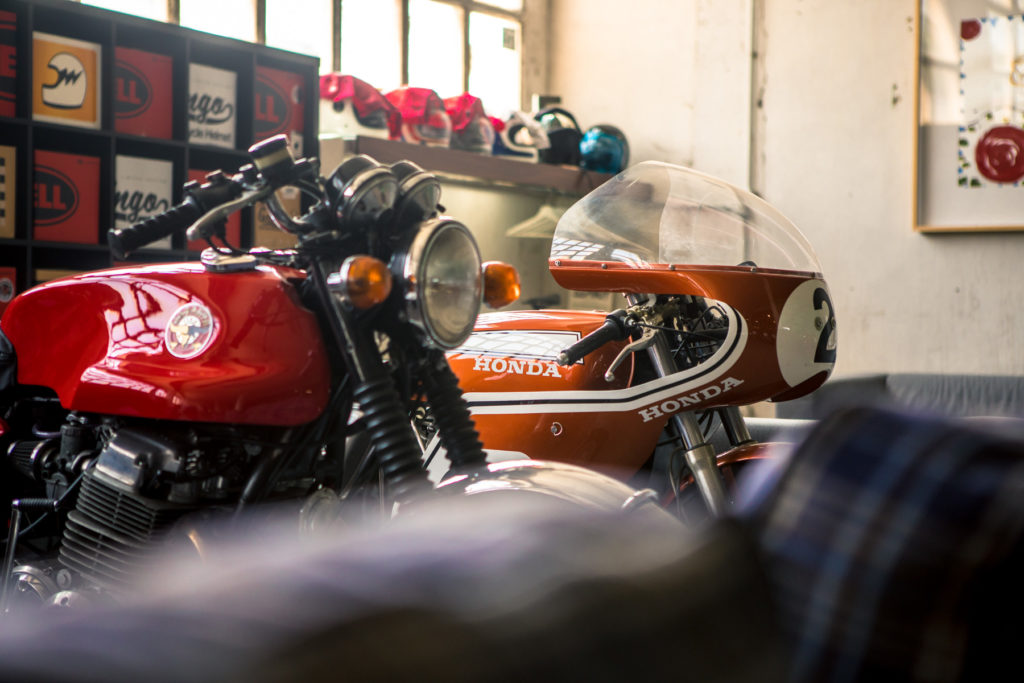
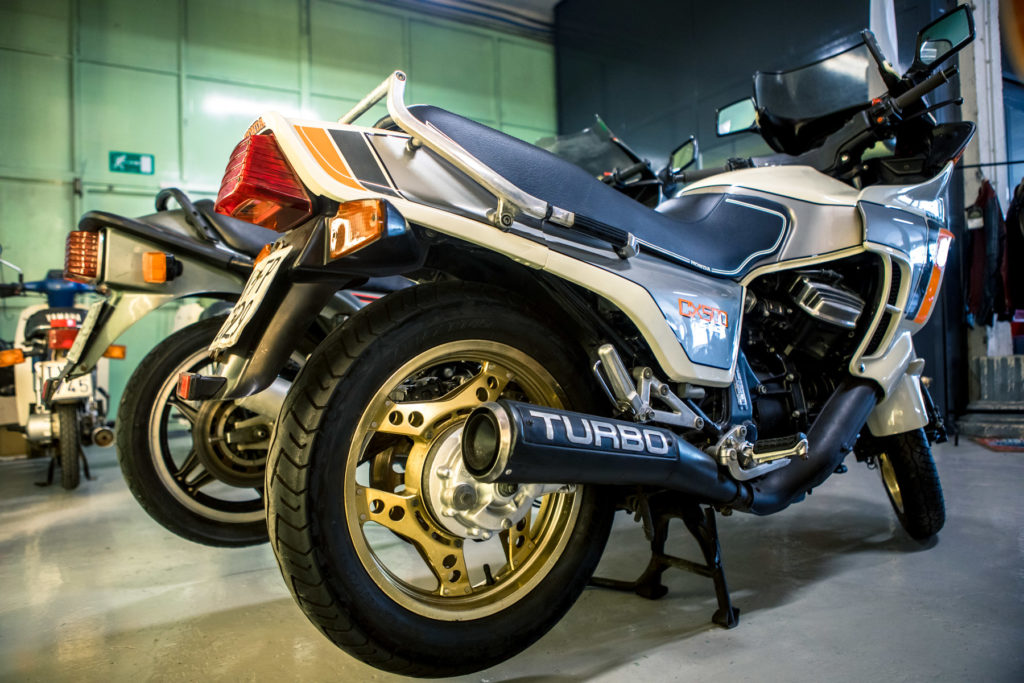
Skirting the western Pyrenees from Biarritz towards San Sebastian it becomes clear why this is such a great region for motorcycling and surfing. Driving into San Sebastian, the mountains give way to the sea, greeting you with a gorgeous blue sky and the beach at La Concha. It’s hard to leave this seductive scene, but just a bit down the road is a garage that sums up everything memorable in the world of motorcycles: Café Racer SSpirit (the double SS is for San Sebastian). Juan Carlos López, Hugo López and Juan Pablo Santinelli started Cafe Racer SSpirit in 2014 as a custom motorcycle shop. For the trio, building customs is about more than the metal: they believe that for a motorcycle to resonate for a customer, it’s important to learn about the history, heritage and culture behind the machine.
The Early History of Indian, Part 1: George M. Hendee, Bicycle Race Legend
The pioneer years of the American motorcycle industry are poorly documented and murky, with complicated relationships between protagonists, including a free flow of ideas both across the Atlantic and within the US. The skills of an inventor, machinist, foundryman, bicycle builder, racer, promoter, entrepreneur, and manufacturer were rarely housed in one person, and shifting alliances were the norm at the turn of the Century between those with particular skills, and those who needed them. Drawing a clear line in the development of a brand - say, Indian, or Harley-Davidson - is always done backwards, and after the fact, and often leaves out important parts of the story in favor of a clear narrative.
TheVintagent is pleased to include the research of Ken Aiken on the very early years of Indian, with its complicated web of influences and connections. Ken has dismantled assumptions and myths surrounding the creation of the company, in favor of what he could actually find in the historical record. His research is presented in 3 parts, and ends with as many questions as it answers, which only proves History is a living, evolving discipline, and taking a hard look at what's 'known' is always worth the effort. Ken's series is reproduced here by his kind permission.
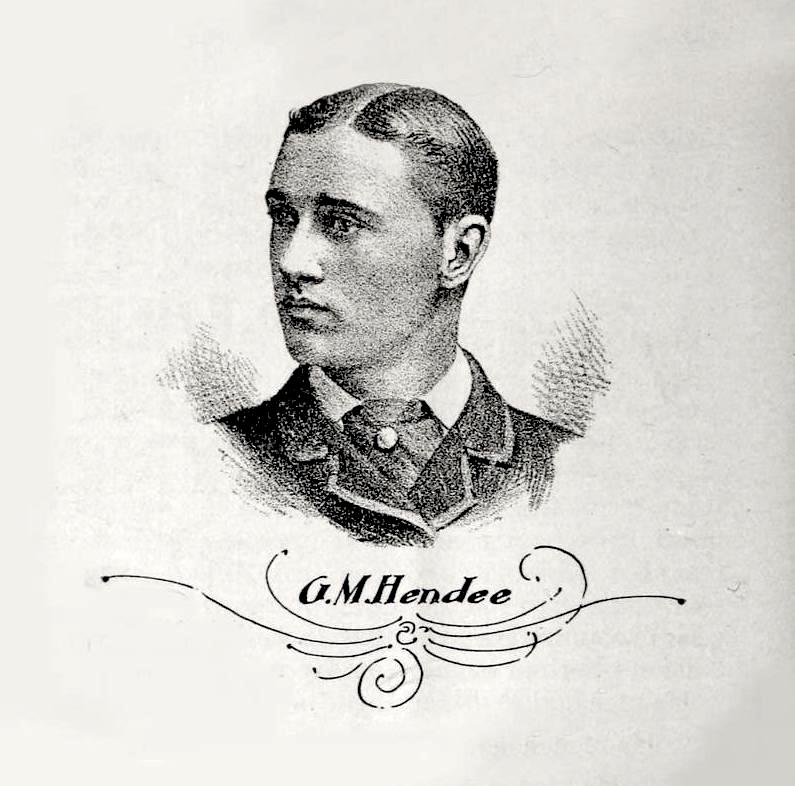
George M. Hendee, Bicycle Race Legend
“I realized that in the name Indian we had a winner for bicycles. When the motorcycle came along a year or so later, it simply was out of the question to think of calling it anything but Indian. The name fitted the motorcycle even better than it did the bicycle, and before many moons had passed, the new warrior had deposed the Old Chief from the Wigwam.” —George Hendee, speech made before the Springfield Rotary Club in 1931
Popular history has the iconic Indian Motocycle Company starting in 1901 with the fortuitous partnership of Carl Oscar Hedstrom and George M. Hendee. In reality, the company that manufactured the motorcycle wouldn’t assume its popular name until November 1923. Before that it was known as the Hendee Manufacturing Co. and its first product was a bicycle. Yet the story actually begins two decades before that and reflects the transition that took place in America as bicycles morphed into motorcycles.
In 1879 Albert Pope imported 50 high-wheel bicycles from England and three years later had acquired the Weed Sewing Machine Company—the foremost machine tool and forging factory in America—to manufacture his Columbia bicycles. The 1880s experienced its first bicycle craze, which included the formation of local clubs, a national organization, long-distance touring and racing competitions. With a 1:1 pedal-to-wheel ratio and the diameter of the huge front wheel reaching up to five feet, these high-wheel bicycles required athletic strength and stamina to operate on competitive levels. From 1882 through 1886 the National Amateur High Wheel Champion was George Hendee and the speed record he established in 1886 wouldn’t be broken until 1892.
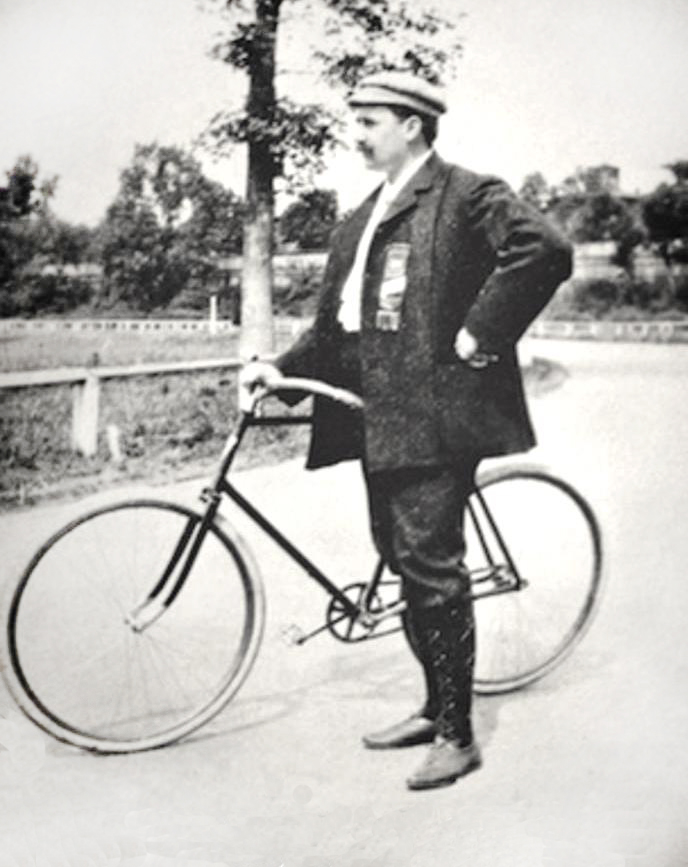
America’s second bicycle craze came after the arrival of the safety or “ordinary” bicycle. The Overman Wheel Co. was the first to introduce this new design where the two wheels were not only smaller, but also the same size, and the new crank and chain allowed for more efficient—and faster—propulsion. The ordinary didn’t require athletic strength to operate: ladies and more dignified gentlemen now could respectably enjoy bicycling. In 1897 American industry would manufacture two million bicycles, or one for every 30 people in the U.S.A., and bicycle racing would become the most popular sport in America with over 600 professional racers on the circuit. One of these was Carl Oscar Hedstrom.
It was announced in January 1892 that George M. Hendee was managing the bicycle floor of the Hulbert Brothers store that sells King and Queen of Scorchers bicycles. He was a racing legend and, although past his prime, still entered bicycle races. In March 1893, Hendee became the New England agent for Rudge, Sylph, and Overland bicycles. In July he was offered the presidency of Warwick Cycles, but declined. That year he also participated at the Springfield track as a judge and timer. In mid January of 1894 he sailed for England where he apparently made arrangements with suppliers of bicycle components. By December he had completed his models of the Silver King and announced an installment program that was to begin on January 1, 1895. The first Silver King bicycle ad appeared in the January 4 issue of The Wheel. George Hendee made Silver King bicycles to order at his shop in the Stacy building at 41-43 Taylor Street in Springfield, Massachusetts, using parts imported from England. (At this time the Duryea automobile was being produced on the third floor of this building.) On November 23, 1895, Hendee sold half interest to Eddie Nelson, who had been working with him for the past year, and the business acquired a $10,000 loan from Nelson’s father-in-law, Mr. Holbrook. Hendee & Nelson Manufacturing Co. was formed and the shop expanded to include 10,000 sq. ft. on two floors at 478 Main Street.
At this time there were two U.S. Patent Offices, one for bicycle-related inventions and one for everything else. Between 1890 and 1896, over $100 million had been spent on bicycles and fortunes were made in stock speculation of existing businesses; by the end of 1896 there were 300 bicycle manufacturing companies in the U.S. Wooden board-track velodromes across the country hosted events at which thousands of spectators attended. Bicyclists also were taking touring trips and railways advertised popular destinations for cycling tourists. The League of American Wheelmen (LAW) had over 100,000 members and actively lobbied Congress to support the Good Roads Movement.
In March 1897 a legal notice was published in The Wheel: “The Hendee & Nelson Mfg. Co., 478 Main St, Springfield, Mass. will hereafter be known as E. H. Nelson & Co. Mr. Hendee will devote more of his time to the factory on Taylor Street.” On August 18, an attachment was levied by the court and all of the company’s assets were seized: the following month Hendee & Nelson Mfg. filed for insolvency. Like so many other bicycle companies, it failed because the market was glutted with over-produced inventory and cutthroat competition had slashed retail prices to the bone. However, George Hendee had an extensive family, business and industry network. He acquired the tools and inventory of his former company at auction, raised $5,000, and incorporated the Hendee Manufacturing Company in January 1898. His new line of bicycles was called Indian.
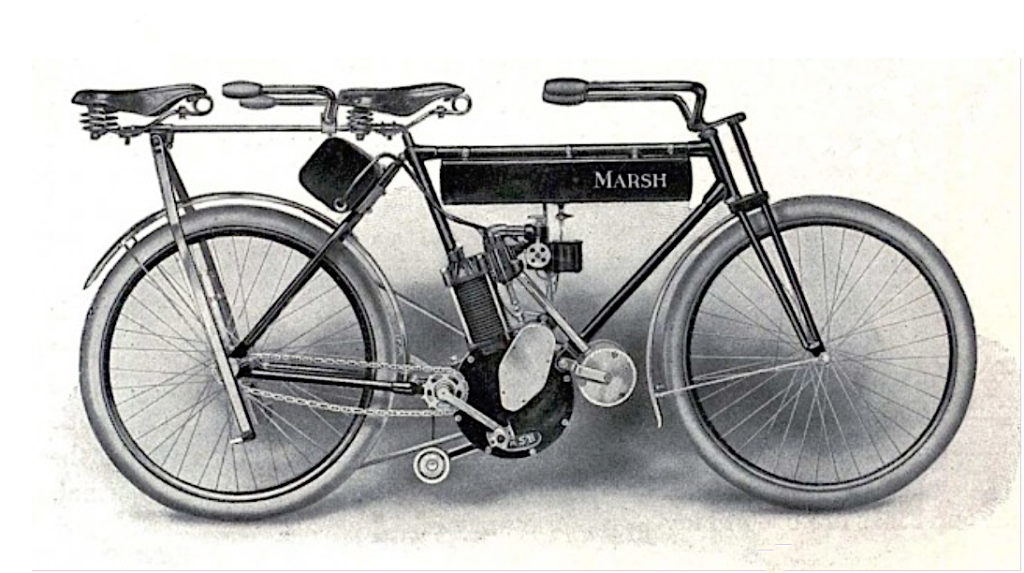
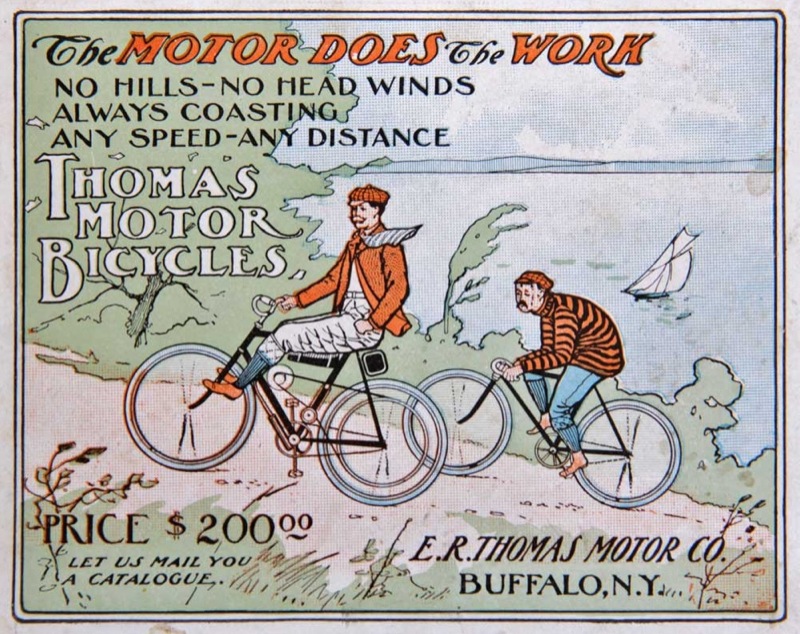
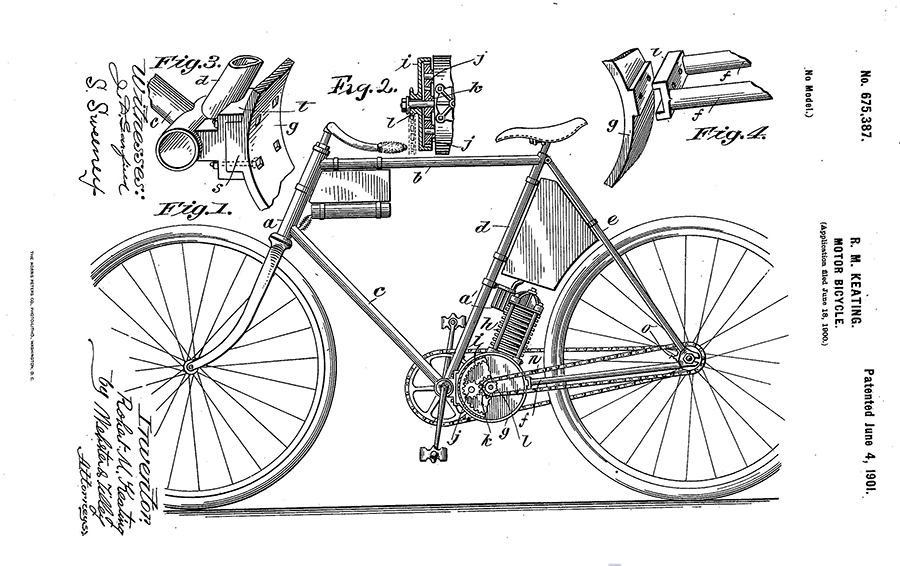
Using parts imported from England and retailing his product at less than half the price of his competitors, George Hendee was selling 4,000 bicycles a year. However, the bicycle industry was in serious trouble. Albert Pope had managed to consolidate 73 different manufacturers into a trust called the American Bicycle Company, while numerous others—including Worcester Cycle Mfg.—declared bankruptcy or were forced to reorganize. Charles Metz’s Waltham Mfg, (Orient bicycles) became the exclusive American agency for the Aster motor in March 1900, the Orient Autogo tricycle—that with a fore-car attachment converted into the Autogo Quad—came out in April, the Victoriette Phaeton automobile was introduced in August, and the Orient Autogo cycle became available for sale by October. E.R. Thomas introduced their Auto-Bi motor cycle in 1900; so did the Marsh brothers, George Holley, and W. E. Steffey. The Cleveland Motor Tricycle came out in September and Keating’s motor bicycle was road tested by the press in December. In Springfield, where the Duryea brothers had established the first automobile factory in America in 1895, the Knox Automobile was offering their three-wheel carriage for sale, and the Hampden Mfg Co. was producing motors for bicycles. Hendee was an astute businessman and no doubt aware of whom was doing what and where the industry was headed.
Read Part 2: 'Hedstrom Sets the Pace'.
Read Part 3: 'The Indian Motocycle Is Born'.
Racing 'Round the Rainbow Scintillator
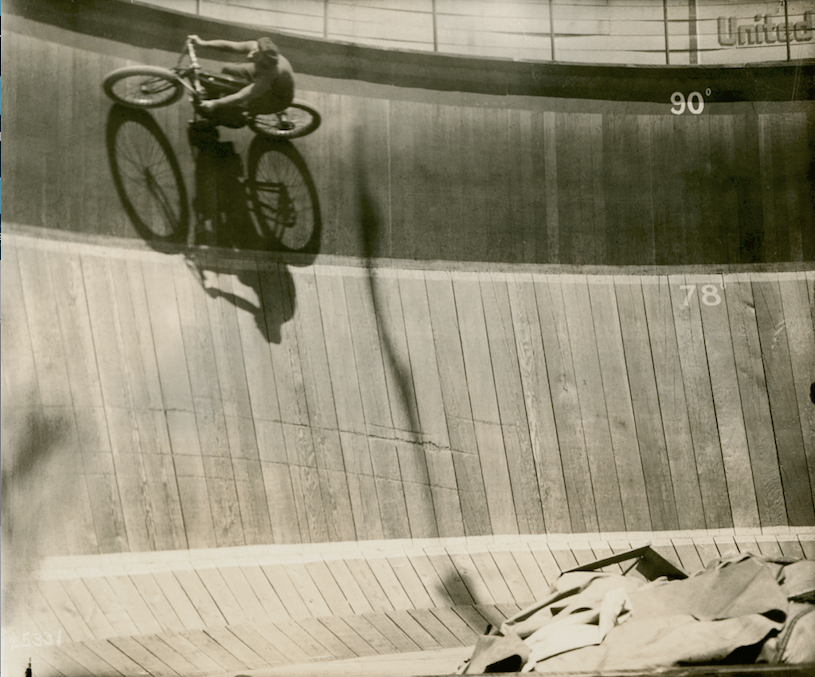
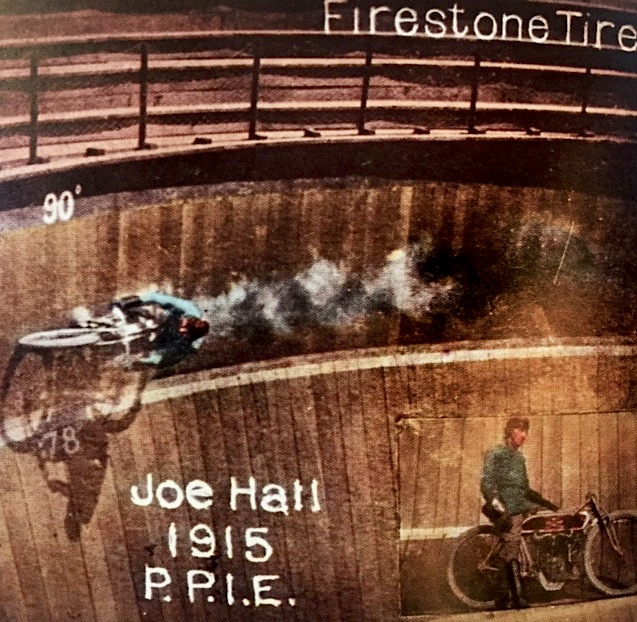
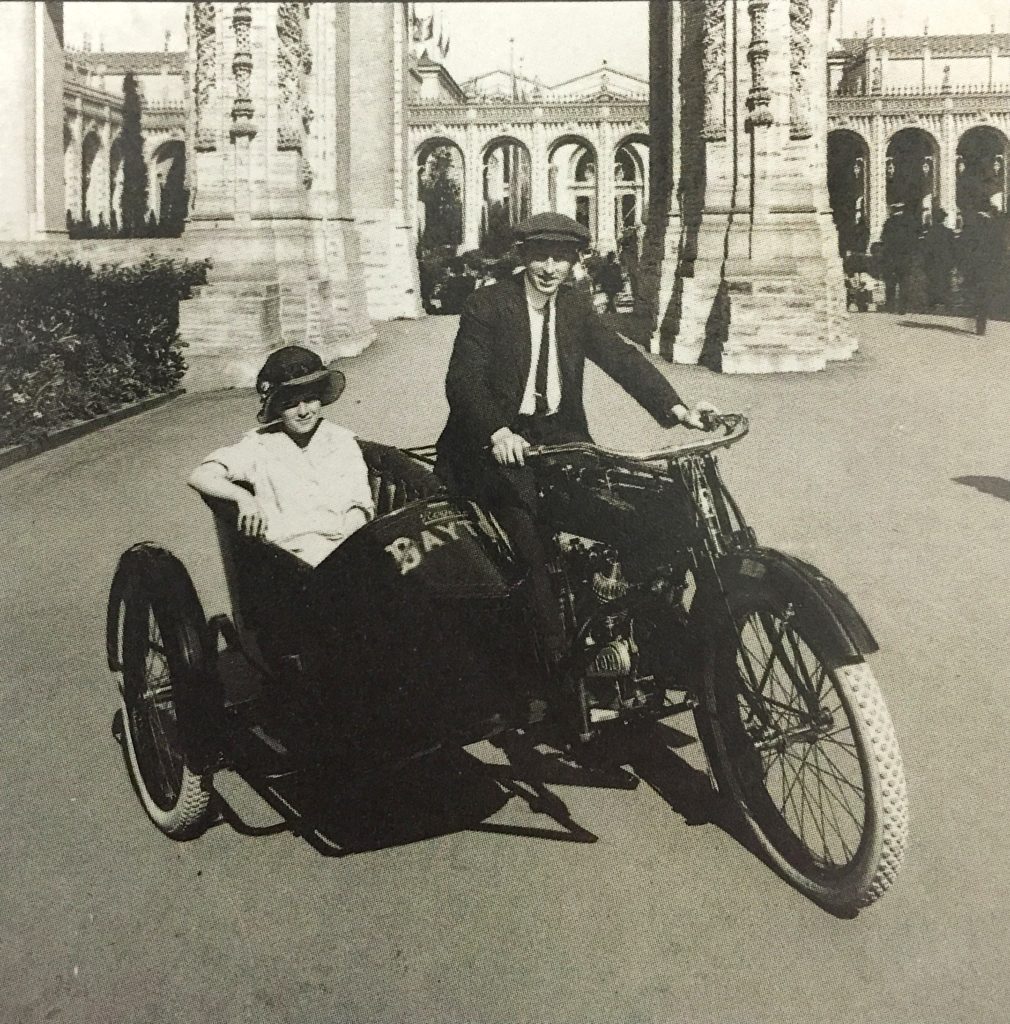
Grand Prix Racing and Wall of Death at San Francisco's Panama-Pacific International Exposition, 1915
In a rollicking, anything-goes city like San Francisco, it was still possible in 1915 to wow crowds by the hundreds of thousands with an old-fashioned spectacle. The City had emerged phoenix-like from the rubble of its tremendous shaking in 1906, and City fathers decided the 1913 completion of the Panama Canal was a good excuse for an Exposition to show off the newly rebuilt city. Mayor ‘Sunny’ Jim Rolph loved a party; he was a wealthy, debauched populist who owned two banks, a shipping line, and a whorehouse. He grasped the upside of not only building such an Expo, but also developing the land beneath it once the show was pulled down. The site chosen was the Harbor View area, a reclaimed marshland then hosting a tent city of ‘quake refugees, whose 635 acres were purchased for $1,036,440.78. Today it’s called the Marina district, and is both vulnerable to earthquake (being landfill) and very popular with SF’s burgeoning tech-yuppie influx.
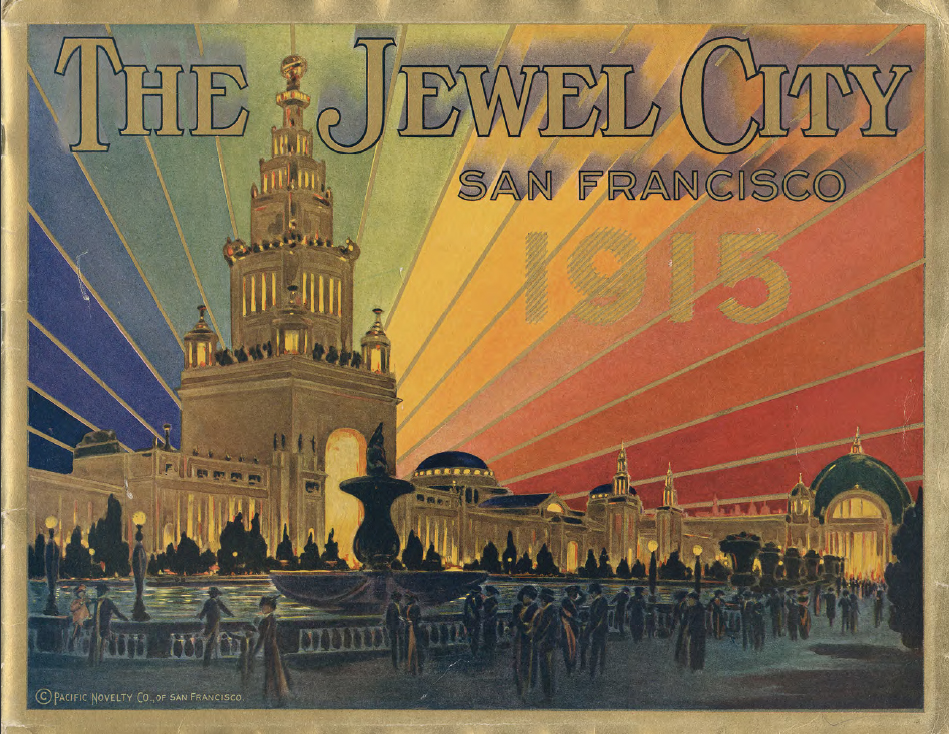
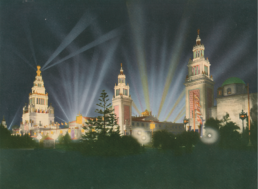
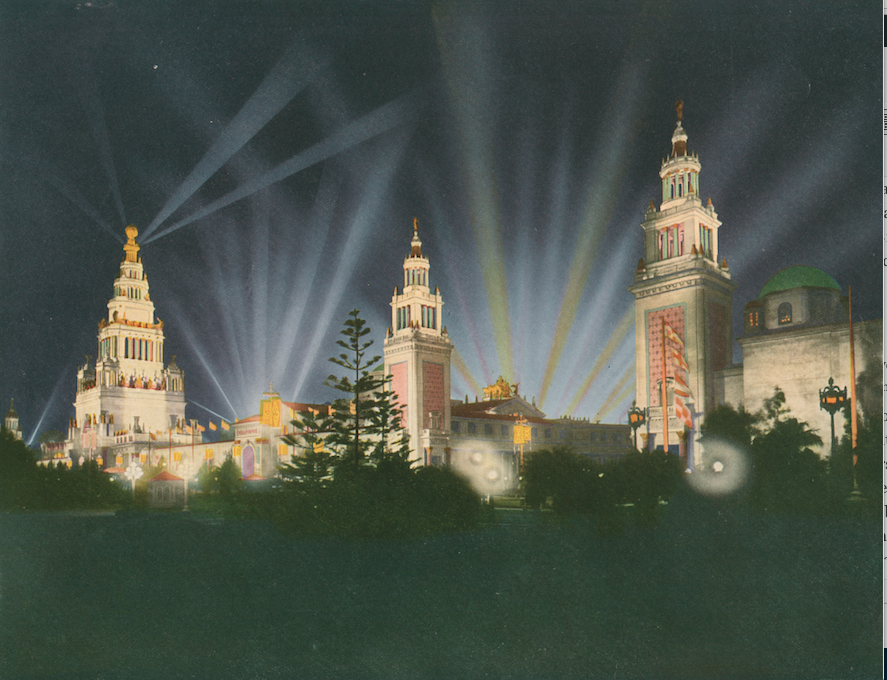
A shimmering fantasy village – the ‘Jewel City’ - was erected in less than a year atop the former squatter’s camp, with dramatic, radical architecture at its core, a final flowering of 19th Century Beaux Arts beauty. The Panama Pacific International Exhibition (PPIE) was a carefully color-coordinated series of soft travertine pinks and ochres, its paths packed with the white sand from Monterey, which was fire-roasted to the right shade of brown. The heart of a central district of domes and towers was the Palace of Jewels, covered with 102,000 multicolored Czech cut-glass Novagems hung on wires and backed by mirrors, so they could swing and sparkle in the constant Bay breezes while illuminated by 50 arc lights. The nearby Rainbow Scintillator was a novelty, the first use of searchlights for entertainment, with a cadre of Marine Corps regulars manning 48 colored searchlamps in tight drill patterns, projected to the sky on clouds of steam (or frequently fog) from a stationary locomotive which had been painted to look like marble.
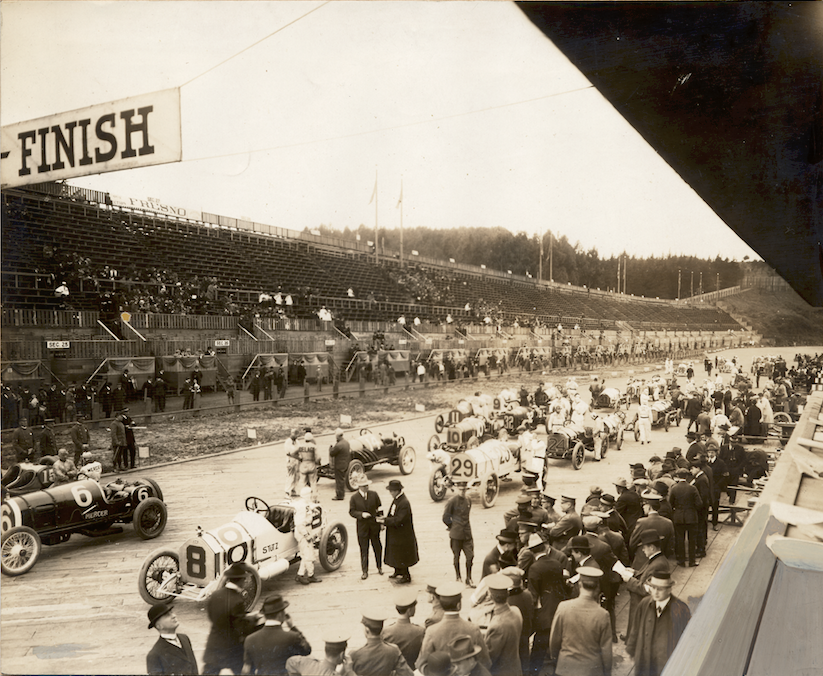
Amongst the dozens of spectacular grand halls, reflecting lakes and promenades were two racetracks; one for horses, the other for cars. It was intended from the start that the popular International Grand Prize and Vanderbilt Cup races would be held at the PPIE, and the course incorporated the roads of the Expo with an extension loop into the Presidio, atop undeveloped marshland (Crissy Field). Here the track was constructed from wood directly over the sodden earth, before it joined solid ground again within the Expo proper. Three grandstands were constructed for a total of $47,353, capable of seating 25,900 people, with the top seats 41’ above the track surface. The top of the grandstands were decorated with flags and bunting, and canvas awnings protected spectators from the rain. Athletic quarters were built under the stands, as were offices for the track officials, even living quarters for the athletic managers, nicely finished with plaster walls and steam heat. A 4-story judge’s stand stood at the start/finish line; with the top floor for judges, the 3rd floor the timers, and the 2nd for telegraph stations and journalists, all with open walls for an excellent view. Two score boards of 12’ x 30’ capped the roof, angled for a clear view for all spectators.
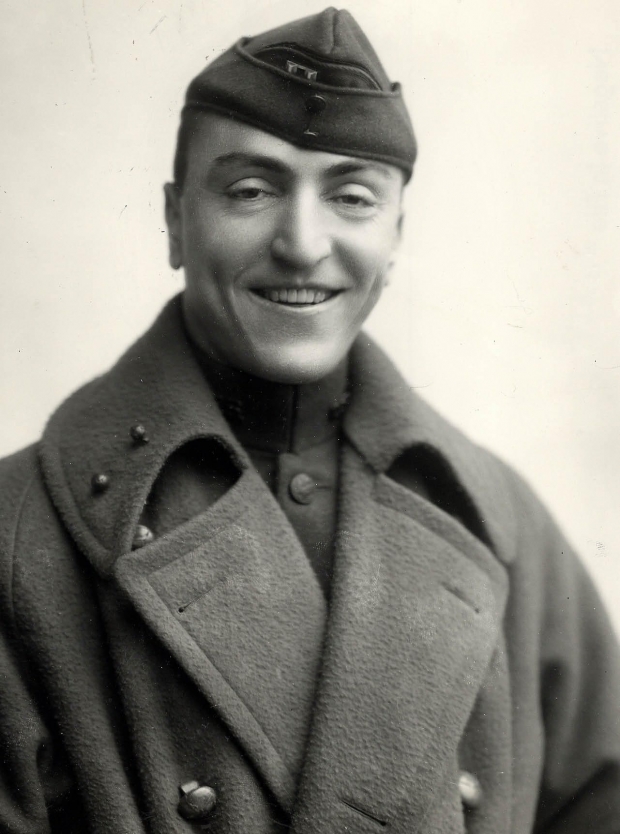
‘Baron’ Eddie Rickenbacker would become the most famous entrant in the Grand Prize, although he would shortly drop the faux title and the ‘h’ for a less Germanic-sounding ‘k’ (‘to take the Hun out of my name’). The ignition wires of his Maxwell were swamped in the rain after 41 laps. None in the Maxwell team (Barney Oldfield and Bill Carlson) did any better, which rubbed salt in a wound; Rickenbacher had only just signed on with Maxwell, as his previous car, the remarkable 1914 Peugeot EX3, had given trouble in his previous two races. That very car was given to Anglo-Italian driver Dario Resta, and Rickenbacher soon regretted the swap, considering the switch to Maxwell the biggest mistake of his career. He made up for all this two years later, earning the Croix de Guerre and Légion d’Honneur as the ‘Ace of Aces’ in France, flying Nieuports and SPAD XIIIs like a racing driver, with 26 confirmed kills.
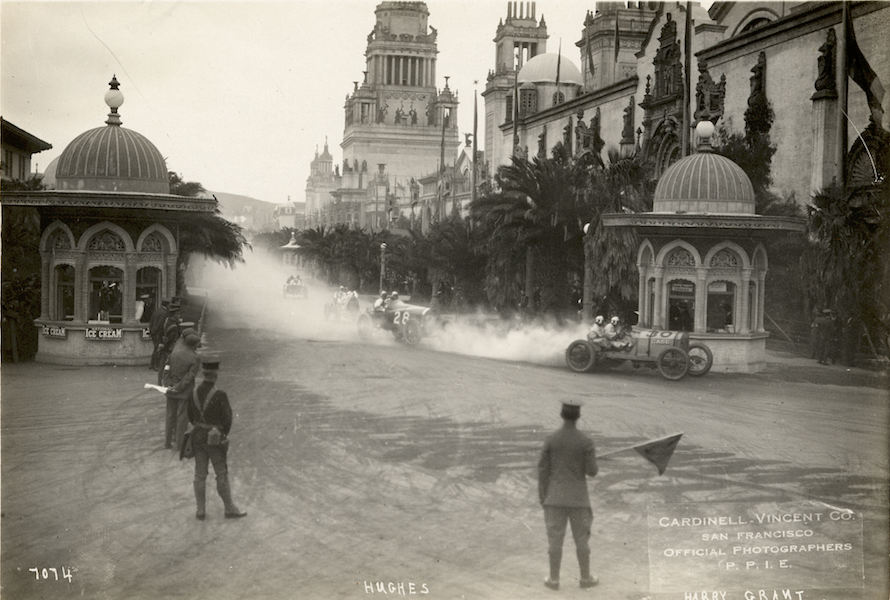
Regardless of the rain and relatively slow track, the Grand Prize was spectacular. Observers ‘watched the muddy champions of this modern tournament thunder by, through avenues of dripping palms, under the calm, travertine scrutiny of Cortez and Pizarro, who never got up more speed than 12mph in their somewhat important lives.’ The race was finished by 6pm, in gathering darkness, by which time ‘everybody had enough’. 104 laps of the course made 400.29 miles, and almost 8 hours later, Dario ‘Dolly’ Resta had won his first race in America, driving the revolutionary Peugeot EX3 at an average speed of 56.13mph, winning $3000 in the process.
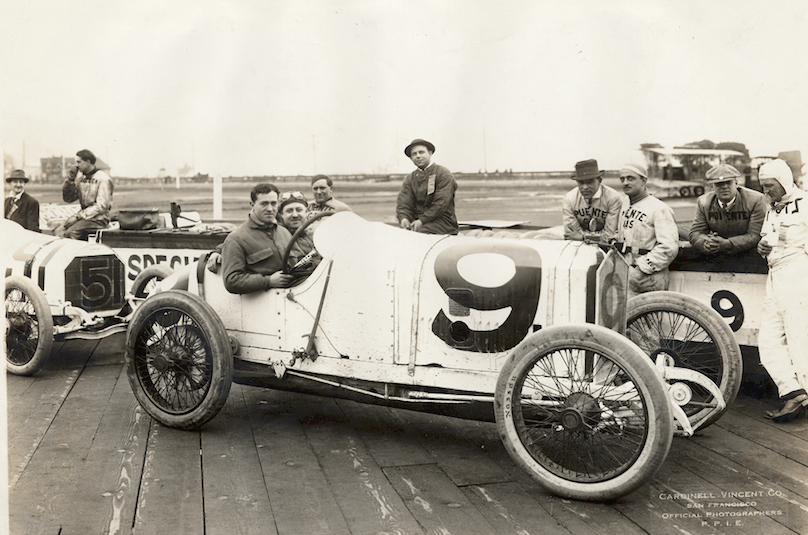
Resta was followed 6.5 minutes later by Howard ‘Howdy’ Wilcox in his Stutz, which netted him $2000. There were only 11 cars still circulating, battling valiantly for 3rd place (and $1500) under the electric lights of the elegant Avenue of Palms, the Esplanade, and the board track. Hughie Hughes emerged next with his ‘Ono’ special, a Fiat chassis with Pope motor. Fourth went to Gil Anderson in another Stutz ($1000), and 5th to Louis Disbrow in a Simplex ($500 prize). A summary of the Expo explained, ‘We note the names of these cars not to advertise them gratuitously, but because they may be of interest 10 years hence.’ Or even one hundred years! After these gents came in, the race was stopped and the remaining 6 drivers called in, no doubt to their relief. The slippery race had surprisingly few mishaps, which were related thus: ‘A wheel was broken, a tire flew off, a car went through the rail, several others skidded into the baled hay, and a dog was killed. Nobody was hurt, but the crowd lived the rainy hours in constant apprehension, which is what a crowd likes to do.’
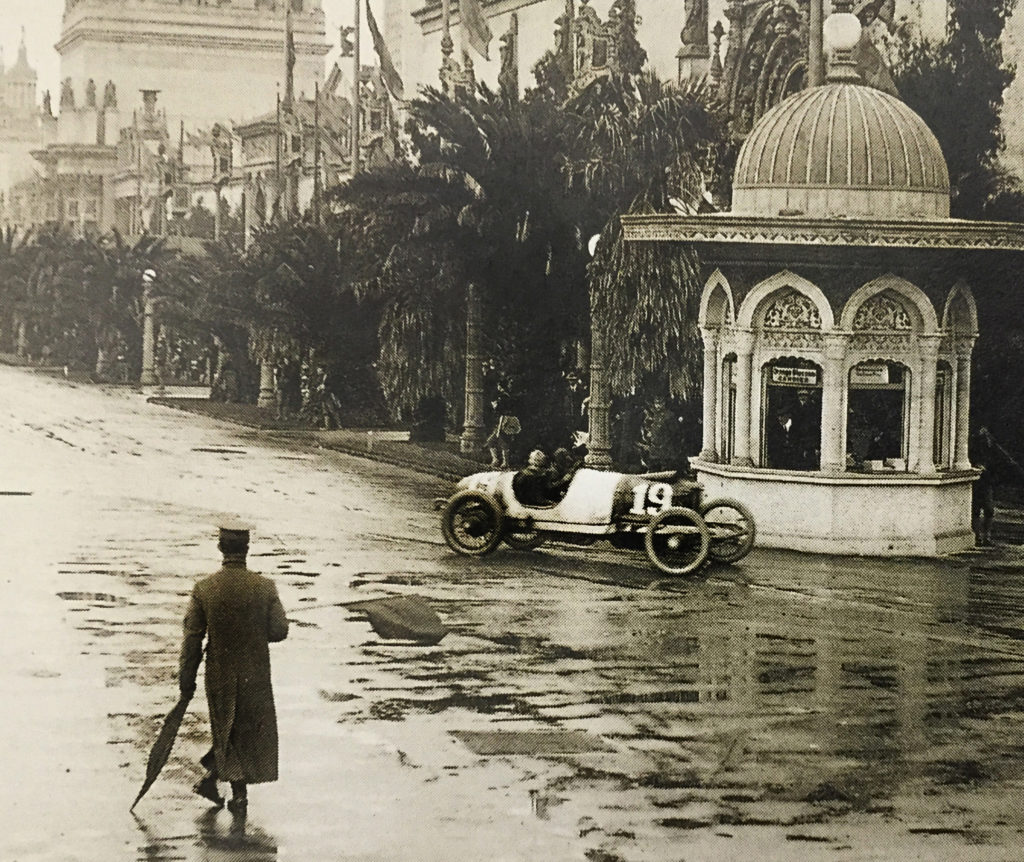
Because of poor weather, the Vanderbilt Cup was postponed to March 6, and was a much shorter event of 300 miles/77 laps. The day dawned bright and sunny, and the crowd had swelled to over 100,000 by the 12:30 start time. The lineup for the Cup was nearly identical to the GP, although drivers Cooper and Taylor were out, while T.A. Tomasini, Harold Hall, and ‘Wild Bob’ Burman were added, giving a total of 31 cars. Drivers were flagged 3 abreast at 15-second intervals, and Ralph DePalma with his 1913 Mercedes burst into the lead. That didn’t last long, as his car was plagued with vibration, and Eddie Rickenbacher surged ahead for the next 6 laps in his Mercer, until he broke a fuel line. The Deusenberg of Tom Alley held the lead until lap 20, when Dolly Resta passed him, with Tom Pullen in the second Mercer right on his tail. Resta was the only the foreigner in the race, and as yet unknown to fans, so when Pullen passed him on lap 23 the crowd was thrilled. By lap 30, though, Resta had secured top spot again, and ‘Wild’ Bob Burman in his Case passed Pullen too.
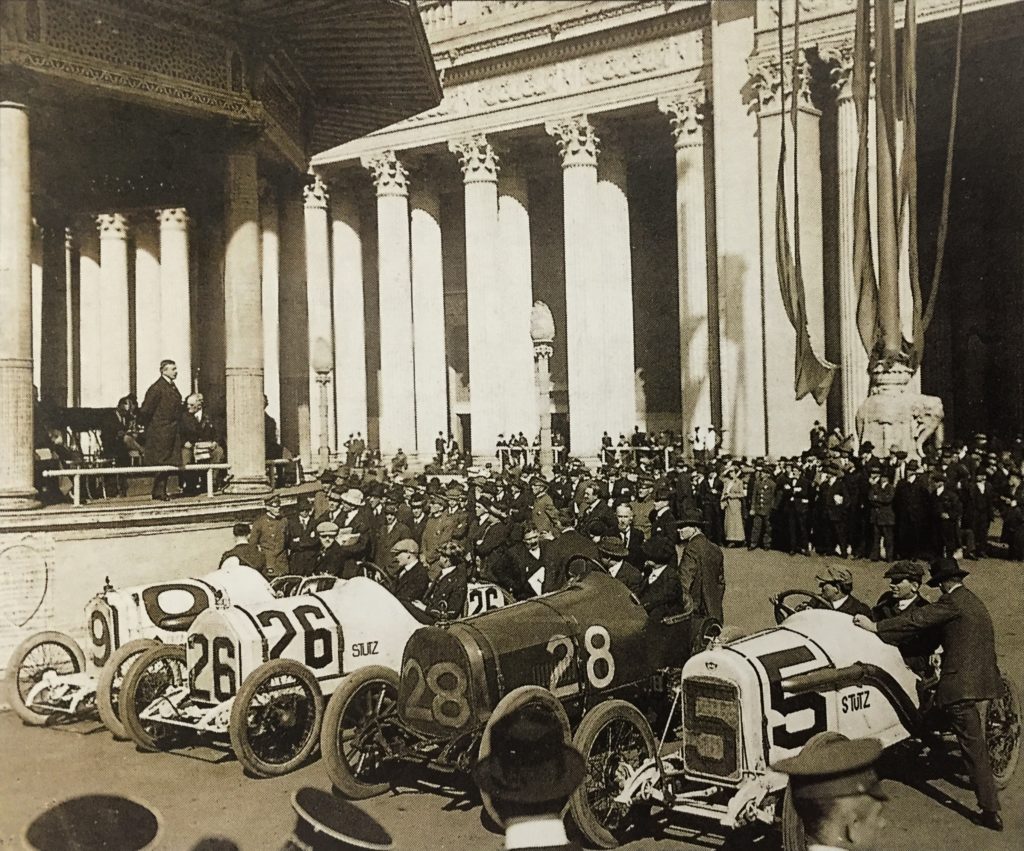
As the track was dry, speeds were up, as were accidents, including one car that passed the grandstands engulfed in flames – just the thing to build a fan base! The first mishaps were courtesy the Deusenberg camp, as Tom Alley mowed down 150’ of fencing on lap 37, while Eddie O’Donnell sideswiped a haybale and slid his car on its side – luckily neither driver was hurt. On lap 40, Harvey ‘Captain’ Kennedy lost a wheel from his Edwards Special, which struck and injured a spectator, as they do. Not long after, ‘Wild’ Bob Burman made a display of his Case racer outside the Palace Of Machinery, rolling the car and breaking his mechanic’s thigh and a couple of ribs. Inside that very Palace, Henry Ford had set up a complete Model T production plant, and new cars rolled off an assembly line every few minutes.
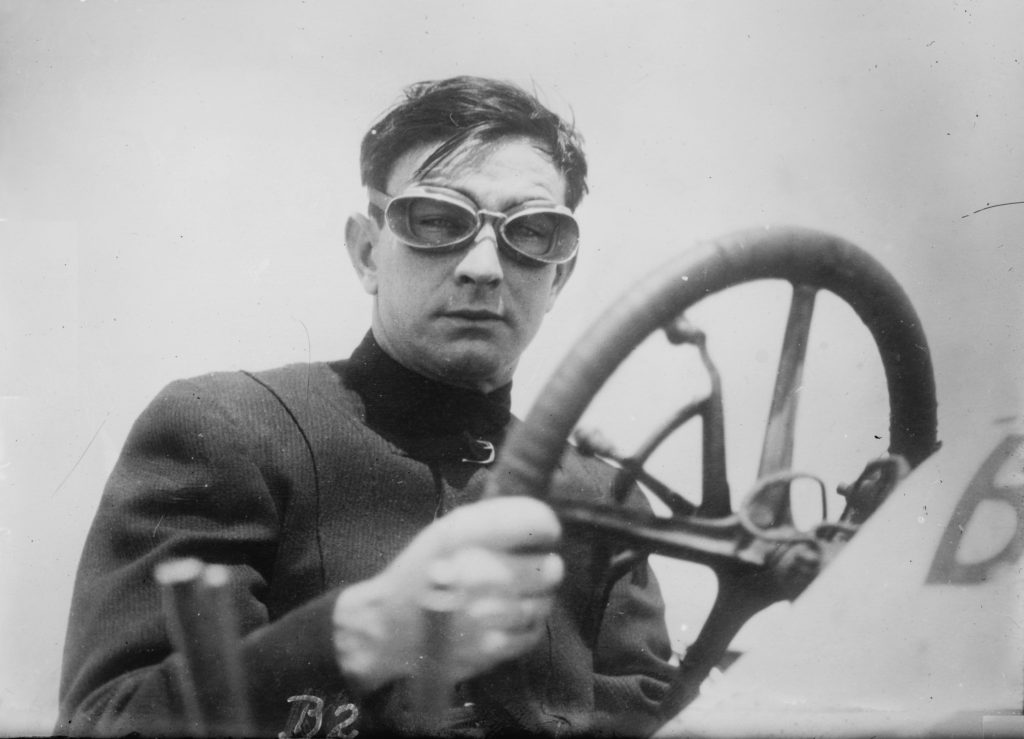
Bob Burman was a pivotal figure in American racing; after wrecking his Case, he secured a Peugeot for the remaining 1915 season, but broke the crankshaft in the Point Loma race (San Diego). Despairing, Burman gave designer Harry Miller and machinist Fred Offenhauser $2000 to modify the DOHC, 4-valve Peugeot engine, which needed shrinking to fit the new 5-liter formula for the Indy 500. The engine was transformed with Miller-designed light alloy cylinder/heads, tubular rods, a pressurized oiling system, stronger crank, and 293 cu” displacement – and the Miller/Offenhauser engine dynasty was born. And after lopping 200lbs from the chassis, Burman lapped the Peugeot factory team cars at Indy.
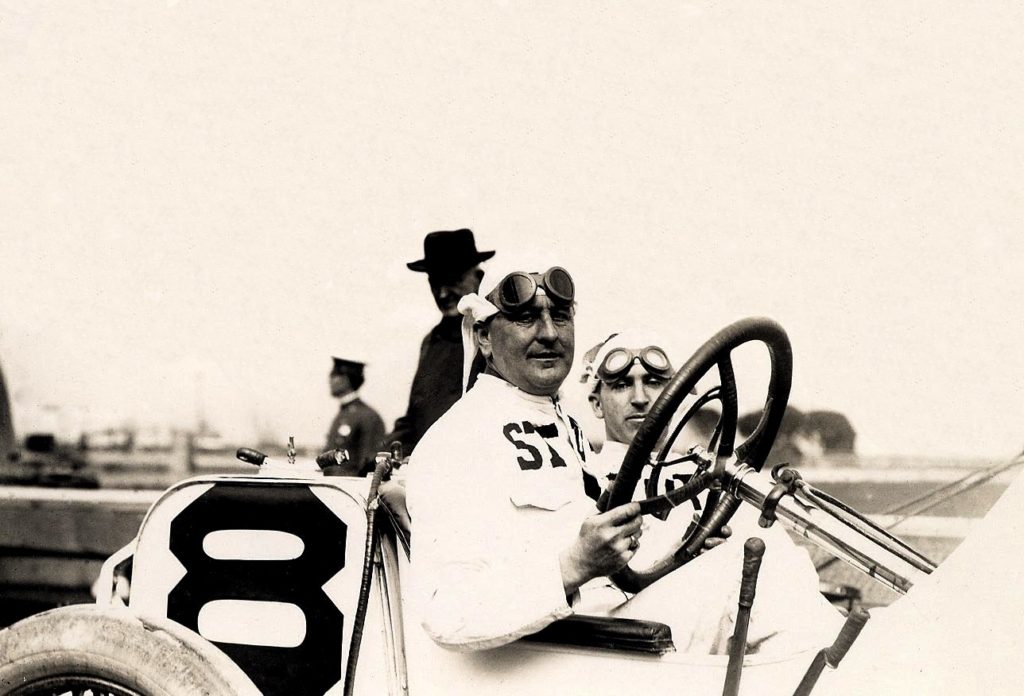
Harry Grant’s Vanderbilt Cup race was a less dramatic, but more frustrating affair, as on lap 50, his pit crew watered his fuel tank, and fueled his radiator. The Mercers were the best American team, constantly dogging Resta, but Glover Ruckstall broke an axle on lap 72, while Pullen, having run 2nd for half the race, had to stop and secure a loose fuel tank, which cost him a place as ‘Howdy’ Wilcox snuck past, and retained his lead, making the 1-2 finishing order of the Vanderbilt Cup the same as the Grand Prix. Pullen settled for 3rd, and Ralph DePalma 4th in his 140hp Mercedes-Benz Grand Prix. He had won the Vanderbilt Cup twice before, and purchased his Mercedes directly from Paul Daimler at the factory in Untertürkheim, paying $6000. When the car was ready on July 24th 1914, Daimler gave him the car’s documents and a map to the Antwerp docks, telling him to leave immediately; he shipped the car on the German steamer ‘Olympic’, and took a passenger liner from Le Havre, learning mid-voyage that war had broken out. While he didn’t win the Vanderbilt Cup, he did win the Indy 500 later that year with the Mercedes, several laps after breaking a connecting rod!
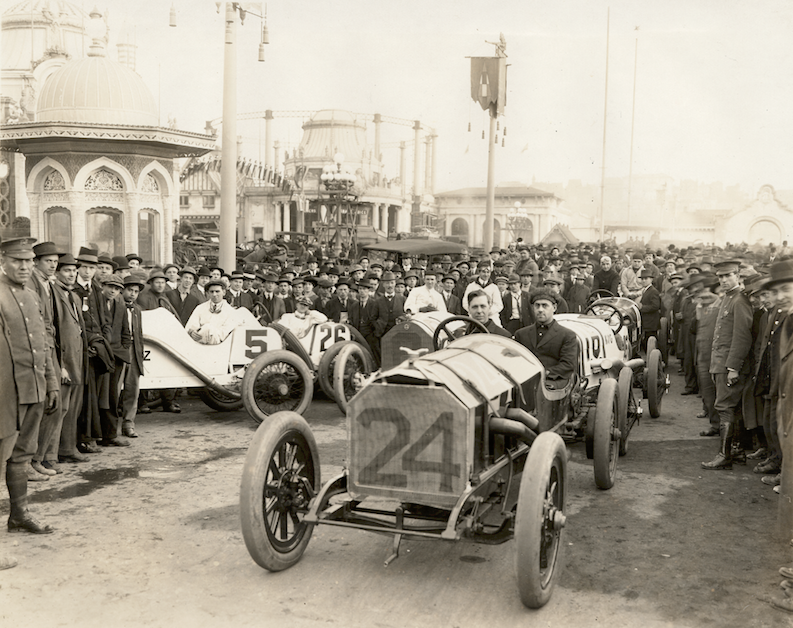
Dario Resta won the 300-mile Vanderbilt Cup in 4hrs, 27 minutes, 37 seconds, at an average speed of 66.25mph. He also won a second $3000 prize, plus bonuses (eg, Bosch gave him $400), and was clearly king of the course - wet or dry. While the PPIE track didn’t exist a year later, it was the first time a driver had won both the Grand Prix and Vanderbilt Cups. He’d exhibited great chivalry in stopping to check on Burman’s flipped car mid-race, and must have had quite a bit in hand to do so and still win by 7 minutes. The actual Vanderbilt Cup was made of silver by Tiffany’s, and was worth a cool $5000, as was the smaller but solid gold cup for the Grand Prix. Racing at this level was a rich man’s game, and hardly profitable, but Dolly Resta had earned enough for an upgrade, and promptly bought a new Peugeot EX5 for the rest of the 1915 season.
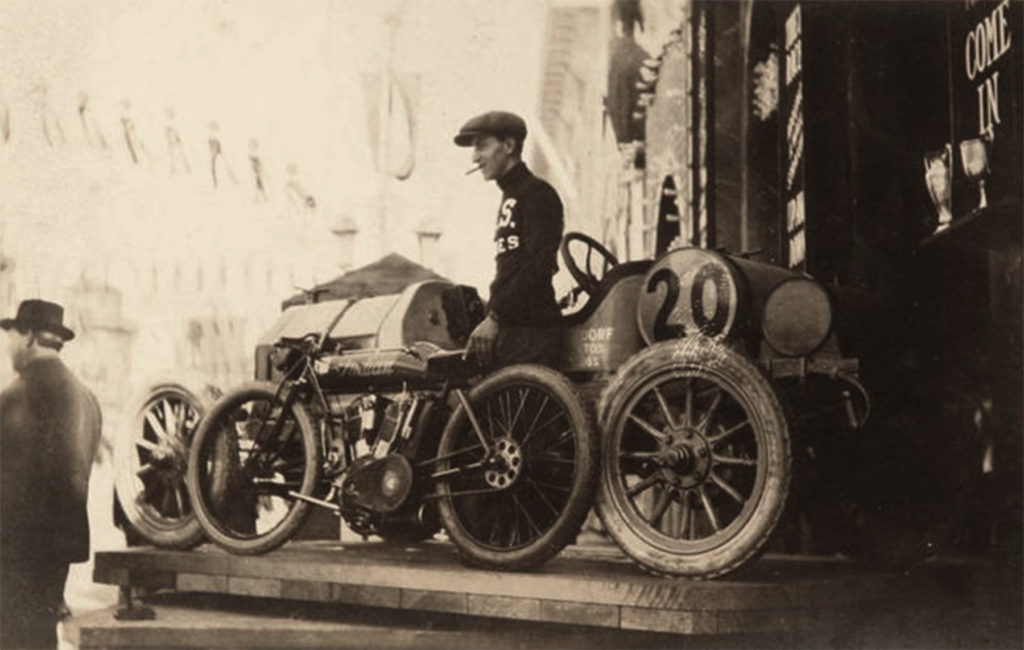
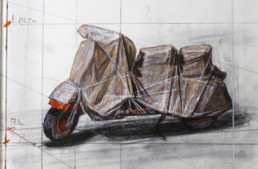
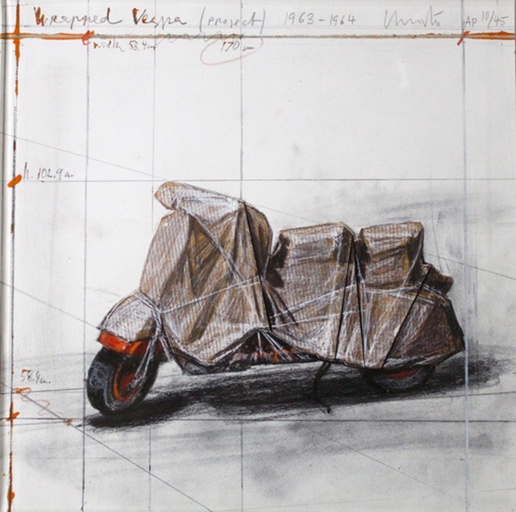
The Art of the Motorcycle: The Wrapped Vespa
While assembling the motorcycles for historic 'Art of the Motorcycle' exhibition at the Guggenheim Museum, curator Ultan Guilfoyle reached out to to historians and collectors around the world for historic and beautiful motorcycles. Such a collection, spanning 150 years of motorcycle history, had never been assembled before, and word did get around among the moto-cognoscenti, and occasionally Ultan was contacted by individuals offering unique machines. One of those individuals was Jeanne-Claude, the wrap-artist with her husband Christo, who create large-scale wrapped landscape works. The pair had always created smaller, salable artworks as well, and fund their enormous projects by the sale of prints and scraps of material used in their sculptures.
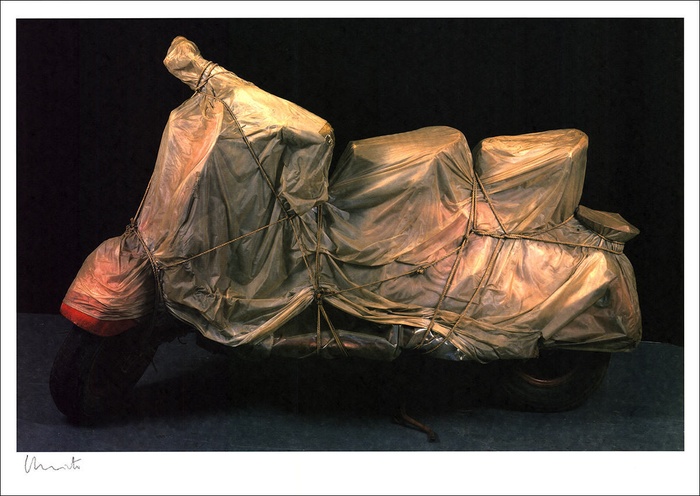
I recently interviewed Ultan Guilfoyle about the Art of the Motorcycle exhibit, and he recounted this gem about the famous sculpting duo:
"One day I got a call from Jean-Claude, ‘Is this the Walton Gulfooly fellow?’
Yes, I said.
‘This is Jean-Claude, I hear you are having an exhibit of motorcycles. We have a Vespa.'
Very interesting: what year is it?
'1958'
Fantastic, that's a really early one. Where is it, and what color is it?
‘I don't know what color. It’s in my living room, come look at it.’
So I stopped by their studio in NYC, and their assistant let me in: the Vespa was covered in cloth! I asked the assistant if I could peek in - I was trying to sort what color! Of course she said no. I spoke to Jeanne-Claude on the phone while I was there, and suggested we needed to unwrap their Vespa for the exhibit.
‘How dare you! You insult the history of our work! This is a very important piece!’
She called Thomas Krens, the director of the Guggenheim, who punted and said 'anything Ultan wants to do is okay'. Jeanne-Claude called back, and I repeated that we'd love to have their Vespa, but we’d have to unwrap it.
'You are an outrage!' and she slammed down the phone.
The Guggenheim was thinking about doing an exhibit of their work, and I next saw them during their Central Park exhibit, the gates, and introduced myself. Jeanne-Claude said, ‘You’re not that motorcycle guy are you! You’re a disgrace!"
But Christo said, ‘I loved that exhibit!’ "
Every Picture Tells a Story: Marie Therese Von Hammerstein
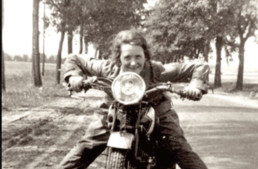
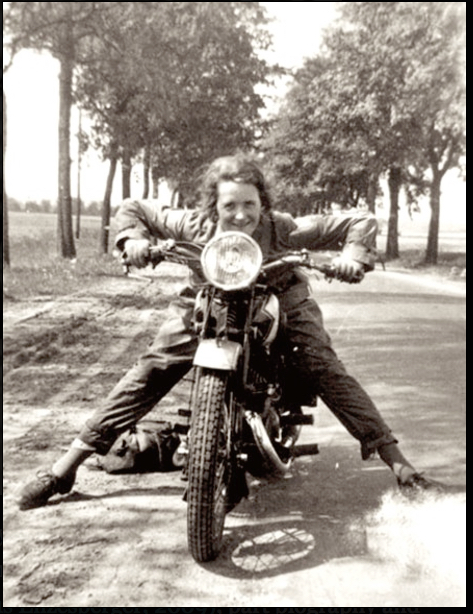
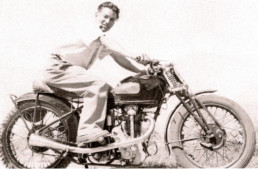
Every picture may tell a story, but some pictures need a novel. In this instance, that novel has been recently written, 'The Silences of Hammerstein' (Hans Magnus Enzesberger, 2009), part biography and part speculative fiction, an effort to grapple with a particularly puzzling, heroic, and frustrating chapter of German history. The charming young woman pictured in 1933 aboard her motorcycle is Marie Therese von Hammerstein, whose father, Kurt von Hammerstein, happened to be head of the Reichswehr (German army) at the end of the Weimar Republic, just before Hitler's rise to power.
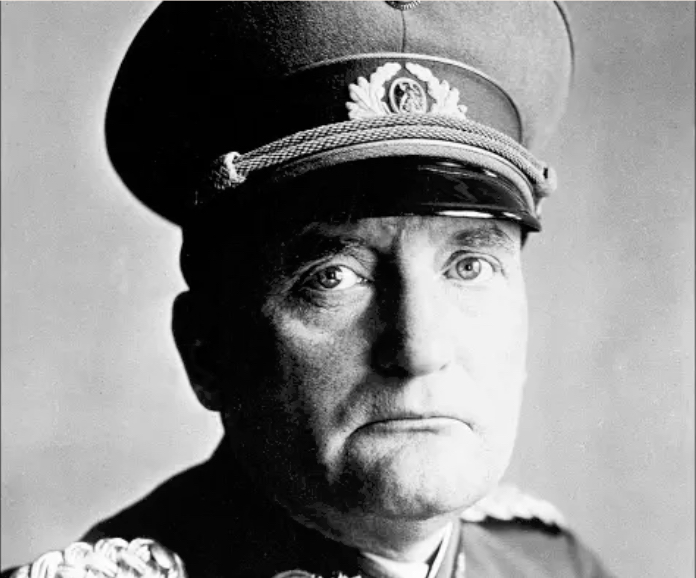
Whatever stereotypes or prejudices her parentage might conjure would be entirely misplaced; Kurt von Hammerstein was a fascinating character, a man of strong opinions and succinct words, a friend of progressive trade unions, an aristocrat, and an outspoken opponent of Adolf Hitler. He also praised laziness in intelligent men, feeling that such fellows bring 'clarity of mind and strong nerves to make difficult decisions'. He parented a large brood of remarkable, strong-willed, and free-minded children, all of whom made, or attempted to make, their mark on German history.
Marie Therese was clearly such. The mere fact of an aristocratic woman riding a motorcycle in 1933 is exemplary, but with such a father, her motorcycle became a tool for an entirely more serious purpose. That General von Hammerstein survived Hitler's rise to power is remarkable, especially as he made no secret of his hatred of Hitler, and attempted to lure the Fuhrer to his fortified compound in Cologne to kill him. Hitler demurred every time. As Hammerstein learned of Nazi plans to arrest and kill Jews, he supplied Marie Therese with the names of the targeted, and she rode her motorcycle as far afield as Prague (still independent) to ferry Jewish intellectuals to safety. One plucky duck.
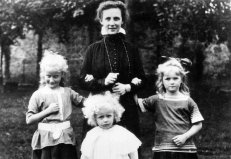
Marie Therese and her two sisters married Jewish intellectuals and labor organizers, and of course all of them had to flee Germany by the mid-1930s. Their father died of cancer in 1943, after being relieved of his military service by 1934. Her two brothers were involved in an attempt to assassinate Hitler on July 20th, 1944, and escaped because they knew a secret passageway used by the military which connected to the U-Bahn (subway). They survived the war. Other siblings had a hard time of it, as after the failed plot, her two younger siblings and their mother were interred in a concentration camp until the end of the war. Marie Therese and her husband John Paasche fled to Japan, as Paasche had studied Asian languages in college. They lived out the war there, 'with the police camped out across the street, watching'. In 1948 they moved to San Francisco, where Marie Therese died in 2000, aged 90.
In Velo Veritas: Keith Hamilton
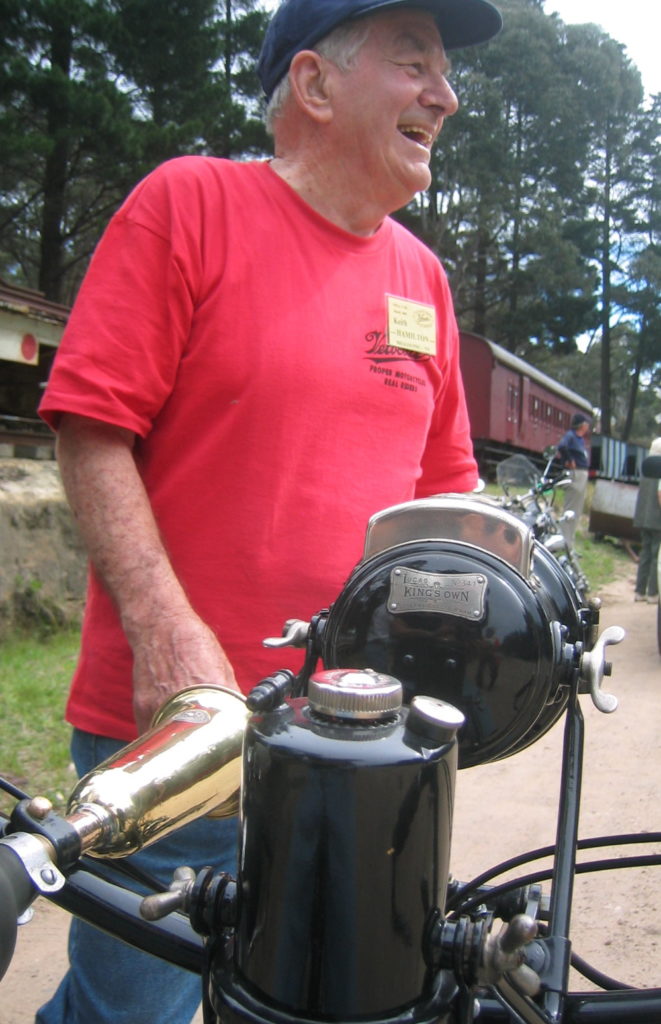
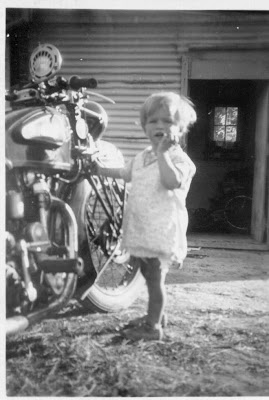
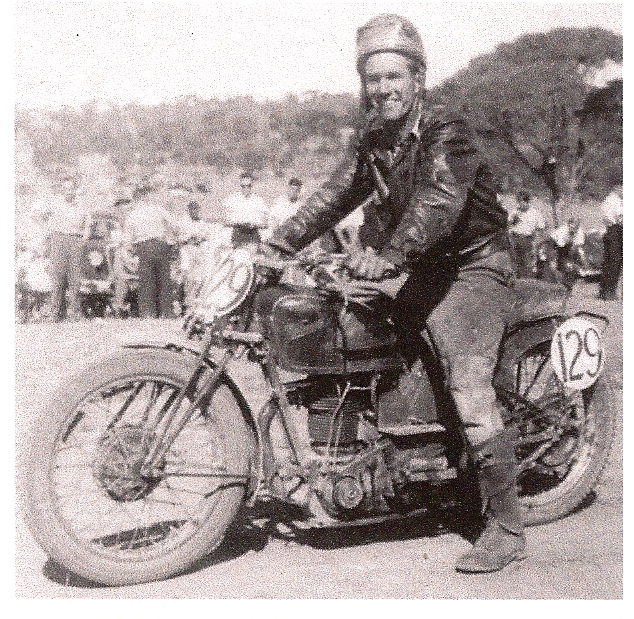
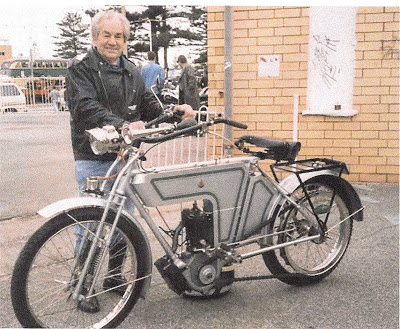
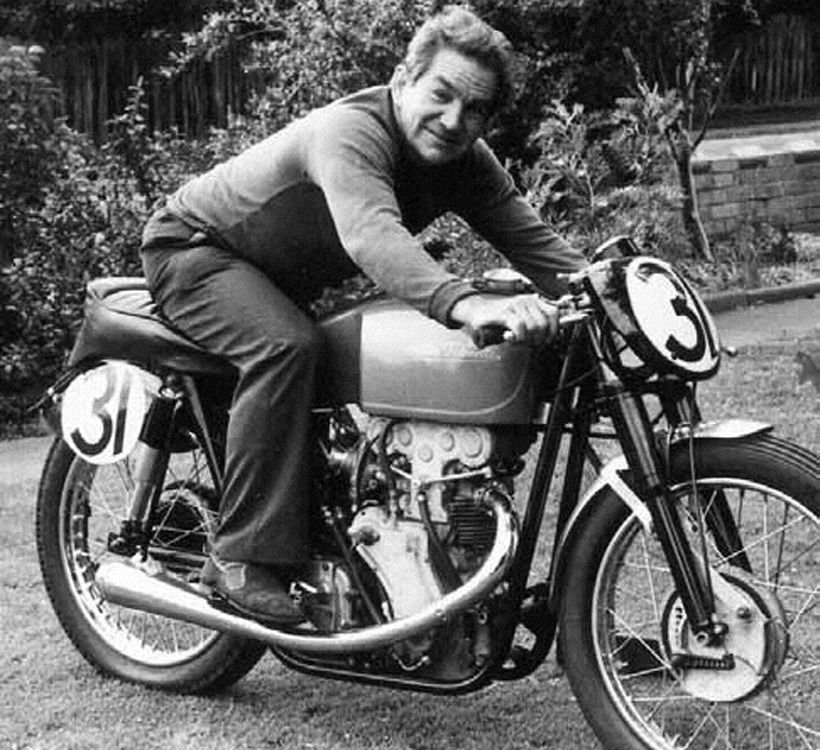
A great fellow, true vintagent, and source of marvelous stories, Keith Hamilton moved on to the big motorbike workshop in the sky in 2009. I had the pleasure of corresponding with Keith for many years, and every email or phone call would meander in the best possible ways, from his adventures during WW2, to building the first radio-equipped civilian motorcycle, to hobnobbing with Les Diener (constructor of the Eldee DOHC racing Velocette). He served in the RAAF for 5 years during WW2, as a flight engineer on Catalinas, and later on B24 Liberators. In later life, he captured the attention of an online chat room as he worked to locate the PBY Catalina flying boat he'd 'ditched' during WW2 in the South Sea, from notes he kept on the day!
The Old AJS
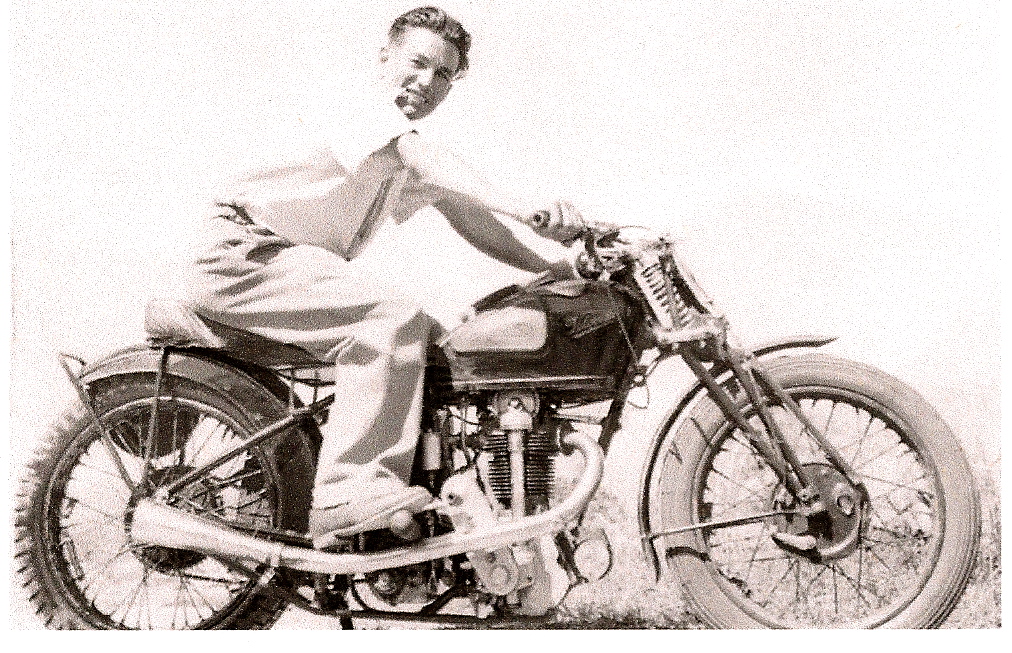
'Daaad!' The two brothers had been whispering together as their elder sister and mother cleared away the dishes of the midday meal, while their father ran his eye over the Sunday Mail. Dad lowered the newspaper and knew immediately that the boys had something serious on their ten year old minds. 'Yes?' 'It's that old motorbike in the garden shed, could we pull it out and get it going?'
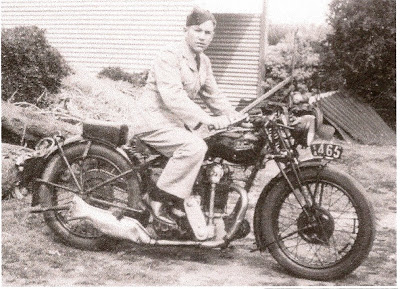
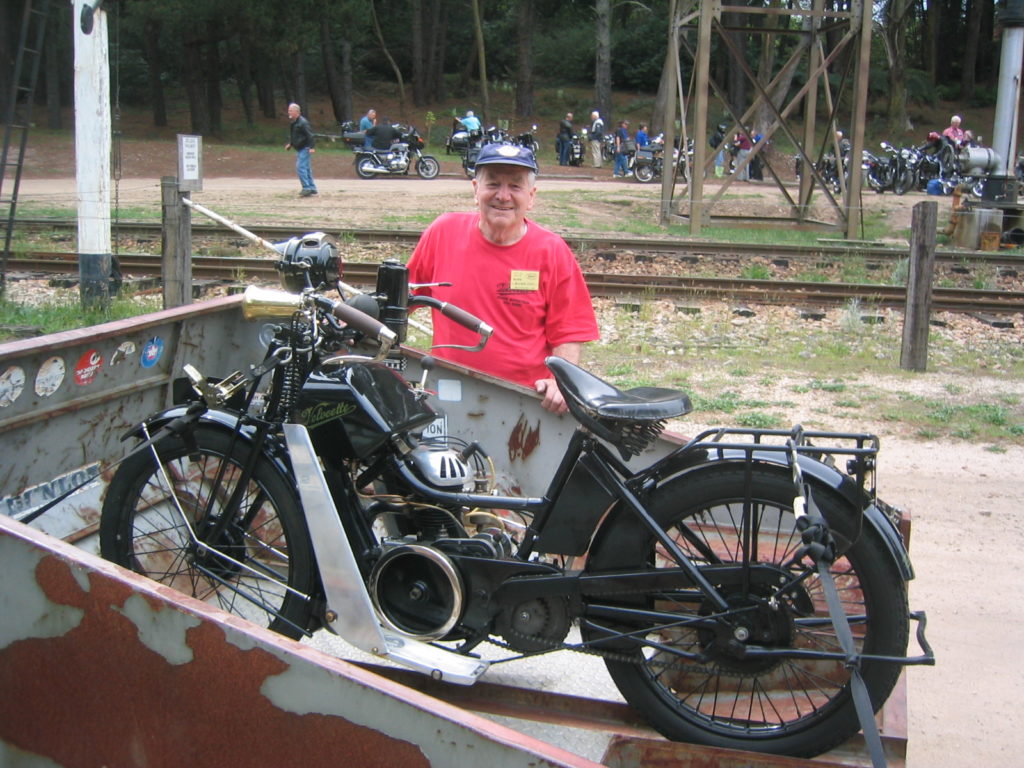
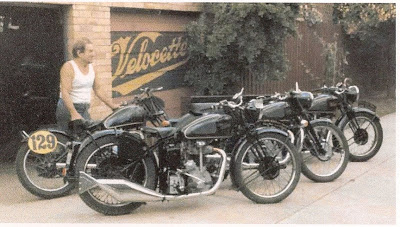
on the Watsonia door to this day. [Keith Hamilton]
'So boys - that's the story - and yes, you really will have to ask your Mother about this one!'
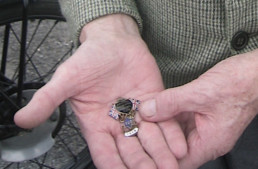
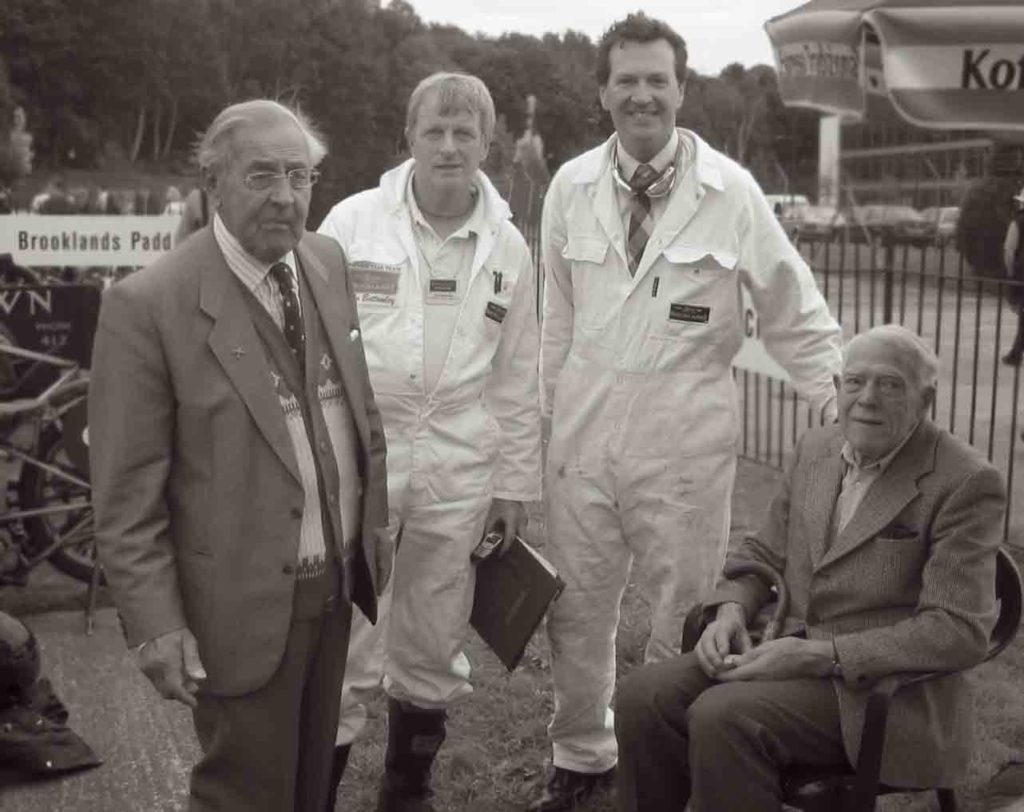
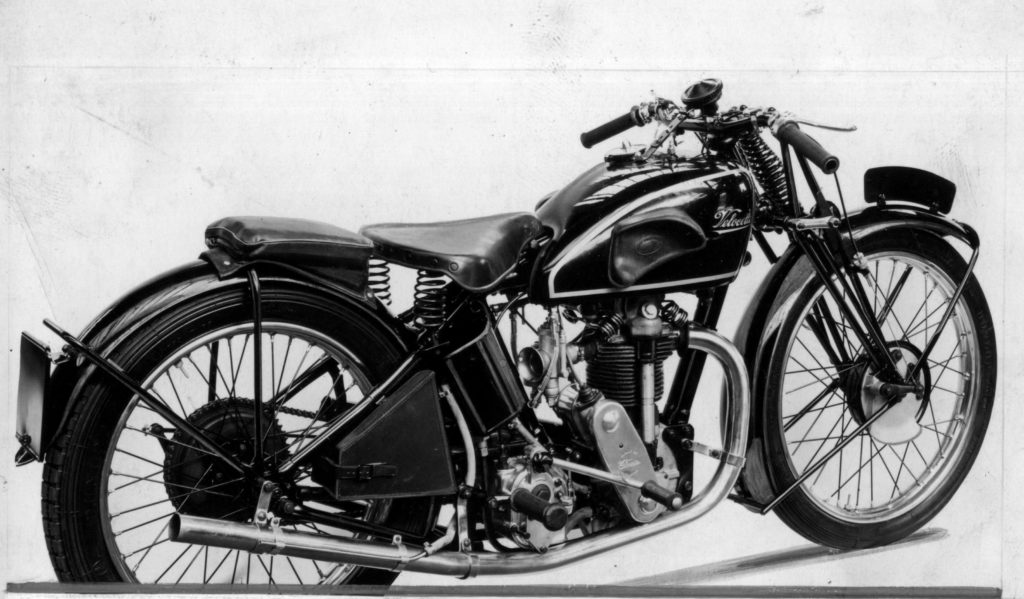
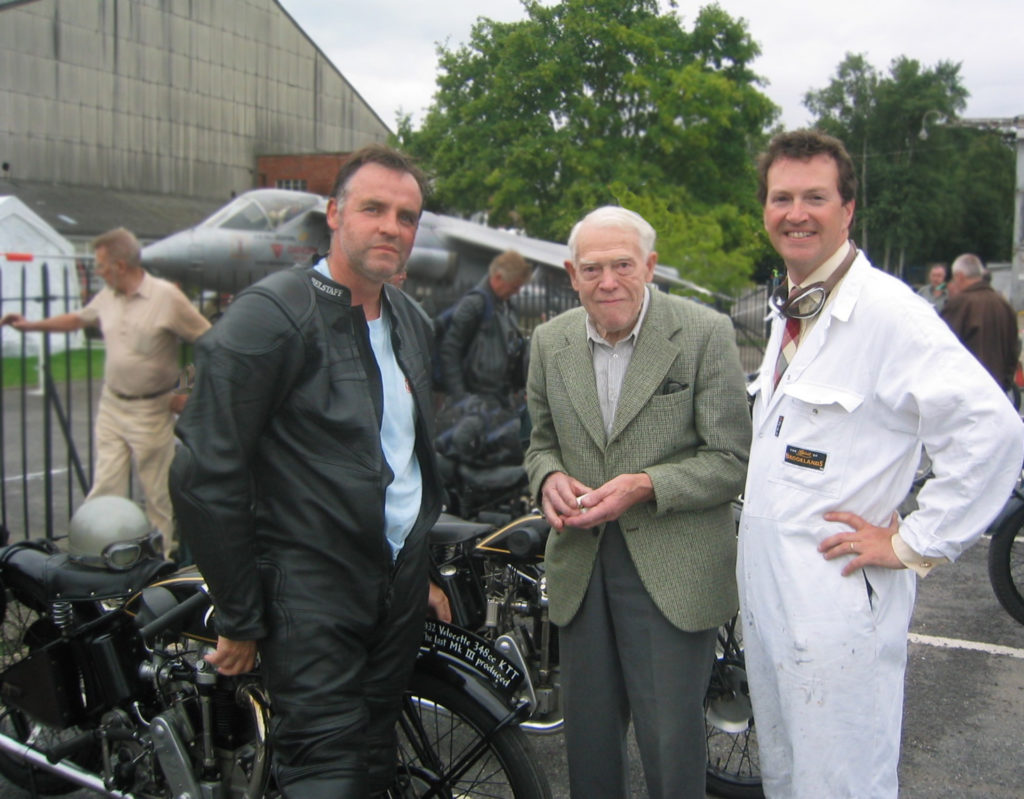
A Clubman at Brooklands: David Vincent
The legendary Brooklands race track was the first purpose-built motorsports track in the world, and was built in 1907 by Hugh Locke-King on his own property, using his own money, as a rebuff to a British ban on road-course competitions: the same law that inspired competition on the Isle of Man, which opened the same year for TT racing. Even in these early years of motoring, Locke-King foresaw the future of motorsports, as the banked track was designed for speeds up to 130mph, as a time cars and motorcycles could barely top 60mph - hardly enough to justify the near-vertical banking at the top of the track. It took until 1913 for a car to reach 100mph at Brooklands, and 1921 for a motorcycle.
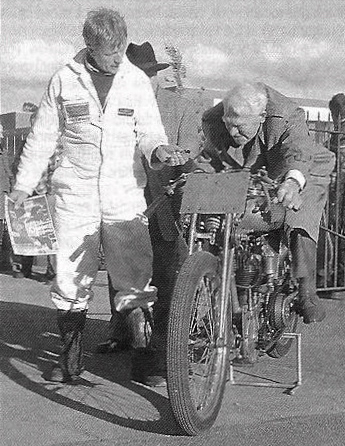
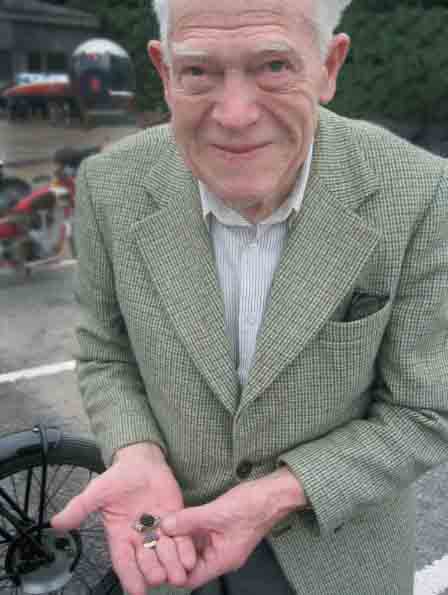
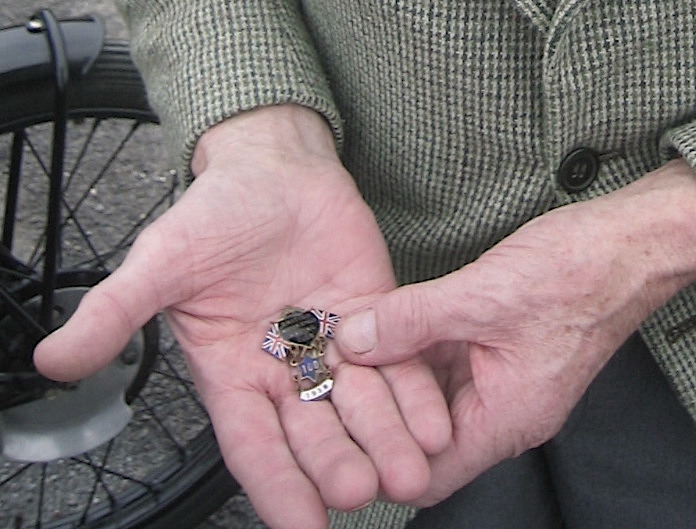
As speeds increased over the decades, the official sanctioning body for motorcycle racing the BMCRC ('Bemsee', the Brooklands Motor Cycle Racing Club) began offering a Gold Star for riders who lapped at over 100mph during a race. The Gold Star was a coveted award, and many riders rented or borrowed motorcycles that had proven capable of the task, in order to add one to their list of achievements. Only 141 riders won Gold Stars at the track between 1922, when the award was inaugurated, and 1939, when the track was appropriated by the military for WW2. They're a Who's Who list of mostly British riders of the era, and no doubt every Gold Star has an intriguing story behind it.

The Current: Egads! An Electric Surfboard?
You knew it was just a matter of time. Once longboards became electrified on the streets of San Francisco, someone was bound to develop an electric surfboard, right? Conventional wisdom and a wise bet would have pegged Santa Cruz, the surf capital about 75 miles south.

Sweden?!
“The market for electric surfboards has seen a stagnation in new products that push the limits of what these machines can do,” Awake founder and CEO Philip Werner said. “Not much has happened in respect to power and agility, and even less attention has been given to exterior design and user experience. The Awake Rävik completely disrupts the existing arena, and is our statement that great design and great performance belong together.”


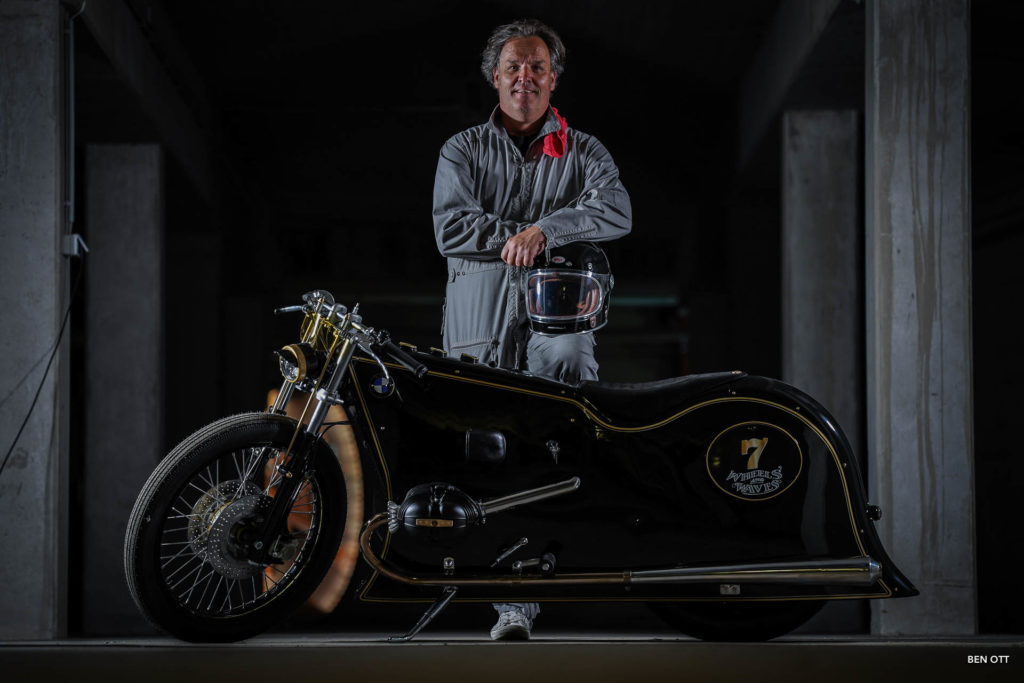
The Black Phantom
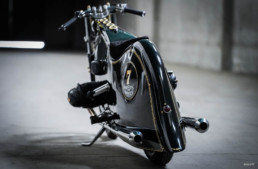
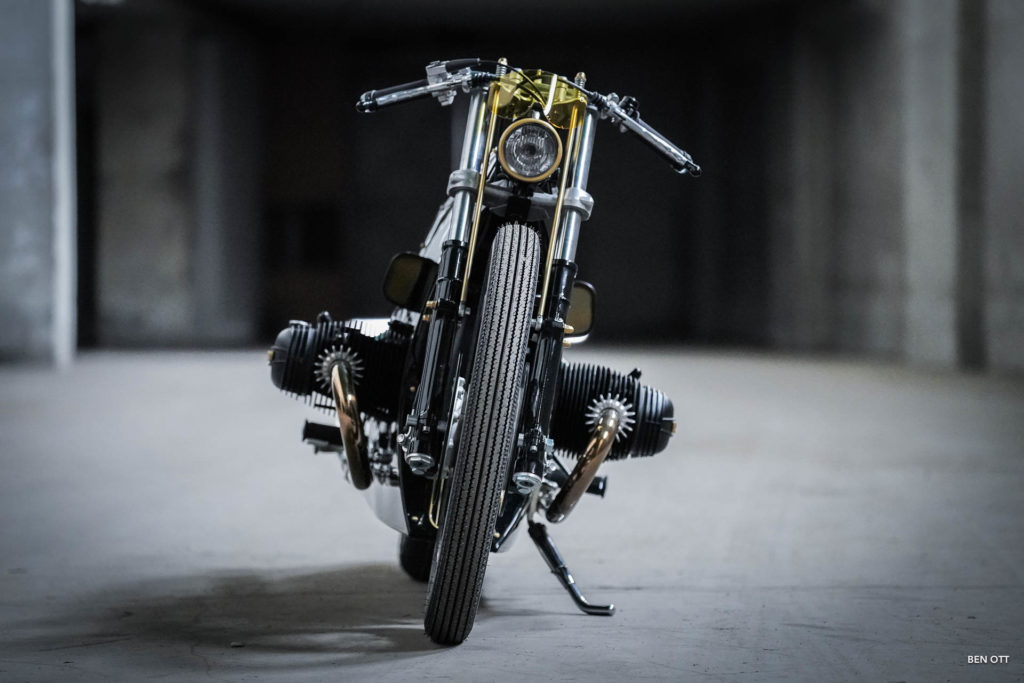
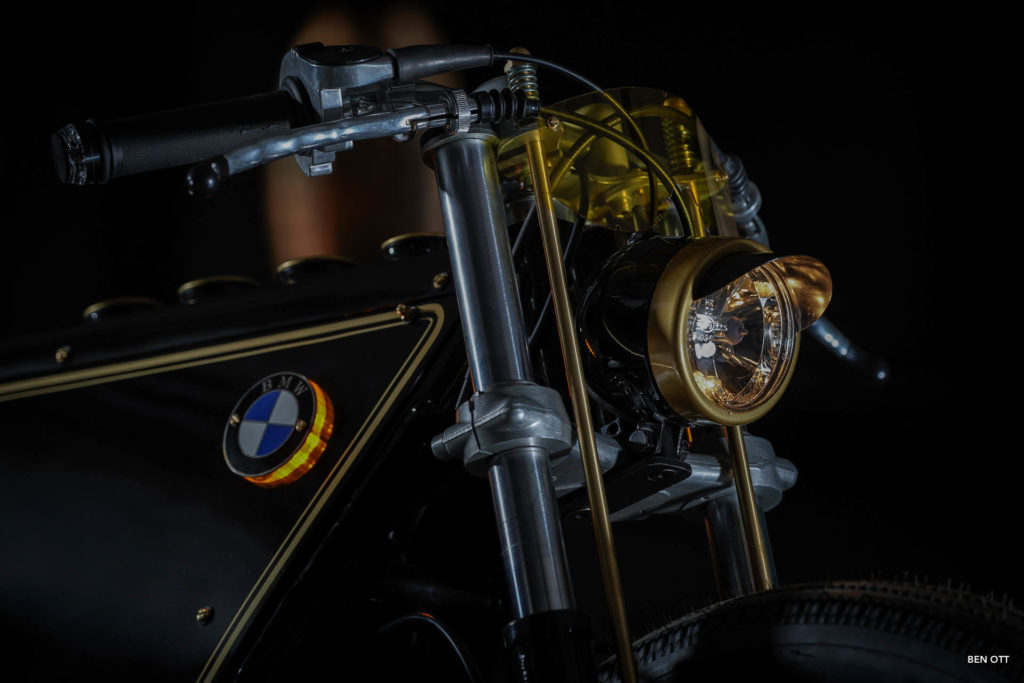
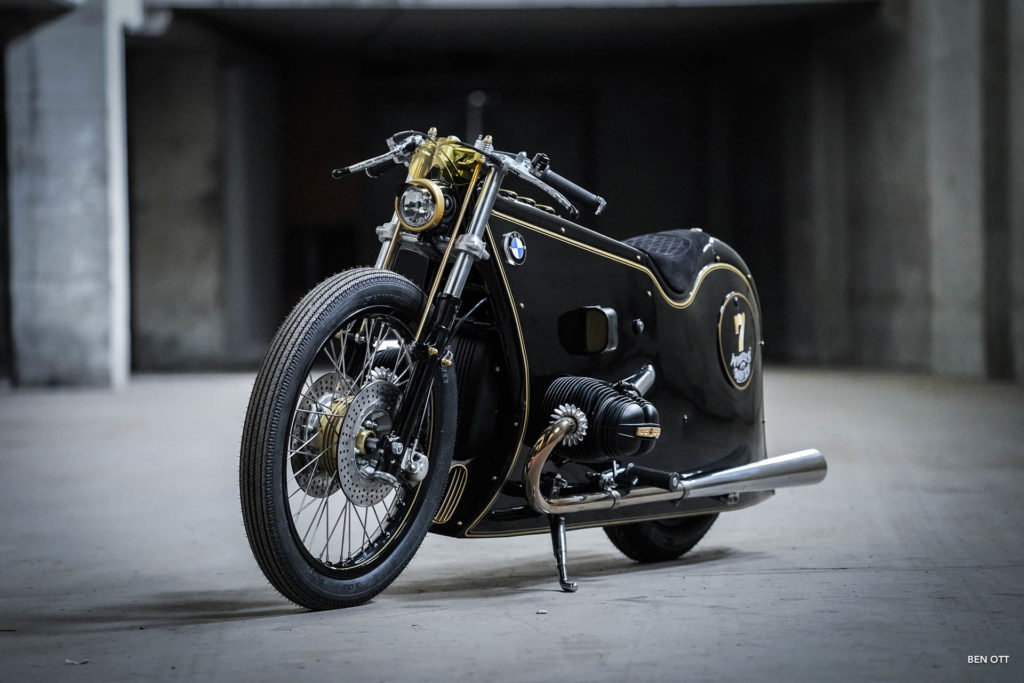
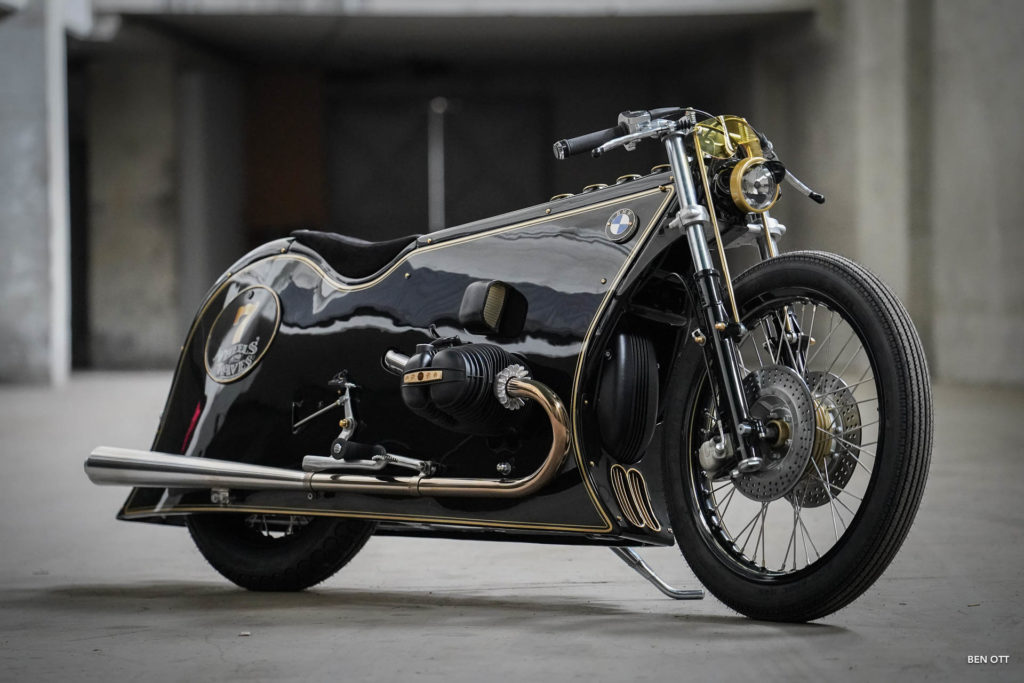
Dirk Oehlerking’s most famous build – the White Phantom – is currently sitting in our Custom Revolution exhibit at the Petersen Museum. It’s a fantastic machine, with a slightly retro 1960s show-bike vibe, mixed with some real world performance, as it has a turbocharger under its bodywork. The bike attracted huge attention around the world, and Dirk was told by several designers he respects (namely Ola Stenegärd, Christian Pingitzer and Roland Stocker) that the White Phantom would be “hard to top.” It’s an understandable sentiment, when such a compelling creation becomes your signature achievement: the same applies for visual artists or musicians who create a masterpiece – where do you go from there?
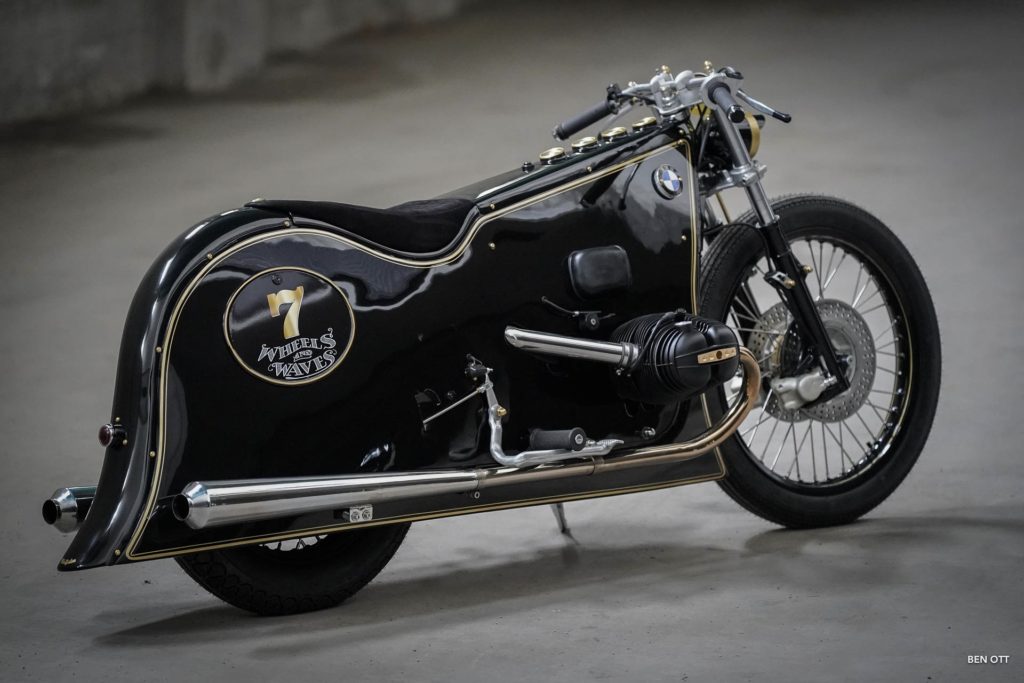
Dirk explains his response: “Of course, this feedback does not leave me with any rest, but arouses my ambition and inspiration. I did not want to “top” the White Phantom, I wanted to put a partner / brother beside it. White and Black, Black and White: they belong together! I was dreaming of phantoms that appear from nowhere, that leave you breathless then disappear, leaving only an impression. I came up with a lot of ideas, had a lot of doubts, pulled my hair, lost sleep, but that was my process.”
THE BLACK PHANTOM - BEHIND THE SCENES from The Vintagent on Vimeo.
His goal was to build a bike that demonstrated an idea that “no high end technique is needed to create something special.” He needed tremendous creativity, some interesting ideas, and an understanding of good design, but also an educated pair of hands to build the bike, coupled with knowledge, experience, and skills.
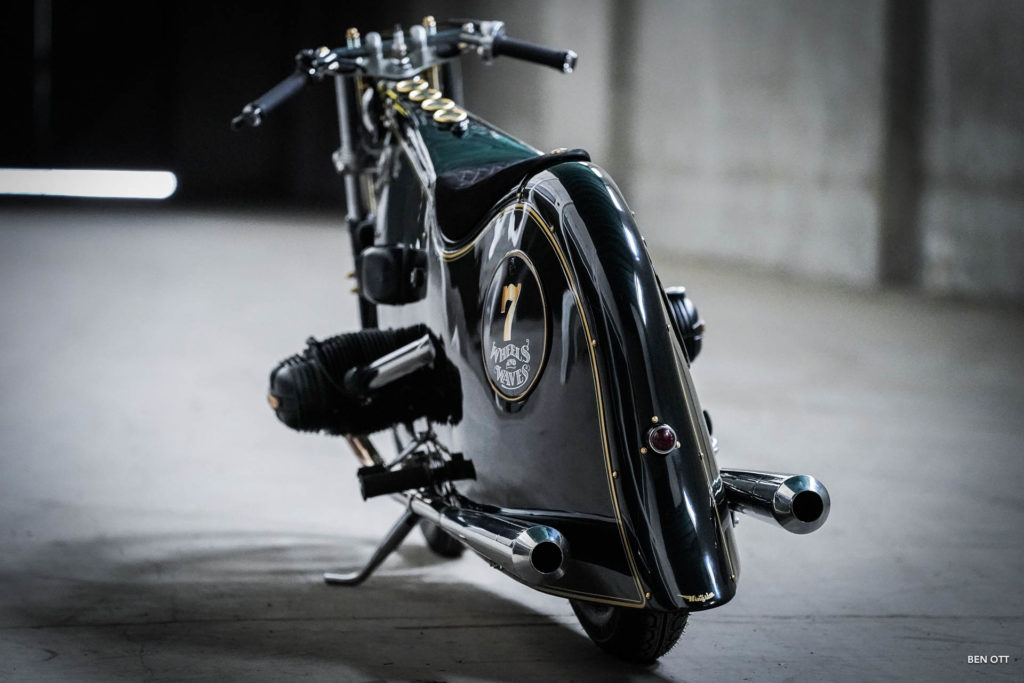
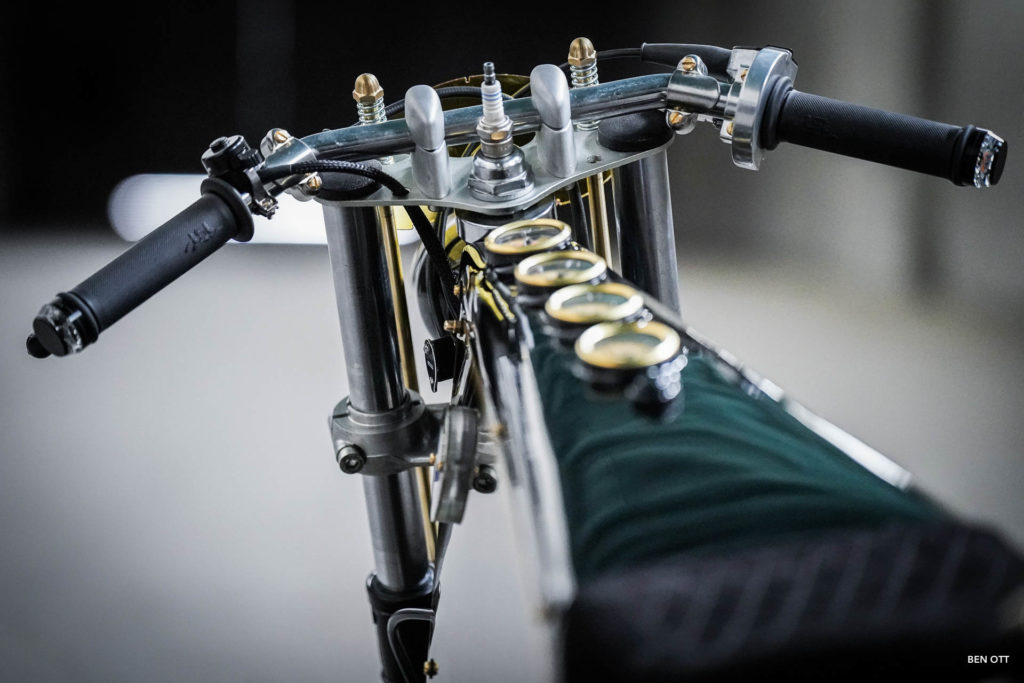
The building process took months without stopping, and Dirk’s goal was the build the Black Phantom with no welding on the frame, no frame stretching or drilling. It was his goal to use as many OEM BMW parts as possible, from 1951-79, with only a handful of additional accessories. The list reads like a jumbled BMW parts catalog, with the oldest piece an R51 tank badge, and the newest several bits from an R100RS, plus the odd instrument or Hoske exhaust system. The fuel tank and bodywork was all made from 2mm thick aluminum sheet, shaped by hand at Kingston Custom, which is the important thing: “The Black Phantom is 100% Kingston Custom: it’s a one-man show.”
Death By Cocteau
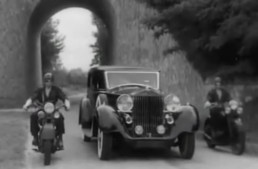
In 1949 Jean Cocteau adapted the Greek myth of Orpheus to the cinema, in a contemporary setting of post-war Europe. His use of motorcycles in this dark, evocative tale set the pattern of associating Death with Motorcycles in film forever after, and established the Dark Rider phenomenon in the popular imagination. In short, Cocteau was the first to associate motorcycles with menace in the arts: previously, they had merely been interesting kinetic props, but Cocteau, already famous as a Surrealist poet and playwright/set designer before WW2 in France, was first to see something very different and dark on two wheels.
Cocteau's first commercial film, the stunning adaptation of 'Beauty and the Beast' (1947), was a huge success, and is still the best version of the story, with wonderful special effects created ‘in camera’. Cocteau then shifted from fairy tale to ancient myth, and was the first director to fully grasp the totemic power of the motorcycle, and used it to stunning impact, creating a lasting association with Death which echoes through movies even today, and powerfully influenced the filmmakers who followed him, most notably Kenneth Anger (who spent time with Cocteau in Paris, and later directed the ultimate art house biker film, "Scorpio Rising") and Laslo Benedek, director of ‘The Wild One’.
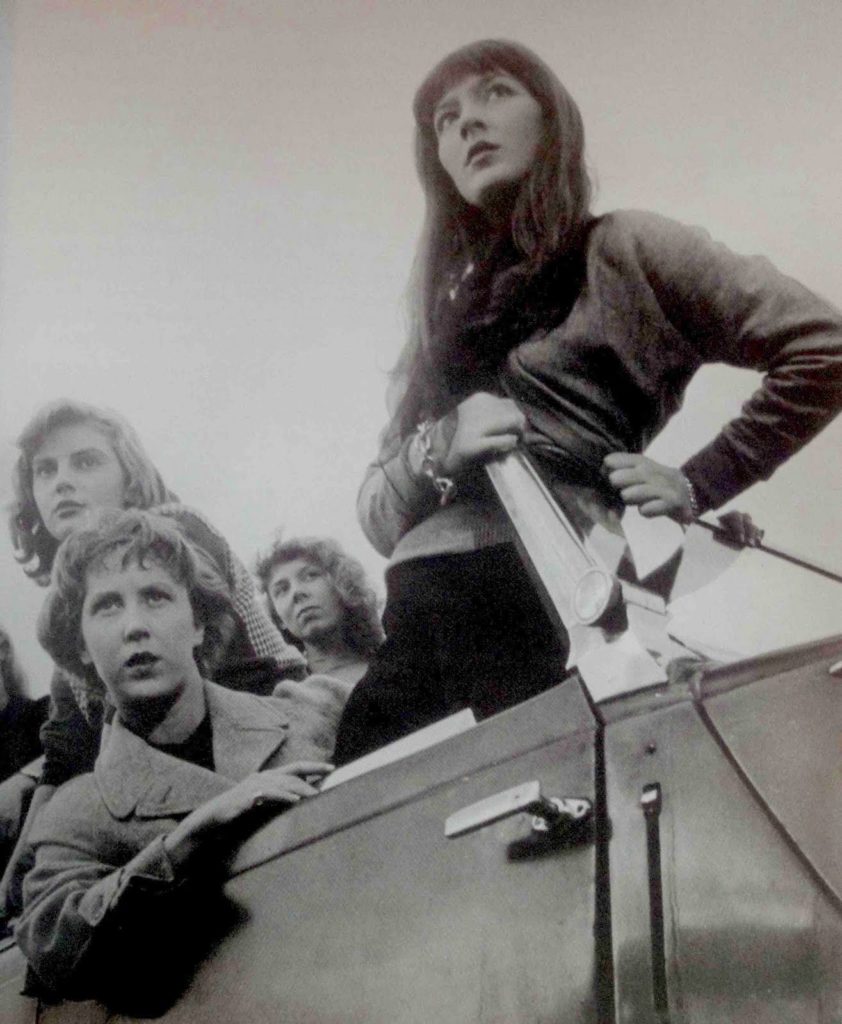
In Cocteau's film version of the myth, Orpheus is a poet whose fame is great, but who lacks respect from the new, young, existentialist/beatnik poets who hang out at the Café des Poétes. While visiting the café, Orpheus is disrespected by the very drunk but very hot new poet Cegeste, who is shortly killed by a dark pair of motorcyclists roaring past. A rich woman in a Rolls Royce (the Princess), who escorted Cegeste to the cafe, orders Orpheus to help carry the body of the young poet in her car. She reveals to Orpheus that she is Death, and the lethal motorcyclists are her henchmen. Orpheus and Death fall in love, and Death sends Cegeste's poetry through the radio in her Rolls to Orpheus, who becomes obsessed with this poetry and with Death herself, and ignores his beautiful wife Eurydice.
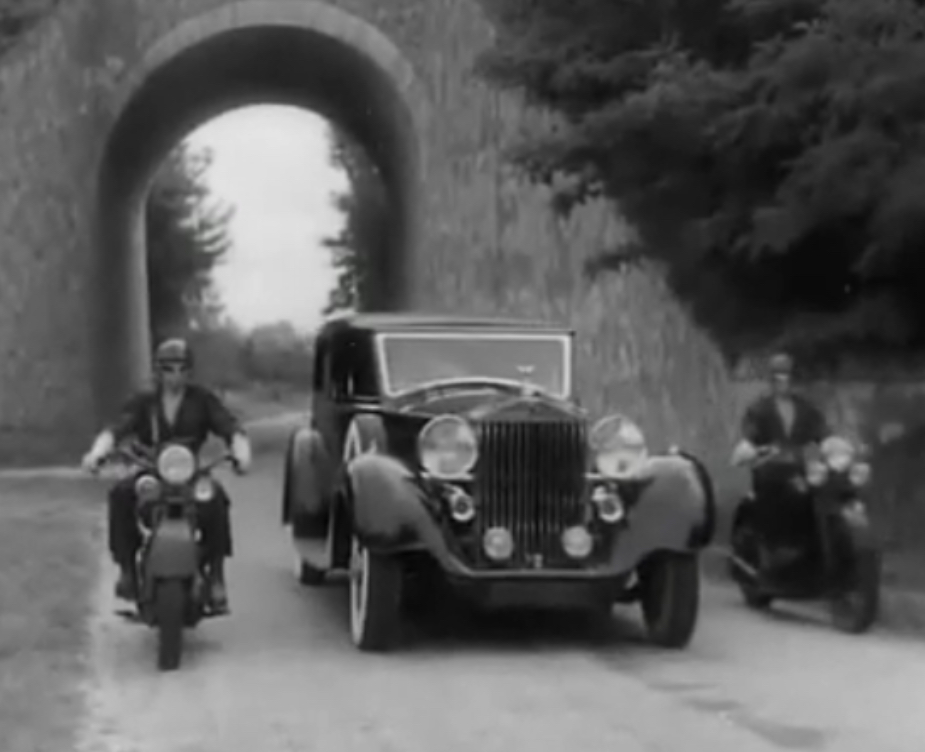
Death is jealous, and her henchmen kill Eurydice, although a guilty Orpheus follows her to the Underworld through a mirror, a simple and effective special effect using dual film stocks, reversed footage, and a 2-ton tub of mercury. For interfering with Life, the Princess must stand before a tribunal in a ruined building (much of the Underworld is a bombed-out French military school), for it seems that while nobody really gives the orders for who is to live and die, such orders echo through Hades like the sound of drums. Orpheus wins Eurydice back to Life, but catches a glimpse of her in the rear-view mirror of the Rolls. The Bacchantes, habitués of a lesbian beatnik bar, are furious that their former bar-girl Eurydice is dead, and kill Orpheus. Cocteau’s use of in-camera special effects is simple and evocative, and using motorcyclists as the Henchmen of Death is memorably effective; the roar of their approaching engines is the cue that someone is about to die; the bikes roar into the scene for a shadowy instant, then blast away down the road, leaving a body sprawled on the pavé.
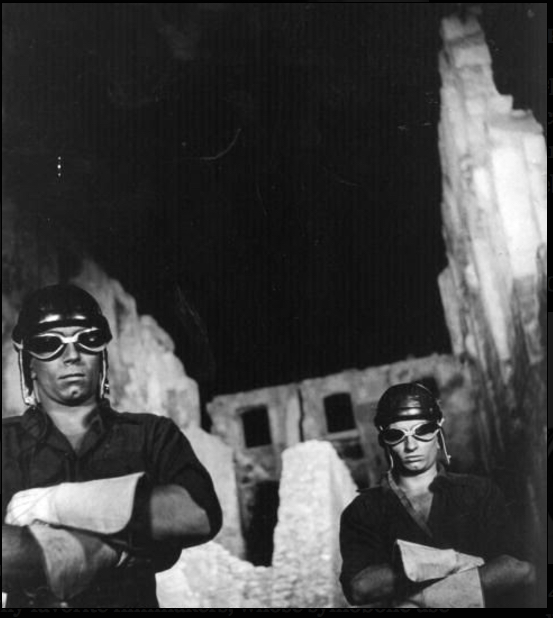
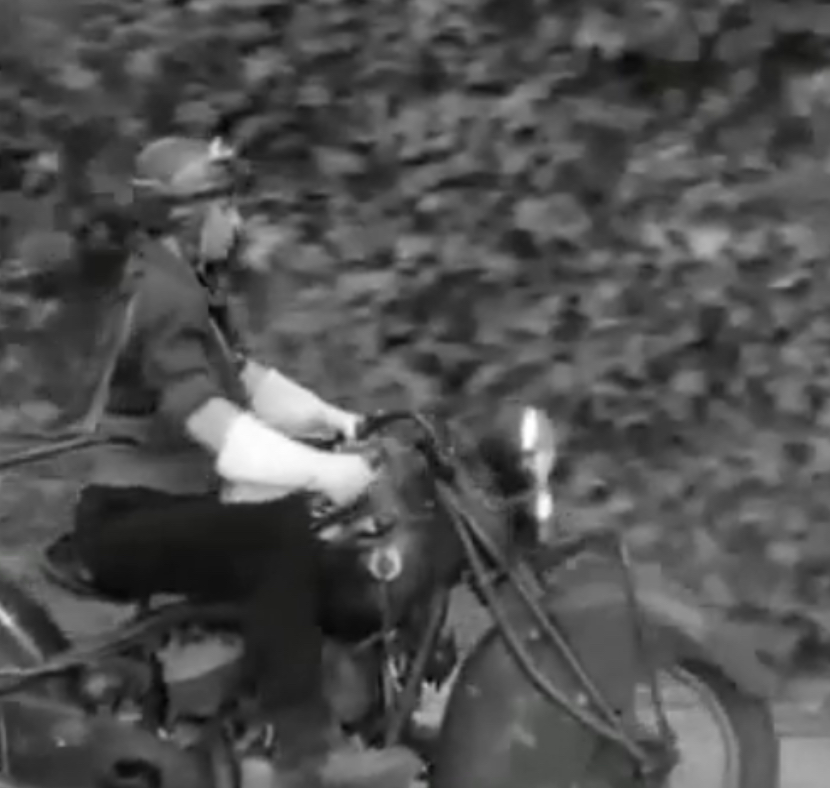
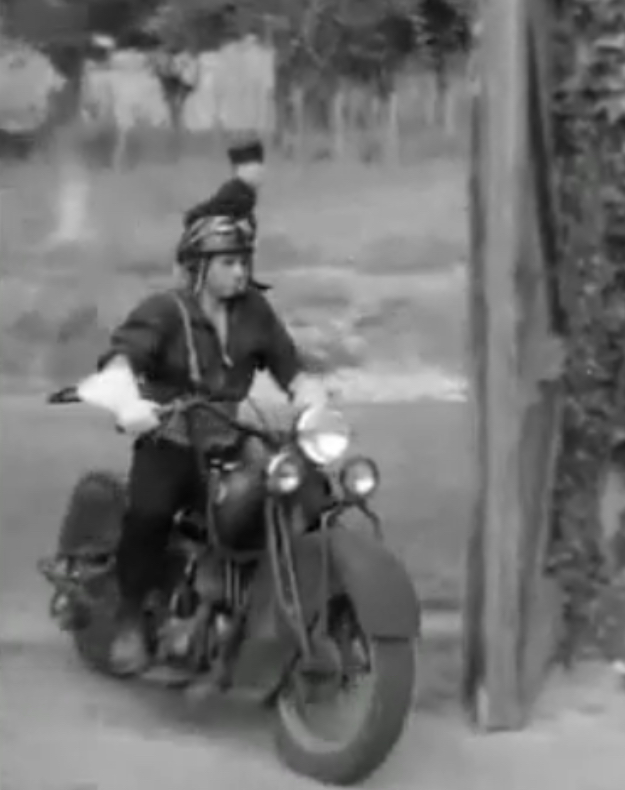
As it turns out, Death rode an Indian in 1949, or two in fact; the machines used in the film look are a 1937 Chief and a 1940 Sport Scout with skirted fenders. The two machines are mismatched, but ‘Orpheus’ was made on a very limited budget, and only much later DVD technology revealed the bikes’ details. Watching the movie, one can tell they’re Indians, but it hardly matters – what they really are is Death in motion. The Henchmen's outfits are standard motorcycle gear - leather helmets with shaded goggles (a darkened half-lens can be flipped up or down; I have a pair), dark wool shirts and trousers, gauntlet gloves, and wide leather kidney belts. No special costume was required to create the kind of menace a motorcycle policeman uses daily as a tool of intimidation.
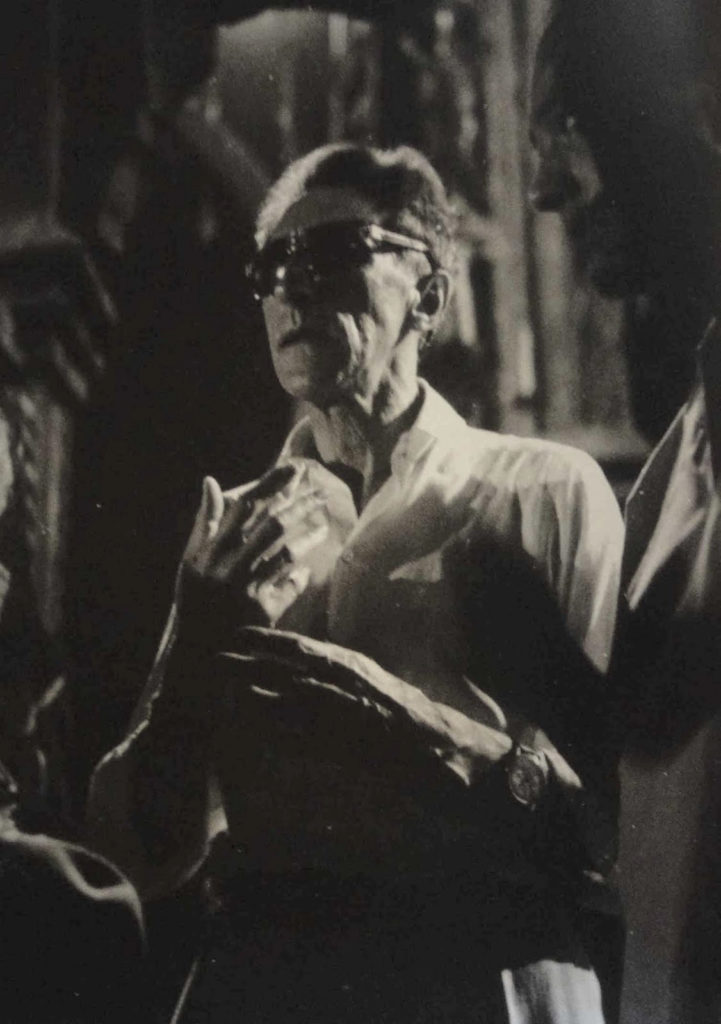
All motorcyclists intuitively feel their visual impact as a rider on pedestrians or automotive observers. On a motorcycle, we become Centaurs: half-human, half-roaring mechanical beast, and if we're honest with ourselves, we love the thrill of that dark power, which some riders exploit as a total lifestyle. There's an alchemical transformation of a rider on a motorcycle, and the erotic bond of human/machine is part of what makes them irresistible, and mesmerizing to watch. Jean Cocteau was the first to recognize and exploit this power artistically, which is no surprise given his pre-war identification with the Surrealists, who were disciples of the unconscious, rigorously exploring Freud’s writings, and using his theories as tools for their art. Undoubtedly Cocteau’s meditations on hidden psychological forces led to his realization of the motorcycle’s power, even though he was not himself a motorcyclist. The totality of the riding experience is both sides of the coin Cocteau flipped – the underside being Death’s henchmen, the bright side the thrill of being fully alive on two wheels.
No Better Cure
A buddy of mine was going through a tough divorce when I suggested he visit me in Miami. “Come down and we’ll ride to The Keys,” I told Matt, an invitation that elicited an immediate and enthused “I’m there!” Two weeks later we were gawking at the rental bike he booked: a 1200cc Harley Road King with a shiny black finish and so much chrome it was painful to look at in the South Florida sun.
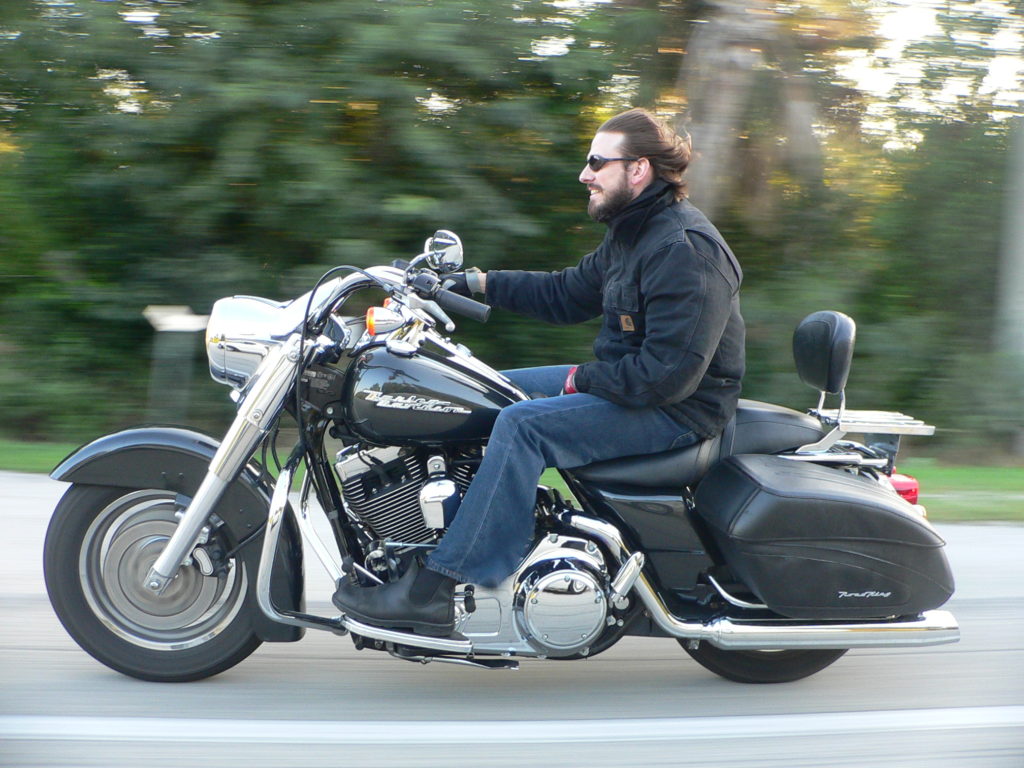
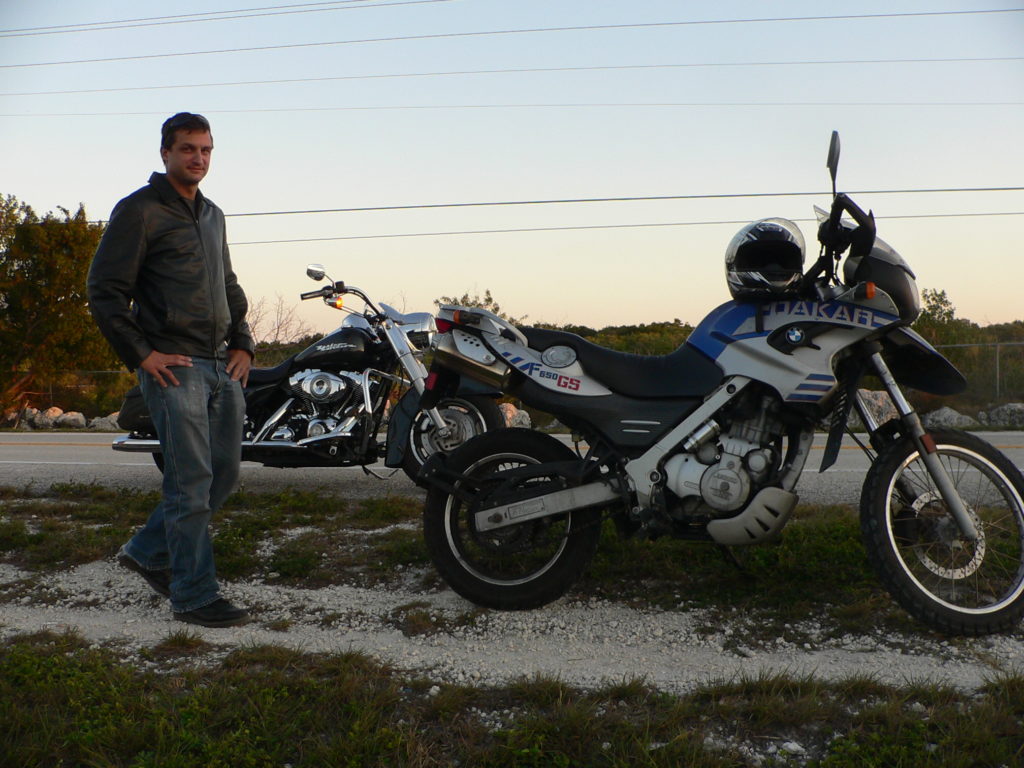
Matt straddled the bike, his slight build barely registering on the behemoth’s shocks, and fired it up. The engine emitted an ear-rattling and potent roar that drowned out the precision puttering of my BMW Dakar. “Listen to that!” he said. His face beamed like it did a decade earlier when we were young, carefree college students and real life had yet to kick either one of us in the urethra.
We pulled onto the highway and headed south toward The Keys riding in tandem until Matt could not longer resist ripping back the throttle and exploring the beast’s full potential. I tried in vain to keep the pace, but my 650cc BMW Dakar was no match for the monstrous Harley. I hung in there just long enough to glimpse Matt prone on the bike as if he were trying to shatter the land speed record at the Bonneville Salt Flats. After that, he was a speck on the horizon racing toward paradise. Once he eased up, Matt and I rode in tandem, taking in a tableau of island retreats and an armada of pleasure boats sailing toward the horizon, perhaps each on a quest for adventure and relaxation similar to our own.
The further we rode, the more like his old self Matt seemed. When we stopped for lunch, I noticed that the weary look he wore when he arrived had already vanished. He seemed unencumbered by the troubles he’d endured back home and fully focused on the pleasure of the now. Matt’s enthusiasm was infectious, so much so that any sourness I was carrying was also quickly forgotten. By the time we rolled into Key West we were laughing like schoolchildren and ready to take in everything that the legendary southernmost American retreat had to offer.
We spent the next few days riding around The Keys, relaxing on the beach and exploring Key West nightspots, reveling in the laid-back vibe enjoyed by bikers from all over who flock to the islands. Our last evening in Key West, Matt had me doubled over in stitches when he noted that the older female clientele at the world-famous Hemingway hangout Sloppy Joe’s were particularly interested in him. “This place is like a cougar zoo!”
His spirits raised, we headed back to Miami the following afternoon, riding that long stretch of U.S. 1 bathed in the pinkish-orange hue of a setting tropical sun. we took our time, cruising from one island to the next at a leisurely pace. But just as the sun set, my bike conked out in the Middle Keys. Matt and I fumbled in the dark to remove the tank panels and diagnose the problem by the light of our cell phones. Fortunately another rider pulled over to lend a hand. To my embarrassment, he discovered that I had done a half-assed job of installing my new battery; one of the contacts had shaken loose from the terminal. While reseating the battery and tightening the contacts, Matt elbowed me to check out the logo emblazoned on his t-shirt:
You never see a motorcycle parked in front of a psychiatrist’s office
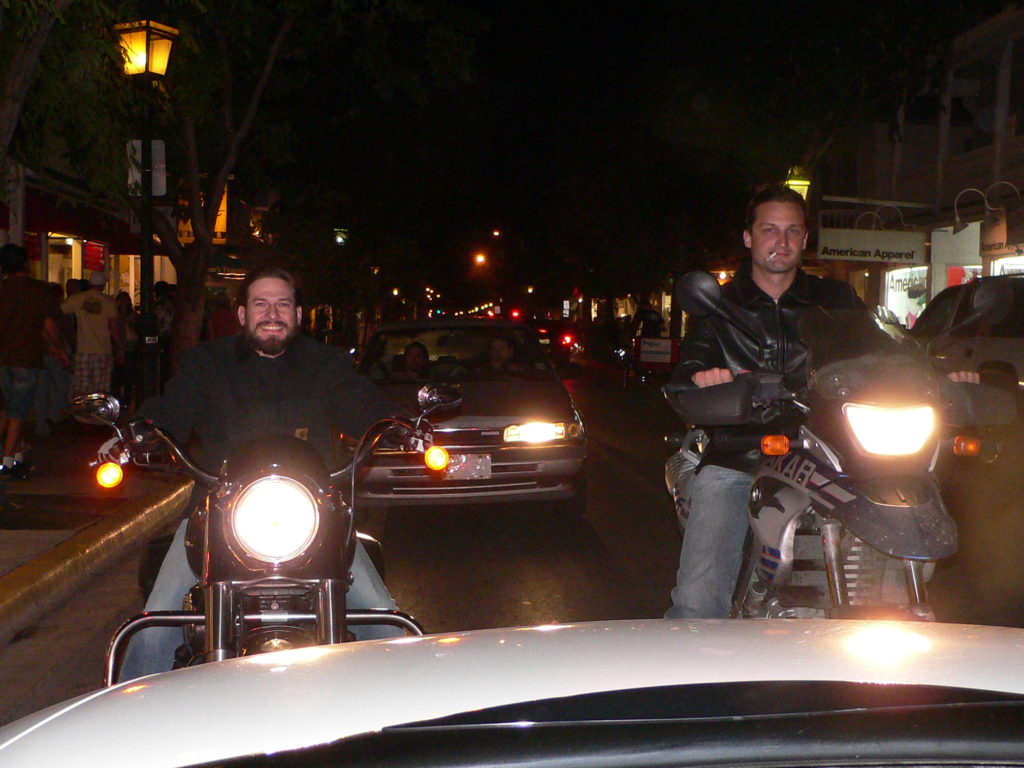
We both knew from personal experience this was not entirely true, though remarked how this assertion was the ideal coda to his curative ride. The resonance of that Keys run and our savior’s t-shirt remained with me long after Matt and I returned to Miami. I called on those memories years later when my ex-fiancee gave back the engagement I’d put on her finger the previous year. It was mid-winter in Washington, DC. A wet blanket of snow covered the streets, not exactly ideal riding weather. However I decided I couldn’t spend another day there - I needed to put at much distance between us as quickly as possible. So with my reclaimed ring in my pocket, I headed over to the friend’s house where my bike had been parked for several months while I had been reporting in Afghanistan and recovering from the serious injury I’d sustained there that for months left me blind in one eye and threatened to end my riding days for good. When I arrived, I yanked the tarp off my Dakar and snow filled the air, unsure whether I was be able to ride it with only one good eye.
Hello, my darling. I’ve missed you.
I threw my leg over the saddle, pulled the bike upright and drew in the kickstand.The tire pressure felt low, but I reasoned softer tread would grip better on the dusting of snow covering the side streets on the way to the highway. That is, if my bike was going to start at all. It had been left out in the cold for five months and had only been started a couple of times. I inserted the key and turned it. The lights on the dash flickered. Then I closed my eyes and pressed the ignition button. For a second, nothing. The bike was quiet and my heart dropped. I tried again and the biked emitted a feeble wheeze.
Err, err, err!
I tried again.
Errr, errr, errr errr!
“Come on! I need to get out of here!” I pleaded aloud while rocking it back and forth, hoping that sloshing around of the bike’s fluids would be enough to awake it from its deep, sickly winter slumber. “Come on! Come on!” I panicked at the prospect of not being able to get away.
Errrr, errrr, errrr, errrr . . .
My bike gasped and choked while attempting to shake off all that inertia.
Errrrrr, errrrrr, errrrrr, errrrrr . . . pada, pada, pada pada . . . vroooooommmmm!
My bike caught the beat like a cardiac patient brought back from the dead with a jolt to the chest. I gave my Dakar a little time to warm up and settle into a reasonable rhythm, then eased it onto the icy street. I was so goddamn delighted it started that I’d momentarily forgotten where I was going. Then I remembered: I was heading south, back to Miami and the sun-drenched highways and warm salt-infused air that had proven so reliable a remedy for my buddy’s broken heart, hoping it would do the same for me.
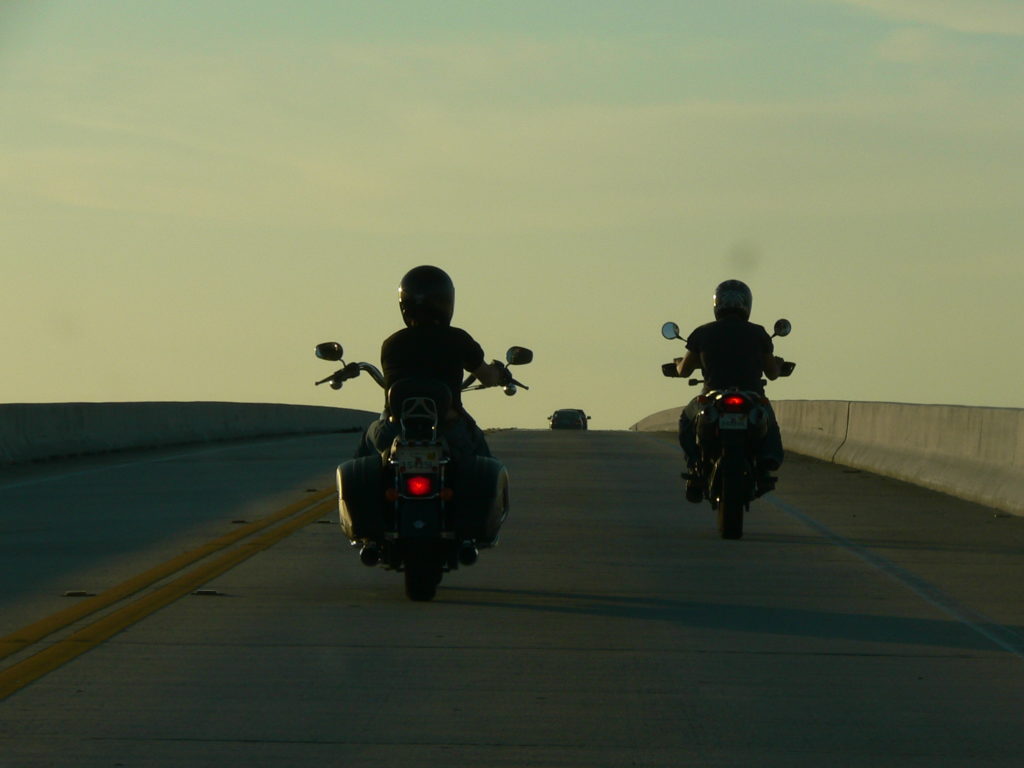
I rode hundreds of miles through pelting rain in the Carolinas and Georgia, squinting through the showers and rubbing condensation off of my visor. Despite the ardor, my travels indeed proved therapeutic. The further I went, the more my Dakar strained to reached my need for quickness in my escape, the better I felt. The roar of the wind threw my open visor was washing away my grief and rejection. By the time I reached the lights sands and blue waters in Miami my malaise had lightened, as had my load - I’d sold the returned engagement ring at a pawn shop in Tampa.
The healing power of miles in the saddle once again resuscitated the formerly woeful.
The Phantastic Oskar Schindler
By Dr. Erwin Tragatsch
[Note: Motorcycle historian Dr. Erwin Tragatsch, author of the groundbreaking 'The Illustrated Encylopedia of Motorcycles' (1977), wrote this unpublished article in 1955, long before the book 'Schindler's Ark' (1985) led to the movie 'Schindler's List' (1993). Tragatsch recounts his own acquaintance with the man, before WW2. The article is reprinted as written by Tragatsch, including the title, and was discovered only this June while perusing the Tragatsch Archive within Hockenheim Museum Archive]
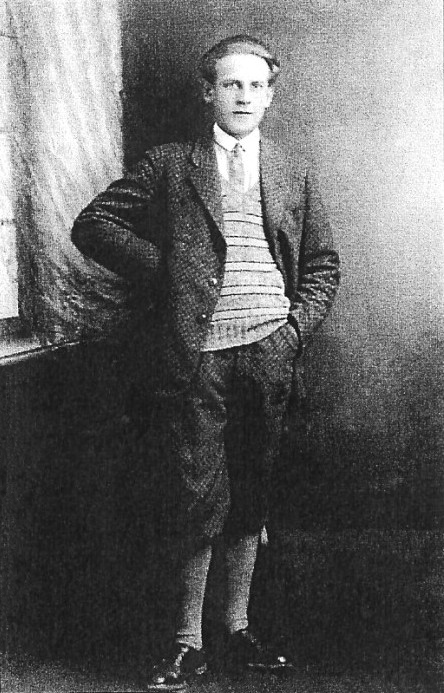
THE RACING MOTORCYCLIST WHO SAVED THOUSANDS FROM DEATH
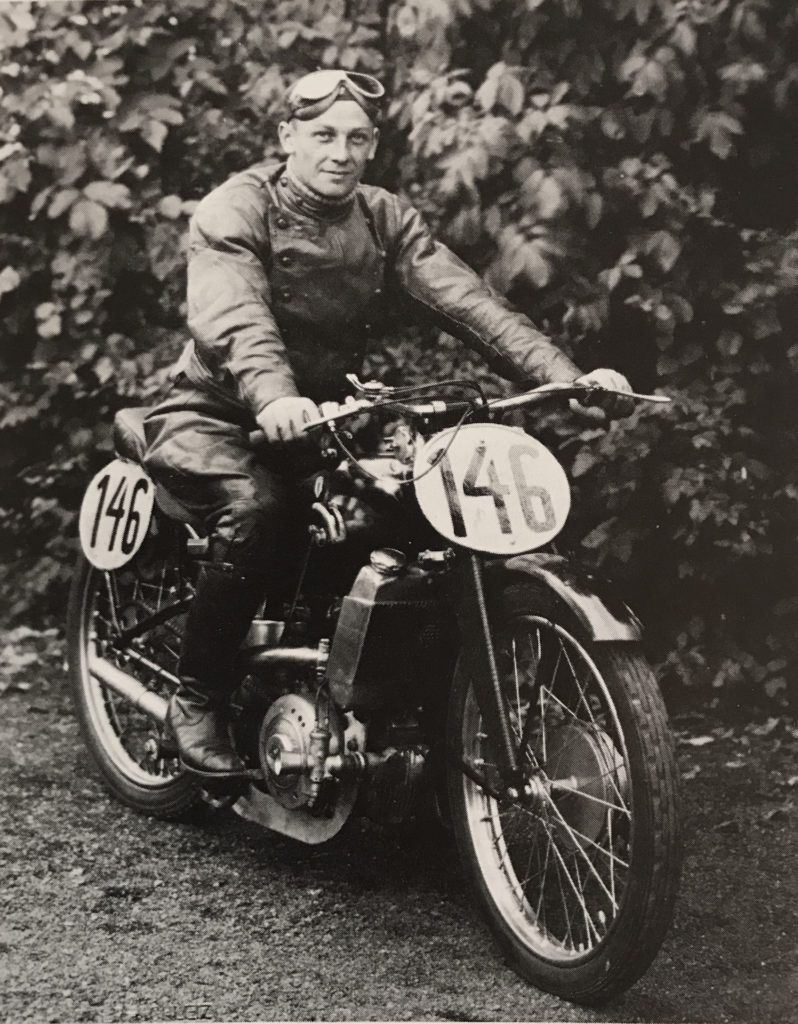
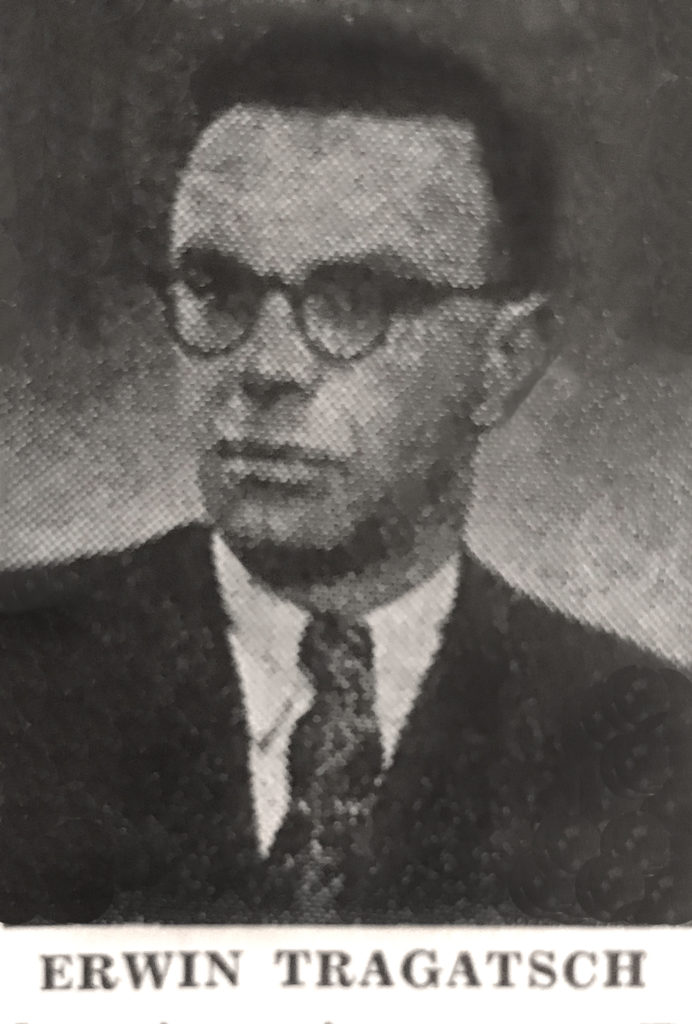
Who remembers Oskar Schindler, the ex-racing motorcyclist from Czechoslovakia? Probably, with few exceptions, nobody. Schindler was never a racing man of the Stanley Woods, Jimmy Guthrie, Geoff Duke, John Surtees, or Mike Hailwood calibre. He never rode in England, never in more than two races in his life and his name also never graced the frontpage of any motorcycle journal in the world...and despite this all, even the Sunday Express issue of 22. March 1964 and lately even the allmeighty BBC found warm words for this now 57 year old Schindler, who rode his last motorcycle race 27 years ago, in 1928. And...according to the latest news, even a film is to be made with: 'The Oskar Schindler Story!' [Two attempts were made to film Schindler's story during his lifetime, but it took until 1993 for Steven Spielberg to finally make the film - ed.]
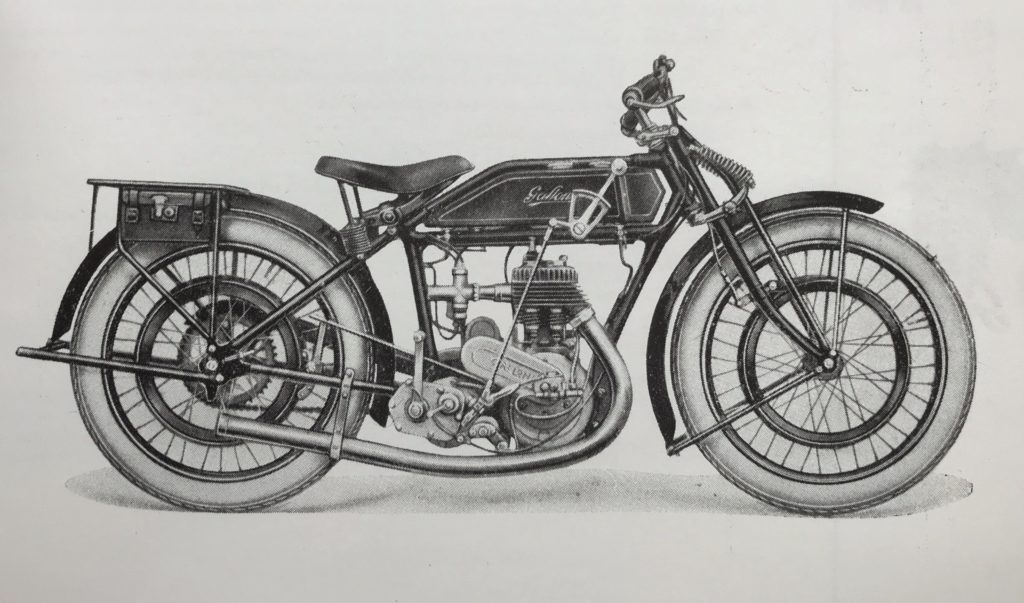
Who is this phantastic Oskar Schindler? I know him since we both were in school in the town of my birth, Svitavy (Zwittau) in the Moravian part of Czechoslovakia. He went with my older brother to school and had only one interest...motorcycles! In 1925 he got his first machine. It was a red painted Italian 500cc single-cylinder Galloni. It looked 'fast' but with its sidevalve engine it was not a potent instrument. A hopeless thing for any kind of road racing.
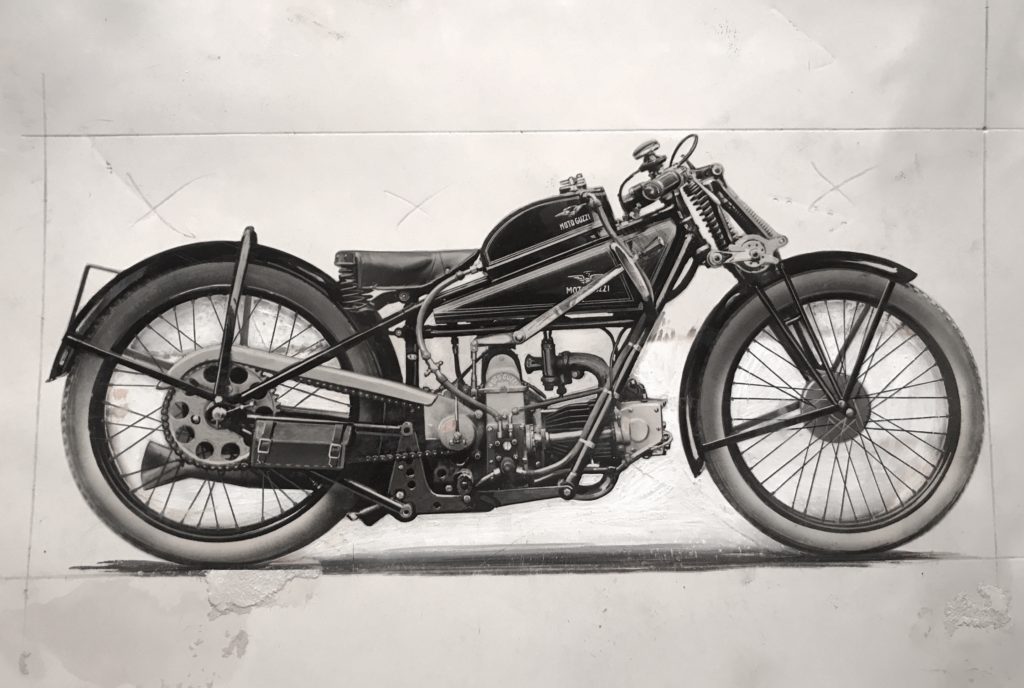
Oskar Schindler solved the speed problem early in 1928. The Galloni was sold and in its place came the dream of every young racing enthusiast, the fabulous 250cc single cylinder OHC Moto Guzzi. The great Italian Pietro Ghersi introduced this racing model in 1926 to the thousands of race spectators during the Lightweight TT in the Isle of Man, and scared with his phantastic practice and race laps not only 'Ebby' (then the Chief Timekeeper Mr Ebblewhite), but also all his opponents. Until then the name Moto-Guzzi was known only at home in Italy and even in other Continental countries, only very few of these wonderful machines were ridden in races...Orlando Geissler and Hans Winkler had them in Germany, Joo in Hungary, Vojtech Kolazskowsky in Poland and Peter Roberts in Czechoslovakia. And now, Oskar Schindler, son of an insurance agent and man about town, got one too.
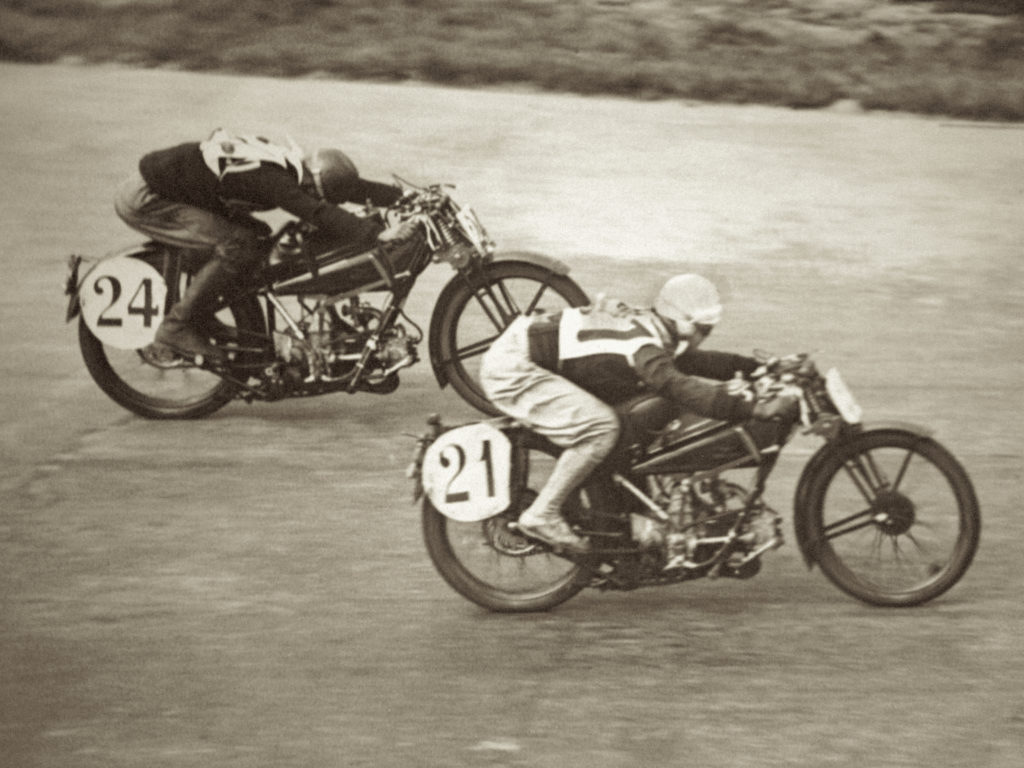
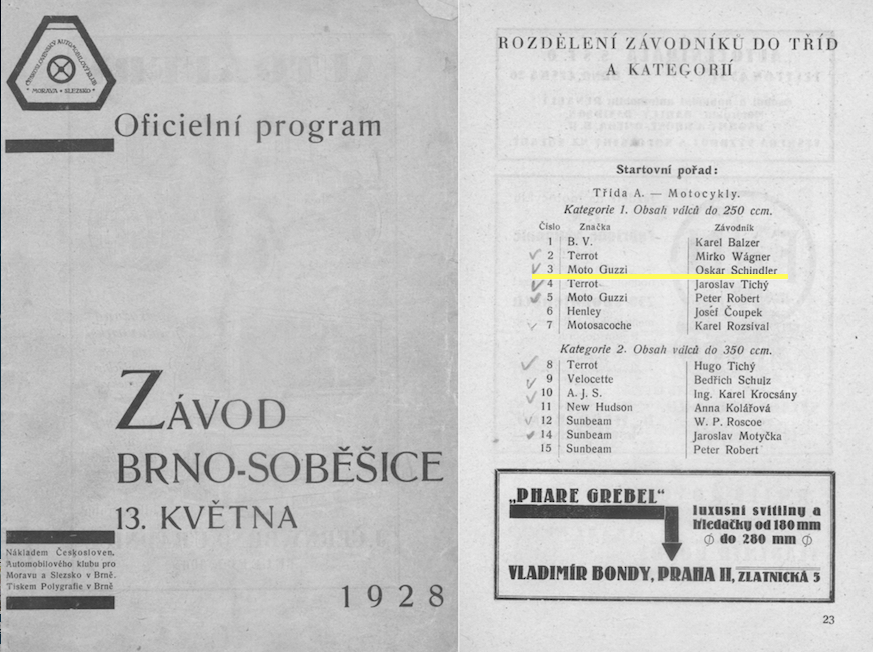
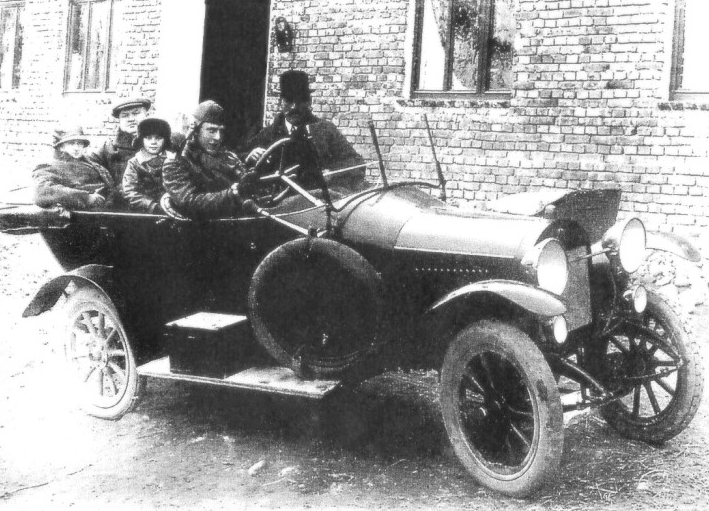
Ten years later...1938. Oskar Schindler, born in a town in Czechoslovakia but of German nationality, goes to Germany and later takes over an ammunition factory in Krakow in Poland, where he produces arms for the German Wehrmacht (army). He has no worries with the sale of his products but worries because of shortage of labourers. The Germans need all men for the fighting forces in the east, in the west, in the south and the north and Schindler tells the army bosses that unless he can get inmates from concentration camps - foreigners, prisoners, non-aryans, etc - he is unable to carry on. Eventually, despite protests by the dreaded Gestapo (secret police), he gets his way and takes thousands of these unlucky men and women into his factory...away from the horrible tortures, away from hunger and away from the gas chambers.
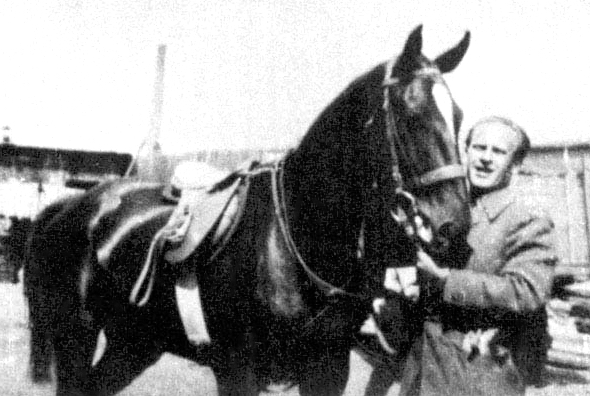
He goes even further. He kicks out the Gestapo from his factory and bribes other dangerous Germans, who tried to interfere with his human dealings with the ex-concentration camp inmates. How he is not hated by his employees but by the fanatics, and more than once he is in trouble with the crazy politicians. The army comes more than once to his rescue, and also to the rescue of men, hunted despite his protest by the Gestapo in his factory. Not because of pure humanity, but because they need arms...arms...arms. And Schinlder is even not keen on producing many of them or very good ones [and produced only one truckload of ammunition in 3 years! - ed.] ...he just wants to keep himself and his labour force out of trouble. And he eventually succeeds!
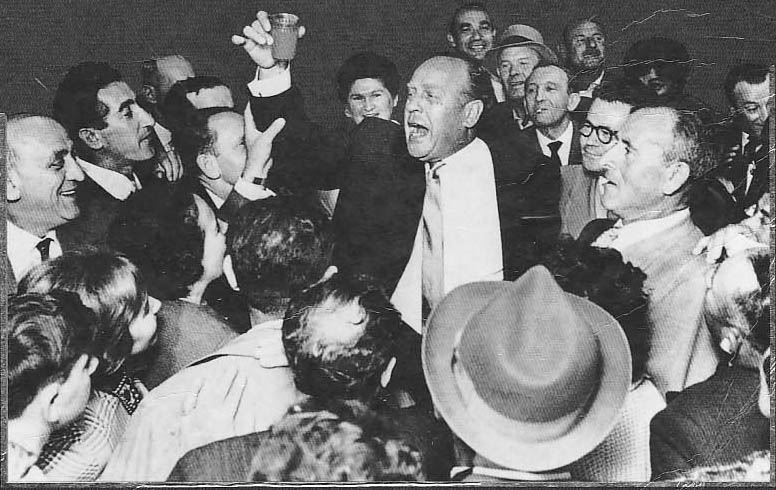
Near the end of the war, when Poland became for the Germans again a hot place, they moved the factory westward, to Moravia. Schindler insisted on taking his labour force and staff with him and while millions of others died in concentrations camps, Schindler fed them quite well, clothed them and gave them human living conditions. And when, in May 1945, everything broke down for the Germans, he had rescued about 1200 men, women, and children who, without him, would have died.
After the war he went to Argentina, but returned in the Fifties to Germany, where he became - at Frankfurt - the owner of a cement factory...still keeping contact with many of these men and women that he rescued and who forever will be thankful to him [in fact his former employees funded him after the war - ed.].
Oskar Schindler, in his period as a racing motorcyclist, was not a famous man. Fame came to him, when his own feeling for humanity proved stronger than anything else and when he, the German, stood not behind a crazy ideology but behind the many British, French, Czechs, Poles, Belgians, Dutchmen and other who, without him, would have died.
The Current: How Moto3 Opened The Door For NEXT Electric
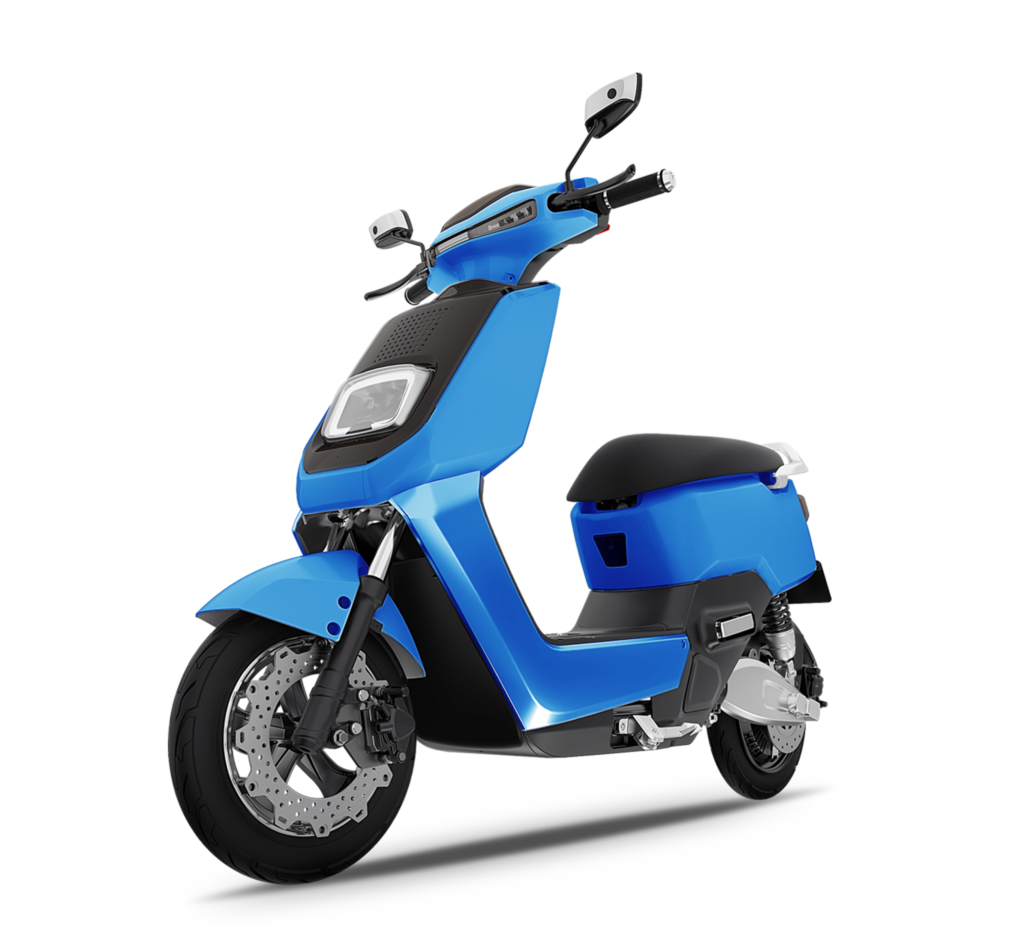
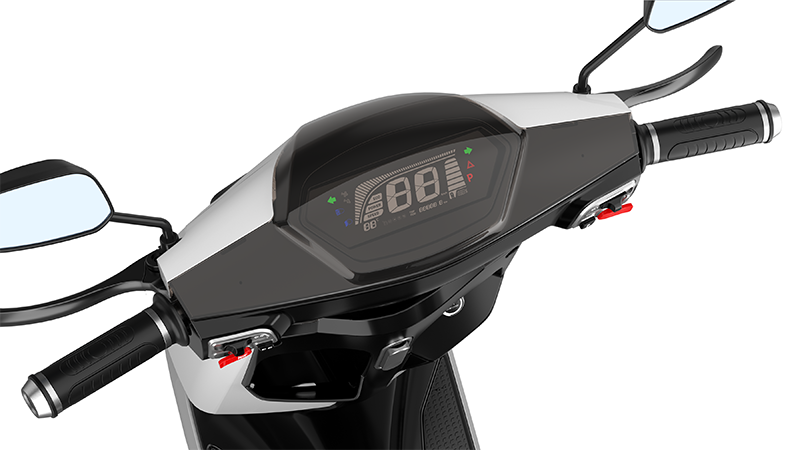
NEXT Electric Motors CEO Xulei Xu is excited about the future of electric mobility, and his company co-founders Estefanía Hernández, Antonio Navarro Herrero and Ben Holzemer are driving the company forward with the NX1, an electric moped reminiscent of a futuristic Honda Elite.

Xulei, when and how did the NX1 go from concept to production?
The project started exactly one year ago. It's crazy to think that in May 2017 the four co-founders of NEXT Electric Motors didn't know each other yet. But thanks to the help of the Miguel Hernandez University in Spain, who introduced us last year, we have the opportunity to be here today and together.
On one hand, we have Antonio and Estefania who won the World Championship in Innovation in Motostudent 2016. After that experience, they started to think about the idea of creating a company to apply all their experience and expertise gained during the competition.
For those who are not familiar with Motostudent, it’s an international championship where students from 70-plus universities around the world design and build a Moto3 motorbike from the MotoGP World Championship and compete each against each other. Currently, we’re also building an electric motorbike to compete in Motostudent 2018 that will take place in Spain’s Motorland Racing Circuit next October.
On the other hand, at the same time, Ben and I also had the idea of creating a company to produce of electric motorbikes because we’re strongly convinced that it’s the future of mobility.
During our first meeting together, we immediately realized that were perfectly compatible and had the same ideas about the future of electric vehicles. Since that moment, we started to work really hard and we expect to deliver the first units of the NEXT NX1 in winter 2019.
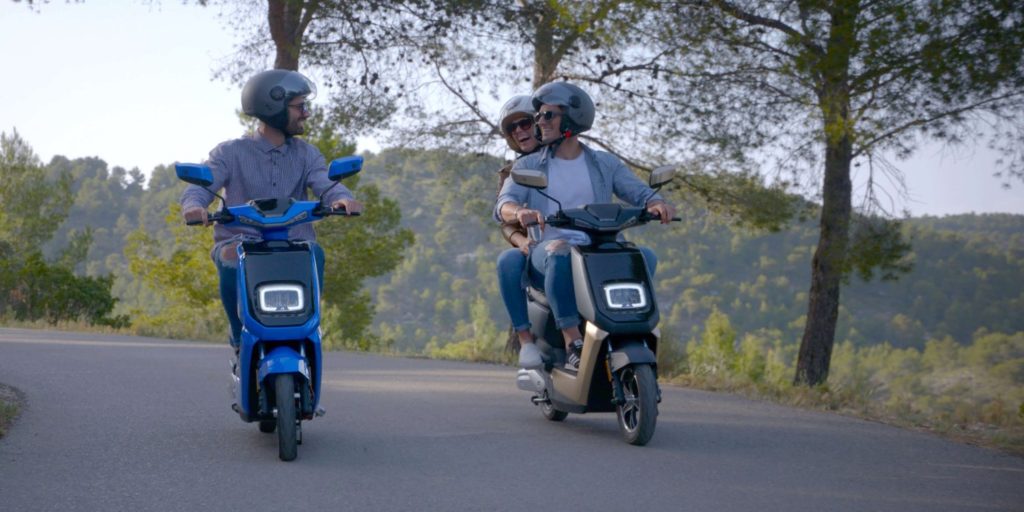
We all come from very different backgrounds and that's what makes us a strong and complete team. The experience of the team ranges from Junior World Championship track engineers, experts in marketing from multinational companies, international trade specialists and finance guys who worked for international consultancy and private equity firms. However, there is something that glues us together: the passion for motorsports and technology.
Tell me how NEXT Electric Motors is being accelerated in Lanzadera through the Garaje program.
Lanzadera is probably one of the best things that happened to us since we started the company. They are extremely helpful and are accelerating us providing all sorts of resources: coaching, office space, and training covering the different parts a business, financing, networking, etc. They have a great staff that’s helping us to achieve our goals.
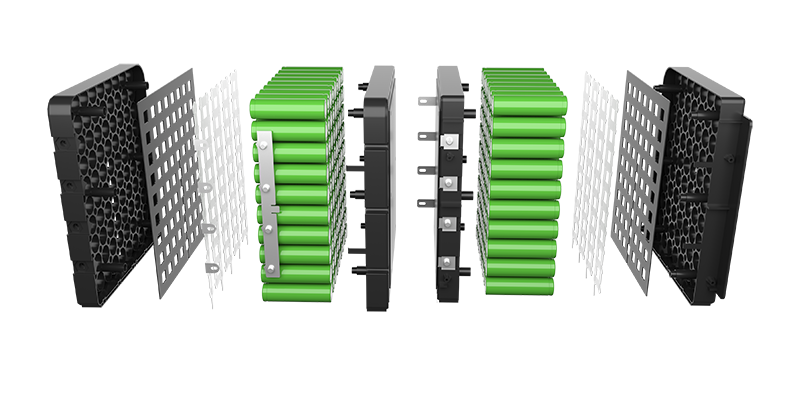
We truly believe that the future of transportation will be electric, not only in two-wheeled vehicles, but in any mean of transportation you could imagine. The main handicap that we have nowadays is the capacity and the recharging times of the batteries. Although there have been significant improvements in the last decade, we believe there’s still a lot of room for improvement to develop new materials and technologies in energy storage devices that will boost the massive adoption of electric vehicles worldwide.
When might the NX1 be available in the United States?
Our short term plans are to start delivering the first units of the NX1 in Spain next winter and then expand the operations to the rest of Europe. We don't have yet a clear timeframe for the US, but once the European market is consolidated we will definitely seek new markets, and the US is very attractive for electric vehicles.
Road Test: 1936 Brough Superior SS80
The Vintagent Road Tests come straight from the saddle of the world's rarest motorcycles. Catch the Road Test series here.
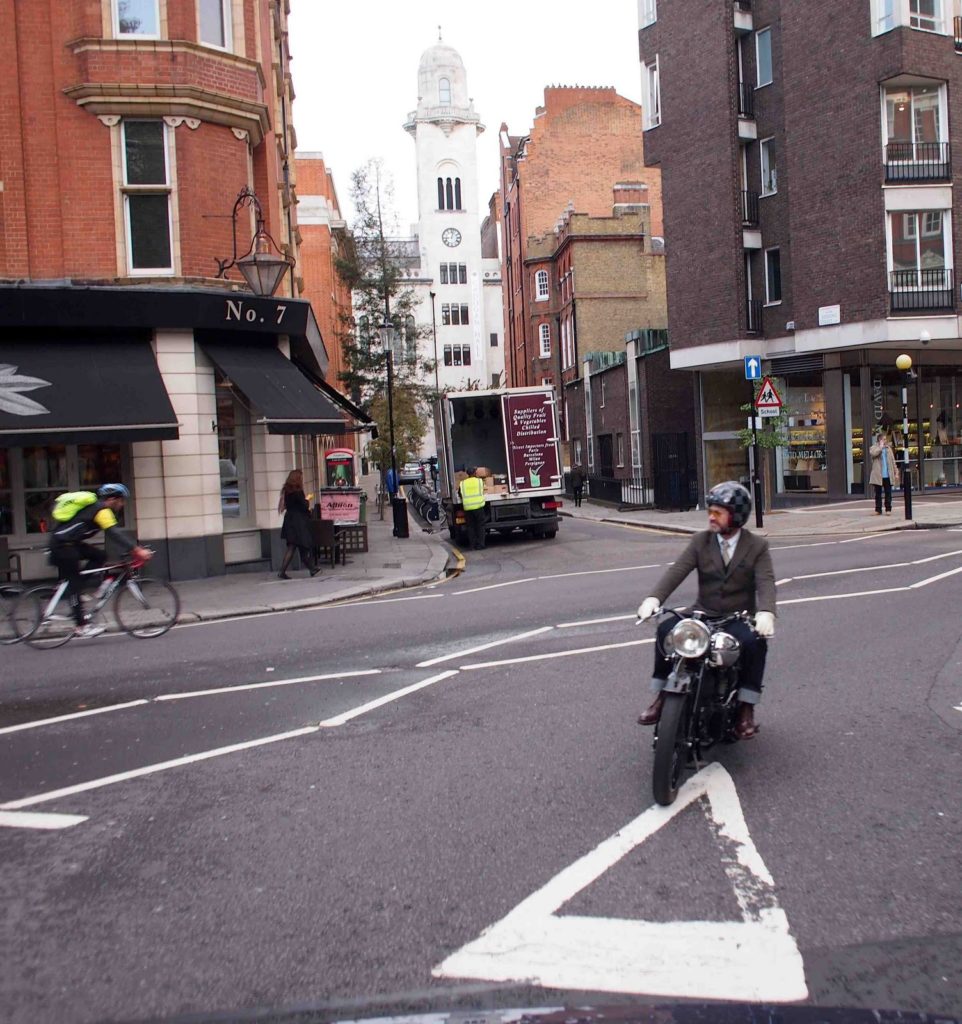
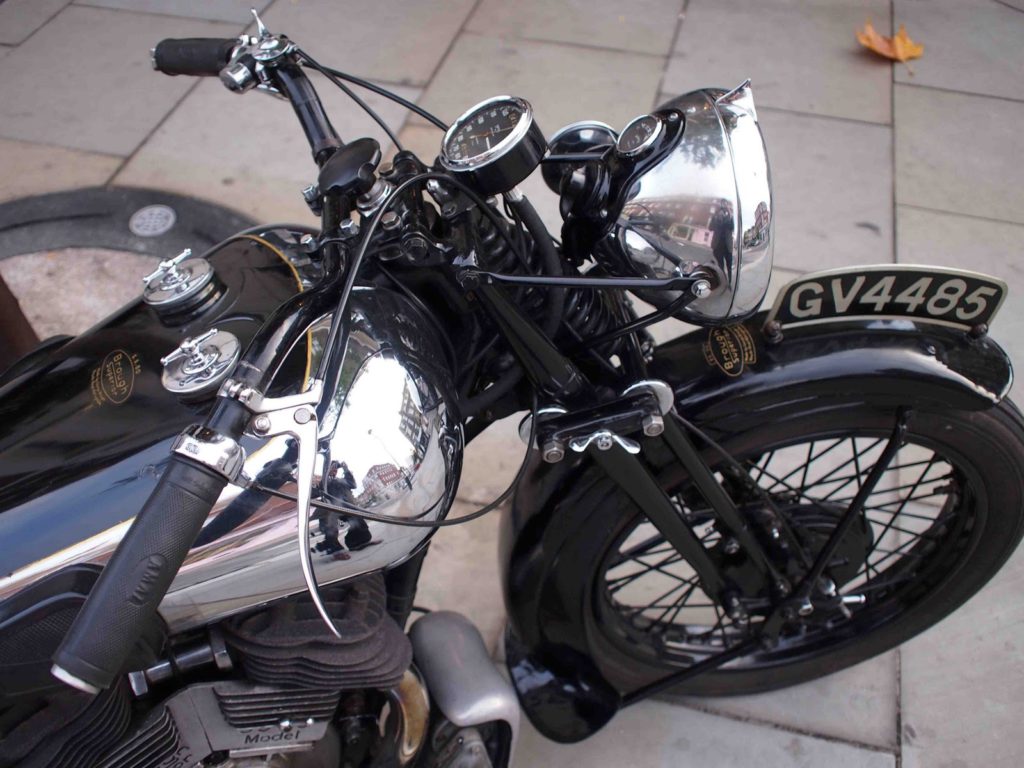
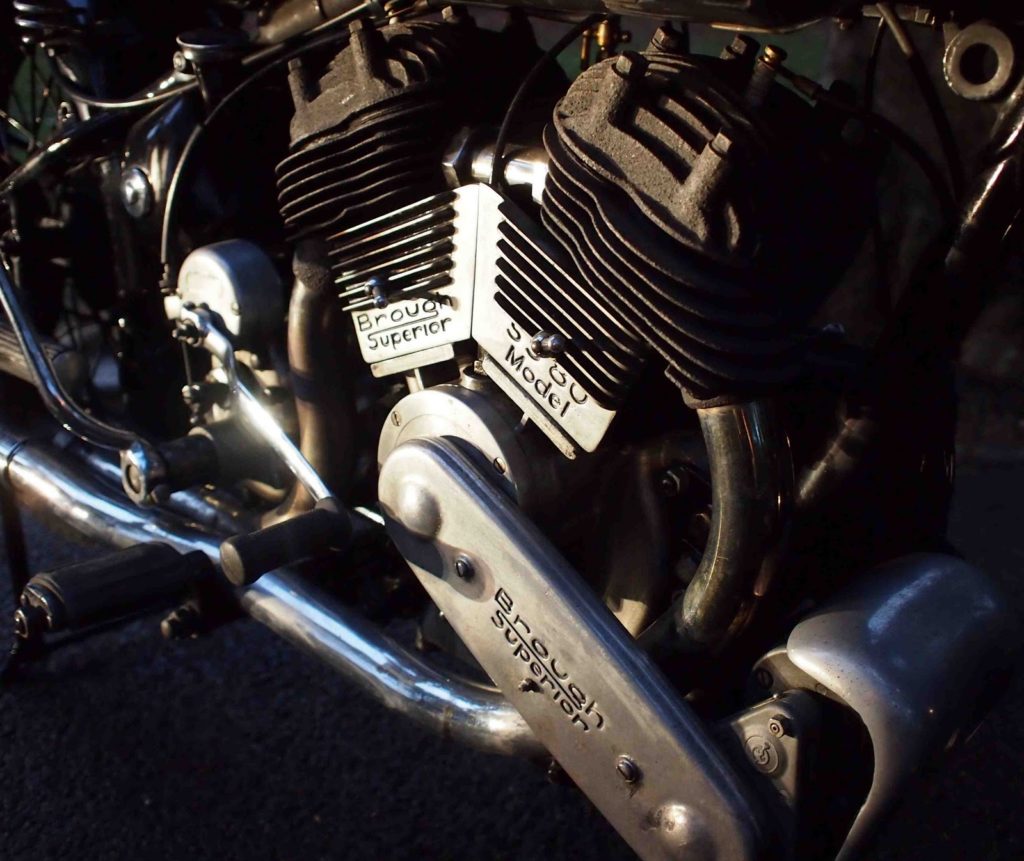
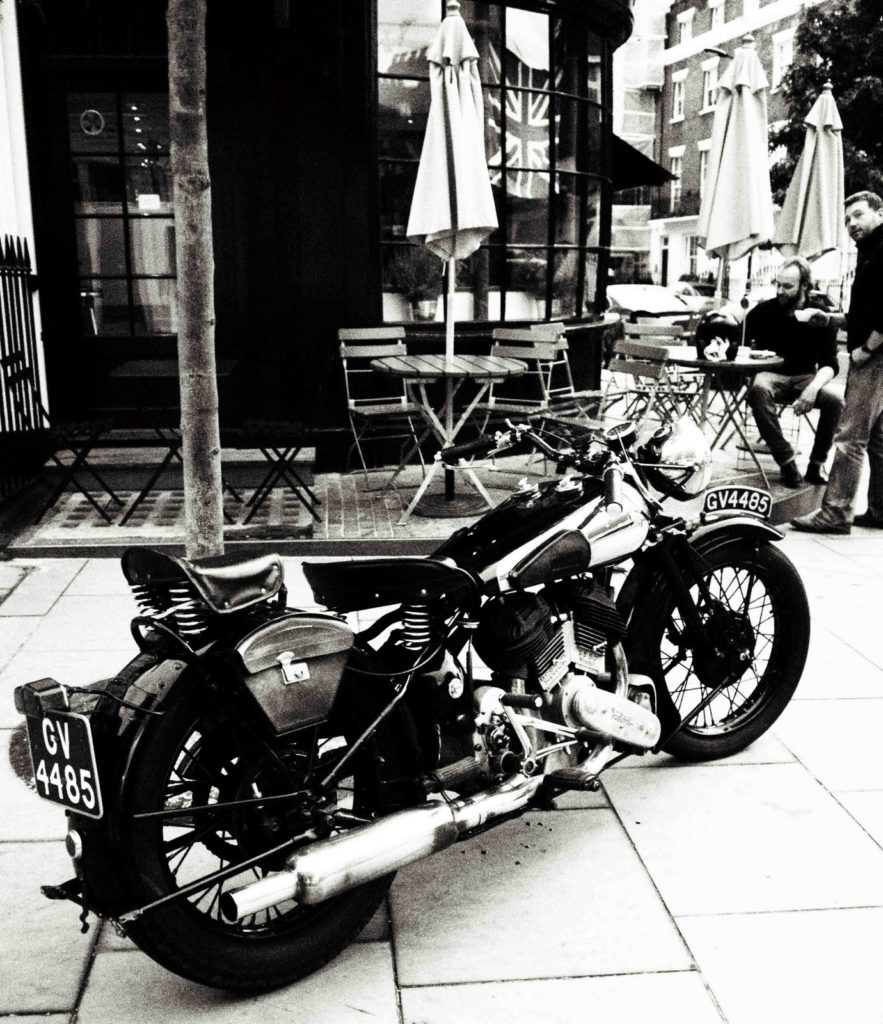
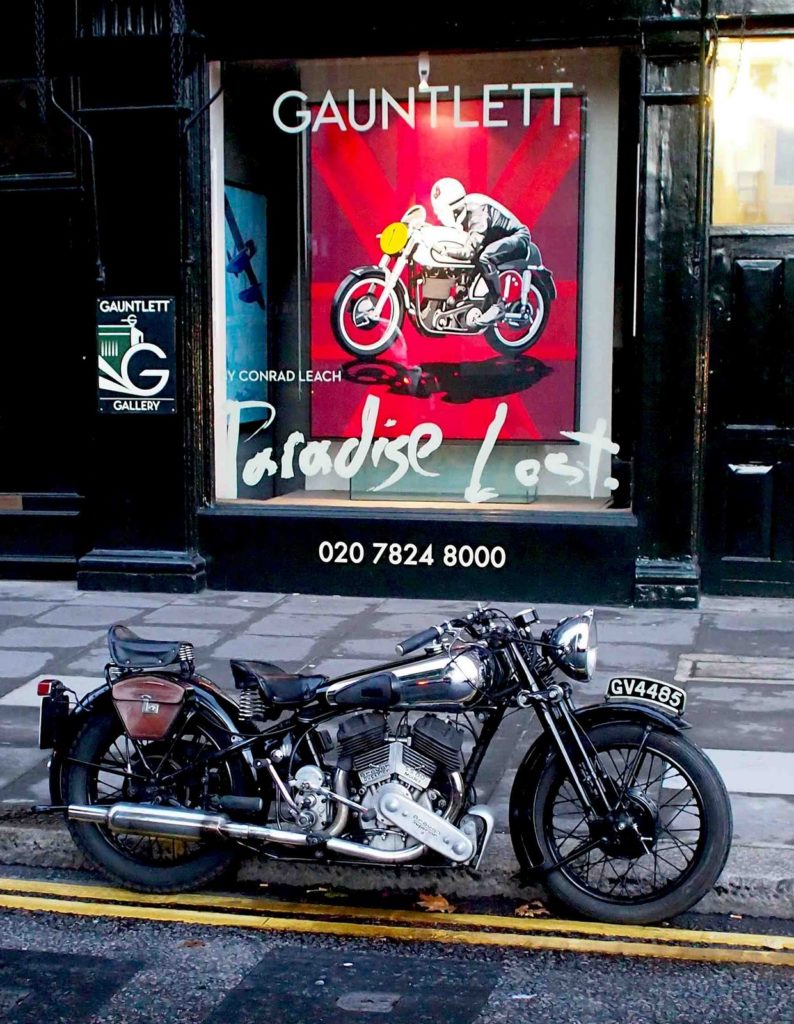
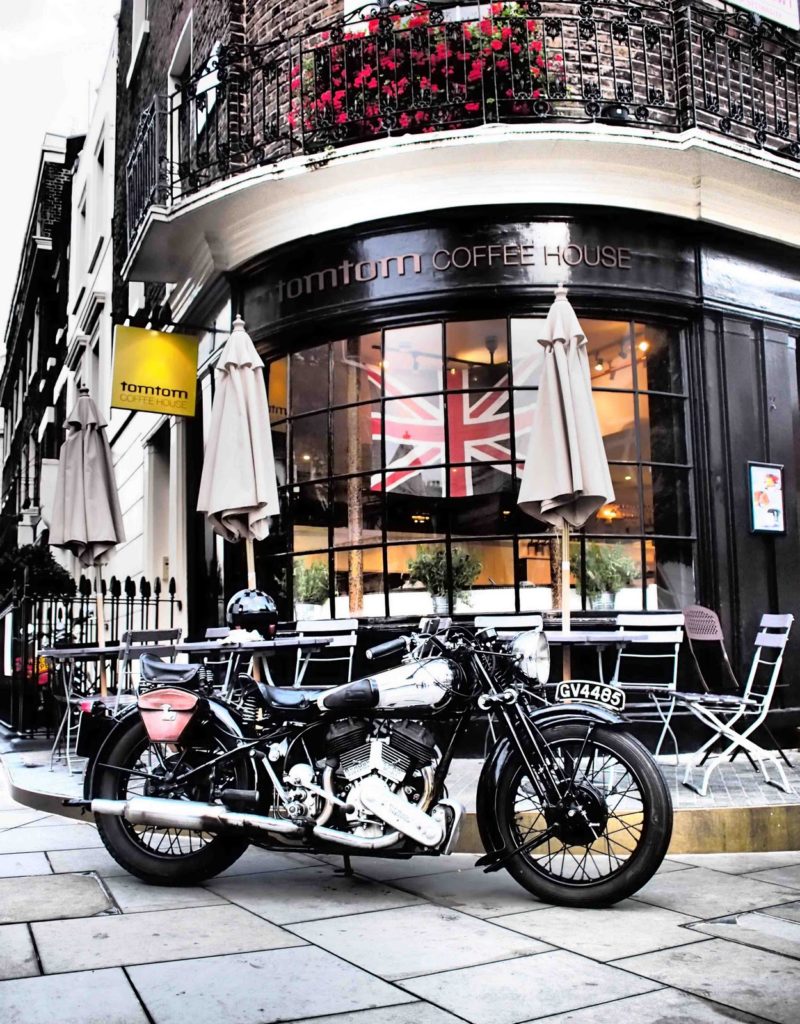
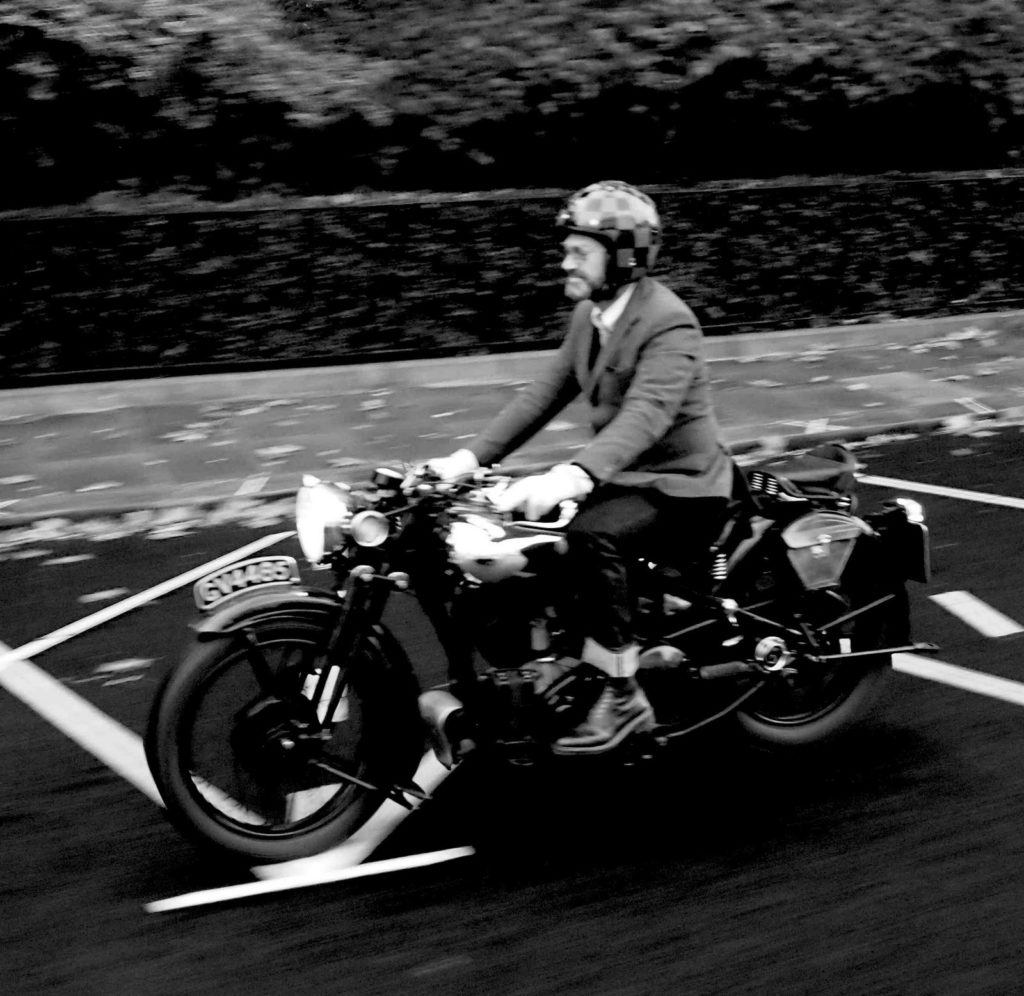
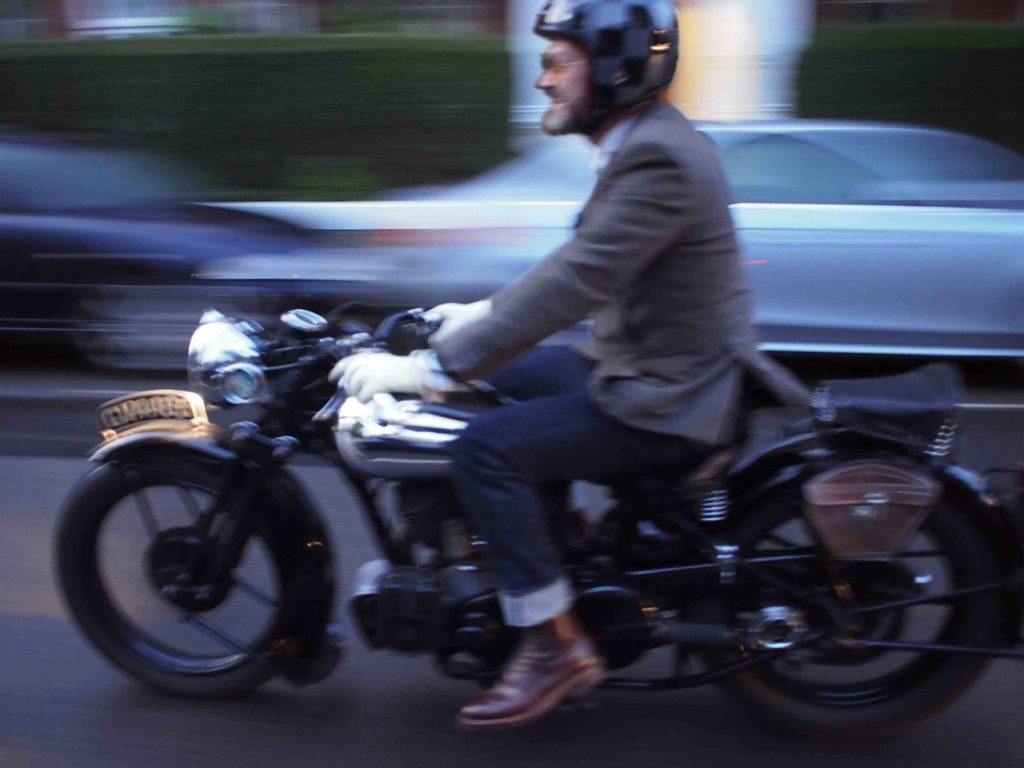
Too much tap, tap, tap on the Mac, not enough wrist-turning brrumm brrumm, makes Jack a dull lad. So, at the end of the northern hemisphere's riding season, on a cool but clear morning in London's Chelsea district, the offer of a road test on a nice old Brough Superior was like a cup of warm tea in cold hands: a very good idea.

Indians for the European Grand Prix
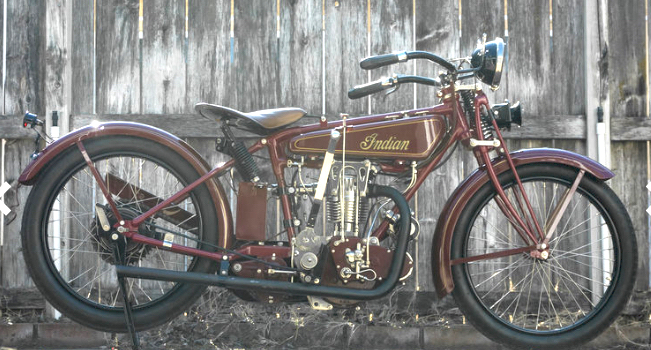
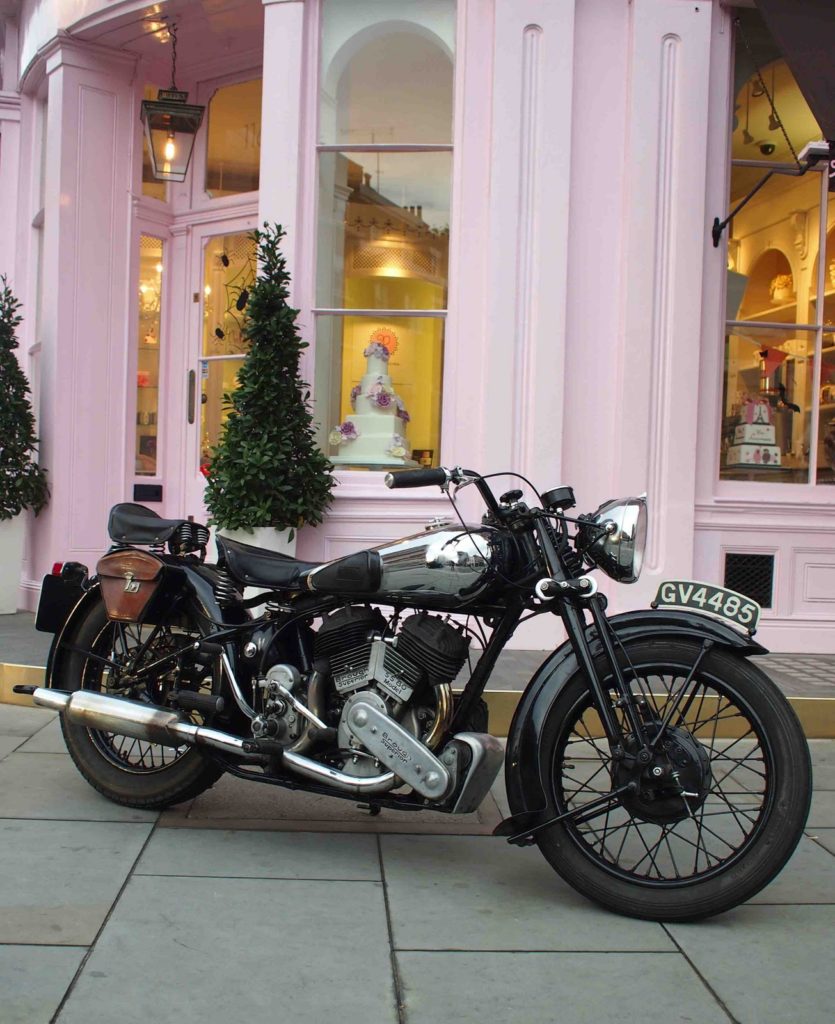
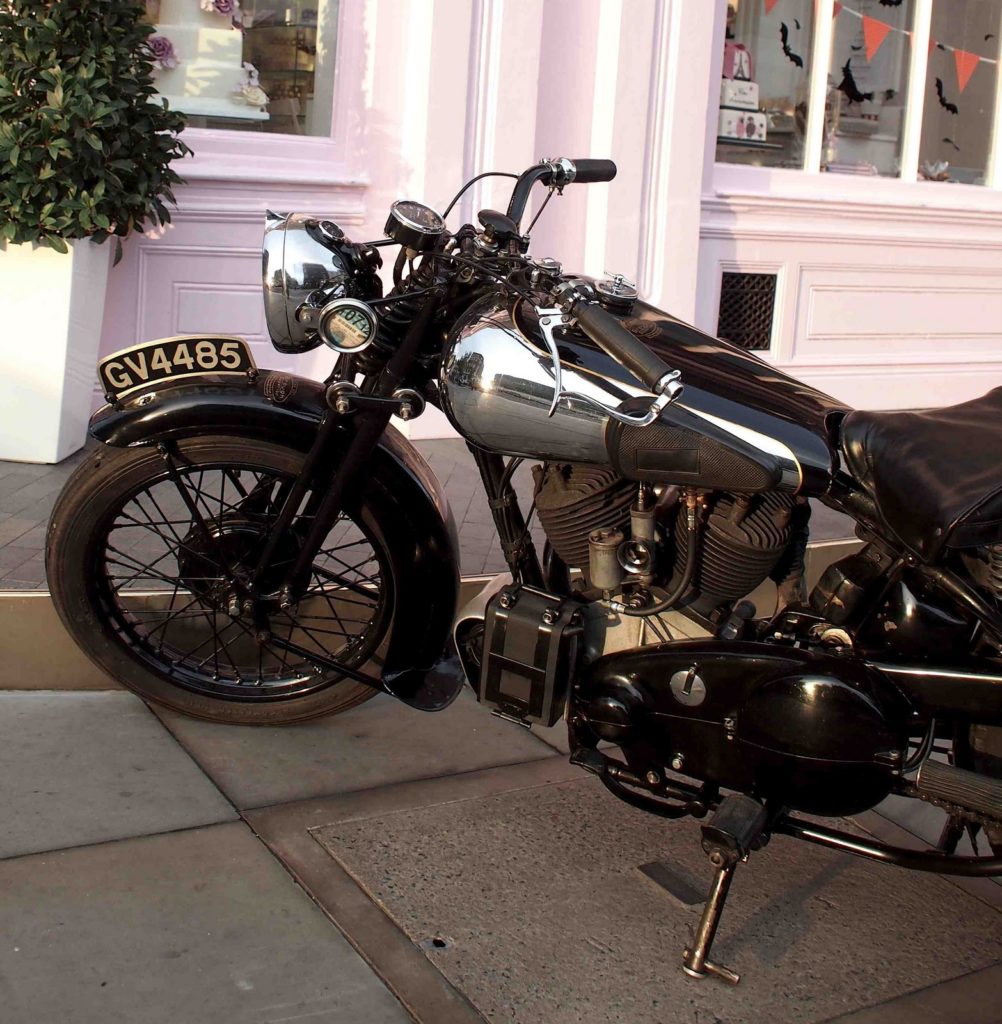
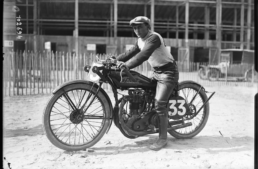
While the Hendee Manufacturing Co. was the largest motorcycle factory in the world in 1911, and sold more bikes to the US military during WW1, after the war they lost their sales edge to Harley-Davidson. Indian exported 50% of its output in the 1920s, and actively supported racing on British and European soil, giving factory support (meaning money and machinery) to a team managed by Billy Wells, the British Indian importer, from 1909 onwards [read the Billy Wells story here]. Wells and his special Indian racers found great success at Brooklands and the Isle of Man, which peaked in a 1-2-3 victory for Indian at the 1911 Isle of Man TT [read that story here].
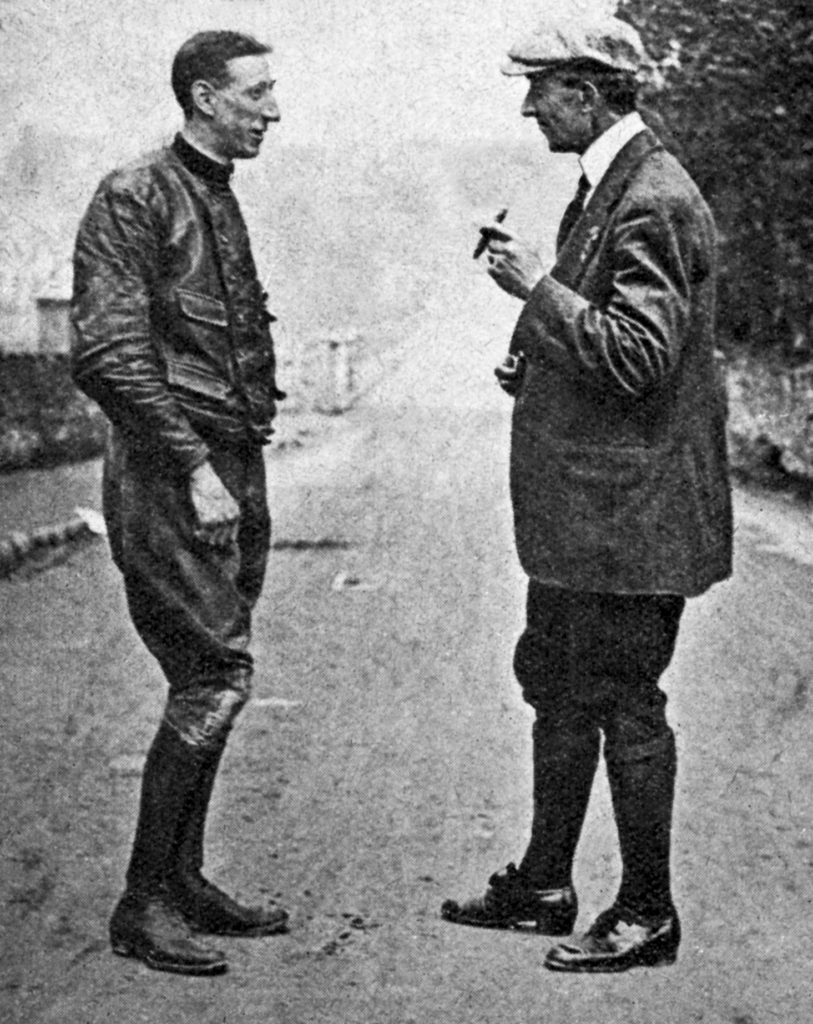
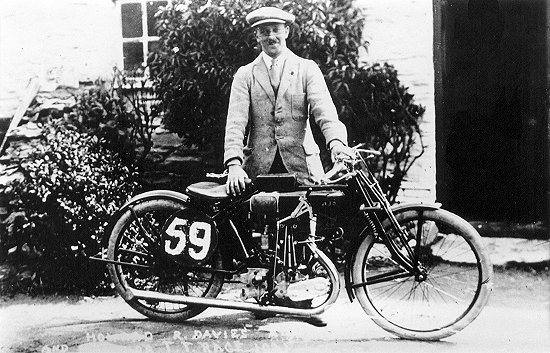
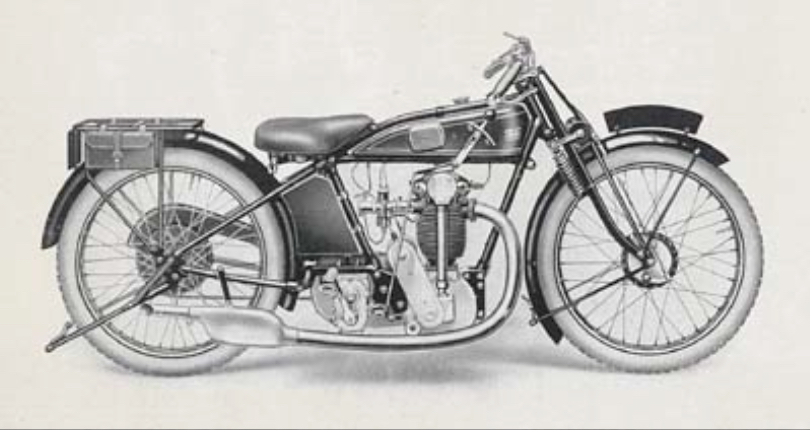
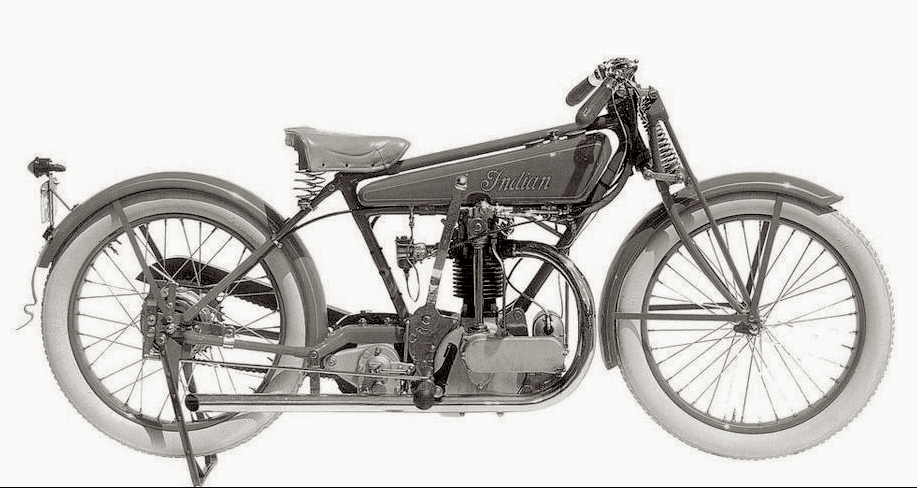
Indian continued to send factory specials to Britain up until that country entered WW1 in 1914. After the war, when racing resumed, Indian carried on giving factory support to riders: the first Isle of Man TT was held in 1920, and HR Harveyson made 5th place on a 500cc Indian Scouts, while his team-mate DS Alexander made 6th. The first four places in the race were taken by Sunbeam (Tommy DeLaHaye won on one) and Norton sidevalve singles, so CB Franklin, Indian's chief designer, chose to make 'half a Scout' - a sidevalve single - for his European racers. Indian's best result at the Isle of Man TT in the 1920s was taken by professional racer Freddie Dixon, who managed 2nd place in the 1921 Senior, on a factory-supplied 500cc sidevalve single. He was beaten by Howard R Davies (who soon founded his own motorcycle brand - HRD), in the only instance where a 350cc machine won the Senior TT!