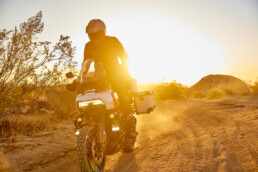
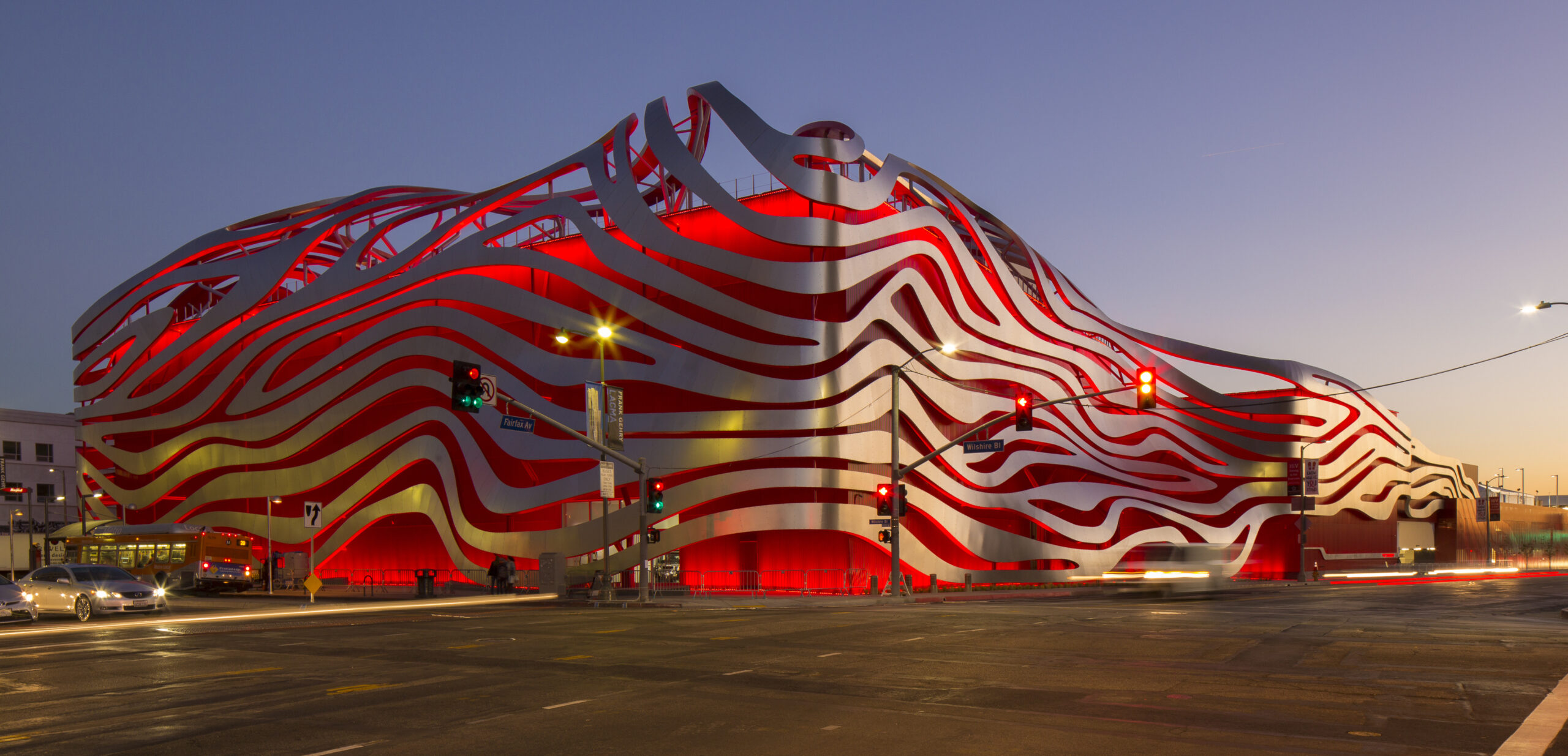
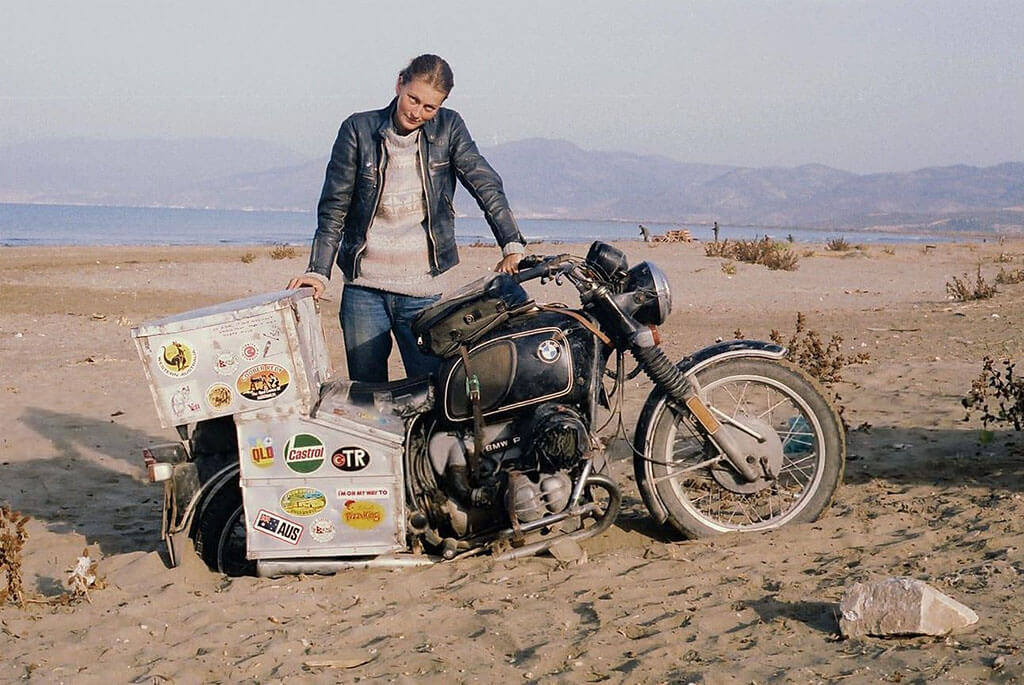
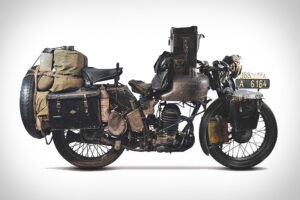
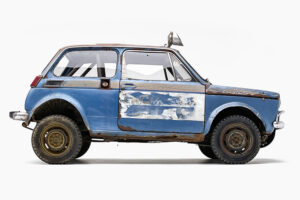
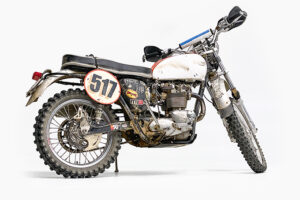
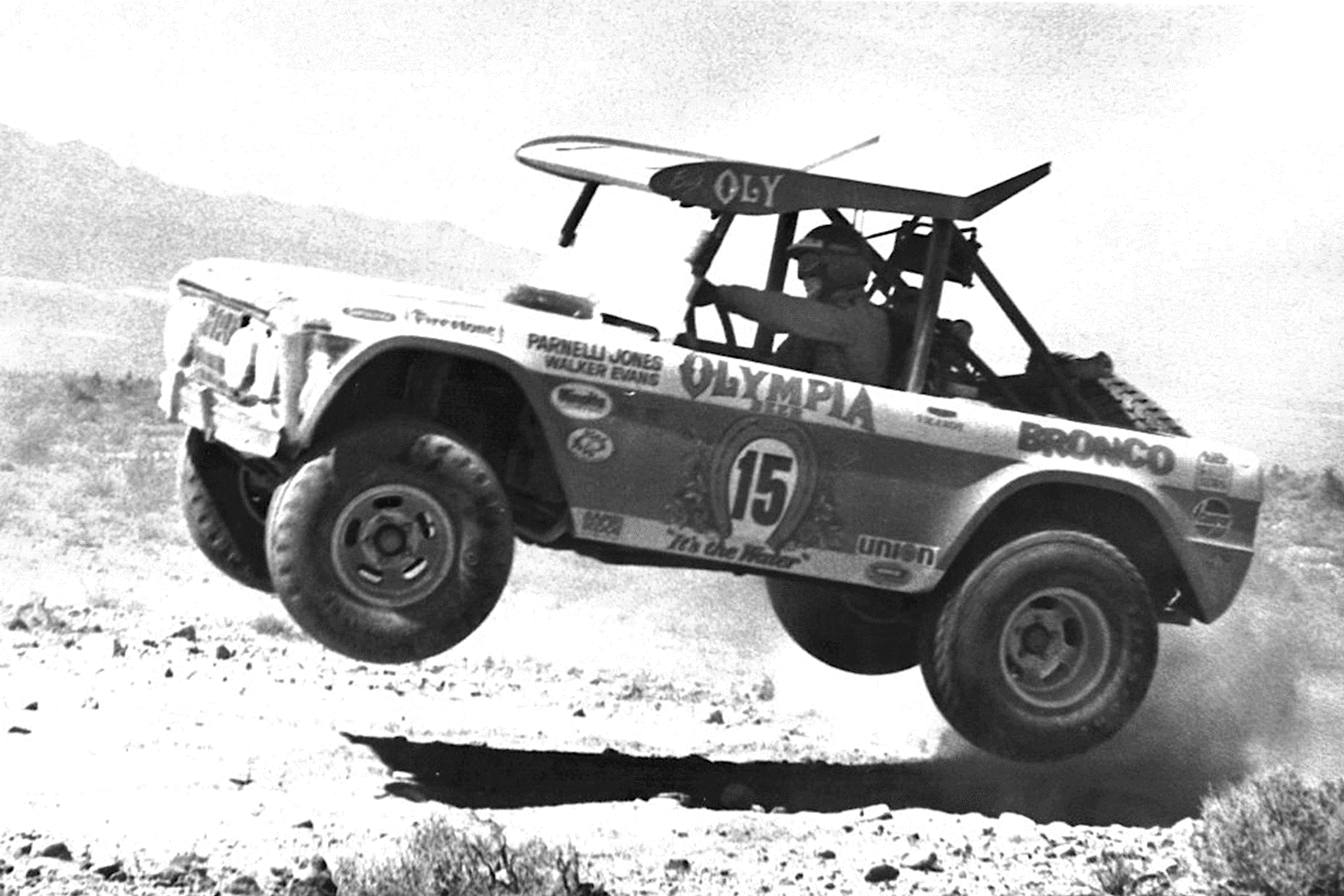
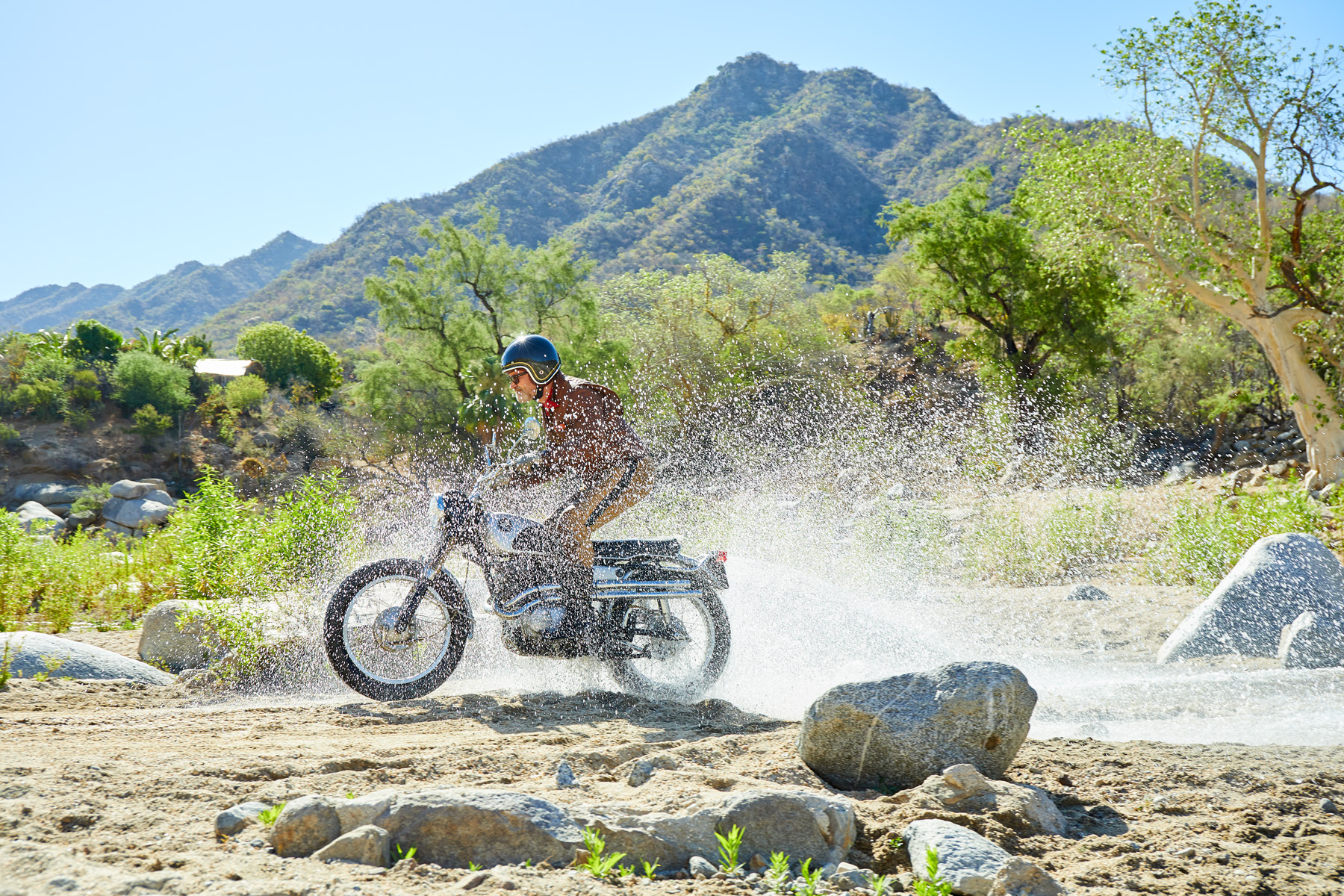
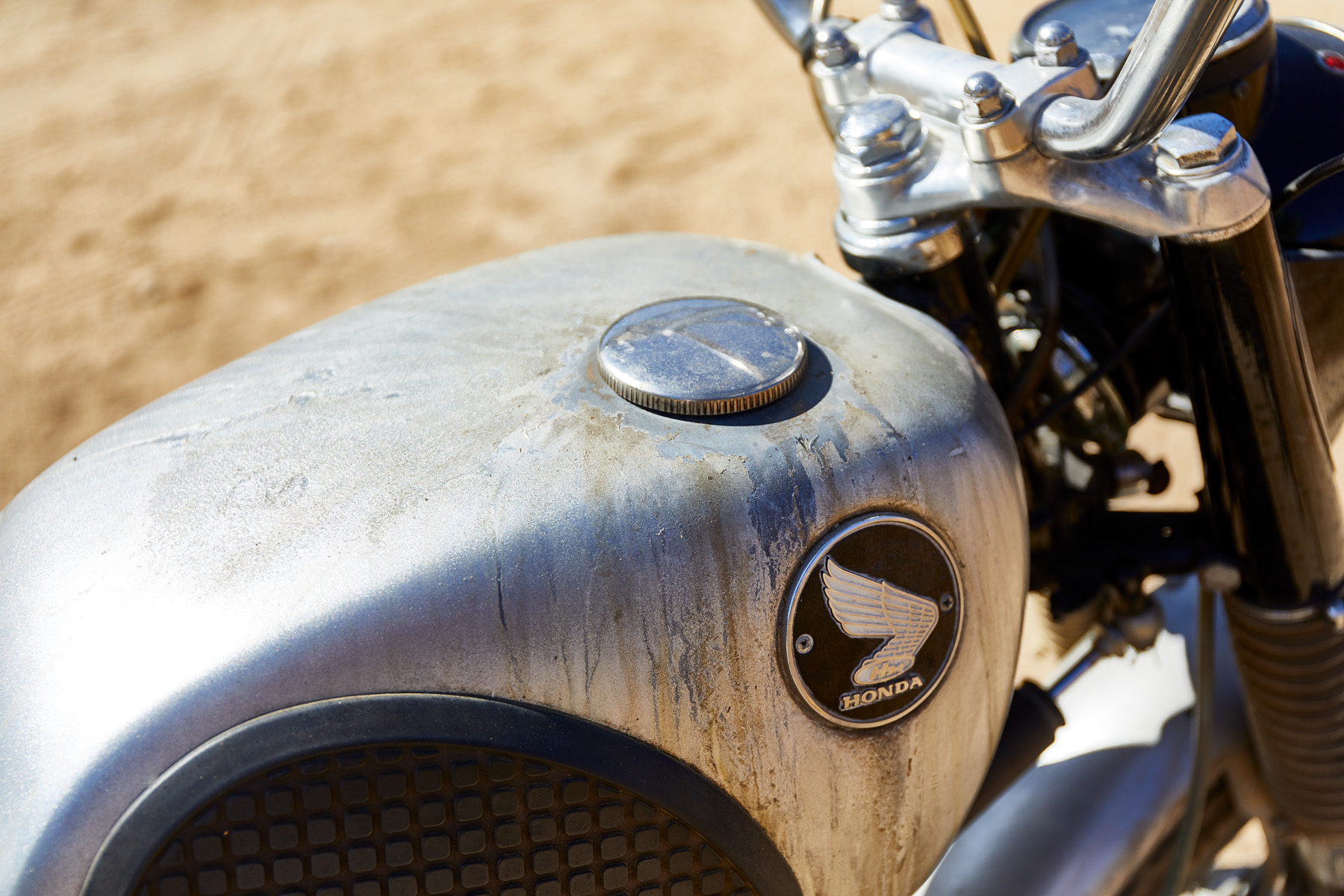
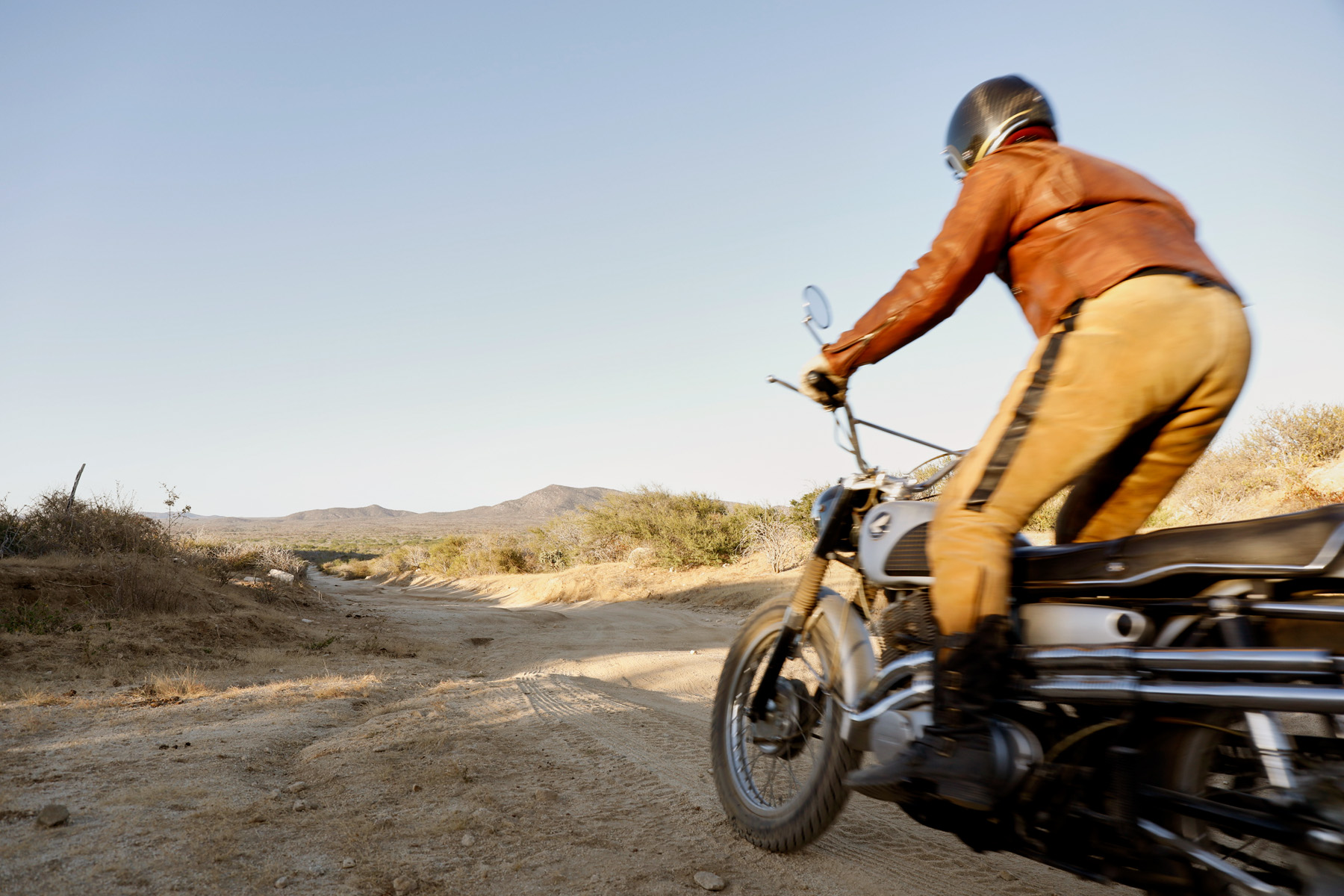
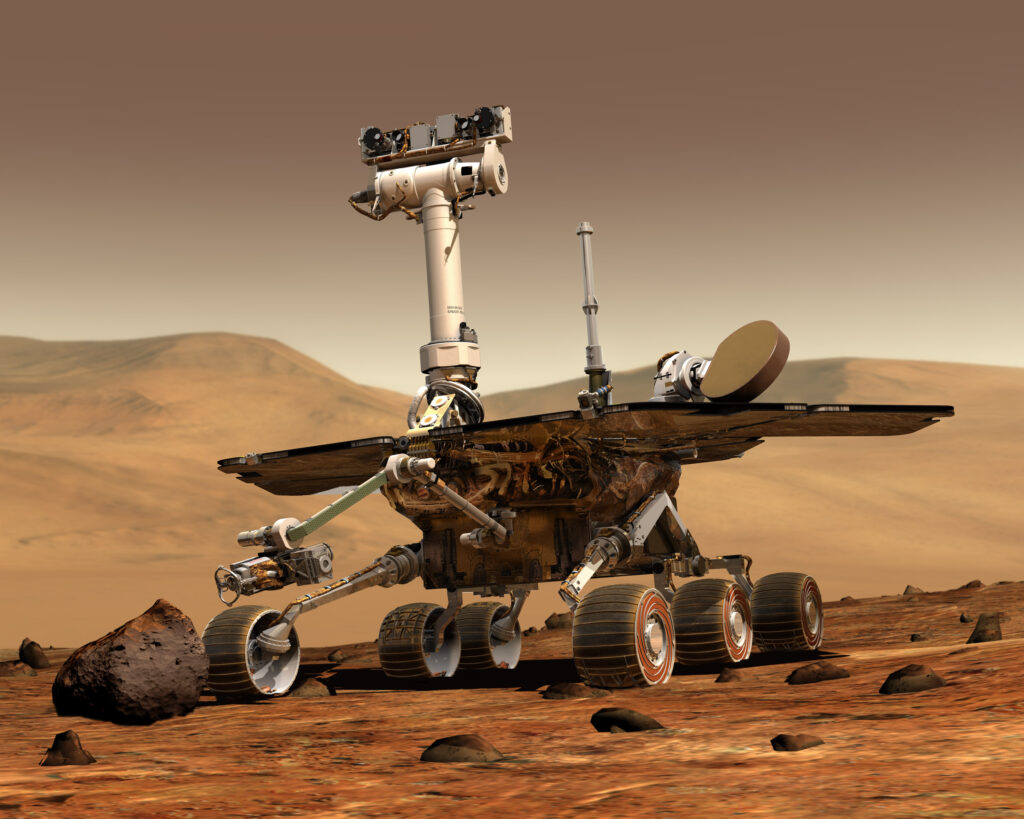
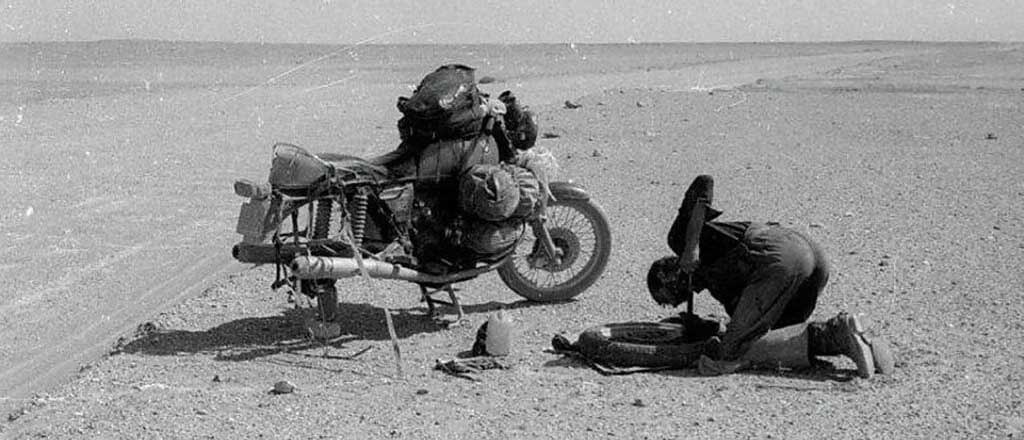
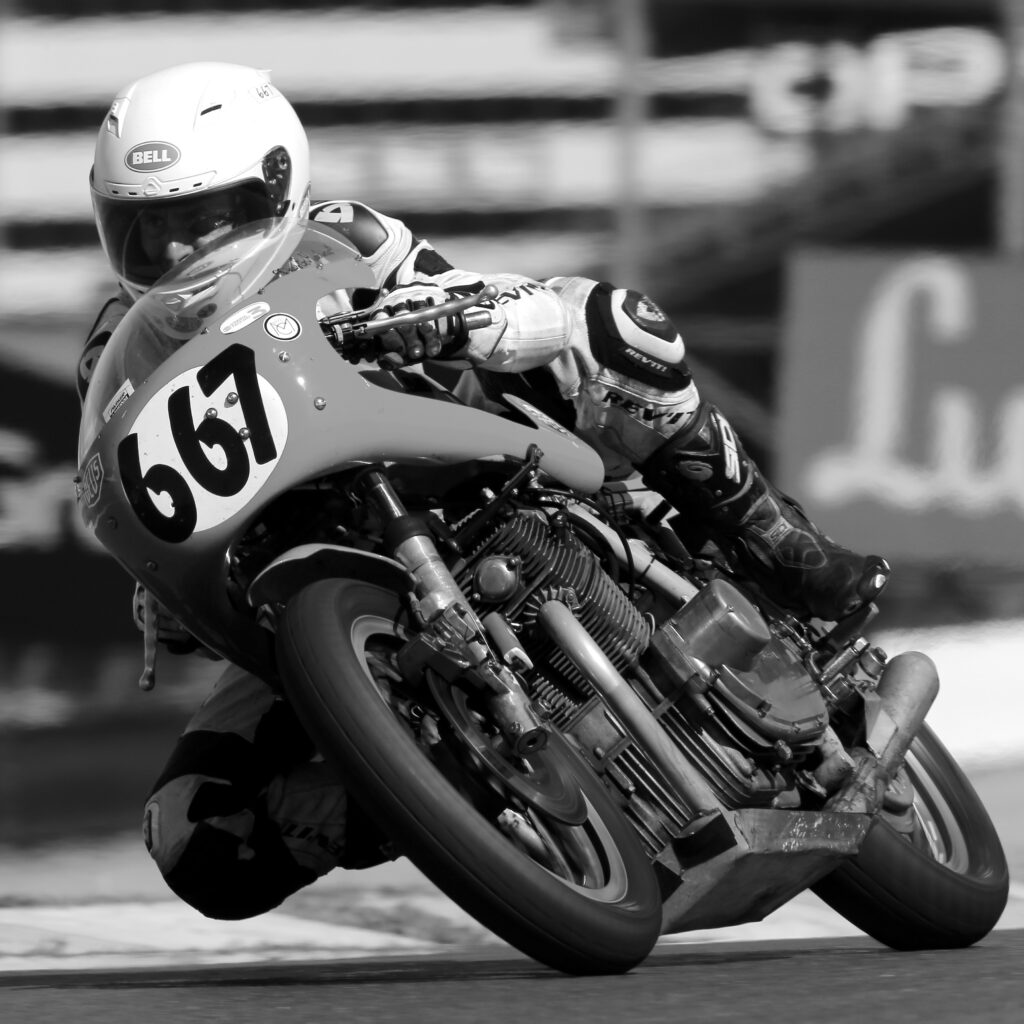
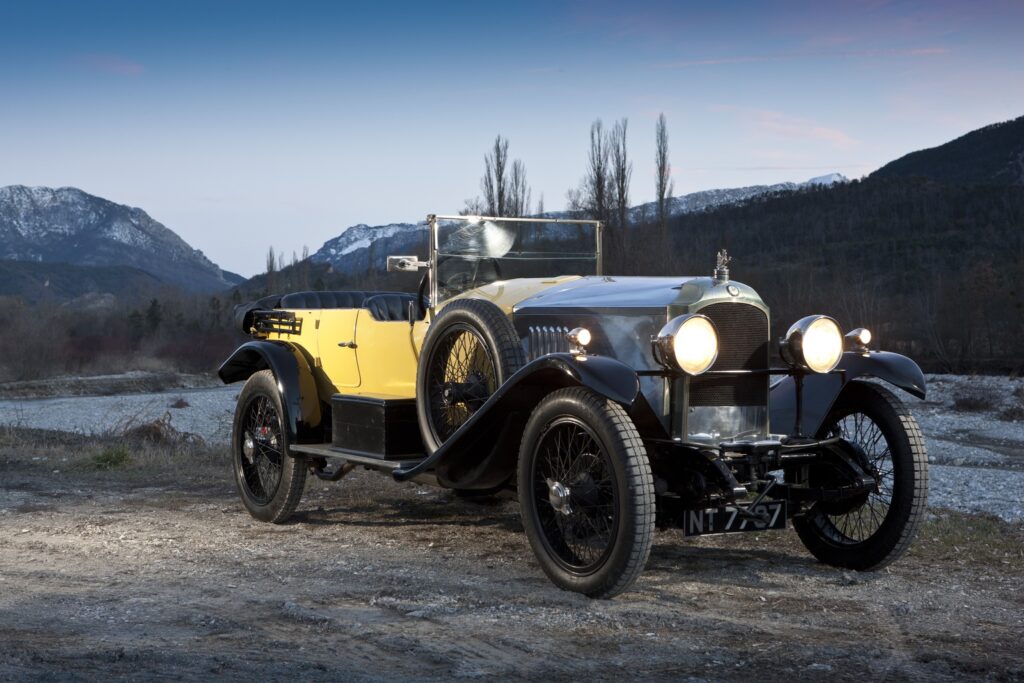
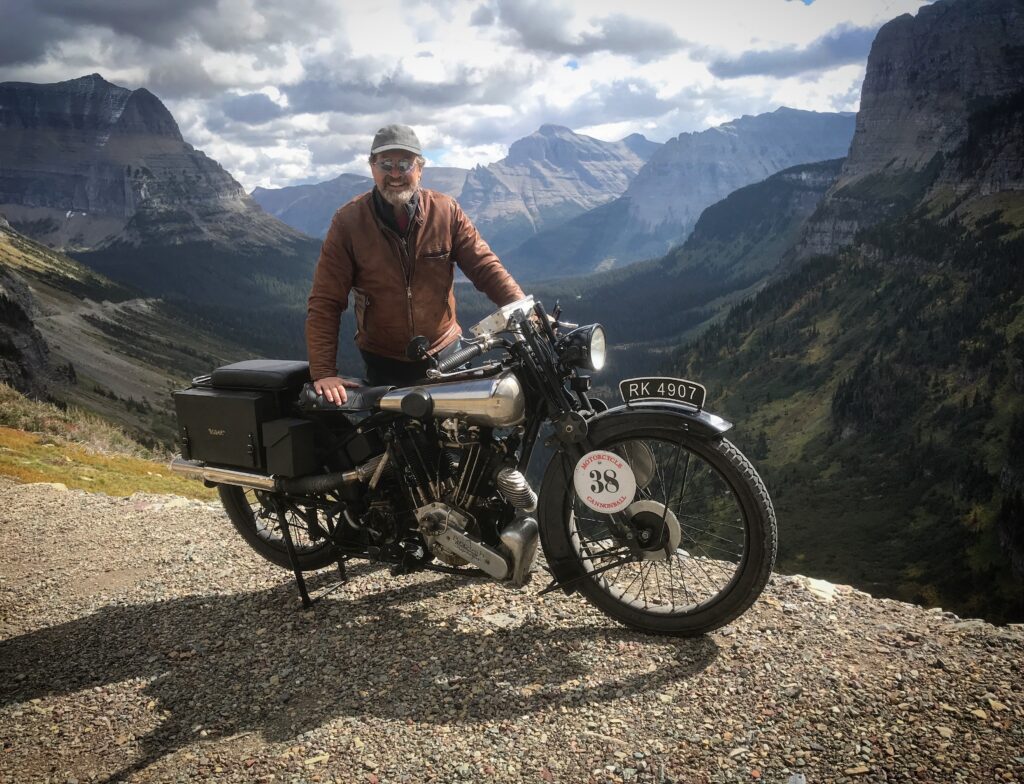
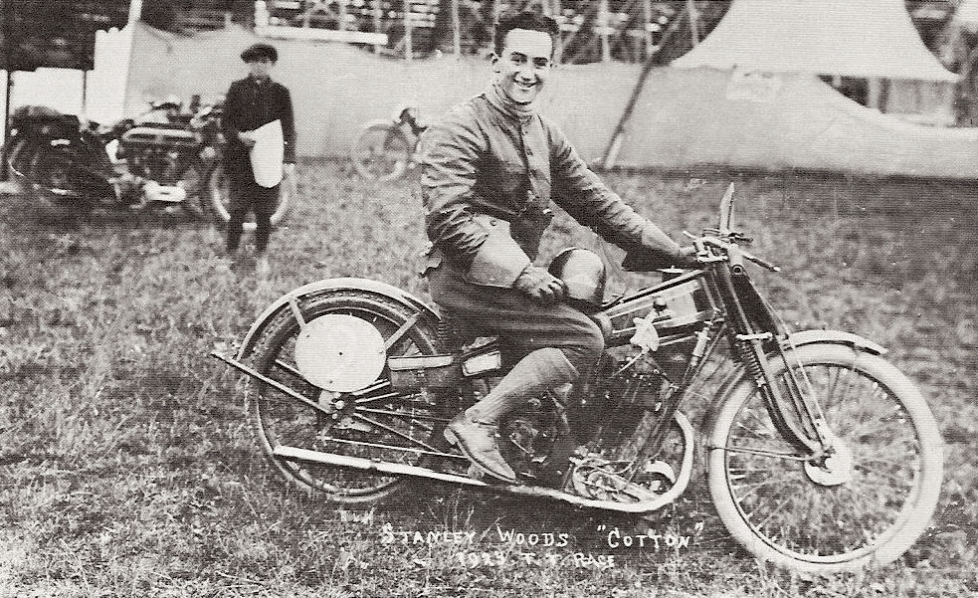
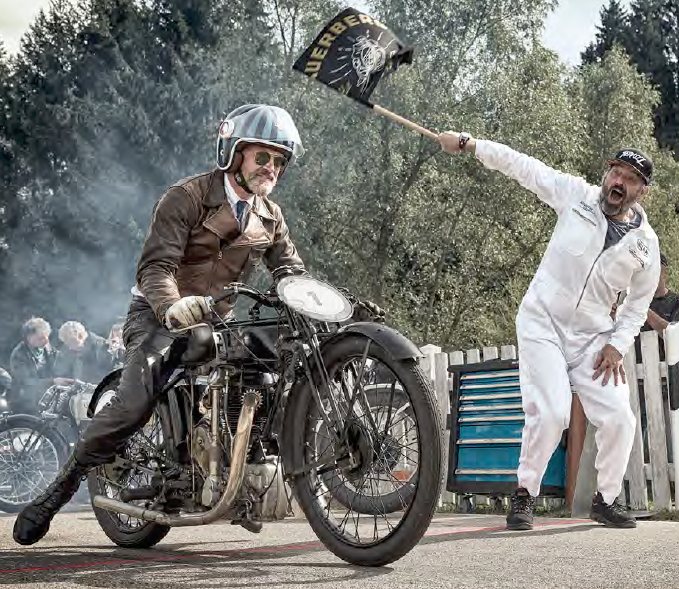
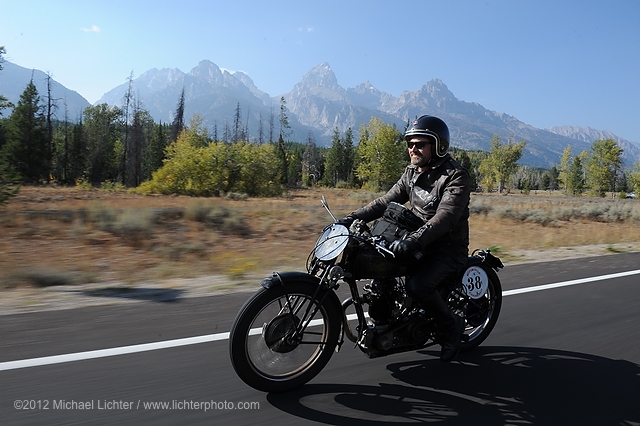
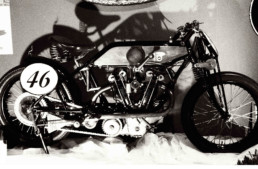
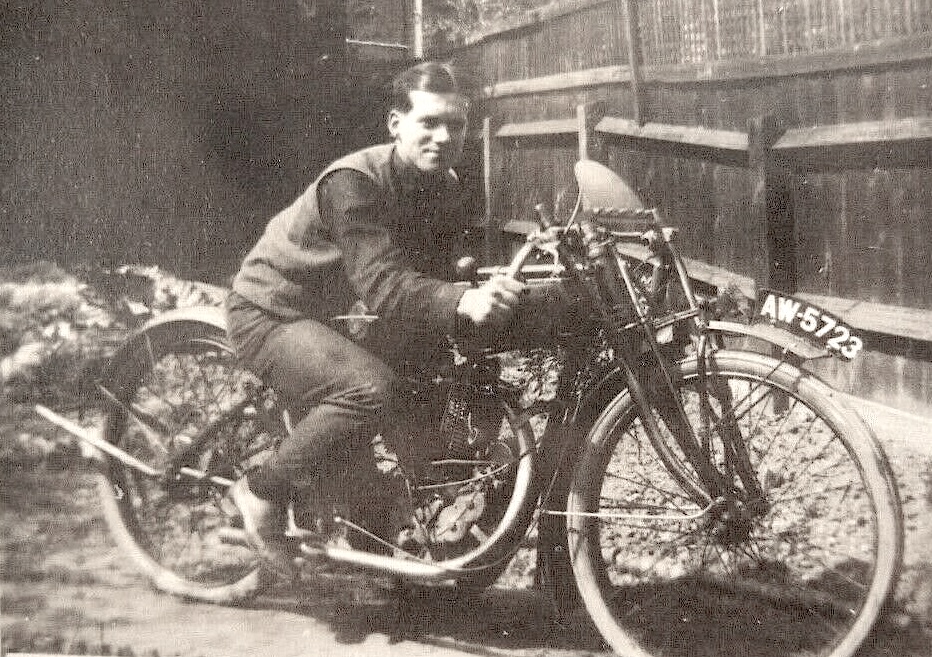
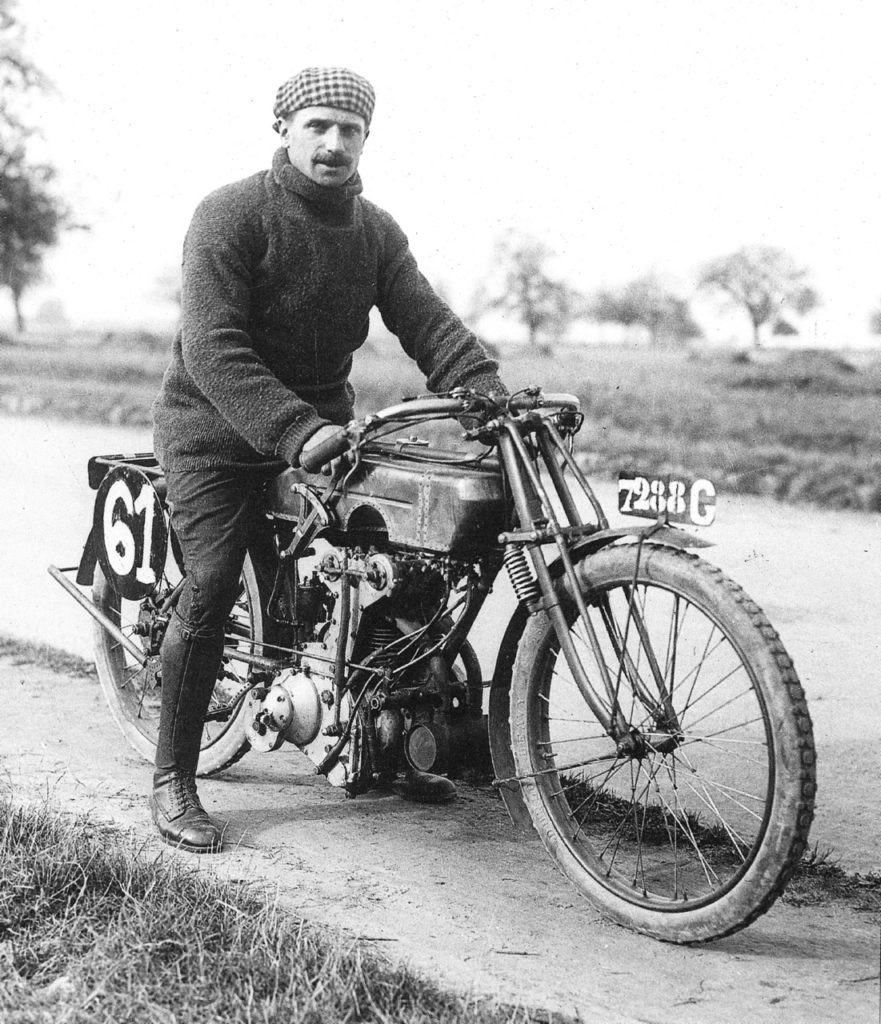
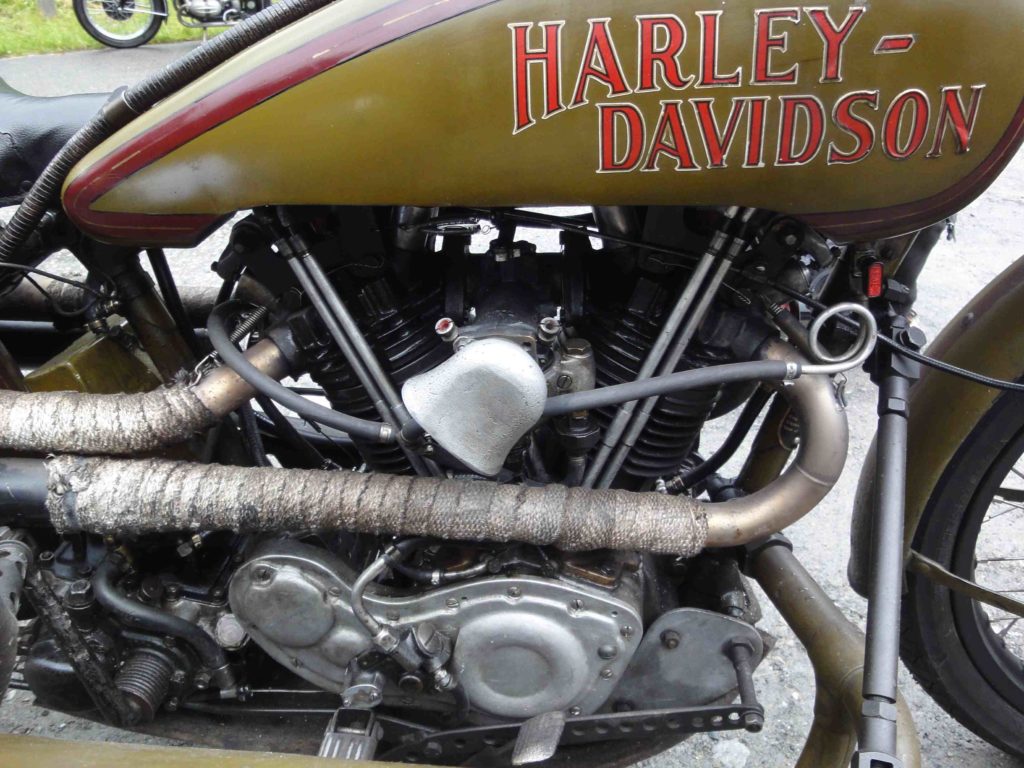
After 18 months of hibernation, the world is primed for adventure, and the ADV:Overland exhibit at the Petersen Automotive Museum has it in spades. Subtitled ‘off-road to off-world’, ADV:Overland includes round-the-world and long-distance racing machinery from 1903 to the present, plus sci-fi and NASA overland explorers. The real-world adventure machines show dirt and scars from outrageous journeys, some even with their original bags, boxes, and tools in place, 90 years later. ADV:Overland showcases the living, breathing history of overland travel, and its counterparts in outer space, as a welcome breath of freedom as we emerge from COVID.
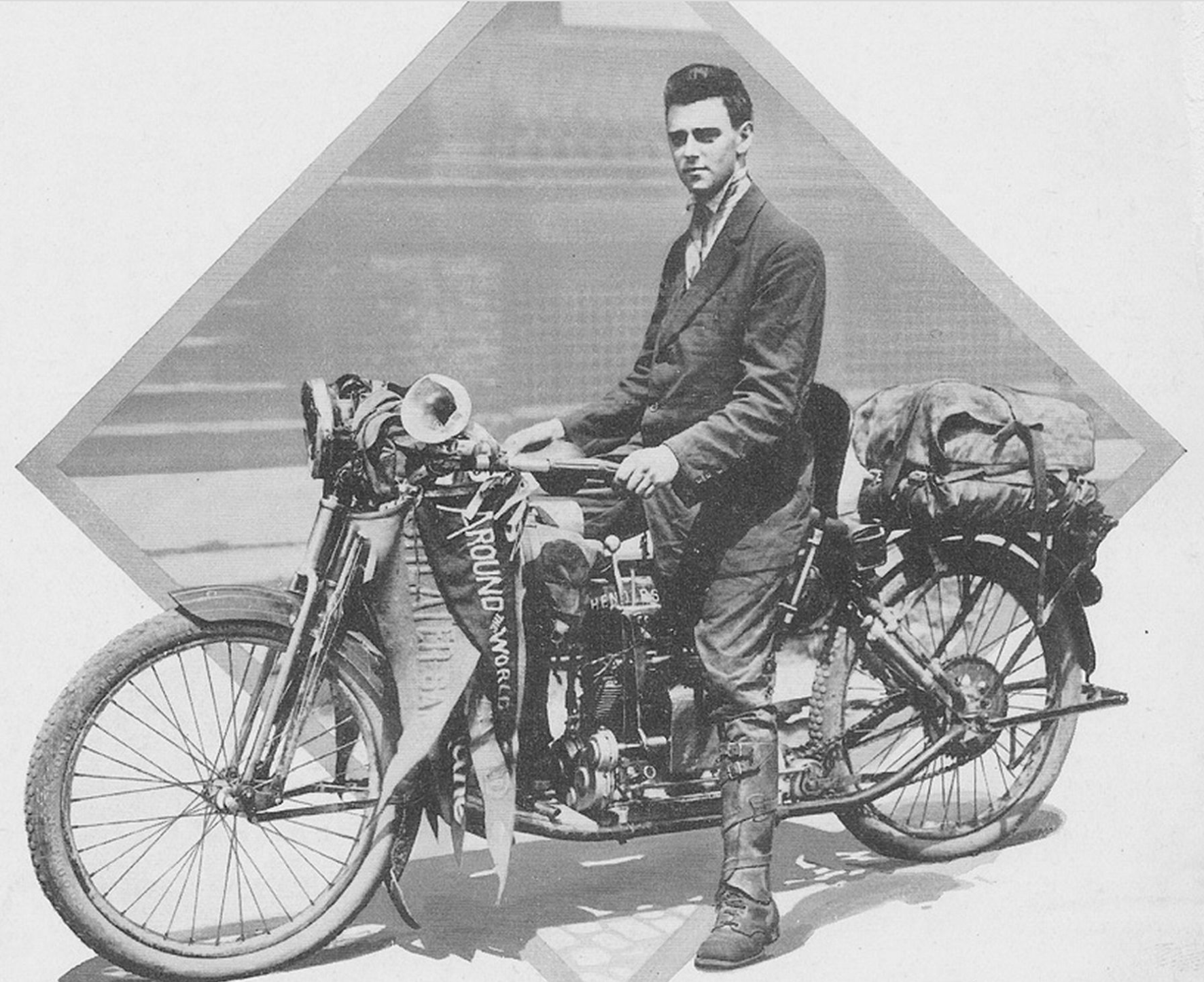
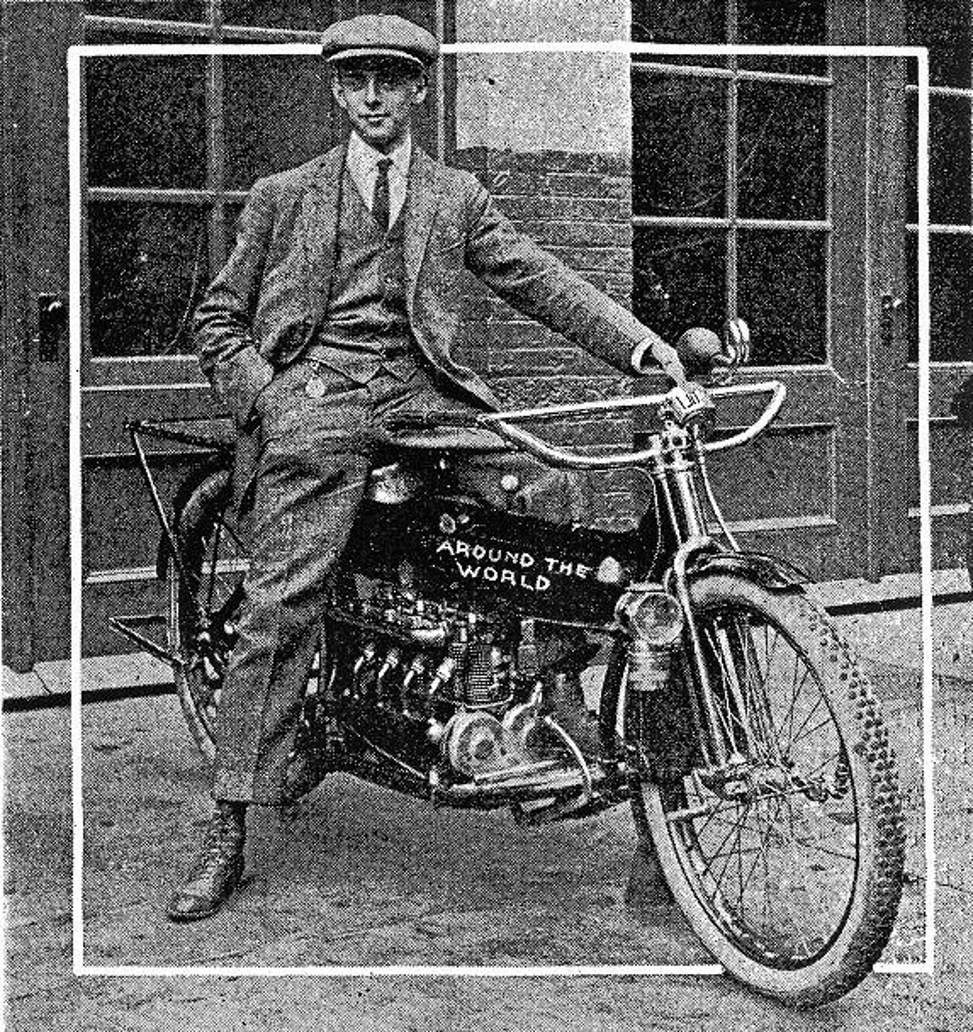
In the beginning, every motor trip was an adventure, and every motorist a mechanic. Some heard a different call, seeking adventure in overland travel to far-distant places. In 1903, crossing the USA on wheels had never been done, but that changed when George Wymans rode a California motorcycle for 50 days from San Francisco to New York. In 1912, nobody had circled the globe on a motorcycle, but that changed when Carl Stearns Clancy straddled his Henderson Four and headed east.
In the next 100 years, brave men and women struck out to see the world on wheels, making epic journeys recorded in books, films, and television. Folks more technically-oriented imagined travel off-world, on the Moon or Mars or beyond, in science fiction and actual space programs.
Exhibition curator and Motorcycle Arts Foundation co-founder Paul d’Orleans explains: “ADV:Overland celebrates the spirit of adventure. These remarkable machines tell a human story, of dreamers and reckless youth, stubborn visionaries and dogged competitors, all together in one place.
It also includes the ultimate overland dream of surface exploration on other worlds, which is happening on Mars right now - and we have some of the NASA/JPL rovers. We told lenders not to wash their overland veterans: we wanted to show good honest dirt as proof of their rough duty.”
The contrast between the extremely simple overland machinery from the early 20th century to Charley Boorman’s electric LiveWire from Long Way Up is great, but the journey still had to be made on wheels. “The genesis of overland travel can be seen in the early bikes, like the 1912 Henderson Four that Carl Clancy rode around the world.
These rudimentary machines captured the public’s imagination and fueled overland travel and competition we see today, like the Baja and Dakar rallies, and films like Long Way Up,” added MAF co-Founder Sasha Tcherevkoff.
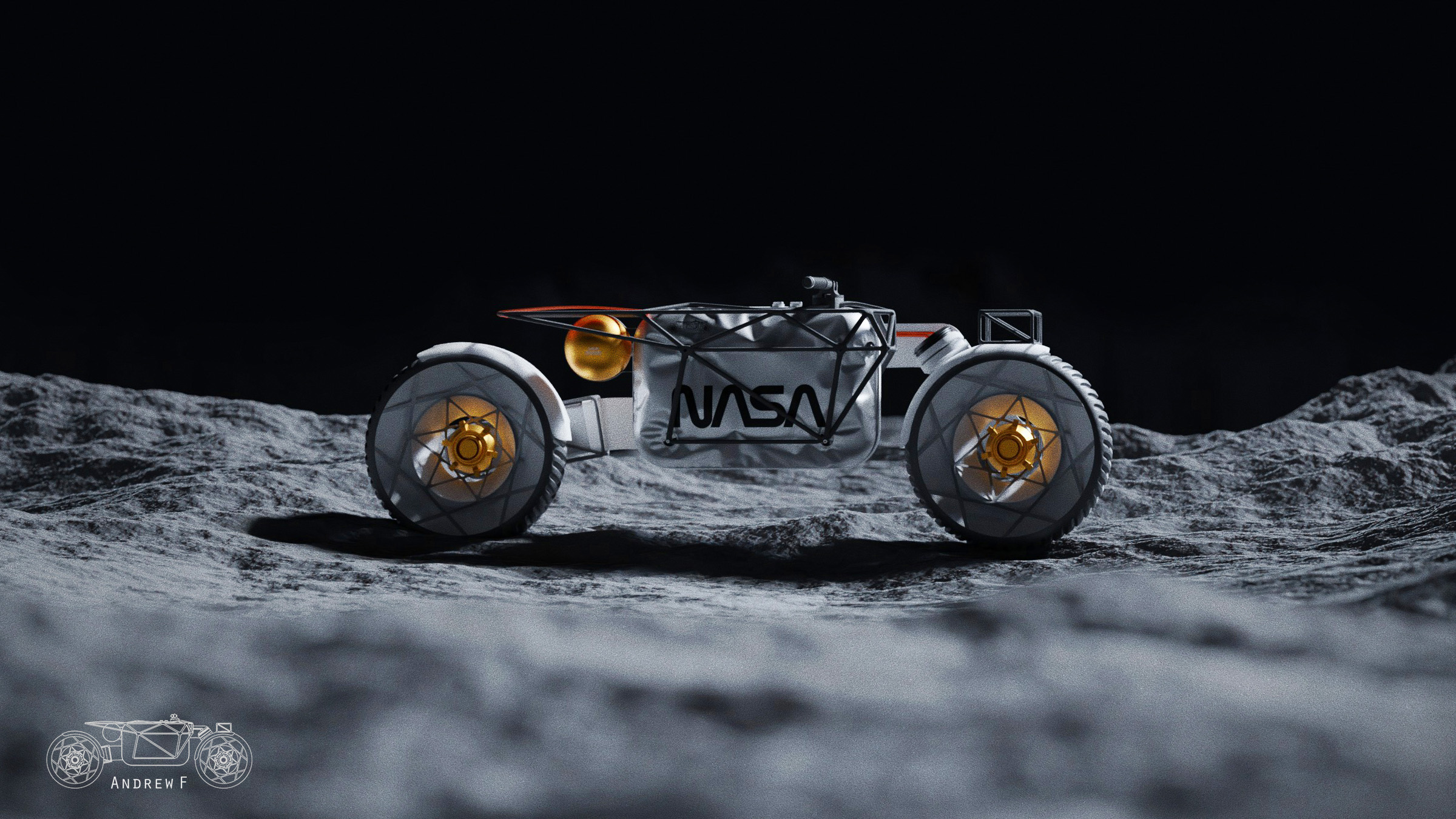
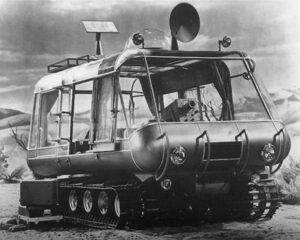
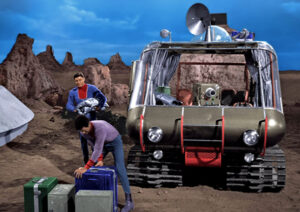
If 100-year old dirt-covered bikes don’t inspire you, then come to ADV: Overland for the far-out space exhibits. Two sci-fi overlanders from the Lost In Space series, including the spectacular 1960s tracked glasshouse, keep company with a futuristic 3-D printed electric “Lunar motorcycle” from Hookie.co.
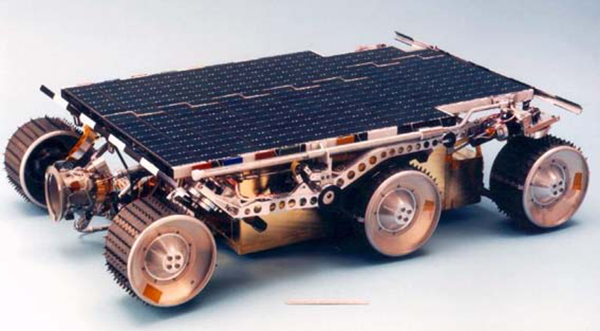
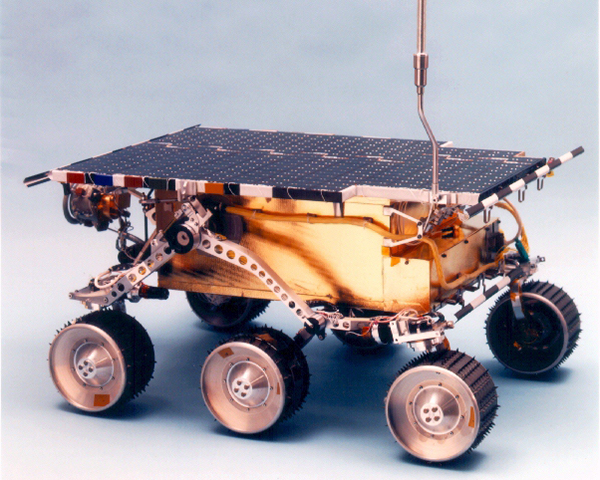
For an inspiring comparison between real and imaginary off-world overlanding, NASA/JPL loaned two actual Mars rovers - models of Opportunity and Sojourner - that have logged more miles on other worlds than any other vehicle.
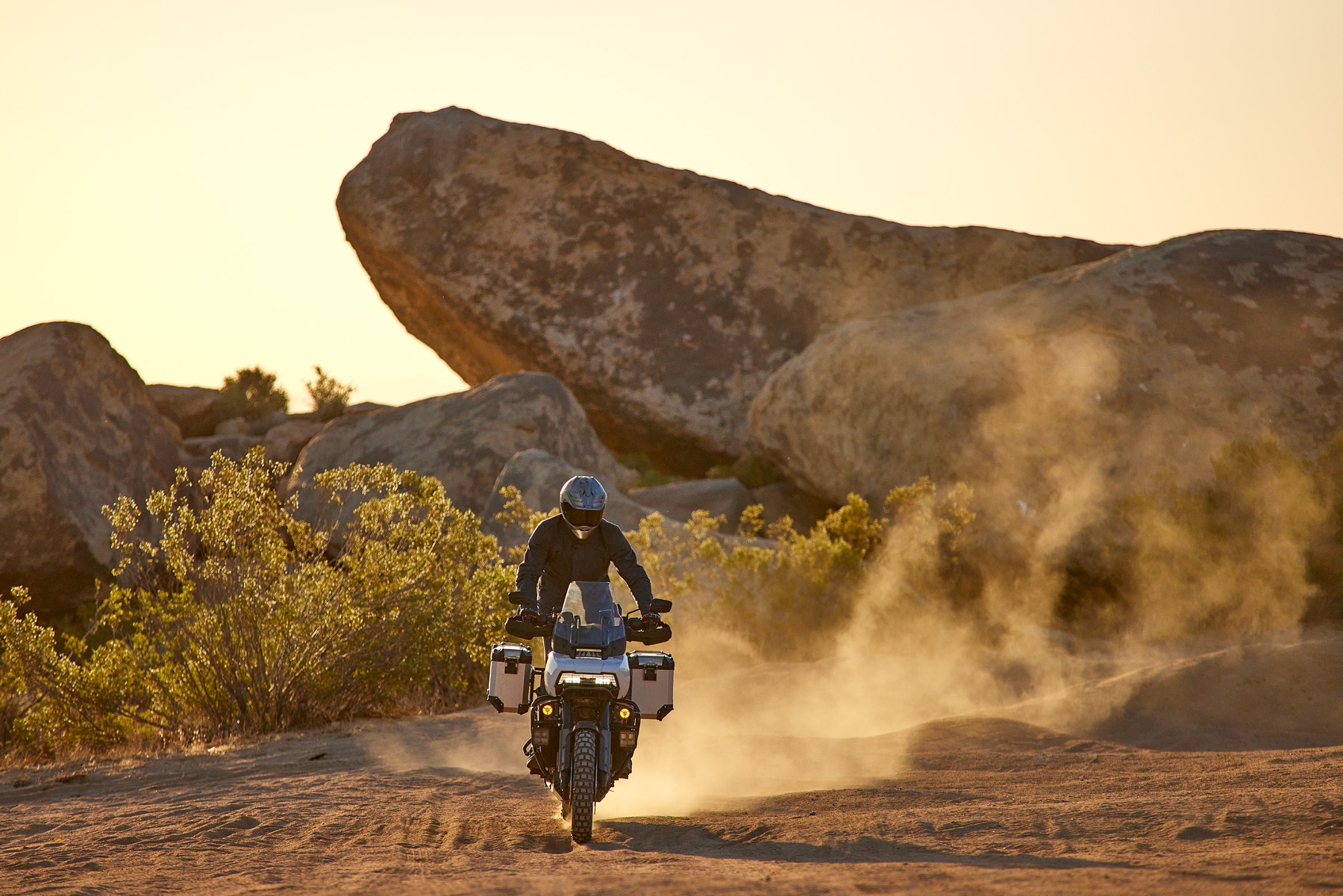
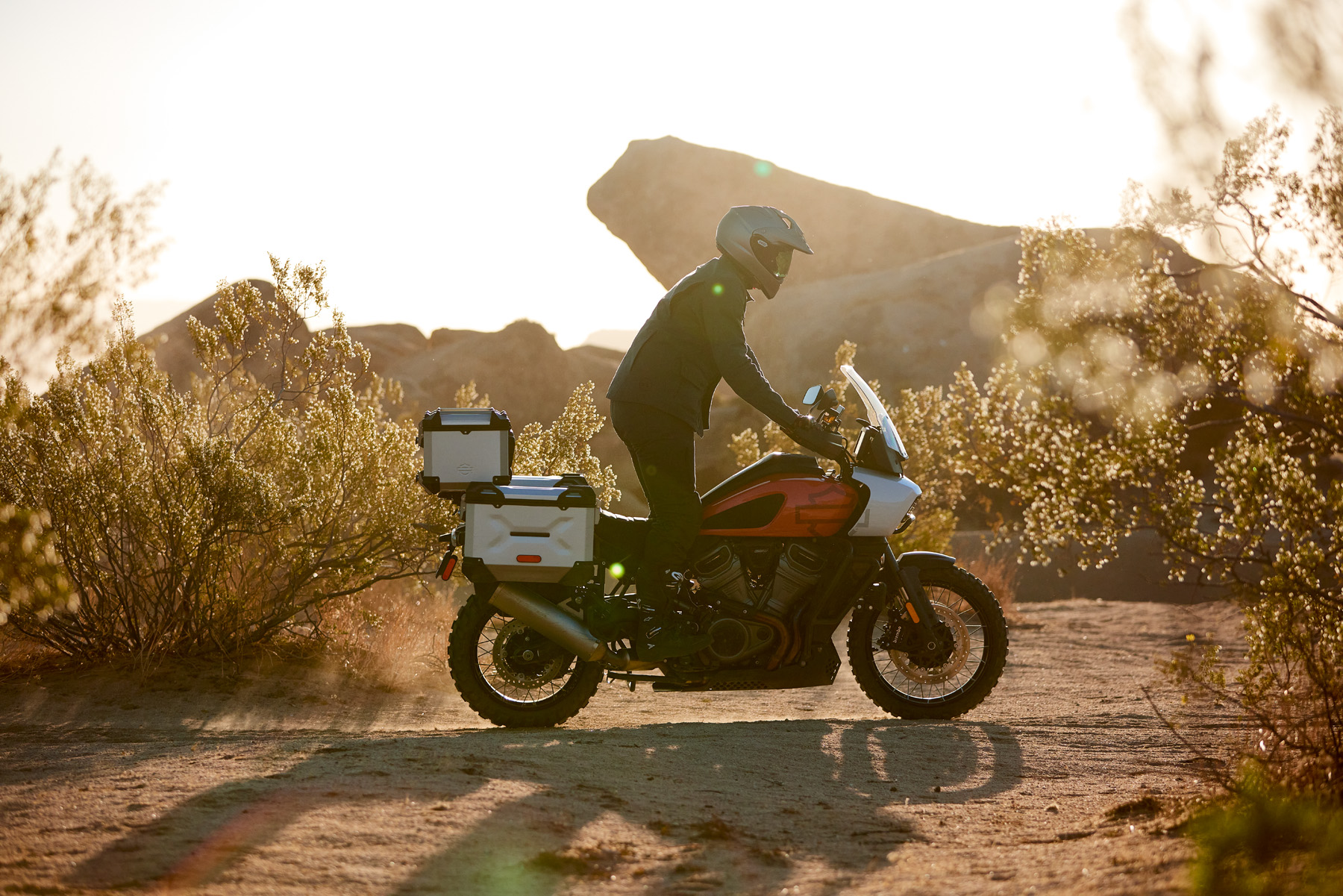
Also on display is Charley Boorman’s electric LiveWire customized by Harley-Davidson for the Long Way Up television series. The Motor Company is also a sponsor of ADV: Overland in support of the 2021 launch of the Harley-Davidson Pan America. The Pan America marks Milwaukee’s first-ever adventure-touring motorcycle meant to compete in the growing ADV motorcycle space.
ADV: Overland opens on July 3rd, with an opening reception on July 15th, which will be a drive/ride-in event on the Petersen rooftop. The exhibit is produced by Motorcycle Arts Foundation (MAF) and Sasha Tcherevkoff in partnership with Vintagent Lab, the just-launched content creation arm of The Vintagent.com.
Music for the July 15th opening reception curated by @RedLightVinyl.
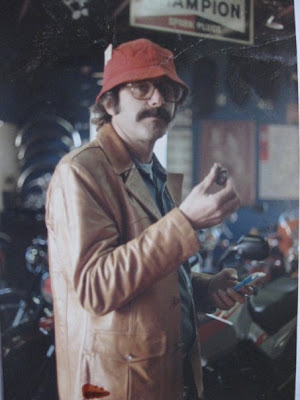
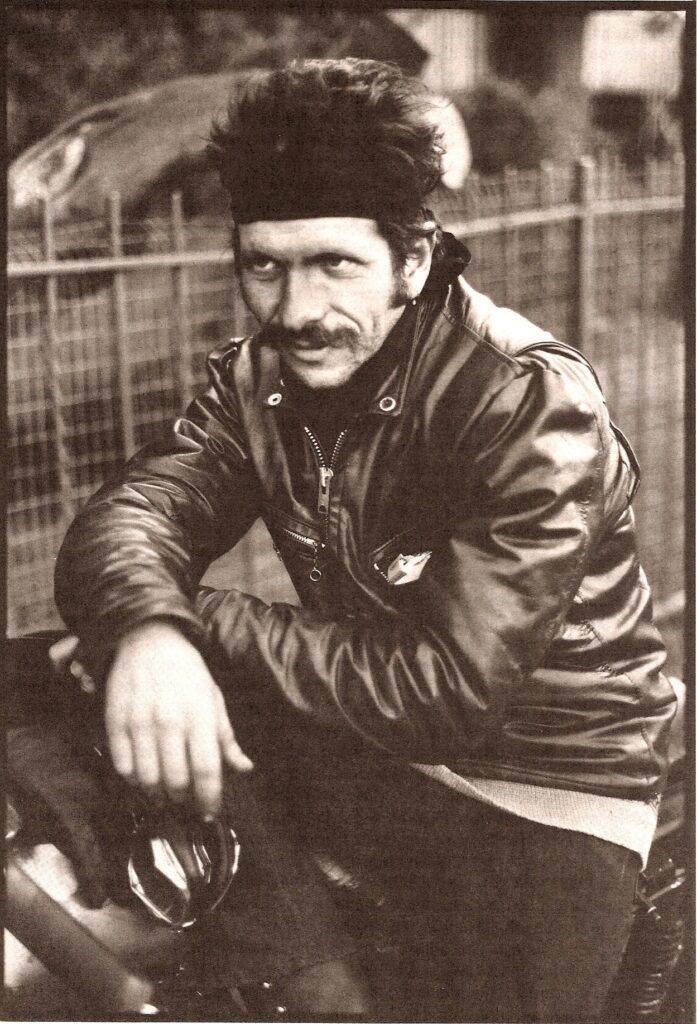
Paladin. If you were part of the nascent Old Motorcycle scene in Berkeley in the late 1970s/80s, you probably encountered him. He was typically seen hanging around T.T. Motors on Ashby Avenue, giving unsolicited advice and a deposition on any subject to anyone nearby. Sometimes that was me, after I'd ridden whatever was running, from San Francisco to the East Bay to check out the bikes for sale at T.T. Motors, visit my friends, and inevitably have a chat with Paladin.
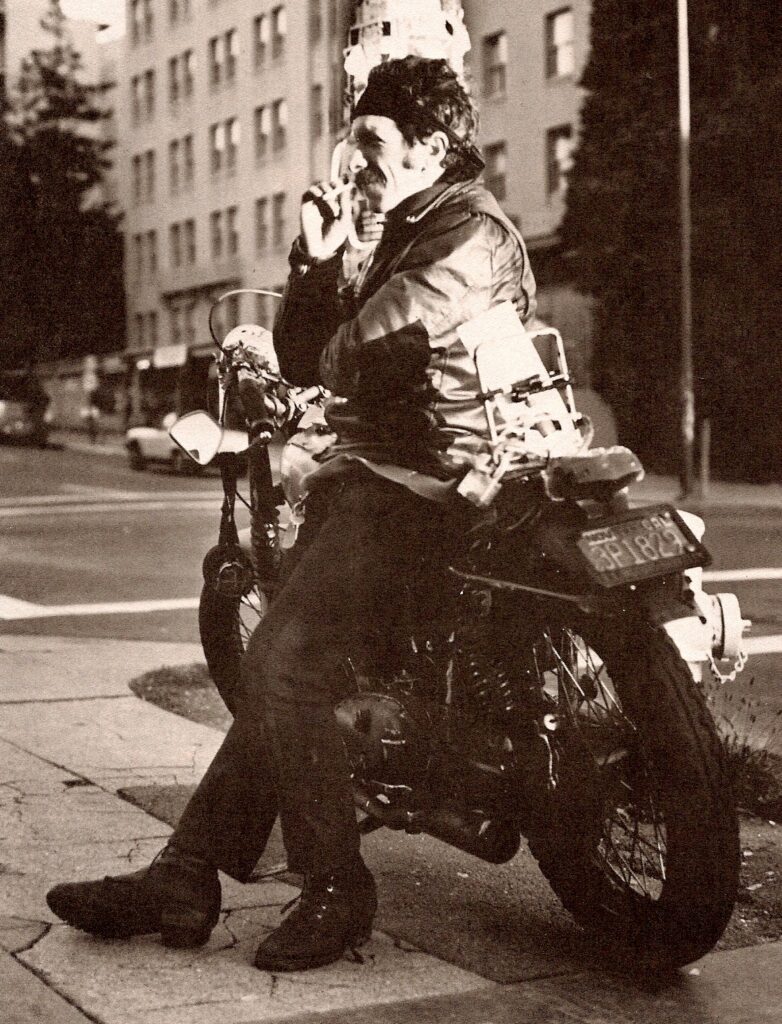
Paladin on a Triumph TR6 sold to him for $45 by John Gallivan of TT Motors in Berkeley [Berkeley USA]He was a devoted Triumph man, and I owned several of his 'hardtail' Triumph conversions over the years, each honed closer to the 'bob-job' ideal than anything made today - they were fast, light, and no-frills. He could appreciate other brands though, and enjoyed discussing their relative merits. His arms were covered with amazing self-applied Triumph tattoos, images from long-ago advertising, logos, and graphic imaginings of motorcycles and women. He applied tattoos on others, occasionally.
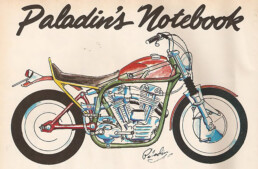
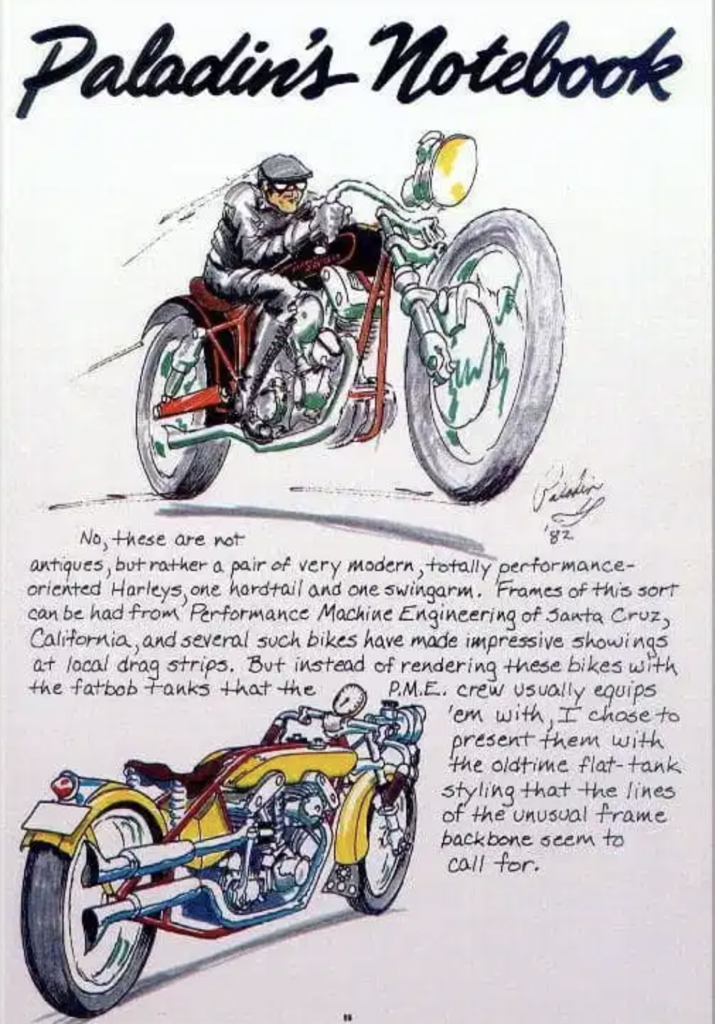
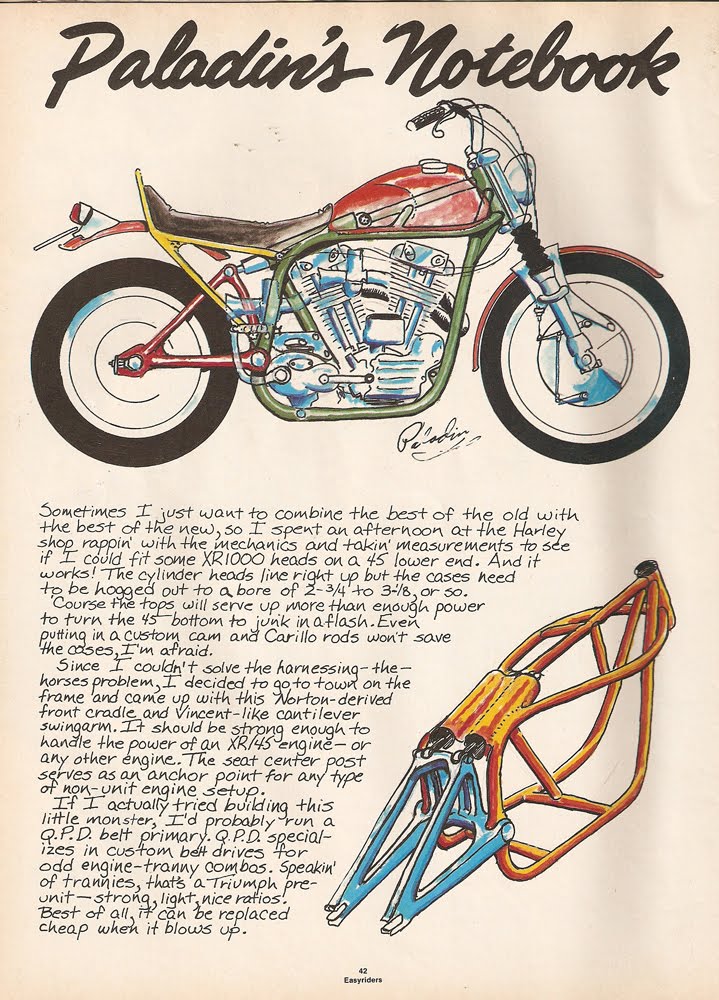
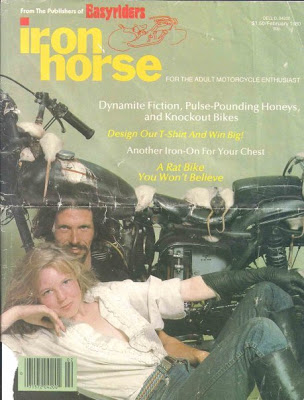
John Gallivan in his TT Motors shop in Berkeley. [John Gallivan]John Gallivan, owner of T.T. Motors, said of Paladin, "I liked and respected him a great deal. I sold him that bike [a Triumph TR6] for $49.00, and he stayed. His writing in Iron Horse magazine and others are classics. He coined the word 'unobtanium' referring to rare British parts. His centerfold in Iron Horse with a girl and real rats crawling all over is a classic." As mentioned, Paladin was a regular contributor to Iron Horse, and had a column, 'Paladin's Notebook', with illustrations of his ideas for choppers and cafe racers, some of which were prescient, and predated the third-wave cafe racer scene of the 2010s by 20 years.
'Paladin's Notebook' ran in Iron Horse for many years, and mixed Paladin's illustrations with thoughts on motorcycle design and culture. [Iron Horse]Paladin knew a heck of a lot about motorcycle history, their care and customization, and motorcycle culture in all its diversity. He knew a lot about everything else too, and shared what he knew in a distinctive voice, like a pirate that had swallowed Sylvester the Cat: thufferin' thuccotash, arrr. As he spoke, one eye would squint, then the other, and as he waved his arms he jingled the tools hung on chains from his filthy leather jeans. He carried a sheathed knife he'd made himself, and made them for others too, occasionally. And he was a performance poet, in a now-vanished tradition of Bay Area poets who ranted and broke boundaries, were extremely political and sometimes had the cops intervene in their readings, like Peter Plate, for whom I printed several books. His friend Arnold Snyder recounted one of Paladin's poems from the mid-1970s from memory on his blog:
Every damn body was born to die So while you’re waitin’ you better get high ’Cause the trip is whatever you manage to buy And you pay for it soon as you’re born
Now, me, I get off on women and sin Hard partyin’ Getting’ righteously wasted But mostly a big ol’ Milwaukee V-twin
’Cause there’s nothin’ at all like a righteous machine About dynamite fast and say, medium clean And if you’ve been hangin’ out there You flat know what I mean
Tearin’ up empty streets around dawn Tearin’ down highways out on a run With a few or more bros, out havin’ fun The wind in your armpits, your chrome in the sun
And like the wind, you’re gone On a knucklehead, or a panhead, or a shovelhead ’Cause once you’re gone, you’re gonna stay dead So, meanwhile, Get it on!
Another 'Paladin's Notebook' featuring a design that predates the current Tracker custom style by 30 years. [Iron Horse]Paladin was 5' tall and full of surprises. The first time I rode a Velocette to T.T. Motors in 1985, Paladin brought out a bucket of soapy water and a sponge and washed it! "Such a finely made motorcycle as this should NEVER be dirty!" He, on the other hand, didn't mind being dirty. He was spiritually inclined towards old Norse religion, which was odd for a Jewish guy from New Jersey - his real name was Martin Rosenberg. But, this was Berkeley, so while his chosen religion was remarked on, it was never judged.
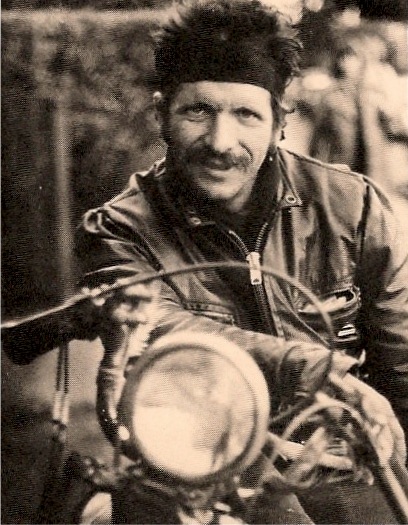
Martin Rosenberg aka Paladin, from the book 'Berkeley U.S.A.' [Berkeley USA]Paladin died of heart failure in his sleep in 1988: he was only 45. He had suffered a mighty knock to the head in a motorcycle accident a few years prior, which definitely altered his personality. And, who knows what he put into his body for fun. His wake was amazing, and set the pattern for every wake to follow that I had a hand in: a ram's horn was filled with whisky, and passed from person to person, with each raising a toast in turn, a collective shout 'To Paladin!', and telling a story or remembrance of the man. A proper wake, and how I'd like to be remembered too.
The following is an excerpt of an interview with Paladin, from the book, 'Berkeley U.S.A.' (Anne Moose, Alternative Press, 1981):
"Essentially, everything that I do relates at one level or another to motorcycling. I make my living by writing for motorcycling journals and doing illustrations for them... I'm into motorcycle paint work and uh, you know, it's kind of dull if you ain't into bikes, but I'm into bikes so I find it all quite fascinating....Twenty years ago, it didn't matter if you rode a Harley, or if you rode a Triumph, or if you rode a BSA. If you rode, you rode. You were committed. The other people who rode were your brothers, except you didn't use the word brother because you didn't have to. This was all just, you know, understood at almost a back brain level.
Now then, when the Japanese started bringing their bikes in, what they brought was nothing new in the sense of engineering. What they did was... a publicity campaign. They brought in a form of advertising to make the motorcycle, shall I say, socially acceptable. Well, people that are stone bikers, as opposed to motorcycle operators, don't really care much about social acceptability... But what this did, brought a whole new kind of person into the riding scene, and it brought in a lot of divisionism. In 1963, you break down on your bike on the side of the highway, you know that the next guy who comes by is going to stop and help. And it don't matter what brand of bike you're riding, or if his bike is chopped or not, or who's in a club and who isn't - that's jive. You're a biker or you're not. Since the Japanese bike has become popular...it's brought this new element ...this whole concept of antagonism and divisionism which we've had to deal with for about the past twelve to fifteen years.
The notorious 'rat bike' cover of Iron Horse, with Paladin, a model, and his ratty Harley-Davidson. He later became a cafe racer fan. [Iron Horse]Personally, I can't stand Japanese bikes. I don't care how fast they are, or how many camshafts they have, or if they win races. I just don't like the aesthetics of the damn things. But at the same time, it doesn't matter what kind of sled you've got under your ass - when you're in the wind, it's like, the same wind, and that's the policy we're pushing.
As far as I'm concerned, the only group that really matters in this country, per se, is the bikers. And this may sound like an off-the-wall statement, but I think if you'll check back you'll find that during that whole big so-called cultural revolution of the sixties, language, style, and everything was copied from the bikers. Our influence is a lot more subtle than many people would imagine. We're simply living our own lives, and in living our own lives we're setting such a rare example in modern times...
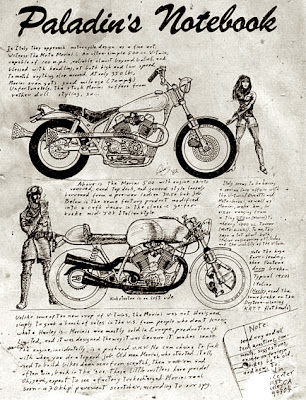
Some intriguing cafe racer designs from 'Paladin's notebook, including a Morini V-twin. [Iron Horse]The thing is, you're born black, you're born Chicano, you're born Anglo-Saxon, Protestant, Jewish, Polynesian, whatever. Nobody is born a biker. It's something you do by choice. A biker is under a complete psychic necesssity, right, in that he is one half of a symbiotic organism of which the other half is a motorcycle. And if you wish to make any value judgements on that, go ask your mother how she likes her valium.
One of the things that a lot of people that I'm close to are into, is trying to get more women into riding. I guess you could say it's part of our highway beautification project. I personally think that women and men both - and everyone - should know how to handle machines... that, to me, is the only way we're ever going to have what I'd consider to be a sane and healthy culture... If people are going to band together, it must be through recognition and respect of their own strength, and of the strength of those about them. It always starts at the inside and works out."
May you long be remembered, Paladin. [Berkeley USA]
Paul d'Orléans is the founder of TheVintagent.com. He is an author, photographer, museum curator, event organizer, and public speaker. Check out his Author Page, Instagram, and Facebook.
Was the Wall of Death invented in San Francisco in 1914? That's the claim made in several press clippings from the scrapbooks of pioneering board track veteran Erle 'Red' Armstrong. News stories from 1914 and later stake the claim that Armstrong invented the vertical wall of death attraction, after many years of riding on slant-wall motordromes and racing on banked wooden board tracks in the 'Noughts and 'Teens. Photographs of his vaudeville attraction 'Whirl of Death', set up at the Empire Theater in San Francisco, confirm a 1914 date, and make a previously unknown connection with the 'Race for Life', the combined slant-wall/vertical-wall motordrome consctructed at the 1915 Panama Pacific International Exposition. Photographs dug up at the San Francisco Public Library archives reveal details of the Race for Life, and finally we know the story of who set up and rode that motordrome - Erle 'Red' Armstrong and his partner, 'Reckless' Vernon.
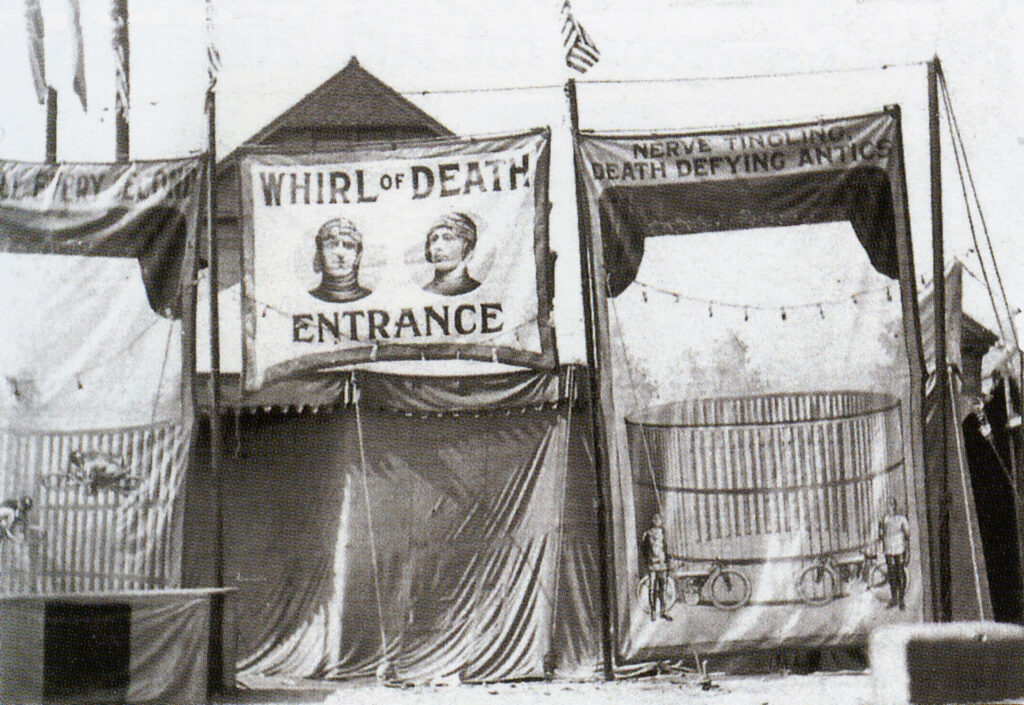
The entrance to the Whirl of Death in a carnival tent setting, on tour somewhere in the West in 1914. [A Century of Motorcycling]Erle Armstrong was born in 1888 in Moria, Illinois, but moved to Colorado with his family ten years later, where his father was a mining engineer in Denver. Erle had flaming red hair (hence his lifelong nickname) and a strong physique, and took up bicycle racing in 1904 at age 16: he soon became the Colorado State Champion. By 1905 Erle made his living as a delivery boy for a Denver dry goods store, using an E.R. Thomas motorcycle: he was the sole source of income for his family as his father had died earlier that year. Regardless, Erle doubled down on racing, and shifted to motorcycles, using his own single-cylinder Orient as his mount. With a natural feel for pulling the best from his motorcycles, Armstrong's Orient brought him records for the 5, 10, and 25-mile races in his very first event. He was soon racing in the nearby states of Wyoming and Kansas, and traveling a circuit between those three states and earning a name for himself, and the notice of manufacturers.
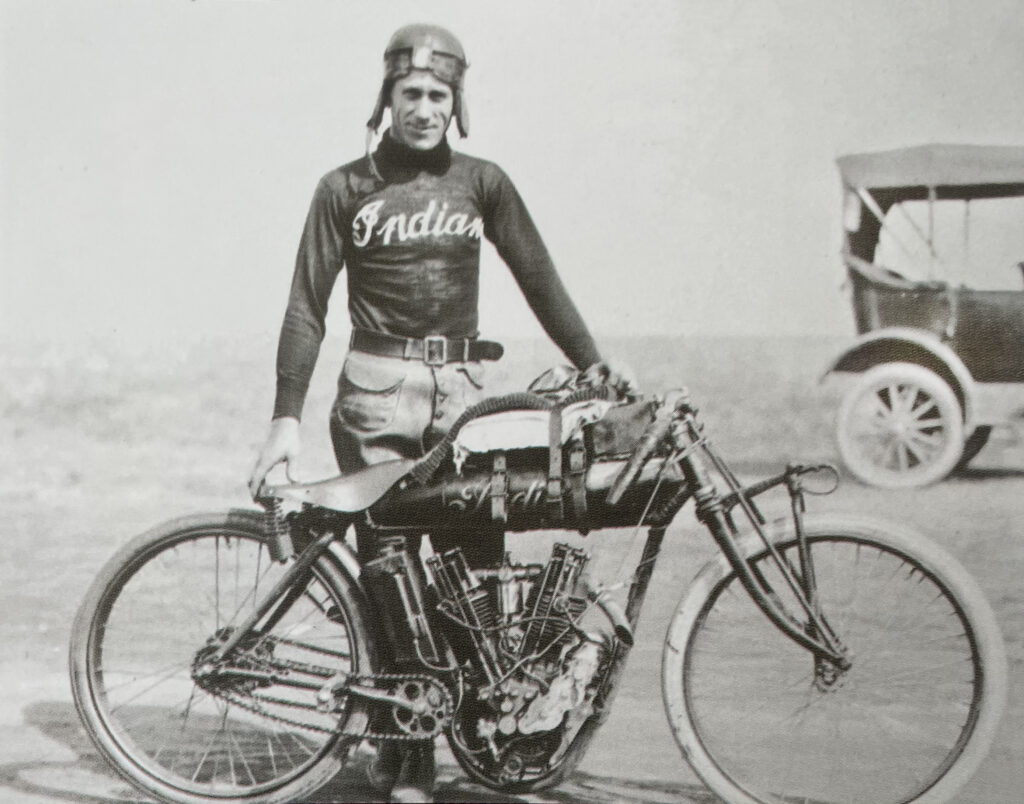
Erle 'Red' Armstrong with a factory racing Indian 8-Valve board track machine, the most technically sophisticated American motorcycle when it was introduced in 1911. This example is rare in having front suspension, and as the photo was taken at the Dodge City board track, presumably it was set up for one of the 200-mile races held there. Note also the cushions strapped to the tank, to stop busting the rider's chin over bumps and give some support when in full crouch. [Indian publicity photo]By 1907 Armstrong was working for the Denver Indian dealer, and became the Rocky Mountain State motorcycle champion, a title he retained through 1909. He raced Indian singles and V-twins, and Excelsior singles too, and opened Armstrong Motor Sales in 1910, selling Thor, Wagner, and Minneapolis motorcycles [read our story on the Minneapolis here]. In 1911 he sold his dealership - it took time from his racing - and moved to California, where he raced on board and dirt tracks. He rode mostly Indians and Excelsiors at events as far-flung as Chicago, Dodge City, Oakland, Denver, and Atlanta, as well as at his home Los Angeles turf. In 1913 Armstrong appears racing Excelsior V-twins on the boards, taking wins and being featured in Excelsior advertising, at the moment Ignaz Schwinn pumped money into his recently acquired (1911) motorcycle brand to push sales. After WW1 he joined Indian full-time and moved to Springfield, and managed the factory racing team
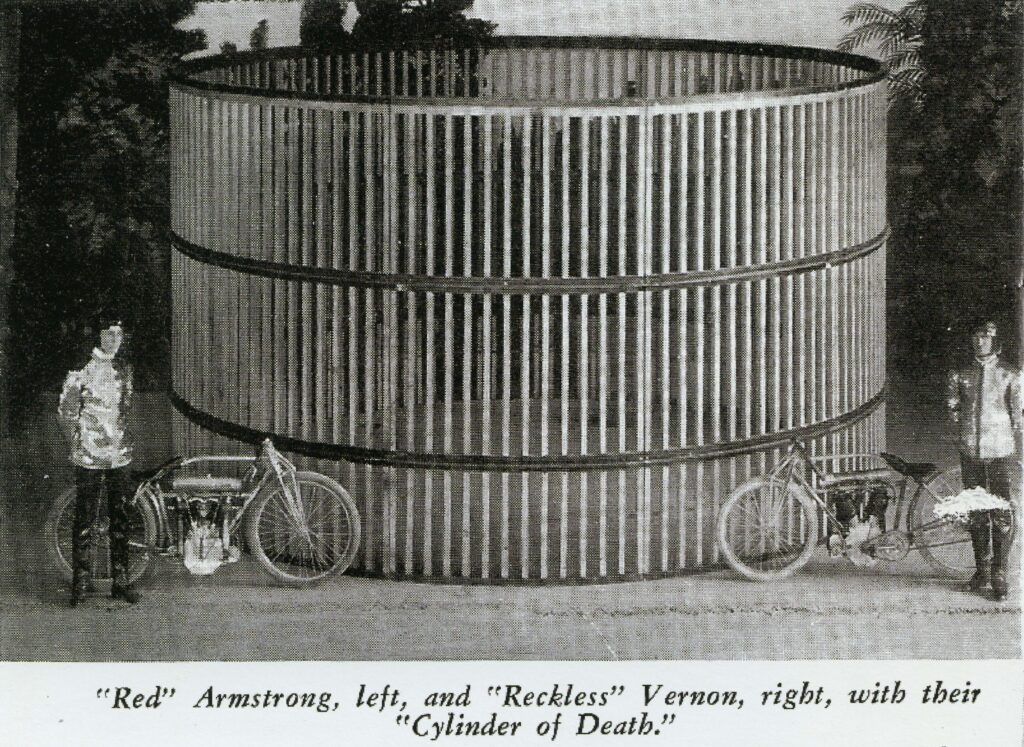
A 1914 press publicity photo of the actual Whirl of Death, built of cedar planks and steel bands, with Erle Armstrong and his partner 'Reckless' Vernon. Shown clearly are their specially adapted Excelsior board track racing motorcycles with rigid forks, tiny fuel tanks, and no brakes: the sheen of their satin carnival costumes is clear even in this mediocre reproduction. [Clymer Publications]In 1914 Erle Armstrong supplemented his racing career in the winter months with touring a carnival act of his invention and construction: a vertical-walled motordrome built of wooden slats held in place with steel bands, 19' in diameter and 12' high. The act was called the Whirl of Death, and it toured throughout the West, inside theaters and under canvas tents. According to Armstrong's biographer Butch Baer (a family friend), he built three motorcycles to run on his Wall, and as oil was not allowed in theaters due to fire regulations, he modified his machines to run for 2 minutes each without oil(!). Baer claims there was never a serious accident in any of Armstrong's tours, a remarkable record given the inherent danger of the act.
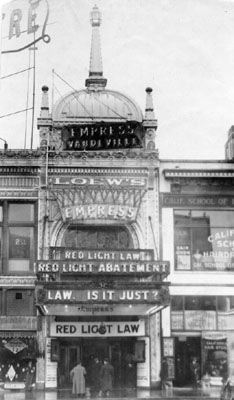
A view of the Empress Theater on Market St in San Francisco, after it was purchased by the Loews entertainment chain. The building no longer exists. [San Francisco Public Library]According to a later press report on the 'cylinder of death':
"A wooden cylinder with spruce slats three inches apart, 19 feet in diameter, and 12 feet high, two 61 cubic inch 'ported' motorcycles, and two daredevil riders attired in spangled costume, were the ingredients of one of the most hair raising vaudeville acts ever to tour the old time 'three a day' circuit. Conceived in the brain of 'Red' Armstrong who was also one of the performers, this act toured the top billing of the country in company with such greats of the theater as Eddie Cantor, and Weber and Fields."
"The act consisted of riding the inside of the cylinder - with two riders going in opposite directions - blindfolded! Traffic was controlled by a 'ringmaster' who sounded a shrill blast on a whistle if the top man approached the open apex of the cylinder, and two blast if he came too low. This early day 'sonar' system worked out fine until one night in 'Frisco when the whistle failed! Red remembers riding right out of the top of the contrivance, and soaring off into the wings in an unscheduled exit! He was right back in the next performance despite a somewhat damaged big toe - his only souvenir of the accident."
The original Race for Life in 1914: a more solidly constructed motordrome than the presumably earlier Whirl of Death, combining a slant-wall section with a narrow vertical at the top. [A Century of Motorcycling]Armstrong's Whirl of Death took up residence in San Francisco in 1914 at the Empress Theater at 965 Market St. He seems to have liked San Francisco, where he seems to have lived for two years with his wife Maude. He took a day job as service manager for Hap Alzina's Indian dealership, while still hitting the boards in both the racing and vaudeville scenes from 1914 through 1916. It was a golden era for 'Red', and he became one of the winningest board track racers in the country. According to Indian ads, Armstrong held more track records than any other rider, for example at the new Tacoma 2-mile board track (the first of that length - there was a lot of wood in Washington) where he on the inaugural 300-mile race, breaking speed records for 100, 200, and 300 miles. In the winters of 1914 and '15, when racing was dormant, he toured his Whirl of Death.
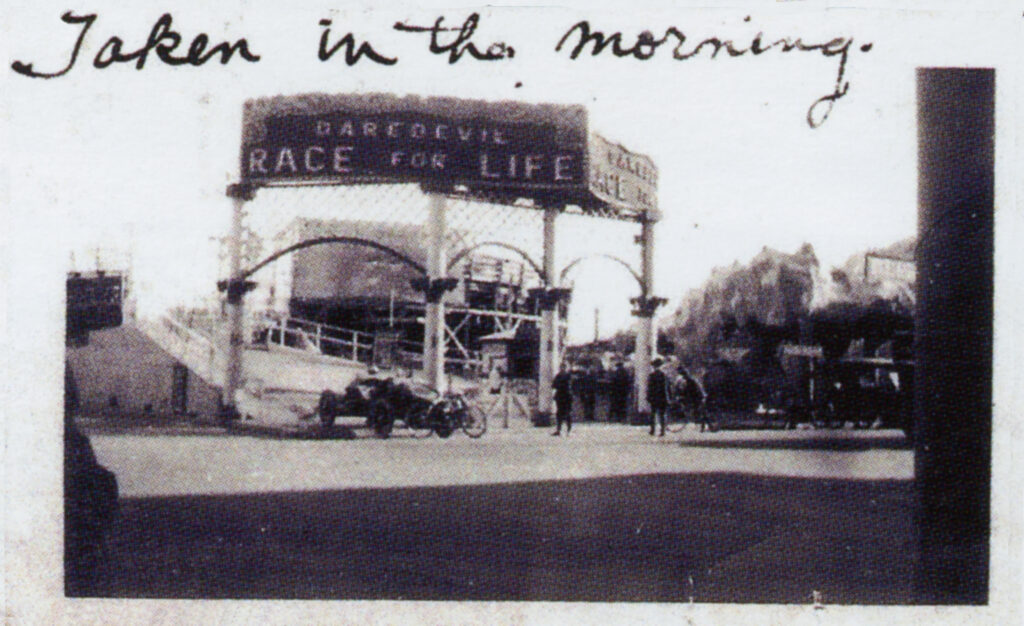
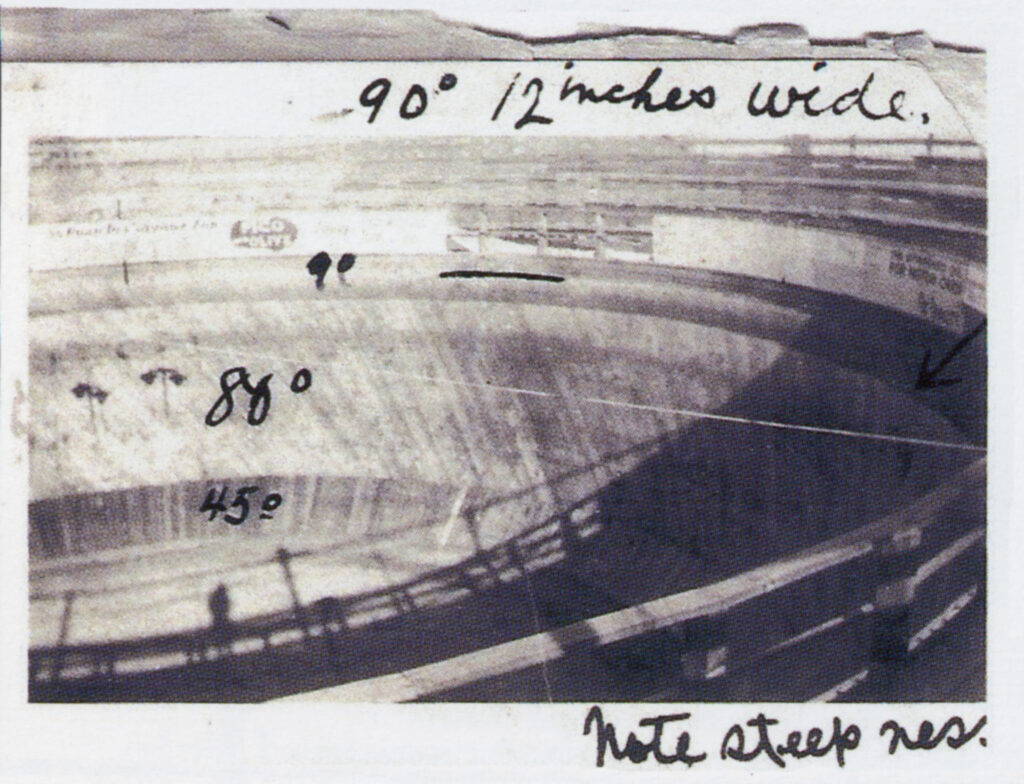
Construction details of the 1914 version of the Race For Life, with Erle Armstrong's notations ("note steepness" on the banking angles and very narrow 90deg section at the top. This version of the Race For Life appears to be a smaller diameter than the enormous motordrome set up at the Panama Pacific International Exposition in 1915. [A Century of Motorcycling]At some point in 1914, it appears Armstrong changed both the construction and name of his attraction, to the Race For Life, if the date notations from his scrapbooks are accurate. Armstrong's photos suggest he built a far more elaborate motordrome in 1914, with far more robust construction and a mix of banking angles, from 45deg to a fully vertical 90deg section. The large banked sections might seem retrograde after the radical vertical Whirl of Death carnival act, but the Whirl was too fragile to accommodate automobiles, and cars running banked motordromes were very popular since 1909 in Coney Island. The 1914 'taken in the morning' photo above from the Race For Life includes a racing car with a boat-tail rear end, and a ramp for its entry, so clearly Armstrong was expanding his act for a greater draw. Now that we know the Race For Life and Whirl of Death were both touring attractions in 1914, it should be possible to dig deeper on the subject and find period press confirming the dates and locations Armstrong toured - watch this space.
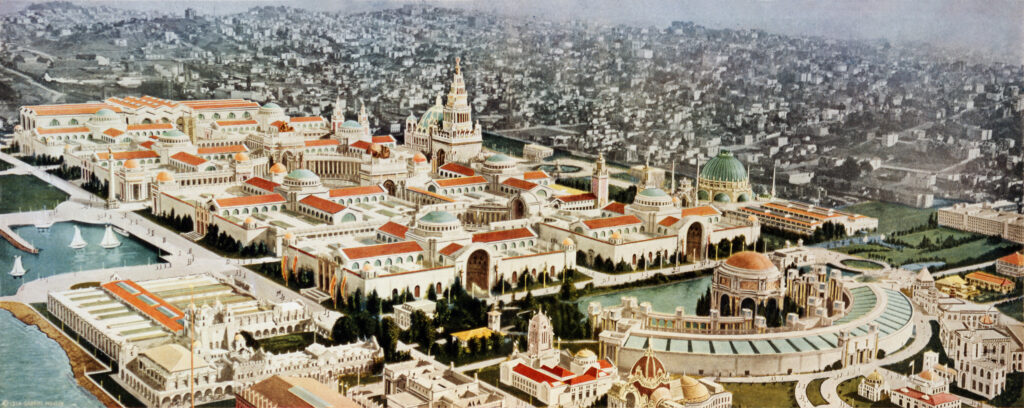
An aerial view of the 1915 Panama Pacific International Exhibition, showing the still-extant Palace of Fine Arts buildings by Bernard Maybeck on the right side. All the other buildings for the PPIE were demolished or moved in 1916, and the neighborhood developed as the Marina District, then as now a haven for young, upscale couples. Not shown in this retouched photo are the Zone and racetracks on the far left of this view. The neighborhood above the PPIE (in gray) is Pacific Heights. [Wikipedia]In 1914, Armstrong applied to install his Race For Life at an upcoming world's fair in San Francisco, which was in the planning stages. San Francisco was in the middle of a building boom at the time, after recovering from the devastating earthquake and fire of 1906. To proclaim to the world that 'San Francisco is back', a consortium of politicians and developers combined civic pride with blatant self-interest, and contrived to convert a large tract of swampy bayside land known as Harbor View into a major development opportunity. Harbor View sat on the north side of town between the Presidio military base and the city's shipping piers (Fort Mason and Fisherman's Wharf), which was then occupied by hundreds of working people displaced by the '06 earthquake, living in shacks and tents on the grazing land of local ranchers. The pretext for developing Harbor View, and ultimately reaping enormous wealth, was the creation a world's fair ostensibly celebrating the 1913 opening of the Panama Canal.
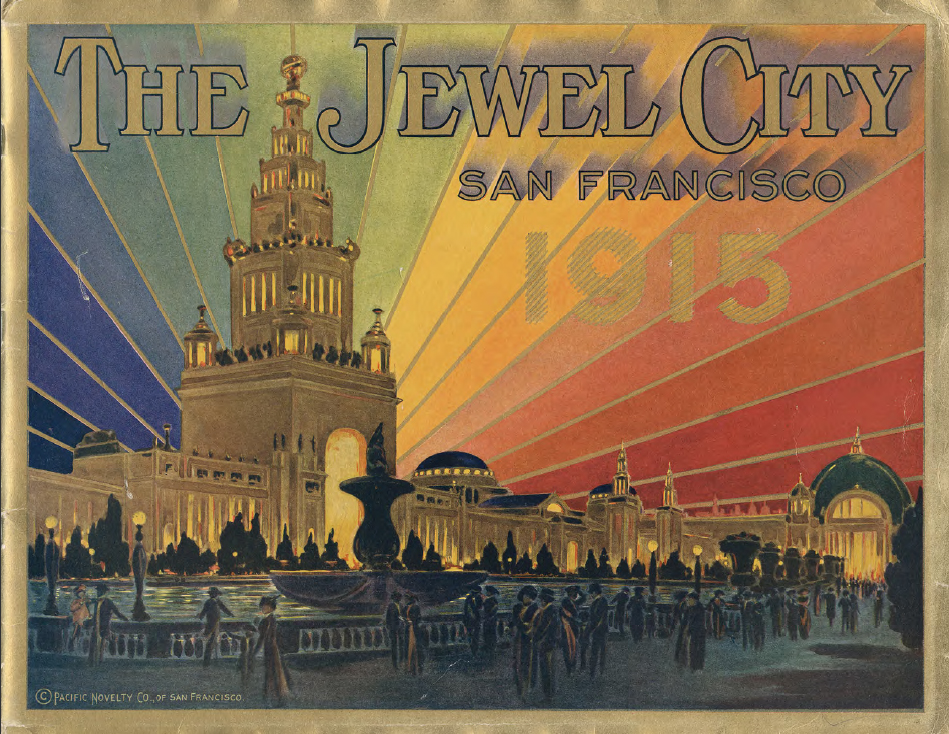
The PPIE was conceived as the Jewel City, illuminated by rainbow-colored searchlights operated by Marines (the Rainbow Scintillator), and lighting through gem-like lenses of Czech glass. This souvenir booklet of the PPIE shows the impact and scale of the exhibition. [San Francisco Public Library]It was called the Panama Pacific International Exhibition (PPIE), a pearl in a long chain of grand industrial expositions originating in 1798 in revolutionary France, that grew in popularity and scale in the 1800s, culminating in the first truly international and expansively conceived Great Exhibition in 1851 of London at Crystal Palace, an enormous steel-and-glass structure built for the occasion. Such fairs are still popular today - the most recent was in Milan in 2015, that focussed on food production.
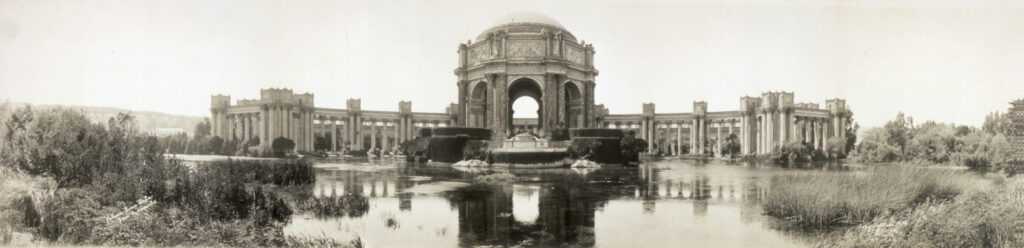
The Palace of Fine Arts was designed by Bernard Maybeck, and is the only PPIE building still on-site from 1915, although it has been extensively re-engineered, three times, to stabilize what was intended as temporary construction. It was simply too beautiful to destroy! [Wikipedia]Creation of the PPIE was a major undertaking, regardless the grand halls were constructed of temporary materials, mostly wood and plaster. The 635 acres of land were purchased by the City (for a little over $1M), which then had the job of stabilizing the sandy tidal wetlands and beaches. The PPIE was planned like a small city in itself - the Jewel City- as a mix of high-style Beaux Arts architecture for great halls celebrating the arts, sciences, and manufacturing, and a large central fun fair called the Zone. The color palette of plasters used in construction were carefully regulated, and even the sand used on its broad avenues were brought in from Monterey Bay and oven-roasted to the correct shade of tan!
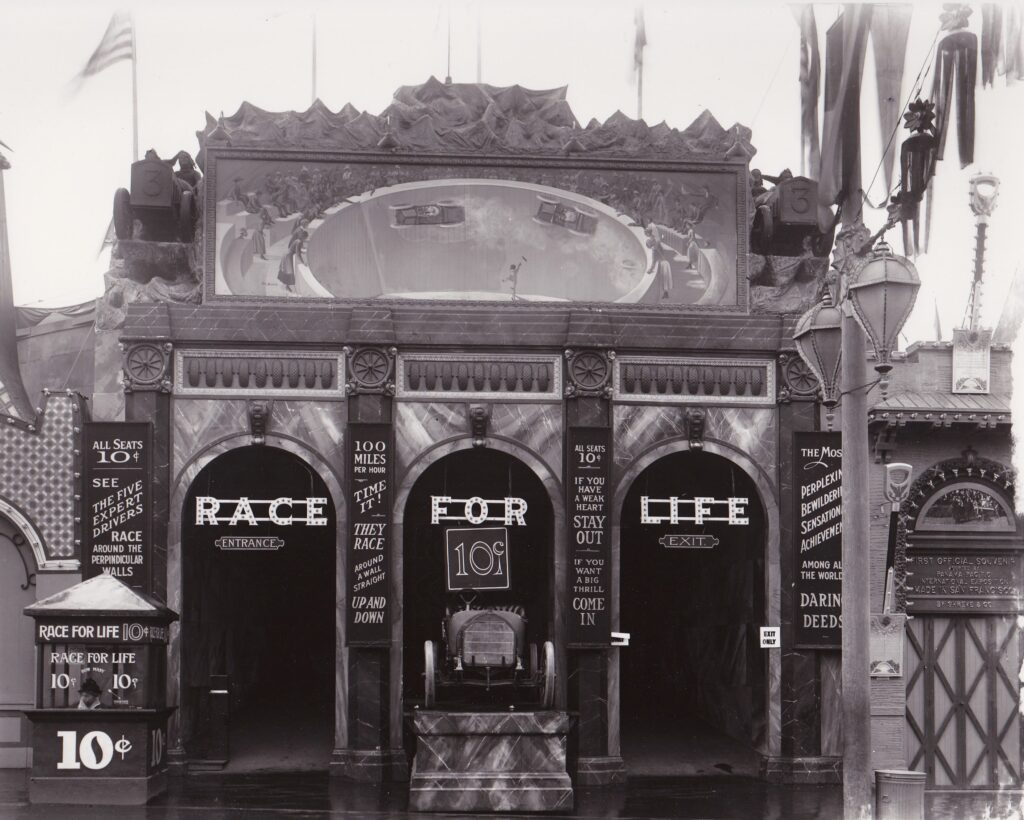
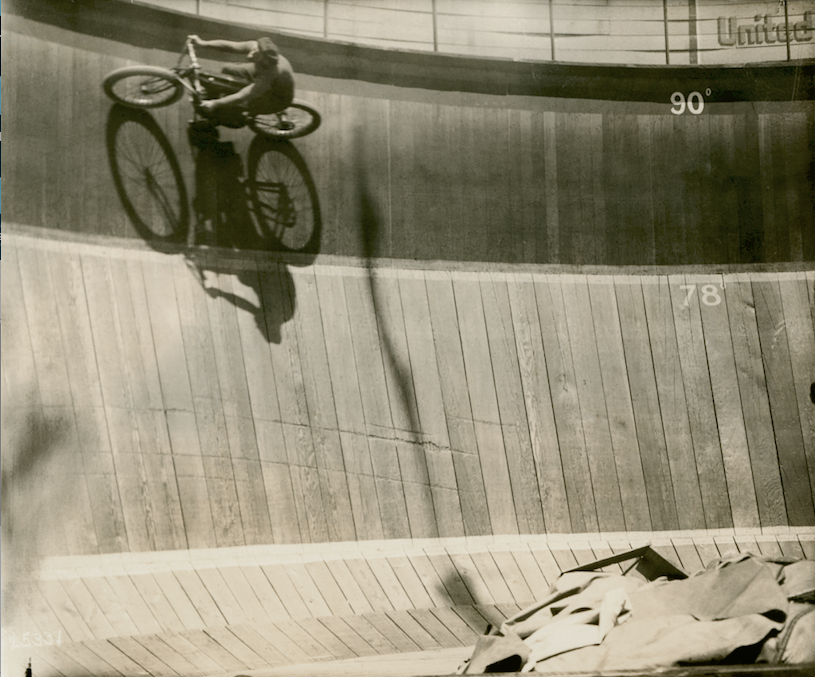
The entrance to the Race For Life attraction at the PPIE: the noise alone must have lured customers! [San Francisco Public Library]The Zone was planned as a mix of food halls and entertainments, enticing entrepreneurial vaudevillians and carnies from across the USA to dream up for-pay spectacles. It was expected the PPIE would be hugely popular, despite the fact that much Europe was at war by the time the fair was open. Regardless, 18 Million people eventually purchased tickets and strolled the grounds. One carnie didn't have to go far to set up his attraction: Erle Armstrong was approved for his exciting, headliner act, and installed the Race For Life at the PPIE. The PPIE version of his motordrome was an even larger and more robustly constructed attraction, with four banked sections allowing for an easy transition for cars and motorcycles entering the 'drome. A wide 78deg banked section was topped by a much taller 90deg section, measuring about 6' high, with a 1' deep lip allowing the audience to literally stand on top of the riders and look directly below. The taller vertical section was wide enough for a car (or two), and Armstrong included a 1914 Stutz GP car in his act, as well as several racing Indians and Excelsiors, one of which was adapted to carry his wife Maude on the handlebars.
Erle 'Red' Armstrong riding his board track Indian on the vertical section of the Race for Life in 1915. [San Francisco Public Library]We documented the Race for Life story here on The Vintagent in 2017, but Erle Armstrong's story was the missing piece of the puzzle. I speculated in the article that the 1915 photos of the Race for Life might be the first properly documented Wall of Death, but a recent purchase of 'A Century of Motorcycling, Vol I and II' (self-published by Butch and Tom Baer in 2006, no ISBN) included the terrific 1914 photos included above, and the news that Erle Armstrong also created the Race for Life, and was considered at the time to be the inventor of the vertical-wall motordrome, now known as the Wall of Death.
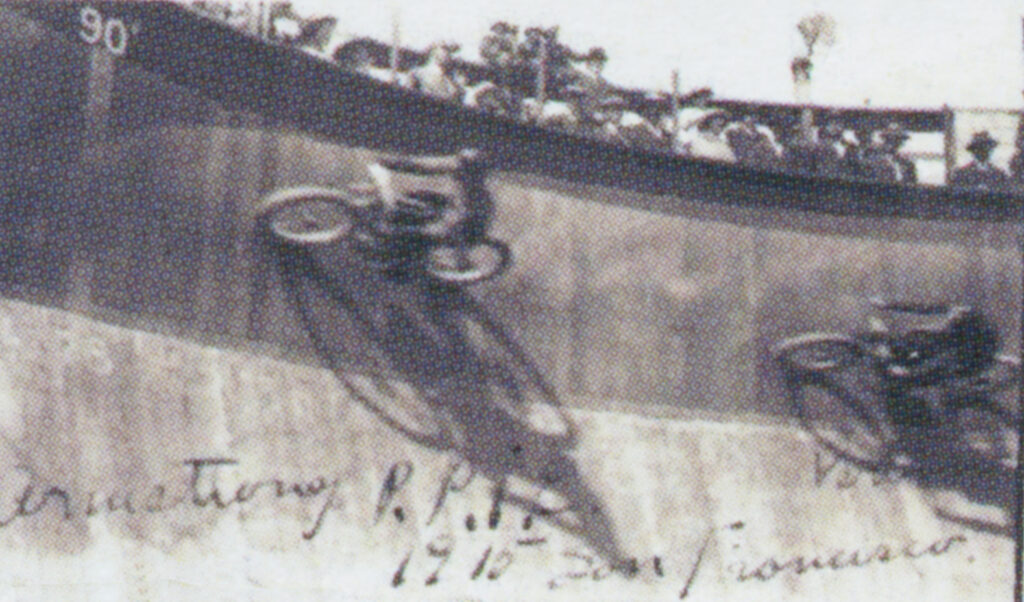
'Red' Armstrong and 'Fearless' Vernon 'racing' on the vertical section of the very large Race for Life attraction in 1915. The attraction had a canvas roof that could be closed in case of rain. [A Century of Motorcycling]It makes sense: who but a hardened board track racer would have the experience of banked wall riding, the machinery capable of riding fully vertical, and the bravery required to do it first?
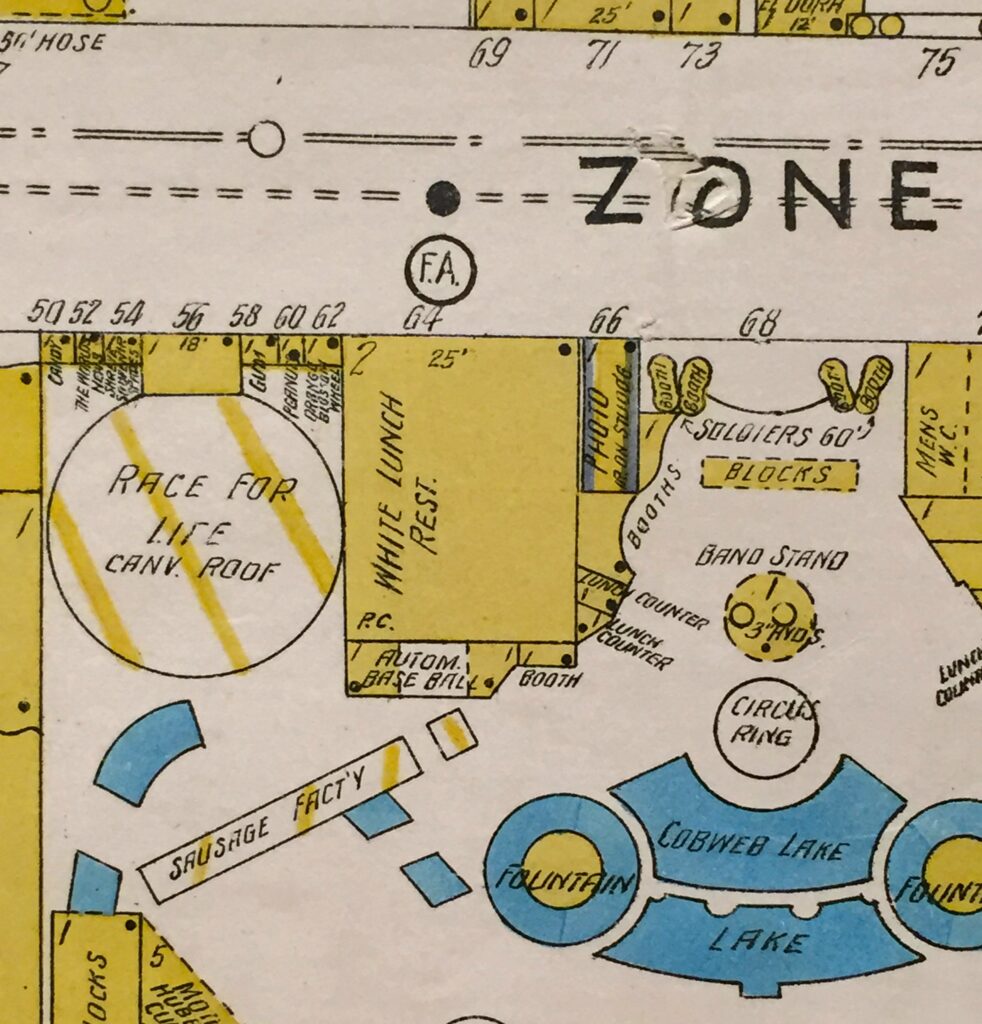
The site plan of The Zone showing the layout of the Race for Life: 40' in diameter with a canvas roof. [San Francisco Public Library]Game for a ride: Maude Armstrong rode on the handlebars of husband Erle's Race for Life board track racer. This photo was her entry pass to the PPIE. [A Century of Motorcycling]There's a very good biography of Erle 'Red' Armstrong here on Archive Moto, and plenty of mentions of his racing in Stephen Wright's American Racer books, as well as in Dom Emde's excellent new book The Speed Kings: the Rise and Fall of Motordrome Racing, as well the aforementioned A Century of Motorcycling, by Butch and Tom Baer, which might prove difficult to find! Other photos and information used in this article are from the San Francisco Public Library.
On the very day the US military occupation of Japan ended following WWII, on April 28th 1952, the Asahi Shimbun newspaper published a critical essay claiming the occupation left Japan’s people “irresponsible, obsequious and listless...unable to perceive issues in a forthright manner, which led to distorted perspectives.”
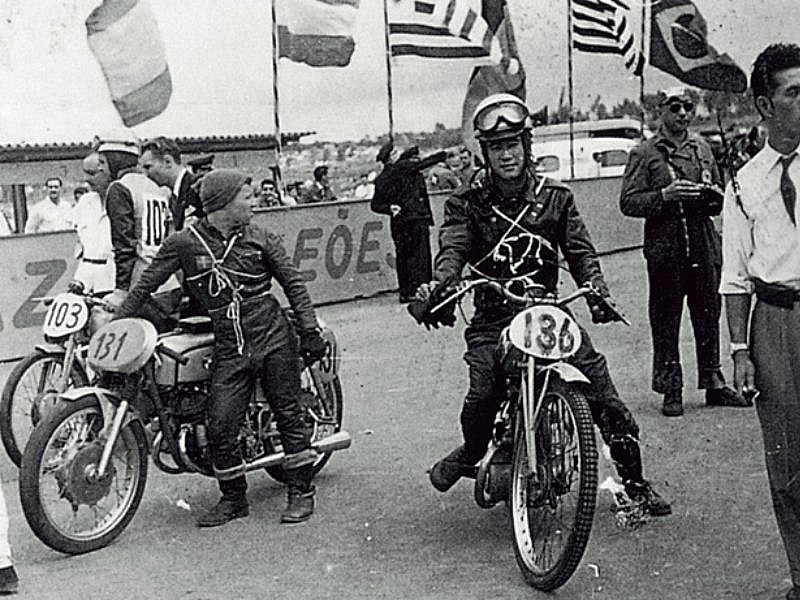
Honda's very first international race in São Paolo Brazil, 1954, with an R125 racer. Note the girder forks, knobby tires, and tall chassis compared to the Puch racer beside it with road race tires, telescopic forks, full-width aluminum brakes, clip-on handlebars, and rear suspension! [Honda]Less than two years later, in January 1954, Soichiro Honda’s fledgling Honda Motor Company participated in its first overseas motorsports event at the São Paulo City Fourth Centennial Celebration International Motor Race. It took four days for Honda's staff of 3 to travel from Tokyo to Brazil. Racer Mikio Omura, riding a modified Dream E-Type racer, rode hard to finish thirteenth. The performance gap between Honda and the European motorcycles was wide, but Soichiro was undeterred. Two months after Brazil, on March 20, 1954, Honda nonetheless published a “Declaration of Entry” to compete at the ultimate road race, the Isle of Man TT. Setting his company in pursuit of this remarkable man-on-the-moon objective, Soichiro Honda boldly exclaimed, “My childhood dream was to be a motorsport World Champion with a machine built by myself. I have decided to compete in the Isle of Man TT races… This aim is a difficult one, but we have to achieve it to test the viability of Japanese industrial technology, and to demonstrate it to the world… I here avow my definite intention that I will participate in the TT races and I proclaim with my fellow employees that I will pour in all my energy and creative powers to win..." Honda wasn’t simply building engines for cars and motorcycles: they were powering Japan into the modern age.
Distorted perspectives? Perhaps. Irresponsible, obsequious and listless? Hardly.
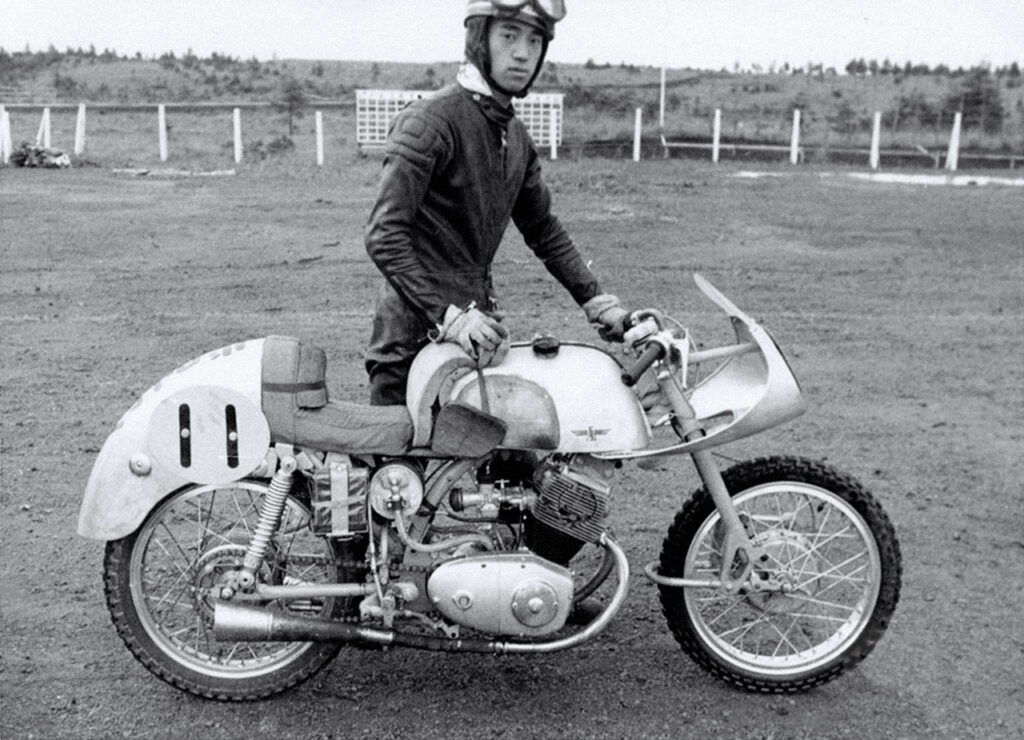
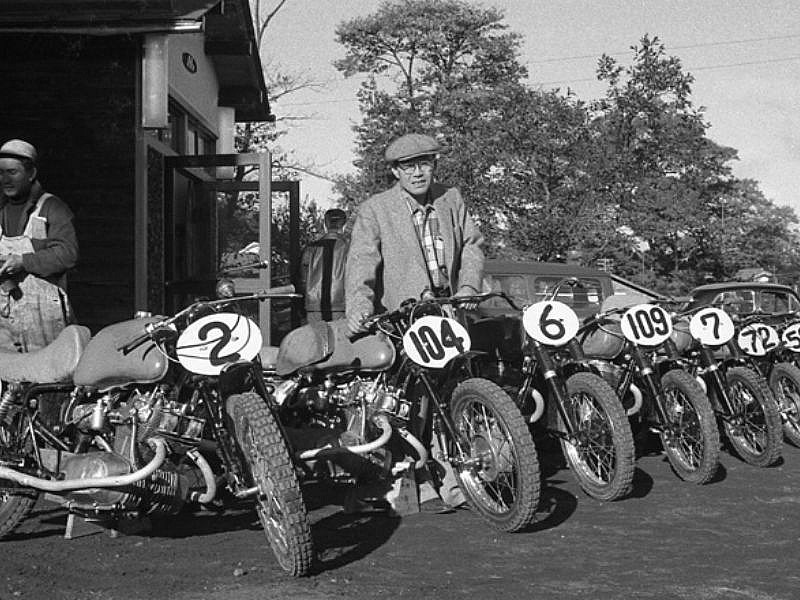
Honda's first sophisticated racer, the RC71 or C71Z, with their new twin-cylinder OHC motor, seen at the second running of the Mt Asama volacano races in 1957. The first Asama race was 1955, the last in 1959. The track was all cinders, hence the knobby tires. [Honda]At the time, Honda was only beginning to export motorcycles to the “advanced countries”. Racing, however, offered an opportunity to compete with the rest of the world. Never before had there been a Japanese rider competing at the TT with a motorcycle made in Japan. While no Japanese motorcycle had ever raced at the Island, a Japanese rider had, back in 1930 when Kenzo Tada, the Japanese champion and Velocette dealer for Tokyo, was invited by Veloce Ltd to race at the TT. Tada finished a respectable 15th, and brought stories of British and European race teams back to Japan, fueling the dreams of impressionable youth like Honda.
Soichiro Honda supervising his team of racers in 1957 on the Mt Asama track. Note the changes on the racers, from higher pipes and bigger tanks to full-width hubs and lighter bodywork. [Honda]Soichiro Honda knew the winner of the Isle of Man TT would be known across the globe....along with any vehicle that completed the race safely. “I will fabricate a 250cc (medium class) racer for this race, and as the representative of our Honda Motor Co, I will send it out into the spotlight of the world. I am confident that this vehicle can reach speeds exceeding 180 km/h.” In 1955, he embarked on a world tour, making the rounds of British and European manufacturers who would meet with him. Their reception was generally friendly, and in their Colonial mindset, they saw no threat in the courteous Japanese fellow who built inexpensive lightweight motorcycles. It is said that the racing department at NSU were only too happy to show him the blueprints for their all-conquering 125, 175, and 250cc Grand Prix racers, with their sophisticated OHC and DOHC motors, pressed steel frames, and beautifully made castings. NSU made a strong impression, and shared the most information: some say Honda was able to purchase an obsolete NSU Grand Prix racer and bring it to Japan for study.
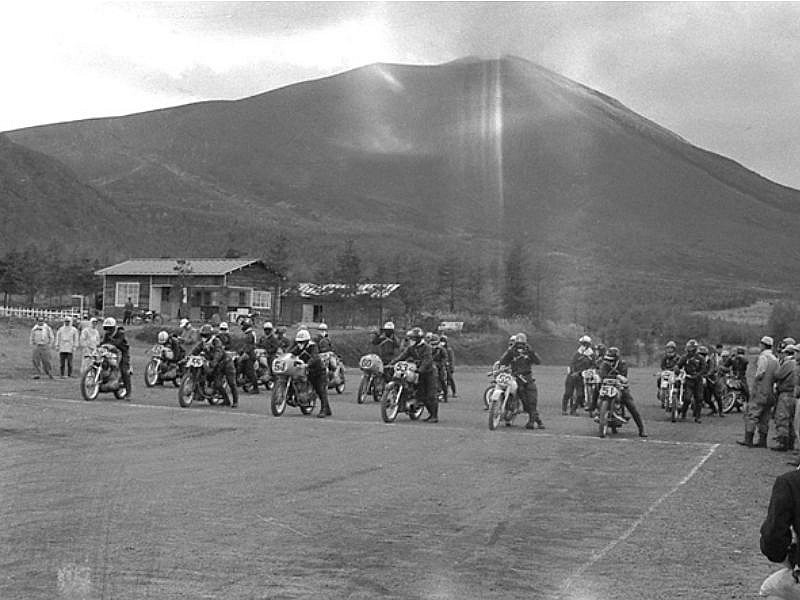
Mt Asama in the background, and the simple infrastructure of the 1955 races. Competition was fierce as every Japanese manufacturer fielded their prototype racing bikes. [Honda]Within two years Honda had transformed his product line into very sophisticated unit-construction OHC engines with forward canted twin-cylinders, in a simple pressed-steel spine chassis with short leading-link forks. The NSU influence was clear, but Honda did not copy NSU's street bikes for their new lineup, but took the technology of hand-made NSU Rennmax racers into mass production [how this was possible can be studied in another article here]. With this new architecture, Honda competed at the Isle of Man TT for the first time in 1958 on a modified version of their twin-cylinder 250cc design, the RC71Z. NSU had dropped out of racing the previous year, along with BMW, Moto Guzzi, Gilera, etc, as the European motorcycle market hit a rough patch due to the growing popularity of cheap cars, but the Japanese market was booming, as was the American scene. In 1959 Honda established their first dealers in the USA, and just two years later, in 1961, Honda factory rider Mike Hailwood claimed his first of many victories at the TT, winning both the 125cc and 250cc classes, with the factory race team sweeping first through fifth places in both classes overall.
Distorted perspectives - certainly. Listless? Ha!
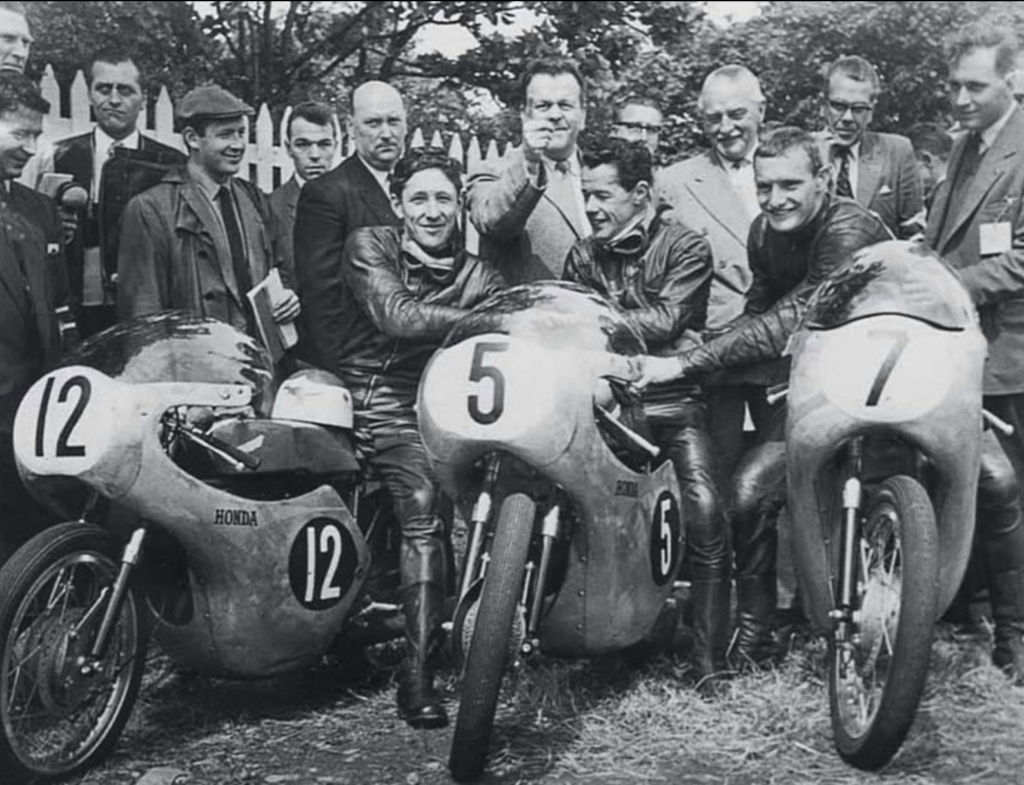
The 1961 Isle of Man TT, where Honda swept the 125cc and 250cc classes. Tom Philips, Luigi Taveri, and Mike Hailwood, with Mike's father Stan directly behind him. [Honda]Fast forward a generation. By the time most teenagers take the fateful leap from drooling over bike magazines, to actually riding motorbikes, their tastes firmly eschew “classic” or “vintage” as old and uninteresting; much as they saw their parents generation. When that first motorbike is decades old, its hardly by choice; rather, its a compromise driven by budget, hand-me-down or practical happenstance. A rite of passage, a first step on the road toward the ultimate grail: the latest shiny and sparkly machine they (nay, we) could get our hands on. History can wait until later in life.
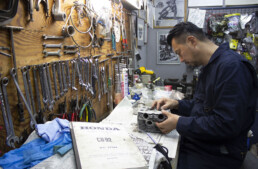
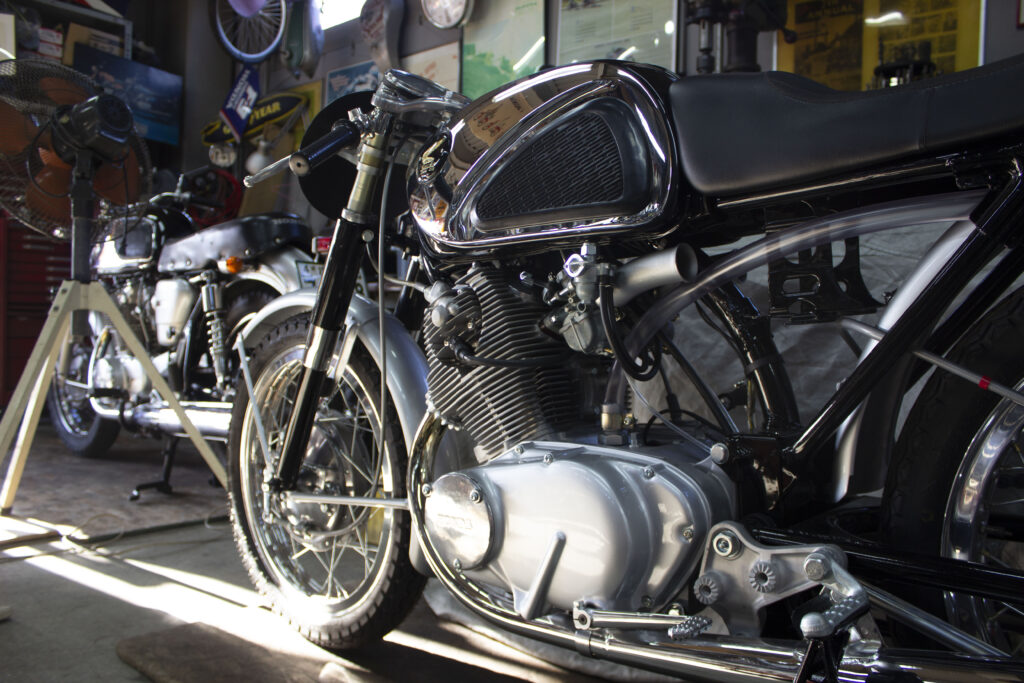
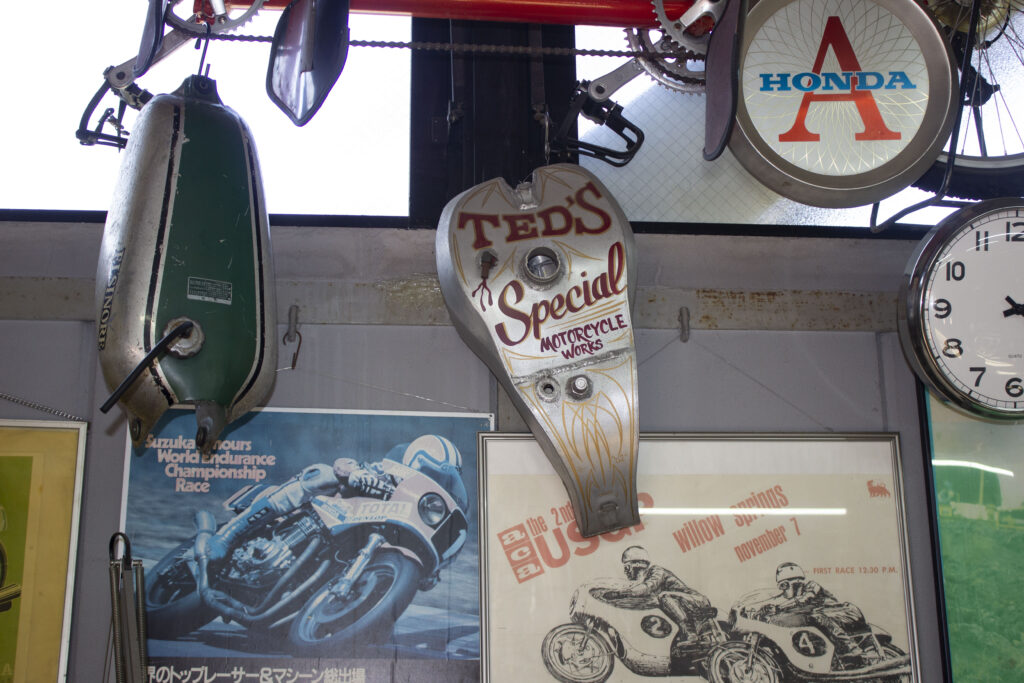
Takeshi Maejima, or Ted, of Ted's Special Motorcycle Works in Japan. [Larry Morris]An outlier of the old-is-boring, new-is-better view common among his peers 30 years ago, Takeshi “Ted” Maejima had just one occupational goal for his life, one all-consuming passion: to revive, preserve and celebrate Honda’s remarkable legacy of motorcycle racing. To Ted, his first bikes were “too new”- he was determined to travel back in time. Today, his motorcycle shop, Ted’s Special Motorcycle Works in Kanagawa Prefecture is a treasure trove of racing history. Ted is the go-to expert for vintage Honda service, restoration and parts, particularly CB72 Hawks and CB77 Super Hawks, for both track and street.
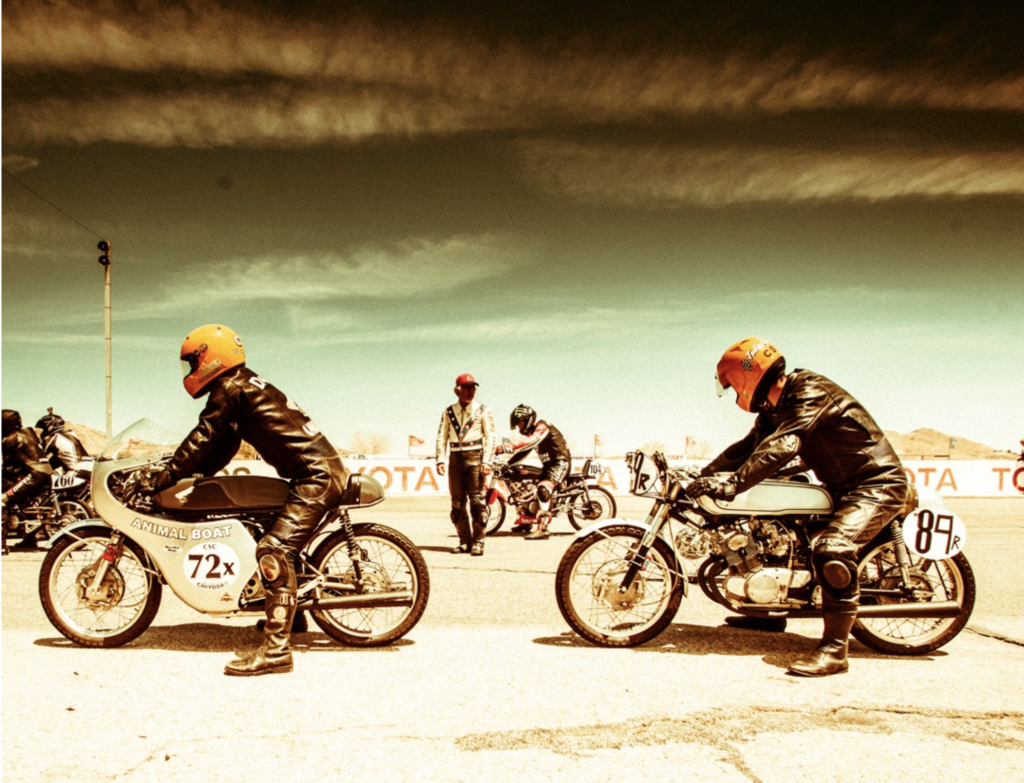
At Willow Springs Raceway, 2014: Ted is on the left, on the 72x Honda CB160, while Larry is on the right, not that they knew each other at the time. [Philip Graybill]Willow Springs International Raceway, April 2014. This image, shot by my friend, photographer Phillip Graybill, who joined me while I was racing at this AHRMA event, is how I first “met” Ted, who had no clue who I was until years later. The photo ultimately led to a connection on social media and eventually, in-person in Japan where I now live, just 30 minutes away from him.
I asked him a few question for The Vintagent:
Larry Morris (LM): How and where did you get the nickname Ted?
Takeshi Maejima (Ted): 1996, in the USA. Americans had a tough time saying and remembering my name, Takeshi; so they began calling me Ted. I had an opportunity to move to LA for two years to help my friend Ken Awae, who had a workspace inside famed Hollywood stuntman (and top desert racer) Bud Ekins’ legendary repair shop in Los Angeles. Bud was well known as Steve McQueen’s stunt double and close friend. When McQueen wasn’t filming he was usually riding dirt bikes with Bud. By the time I arrived, Bud was retired. His son-in-law ran the shop and rented space to my friend Ken. I helped Ken fix Honda and Kawasaki street bikes.
A Honda CB77 with full factory race kit: curved carb bellmouths, special seat, megaphone exhaust, rearsets, clip-ons, etc. [Larry Morris]LM: Is that where you learned how to take apart and repair motorcycles?
Ted: No, when I was 20 I attended Honda’s International Technical School for two years.
LM: Ahh, this is all starting to make sense to me now. How did that come about?
Ted: Back then there were so many more kids trying to get into university than today in Japan. To be honest I didn’t do very well on my exams, so I was not accepted into university. Thats when I realized my destiny was to learn about and be around motorcycles as much as possible.
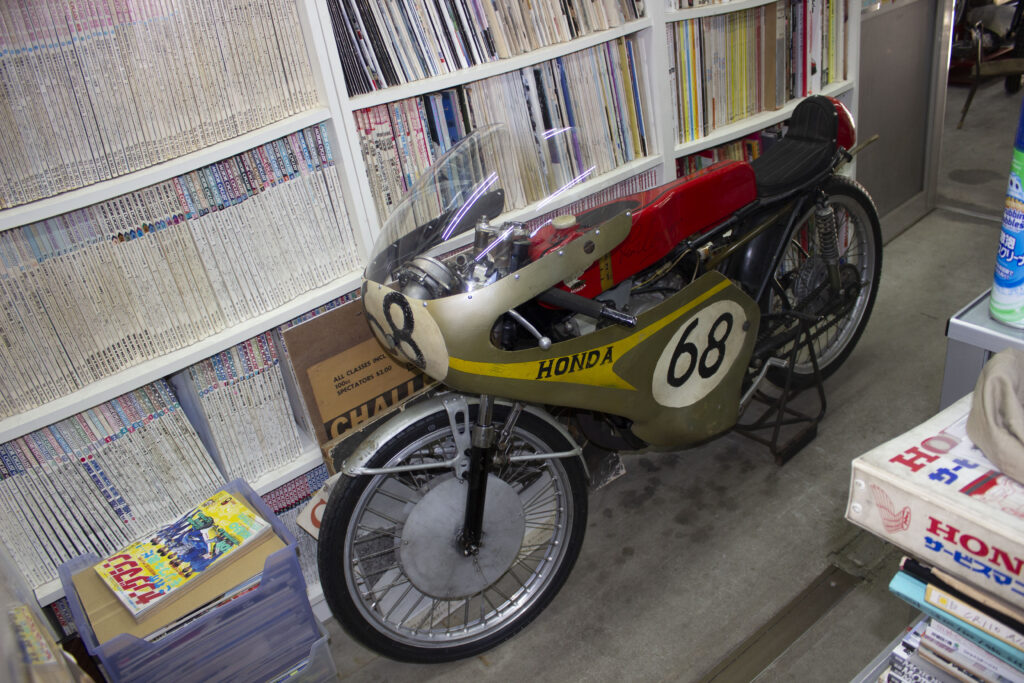
A rare CR110 production racer with period patina, sitting in the library of Ted's shop. [Larry Morris]LM: I always think of you as the “Honda Hawk/Superhawk Guy” (CB72/CB77) . When and how did you develop such a particular knowledge about these motorcycles?
Ted: After I finished Honda Technical School I moved to Osaka and spent two years working for a guy who at that time was very well known and trusted for fixing and restoring these bikes.
LM: Tell me why these are such special motorcycles.
Ted: The Honda Hawk was the first “Sport” bike. Everything was designed and built from Honda’s victories in TT racing beginning in 1961. There was nothing better than the Hawk as a street bike. At the time the CB750 came out, it cost about $2500. The Hawk was nearly $8000. These were really the best and most advanced machines. You see this design in your beloved Laverda twins, and elsewhere. Now the world was following Japan, following Honda. This was very special to me.
A Honda CB450 'Black Bomber', the bike that truly put the world on notice that Honda would soon dominate the global motorcycle market, with its DOHC motor with plenty of power, and good handling. [Larry Morris]LM: Lets talk about racing. Every time I turn around it looks like you're racing...or around racing. When was your first race and where?
Ted: I did my first race at Tsukuba on a CB77 when I was 20 years old. I’ve been racing Honda’s ever since. When I went to the States, I was very fortunate because I joined AHRMA (American Historic Race Motorcycle Association). It was there I raced with and learned about racing from some of my heroes, such as Gary Nixon and Dick Mann. I just wanted to be at racetracks and I wanted to be around racing, as much as possible.
LM: You're 46 now. How much racing are you still doing these days?
Ted: About 8 events per year. Four LOC (Legends of Classic vintage racing) and four BOBL (Battle of Bottom Link Supercub amateur vintage racing).
LM: I’m sorry for crashing your BOBL racer. Three times.
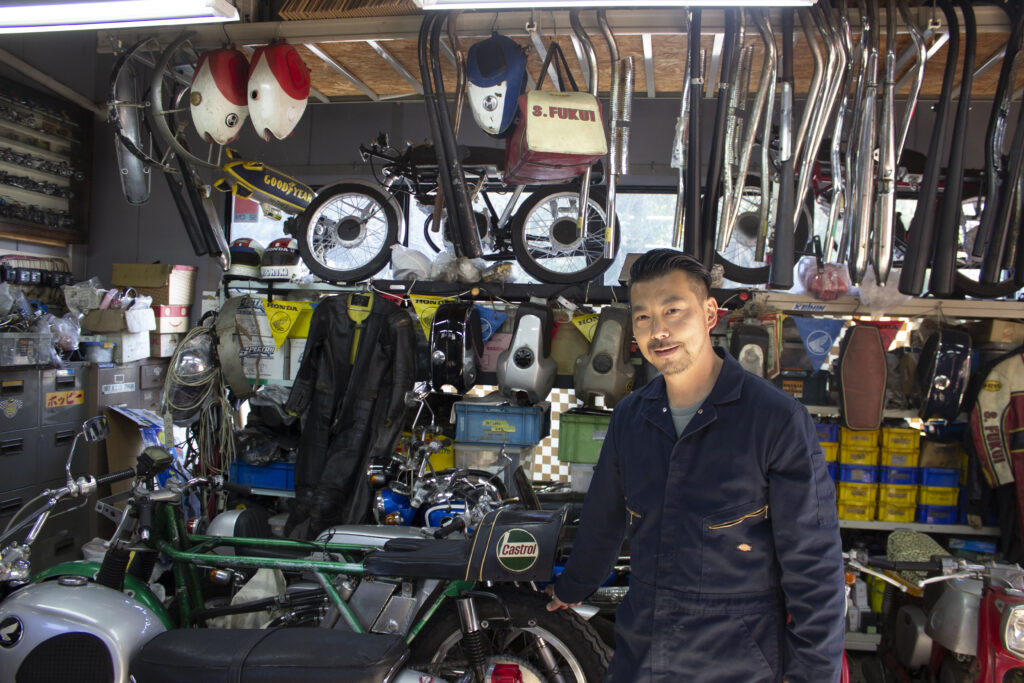
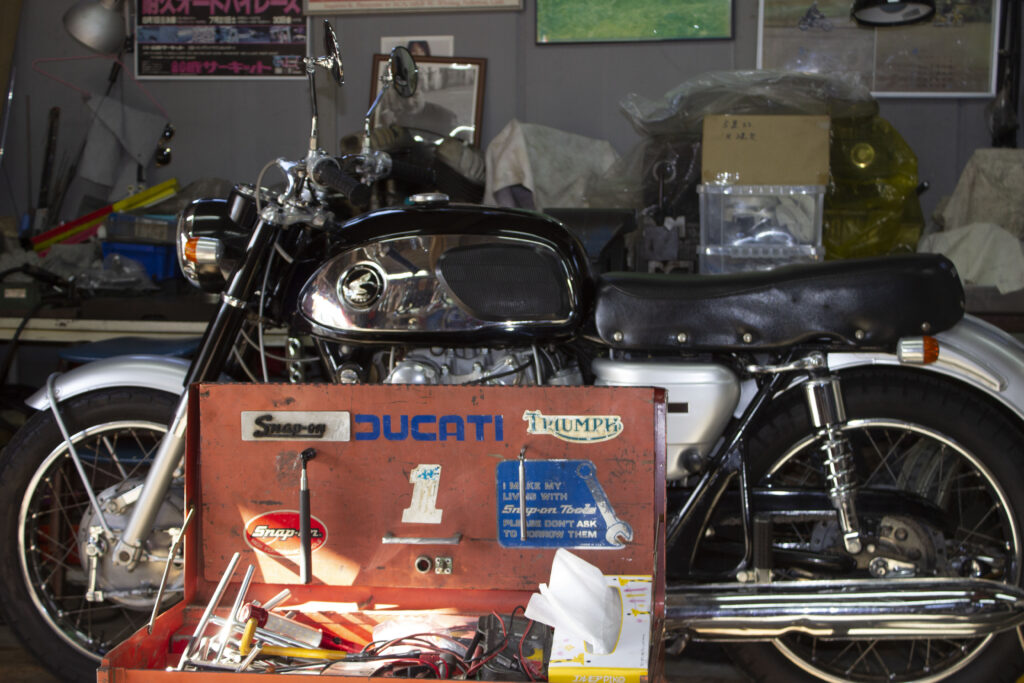
Ted's Special Motorcycle Shop, filled with treasure for those with eyes to see. [Larry Morris]Larry Morris is the proprietor of New York City Motorcycles in Venice, California and Chigasaki, Japan. Instagram: @newyorkcitymotorcycles
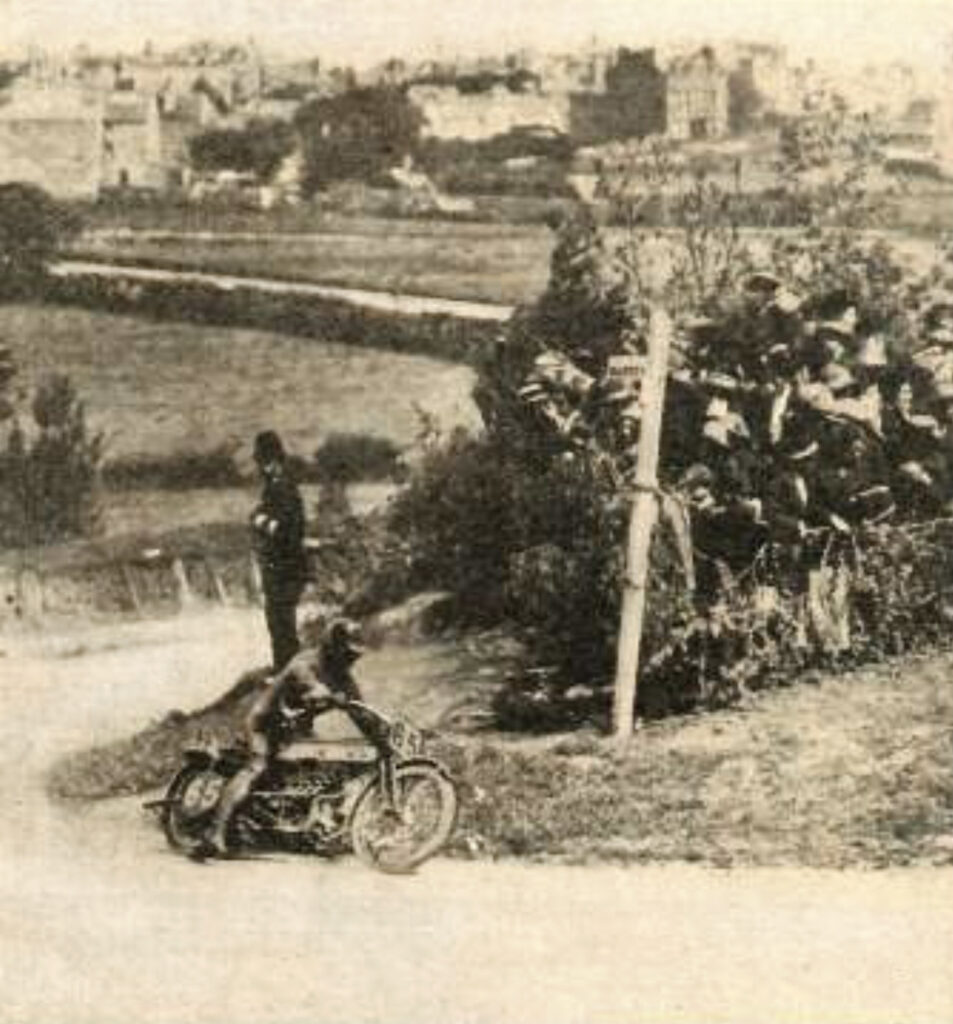
What was the first four-cylinder racer at the Isle of Man TT? No, it wasn't Japanese, or even Italian ... it was Belgian. In the second Isle of Man TT, held in 1908, Fabrique Nationale de Herstal (or F.N. - still in business, but making only armaments today) sent two of their little inline 4-cylinder shaft-drive Model F machines to the Island, and R.O. Clark managed third place in the multi-cylinder class (which Rem Fowler won on a Norton the previous year), averaging 37.79mph, and 90mpg! The race was held on September 22 over the 'short' St. John's course over 10 laps, giving a race total of 158 1/8th miles. Harry Reed on a 5hp DOT twin was the winner of this class (at 38.57mph), while Jack Marshall won the Single Cylinder class on a 3.5hp Triumph (40.4mph). It was typical in these early days for twin-cylinder machines to lag behind singles.
R.O. Clark speeding to 3rd place in the 1907 Isle of Man TT on his FN Model F four. The St. John's course was almost entirely unpaved. [The Vintagent Archive]The FN had a serious weight handicap compared to its competition, tipping the scales at at well over 300lbs, while the Triumph single weighed in at under 200lbs. the FN was 50% heavier than its competition, but weight in those days was roughly equated with durability, and the FNs ran smoothly and consistently through the race. These early TT races were true tests of endurance for the temperamental motorcycles of the Pioneer days, which had trouble completing a 15o-mile road trip, let alone a race. The TT course was almost totally unpaved, and full of hazards like horseshoe nails and stray dogs or sheep. Flat tires were commonplace, as were get-offs, and the need to open and close gates when passing through farmer's fields.
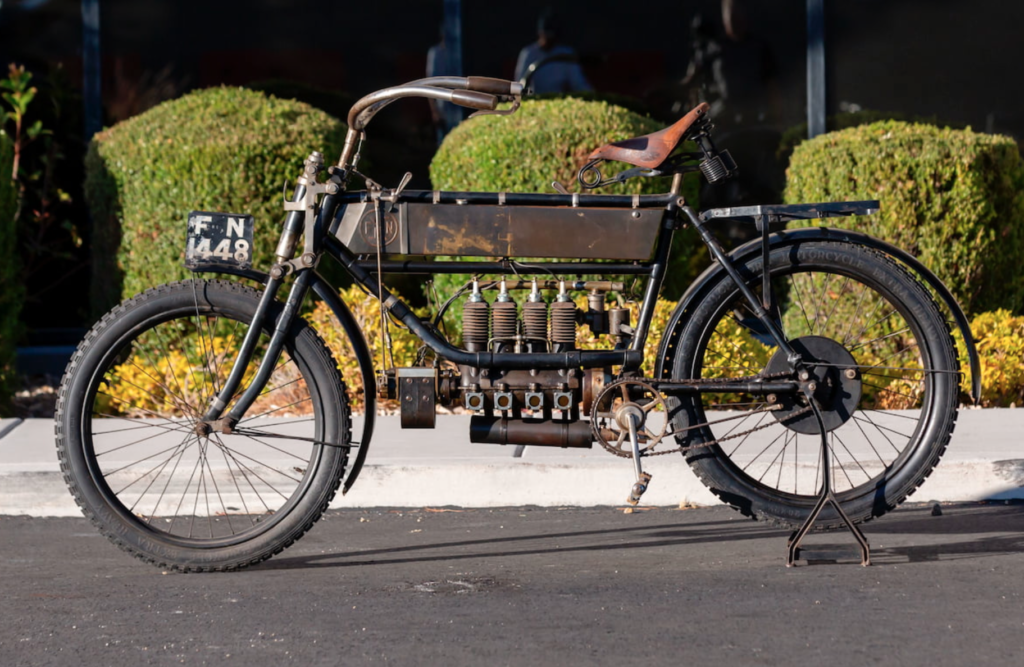
They're still out there! A 1907 FN Four in original paint condition, coming up for sale at Mecum's delayed 2021 Las Vegas auction. [Mecum]FN returned many times to the TT, with their last foray in 1931, using a single-cylinder purpose-built racer. Their 4-cylinder bikes were soon outclassed in the following years, and by 1913 they could only manage 33rd and 36th place, as by now their role as 'touring' motorcycles, and luxuriously smooth ones at that, made them unsuitable as 'tourist trophy' contenders.
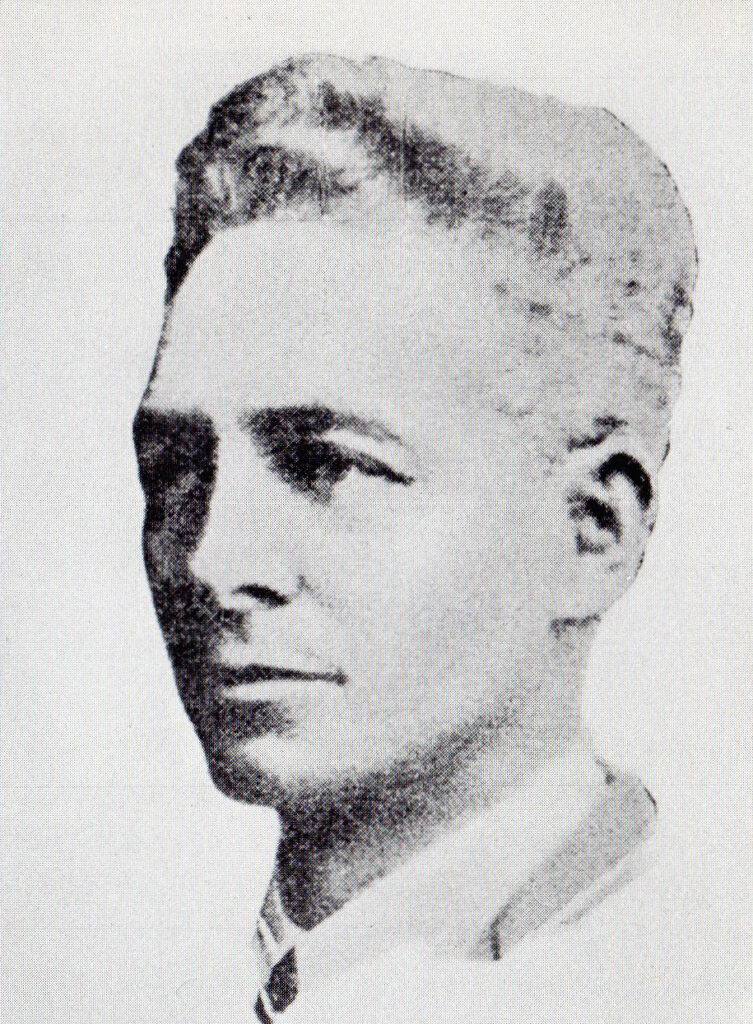
Pioneer motorcycle designer Paul Kelecom, who was hired by FN in 1904 to update their motorcycle line. [The Vintagent Archive]The FN Four was designed by Paul Kelecom in 1904, after he was hired by the armaments/bicycle manufacturer with a brief to design a new motorcycle line. Kelecom had experience designing single-cylinder motorcycle engines for several years, which were used under license by a host of Pioneer manufacturers, including Triumph and Veloce. Kelecom began working for FN in 1903, and after improving their existing line of single-cylinder 300cc sidevalve engines, the management gave him a new brief - to design a four-cylinder motorcycle. All of Kelecom's design work was completed within the year, and the first prototype of this revolutionary machine began testing in 1904. Its maiden voyage was a publicity tour in November and December of that year, in which the FN engineering dep't tester, a Messr Osmont, rode through France, Italy, Switzerland, Germany, and back through Holland and Belgium, in bad weather and worse road conditions. The new 4 performed faultlessly, and debuted at the 1905 Paris Cycle Show. The interest and enthusiasm for this novel motorcycle is hard to describe - Kelecom had created the very first practical four-cylinder motorcycle, which had a smooth and quiet engine, with genteel road manners.
The first, 1905 version of the FN Four with 362cc, slim and minimal, but still 50% heavier than its competition at the Isle of Man. [The Vintagent Archive]This first machine had a capacity of 362cc, using side exhaust valves and 'automatic' inlet valves (ie, weak springs, no pushrod - the engine suction pulls the valve open). It was a 'wet sump' engine, and each connecting rod had a small dipper which flung oil around the crankcase. This was also one of the first motorcycles which used a magneto rather than the horrible battery ignitions of other Pioneer machines.
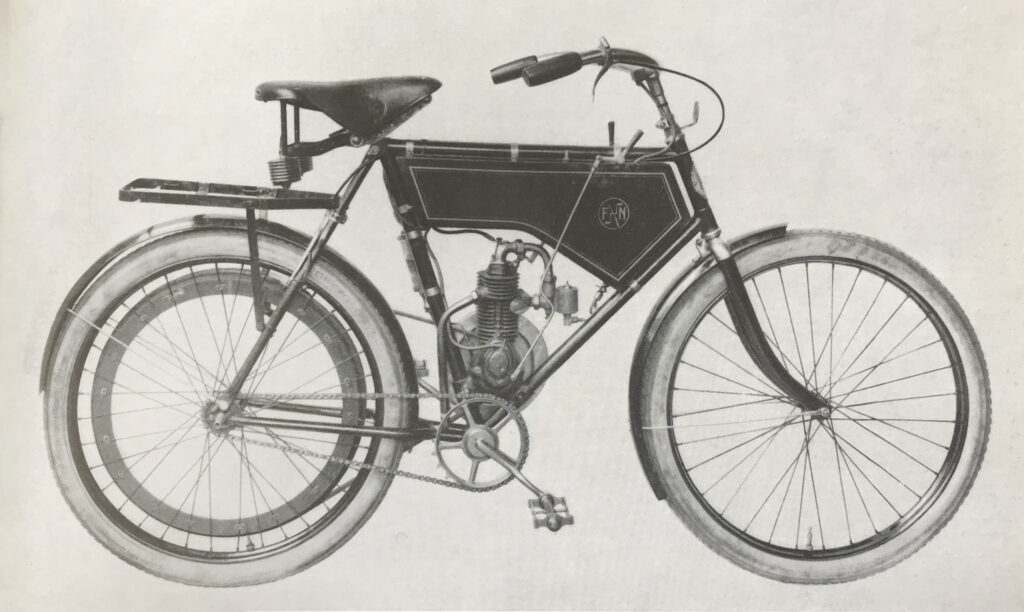
FN's first motorcycle of 1901, essentially one of their bicycles with a small motor attached. [The Vintagent Archive]The frame was a full cradle, which suspended the motor from twin rails. Most impressively, Kelecom used an enclosed shaft drive, with full ball bearings and enclosed crownwheels, which then as now makes the cleanest and least labor-intensive drive system. The engine was started by bicycle pedals attached to the rear wheel by a chain on the 'other' side of the bike - so the FN had a shaft AND chain... until 1913 in fact, but this held no terrors as the engine would have been very easy to spin, with very low compression and little mechanical drag from encumbrances like strong valve springs, or a gearbox. There were two brakes - a coaster-type (actuated by backpedalling) in a rear drum, and a stirrup on the rear rim, which was hand-lever operated.
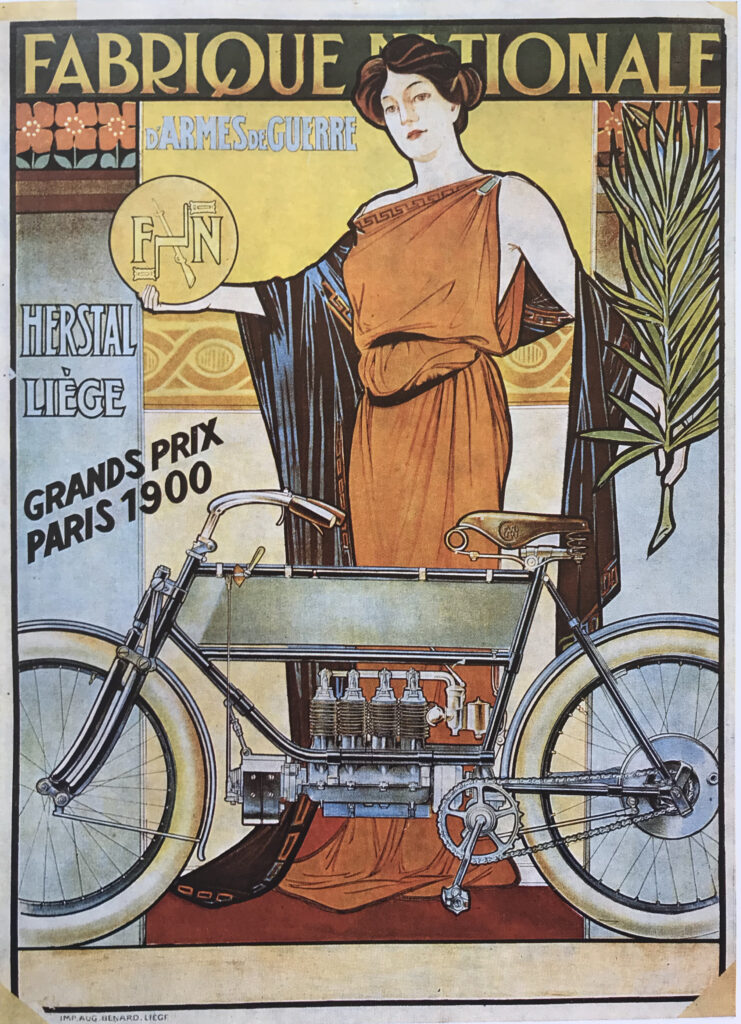
A wonderful Beaux-Arts poster introducing the FN Four in 1905. [The Vintagent Archive]The very first four-cylinder TT machine was likely still direct-drive, although aftermarket kits manufactured by Englishman Sydney Horstmann (OBE) provided a two-speed kit with a clutch by 1908 (he also made an overhead-cam kit for the FN, which I'd love to see). The engine capacity in 1907 was increased to 410cc, and it is likely the TT machine was overbored to nearer 500cc. Many of these early FNs are still on the road, including one that was ridden around the world in 2012 by Ron Fellowes, as documented in his book 'No Room for Watermelons.'
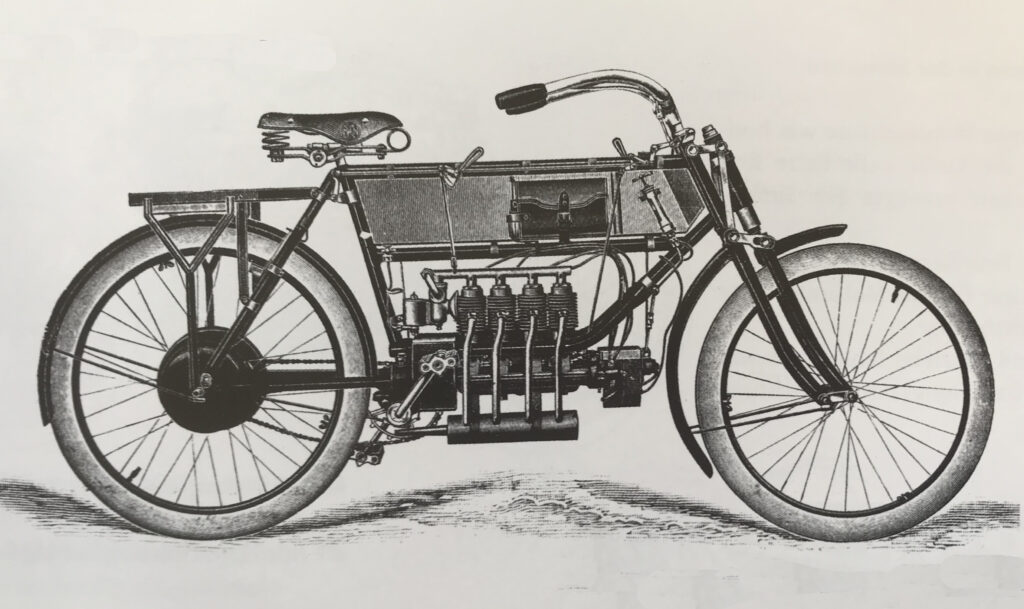
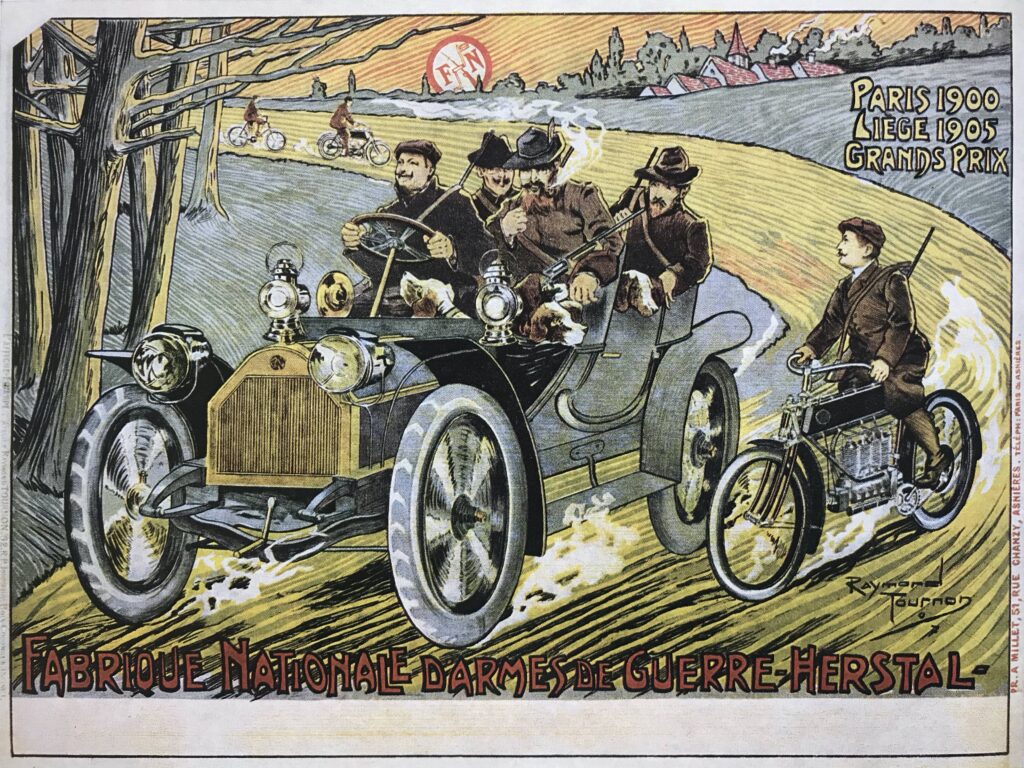
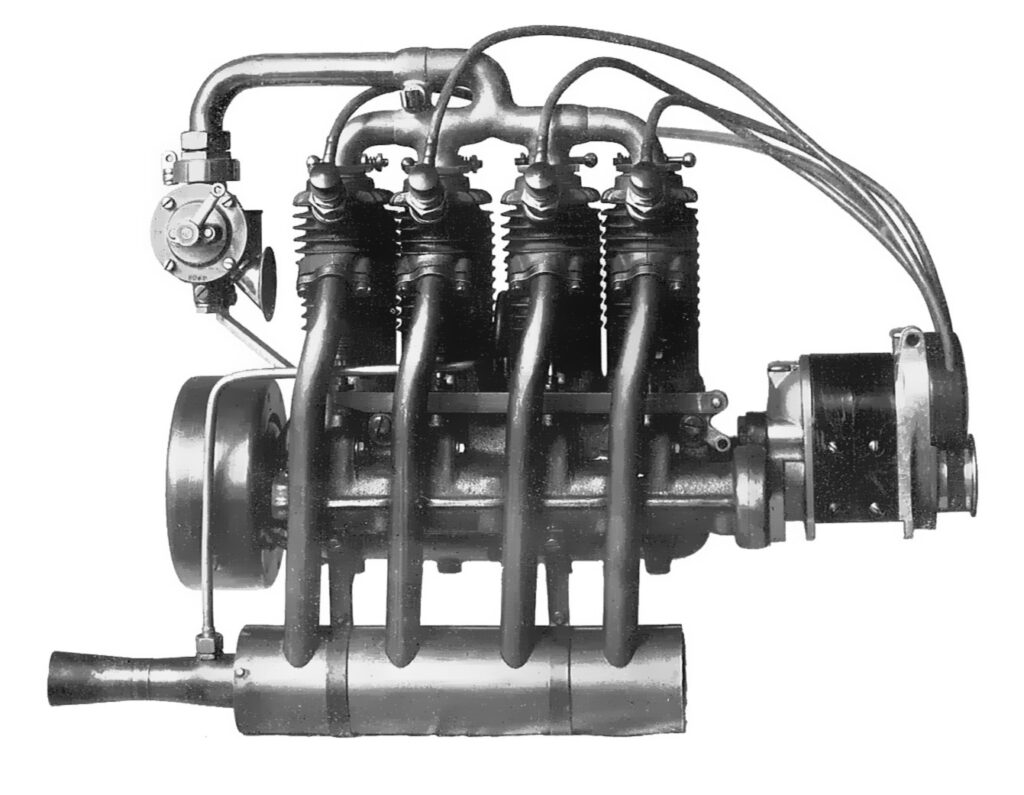
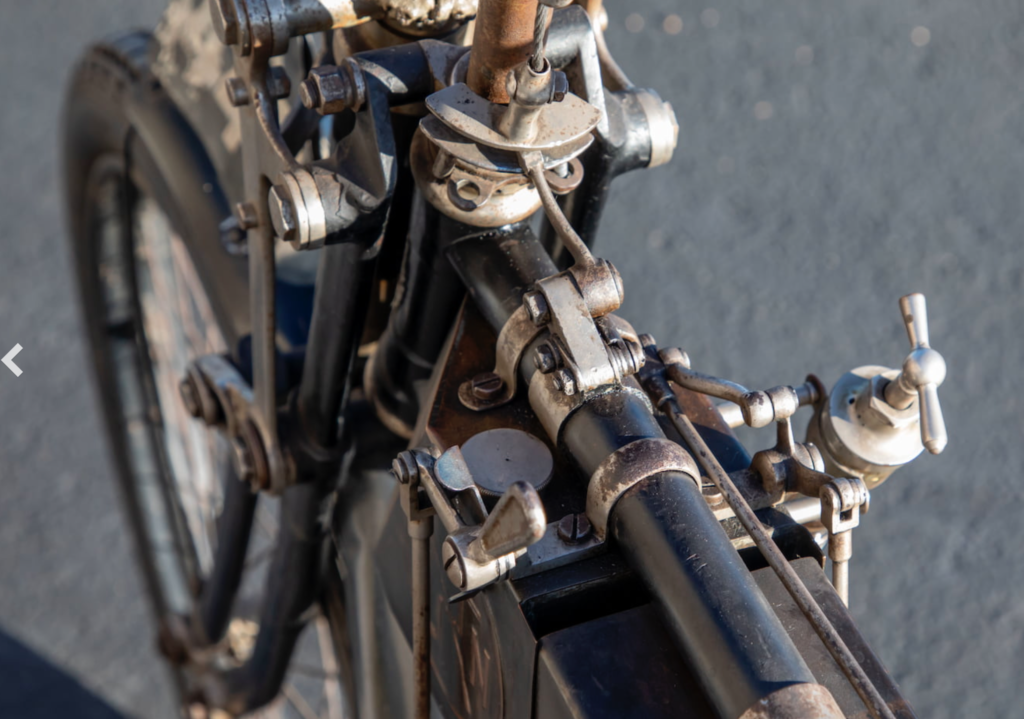
Showing off all the goods: automobiles, motorcycles, and guns in this 1906 poster for FN. [The Vintagent Archive]The original four-cylinder motor designed by Paul Kelecom, the first mass-produced four in the motorcycle industry, with separate cylinder castings, automatic inlet valves, no oil pump, direct drive, and a magneto. [The Vintagent Archive]A symphony of levers controlled the magneto spark advance, air mixture, and oil pressure. [Mecum Auctions]
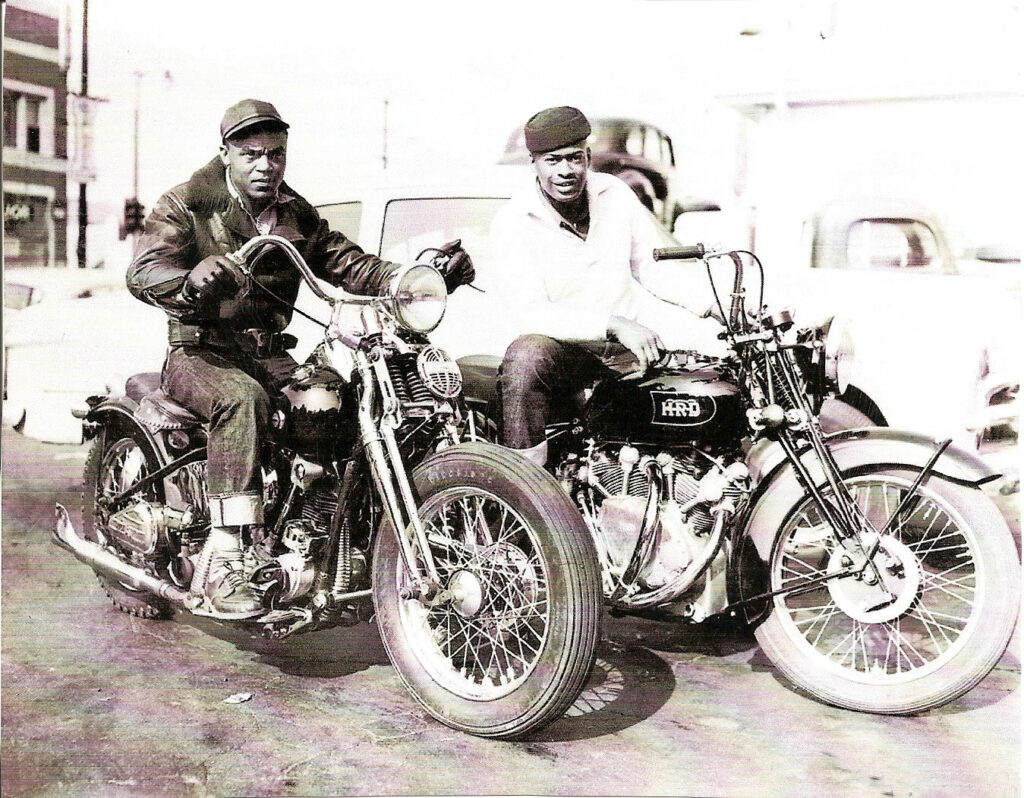
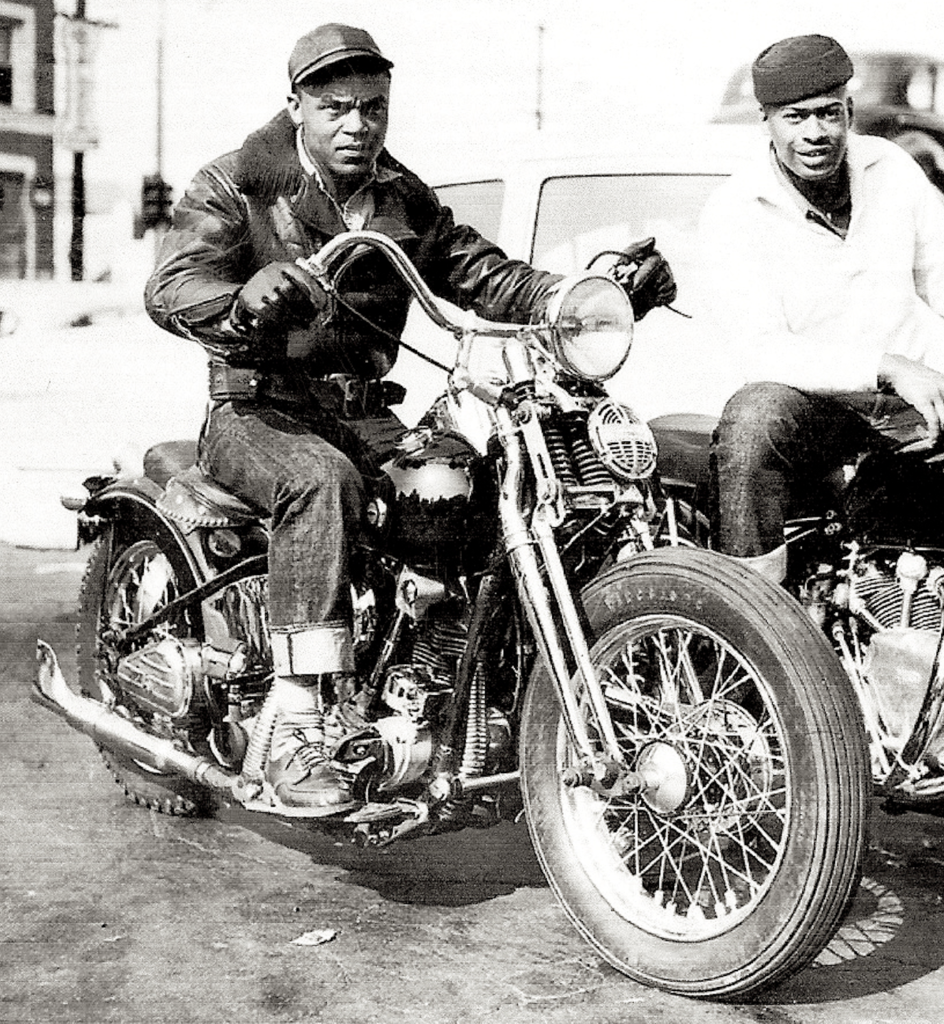
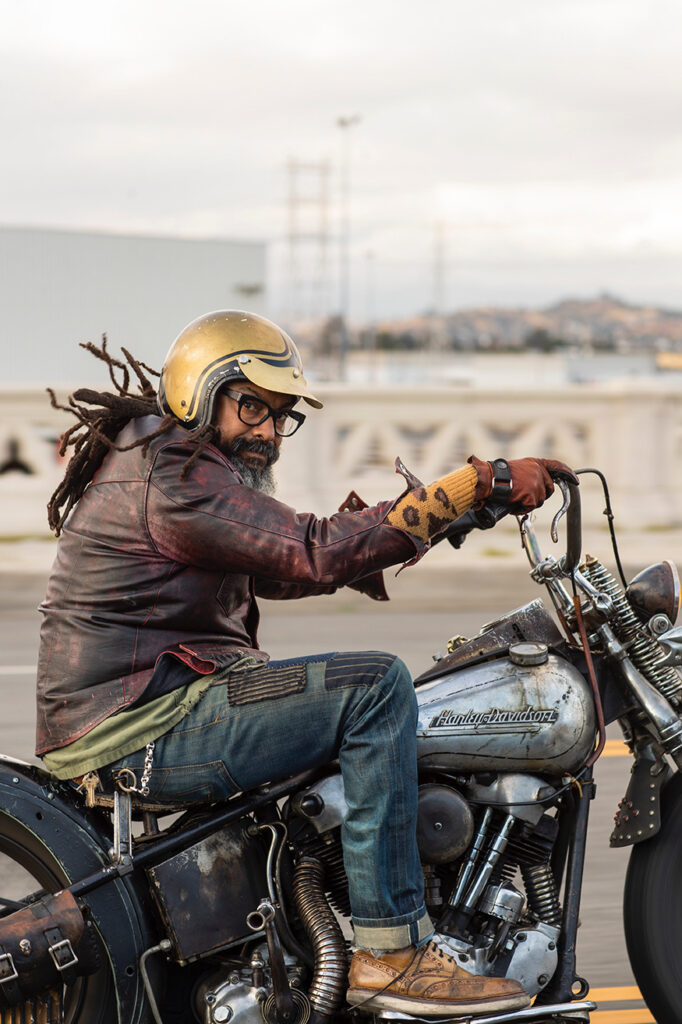
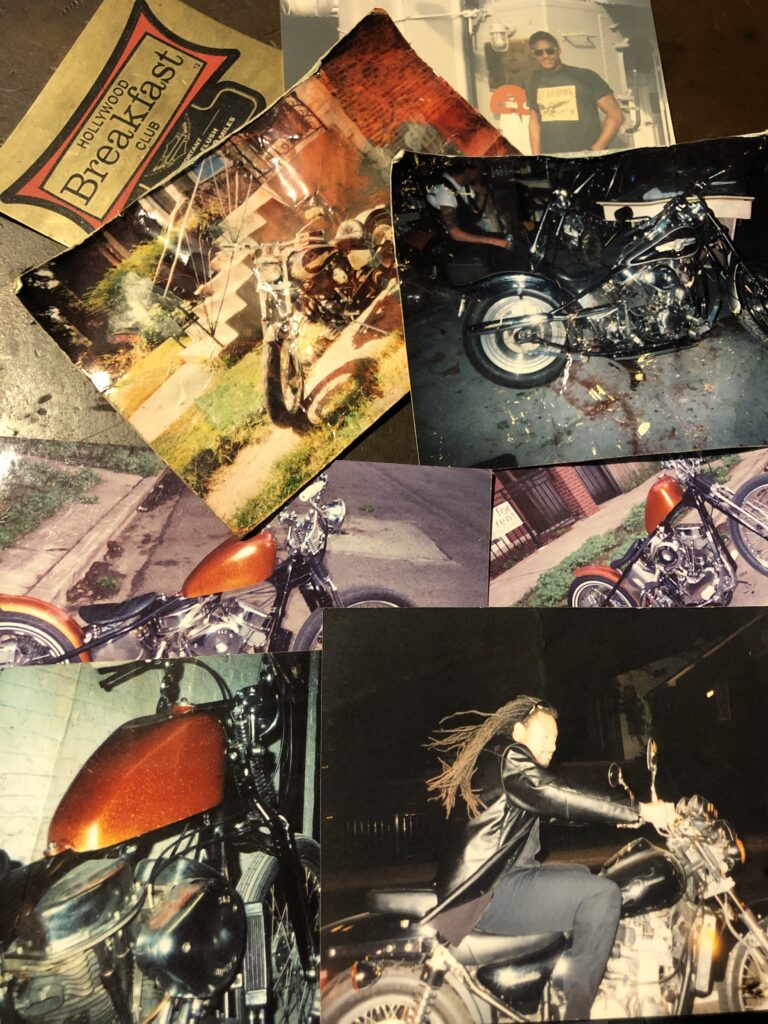
We have all, at some impressionable moment, been moved by a photograph. And sometimes, the energy in the image misaligns with our own so perfectly it changes every molecule in our being. Our expression of that impact might be as simple as a wardrobe change and new music on our playlist, or as profound as a wholly new direction in life. For Wil Thomas, the discovery of a late 1940s image of two Black men on distinctive motorcycles was the inspiration for both study and creation: a close observation of what is shown and implied in that photo, the history suggested, the mood and lifestyle of those riders, their choice of machines. Eventually, the photo inspired a replica of the Harley-Davidson Knucklehead bob-job under one of the riders - the one with the 'thousand-yard stare'.
Lucius P. Dawkins on his Series B Vincent Touring Rapide, and his friend on a Harley-Davidson EL Knucklehead bob-job. [Vintagent Archive]We know the identity of one man in the photo: Lucius P. Dawkins purchased a Vincent Series B Touring Rapide brand new, presumably with pay from the military shortly after WW2. He was not the only Black American motorcyclist to purchase the fastest motorcycle in the world at that date - several others can be seen in rare photographs from the era - but he was distinctive enough that his name is attached to this photo, and a few others with his Vincent. The gentleman on the Knucklehead, though, remains anonymous.
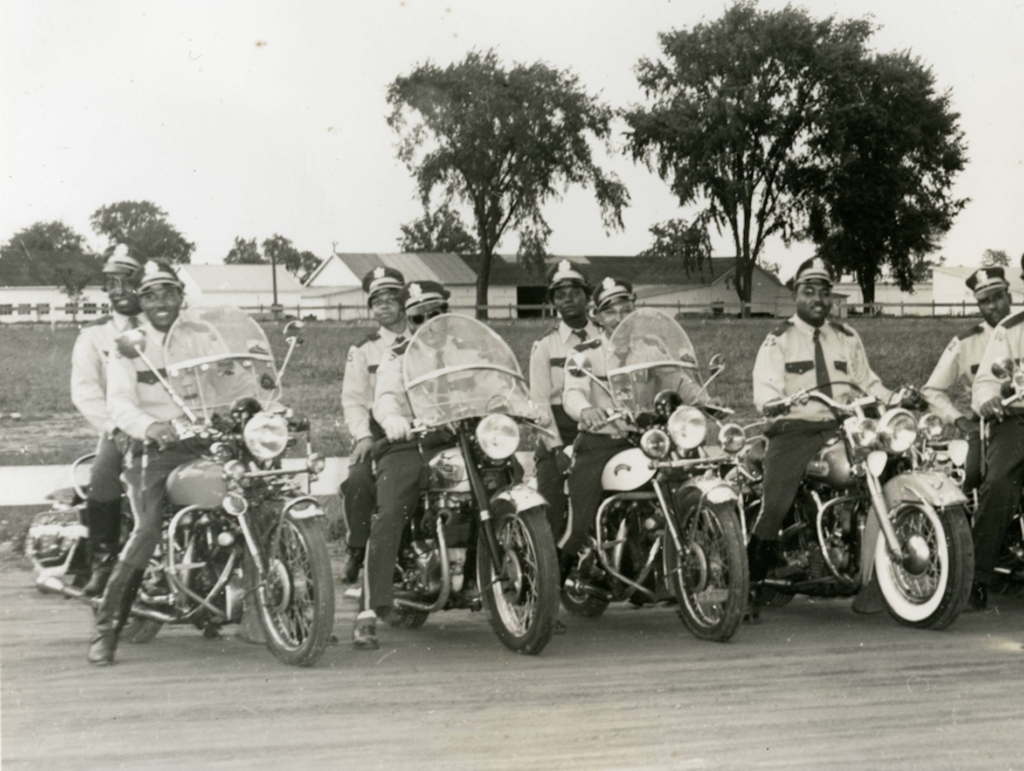
Lucius P. Dawkins was not the only Black American rider with a Vincent: this early 1950s photos of a Columbus, Ohio 'dress club' shows two riders on Vincent Black Shadows. Both have been customized as full-dress machines, with extra lights and chrome, and flank a BSA Golden Flash. The rest of the lineup in this (cropped) photo are on Harley-Davidson Hydra-Glides and Knuckleheads. [Vintagent Archive]The story implied in the picture resonated with Wil. As an ex-Marine, he deduced that given the approximate date (late 1940s), and the oufits of the riders, both were likely recently returned from WW2. While the men wear fashionable turned-up dungarees, Dawkins wears a Navy watch cap, while his friend wears something else - the look of a hardened combat veteran. That thousand-yard stare might or might not have come from military service, of course, as Blacks in the 1940s were restricted from full participation in Jim Crow America, and plenty had traumatic experiences right at home. That would include, dropping the veneer of a writer's objectivity, my own brother-in-law Leon Allen, who left Shreveport Louisiana for good after his best friend was lynched in 1940, and headed to LA, like hundreds of thousands of others fleeing the South for work and an easier life out West in the 1940s.
The inspirations Harley-Davidson EL Knucklehead bob-job of classic proportions and detail, that inspired Wil Thomas to build his own. [Vintagent Archive]As a fan of Harley-Davidsons, Wil was especially intrigued by this very early EL custom, with its chromed springer forks, no front fender, high handlebar risers, bobbed rear fender, and fishtail exhaust. It is the very definition of the postwar bob-job, still full of appeal as a perfected custom style, and still the most popular custom motorcycle trend, with two factories producing 'bobbers' even today. Ultimately, Wil was moved to build a replica of this machine, as Greg Williams documents in his story below. Wil's hommage created a bridge spanning decades of history, binding the past with the present, and adding a chapter to the almost untold story of Black motorcyclists in America. Where no heritage for our story exists or is celebrated, we must create our own from neglected scraps, that shine like diamonds for those with eyes to see them.
Wil with his Knucklehead homage at Perform Under Pressure in 2018. [Wil Thomas]Greg Williams gives this report on Wil Thomas and his back story:
Cresting the gravel drive filled with weeds and ruts, a weatherworn wooden shed with a grimy window appears at the end of the road. A heavy door locked with a rusty padlock yields easily to a pair of bolt cutters. Creaking open on rusty hinges, dim sunlight shines through dust motes to reveal a piece of greasy old chrome. It’s a motorcycle, and not just any machine, but a custom 1947 Harley-Davidson stashed away by its builder, Wil Thomas.
None of the above is true, apart from Wil having built the Knucklehead. Rather, the Los Angeles-based creator says it’s a romantic vision; a possible scenario of what he’d like to see happen to the machine he built. “We all dream about finding an old motorcycle or parts in a shed,” Wil tells me. “That’s romantic, and that’s cool, and that feels real. The bike was here long before me, and it will be here long after I’m gone. Maybe someone with a grander vision will blow it apart and make it better, or maybe someone will think it special enough to preserve it. Somewhere in the middle of that is the truth, but for just this period of its history I’m its custodian.”
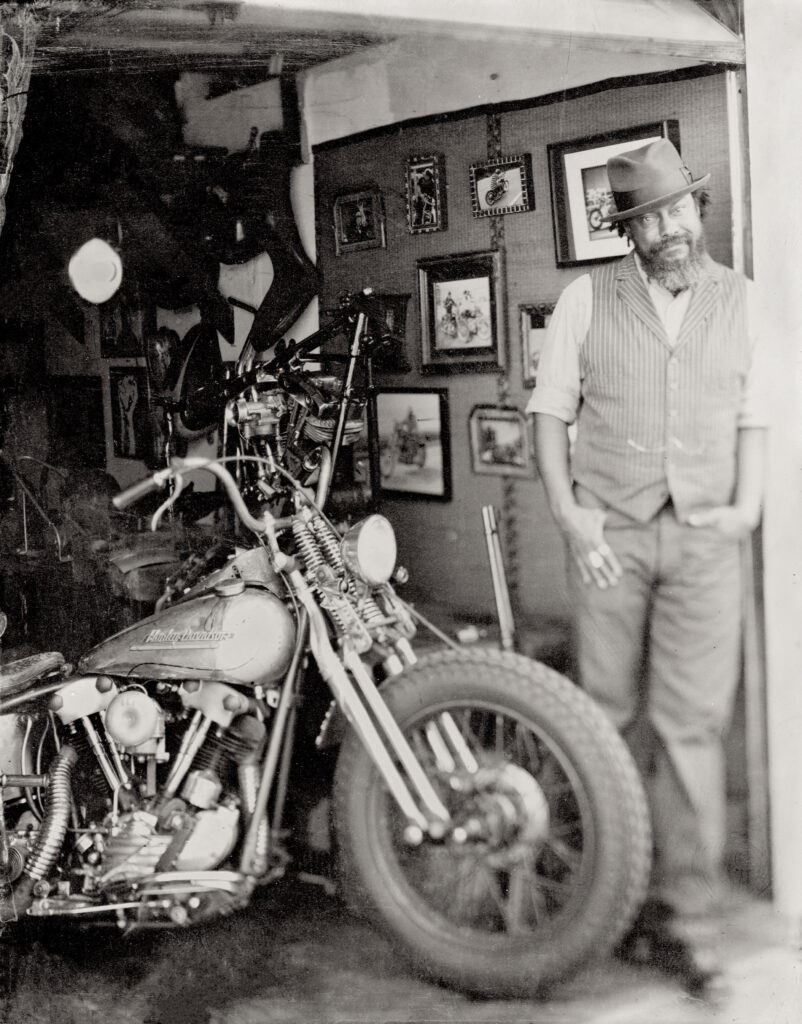
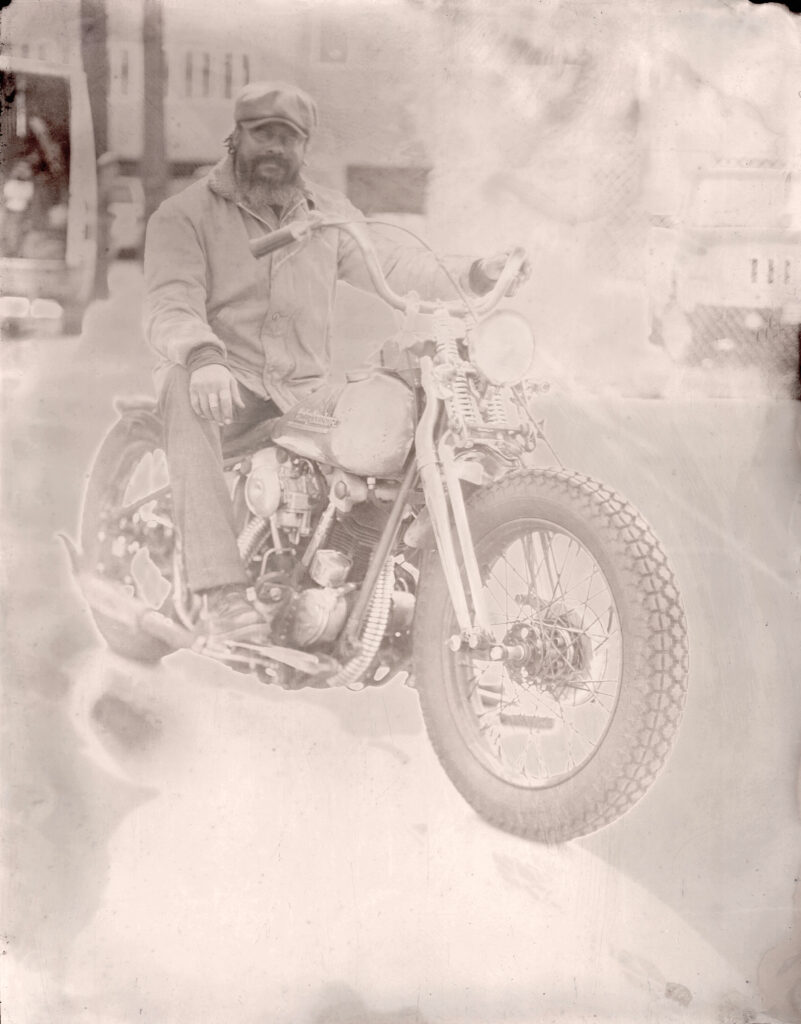
Wil Thomas at his Seal Beach garage in 2014, captured on wet plate by the MotoTintype team. [MotoTintype]Long before Wil found his ’47 Knuck, he grew up fascinated by western movies and especially those including John Wayne. His favorite? The Cowboys, a film where Wayne’s rancher character employs a ragtag group of youngsters to help him drive his cattle to market. “Growing up in the ‘70s, there weren’t a lot of images that reflected us,” Wil explains. “But I saw that movie on TV, and in my mind, I wanted to be a cowboy – I never saw it as anybody else’s sport.”
During summers, Wil worked on a horse ranch near Potosi, Missouri, a community 72 miles south of his hometown of St. Louis. For $10 a day, he labored in the barns and looked after tack and equipment. “There’s a culture around horsemanship – and the motorcycle is similar. There’s a command of the horse, and there’s a command of the motorcycle; it’s a perfect analogy.”
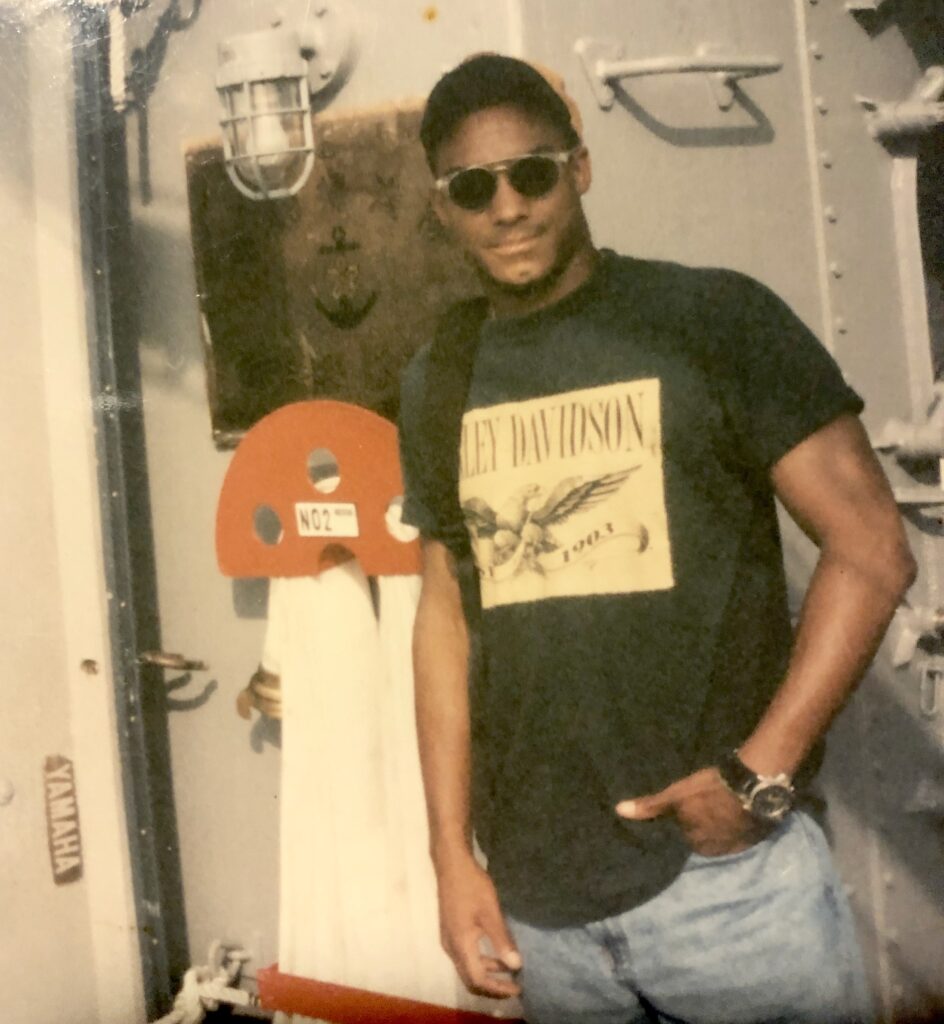
Wil Thomas in his Marine Corps days with his coveted Harley-Davidson tee. [Wil Thomas]Wil grew up without a father figure in the house, and didn’t have a mechanical mentor. While his grandfather and his uncle would tinker in a basement workshop, no one gave him hands-on tutelage. He and his friends did wrench on their BMX bikes, and he tells a story about helping his neighbor remove the governor on a riding mower before racing it down the alley. But he didn’t grow up around motorcycles or have much to do with mechanics, either.
After high school, Wil played university-level soccer for a couple of years, but gave up athletics and school when he enlisted in the United States Marines. Aboard the USS Ogden, he saw active duty for four years, and inactive duty for another four. Initially, he was stationed in California and was involved in the first Gulf conflict during 1990 and 1991. “When you’re sitting on a ship, during down time or while cleaning weapons you tend to dream off of the real world and we were always talking about one of three things; food, chicks or motorcycles,” Wil explains. “I was walking around in a Harley-Davidson T-shirt, but felt I was living a lie and said I would never wear another motorcycle shirt until I got a bike.
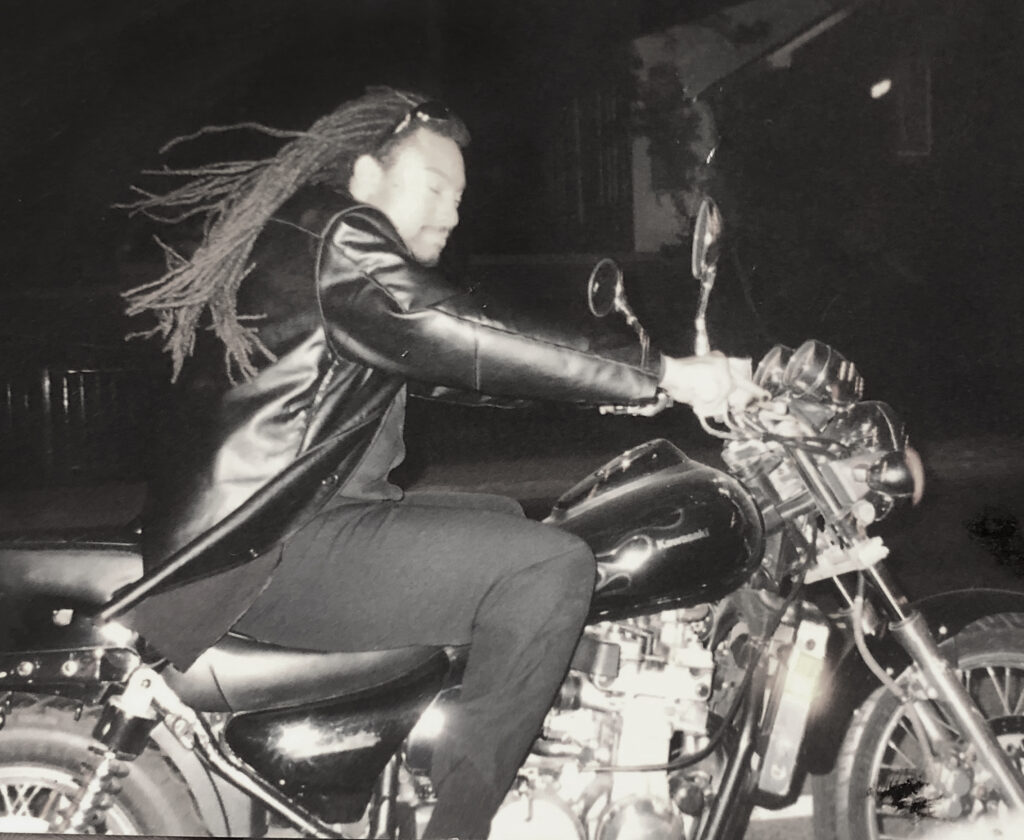
Wil's first real bike: a Kawasaki Eliminator ZL600 that served him well. [Wil Thomas]“Now, you’d expect the minute I got off the ship I’d get a bike but that still didn’t happen right away,” Wil says. Instead, he moved to Chicago and got a job in the security field. It wasn’t until 1998 when he was back home in St. Louis to visit a girlfriend that a motorcycle materialized. Walking down Forest Park Parkway, Wil saw a Kawasaki Eliminator ZL600 parked outside a motorcycle shop. It was for sale, and exactly what drew Wil to the Kawasaki with its transverse four-cylinder engine and shaft final drive he still doesn’t know. “But, it called to me,” he says, and continues, “with $600 in my pocket, I went into the shop and asked if I could buy the bike on layaway. They took the $600, and the bike stayed in St. Louis. I’d send money to my then girlfriend and she’d go and pay it down – she wasn’t too stoked about this, because I wasn’t focused on the relationship.”
Although the girl didn’t last, Wil says he kept and rode the Kawasaki for quite a few years. And, because he didn’t know all that much about motorcycles, he took a part time job working weekends on the parts counter at Illinois Harley-Davidson in Countryside. That’s when he invested in a Big Dog chopper – a bike he says didn’t end up meaning much to him. “I got a Sportster shortly after that, and once I started tinkering with and modifying the Sportster I never rode the Big Dog again. When I started working on my own bike, and modifying it to my aesthetics, that’s when it really started to evolve for me.”
A selection of Wil's early bikes, including a couple of H-D Panhead customs. [Wil Thomas]To get his fix on the scene, he’d head to the magazine stand at Tower Records and pore over motorcycle and hot rod titles; the hot rod books because there were occasionally bike stories on the pages. One weekend in April 2004, while cruising Chicago on his Sportster, Wil says he pulled up on a show with old cars and motorcycles. He recognized one of the hot rods from a magazine and started talking to the builder, but he drew up sharp at the sight of two custom bikes parked behind the car.
“He told me if I liked the bikes, I had to go to the Flatiron Building at Six Corners (a well-known convergence of three streets in Chicago) and go in the basement,” Wil recalls. “He said there were two guys there who built them. So, one day I found myself on that corner and I walked on down there. I talked to a guy about learning a bit more about the bikes, and he just said, ‘Bring beer.’” Wil spent $44 a week on Bud Light and, while listening to live traditional roots and blues music, learned even more about motorcycles and the custom-building community. Shortly after, he spotted an ad in the Chicago Tribune newspaper.
Wil's garage today, where a Sportster chopper lives with his Knuck in the garage. [Wil Thomas]He says, “In this little classified were the words, ‘1952 Real H-D Chopper’ and a contact number.” Calling the seller, Wil was invited to see the motorcycle. It was, according to Wil, something of a 1980s monstrosity with disc brakes but it was a Harley-Davidson Panhead engine in a rigid frame. Just like he did with the Kawasaki, Wil managed to pay a substantial deposit, telling the seller he’d be back on August 6 with the balance; the day he’d get his bonus check from work. “The beginning of all this for me was that Panhead from northern Illinois,” he adds, “none of the other bikes matter until that one.
“Over that winter, I put my aesthetic on the Panhead, and I drew heavily from images of a green Panhead on the cover and in the pages of DicE Magazine’s issue No. 4,” he says. “It had Z-bars, and I modified mine with a set of those, a Frisco Sporty tank and a Wassell fender. My Panhead granted me entrance to the lifestyle and the people, and I was invited to shows and runs, including my first El Diablo Run in 2006.”
Wil's Panhead as modified to his taste as he joined a new generation of chopper fans in a revival of early-style chopper aesthetics. [Wil Thomas]From that point, Wil essentially built 12 bikes in as many years but one of the most important might be the 1947 Knucklehead alluded to earlier. That all starts with his mom, and it’s a long story. “When I was in college, I picked up an affinity for Asian aesthetics, and I told my mom about it. This was a case of be careful of what you say,” Wil explains, and continues, “my mom is a junker, she loves to go to thrift stores. For a long time, I got every tea set or trinket that looked Chinese or Japanese – she just wouldn’t quit. At some point, I said, ‘Don’t buy another thing.’ But that’s just mom, she was looking out for me. So, instead, I told her, here’s something you cannot find – try locating a 1942 Harley-Davidson Knucklehead.”
Wil chuckles, “From that day on, if someone had a big beard or looked like they knew something about Knuckleheads, my mom would go up to them and ask if they knew of one for sale. She focused her energy on that search.”
And, wouldn’t you know it, Mom came through. Once after visiting Wil, while flying home, she had a copy of a motorcycle magazine in her hands. Sitting next to her was a fellow who asked if she was into motorcycles. Not personally, but she had a son who was, and say, you wouldn’t know anyone with a Knucklehead for sale? “This guy knew a guy who did, though, and I got a contact number,” Wil says. “I called him, and talked to him for a bit. He wasn’t looking to sell it then, but about a year later he phoned me up and said he was moving on, and offered me the Knuck.”
The Knuck transformed. The patina today gives the impression the machine has always been in this configuration, lending a kind of gravitas to its simplicity and lack of flash. [Wil Thomas]A poorly constructed chopper with a butchered neck and 10-inch over front end, Wil says he rode it like that until the frame broke nearly in half between the sidecar loop and the front motor mount. Considering what he’d do next with it, he began to draw inspiration from a photograph of Lucius P. Dawkins astride his Vincent Rapide. Alongside Dawkins is another rider, but instead of a British machine, he’s on a Harley-Davidson Knucklehead bob-job. The front fender is gone, the rear has been shortened at the hinged joint, and Stellings & Hellings bars and risers sit atop the chromed springer fork.
“I have that photograph framed and on the wall in my garage and in my office,” Wil says. “I walk past them every day, and there are not a ton of images of brothers on bikes. I’d always trip off the brother on the Knuck, and wonder about the story. It looks like its 1947 or 1948, and I wonder if they’d just got back from the War and said, let’s buy bikes and ride to New Orleans. I’m making up the story, but they look like military men to me. The guy on the Knuck, he’s so intense, and in his eyes, he looks like he’s seen beyond.”
Wil Thomas today as proprietor of TriCo Store in Los Angeles, among many other projects he pursues in film and advertising. [Wil Thomas]It was the era of narrowed forks and tanks with a whole lot of metal flake paint jobs on the tins when Wil began reconstructing the ’47 Knuck. “I didn’t see a whole lot of originality or honesty in those builds,” Wil says. “It’s in my nature – if everyone’s going one way, I’ll go the other way, and the Knuck in the photo was speaking to me in an honest, different way.”
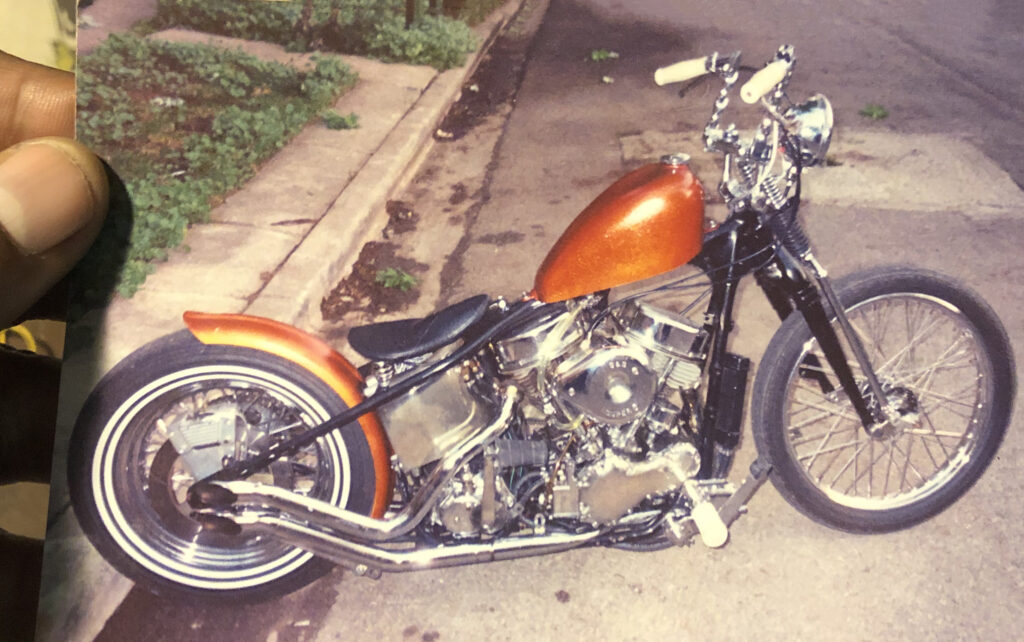
He started with the frame, getting help to return it as close as possible to stock dimensions. With those repairs completed, he mounted a set of stock gas tanks, a chromed springer fork with Stelling & Helling risers and bars and an abbreviated rear fender. All of the parts were well-used pieces he’d picked up over the years at various meets – none of the bits came from sources such as eBay. The exhaust set up, Wil says, was not his favorite part until he put it on the Knuck to cut it up. “I went from hating it to liking it, and sometimes the piece you don’t like is the thing that ends up making the bike,” he says of the exhaust, and adds, “I let the bike tell me exactly what it wants to be.”
Wil looking vintage himself on his Knucklehead homage, captured in a (solarized) wet plate/collodion by the MotoTintype team.
Wil emphasize that he’s still no mechanic. He relies on others with specialized skills to ensure a motor or transmission is built and set up correctly. When it comes to building a bike, however, Wil’s specialty is his innate sense of line and what looks ‘right’ and his ability to fit the pieces together. Since finishing the ’47 Knuck, it’s essentially not been changed, and the machine truly has an identity of its own. After spending years living in an L.A. loft where he can pull into the garage, load a bike into the freight elevator and bring it up to his living room (he currently has eight bikes up there), Wil is contemplating a change.
“It looks like something out of a dream, but there’s a heavy dose of reality that goes along with living where I do,” Wil says. “It’s a very cool chapter of my life, but I always said I was going to go back to the country and horses. If I do, I’d like to put that Knuck away in a shed, perhaps leaving it there for someone else to find long after I’m gone. Now, that feels real.”
*from Rod Stewart's seminal 1971 song and album of the same name.
Wil Thomas more recently with his Knucklehead. [Tumblr]Greg Williams is a motorcycle writer and publisher based in Calgary who contributes the Pulp Non-Fiction column to The Antique Motorcycle and regular feature stories to Motorcycle Classics. He is proud to reprint the Second and Seventh Editions of J.B. Nicholson’s Modern Motorcycle Mechanics series. Follow him on IG: @modernmotorcyclemechanics
Paul d'Orléans is the founder of TheVintagent.com. He is an author, photographer, filmmaker, museum curator, event organizer, and public speaker. Check out his Author Page, Instagram, and Facebook.
You never know when your work might change the course of a multi-billion dollar industry. The influence of BikeEXIF on motorcycling has been tremendous, spearheading a global custom motorcycle movement that spread all over the 'Net, in print, in garages, and ultimately into the design rooms of the motorcycle industry itself. Arguably, without BikeEXIF there would be no factory Scramblers, Bobbers, Cafe Racers, or Trackers. Another website would have sprung up in its place, such was the energy of the initial wave of the 'alternative custom' scene that began in the 2000s, but BikeEXIF was already there, and pretty soon seemingly everyone into bikes was watching.
The simple, classic BikeEXIF header has been copied a hundred times. [BikeEXIF]Chris Hunter founded his website in 2008, after spotting an interesting trend emerging in Japan and Australia - custom motorcycles that were not based on Harley-Davidson V-twins, and were not the fat-tire choppers currently dominating TV and magazine coverage. In the early 2000s, a custom motorcycle WAS a Harley-Davidson chopper of some sort, or at least it seemed that way. There were always others - 'streetfighters' in the UK, the retro-cafe racer scene, retro Trackers, etc - but it was V-twins that occupied the niche called Custom in the mind of the world. That all changed with BikeEXIF.
It's hard to recall just how moribund motorcycling had become in those days, prompting a NYT article in 2009 to ask, "Is Motorcycling Over?" Well, it WAS over, for the moment. But as riders around the world began focussing on other types of machines to customize - cheap CB Hondas, Yamaha Viragos, etc - the idea that anyone could customize anything to make a cool daily ride caught fire. Small shops cropped up, built bikes, and disappeared, or went professional and rode a wave of popularity not seen since the 1970s. The people wanted something different than what factories were offering, and so began making what they wanted themselves.
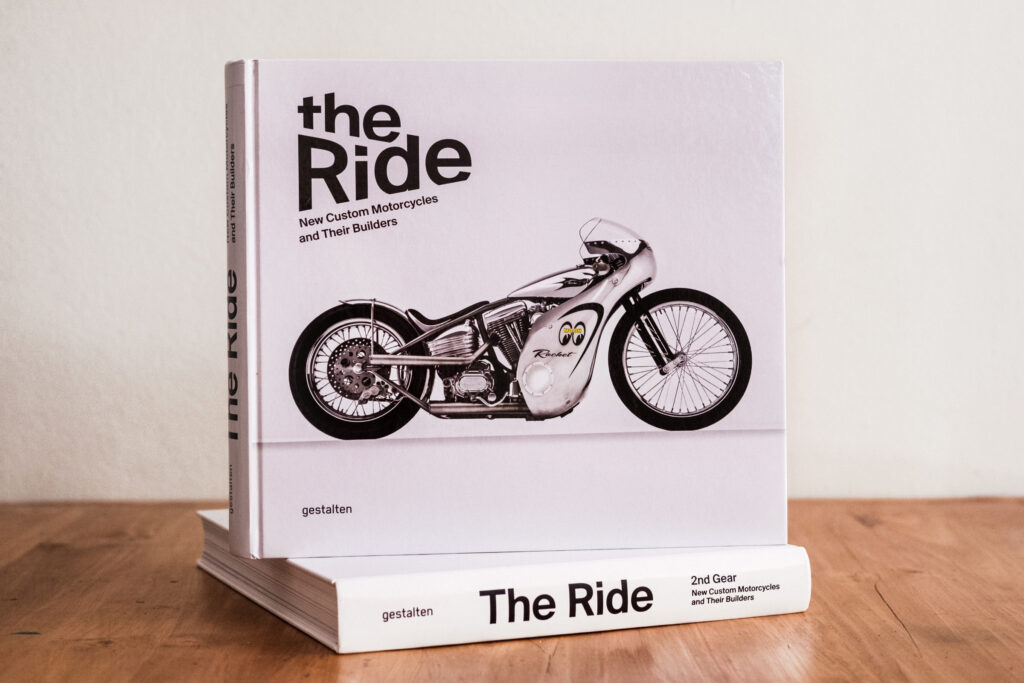
Chris Hunter captured at a rare visit to Wheels&Waves in Biarritz. [Paul d'Orléans]The designs were not usually perfect, and certain trends (radically shortened suspension, board-hard seats, ubiquitous pipewrap, vintage Firestone tires, no fenders, etc) were ridiculed even as they emerged, but that's fashion: it changes with the season. What mattered was new life grew in the motorcycle scene, with an explosion of creativity in every related medium. Suddenly, short films about motorcycles became popular, new websites and magazines sprung up to cover the scene, new clothing brands catered to stylish riders, books like The Ride were published, and events like Wheels & Waves and the One Show gave folks a place to gather. It was a motorcycling renaissance.
BikeEXIF republished my column from Classic Bike Guide magazine, 'Instafamous/Instabroke', on the cost of mistaking popularity on social media for the financial requirements of running a business. [BikeEXIF]The OEM factories took note, and began by 2010 offering motorcycle designs that reflected home-grown trends. The Ducati Scrambler, BMW rNineT, and many other designs would not have been made without the popularity of 'alternative customs', and these models based on 'outsourced R&D' have typically proved the most popular in their respective factory lineups. In other words, BikeEXIF changed the industry.
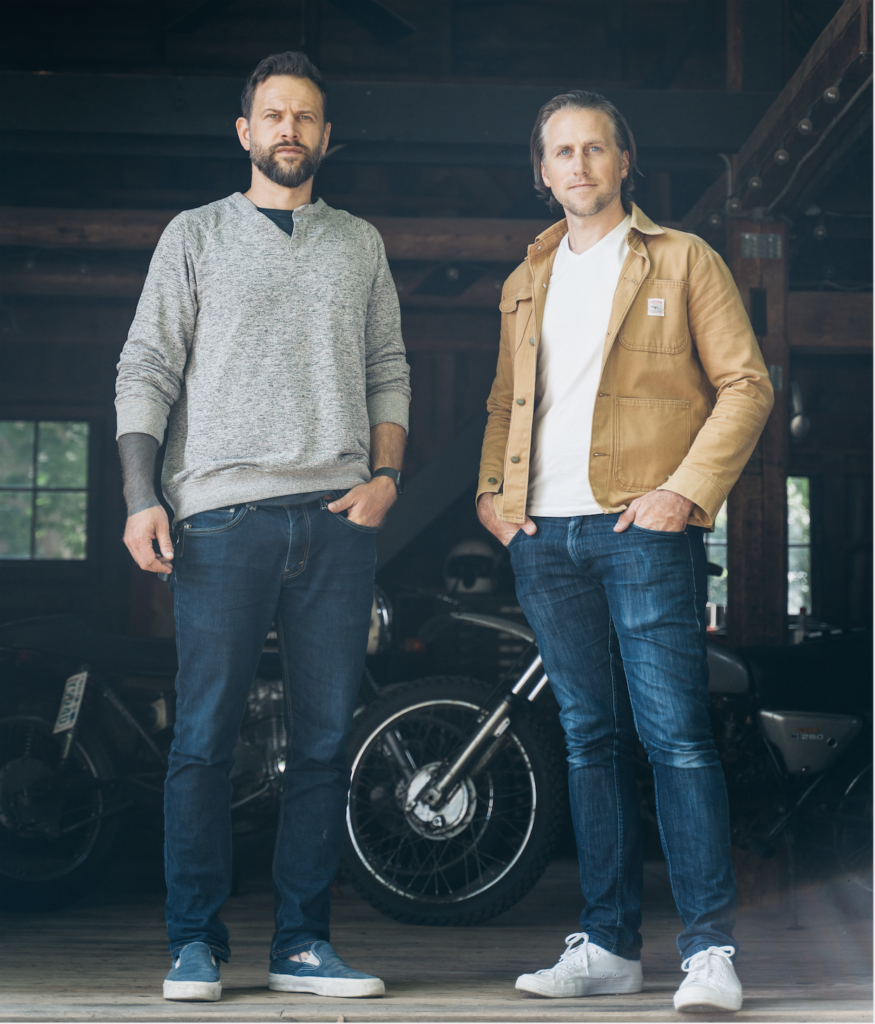
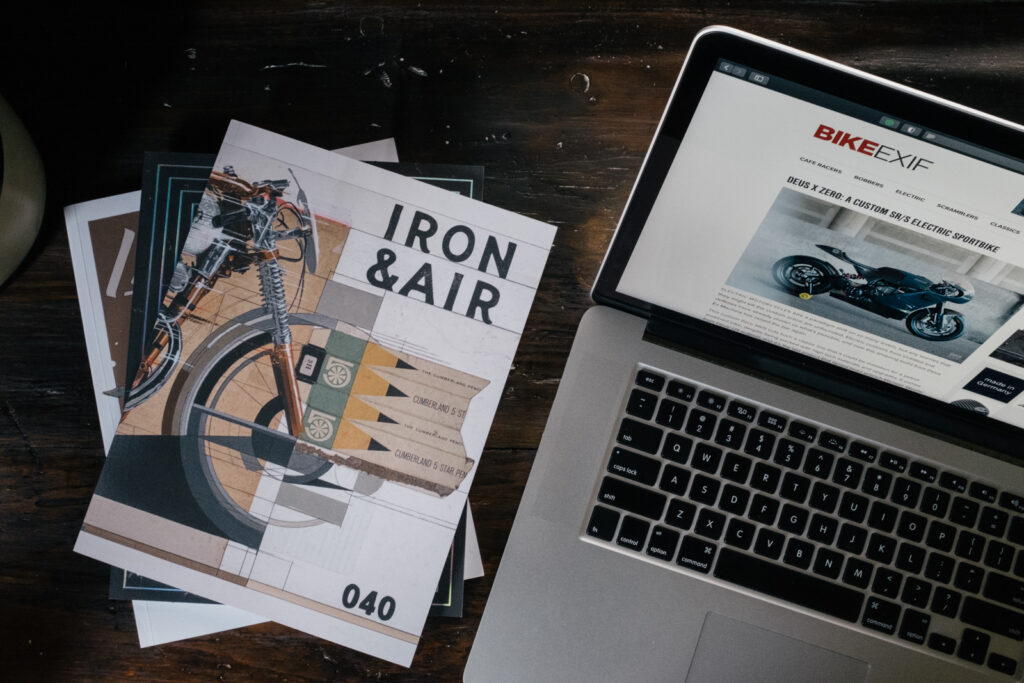
Chris Hunter recently sold BikeEXIF to the Iron&Air team of Adam Fitzgerald and Gregory George Moore. In a press release last week, they stated:
“We’ve long thought that Iron & Air Magazine and Bike EXIF would be the perfect complement to one another. Now that we’re two sides of the same coin, our combined resources will make the two properties even stronger and enable us to provide the most robust view of the custom culture within the motorcycle industry. We’re excited to offer enthusiasts even more premium analog and digital experiences via our magazine, website and social ecosystem.”
Greg and Adam from Iron&Air. [BikeEXIF]By way of a 'BikeEXIT' interview on the passing of his torch, I asked Chris Hunter a few questions so the world might better know whose fault all this might be.
Tell our readers how you came to start a custom motorcycle blog: what were you doing before that? What inspired you to start BikeEXIF? Was there any competition in 2008?
It started as a lunchtime experiment when I was a creative director working at an ad agency in Sydney, Australia. I was scouting around for a bike to buy, and absorbing information on motorcycles in general, and was feeling uninspired by the quality of moto sites at the time. I knew of Deus, which was starting to take off, and I found the Japanese and European custom scenes fascinating. I needed to upskill on the nuts and bolts of digital, so I started BikeEXIF. The idea was to focus on a sweet spot: the best photography of the best custom bikes. I think Return Of The Cafe Racers was going at that point, but I don’t think I was aware of it at the time.
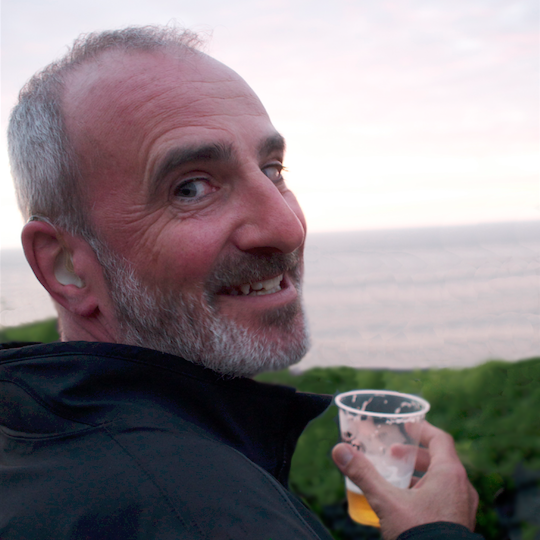
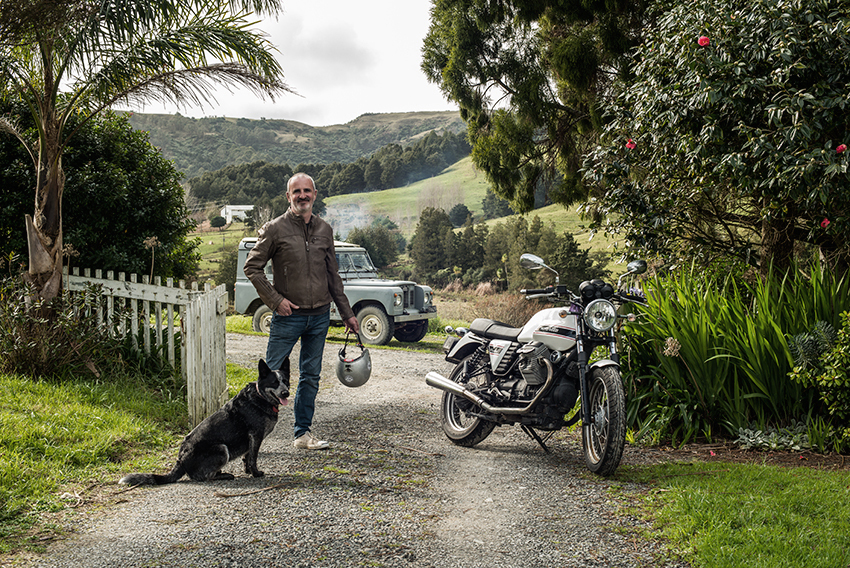
Chris Hunter relaxing after a ride at his home in New Zealand. [Chris Hunter]The custom motorcycle landscape has shifted dramatically in 13 years: tell us what you've seen from your beginnings to today? Where have you seen the greatest improvements?
I’ve enjoyed seeing the move away from chrome and bling, and towards a more ‘industrial design’ vibe. There’s been gradually less emphasis on the ‘retro’ side of design, and more on finding a new aesthetic language. The cafe racer as a genre is no longer dominant—scramblers are everywhere, plus a lot of bikes that are difficult to pigeonhole. Choppers have died a death but the grassroots bobber scene is still going strong.
I think the overall quality of construction has improved a lot too—there are some seriously talented amateurs out there, as well as a handful of pros who can build a bike to OEM factory levels. A few years, dodgy welding and dubious engineering was quite common; nowadays, people seem to take more care and research things a little better. The advent of CAD has helped too, with more and more builders using it to raise quality levels, doing limited runs of parts to recover costs, and making kits.
The overall quality of photography has improved remarkably, too. Most builders understand that effort needs to go into the images as well as the bike itself.
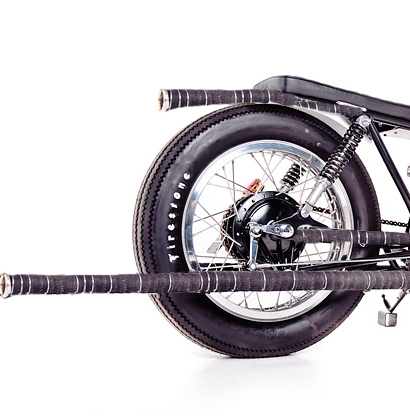
Pipewrap. Firestones. I think the storm has passed now, but there was a long stretch when seemingly every custom motorcycle used them. [Anonymous]Are you willing to take personal responsibility for Firestones & Pipe Wrap?
Please, no! I’ve never really been a fan of pipewrap, but I don’t get my knickers in a twist over it either. And for many custom bikes, classic sawtooth-type tires are fine. When I lived in Sydney, I once rode cross-city with Matt [Machine] Darwon: he was on a classic Guzzi with old school tires, and I was on a modern V7 shod with normal rubber. It was pouring with rain, the streets were twisty, and I was having trouble keeping up with Matt. I don’t think vintage-style tread patterns are a good idea for a 100hp sportbike, but for older or slower machines, they’re just fine. Don’t forget it’s as much about the rubber compound as the tread pattern.
The new media powerhouse, Iron & Air and BikeEXIF. [BikeEXIF]It must have been a hell of a lot of work to put out customs daily. I told you so! Tell us about the work you've put into making BikeExif the heavyweight it is today?
It was indeed a massive amount of work, but over the past couple of years the workload has been manageable. My editor Wes Reyneke has been a great help in that regard.
Running a successful digital business is kinda like making mayonnaise … you have to have all the right ingredients in the right proportions. So the content is obviously the main ingredient, and it needs to be high quality. Then there’s the technical stuff like the coding and server setup, and search engine optimization. Plus social media, and making sure that you’re using it for your own purposes, rather than getting used yourself.
Time management is another critical ingredient; I used to work all hours, but now basically work in blocks of time in the morning and evening. And I’ll still be working on the business for a while with the Iron & Air guys, they’re a great team and I’ve known them for a while, so it was the perfect fit.
In 2014, German publisher Gestalten approached Chris Hunter to put the trend on paper, and 'The Ride' was the result. It was quickly followed by 'The Ride: 2nd Gear', and both sold very well. Paul d'Orléans contributed to both. [BikeEXIF]Finally, I'll toss back your questions from the BikeEXIF questionnaire you sent me in 2010:
What was the first motorcycle you bought with your own money?
A Moto Guzzi V7, about 13 years ago in Sydney. I had a Vespa before that, which was perfect for zooming around the city, but not so good for longer trips. Today I ride a Husqvarna Svartpilen 701.
What do you think is the most beautiful production motorcycle ever built?
The original Brough Superior SS100. More recently, the Ducati SportClassic. Of current production bikes, I love the Kiska-designed ‘Pilens and I think the BMW R nineT has perfect visual balance.
Despise is a strong word … there are some corners of the industry and brands I think are well past their sell-by date. And you’ll never find me posing next to a custom bagger being ‘ridden’ by a pinup girl. But generally, each to his own.
What is your idea of perfect happiness?
A day with with no faffing around on social channels or dealing with email! A week exploring the snow-capped Southern Alps of New Zealand with my wife and three kids. An evening sitting by the fire with a glass of Islay single malt in hand, a magazine on my lap, and the dog asleep at my feet.
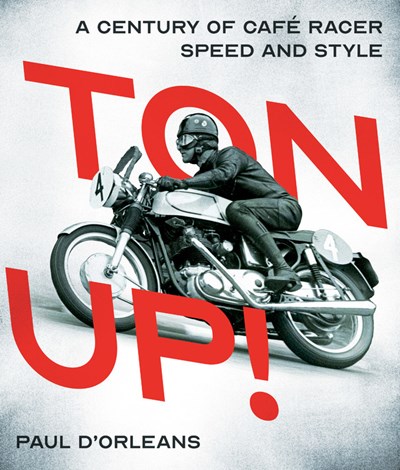
Chris Hunter was kind enough to provide the foreward to Paul d'Orléans latest book, 'Ton Up!' (2020 Motorbooks)
Electric motorcycles: Yes or No?
Big yes. I love what brands like Zero, Cake and Ubco are doing. I think it’ll take a while for ICE motorcycles to be phased out, but electric is definitely the future. I’m just waiting for Zero to set up shop in New Zealand!
Which ‘everyday’ modern bikes do you think will become future classics? The equivalent of the Honda CB750 or Moto Guzzi V7 Sport, if you like? Who are your real-life motorcycling heroes?
I think the Ducati SportClassic is a contender, along with the MV Agusta F4, Aprilia RS250 and some of the better Japanese superbikes. Generally speaking, I think it’s going to be the sportier end of the market that appreciates. But really, it’s anyone’s guess.
Are you optimistic for the future of motorcycling?
Yes. I was worried when COVID hit, but sales have been generally unaffected and have risen in some places. The cost and utility aspects of motorcycles will always be positive, and they’re also the ultimate social distancing activity!
What is your current state of mind?
A little besieged at the moment, with handling the transition to Iron & Air, and planning for the future. But thankful and hugely optimistic too.
Thanks Chris! We at The Vintagent wish you all the best for the future.
Hard work yields results. We congratulate Chris Hunter on his success, and wish him well in the future. [BikeEXIF]
In the beginning was the sea…or more accurately, the seaside. A promenade is a public walkway constructed along the strand to keep the sand from our shoes. Promenades attracted droves in the 19th Century - what else was there to do - and soon pleasure piers, amusement parks, and music venues became their principal attraction, compounding the interest of a fun-seeking public. Even in the midst of the Depression, the period examined here, Youth found a way to its opposite sex, and a tourist-laden seaside resort was a happy hunting ground for perambulators of breeding age, whether the hunter was on foot or awheel. To the newly mobile, places like Southend-on-Sea became the hottest pickup spots outside of a London dance hall, and motorcyclists of a certain age and inclination were naturally drawn to them for the same reason: unintended procreation and forced marriage (kidding / not kidding). Thus we have the creation of seaside promenades, upon which one promenades, in a typical Anglophone example of verbing a noun.
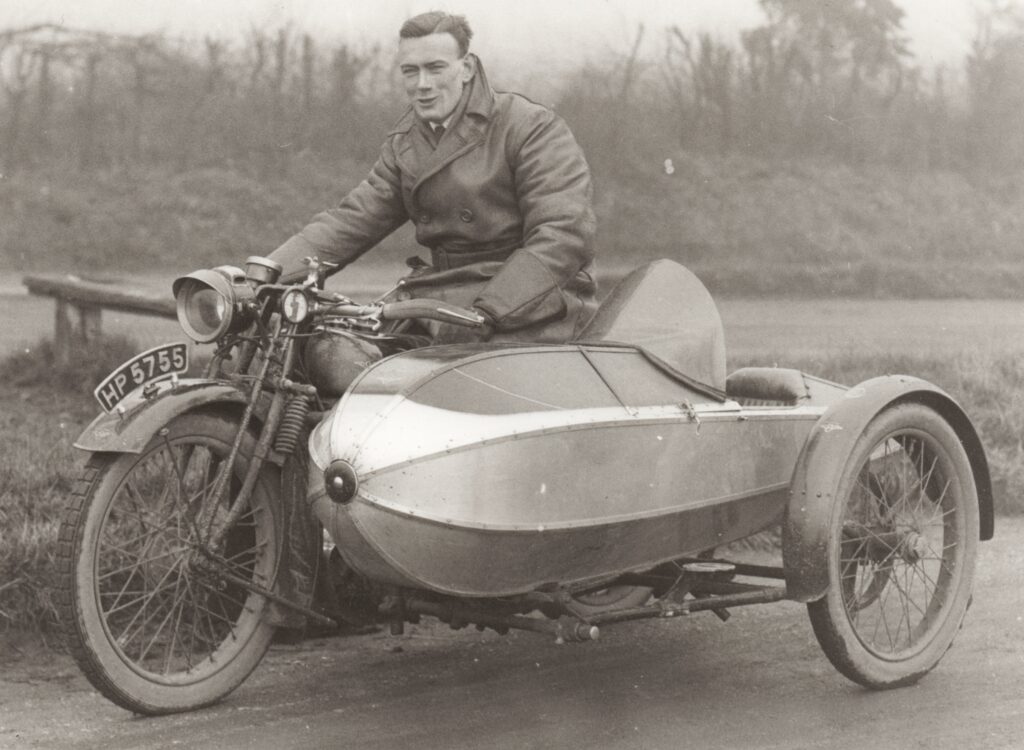
Hello, Percy. An unknown but stylish rider aboard a mid-1920s Coventry-Eagle Flying 8 with rakish zeppelin-bodied Mills-Furford sporting sidecar, an apex fairy-catching machine! [The Vintagent Archive]The introduction of any new technology brings unforeseeable cultural consequences, and so it was with the motorcycle: who knew it would become an essential tool for the mating rituals of a certain youth subculture? Beginning in the Twenties, a subset of mostly London-based motorcyclists made their gathering point exactly these seaside promenades. They were noted for riding ‘modern, sporting mounts’ resplendent in extra chrome and straight-through exhausts, dressing snappily, and doing their best to attract the attention of so-called ‘seaside fairies’, or young ladies expecting to be courted by just such fellows. These mostly male riders were disparagingly called the “seaside promenade Percy”, presumably in reference to Percy Shelley, the notorious 19th Century libertine, anarchist, and dandy, who died young and beautiful in 1822. Shelley was scandalous for his Bohemian lifestyle and free love antics, so decamped to Italy to live a hassle-free life with his young genius bride, Mary Shelley, who wrote the first, most profound, and most misinterpreted treatise on the unexpected consequences of technology, called ‘Frankenstein: or, a Modern Prometheus.”
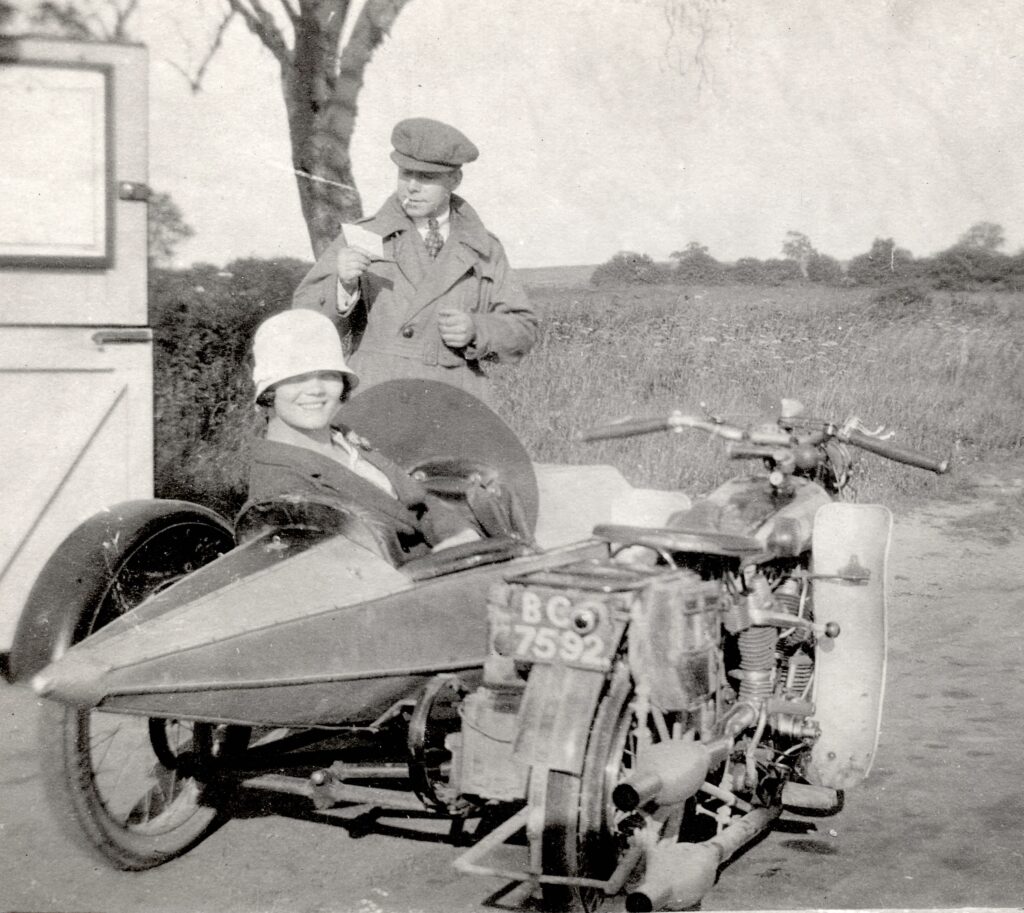
Success! Perhaps a first-generation ca.1925 Brough Superior SS80 with Milford zeppelin sidecar is the ticket. The Stormgarde coat and flat cap help the effect, and the Flapper in her cloche hat seems quite happy with the situation. [The Vintagent Archive]In the typical English gift for abbreviation, our obnoxious inter-war heroes were soon called simply Promenade Percys: a perfect double entendre. Calling a young motorcyclist Percy implied their amorous antics were not the proper focus of a young man’s energies: that would be war, not love. Or at least, a battle substitute like sport. Finger-waggers made their displeasure plain via letters and editorials in the mid-1930s motorcycle press, when Percys were compared unfavorably with ‘real men’ like Jimmie Simpson, the square-jawed hero of the Norton factory racing team, who retired in 1934 with five European Championships under his belt. Real men, it was implied, risked their necks in battlefields and on racetracks, while Promenade Percys (and later cafe racers) merely jousted for the attention of girls. [Sadly, I have yet to discover a similarly derided Promenade Pamela]
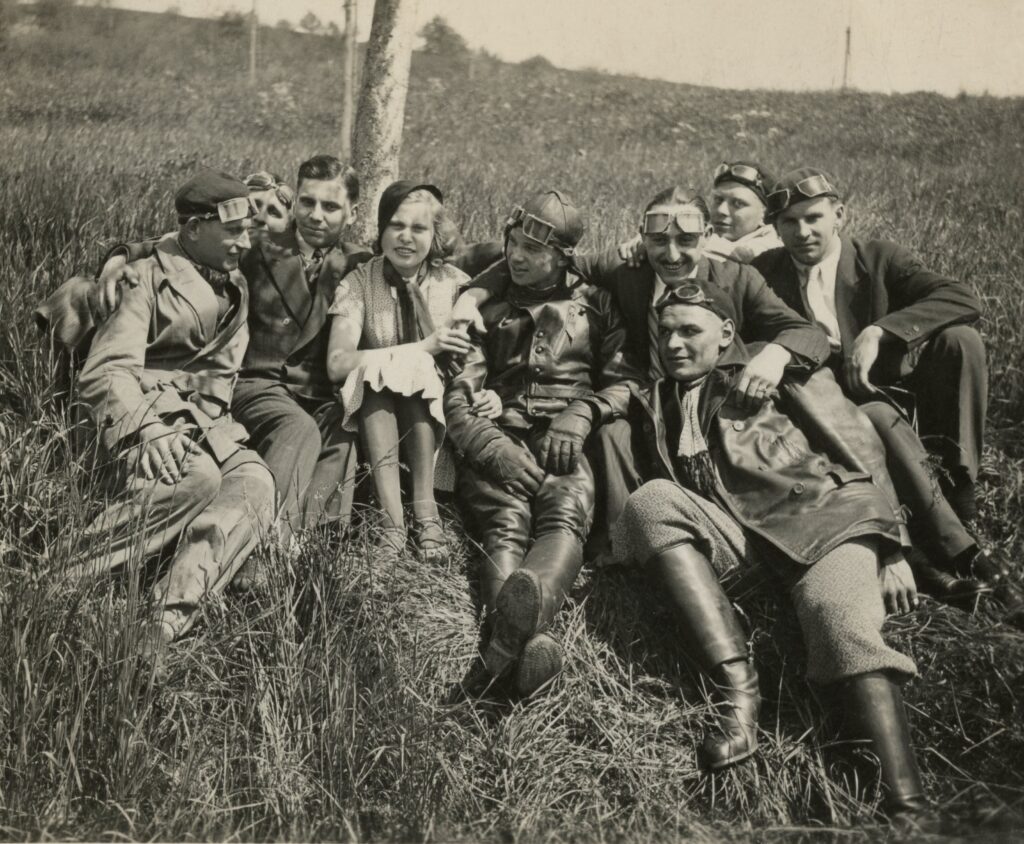
The Promenade Percy phenomenon was not limited to England, or even the sea, as this 1930 riding gang from southern Germany attests. Terrific examples of stylish riding gear from leathers to woolens and every type of flying goggle! [The Vintagent Archive]It's been claimed the Promenade Percy was the origin of the species of what became known as cafe racer culture, but it's not so. I argue in my book ‘Ton Up!’ that a subculture attracted to ‘racers on the road’ is evergreen, and simply human nature. Included in the book is an account of the joys of speed on two wheels from 1869, on one of the very first Michaux pedal-velocipedes. While not the first, our Percy is the direct ancestor of the Ace Cafe denizens of the 1950s, and were excoriated in the press in exactly the same manner. From the Western Gazette of Feb 12, 1932: “Pukka riders must not be confused with those ‘bright Percys’, the promenade pests, who float up and down their main streets and sea fronts adorned in spotless suits with carefully oiled hair, looking for some fair damsel to adorn their pillion seat.” A 1934 letter describes Percys “engaged in ‘Simpsoning’ up and down the seafront with their pillions bedecked in beach pyjamas.” From 1932 onwards such letters blossomed in The Motor Cycle every Springtime, but their condemnation sounds more like envy to our modern ears. And frankly, I can’t imagine much better than riding a chromium-plated 1930s sports motorcycle along the seaside, in a fantastic tweed suit, with my fairy damsel on the back.
Fun by the seaside: even motorcycle parts can be leveraged for fun, as demonstrated by Stanley Woods (top) and his pals near the sea wall at Douglas, Isle of Man, in 1928. [The Vintagent Archive]Rakish Promenade Percys with competition from pedestrians! But this is Sao Paolo, Brazil, in 1930, where only the very wealthy could afford a 1928 Moto Guzzi C4V racer to use as a street machine. The whole ensemble here is amazingly attired! [The Vintagent Archive]Not to forget our Australian friends, who have nothing but beach on which to promenade. This 1928 picnic gang includes Phil Irving in regulation University woolens and his then-characteristic beret for rakish effect. [Harry Beanham photo: The Vintagent Archive]Here he is: Percy. Aboard the hot crumpet-catcher of the 1920s, a 1925 Norton 16H Sports with sidecar. His outfit is impeccable, including collarless leather racing jerkin, woolen jodhpurs, white shirt and tie, summer gloves, and woolen fishing socks pulled up high, an affectation adopted by the classic Ace Cafe Rockers of the 1950s, but with engineer's boots, which had yet to be invented in this period. [The Vintagent Archive]By popular demand, here's the North American style of sporting riding gear circa 1929, from my own hometown of Stockton California. A gang of riders on Harley-Davidsons, a a few of which hint at a new style of motorcycle emerging at this time, the 'California Cut-Down', or simply Cut Down as it became known, the first widely copied style of motorcycle customization. The gents are snappily but not too formally - no neckties required in Stockton! [The Vintagent Archive][This essay is adopted from a column originally published in Classic Bike Guide. As CBG no longer includes columns in their pages, we are adding this content into The Vintagent so more readers can enjoy the thoughts of our publisher, Paul d'Orléans. The photographs included here are all original and unpublished photos, included in his book 'Ton Up! A Century of Cafe Racer Speed and Style' (2020, Motorbooks), an exploration of the evergreen love for fast motorcycles since 1869. If you want a signed copy, we'll set you up with one here.]
Paul d'Orléans is the founder of TheVintagent.com. He is an author, photographer, filmmaker, museum curator, event organizer, and public speaker. Check out his Author Page, Instagram, and Facebook.
Contravening all public health guidelines, the 2020 Sturgis Rally has proved to be exactly the Covid-19 'superspreader' event that experts feared. An estimated 250,000 new cases between Aug. 2 - Sep. 2 2020 are directly linked to the rally, which is nearly 20% of the total new cases in the USA in that period, and the public health costs are estimated at $12.2 Billion. A recent study by IZA Institute of Labor Economics (click for a pdf) made the story abundantly clear: Sturgis this year was a bad idea, but the price tag in the aftermath dwarfs any economic benefit gained by local businesses or the South Dakota economy as a whole. But, local businesses and the state of South Dakota will not pay that price, as nearly all rally attendees were from out of state, and returned home to spread viral souvenirs.
This virus for you: social distancing and mask-wearing were virtually nonexistent at the 2020 Sturgis Rally [Daily Mail]With as many as 500,000 riders attending this year, the Sturgis Rally was perhaps the largest mass gathering of any kind, anywhere on the planet, during the Covid-19 pandemic. The refusal of attendees to wear masks, coupled with close proximity in large crowds, was a recipe for disaster, and now the costs, physical and financial, are rolling in. ‘This is enough to have paid each of the estimated 462,182 rally attendees $26,553.64 not to attend," noted the IZA paper.
Anonymized cell phone data shows Sturgis rally attendees returned to 61% of all US counties. [Tektonix]"The Contagion Externality of a Superspreading Event: The Sturgis Motorcycle Rally and COVID-19" was released today, and picked up by numerous news outlets, from The Economist and Forbes to The Vintagent. The IZA Institute of Labor Economics is one of the most highly regarded economic research groups in the world, and is based in Bonn, Germany, and has over 1300 international research fellows and affiliates.
Sturgis 2020 was the worst PR disaster for motorcycling since 'The Wild One' of 1953.
Vintagent - wither the term? It was in currency in the 1930s in British automotive publications, and as noted in the following article there were already clubs formed to promote the reputations of automobiles of certain eras as 'vintage' - defined in Webster's dictionary as "adj: of old, recognized, and enduring interest, importance, or quality." The term begs the question, what machinery qualifies? In the motorcycle world, Vintagents were late to the scene, as noted in the article reproduced below, which is the first mention of the term Vintagent as applied to motorcyclists: all credit to staff writer Dennis May.
The original article in The Motor Cycle, illustrated with 8 machines, six of which your editor has owned...being a Vintagent himself apparently. [The Motor Cycle]
From the Dec. 16 1943 edition of The Motor Cycle - By Dennis May
In the car world they have a thing called the vintage cult. Its members, an ardent and disdainful body of men, style themselves Vintagents. A Vintagent is a citizen who turns misty-eyed and maudlin in the presence of a 30-98 Vauxhall, reaches instinctively for a bell, book, and P.100 Lucas [car headlamp - ed.] at the sight of a sibilating soft-sprung roadster, and hangs admiringly upon Mr Forrest Lycett's Bentleygyrics in the dear-sir columns of The Autocar, a collection of despatches which, if piled one on top of another, would make a smashing bonfire.
The 1923 Vauxhall 30-98, 900lbs lighter than a Bentley with similar power, a car worth of cult status. [Supercars.net]Where is the motor cycling vintage cult, if any? What were the vintage years of our industry? How, in your own mind, would you define a vintage motor cycle? Upon which particular models would you confer the title 'vintage'?
If we take 'cult' to mean an articulate and vocal body of opinion, then, obviously, no such thing exists as the motor cycling vintage cult. What, on the other hand, does exist is a substantial school of thought which, perhaps perversely and irrationally, insists on preferring, say, the 1931 Whatsit to its 1939 antetype. In the eyes of that school, then, 1931 will be a vintage year in the annals of the Whatsit factory. A cold-blooded comparative analysis may show that the 1939 model was faster, better braked, more comfortable and better protected than the 1931, but your Vintagent hasn't cold blood and he doesn't analyse - he is a creature of instincts and capricous zests. Perhaps if he did start analysing he would find that it was the relative discomfort and poor protection of the earlier model, together, perhaps, with a certain clean-cut classicism of line, that endeared it to him. Vintagents are odd in some ways. You mustn't coddle them and expect any thanks for it.
From the VMCC website: "On 28th April 1946, a band of 38 enthusiasts assembled at the Lounge Cafe, Hog's Back, Guildford, Surrey, with the object of forming a Motor Cycle Club for owners of machines manufactured prior to December 1930." [VMCC]Though the motor cycling Vintage cult undoubtedly exists, it is an underground movement - unsung, unpropagated, inarticulate. Its members, unlike the too-vocal car Vintagents, do not form themselves into clubs and pin badges on themselves and declaim a clamant gospel in the public prints. [It would only take 3 years for that to happen...ed.]
The 1912 B.A.T.-J.A.P....an ideal? [The Motor Cycle]Now for the question No. 2 - what were the vintage years? Perhaps the only reasonable answer would be that the vintage years were what any individual rider chooses to think, and good luck to him if he ups and proclaims the 1911 B.A.T.-J.A.P. a shining vintage example. But no, I'm not having that. Ordinary common sense, sone shred of which even a confirmed Vintagent like myself must retain, cries aloud that a 1911 B.A.T.-J.A.P. viewed in the light of modern motor cycle performance could in no sense be deemed a desirable property. Of course it is important to have tasted the best that the immediate pre-war designs had to offer if one's avowals of vintagism are to carry conviction. The owner of a 1932 Model 18 Norton who boasts of it as the superior of a 1939 OHC, then admits to having never ridden anything later than '35, can legitimately be pooh-poohed. For my part, I would rate the decade from 1925 to 1935 as the vintage epoch of motor cycling history. That was the period, in other words, which produced the greatest number of machines that, give the choice, I would own in preference to the pick of 1939's.
The original Rudge racing replica, the 1929 Ulster, based closely on Graham Walker's factory racer, the first machine to average 80mph in a Grand Prix race. [Paul d'Orleans]When it comes to defining a vintage motorcycle the temptation is strong to forestall the execration of the Editor's correspondents by writing the matter off as one of purely personal opinion; and after mentally trying over a few tags suitable to such occasions (de gustibus, etc, or perhaps quot homines, etc), and rejecting them all as badly shop-worn, one is right back where one started. Perhaps the issue might be narrowed by asserting that vintage machinery burgeons exclusively in the thoroughbred class, which is practically the same as saying the race-bred class. I don't ever remember The Motor Cycle applying that epithet 'thorough bred' to any mount of non-racing pedigree, good though many of these undoubtedly are and were. It would not, of course, be true to say that all, or even most, race-developed products qualify for the exclusive vintage class, whether or not produced during the decade specified.
A picturesque stop in Glacier National Park, your editor and the 1925 Brough Superior SS100 he rode across the USA in the 2018 Motorcycle Cannonball. [Paul d'Orleans]And now for some examples, chosen more or less at random and without regard to chronology: The early International Nortons, circa 1934 and thereabouts. The hottest and least luxuriously equipped S.S.100 Brough Superior of 1926 et seq. yclept Pendine [yclept being olde English for 'by the name of' - ed.]. The 350 big port A.J.S. of the latish 'twenties; the Flying Eight Coventry-Eagle with long-stroke overhead-valve J.A.P. motor - roughly 1928, speaking from memory (an exception this to the race-bred rule); and the pre-saddle-tank 350 Cotton-Blackburne, catalogue version of the mount that won Stanley Woods his first T.T. The pre-low frame two-port Sunbeam five-hundred, preferably the one with a small taper tank; the 499cc T.T. Replica Rudge with the radial valves and spidery exhaust pipes, which really was a replica of the Senior winners of that era, except, perhaps, in some of the materials used; and the road-equipped edition of the dirt-track Douglas of the early 'thirties, called the S.W. if I remember rightly (you very seldom saw one on the road)' this job was sold primarily as a grass-trackster, but the scantily shod, mudguarded and muffled version which I was lucky enough to ride a time or two - thanks to Francis Beart, its owner - was a most exuberant piece of machinery. And the least bulbous and elaborate of the early O.E. C.s with naked pushrod 350cc Blackburne engine, contemporary of the Cotton recalled above.
Stanley Woods in the 1921 Isle of Man TT aboard his flat-tank Cotton with Blackburne motor. [The Vintagent Archive]Of Scotts I shall say nothing, beyond confessing that one Scott is very much like any other to me. And if this heresy doesn't petrify the whole passionate army of Scott fans in their tracks, they are at liberty to take the dangerously esoteric subject off my hands an into the Correspondence pages.
Reverting from the particular to the general, it will probably be asked: 'What did these relics of the motor cycling Middle Ages have that the moderns haven't got?' Frankly, nothing. Rather, their attraction for us stubborn Vintagents lies in what they didn't have. They shared almost to a bike that lean and hungry look...not a surplus pound of what the ads for slimming diets call Ugly Fat.
The ultra-rare 1925 Sunbeam 'Crocodile' OHC racer your editor was privileged to ride in the Auerberg Klassik Hillclimb last September. An example of a wholly uncluttered machine, although the rider has gained a bit of Ugly Fat in his middle...years. [Uwe Rattay]They were simple and uncluttered with gadgets and accessories of the kind that make good sales talk for slick-suited spilers [salesemen - ed.] on the Earls Court stand, but are neither here nor there when you're battling into a barrage of gale-borne sleet at sixty. Their unpretentious starkness bore testimony to the designer's conviction that motor cycle should be a motor cycle and not a single-track chaise longe.
A rolling chaise longe, for sure! A typical 1970s Harley-Davidson Big Twin tourer, in this case 'Lee Roy', an original paint Electra Glide I road tested in 2010. [The Vintagent Archive]The contempt of the Vintagent - contempt is scarcely too strong a word - for what he considers overblown moderns is analogous to the contempt of the sailing dinghy owner for a puttering cabin cruiser with inbuilt cocktail cabinet and electric gramophone. Surplus avoirdupois, under which heading he lumps all poundage not directly contributory to performance in the purest sense, appears to him as anachronistic as an air-conditioning plant on a trotting gig [lightweight horse cart - ed.]. An incorrigible puller-to-pieces to see what makes the wheels go round, he deplores with great oaths the tendency to put a sheetmetal box round any or every part of the motor cycle which might remind you that it is a machine. He remembers with unfeigned nostalgia an era when pushrods were not shamed to be seen pushing in public, rockers rocking and springs springing.
Motorcycle Cannonball II pre-1930 Coast-to-Coast Endurance Run. Stage 10 - Yellowstone, WY to Jackson, WY. USA. September 17, 2012. Paul d'Orleans riding his 1933 Velocette Mk4 KTT - a thoroughbred machine if ever there was one. [Michael Lichter]To a true dyed-in-the Ethyl Vintagent, the faults of his vintage motor cycle are almost as dear as its virtues. Indeed, when that little word 'ideal' starts peppering the Correspondence pages, signifying a fresh campaign of designer-chasing, I am sometimes pessimistic enough to wonder whether in the course of years our Turners and Heathers and Goodmans may wearily succumb to this constant tyrannous importunity and eradicate the whole gamut of lovable faults that have made the modern motor cycle what it is.
We'd always had in our minds traveling to Vietnam. Its culture, people, landscapes and the ease of finding a bike to ride around the country, made this trip really appealing. But what really triggered us were pictures our friends Lucía and Pixi (responsible for "Perder el Rumbo" and both bike lovers) had sent us the year before, when they traveled around south-east Asia. Their pictures showed several motorbikes that had been absolutely transformed to make them suitable for forest and agricultural work in the jungle - the Jungle Men. That made our interest in the trip to grow, and for a year we planned our vacation to find those machines, their riders, and the mechanics who devised them.
At the tender age of 14, P.J. 'John' Wallace had an epiphany at a motorcycle exhibition, and knew he would build his own motorcycle. He bought a set of unmachined engine castings for £2 10s, and proceeded to build a workshop in his father’s garden, teaching himself to use a few simple machine tools. He soon realized the finishing work required of the castings was beyond both his equipment and his ability. So he bought a frame and wheels from a local cycle maker, plus a secondhand engine, and built his first motorcycle, which he promptly sold.
John Wallace racing his own Duzmo at the 1920 Kop Hill Climb. Dr. A.M. Low, another motorcycle designer, officiates. [Vintagent Archive]In 1912 (age 16), John landed an apprenticeship with Collier & Sons, makers of Matchless motorcycles, at the time the most successful British manufacturer in racing, having won the single-cylinder class of the very first Isle of Man TT, and many races at Brooklands after that. Unfortunately John had an industrial accident at the Matchless factory, and his father put a stop to his employment with the Colliers. The pill was sweetened by his father buying both John and his brother a T.T. model Rudge, which was a single-speed belt drive machine, stripped for speed. The brothers both joined the British Motor Cycle Racing Club (B.M.C.R.C., or 'Bemsee') and took to racing at Brooklands as typical 'clubmen'. However, things did not go as planned (ah, racing!) and in short order John crashed his Rudge, which was damaged beyond repair.
Herbert LeVack, who would later gain fame working for J.A.P. in engine development, both raced for and developed John Wallace's engine for Duzmo in 1920, including at the Isle of Man TT. [Vintagent Archive]With this meager Brooklands experience under his belt, in 1913 he secured a job as a test rider for the J.A. Prestwich (J.A.P) experimental department, where testing motorcycles at Brooklands was part of the job description. When the Prestwich family became aware of his age they promptly sacked him! Wallace spent the the next year studying engineering and training to become a draughtsman. With the onset of WW1, Wallace felt there would be little demand for motorcycles, so took a job at Scottish car makers Arrol-Johnston, as an aero-engine designer. This employment too was short-lived; it was over by mid-1915. However, his lengthening resumé was enough to land him a job with the design team at Westland Aircraft Company (Petters Ltd), which was to last until the end of the war.
One of Wallace's engine designs, this for a DOHC racing single-cylinder of very advanced specification. [Vintagent Archive]Late in 1918 Wallace returned to his first love, and laid out a design for an advanced high-performance motorcycle engine. When drawings were finished, he cleverly advertised his design in The Aeroplane, knowing aircraft builders would need to diversify after their war contracts had ended. One such company was the Portable Tool & Engineering Co. of Enfield, who were impressed enough to employ Wallace as Chief Designer. Their plan was to sell 'loose' engines to motorcycle manufacturers, and by September 1919 the prototype was ready for trials. Clearly, Wallace had learned a few tricks from cutting-edge aircraft technology, as his engine used Overhead-Valves and was 'oversquare' at 88.9mm bore x 76.2 stroke, giving a capacity of 475cc, using a fully-recirculating oil system with two oil pumps on the timing cover; all very advanced for 1919.
After Herbert LeVack left Duzmo, John Wallace hired Harold L. Biggs as his development engineer, and this is the original 'Duzmo Biggs Special' of 1921, using a single-speed chassis. [Vintagent Archive]Herbert LeVack had been employed during the war assembling and testing aero engines, and his services were secured by P.J. Wallace to build his new motorcycle engines. LeVack proved a valuable asset, with an uncanny ability to produce wonderful results from ill-fitting components. He built the prototype engine and got it running satisfactorily; a second engine was then fitted into a motorcycle chassis, and used by Le Vack in demonstrations to the trade and the public, and in competitions. LeVack's development and riding skills produced excellent results from Wallace's design. The motorcycle was first christened the ‘Ace’, then the ‘Buzmo’, before ending up as the ‘Duzmo’ in 1920.
Harold L. Biggs and John Wallace outside the Duzmo premises, 1921. [Vintagent Archive]LeVack won many speed events on his tuned single-speed belt-drive Duzmo, winning over 100 awards. Racing success created demand from the public, but the business plan with Portable Tool called for engine manufacture, not motorcycle manufacture, and Duzmo was barely a company! There was no chance of fulfilling orders for whole motorcycles with the small workshop that P.J. Wallace ran near the Enfield highway. Wallace suggested to the Board of Portable Tool that they take Duzmo 'public' and sell stock to raise capital for proper motorcycle manufacturing facilities, but they balked, and wound down production. A silver lining emerged when a kindly Board member loaned Wallace enough money to create his own company (John Wallace Ltd) to build his Duzmos.
The 1922 version of the Duzmo racing special at Brooklands, now using Wallace's engine and chassis design, developed by Harold L. Biggs (left). [Vintagent Archive]Ever looking forward, in 1920 Wallace and Le Vack altered their single-speed frame to fit a 3-speed Sturmey-Archer gearbox, for all-chain-drive. This machine completed the 1920 London to Edinburgh trial, and was then shipped to the Isle of Man for LeVack to ride in the 1920 Senior T.T. LeVack was no stranger to the T.T., having raced there in 1914 (the last T.T. before WW1) finishing in 15th place averaging 45mph on a Motosacoche, and winning a gold medal. Road conditions on the Isle of Man were atrocious, more resembling motocross than road racing to modern eyes, as the roads were mostly unpaved farm tracks, and the racing machines had almost no suspension, used narrow high-pressure tires, and had virtually no brakes.
After leaving Duzmo, Herbert LeVack made a real name for himself as one of a rare breed: designer/tuner/racer, who actually won. Here he is in 1921 being carried aloft at Brooklands after winning the 500-mile race on an Indian. [The Motor Cycle]At the 1920 T.T., our man LeVack took number 69 on his Duzmo, while a second Duzmo was entered by N.C. Sclater (number 67), who actually rode a Norton in the race (more on this shortly). Le Vack had some fierce competition from his Sprint and Brooklands rivals such as George Dance (number 65, on a sidevalve Sunbeam), Tommy de la Haye (also on a SV Sunbeam) and F.W. 'Freddie' Dixon (number 52) on an Indian.
John Wallace on the second-generation Duzmo circa 1920, before he was quite ready to manufacture motorcycles. [Mortons Archive]Press reports state Le Vack’s Duzmo arrived on the island via the Saturday morning boat, leaving little time to practice. Another report mentions Le Vack laboring over his machine since its arrival, working almost night and day, being rather handicapped by a lack of spare parts. Reading between the lines on these reports, it is possible Sclater’s Duzmo was sacrificed to keep LeVack's machine alive, and might be why Sclater ultimately rode a Norton in the TT that year.
The 990cc V-twin Duzmo, made by doubling up the single-cylinder model. [Vintagent Archive]The Senior race was held on Thursday, June 17th, in favorable conditions. Le Vack on the Duzmo had an excellent start, but on the second lap he had a bad skid at Governor’s Bridge and fell, bending his rear stand enough to rub the tyre; he was delayed eight minutes while he removed it and left it behind. He was reported passing through the grandstand on his third lap at speed, with his engine emitting a healthy bark. The fifth lap saw 16 competitors still in the race. Le Vack tried to overtake another rider near the Bungalow, when his quarry suddenly shot across his racing line, and Le Vack was brought off, damaging the Duzmo and forcing him to retire. The name of the fellow who supposedly cut off LeVack was never mentioned - was he forced into a ditch or did the Duzmo simply blow up? It was common practice for manufacturers to disguise mechanical calamity by blaming chains or magnetos or a spill. The race was won by Tommy de la Haye on a sidevalve Sunbeam.
The Duzmo decal used on the fuel tank and in advertising. [Vintagent Archive]Herbert LeVack could see the writing on the wall at Duzmo, and had greater ambitions, so by early August the press announced that he had severed his connection with Duzmo, joining Freddy Dixon in the Indian camp. LeVack's track career blossomed at Brooklands where he so regularly broke speed records, he became known as 'The Wizard', and by 1921 he had joined J.A.P. developing their racing engines for all customers.
The last-generation Duzmo single, with their own loop frame and curved gas tank. [Vintagent Archive]Wallace soldiered on racing with himself as tuner/rider, with much less success than LeVack. In a move which foreshadowed the legendary Vincent tale of 'doubling up' his single cylinder machine, in 1922 Wallace created a new 992cc OHV V-twin for racing at Brooklands by adding another cylinder to his original OHV design. He also designed a new single-cylinder chassis that year, with a unique sloping petrol tank, and while it was an attractive machine, sales were poor, and Duzmo was finished by 1923.
It was clear from the earliest days of 4-stroke engine design that multiple valves in a cylinder head had clear advantages over just two; the valves themselves would be lighter, making an easier life for valve train components and valves less likely to break. It's also possible to move more air through two (or more) small valves than one big one, as the total surface area of multi-valves could be larger than a single valve port, without risking a crack across the cylinder head from a weak structure with one mighty hole. Smaller valves meant a lighter valve train, and higher revs for the motor, which meant more power and less wear, as it's easier to shift heat away from many small parts than a couple of big ones.
The original 8-Valve roadster? This very interesting special was built in 1925 in England, using a 1914 Hedstrom motor with Indian 8-Valve cylinders and heads, according to the notebooks of Harold Biggs, the bike's builder/tuner, who documented all the changes necessary to create this machine. The bike is road registered and includes one of the earliest flyscreens I've seen on a motorcycle. Wish I'd found this photo before publishing my history of fast road bikes - 'Ton Up!' - which includes lots of such lost evidence of a continuous thread of hot rodding road bikes from the earlier days of the industry. [Vintagent Archive]Thus, in the 'Teens and '20s a lot of factories experimented with 4-valve single cylinder or '8-valve' V-twins, especially in the racing world. Indian was first with their pushrod 8-valve twin racer in 1911, that dominated board track and dirt track racing for several years, but was a fairly crude and fragile design, with poor lubrication to its delicate valve train. The Indian 8-Valve did well in European and Australian racing too, but to my knowledge, only one or two were ever converted to a road bike, as photographic evidence here demonstrates.
Jean Péan aboard the amazing 1914 Peugeot M500 8-valve parallel twin DOHC beast. This machine is road registered, as long-distance street racing was the norm in France until 1923, when the Monthléry speed bowl was built. This machine also raced at Brooklands before WW1. [Jean Bourdache]The 8-Valve concept was greatly expanded in 1913 by Peugeot, who revealed a parallel-twin double-overhead camshaft racing motor with four valves per cylinder, based on their all-conquering Grand Prix racing car, designed by Ernst Henry and 'Les Charlatans.' The Peugeot 500M was raced at Montlhéry and Brooklands, and was fast, but not dominant like the water-cooled GP Peugeot cars. It would take years of development after WW1 for it to become competitive, which required the loss of one camshaft and four valves! Still, a remarkable technological achievement. Sadly, none survive, and it appears none were ever used on the road. Read more here in our article 'The Lost Peugeot Racers.'
One of Harry Hacker's remarkable conversions, using replica Harley-Davidson racing cylinder heads atop JDH twin-cam crankcases. This is the 8-Valve version, which looks fearsome indeed: the 2-Valve version with Peashooter cylinder heads puts out 70hp! [Paul d'Orleans]Harley-Davidson, finally interested in catching up with Indian on the race track after abdicating all factory involvement for years, revealed their own 8-Valve V-twin racer in 1915, and built several versions through 1927. None to my knowledge were converted to road bikes in the day, although the rise of small-batch manufacturing of reproduction 8-Valve engines (both H-D and Indian) has broadened specialist builder's horizons. One such is Harry Hacker in Germany, who has combined both Peashooter 2-valve racing cylinders and heads with twin-cam JDH V-twin crankcases, making a powerful special with 70hp. He's also used replica 8-Valve cylinders and heads atop a JDH base, which is a fearsome beast indeed.
The Croft was one of several small manufacturers to use Anzani 8-Vavle V-twin engines: this one is clearly intended for road use, with a parcel rack on the rear fender! [Hockenheim Museum Archive]In Britain, an 8-Valve V-twin was produced commercially by British Anzani, who supplied engines for all applications, from aviation and boating to cyclecars and motorcycle. The Anzani 8-Valve motor was designed by the Belgian Hubert Hagens, who had considerable experience in racing before joining British Anzani. Company founder Alessandro Anzani was by then wrapping up his involvement in his several branches in England, France, and Italy, and retired in 1927 at age 50. The Anzani V-twin was also produced in a 2-valve configuration, and sold as the Vulpine. But for racing, and a very few road bikes, several manufacturers took the bait, including Montgomery, McEvoy, Croft, and Zenith, all of whom produced 8-Valve motorcycles in the single digits. Those that survive (the cynical would say, more than were ever produced) are spectacular motorcycles, and extraordinarily valuable in their rarity and technical savoir faire. All of these producers found 2-valve V-twins to be more reliable for regular use, but there's no denying the appeal of such a fearsome engine in a hot road bike.
The 1924 Montgomery roadster with Anzani 8-Valve engine that sits firmly on our Top 100 Most Expensive Motorcycles list of all-time highest prices paid for a motorcycle. [Bonhams]It should be noted that several British marques built 4-valve single-cylinder road bikes, like Triumph's Ricardo (1921-24) and the Rudge 4-valve/4-speed line (1924-40). Many specialist builders over the years have adapted these well-proven 4-valve cylinder heads onto V-twin engines of JAP or Harley-Davidson manufacture, with mixed results. The immediate increase in power meant of course, increased heat in the engine to deal with, and no direct lubrication to the valves until the late 1930s Rudge motors with enclosed valves. The new-found power also exposed weaknesses in the clutch and gearbox (as Vincent-HRD found with their first OHV V-twin Series A Rapide in 1936), as well as the frame, forks and brakes, which were well adapted to a 24hp sidevalve V-twin, but not to 60hp from a far better-breathing upgrade.
The Triumph Ricardo 4-Valve cylinder head, designed by Sir Harry Ricardo, and produced from 1921-24. Lubrication for the rockers and valve stems is by grease, and hope. [Vintagent Archive]And back in Europe, it appears the German Wanderer company built an 8-Valve V-twin motorcycle in the mid 1920s. The cylinder heads are closely based on the Anzani pattern, but retain Wanderer's distinctive horizontal finning. This machine was spotted at Rétromobile in 2011, and I'd love to know more. How many other companies built 8-Valve V-twin in the 1920s? I'd love to know about more obscure examples: it Italy Moto Guzzi built the C4V 4-valve racing single, for example, based on their 1921 prototype designed by Carlo Guzzi: clearly the concept was explored in many countries.
Seen at Rétromobile in 2011 on the Motos Antiguas stand, a Wanderer 8-Valve. [Paul d'Orleans]Today's tinkerers adding 4-valve cylinders and heads to antique V-twin motors are hardly alone, as the game is an old one. Way back in 1924 the Excelsior importer for Belgium, a Mr Taymans, decided to fit a pair of Triumph 'Ricardo' 4-v cylinder barrels and heads atop an American Excelsior V-twin, making a very handsome road-going OHV roadster, the 'American-Excelsior-Triumph'. According to The Motor Cycle magazine, he built several of these beasts, although this article is the only evidence I've seen of one...have any survived?
The elegant Excelsior-Triumph special built in limited numbers in 1924 by Mr Taymans of Brussels, Belgium. A robust chassis, a powerful motor, but still no front brake! [Vintagent Archive]From The Motor Cycle, July 24th, 1924:
AMERICAN-EXCELSIOR-TRIUMPH
An American V-twin Fitted with British Four-valve Cylinders
Something new in ‘hybrids’ has been evolved by Mr. R. Taymans, a well-known motor cyclist and motor cycle agent of Brussels.
Agent for the American Excelsior, he has a great admiration for the strength, rigidity, and excellent steering qualities of this machine; he has also an equal admiration for the productions of Britain. So he has manufactured an eight-valve American Excelsior, employing two four-valve 500cc Triumph cylinders adapted to the Excelsior crank case.
Standard Parts
With the exception of a slight alteration in the cams to produce greater efficiency, entirely standard parts are used, and the only structural alteration has been the dropping of the engine almost two inches in the frame. The standard Schebler carburetor is fitted, and with it the machine will do 78mph; this is increased to 82mph with a three-jet Binks.
According to the constructor, the acceleration is terrific. Altogether, the machine has been on the road for a full year, and with a sidecar. It is not purely an experimental machine, but is actually on the market, many of them having already been sold all over the continent of Europe. Complete with electrical equipment, the machine is priced at £132. Mr. Tayman’s firm is Taymans Fréres, 641, Chausée de Waterloo, Brussels, Belgium.
Another Indian 8-Valve racer converted for road use. The chassis is clearly from a roadster model, not the short-coupled and minimal chassis of the board track racer: it's still a single-speed machine, though, with a clutch and all-chain drive as standard from 1901 on Indians. I don't know anything more about this photo - who what where? [Vintagent Archive]
As the technological high points of 1920s motorcycle racing began to look - and perform - like the antiques they'd become by the 1930s, the fratelli (brothers) Benelli took stock of the obvious trends of Grand Prix racing. The future of racing was clearly headed towards extracting more power from multi-cylinder, supercharged engines. Moto Guzzi, Gilera, BMW,DKW, NSU, and even AJS and Velocette in England were racing or developing such engines by 1938. As champions in the 250cc racing class, Benelli set about that year designing a new 250cc racer, with four cylinders, twin overhead camshafts, a supercharger, and watercooling. Trends in chassis development were also attended, and as sketched, the new machine would retain the hydraulic-damped girder forks and rear swingarm suspension of their singles, plus large-diameter alloy brakes to manage the inevitable blistering speeds to come from such an engine, given Benelli's expertise with tuning small engines, especially in cam design, intake porting, and carburation.
The original Benelli four-cylinder DOHC racer of 1939-41, with integral supercharger and a 146mph top speed. [The Motor Cycle]The gem of an engine designed by Giovanni Benelli produced in 1939 had a short stroke (42mm stroke x 45mm bore), with 12:1 compression pistons, and spun to 10,000rpm, which was astronomical at that date. At peak revs the motor cranked out 52.5hp, good enough for 146mph on test runs - the fastest 250cc racer by a long shot, and fully 16mph faster than their nearest rival, the brilliant supercharged 250cc flat-single from Moto Guzzi. With such devastating performance (exceeding by 20mph the factory 500s of Norton and Velocette!), Benelli were confident of another European Championship, but the little 'four' wasn't ready for the 1939 racing season. By the time the 'engine bugs' were sorted, it was 1940, and the competition was no longer playing nice.
The original 1940 Benelli 250-4 still exists today. [The Vintagent Archive]Lacking martial confidence in their native Italy, Benelli race chief Vincenzo Clementi stashed the entire racing fleet in rural areas away from their industrial base in Pesaro. It was rumored their precious new 250cc 'four' engine was hidden at the bottom of a dry well, while the chassis slept under a haystack, inside a barn. Their decision proved wise, as during 1940 and '41, Pesaro was bombed heavily; the Benelli factory had been converted to aero engine production (Daimler-Benz and Alfa Romeo designs), and when the Allies advanced northward in Italy, all the precision machine tools were moved by the German army to more secure territory inside Austria and Germany.
An exploded view of the 1960 Benelli four-cylinder motor, with gear-driven DOHC and no blower...and 16hp less than the pre-war motor! [Motorcycle Sport]When the company returned to single-cylinder racers postwar (netting them a World Championship in 1950), by 1960 Benelli's line of small-capacity motorcycles was selling very well, even in the USA through the department store Montgomery Wards. With profits in hand, funds were allocated for the design of a new four-cylinder Grand Prix racer. Race chief Ing. Savelli and Giovanni Benelli designed an entirely new engine which bore resemblance to the 1938 design, but in truth, by 1960 a DOHC four with gear-driven cams had become the accepted pattern for a racing engine, having been developed by Gilera (from the original CNA/Rondine 'fours' dating back to 1926!), copied by MV Agusta, and then again by Honda, who won the 250cc World Championship title in 1961.
The complete 1960 Benelli four-cylinder 250cc GP racer, on its press lauch. [Hockenheim Museum Archive]The new Benelli four used an even shorter stroke than the pre-war motor (40.6mm stroke x 44mm bore), a 6-speed gearbox, weighed only 264lbs, and gave 40hp at 13,000rpm (oh, how supercharging was missed! This was 12.6hp less than the blown 1939 design). The completed machine was revealed with great publicity in June of 1960, but wasn't ready to race until 1962, and Silvio Grassetti had only one 'win' that year, at Cesenatico, but it sounded a bell at Honda, as both Jim Redman and Tom Phillis were bested on their Factory Honda 4s. MV had withdrawn from the 250cc class the year before, to concentrate on retaining their 350cc and 500cc GP dominance.
Tarquinio Provini on the 250cc Benelli 4 in 1965; note the 7" dual disc brakes. These are American Airheart brakes from Go-Kart racers, and were possibly a first in GP racing, but proved inadequate on at 143mph, especially in the wet. While the concept was sound, the brake pads hadn't yet evolved for serious high-speed use. Benelli used them only in '65, retreating to reliable racing drums... [Motorcycle Sport]Tarquinio Provini, a veteran racing star with two World Championships, joined Benelli in 1963 to develop and race the new four. He shortly increased power to 52hp at 16,000rpm, with a 7-speed gearbox, and 141mph top speed. A new frame lowered the center of gravity and pared weight down to 247lbs. Years of ignition troubles with the high-revving engine were finally cured by fitting an American racing magneto...from a Mercury two-stroke boat engine. Provini won every race in the Italian championship in '64, and the Benelli shocked the world by out-running the Japanese opposition at the super-fast Monza GP in 1965.
Tarqunio Provini hard at it in 1966. [Motorcycle Sport]By '66, the Four had 8 gears, and a larger version with 322cc was introduced to compete in the 350cc GP events, going head to head with the 'big boys', MV Agusta, Honda, and Yamaha. Provini had a bad crash at the Isle of Man TT that year, and injured his spine enough to retire from racing. Benelli had never fielded a 'team' of professional riders who came and went with lucrative contacts; the family business had close bonds with the one or two racers they supported, and Provini's injury took the steam out of Benelli's race department for over a year.
The immortal 'Paso', Renzo Pasolini, in 1968. [Motorcycle Sport]Benelli re-entered the racing fray with rider Renzo Pasolini, who won second place in both the 350cc and 250cc classes at the 1968 Isle of Man TTs, and dominated the Italian Championship in both classes the rest of '68, giving Giacomo Agostini and his MV and excellent view of the Benelli's tailpipes all year long. In 1969, Kel Carruthers joined Pasolini, and the pair made an unbeatable team, each winning three GP victories that year, giving Benelli their second World Championship title.
Renzo Pasolini leaping Ballagh Bridge at the 1968 Isle of Man TT, which he won. [Hockenheim Museum Archive]Kel Carruthers joined Yamaha in 1970, but Pasolini took third place in the World Championship that year. That year the Benelli family sold the factory and name to Alejandro de Tomaso, more famous for his automotive exploits than two-wheeled savvy, and support for developing the racers waned. Still, Jarno Saarinen was hired in '72, and won his début races at Pesaro in both 350cc and 500cc classes.
Renzo Pasolini with Kel Carruthers in 1968. [Motorcycle Sport]Both Saarinen and Pasolini left Benelli for '73 (for Yamaha and H-D, respectively), and Walter Villa became Benelli's top rider. With horrific irony, Villa's 350cc Benelli was blamed for leaving a trail of oil during his race at Monza, which was then not cleaned up for the 250cc race, in which a multi-machine crash killed both Saarinen and Pasolini. The details of the accident have been debated ever since, although it seems a catastrophic seizure of Saarinen's Yamaha (not an uncommon occurrence) may have led to the chain-reaction melée.
Kel Carruthers at the 1970 Isle of Man TT. [Motorcycle Sport]Benellis interest in racing plummeted when new FIM rules limited 250cc racers to two cylinders and six speeds, which guaranteed an unstoppable rise of two-stroke racers, as their double-time combustion could only be opposed by outrageously sophisticated four-stroke engines, such as the Honda 6-cylinder... and a secret Benelli 250cc V-8 which was under development. That would certainly have put Benelli on par with Moto Guzzi as masterful creators of racing exotica. The FIM, in their wisdom, preferred the crackle of two-strokes to a technical war of miniaturized-miracle racers, a decision that eventually killed Grand Prix motorcycle racing entirely, and led to the birth of MotoGP. But that's another story.
Jarno Saarinen...with his wife Soeli famously giving pit signals in her bikini. It was certainly hot in Italy... [Motorcycle Sport]
Habla Español? Our friends, new Spanish publishers La Mala Suerte, are ramping up their publications list with Spanish translations of books originally printed in English. Regardless that Spanish has the second-largest number of native speakers in the world (Chinese is first), at 450 Million people, the truth is very few motorcycle publications bridge the language divide. My own books 'Cafe Racers', 'The Chopper: the Real Story', and 'Ton Up!' have been translated to French, but never Spanish, for whatever reason: perhaps because the right publishing partner had not yet appeared?
'El Vehiculo Perfecto' by Melissa Holbrook Pierson: the perfect book to start with. [La Mala Suerte]I met La Mala Suerte co-founder Marina Cianferoni when she lived in Italy, and had written a comprehensive thesis on motorcycles in film. I asked her to help with a chapter on choppers in film for 'The Chopper: the Real Story' (along with The Vintagent's future Editor for Film, Corinna Mantlo), and she was soon drafted as a judge for the Motorcycle Film Festival. Marina announced several years ago her intention to create a Spanish-language publishing house after a move to northern Spain, and she's fulfilled that promise first with the publication of Melissa Holbrook Pierson's 'El Vehículo Perfect0' , the perfecto first book for a new publishing house dedicated to motorcycles. They have also translated Matthew Biberman's 'La Leyenda de Big Sid y la Vincati', and up next is Brian Belton's amazing, no-holds-barred biography 'Faye Taylour: la Reina del Speedway.'
'La Leyenda de Big Sid y la Vincati' by Matthew Biberman. [La Mala Suerte]As for the future? "We are currently working on the publication of the third book in Spanish - the biography of Fay Taylour - and on the fourth, the tour of the world by Elspeth Beard. The Italian editions both of Elspeth's and Biberman's books are expected to be available early next year, if we have luck with the money, you know, this is the worst moment to start an activity... Actually I feel extremely coherent with the name La Mala Suerte!!!"
Coming soon: 'Fay Taylour: la Reina el Speedway'. [La Mala Suerte]It's likely a title or two of my own will finally be available en Español: if you support Spanish-language motorcycle books, visit La Mala Suerte, and give them a little love: they're doing a good thing.
Marina Cianferoni from her days as a judge for the Motorcycle Film Festival. [Marina Cianferoni]
The Mar. 19, 1936 edition of The Motor Cycle included this intriguing story of a future motorcycle ride, with famous brands of the day - Norton, Rudge, B.S.A., Triumph, Scott, Sunbeam - that have all evolved different power sources, including steam and electric. The story is possibly a response to the first-ever road test of an electric production motorcycle earlier that year, of the Belgian Socovel electric scooter, which the magazine called 'gentlemanly in every aspect.' Food for thought for a writer with a bent on prognosticating...and the scenario imagined here could in fact be from 2020!
The fabulous hand-drawn Art Deco lettering of the original 1936 article in The Motor Cycle magazine. [Vintagent Archive]
Shilling in the Slot
An Imaginative Tale of Motorcycling in the Year 1986, by K. Fairfoul
Bill Sanders, the club secretary, shut off his engine and swirled into the forecourt of the Eastern Counties M.C.C.'s headquarters, and pulled up alongside a little group of men and machines. Ironical cheers greeted his arrival.
"What ho! Here's the Sec. and his kettle."
"Tea-water boiled yet, Bill?"
A club secretary is used to this sort of greeting. Sanders merely grinned and hauled his B.S.A. steamer on its stand.
"If some of you explosion merchants kept pace with the times and tried steam you'd get along faster than you do."
Jimmy Farrant, one of the internal-combustion die-hards, eyed a thin wisp of steam that curled upwards from the B.S.A.'s condenser with grim disfavour.
"You've got a leaky gasket there. 'Pon my word, I don't know what this game is coming to. It's steam, steam, or Government Power all the time. Nowadays half the boys don't know the difference between a camshaft and a gear box. All they seem to care about appears to be squirting oil into a burner or putting a shilling in a slot and twisting a grip."
The future imagined by a motorcycle designer, Laurie Jenks, who actually built his ideal machine, the Mercury: read about it here. [Hockenheim Museum Archive]
Self-change Gears
"Not quite so bad as that yet, Jimmy," said the Sec. "There's just as much to play about with in a steam motor as in a petrol bike. I thoroughly agree with you about Government Power , though. The fellows who use that are beyond the pale. Thank goodness none of our boys have fallen for it yet. Anyway, there's as many petrol bikes about as any other type."
Jimmy groaned. "And what bikes! When Norton went over to four-cylinder two strokes and self-changing gears they knocked the bottom out of the game. I bet I get a bigger kick out of that old '36 Norton, that was doing duty in a field as a scarecrow until I picked it up, than any of you chaps with your modern machines. That old bus was doing seventy during the Old Crocks race at Brooklands last week. When your bikes are fifty years of do you think they'll do that? Not on your life!"
The exponents of modern design were joining forces to tear the diehard to pieces when the arrival of the captain provided a diversion. His totally enclosed Ariel swept up, dropped is retractable side-wheels, and came to an upright standstill. He swung back the transparent cockpit cover and stepped out.
I don't see motorcycles here in an Echte Wagner collector card 'Autobahn of the future'. [The Vintagent Archive]"Hullo, you fellows, rowing again?"
Jimmy grunted. "I'm merely telling all you steam and two-stroke merchants where you get off. I'm all for the good old days of singles and camshafts."
"Well, what with steam and Government Power, i.c. motors would only be seen in South Kensington Museum nowadays if it wasn't for the two-strokes," said the captain. "Look at that mass of fiddley bits on your Norton. Yet even in its prime that old single could whip up the horses of my two-stroke 'four' of half the size."
"That's the stuff, Skipper," cut in the Sec., "let him have it."
"The amazing thing is," continued the captain, "that old brigade had the key to real power under their hands for nearly forty years before they discovered they'd got it. About the only use they had for a two-stroke was in a potter-bus. Why, it wasn't until that four-cylinder Scott wiped up the field in the 1948 Senior T.T. that the boys started talking in terms of end-to-end scavenging and multi-stage supercharging. You read the moor cycling history and find out."
"Carry on, Skipper," said somebody. "What happened after that?"
"Why, Nortons and Rudges and the rest of the pack found that they couldn't get anywhere near those Scotts, so they scrapped everything they'd done and started designing all over again. They had to. Nortons brought out a four-cylinder supercharged two-stroke, which was something on the lines of an old D.K.W. that was running in 1936, except that the Norton had four cylinders and self-changing gears. Douglases designed an axial five-cylinder swash-plate job with the whole unit lying horizontally in the frame. And Rudges abandoned internal-combustion engines altogether and came out with the first steamer."
What the Future looked like in 1935, courtesy Meccano magazine: enormous monowheels, which crop up regularly even today! [Vintagent Archive]
"Government Power"
"Between them they swept the board, and everyone else fell into line. B.S. A.s and Triumphs went over to steam and the rest to two-strokes. Ten years later the only four-strokes were side-valve potter-buses. Funny how things move in circles, isn't it?"
There was a hum of rubber tyres on the road, and a yell of horror interrupted the yarn.
"Hey, look at that bike Harrison's just brought along. It's running on Government Power!"
All eyes turned to look at a black-and-gold Sunbeam that had glided silently up to the group. It was entirely sheathed in metal and beautifully streamlined. The only outward proof of its propulsion was a small slot in the instrument panel. Harrison detached himself from his machine and addressed the clubmen with lofty condescension.
"Well, what do you think of my new bus? She's one of the first Show models on the road. Marvelous bike!"
The clubmen were speechless.
"Oh, I know exactly what you're thinking," went on the heretic, "but you take my word for it that there will be nothing else on the road in a year or two. It knocks all your old-fashioned bikes into a cocked hat. Do you know that if I give it full throttle the acceleration is enough to rip most of the tread from the rear tyre? Come and have a look."
He opened an inspection door in the metal shell, revealing a large electric motor driving the rear wheel direct by shaft. Mounted above the motor was a box containing a complicated mass of electrical mechanism.
"That's all there is," he said. "The Government power stations transmit electric power in teh form of wireless waves, and this arrangement here picks it up, rectifies it back into ordinary current, and passes it into the motor. The beauty of it all is that you pay for your power through this slot meter in the instrument panel. As soon as you run through twenty units you pop in another shilling an carry one. No fooling about with garages or running out of fuel miles from anywhere. Anyhow, the Government is selling its power as cheap as dirt."
2020 nailed in 1930! Ladies on their mobile phones, chatting with beaus or babies, just like today. From a remarkable set of collector cards out of Germany, from the margarine company Echte Wagner. The back of the card reads, "Wireless Private Phone and Television. Everyone now has their own transmitter and receiver and can communicate with friends and relatives. But the television technology has also improved so much that people can speak to each other in real time. Transmitters and receivers are no longer bound to their location, but are always placed in a box of the size of a camera." [Vintagent Archive]
Not So Good!
"Of course, they are," growled Jimmy. "It's all a gigantic stung. Power will be cheap until all the petrol and steam motors are driven off the road, and then the Government will be able to do what it likes. Why, ever since motoring began Governments have tried entirely to control it, and now it looks as if they are going to be nearer to doing so than ever before."
"Oh well," said Harrison, "I think I'll be getting along. I just thought I'd drop in to show you a decent bike." He straddled the Sunbeam and gave the clubmen an airy wave of his hand. "Cheerio!" He twisted his grip slightly and the machine ghosted away. After a dozen yards or so it came to a standstill again. The clubmen strolled over.
"Anything the matter?" enquired Jimmy.
"Only run out of power," said Harrison. "Now note the ease of it all. If I had been one of you fellows I should probably have had to walk a mile or so to the nearest garage. As it is, all I have to do is to put a shilling in the slot." He fumbled in his pocket and pulled out a handful of silver and copper. For a moment he sorted the coins over. "I say, and any of you fellows change half-a-crown?"
The clubmen felt in their pockets and withdrew a miscellaneous collection of money. Then they smirked at each other.
"Hasn't anyone got a bob?" moaned Harrison.
Nobody had a shilling!
Georges Roy in 1928 with his New Motorcycle, a unique design with monocoque chassis. His Majestic would be even more radical in appearance: perfect for a steamer, multi-cylinder two-stroke, or even Government Power! Read more about the Majestic here. [Hockenheim Museum Archive]Notes: In 1936, who would have imagined that 50 years later, in 1986, there would be no British motorcycle industry at all? The story gets a few things right, as advanced four-cylinder two-strokes dominated Grand Prix racing by 1986, producing far more power than any other engine type. Electric motorcycles were nowhere though, and are still struggling with enough staying power for long rides. If motorcycles could tap into Government Power running on the airwaves, all those battery issues would be solved, and electric motorcycles would surely dominate the market. A charming 'what if' story, in any case.
Charles Burki is not well known in the English-speaking world, as a Dutch illustrator/designer whose work was primarily published in Europe in the 1920s-70s. Burki was actually born in 1909 in Indonesia when it was a Dutch colony (the Dutch East Indies), in Magelang, Mid-Java, where his father was an architect. He received his primary education there, and showed an early aptitude for drawing, and a love for motorcycles and cars, a passion he apparently inherited from his father. By 1924 his drawings of motorcycles were being published in Holland in Sport in Beeld, That year, at age 15, he purchased his first motorcycle, a BSA 500cc Sloper, which began a lifelong love for fast British motorcycles.
Charles Burki circa 1937 with his beloved Norton International M30 500cc, the top of the line of British sports motorcycles, with an enviable pedigree in the Isle of Man TT. A stylish and handsome man on a stylish and handsome motorcycle! [Hockenhiem Museum Archive]He moved to the Netherlands in 1929 to pursue a degree in architecture, in Delft, and was an enthusiastic supporter of motorcycle racing, especially the Dutch TT at Assen. At races he would sketch the riders and their machines, noting their various riding styles and of course the details of their mounts, in a golden age of 1930s racing. In 1932 he moved to Paris to study at the Ecole des Beaux-Arts, and remained there for three years, making connections at Moto Revue and regularly contributing illustrations for the magazine. That includes these spectacular 1932 studies of fantastical streamlined racers, for an article discussing the need to split the air efficiently, as opposed to simply applying more power (puissance in French) to push against the atmosphere.
From the article 'Streamline ou Puissance' in the Jan-March 1933 edition of Moto Revue. Note the resemblance of the machine to the OEC-Temple-JAP record-breaker of 1930 (with Duplex steering system), while the bodywork looks much like the later Brough Superior bodywork of 'Leaping Lena'. [Hockenhiem Museum Archive]When Burki's father died in 1935, he was forced to give up his Parisian life, and returned to the Hague to secure his reputation as an illustrator, and earn his own living. He met and married Sophia in 1938, and the couple took a honeymoon in their Norton International M30 with a Steib sidecar, riding to Genoa in Italy in high style. From Genoa, they took a boat with their sidecar to the Dutch East Indies, and decided to remain in there. In 1942, Japan declared war on the Netherlands, and occupied Indonesia: Charles and Sophia Burki were taken as prisoners of war, which began an extremely dark period of their lives. Burki documents the nightmare of imprisonment in his 1979 book 'Achter de Kawat' ('Behind the Barbed Wire'), which includes drawings he was able to make while imprisoned, on scraps of paper, while at a camp in Bandung for 14 months.
Burki in 1938 with a Steib sidecar attached to his Norton, and his lovely new bride Sophia in tow, likely en route to Genoa on their honeymoon. [Hockenhiem Museum Archive]When he learned he would be transferred to Japan as part of their slave labor force (1944), Burki carefully rolled up his drawings in cotton sheets inside a sealed zinc tube, which was placed in a tarred wooden box and buried near the entrance of the prison camp. Burki was shipped to Nagasaki on the ill-fated cargo ship Tomahuku Maru, which was torpedoed by a US submarine the USS Tang (SS-306), and 560 of the 772 prisoners were killed, within Nagasaki harbor. Burki survived, and was sent to the Fukuoka 14 labor camp. On August 9, 1945, the Fat Man nuclear bomb exploded a mere 2 kilometers from the Fukuoka camp, yet miraculously, Burki survived unharmed, while 40,000 others perished directly from the bomb. The Japanese surrendered after this second nuclear attack, and eventually Burki was able to return to Indonesia, where he located his wife Sophia, who had survived her own harrowing experiences as a prisoner.
An illustration from Burki's account as a prisoner of war in Indonesia. [Christie's]In December 1945, Charles and Sophia Burki returned to the Netherlands, where he took up his illustration career once again, which was extremely successful. A talented illustrator proved invaluable during the period of rapid economic growth in Europe in the 1940s and 50s, and Burki's client list was impressive: besides numerous magazines, he became the visual voice for DAF, Shell, Philips, KLM, Goodyear, etc. His futuristic ideas for cars and motorcycles were an inspiration to designers, and he also provided illustrations for hundreds of books of literature and poetry. He lived in the Hague until 1994: sadly, the only books published about/by him are in Dutch, but we reviewed one of them here.
More speed! And clearly, more horsepower, in another notional speed machine from the Jan-March 1933 edition of Moto Revue. [Hockenhiem Museum Archive]A smaller machine with extensive streamlining out back - in line with thinking of the 1920s, and barely advanced in the early 1930s when this was drawn. [Hockenhiem Museum Archive]Burki's book 'Achter de Kawat' is available, but only in Dutch. [Dutch National Library]One of the drawings Burki made from memory while imprisoned, of a factory racing Norton at the Dutch TT in 1937. Buried in a zinc tube within a tarred wooden box at the entrance of his prison camp, Burki was able to enlist a friend after the war to retrieve the box. [Hockenhiem Museum Archive]Talk about Puissance! A six-cylinder inline engine in a very beefy chassis, ready for a land speed record. [Hockenhiem Museum Archive]
Paul d'Orléans is the founder of TheVintagent.com. He is an author, photographer, filmmaker, museum curator, event organizer, and public speaker. Check out his Author Page, Instagram, and Facebook.
What's an auction house to do when all public gatherings are cancelled, and everyone is sitting at home with their computer? Go online of course. Mecum hosts the world's largest motorcycle auction in Las Vegas every January, and fingers crossed our current requirement for isolation will pass by then. Mecum includes bikes in their 'car' auctions too, finding a few well-placed premium machines have an audience among the four-wheeled afficionados too...and of course, all two-wheeled fans have cars as well. The crossover of interest is complete on Mecum's first online sales floor, which is not an auction at all but a showroom for direct negotiation.
A 1938 Zundapp K800 four-cylinder sidevalve: a fascinating machine that's turbine-smooth and has remarkable styling and technics. [Mecum]The Mecum Gallery currently features 18 vehicles, four of which are motorcycles, all of which represent an intriguing variety of machinery, from a 1922 Brough Superior Mark 1 with OHV J.A.P. '90 bore' engine to a 1965 Ferrari 275 GTB long nose coupé. Mecum have themselves mooted the creation of an online auction, which is a complicated business, as many have found, requiring considerable online and real-world infrastructure that will take time and a major investment. Surely Mecum and other auction houses must balance such an investment against the fact that our current quarantine must pass eventually, begging the question of whether they will continue with online auctions. For now, a simple gallery of machines they know are available seems much simpler. And, it's likely to be a buyer's market soon. Have a look at the Mecum Gallery here.
A 1953 Series C Vincent Black Shadow, looking immaculate. [Mecum]Sex on wheels: a 1965 Ferrari 275 GTB long nose. [Mecum]Flat tank BMWs are so rare and so coveted: love this 1927 BMW R42. [Mecum]Note: Mecum Auctions is a sponsor of TheVintagent.com. This is an advertorial. We are grateful that companies like Mecum support what we do! Want to support TheVintagent.com? Contact us!
Paul d'Orléans is the founder of TheVintagent.com. He is an author, photographer, filmmaker, museum curator, event organizer, and public speaker. Check out his Author Page, Instagram, and Facebook.